Backyard Ideas Without Trees: 11 Real Shade and Privacy Fixes That Actually Work
No canopy overhead doesn’t mean no shade, no privacy, and no personality, it just means building those things on purpose instead of waiting on a tree for twenty years.

Never miss an update — choose FarmFoodFamily as your preferred source on Google.
How it works: Tap the button below to open Google’s settings page, then check the box next to FarmFoodFamily.
Tap the checkbox to turn it blue — that’s how you know it’s set.
We moved into a new-build in July and the backyard was, and I mean this literally, a slab of sod with zero shade anywhere. By 2pm the patio door handle was too hot to touch. That first summer taught me more about treeless-yard design than any article I’d read beforehand, because every “just plant a tree” suggestion assumed I had five to ten years to wait around.
That’s the real situation a lot of people are in. Maybe it’s a new-build lot where the builder scraped every tree during grading. Maybe it’s a hot, exposed climate where nothing shades the patio past noon.
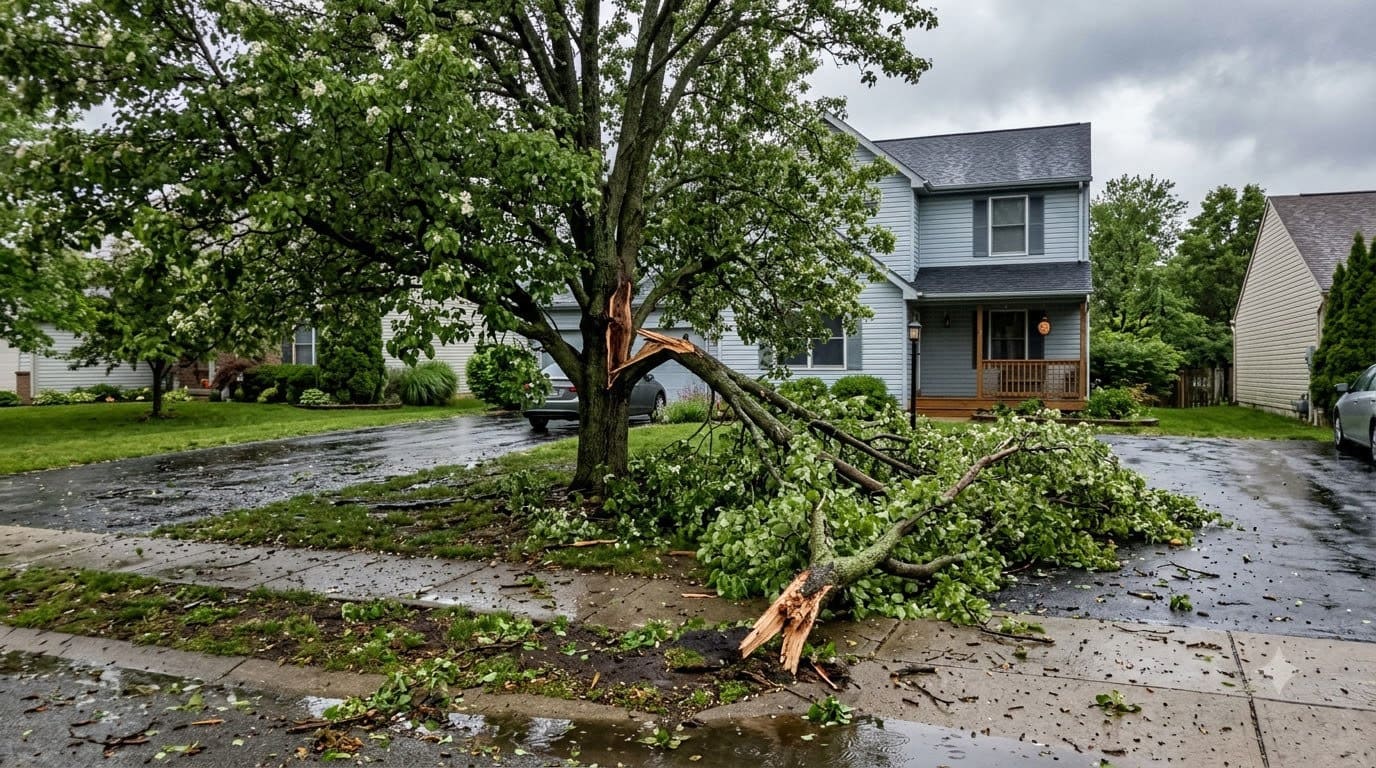
Maybe the lot is small enough that a real canopy tree would eat the whole yard, or the HOA caps anything over 8 feet near the fence line, or you’re just done with root damage near the foundation and leaf cleanup every October.
Whatever the reason, the actual design problem is the same: something has to do the job a tree normally does, which is overhead shade, a privacy screen, some vertical interest so the yard doesn’t read as flat, and a way to manage heat that doesn’t involve standing in direct sun.
How do you shade a backyard with no trees?
A treeless backyard gets its shade from structure instead of canopy: a shade sail, pergola, or retractable awning over the main seating area does in one weekend what a tree does in a decade, since even a fast-growing species needs 5 to 8 years before it casts anything worth sitting under.
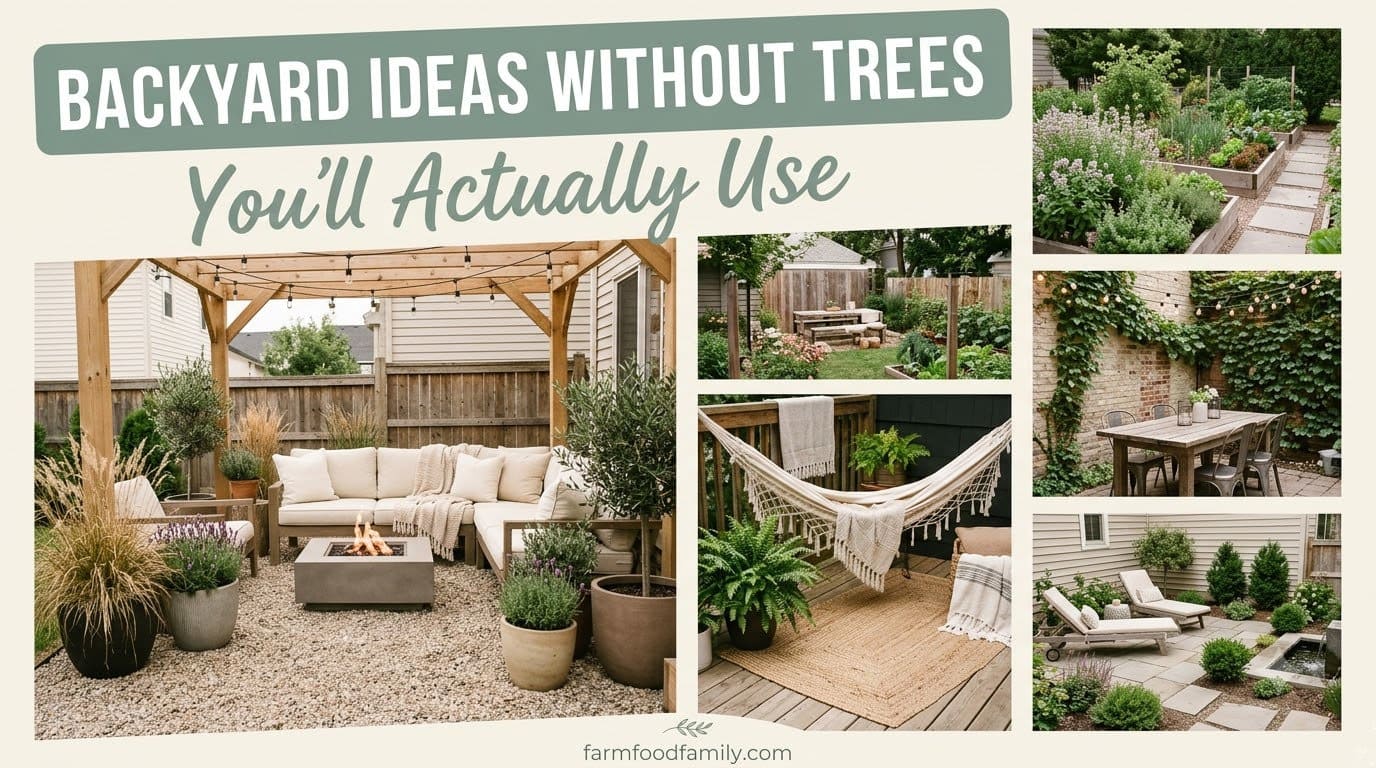
Privacy comes from dense evergreen shrub screening (wax myrtle, boxwood, Chinese fringe-flower) or a trellis with fast climbers, not a tree line, and a mixed shrub screen fills in within two to three growing seasons rather than a decade.
Answer 4 quick questions and get matched to the exact fix for your yard — drainage, budget, layout, or something else entirely.
Take the Free QuizFor vertical interest without overhead canopy, landscape architect Terrie Brightman, RLA, ASLA of Mathews Nielsen Landscape Architects, uses layered “understory” planting beds, low shrubs and perennials built up in tiers, to create depth the way woodland floor planting does under a real canopy.
Combine one shade structure, one privacy solution, and layered planting, and a treeless yard reads as intentional, not an unfinished lot waiting on nature to catch up.
Why some yards end up with no trees
Not every treeless yard has the same problem, so the fix looks different depending on which one you’re actually dealing with.
The new-build owner. The lot was graded flat and every mature tree came out with the topsoil. You’re starting from zero and need shade this summer, not in 2031.
The HOA-restricted owner. Plenty of associations cap plant height near lot lines and require approval for anything that could block sightlines or sit too close to a utility easement, which rules out a lot of fast, tall shade trees.
Then there’s the small-lot owner, where a real canopy tree needs 15 to 20 feet of clearance from the foundation and enough width that it isn’t scraping the fence by year ten. On a narrow urban lot that math just doesn’t work.
And some people are deliberately treeless. Root damage near a slab foundation or septic line, leaf cleanup every fall, or a pollen allergy that makes late spring miserable, skipping trees on purpose is a completely valid call, not a compromise.
Most yard problems trace back to one specific, fixable cause. Find yours in 4 quick questions.
Take the Free Quiz
UV-block sand-colored shade sail rated for backyard patio and deck use, 4.5 stars across 12,900+ ratings, Amazon's "Overall Pick" for this search category
Shop NowThis post contains affiliate links. We may earn a commission on qualifying purchases at no extra cost to you.
11 ways to build shade, privacy, and structure without a canopy tree
1. Shade sail over the main seating area
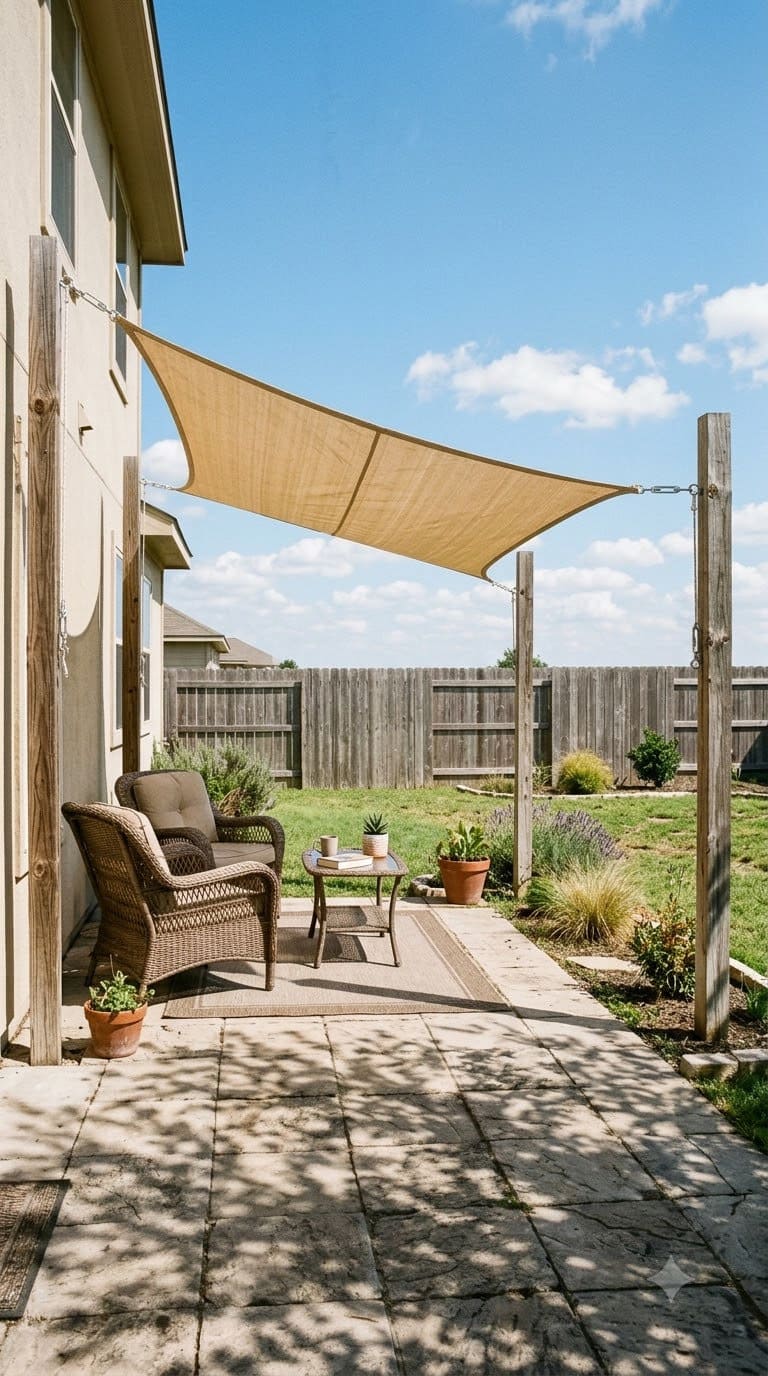
A triangular or square shade sail stretched between three or four anchor points is the fastest structural fix for a bare patio. Budget tier, usually $150 to $500 for the sail plus mounting hardware depending on size, and a weekend install if you’re anchoring to existing posts or a fence line.
UV-blocking fabric cuts direct sun by 90 percent or more under the sail itself. The tradeoff: it doesn’t hold up great in high wind unless it’s tensioned properly, and it needs to come down or be rated for snow load in winter climates.
2. Freestanding pergola
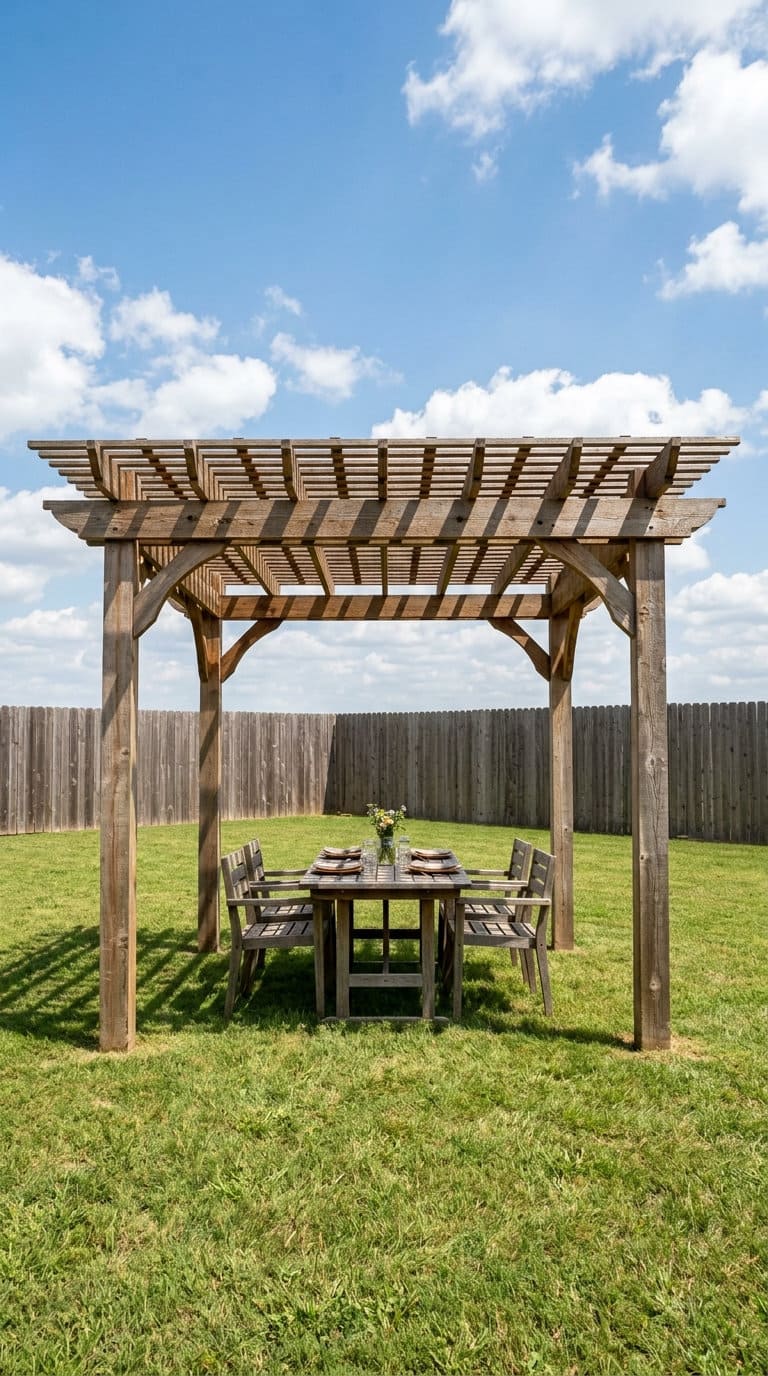
A freestanding pergola gives you a permanent shade structure without attaching to the house, which matters if your HOA or building code treats attached structures differently.
Wood (cedar or pressure-treated pine) runs mid-tier and needs re-staining every couple of years. Vinyl costs more up front but is close to maintenance-free. Aluminum sits in between and holds up best in humid or coastal climates.
A standard 10×12-foot footprint covers a dining set with room to spare. Pair it with a shade cloth or climbing vine across the top rafters if you want more than the roughly 25 percent shade a bare lattice roof gives you on its own.
3. Louvered pergola with an adjustable roof
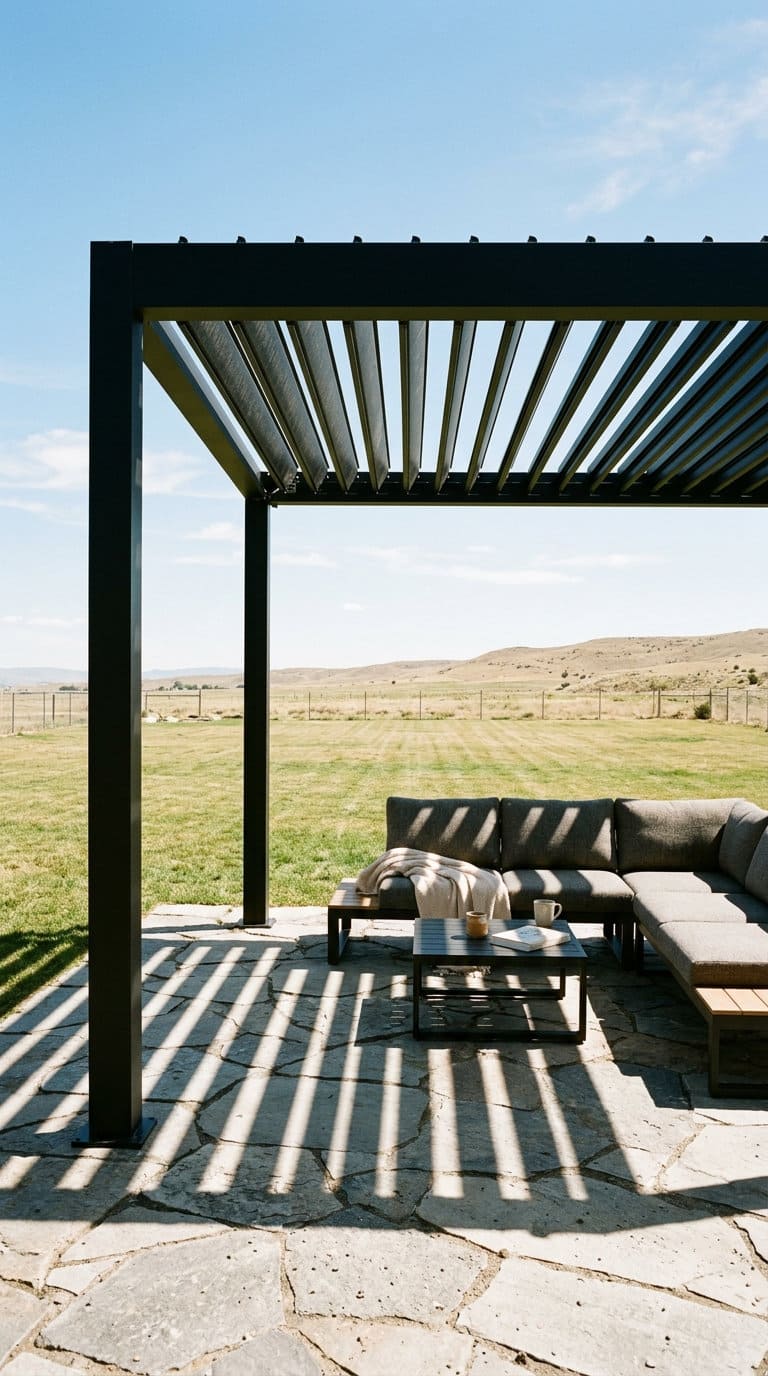
If you want shade that changes with the sun instead of one fixed angle, a louvered pergola has motorized slats that rotate up to 180 degrees. It’s the priciest structure on this list, often several thousand dollars installed, but it functions almost like an outdoor room: closed for full shade at 2pm, open for evening stars.
Worth it if the patio is your main outdoor living space and you use it daily, overkill if it’s an occasional weekend spot.
4. Cantilever umbrella
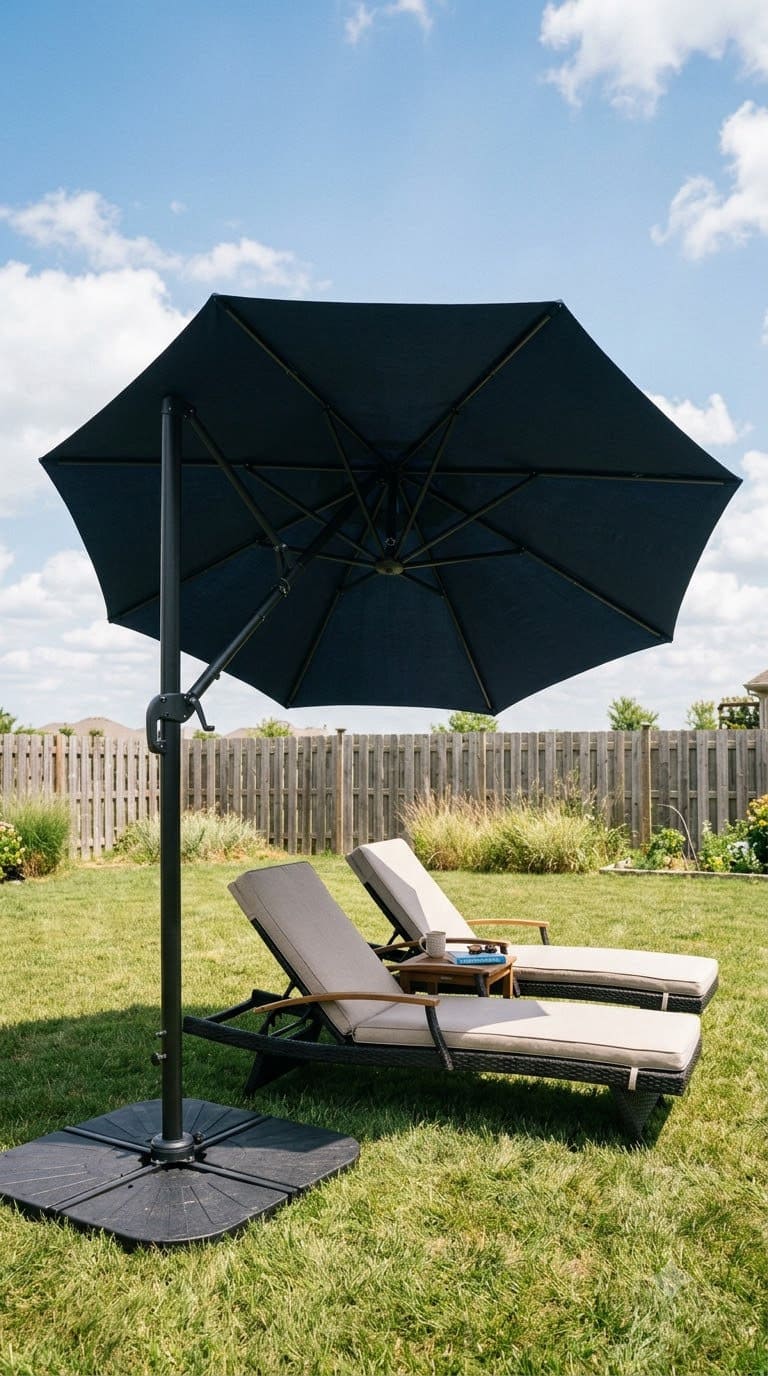
The cheapest, fastest, most renter-friendly option on this list. A cantilever umbrella has a side-mounted pole so the base doesn’t sit in the middle of your seating area, and most tilt and rotate to chase the sun through the afternoon.
The average homeowner spends $616/year on yard fixes that don't address the real problem. Find out what yours actually is — before you spend another dollar.
Take the Free QuizExpect $150 to $400 for a decent 10 to 11-foot model. No permanent install, no HOA approval headache, and you can move it to a different corner of the yard the day you decide the layout was wrong.
Downside: it’s genuinely the smallest coverage footprint here, one umbrella shades one table, not a whole patio.
5. Retractable awning off the back of the house
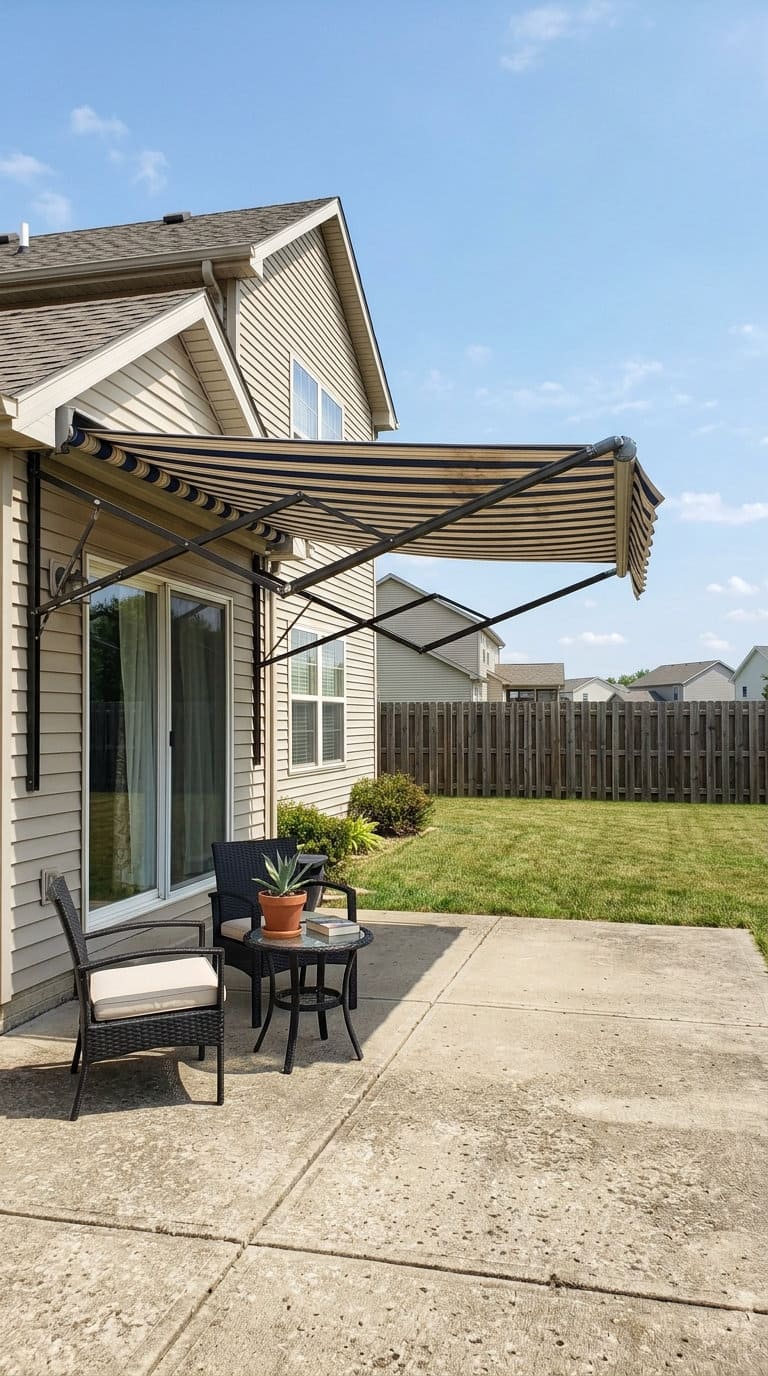
An awning mounted above a back door or window extends over the patio and retracts when you don’t need it, which solves the “shade in summer, sun in winter” problem a fixed structure can’t.
Motorized versions with wind sensors run higher, manual crank versions are more affordable. This is the closest thing to what a tree next to the house would have done anyway, seasonal, adjustable shade right off the living space, minus the two decades of waiting.
6. Gazebo as a destination structure
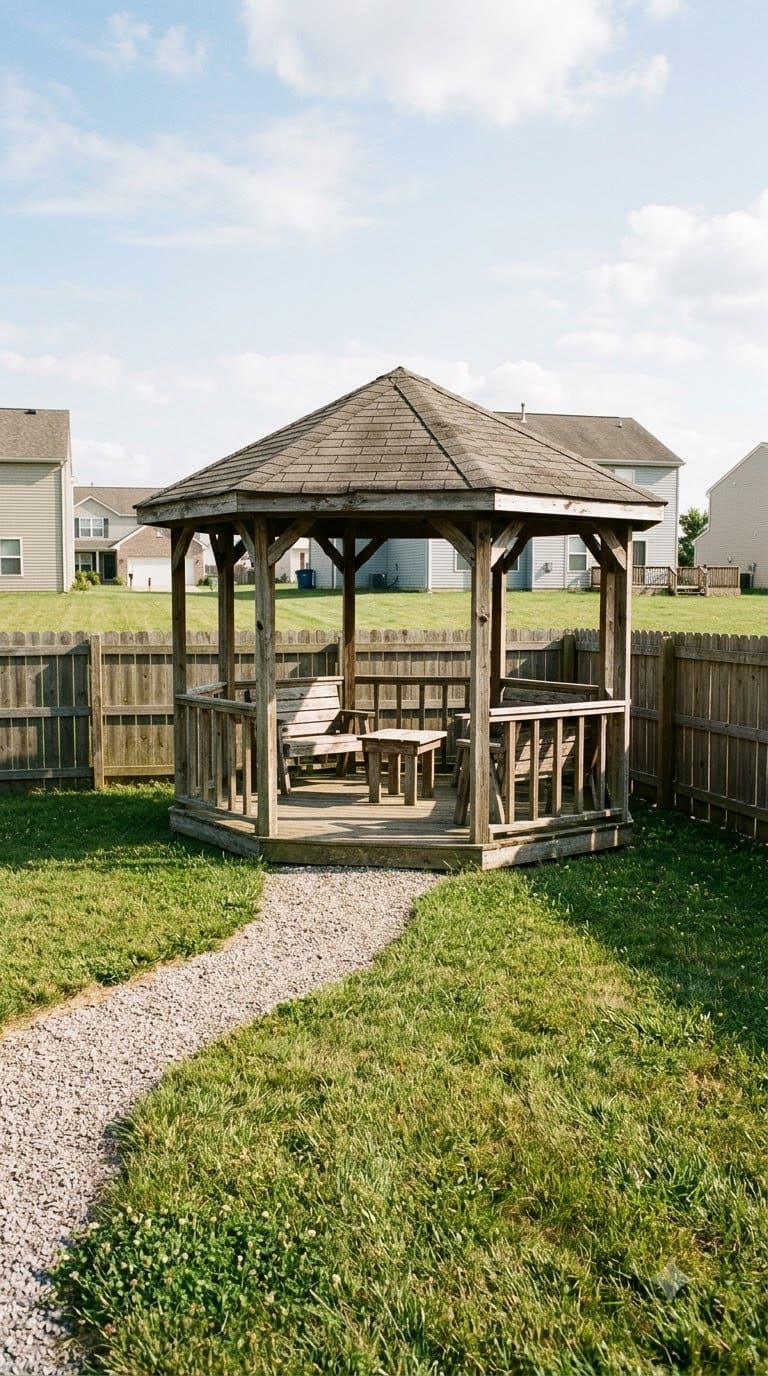
Where a pergola shades a spot you already use, a gazebo creates a reason to walk to a corner of the yard you weren’t using before.
A hexagonal or round gazebo with a solid or shingled roof gives full sun protection, not the dappled shade a pergola gives, and it reads as a defined outdoor room.
Mid-to-high cost depending on materials, and it’s the least flexible option here since moving one later is a real project, not a weekend job.
7. Screened-in porch or three-season room
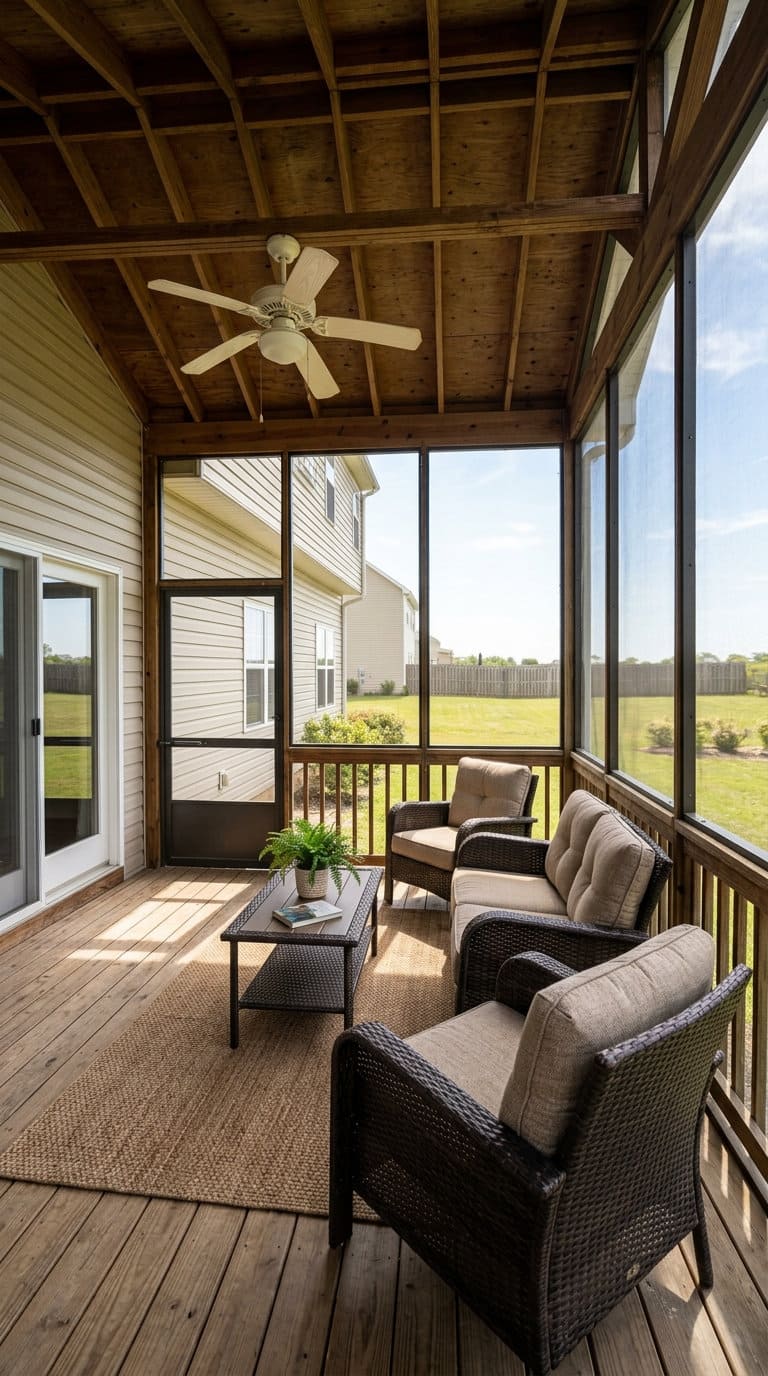
If the budget allows for a bigger structural project, a screened porch solves shade, privacy, and bugs in one move, and it adds real square footage of usable outdoor space that isn’t weather-dependent the way an open patio is.
This is the highest-cost item on the list, closer to a home addition than a backyard purchase, but it’s also the only option that functions the same in October as it does in July.
8. Living privacy wall with a trellis and fast climbers
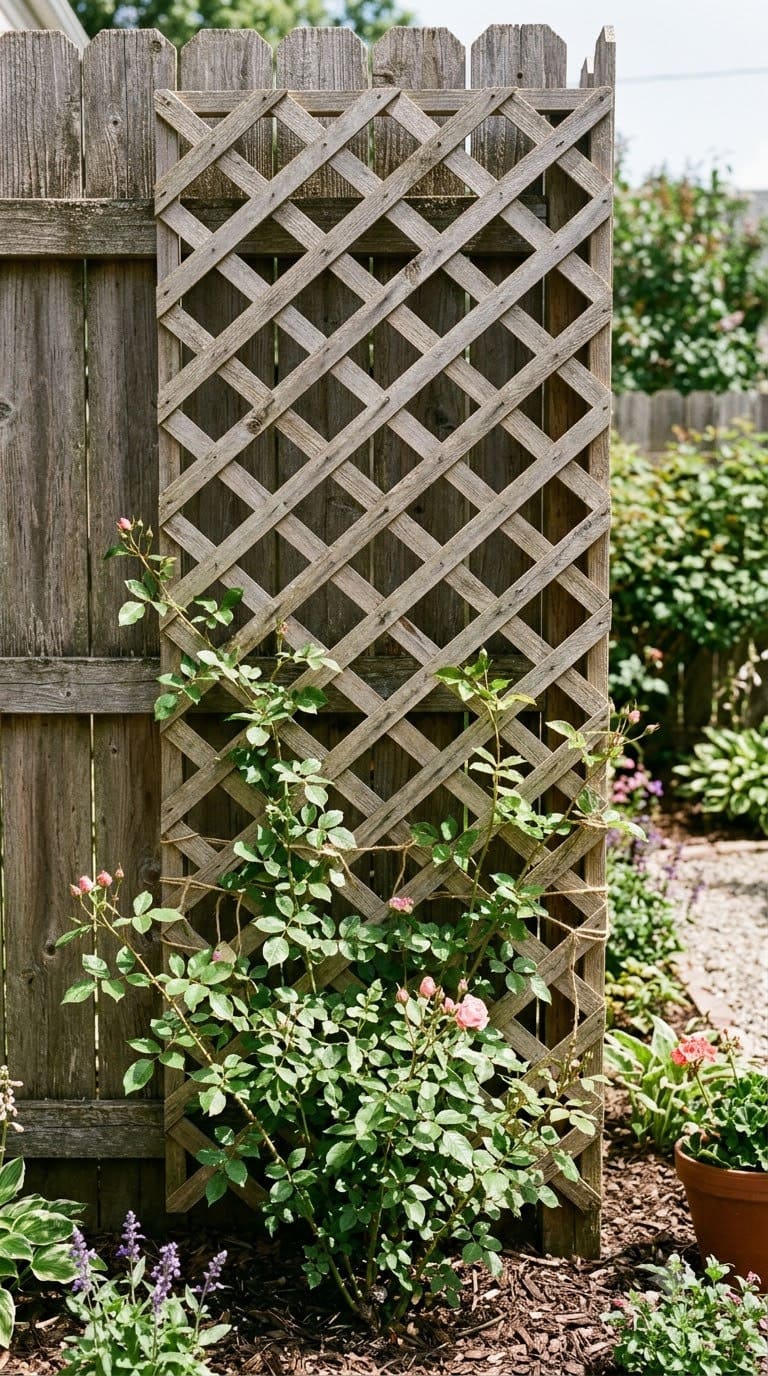
For privacy specifically, a trellis with climbing vines does the screening job a tree line usually does, without needing the 15-plus feet of root and canopy space a real privacy hedge of trees would need.
Clematis, climbing roses, and Virginia creeper all fill in a lattice panel within one to two growing seasons and give you a green wall instead of a bare fence.
Budget tier for the trellis itself, patience is the real cost here since vines take a season to establish before they’re doing real work.
9. Large evergreen shrub screen instead of a tree line
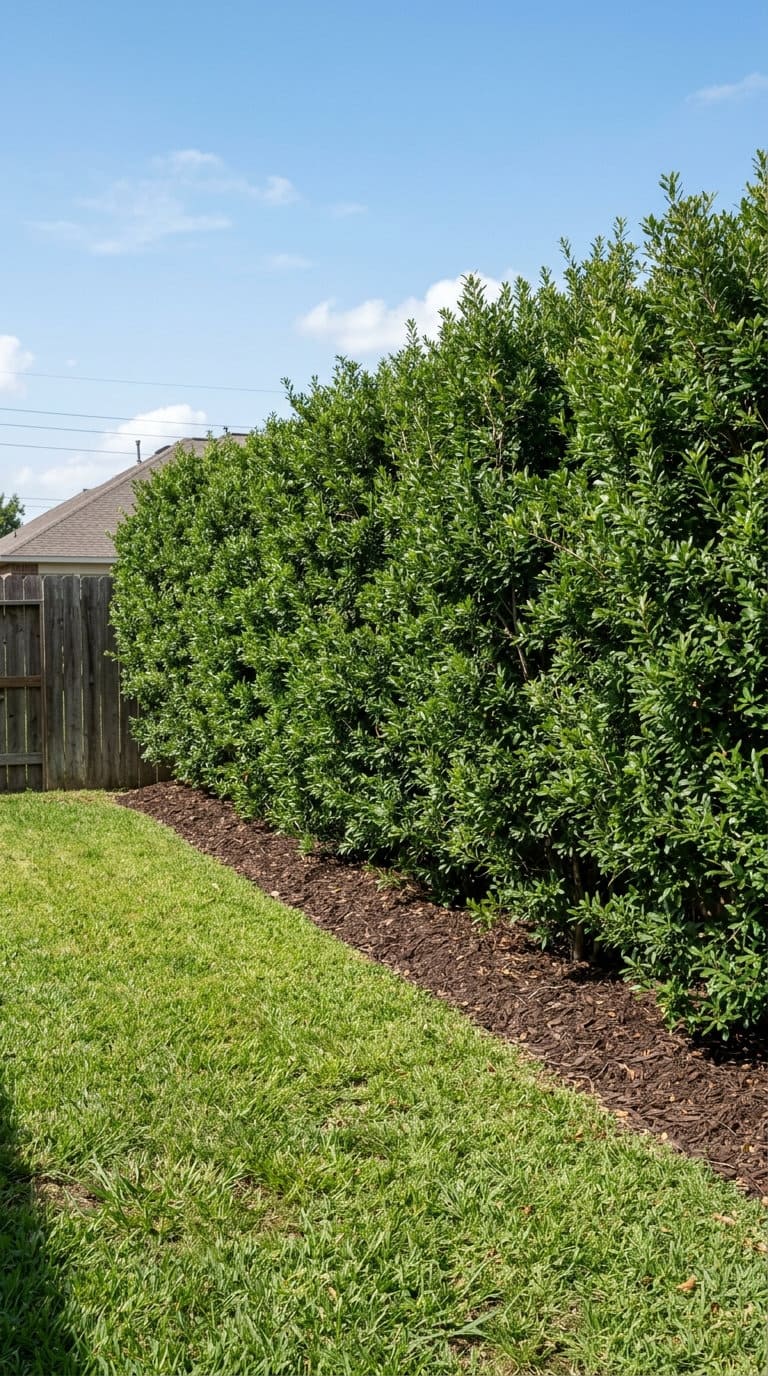
If what you actually want is a tree line’s privacy without a tree line’s root system near the foundation, plant large shrubs instead.
Oregon State University Extension recommends fast-growing screening options in its Ask Extension guidance, and University of Maryland Extension specifically advocates mixed shrub screens over a single tree species for privacy, since a mix resists disease and pest problems better than a monoculture hedge.
Wax myrtle grows to 15-20 feet wide and tall in full sun, Chinese fringe-flower reaches 6-10 feet with some cultivars going taller, and a boxwood hedge stays lower and more formal if that’s the look you want.
Expect two to three growing seasons before the screen is doing real work, faster than a tree, slower than a structure.
10. Outdoor curtains and privacy panels
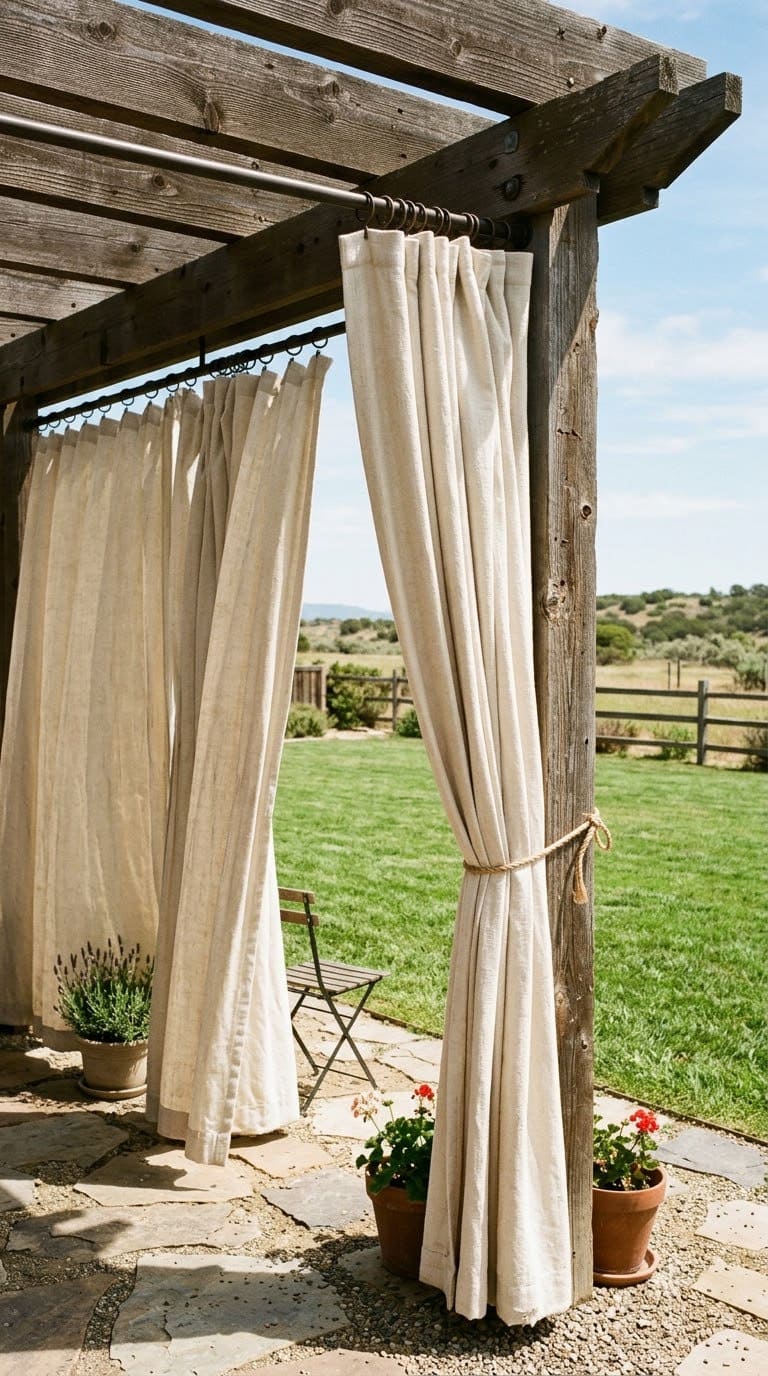
Mounted to an existing pergola, awning frame, or even just a cable run between two posts, outdoor curtains add privacy and block low-angle sun a structure’s roof doesn’t catch.
Heavy, waterproof outdoor fabric holds up through a season outside without mildewing, and you can open or close panels depending on whether you want the view or the privacy that day.
Cheapest add-on on this list if you already have a frame to hang them from.
11. Layered planting beds for vertical interest
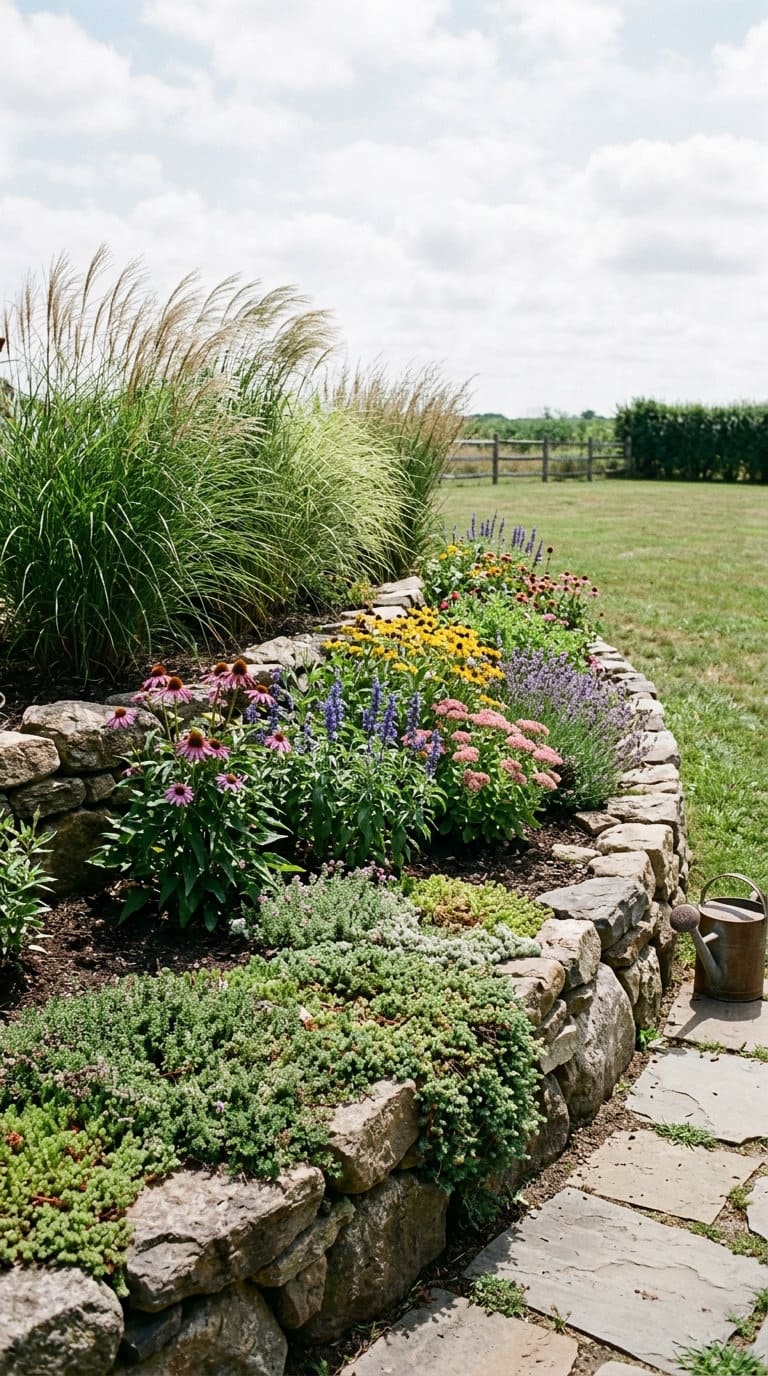
This is the piece most treeless-yard advice skips. A flat yard with a shade structure and a privacy hedge can still feel one-dimensional because there’s no vertical layering the way a tree canopy naturally creates.
Terrie Brightman’s approach on a permanently shaded, tree-restricted courtyard project was to build “undulating planting beds” using understory plant material, the same layered perennials and ferns that would carpet a woodland floor under a real canopy, stacked in tiers instead of laid flat.
You don’t need a tree overhead to borrow that trick: raise a bed 12 to 18 inches with a low retaining wall, plant taller ornamental grasses or shrubs at the back, mid-height perennials in the middle, and a low groundcover at the front edge. It reads as depth even on a completely flat, treeless lot.
Should you just plant a fast tree instead?
Honestly, maybe, in addition to everything above, not instead of it. Fast growers like hybrid poplars or willows can add 3 to 8 feet a year and reach a genuinely useful size in 5 to 8 years, and a Paulownia (princess tree) in a warm climate can hit 20-30 feet in five years.
That’s real shade eventually, but it’s still years away, and fast growers tend to have weaker wood and shorter lifespans than a slow hardwood like an oak or maple, which takes 20 to 50 years to fully mature but lives for centuries.
If your HOA or lot size allows it, planting a fast tree on the west side of the yard now while you also put up a shade sail this weekend isn’t contradictory, it’s just solving the same problem on two different timelines.
Keep any fast grower well clear of the foundation and septic line regardless of species, since a fast root system is still a root system.
The real experience of a zero-shade yard
I’ll be honest, the first month in that new-build we didn’t do anything smart. We just avoided the backyard between noon and 5pm like the whole space was closed for business. The $200 cantilever umbrella from a home improvement store was the first real fix, and it’s kind of embarrassing how much better one shaded chair made the whole yard feel.
It wasn’t until the following spring that we put in the pergola, and I’ll admit I underestimated how much a wood structure needs upkeep, ours needed restaining within eighteen months in a sunny exposure.
But between the umbrella that first summer and the pergola plus a shrub screen along the back fence the next year, the yard went from unusable to the place we actually eat dinner most nights from May through September.
Nobody tells you the umbrella is the unglamorous MVP purchase, but it genuinely was.
Can I get real shade without planting any trees?
Yes. A shade sail, pergola, retractable awning, or even a well-placed cantilever umbrella provides usable shade the same day it’s installed, which a tree cannot do regardless of species. Structures are the only option here that solve the problem this season rather than years from now.
How long does a newly planted tree actually take to shade a patio?
Fast-growing species like hybrid poplars typically need 5 to 8 years to reach a size that provides real shade, and slower hardwoods like oaks and maples take 20 to 50 years to mature. That timeline gap is exactly why structural and shrub solutions matter for anyone who wants shade sooner than a decade from now.
Will my HOA let me install a pergola or shade sail instead of a tree?
It depends on the association, but most HOAs regulate plant and tree height more heavily than they regulate patio structures, since a pergola or shade sail doesn’t grow, doesn’t threaten utility lines, and can usually be described precisely in a permit request. Always check your specific HOA’s architectural review process before installing anything permanent, since rules vary widely by community.
Shade options compared
| Option | Cost tier | Permanence | DIY difficulty | Best for |
|---|---|---|---|---|
| Shade sail | Budget | Removable/seasonal | Easy-moderate | Fast fix over one seating zone |
| Cantilever umbrella | Budget | Fully portable | Easy | Renters, small budgets, flexible layouts |
| Freestanding pergola | Mid | Permanent | Moderate-hard | Daily-use patio, defined dining area |
| Retractable awning | Mid-high | Permanent, adjustable | Professional install | Space attached to the house |
| Louvered pergola | High | Permanent, adjustable | Professional install | Daily outdoor living room |
| Gazebo | Mid-high | Permanent | Moderate-hard | A destination spot away from the house |
| Screened porch | Highest | Permanent addition | Professional install | Year-round usable outdoor space |
If you want more general layout ideas beyond shade specifically, our tiny backyard ideas guide covers small-lot design, and the pergola vs. gazebo breakdown is worth reading before you commit to either structure.
For a deeper look at DIY shade options beyond what’s covered here, see our DIY sun shade ideas roundup. If privacy is the bigger issue than shade in your case, our deck privacy ideas article has more screening options, and if you’re building on a slope with no canopy either, sloped backyard ideas on a budget tackles that combination directly.
Renting rather than owning your treeless yard? Check renter-friendly backyard ideas for options that don’t require permanent installs, and if an HOA is part of your situation, the tradeoffs of an HOA-managed community is useful background before you plan anything permanent.
Related Posts
Products We Recommend
This post contains affiliate links. We may earn a commission on qualifying purchases at no extra cost to you.
SUNNY GUARD Sun Shade Sail 10' x 13' Rectangle
UV-block sand-colored shade sail rated for backyard patio and deck use, 4.5 stars across 12,900+ ratings, Amazon's "Overall Pick" for this search category
Shop Now
Best Choice Products 10ft Solar LED Offset Cantilever Umbrella
Crank-lift cantilever patio umbrella with 8 sturdy ribs, built-in solar LED lights, and 360-degree rotation, 4.1 stars across 11,600+ ratings
Shop Now
PURPLE LEAF Outdoor Hardtop Gazebo 10' x 16'
Wood-grain-frame gazebo with a double-vent galvanized steel roof, drainage system, and reinforced posts rated for 40 MPH wind, 4.7 stars across 445 ratings
Shop NowNever miss an update — choose FarmFoodFamily as your preferred source on Google.
How it works: Tap the button below to open Google's settings page, then check the box next to FarmFoodFamily.
Tap the checkbox to turn it blue — that's how you know it's set.