8 Signs You’re Using Too Much Mulch Around Your Trees
A tidy ring of mulch protects a tree, but pile it against the trunk or over the root flare and you start a slow decline that the canopy won’t show for years.

Never miss an update — choose FarmFoodFamily as your preferred source on Google.
How it works: Tap the button below to open Google’s settings page, then check the box next to FarmFoodFamily.
Tap the checkbox to turn it blue — that’s how you know it’s set.
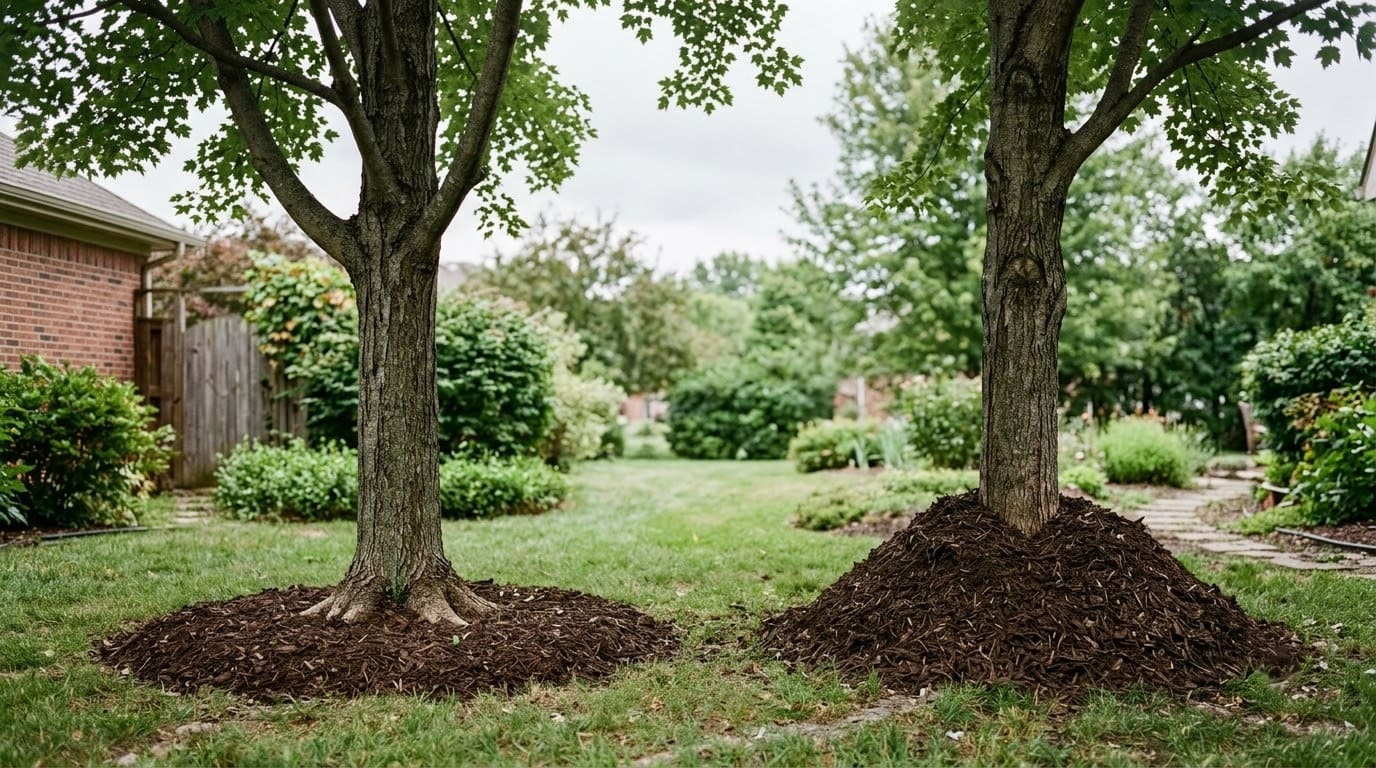
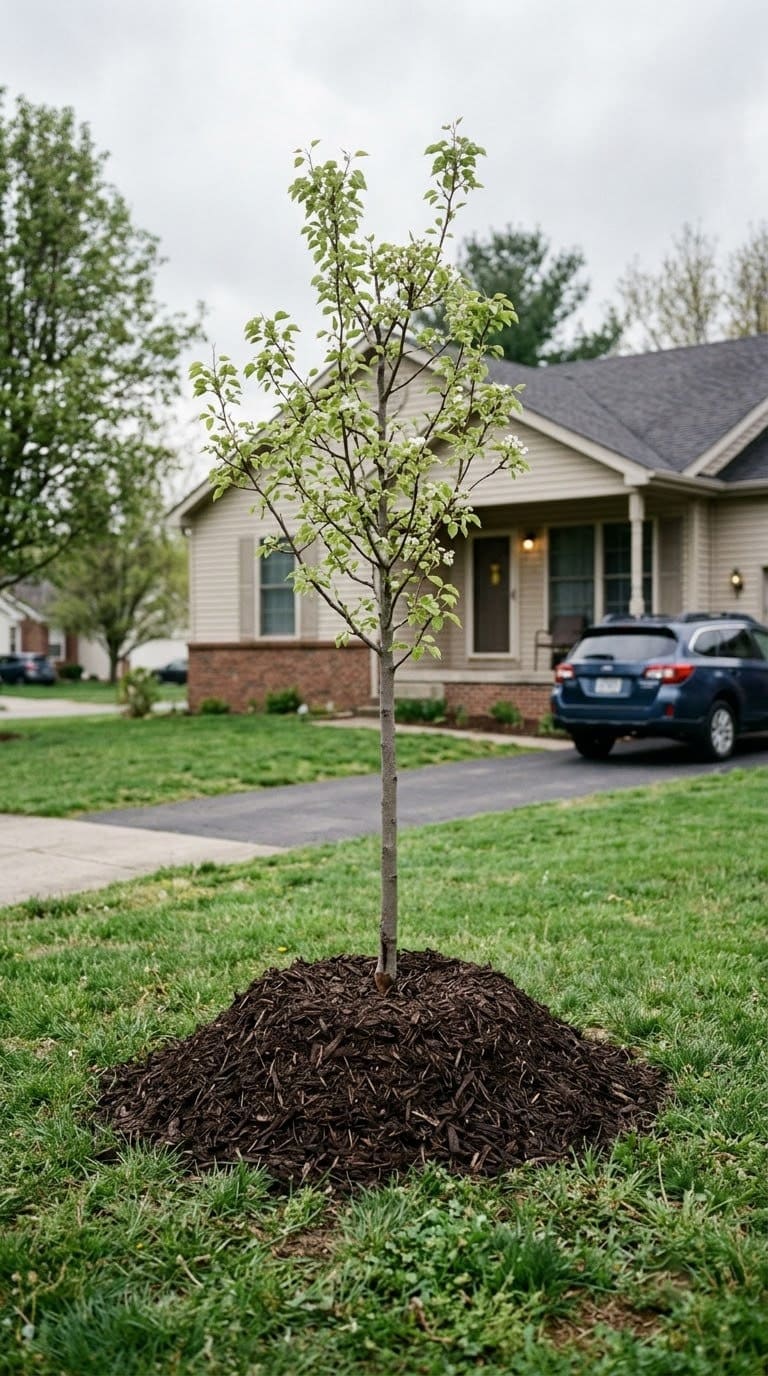
Drive down almost any street in spring and you’ll see them. Cones of fresh mulch heaped a foot up the trunks of young maples and pears, neat and dark and completely wrong.
The nickname is a mulch volcano. The problem with it is that nothing dramatic happens right away. The tree leafs out, looks fine, and the damage builds underneath for three, five, sometimes ten years before the canopy starts thinning.
Here’s the part most articles skip. It isn’t the depth by itself that does the harm. It’s mulch touching the bark, mulch burying the root flare, and fine shredded mulch piled deep enough to smother the roots.
Those are the things to look for, and you can check all of them in about five minutes.
Quick Answer
You are using too much mulch if you cannot see the root flare, the spot where the trunk widens and turns into roots at ground level, or if the mulch is touching the bark anywhere. Penn State Extension recommends a 2 to 4 inch layer of coarse organic mulch and no more, dropping to 1 to 2 inches for fine or double-shredded mulch because it lets less oxygen through to the roots. On poorly drained soil, use less still.

Keep the mulch off the trunk completely, roughly 3 to 5 inches back on a young tree and 8 to 10 inches back on a mature one. The finished shape should look like a flat donut with the flare showing in the hole, never a cone. Depth past 4 inches is a reason to investigate, not proof of damage on its own, but bark contact and a buried flare almost always mean trouble.
Answer 4 quick questions and get matched to the exact fix for your yard — drainage, budget, layout, or something else entirely.
Take the Free QuizHow much mulch is actually right?
Match the depth to the mulch texture and your soil, then keep the trunk gap no matter what.
| Mulch type | Well-drained soil | Average soil | Poorly drained soil | Gap from trunk |
|---|---|---|---|---|
| Coarse bark nuggets or wood chips | 3 to 4 in | 3 in | 2 in | 3 to 5 in young, 8 to 10 in mature |
| Shredded hardwood | 3 in | 2 to 3 in | 2 in | 3 to 5 in young, 8 to 10 in mature |
| Fine or double-shredded | 2 in | 1 to 2 in | 1 in | 3 to 5 in young, 8 to 10 in mature |
| Compost used as mulch | 2 in | 1 to 2 in | 1 in | 3 to 5 in young, 8 to 10 in mature |
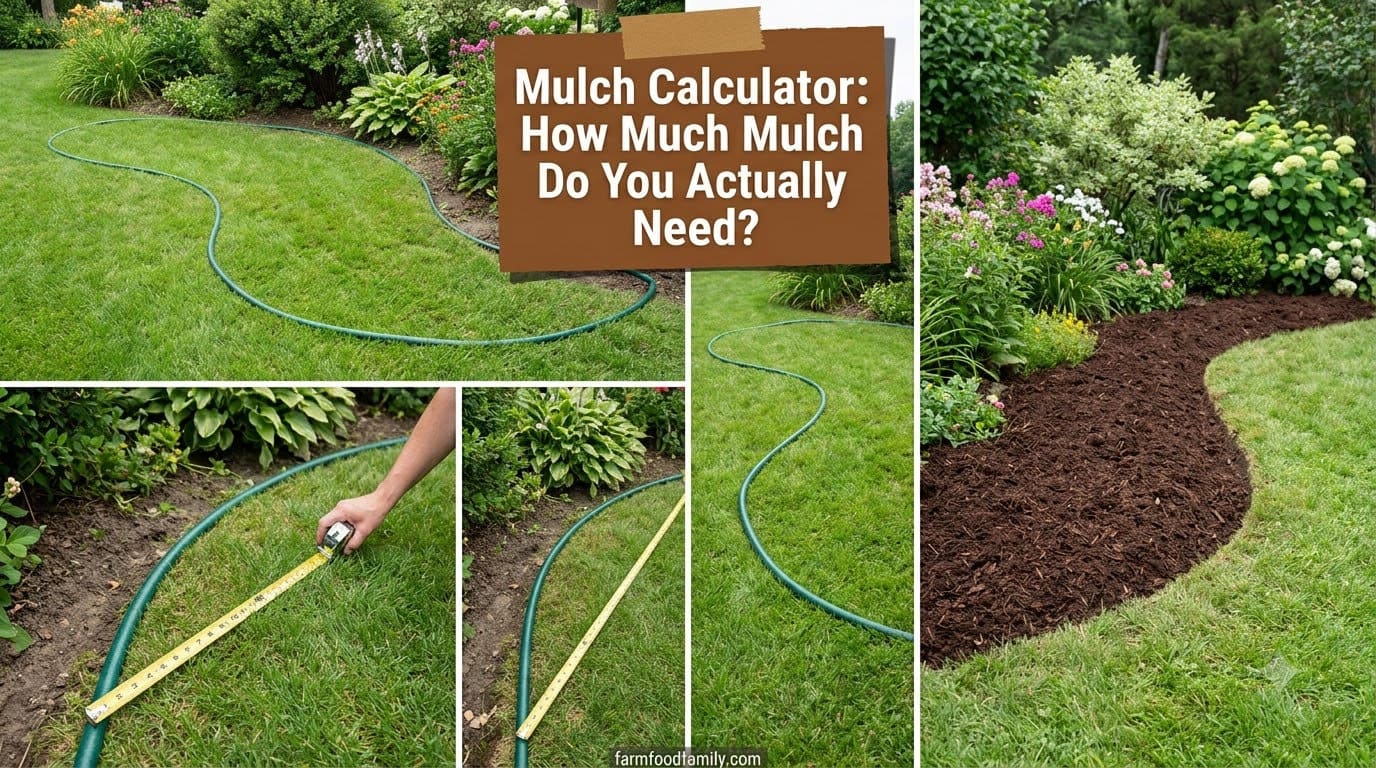
Spread the ring as wide as you reasonably can, out toward the edge of the canopy. A wide, shallow ring does far more good than a narrow, deep one, and it keeps mowers and string trimmers away from the bark.
All the usual reasons mulch earns its place in a yard, holding moisture and moderating soil temperature, still apply here. You just have to shape it right.
1. You can’t see the root flare
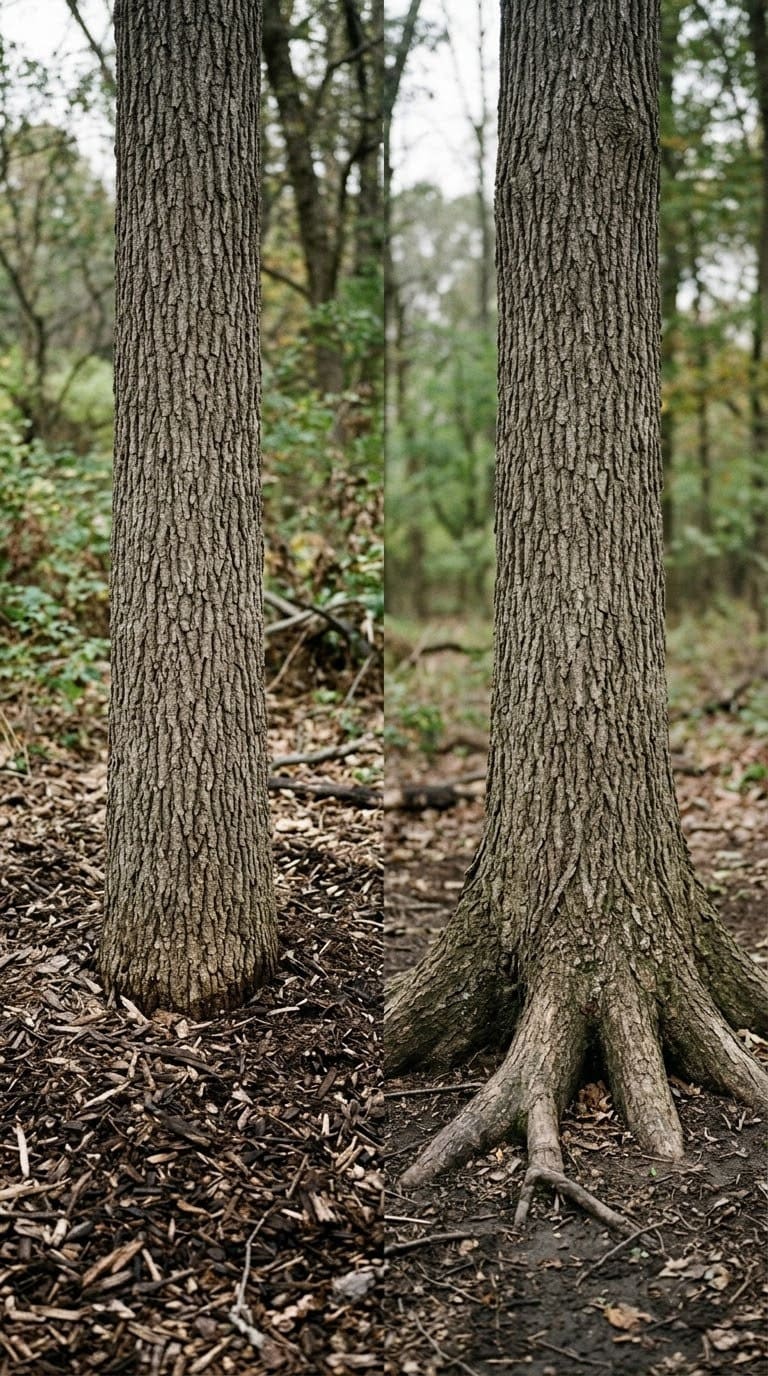
Look at where the trunk meets the ground. On a healthy tree it widens out, like the base of a wine bottle, before it disappears into the soil. That widening is the root flare, and it should always be visible.
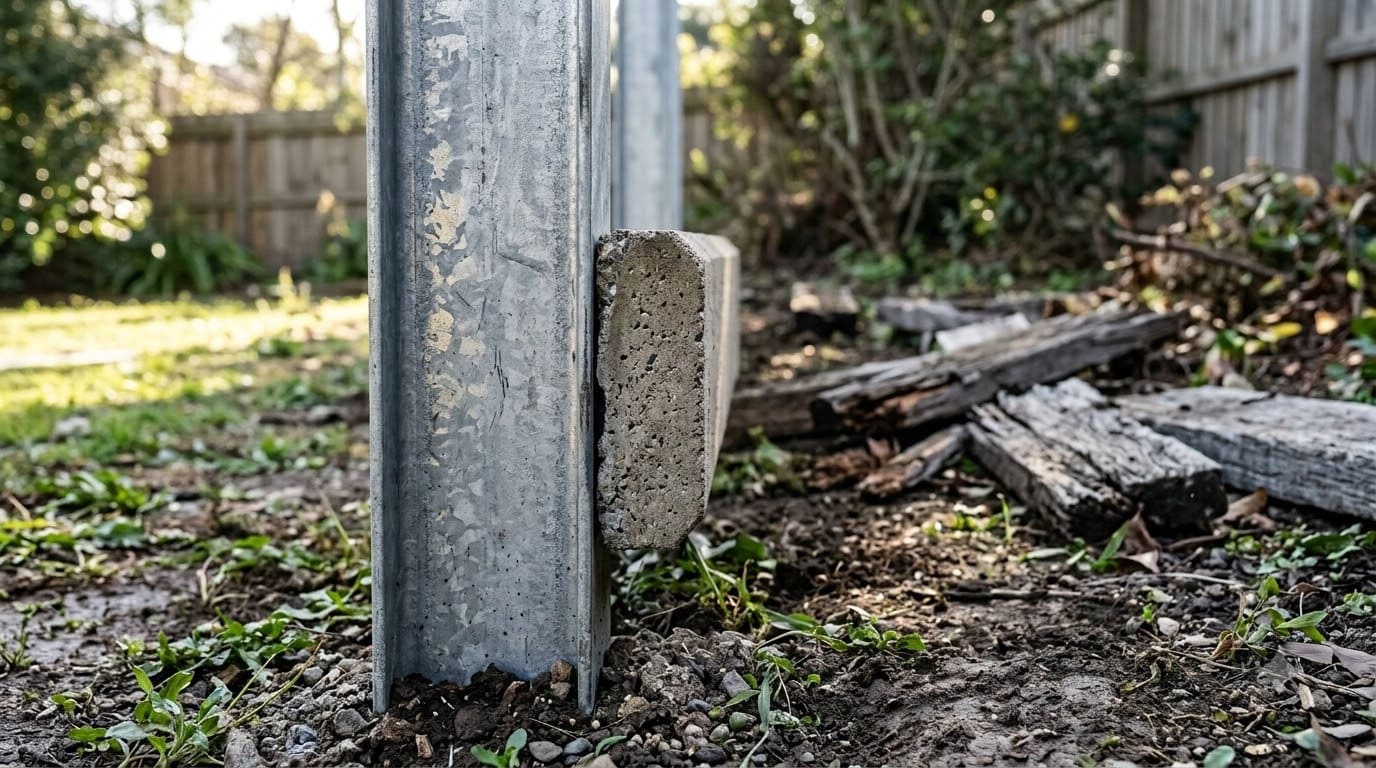
If the trunk goes straight down into the mulch like a fence post, or worse, looks narrower at the bottom than a few inches up, the flare is buried. That is the single clearest sign of over-mulching, and it means the bark that is supposed to be in open air is now sitting in a damp, dark, low-oxygen pocket.
Quick tip: Gently sweep mulch and soil away from the trunk with your hand until you hit the first big root or the obvious flare. On a lot of established trees you’ll be surprised how far down it is, because mulch was added over mulch for years.
2. The mulch is touching the bark
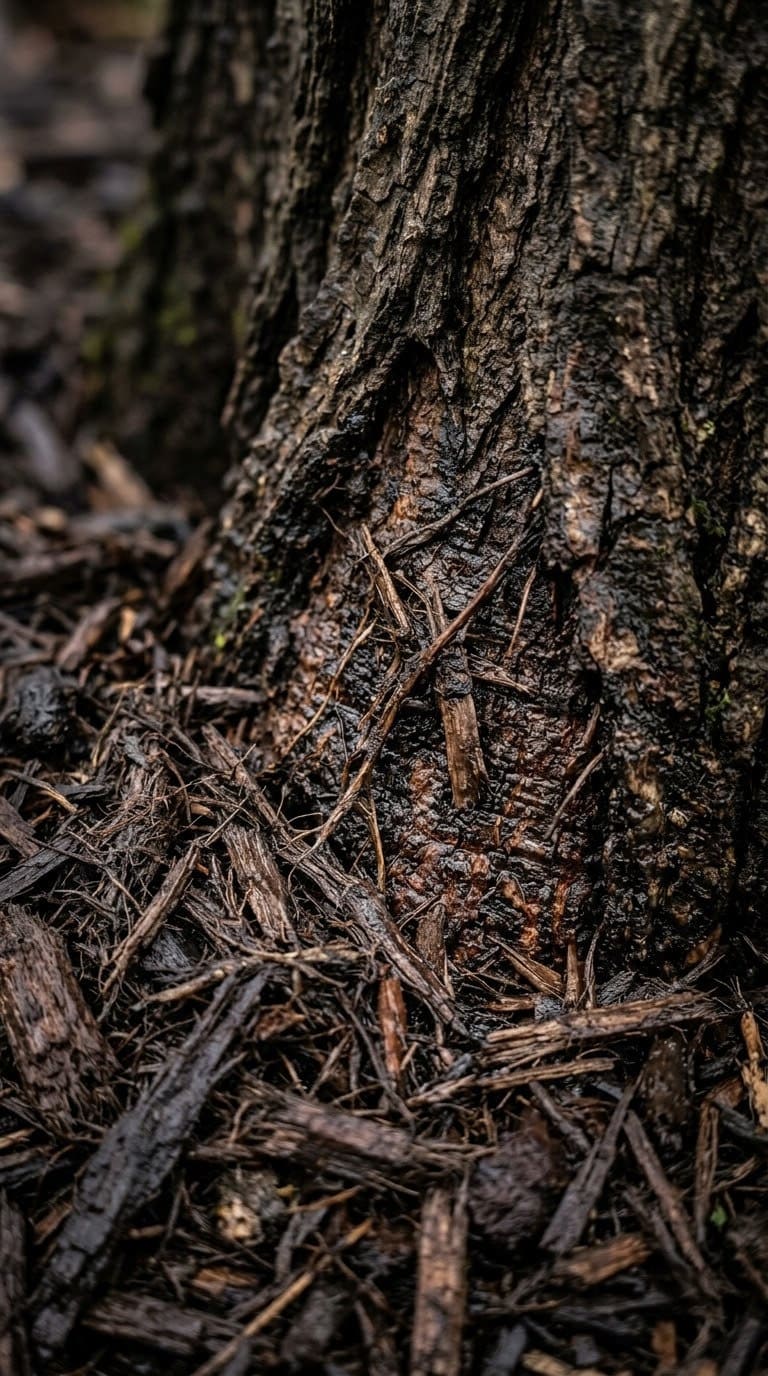
Run your hand around the base of the trunk. Mulch should not be in contact with the bark at any point. There should be a clear moat of open air or bare soil between the mulch and the tree.
Most yard problems trace back to one specific, fixable cause. Find yours in 4 quick questions.
Take the Free Quiz
Wide lightweight fork for lifting and spreading bark mulch and pulling a volcano back into a donut without compacting the layer
Shop NowThis post contains affiliate links. We may earn a commission on qualifying purchases at no extra cost to you.
Trunk bark is built to be dry and exposed. Held against wet mulch, it stays damp, and constant moisture breaks down the outer bark and then the living inner bark underneath. That is the layer that moves sugars around the tree, so once it starts rotting, the tree is in real trouble even if the leaves look normal.
Quick tip: Pull the mulch back into a donut and leave the center bare. You do not need to fill that center with rock or anything else. Bare soil against the flare is exactly right.
3. It’s deeper than about 4 inches
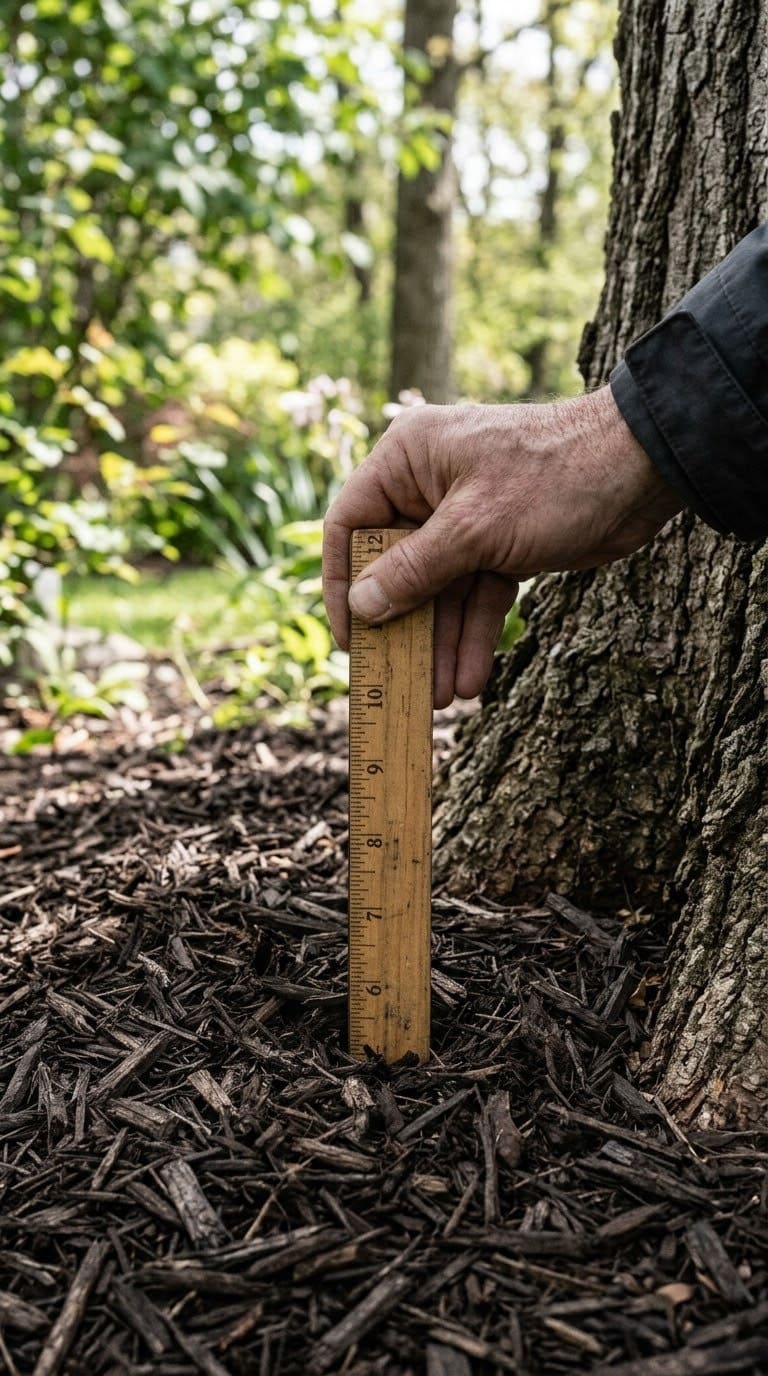
Push a finger, a pencil, or a thin stick straight down through the mulch until you hit soil. Coarse bark or wood chips should measure 2 to 4 inches. Fine or double-shredded mulch should measure 1 to 2 inches.
Anything past 4 inches is worth a closer look, especially if it’s the fine stuff. Deep fine mulch packs down into a dense mat that acts like a wet blanket over the roots, cutting off the air they need. Deep coarse mulch is more forgiving, but it still buries the flare over time and it still hides what’s happening at the trunk.
Quick tip: Check the depth in three or four spots around the ring, not just one. Volcanoes are usually deepest right at the trunk and taper off, which is the opposite of what you want. If your garden soil is heavy or stays wet, stay at the low end of every range.
4. Fine roots are growing up into the mulch
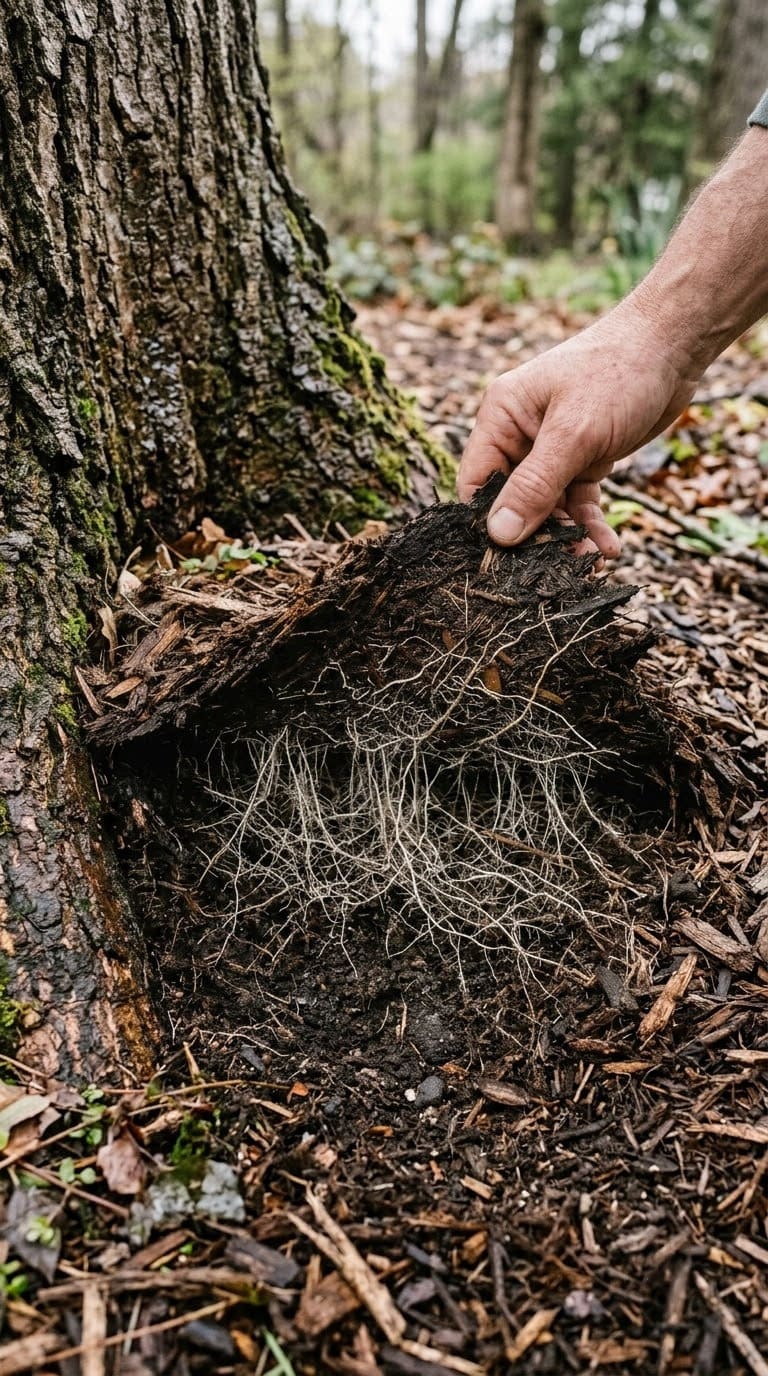
Pull a handful of mulch away from the trunk and look at what’s in it. If you find a mat of thin roots running through the mulch itself, the tree is telling you the soil below has gone low on oxygen.
Joe Boggs of Ohio State University Extension describes the cycle. The tree pushes out these secondary roots into the loose mulch to breathe, then they hit the slope of the pile, turn, and start to circle the trunk.
As they thicken over the years they act like a slowly tightening belt, choking off the flow of water and nutrients. And when a dry spell shrinks the mulch, those shallow roots dry out and die.


Quick tip: A few roots in the bottom of the mulch where it meets soil is normal. A thick mat of them up in the middle of the pile, wrapped around the trunk, is a job for a certified arborist, not a garden fork.
The average homeowner spends $616/year on yard fixes that don't address the real problem. Find out what yours actually is — before you spend another dollar.
Take the Free Quiz5. The bark at the base is soft, dark, or peeling
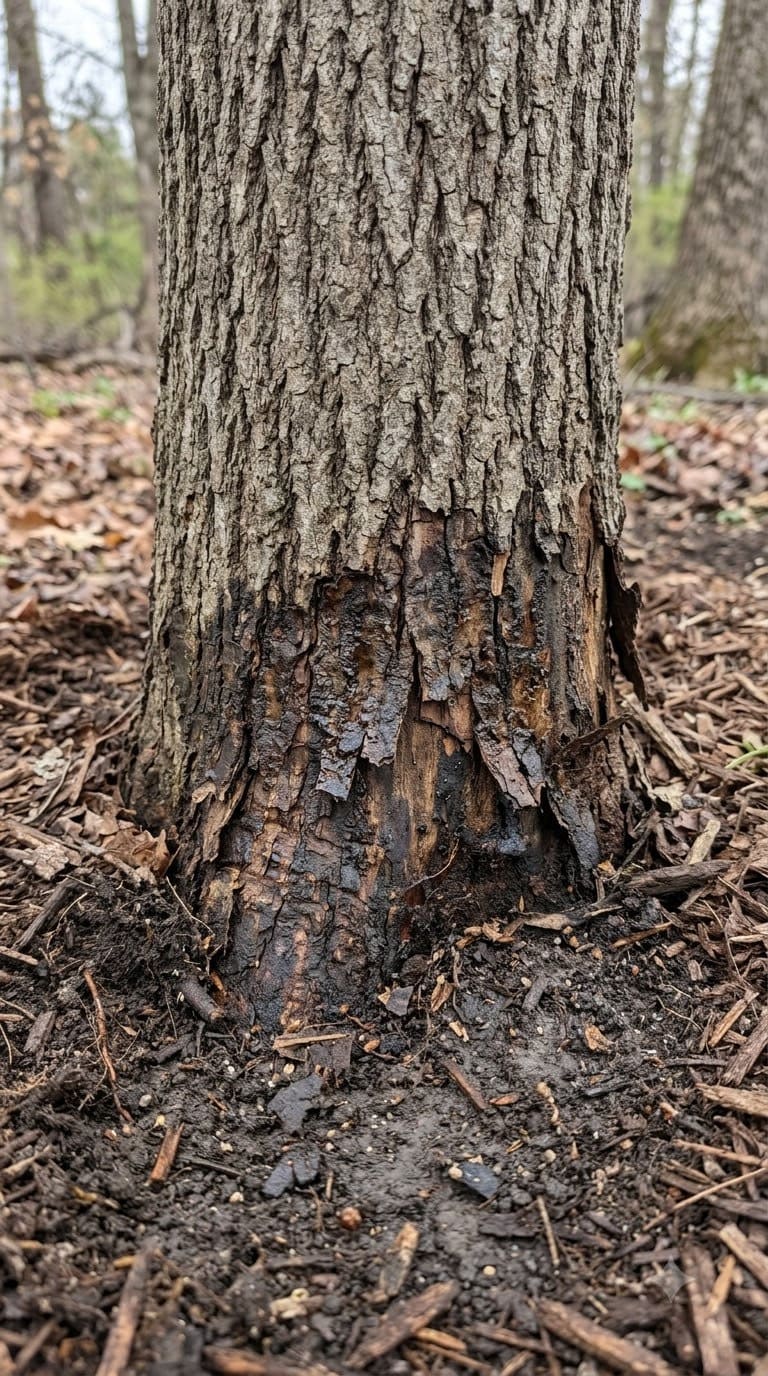
Clear the mulch away from the trunk and really look at the bark right at the soil line. Healthy bark is firm and dry. Bad signs are bark that’s darker than the rest of the trunk, feels soft or spongy when you press it, peels away in sheets, or smells sour and fermented.
Annette Cormany of University of Maryland Extension puts it bluntly. Over-mulched bark goes “black and mushy.” She describes a client’s tree buried under 17 inches of mulch that was, in her words, dead as a doornail. The leaves can hang on for a season or two after the base bark is already gone.
Quick tip: If the soft or dark area wraps more than a third of the way around the trunk, or the canopy is also thinning, get an arborist to assess whether the tree is worth keeping. Below that, pulling the mulch back and letting the bark dry out gives it a real chance.
6. Water runs off the mound and the mulch is dry underneath
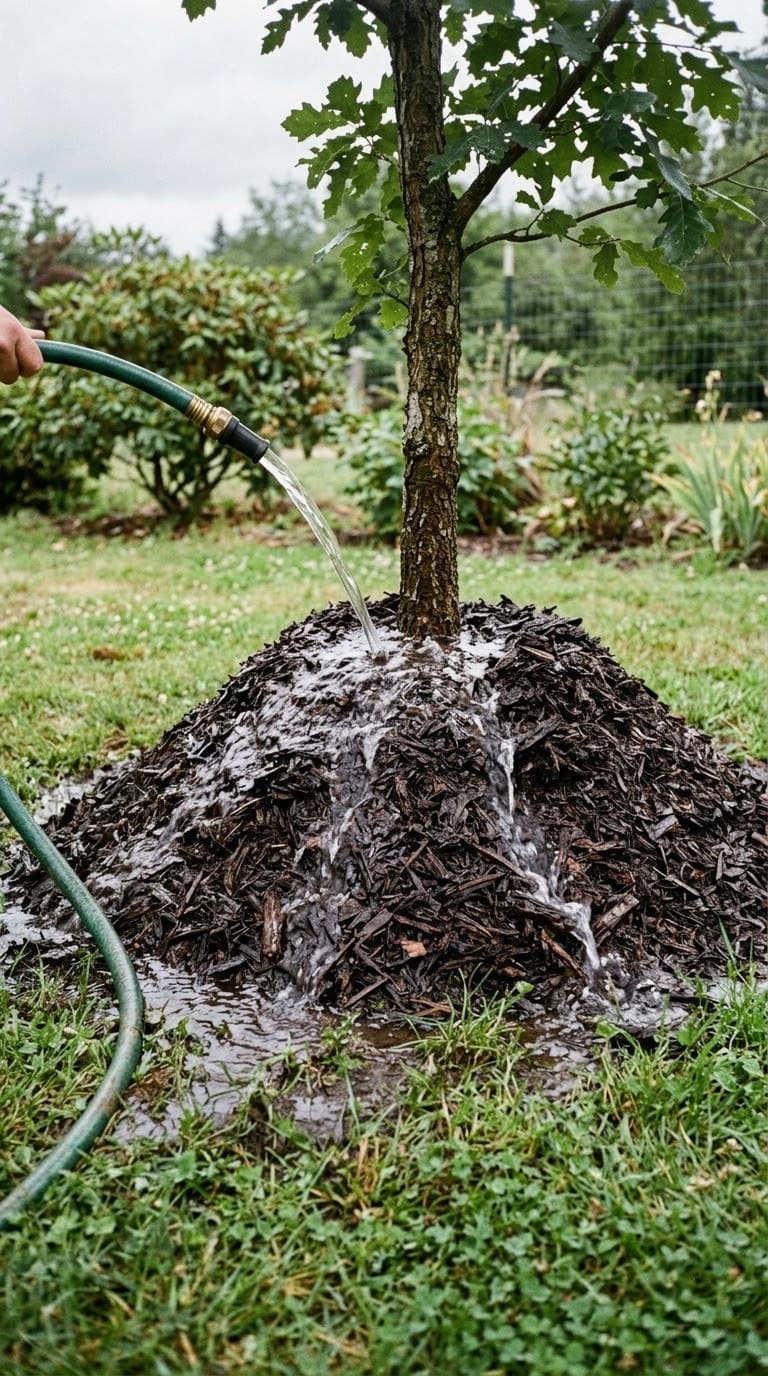
Water the ring and watch. On a healthy flat donut, water soaks straight in. On a volcano, it beads up and runs off the sides onto the grass, and if you dig into the mound afterward the mulch a few inches down is bone dry and crusty.
Old mulch that has broken down and then dried out turns water-repellent. Arborists call it hydrophobic. So the pile that was supposed to hold moisture for the tree is now doing the opposite, shedding rain and irrigation before it ever reaches the roots.
Trees under deep old mulch are often quietly drought-stressed even in a wet year.
Quick tip: If you’re on a drip line or soaker setup, a volcano wastes most of it. Flatten the ring first, then the same amount of water actually gets to the root zone.
7. A white fungal mat, slime, or mushrooms against the trunk
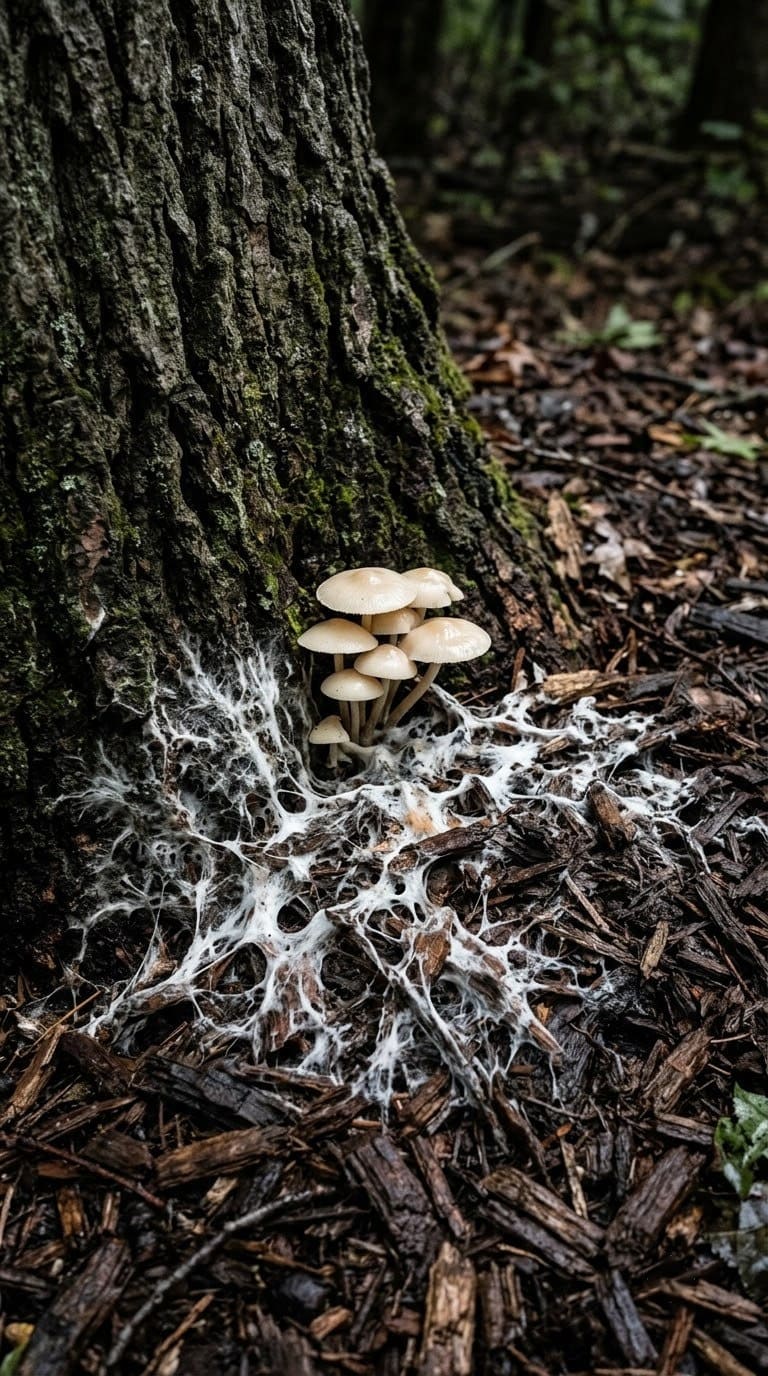
Some fungal activity in mulch is normal and even good, since that’s decomposition doing its job out in the open ring. What you don’t want is a thick white webbing, a slimy layer, or a cluster of mushrooms right where the mulch meets the bark.
That concentration against the trunk means the spot is staying wet and airless, which is the same condition that rots the bark. Certain fungi that live in constantly damp mulch also produce a crust that makes the water-repellent problem worse.
Quick tip: Rake the pile open, pull it off the trunk, and let sun and air at the base for a few weeks before you reshape the donut. You don’t need a fungicide. You need the spot to dry out.
8. Vole runways, chewed bark, or borer holes at the base
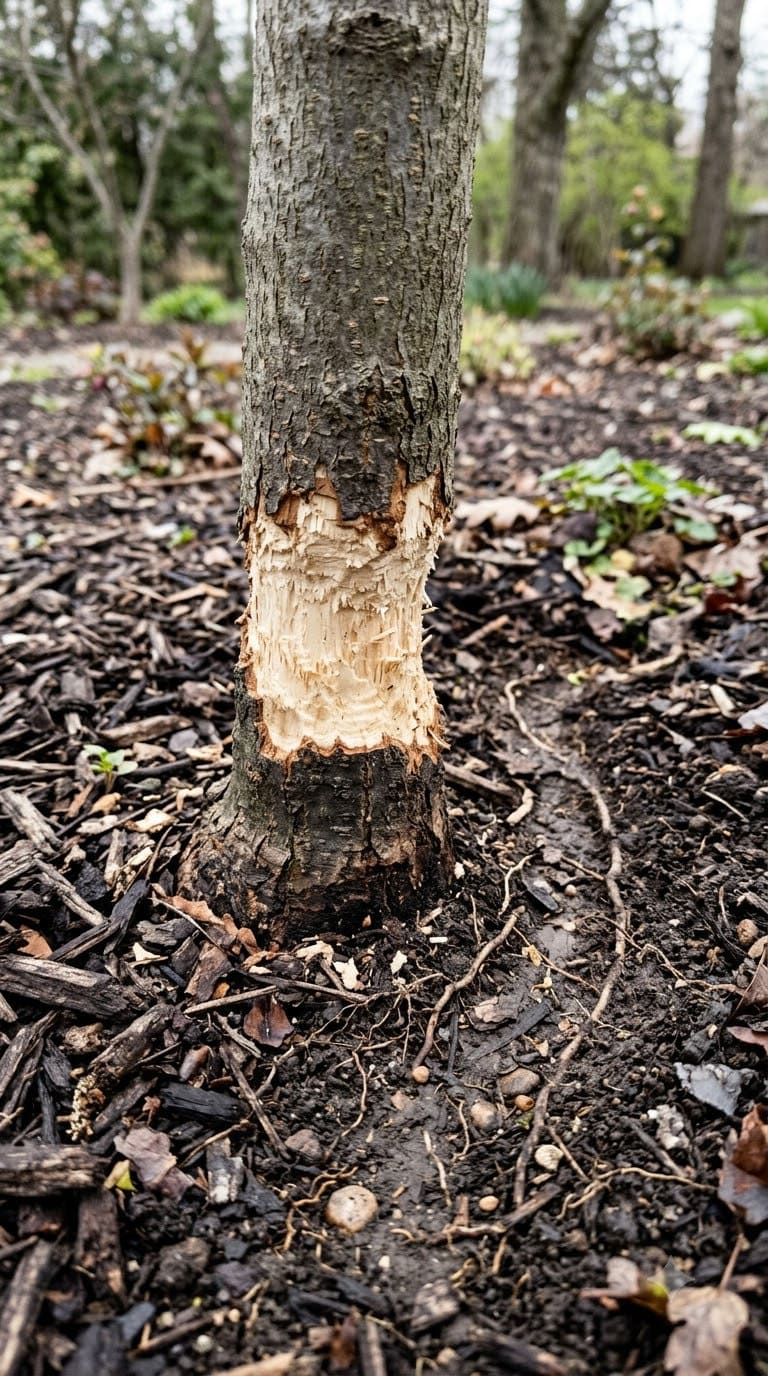
A deep mulch pile against a trunk is a five-star hotel for voles and mice. They tunnel through it, hidden from hawks and cats, and they chew the tender bark at the base all winter. If a mulched tree suddenly fails to leaf out in spring, check for a ring of gnawed bark under the mulch, because that girdling is often fatal.
Stressed trees also draw wood-boring insects. Boggs notes that trees weakened by deep mulch become targets for opportunists like the flatheaded appletree borer, which you’d spot as D-shaped holes or sunken, cracked patches on the lower trunk.
Quick tip: Keeping the mulch 8 to 10 inches off the trunk removes the cover voles need. A cylinder of hardware cloth around the base of a young tree, dug in an inch or two, stops them without trapping moisture the way a solid wrap can.
What the research actually says
It’s worth being honest here, because the internet is not.
A 2025 systematic review in the International Society of Arboriculture’s journal Arboriculture and Urban Forestry went through 11 peer-reviewed studies published between 1989 and 2023. Its conclusion was careful.
No study found that trees planted with 2 to 4 inches of mulch had lower survival than trees with none. Negative effects mostly showed up past 4 inches, but the research is inconsistent enough that there’s no firm maximum depth you can point to.
The reviewers did flag one thing clearly. Fine, low-porosity mulch piled deep behaves a lot like planting the tree too deep in the first place, and that is genuinely bad. Coarse mulch caused fewer problems in the studies.
So the takeaway isn’t “any mulch over 4 inches kills trees.” It’s that the reliable warning signs are physical and local: the flare buried, the bark wet, fine mulch matted over the root zone. A ruler reading of 5 inches of chunky bark chips on a healthy-looking flare is a nudge to spread it out, not an emergency. A trunk you can’t find under a cone of packed shredded mulch is the emergency.
How do you fix a mulch volcano without hurting the tree?
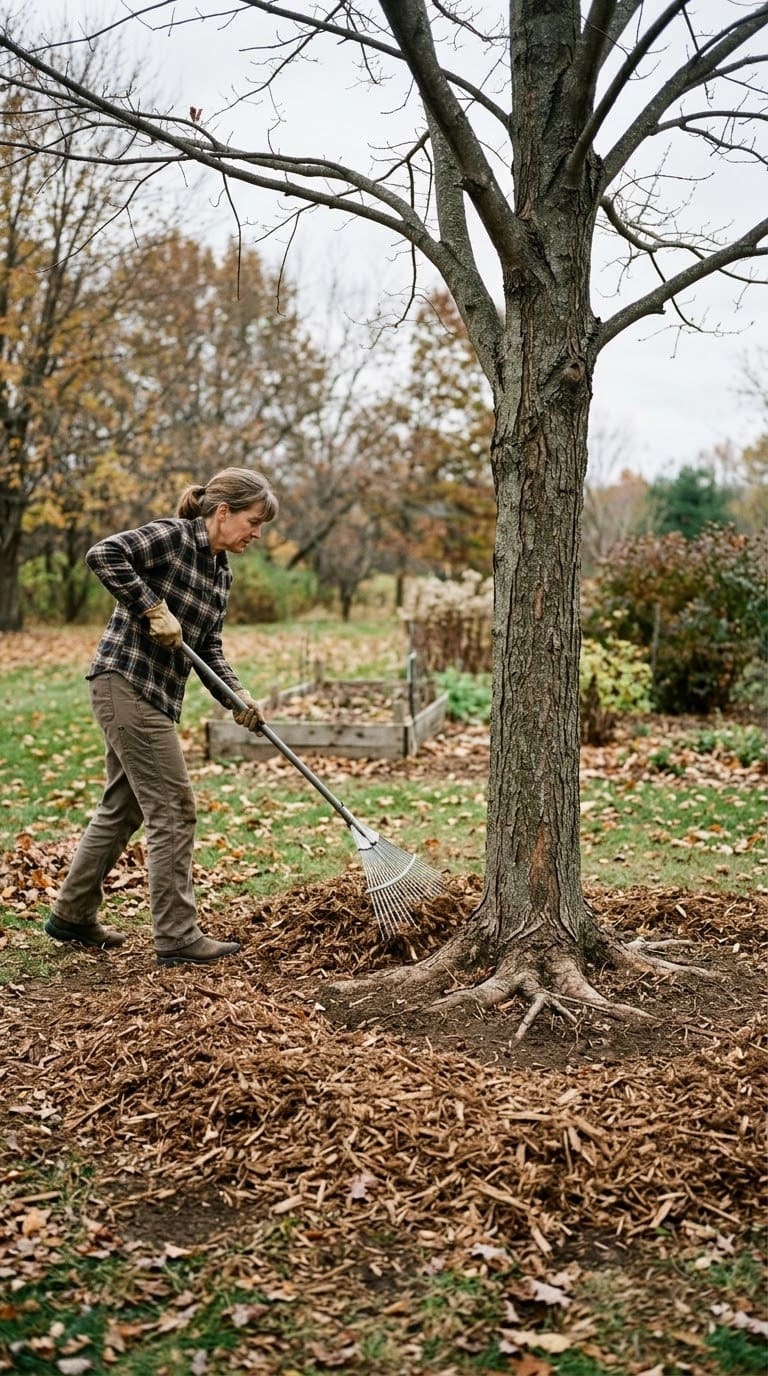
The fix is free and it takes an afternoon. Do it when the mulch is damp, since dry mulch flies everywhere and wet-heavy mulch tears roots.
Start pulling the mulch away from the trunk with your hands or a light leaf rake. Work outward, lowering the whole pile as you go. Keep going until you can see the root flare and the top of the first structural roots.
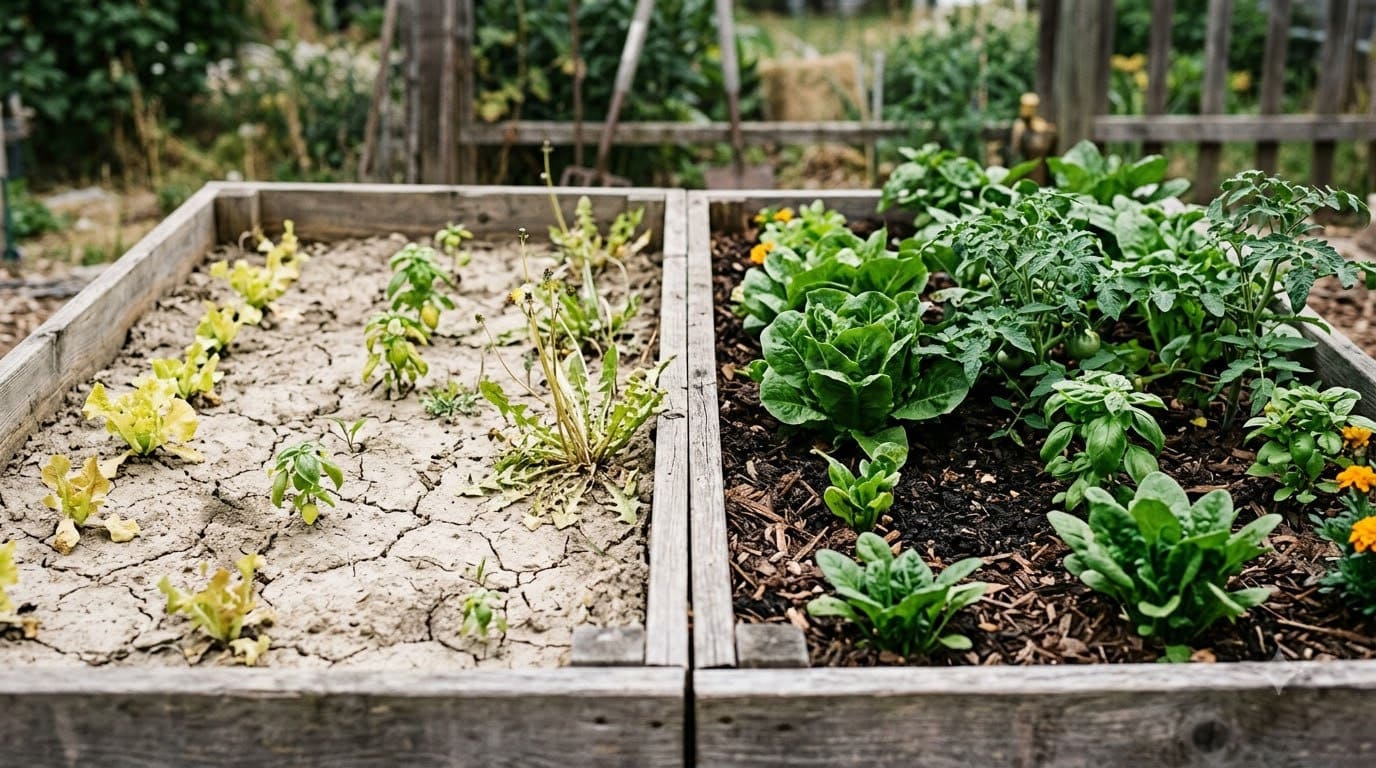
Penn State’s guidance is to expose that flare carefully without gouging the bark, then spread the excess mulch outward to a proper 2 to 3 inch depth toward the edge of the canopy. If you end up with way too much mulch, haul the extra to your flower beds or vegetable rows instead of leaving it on the tree, where partly broken-down mulch is genuinely useful for building soil.
Stop at the flare. If you find roots already circling the trunk, do not start cutting them yourself.
On an established tree that’s an ISA certified arborist’s call, often with an air spade, because removing a large girdling root the wrong way can wound or destabilize the tree. Call an arborist too if a third of the canopy is thin or dead, or the base bark is soft over a wide area.
One caution on young trees. The swollen bump low on a grafted tree, common on fruit trees and some ornamentals, is the graft union, not the root flare.
That’s supposed to sit above the soil. The flare is lower, right where the roots spread.
What we learned the hard way
A few things that only clicked after doing them wrong.
Depth creeps. Nobody sets out to build a volcano. You add two inches of fresh mulch every spring for color, never rake off the old layer, and four years later there’s eight inches of it packed against the trunk.
Now we pull the old mulch back to the flare first, then add maybe an inch of fresh only if the ring actually looks thin.
The tree hides it. We had a red maple that looked completely healthy for years over a buried flare.
The spring the canopy finally came in sparse was the spring we dug down and found bark already going soft and two roots starting to circle. By then it was an arborist visit, not a rake.
Tell the landscaping crew once, in writing. Ours rebuilt the volcano every single spring because “mulch up to the trunk” is just muscle memory for a lot of crews. A one-line note on the work order, keep mulch six inches off all trunks, root flares visible, fixed it.
And bare dirt in the middle looks unfinished for about a week, then you stop noticing, and the tree is better for it. A correct donut still beats bare soil for holding water and keeping the mower away. It’s the same low-cost, high-impact move as a clean mulched bed anywhere else in the yard, just shaped right.
Frequently asked questions
Is a little mulch touching the trunk really that bad? A thin dusting that washes off is not a crisis. Mulch actively packed against the bark is, because it holds moisture against tissue that needs to stay dry and gives rodents cover. The safe rule is a visible gap all the way around, no contact.
How do I find the root flare? Sweep mulch and loose soil away from the trunk with your hand or a soft brush until the trunk stops going straight down and starts widening, or until you meet the first thick root running outward. On a tree that’s been over-mulched for years, that can be 4 to 8 inches down.
Should I just use bare soil around my tree instead? No, a correct 2 to 3 inch donut kept off the trunk still beats bare soil. It holds moisture, blocks weeds, moderates soil temperature, and keeps mowers and string trimmers away from the bark. The problem is never mulch, it’s the volcano shape.
Can an over-mulched tree recover? Often, if you catch it before the base bark is badly rotted or the canopy is more than a third gone. Pull the mulch back to expose the flare, let the bark dry, and give it a couple of seasons. Trees with established girdling roots or widespread bark decay are a coin flip and need an arborist.
How often should I add mulch around a tree? Check the depth once a year and top up only to keep it in the 2 to 4 inch range for coarse mulch, or 1 to 2 inches for fine. Most years that’s a light refresh, not a full bag. Rake and fluff the existing layer before deciding you need more.
Is dyed or rubber mulch worse for trees? Dyed wood mulch is not meaningfully worse than plain, though the color fades and the dye can stain hardscape. Rubber mulch does not break down to feed the soil, can leach compounds, and still traps moisture against bark if you pile it on the trunk, so it earns no free pass on the volcano rule.
Related Posts
Products We Recommend
This post contains affiliate links. We may earn a commission on qualifying purchases at no extra cost to you.
COSITA 10-Tine Wide Garden Pitchfork
Wide lightweight fork for lifting and spreading bark mulch and pulling a volcano back into a donut without compacting the layer
Shop Now
NISAKU NJP650 Hori-Hori Weeding Knife
Serrated stainless digging knife with a 7.25-inch blade for gently uncovering a buried root flare and slicing through matted mulch roots
Shop Now
MUDEREK Metal Mesh Tree Trunk Protector
Vented expandable metal mesh cylinder that keeps voles and string trimmers off young trunks without trapping moisture against the bark
Shop NowNever miss an update — choose FarmFoodFamily as your preferred source on Google.
How it works: Tap the button below to open Google's settings page, then check the box next to FarmFoodFamily.
Tap the checkbox to turn it blue — that's how you know it's set.