15 Clever Backyard Privacy Ideas for Every Budget
You can screen a backyard for $40 or for $8,000. Both can look great. What matters is matching the fix to your fence-height limit, your property line, and whether the neighbor looks across your yard or straight down into it.

Never miss an update — choose FarmFoodFamily as your preferred source on Google.
How it works: Tap the button below to open Google’s settings page, then check the box next to FarmFoodFamily.
Tap the checkbox to turn it blue — that’s how you know it’s set.
Privacy is the thing people miss most about their yard. A patio feels different when you can’t relax on it without a neighbor tracking every move.
The good news: you have options at every price. But the cheap fixes and the expensive ones solve different problems, so the price is not really the question. The real question is which one matches your situation.
Quick Answer
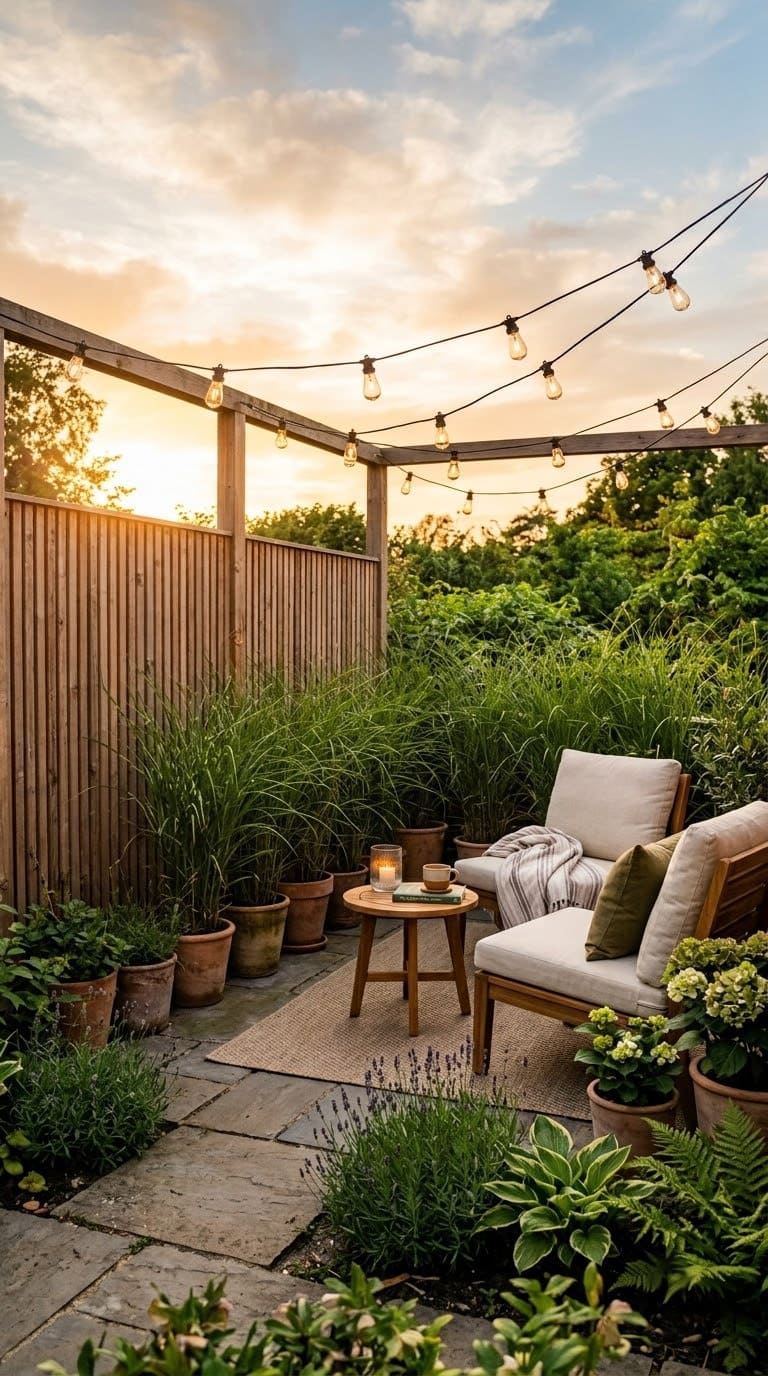
The cheapest backyard privacy fixes cost $30 to $150 and go up in an afternoon. Think outdoor curtains on a cable, a roll of bamboo reed screening zip-tied to an existing fence, or a green shade-cloth panel laced onto chain-link. Mid-range projects run about $150 to $800 and need basic tools: lattice toppers on a fence you already have, a trellis with climbing vines, or a cedar planter with a built-in screen.
A full installed privacy fence is the big spend at roughly $2,500 to $8,000. A mixed evergreen living screen costs $600 to $3,000 in plants, plus two to four years to fill in.
One catch matters most: if a neighbor’s second-story window looks down into your yard, no fence height helps. You need something overhead, like a pergola with shade panels, a large umbrella, or a shade tree. Check your local fence-height limit and setback first.
Before You Start: 4 things that decide which idea works
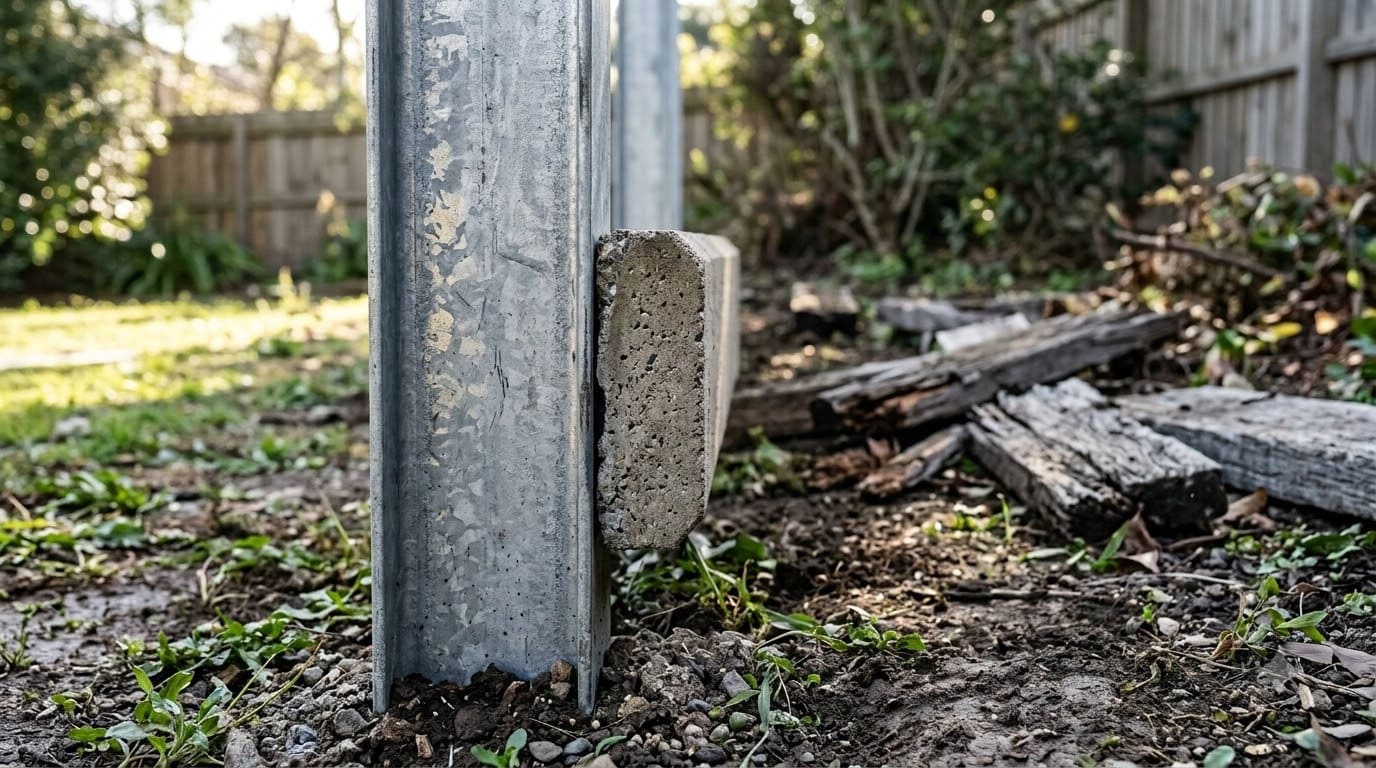
Your fence-height limit and permit. Most towns cap backyard fences at 6 feet, and front-yard fences at 3 to 4 feet. Anything taller usually needs a variance. Call your building department before you buy materials. An HOA can add its own rules on top, including banned materials.
Answer 4 quick questions and get matched to the exact fix for your yard — drainage, budget, layout, or something else entirely.
Take the Free QuizYour property line and your neighbor. Setback rules often require a fence or hedge to sit a foot or two inside your line, and privacy trees 3 to 6 feet back. Talk to the neighbor before you plant or build on the line. Disputes over shade, roots, and maintenance access are the reason a lot of screens get torn out.
Where the view actually comes from. A fence blocks a sightline that runs across your yard. It does nothing for a raised deck or a second-story window looking down. If that’s your problem, skip ahead to the overhead ideas: a pergola with panels (idea 11) or a shade tree (idea 15).
Instant versus grow-in. Panels, fences, and screens work the day you install them. Plants are cheaper per foot but take two to four years to screen. Many people do both: a panel now, a hedge growing in behind it.
How much does backyard privacy actually cost?
| Tier | Typical spend | Time to install | Works the day it’s done? | Best for |
|---|---|---|---|---|
| Quick fixes | $30 to $150 | 1 to 3 hours | Yes | Renters, one problem spot, testing an idea |
| Weekend DIY | $150 to $800 | Half a day to a weekend | Yes | Homeowners with basic tools |
| Bigger builds | $800 to $8,000+ | 1 day to several weeks | Fence and wall yes, living screen no | Whole-yard privacy, long-term |
Tier 1: Quick, cheap, and renter-friendly (under about $150)
1. Hang outdoor curtains on a cable
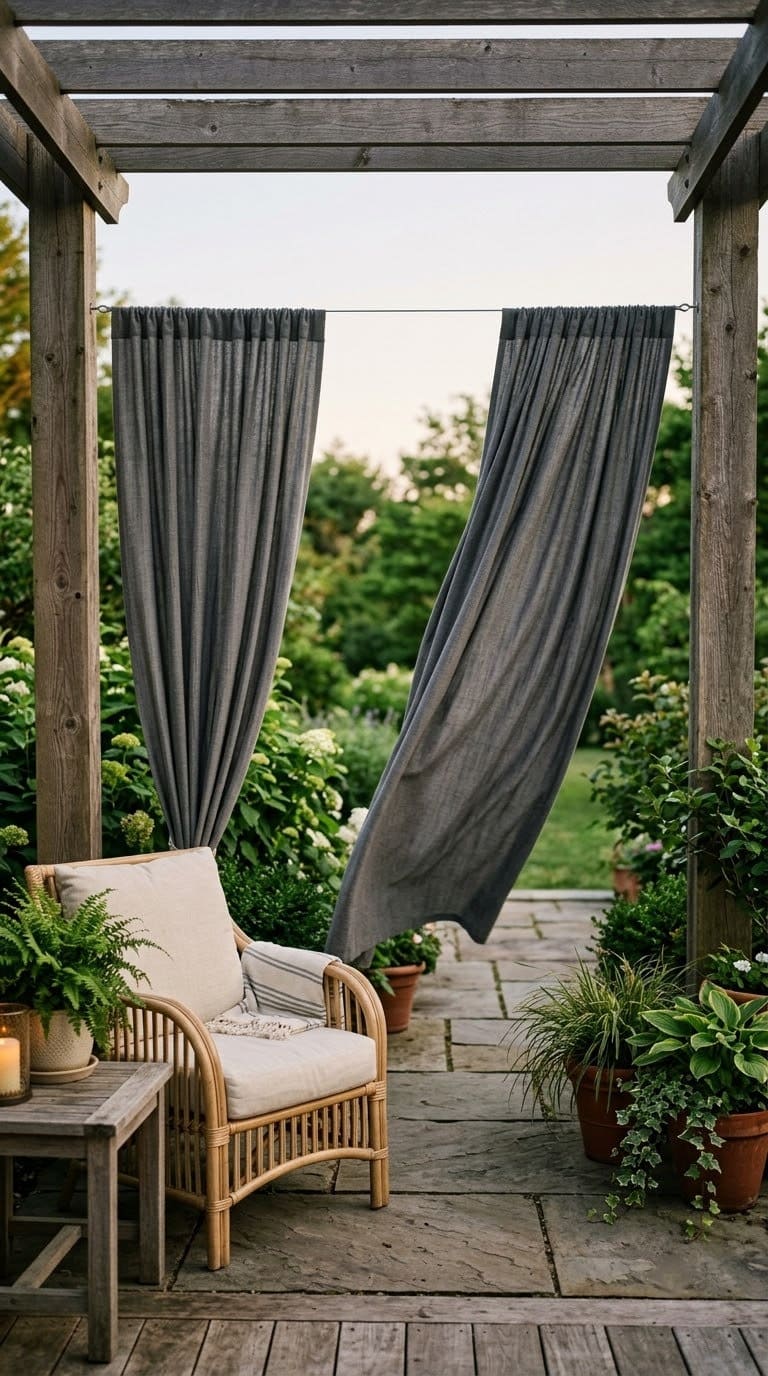
Budget: about $50 to $120. Run a coated steel cable or a heavy tension rod between two posts or a pergola. Then thread outdoor curtain panels on rings. Each panel runs $15 to $40, and a cable kit is $20 to $40.
Buy panels rated for outdoor use with grommets, and get a color a shade darker than you think. Pale curtains glow and show every stain. Weight the hems with a chain or curtain magnets so they don’t billow into the yard on a breezy afternoon.
This is the fastest reversible fix for a rental. Tie the panels back when you want the view. Close them when you’re using the space.
It pairs well with idea 11 if you already have a pergola frame. For a hard doorway, this rundown of patio door curtain setups covers the indoor-outdoor version.
Most yard problems trace back to one specific, fixable cause. Find yours in 4 quick questions.
Take the Free Quiz2. Roll bamboo or reed screening onto an existing fence
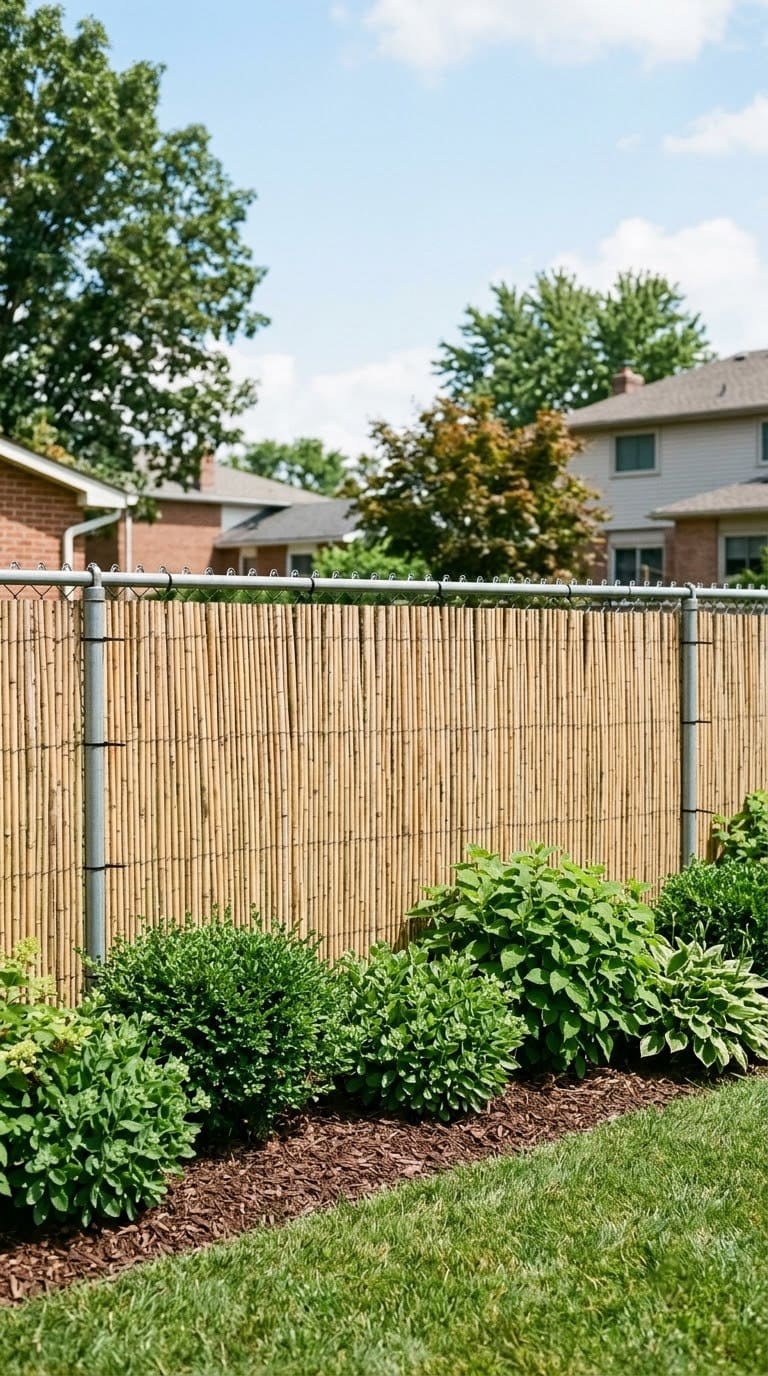
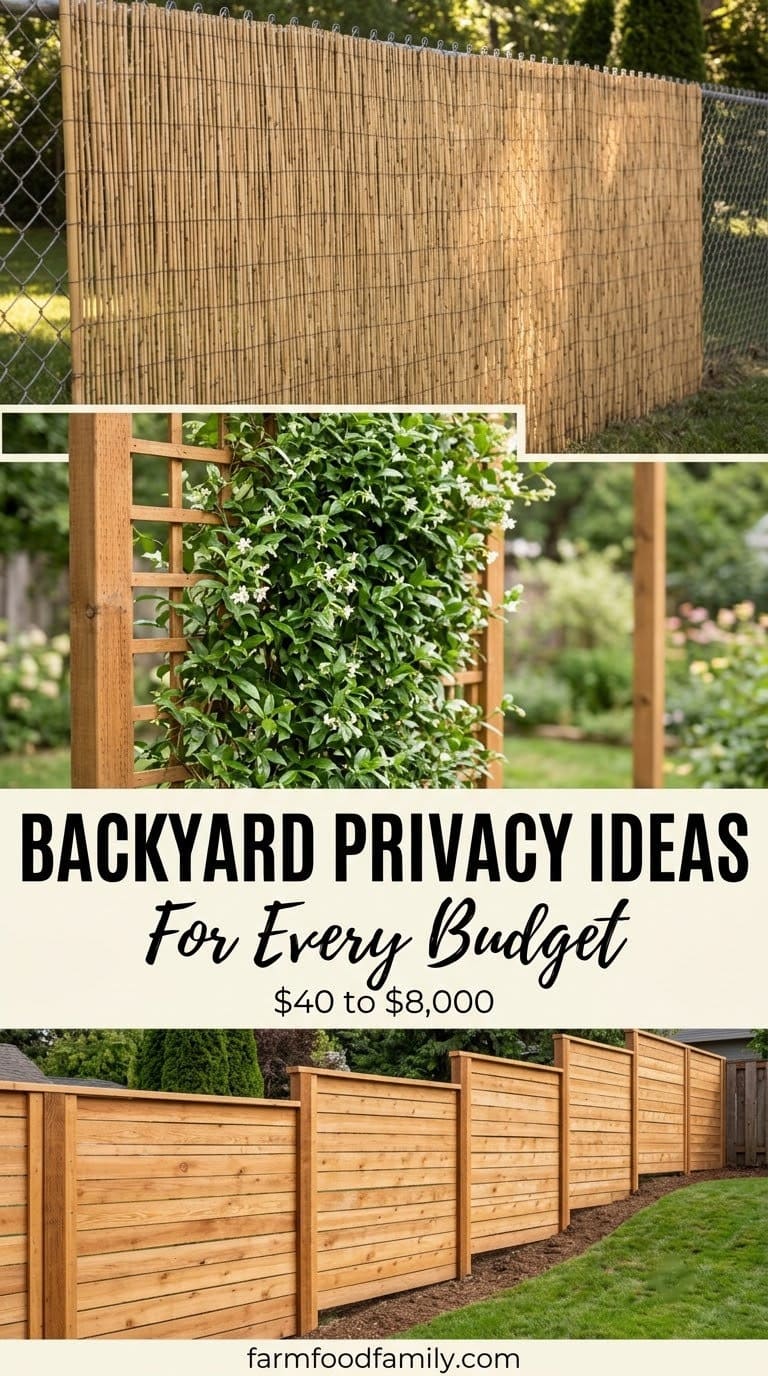
Budget: about $30 to $80 per section. A 6-foot by 16-foot roll of bamboo or reed fencing is $30 to $60. Unroll it against a chain-link or wire fence, then fasten it every 12 inches with black UV-rated zip ties or galvanized wire.
Overlap seams by a few inches so you don’t get light gaps as the reeds shift. Trim the top with sharp shears for a clean line. On a windy site, add a horizontal furring strip top and bottom to keep the roll from bowing.
Expect three to five years from reed and a bit longer from thicker bamboo cane before sun and weather make it brittle. It’s the cheapest way to turn an ugly chain-link line into something calm, and it reads as a natural cousin to a full bamboo fence build.
3. Lace a green shade-cloth screen onto chain-link
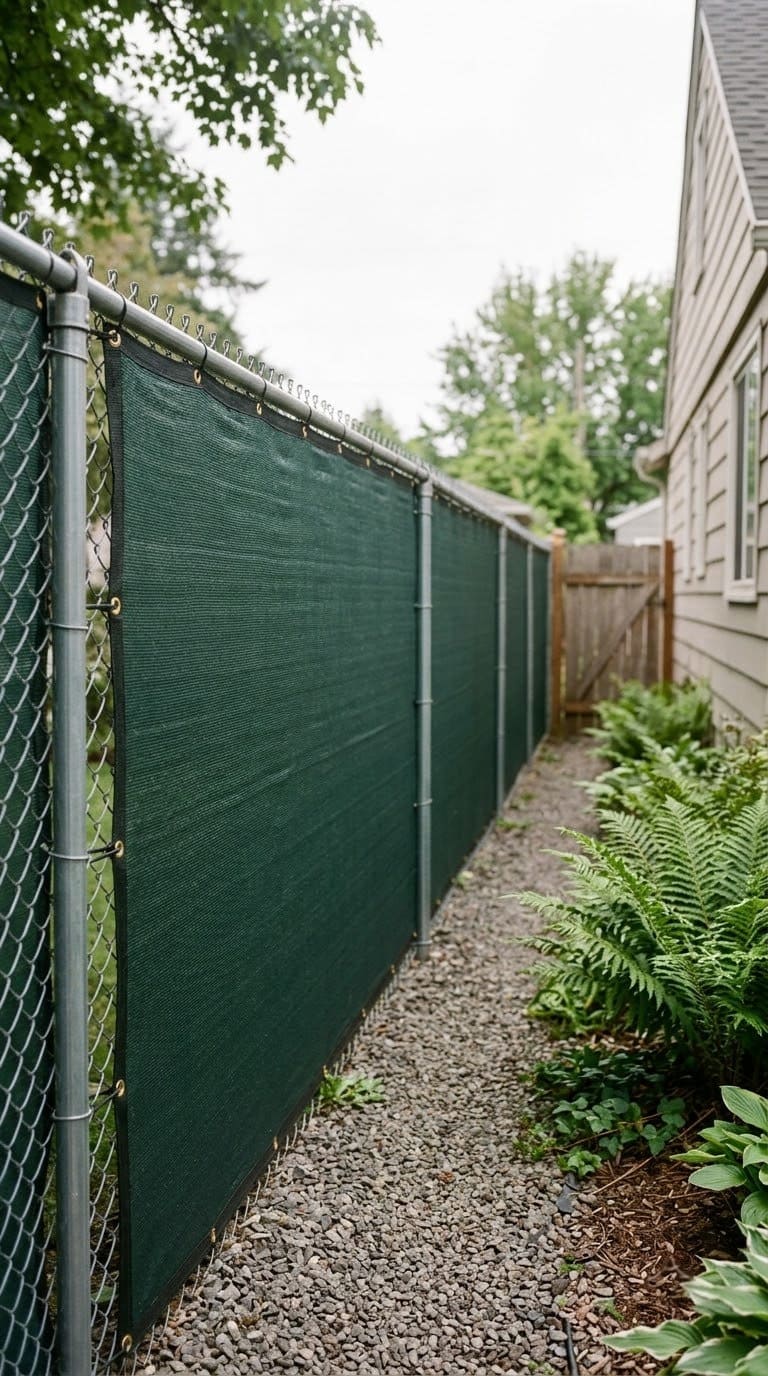
Budget: about $30 to $90 per run. A 6-foot by 50-foot roll of privacy shade cloth or windscreen mesh is $30 to $80. It comes with grommets along the edges. Lace it to the chain-link with a continuous cord or zip ties through every grommet.
Choose a mesh density of 85 to 95 percent for real screening. Anything near 70 percent still lets people see shapes moving.
Dark green and brown disappear against planting. Leave the bottom few inches open so wind passes through instead of pushing the whole fence over.
It’s not pretty up close, so this one is best where a hedge will eventually take over, or along a side yard nobody lingers in. That narrow strip along the house is exactly the kind of spot these side-yard fixes are built for.
4. Group potted grasses and clumping bamboo into a movable wall
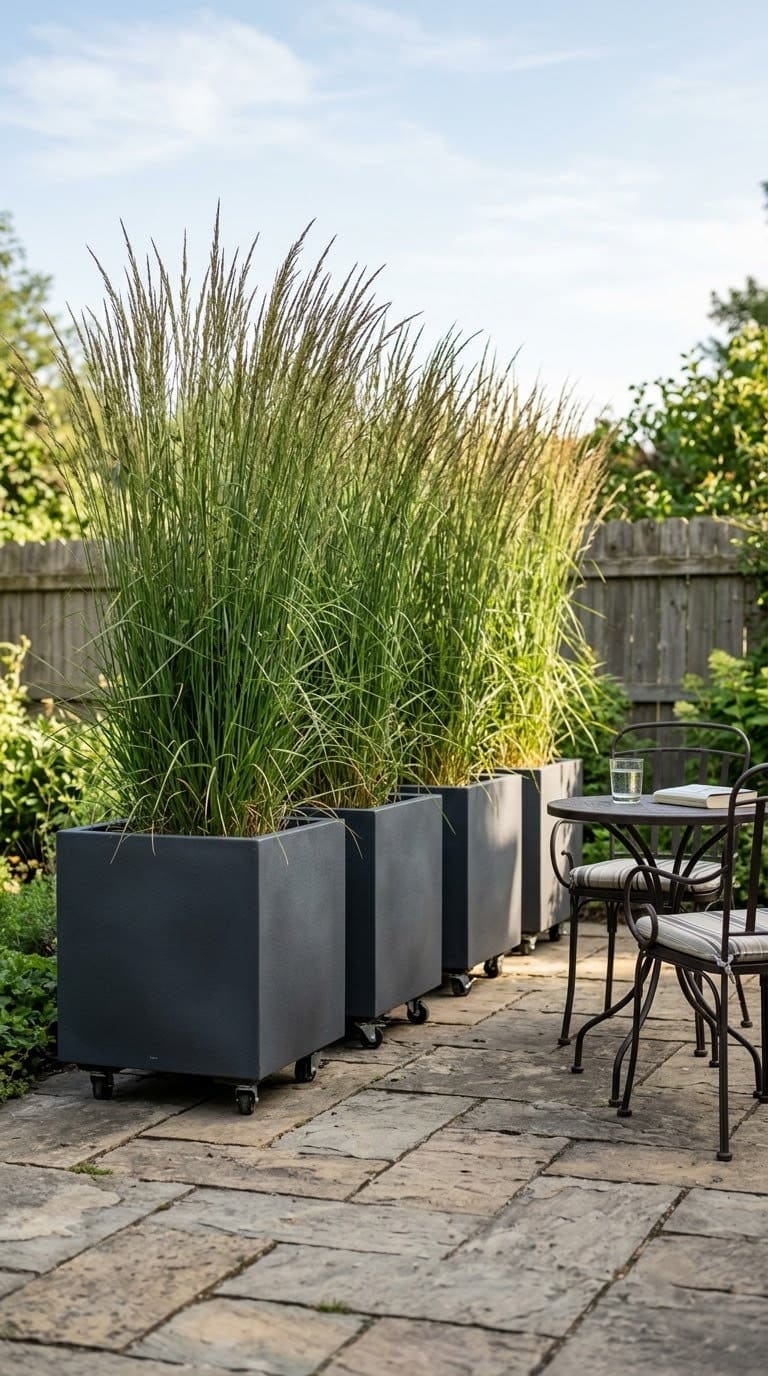
Budget: about $150 to $500 for a 10-foot run. Line up three to five large planters, 20 inches across or bigger, and fill each with a tall grass like feather reed grass or a clumping bamboo. A 3-gallon clumping bamboo is $40 to $70, and a big resin planter is $40 to $120.
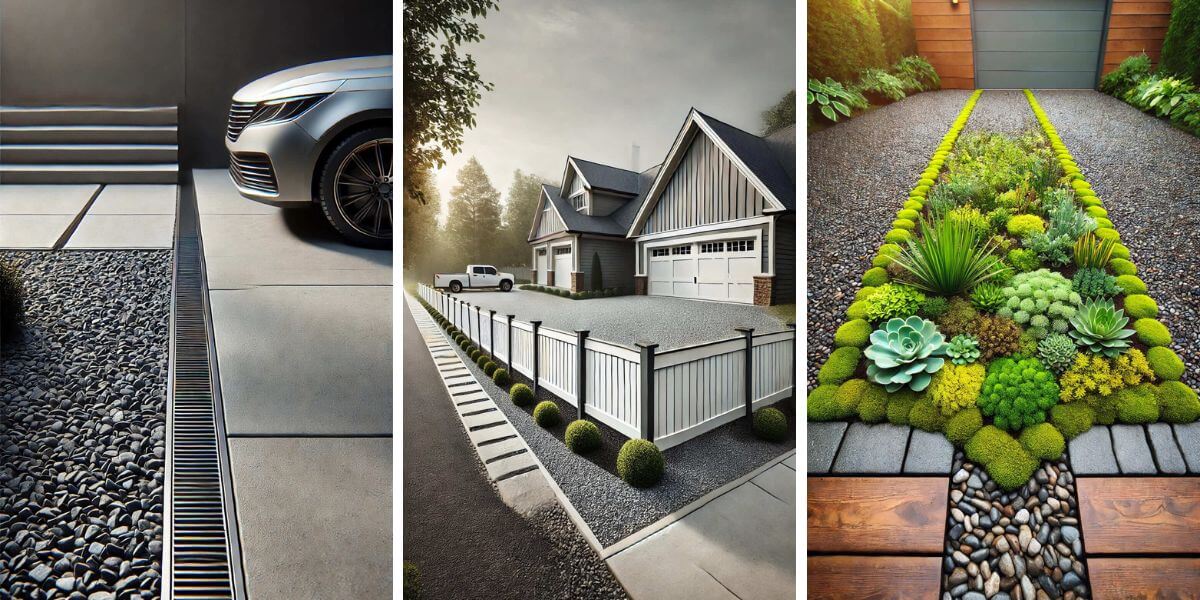

Keep bamboo in containers, always. The Elisabeth C. Miller Library at the University of Washington worked with garden designer Chris Pfeiffer on its screening guide.
It puts the bamboo rule plainly: grow it “in a container, or a series of containers, as you do not want the roots to spread.” Choose a clumping type such as Fargesia, never a running type, even in a pot.
Set the planters on wheeled bases so you can shift the wall for a party or drag it under cover for winter. Miscanthus and switchgrass give you 5 to 7 feet of soft screening by midsummer and cost even less. This works beautifully in front of a plain fence you can’t change, the same layering trick our along-the-fence planting guide walks through.
The average homeowner spends $616/year on yard fixes that don't address the real problem. Find out what yours actually is — before you spend another dollar.
Take the Free Quiz5. Set up a freestanding folding privacy screen
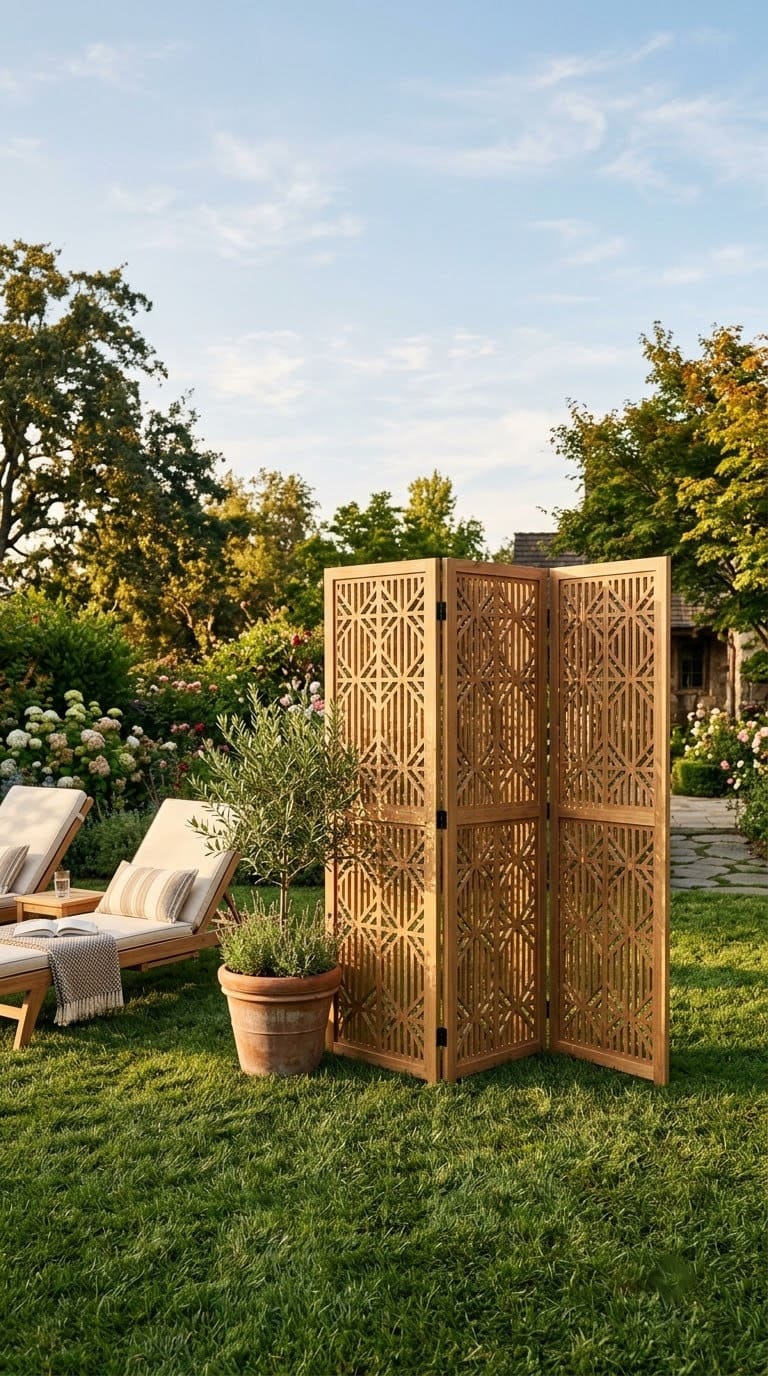
Budget: about $60 to $250. A folding wood, resin, or metal screen panel is $60 to $200. It stands on its own, folds flat, and moves wherever the sun or the sightline moves.
Anchor it. A 5-foot screen catches wind like a sail.
Drive two rebar stakes behind the feet, or set the end panel against a heavy planter. Angle a three-panel screen into a shallow V rather than a straight line so it braces itself.
This is the “just this corner” solution: block the hot tub, the dining chairs, or the one lounge chair that faces the neighbor’s kitchen window. It leaves the rest of the yard open. For a deck specifically, our deck privacy guide covers rail-mounted versions that don’t take up floor space.
Tier 2: Weekend DIY (about $150 to $800)
6. Add a lattice or slat topper to an existing fence
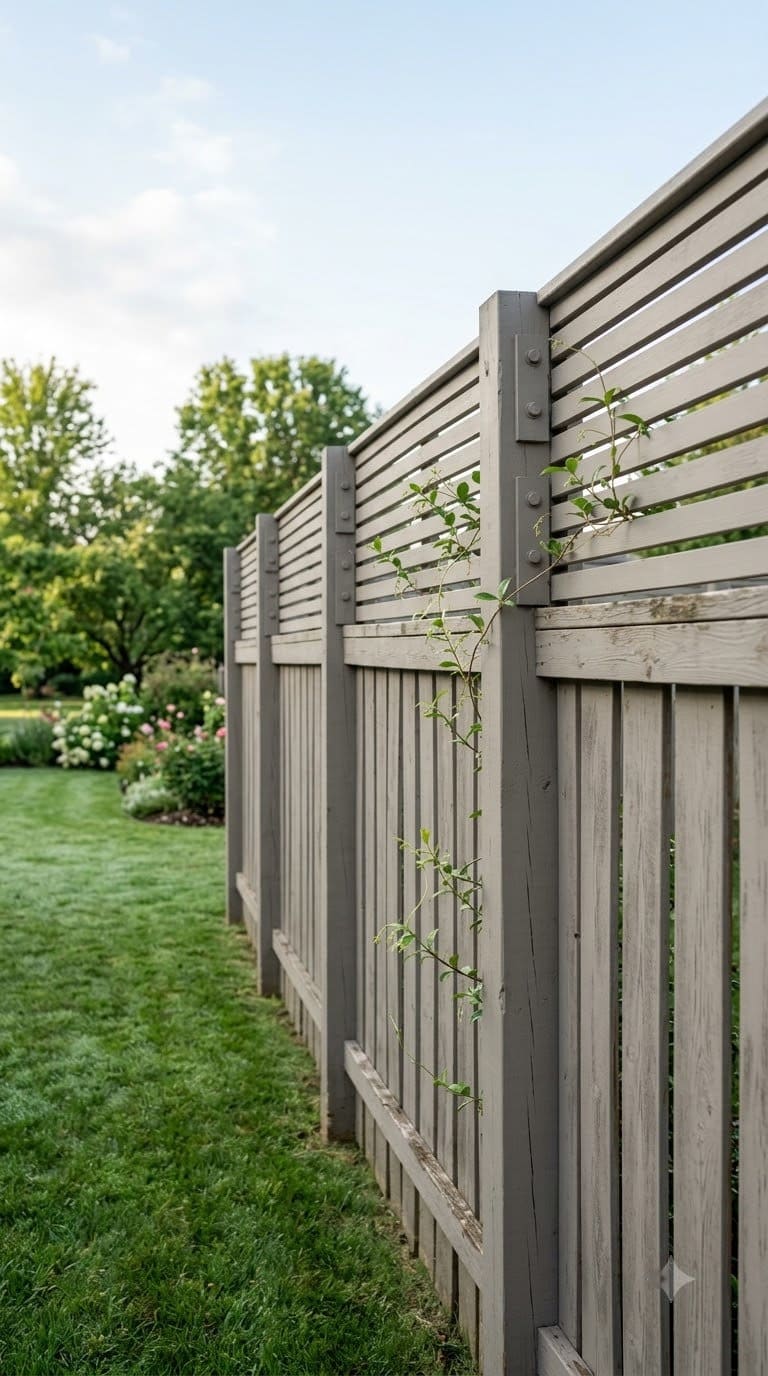
Budget: about $150 to $500. If your fence is 4 feet and the neighbor still sees over it, add 18 to 24 inches of lattice or horizontal slats on top. A 4-by-8 lattice sheet is $25 to $45, and a framed slat panel is $60 to $150.
Check the height rule first. In many towns an open lattice topper is treated differently from solid fence and may be allowed above the 6-foot line, but confirm it. Bolt new 2-foot post extensions to the existing posts with carriage bolts, then set the lattice in a simple frame between them.
Leave the lattice open, or grow a light vine through it for a softer look without the full weight of a solid wall. Painted the same color as the fence, a topper looks original rather than added on. It’s the cheapest way to buy privacy from a raised deck next door, short of the pergola in idea 11.
7. Build a trellis and plant climbing vines
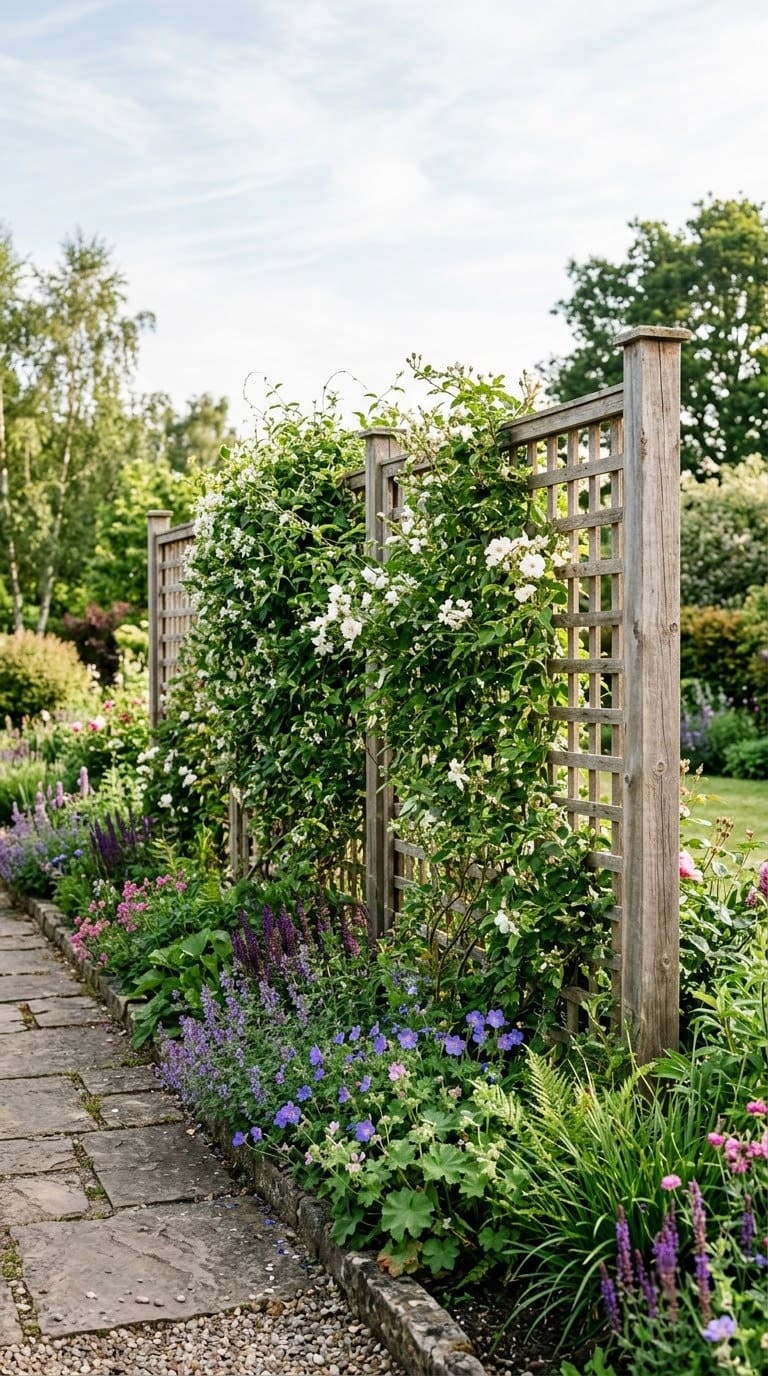
Budget: about $80 to $400. A wood or metal trellis panel is $25 to $120. Set two or three in a row on posts sunk 2 feet in concrete. Plant a fast annual like morning glory or hyacinth bean the first year for instant cover, then a perennial vine to take over.
The Miller Library guidance is useful here: an evergreen vine on a trellis gives you screening height “without extensive plantings,” which matters when you don’t have room for a hedge. Star jasmine, evergreen clematis, and climbing hydrangea all hold leaves through winter in mild zones. Give the perennial a season or two before you judge it.
Space the trellis 6 to 12 inches off a wall so air moves behind the foliage and the wood lasts. A trellis reads as a garden feature, not a barricade, which is why it’s one of the gentler options in this roundup of fence-and-trellis combinations.
8. Make a cedar planter box with a built-in trellis screen
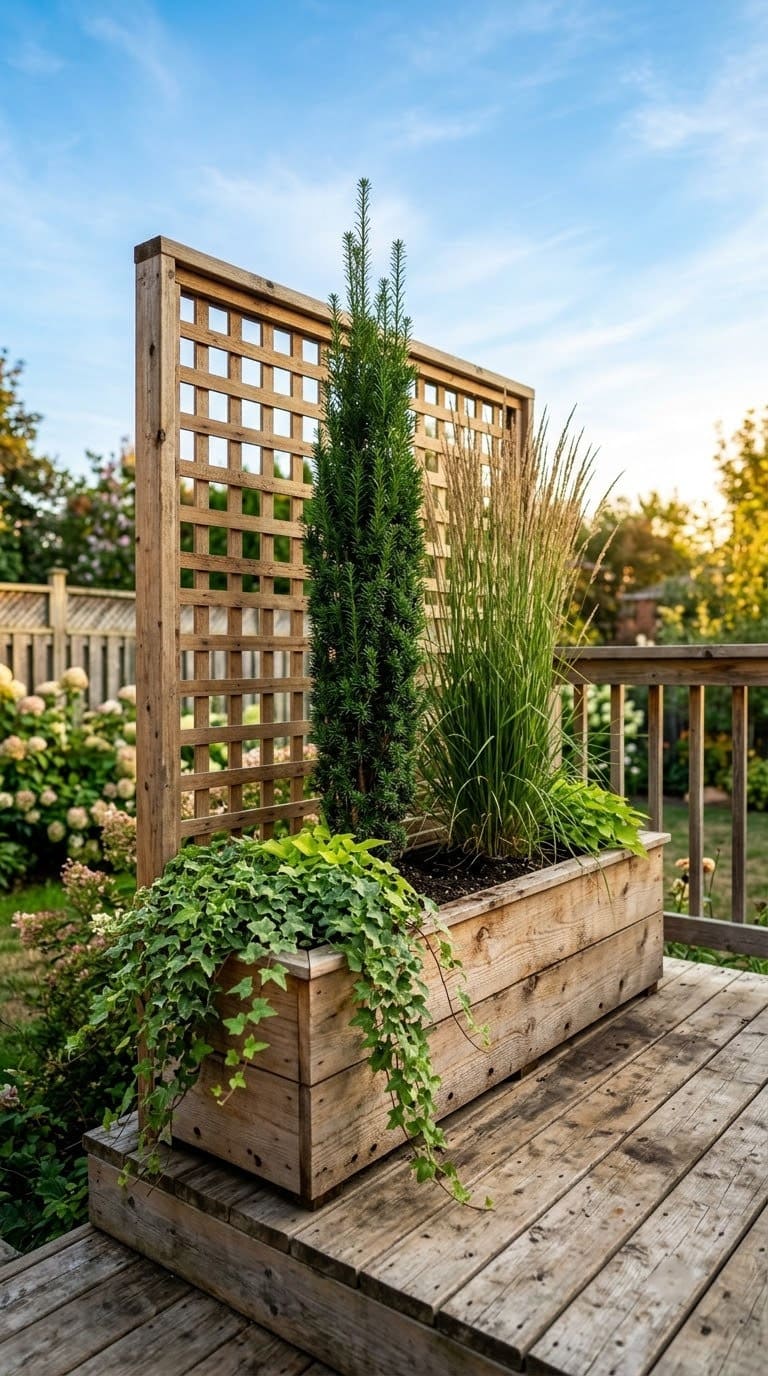
Budget: about $150 to $450. Build a long cedar planter, roughly 4 feet by 16 inches by 18 inches deep, and attach a 4 to 5-foot trellis panel to the back. Cedar lumber for one runs $120 to $250. Fill it with a mix of a small evergreen, a grass, and a trailing plant so it screens at three heights.
Line the inside with landscape fabric, not plastic, and drill weep holes every foot along the base. A planter that holds water rots from the inside in two seasons.
Put it on casters rated for the loaded weight if you want it movable, since wet soil is heavy.
This is the renter-and-owner favorite because it’s a finished-looking piece of furniture that happens to block a view. Stand two at an L to wrap a seating corner. It’s a step up from the loose pots in idea 4, with a structure the plants can actually climb.
9. Frame a corrugated metal and wood privacy panel
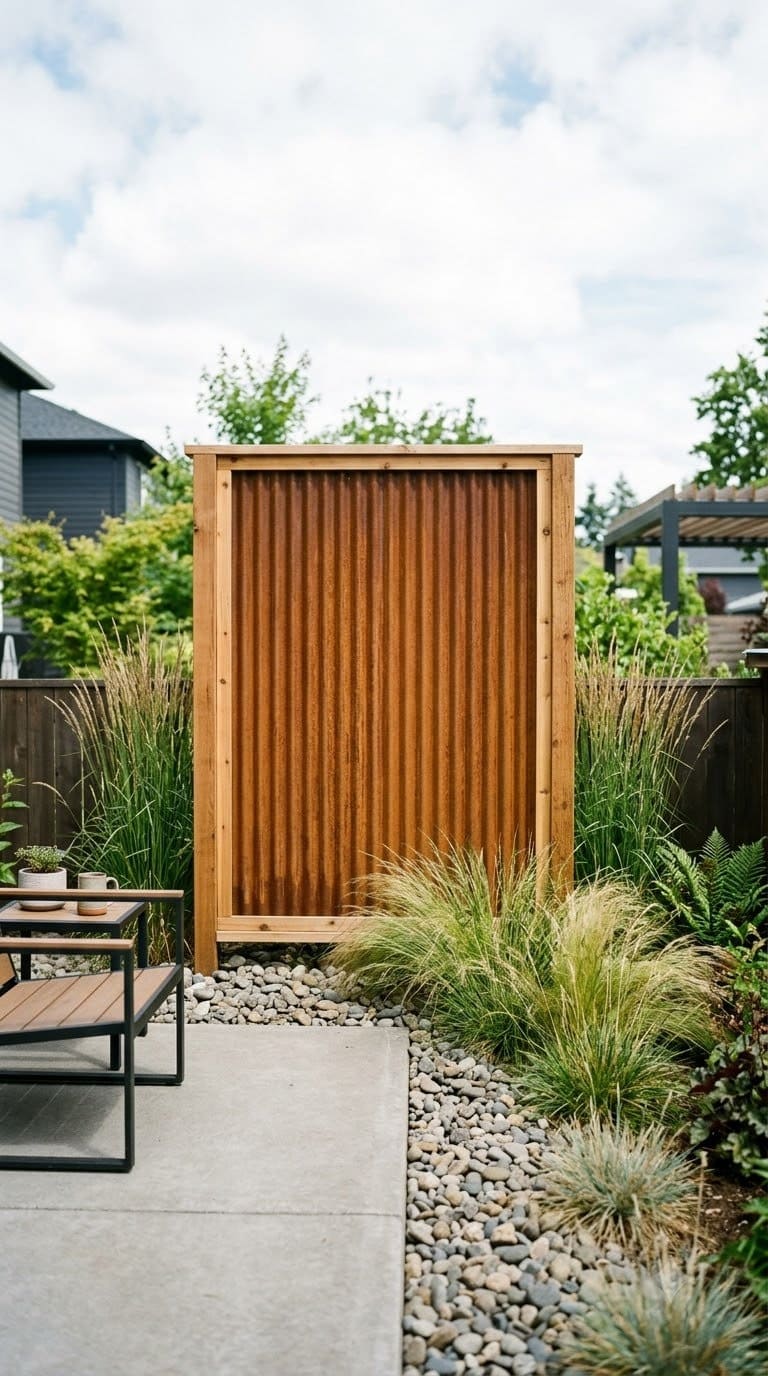
Budget: about $200 to $600 per section. A corrugated steel panel is $25 to $40. Build a simple cedar or pressure-treated frame, 4 to 6 feet wide, and screw the panel inside it with rubber-washered screws so it doesn’t rattle or leak rust streaks.
Wear gloves and file the cut edges, because corrugated sheet is sharp.
Overlap panels by one ridge if you run several. Galvanized reads farmhouse, and a dark powder-coated or weathering-steel panel reads modern.
Metal gives you a solid, maintenance-free screen for a fraction of a full fence, and it throws almost no shadow footprint. Use it for the one section that faces the street or the driveway. This look at corrugated metal fencing covers running it as a full fence line if the test section works.
10. Stretch an evergreen vine over a cattle-panel screen
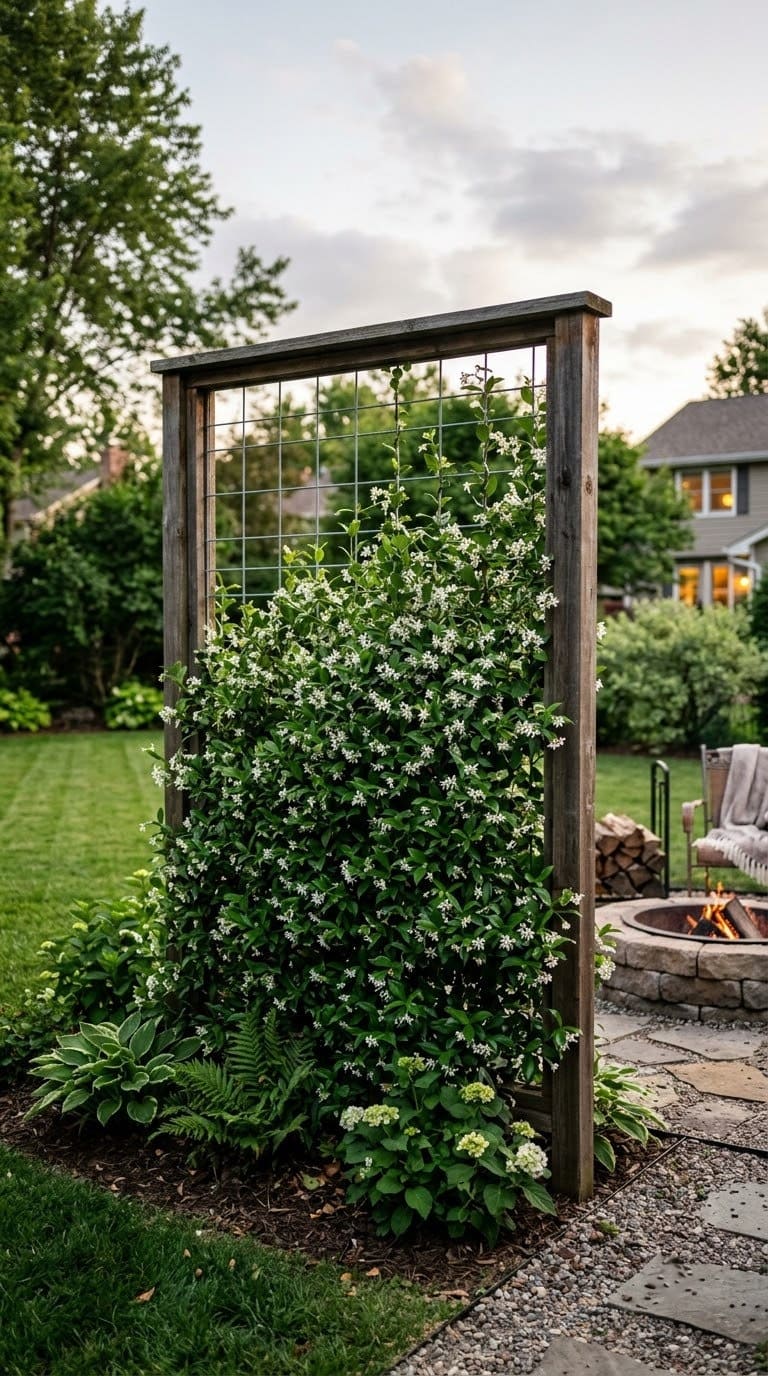
Budget: about $150 to $350 per section. A 16-foot galvanized cattle or hog panel is $30 to $45. Cut it to size with bolt cutters, frame it in wood, and set it on posts. The grid is rigid, so it needs no wire support for climbers.
Plant a vigorous evergreen or semi-evergreen vine at each end and one in the middle. Confederate jasmine, akebia, or a hardy passionflower will cover a panel in one to two seasons and stay covered. Keep the vine off any shared fence so pruning stays on your side of the line.
The panel itself is nearly invisible once green, and the cost per linear foot beats almost everything except a bare reed roll. It’s the middle ground between the light trellis in idea 7 and a full living screen.
11. Put up a pergola with shade panels or a curtain wall
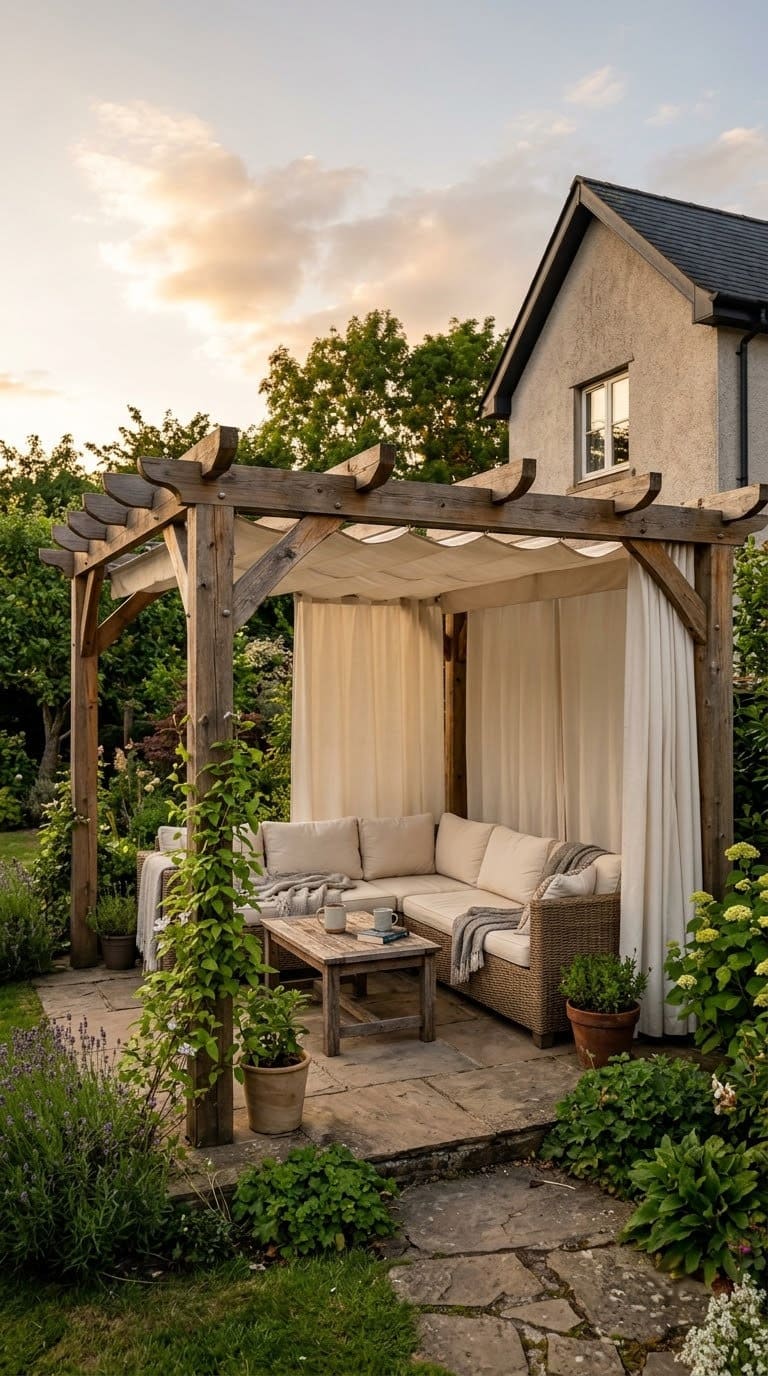
Budget: about $400 to $3,000. This is the one idea that fixes overhead overlook. A pergola kit is $300 to $3,000, and roller shades or fabric panels are $40 to $150 each. Hang panels on two or three sides and add a retractable shade or slats overhead.
Size the footings for your area’s wind and, in snow country, for load. A pergola that screens a second-story sightline has to be tall enough for the panels to break the angle.
Measure from your seat to the window and check the geometry before you build.
Overhead cover changes how private a space feels more than any vertical screen. Grow a wisteria or grape over the top for a living roof once the structure proves out. There’s a full range of styles in this pergola idea collection, including lean-to versions that attach to the house.
Tier 3: Bigger builds and living screens (about $800 to $8,000+)
12. Install a full privacy fence
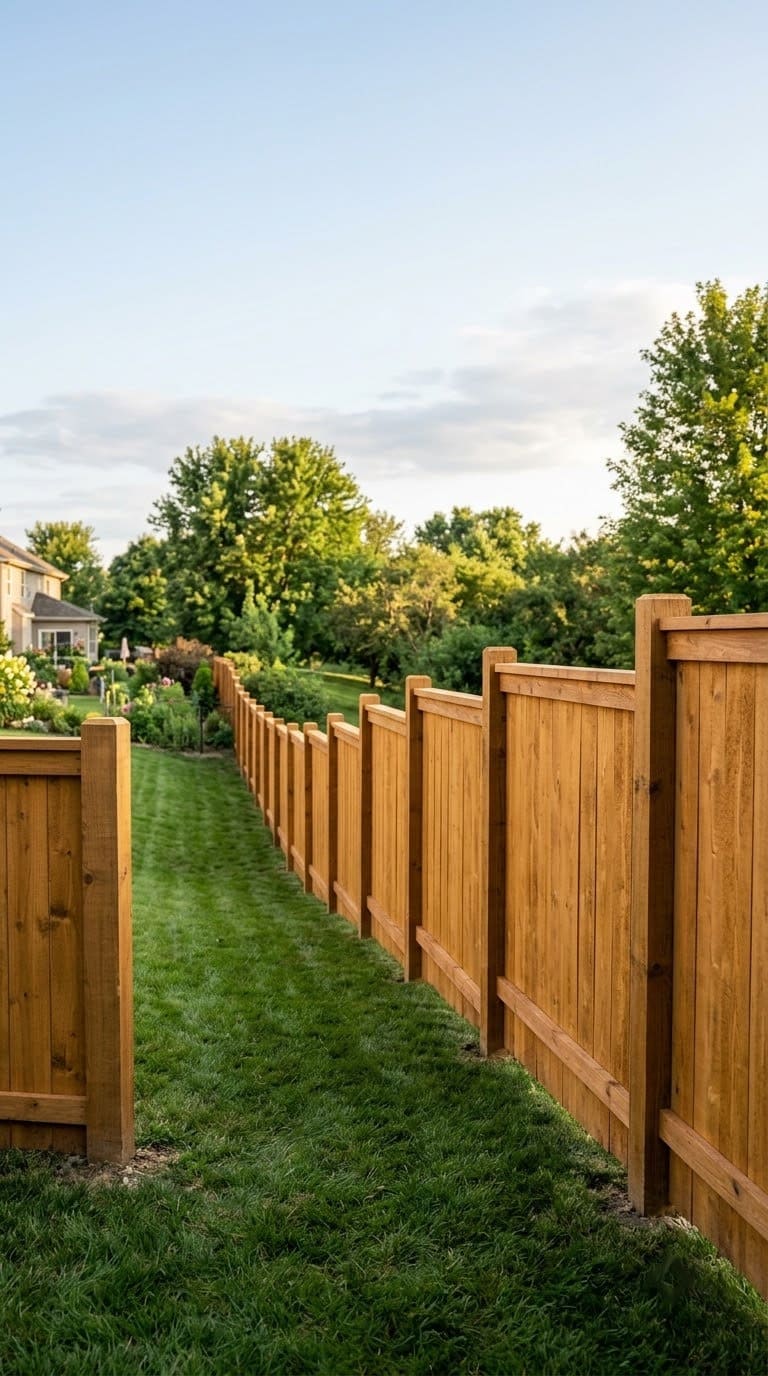
Budget: about $2,500 to $8,000 installed. Wood runs roughly $25 to $45 per linear foot installed, vinyl $30 to $60, and composite more. For an average backyard run, that’s a few thousand dollars, and it’s the most complete privacy you can buy.
Set posts below your frost line in concrete, and leave a 1 to 2-inch gap under the boards so the fence doesn’t wick ground moisture and rot. On a slope, step the panels rather than raking them, and it looks better and lasts longer. Seal or stain wood in year one, then every two to three years.
Confirm the height limit, the setback, and which side faces out. Many codes require the finished side toward the neighbor.
If a full run is out of budget, fence only the two sides that matter and screen the rest with Tier 1 ideas. This DIY fence walkthrough covers material choices in more detail.
13. Grow a layered mixed evergreen living screen
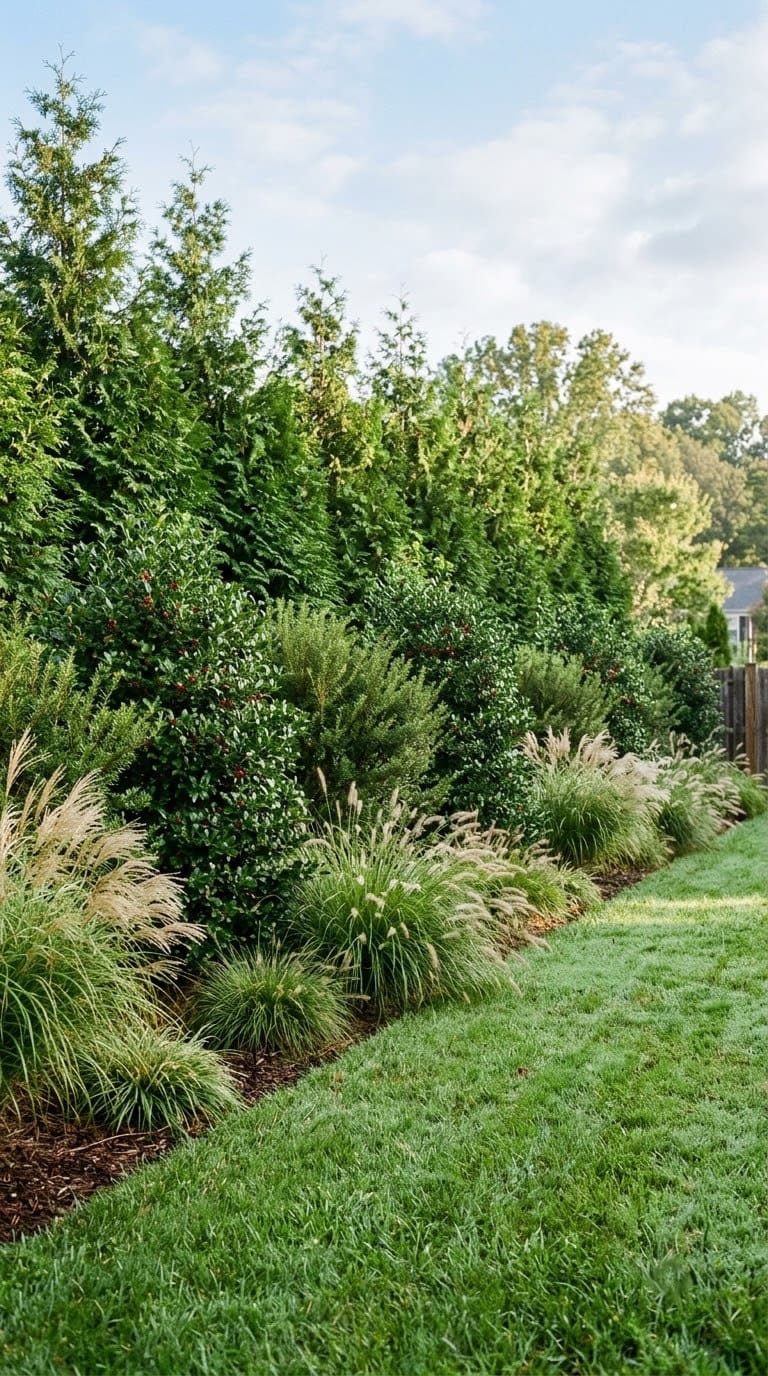
Budget: about $600 to $3,000 in plants, plus 2 to 4 years. Do not plant a solid wall of one species. University of Maryland Extension is direct about it. One species means one point of failure: “If you have a screen consisting of just one kind of plant and a problem occurs, you risk losing the investment you made in an entire row of plants.” A mixed screen, they note, “will be more resilient to challenges such as droughts, flooding, pests, and diseases.”
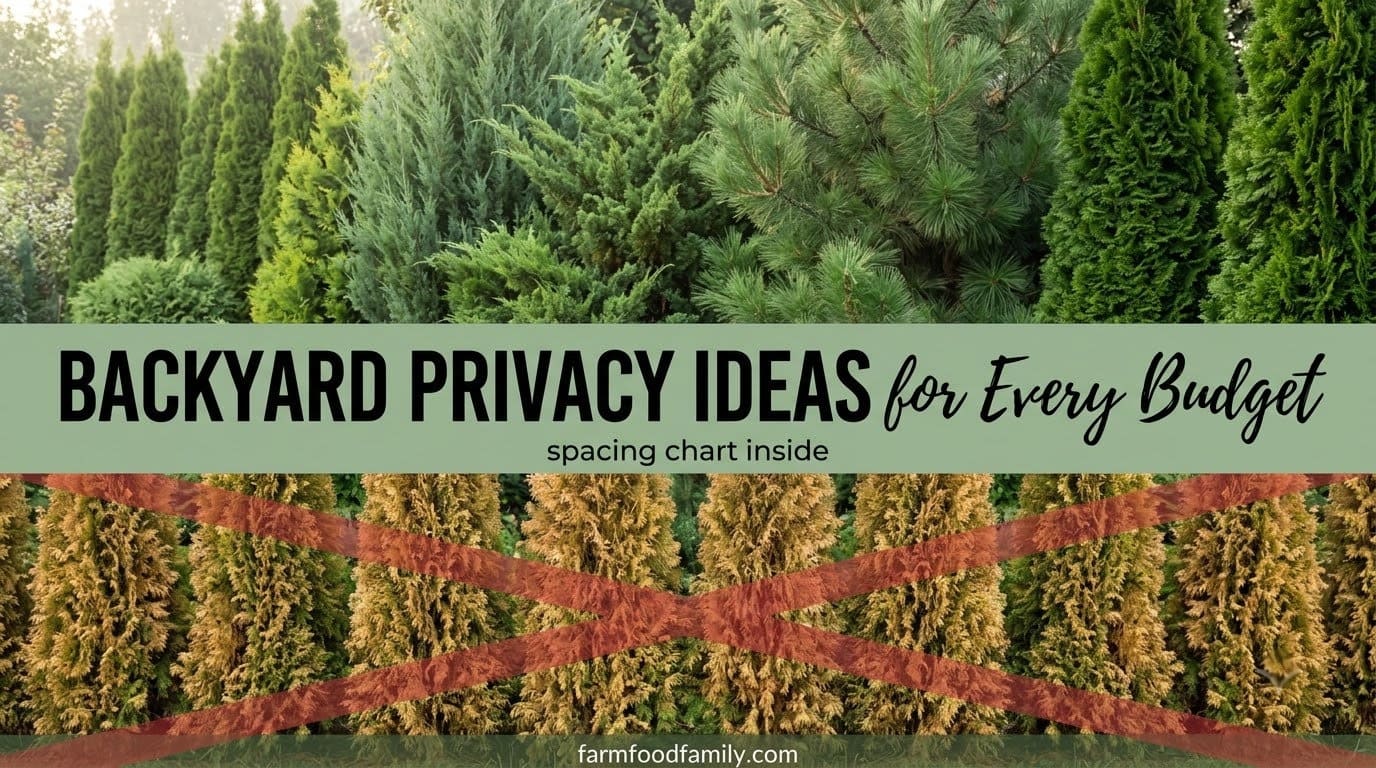
The classic mistake is a row of Leyland cypress. Clemson Cooperative Extension lists its problems plainly: bagworms and three separate canker diseases, and once decline starts it’s hard to bring back.
Better bets, per Clemson, include ‘Green Giant’ arborvitae, Eastern redcedar, Nellie R. Stevens holly, and Cryptomeria ‘Yoshino’.
Layer it the way UMD suggests: tall trees at the back, medium shrubs in front, grasses or groundcover at the edge.
| Plant | Mature size | Spacing on center | Notes |
|---|---|---|---|
| ‘Green Giant’ arborvitae | 30 to 40 ft tall, 12 to 18 ft wide | 6 to 8 ft | Fast, deer-resistant, needs room |
| Emerald Green arborvitae | 12 to 15 ft tall, 3 to 4 ft wide | 3 to 4 ft | Narrow, good for tight runs |
| Eastern redcedar | 30 to 40 ft tall | 6 to 10 ft | Native, tough, wildlife value |
| Nellie R. Stevens holly | 15 to 25 ft tall | 5 to 6 ft | Dense, berries, spiny |
| Wax myrtle | 10 to 15 ft tall | 4 to 6 ft | Fast, salt-tolerant, semi-evergreen |
Buy 3-gallon or 7-gallon stock, not the biggest available. Smaller plants establish faster and catch up within a few years.
Keep everything 3 to 6 feet off the property line. For species depth, this guide to arborvitae types and these hedge planting layouts go further.
14. Build a gabion wall
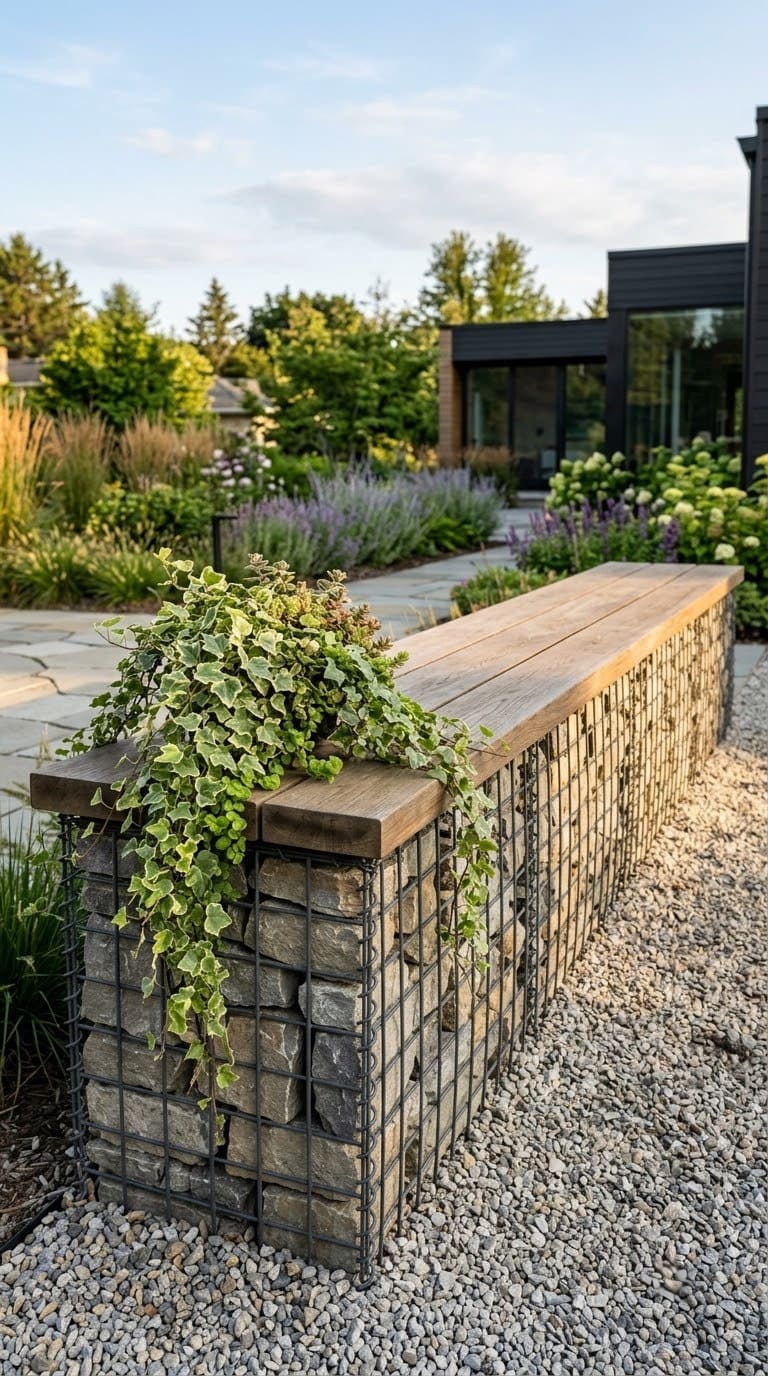
Budget: about $40 to $70 per linear foot DIY. Gabion baskets are wire cages you stack and fill with rock. A basket is $30 to $120, and stone fill is $40 to $80 per cubic yard. It’s heavy, permanent, and needs a compacted gravel base, but almost no maintenance after that.
Use angular quarried stone, not smooth river rock, so the fill locks together and doesn’t settle. Face the visible side by hand-placing the outer stones, and the center can be rubble. A gabion wall over 3 feet should be engineered or stepped back, since the weight is real.
It doubles as a retaining wall on a slope and as a bench with a timber cap. The industrial texture softens fast with a trailing plant along the top. This gabion fence roundup shows height and cap variations.
15. Plant a shade tree and add a water feature
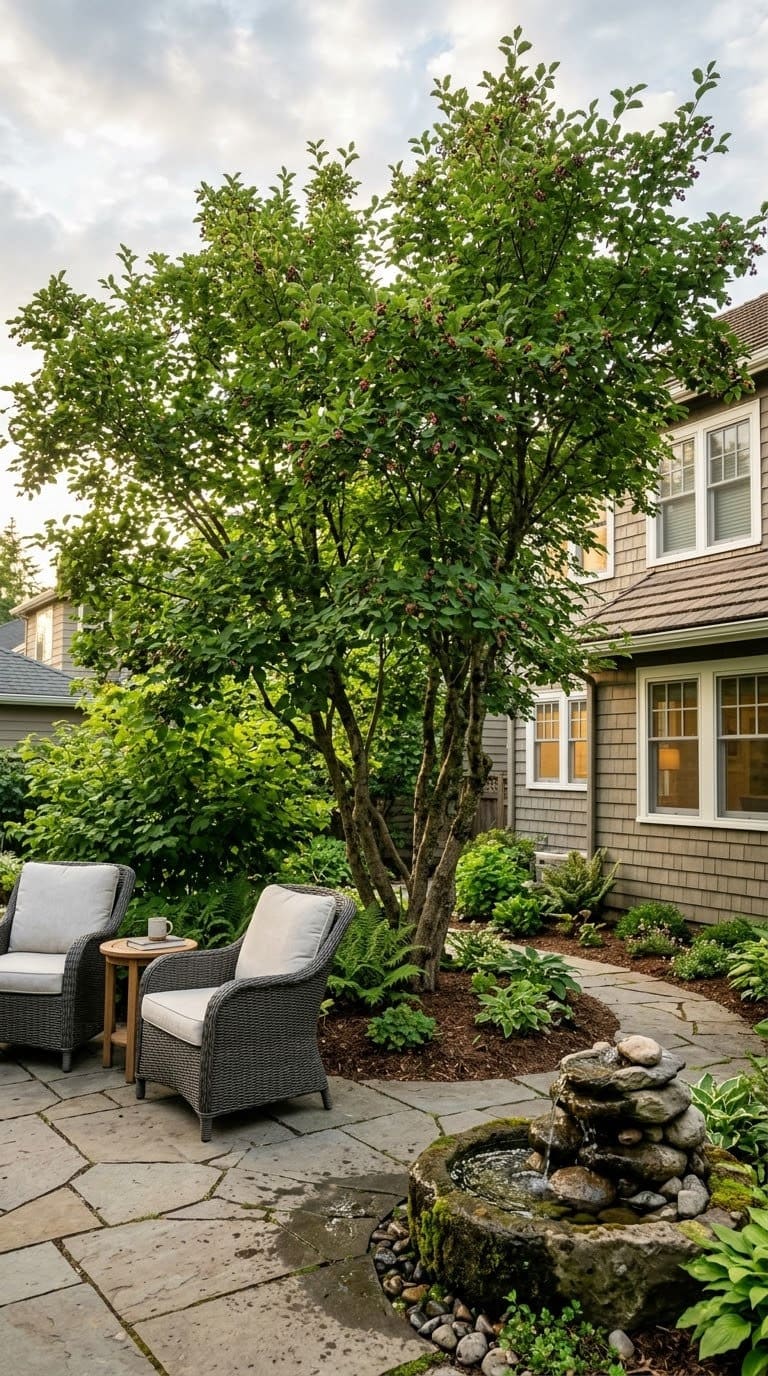
Budget: about $300 to $2,500. For a second-story sightline, one well-placed medium tree does what no fence can: it breaks the overhead angle. A 6 to 8-foot balled-and-burlapped tree is $150 to $600 planted. Site it between your seating and the window, not in the middle of the lawn.
Add a recirculating fountain or a pondless water feature for $150 to $1,500. It won’t block anything, but moving water masks conversation, so you stop feeling overheard even when you’re technically visible. The two together, canopy plus sound, handle the hardest privacy problem there is.
Keep the tree’s mature spread off the house and the neighbor’s roof, and check for overhead lines. Something like a serviceberry, a redbud, or a multi-stem river birch gives you screening height without a 60-foot giant.
What We’d Do Differently: real talk from the research
We’d mix the screen from day one. The single most common regret in privacy planting is the row of identical fast conifers that looked perfect for six years and then browned out in patches. Both University of Maryland Extension and Clemson HGIC land in the same place: diversity is insurance. A screen of three or four species keeps working when one gets hit.
We’d figure out the sightline before spending a dollar. People build a 6-foot fence, stand behind it, and realize the neighbor’s deck still looks straight down at the grill. A fence answers a horizontal view. If your problem is vertical, the money belongs in a pergola, a tree, or an umbrella, and the fence is secondary.
We’d call the building department and knock on the neighbor’s door. The “cheap” fence that turns expensive is the one that gets flagged for being over height, or sitting an inch across the line, and has to come down. Ten minutes of asking first prevents the worst version of this project.
We’d buy fewer, smaller plants and wait. Big balled-and-burlapped stock is tempting. It often sulks for two years while cheaper 3-gallon plants race past it. Screening is a patience game. Put a $60 folding screen or a reed roll in front of the young hedge for the first couple of seasons and let the plants take their time.
Frequently Asked Questions
What’s the cheapest way to get privacy from neighbors?
A roll of bamboo or reed screening zip-tied to an existing fence, or a shade-cloth panel on chain-link, runs $30 to $80 per section and goes up in an hour. Outdoor curtains on a cable are the next step up and look more finished.
What’s the fastest-growing privacy screen?
For plants, a fast annual vine like hyacinth bean or morning glory on a trellis gives full cover in one summer. For a permanent screen, ‘Green Giant’ arborvitae puts on 2 to 3 feet a year.
Skip Leyland cypress, which is fast but disease-prone according to Clemson Extension.
How tall can my backyard fence be?
Most areas cap backyard fences at 6 feet without a permit, and front-yard fences at 3 to 4 feet. An open lattice topper is sometimes allowed above that line, but rules vary by town and HOA. Always confirm with your building department first.
How do I get privacy without blocking all my light?
Use lattice, slats spaced a finger-width apart, or an open trellis with a light vine instead of a solid panel. These break the sightline while letting air and filtered light through. A screen on only the two sides that matter also keeps the yard bright.
What are the best privacy options for renters?
Anything reversible: outdoor curtains on a tension cable, a freestanding folding screen, potted bamboo or grasses, and reed rolls attached with zip ties that cut off cleanly at move-out. Nothing here needs a posthole or a permanent fastener.
How do I block a neighbor’s second-story window?
No fence height will do it. You need overhead structure: a pergola with side and top panels, a large cantilever umbrella, or a medium shade tree on the sightline. Size it to break the angle from your seat to their window.
Add a water feature so you also stop feeling overheard.
Related Posts
- How to Create Privacy in Your Backyard Without a Fence
- Deck Privacy Ideas That Actually Work
- Landscaping Along a Fence Ideas
Never miss an update — choose FarmFoodFamily as your preferred source on Google.
How it works: Tap the button below to open Google's settings page, then check the box next to FarmFoodFamily.
Tap the checkbox to turn it blue — that's how you know it's set.