15 Smart DIY Garden Upgrades You Can Finish in a Weekend
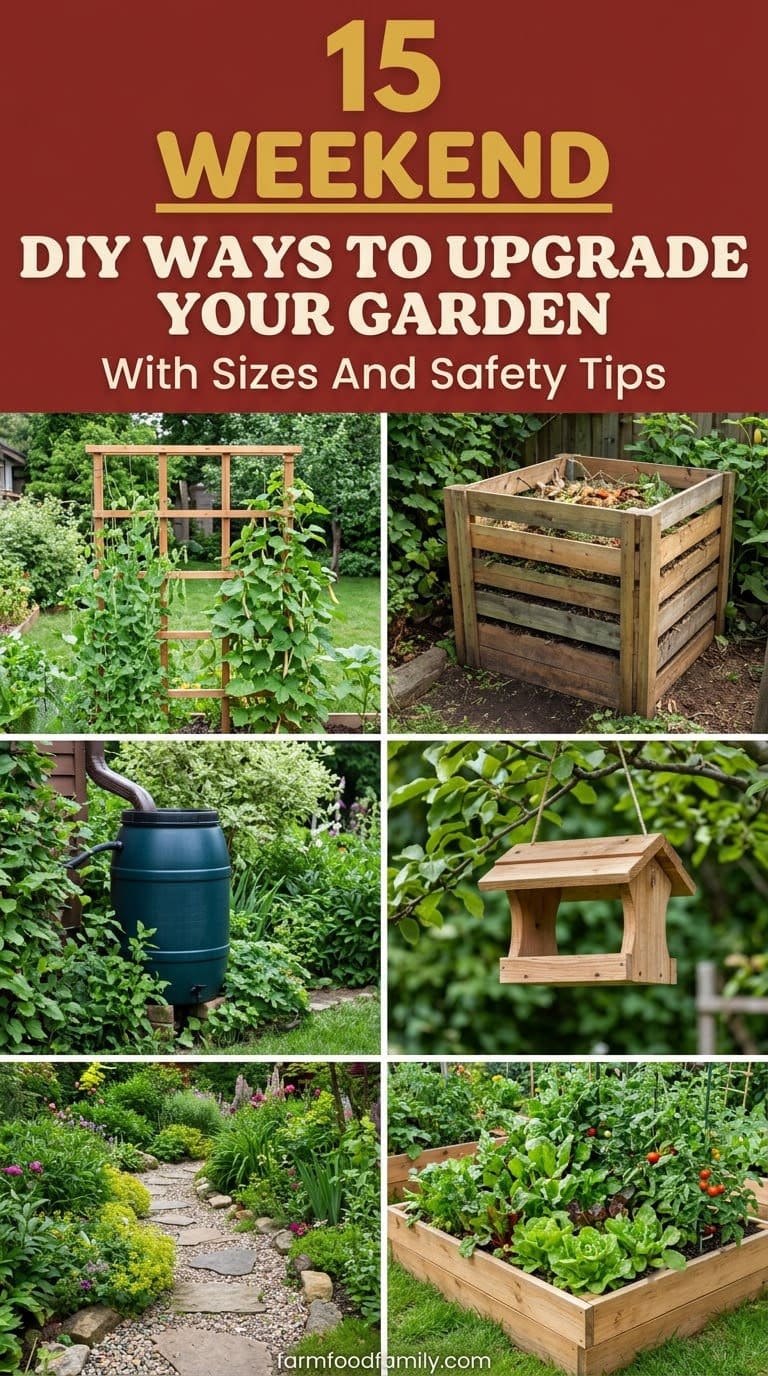
A few weekend builds, like a sturdy trellis, a compost bin, and a rain barrel, make a garden grow more, feed wildlife, and save water, as long as you build each one to last.

Never miss an update — choose FarmFoodFamily as your preferred source on Google.
How it works: Tap the button below to open Google's settings page, then check the box next to FarmFoodFamily.
Tap the checkbox to turn it blue — that's how you know it's set.
A few weekend builds, like a sturdy trellis, a compost bin, and a rain barrel, make a garden grow more, feed wildlife, and save water, as long as you build each one to last.
Products We Recommend
This post contains affiliate links. We may earn a commission on qualifying purchases at no extra cost to you.


Most “upgrade your garden” lists show cute decor. This one is about upgrades that work.
Each idea below has a clear job. It grows more food, feeds birds, saves water, helps you get around, or makes the front look cared for. And every one fits into a weekend.
You’ll get sizes, steps, and the safety notes that most lists skip. Where we couldn’t find a source, we say so.
Answer 4 quick questions and get matched to the exact fix for your yard — drainage, budget, layout, or something else entirely.
Take the Free QuizQuick Answer
Pick the upgrade by the job you want done.
For more food, build a strong trellis. For wildlife, add a feeder and keep it clean. For water and soil, add a rain barrel and a compost bin.
Start with one project, finish it, and enjoy it before you start the next.
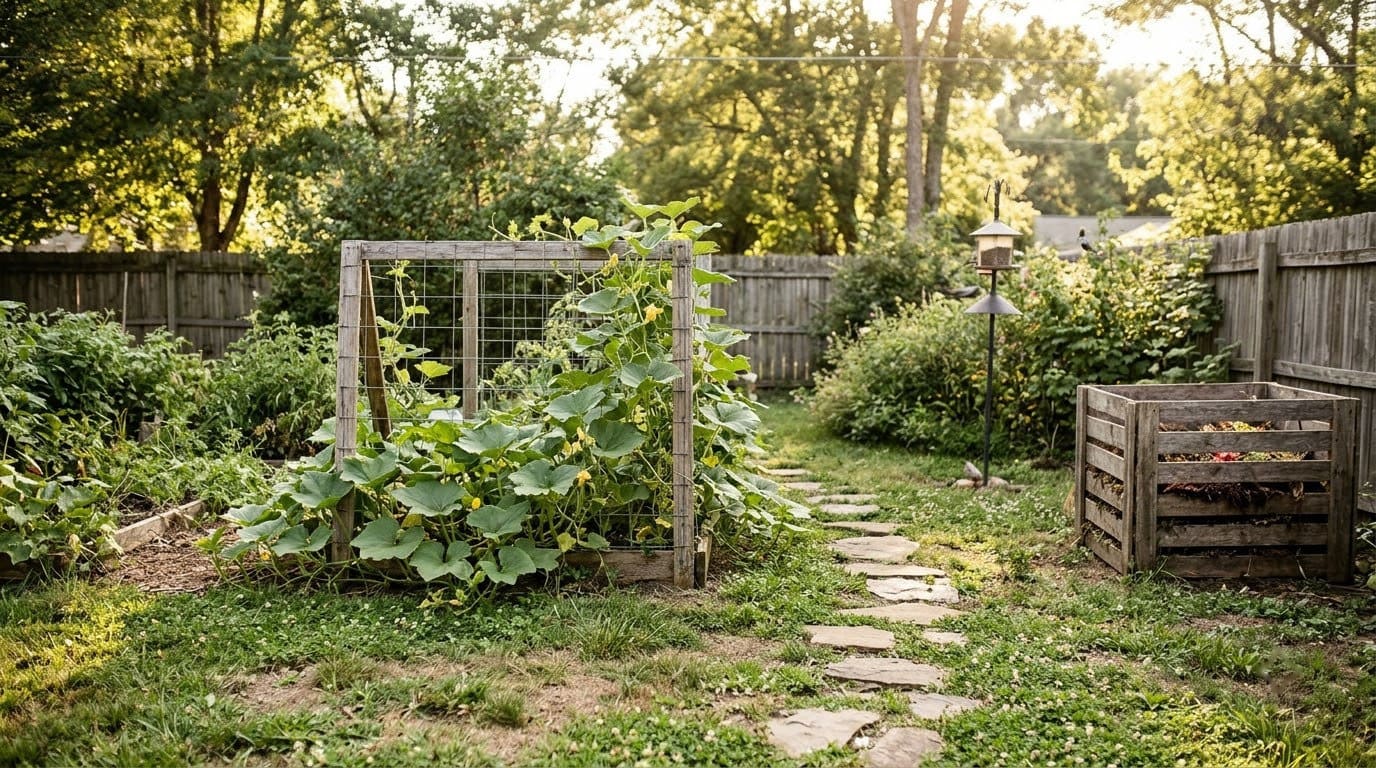
University of Wisconsin Extension says to set sturdy posts about 2 feet into the ground and use hog wire or nylon mesh with 4-inch squares.


Plan for weight and cleaning. A full rain barrel can weigh about 450 pounds, per the University of Delaware. Clean seed feeders at least every two weeks, per Clemson Extension.
Most yard problems trace back to one specific, fixable cause. Find yours in 4 quick questions.
Take the Free QuizCall 811 before you dig a post hole or a path, since a buried line is the one mistake you can’t undo. Check your HOA rules, wear gloves, and ask for help with heavy lifting.
Which Garden Upgrade Should You Build First?
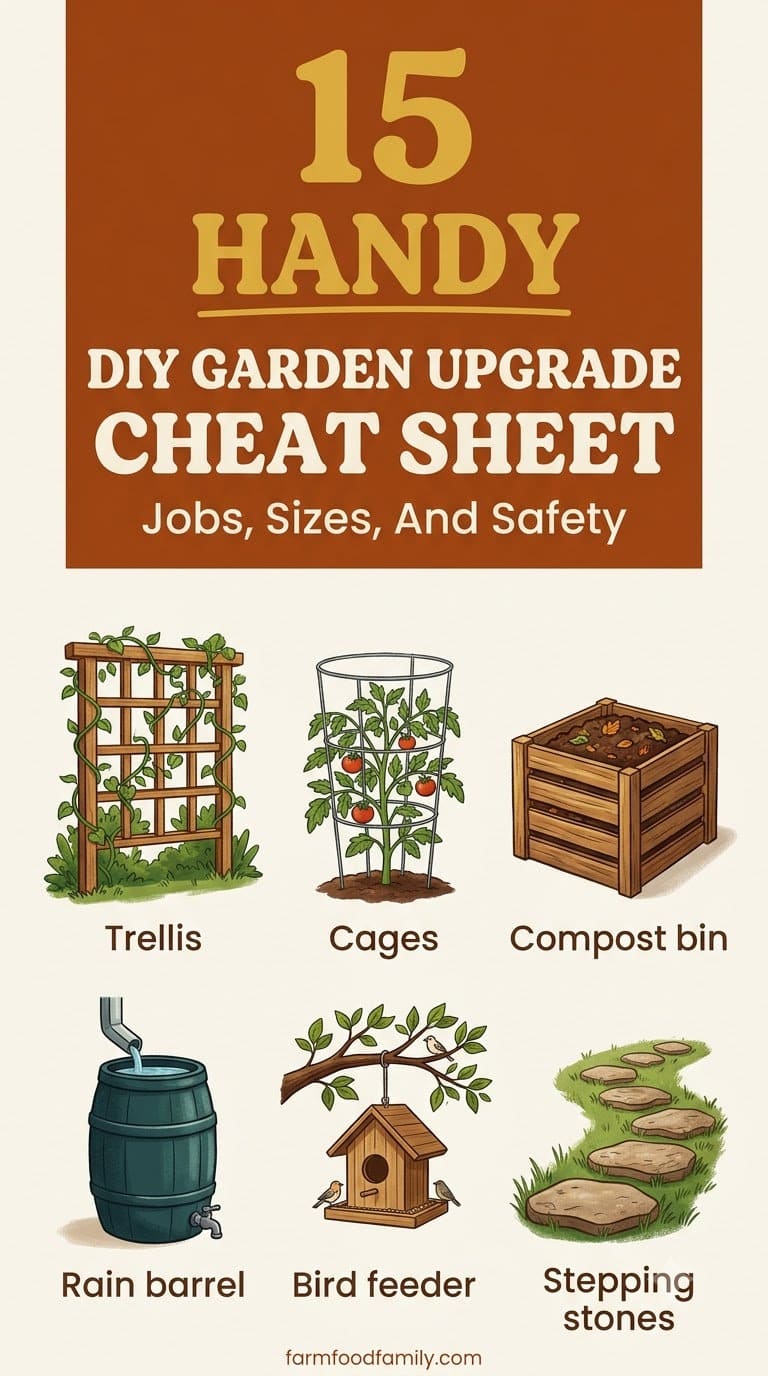
This table is our planning guide. The trellis, feeder, compost, and rain barrel notes come from the sources linked in this article. The time and cost columns are our own estimates.
| Upgrade | Main job | Time | Cost tier | Skill level |
|---|---|---|---|---|
| Vine trellis | Grow more food | 3 to 4 hours | Low to medium | Intermediate |
| Tomato cages | Grow more food | 1 to 2 hours | Low | Beginner |
| Bird feeder station | Feed wildlife | 1 hour | Low | Beginner |
| Compost bin | Better soil | 2 hours | Low | Beginner |
| Rain barrel | Save water | 3 hours | Medium | Intermediate |
| Stepping stone path | Move around | 4 to 6 hours | Medium | Intermediate |
| Mailbox bed | Curb appeal | 2 to 3 hours | Low | Beginner |
What Should You Check Before You Build?
Check for buried lines. Call 811 before digging post holes, paths, or beds. It’s a free service that marks buried lines, and many places require it.
Next, check your rules. Rain barrels, fences, and tall structures may need approval from your HOA or town. Ask first if you rent.
Then, think about weight. Posts, soil, and water barrels are heavy. Use a helper, a hand truck, or a plank ramp.
Wear gloves and eye protection for cutting and drilling. Keep kids and pets away from open holes and loose lumber.

Netting for cucumbers, vines, and small squash
Shop NowThis post contains affiliate links. We may earn a commission on qualifying purchases at no extra cost to you.
15 Smart DIY Garden Upgrades You Can Finish in a Weekend
1. Heavy-Duty Vine Trellis
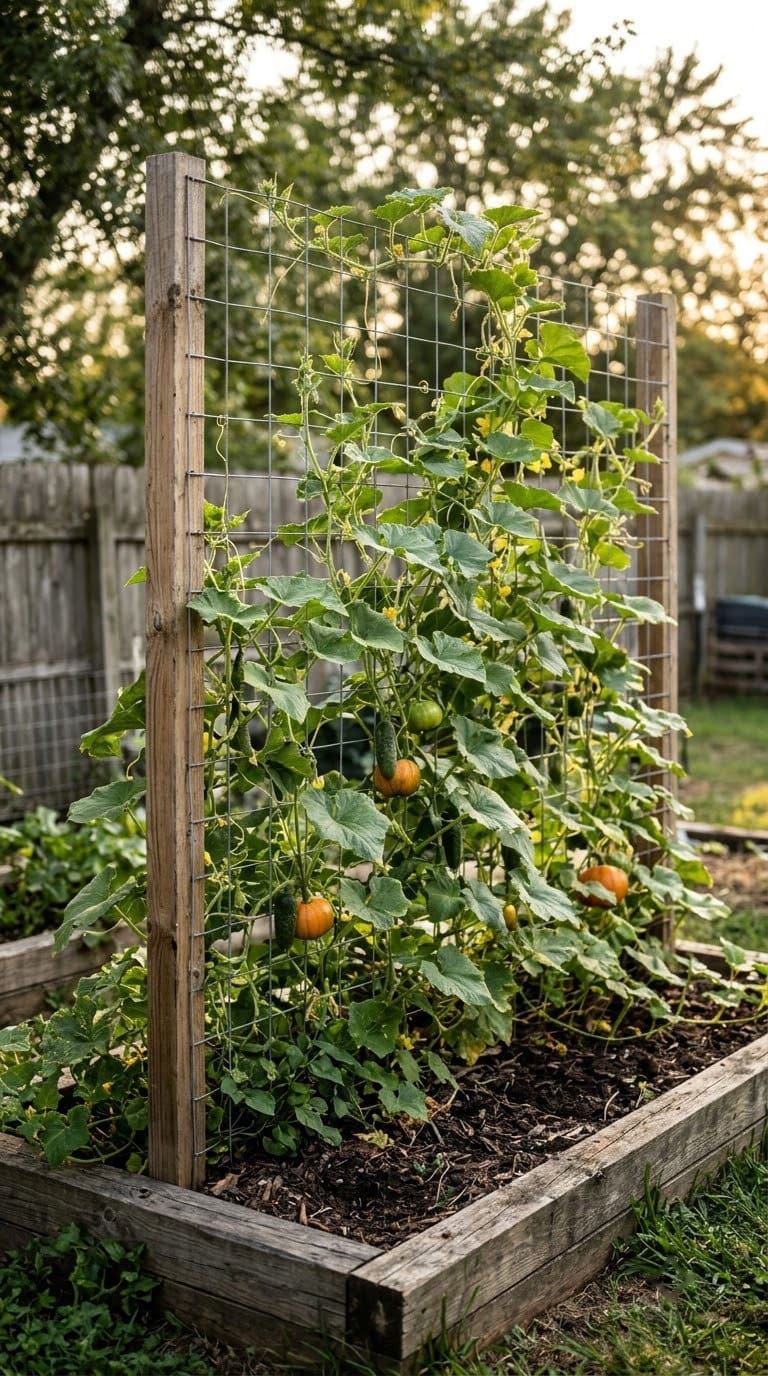
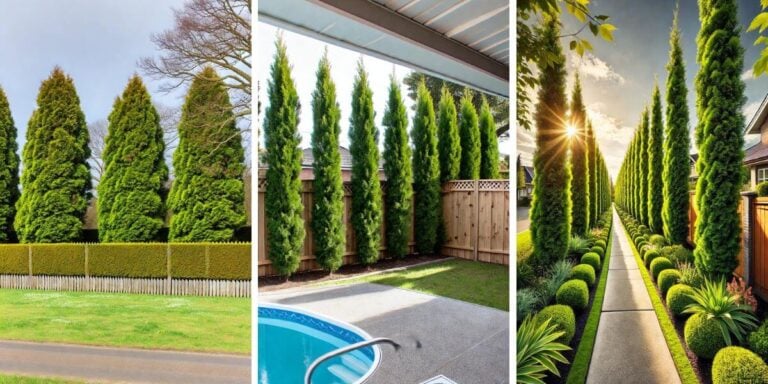
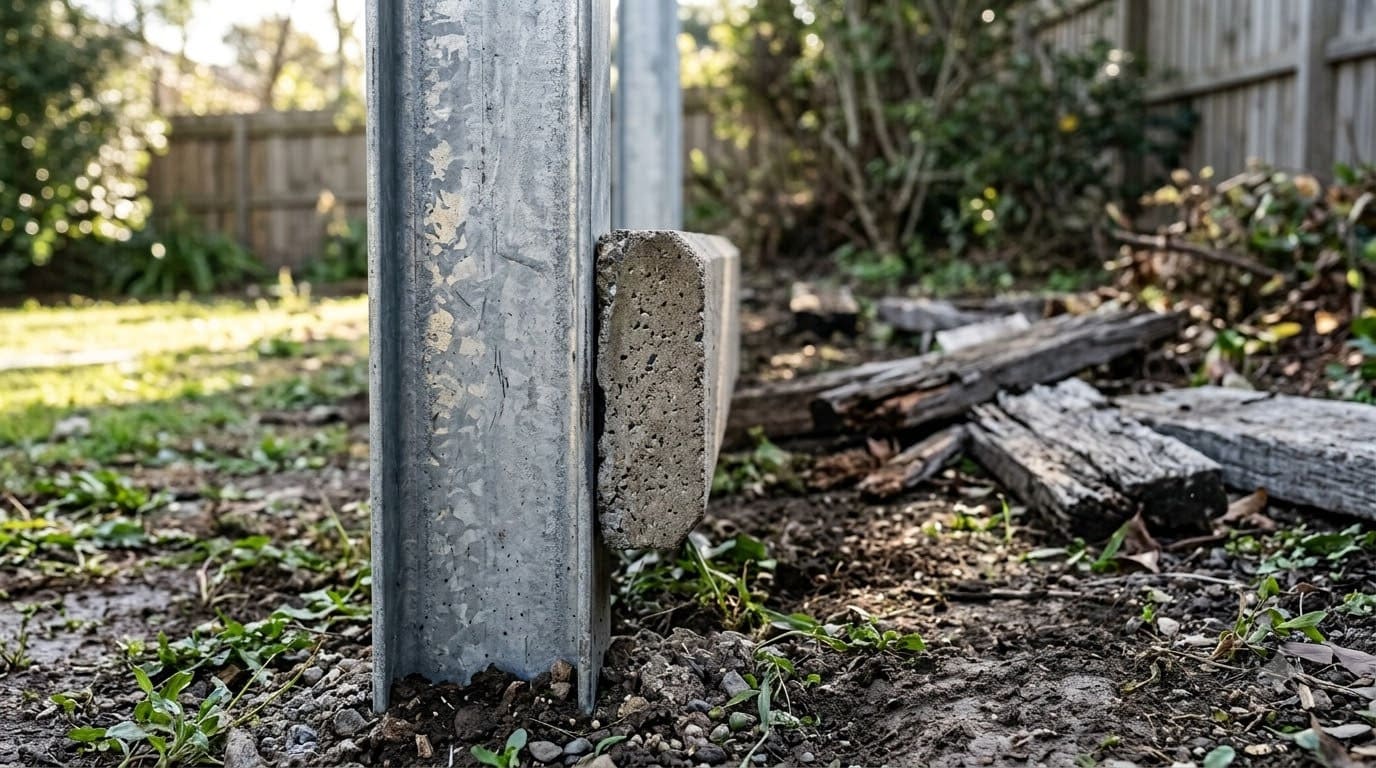
Peter Garnham of Fine Gardening builds a trellis from 8-foot 2×2 posts set 2 feet deep and 8 feet apart. He lays a 10-foot length of half-inch rebar across the tops and hangs large-mesh netting from it.
Space plants 18 to 24 inches apart in a straight line. Tie stems on with clips, soft twine, or plant tape. Check vines every three to four days.
The average homeowner spends $616/year on yard fixes that don't address the real problem. Find out what yours actually is — before you spend another dollar.
Take the Free QuizHeavy fruit needs slings tied to the netting. Garnham says cut-off pantyhose work best. Choose small-fruited pumpkins like ‘Baby Bear’ and ‘Jack Be Little’ for climbing.
Cost tier: low to medium. See our fence trellis ideas for other styles.
2. Stake-and-Weave Tomato Support
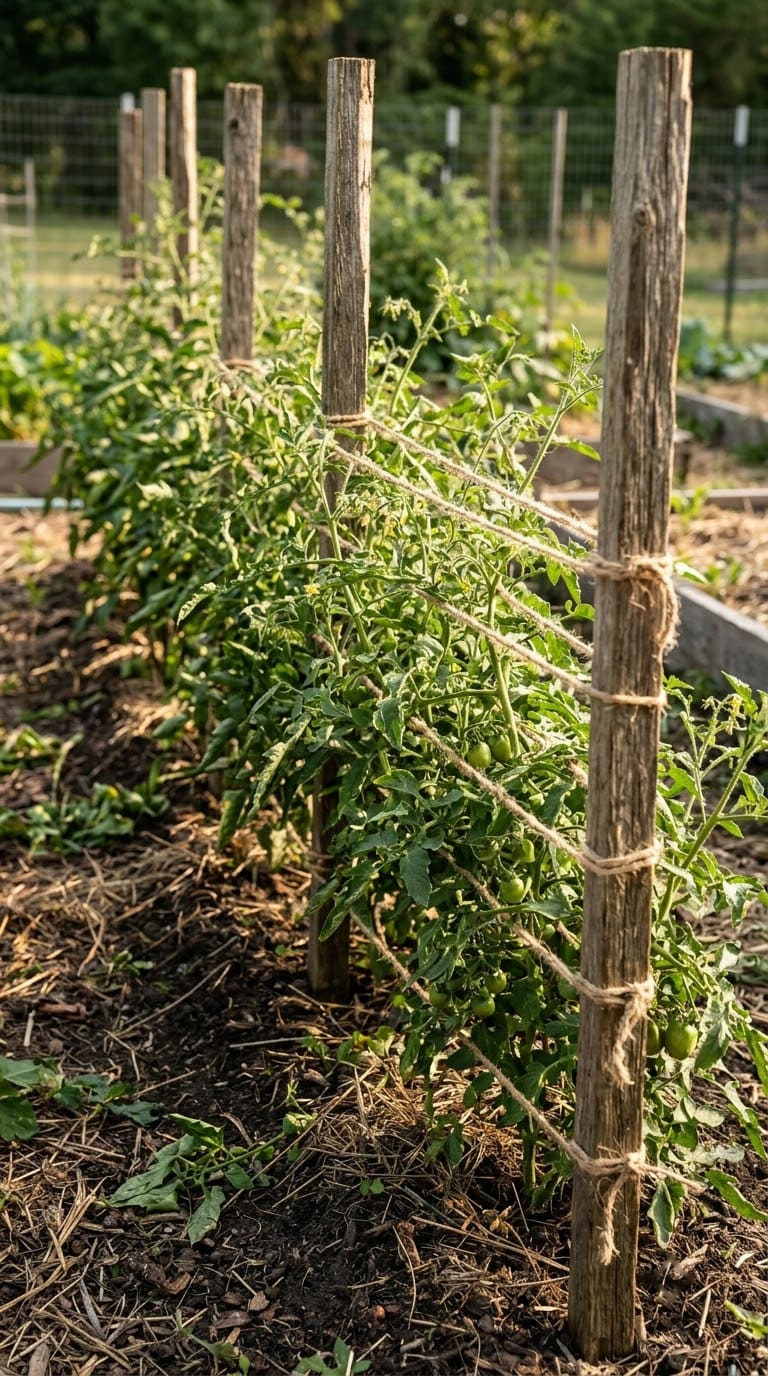
The UW Extension guide by Robert Tomesh says stake-and-weave works especially well for tomatoes, which don’t form tendrils. Set stakes about every 6 feet.
Run the first cord 6 to 10 inches above the ground. Use polypropylene or nylon cord, since it doesn’t stretch. Add another cord as plants grow.
Use stakes 5 to 6 feet long. Wooden ones should be at least 1 inch square and untreated.
Cost tier: low. Our pea trellis ideas cover other crops.

3. Wire Cages for Tomatoes and Squash
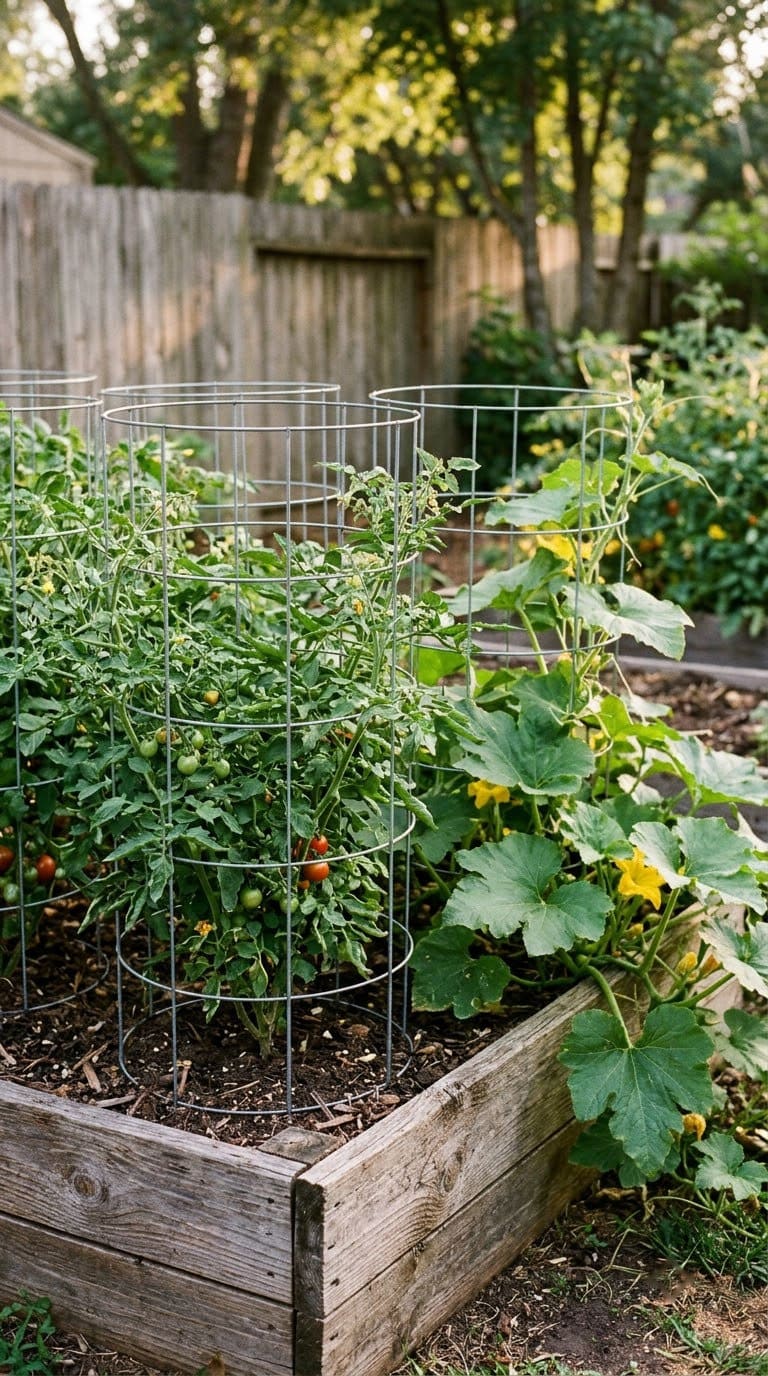
Make cages from concrete reinforcing wire or woven wire panels. Tomesh says a 2-foot-diameter cage needs 6 feet of wire, and a 3-foot-diameter cage needs 9 feet.
Drive two stakes into the ground beside each cage to keep it from tipping. Make sure fruit doesn’t become embedded in the wire.
Cut the bottom horizontal wire so you can slip the cage over seedlings. Wear gloves, since cut wire is sharp.
Cost tier: low. Cages last for years.
4. Weekend Raised Bed
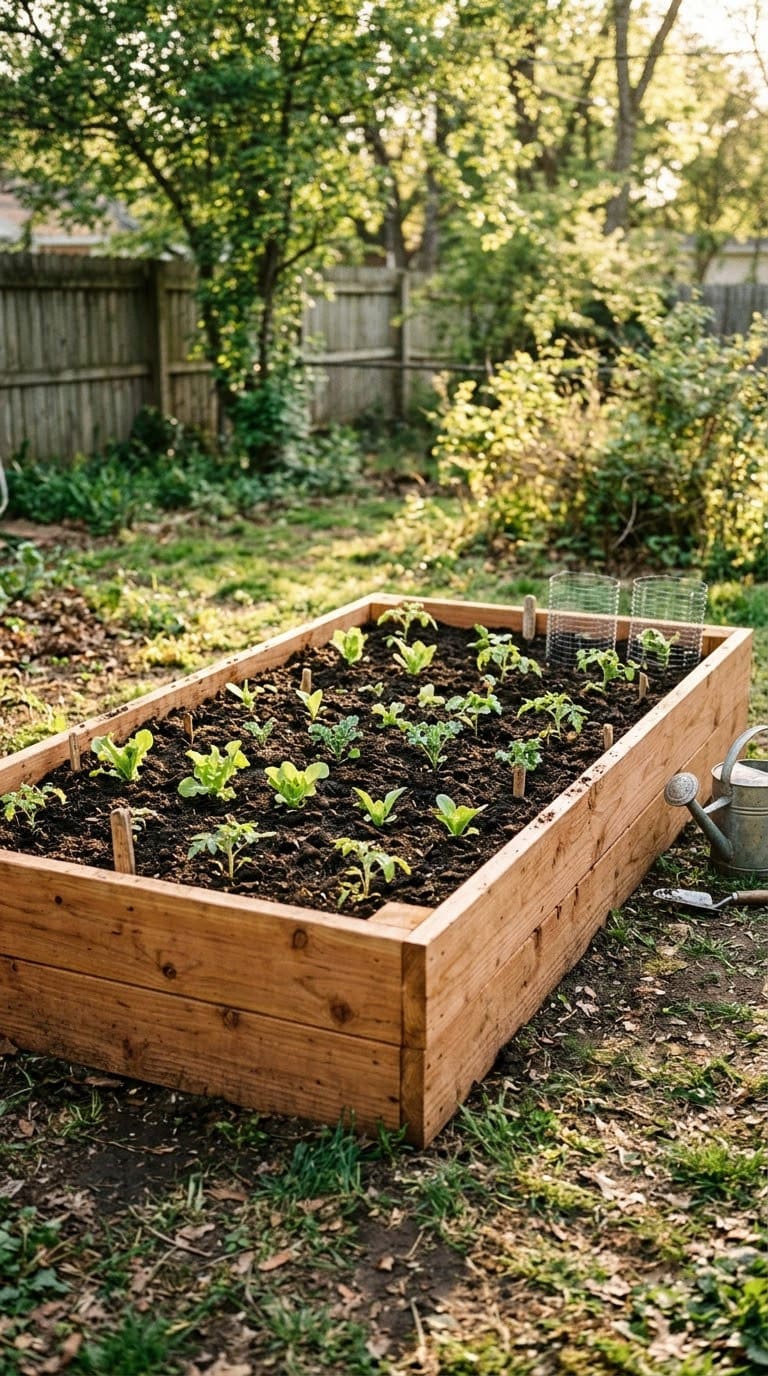
A raised bed gives you good soil fast. Build a box 4 feet wide, so you can reach the middle. Use untreated lumber for a vegetable bed.
Our raised vegetable garden bed guide has soil mixes and sizes.
Fill it with a mix of topsoil and compost. Level the ground first so it doesn’t rack.
Cost tier: medium. Sizes are our own suggestion.
Feed Wildlife
5. Pole Bird Feeder Station
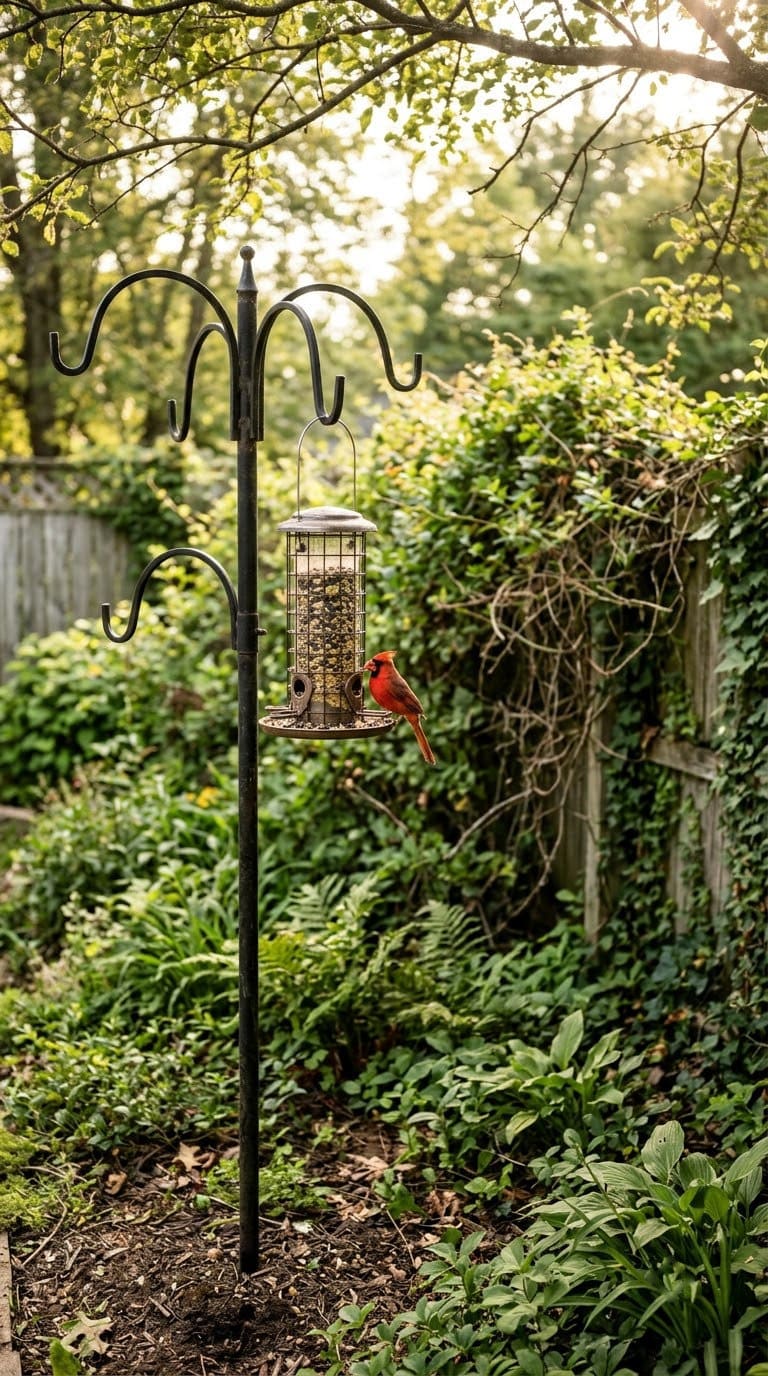
Set a pole feeder where you can see it from a window. Place it near a shrub for cover, but away from spots where cats hide.
Clean it on a schedule. Tancey Cullum Belken of Clemson Extension says to clean seed feeders at least every two weeks, and more often in rain or if you see dead birds.
Scrub off debris, soak 10 minutes in 1 part bleach to 9 parts water, rinse, and let it dry fully before refilling. Sweep up spilled seed about once a month.
Cost tier: low. Our types of bird feeders guide helps you choose.
6. Teacup Feeder (Seasonal)

Glue a teacup to a saucer with strong outdoor adhesive. Fix the saucer to a post or hang it from a hook.
A teacup holds little seed, so it’s more decor than a feeder. Fill it with a small amount and clean it after each fill, since small feeders collect droppings.
Skip it in rainy weather. Wet seed grows mold fast.
Cost tier: low. This idea is general practice, not sourced.
7. Hummingbird Feeder Spot
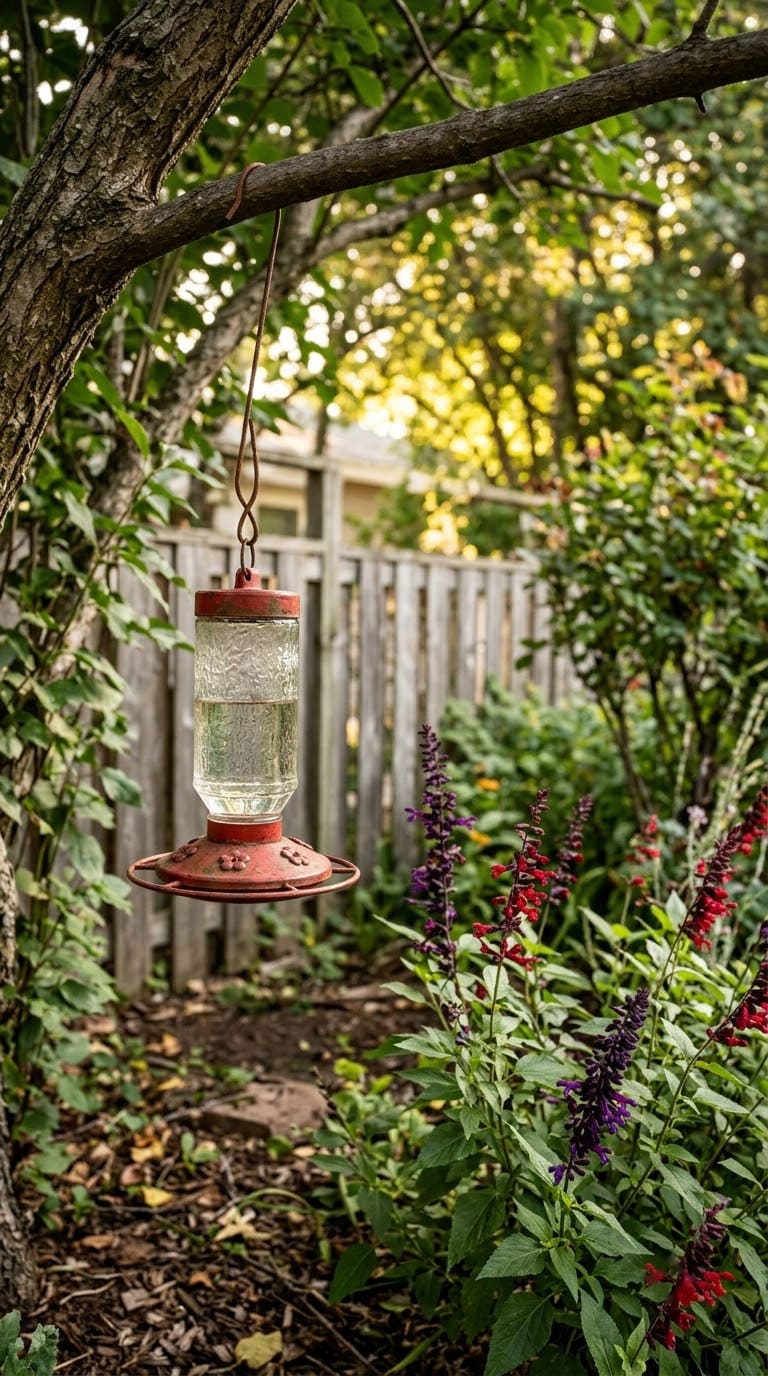
Hang a feeder in light shade near red or orange flowers. Clemson says to refill with fresh sugar water twice a week, and more often in warm weather.
Wash it weekly with a 4-to-1 vinegar-to-water solution and a brush. Wash it right away if the water is moldy or cloudy.
Rinse off any bleach residue before refilling. See our flowers that attract hummingbirds.
Cost tier: low.
Save Water and Build Soil
8. Wood Pallet or Wire Compost Bin
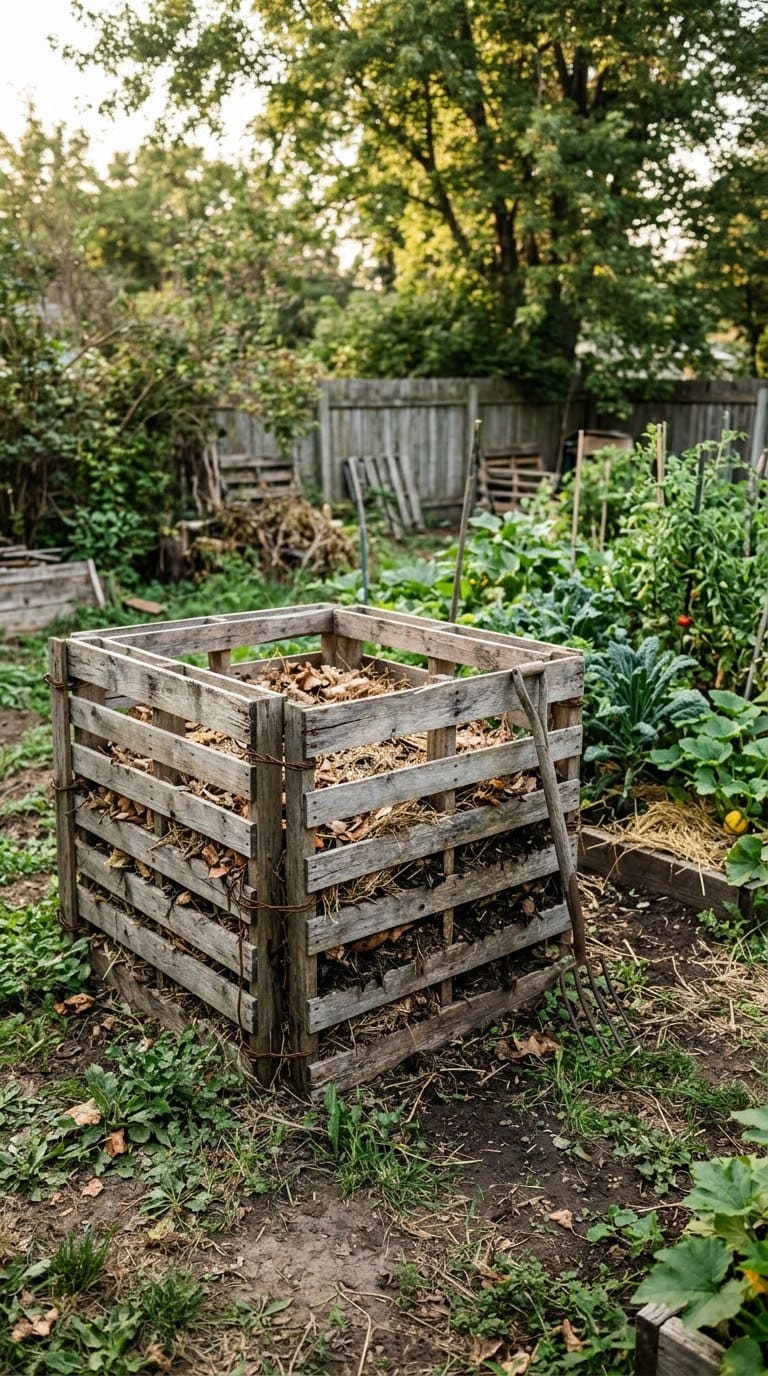
A City of Lawrence, Kansas fact sheet says a good pile size is 1 cubic yard, which is 3 by 3 by 3 feet. Place it where water won’t stand.
Aim for browns at 50 to 70 percent of volume and greens at 30 to 50 percent. Keep it as damp as a wrung-out sponge. Turn it weekly, since piles still break down unturned but take much longer.
Don’t compost anything with animal fats. If it smells like rotten eggs, it needs air.
Turn it and add straw. Our low budget DIY compost bins have more build ideas.
Cost tier: low.
9. Rain Barrel
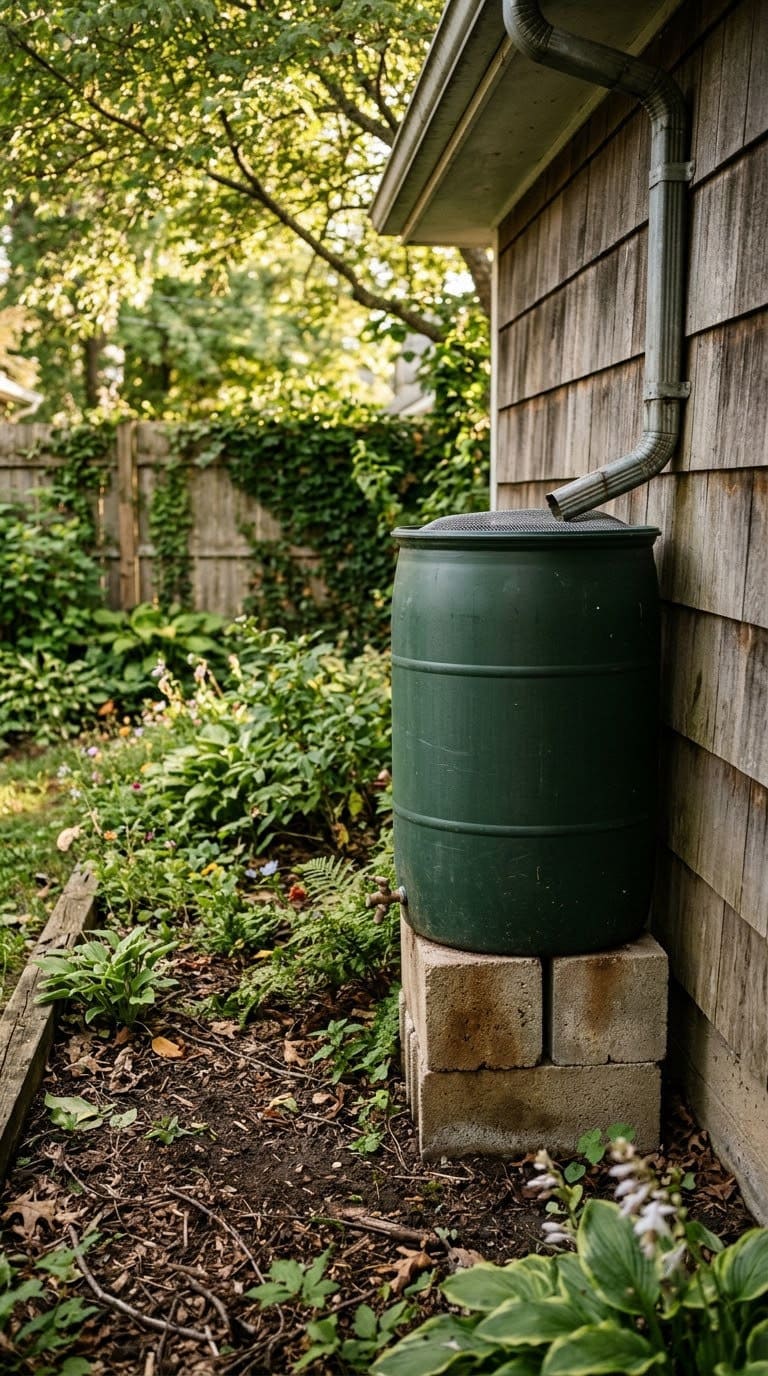
The University of Delaware guide starts with a 55-gallon food-grade barrel. Raise it on two cinder blocks. Drill 1-inch holes for an overflow near the top and a faucet near the bottom.
Cut the downspout about 4 inches above the barrel top. Cover openings with mosquito-proof screen. Run an overflow hose away from your foundation.
A full barrel can weigh about 450 pounds, so build a level, solid base. Don’t drink the water. Disconnect the barrel before freezing weather.
Cost tier: medium.
10. Rain Garden Edge
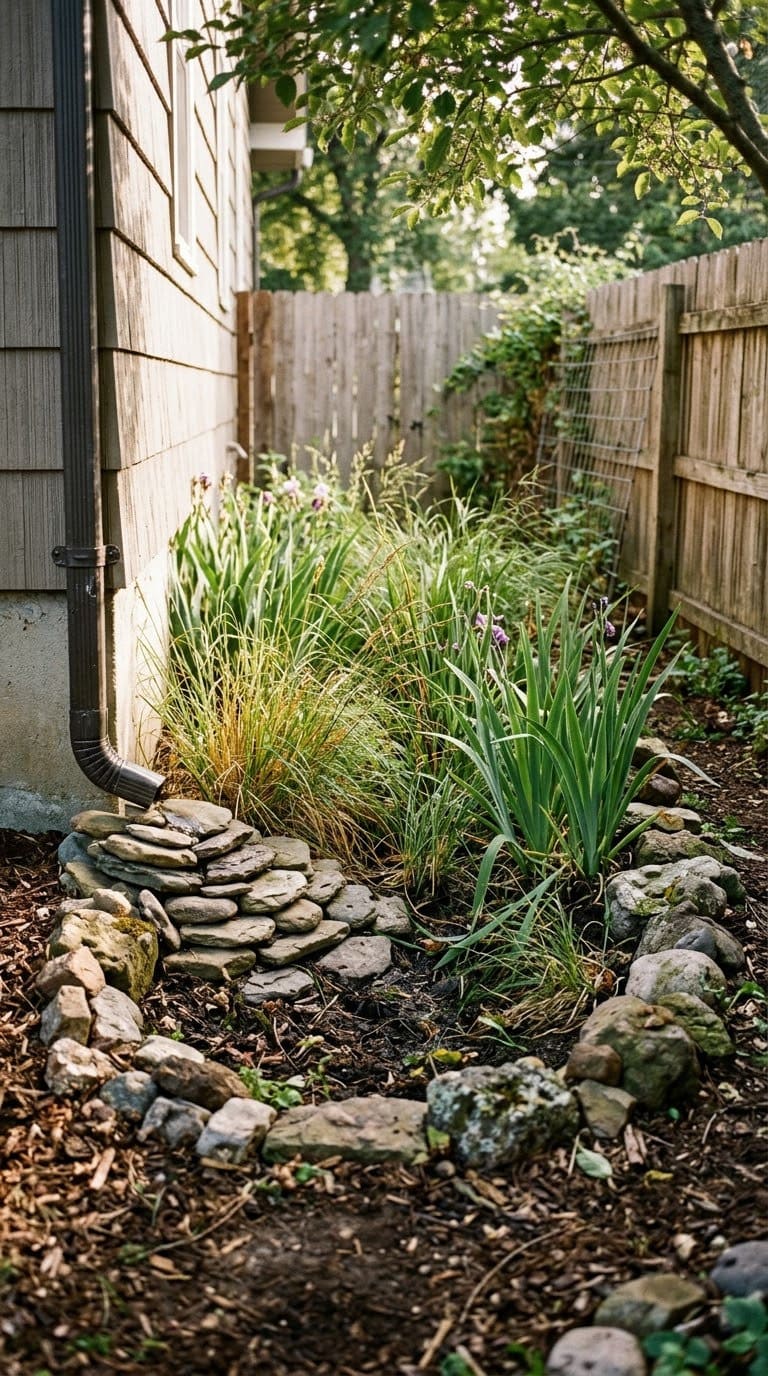
Send barrel overflow to a shallow planted bed. Dig a gentle dip, and fill it with deep-rooted native plants.
Keep it away from the foundation. Use our rain garden calculator to size it.
A rain garden soaks up runoff instead of letting it pool. Call 811 before you dig.
Cost tier: low to medium.
Move Around Your Yard
11. Stepping Stone Path
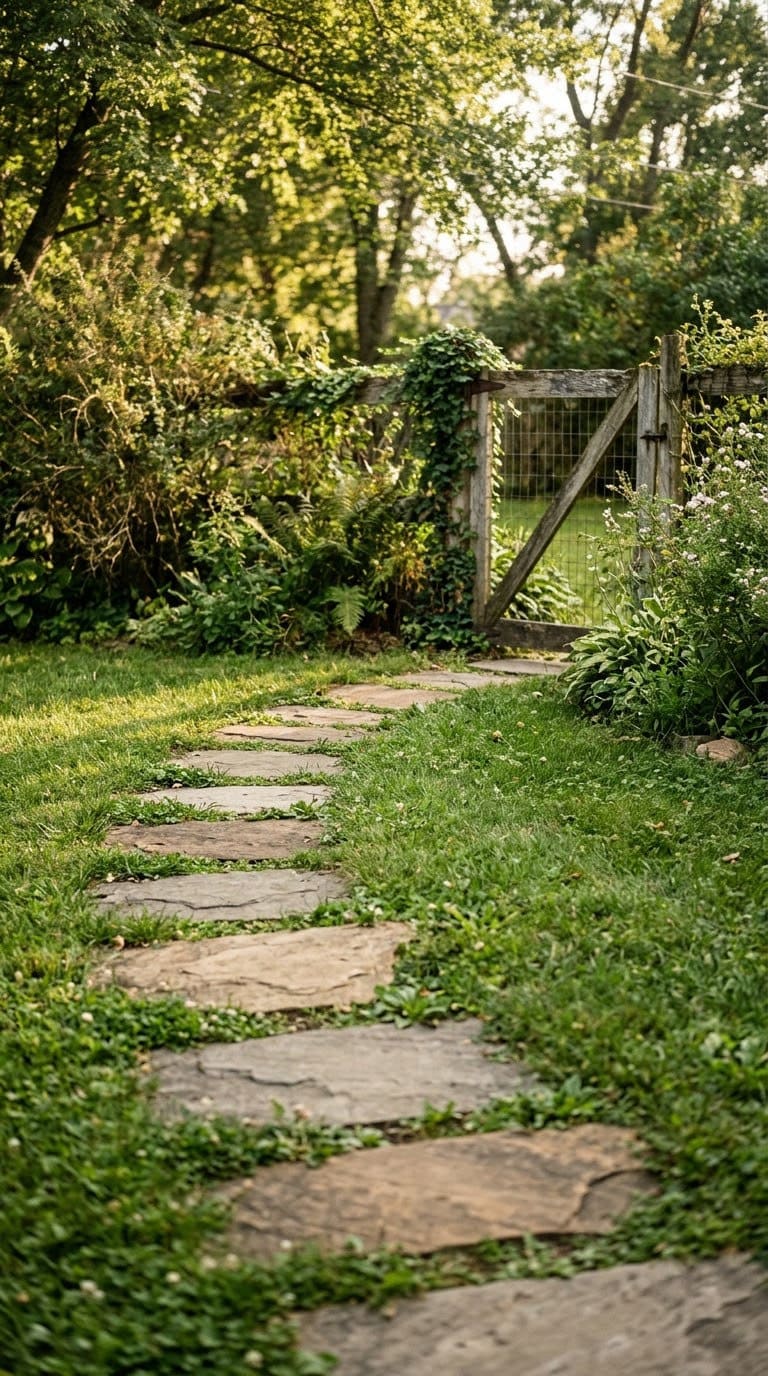
Lay the stones out on the lawn first and walk them. Spacing guides range from about 12 to 24 inches between stones. Adjust to your stride.
Dig each hole as deep as the stone is thick plus about 1 inch. Add a base of gravel and a thin layer of sand. Set each stone and check it with a level.
Keep the top flush with the lawn so you can mow over it. Call 811 first, and walk the finished path in wet shoes to see if any stone rocks. See our garden path ideas for more.
Cost tier: medium.
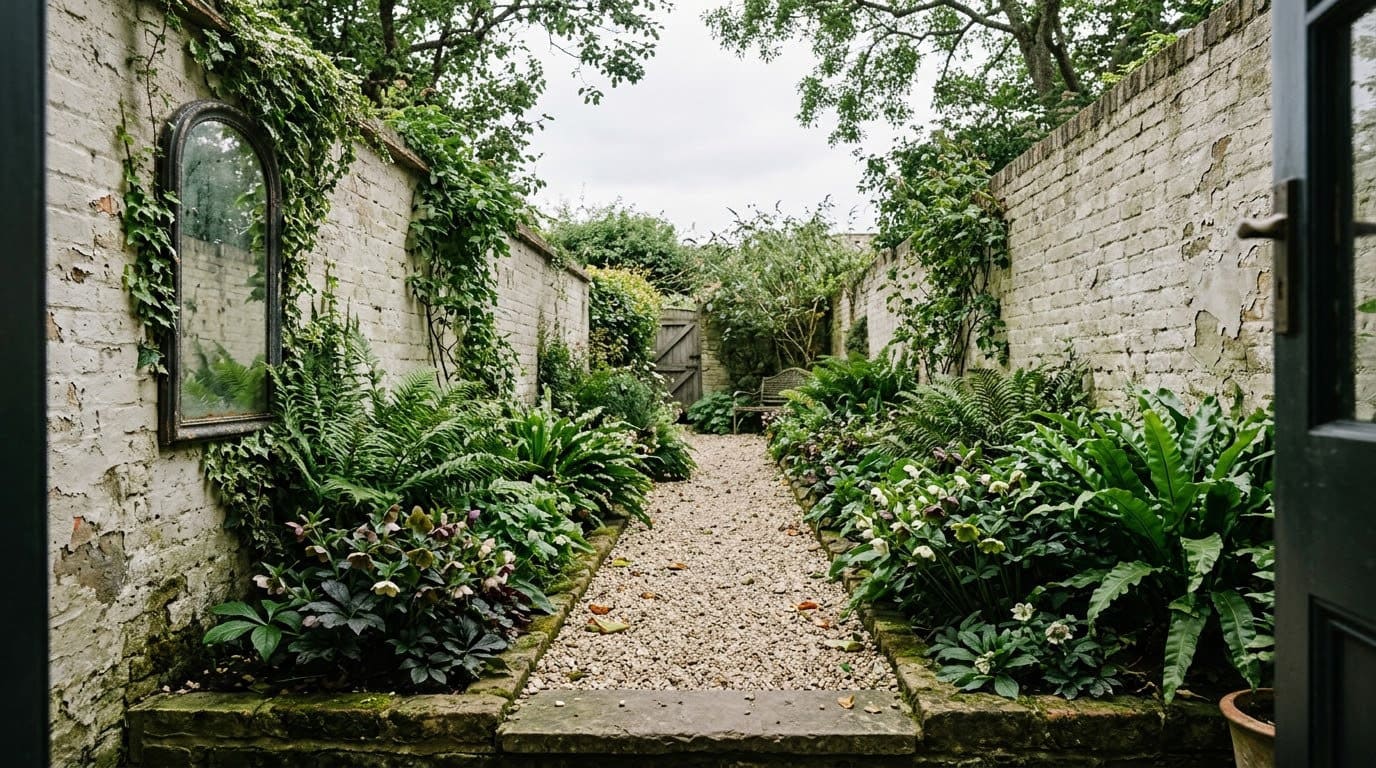
12. Gravel Side Yard Path
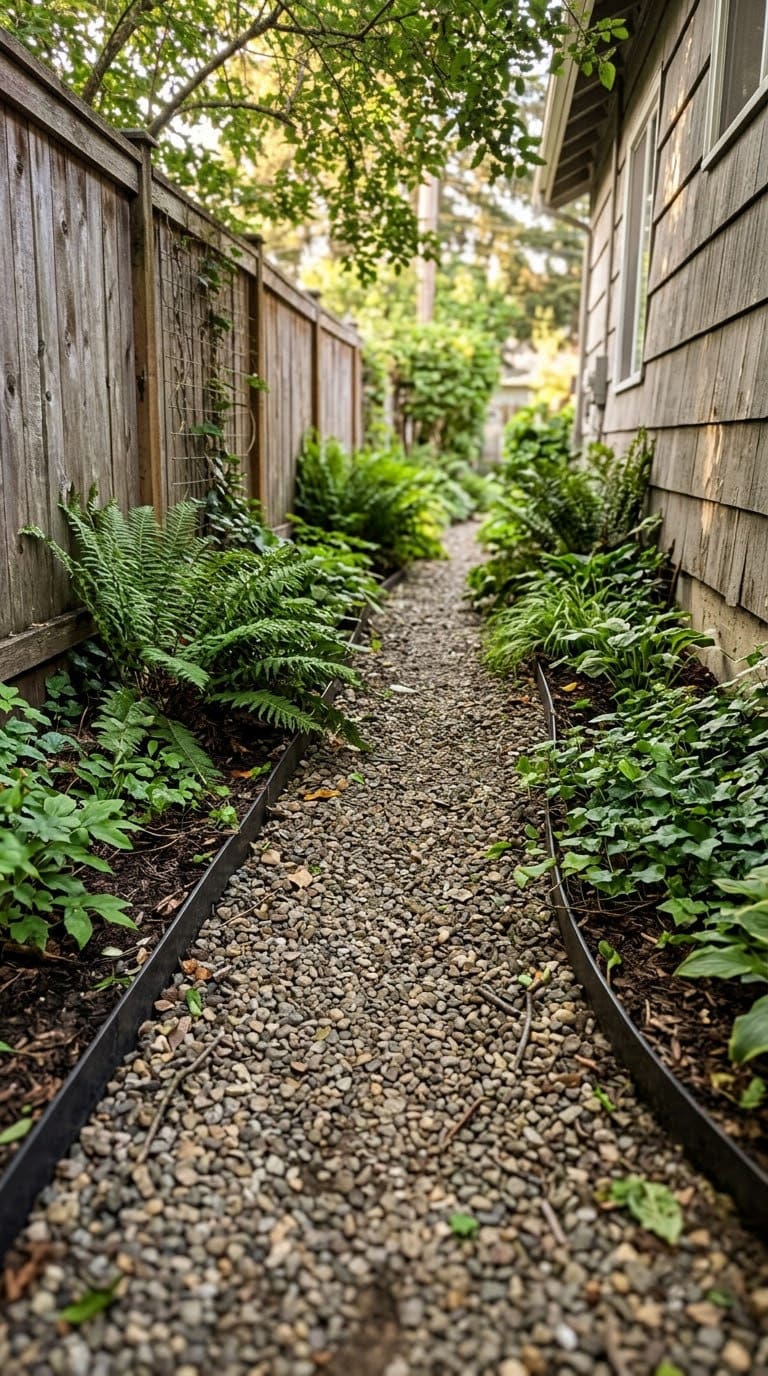
A gravel path turns a muddy side yard into a clean route. Dig out 3 to 4 inches. Lay fabric, add crushed stone, and tamp it flat.
Add edging to hold the stone in. Slope it slightly so water drains.
Our guide on crushed stone pathways covers weed control.
Cost tier: medium. Sizes are our own suggestion.
Boost Curb Appeal
13. Mailbox Garden Bed
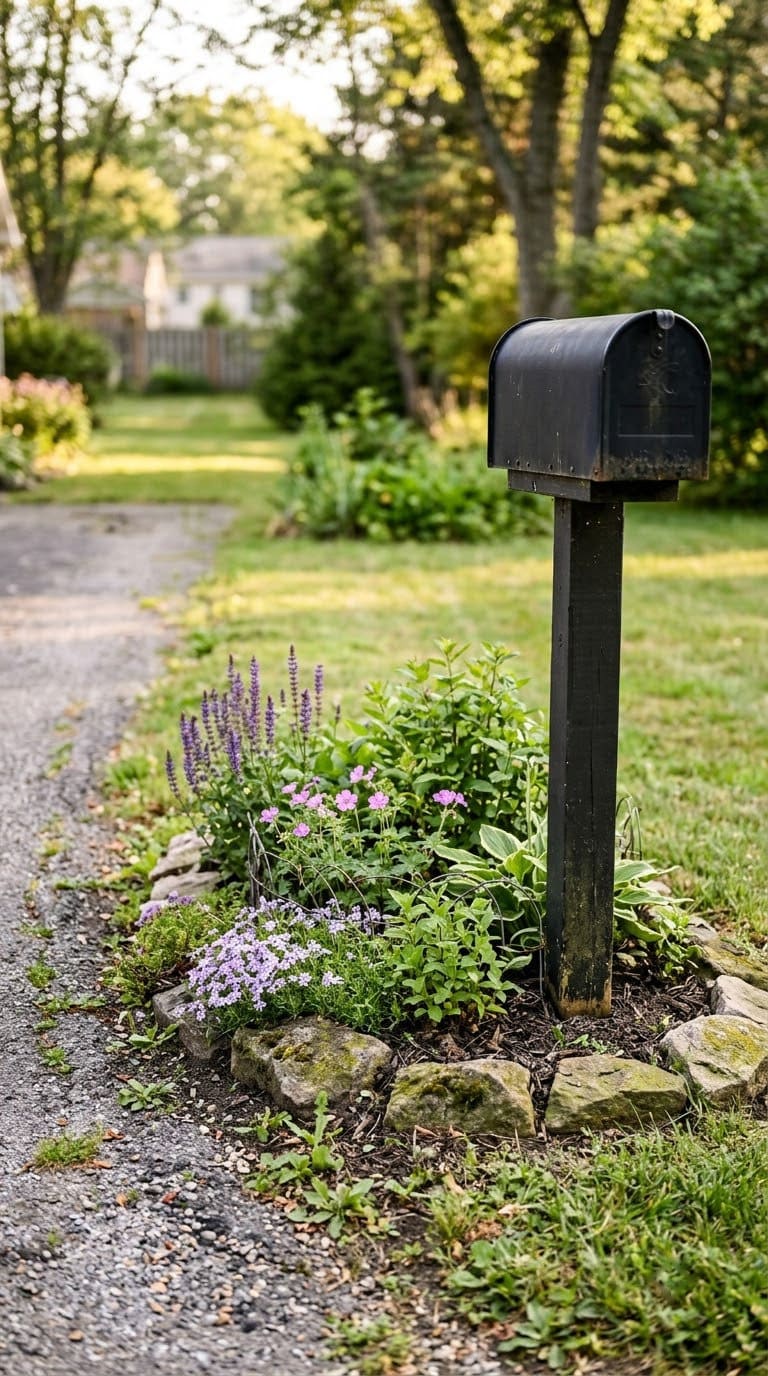
A small bed at the base of a mailbox makes a neat first impression. Plant low perennials that stay short.
Keep the front clear so the mail carrier can reach the box. Check postal and local rules for clearance. Don’t use tall or thorny plants.
Our mailbox landscaping ideas show plant choices.
Cost tier: low.
14. Shutter Plant Hanger
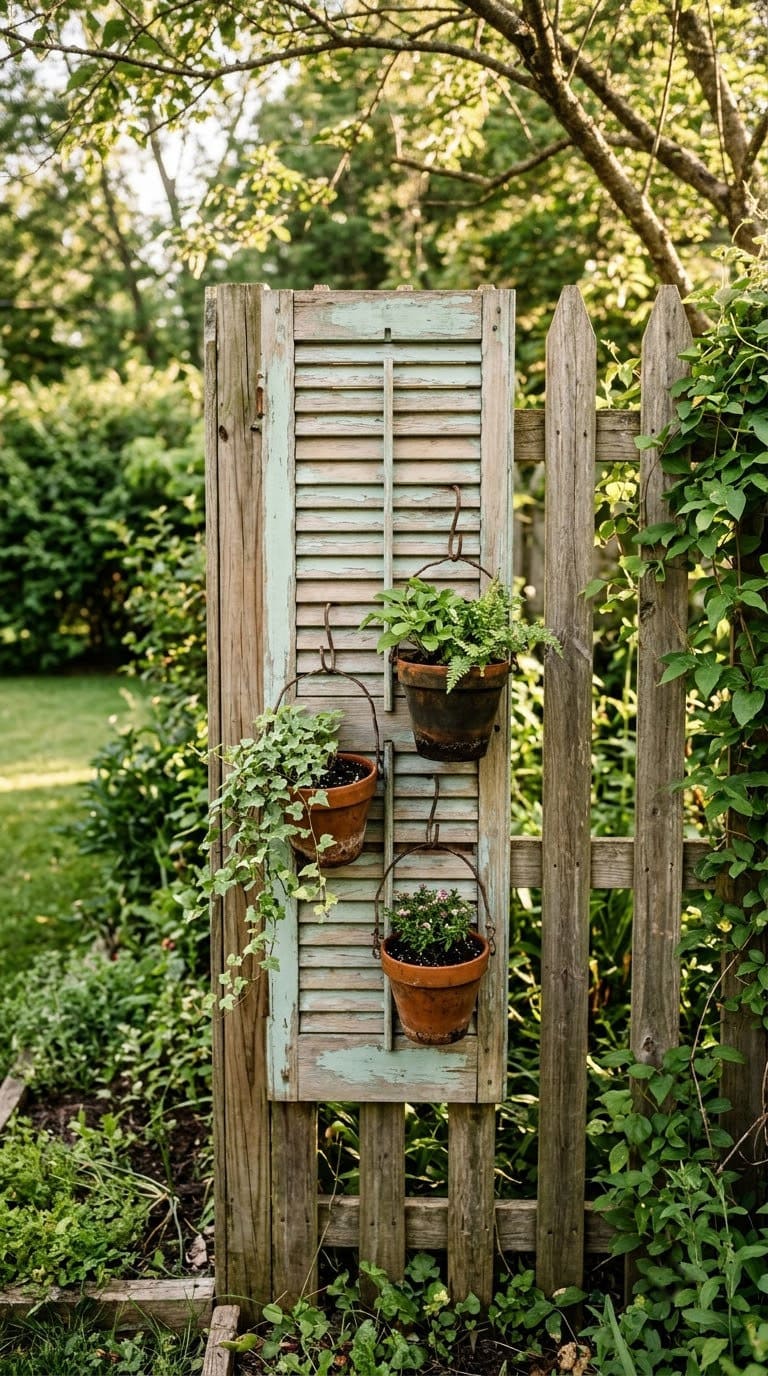
Mount an old shutter on a fence or wall and hang pots from its slats. Use S-hooks or small shelves.
Fasten into a post or stud, not just the fence boards. Use light pots and water by hand.
See our old shutter outdoor decor ideas for more.
Cost tier: low.
15. Shoe Container Garden
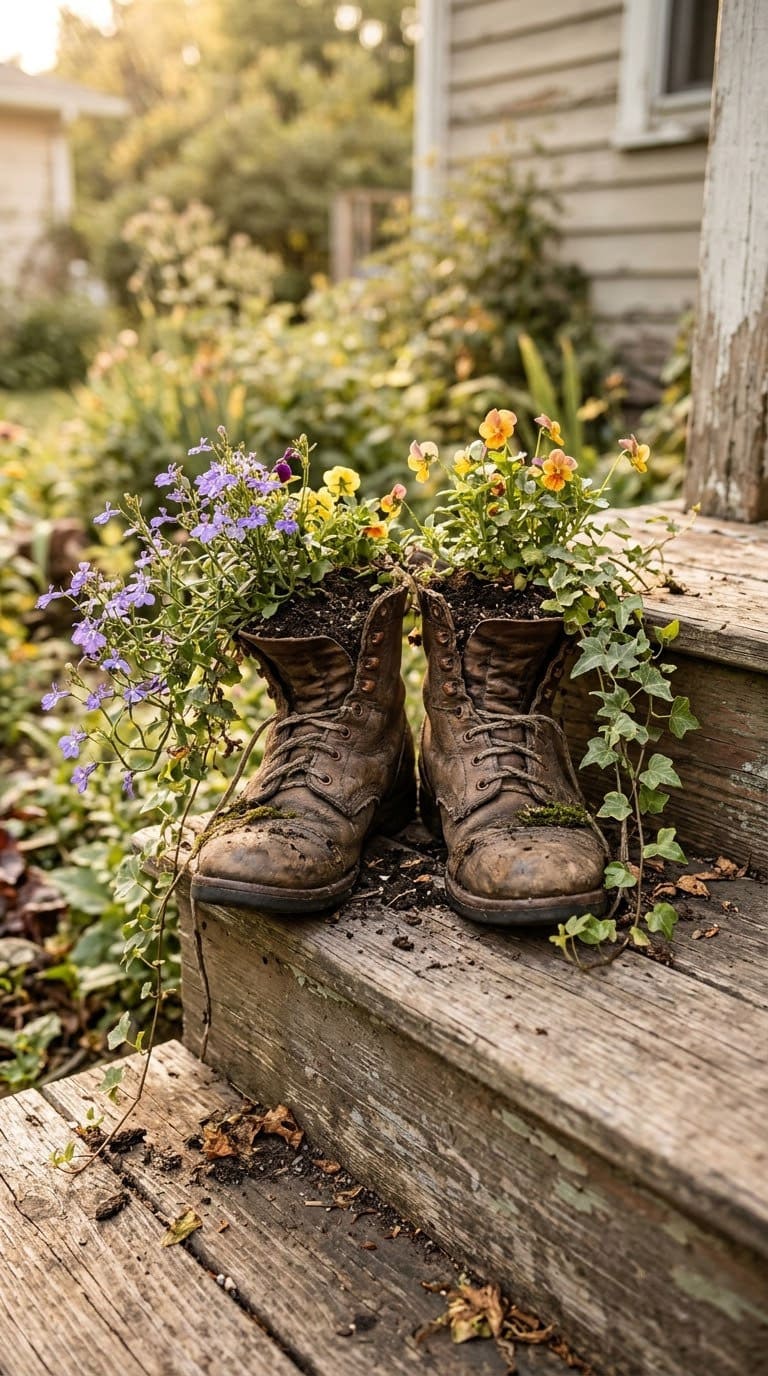
Old boots and shoes make charming planters. Punch drainage holes in the soles with a nail or drill.
Fill with light potting mix and a small plant. Keep them on a covered step so rain doesn’t flood them. Use a lightweight mix, because a heavy wet boot can tip.
They last one season or two. Treat them as a fun small project.
Cost tier: free to low. Our spilled flower pot ideas are a related quirky look.
Which Upgrade Fits Your Yard Size?
Small yard or patio? Start with a cage, a compact trellis, or a feeder. They need little room and no digging.
Medium yard? Add a compost bin and a raised bed. They take a corner each and pay back in soil and food.
Large yard? Add a rain barrel setup, a stepping stone path, and a rain garden. These need more space and more planning.
Renting? Stick to freestanding items. Cages, pole feeders, a barrel, and containers all move with you.
How Much Do These Upgrades Cost?
Most of these projects use cheap materials. Wire cages, a feeder, and shoe planters cost very little. Reusing pallets and old pots cuts the bill further.
Mid-range projects add up faster. A rain barrel, a raised bed, and a stepping stone path need lumber, stone, or hardware. Costs vary by region, so price materials locally.
Skip the temptation to buy everything at once. Build one upgrade, use it for a month, and see what your garden needs next. That keeps spending low and the results useful.
What Safety Rules Apply to Garden Builds?
Dig safely. Call 811 first, then mark your holes with paint or flags. Stay clear of any marked lines.
Lift safely. Bend your knees and keep the load close. Use a hand truck for barrels and stones, and get help for anything heavy.
Cut and drill safely. Wear eye protection and gloves. Clamp small pieces before you cut them.
Keep kids and pets safe. Cover barrel lids, fence off open holes, and store tools. A full rain barrel is a drowning risk if the lid is loose, so the Delaware guide says to keep it secure.
What Does a Weekend Upgrade Plan Look Like?
On Friday, pick one upgrade and gather materials. Call 811 if you plan to dig. Charge your drill and clear the work area.
On Saturday morning, build the frame or base. That means posts for a trellis, a compost frame, or a path trench. Do the heavy work early.
On Saturday afternoon, finish assembly and set it up. Hang the netting, drill the barrel, or lay the stones. Check that everything is level.
On Sunday, plant, fill, or stock it. Add seed to the feeder, compost scraps to the bin, or seedlings to the trellis. Walk the yard and look for loose parts.
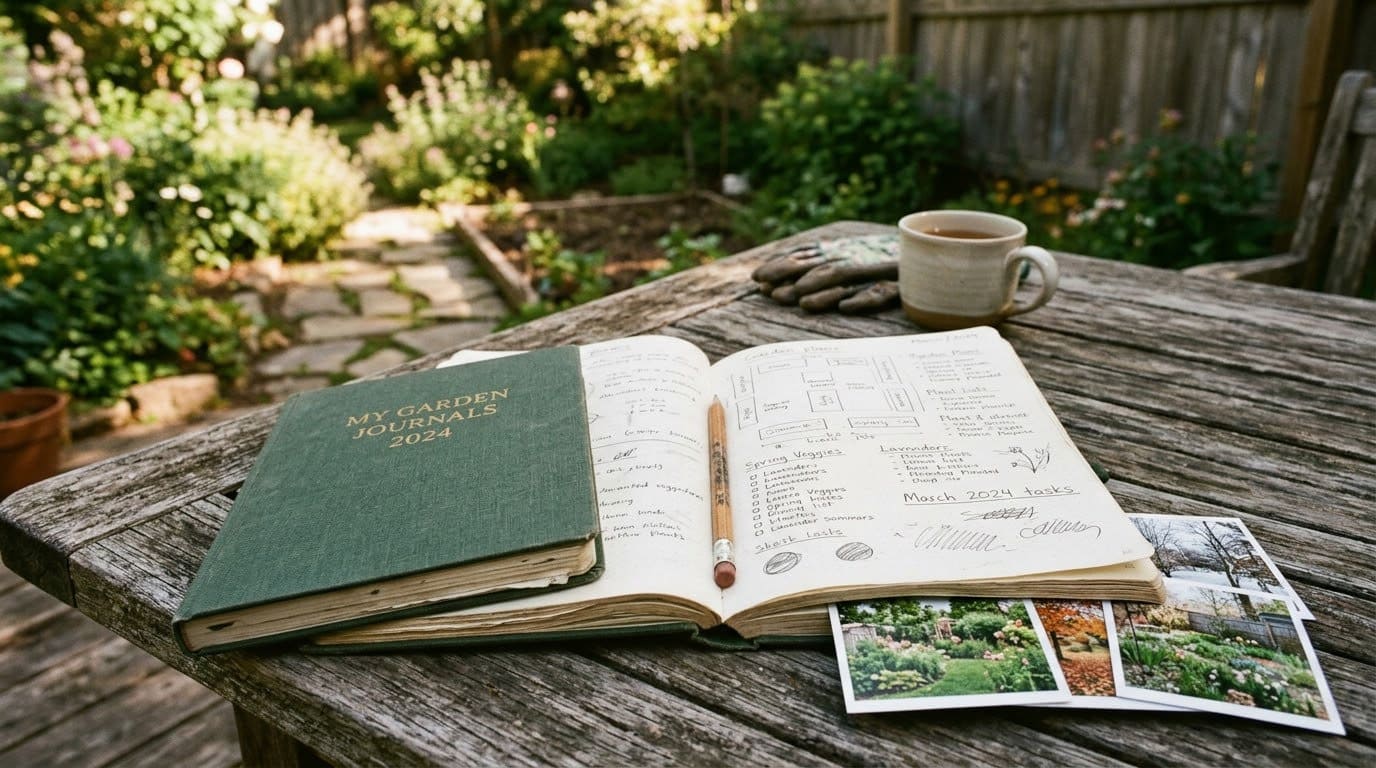
Take a photo of each finished project, so next year you remember how you built it and what you would change.
How Do You Care for Your Garden Upgrades?
Check fasteners and posts each season. Retighten anything that has shifted. Replace rusty hardware.
Look for rot where wood meets soil. Replace any post that feels soft, since a weak post lets a trellis lean when it’s loaded with fruit.
Clean feeders on a set day. Clemson says every two weeks for seed feeders and weekly for hummingbird feeders.
Turn compost weekly and check the moisture. Empty and store the rain barrel before the first hard freeze.
At season’s end, take down trellis netting and posts. Fine Gardening suggests removing the netting, posts, and rebar at season’s end.
Common Mistakes to Avoid
Building a trellis too light is the first one. Peter Garnham uses 2-foot-deep posts and rebar for a reason.
Skipping feeder cleaning is the second. Clemson says moldy seed and droppings can spread disease.
Letting compost go soggy is the third. The Lawrence fact sheet says wet, smelly piles need air.
Setting a rain barrel on a weak base is the fourth. A full barrel can weigh about 450 pounds, per Delaware.
FAQ
How strong should a garden trellis be?
Use posts set about 2 feet deep, per UW Extension and Fine Gardening, with large-mesh netting or hog wire. Add slings for heavy fruit.
How often should I clean a bird feeder?
Clemson Extension says clean seed feeders at least every two weeks, and more often in rain.
How big should a compost bin be?
The City of Lawrence, Kansas says a good size is 1 cubic yard, or 3 by 3 by 3 feet.
How heavy is a full rain barrel?
The University of Delaware says a full barrel can weigh about 450 pounds.
Do I need to call before digging?
Yes. Call 811 before digging posts, paths, or beds to check for buried lines.
Never miss an update — choose FarmFoodFamily as your preferred source on Google.
How it works: Tap the button below to open Google's settings page, then check the box next to FarmFoodFamily.
Tap the checkbox to turn it blue — that's how you know it's set.