7 Vegetables That Fight Each Other For Nutrients in Your Garden Bed
Two healthy-looking vegetables can both stall out from a fight over nitrogen you’ll never actually see happening underground, and the fix usually costs less than the fertilizer you already bought.

Never miss an update — choose FarmFoodFamily as your preferred source on Google.
How it works: Tap the button below to open Google’s settings page, then check the box next to FarmFoodFamily.
Tap the checkbox to turn it blue — that’s how you know it’s set.
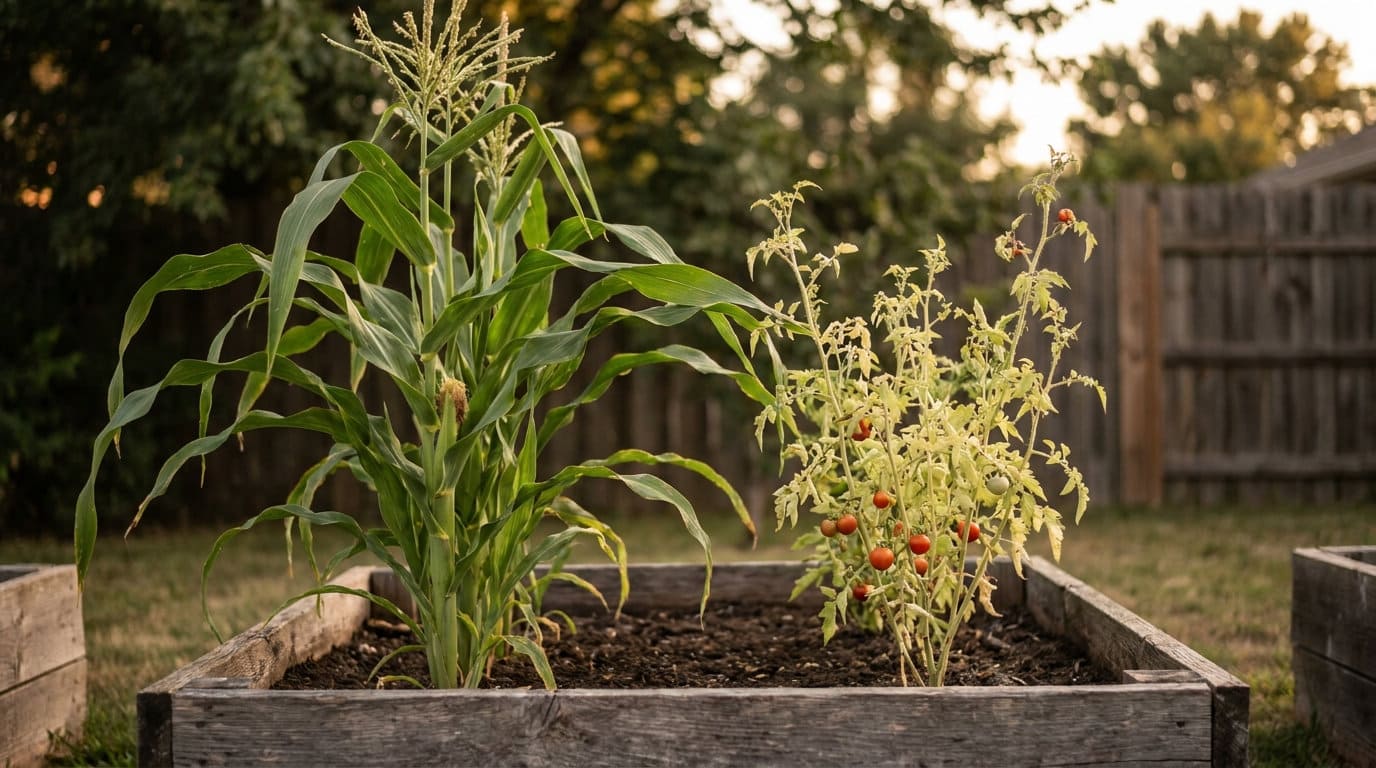
I planted corn and tomatoes eight inches apart in a 4×4 raised bed two summers ago because the seed packet diagrams made it look fine, and by August I had six-inch corn ears and tomatoes that never got past the size of a golf ball. Nothing looked sick. No spots, no wilting, no bugs I could find.
Both plants were just quietly starving in slow motion, and it took me an embarrassingly long time to realize the problem wasn’t disease or weather, it was that I’d planted two of the hungriest vegetables you can grow within reach of the same eight inches of soil.
If your raised bed or vegetable garden layout has a pairing like that in it right now, you’re not imagining the stunted growth. Below are the 7 pairings that cause this most often, the actual mechanism behind each, and what it costs to fix.
Quick answer: Vegetables compete for nutrients when two or more “heavy feeders,” plants that pull unusually large amounts of nitrogen, phosphorus, and potassium from the soil, are planted close together in the same bed.
The worst offenders are tomatoes, corn, squash, potatoes, brassicas (broccoli, cabbage, cauliflower, kale), peppers, eggplant, and cucumbers, and pairing any two of them within a couple feet of each other in a small bed usually means both plants lose.
Oregon State University Extension and the University of Maryland Extension both put heavy feeders’ nitrogen needs at roughly 3 pounds of nitrogen per 1,000 square feet, nearly 50% more than the average vegetable, and OSU Extension specifically notes that raised beds run out of that nitrogen faster than in-ground soil because they lack a deep native reserve to draw from. A $10 to $25 soil test through your local extension office will tell you exactly what’s actually missing before you guess with a bag of fertilizer.
Answer 4 quick questions and get matched to the exact fix for your yard — drainage, budget, layout, or something else entirely.
Take the Free Quiz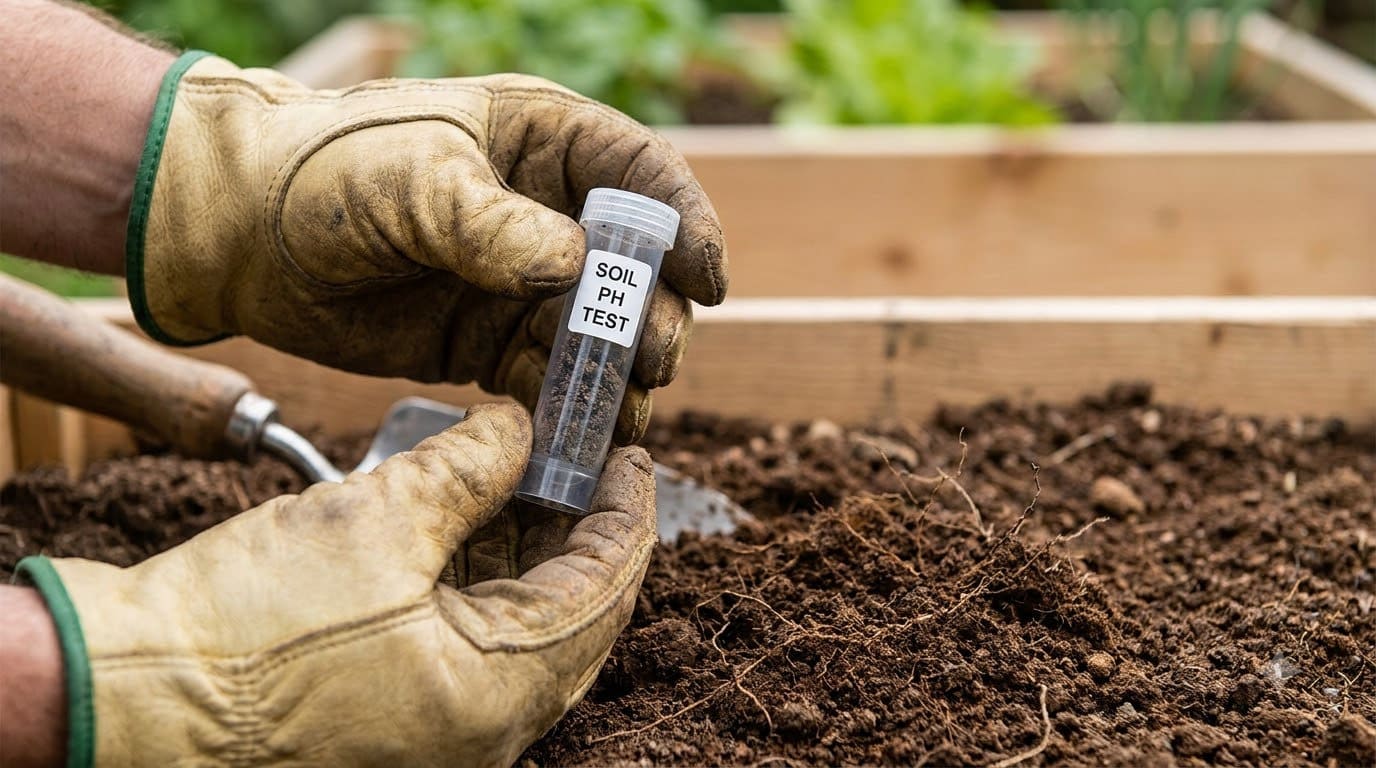
Why Do Vegetables Actually Compete for Nutrients?
A “heavy feeder” isn’t a vague gardening term, it’s a real category with real numbers behind it. Tomatoes, corn, squash, potatoes, cucumbers, melons, and the whole brassica family (broccoli, cabbage, cauliflower, kale) all pull nitrogen, phosphorus, and potassium out of the soil faster and in larger amounts than a light feeder like lettuce or a nitrogen-fixer like beans.
Oregon State University Extension’s fertilizing guidance (publication EC1503) puts a typical vegetable garden’s annual nitrogen need at about 3 pounds per 1,000 square feet, and the University of Maryland Extension gives the same 3-pound figure specifically for heavy feeders like tomatoes, broccoli, and beets, against roughly 2 pounds per 1,000 square feet for the average vegetable.
That’s not a small gap. Two heavy feeders planted next to each other are effectively both trying to draw from a nutrient budget that was only ever going to comfortably support one of them.
Raised beds make this worse, not better, which surprises a lot of people who assume the opposite because raised beds have “better” soil.
OSU Extension is specific about why: a raised bed’s soil volume is contained and finite, with no deep native-soil reserve underneath it the way an in-ground garden has, so nitrogen gets used up faster and pale, hungry-looking plants show up more often in raised beds than in conventional ground gardens. And a soil test genuinely is the cheapest first move here.
Most university extension offices run a basic pH and N-P-K test for $10 to $25 (Penn State and Cornell Cooperative Extension both charge around $10 per sample), which is less than a single bag of fertilizer, and it tells you what’s actually depleted instead of you guessing and either under-fertilizing or wasting money over-correcting.
1. Tomatoes and Corn
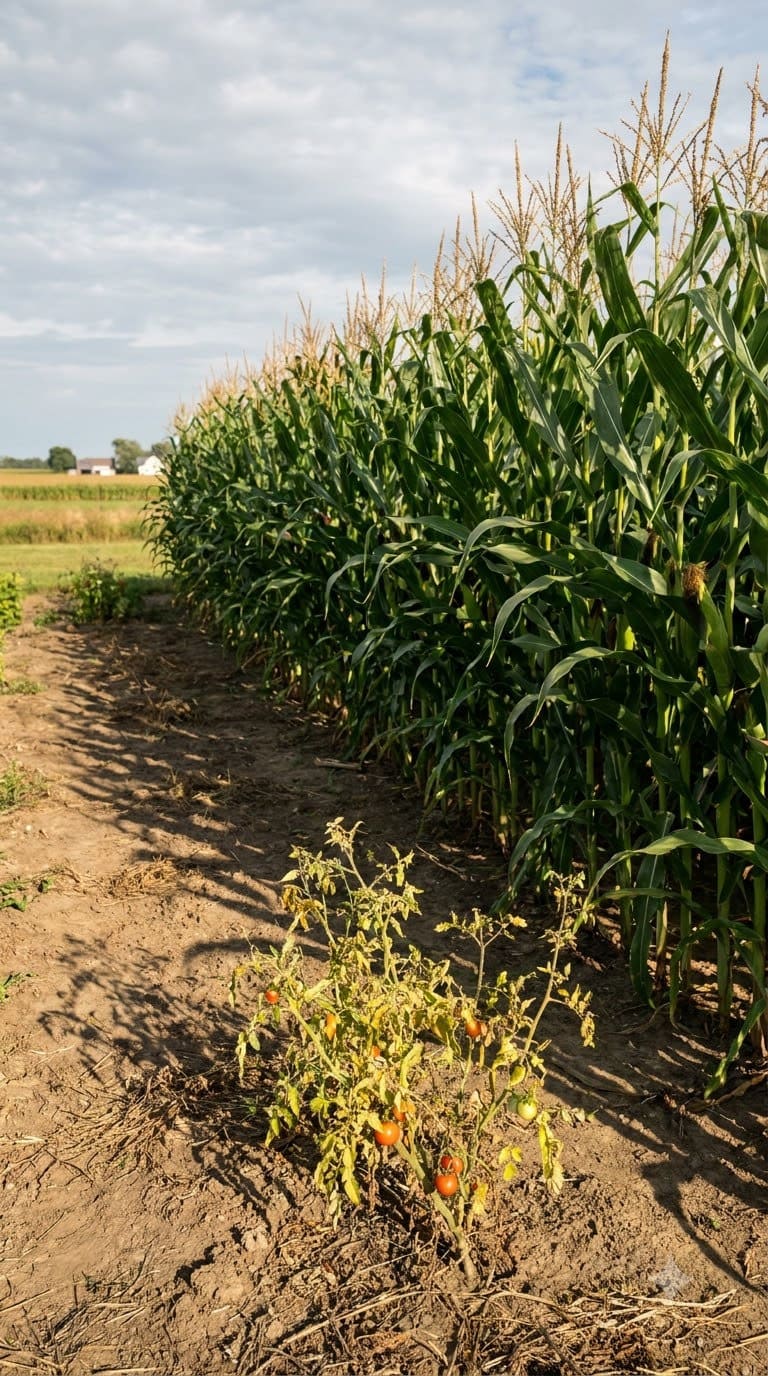
Why it’s a problem: Both are textbook heavy feeders, and corn adds a second problem on top of the nutrient fight, it grows tall fast and starts shading the tomato bed just as tomatoes need their strongest sun for fruit set. So you’re not just splitting a limited nitrogen budget two ways, you’re also cutting one plant’s light while you do it.
Most yard problems trace back to one specific, fixable cause. Find yours in 4 quick questions.
Take the Free Quiz
Tells you which nutrient is actually depleted before you guess with fertilizer, the first move for any bed with a heavy-feeder pairing already in the ground
Shop NowThis post contains affiliate links. We may earn a commission on qualifying purchases at no extra cost to you.
Minimum distance: At least 2 to 3 feet between a tomato plant and a corn row in a home garden bed, and put the corn on the north side of the bed specifically so its shadow falls away from the tomatoes rather than across them.
If you already planted them close: This is a cheap fix if you catch it early in the season. Side-dress both plants with a balanced organic fertilizer (something like a Garden-Tone-style 3-4-4 blend works for both) every 3 to 4 weeks rather than a single early feeding, since that spreads the limited nutrient supply over the season instead of letting the more aggressive feeder grab it all up front.
2. Corn and Squash Without the Bean
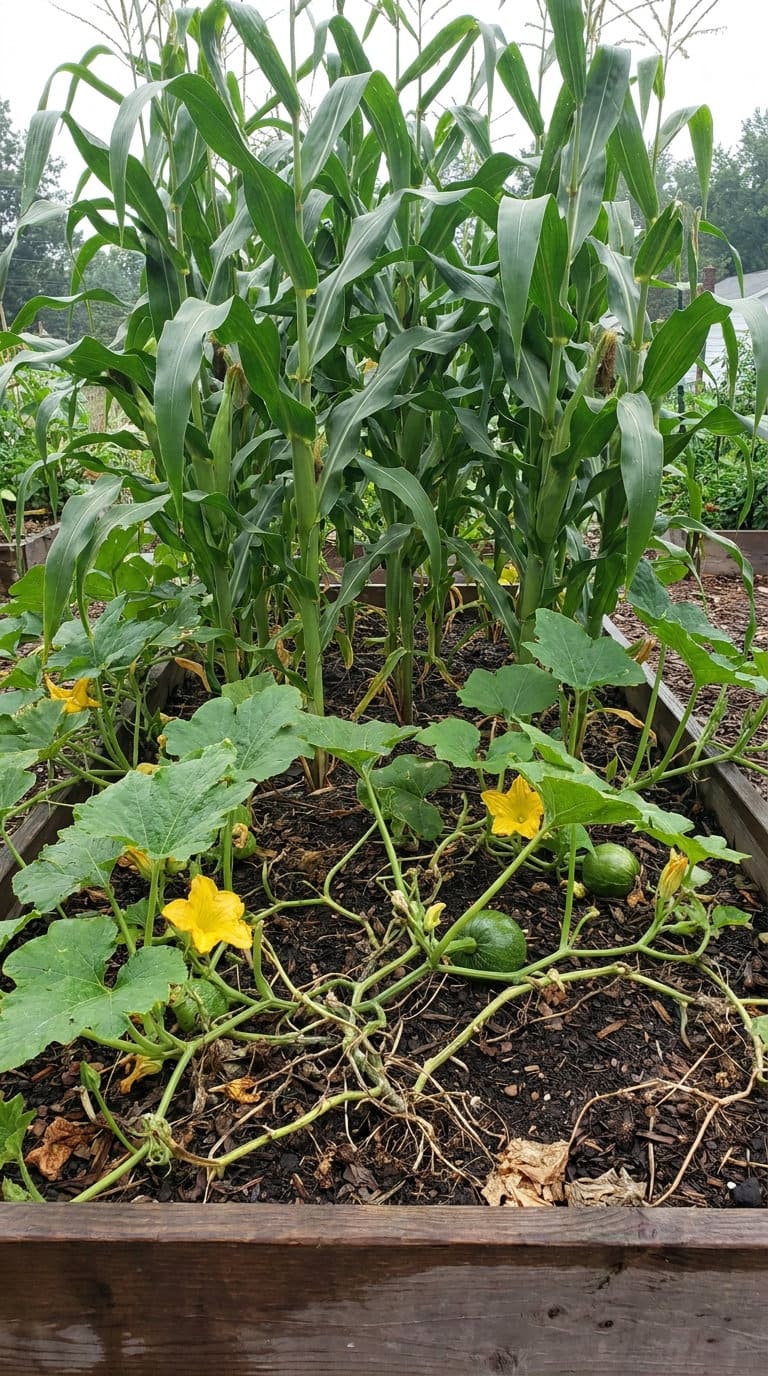
Everyone’s heard of the Three Sisters, corn, beans, and squash grown together, and it genuinely works.
What doesn’t work is the shortcut version a lot of home gardeners try: corn and squash together with the bean left out because pole beans need a trellis structure and that feels like extra effort.
Skip the bean and you’ve turned a balanced three-way system into two heavy feeders competing for the same nitrogen with nothing adding any back.
Why it’s a problem: Beans host rhizobia bacteria on their roots that pull nitrogen from the air and convert it into a form plants can use, which is the entire reason the traditional Three Sisters system doesn’t need much added fertilizer. Corn and squash without that bean are just two nitrogen-hungry plants pulling from the same finite soil supply with nothing replenishing it.
Minimum distance: If you’re not doing the full three-plant system, keep corn and squash in separate parts of the bed, several feet apart, rather than interplanted the way Three Sisters diagrams show.
If you already planted them close: Add bush beans (they don’t need the corn stalk as a trellis the way pole beans do) into any open gap in the bed this season, or plan to rotate a nitrogen-fixing cover crop like clover through that spot next season. Either is a low-cost fix, mostly the price of a seed packet.
3. Potatoes and Tomatoes
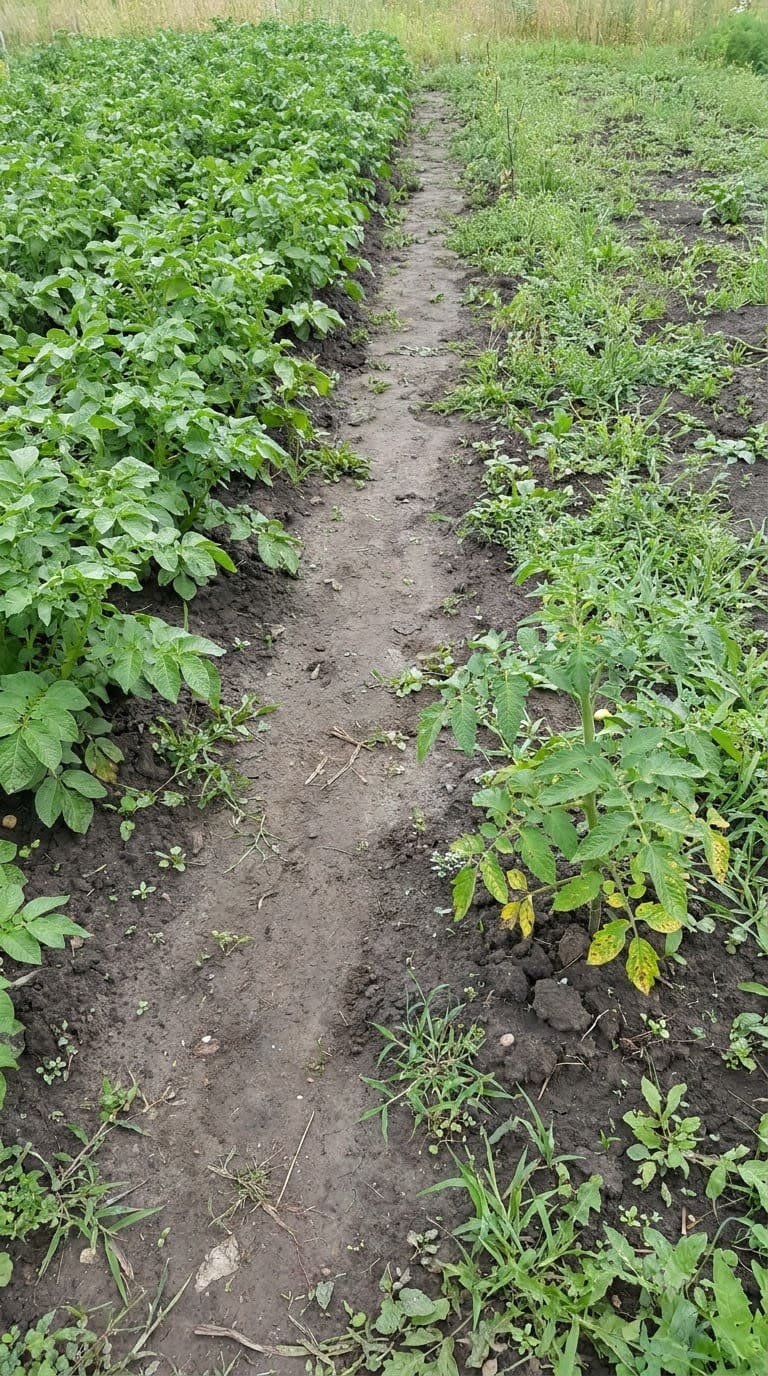
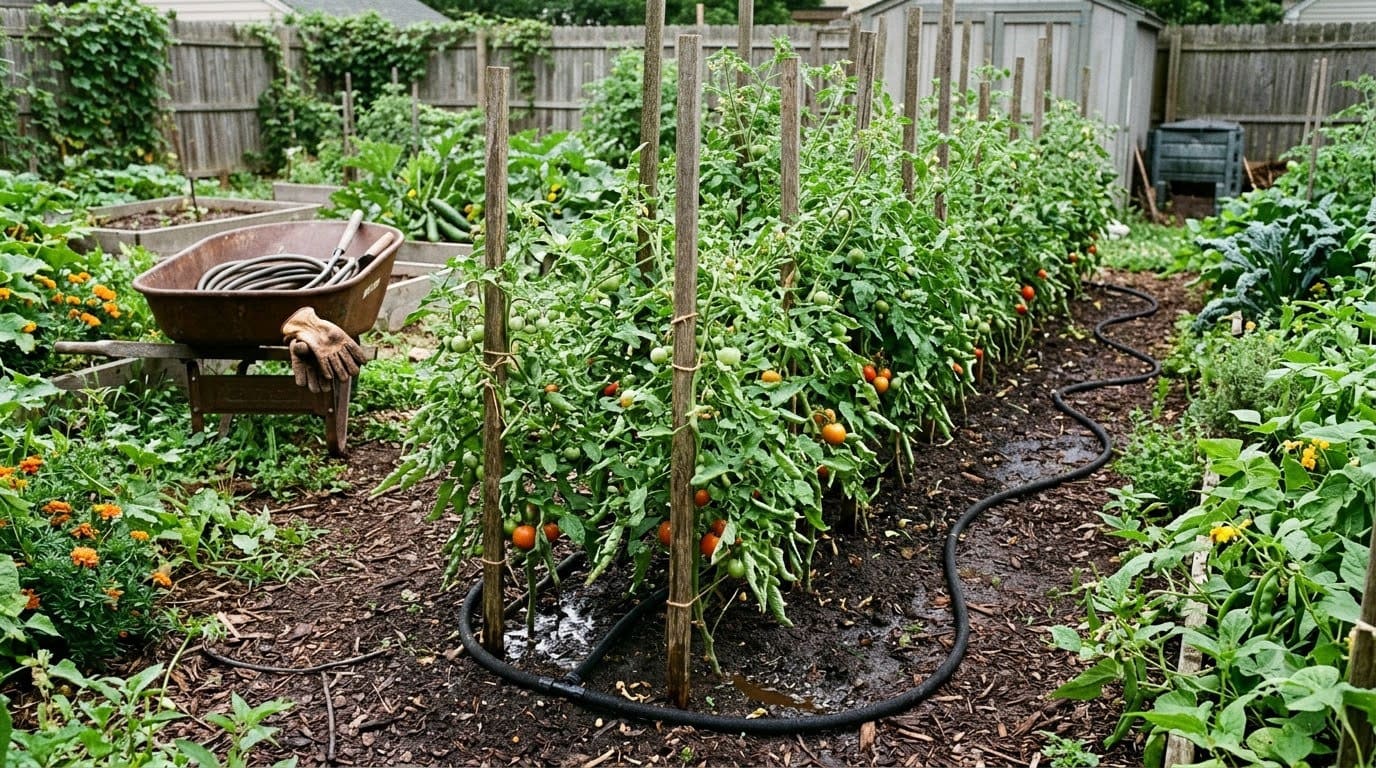
Why it’s a problem: These are both nightshades, and nightshades don’t just share nutrient demand, they share the exact same disease and pest vulnerabilities too, which is a double hit.
The average homeowner spends $616/year on yard fixes that don't address the real problem. Find out what yours actually is — before you spend another dollar.
Take the Free QuizAccording to Amy Enfield, Senior Horticulturist at ScottsMiracle-Gro, tomatoes and potatoes “are related, and because they are in the same family, they are susceptible to similar pests and diseases,” on top of both plants drawing heavily on potassium for tuber and fruit development respectively.
Minimum distance: Keep them in separate beds if you have the space to do it, or at minimum several feet apart with good airflow between the two groupings.
If you already planted them close: Watch both closely for early blight and Colorado potato beetle, since an outbreak on one crop jumps to the other fast when they’re sharing soil and air space.
If you see it, treat immediately rather than waiting, both crops are cheap enough to replant next season if this one’s a wash, but the disease can carry over in the soil if you don’t rotate away from nightshades in that spot the following year.
4. The All-Brassica Block
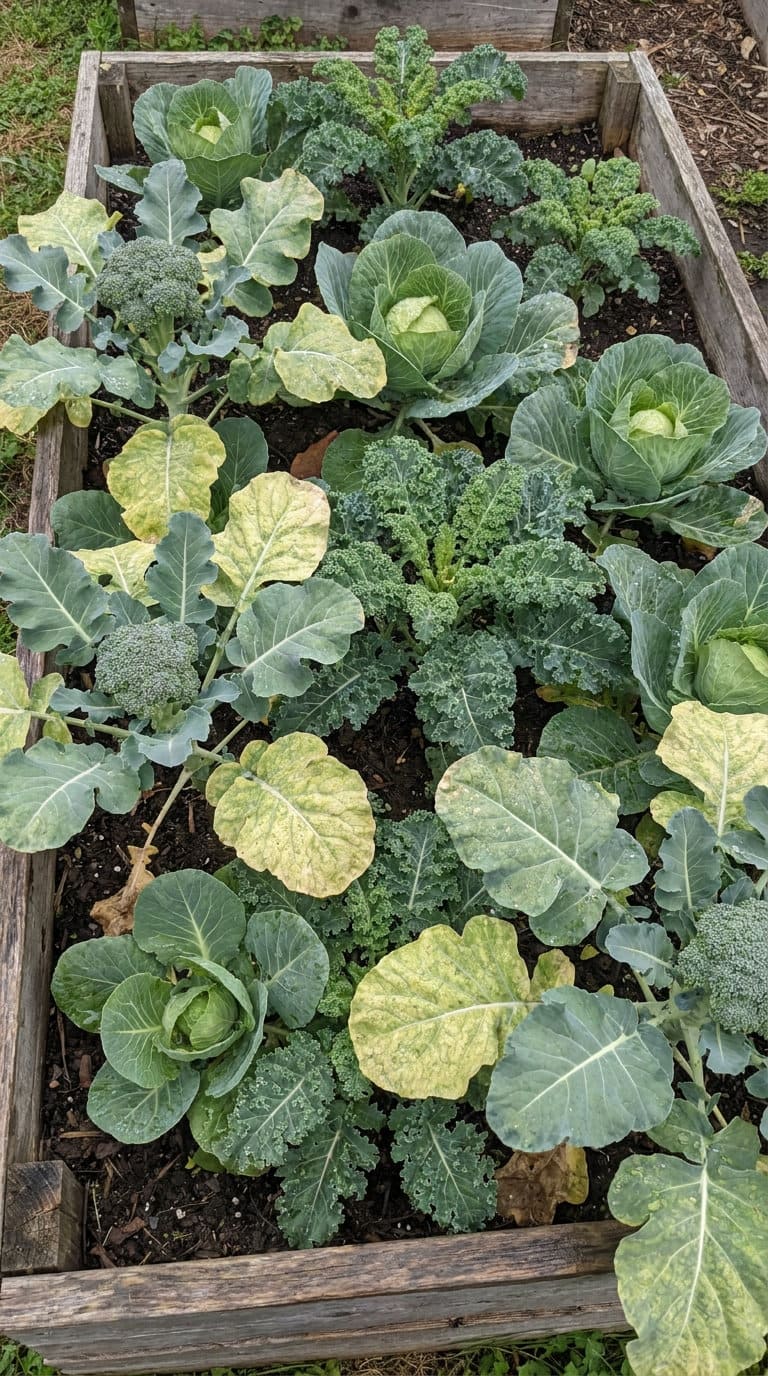
Why it’s a problem: Grouping broccoli, cabbage, cauliflower, and kale together makes sense for crop rotation, they’re the same family, so you rotate them as a block to manage soil-borne disease.
But that same logic backfires nutritionally, because all four are heavy nitrogen feeders, and a dense block of them planted at the same time pulls hard on the exact same nutrient at the exact same growth stage, with nothing staggering the demand.
Minimum distance: 18 to 24 inches between individual brassica plants is standard for airflow and root room, but the bigger fix is timing, stagger plantings by a couple weeks where your season allows it, rather than transplanting an entire block on the same day.
If you already planted them close: Side-dress with extra nitrogen partway through the season (about 3 to 6 weeks after transplanting, per OSU Extension’s general timing guidance) rather than only fertilizing at planting, since that’s when the whole block’s demand peaks together. This is a cheap fix, a bag of blood meal or a nitrogen-heavy organic fertilizer runs under $15 and covers a full bed.
5. Onions and Beans
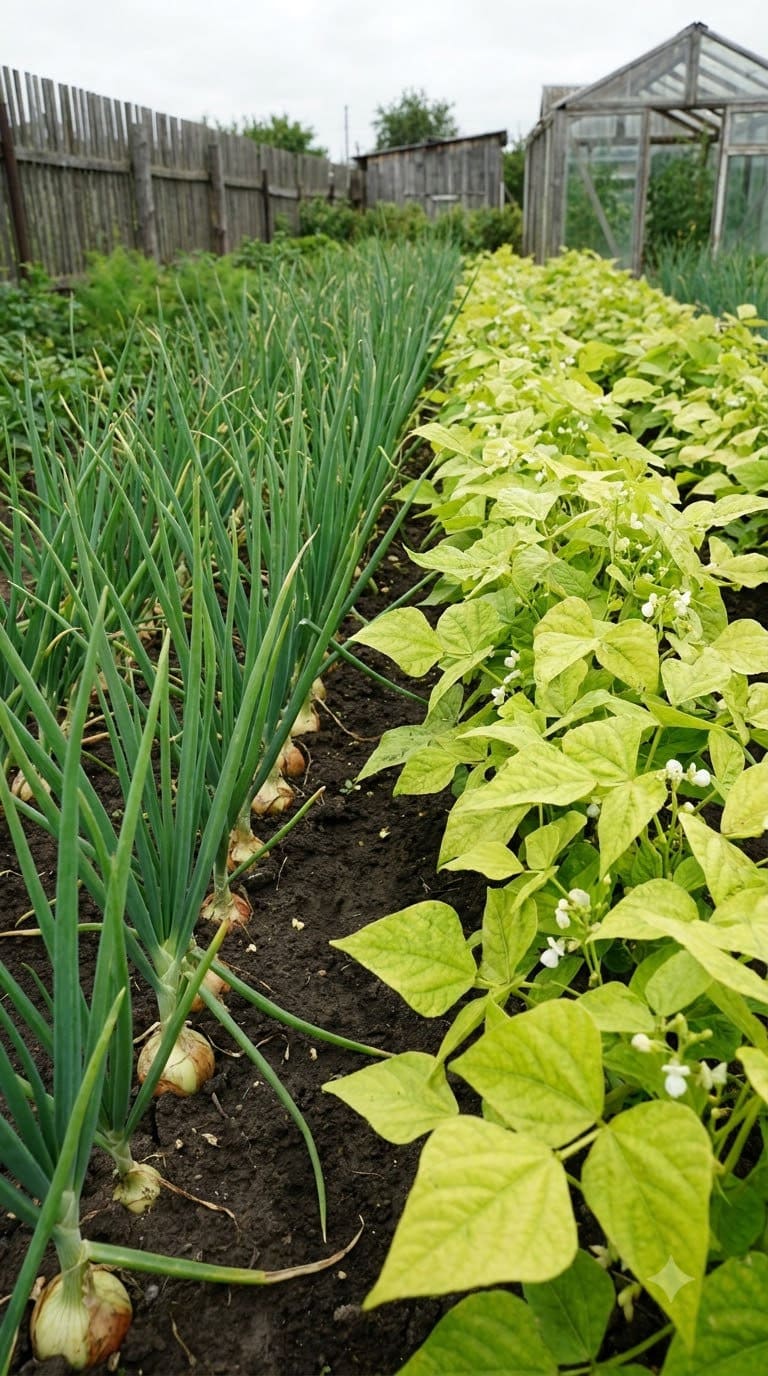
Why it’s a problem: This one’s counterintuitive because beans are usually the plant you’d want next to a heavy feeder, not away from it, they’re the nitrogen-fixer. But onions actively work against that.
Amy Enfield explains it directly: “Beans form a symbiotic relationship with soil bacteria that allow them to fix nitrogen… Onions emit an antibacterial gas (called allicin) that kills the soil bacteria.” So instead of onions and beans being neutral neighbors, the onion is disabling the exact mechanism that would otherwise be helping every other plant in the bed.
Minimum distance: Keep alliums (onions, garlic, chives) out of direct contact with your beans and peas, a couple feet of separation is enough since this is a localized soil-chemistry effect, not a long-range one.
If you already planted them close: Relocate the onions if they’re still young and shallow-rooted, it’s an easy transplant. If the beans are already showing pale, nitrogen-starved leaves, a quick-release nitrogen feed will carry them through the rest of the season while you fix the layout for next year.
6. Squash, Melons, and Cucumbers
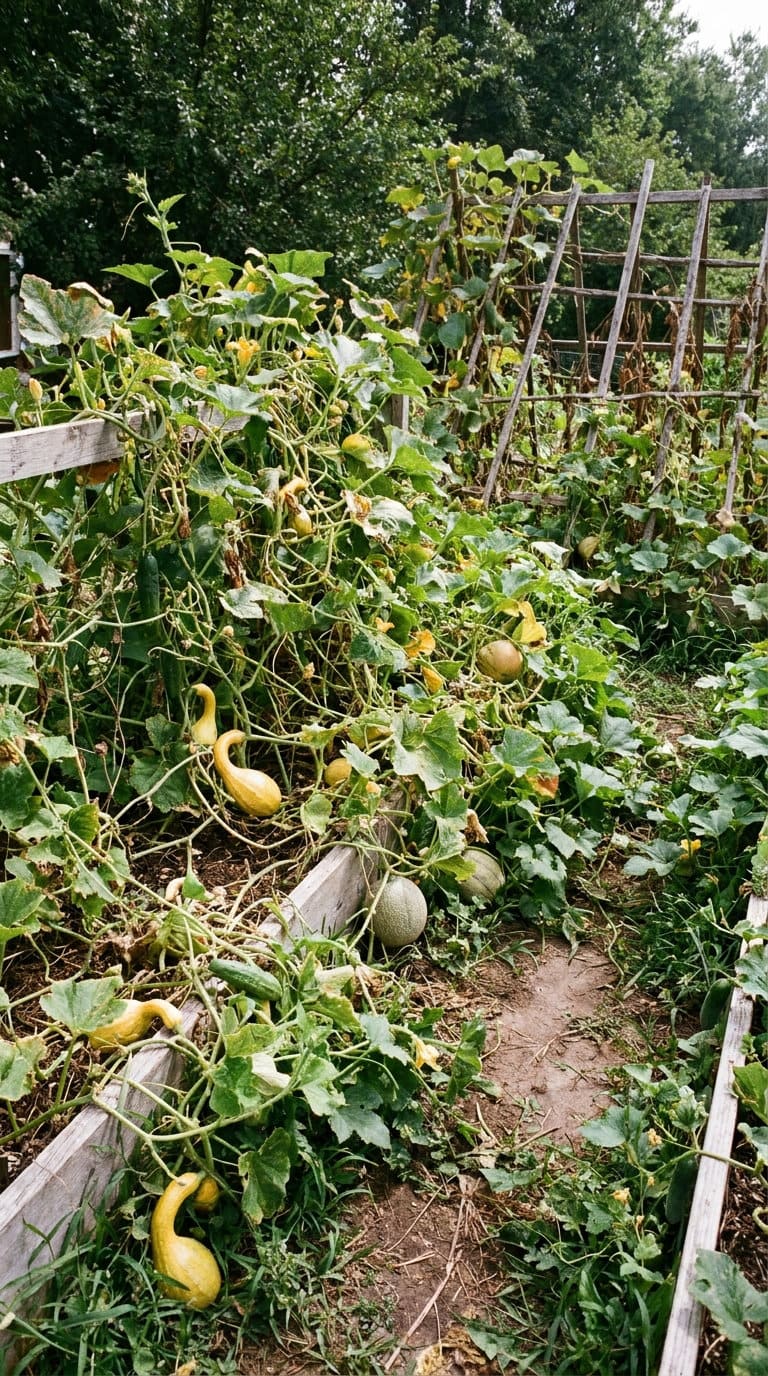
Why it’s a problem: All three are Cucurbitaceae, the same plant family, with the same heavy draw on potassium and phosphorus for fruit development, plus sprawling vine root systems that spread wide looking for the same nutrients in the same soil volume.
Cram three cucurbit crops into one small raised bed and you’ve got three plants with overlapping root zones all reaching for the same limited pool.
Minimum distance: 3 to 4 feet between plants at minimum, more if you’re not trellising, since the root spread roughly tracks the vine spread above ground.
If you already planted them close: Trellising is the honest fix here, it gets the vines (and to some extent the competing surface roots) out of each other’s way without moving anything, and it’s a one-time cost of a cattle panel or trellis netting rather than a recurring fertilizer expense.
7. Peppers and Eggplant Crowded in With Tomatoes
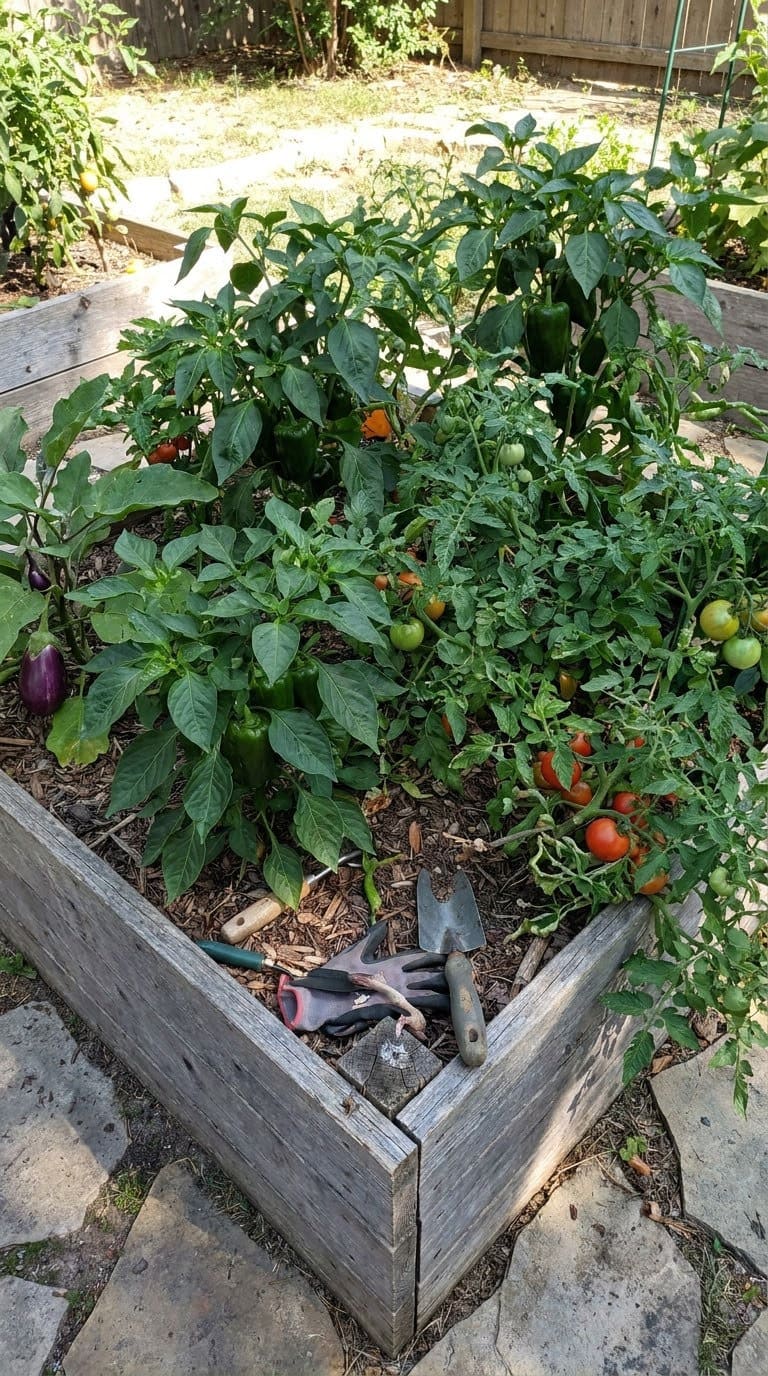
Why it’s a problem: This is the compounding version of the potato-tomato problem above.
Peppers, eggplant, and tomatoes are all nightshades, all heavy feeders, and all share disease susceptibility, and a lot of home gardeners put all three into one small 4×4 raised bed because “they’re all summer vegetables” without realizing they’re stacking three of the most nutrient-demanding, disease-linked plants into the smallest possible footprint.
Minimum distance: If your bed is smaller than roughly 16 square feet, pick two of the three rather than all three, or plan on feeding that bed noticeably more often than a mixed bed with lighter feeders in it.
If you already planted them close: This is a bigger-investment situation if the bed is already established, since moving mature plants isn’t realistic mid-season. Commit to a monthly feeding schedule with a balanced organic fertilizer through the rest of the season, and plan next year’s layout to split the three nightshades across at least two separate beds or a rotation with a lighter-feeding crop like lettuce or beans in between.
How the 7 Pairings Compare
| Pairing | Main Conflict Mechanism | Severity | Minimum Fix |
|---|---|---|---|
| Tomatoes + Corn | Nutrient competition + shading | Moderate to severe | 2-3 ft, corn on north side |
| Corn + Squash (no bean) | Nitrogen competition, missing nitrogen-fixer | Moderate | Add bush beans, several feet apart |
| Potatoes + Tomatoes | Shared nightshade nutrient draw + disease | Moderate | Separate beds preferred |
| Brassica block | Simultaneous heavy nitrogen demand | Moderate | Stagger planting, 18-24 in spacing |
| Onions + Beans | Allicin disables nitrogen-fixing bacteria | Moderate | A couple feet separation |
| Squash/melons + Cucumbers | Same family, same K/P draw, root overlap | Moderate | 3-4 ft, trellis |
| Peppers + Eggplant + Tomatoes | Compounded nightshade competition | Severe in small beds | Pick 2 of 3 in beds under 16 sq ft |
Does This Matter More in a Raised Bed Than In-Ground?
Yes, and this is the part most companion-planting advice skips entirely. A raised bed is a closed system, whatever nutrients you filled it with is roughly what it has, minus what the plants pull out and minus whatever rain washes down through the drainage.
An in-ground bed sits on top of a much deeper soil profile with its own nutrient reserve, so the same pairing of two heavy feeders is more forgiving there than it is in a 4×4 raised box.
If you’re gardening in raised beds, budget for replenishing organic matter and nutrients every season (a couple inches of compost or composted manure worked in before planting is the standard baseline), and treat any two-heavy-feeder pairing as needing extra feeding, not the same schedule you’d use in-ground.
If you’re planning a new bed from scratch, a full raised bed vegetable garden setup guide covers the soil-depth and volume basics that make this whole problem easier to avoid from day one.
In-ground gardeners aren’t immune to this, they just have more runway before it shows up as visibly stunted growth, and heavy clay or sandy soils can still run short on a specific nutrient fast regardless of bed type.
A full breakdown of how to properly fertilize a vegetable garden is worth reading either way before you assume more fertilizer automatically fixes a competition problem, sometimes it does, sometimes the real fix is spacing or timing instead.
What I Learned the Hard Way
The corn and tomato bed I mentioned above taught me something I didn’t expect: I kept adding more fertilizer that first season, assuming the problem was that I hadn’t fed the bed enough, and it barely helped.
It wasn’t until I actually pulled a soil test (I used a basic extension office kit, $12 at the time, cheaper than the second bag of fertilizer I’d already bought) that I found out the nitrogen wasn’t low at all, it just wasn’t reaching the tomato roots fast enough because the corn’s more aggressive root system was grabbing it first.
That’s the part nobody tells you: sometimes the fix isn’t more fertilizer, it’s rearranging who’s competing with whom. I moved the corn to the opposite end of the bed the next spring and interplanted bush beans between the two crops, and the tomatoes came back to a normal size within that same season.
The second thing that surprised me was how long it took to notice. Neither plant showed a single classic deficiency symptom, no yellowing, no purple stems, nothing textbook.
They just grew slower and produced smaller fruit and ears than they should have, and it’s genuinely easy to write that off as “eh, weird year” instead of catching the actual cause.
If you’ve got a bed where everything’s technically alive but nothing’s thriving and you can’t point to a specific disease or pest, checking which two plants in that bed are both heavy feeders is worth doing before you buy more fertilizer or assume it’s the weather.
Frequently Asked Questions
Why are my tomatoes and corn both stunted even though I planted them close together on purpose? Because they’re both heavy feeders competing for the same limited nitrogen, phosphorus, and potassium in that patch of soil, and corn’s height adds a shading problem on top of it. Move them to opposite ends of the bed or interplant beans between them, and side-dress both every 3 to 4 weeks instead of feeding once at planting.
Does a raised bed really run out of nutrients faster than my old in-ground garden? Yes, per Oregon State University Extension. A raised bed is a closed, finite volume of soil with no deep native reserve underneath it, so two heavy feeders planted together deplete it faster than the same pairing would in-ground. Plan on replenishing organic matter and nutrients every season if you’re gardening in raised beds.
Is it fine to plant broccoli, cabbage, and kale all in the same block? It’s fine for disease-rotation logic, but all three are heavy nitrogen feeders, so a dense block planted on the same day pulls on the same nutrient at the same growth stage. Stagger the planting by a couple weeks where you can, and plan on an extra nitrogen feeding partway through the season.
I tried the Three Sisters garden and it didn’t work, what went wrong? Most likely the bean got left out or didn’t establish. The bean is the nitrogen-fixer that makes corn and squash’s heavy feeding sustainable without much added fertilizer, without it you’ve just got two heavy feeders competing for the same nitrogen. Bush beans (no trellis needed) worked into any gap fix this without adding extra structure.
How much does a soil test actually cost, and is it worth it? Most university extension offices charge $10 to $25 for a basic pH and N-P-K test, which is less than a bag of fertilizer and tells you exactly what’s missing instead of you guessing. It’s worth doing before adding more fertilizer to a bed that’s already underperforming, since more of the wrong nutrient doesn’t fix a competition problem.
Better Pairings to Fix It
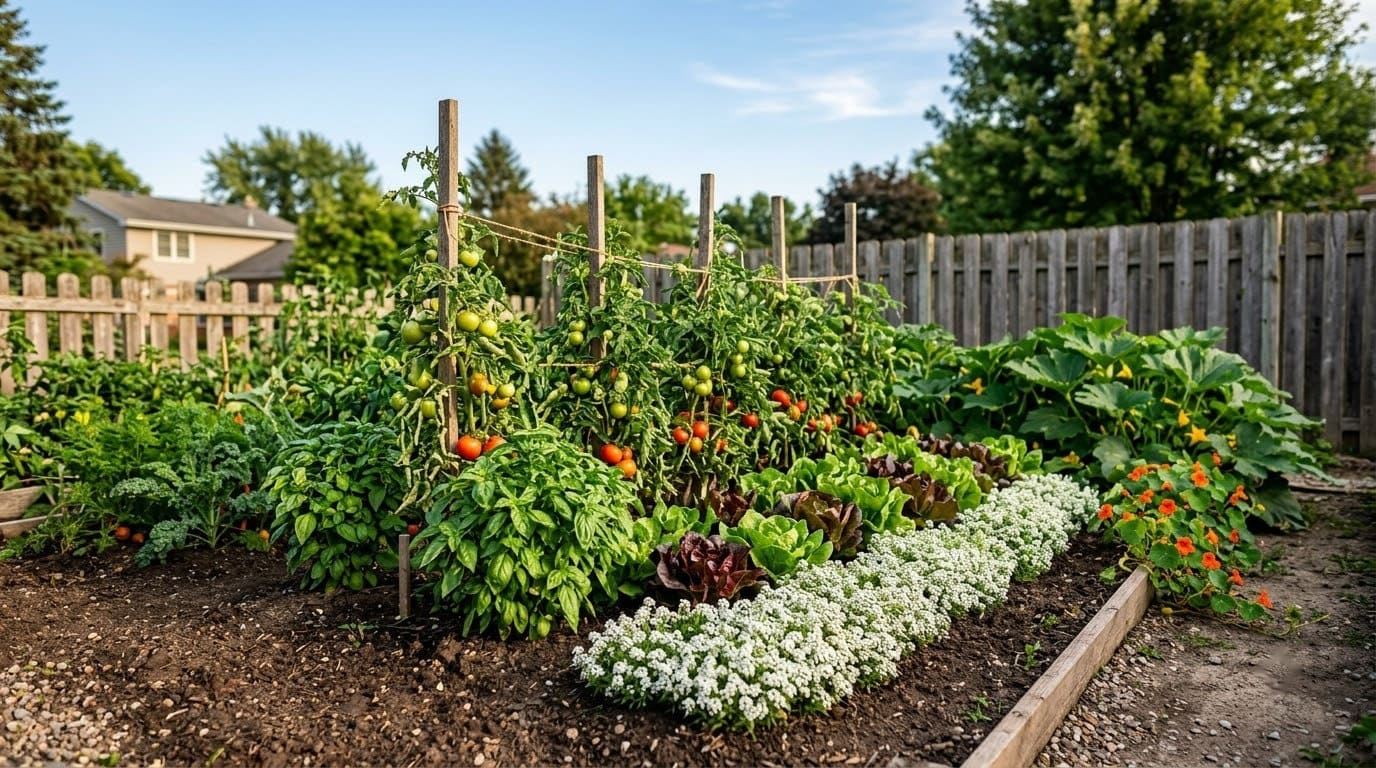
If you’re rearranging a bed with one of these conflicts already in the ground, the fix in almost every case is the same idea: put a nitrogen-fixer between the two heavy feeders instead of leaving them to compete directly.
Bush beans and peas both work without needing a trellis structure, and they genuinely add nitrogen back to the soil rather than just sitting there neutrally.
If you want to go further with true companion planting instead of just conflict-avoidance, a broader guide to setting up a productive vegetable patch and tools worth having on hand for a vegetable garden cover the setup side of getting this right from the start instead of fixing it mid-season.
Related Posts
Products We Recommend
This post contains affiliate links. We may earn a commission on qualifying purchases at no extra cost to you.
Luster Leaf 1601 Rapitest Soil Test Kit
Tells you which nutrient is actually depleted before you guess with fertilizer, the first move for any bed with a heavy-feeder pairing already in the ground
Shop Now
Espoma Organic Garden-Tone 3-4-4 Fertilizer
A balanced organic fertilizer for side-dressing heavy feeders every 3-4 weeks through the season rather than a single early feeding
Shop Now
Black Kow Composted Cow Manure, 1 cu ft
Replenishing organic matter in a raised bed between seasons, the standard baseline for beds that lose nutrients faster than in-ground soil
Shop NowNever miss an update — choose FarmFoodFamily as your preferred source on Google.
How it works: Tap the button below to open Google's settings page, then check the box next to FarmFoodFamily.
Tap the checkbox to turn it blue — that's how you know it's set.