5 Feng Shui Rules Your Closet Is Probably Breaking Right Now
A closet is one of the few spaces in a home that’s almost entirely hidden, feng shui treats what you can’t see as just as important as what you can, and a couple of these rules turn out to be protecting your clothes from something more concrete than stagnant energy.


Never miss an update — choose FarmFoodFamily as your preferred source on Google.
How it works: Tap the button below to open Google’s settings page, then check the box next to FarmFoodFamily.
Tap the checkbox to turn it blue — that’s how you know it’s set.
Marie Diamond, the feng shui master and author featured in “The Secret,” treats the closet as a genuine energy center rather than just storage, what’s in it, how it’s organized, and how it’s lit are all thought to actively shape the energy of the person who opens it every morning.
Here are the five rules that matter most, paired with the real moisture and pest science that backs a couple of them up beyond symbolism.
1. Declutter with the one-year rule, and know what you’re actually preventing
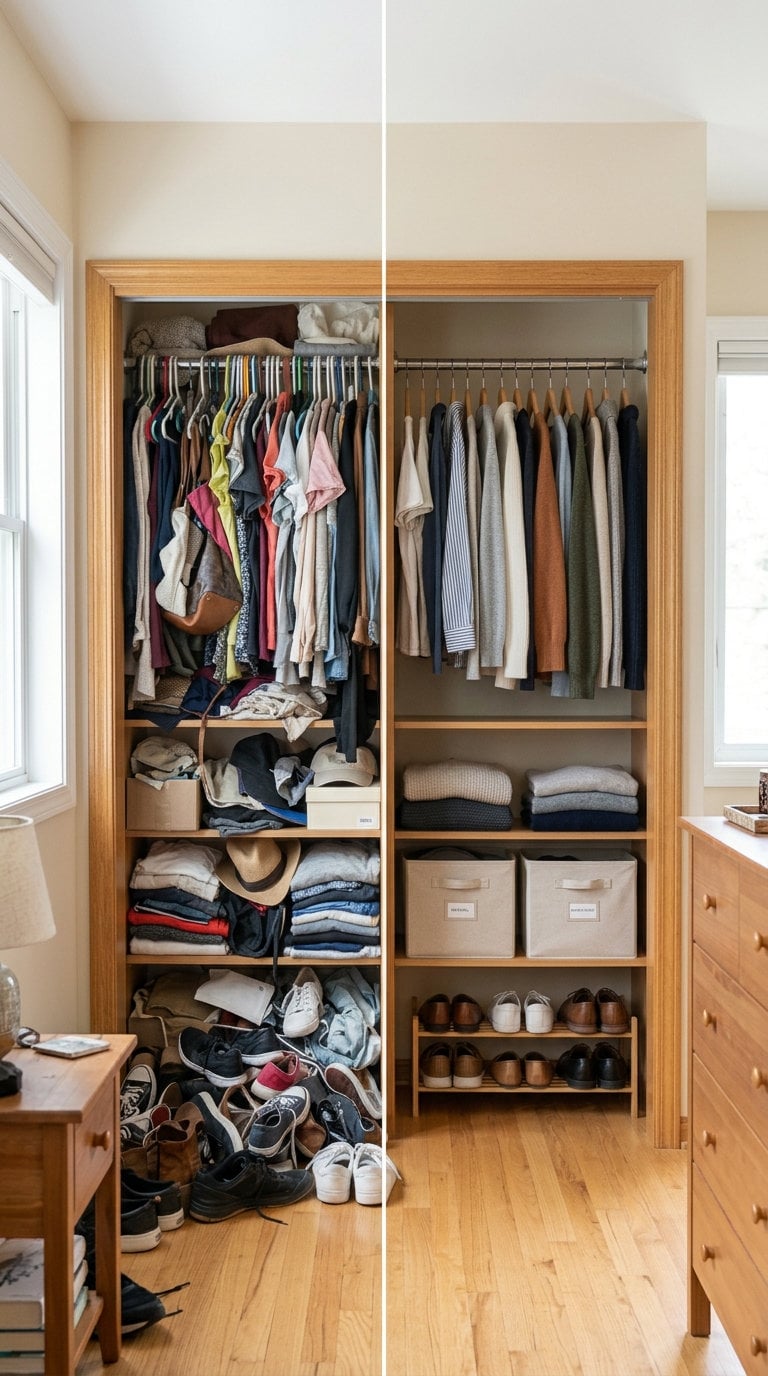
The core feng shui closet rule: if you haven’t worn something in the past year (aside from genuine special-occasion pieces), it’s considered stuck, stagnant energy taking up space that could support something new.
Clutter is described as blocking the flow of chi the same way a jammed doorway blocks foot traffic.
There’s a real practical reason to take this seriously beyond symbolism. A closet packed tight with rarely-worn clothing restricts airflow around the fabric, and poor air circulation is one of the conditions that actually encourages both mold growth and moth activity, the “energy is stuck” feeling has a genuine physical cause.



Our low-cost closet organization ideas guide has real strategies for clearing space without a full remodel.
2. Choose uplifting colors, and organize with actual airflow in mind

Feng shui favors soft, uplifting colors for closet interiors, creams, gentle greens, blush pinks, or pastel blues, over stark white or dark, closed-in tones, and recommends color-coding clothing by intention (reds for visibility and passion, blues for career focus, greens for growth).
Beyond the color choice itself, how tightly clothes are packed together matters just as much.
Leave genuine breathing room between hangers rather than cramming a rod to capacity, this isn’t just a feng shui preference for “open space,” it’s the same airflow principle behind rule #1: tightly packed fabric traps moisture and heat, exactly the environment that supports mold and pests.
Our room organization ideas guide covers spacing and layout in more depth.
3. Add real lighting, not just symbolic brightness
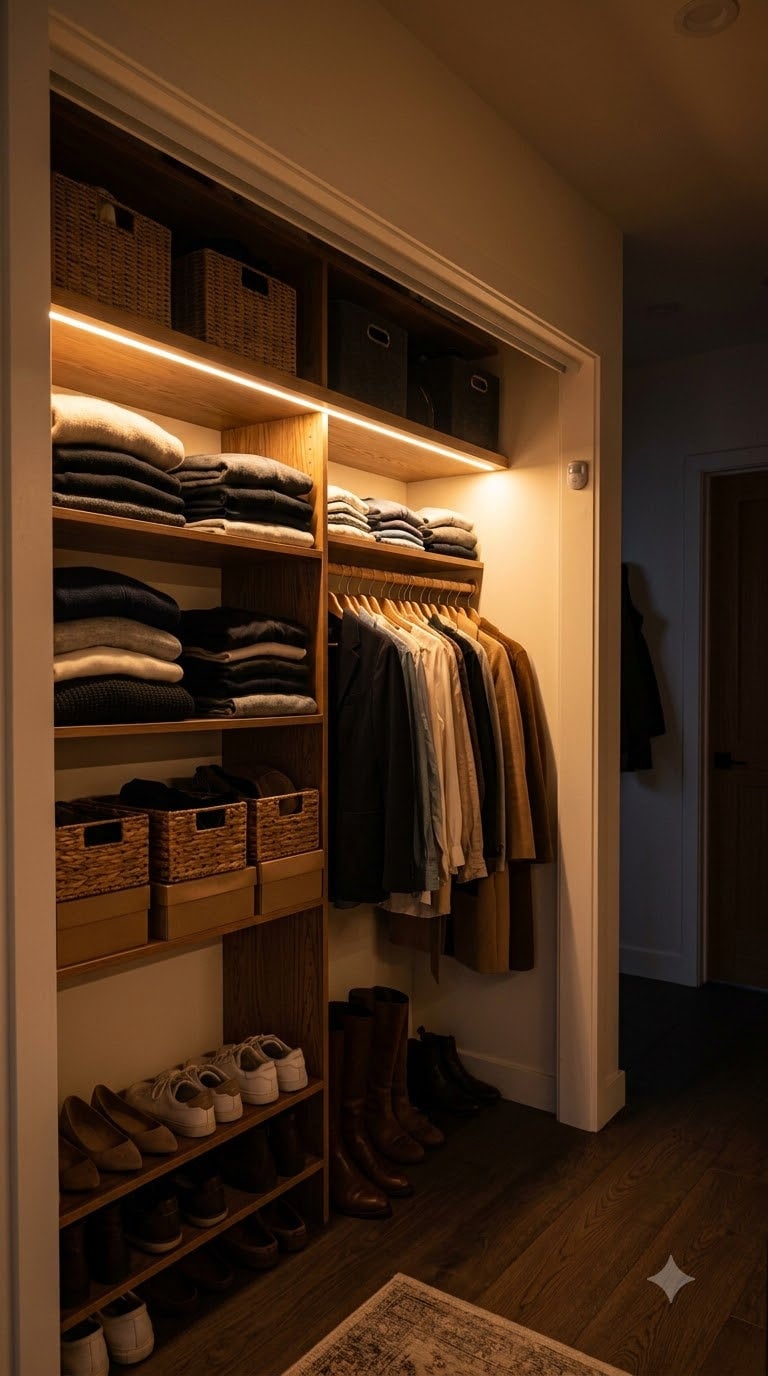
A dim, shadowy closet is treated as stagnant, unwelcoming energy in feng shui, and the fix, soft overhead lighting, LED strips, or a motion-sensor fixture, is recommended as much for practical visibility as for symbolism.
A well-lit closet genuinely makes outfit selection easier and doubles as a way to actually see mold or pest activity before it spreads, a dark, rarely-inspected corner is where both problems tend to go unnoticed longest.
4. Does cedar actually keep moths away, or is that just feng shui folklore?

Lavender sachets, cedarwood blocks, and light scenting are common feng shui closet recommendations, meant to shift stagnant energy and make the space feel cared for rather than neglected.

Covers rule #4's real, science-backed moth deterrent, with the sanding/replacement caveat this article explains
Shop NowThis post contains affiliate links. We may earn a commission on qualifying purchases at no extra cost to you.
Cedar specifically has real science behind it that most feng shui guides never mention: peer-reviewed research (including studies from the University of Arkansas and University of Illinois, and later work published in Pest Management Science showing roughly 87% repellency) confirms cedar’s volatile compounds genuinely deter clothes moths from laying eggs.
The important caveat those same studies raise: cedar is a repellent, not a killer, and its effectiveness fades as the wood ages and its oils off-gas, a cedar block from years ago is likely doing far less than a fresh one.
Lightly sanding cedar blocks every few months, or replacing them, keeps the real effect working, not just the placebo of having them in the closet.
5. Organize by the five elements, or at minimum, by real use
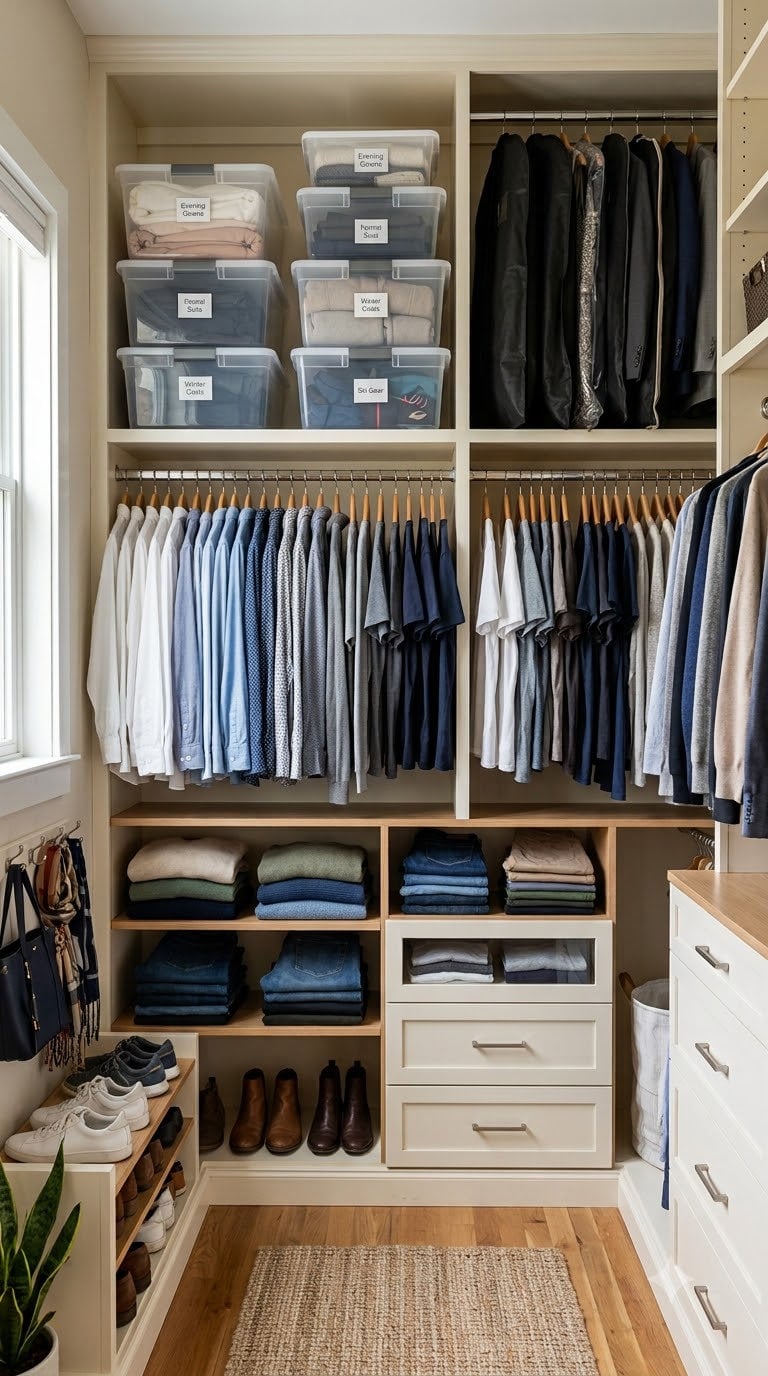
The most involved feng shui closet rule groups clothing by the five elements, wood, fire, earth, metal, water, matching colors, patterns, and even fabric textures to the energy you want to activate when you wear them.
This is the rule with the least practical/scientific backing on the list, it’s genuinely symbolic organization.
If the five-element system feels like too much to maintain, the practical alternative both feng shui and plain organizational sense agree on is arranging by actual frequency of use, everyday pieces at eye level and arm’s reach, occasional-wear items higher or further back.
Our bedroom organization ideas and types of closet doors guides cover the surrounding space if you’re rethinking the whole closet setup, not just what’s inside it.
The 5 rules at a glance
| Rule | Real-world backing | Fastest fix |
|---|---|---|
| One-year declutter rule | Poor airflow encourages mold and moth activity | Donate/remove anything unworn in a year |
| Uplifting colors + breathing room | Tightly packed fabric traps moisture and heat | Leave hanger spacing, avoid cramming the rod |
| Real lighting | Dark corners hide mold/pest activity longest | LED strip or motion-sensor fixture |
| Cedar and scent | Peer-reviewed ~87% moth repellency, fades with age | Sand or replace cedar blocks every few months |
| Five-element or by-use organization | Least scientifically backed rule on the list | Organize by actual frequency of use instead |
What we learned the hard way
The cedar-block replacement is the thing almost nobody remembers to do. A cedar block placed in a closet during a move-in often just sits there indefinitely, well past the point its oils have off-gassed enough to matter, giving a false sense of protection against moths that isn’t actually there anymore.


The humidity issue is the other one that catches people off guard, specifically because closets are often the last place anyone thinks to check.
The EPA recommends keeping indoor relative humidity between 30 and 50 percent, and closets, being colder and less ventilated than the rooms around them, are a common spot for condensation and mold to develop unnoticed behind packed clothing, long before anyone smells or sees it.
FAQs
How often should I actually replace cedar blocks or cedar balls? Every few months for light sanding, or a full replacement once they no longer have a noticeable cedar scent, that scent fading is a real signal the volatile oils (and the repellent effect) are diminishing, not just a cosmetic detail.
Is a windowless closet automatically a mold risk? Not automatically, but it’s a genuine risk factor. Cracking the closet door periodically, avoiding storing damp items (like recently worn workout clothes) inside, and keeping items loosely enough packed for airflow all reduce the risk significantly.
Do I need to follow the five-element organization system exactly? No, it’s the most symbolic, least practically-backed rule on this list. Organizing by actual frequency of use accomplishes the same practical goal (easy access, less clutter) without needing to master the element system.
What’s the single most important rule if I only fix one thing? Decluttering with real airflow in mind (rules #1 and #2 combined), it’s the rule with both the strongest feng shui backing and the clearest real mold/pest prevention logic behind it.
Related reading on farmfoodfamily.com: if your closet door itself is part of the problem (a mirrored door facing the bed is a separate feng shui concern), see our types of closet doors and closet door alternatives guides.
Related Posts
- Low-Cost Closet Organization Ideas
- Room Organization Ideas
- Bedroom Organization Ideas
- Types of Closet Doors
- Closet Door Alternatives
- Cheap Wardrobe Ideas
Products We Recommend
This post contains affiliate links. We may earn a commission on qualifying purchases at no extra cost to you.
Cedar Space Aromatic Cedar Blocks (16pc)
Covers rule #4's real, science-backed moth deterrent, with the sanding/replacement caveat this article explains
Shop Now
W&E Choice Lavender Moisture Absorber (6-Pack)
Addresses the real EPA humidity/mold risk discussed in "What we learned the hard way," with the lavender scent doubling as rule #4's scent recommendation
Shop Now
echosari Motion-Sensor LED Closet Light Strip
Covers rule #3's lighting recommendation for both symbolism and real visibility
Shop NowNever miss an update — choose FarmFoodFamily as your preferred source on Google.
How it works: Tap the button below to open Google's settings page, then check the box next to FarmFoodFamily.
Tap the checkbox to turn it blue — that's how you know it's set.