Compost Pile Smells Bad? Fix It in 24 Hours
A stinking compost pile feels like a five-alarm problem, but the real fix is usually just adding the right dry material and turning the pile once, and you’ll notice a difference by tomorrow.

Never miss an update — choose FarmFoodFamily as your preferred source on Google.
How it works: Tap the button below to open Google’s settings page, then check the box next to FarmFoodFamily.
Tap the checkbox to turn it blue — that’s how you know it’s set.
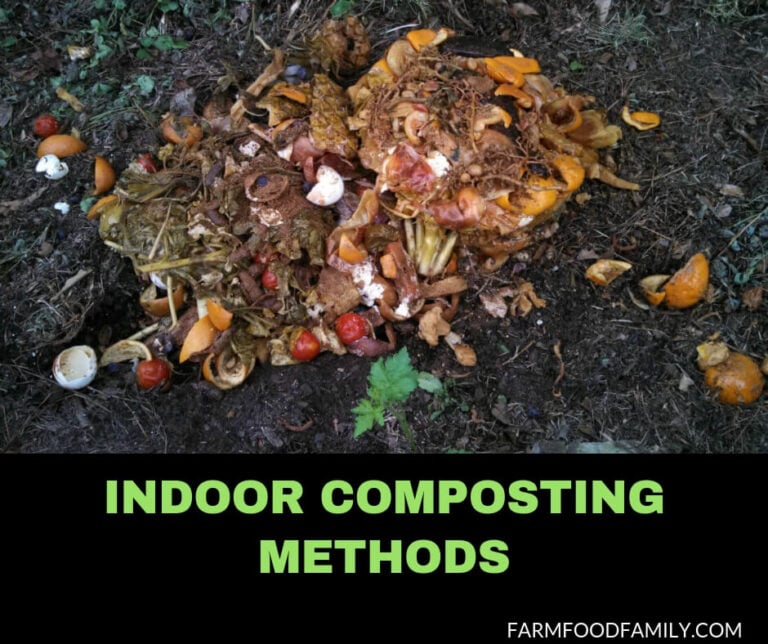
If you’ve ever caught a whiff of your own compost pile from across the yard and immediately pictured a neighbor calling the HOA, you already know how urgent this feels, whether you’re running an open pile or one of the smaller enclosed setups built for tighter spaces.
The good news is that compost odor is almost always a fixable imbalance, not a sign that something is fundamentally wrong or that you need to start over.
Most piles noticeably improve within a day of the right fix, and this is the real sequence, not the vague “just turn it more” advice that doesn’t tell you why.
What Kind of Smell Is It? Ammonia or Rotten Egg?
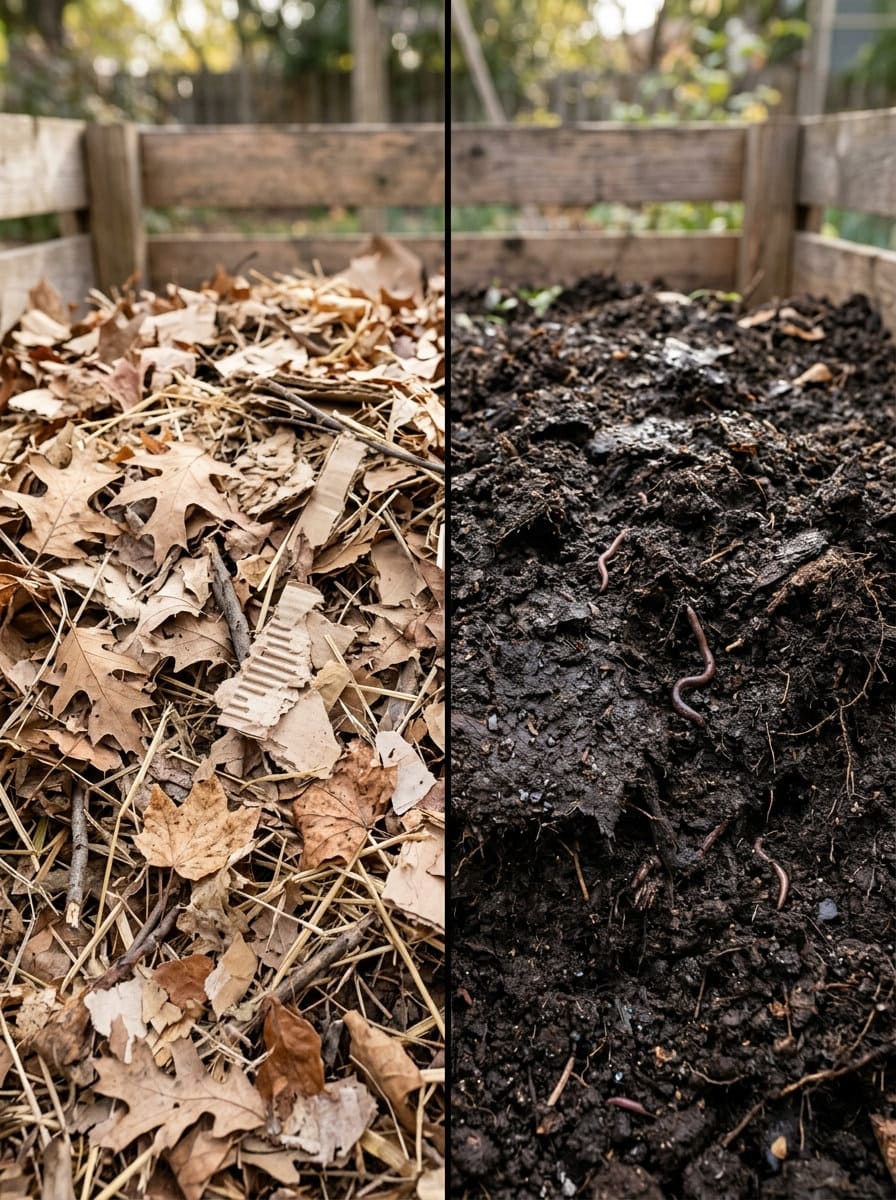
The exact smell tells you what’s actually wrong, and the fix is slightly different depending on which one you’ve got.
| Smell type | What’s actually happening | Fastest fix |
|---|---|---|
| Sharp, ammonia-like, stings your nose | Too much nitrogen (“greens” like grass clippings or food scraps), carbon-to-nitrogen ratio too low | Mix in dry carbon-rich material and turn the pile to release the excess ammonia |
| Rotten egg or sulfur smell | Anaerobic conditions, usually from too much moisture or a compacted pile cutting off oxygen | Add coarse dry material for structure, turn thoroughly to reintroduce airflow |
| Just generally musty or swampy, not sharp | Mild version of the same oxygen problem, hasn’t fully gone anaerobic yet | Turn the pile now before it worsens, no major material addition needed yet |
Per LSU AgCenter, the ammonia smell specifically comes from layering nitrogen-rich material too thickly, while the sulfurous smell traces back to improperly mixed food waste and grass clippings creating dense, wet pockets with no airflow.
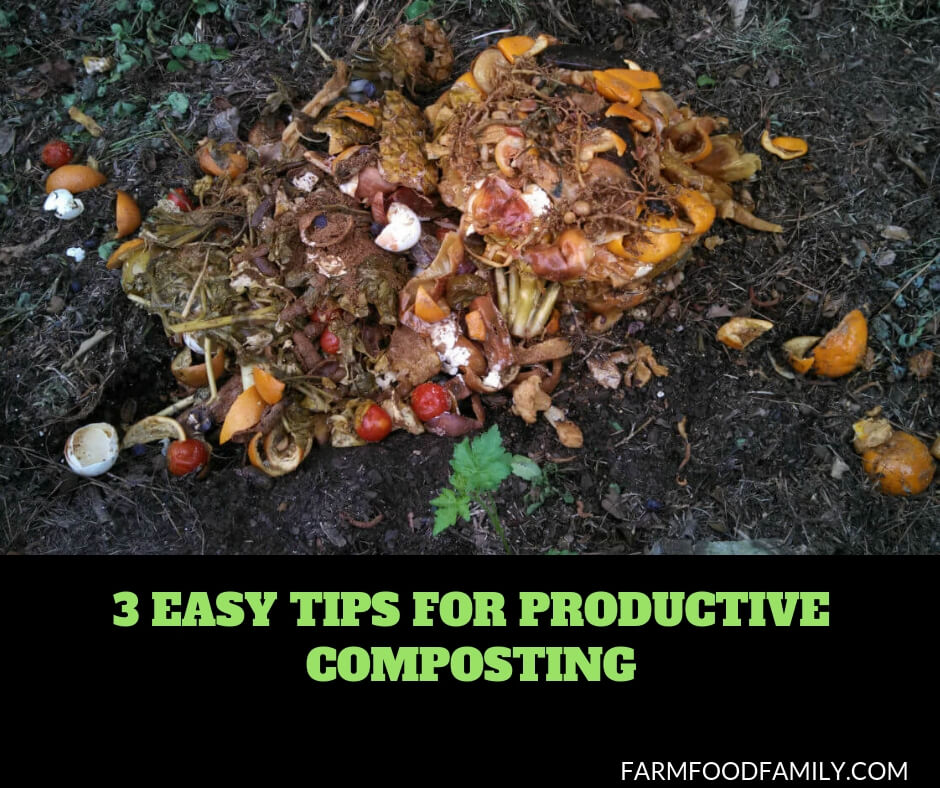
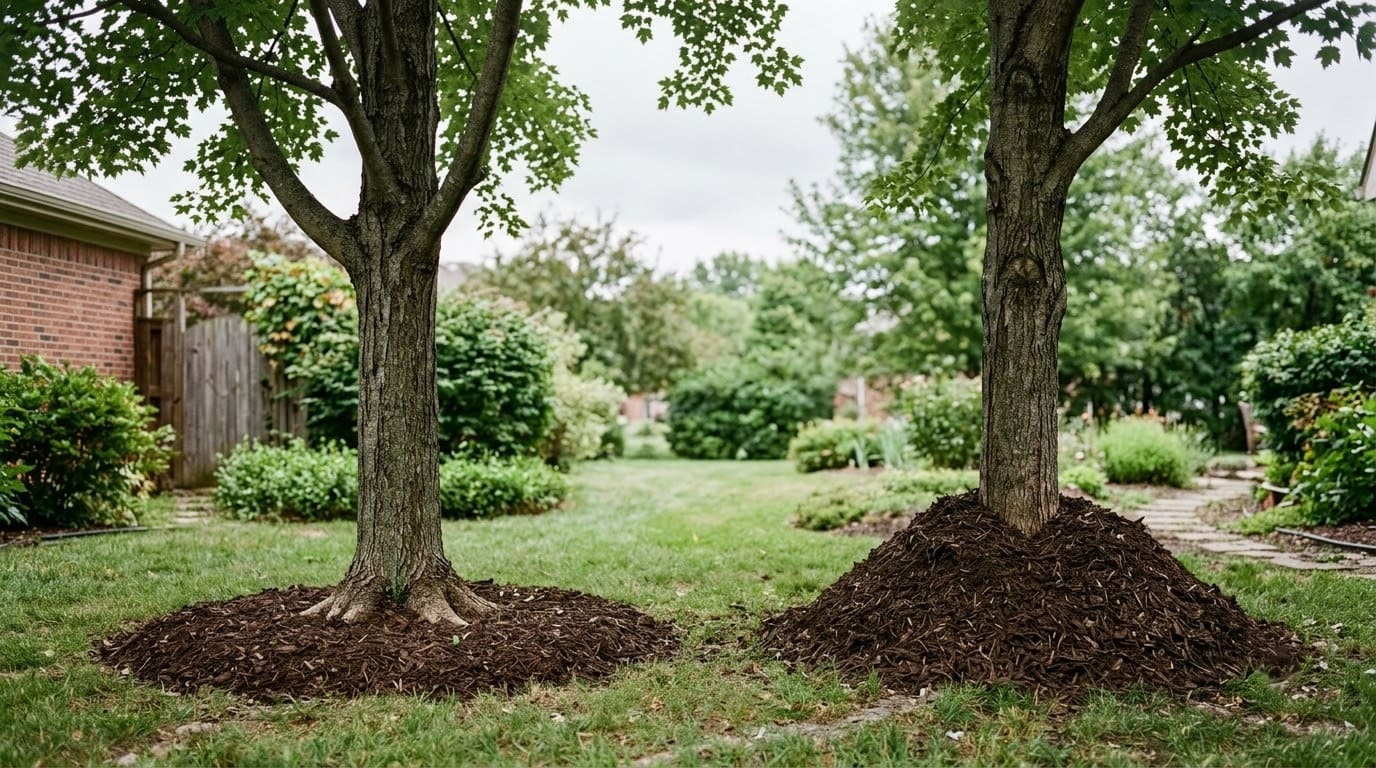
The 24-Hour Fix
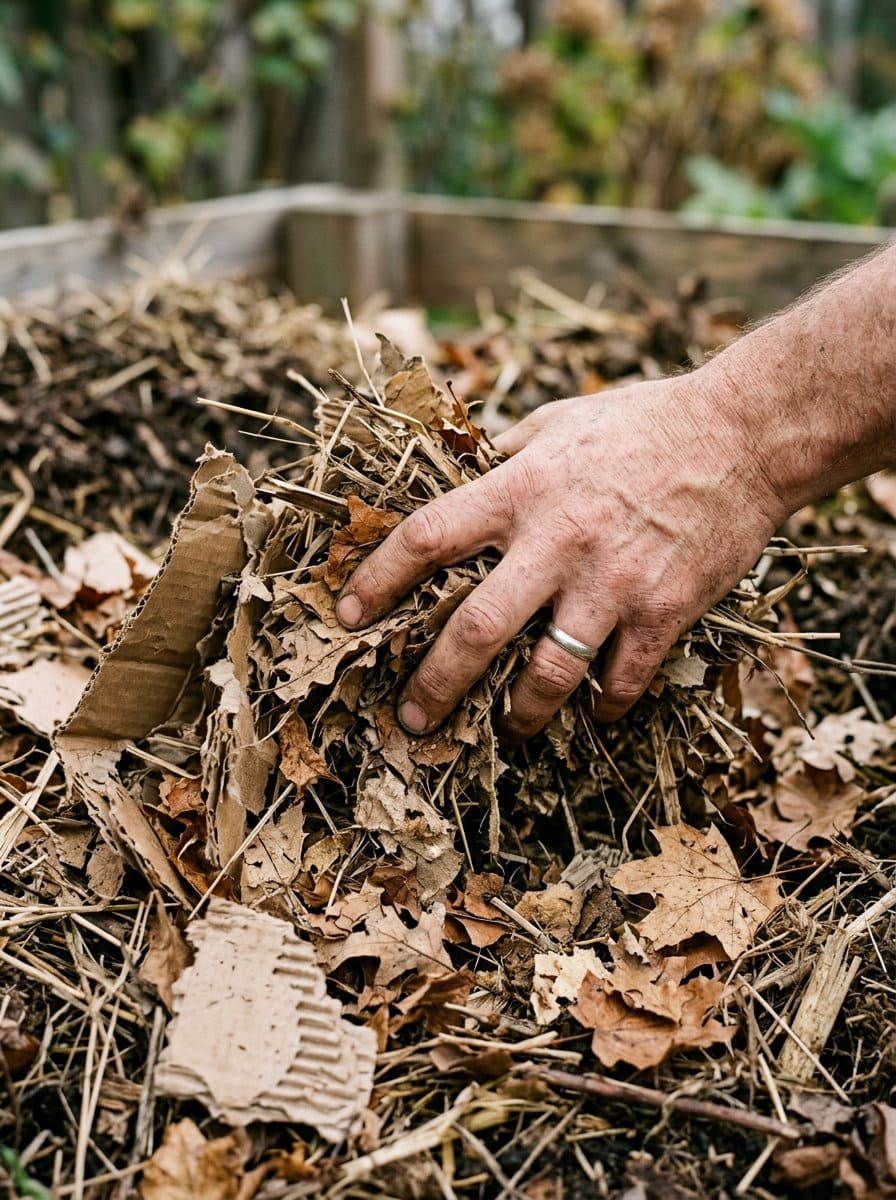
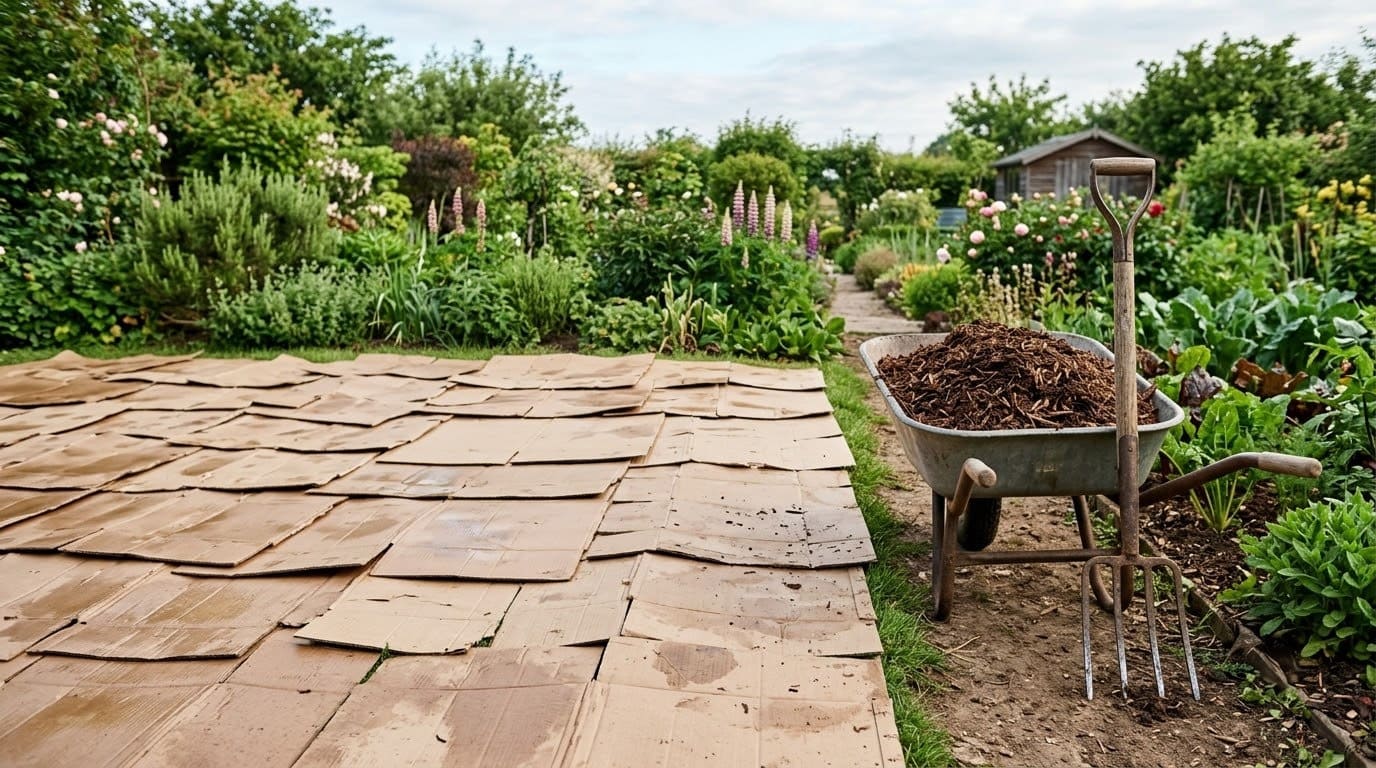
Start by adding a generous layer of dry carbon material, shredded cardboard, dry leaves, or plain shredded paper, mixed directly into the smelly section rather than just piled on top.
Answer 4 quick questions and get matched to the exact fix for your yard — drainage, budget, layout, or something else entirely.
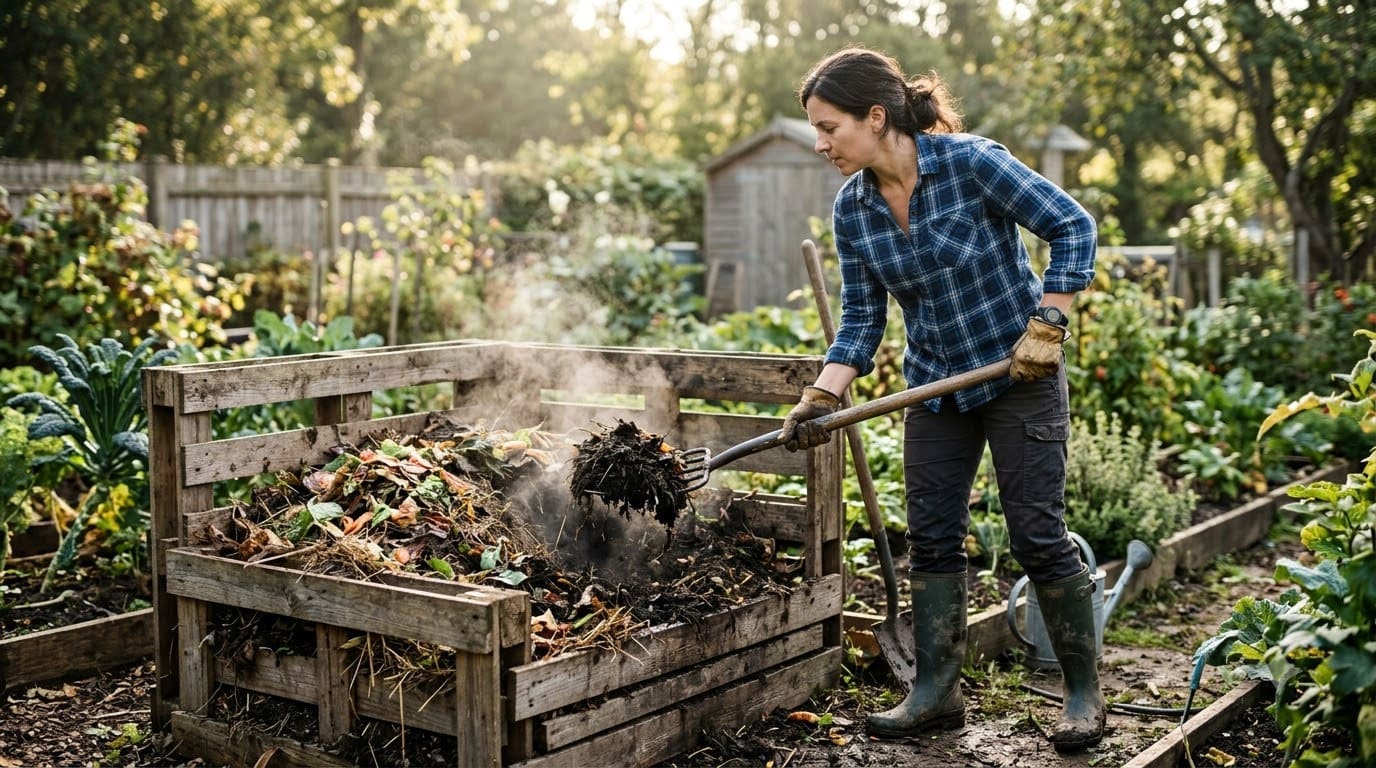
Take the Free QuizThen turn the entire pile with a pitchfork or compost aerator, breaking up any dense, wet clumps as you go, since trapped anaerobic pockets are usually the real source of the worst smell even after you’ve added carbon.
If the pile feels soggy or water pools when you squeeze a handful, mix in more dry material until it feels like a wrung-out sponge, damp but not dripping.
Leave the pile loosely mounded rather than packed down so air can keep moving through it.
Most piles noticeably improve within 24 hours of this combination, though a severely anaerobic pile might need a second turn the following day before the smell fully clears.
Is Your Pile Too Wet? The Sponge Test
Grab a handful from the middle of the pile and squeeze it. If water runs out between your fingers, it’s too wet, and that excess moisture is very likely what’s cutting off oxygen and causing the rotten egg smell in the first place.
If it barely holds together and feels dry or dusty, it’s too dry, which slows decomposition but rarely causes odor on its own. The target is a wrung-out sponge: damp enough to clump together, but no water actually dripping out.
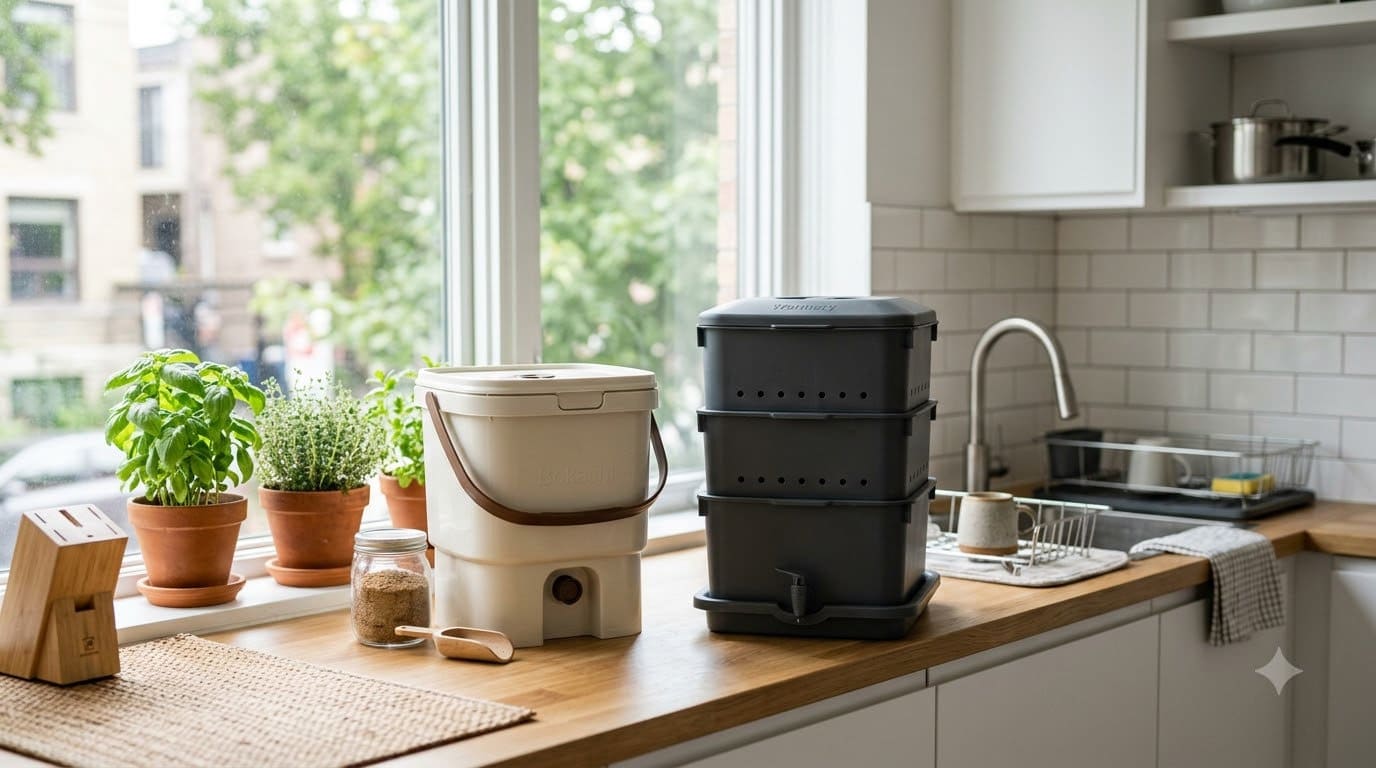
If you’re building or maintaining a pile in a DIY bin setup, make sure it has real drainage and airflow built in, since a sealed or poorly ventilated bin makes this moisture problem worse than an open pile does.
Most yard problems trace back to one specific, fixable cause. Find yours in 4 quick questions.
Take the Free Quiz
A long-probe thermometer that helps confirm whether a pile is actively composting or has gone cold and anaerobic, useful for catching odor problems before they get bad
Shop NowThis post contains affiliate links. We may earn a commission on qualifying purchases at no extra cost to you.
What Never to Put in a Home Compost Pile
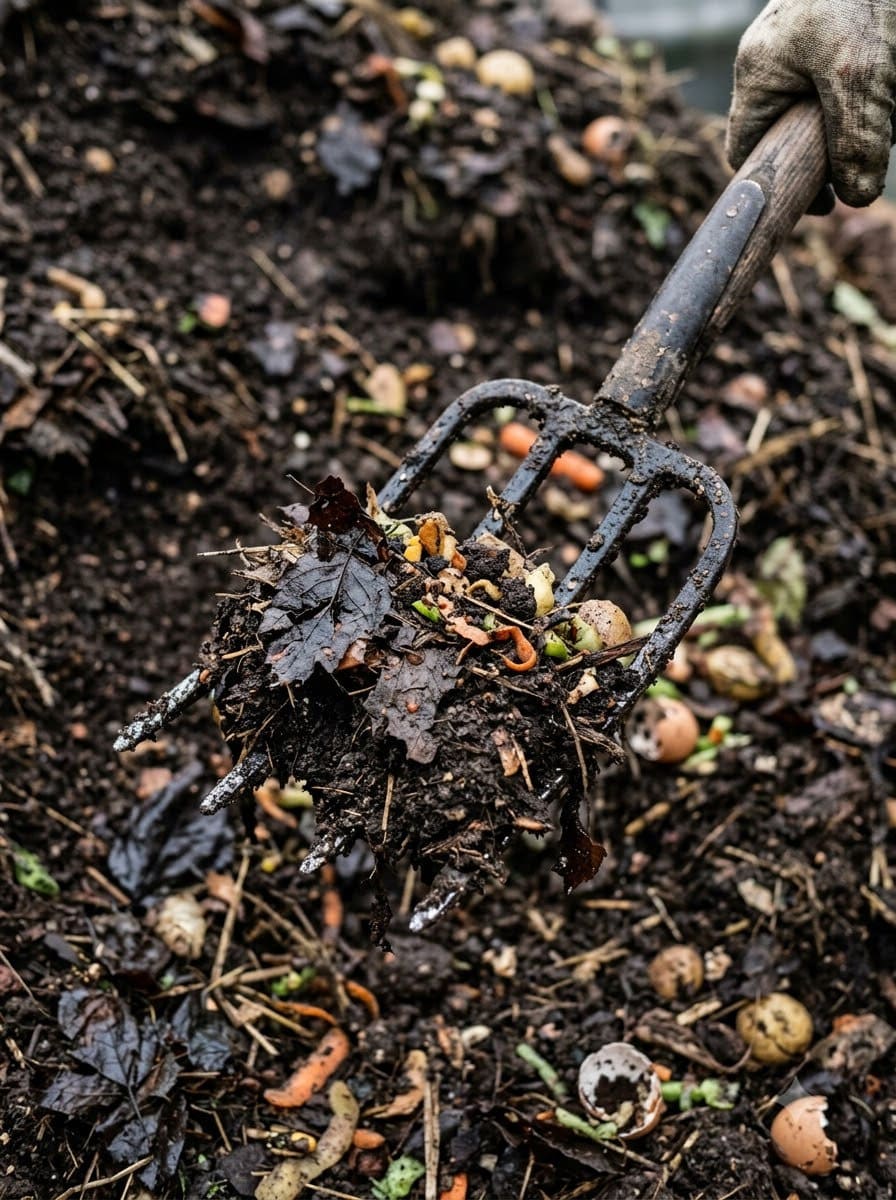
Meat, bones, oil, dairy, and eggs aren’t banned from composting because they can’t break down, they’re banned from home piles specifically because they cause a different, more persistent kind of rot smell and attract rodents and other vermin while they’re at it.
If any of these ended up in your pile recently, that’s very possibly your actual odor source, and no amount of turning or adding browns will fully fix it until you dig out and remove the offending scraps.
Everything else, including a wide range of kitchen scraps that work fine in a home pile, is fair game as long as the carbon-to-nitrogen balance stays reasonable.
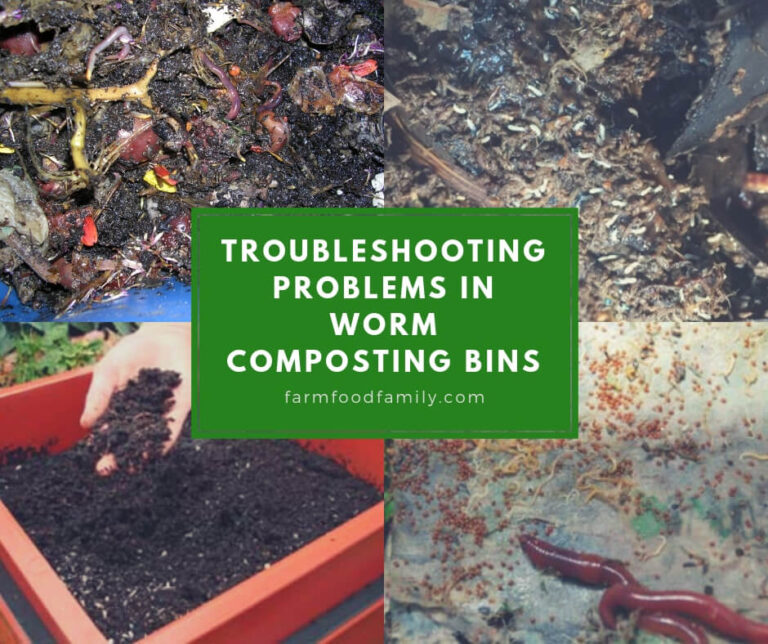
If worms are part of your setup rather than an open pile, the removal rule matters even more, since worm bins have their own specific odor and pest triggers beyond what applies to a standard pile.
How to Keep It From Happening Again
The real long-term fix is keeping a rough 2:1 or 3:1 ratio of browns to greens by volume every time you add material, not just fixing the ratio after it’s already gone wrong.
According to Cornell Waste Management Institute, the ideal carbon-to-nitrogen ratio for active composting sits around 30:1 by weight, and it naturally drops to somewhere around 10 to 15:1 in finished compost as microorganisms release roughly two-thirds of the carbon as carbon dioxide along the way.
In practice, that means every time you add a bucket of food scraps or grass clippings, add a comparable or larger volume of dry leaves, shredded paper, or cardboard right alongside it, rather than letting greens pile up and dealing with the ratio later.
Turning the pile every one to two weeks, even when it doesn’t smell, keeps oxygen moving through and prevents the anaerobic pockets that cause the rotten egg problem from forming in the first place.

Getting this rhythm right from the start is a lot easier than fixing it later, which is really the whole point of building good habits into a compost routine early on.
The average homeowner spends $616/year on yard fixes that don't address the real problem. Find out what yours actually is — before you spend another dollar.
Take the Free QuizThe Weekend My Neighbor Almost Called the HOA
The worst compost smell I’ve ever dealt with happened over a hot July weekend when I’d been dumping grass clippings straight into the pile after every mow without adding anything dry to balance it out. By Sunday afternoon the ammonia smell was strong enough that my neighbor actually came over to ask, politely, what was going on back there, and I remember genuinely wondering if I’d have to tear the whole thing down and start over.
I didn’t, and the fix was almost embarrassingly simple once I actually did it instead of just turning the pile and hoping.
I shredded a stack of cardboard boxes I’d been meaning to recycle anyway, mixed about twice that volume of dry leaves in on top of the grass clippings, and turned the whole pile until the wet green material was fully broken up and distributed through the dry stuff.
The smell was noticeably weaker by the next morning and essentially gone within two days. What I learned is that the panic response, thinking you need to abandon the pile or drown it in commercial odor treatments, is almost never necessary.
It’s a ratio problem and an airflow problem, and both are fixable with materials most people already have sitting around.
FAQs
Why does my compost smell like ammonia? An ammonia smell means there’s too much nitrogen-rich material (“greens” like grass clippings or food scraps) relative to carbon, according to LSU AgCenter. Mix in dry carbon material like shredded cardboard or dry leaves and turn the pile to fix it.
Why does my compost smell like rotten eggs? A rotten egg or sulfur smell means the pile has gone anaerobic, usually from excess moisture or compaction cutting off oxygen. Add coarse dry material and turn the pile thoroughly to reintroduce airflow.
How often should I turn my compost pile? Turning every one to two weeks under normal conditions keeps oxygen moving through the pile and prevents most odor problems before they start. If a pile already smells bad, turn it immediately as part of the fix.
Can I still use compost that smelled bad? Yes, once the smell clears and the material has fully broken down, it’s still usable. The bad smell reflects a temporary imbalance during decomposition, not permanent contamination, as long as you didn’t add meat, dairy, or oil that needs to be removed first.
Related Posts
- Step-by-Step Guide to Making Garden Compost
- Common Compost Problems
- Beginner’s Guide to Vermicomposting
Products We Recommend
This post contains affiliate links. We may earn a commission on qualifying purchases at no extra cost to you.
REOTEMP Backyard Pro Compost Thermometer, 24-Inch
A long-probe thermometer that helps confirm whether a pile is actively composting or has gone cold and anaerobic, useful for catching odor problems before they get bad
Shop Now
Compost Crank Aerator (Corkscrew Design)
A twist-and-lift turning tool that pulls compost up from the bottom of the pile, breaking up dense, wet clumps without needing to fully unload the pile like a pitchfork does
Shop Now
Coco Coir Brick, Compressed (4-Pack)
A carbon-rich, odorless bulking material that can be kept on hand as an instant dry "browns" addition when a pile needs balancing fast
Shop NowNever miss an update — choose FarmFoodFamily as your preferred source on Google.
How it works: Tap the button below to open Google's settings page, then check the box next to FarmFoodFamily.
Tap the checkbox to turn it blue — that's how you know it's set.