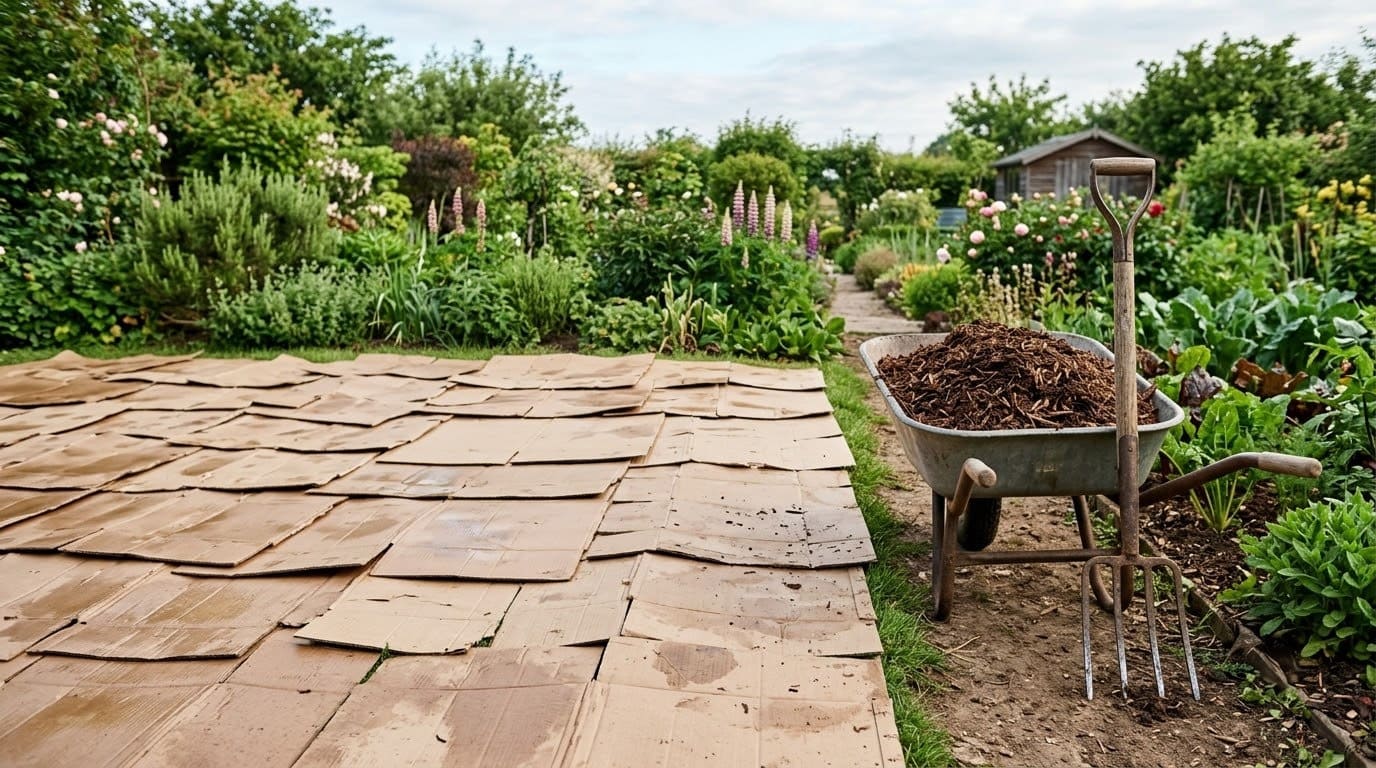
Signs Your Soil Is “Starving” (Before Your Plants Show It)
Plants signal nutrient trouble weeks before it looks serious, and the fastest way to read that signal is checking which leaves are affected first, not just what color they’ve turned.

Never miss an update — choose FarmFoodFamily as your preferred source on Google.
How it works: Tap the button below to open Google’s settings page, then check the box next to FarmFoodFamily.
Tap the checkbox to turn it blue — that’s how you know it’s set.
Most people don’t catch a nutrient deficiency early, they catch it once a plant already looks visibly unwell, whether it’s a wilting hydrangea in the border or a struggling vegetable bed, and by then it’s harder to tell what’s actually wrong. The good news is plants give a genuinely useful clue almost nobody checks first: which leaves are showing the problem.
Old growth or new growth. That single detail narrows down what you’re dealing with faster than trying to match a leaf color to a mental list of possible causes.
The Fastest Diagnostic Shortcut: Old Leaves or New Leaves?
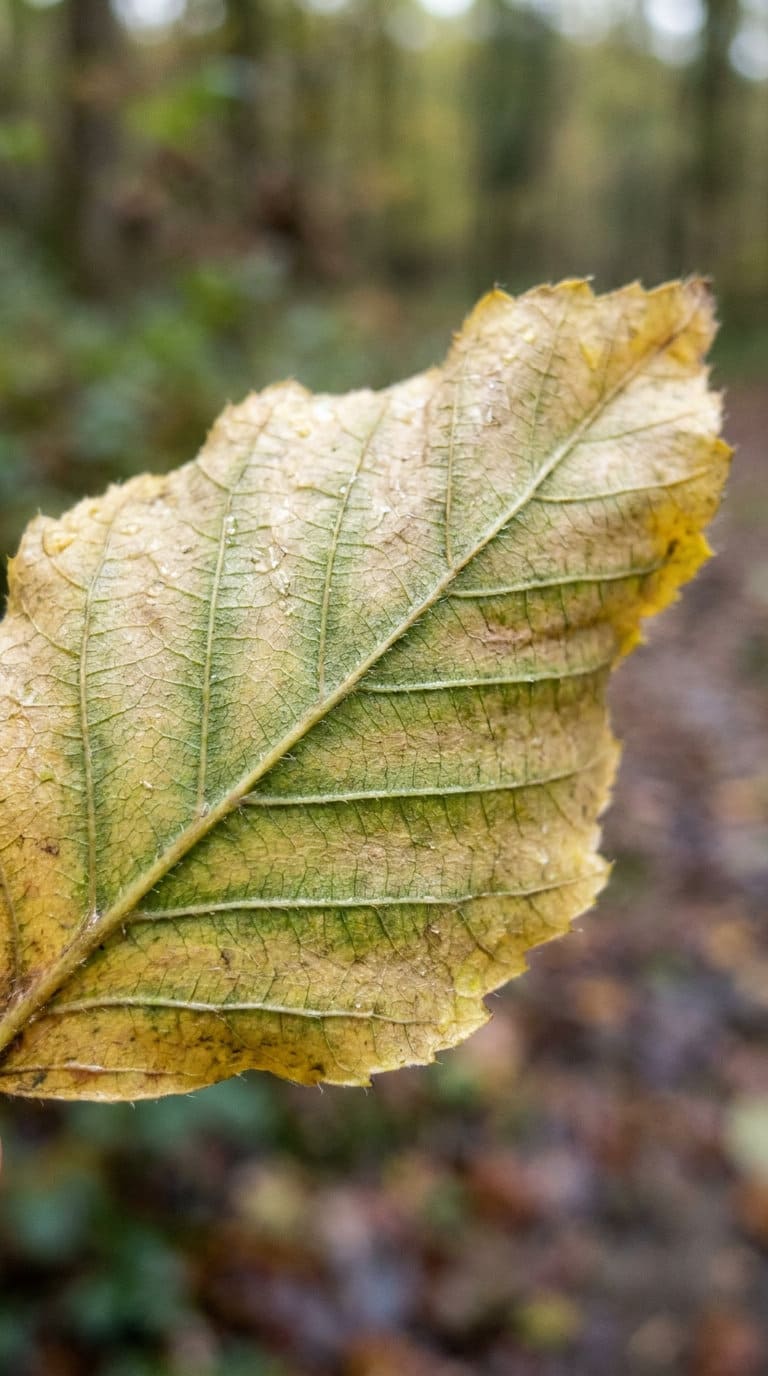
Check where the discoloration or damage is actually happening before you look at anything else. According to University of Connecticut Extension, nutrients split into two categories based on how mobile they are inside the plant.
Mobile nutrients (nitrogen, phosphorus, potassium, magnesium) can be relocated from older leaves to new growth when supply runs short, so a deficiency shows up on the older, lower leaves first while new growth still looks fine.
Immobile nutrients (iron, calcium, sulfur, boron, and others) can’t be relocated once used, so a deficiency shows up on the newest growth at the top instead, while older leaves stay normal. This one distinction, older leaves versus newer leaves, is the fastest way to cut a long list of possible deficiencies down to a short one before comparing symptom photos.


What Each Deficiency Actually Looks Like
Once you know which leaves are affected, match the specific symptom pattern to narrow it down further.
Answer 4 quick questions and get matched to the exact fix for your yard — drainage, budget, layout, or something else entirely.
Take the Free Quiz| Nutrient | Which leaves show it | What it actually looks like | Real fix |
|---|---|---|---|
| Nitrogen | Older, lower leaves | Uniform pale yellow-green color, smaller leaves, stunted overall growth, early leaf drop | Balanced or nitrogen-heavy fertilizer worked into the soil, following the same feeding schedule logic that applies to a healthy bed |
| Phosphorus | Older, lower leaves | Leaves and stems turn dark green, purple, or reddish-purple, growth stalls, maturity delayed | Phosphorus-containing fertilizer, confirm with a soil test since excess phosphorus causes its own problems |
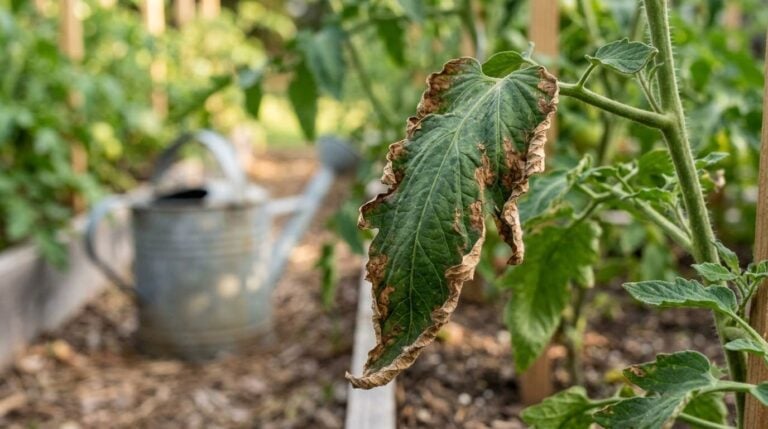
| Potassium | Older, lower leaves | Yellowing and scorched, brown edges starting at the leaf tip and margins, midrib often stays green | Potassium-rich fertilizer (the “K” in an N-P-K blend) |
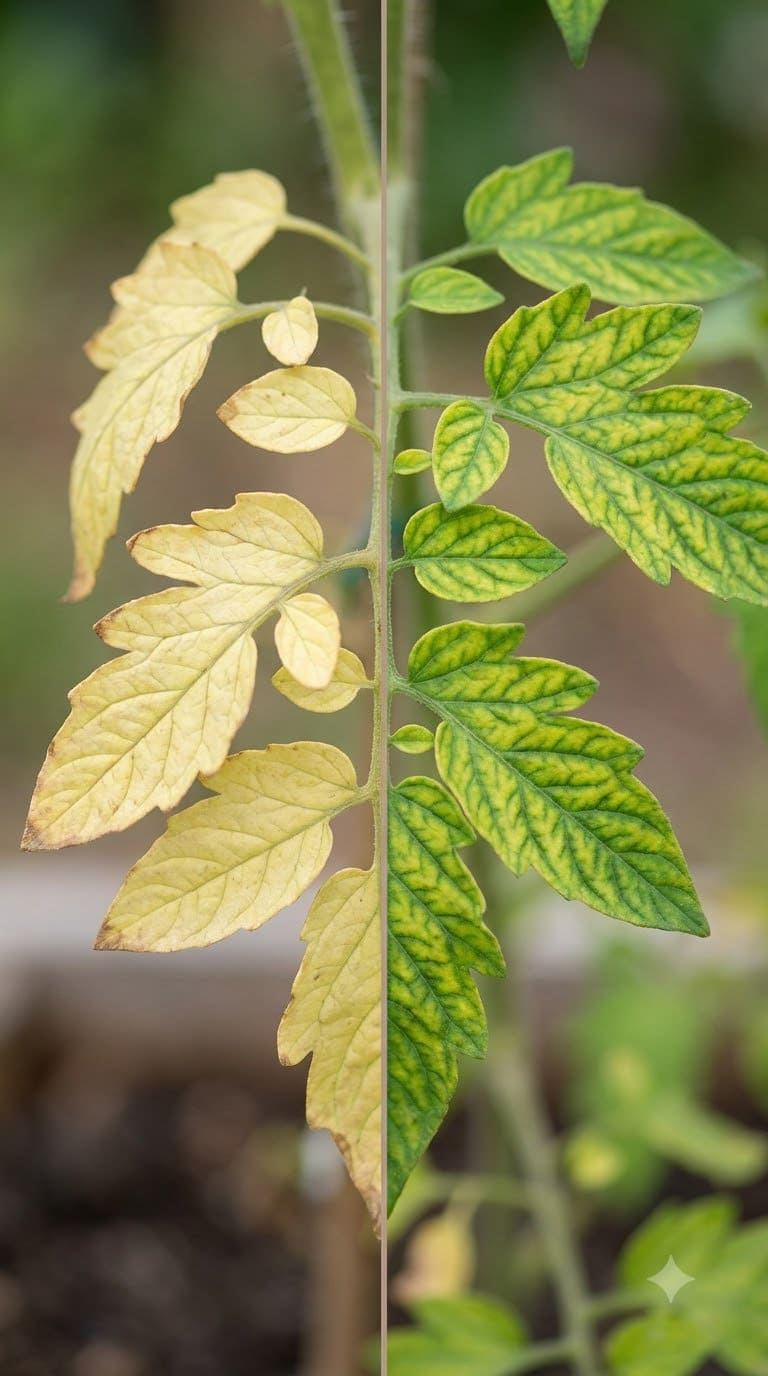
| Iron | Newer, upper leaves | Yellow leaf with clearly visible dark green veins (interveinal chlorosis) | Usually a soil pH problem, not a true iron shortage, see below |
| Magnesium | Older, lower leaves | Yellowing between veins and along margins, progressing to reddish-purple blotches | Epsom salt (magnesium sulfate) worked into the soil or diluted as a spray |
| Calcium | Newer, upper leaves and fruit | Curling or poorly expanded new leaves, misshapen fruit, blossom-end rot on tomatoes and peppers specifically | Consistent watering first (calcium uptake needs steady moisture), then a calcium amendment if a soil test confirms true deficiency |
Per University of Maryland Extension, that potassium scorching pattern typically leaves the central midrib green while the surrounding leaf tissue browns, a specific enough detail that it’s genuinely useful for telling potassium deficiency apart from simple leaf-tip burn from other causes.
Is It Really a Nutrient Problem? (Or Disease, Drought, Pests)
Nutrient deficiency symptoms genuinely overlap with disease, drought stress, and pest damage, which is exactly why visual identification alone isn’t a guarantee.
A fungal leaf spot can look like early necrosis, drought stress can mimic potassium scorch, and spider mite damage can look like general chlorosis from a distance.
If a plant is showing symptoms and you’re not confident it’s nutritional, check the pattern first: nutrient deficiencies tend to show up fairly uniformly across a plant or a whole bed of the same crop, while disease and pest damage are often more randomly distributed or concentrated on specific spots.
A soil or plant tissue test is the only way to actually confirm a deficiency rather than guess, and it’s a lot cheaper than fertilizing repeatedly for the wrong problem and never fixing it, the same kind of guesswork that shows up when a compost pile misbehaves for reasons that turn out to be unrelated to what people first assume.
The One Deficiency That’s Actually a pH Problem
Iron deficiency deserves its own callout because it’s the one case where “add more of the missing nutrient” often doesn’t work, and can even waste money.
According to University of Maryland Extension, iron chlorosis is usually triggered by soil pH climbing above 6.5, at which point iron becomes chemically locked out and unavailable to plant roots even if there’s technically enough of it in the soil.
Most yard problems trace back to one specific, fixable cause. Find yours in 4 quick questions.
Take the Free Quiz
Tests pH alongside moisture and light, useful for confirming whether a suspected iron deficiency is actually a pH-lockout problem
Shop NowThis post contains affiliate links. We may earn a commission on qualifying purchases at no extra cost to you.
Adding more iron fertilizer to soil that’s simply too alkaline treats the wrong problem. A soil test that checks pH, not just nutrient levels, is the real diagnostic step here, and the actual fix is usually an acidifying amendment like elemental sulfur or iron sulfate rather than repeated iron applications alone.
Getting soil pH into the right range from the start, whether you’re laying out a new bed or amending an existing one, avoids chasing this exact problem down the road.
The Tomato I Almost Fertilized to Death Chasing the Wrong Deficiency
I had a container tomato a couple summers ago with new growth coming in pale and yellow while the older leaves near the bottom looked completely normal.
My first assumption was nitrogen, since that’s the deficiency everyone talks about first, so I fed it a nitrogen-heavy fertilizer twice over two weeks. Nothing improved, and if anything the new growth looked slightly worse.
It wasn’t until I actually looked at which leaves were affected, new growth, not old, that I realized I’d been chasing the wrong nutrient the entire time. Nitrogen deficiency shows on older leaves, not new ones, so I’d been treating a mobile-nutrient symptom pattern that didn’t match what was actually happening.
Once I tested the soil and found the pH had crept up from repeated fertilizer use, the picture made a lot more sense, it was iron chlorosis from a pH problem, not a nitrogen shortage at all. A small dose of soil sulfur over the following weeks brought the new growth back to a normal green.
The lesson that actually stuck with me is that “which leaves” matters more than “what color,” and I wasted two fertilizer applications and about three weeks by skipping that first check, something browning houseplant foliage taught me the hard way too once I started paying attention to the same detail indoors.
FAQs
Why are my plant’s older leaves turning yellow but the new growth looks fine? That pattern points to a mobile nutrient deficiency, most commonly nitrogen, phosphorus, potassium, or magnesium, since the plant relocates these from older leaves to support new growth when supply is short.

Why are my plant’s new leaves yellow while the older leaves look normal? That points to an immobile nutrient deficiency, commonly iron or calcium, since the plant can’t relocate these once they’re already in use, so new growth shows the shortage first.
The average homeowner spends $616/year on yard fixes that don't address the real problem. Find out what yours actually is — before you spend another dollar.
Take the Free QuizIs yellow leaves with green veins always an iron deficiency? That specific pattern, called interveinal chlorosis on new growth, is a strong indicator of iron deficiency, but it’s frequently caused by soil pH being too high rather than an actual lack of iron in the soil, so a pH test matters more than adding iron fertilizer alone.
How do I know if it’s a nutrient deficiency or a plant disease? Nutrient deficiencies tend to appear fairly uniformly across a plant or bed, while disease and pest damage are often more randomly distributed or localized to specific spots. A soil or plant tissue test is the only way to confirm a true deficiency rather than guess.
Related Posts
- Garden Soil Preparation
- Organic Soil Preparation Techniques
- How to Stop Flowers Wilting and Keep Them Fresh
Products We Recommend
This post contains affiliate links. We may earn a commission on qualifying purchases at no extra cost to you.
XLUX Soil pH Meter, 3-in-1 Soil Tester
Tests pH alongside moisture and light, useful for confirming whether a suspected iron deficiency is actually a pH-lockout problem
Shop Now
Epsom Salt (Magnesium Sulfate), Agricultural Grade, 1 lb.
A direct, real fix for confirmed magnesium deficiency, worked into soil or used as a diluted foliar spray
Shop Now
Jobe's Organics Vegetable & Tomato Granular Fertilizer
A balanced fertilizer suited to correcting a confirmed nitrogen, phosphorus, or potassium deficiency
Shop NowNever miss an update — choose FarmFoodFamily as your preferred source on Google.
How it works: Tap the button below to open Google's settings page, then check the box next to FarmFoodFamily.
Tap the checkbox to turn it blue — that's how you know it's set.