Fence Material & Cost Calculator: Posts, Rails, and Concrete for Any Fence Type
Enter your fence length and material. Get exact posts, rails, pickets, and concrete bags, with post hole depth checked against frost line risk, a step most calculators skip.

Never miss an update — choose FarmFoodFamily as your preferred source on Google.
How it works: Tap the button below to open Google’s settings page, then check the box next to FarmFoodFamily.
Tap the checkbox to turn it blue — that’s how you know it’s set.
Post count follows one formula no matter the material: divide your fence length by the post spacing, round up, then add one. A 150 ft wood fence at 8 ft spacing needs about 20 posts, plus more for every corner and gate.
Spacing varies by material. Wood and vinyl typically run 8 ft on-center, chain link can stretch to 10 ft, and ornamental aluminum often sits closer at 6 ft for strength.
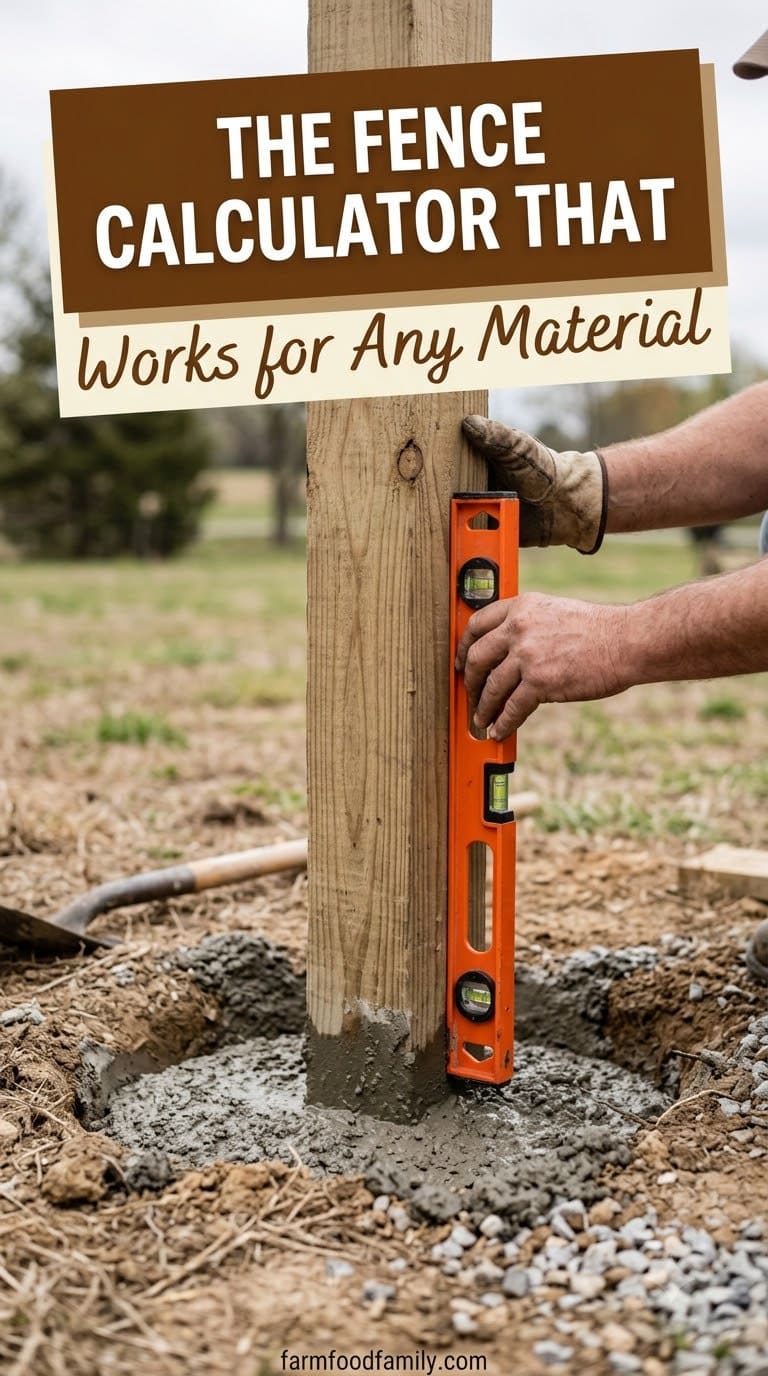
Rail count depends on height, not material. Fences under 5 ft need 2 rails, 5 to 7 ft need 3, and 8 ft fences need 4. Post holes should reach about a third of the post’s total length, and also clear your local frost line.
The calculator below handles posts, rails, pickets or panels, and post-hole concrete together. It adjusts automatically by material and height, and includes gates in the post count instead of leaving that math to you.
Fence Material & Cost Calculator
Calculate posts, rails, pickets or panels, concrete, and gate hardware for any fence material. Auto-sets post spacing and rail count by material and height, and flags post hole depth against frost line risk.
1. Fence material & length
2. Post spacing & setting depth
3. Waste & pricing (optional)
Results
Why This Calculator Covers the Whole Fence
Search “fence calculator” and you’ll mostly find tools built for one material, wood, vinyl, or chain link, each as its own separate page. Switching materials means starting over on a different site.
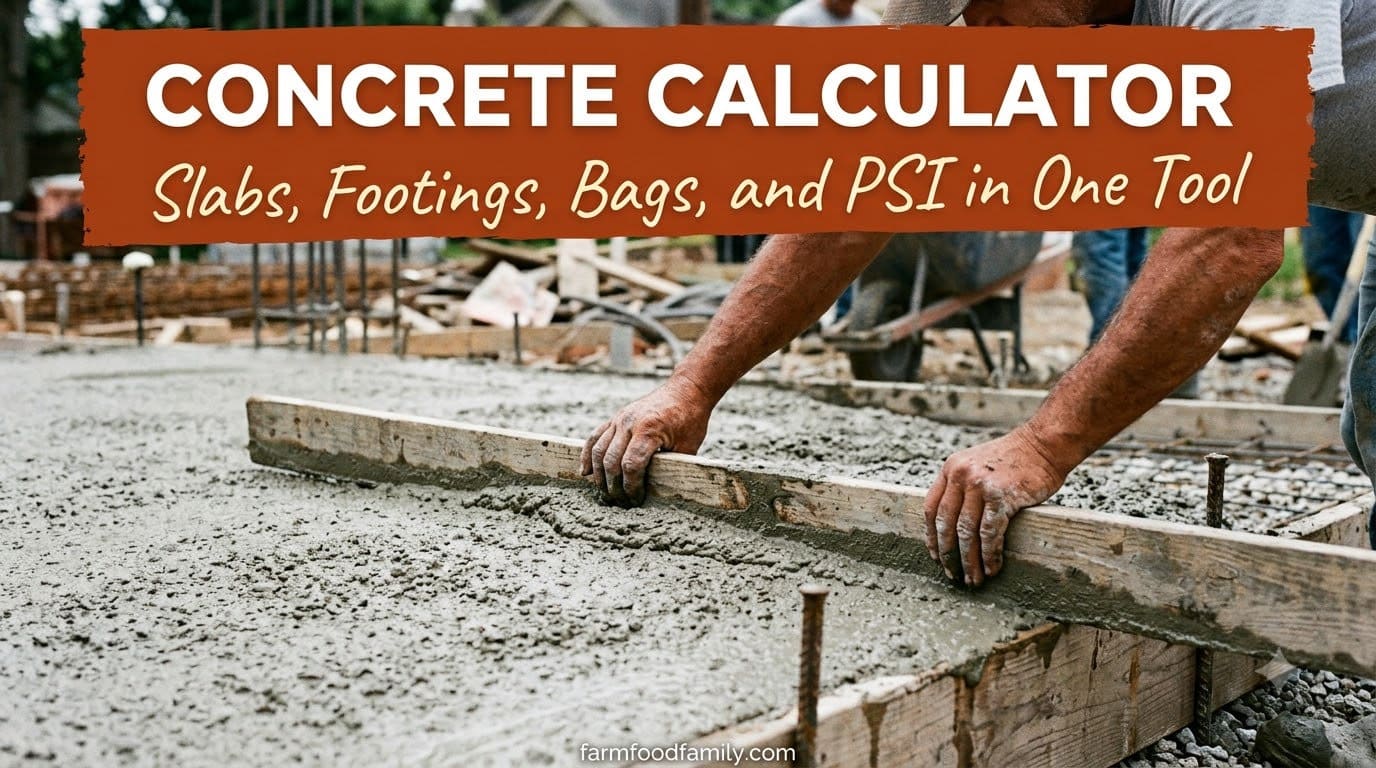


None of the calculators we checked combine post count, rail count, panel or picket count, and post-hole concrete in a single pass. Most skip concrete entirely, or leave it to a separate tool you have to run twice with your own numbers copied over.
This tool covers five common fence materials in one place, adjusts rail count by height automatically, and calculates concrete correctly, subtracting the post’s own volume from the hole instead of just multiplying hole size by depth.
Answer 4 quick questions and get matched to the exact fix for your yard — drainage, budget, layout, or something else entirely.
Take the Free QuizHow Post Count Actually Works
The math is simple geometry, sometimes called the “fencepost problem,” but it trips people up because of what it’s easy to forget.
Base posts = ceil(Fence length / Post spacing) + 1
Total posts = Base posts + Corners + (Gates x 2)
The “+1” matters because posts sit at both ends of a straight run, not just spaced along the middle. A corner needs its own post regardless of spacing, since two fence lines meet there. A gate needs two posts of its own, one on each side of the opening, in addition to whatever the straight-run math already counted.
Skip the corner and gate additions, and a fence plan comes up short on materials right at the parts of the yard most visible from the street.
Post Spacing and Rail Count by Material
| Material | Typical post spacing | Rails by height |
|---|---|---|
| Wood picket | ~8 ft on-center | 2 (under 5 ft), 3 (5-7 ft), 4 (8 ft) |
| Wood privacy panel | ~8 ft on-center | 2 (under 5 ft), 3 (5-7 ft), 4 (8 ft) |
| Vinyl panel | ~8 ft on-center | 2 (under 5 ft), 3 (5-7 ft), 4 (8 ft) |
| Chain link | up to 10 ft on-center | Top rail plus tension wire, not the same rail logic as panel fences |
| Aluminum / steel ornamental | ~6 ft on-center | Rails built into each panel section |
These figures are industry-standard conventions used by fence installers and manufacturers, not a single regulatory spec. Local wind load, soil type, and manufacturer panel sizing can all shift the right spacing for your specific project, so treat these as a solid starting point rather than a fixed code requirement.
Post Hole Depth and Concrete: Getting the Math Right
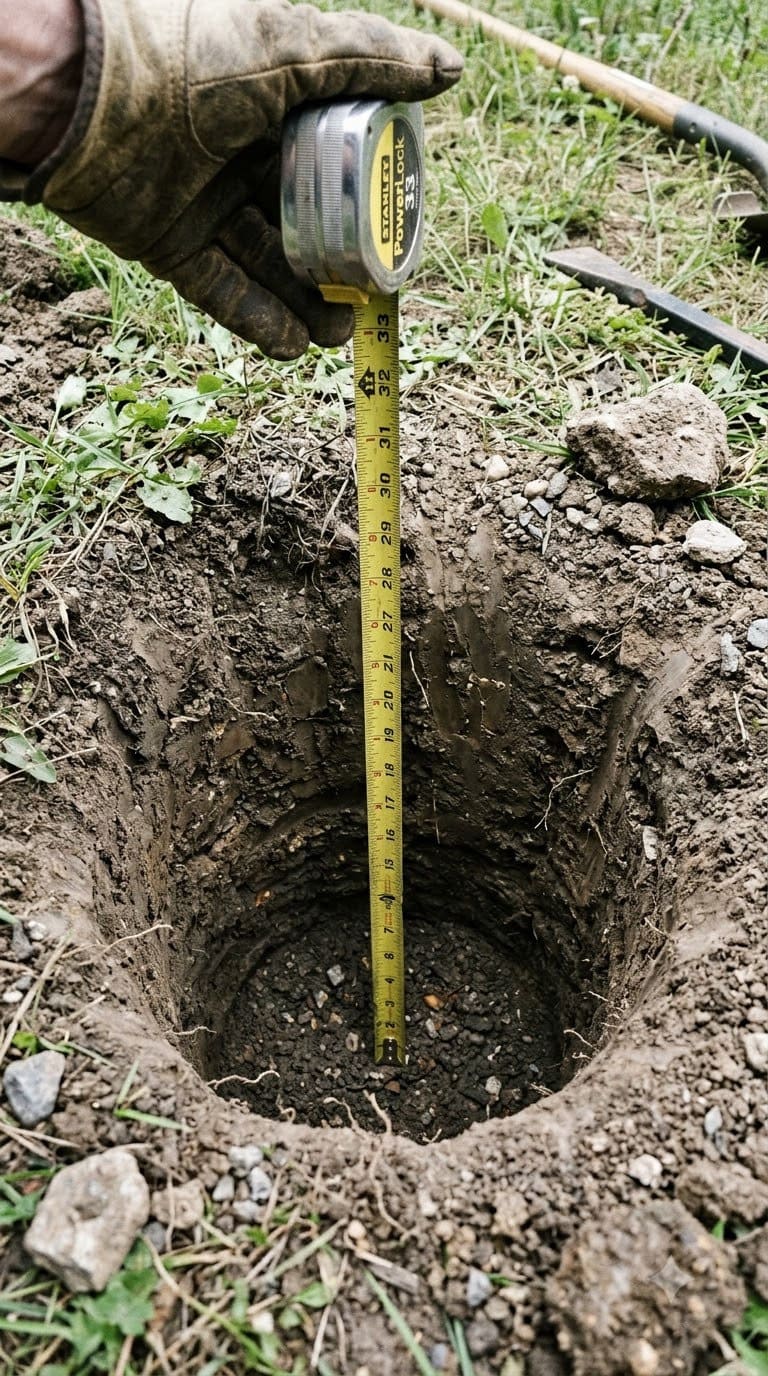
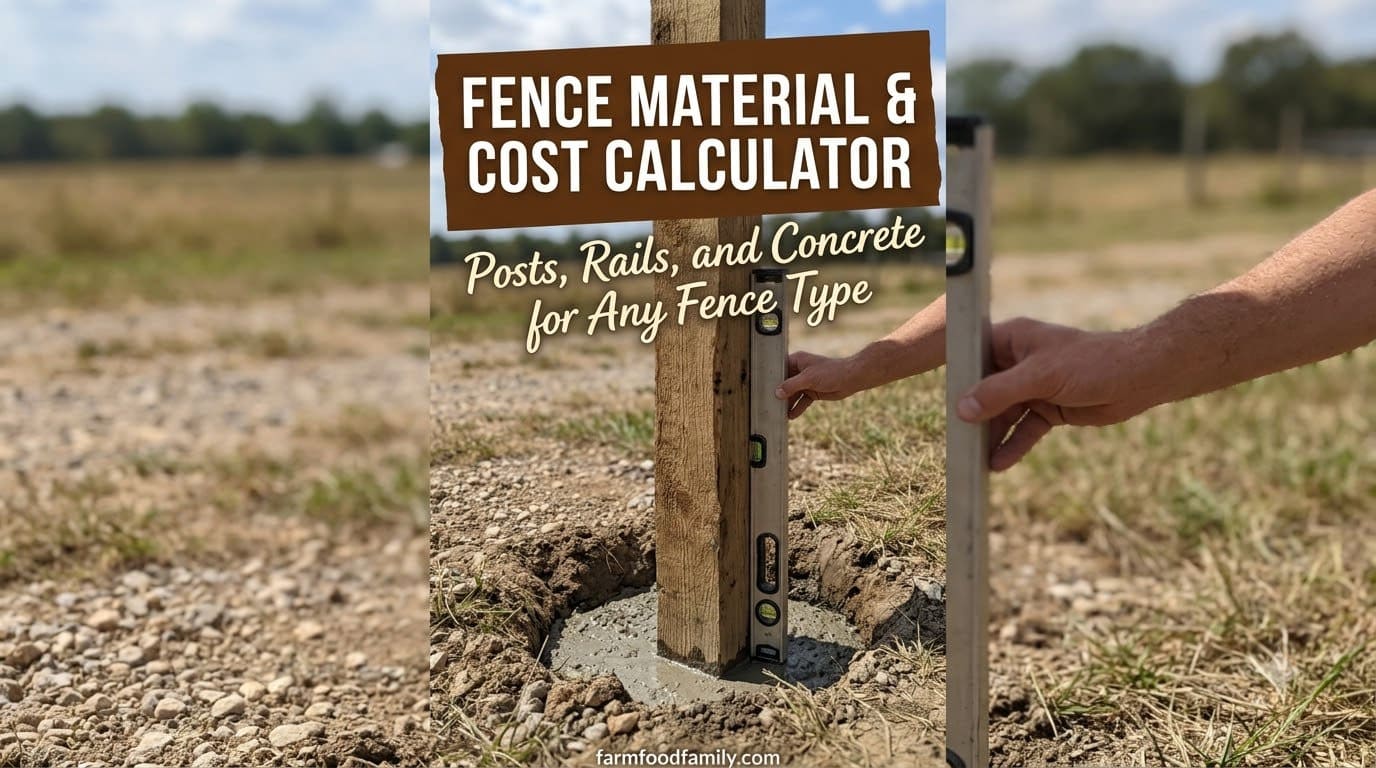
A commonly used rule of thumb sets post hole depth at about a third of the post’s total length. For a 6 ft fence using an 8 ft post (6 ft above ground, 2 ft buried), that works out to roughly 32 inches deep.
That’s a starting point, not the full requirement. The hole should also reach below your local frost line, the same principle that applies to any structural footing. In cold climates, frost line depth can push well past what the one-third rule alone suggests.
Hole volume (cu ft) = pi x (Hole radius)^2 x Depth
Concrete needed = Hole volume - Post volume (the space the post itself takes up)
Skipping that subtraction overstates how much concrete you need, sometimes by a meaningful margin on larger posts. This calculator does the subtraction automatically, then converts the result to bags using real manufacturer bag yields (0.30 to 0.60 cu ft depending on bag weight).
Most yard problems trace back to one specific, fixable cause. Find yours in 4 quick questions.
Take the Free QuizGates: The Detail Most Plans Miss
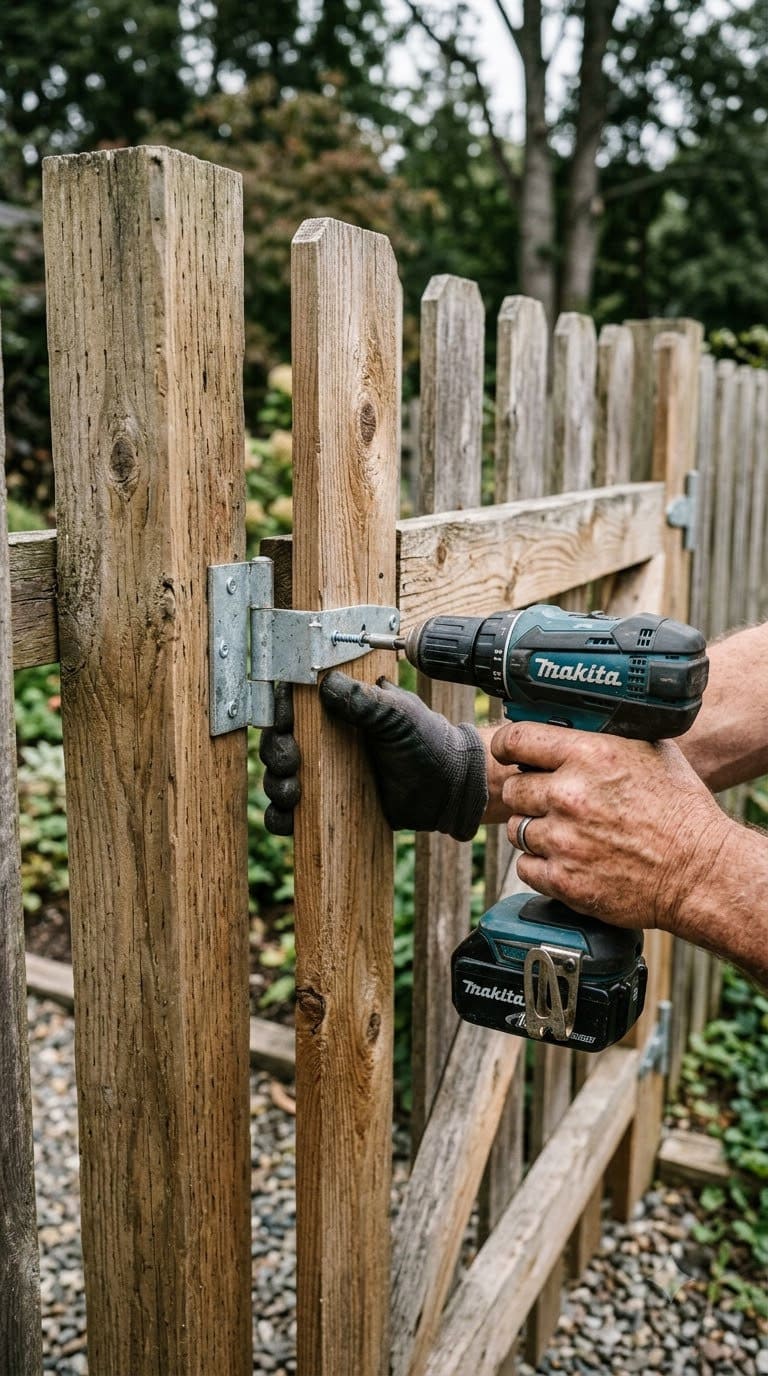
A gate isn’t just a gap in the fence line, it needs its own structural support on both sides.
Each gate opening needs two posts, not one, set slightly wider apart than the gate’s actual width to allow for hinges and the latch hardware. These posts often need to be sturdier than standard line posts too, since they carry the swinging weight of the gate itself, especially for a wide double-gate opening.
Forgetting to add gate posts to a material order is one of the most common reasons a fence project runs a mid-job supply trip. This calculator adds two posts per gate automatically, on top of the standard spacing math.
Choosing Post Size for Fence Height and Wind
Post size isn’t just about looks, it directly affects how much wind and impact load the fence can take before leaning or snapping.
A standard 4×4 post handles most residential wood or vinyl fences up to about 6 feet tall without issue. Taller privacy fences, especially in areas with regular high wind, often call for a 6×6 post instead, particularly at corners and gate openings where the load concentrates.
Chain link and aluminum fences use round or specially shaped posts instead of square lumber, sized in diameter rather than the width-by-width convention of wood posts. A taller chain link fence, especially one used for pool safety or dog containment, typically steps up to a heavier gauge post than a short decorative section would need.
If you’re in a documented high-wind zone, check with your material supplier before finalizing post size. Going up one size at corners and gate posts costs relatively little compared to redoing a section that failed in a storm.


How to Measure a Fence Line That Isn’t Straight
Very few yards are a perfect rectangle, and most fence lines follow property boundaries that jog around trees, utility easements, or an irregular lot shape.
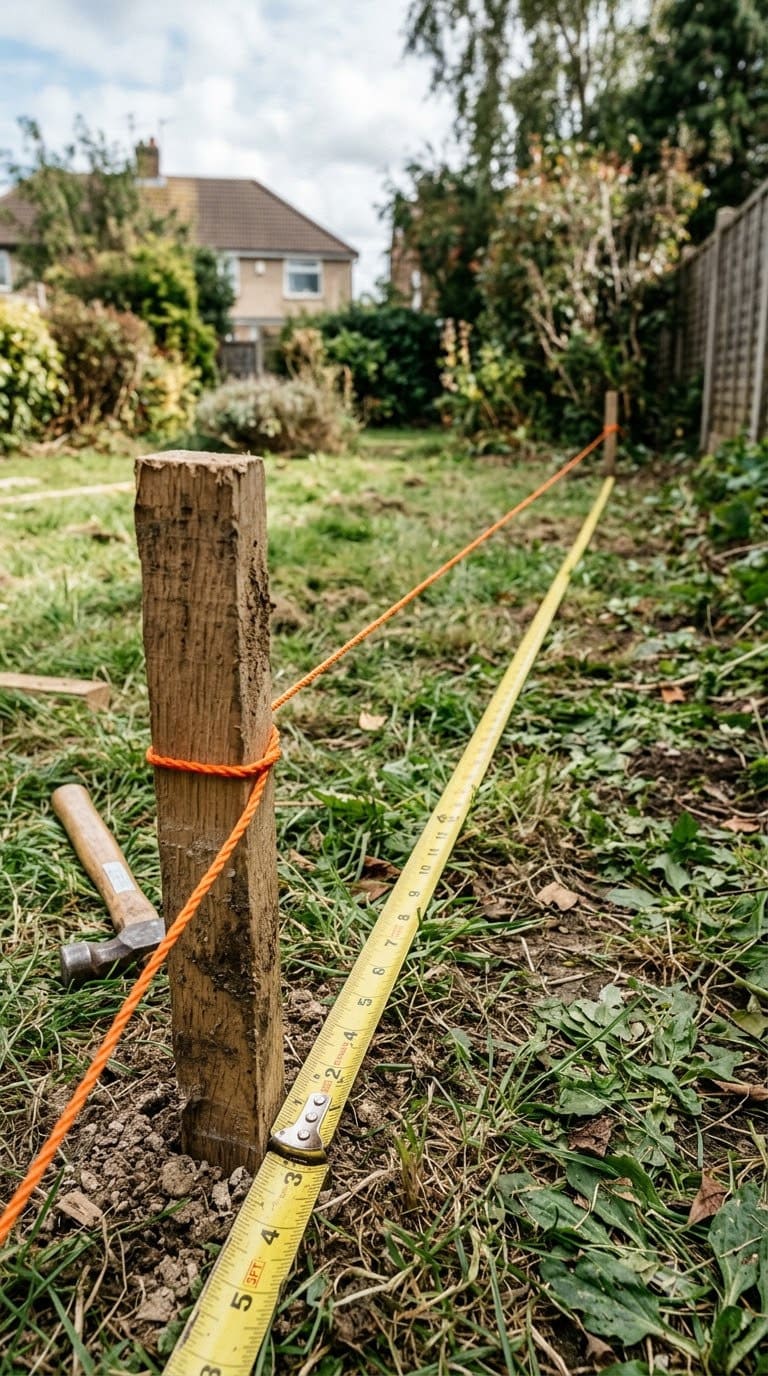
Break the perimeter into straight segments rather than trying to measure the whole run at once. Walk the property line with a measuring wheel or a long tape, noting where the direction changes even slightly, since each of those points needs its own post regardless of how short the segments on either side are.
For a fence that follows a curve, like around a garden bed or a circular driveway, approximate it as a series of short straight segments rather than one continuous curve. Fence panels and rails are rigid, so the actual installed fence will end up as a series of short straight runs either way, even if the design intent looks curved on paper.
Add up all your segment lengths for the total linear footage you enter into the calculator. This matters more than it might seem, since underestimating a jogged property line is one of the most common reasons a fence material order comes up short partway through installation.
The average homeowner spends $616/year on yard fixes that don't address the real problem. Find out what yours actually is — before you spend another dollar.
Take the Free Quiz
Common Fence Installation Mistakes
A handful of mistakes account for most fence problems that show up within the first year or two.
Setting posts too shallow. A hole that doesn’t clear the frost line lets the ground’s freeze-thaw cycle heave the post out of alignment, leaning the whole fence line over a few winters.
Skipping a post cap or angled top cut. Water pooling on a flat post top soaks into the end grain and rots wood posts from the top down, even when the rest of the post is properly treated.
Ignoring property lines. Fences built even a few inches over a property line can trigger a costly dispute or a forced rebuild. Confirm your line with a survey or your property plat before digging, not after.
Using the wrong concrete mix for the setting method. Some installers prefer “dry-set” concrete, poured dry into the hole around the post and left to absorb ground moisture, while others mix wet concrete first. Follow your product’s specific instructions, since the two methods aren’t interchangeable.
FAQs
How many fence posts do I need for 100 feet? At a typical 8 ft spacing, a 100 ft fence needs about 14 posts before corners and gates. Add one post per corner and two per gate opening on top of that base number.
How deep should fence posts be set? A common rule is about a third of the post’s total length, often 24 to 36 inches for a residential fence. The hole should also clear your local frost line, which can require going deeper in cold climates.
Do I need concrete for every fence post? Not always. Chain link and some lightweight fences can sometimes use tamped gravel or soil for line posts, though end, corner, and gate posts almost always benefit from concrete for stability. Check your specific fence type’s installation guidance.
How much does a fence cost per linear foot? It varies widely by material, roughly from a few dollars per foot for basic chain link up to significantly more for tall wood privacy or ornamental aluminum fencing. Use this calculator’s price fields to build your own estimate from local material costs.
Can I use the same post spacing for a sloped yard? Generally yes for the spacing itself, but sloped installations need either stepped panels or a racked (angled) design to follow the grade, which changes how panels and rails fit together compared to level ground.
What’s the difference between a line post and a corner post? A line post runs along a straight section of fence and only bears load in one direction. A corner post bears load pulling in two directions at once, where two fence lines meet, so it’s typically set with more concrete or a larger post size for stability.
How do I calculate fence material for an irregular yard shape? Break the perimeter into straight segments and measure each one separately, then add the lengths together for your total linear footage. Corners between segments each need their own post regardless of how short the adjoining sections are.
Glossary
- On-center spacing: The distance measured from the center of one post to the center of the next, the standard way fence spacing is specified.
- Line post: A standard post along a straight run of fence, as opposed to a corner, end, or gate post.
- Racked fence: A fence where the panels or rails follow the slope’s angle at a constant rate, keeping a straight top line on sloped ground.
- Stepped fence: A fence where panels stay level but step down in height increments to follow a slope, rather than angling continuously.
- Frost heave: Ground movement caused by freezing water expanding in soil, which can lift and lean a post set above the frost line.
Sources & References
Post spacing, rail count, and post-hole depth figures reflect widely used conventions among fence installers and manufacturers. No single regulatory body publishes these as a universal code requirement, so always confirm exact specs with your fence material’s manufacturer and your local building department before ordering.
For material and design ideas, see our wood fence ideas, chain link fence ideas, and picket fence ideas guides. If your yard isn’t level, our fence on slope ideas guide covers stepped and racked layouts. For a full installation walkthrough on one popular low-maintenance material, see how to install a composite fence.
Never miss an update — choose FarmFoodFamily as your preferred source on Google.
How it works: Tap the button below to open Google's settings page, then check the box next to FarmFoodFamily.
Tap the checkbox to turn it blue — that's how you know it's set.