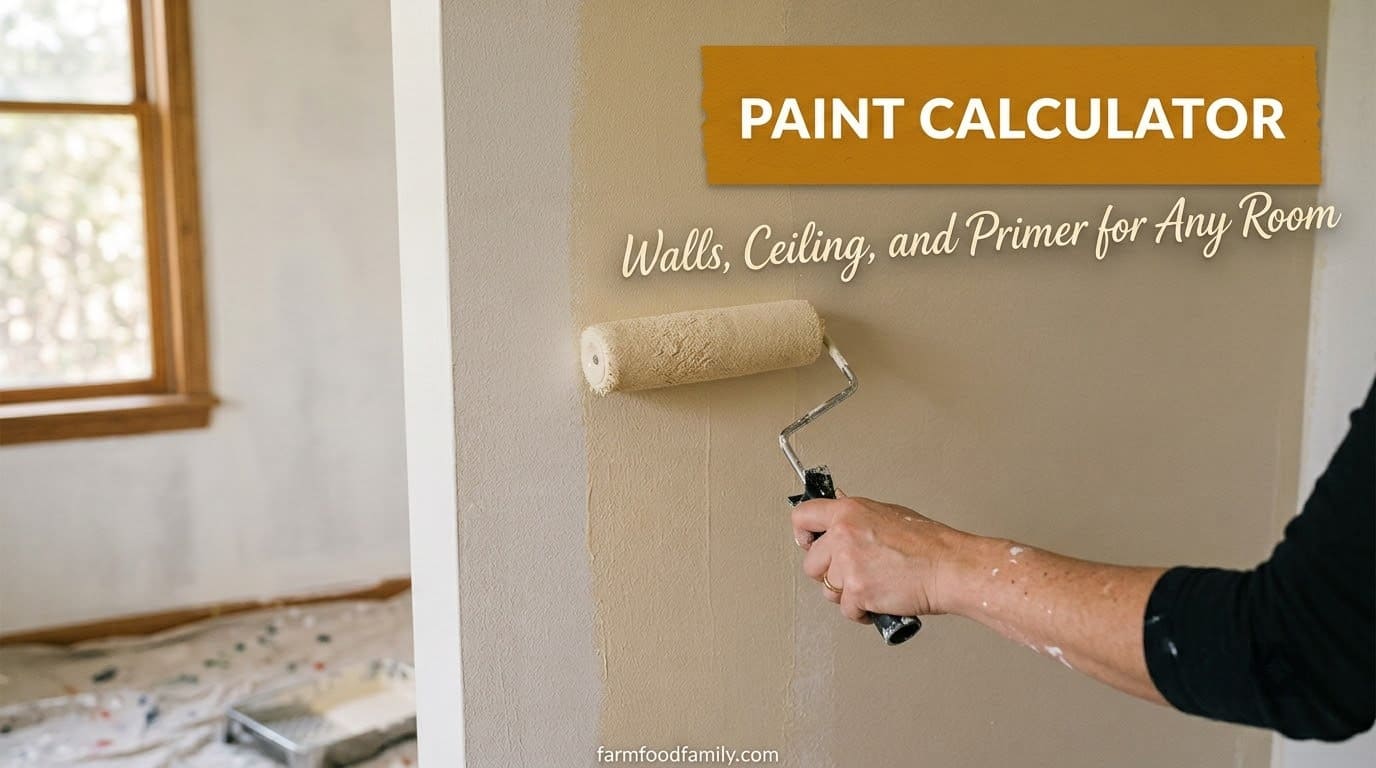
Paint Calculator: Walls, Ceiling, and Primer for Any Room
Enter your room size and what you’re painting over. Get exact gallons for walls, ceiling, and primer, with coats set automatically instead of a locked-in guess.

Never miss an update — choose FarmFoodFamily as your preferred source on Google.
How it works: Tap the button below to open Google’s settings page, then check the box next to FarmFoodFamily.
Tap the checkbox to turn it blue — that’s how you know it’s set.
Wall paint coverage runs about 350 to 400 sq ft per gallon, confirmed on Sherwin-Williams SuperPaint technical data sheets. Higher-sheen paints like semi-gloss cover a bit less, closer to 325 sq ft per gallon.
A 12×10 ft room with 8 ft walls, one door, and one window needs about 2 gallons of paint for two coats, after subtracting the door and window from the wall area.
How many coats you need depends on the color change, not a fixed rule. A similar color often needs just 1 coat, a different color needs 2.
Going from dark to light, or painting new drywall, needs a primer coat first, then 2 coats of paint on top.
The calculator below handles walls, ceiling, and primer together, across as many rooms as you need. It sets coat count automatically based on your project type instead of locking you into a fixed number.
Paint Calculator
Calculate paint and primer for any room, with coats set automatically by how big a color change you’re making, doors and windows deducted, and ceiling paint handled separately.


1. Rooms
2. Project type
3. Waste & pricing (optional)
Results
Why This Calculator Doesn’t Lock You Into One Coat Count
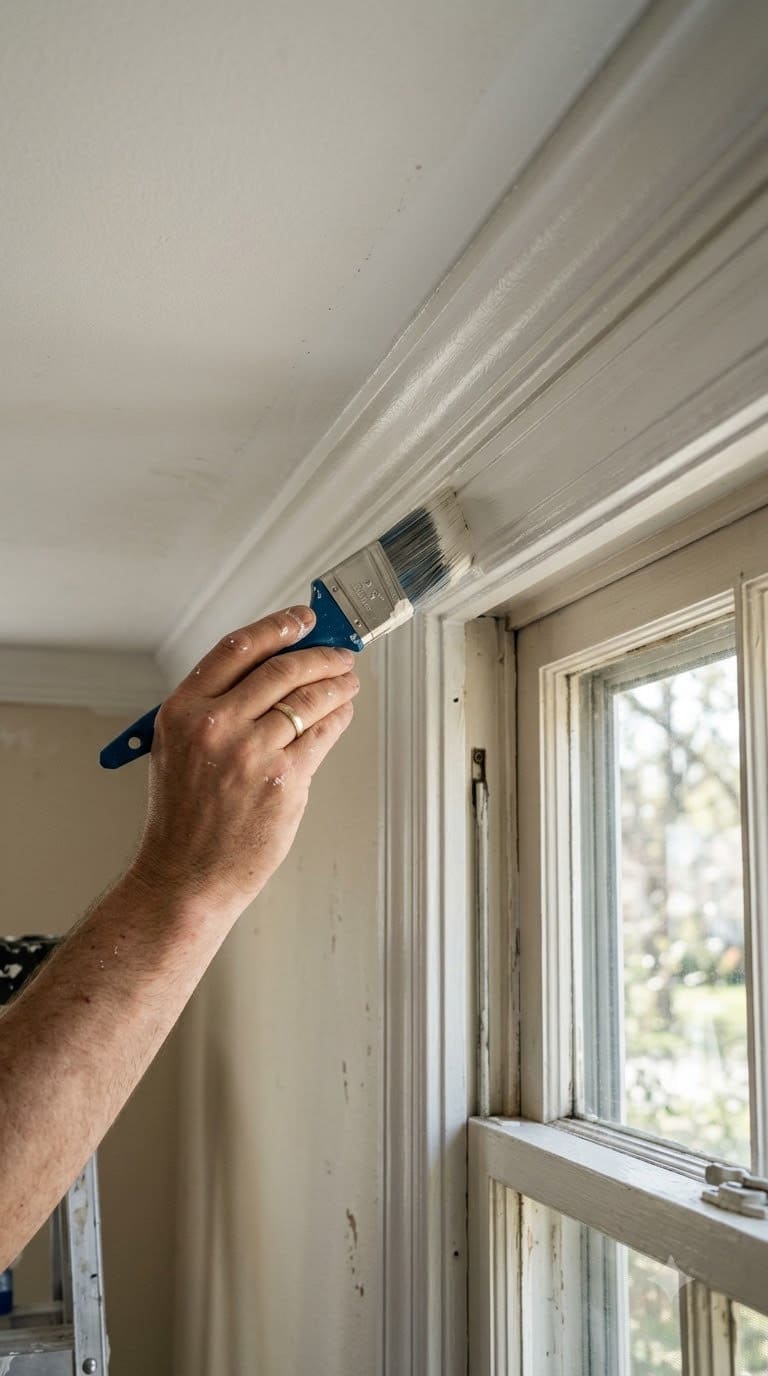
Most paint calculators either make you guess your coverage rate, or hard-code two coats no matter what you’re painting over.
Benjamin Moore’s own calculator locks in exactly 2 coats, with no way to adjust for a light color change that might only need one. Omnicalculator asks you to type in a coverage rate from the can, rather than knowing it based on your paint’s sheen. Almost every calculator we found skips the ceiling entirely, or bolts it on as an afterthought with no separate coverage logic for texture.
This tool ties coat count to the actual job. A similar color gets 1 coat, a real color change gets 2, and a drastic change or bare drywall gets a primer coat plus 2 coats of paint.
It also handles the ceiling with its own area and its own texture-based coverage adjustment, and adds up as many rooms as you’re painting in one pass.
How Paint Coverage Actually Works
The core formula is simple, but getting the inputs right takes more than just room dimensions.
Gross wall area = Perimeter x Wall height
Net wall area = Gross wall area - (Doors x 20 sq ft) - (Windows x 15 sq ft)
Gallons needed = (Net wall area x Coats x (1 + waste %)) / Coverage rate
The 20 sq ft door and 15 sq ft window figures are common industry estimates for standard-size openings, not an exact measurement of your specific doors and windows. If yours are unusually large or small, the difference is usually small enough that the waste allowance covers it.
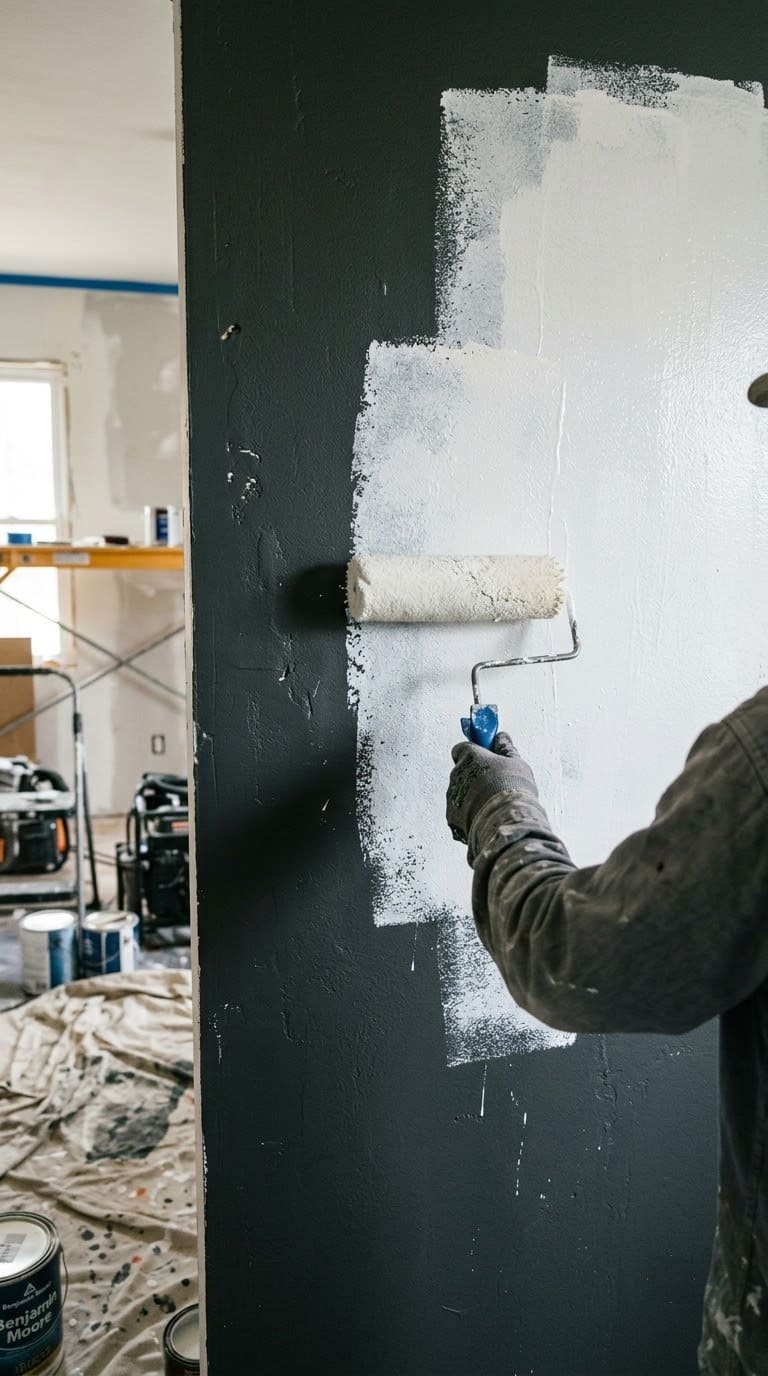
Coverage Rate by Sheen
| Sheen | Approx. coverage | Best for |
|---|---|---|
| Flat / matte | ~400 sq ft/gal | Ceilings, low-traffic walls |
| Eggshell / satin | ~375 sq ft/gal | Most living spaces, bedrooms |
| Semi-gloss / gloss | ~325 sq ft/gal | Trim, bathrooms, kitchens |
These figures track Sherwin-Williams’ published range of 350 to 400 sq ft per gallon for flat paint on a smooth wall, with higher-sheen products running somewhat lower. Textured walls, brick, or stucco all reduce real coverage further, sometimes significantly, so treat these numbers as a starting estimate rather than an exact yield for every surface.
Choosing the Right Number of Coats
1 coat works when you’re repainting close to the existing color, with a quality paint and a wall in reasonably good condition. This is the exception, not the default.
2 coats is the safer standard for most real color changes, even a moderate one. Thin spots and uneven coverage from a single coat show up more than people expect once the paint dries.
Primer plus 2 coats applies to drastic color changes (especially dark to light), new unpainted drywall, bare wood, or any surface with stains you need to block. Skipping primer here often means the old color bleeds through, or new drywall soaks up paint unevenly, both of which cost more in a second round of coats than the primer would have.
Why Primer Coverage Is Lower Than Paint
Primer covers less area per gallon than paint, typically 200 to 300 sq ft per gallon compared to paint’s 350 to 400.
That’s not a flaw, it’s the job primer does. Primer is formulated to bond tightly to the surface and seal it, not to build a smooth, even color layer the way paint does.
This calculator uses 250 sq ft per gallon as a mid-range estimate. Always check your specific primer’s label though, since formulas vary by brand and type (stain-blocking, bonding, drywall).
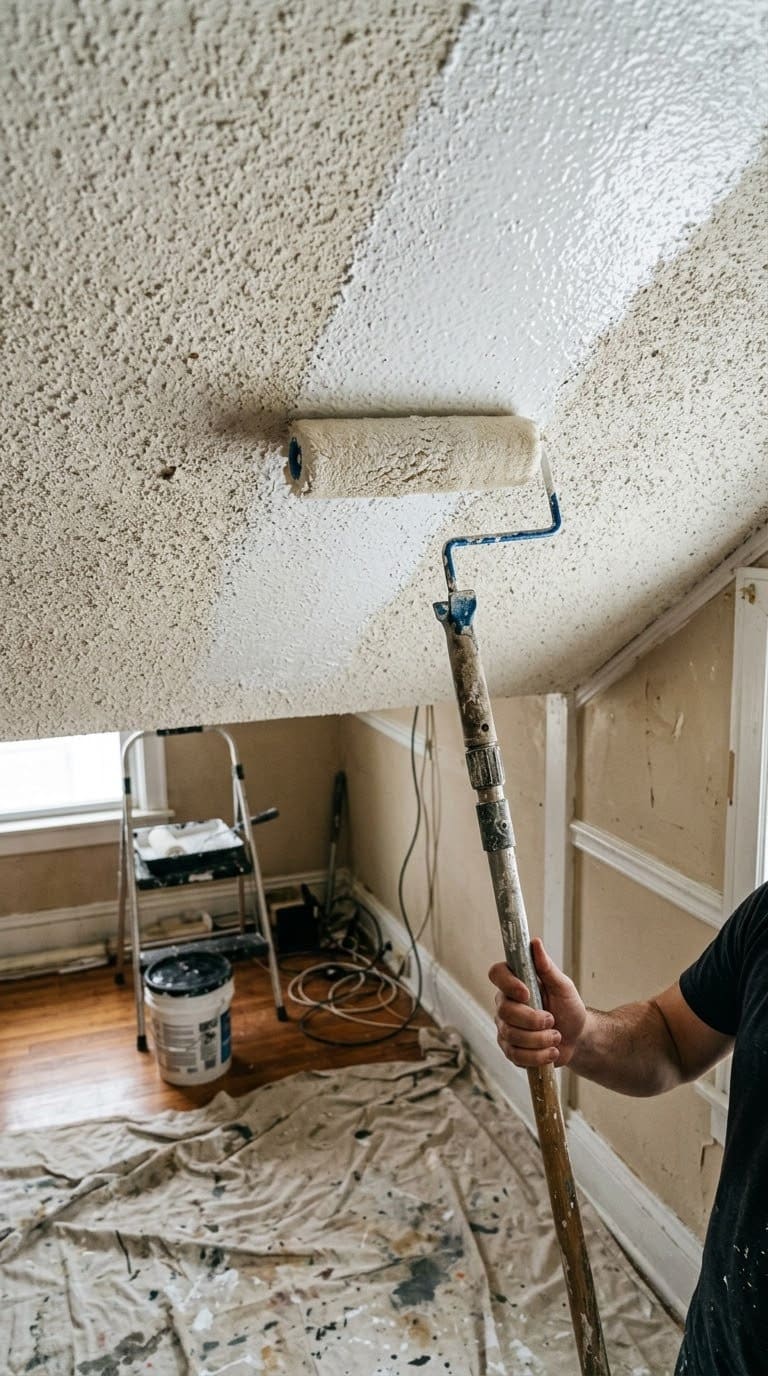
Ceiling Paint: Why Texture Changes the Math
A smooth ceiling uses the same coverage rate as a wall of the same sheen. A textured or popcorn ceiling does not.
Texture creates far more surface area than the flat square footage suggests, and popcorn ceilings in particular are porous enough to soak up noticeably more paint per coat. This calculator doubles the effective paint needed for a textured ceiling compared to a smooth one at the same dimensions, reflecting common painting-contractor guidance on textured surfaces.
Ceilings also typically get 2 coats regardless of the wall situation, since a single coat rarely hides framing shadows and uneven texture the way two coats do.

Does Paint Quality Actually Change How Much You Need?
Cheaper paint and premium paint aren’t just a price difference, they genuinely cover differently, which affects how many gallons you actually need.
Budget paint often has lower hiding power, meaning it takes more paint (or more coats) to fully block the surface underneath. A premium paint marketed for “one-coat coverage” can sometimes deliver on that claim over a similar color, cutting your gallon count roughly in half compared to a cheaper product needing two full coats.
This is why the “similar color, 1 coat” option in this calculator works best paired with a quality paint. Budget paint over a similar color often still benefits from a light second coat, even when a premium product wouldn’t need it. If you’re trying to minimize total gallons purchased, spending more per gallon on a high-hiding-power paint can sometimes cost less overall than buying extra cans of a cheaper one.
Measuring a Room with an Alcove, Closet, or Irregular Layout
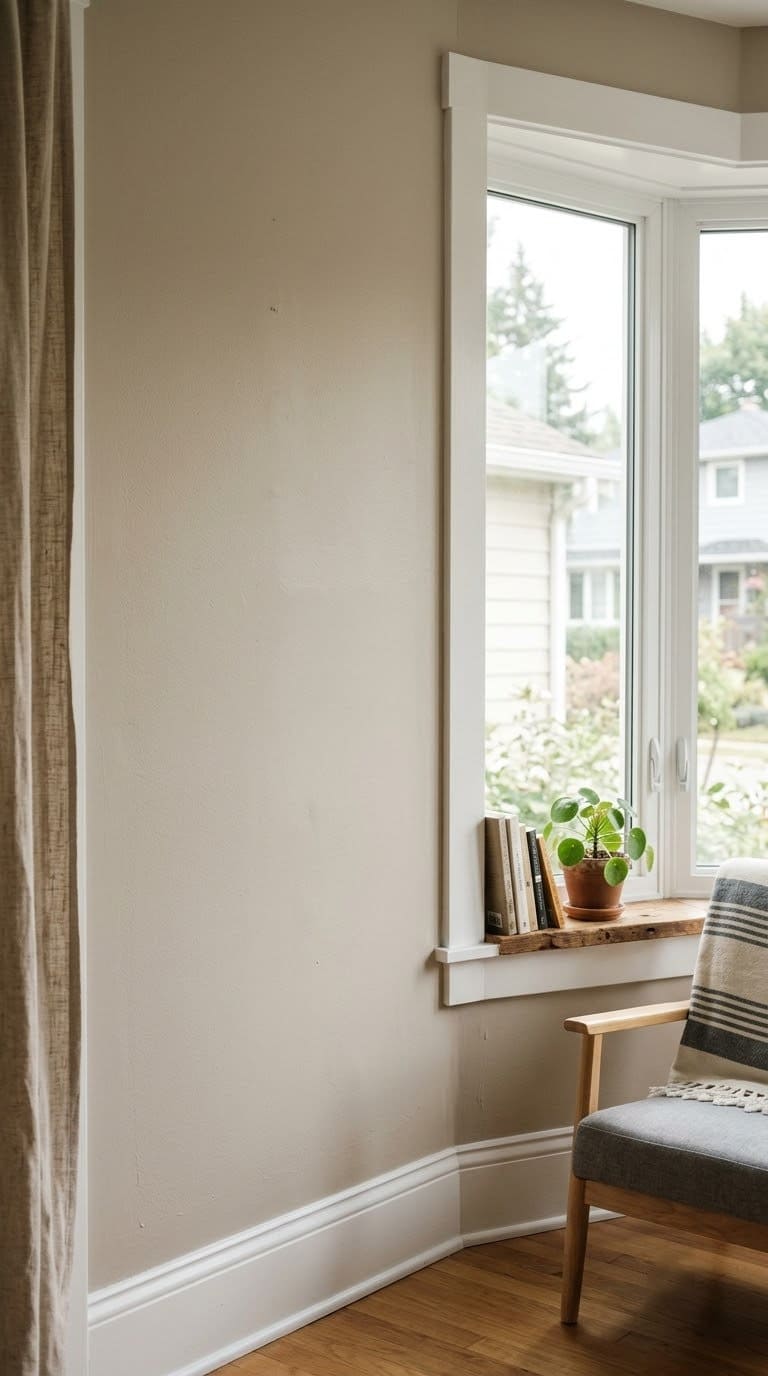
Not every room is a clean rectangle. A closet opening, a bump-out, or an L-shaped layout all add wall area a simple length-times-width calculation misses.
Treat each distinct wall segment as its own measurement. Walk the room’s perimeter with a tape measure, noting where the wall turns a corner or steps in and out, rather than trying to estimate one overall length and width for an irregular shape. Add up each segment’s length, then multiply the total perimeter by your wall height the same way you would for a simple rectangle.
For a closet or small alcove opening off the main room, you can usually add it as a small separate “room” entry in the calculator above, using its own length, width, and height, with zero or one door depending on whether it has its own door. This keeps the math accurate without forcing an irregular shape into a single rectangle calculation that would either overestimate or underestimate the real paintable area.
FAQs
How much paint do I need for a 12×12 room? For a 12×12 ft room with 8 ft walls, one door, and one window, expect roughly 2 to 2.5 gallons for 2 coats, depending on your paint’s sheen and how much waste you build in.
Do I really need 2 coats, or can I get away with 1? It depends on the color change. Staying close to the existing color can work with 1 coat. Any real color shift, especially a lighter color over a darker one, almost always needs 2 coats for even coverage.
Can I skip primer if I’m just changing colors slightly? Usually yes, for a similar-lightness color change on an already-painted, undamaged wall. Skip it and you’re relying on the paint itself to cover, which 2 coats of quality paint usually handles fine in that scenario.
How much paint does a gallon actually cover? About 350 to 400 sq ft for one coat of flat paint on a smooth wall, less for higher sheens or textured surfaces. That number drops fast once you’re applying 2 coats over a full room’s worth of walls.
Do I need special paint for a bathroom or kitchen ceiling? A higher-sheen or moisture-resistant paint helps in high-humidity rooms like bathrooms, since flat finishes can hold moisture and encourage mildew more than eggshell or satin. Kitchens benefit from the same logic near cooking areas.
How do I calculate paint for a room with vaulted or sloped ceilings? Measure the wall height at its tallest point for the gable ends, and treat the sloped ceiling sections as additional wall-like area at their actual square footage, since a sloped ceiling doesn’t fit a flat length-times-width formula the way a standard ceiling does.
Why did I run out of paint even though I followed the calculator’s number? Cutting in around trim, multiple thin coats instead of two full ones, or a more porous wall than expected can all use more paint than the standard estimate. The waste percentage exists for exactly this reason, so lean toward 15% instead of 5% if your walls are older or heavily textured.
Should I buy paint in exact gallons or round up? Round up rather than buying the exact fractional amount, since paint stores generally only sell full gallons and quarts. Running short mid-wall on a custom-tinted color means waiting on a new batch that may not match the original perfectly, which is a bigger hassle than having a partial gallon left over.
Glossary
- Cutting in: Painting the edges and corners of a room by hand with a brush before rolling the main wall area, needed anywhere a roller can’t reach cleanly.
- Sheen: The level of gloss in a paint finish, ranging from flat (no shine) to high-gloss, which affects both appearance and coverage rate.
- Primer: A preparatory coating applied before paint to seal the surface, block stains or old color, and help paint adhere and cover evenly.
- Hiding power: A paint’s ability to cover the existing color or surface in fewer coats, often marketed as “one-coat coverage” on premium products.
Sources & References
- Sherwin-Williams. SuperPaint Technical Data Sheet (350-400 sq ft/gal coverage, flat finish).
- Sherwin-Williams. Paint Calculator (primer coverage guidance, 200-300 sq ft/gal).
- Benjamin Moore. Drywall Primer 380 Technical Data Sheet (350-450 sq ft/gal for that specific primer product).
For the full painting process, see our guide on how long it takes to paint a room. If you’re switching between paint types, see using latex paint over an oil-based primer.
Tackling a bathroom ceiling specifically? See how to paint a bathroom ceiling. For budgeting, our guide on Sherwin-Williams paint cost breaks down real per-gallon pricing, and our painted accent wall ideas guide covers design options if you’re only painting one wall.
Never miss an update — choose FarmFoodFamily as your preferred source on Google.
How it works: Tap the button below to open Google's settings page, then check the box next to FarmFoodFamily.
Tap the checkbox to turn it blue — that's how you know it's set.