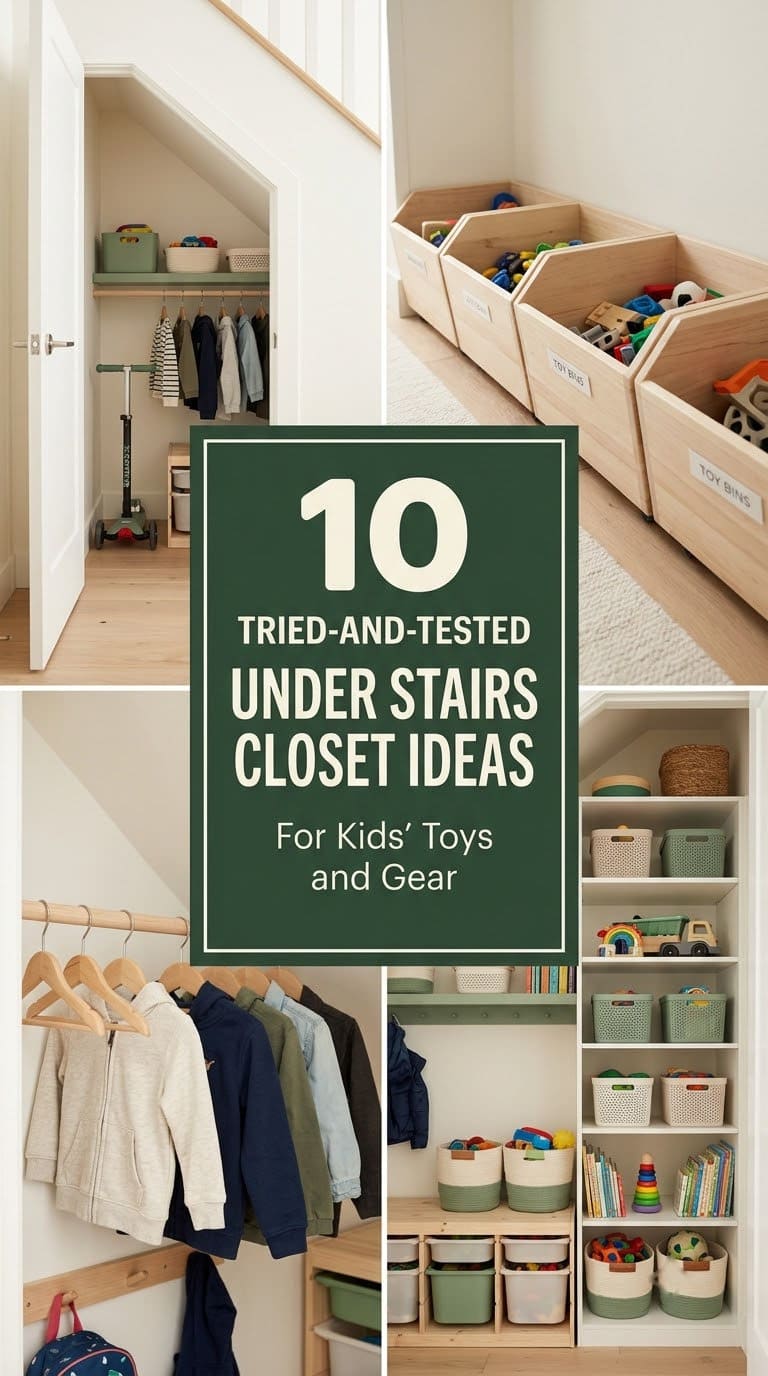
10 Clever Under Stairs Closet Ideas for Kids’ Toys and Gear That Stay Tidy
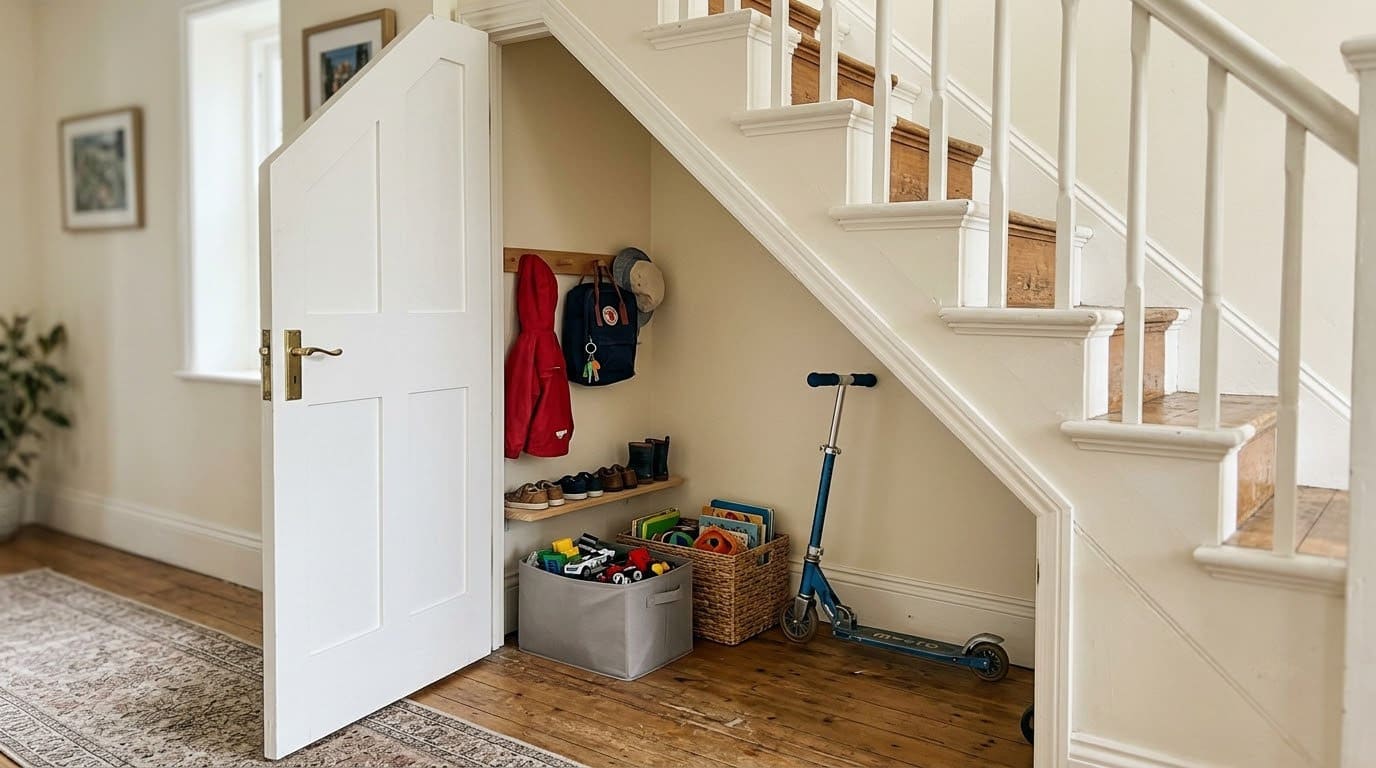
An under stairs closet can swallow a whole family’s toys, coats, and scooters, as long as you build it low for small hands and anchor everything tall.

Never miss an update — choose FarmFoodFamily as your preferred source on Google.
How it works: Tap the button below to open Google’s settings page, then check the box next to FarmFoodFamily.
Tap the checkbox to turn it blue — that’s how you know it’s set.
We’ll be honest. Most under stairs storage lists show a pretty nook and skip the part where a four-year-old has to use it. This one starts with the kid.
We built the list around a closed-door closet, not a playroom. You’ll find ten ideas for toys and gear, plus the safety details a photo never shows. If you want the wider menu of under-stair ideas, this bigger roundup of 21 under stair storage ideas covers pet houses, wet bars, and more.
Quick Answer
The best way to store kids’ toys and gear under the stairs is to give children the bottom 3 feet and keep everything else above it. Put daily toys in open bins on the floor and lower shelves. Put art supplies and small parts higher, where an adult decides when they come out.
Tuck scooters and helmets near the door so gear goes out and comes back without a fuss. Anchor every tall shelf to a wall stud, because tip-overs seriously hurt children. Then add a door that can’t pinch small fingers and a light that turns on by itself.
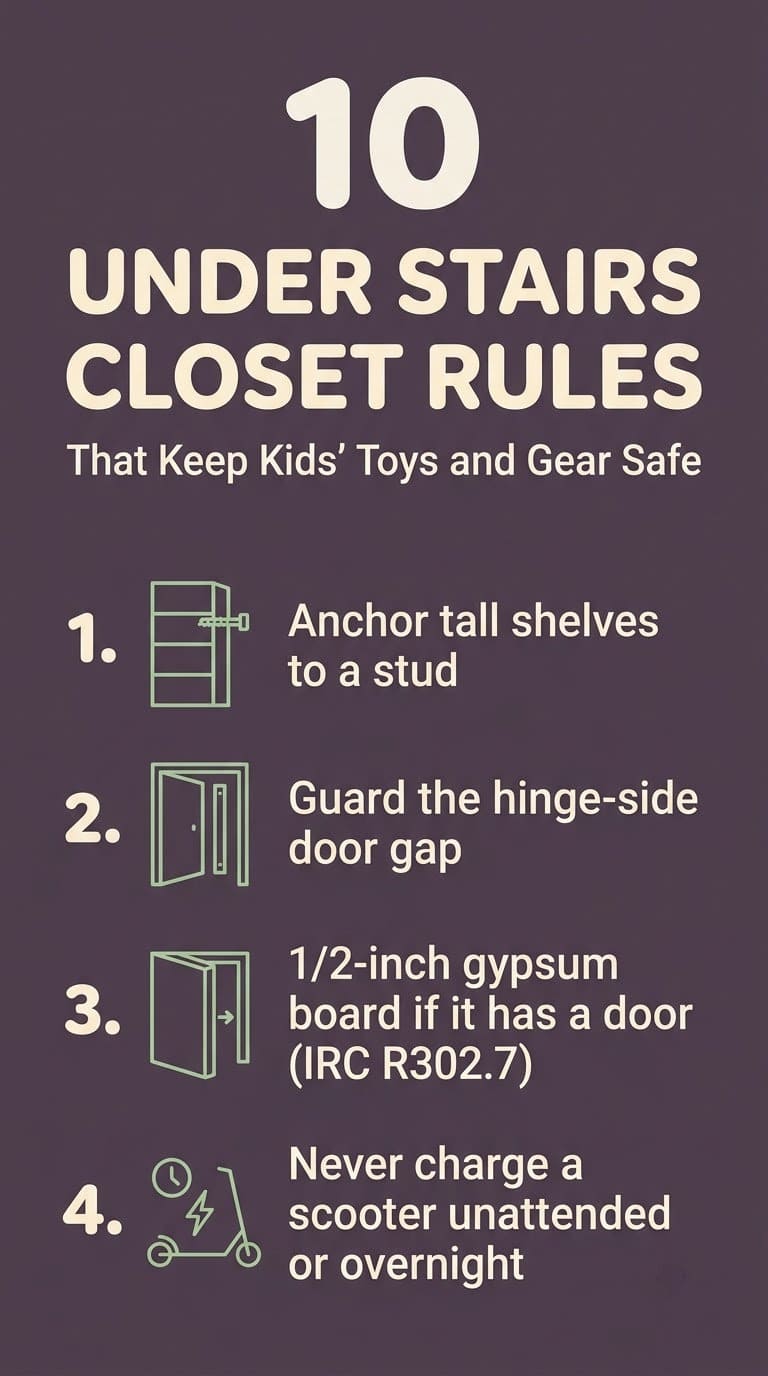
Check your local code before you close in the space. An enclosed under stair closet with a door may need 1/2-inch gypsum board on the inside. The ten ideas below fill in every detail, from bin heights to charging rules.
Before You Start: Three Rules That Shape Every Idea
Under the stairs, the ceiling slopes. The tall end sits by the stair bottom, and the low end is where the space gets shallow. That slope decides where everything goes.
Rule one: tall and deep things go at the tall end. Rule two: the shallow end gets the low, wide stuff like bins and bikes lying flat. Rule three: kid-use items sit on the floor and lower shelves, and adult-use items ride high.
The height zones are our own working rule, so measure your kid and adjust. A toddler reaches lower than a first grader. We’d rather you test it with your own child than trust a number.
Do You Need Fire Protection?
If your closet has a door, the answer may be yes. The International Residential Code says an enclosed space under stairs that has a door or access panel needs its walls, ceiling, and soffits covered on the inside with 1/2-inch gypsum board. Your local code may differ, so call your building department before you close in a space.
What Will It Cost?
We tag each idea with a rough tier. Budget means a weekend and a few bins.
Mid means built-ins or a new door. Pro means a carpenter.
How Do You Plan the Layout Before You Buy Anything?
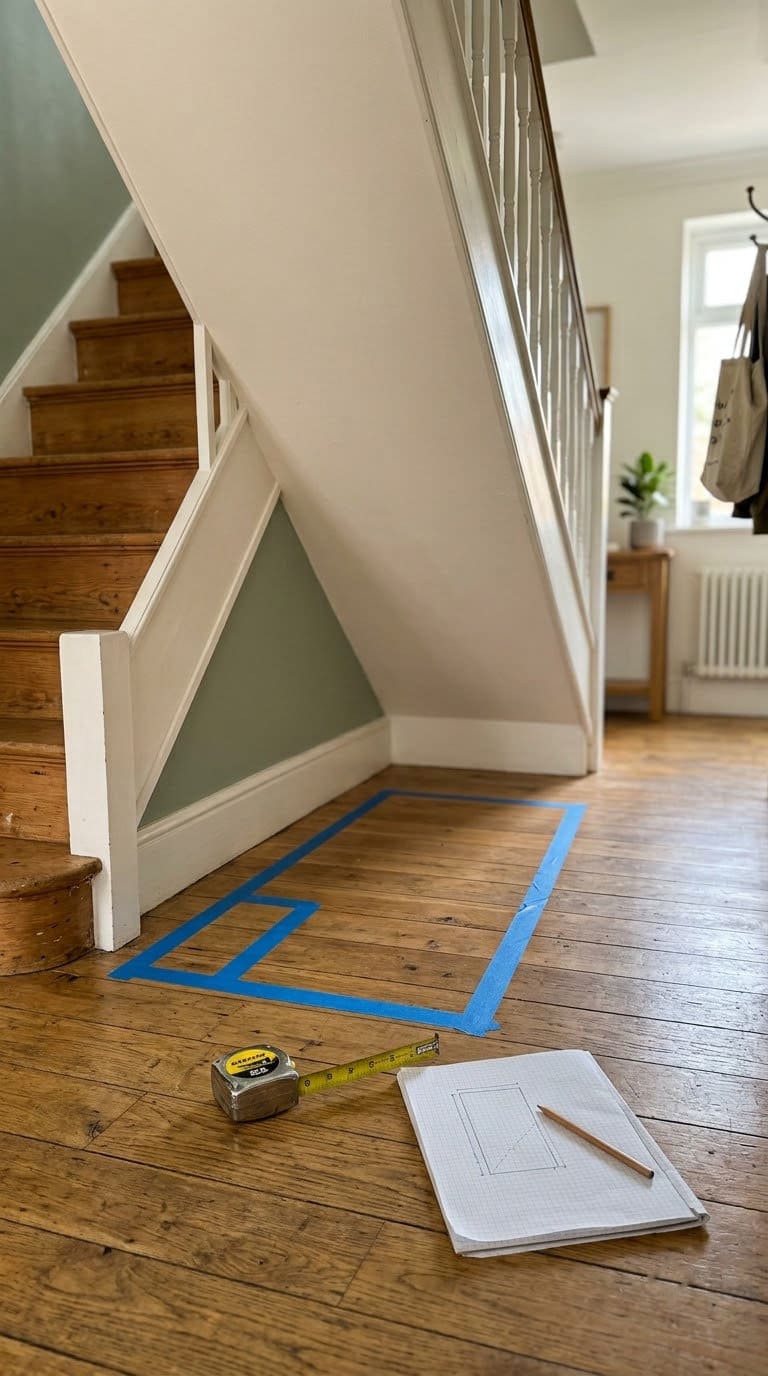
Sketch it first. Tape the closet outline on the floor of a room, then measure the ceiling at the tall end, the middle, and the shallow end. Write all three numbers on the sketch.
Next, list what has to live in there. Count the bins of toys, the coats, the backpacks, the helmets, and every wheeled thing. Most families find the gear takes more room than the toys, so plan for it first.

Steel-cable anchor kit that screws into wall studs and holds up to 400 lb, for shelves and dressers
Shop NowThis post contains affiliate links. We may earn a commission on qualifying purchases at no extra cost to you.
Then walk the door path. Open the door fully and check that a child can reach the bins without blocking the doorway. A closet that only works with the door held open will frustrate everyone within a week.
Leave 2 to 3 inches of air at the back and sides of the shelves. Stale air in a closed under stair space can smell musty, especially in a damp climate. A small gap and an occasional open door keep it fresh.
Finish with a test run. Have your child put five toys away without help, and watch where they get stuck. Whatever slows them down is the first thing to fix, and it’s usually a label, a lid, or a shelf that’s a little too high.
1. Bottom-Zone Open Bins for Daily Toys
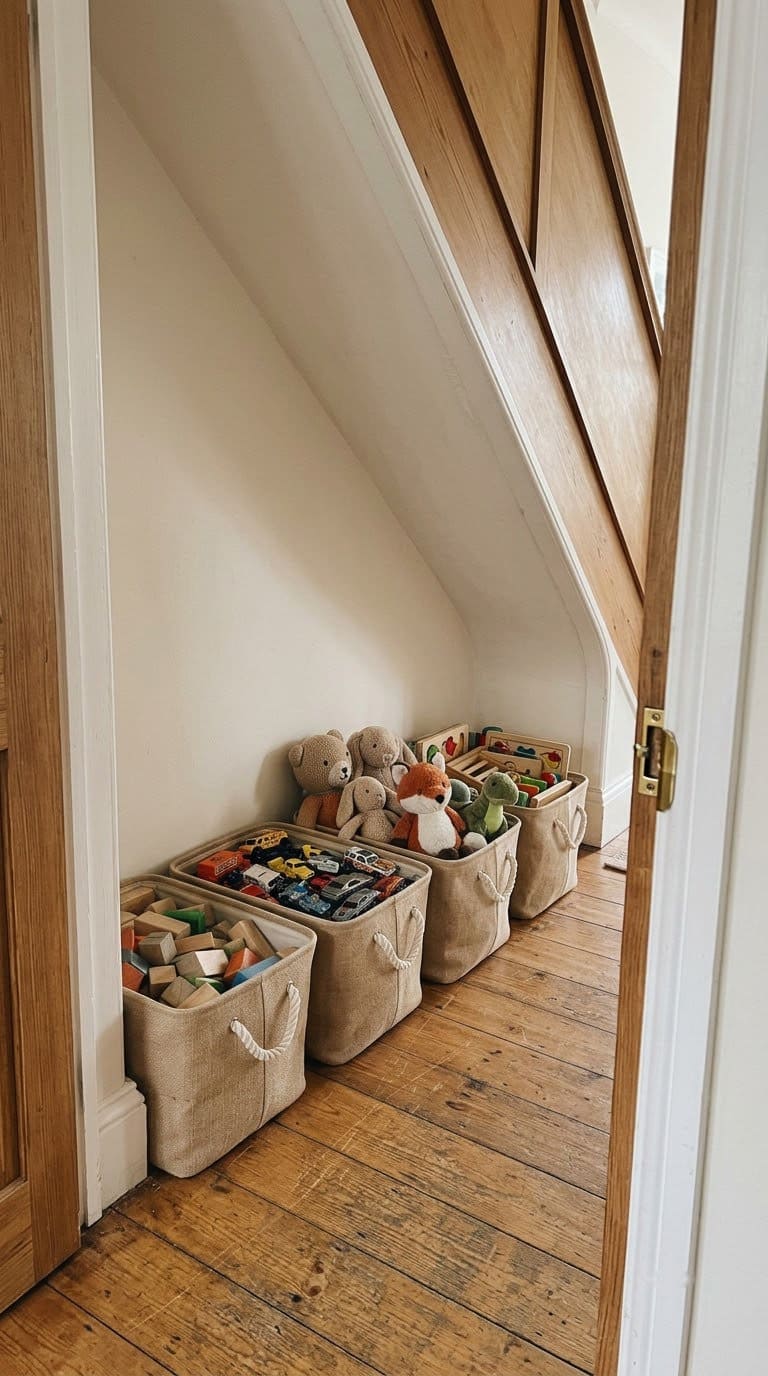
Start with the floor. Line up open-top bins in the bottom 12 to 15 inches so a toddler can pull one out and push it back.
Open tops beat lids for small kids. Lids get lost, and a bin that needs two hands to open won’t get used. Professional organizer Rebeccah of Whole House Cleanse, quoted in Lucie’s List, likes open-top baskets and bins for this reason.
Tier: Budget. Pair this with idea 2, since the bins need labels a child can read.
2. Picture Labels So Kids Can Clean Up Alone
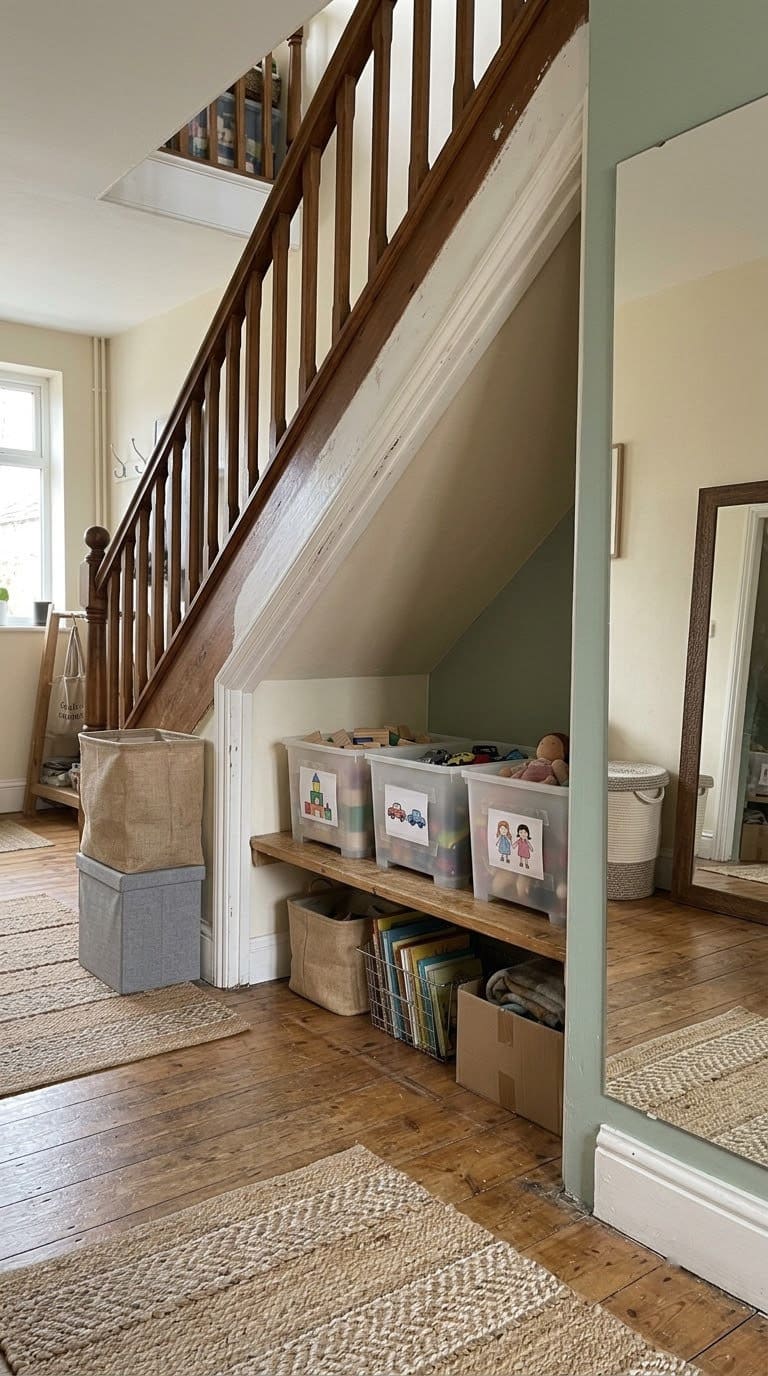
A label with only words won’t help a three-year-old. Tape a photo or a simple drawing of the contents on the front of each bin.
Maria Baer, a professional organizer at The Baer Minimalist, suggests categories like wheels, dolls, balls, and blocks. She also uses picture labels so kids who can’t read yet can put things back themselves.
Tier: Budget. Print the photos on plain paper and cover them with clear packing tape.
3. A Higher Shelf for Art Supplies and Small Parts
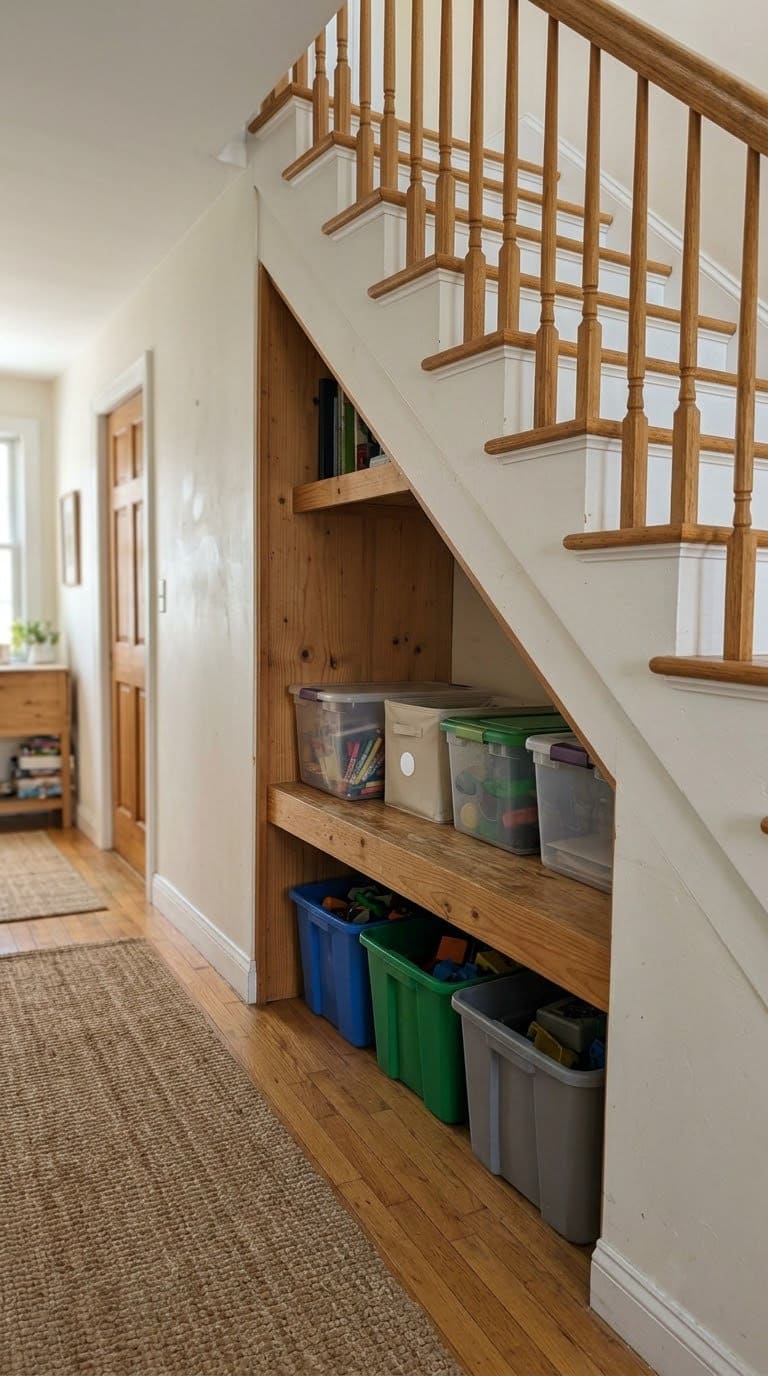
Some things shouldn’t live in the kid zone. Crayons, paint, and marbles need an adult nearby.
Patty Clair, a professional organizer also quoted in that same Lucie’s List piece, puts unsupervised-use items on higher shelves. In our closet plan, that means a shelf about 48 to 54 inches up, above a young child’s reach.
Use solid bins here instead of see-through ones. Kids ask for what they can see.
Tier: Budget. This works well with idea 6, the anchored shelf tower.
4. A Toy Rotation Bin at the Deep End
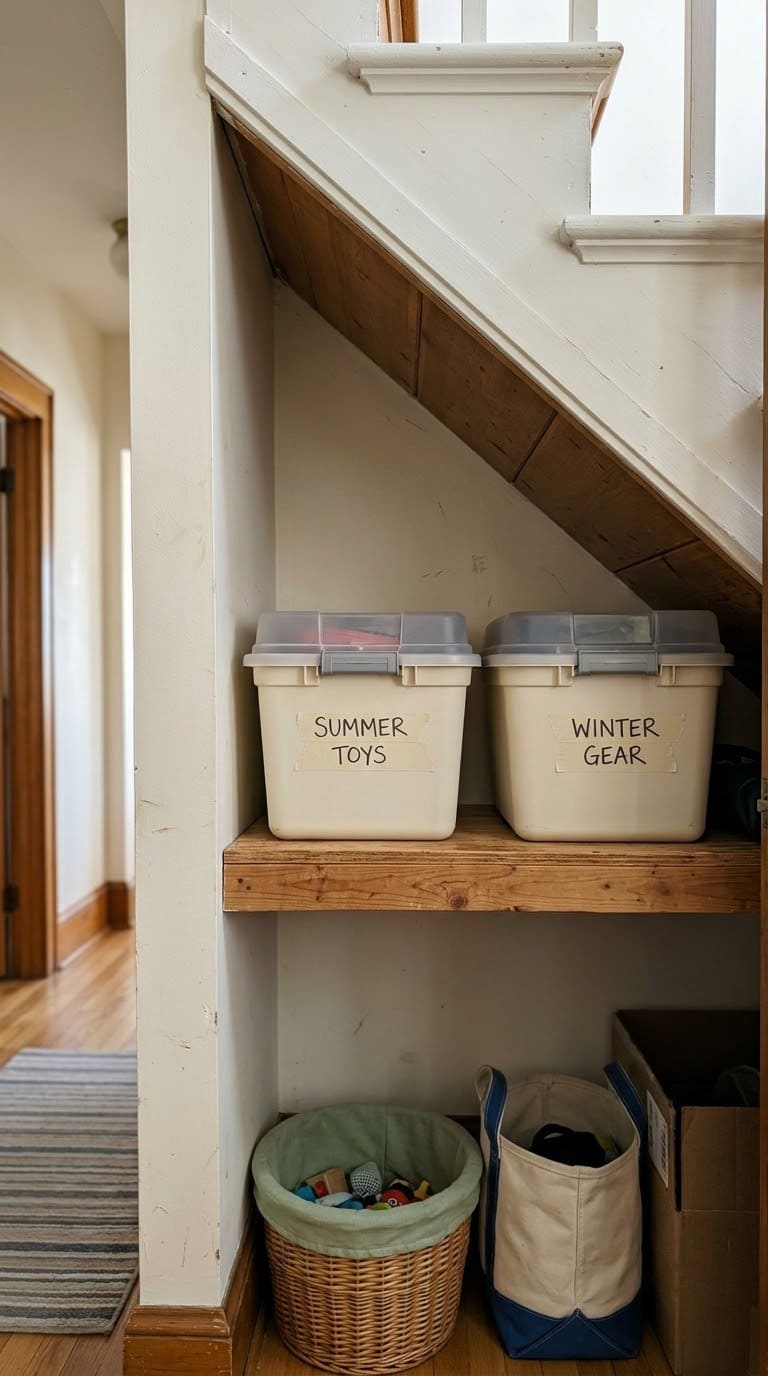
The deepest, tallest part of the closet is perfect for a rotation. Store the specialty toys here and swap a few in every few weeks.
Baer suggests leaving a handful of everyday favorites out and storing the rest. She also reviews the collection every three months and removes what kids have outgrown. Both habits keep the closet from filling back up.
Try one lidded bin per season. It’s the one place where a lid is a good thing, since adults handle it.
Tier: Budget.
5. A Coat and Backpack Rail Kids Can Reach
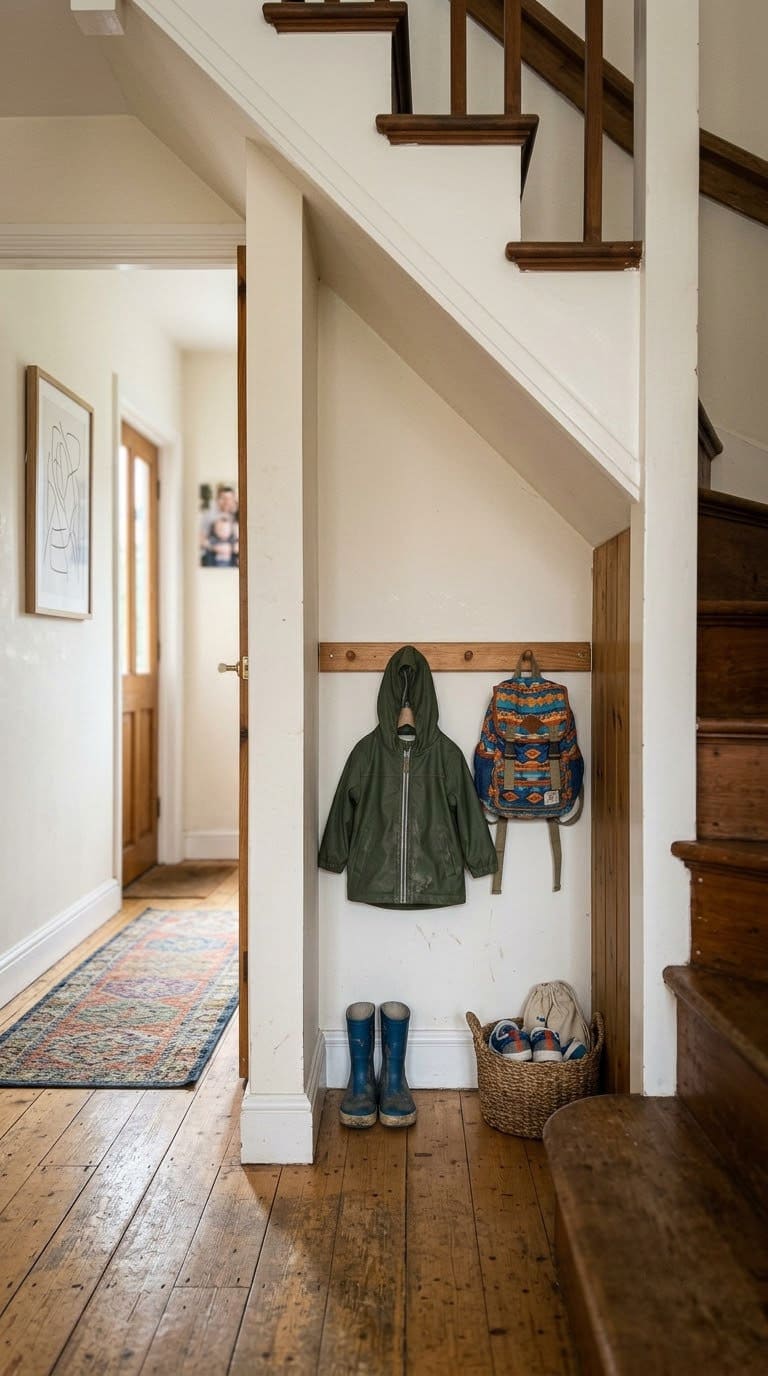
Gear needs its own rules. A low rail at about 36 to 42 inches lets a school-age child hang a coat and backpack without a step stool.
Use a rail, not hooks, if you can. Hooks poke at eye level, and a rail is safer near a running kid. Mount it into studs or use proper anchors, since a loaded backpack pulls hard.
Tier: Mid. For more ways to handle the door itself, this guide to closet door ideas is a good next read.
6. An Anchored Shelf Tower for the Tall End
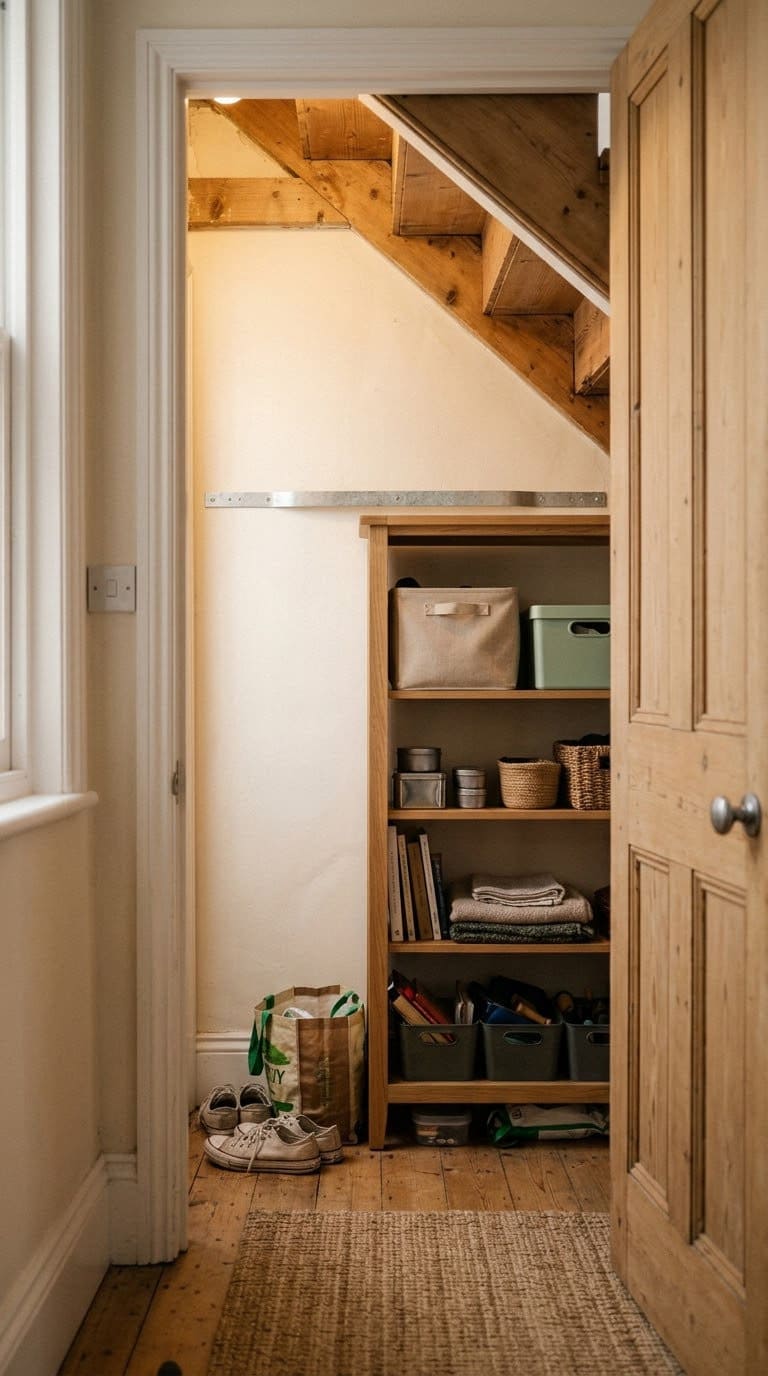
Shelves make the closet work, and shelves can also fall.
The U.S. Consumer Product Safety Commission counted 234 deaths from clothing storage unit tip-overs from 2000 to 2022, including 199 children. It also estimates about 84,100 emergency room injuries from 2006 to 2021, and it recommends anchoring furniture to the wall.
That number covers dressers, but the physics is the same for a loaded shelf. So anchor every tall unit into a stud, even a short one. Kids climb.
Put the heaviest things low, and keep the top shelf light. If you want this built in, that’s a Pro job, but a freestanding tower with wall straps is a Mid option.
7. A Scooter and Helmet Parking Bay Near the Door
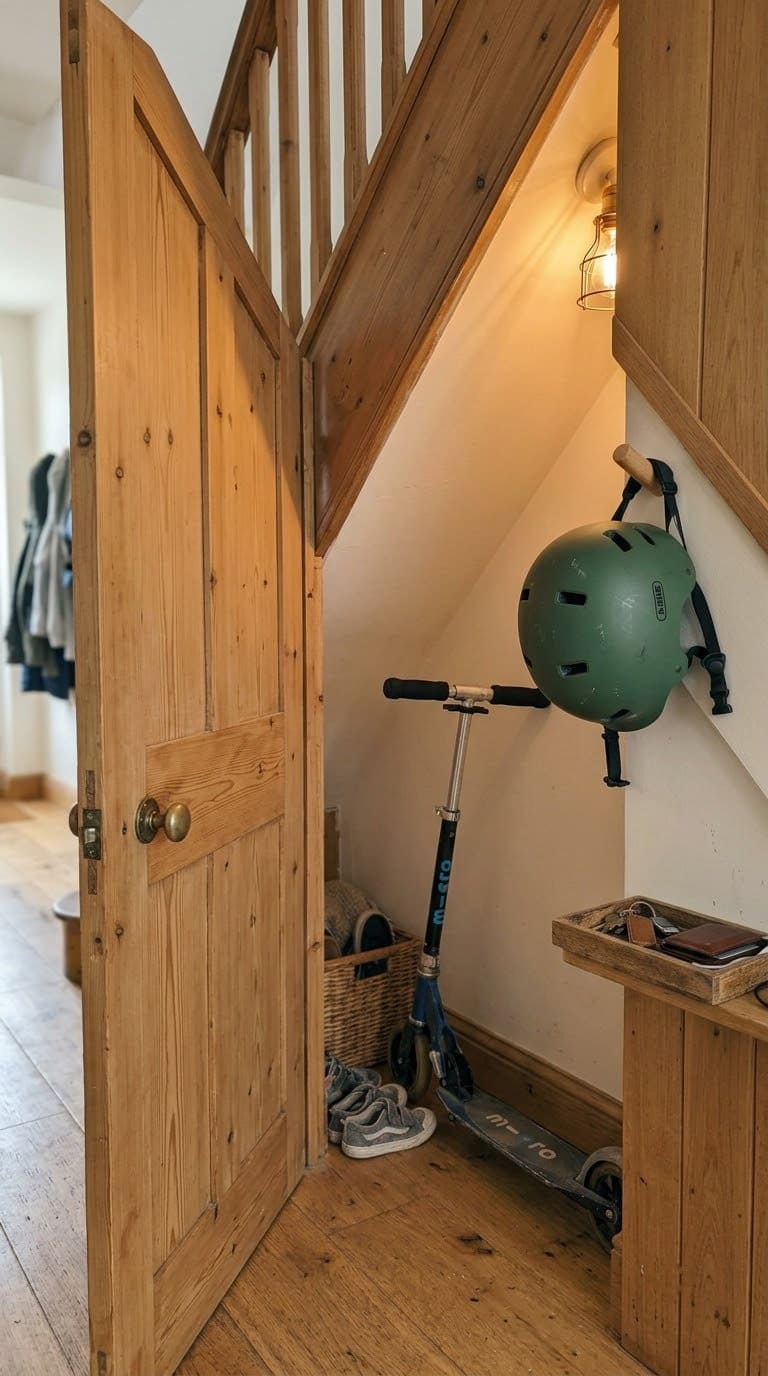
Scooters, bikes, and helmets take the most room. Give them the shallow end near the door, lying flat or hung on a wall hook, so nothing blocks the bins.
Add a small tray for helmets and a peg for each child. Kids put things back when the spot is obviously theirs.
Tier: Budget to Mid. If your scooter is electric, read idea 8 first.
8. A Safe Charging Spot (or No Charging at All)
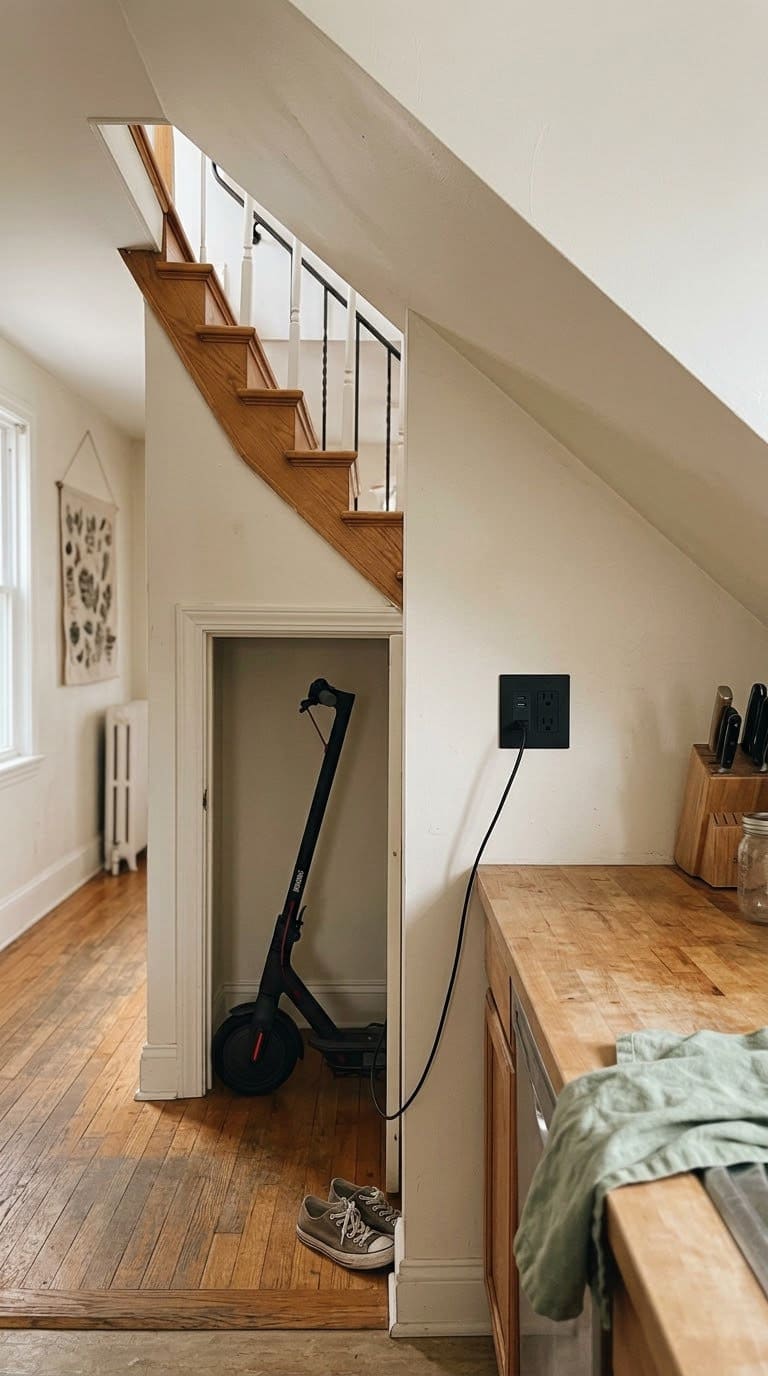
An electric scooter or hoverboard is a lithium battery on wheels. The CPSC says to always be present while charging and never charge while sleeping. It also says to use only the charger that came with the device.
Its data shows micromobility injuries rose 127 percent from 2017 to 2021, with fires among the top hazards, in its e-scooter safety release. So our rule is simple. Store the scooter in the closet, but charge it somewhere you’re awake and in the room, like a kitchen counter.
Tier: Budget. No outlet needed in the closet.
9. A Door That Can’t Pinch Little Fingers
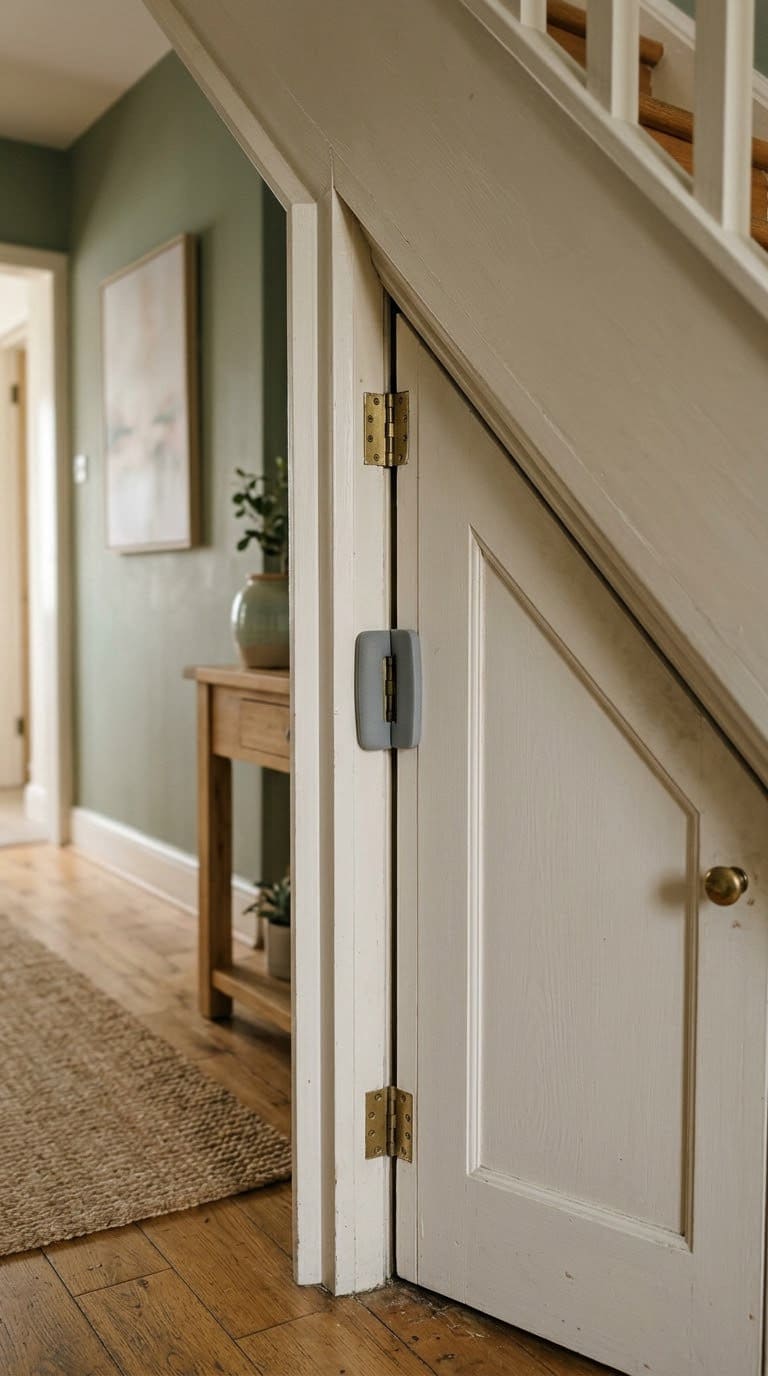
Doors hurt kids more than we think. Nationwide’s risk-management team notes that the hinge side of a door causes the most severe finger injuries, especially for children ages 1 to 2. Those injuries include crushed and fractured fingers.
The fix is cheap. Stick a hinge-side pinch guard on the door, or swap in a sliding or barn-style door. This overview of closet door types helps you pick one that fits an angled opening.
Tier: Budget for a guard, Mid for a new door. A bifold works less well here, since it has its own pinch points.
10. Motion-Sensor Light and a Cozy Peek-In Zone
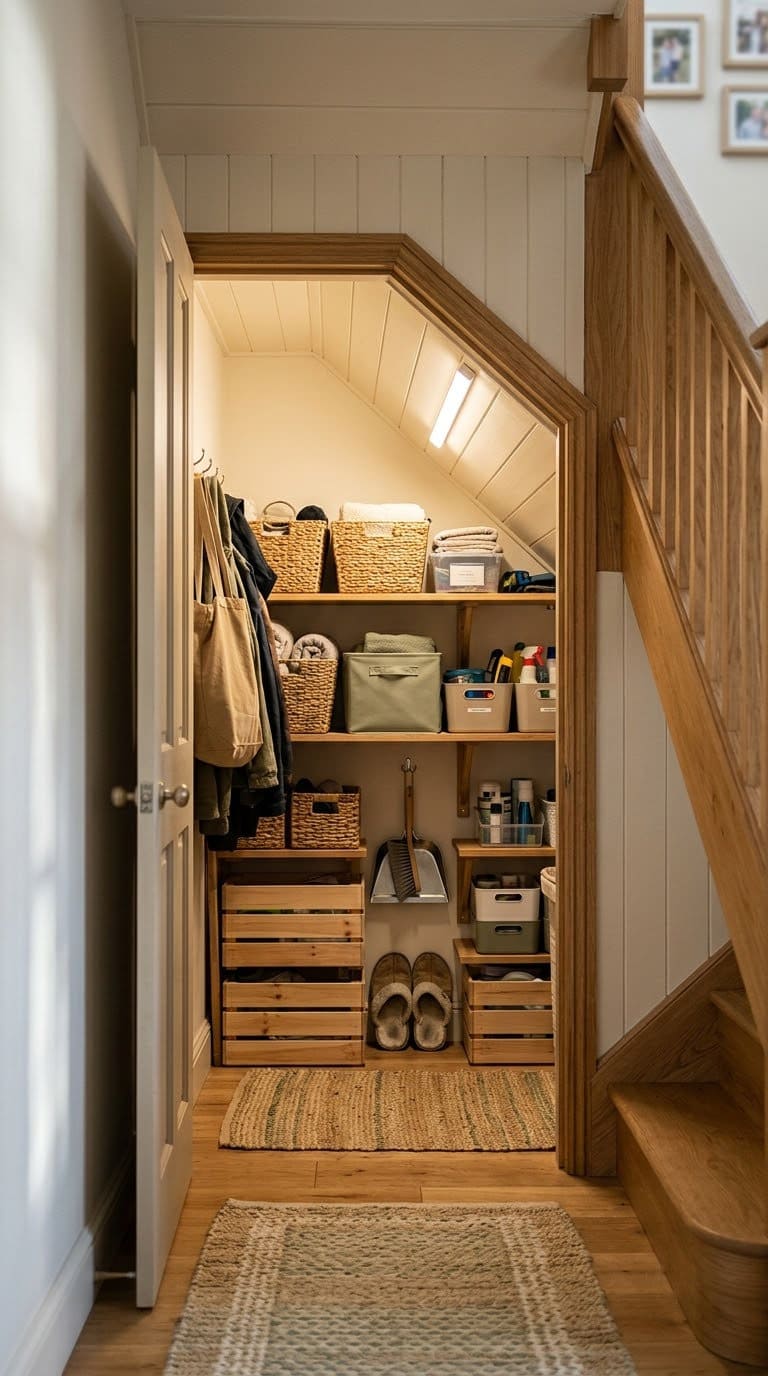
A dark closet stays a mess. A stick-on, battery-powered motion light comes on when the door opens, so kids can see what they’re doing.
Skip a plug-in strip, since a stair closet is easy to overload. We also like a small rug at the doorway so bare feet aren’t on cold floor. For lighting ideas in a bigger play space, see these playroom lighting ideas.
Tier: Budget.
What We Learned the Hard Way
Here’s what we’d tell a friend before they build. The first mistake is treating the closet like a playroom. Kids will drag toys out, and a closet with no floor space just makes the hallway a mess.
The second is forgetting the slope. We’ve seen tall shelves jammed under a low ceiling, so nothing fits. Measure the ceiling at three points before you buy a single shelf.
The third is skipping the anchor because “it’s only a small shelf.” Small shelves fall too.
The fourth is ignoring the door hinge. A closet door opens and closes all day, and the hinge gap is where the pinch happens. But kids also lean on doors, so pick one that swings smoothly and stays where you leave it.
What about clutter creep? Even a perfect closet fills up over a season. That’s why the every-three-months review from idea 4 matters more than any bin.
If there’s one thing worth doing differently, it’s building from the floor up. Design the bottom 3 feet for the child, then fill the rest.
Height Zones at a Glance
| Zone | Height from floor | What goes here | Who uses it |
|---|---|---|---|
| Kid zone | 0 to 36 in | Open bins, daily toys, low coat rail | Child alone |
| Shared zone | 36 to 48 in | Backpack rail, helmets | Child with reminders |
| Adult zone | 48 in and up | Art supplies, rotation bins, small parts | Adult only |
| Deep end | Tall side | Seasonal bins, spare gear | Adult only |
These heights are our own rule of thumb, not a standard. Adjust them to your child.
FAQ
Can you turn an under stairs closet into a toy closet?
Yes. Use open bins on the floor, higher shelves for art supplies, and a door that won’t pinch fingers. Check local code first, because an enclosed space under stairs may need 1/2-inch gypsum board on the inside.
How do you keep toys from taking over the closet?
Keep only a handful of favorites out and rotate the rest. Review the collection every three months and remove outgrown items. A one-in, one-out rule for new toys also helps.
Should you anchor shelves in a kids’ closet?
Yes. Anchor any tall shelf into a wall stud. The CPSC recommends anchoring furniture to the wall because tip-overs have killed and injured children.
Is it safe to charge an electric scooter in an under stairs closet?
We wouldn’t. The CPSC says to be present while charging and never charge while sleeping. Store the scooter in the closet and charge it in a room where you’re awake.
What is the best door for a kids’ closet?
A sliding or barn-style door has no swinging hinge gap. If you keep a regular door, add a hinge-side pinch guard. Bifold doors have their own pinch points.
Related Posts
Also see: toy storage projects, kid-proofing the house, and budget-friendly closet organizing.
Products We Recommend
This post contains affiliate links. We may earn a commission on qualifying purchases at no extra cost to you.
PHS Anti-Tip Furniture Anchors
Steel-cable anchor kit that screws into wall studs and holds up to 400 lb, for shelves and dressers
Shop Now
Cardinal Gates PinchNot Door Finger Pinch Guard
Peel-and-stick guard that covers the hinge-side gap on doors that open to 90 degrees
Shop Now
Rechargeable Motion Sensor Closet Light (39 LED)
Stick-on wireless light bar that switches on when the door opens
Shop NowNever miss an update — choose FarmFoodFamily as your preferred source on Google.
How it works: Tap the button below to open Google's settings page, then check the box next to FarmFoodFamily.
Tap the checkbox to turn it blue — that's how you know it's set.