19+ Easy Brick Fire Pit Ideas (Plus the Safety Rules You Need)
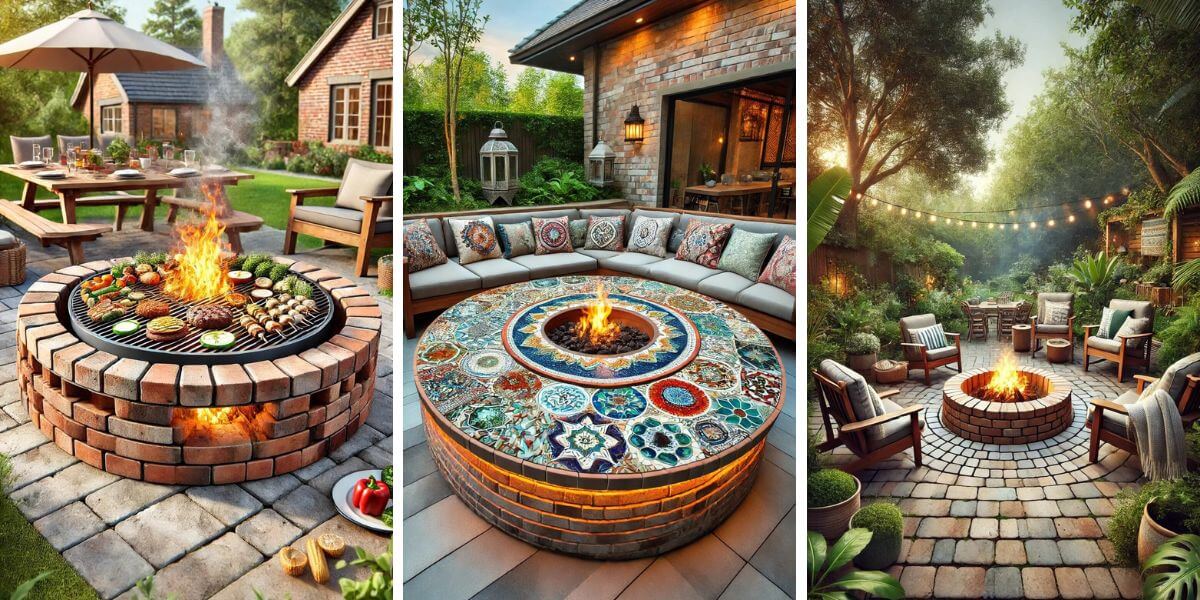
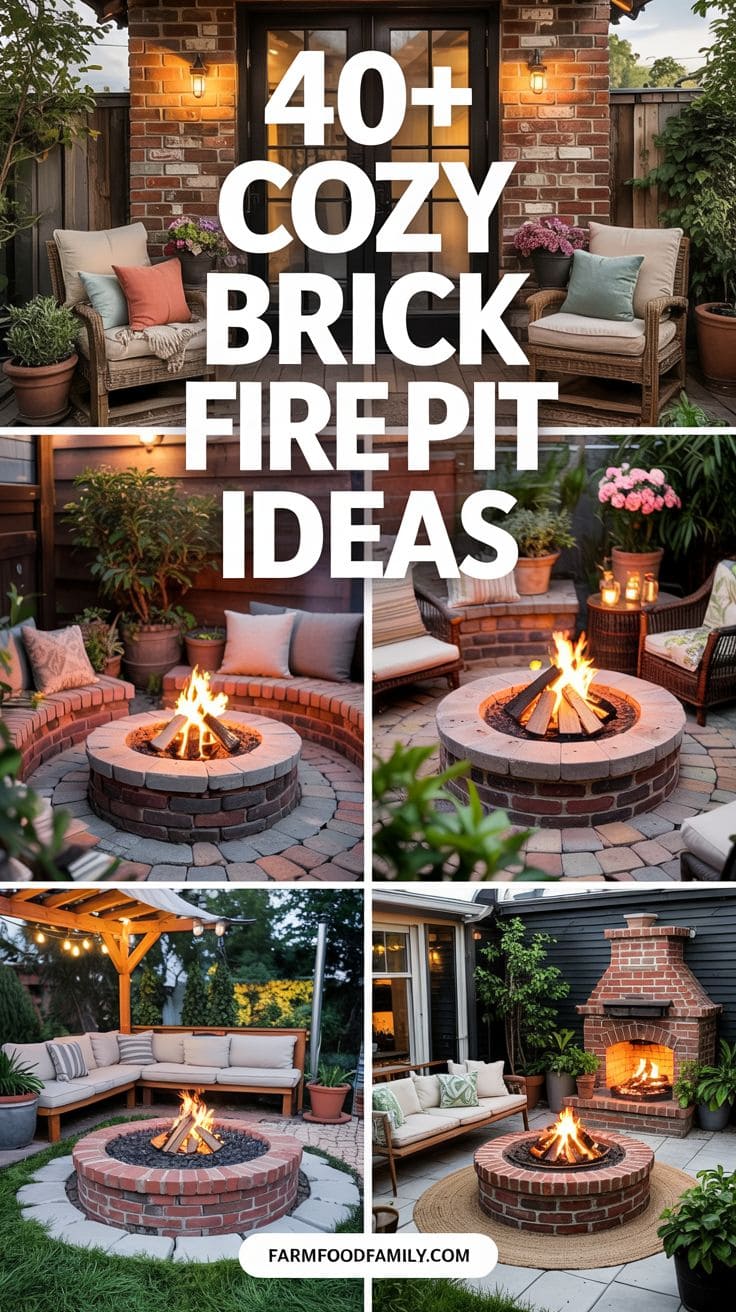
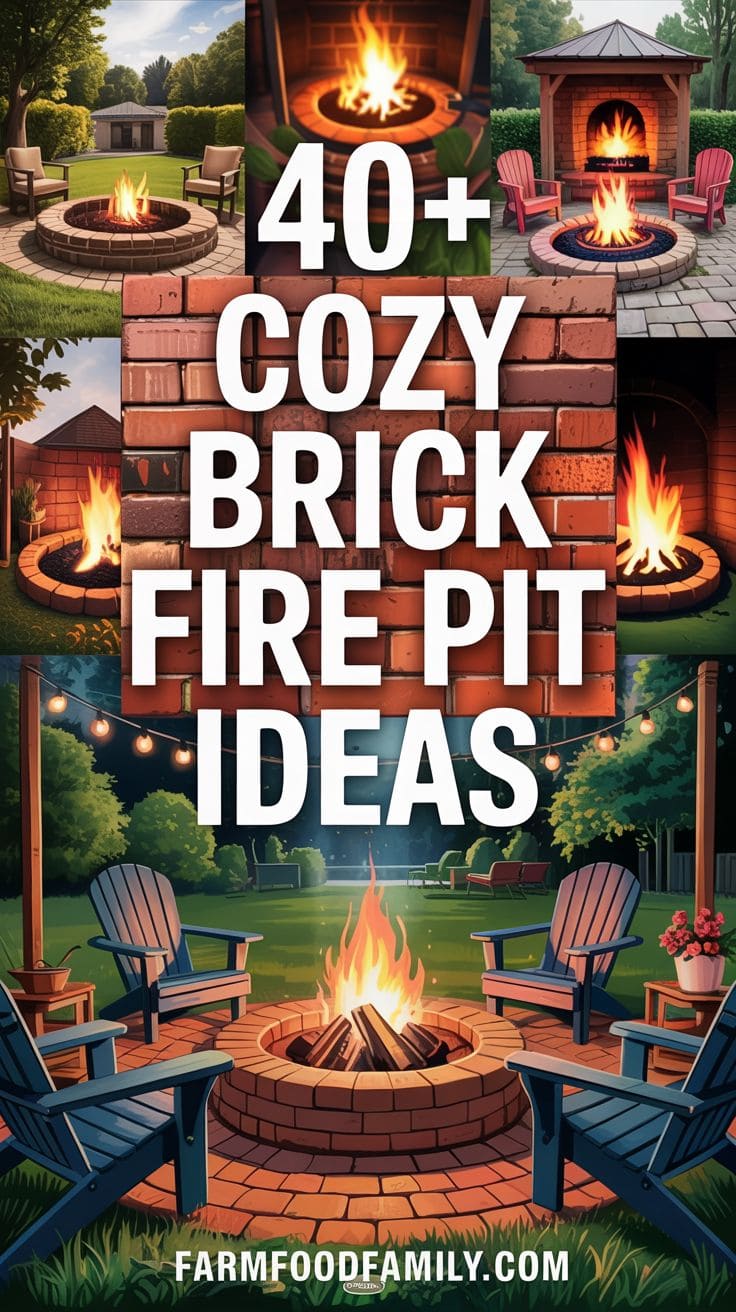
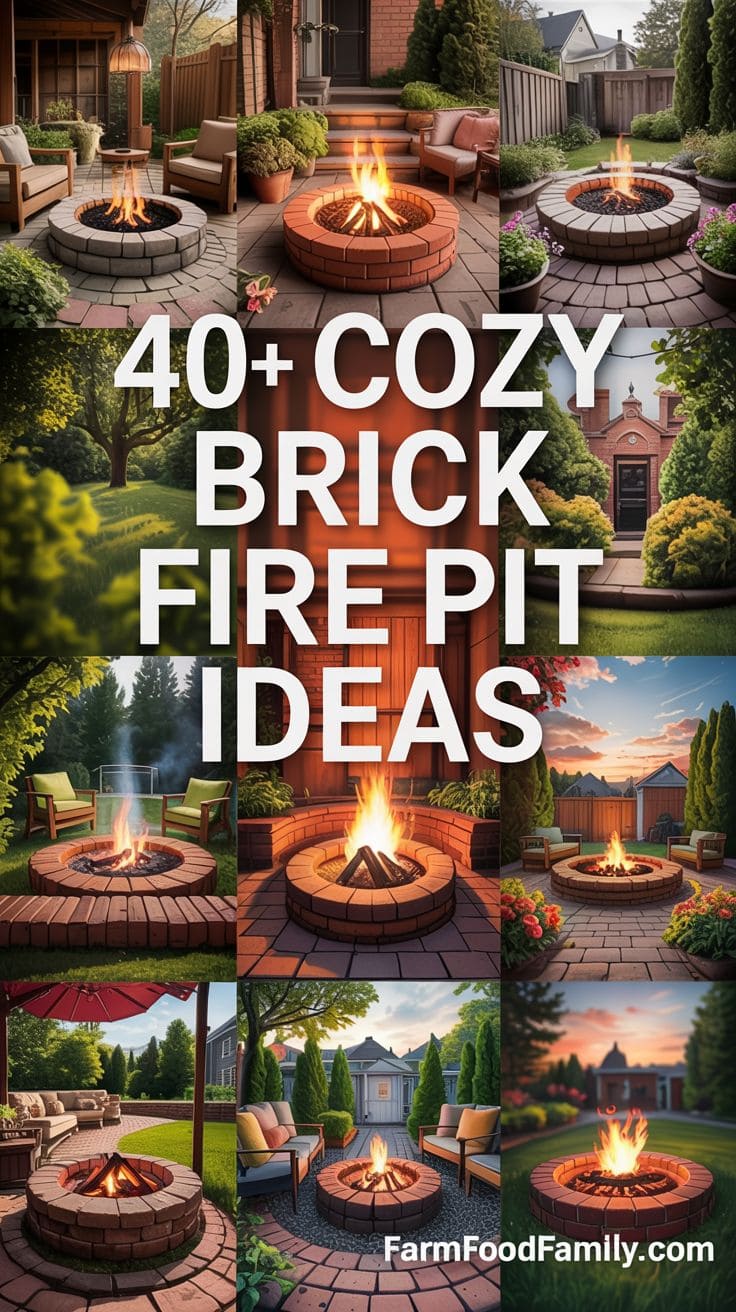
Brick fire pits offer a timeless, durable, and visually warm focal point for any outdoor space. The charm of brick lies in its rustic texture and rich color variations, which pair beautifully with both traditional and contemporary landscape styles. Beyond their aesthetic appeal, bricks are heat-resistant and long-lasting, making them a safe and sensible choice…

Never miss an update — choose FarmFoodFamily as your preferred source on Google.
How it works: Tap the button below to open Google’s settings page, then check the box next to FarmFoodFamily.
Tap the checkbox to turn it blue — that’s how you know it’s set.
Brick fire pits offer a timeless, durable, and visually warm focal point for any outdoor space. The charm of brick lies in its rustic texture and rich color variations, which pair beautifully with both traditional and contemporary landscape styles.
Beyond their aesthetic appeal, bricks are heat-resistant and long-lasting, making them a safe and sensible choice for fire features.
These brick fire pit ideas allow homeowners to customize layouts and finishes that fit seamlessly into their space.
1. What actually keeps a brick fire pit safe
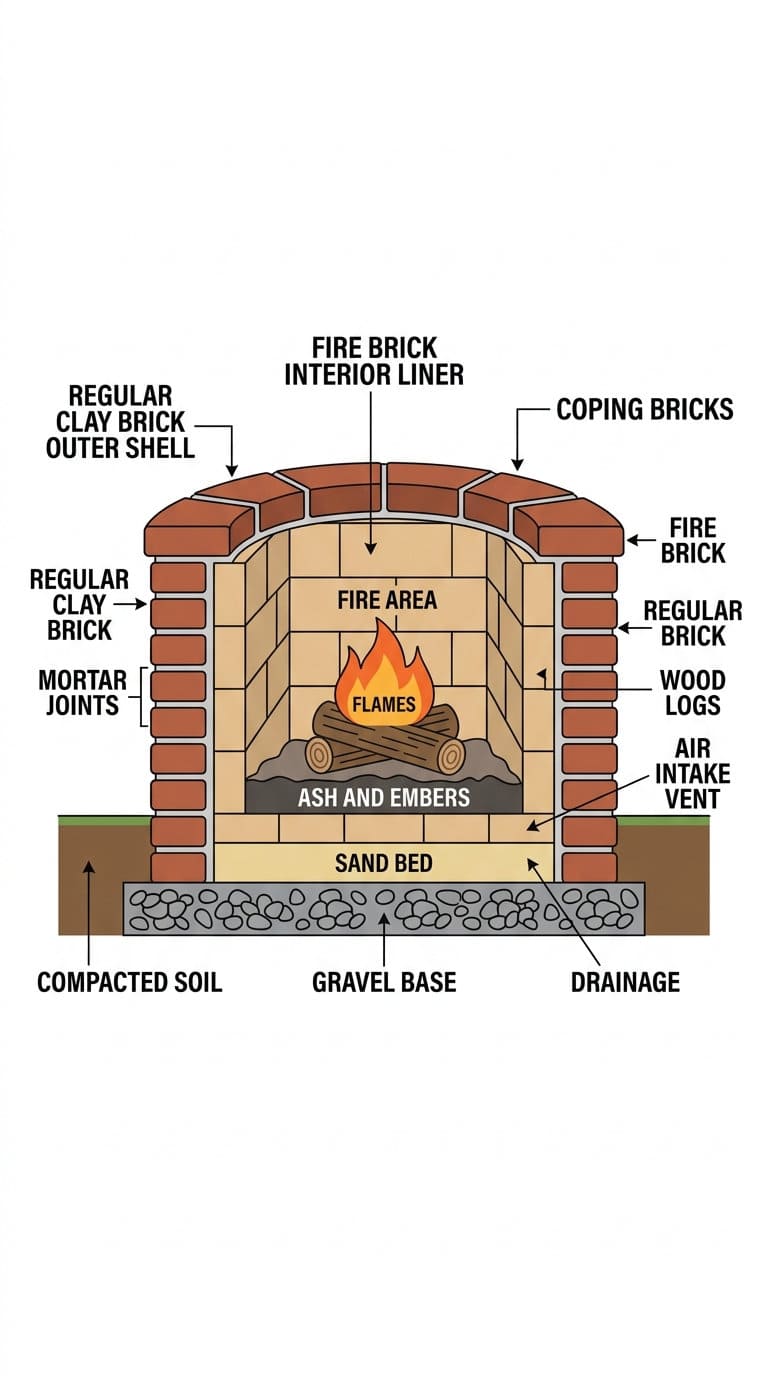
Start with the brick itself, and specifically where each type goes. Fire brick (firebrick) is made from high-alumina refractory clay, dense and low-porosity, rated to handle temperatures over 2,500°F, while regular clay brick or concrete block is porous and only reliably handles around 1,200°F with no engineered resistance to thermal shock.
The failure mechanism is specific and real: regular brick absorbs moisture from rain and humidity, and when that trapped moisture gets heated it flashes to steam and builds internal pressure, cracking, spalling, or in some cases popping the brick outright, concrete block and pavers have the same problem plus tiny internal air voids that expand fast under heat.
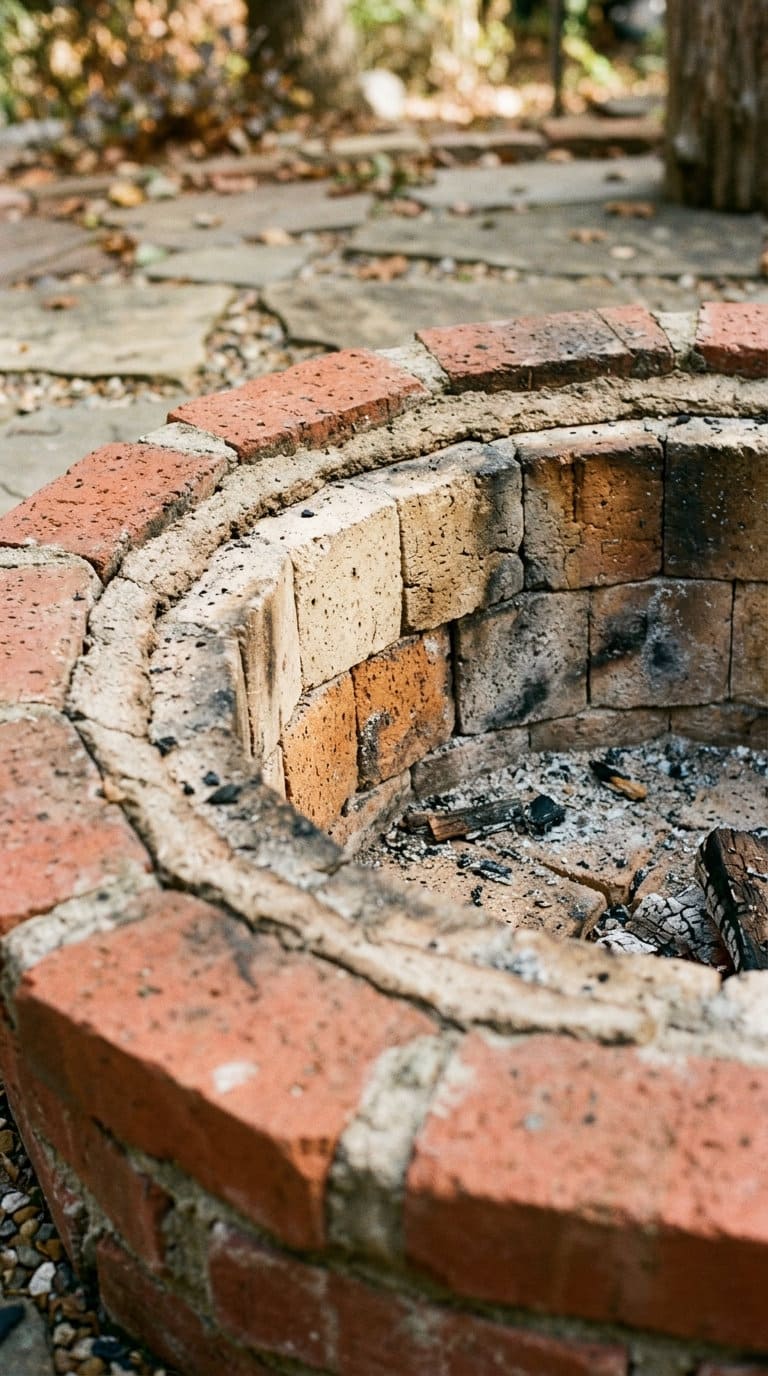
The practical rule: the outer shell of a brick fire pit can reasonably use standard clay brick since it isn’t in direct flame contact, but the interior firebox liner specifically needs fire brick or a refractory-mortar-jointed liner.
Answer 4 quick questions and get matched to the exact fix for your yard — drainage, budget, layout, or something else entirely.
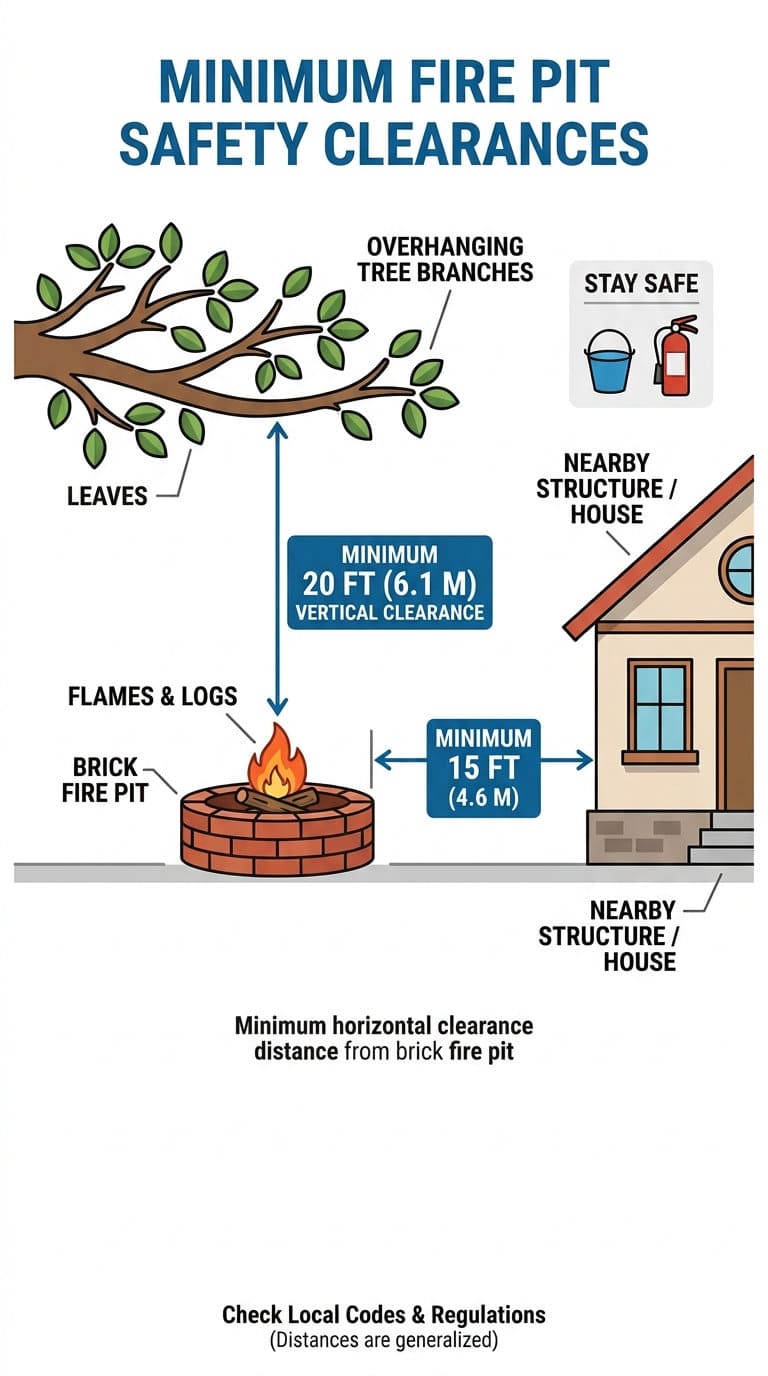
Take the Free QuizClearance is the next real safety variable, and it’s not just a suggestion. Mark McCullough, a mason on This Old House and Ask This Old House and owner of MJM Masonry near Boston, puts it plainly: “Make sure the spot is at least 10 feet from anything that’s combustible, including overhead tree branches,” and calls a spark screen an essential safety feature, not an optional accessory.
Actual clearance rules vary by jurisdiction rather than one fixed national number, commonly running 10 to 25 feet from structures, with separate setbacks from property lines, overhanging branches, and power lines, check your local fire code or ordinance before finalizing a spot.
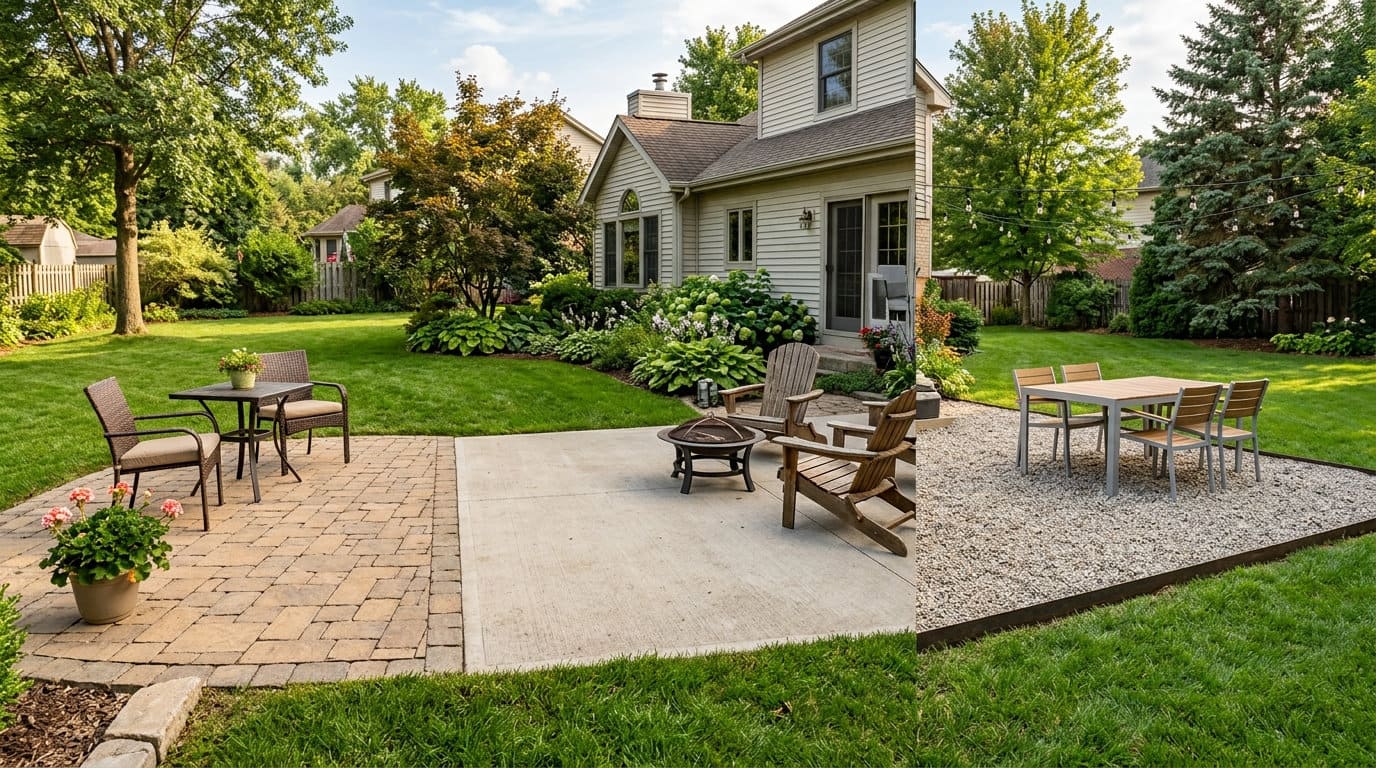
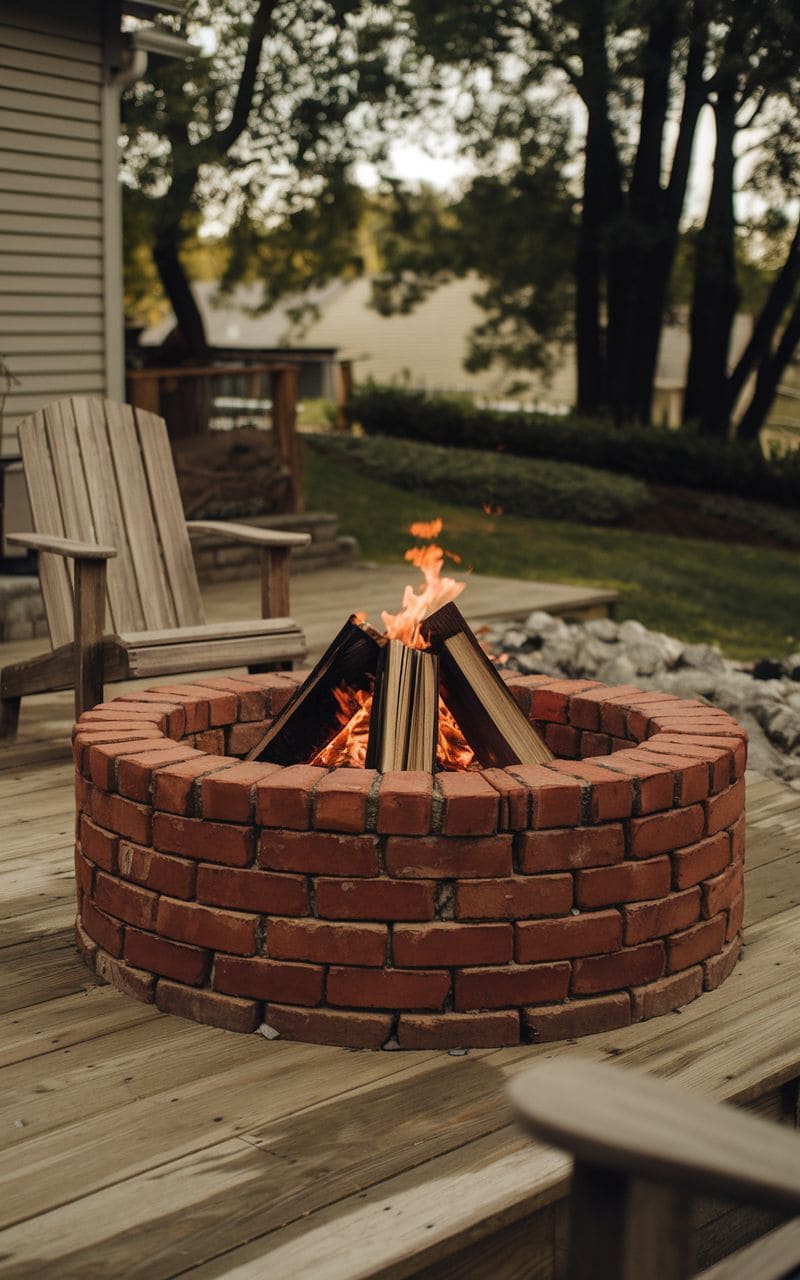
What’s underneath the brick matters just as much as the brick itself. A fire pit needs a non-combustible base 2 to 6 inches deep, sand, gravel, lava rock, or concrete pavers, some sources specify a 4-inch minimum. Building directly on grass or soil is a real hazard, unprotected ground can’t handle sustained heat or contain sparks, and a wood deck underneath is a direct fire-spread risk even when the fire pit shell itself is brick, if you’re set on a deck, that combination needs its own specific safety approach, not just “brick on top of wood and hope.”
One more real distinction worth knowing before you build: a portable fire pit (a store-bought bowl, typically 3 feet or less across) is generally exempt from a building permit but still has to follow local setback distances and burn bans, while a permanent, built-in masonry fire pit almost always needs a permit and has to meet foundation and drainage requirements. Gas or propane fire pits, portable or permanent, are frequently exempt from wood-burning burn bans specifically because they don’t throw embers or sparks.
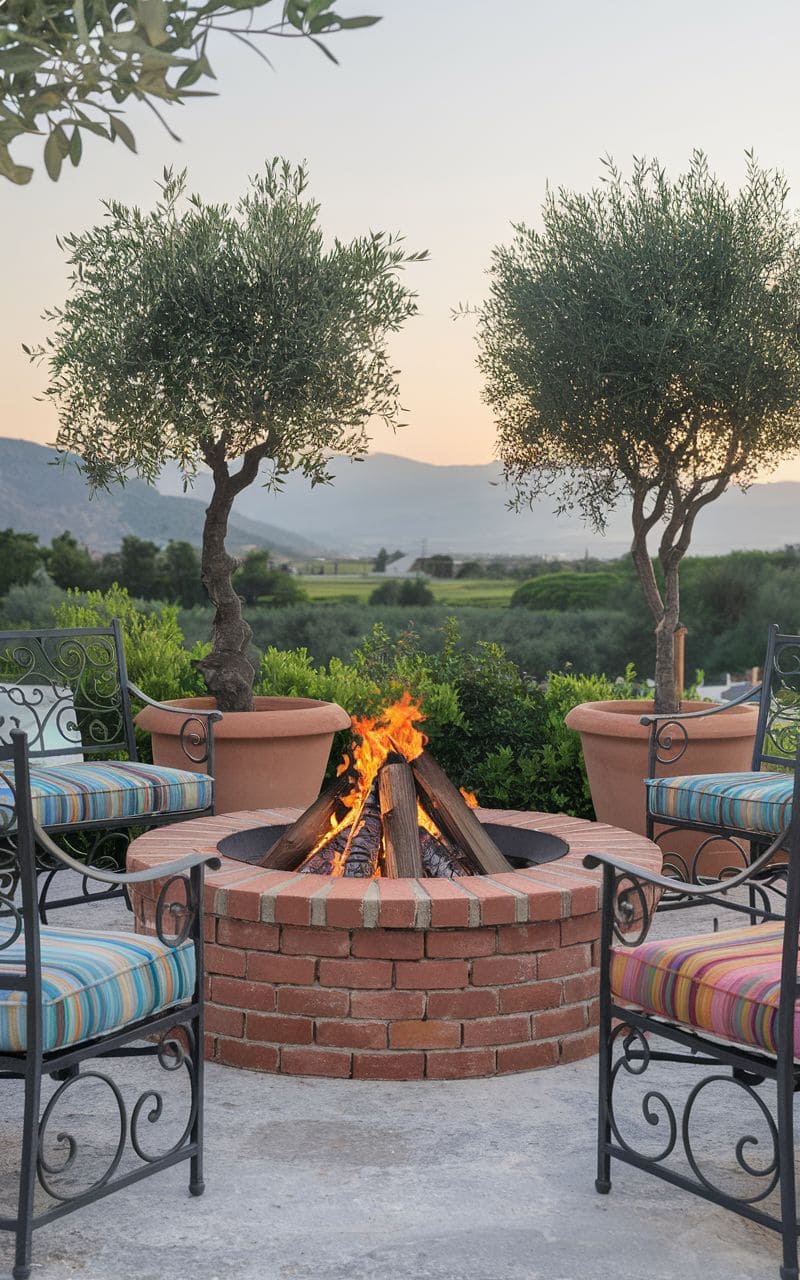
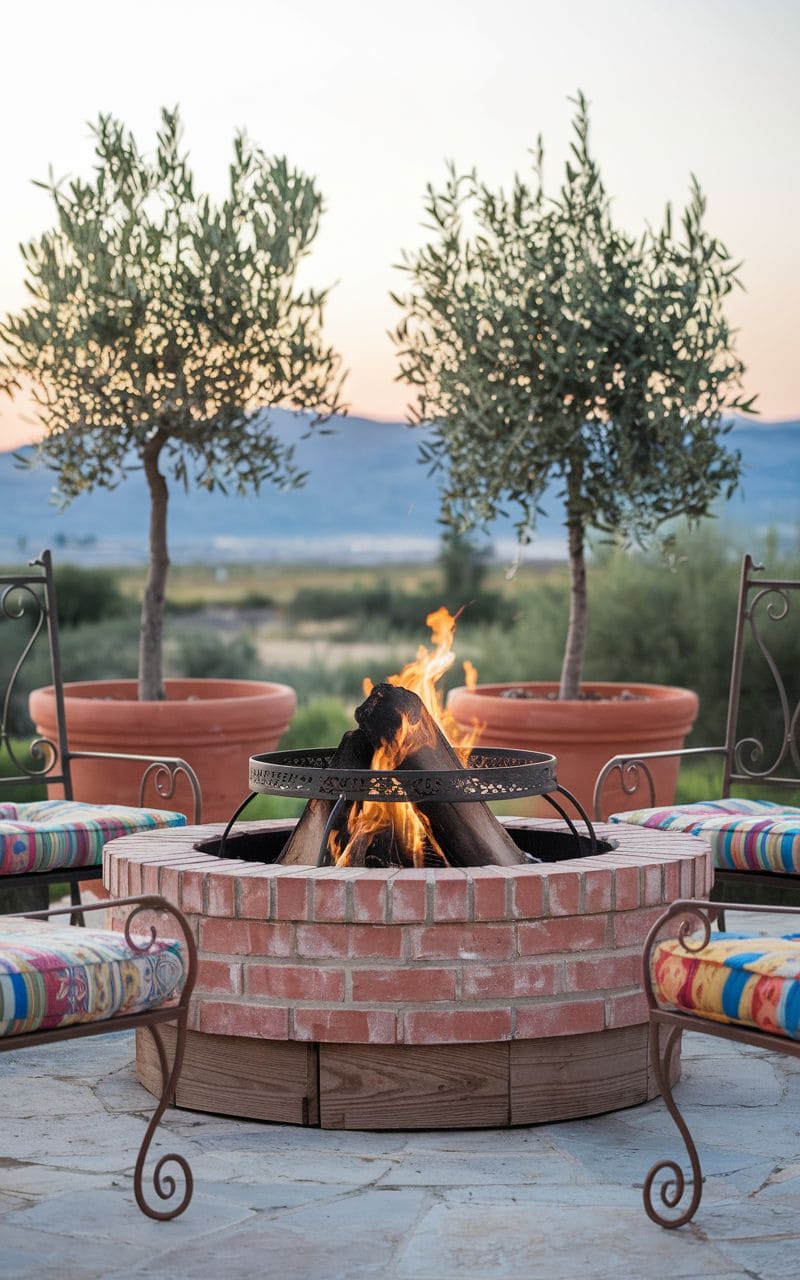
With the real ground rules covered, here are 19 ways to build one.
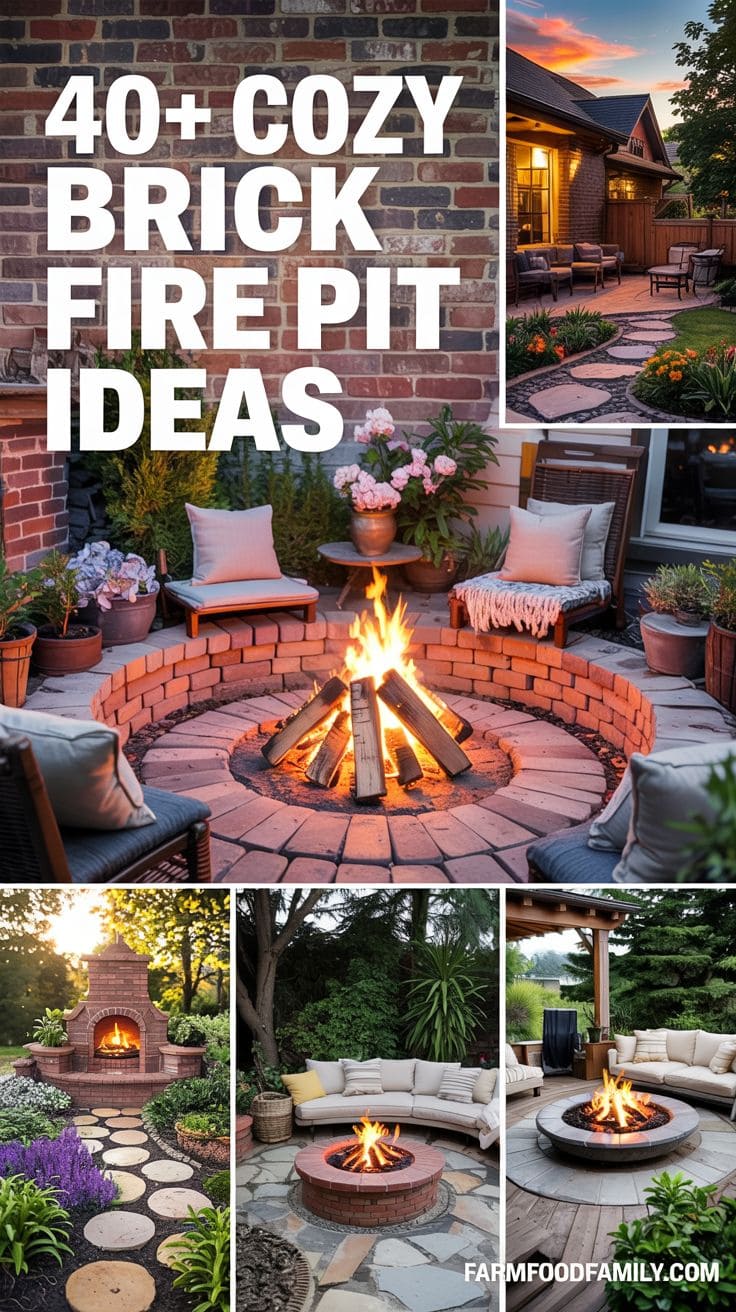
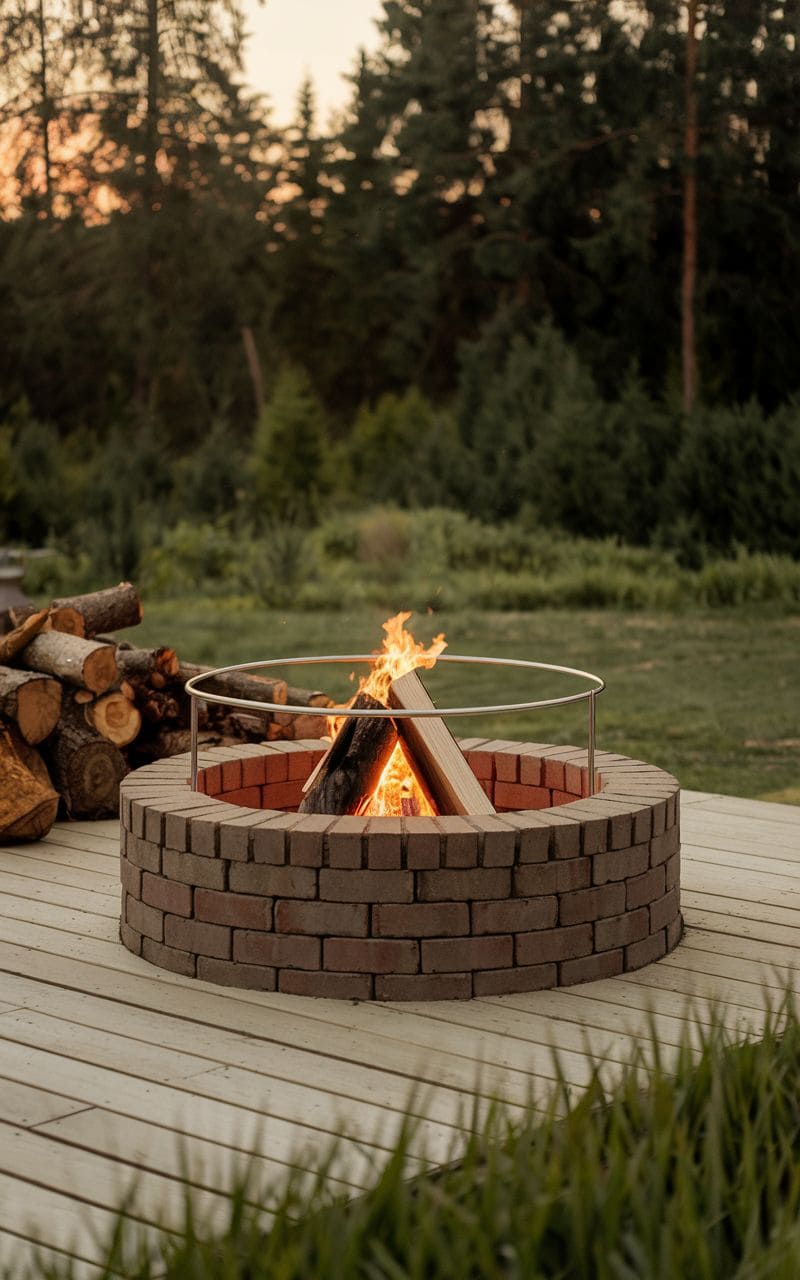
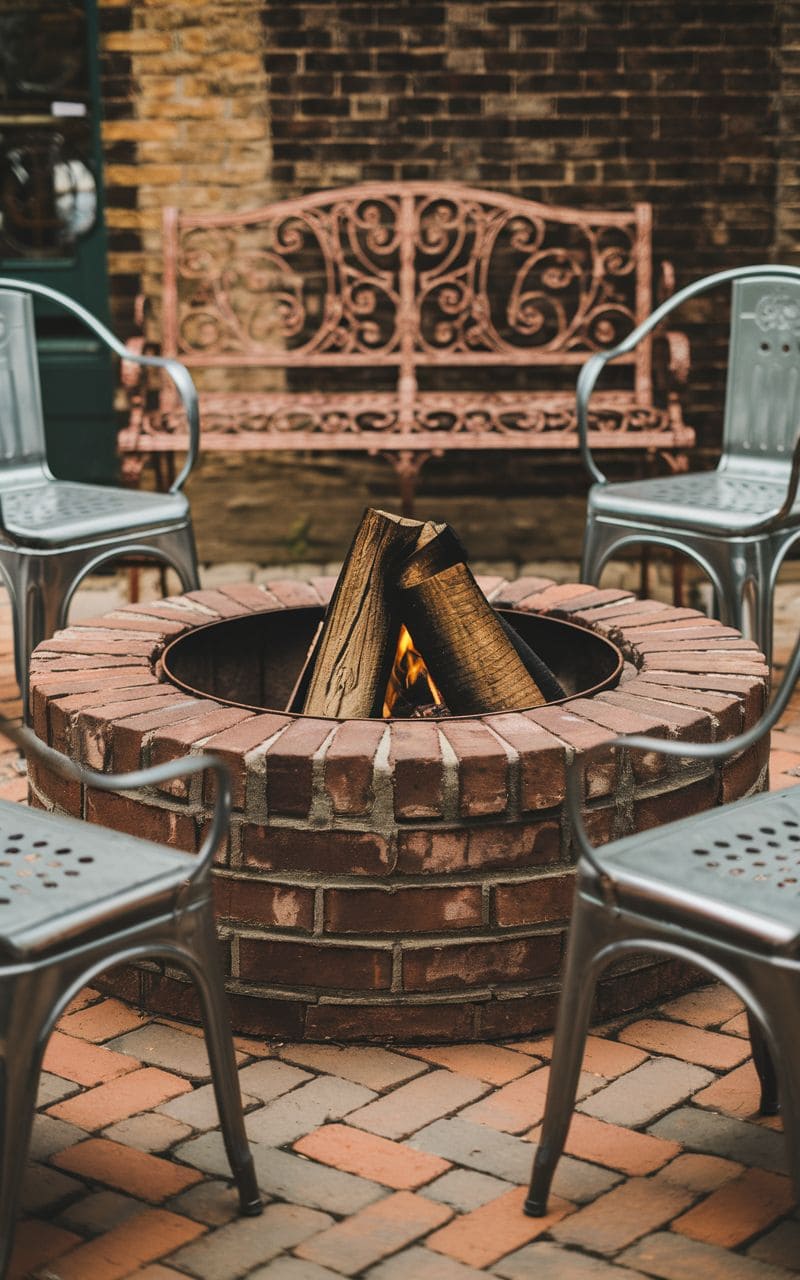
1. Classic Round Brick Fire Pit with Gravel Base
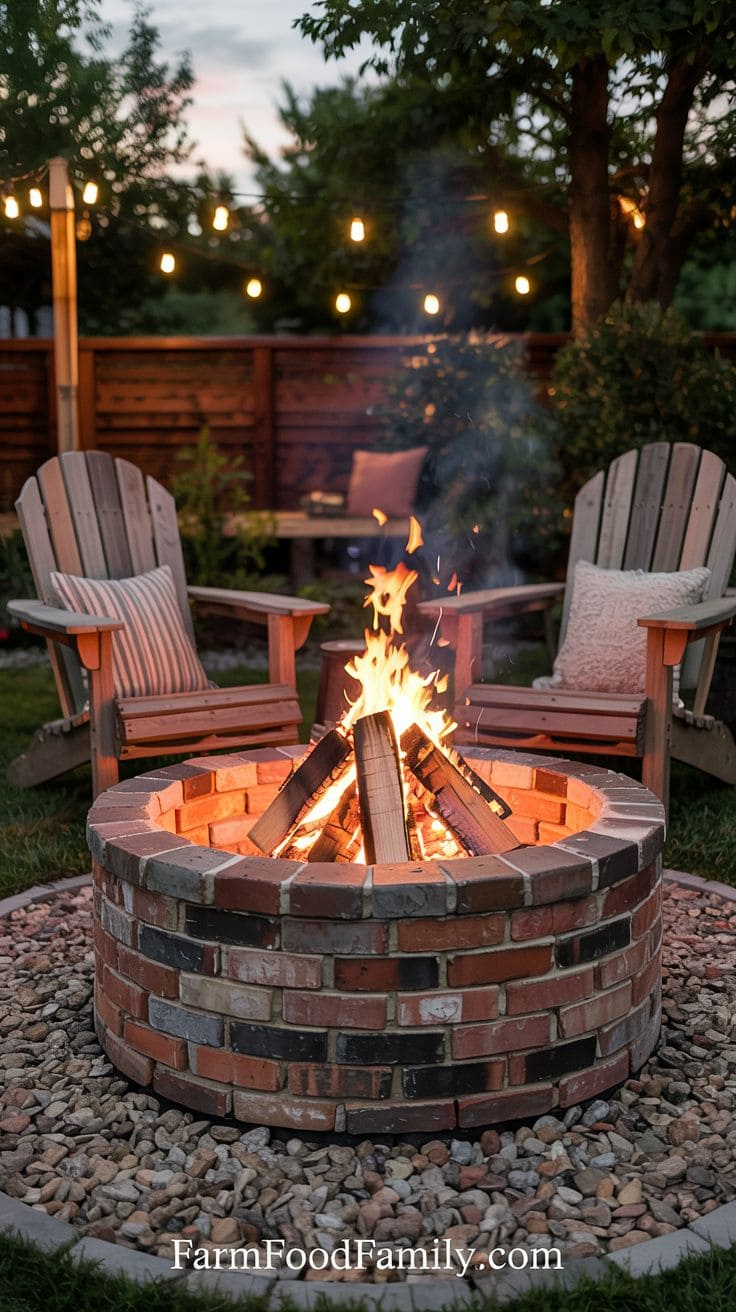
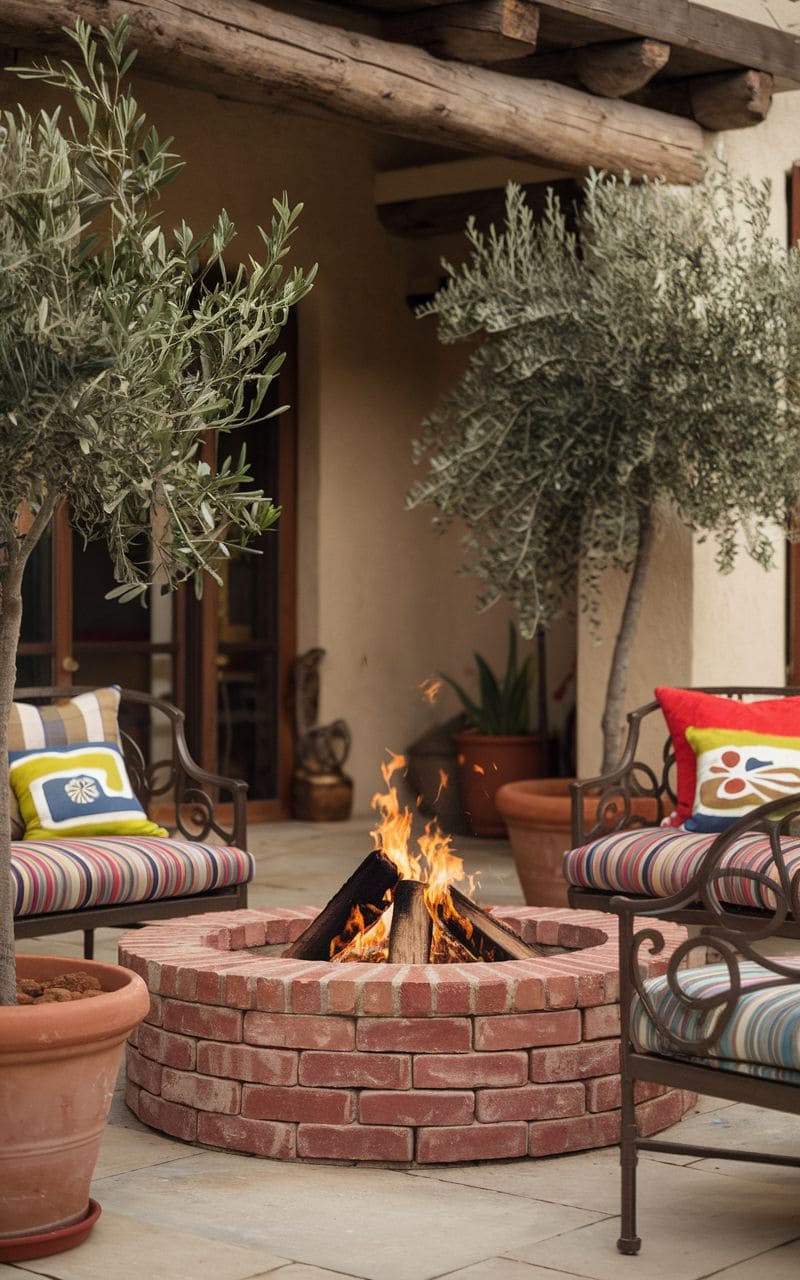
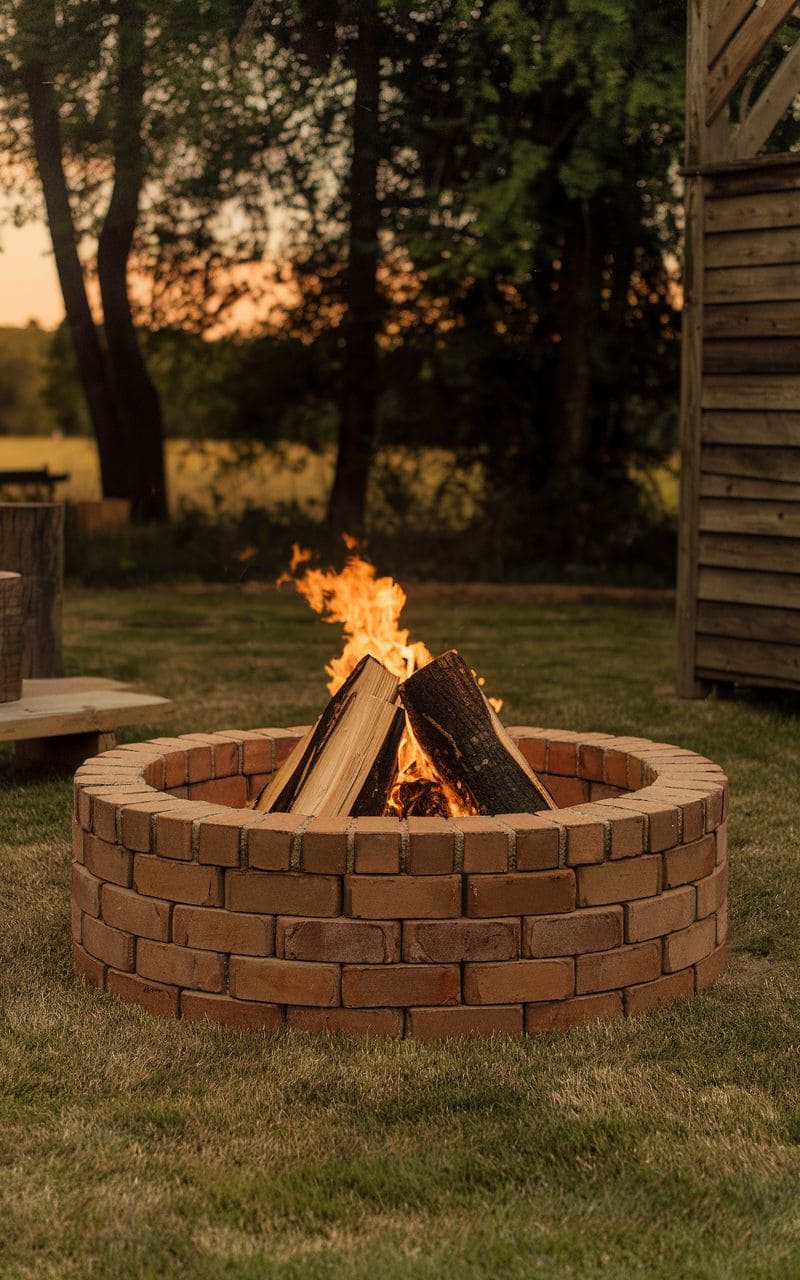
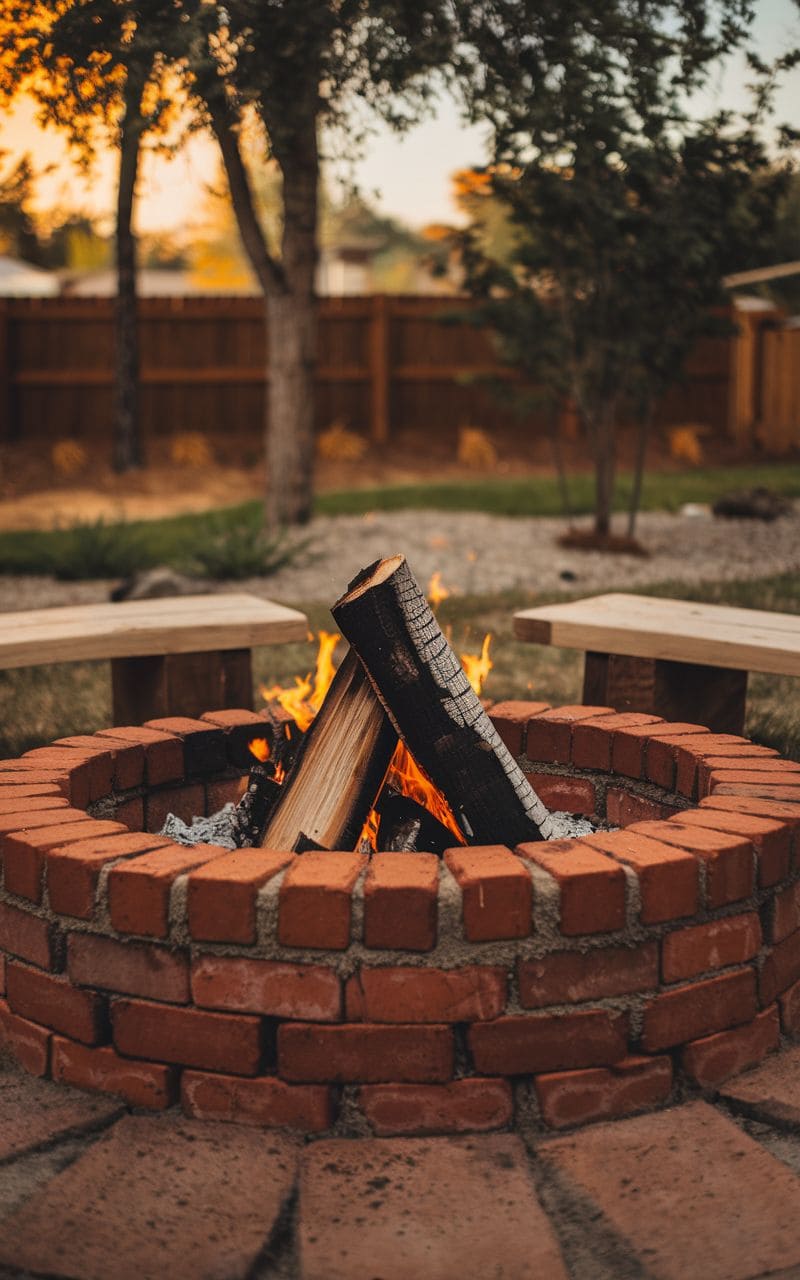
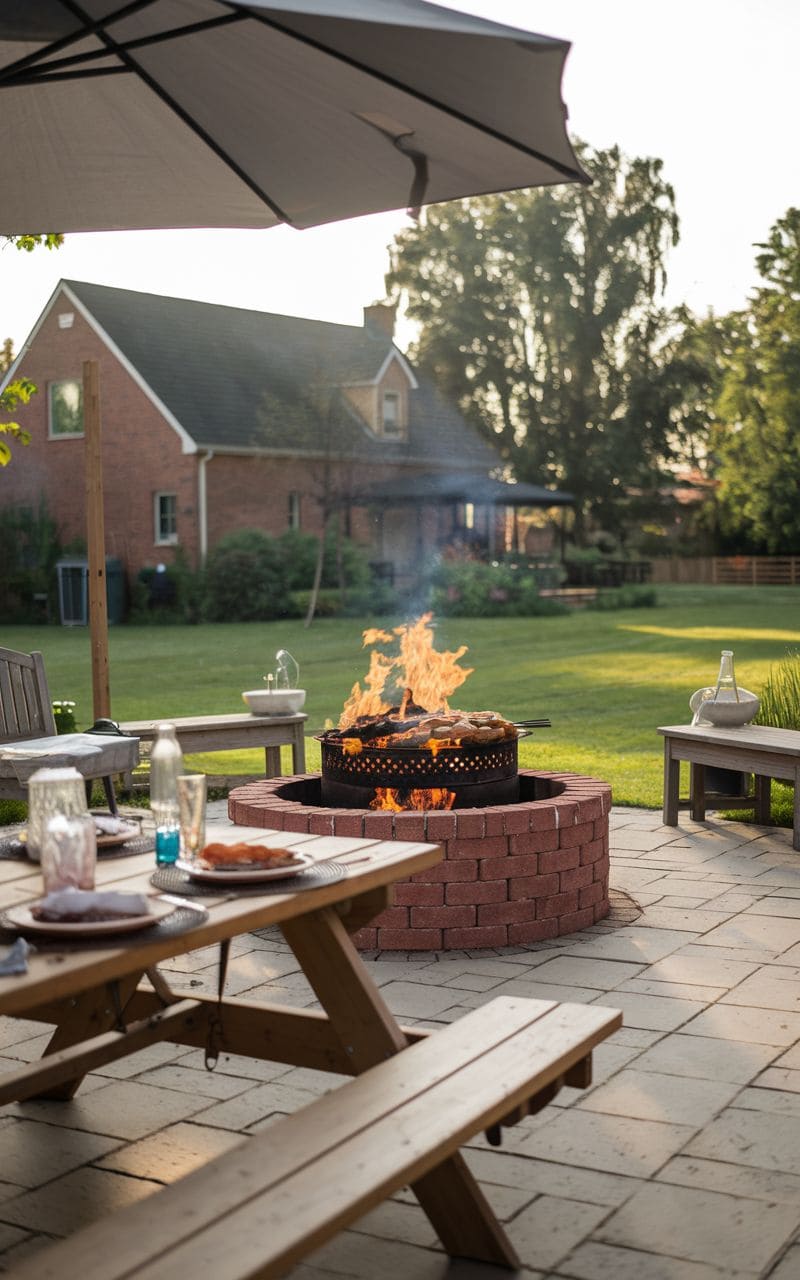
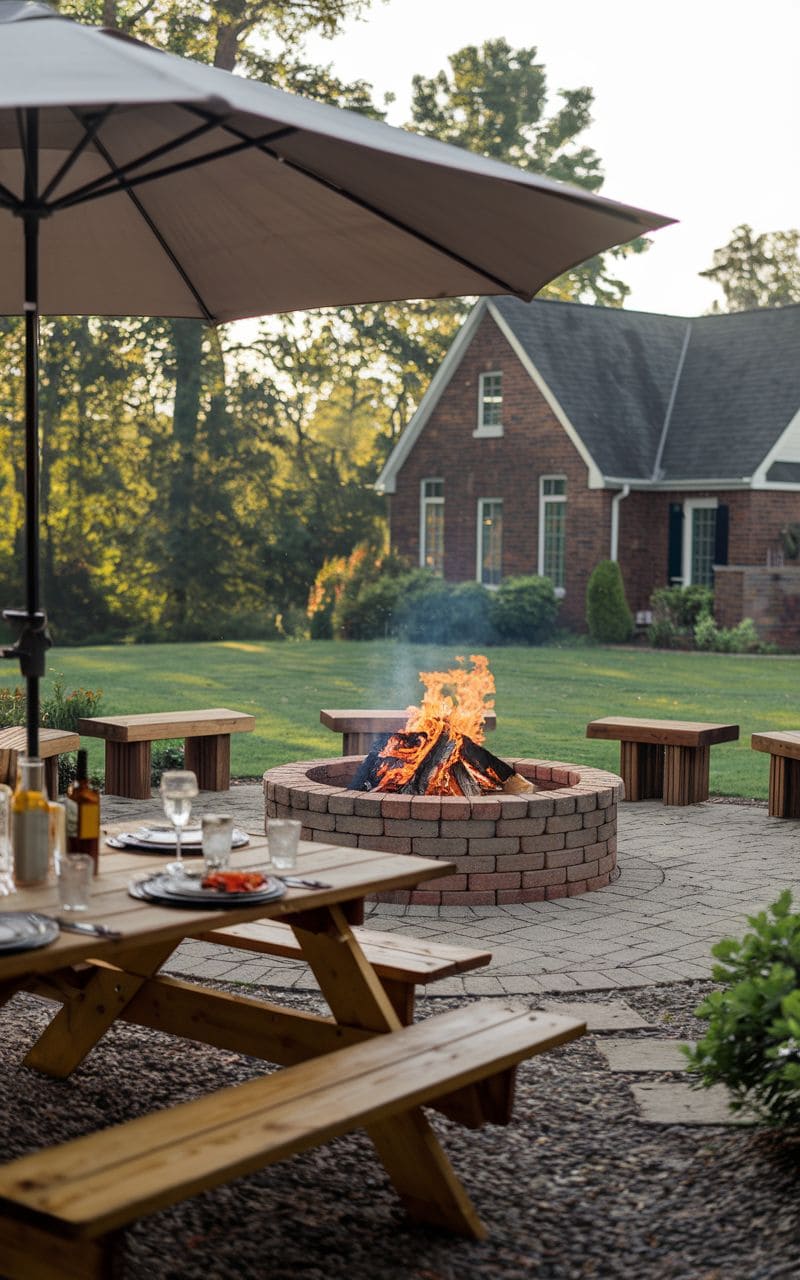
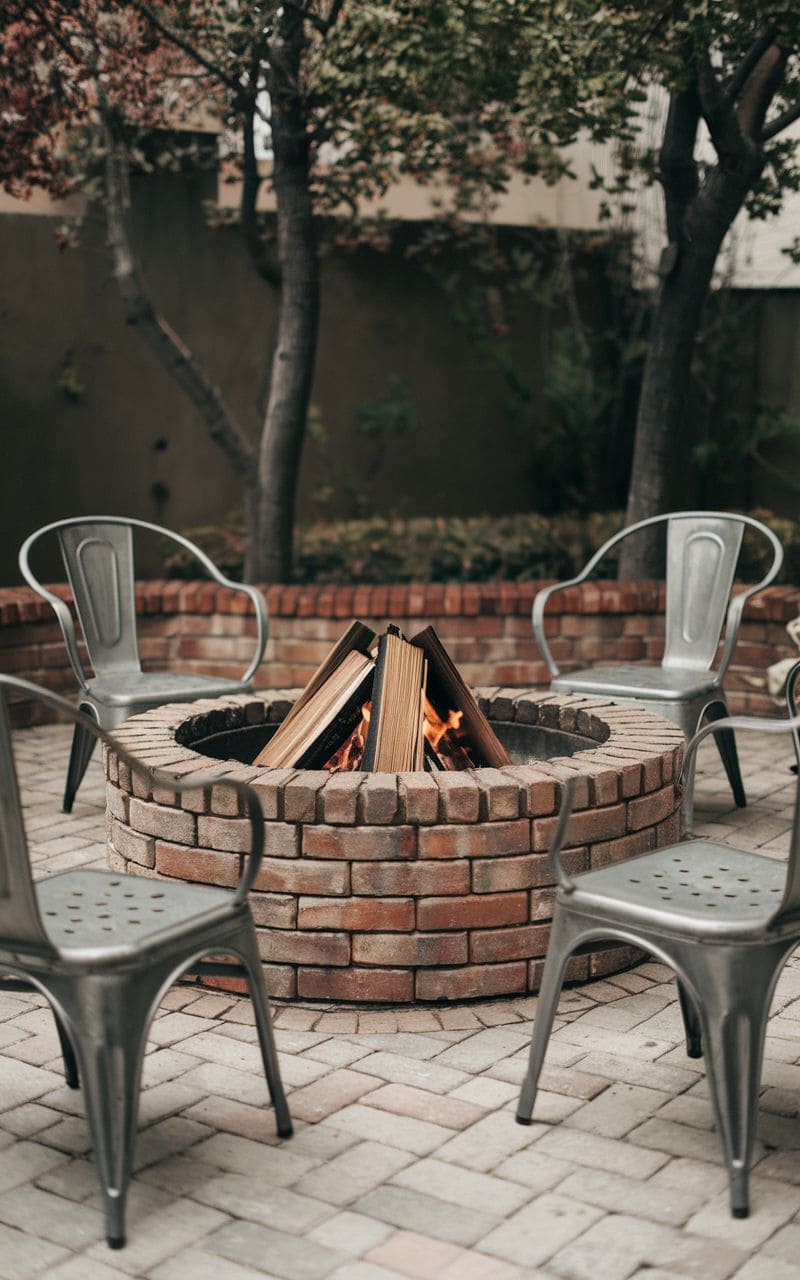
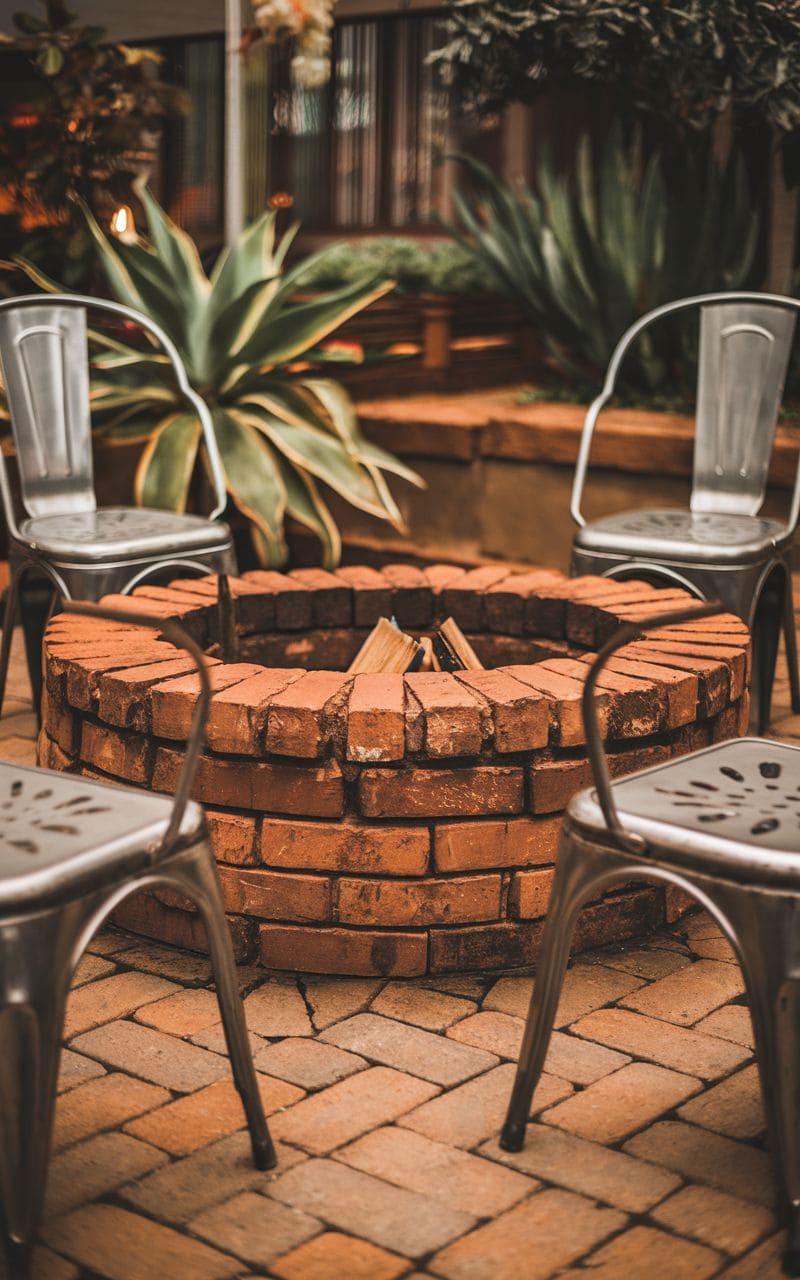
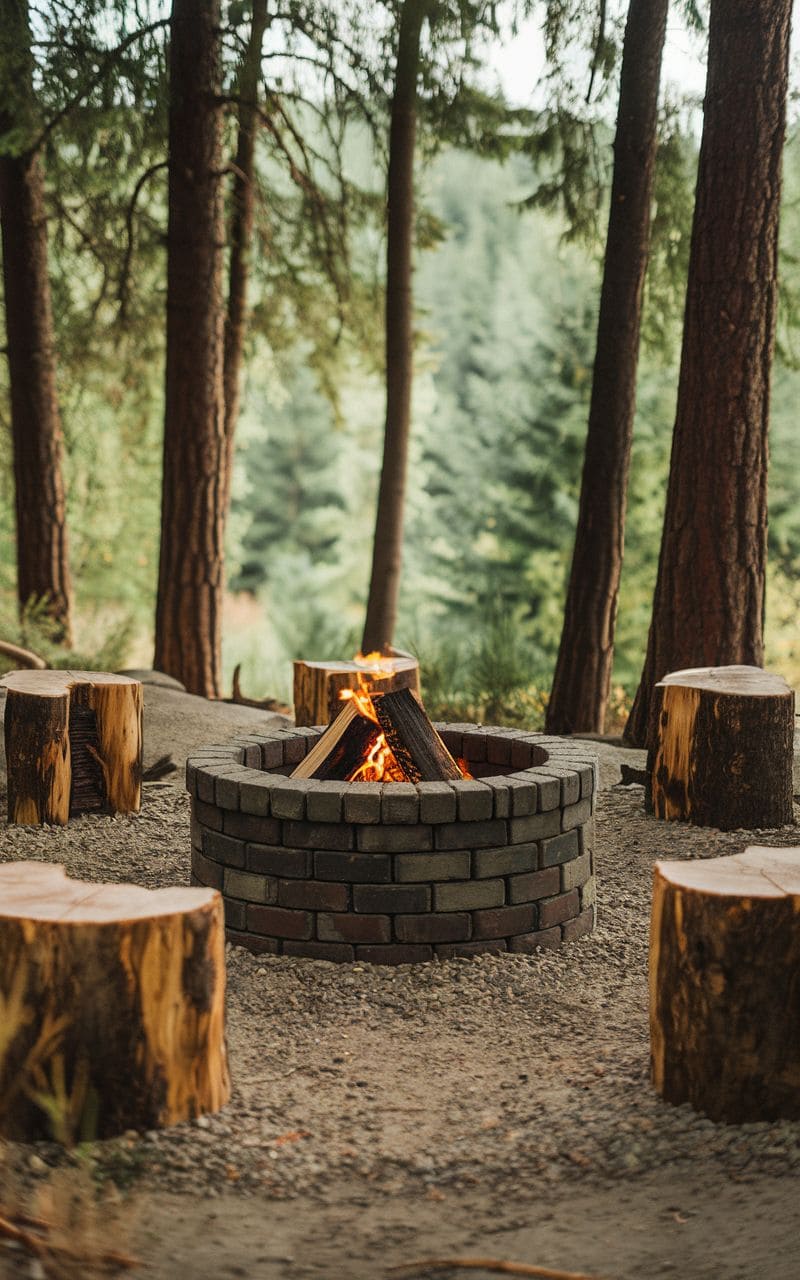
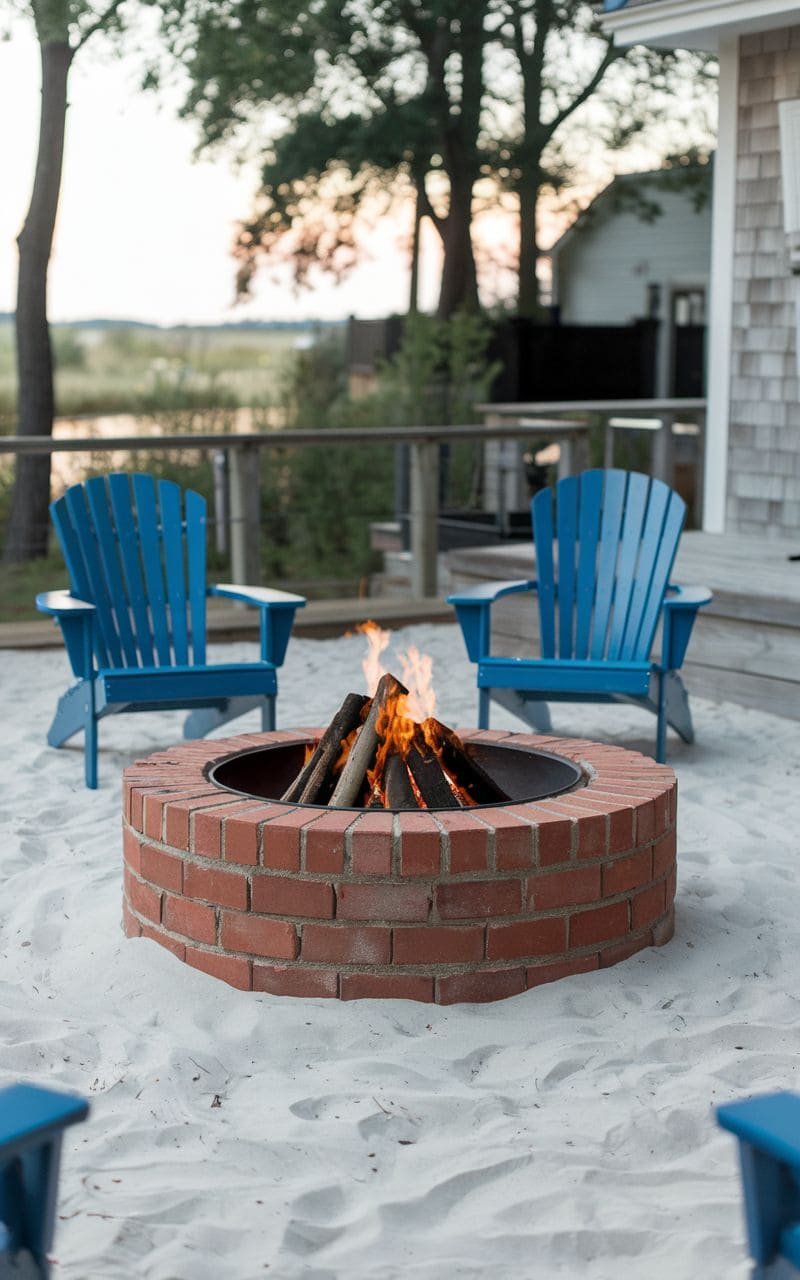
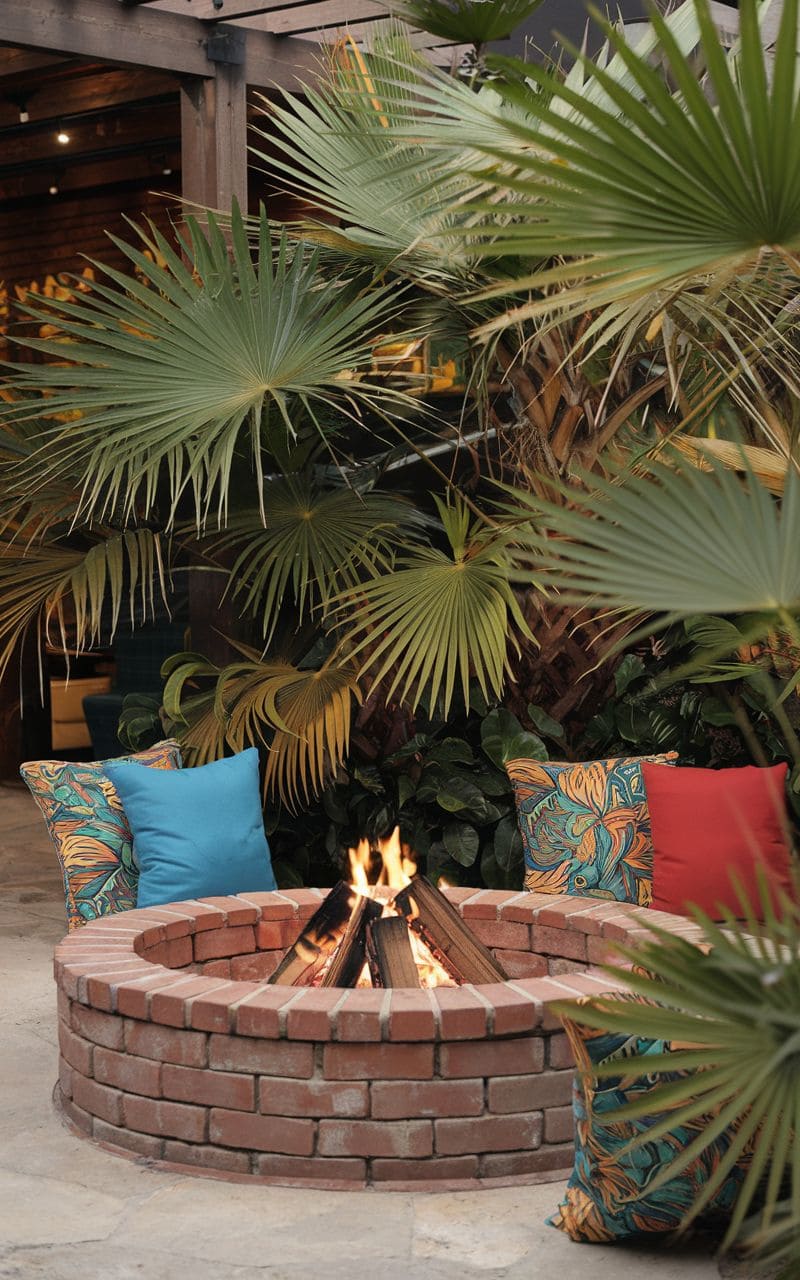
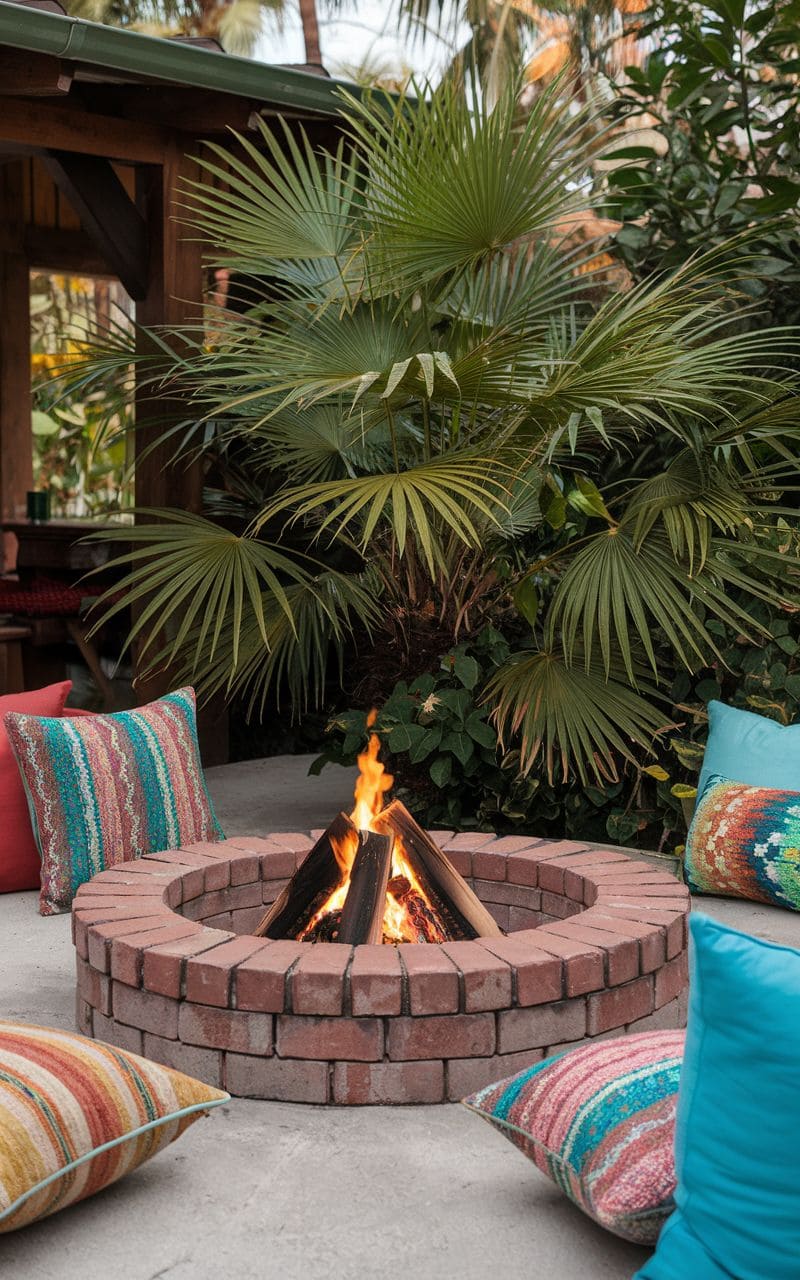
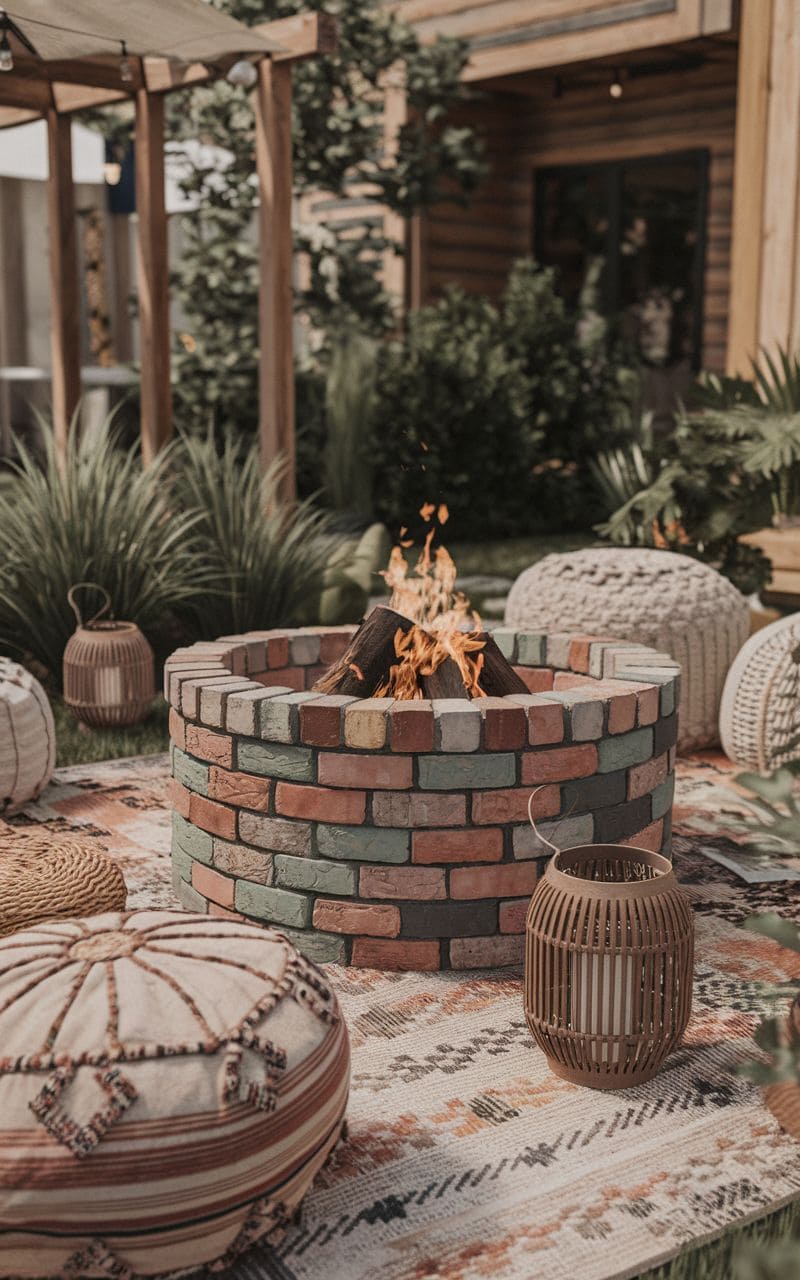
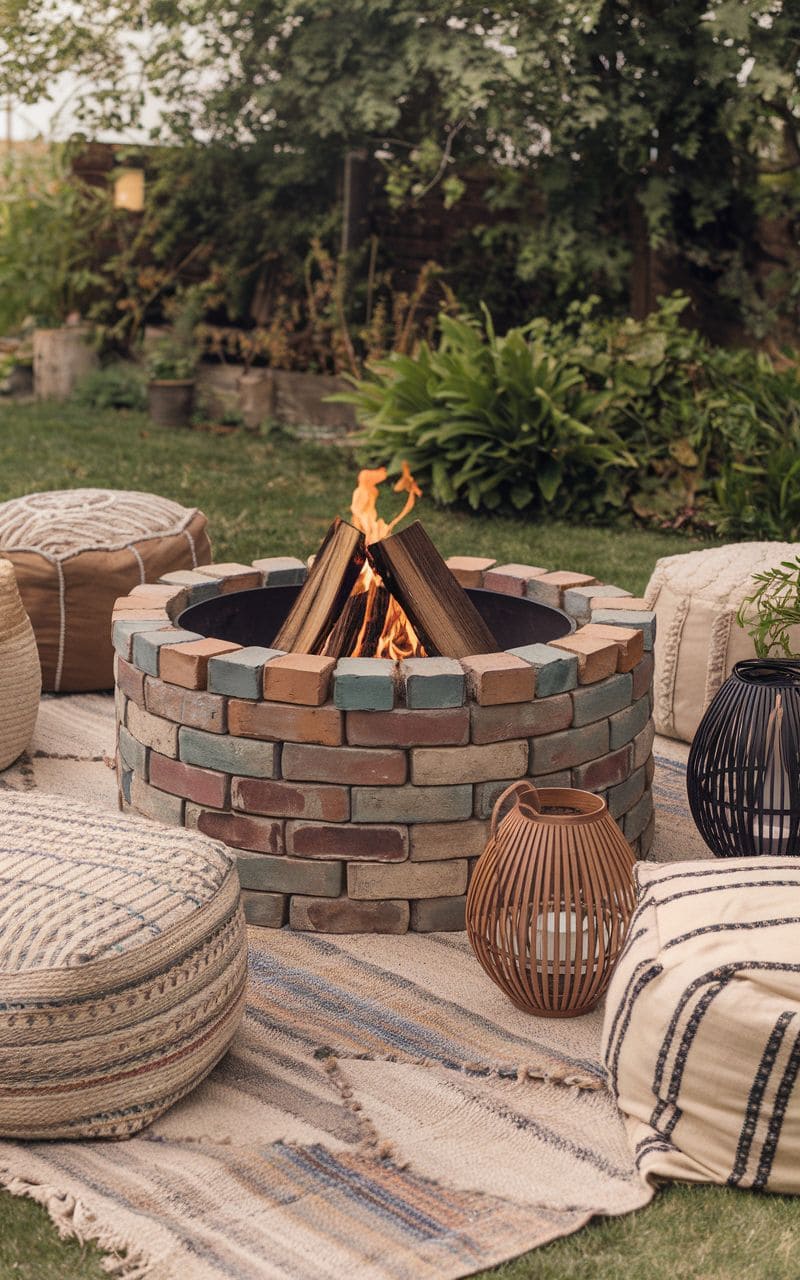
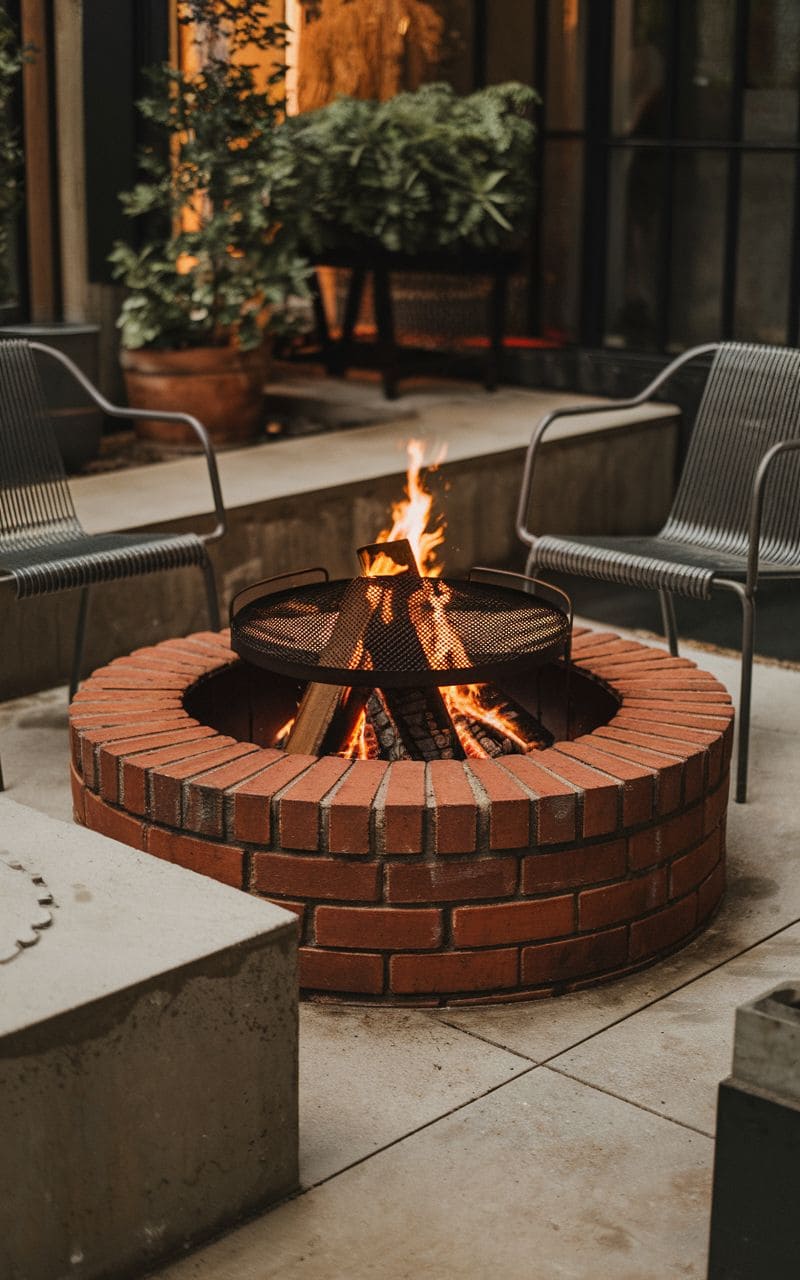
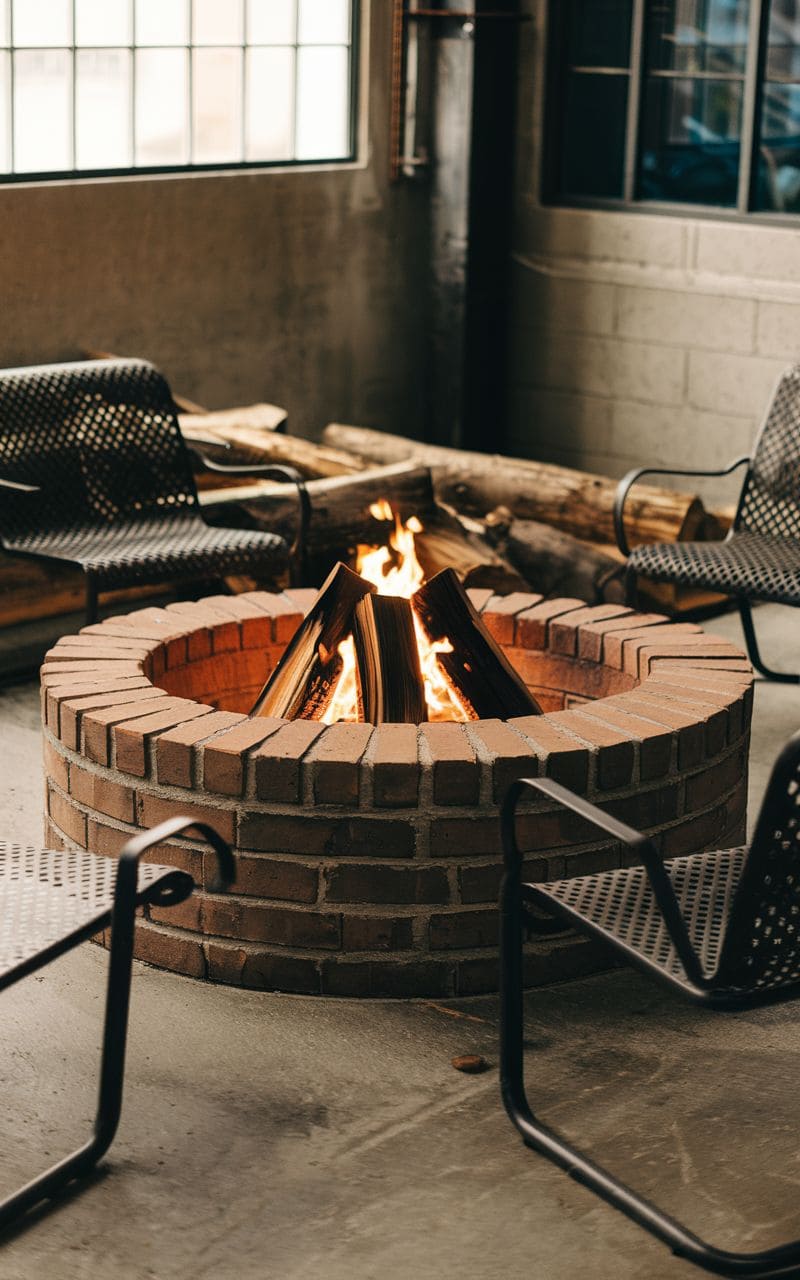
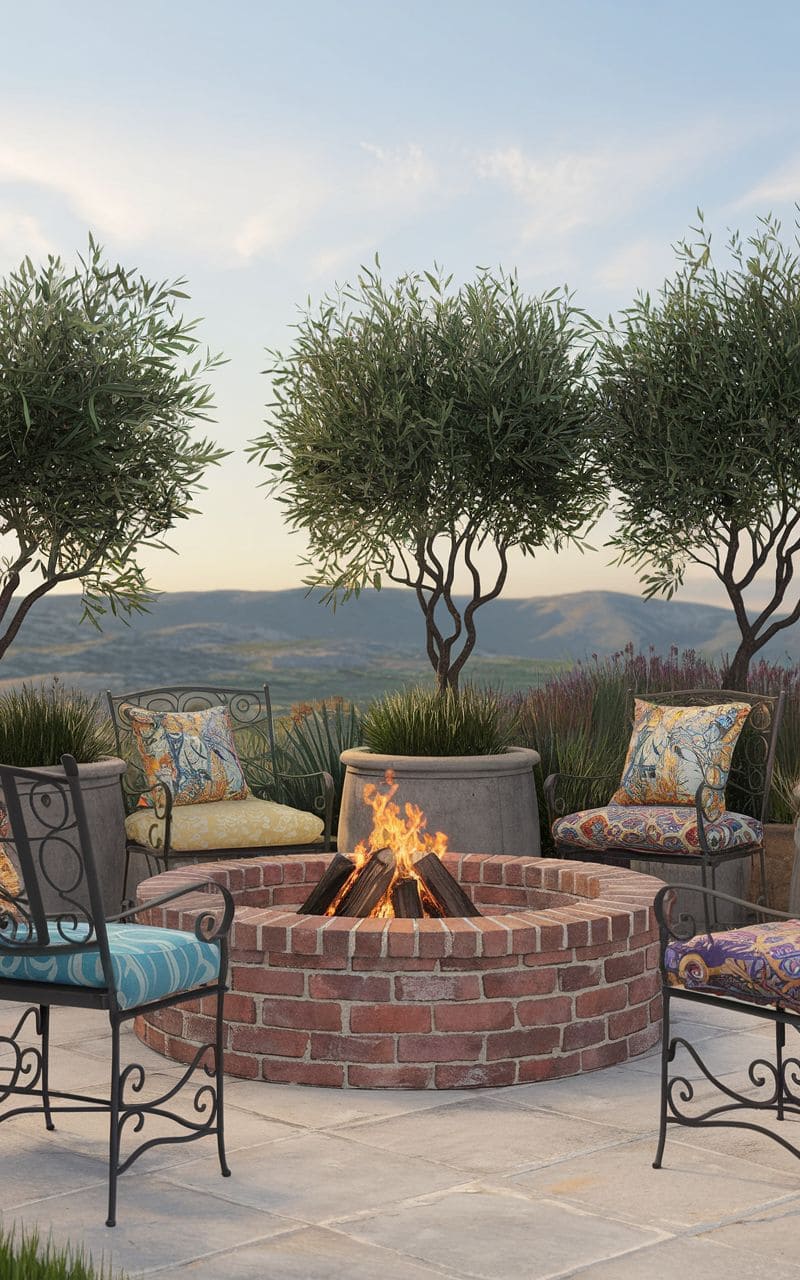
A red or brown brick round fire pit is a classic for a reason: it’s inviting, simple to build, and complements most outdoor aesthetics.
Place it on a gravel base for appropriate drainage and a clean appearance that discreetly separates the fire area from the rest of the yard.
Most yard problems trace back to one specific, fixable cause. Find yours in 4 quick questions.
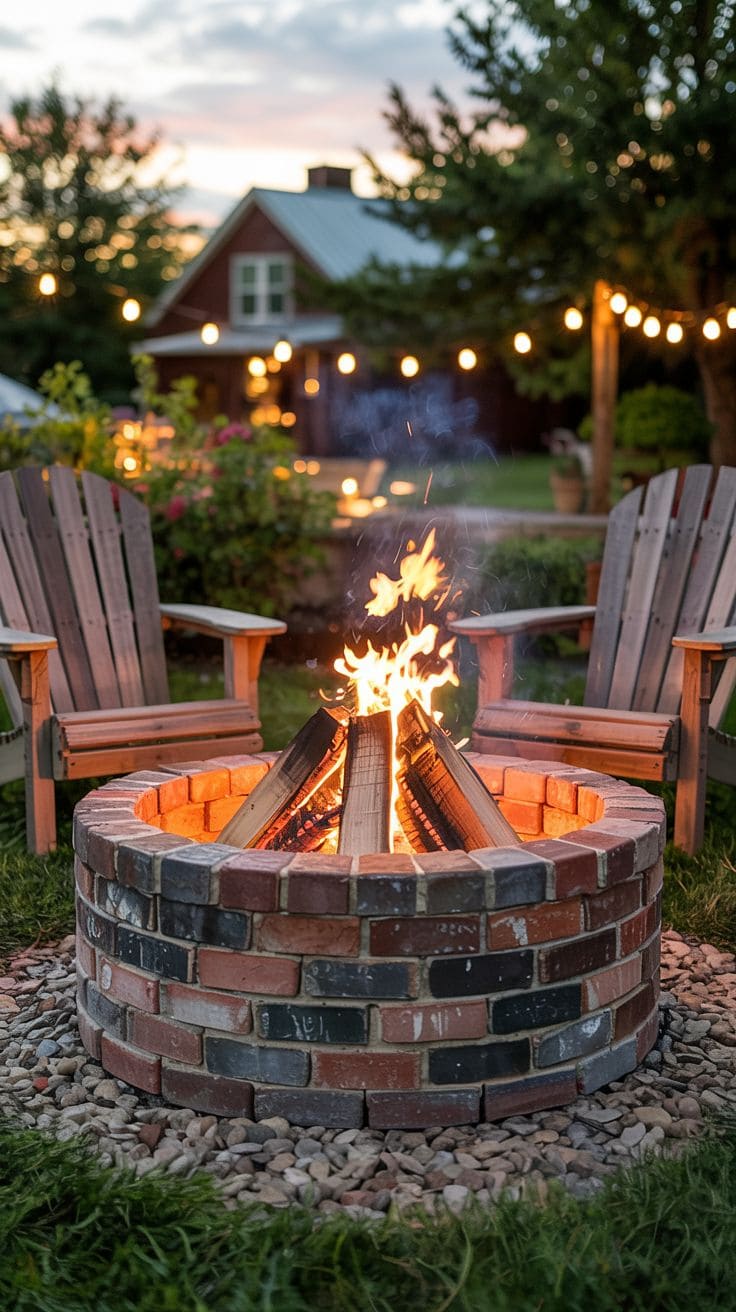
Take the Free QuizThe circular form promotes social interaction by allowing people to congregate equally. Use mortar for a more permanent, solid appearance, or go mortarless using interlocking bricks for a more rustic, DIY effect.
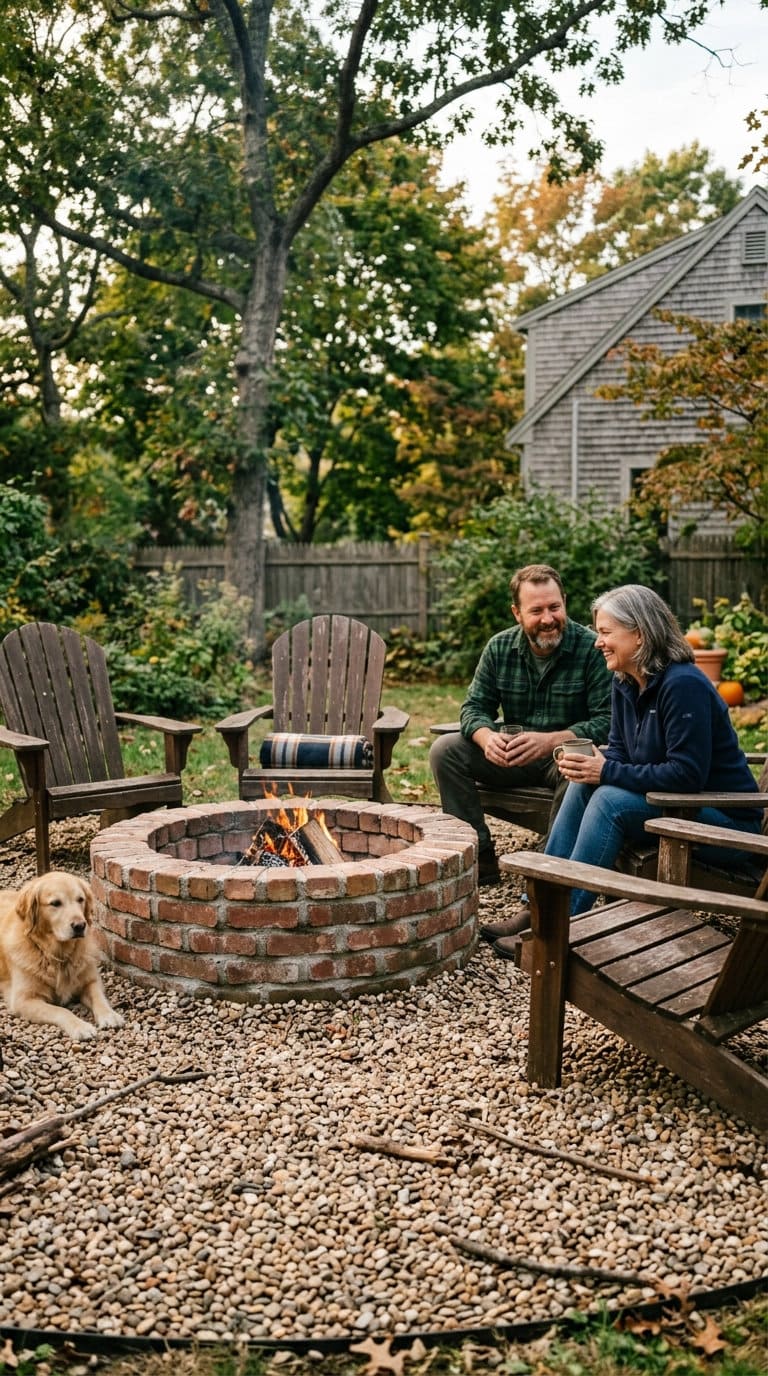
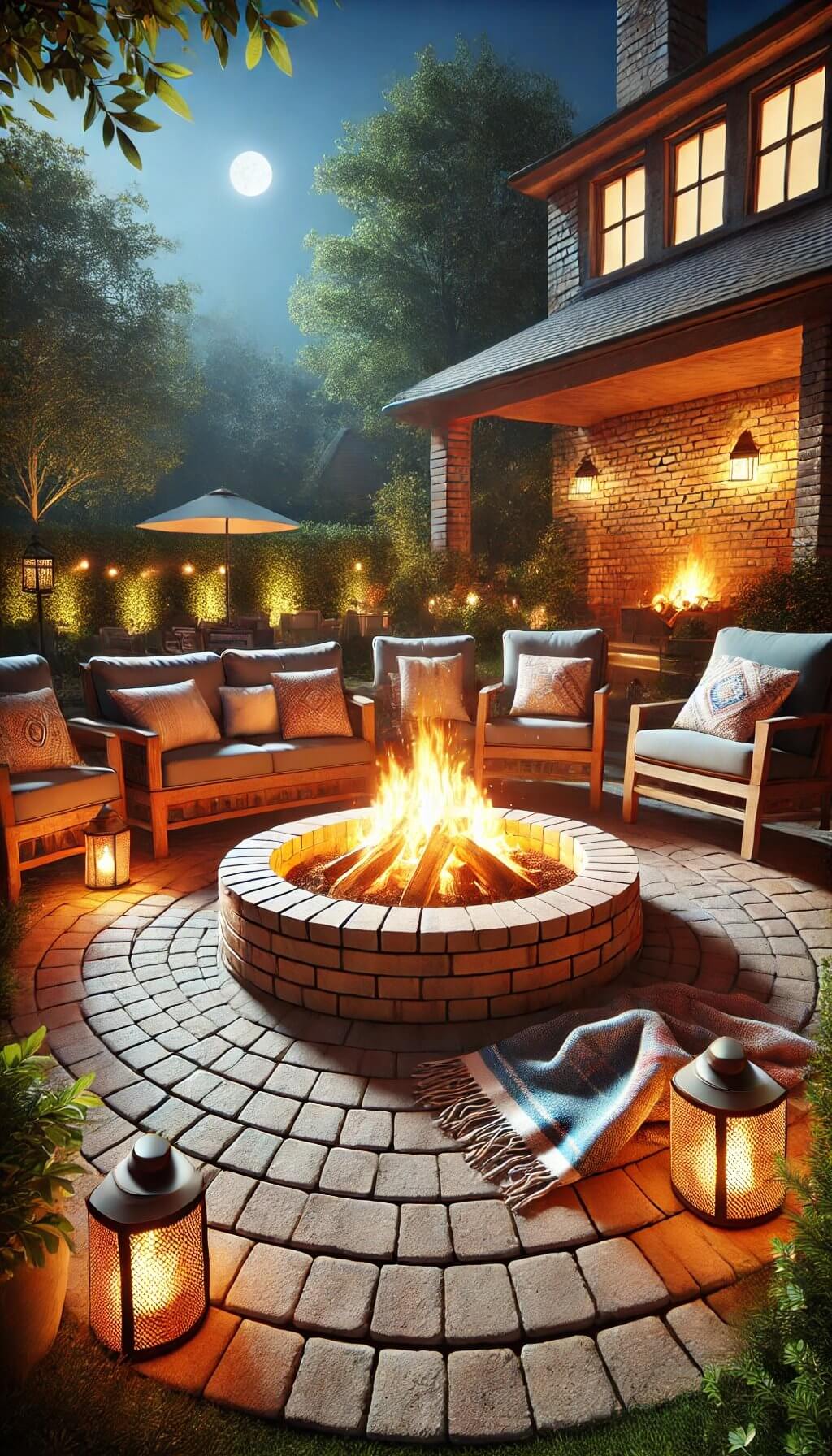
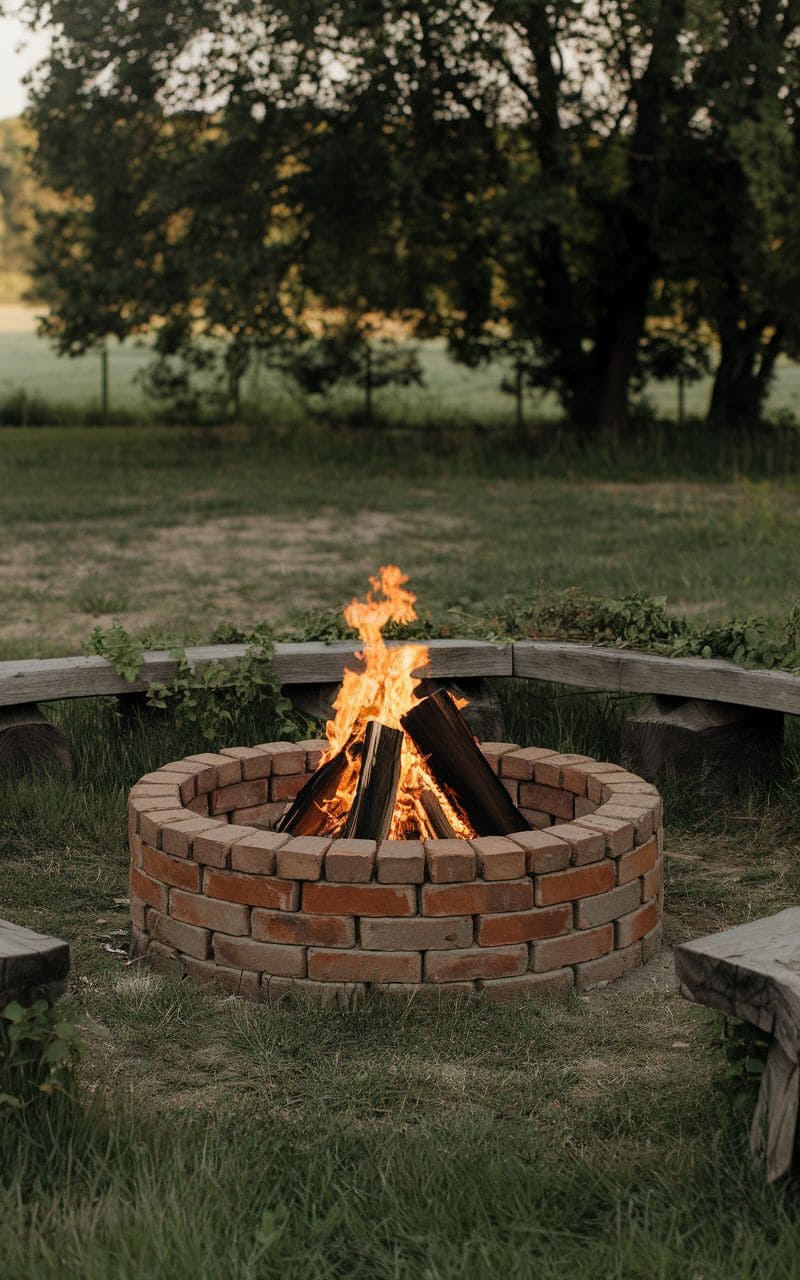
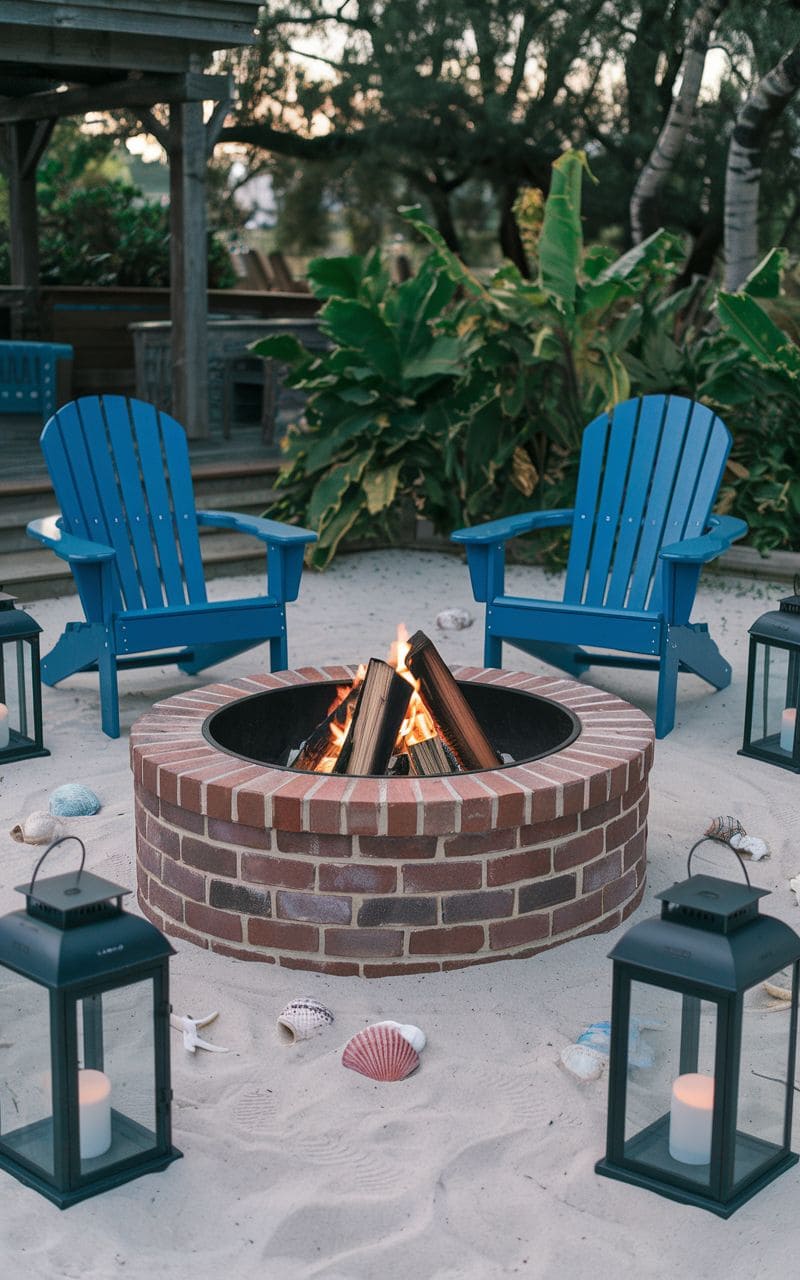
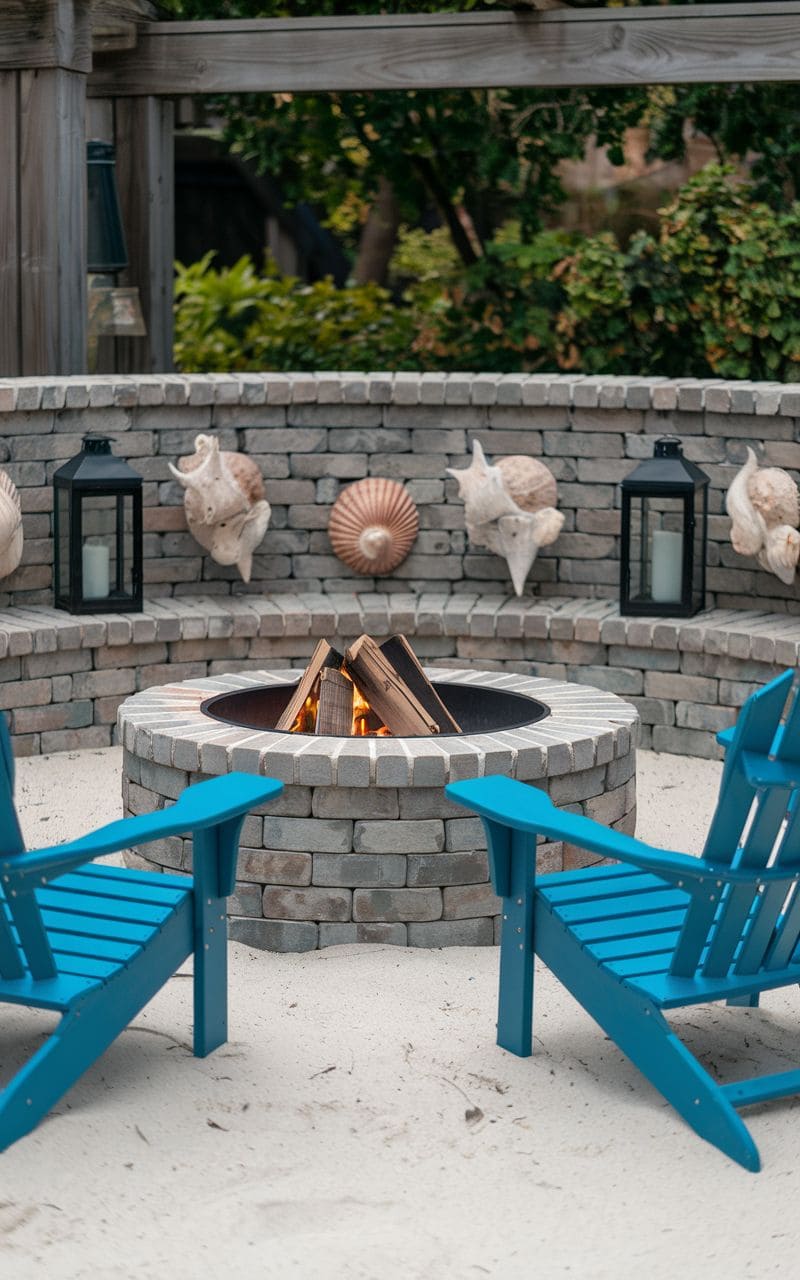
Surround the pit with Adirondack chairs or basic wooden benches, and create a gravel or stone circle around it to further define the space.
This timeless design complements farmhouse patios, wooded gardens, and pleasant backyard settings.
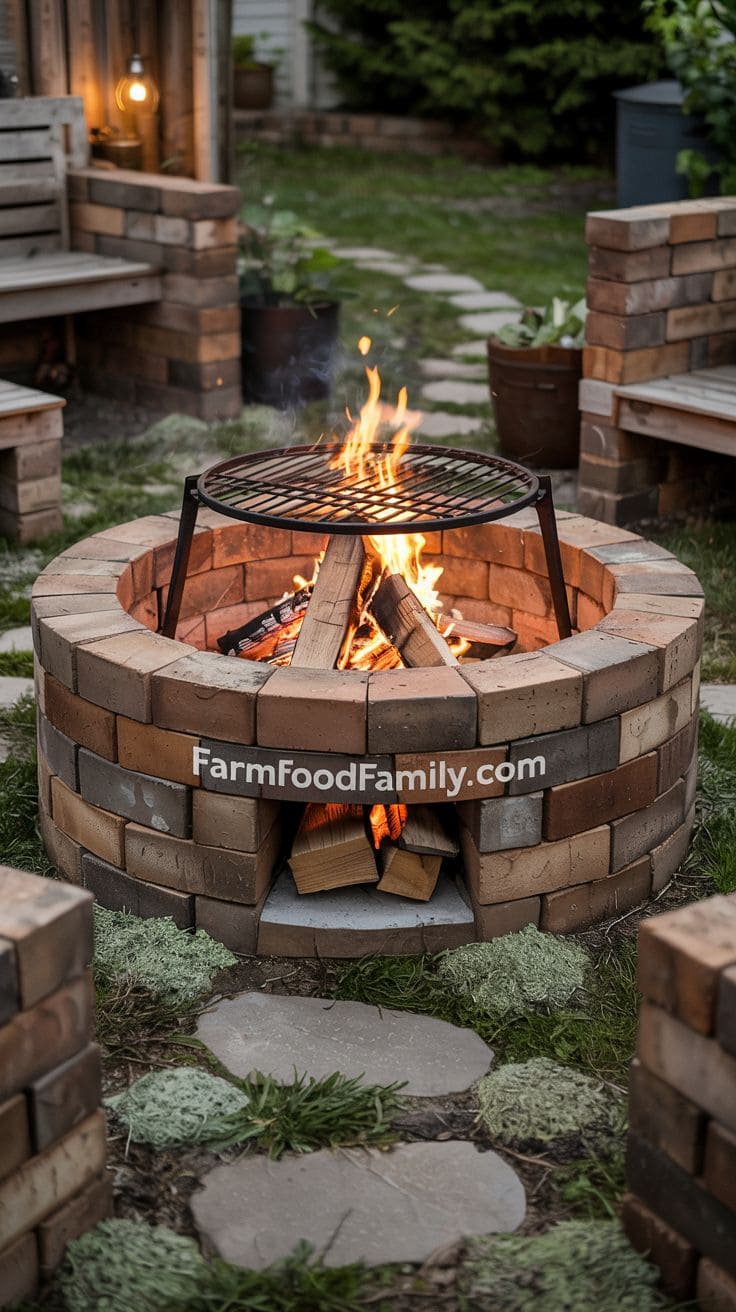
2. Brick Fire Pit with Cooking Grate and Storage Nook
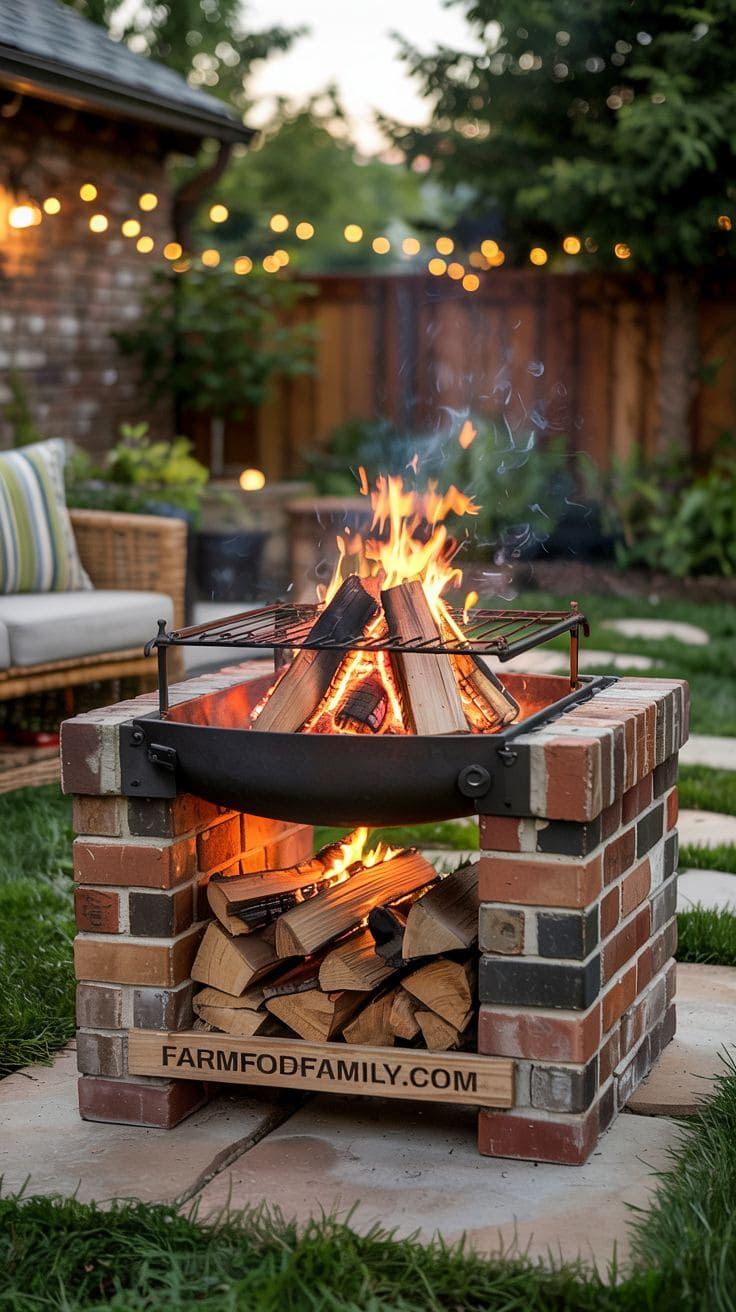
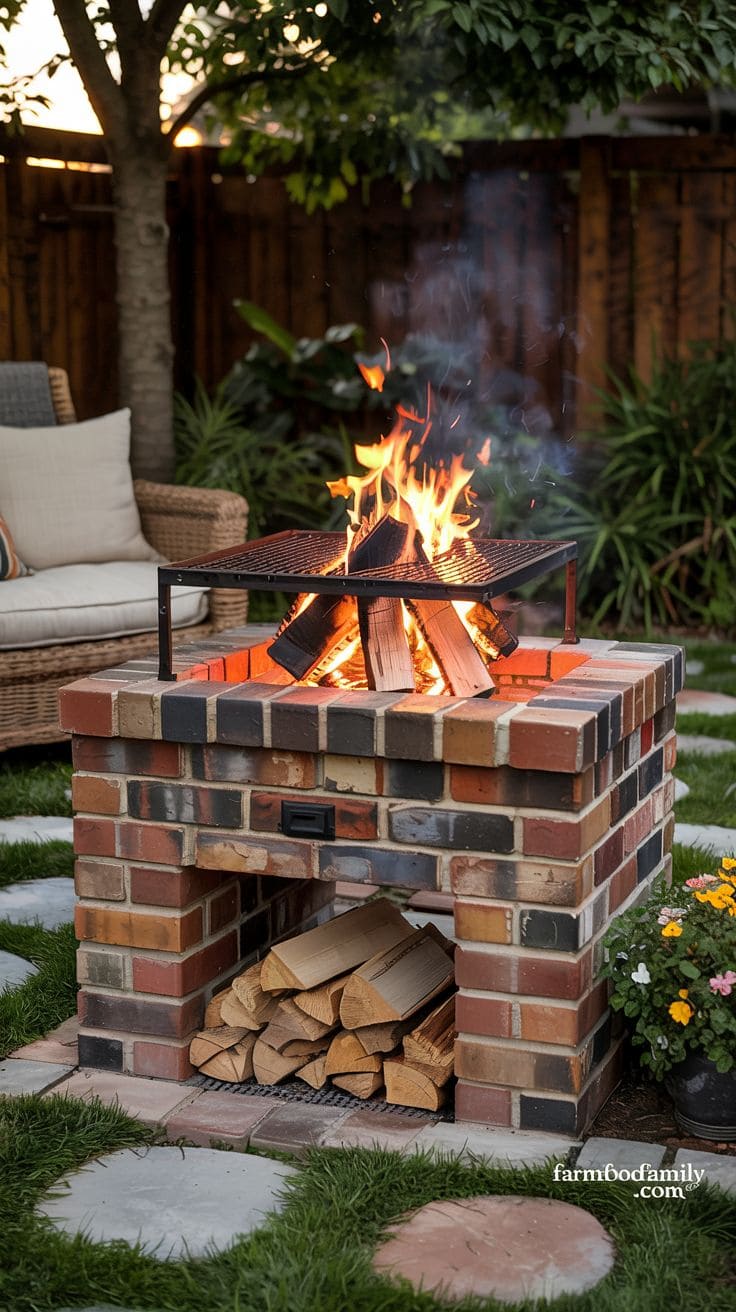
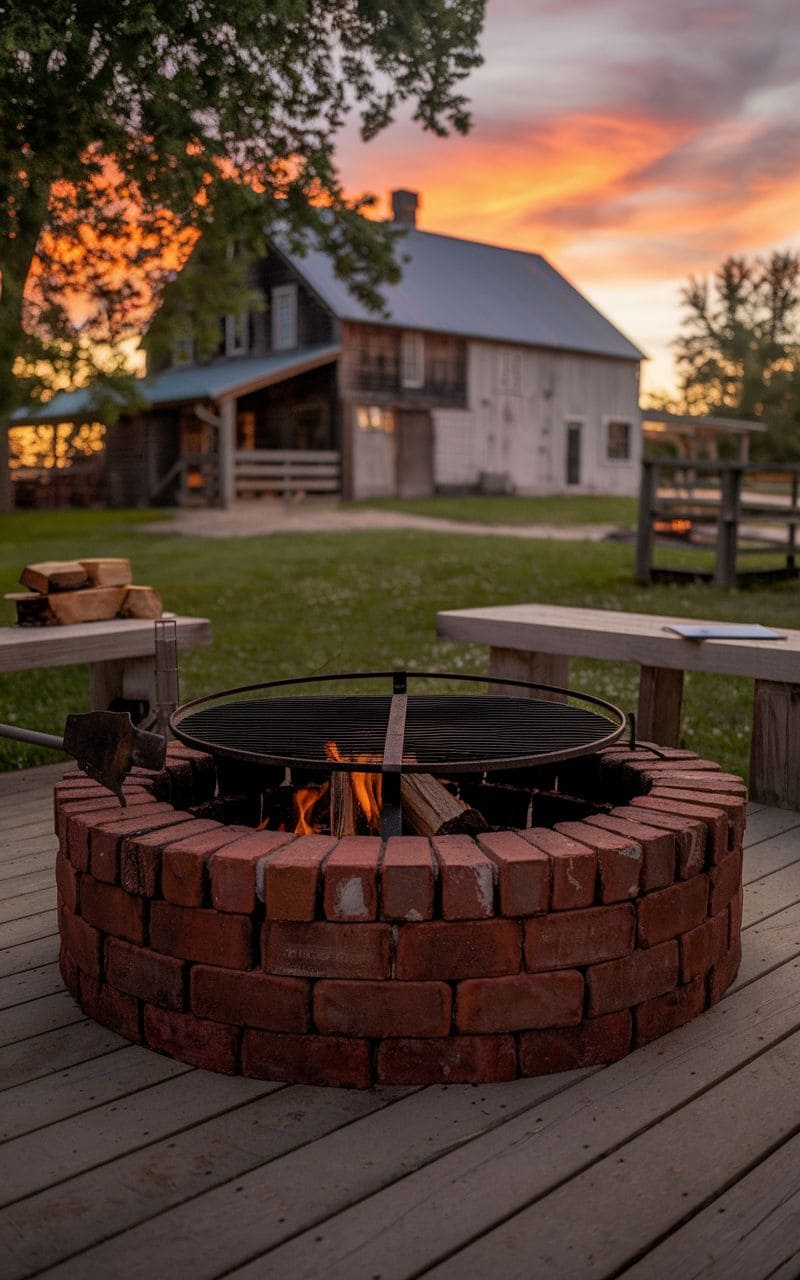
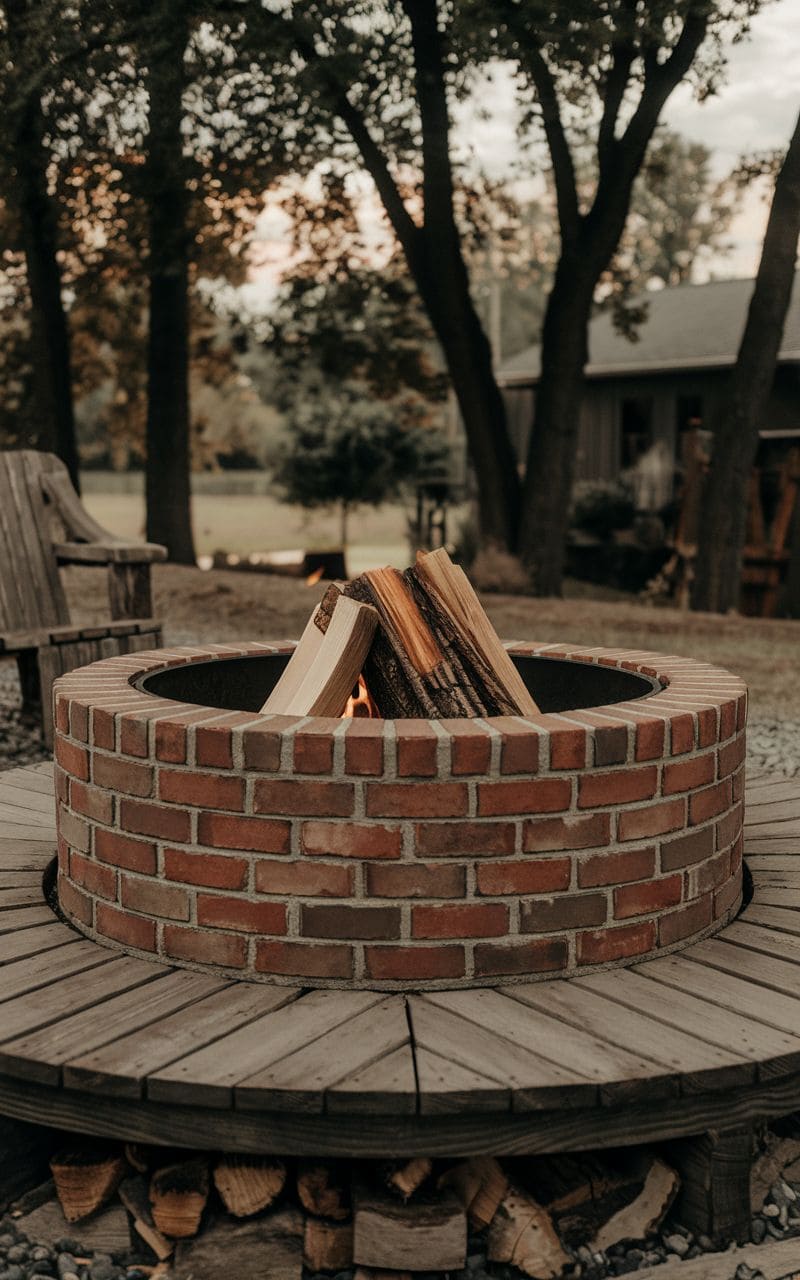
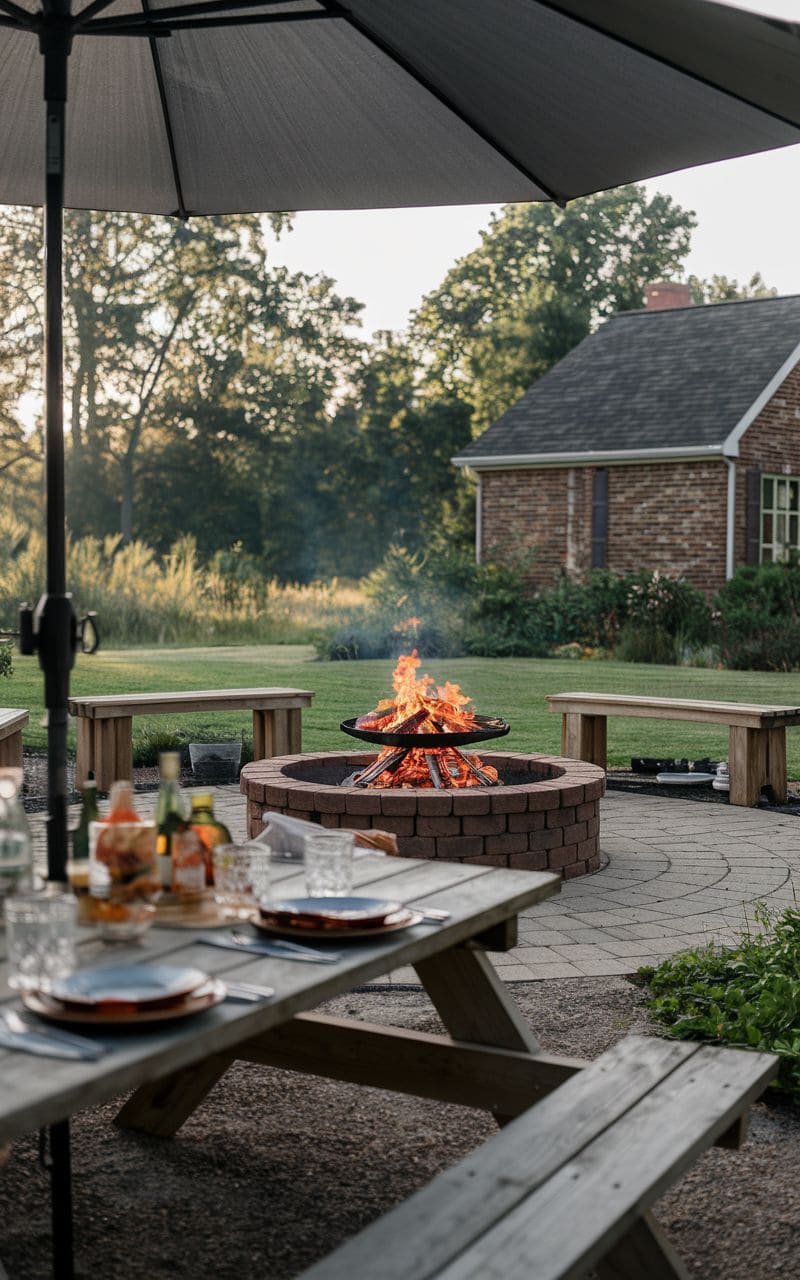
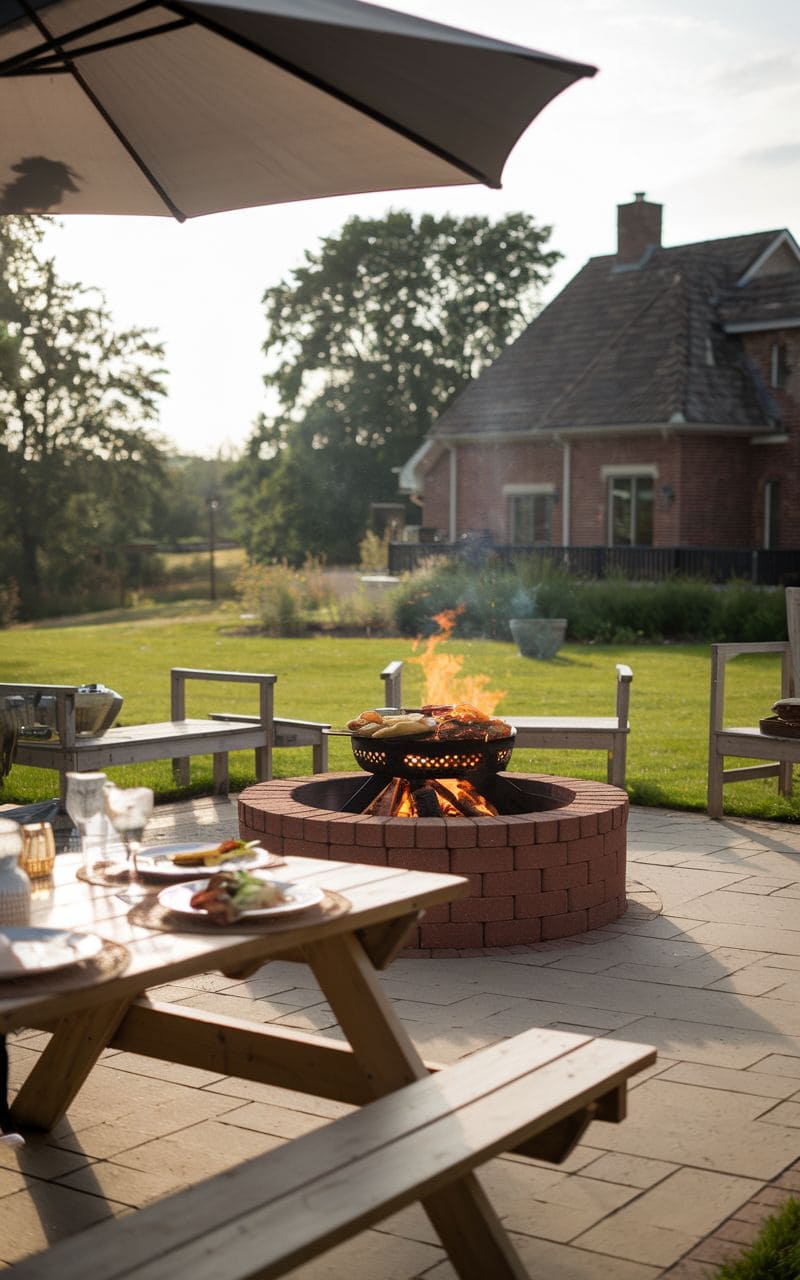
Create a brick fire pit with a metal grilling grate on top and a tiny built-in wood storage nook below or beside it for functional beauty.
This hybrid design is ideal for campers, backyard chefs, and anyone who likes to cook over an open flame.
To manage extreme heat, utilize fire bricks for the pit’s interior, and traditional clay bricks for the outer shell.
When not in use, the grate is detachable or hinged and swings away.
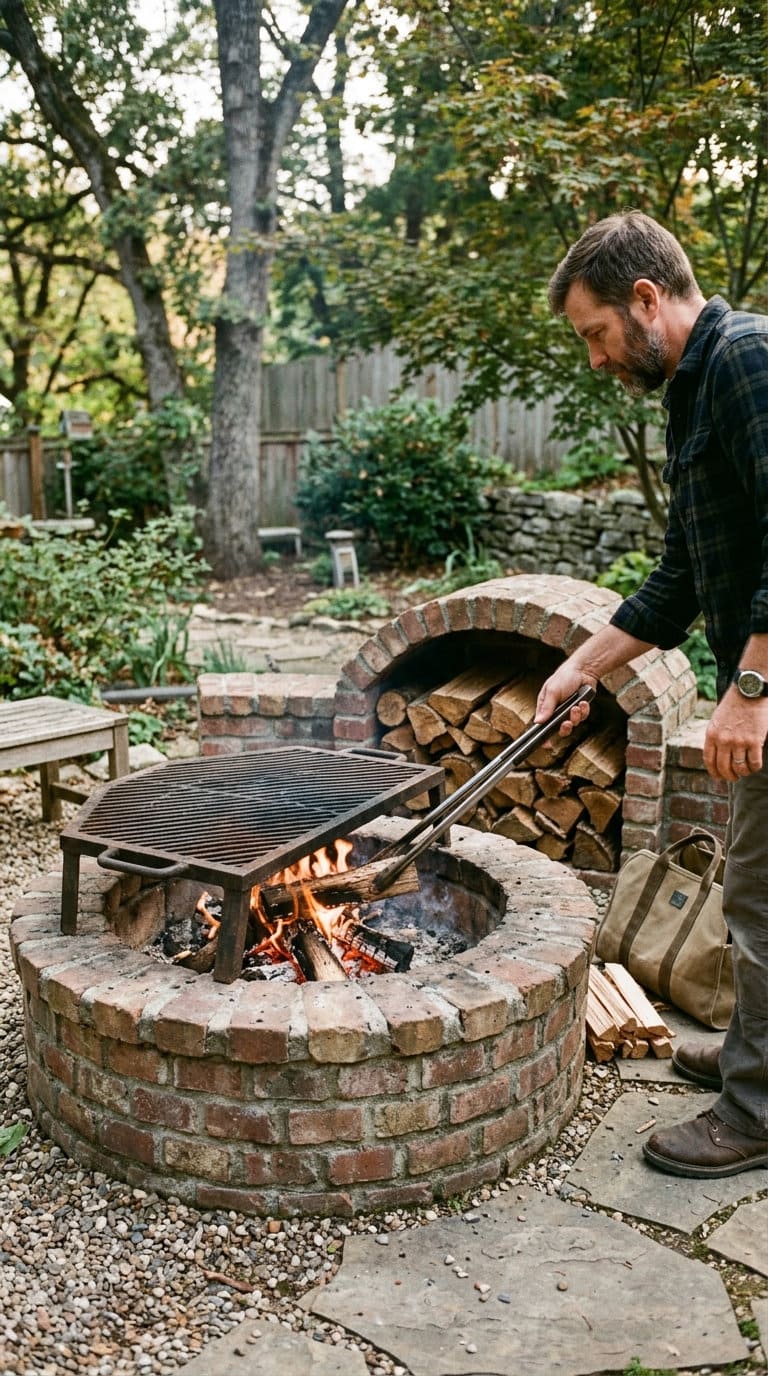
A little wood cubby carved into the brickwork adds convenience and a rustic, functional touch.

This idea works well in any backyard setting where firewood cooking and a hands-on vibe are desirable.
3. Sunken Brick Fire Pit with Patio Inset
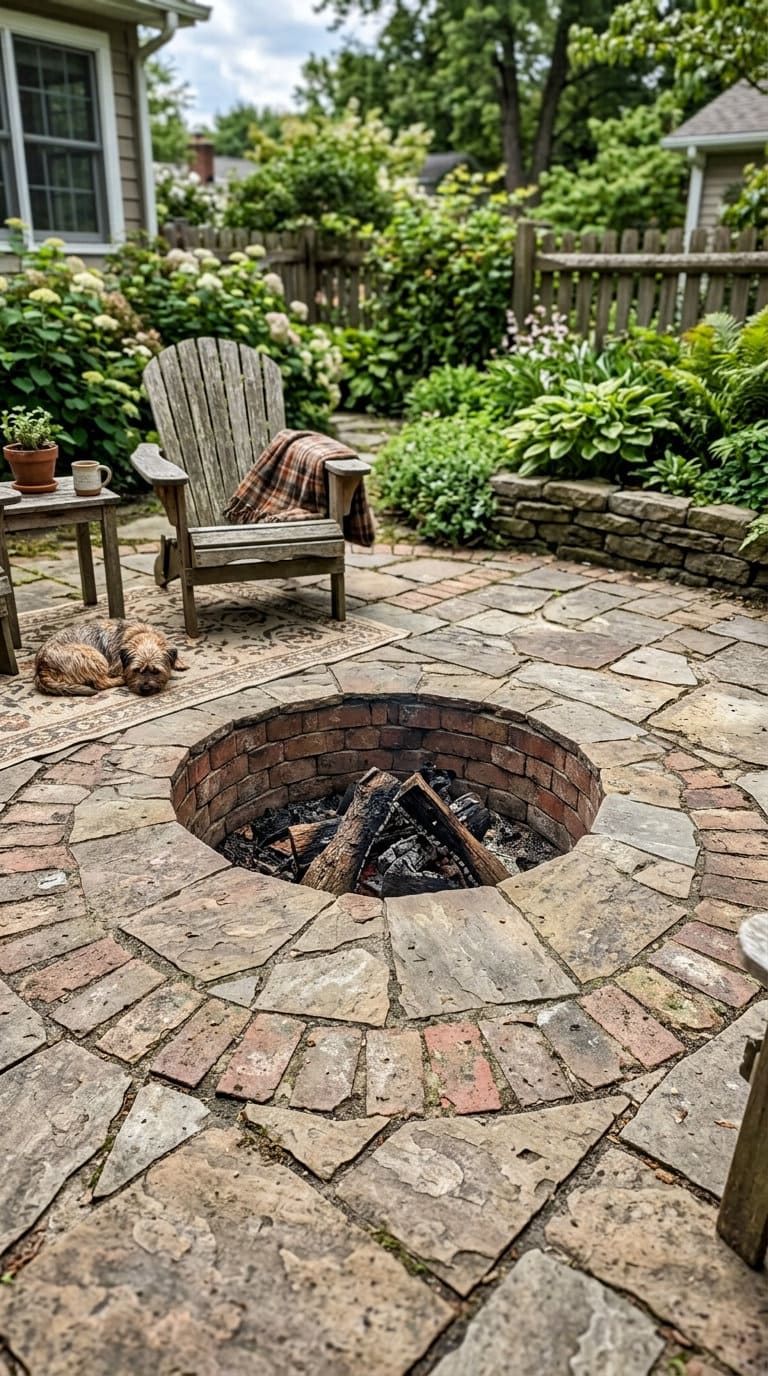
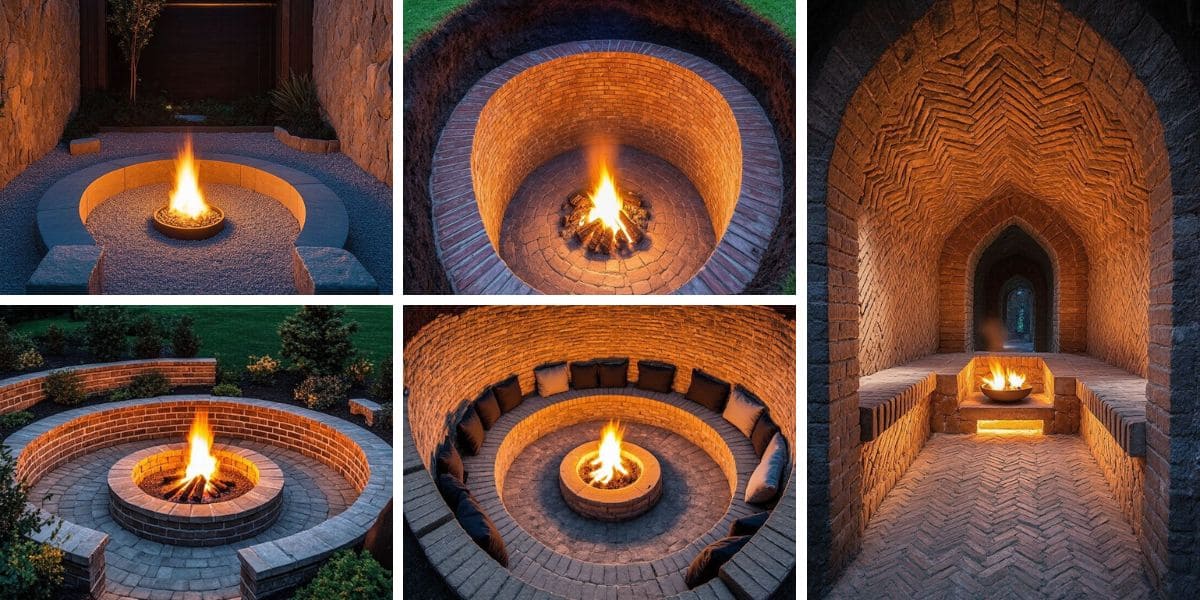
Create drama and coziness by incorporating a buried fire pit into an existing patio.
Excavate a circular or square area in the center of a brick or stone patio, then create the fire pit walls with matching bricks to blend in seamlessly.
The average homeowner spends $616/year on yard fixes that don't address the real problem. Find out what yours actually is — before you spend another dollar.
Take the Free QuizThe sunken aspect helps the space feel more personal, similar to an outdoor living room.
Install modest steps or pavers to provide a natural drop into the fire zone.
You can enclose the space with potted plants or low walls to give it a more intimate, tucked-away vibe.
This technique is especially effective in big yards or tiered gardens, where elevation variations can create dramatic design effects.
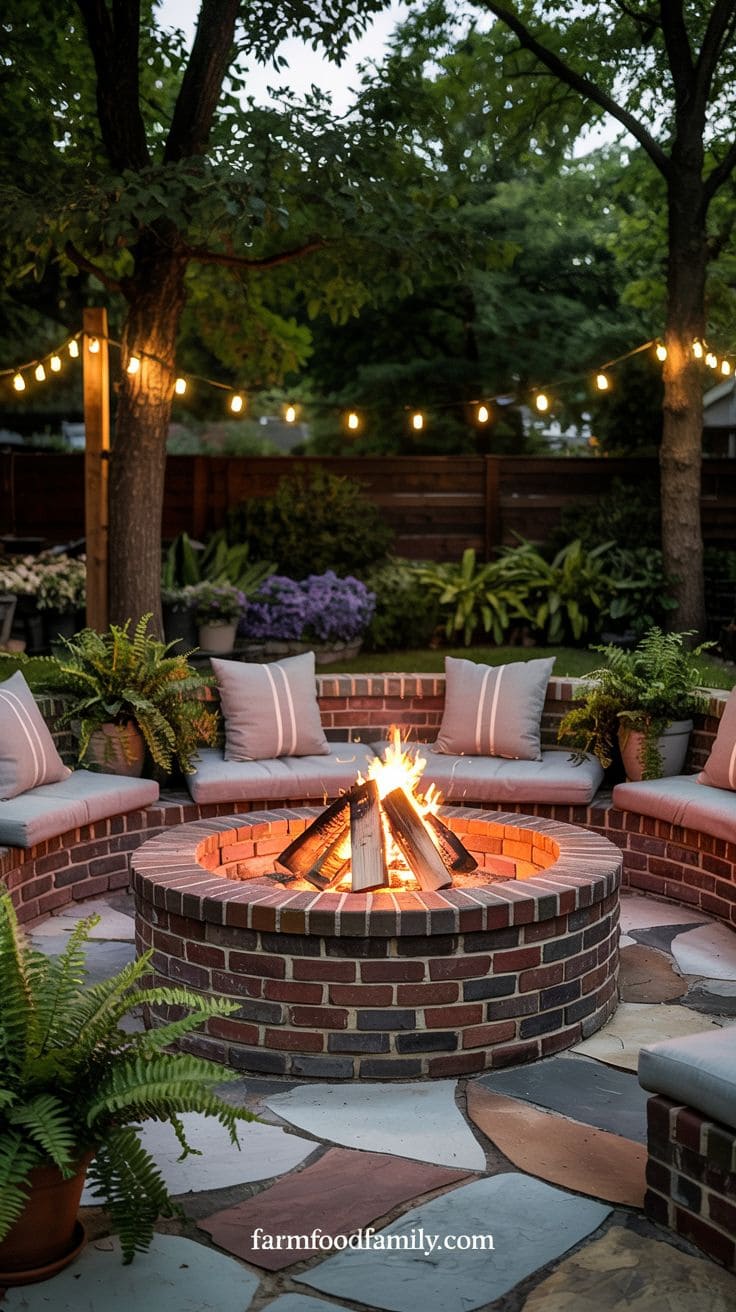
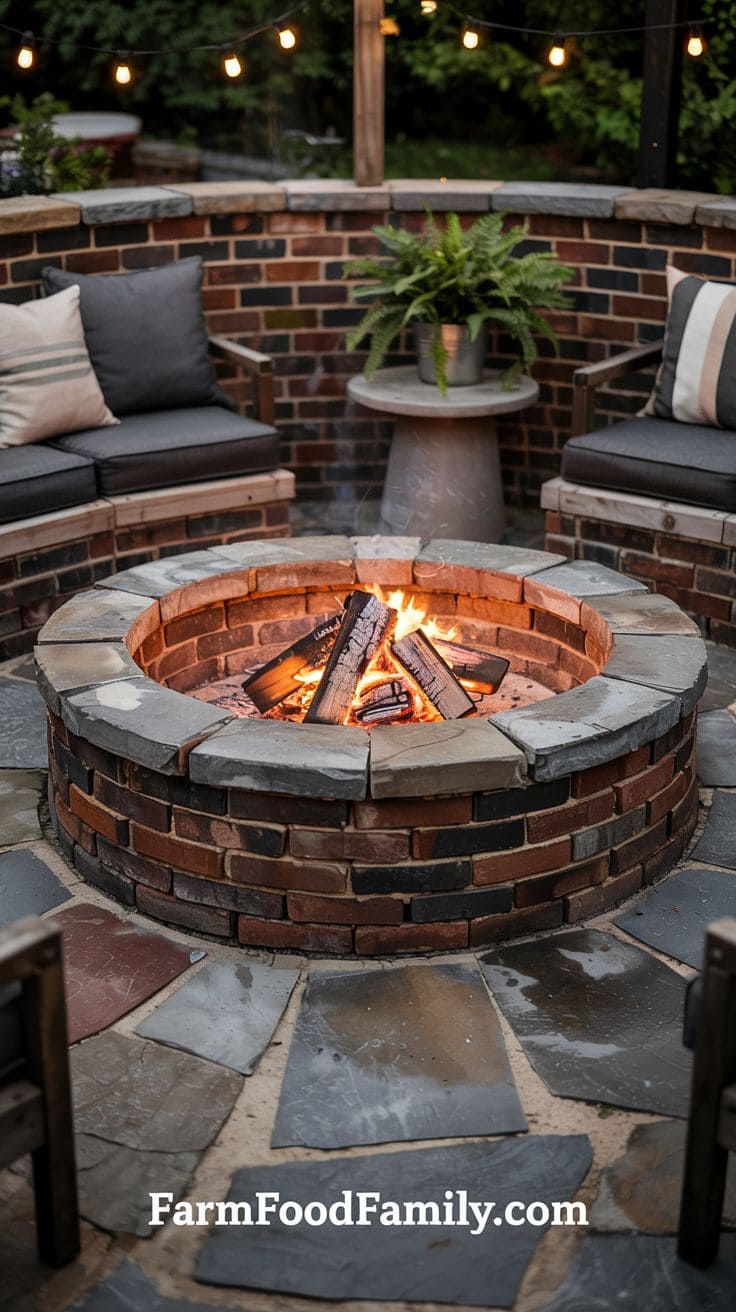
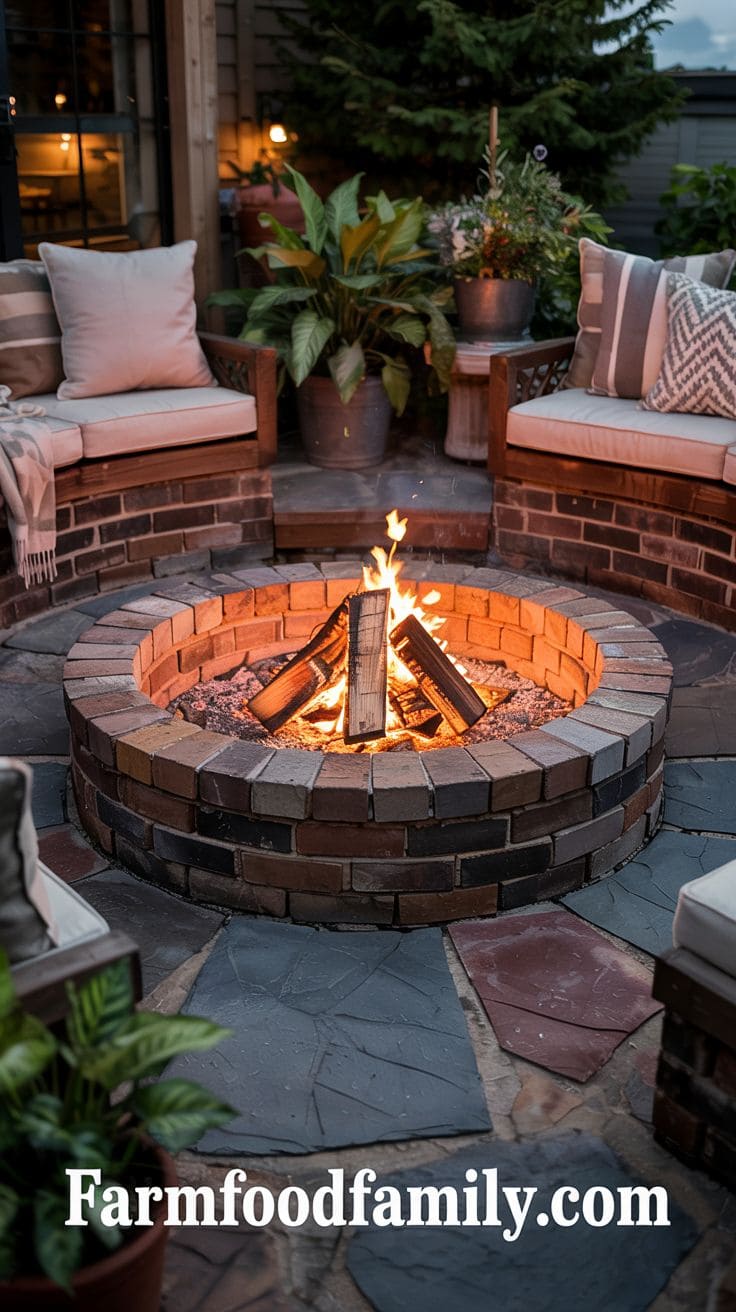
4. Half-Moon Brick Fire Pit with Raised Back Wall
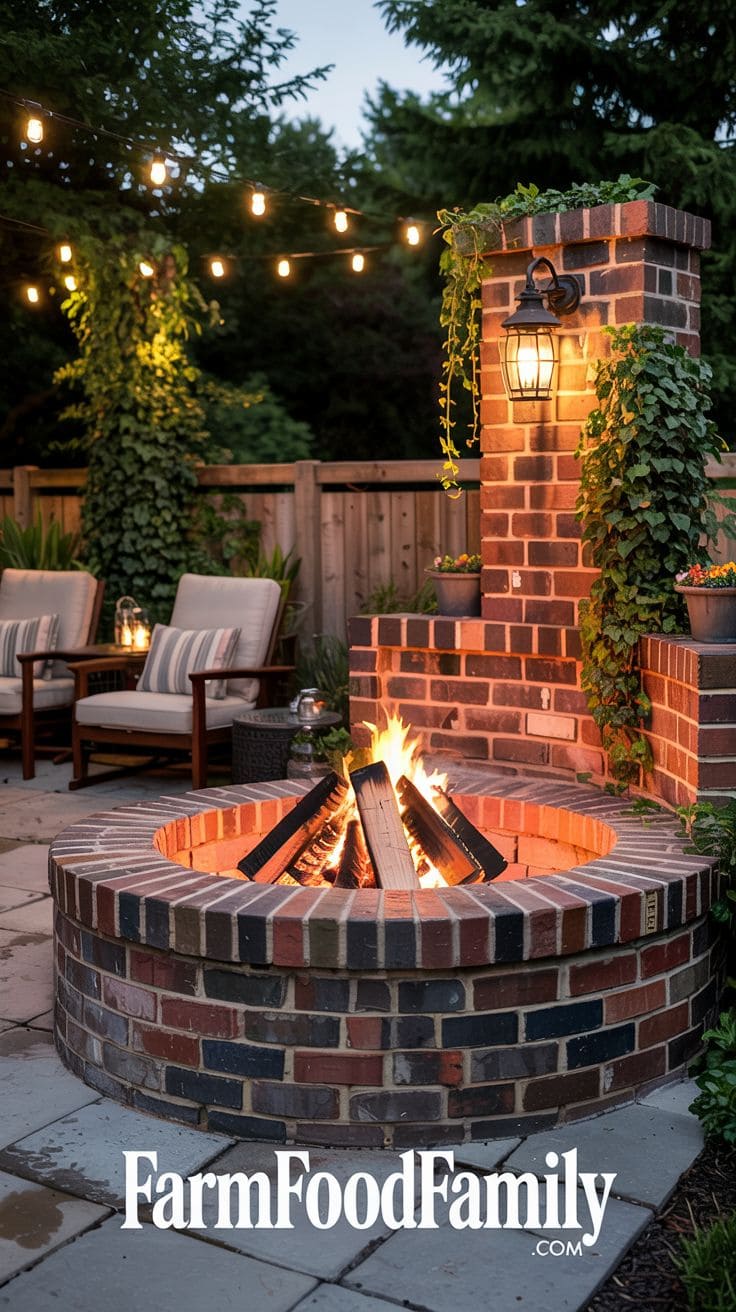
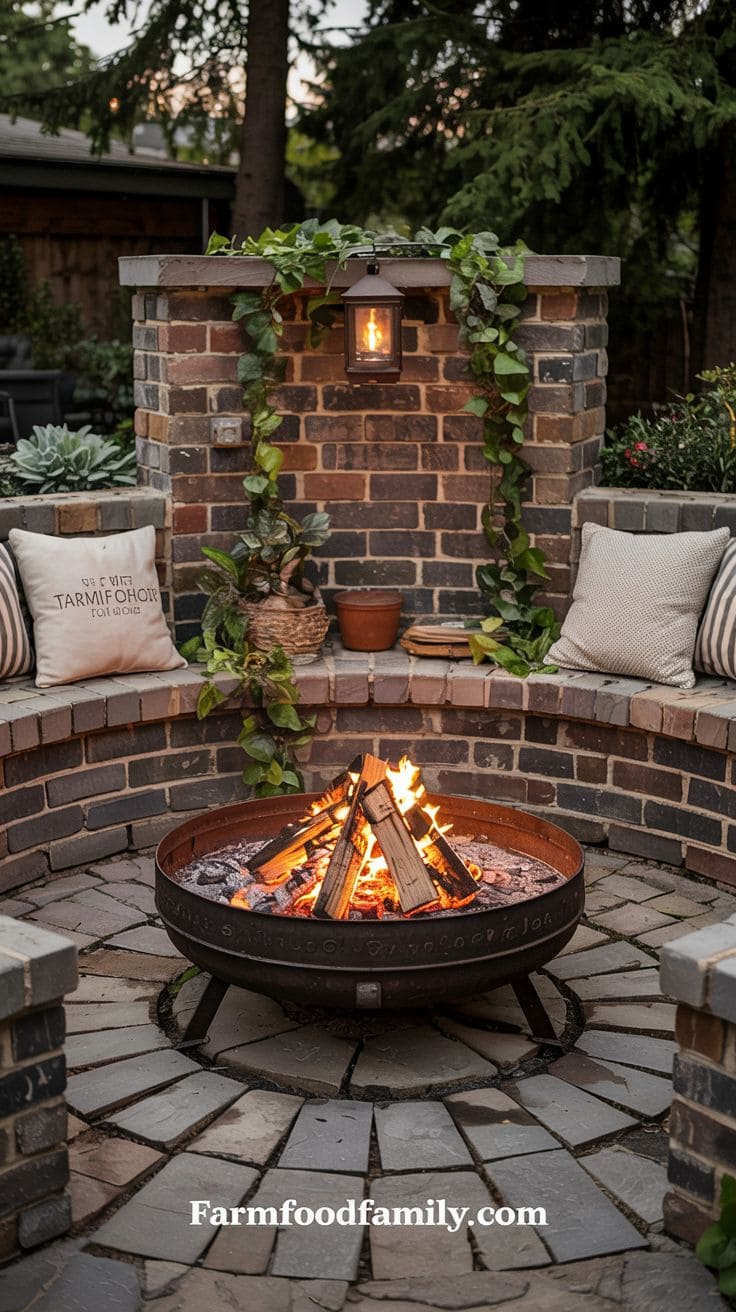
Create a half-circle fire pit with a raised brick wall on one side.
This rear wall can serve as a windbreaker, a backdrop for string lights or hanging plants, or even a heat reflector for the dining area.
It’s a clever design for areas that border fences, patios, or structures where a full circle isn’t possible.
The elevated wall can also serve as a narrow shelf or feature wall, especially if you incorporate beautiful bricks or contrasting mortar.
Combine with built-in stone seating to create a polished, semi-enclosed space that directs heat and sound toward guests.
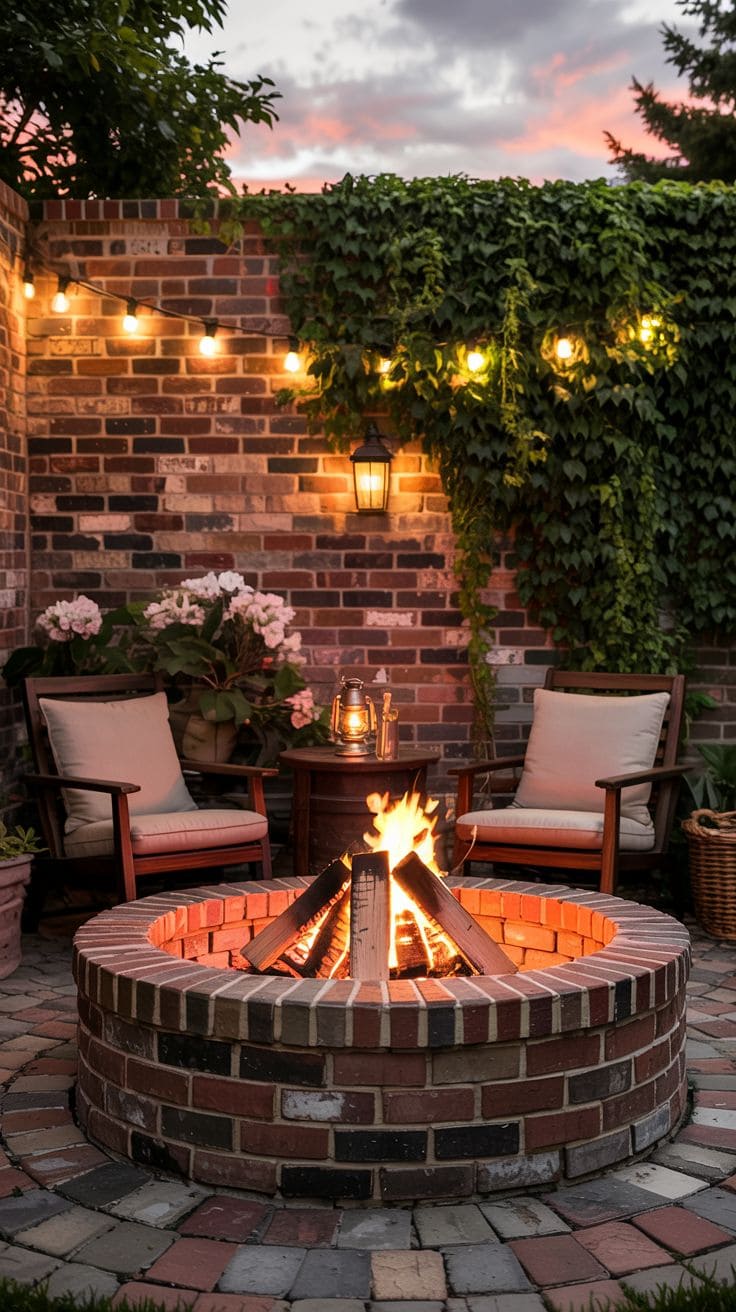
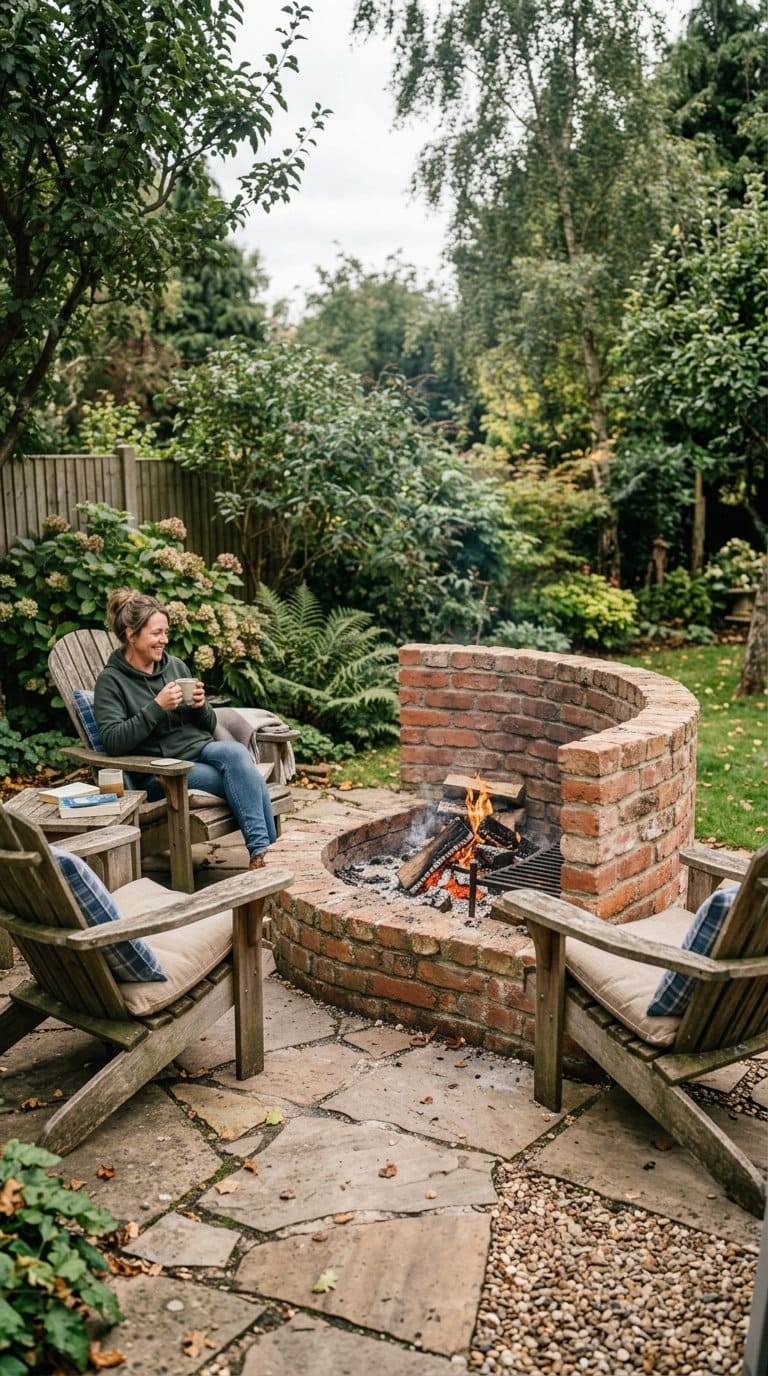
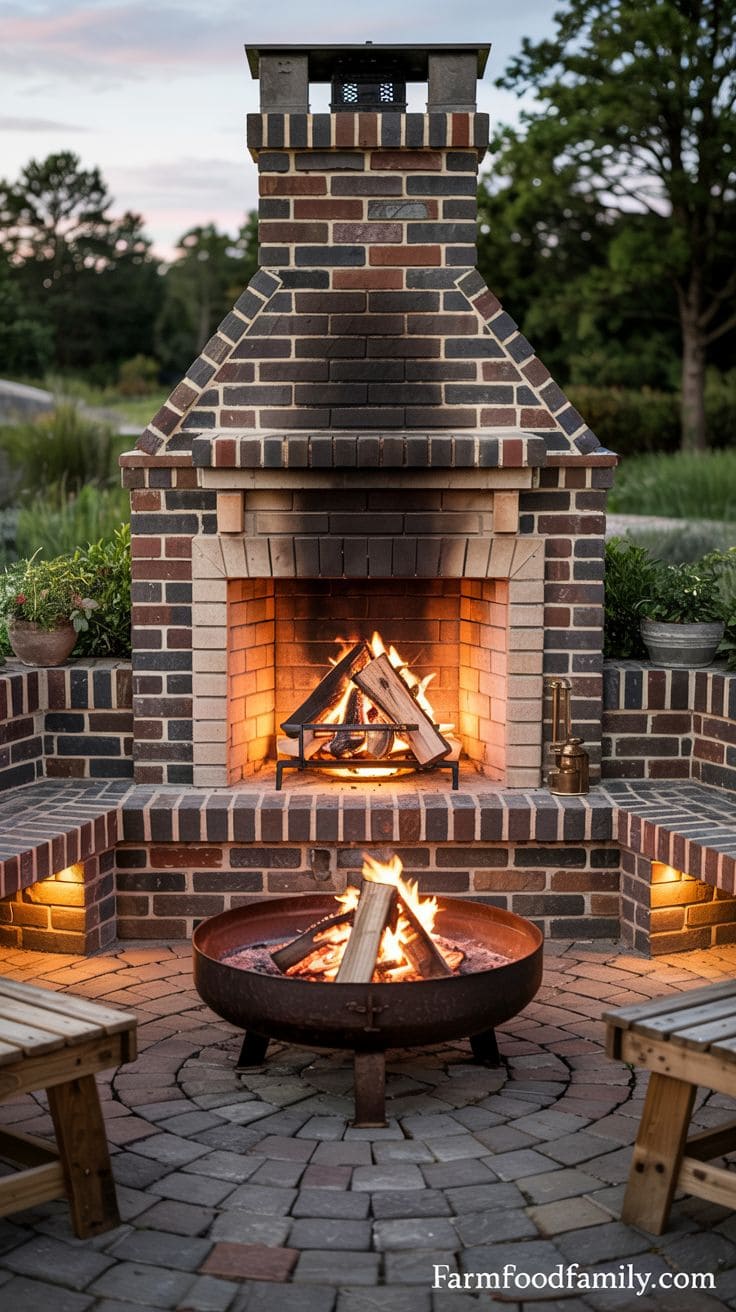
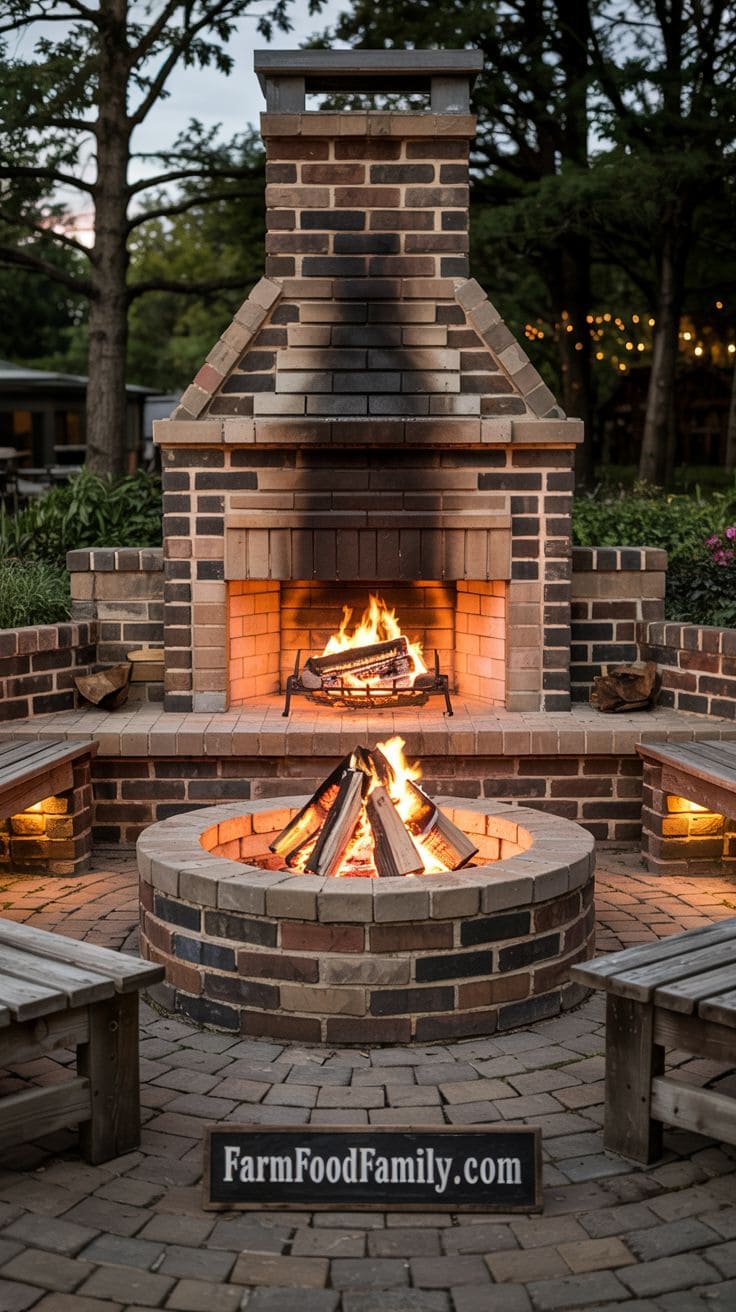
5. Brick Outdoor Fireplace with Built-In Fire Pit Base
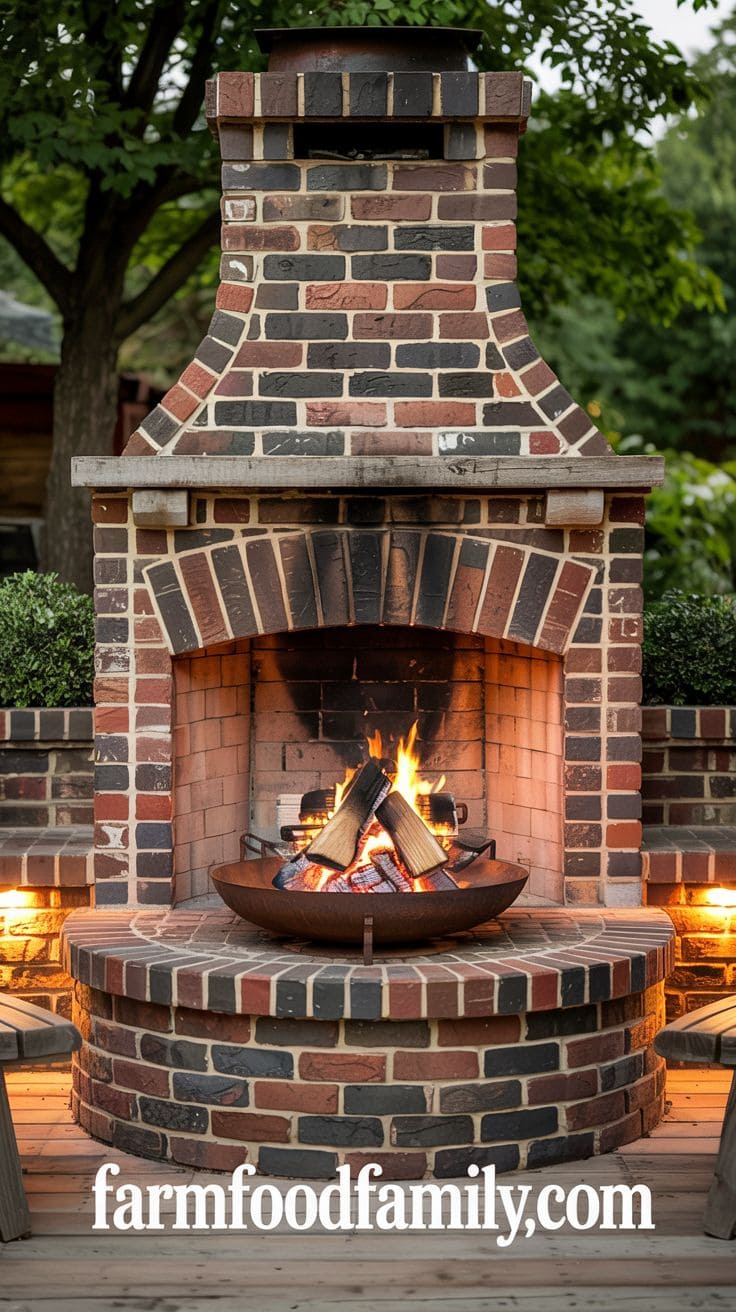
Building a full-height brick outdoor fireplace with a fire pit-style foundation at ground level adds a smart and multipurpose twist to classic fire pit arrangements.
The towering brick chimney adds vertical interest and creates a spectacular landscape feature.
Create a base that is wide and deep enough to accommodate a controlled wood-burning flame, similar to a traditional fire pit, and include a metal fire grate or bowl insert for safety.
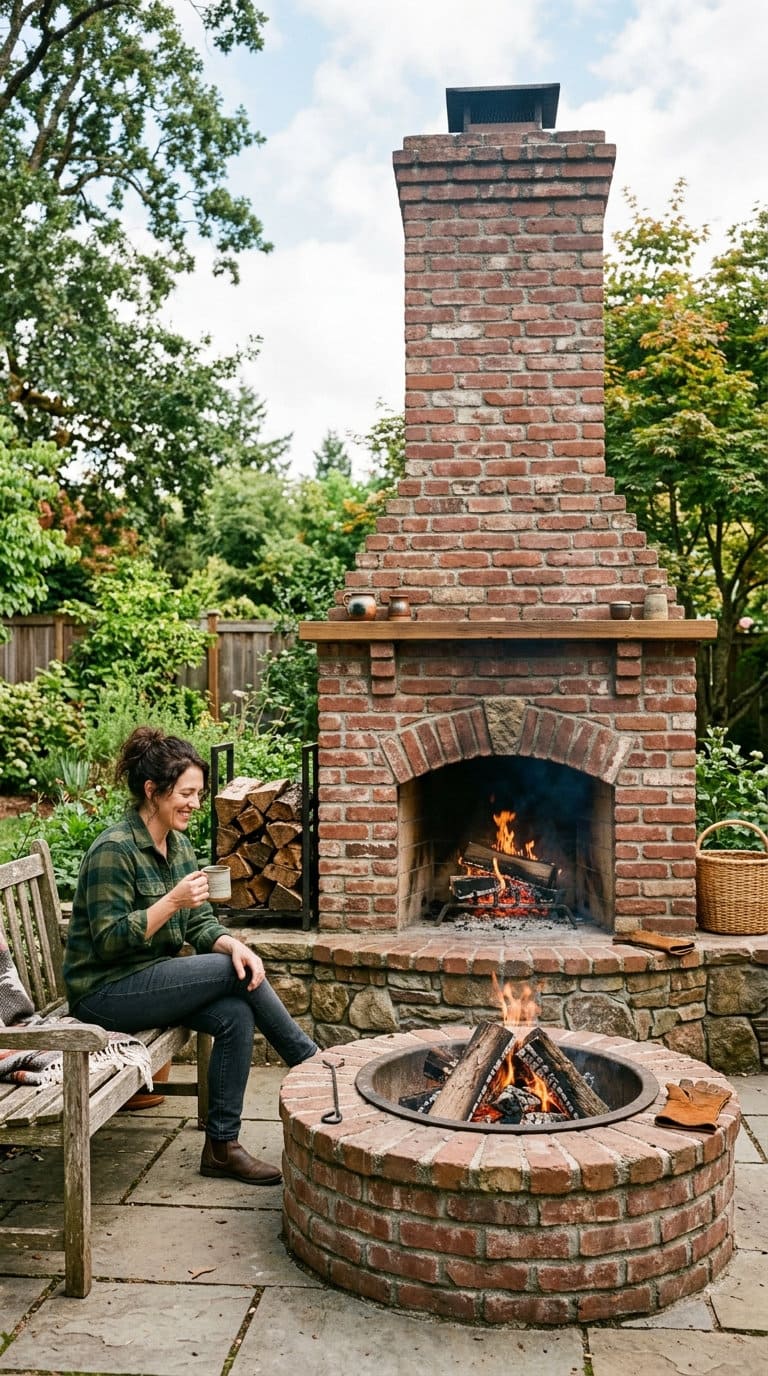
The fireplace’s high back not only protects against wind but also reflects heat back toward the seating area, making it ideal for cooler nights.
To create a magnificent meeting space with year-round appeal, surround the base with built-in brick benches or rustic outdoor furniture.
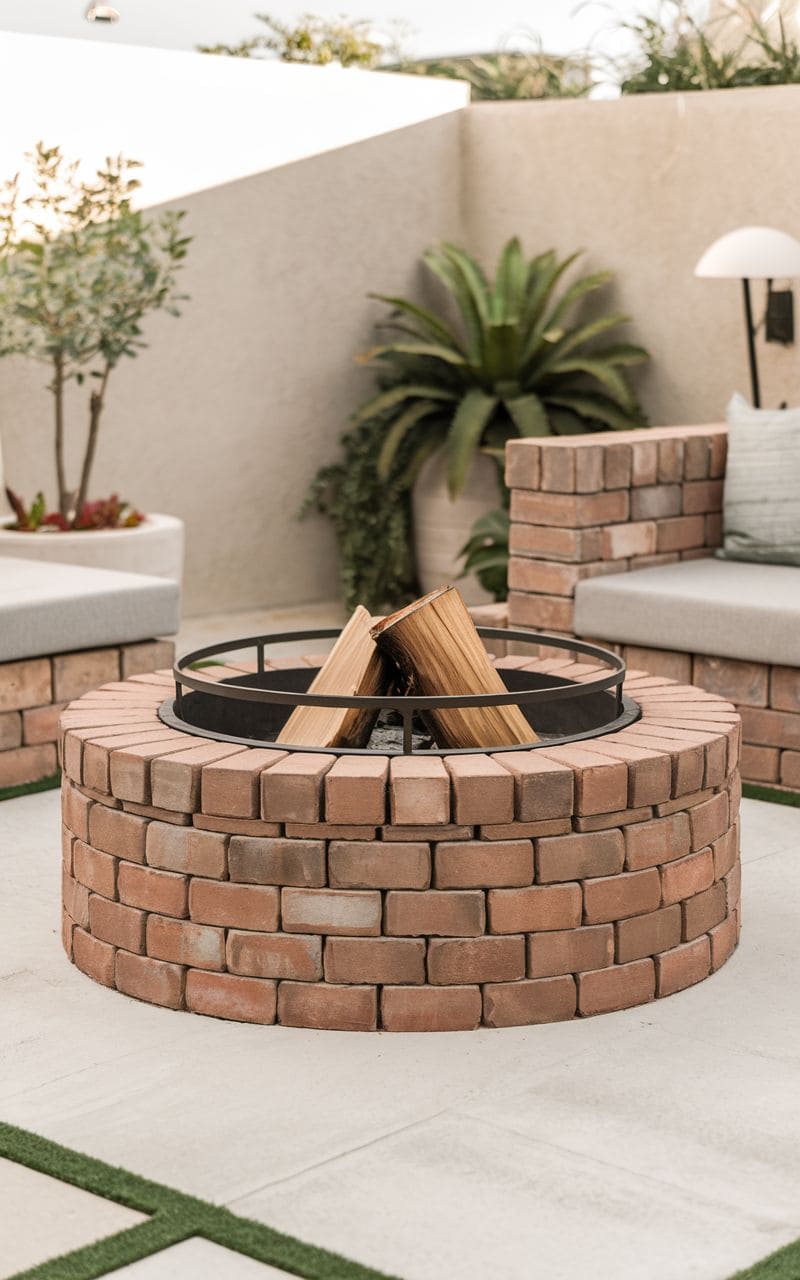
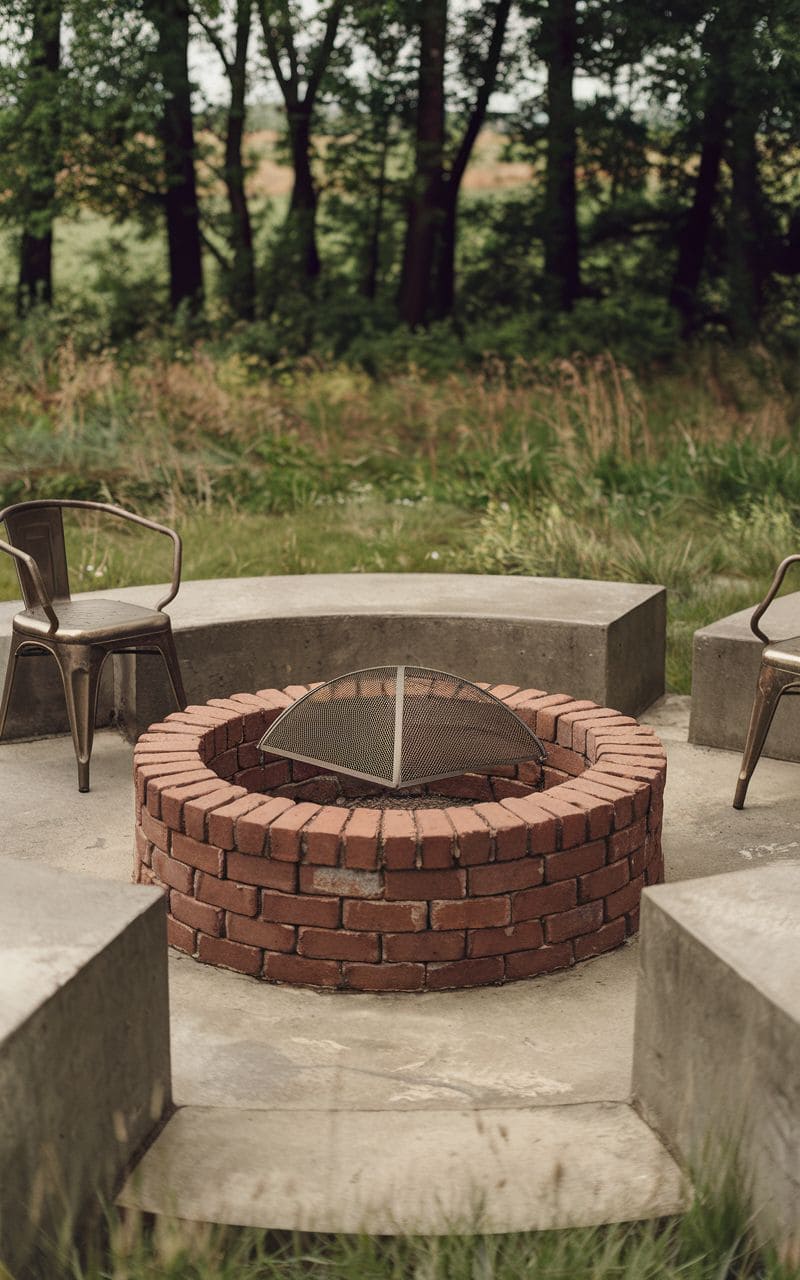
6. Classic Circular Brick Fire Pit
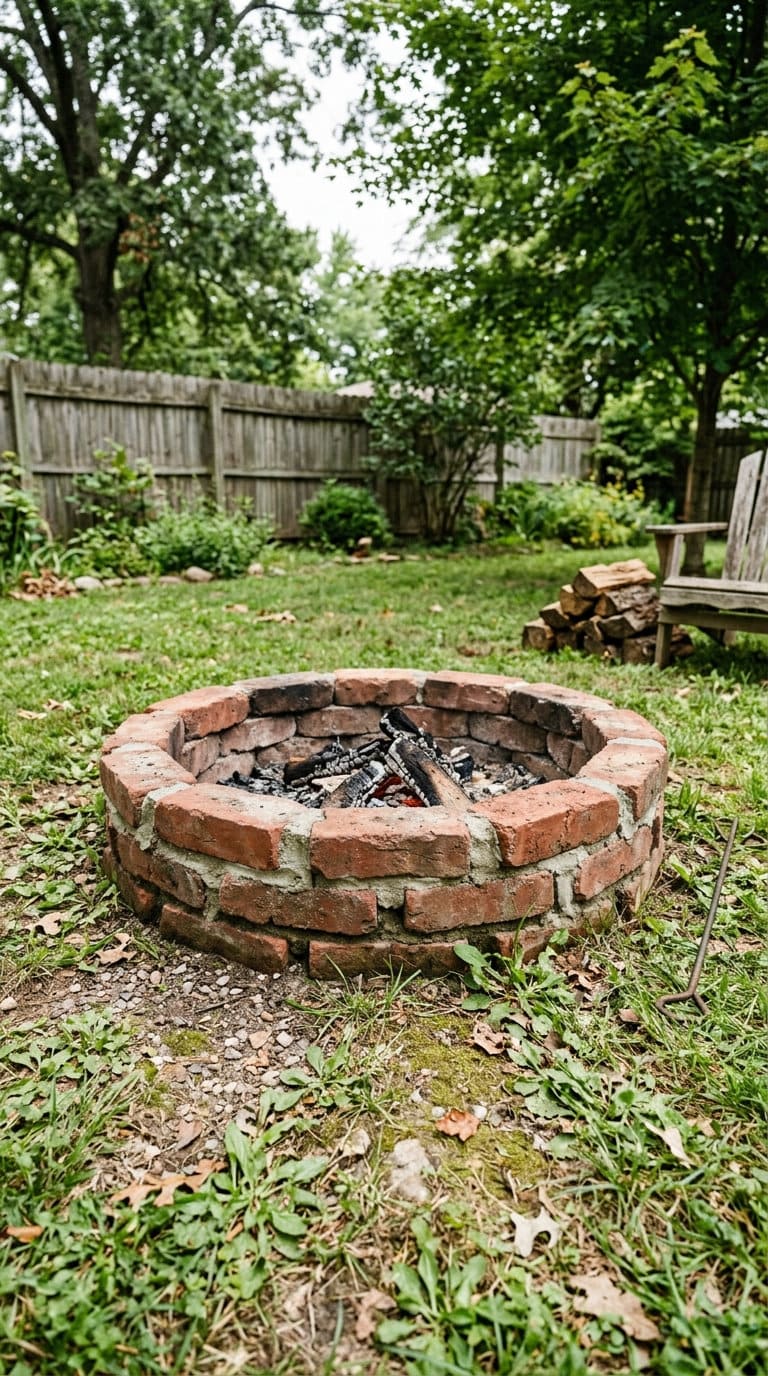
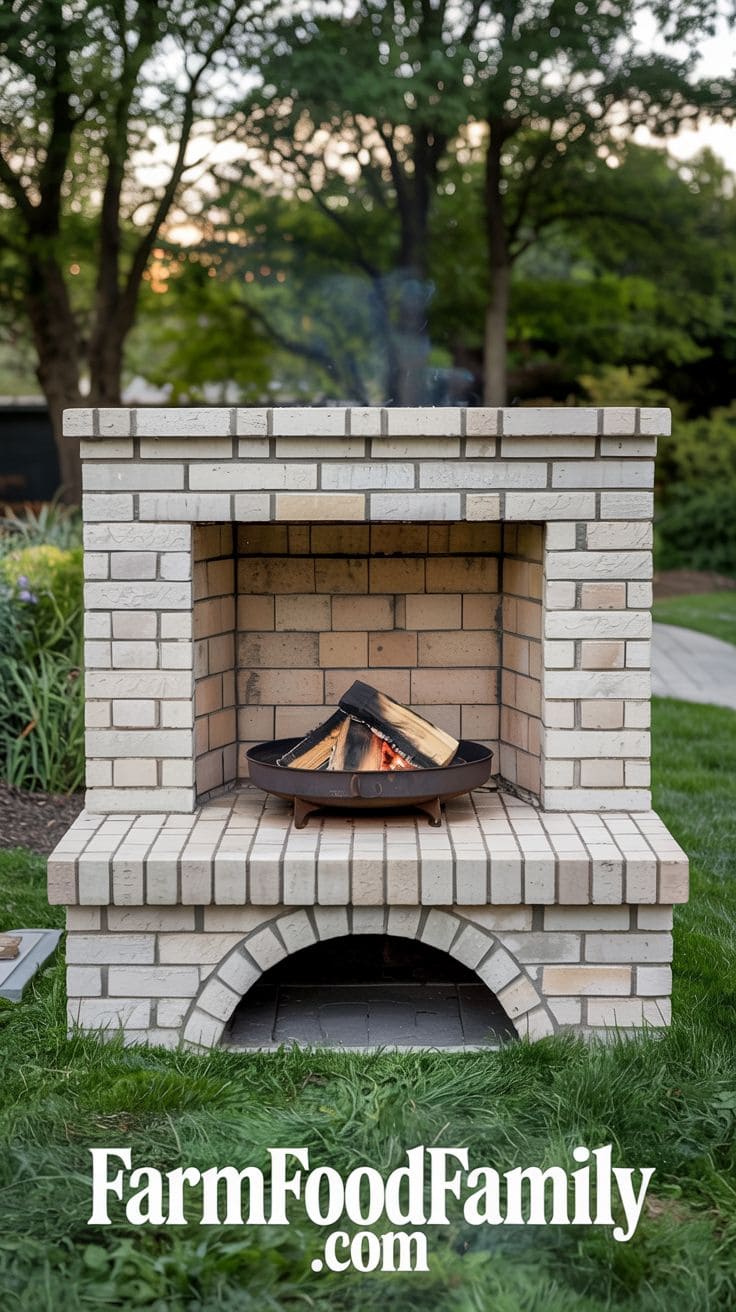
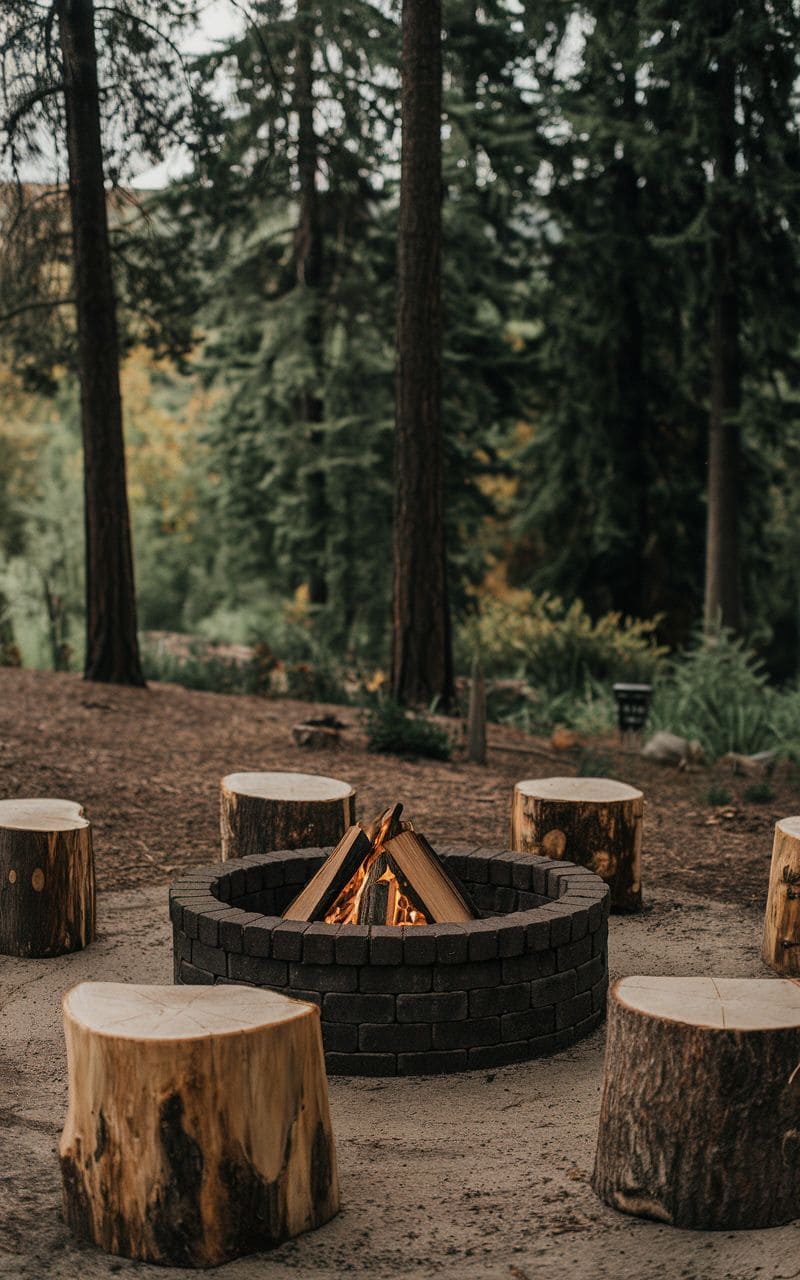
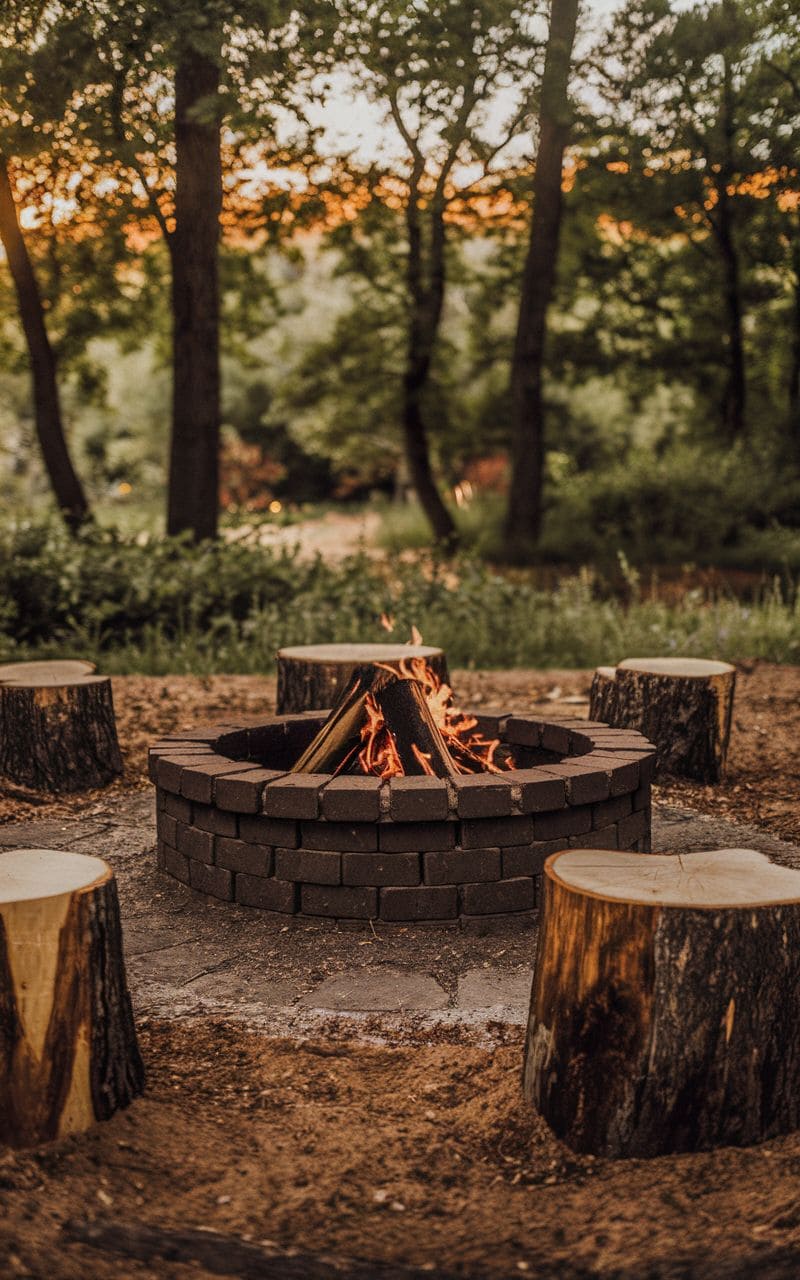
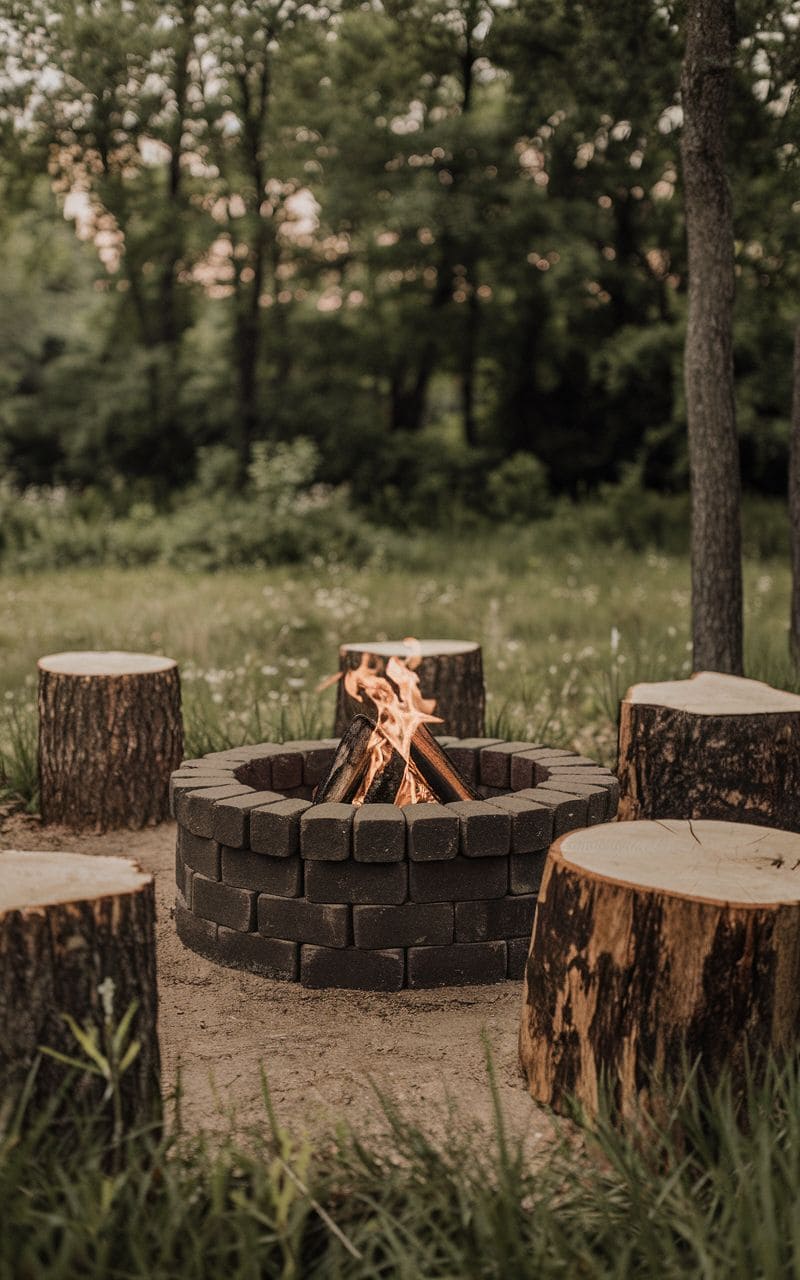
A basic circular ring of brick, simpler and smaller in scale than the “classic round” design in idea 2, works as a genuinely low-cost, low-commitment starting project.
Two or three courses of brick, mortared or dry-stacked, is often enough for a functional ring. This is a good first fire pit project if you’re testing whether you’ll actually use one before investing in a larger, more elaborate design.
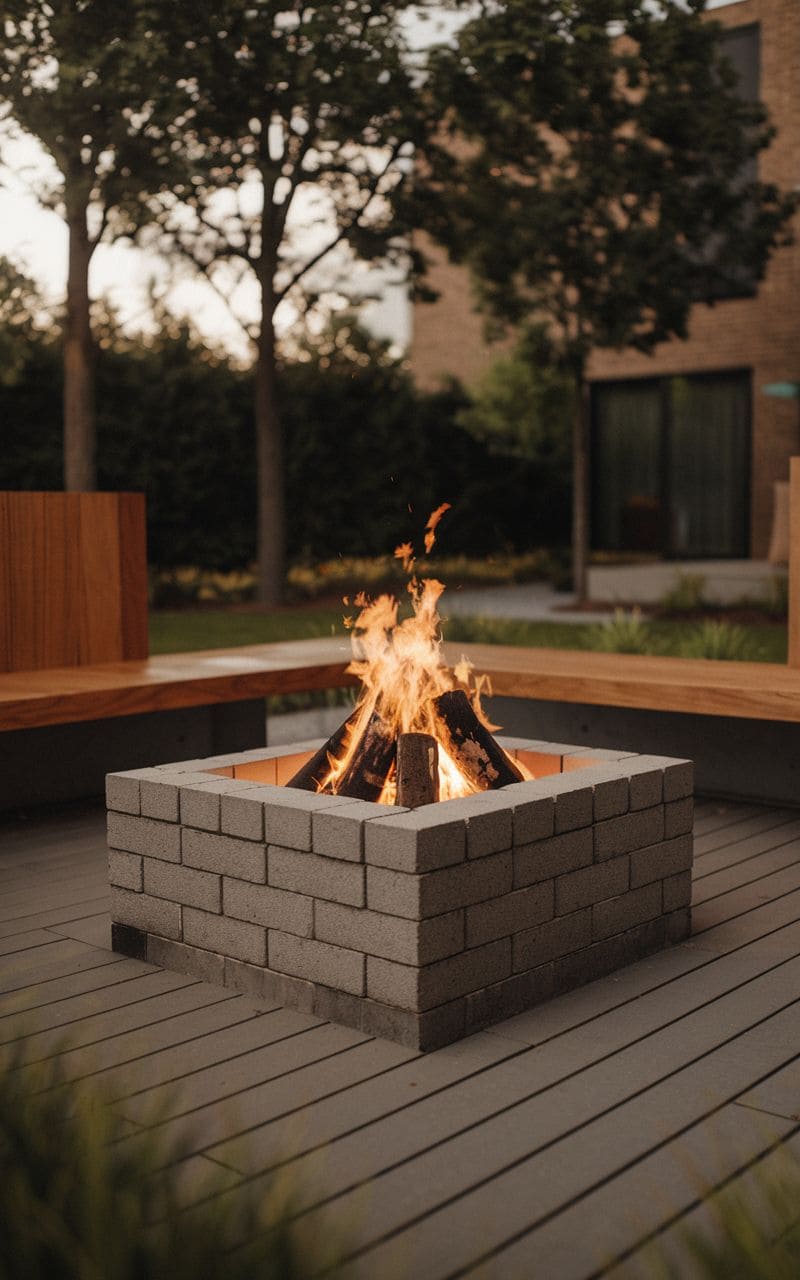
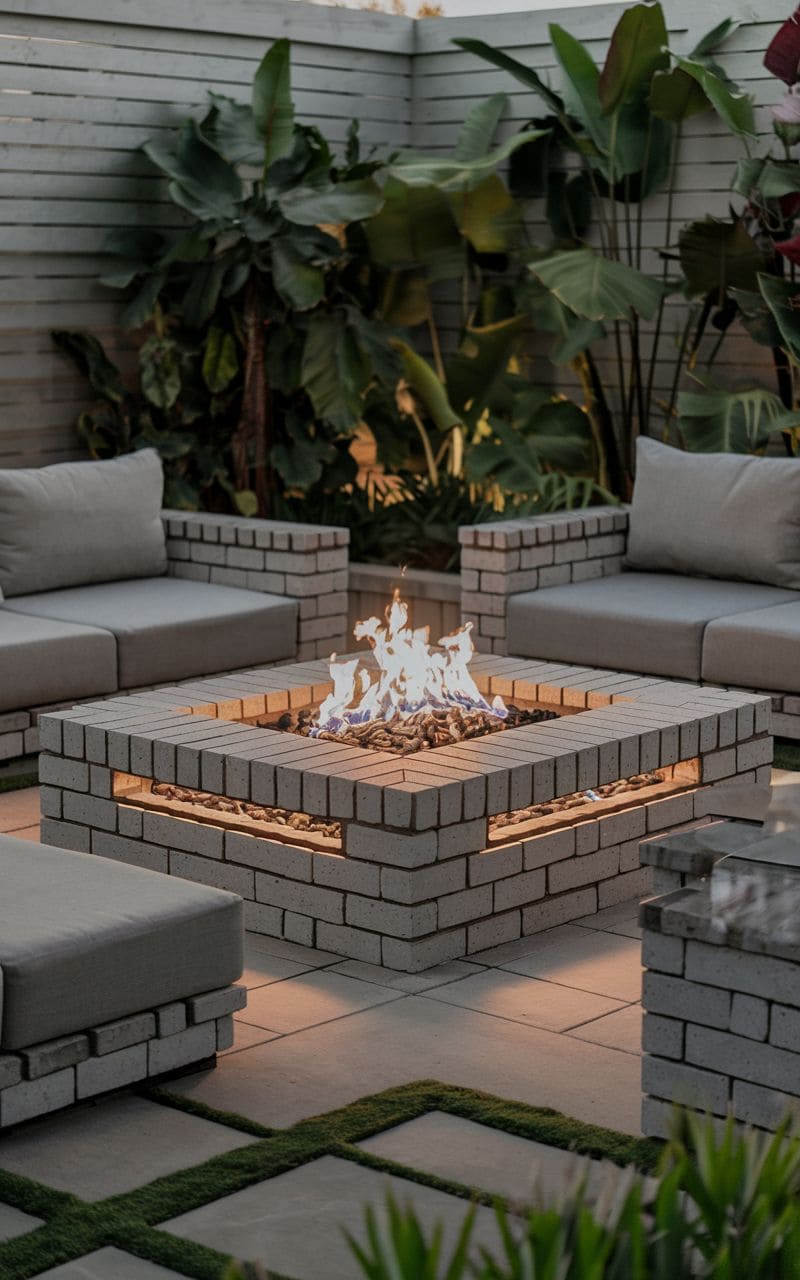
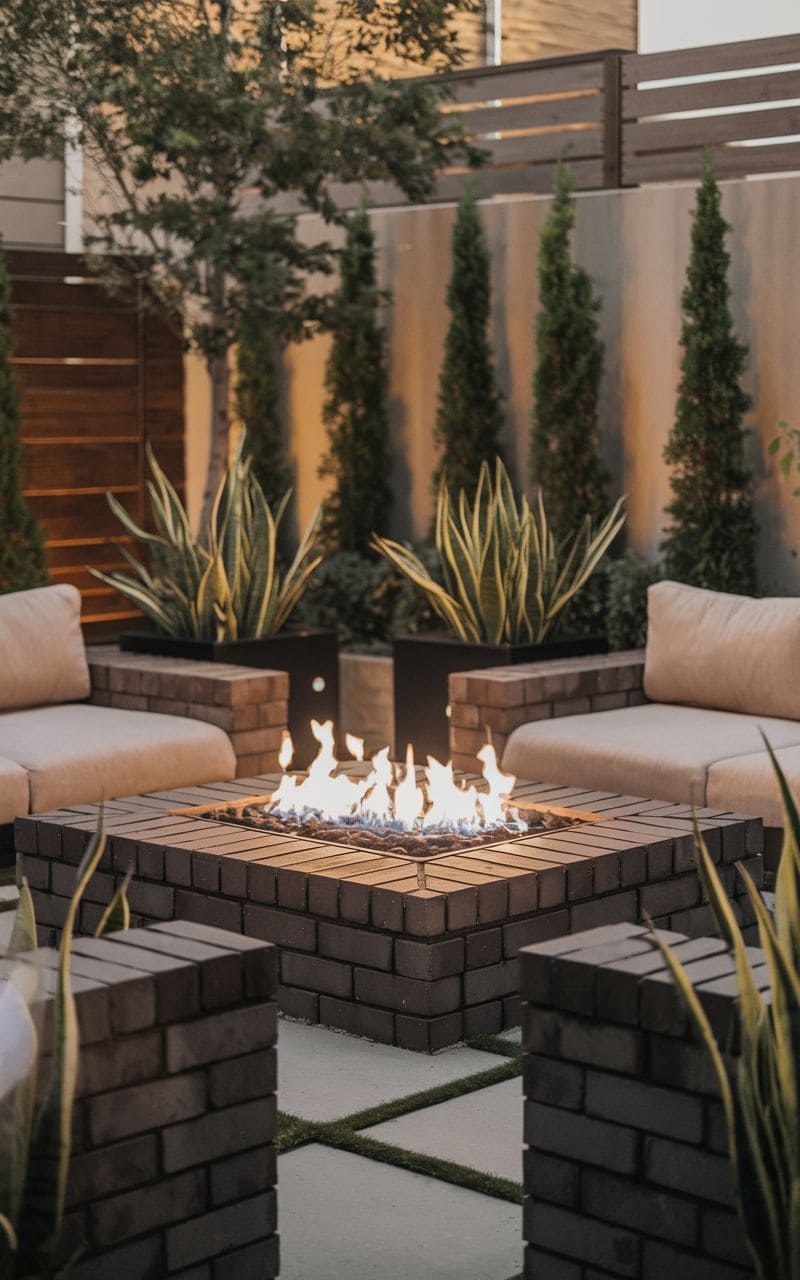
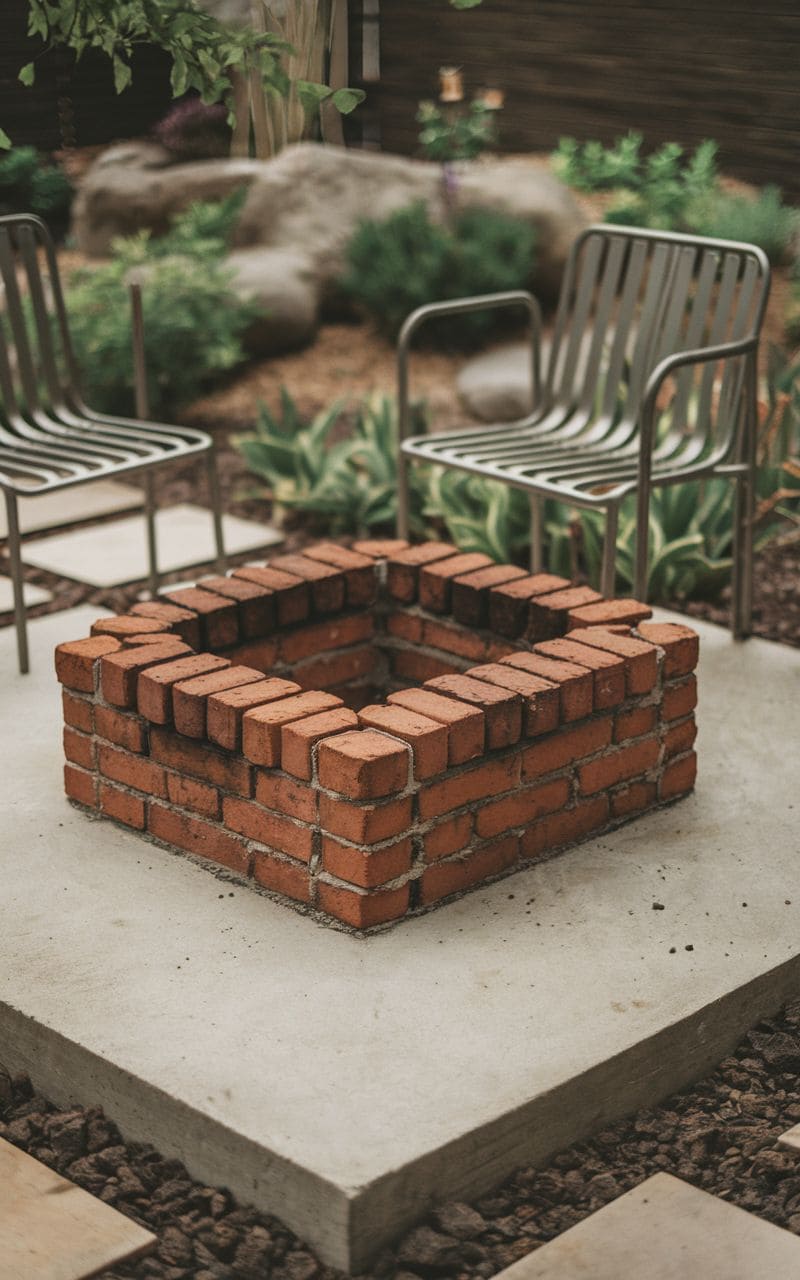
7. Square Brick Fire Pit
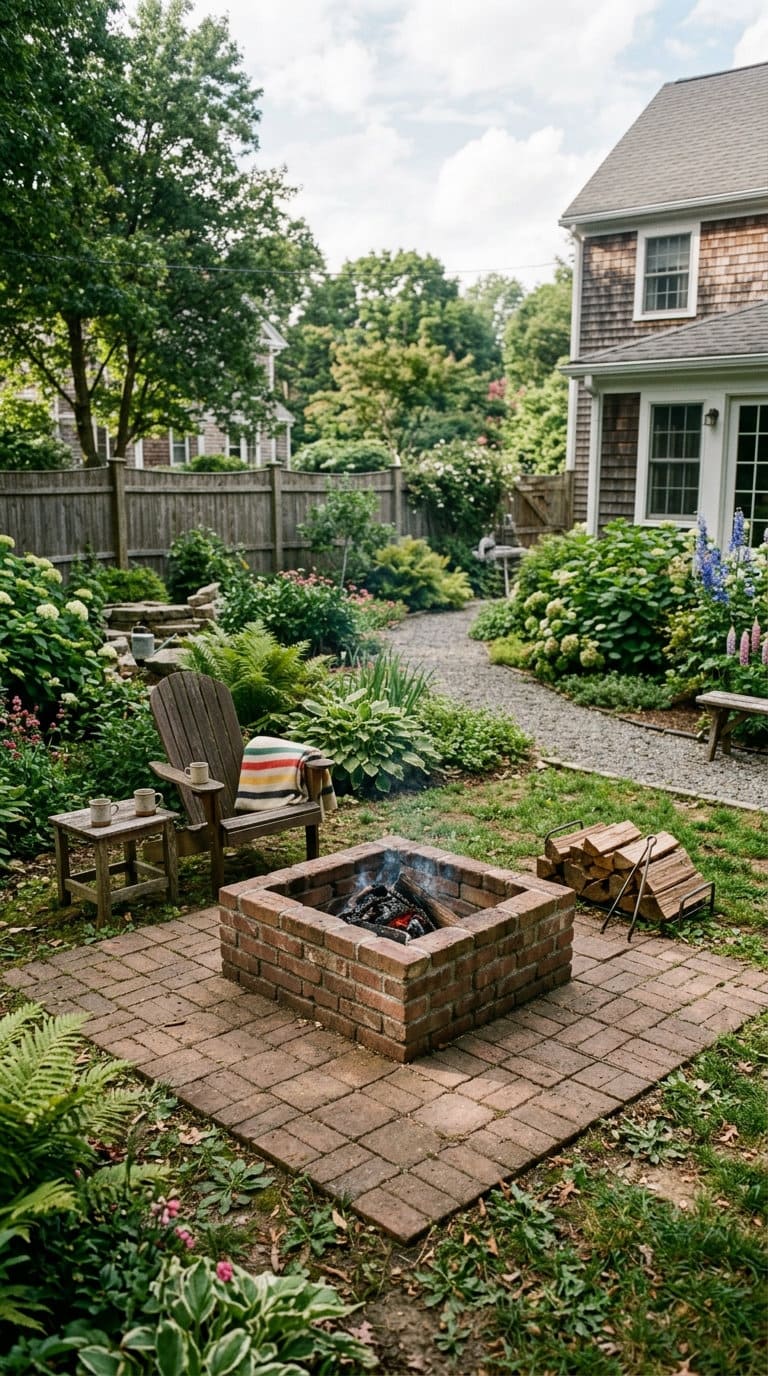
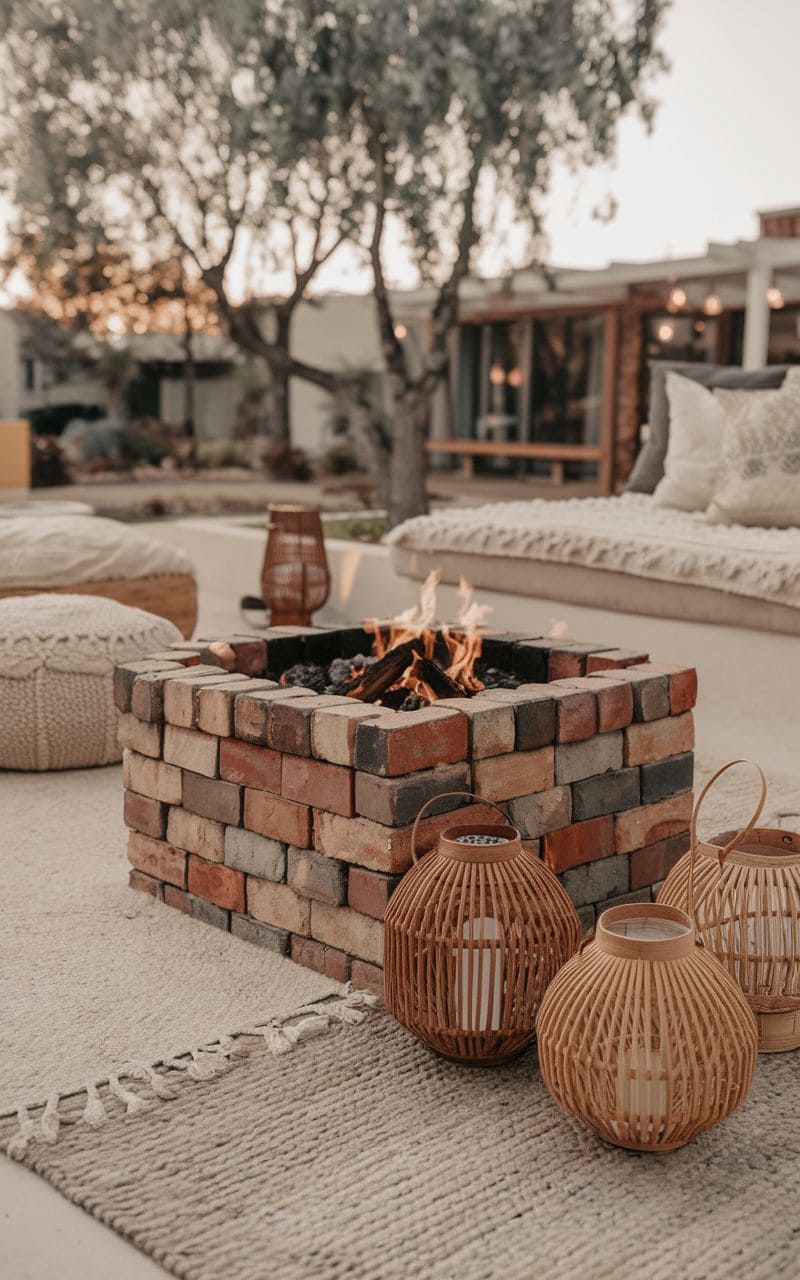
A square or rectangular brick fire pit reads as more architectural and modern than a circular one, and it pairs naturally with a square or rectangular patio layout rather than looking like an afterthought dropped onto a curved space.
The corners need extra attention during construction, mortared corner joints see more stress from thermal expansion and contraction than the straight runs do, so use a flexible, heat-rated mortar specifically at the corners.
8. Sunken Brick Fire Pit
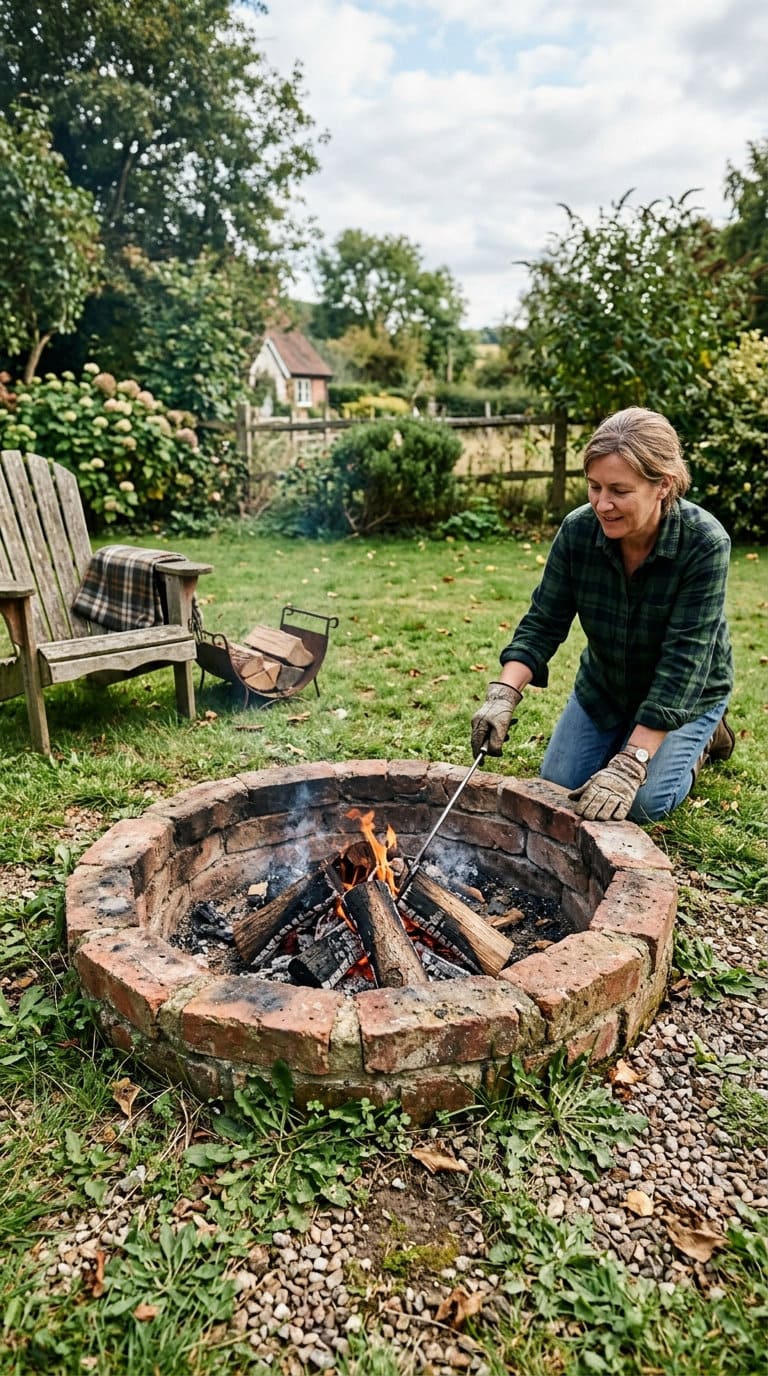
This is a simpler, more budget-friendly take on the patio-inset version in idea 3, a basic brick-lined pit sunk into the ground without a full surrounding patio rebuild.
It’s a genuinely good option if you want the sunken look without the cost of a complete hardscape project, just apply the same drainage caution from section 1, a sunk pit with nowhere for water to go is a bigger problem than a raised one.
9. Multi-Level Brick Fire Pit
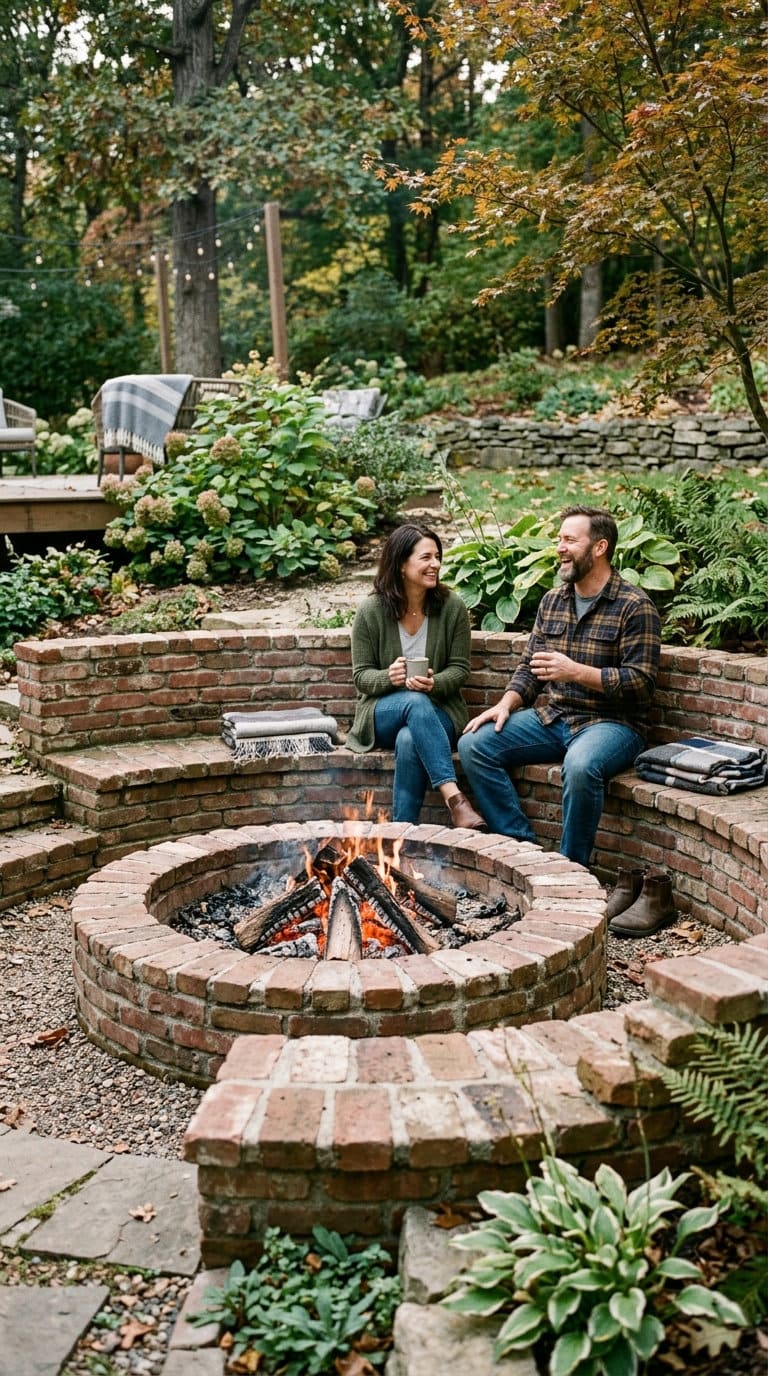
A multi-level design steps the brickwork down in tiers, wide seating ledge, narrower middle course, firebox at the center, giving the whole structure more visual presence and a built-in spot to set drinks or food.
Each tier adds real material and labor cost, so this design works best as a centerpiece project rather than a first attempt at brick fire pit building.
10. Brick Fire Pit with Built-in Seating
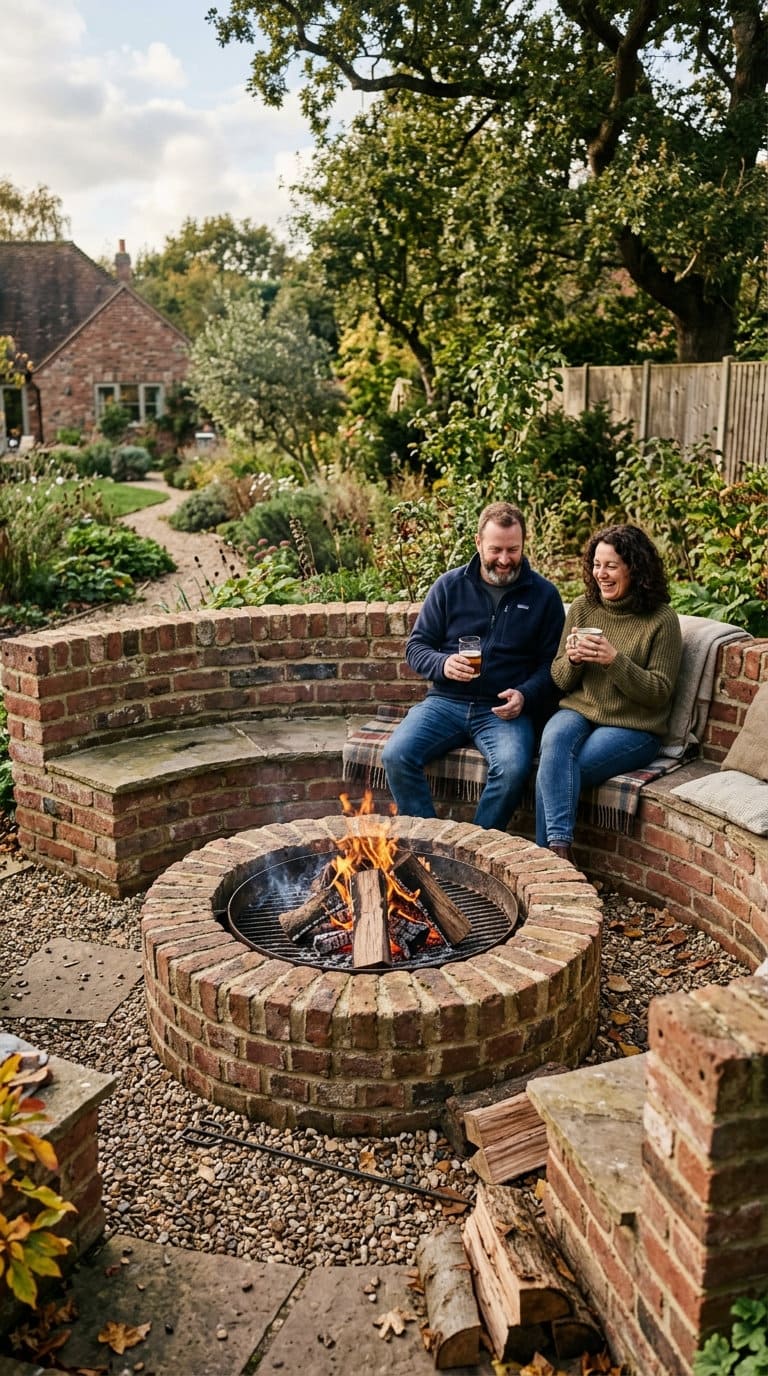
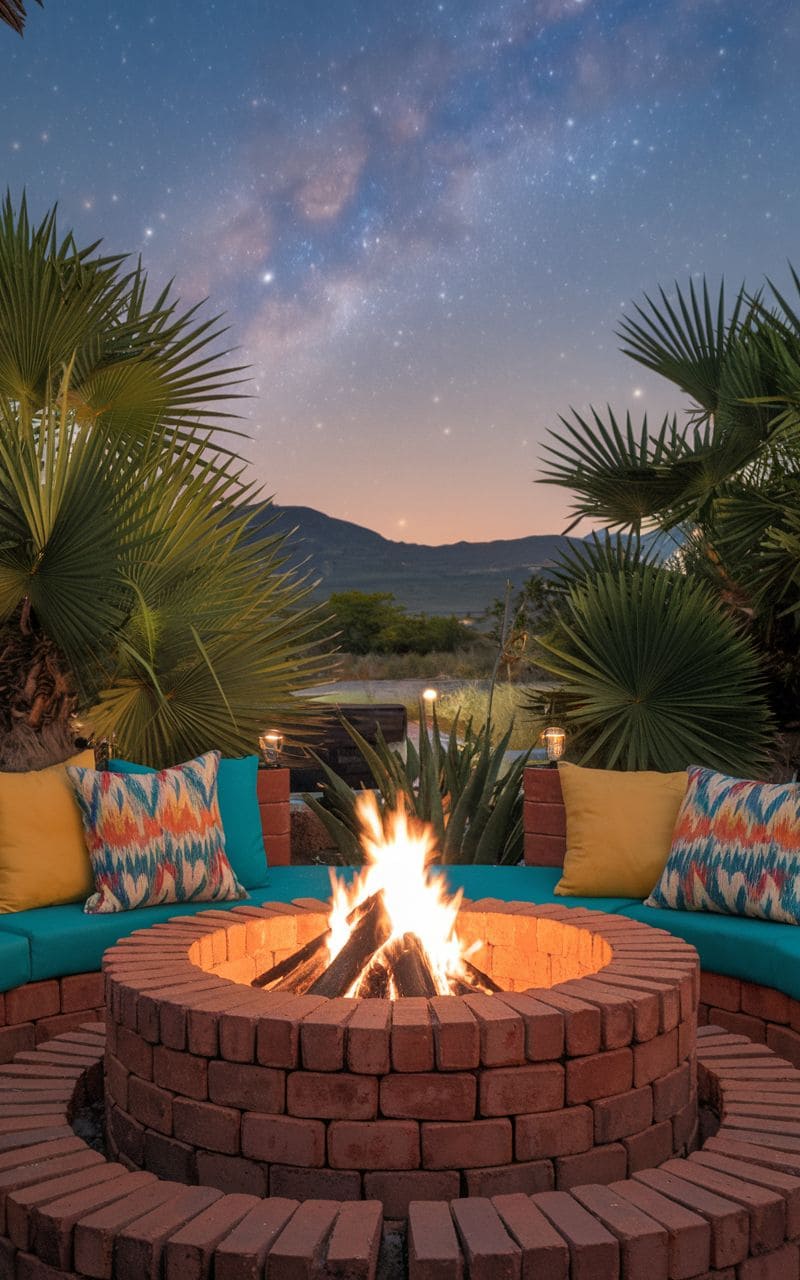
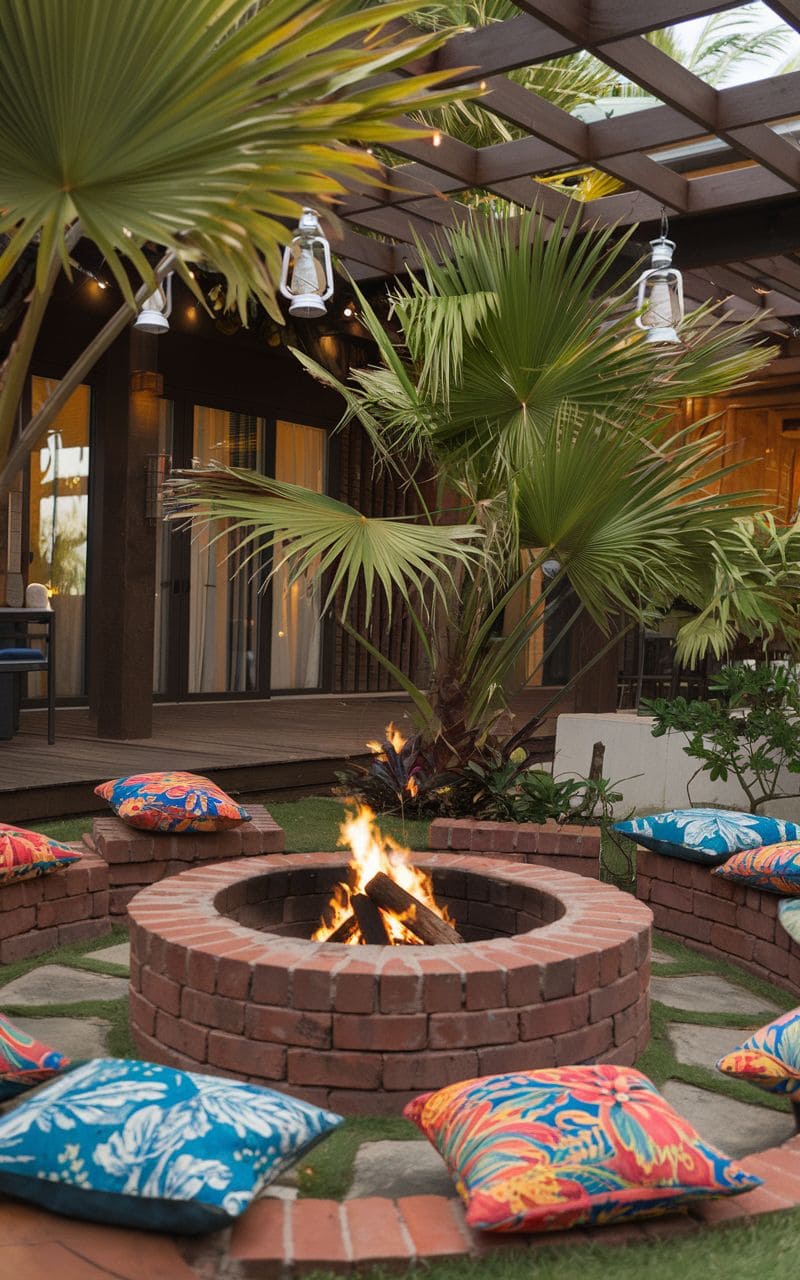
Extend the brick ring outward into built-in bench seating on one or more sides, so the fire pit and the seating are one continuous structure rather than a pit surrounded by separate furniture.
Keep seat height in the 17 to 19 inch range and cap the seating surface with something smooth and flat, the same seating guidance that applies to any masonry bench applies here too.
Make sure the built-in seating still respects the clearance distance from section 1, it’s easy to build seating too close to the firebox when it’s all one continuous structure.
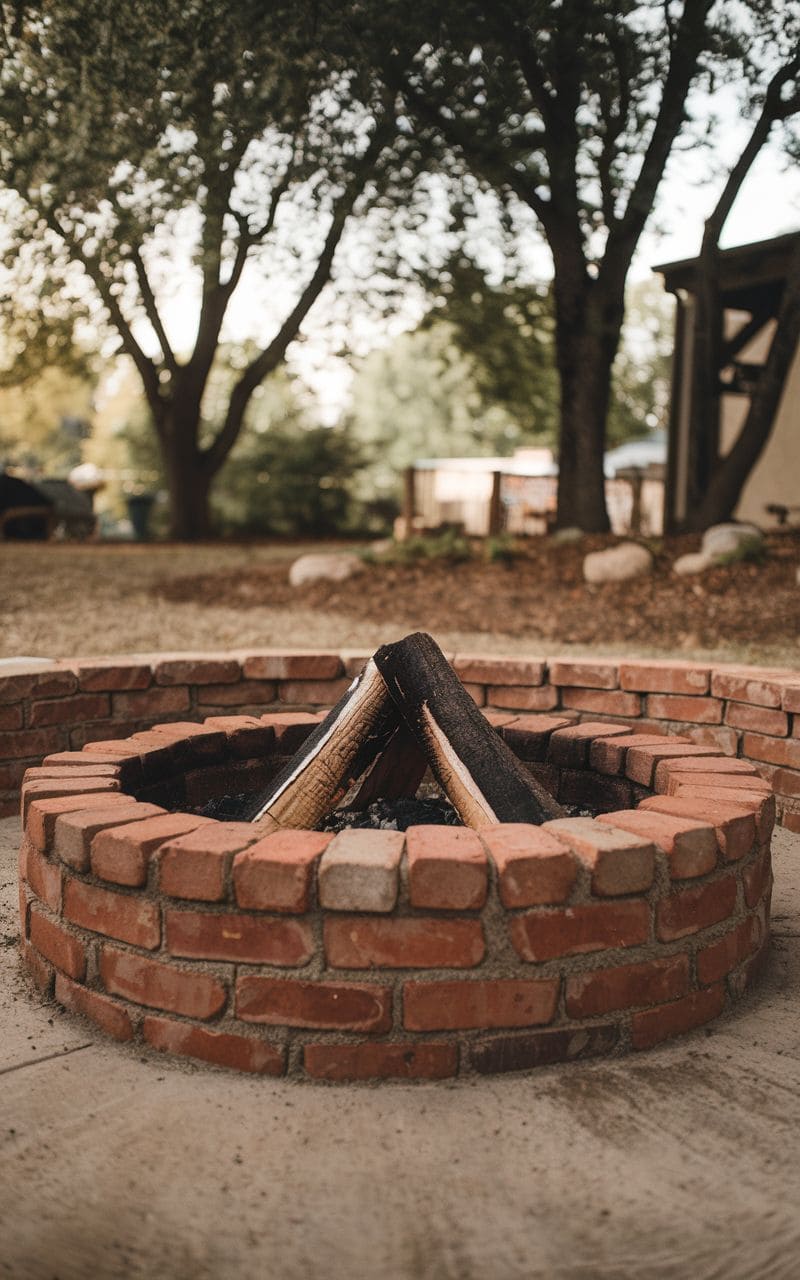
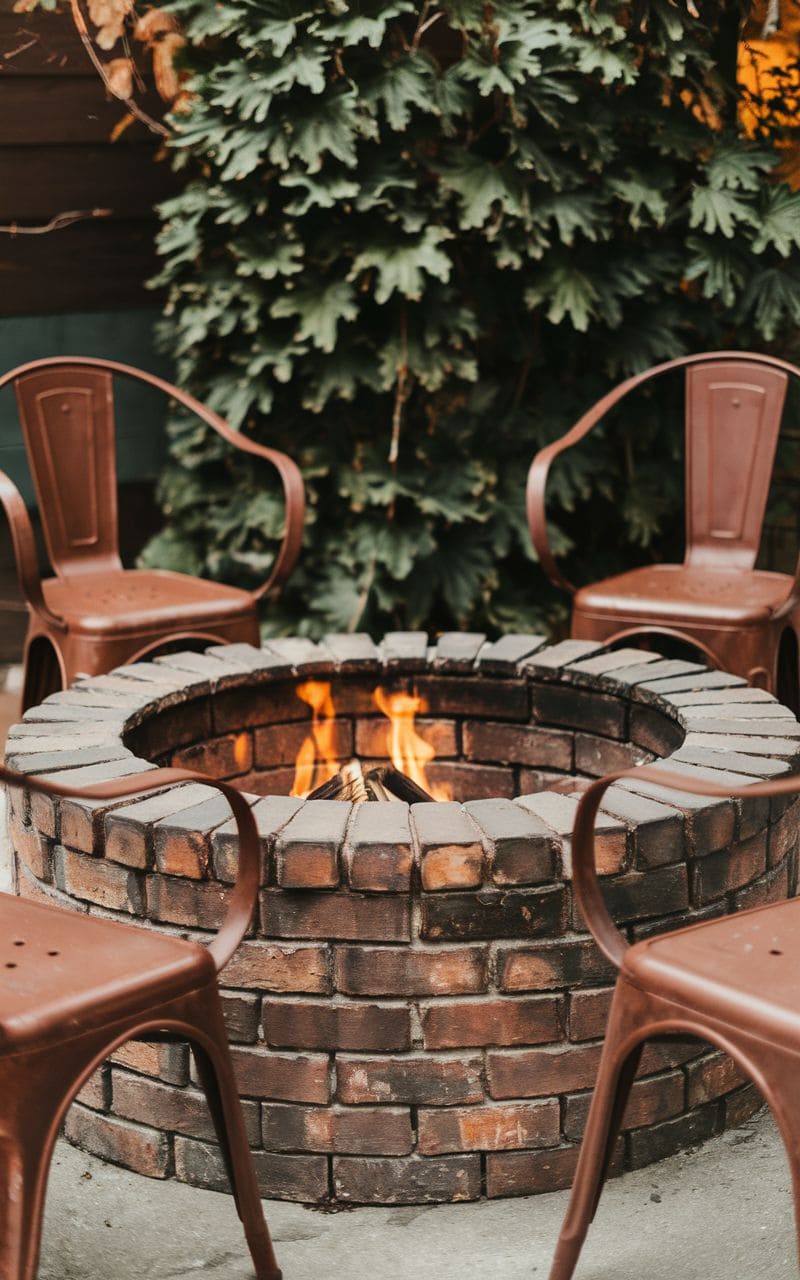
11. Rustic Brick Fire Pit
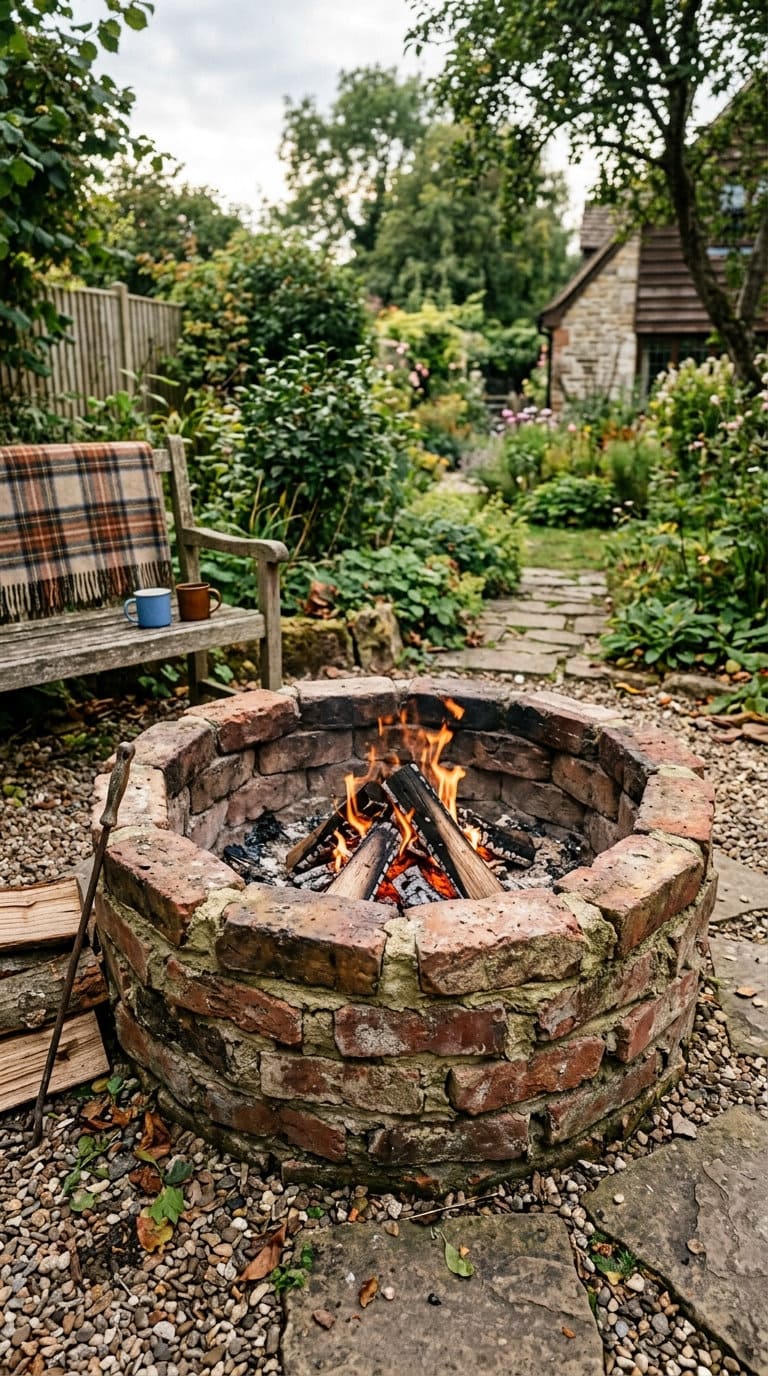
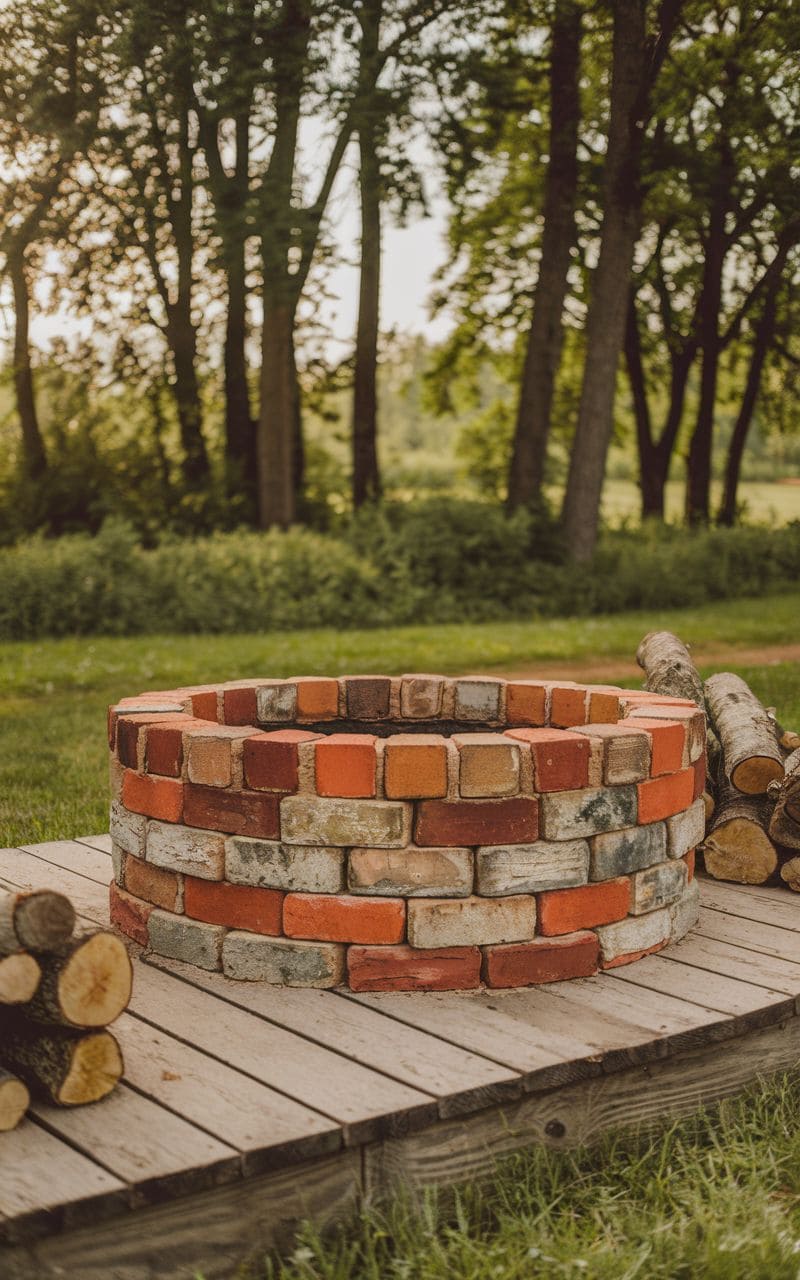
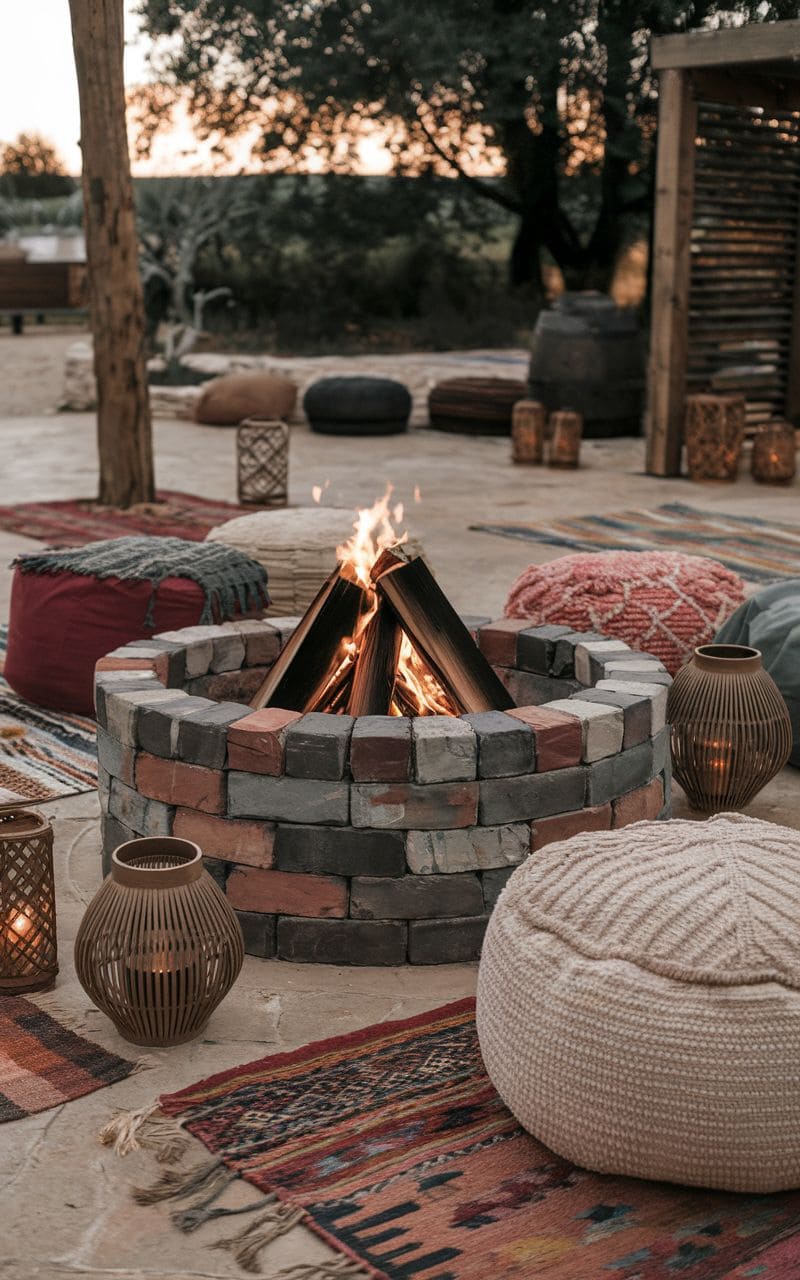
Reclaimed or weathered-looking brick, laid with visible mortar joints and a slightly irregular, hand-built look, gives a fire pit real rustic character rather than a builder-grade finish.
Genuinely reclaimed brick needs the same fire-rating scrutiny as new brick, an old brick’s age doesn’t make it more heat-resistant, so still use a proper fire brick liner regardless of how rustic and reclaimed the outer material looks.
12. Modern Brick Fire Pit
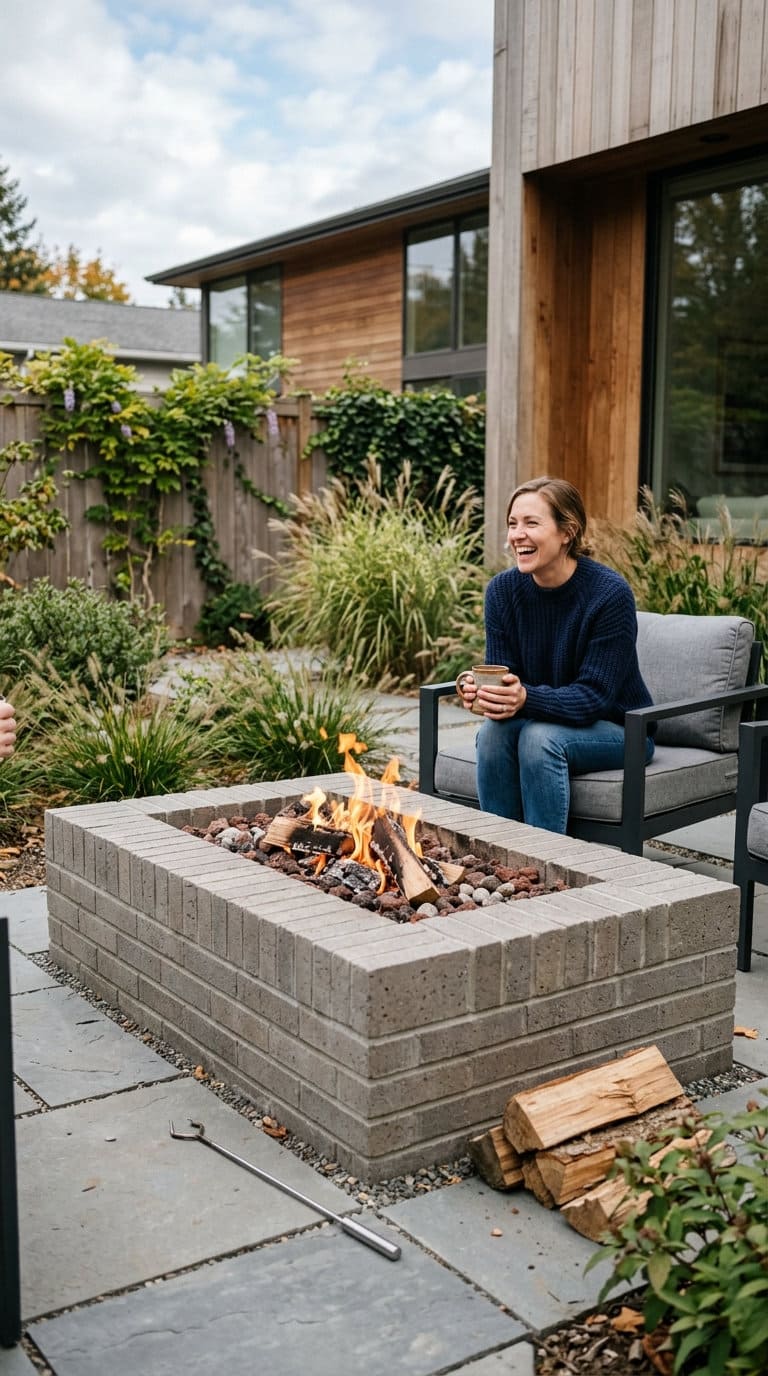
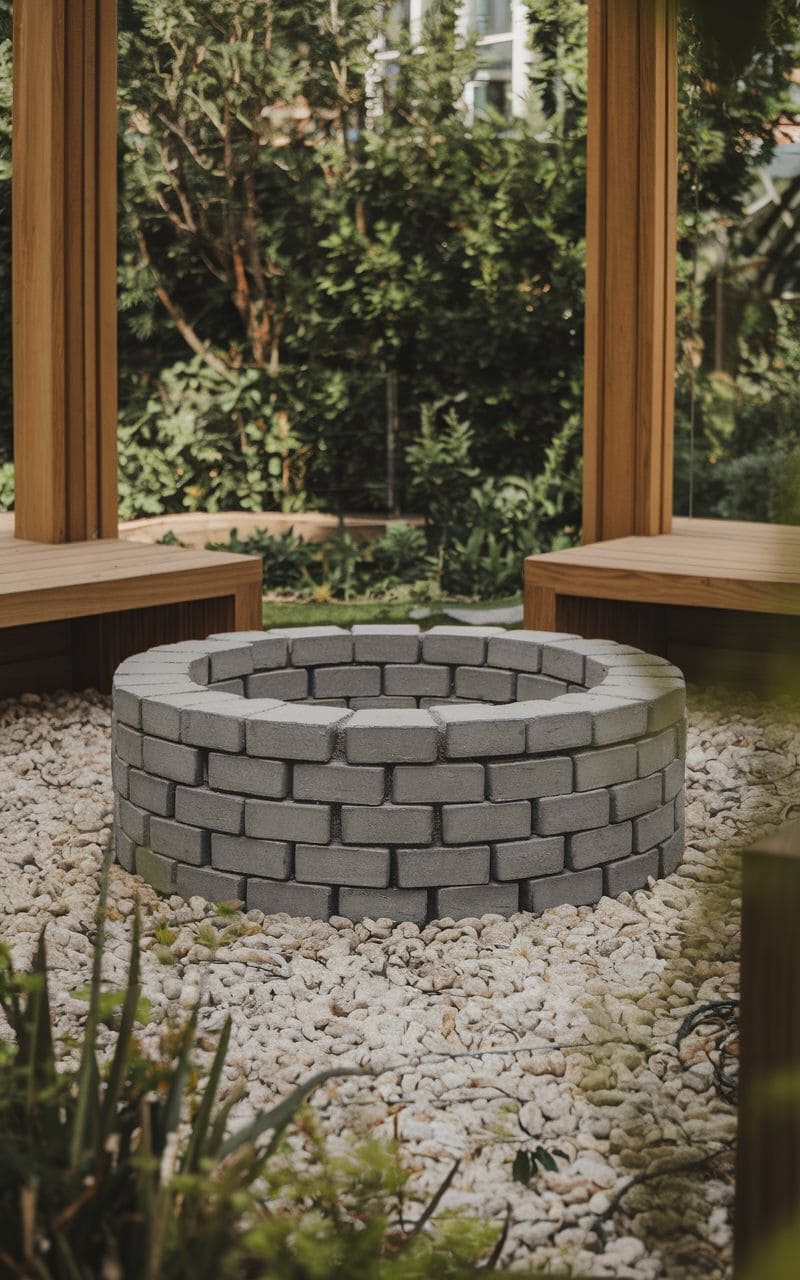
Clean lines, a single brick color or a tight tonal range, and a geometric shape (square, hexagon, or a precise circle) give a fire pit a modern, minimalist look rather than a traditional one.
Thin-profile or long-format brick reinforces the modern look better than a standard-size brick would. This style pairs well with the metal cooking grate from idea 3 in a matte black finish rather than a rustic wrought-iron look.
13. Portable Brick Fire Pit
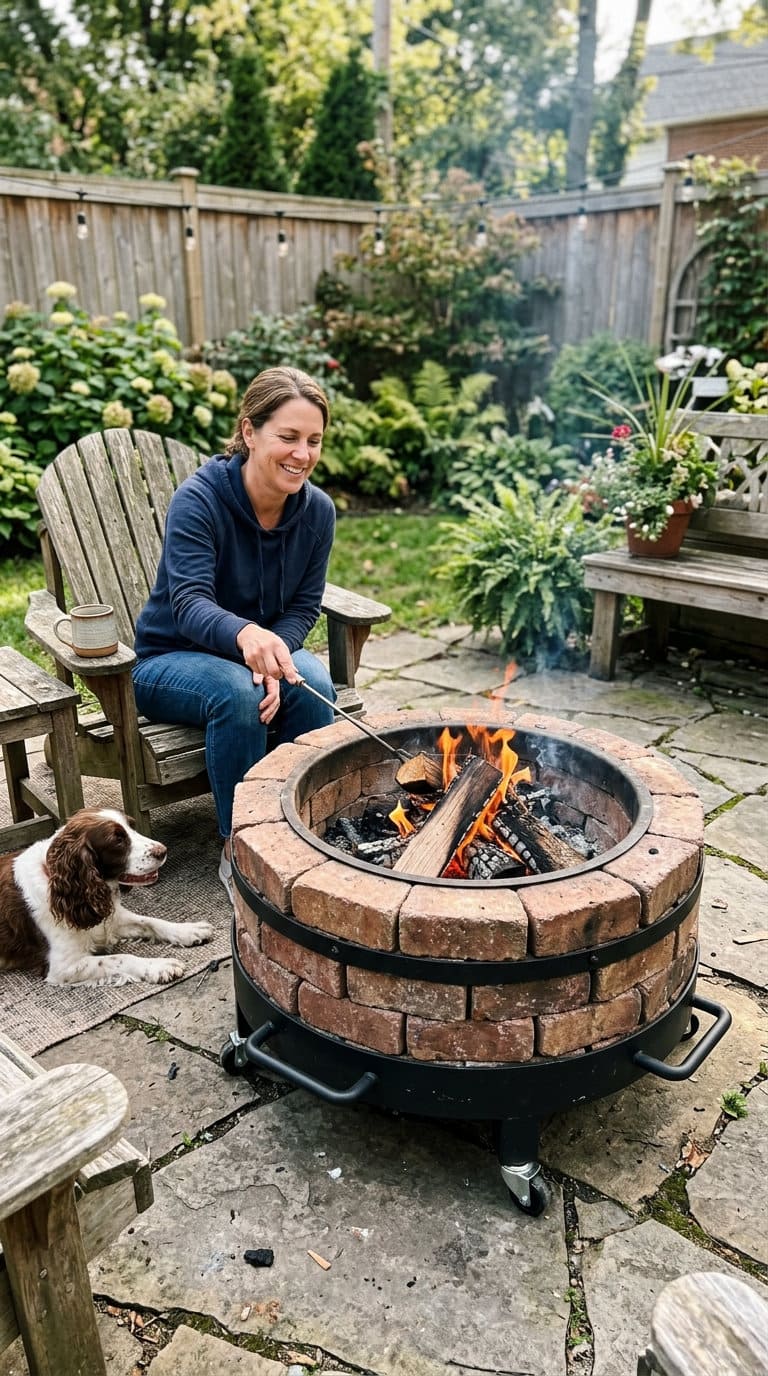
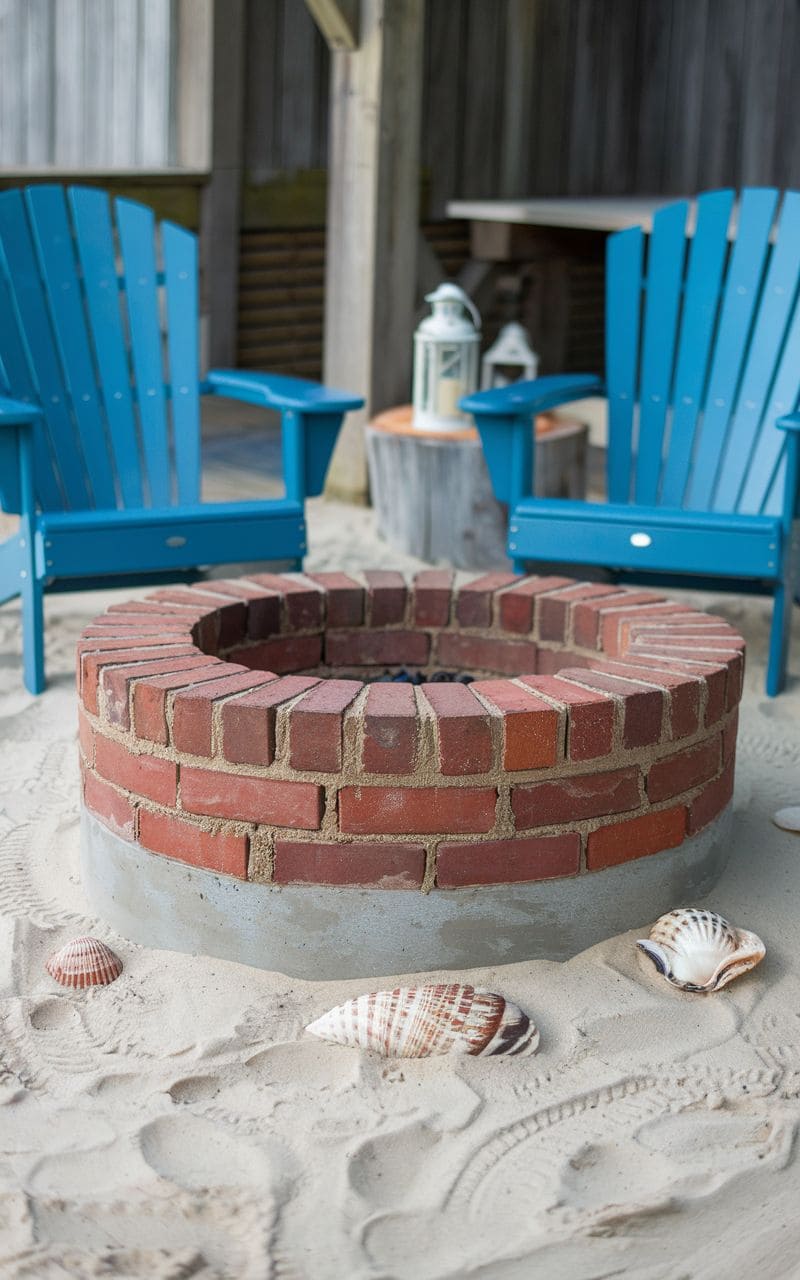
This one is a bit of a contradiction in materials, brick is heavy and permanent by nature, so a genuinely “portable” brick fire pit usually means a small, movable brick-veneer unit over a lightweight metal or concrete core rather than solid masonry.
The real advantage is regulatory: a portable unit is generally exempt from a building permit, though it still has to follow local setback and burn-ban rules, unlike the permanent built-in designs elsewhere on this list which almost always require one.
If true portability matters more than the brick look, a gas or propane insert is also worth considering, since those are commonly exempt from burn bans that would otherwise sideline a wood-burning portable unit on a high-fire-risk day.
14. Brick Fire Pit with Grill
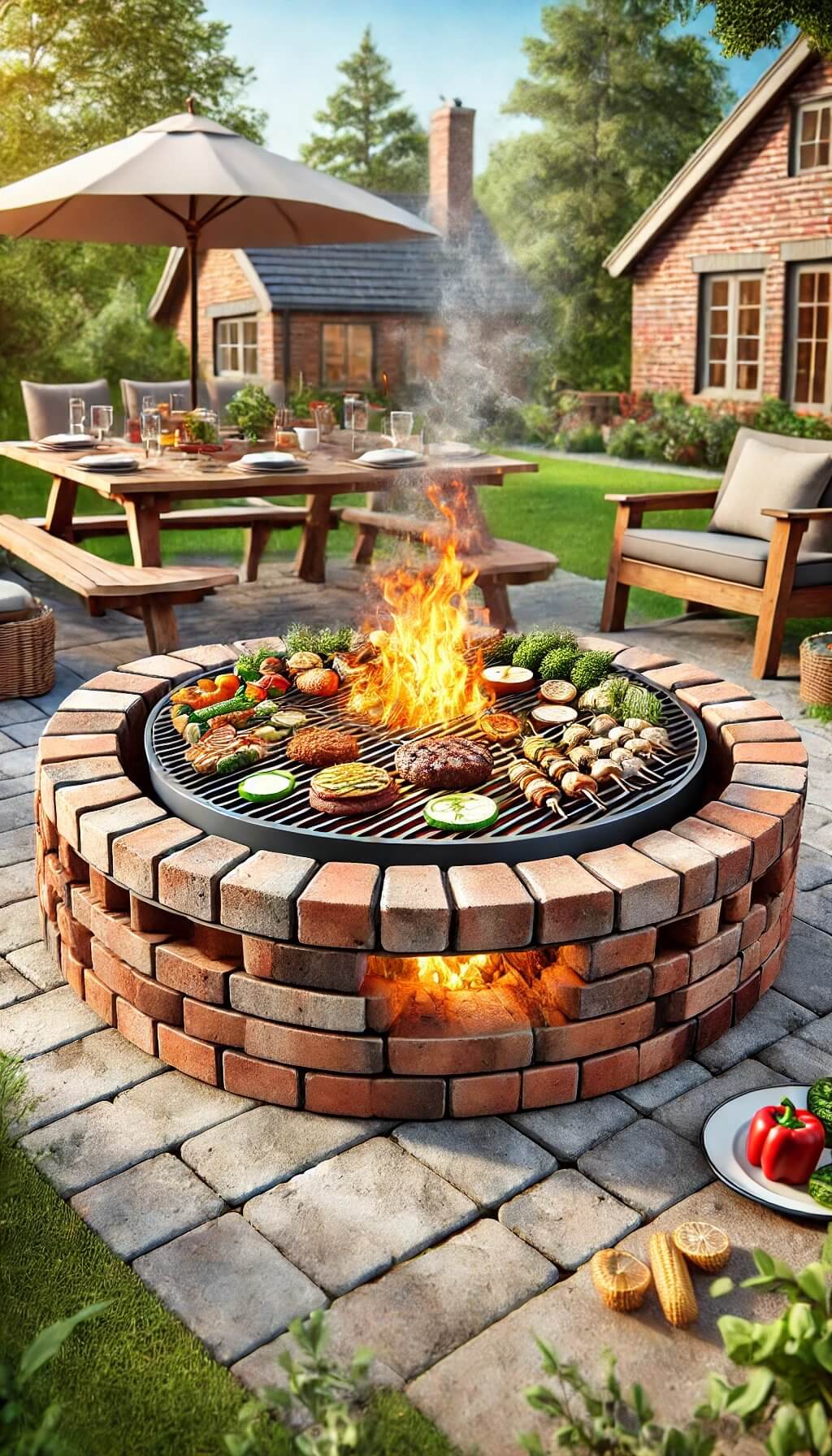
Similar to the cooking grate idea but built around grilling as the primary function rather than an add-on, with a lower, wider firebox designed for coal-bed cooking and a sturdy grate rated for real cooking weight rather than a decorative one.
Keep the fire brick interior liner from section 1 non-negotiable here specifically, a grilling fire pit runs hotter and more often than an occasional evening fire, and that repeated heat cycling is exactly what regular brick fails under fastest.
15. Raised Brick Fire Pit
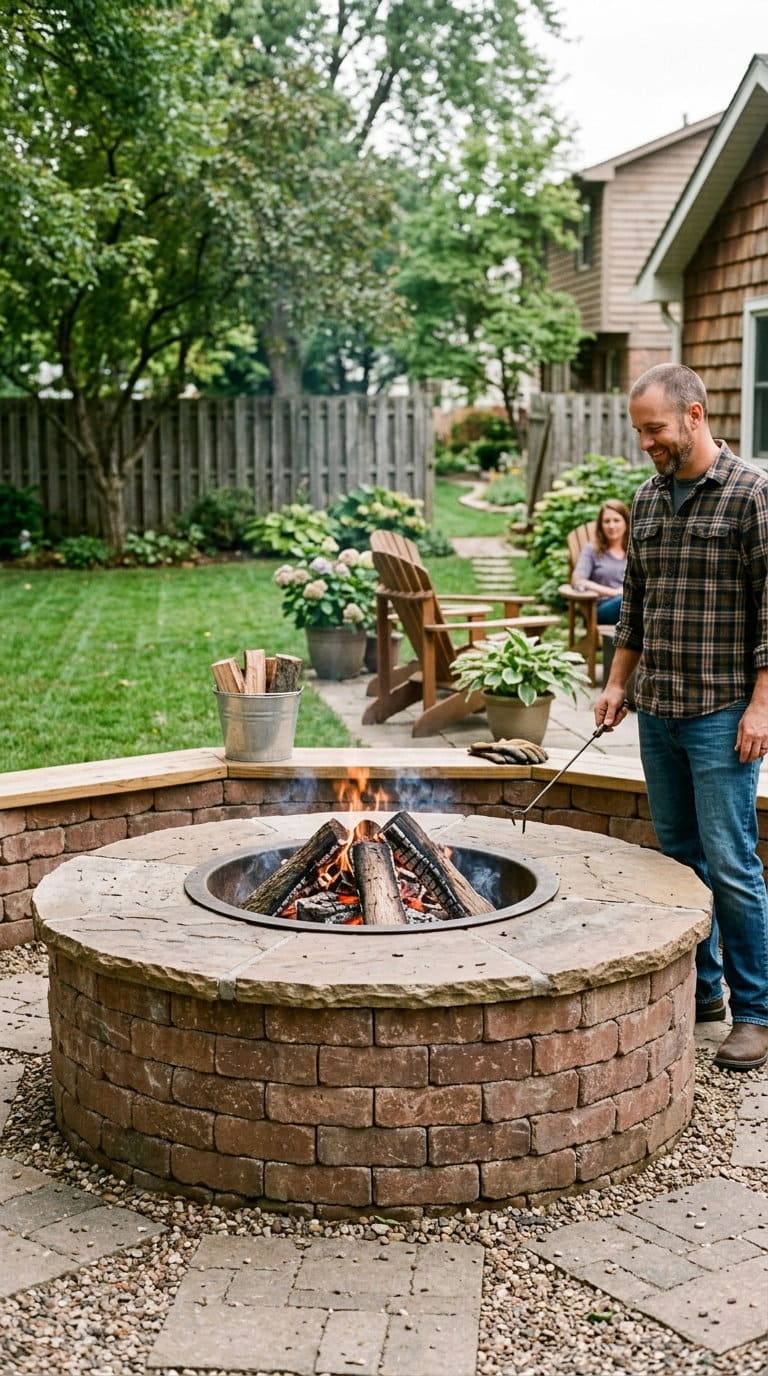
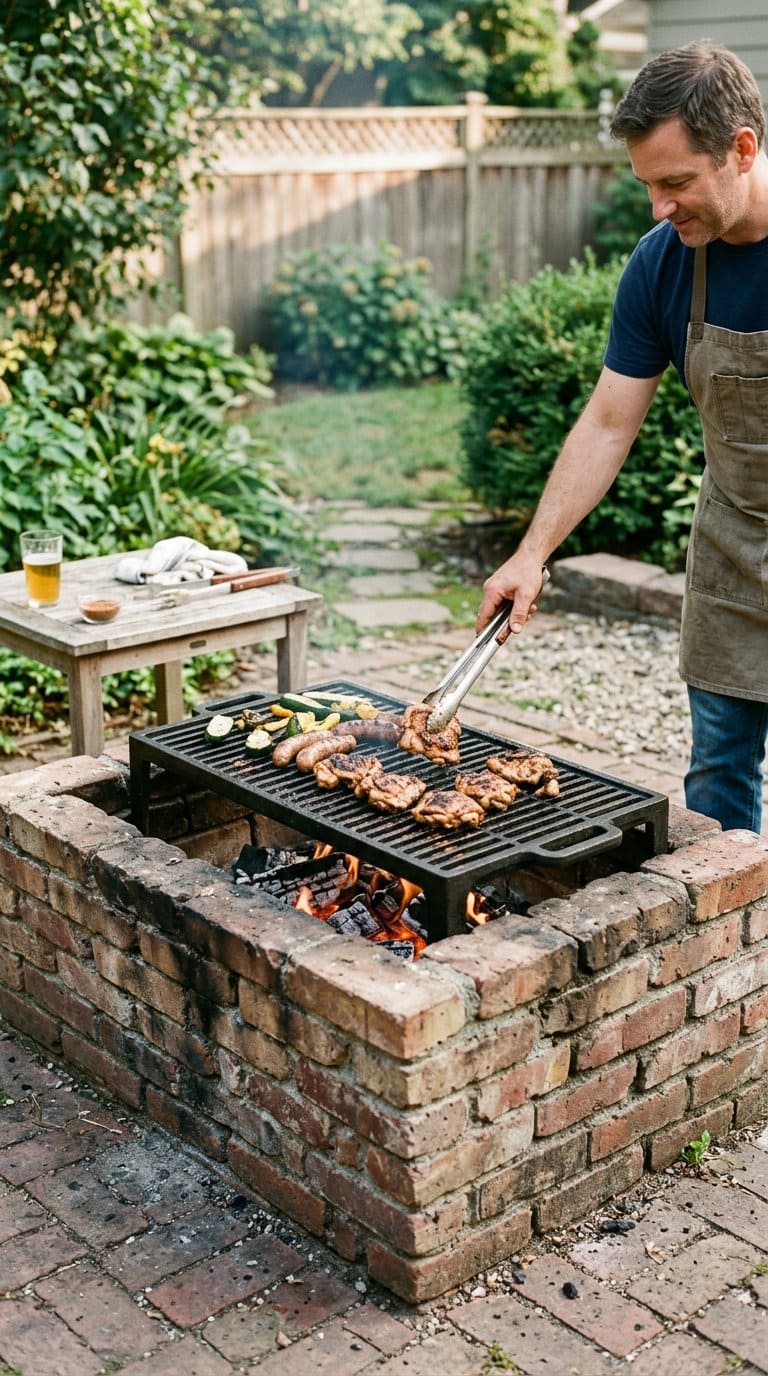
Building the fire pit up on a raised brick platform, rather than at ground level, puts the flame at a more comfortable viewing and cooking height and improves airflow to the fire.
A raised design needs a genuinely solid, level base underneath the platform itself, not just under the firebox, since the whole structure’s weight sits on that foundation, this is one of the designs where skipping proper footing shows up as visible settling or cracking within a year or two.
16. Brick Fire Pit with Decorative Inlays
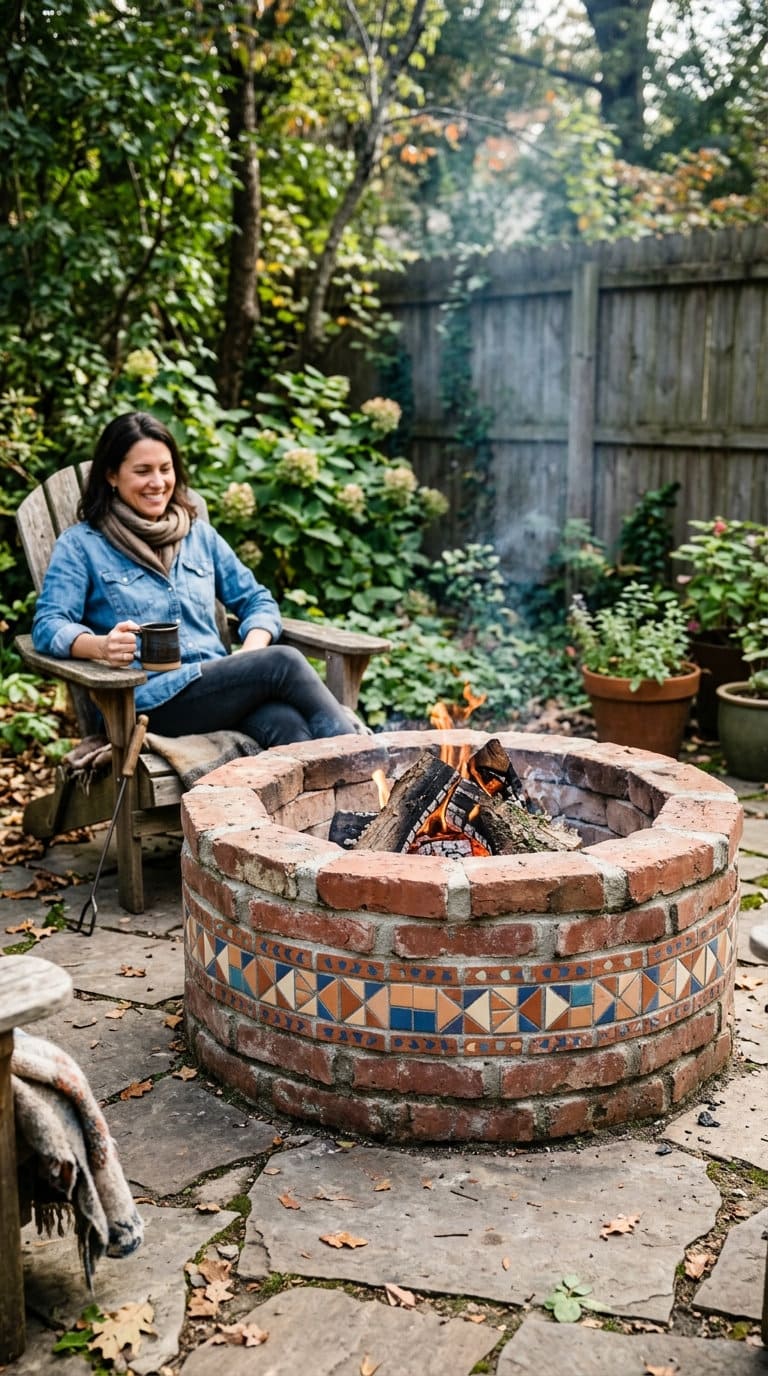
Set contrasting brick, tile, or stone inlays into the fire pit’s outer face, a pattern, a monogram, or a simple geometric accent, to turn a functional structure into a real design feature.
Keep decorative inlays on the outer shell only, never on the interior firebox wall, decorative tile and inlay materials are almost never rated for direct flame contact the way fire brick is.
17. Eco-Friendly Brick Fire Pit
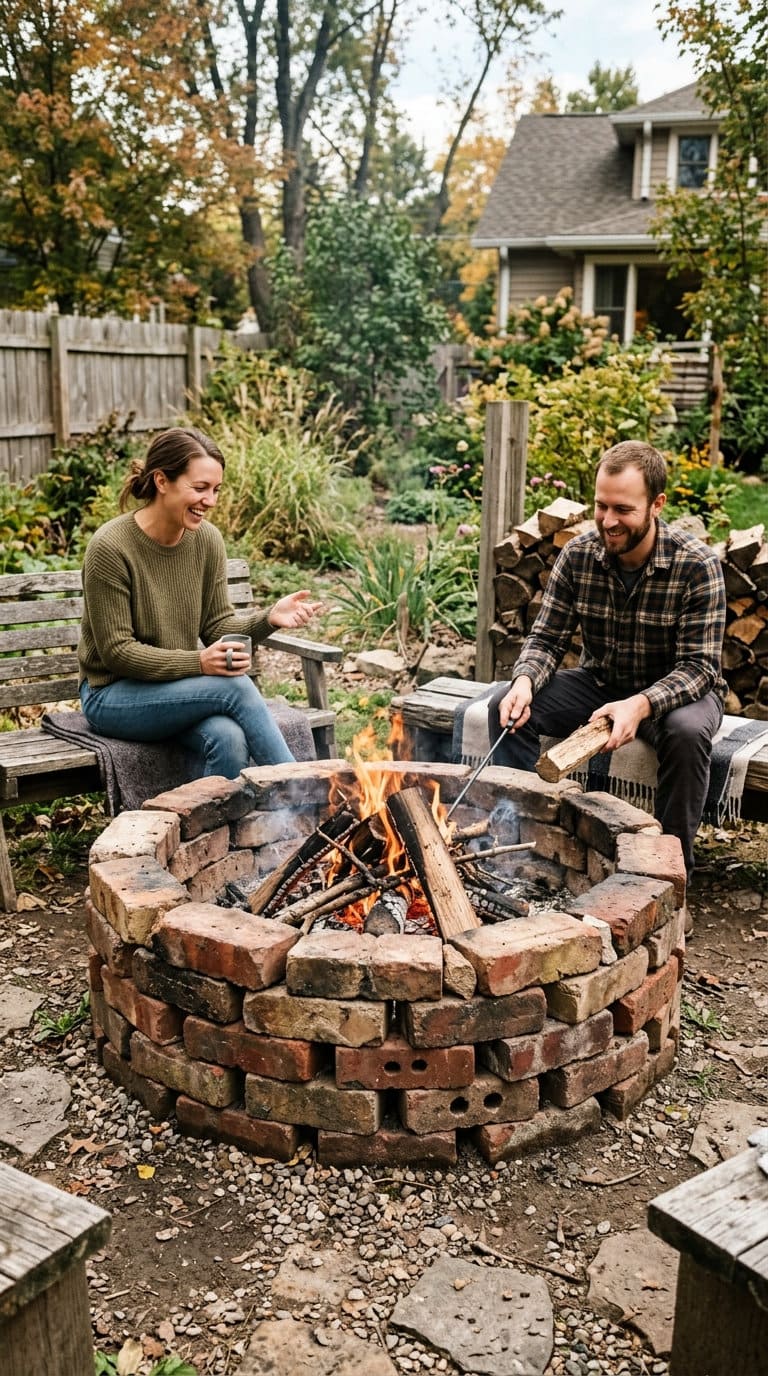
Reclaimed brick, a wood-conserving smaller firebox size, and a design that burns cleaner (better airflow means more complete combustion and less smoke) all make a fire pit meaningfully lower-impact without changing the basic brick-fire-pit concept.
Pairing the pit with a spark screen (Mark McCullough’s real safety point from section 1) also reduces the chance of an ember starting an unintended fire nearby, a genuine environmental and safety benefit in one feature.
18. DIY Brick Fire Pit Kits
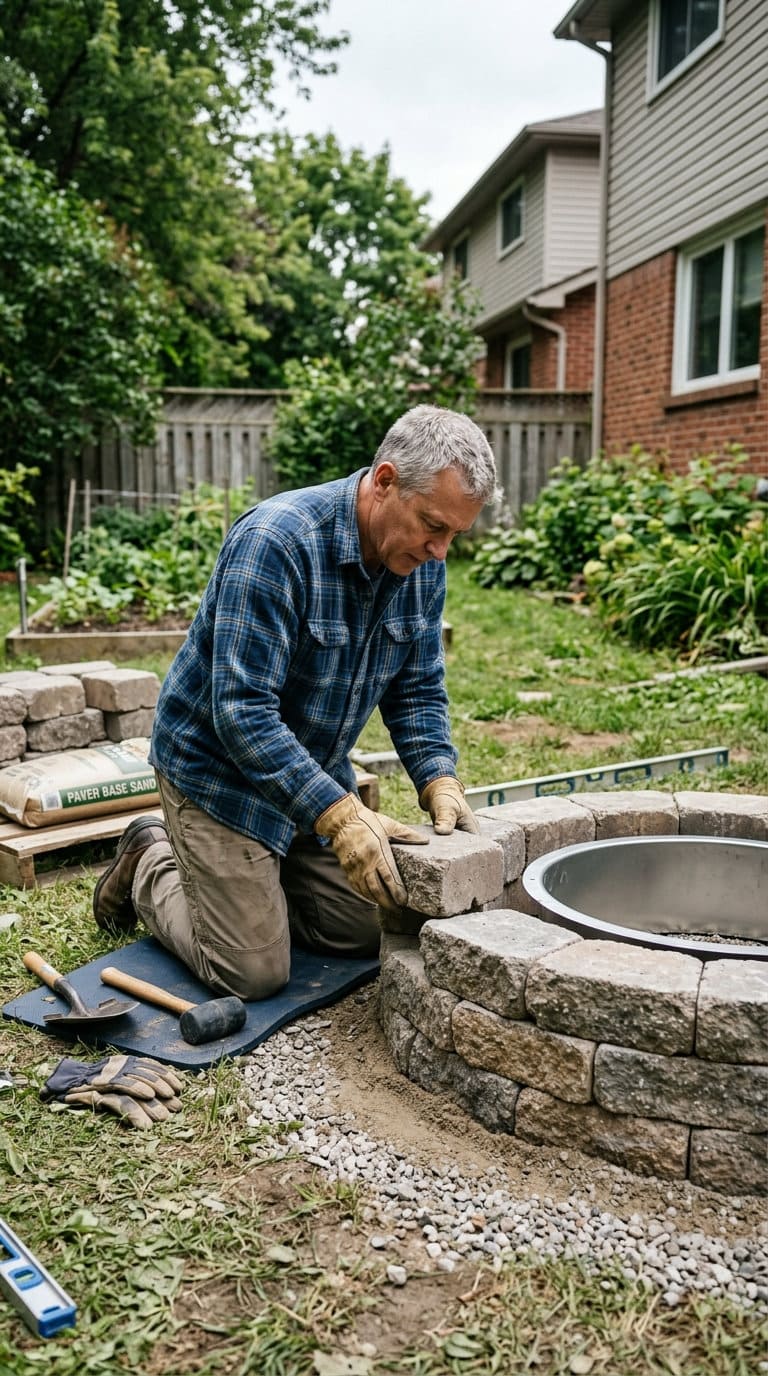
Pre-cut, pre-fitted brick or block kits let you build a fire pit without cutting any masonry yourself, genuinely the fastest route to a finished project for a first-time builder.
Even with a kit, the foundation and base requirements from section 1 still apply in full, a kit makes the assembly easier, it doesn’t make the underlying gravel base or clearance distance optional.
Check whether the kit’s interior components are actually fire-rated before buying, some budget kits use standard block throughout and rely on a separate metal fire ring insert to handle the actual heat.
19. Brick Fire Pit with Fire Glass
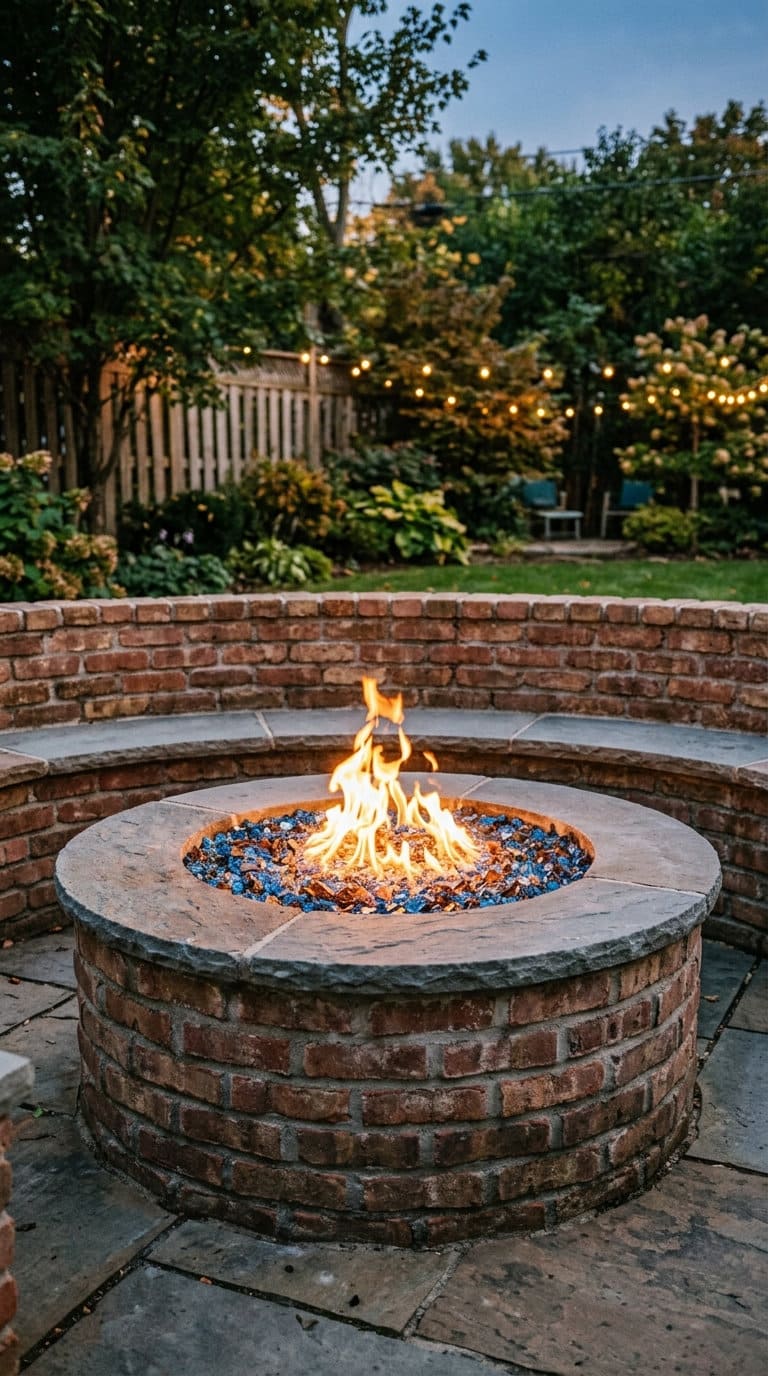
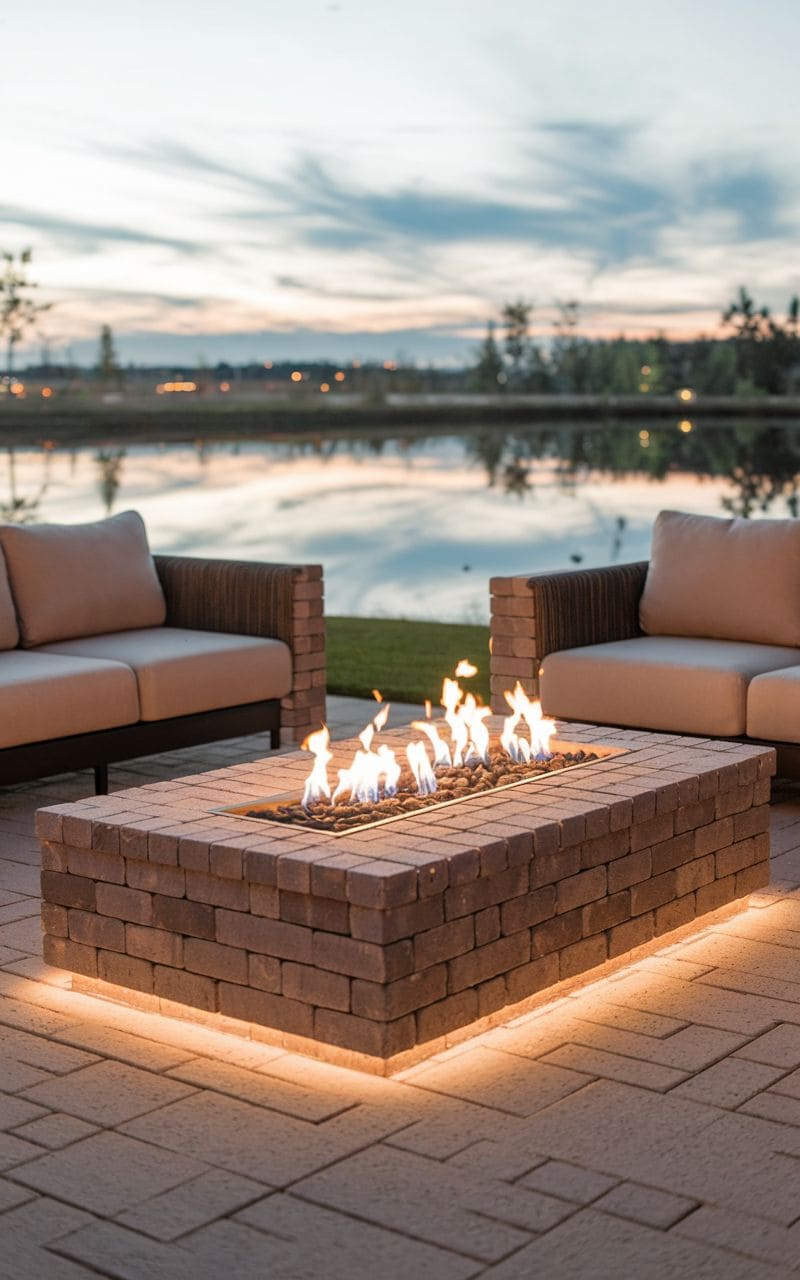
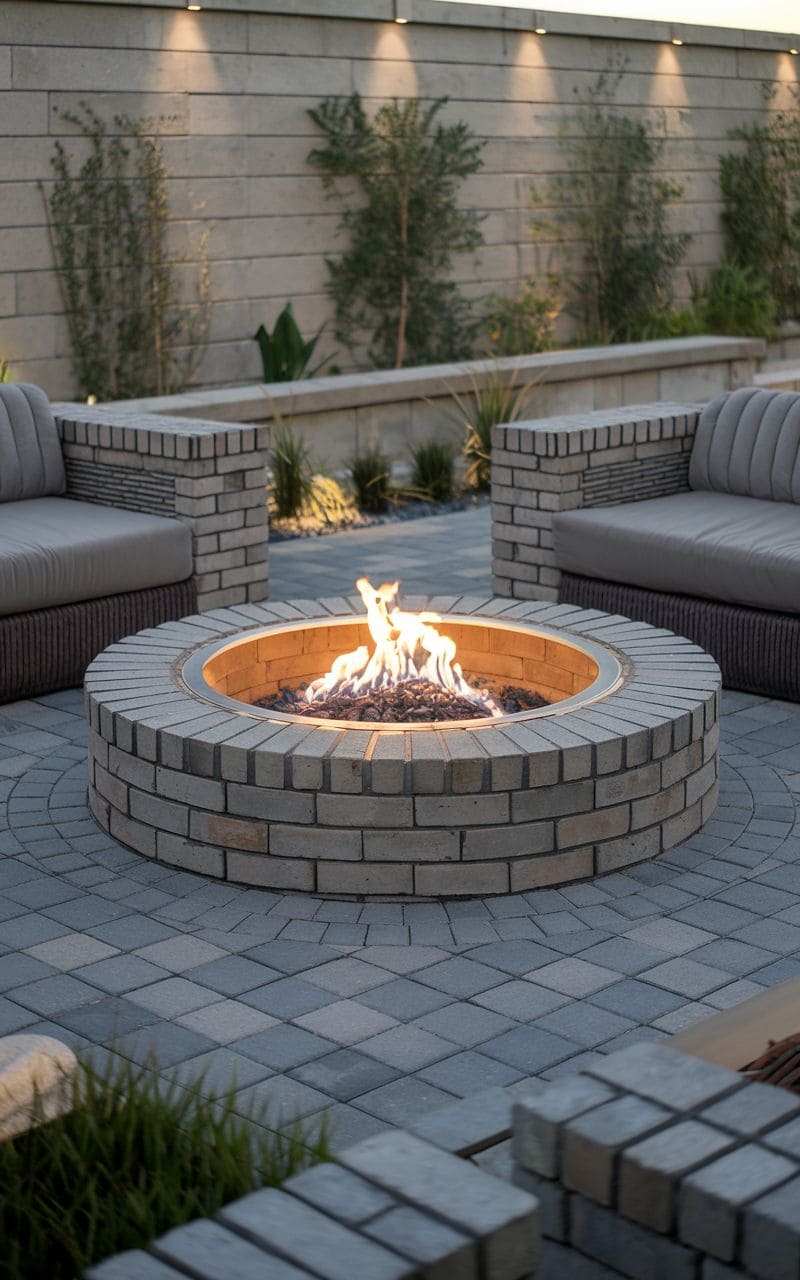
Swap traditional wood-burning ash and char for tempered fire glass over a gas burner set into a brick surround, giving a cleaner, more contemporary look with no smoke or embers to manage.
Fire glass specifically needs a gas fire pit design, not a wood-burning one, and the brick surround still needs proper clearance from structures per section 1 even though there’s no wood-burning ember risk, the flame itself still needs the same distance from anything combustible.
A few more things worth planning around
For material comparisons beyond brick, gravel fire pit ideas and stone fire pit ideas cover related approaches worth weighing against a full brick build. If a wood deck is part of your plan, read deck fire pit ideas carefully alongside section 1’s foundation warning before finalizing anything. For more paver-based surrounds, paver fire pit ideas is worth a look, and to extend the evening past sunset, fire pit lighting ideas has more.
FAQ
How far does a brick fire pit need to be from my house?
Mark McCullough, a mason on This Old House, recommends a minimum of 10 feet from anything combustible, including overhead tree branches, and actual local ordinances commonly require 10 to 25 feet from structures, with separate setbacks from property lines and power lines. Check your local fire code before finalizing a spot, since the exact number varies by jurisdiction.
Can I use regular brick for a fire pit?
Only for the outer shell, not the interior. Regular clay brick is porous and only reliably handles around 1,200°F with no thermal-shock resistance, and it can crack, spall, or pop when trapped moisture inside it flashes to steam under heat. The part of the pit that actually touches flame needs real fire brick, rated for over 2,500°F, or a refractory-mortar-jointed liner.
What should I put under a brick fire pit?
A non-combustible base 2 to 6 inches deep, sand, gravel, lava rock, or concrete pavers, not bare grass or soil, which can’t handle sustained heat or contain sparks. If you’re building on a wood deck, that combination needs its own dedicated safety approach beyond just a brick shell on top.
Do I need a permit for a brick fire pit?
Usually yes for a permanent, built-in masonry design, most jurisdictions require a permit and foundation/drainage compliance for that. A smaller, portable brick-veneer unit is generally exempt from a permit but still has to follow local setback distances and burn bans. Check with your local building department either way before starting construction.
Conclusion
Brick fire pits are a timeless addition that add value, warmth, and beauty to your outdoor space. Their adaptability and classic appeal make them ideal for various landscapes, whether you’re aiming for rustic charm, sleek minimalism, or cozy cottage vibes.
With thoughtful design, a brick fire pit becomes more than a backyard feature. Your yard will easily become a gathering place, a conversation starter, and a year-round retreat. If you liked this article, leave a comment and share it with your friends!

Never miss an update — choose FarmFoodFamily as your preferred source on Google.
How it works: Tap the button below to open Google's settings page, then check the box next to FarmFoodFamily.
Tap the checkbox to turn it blue — that's how you know it's set.