15 Lush DIY Indoor Plant Wall Ideas for Any Room
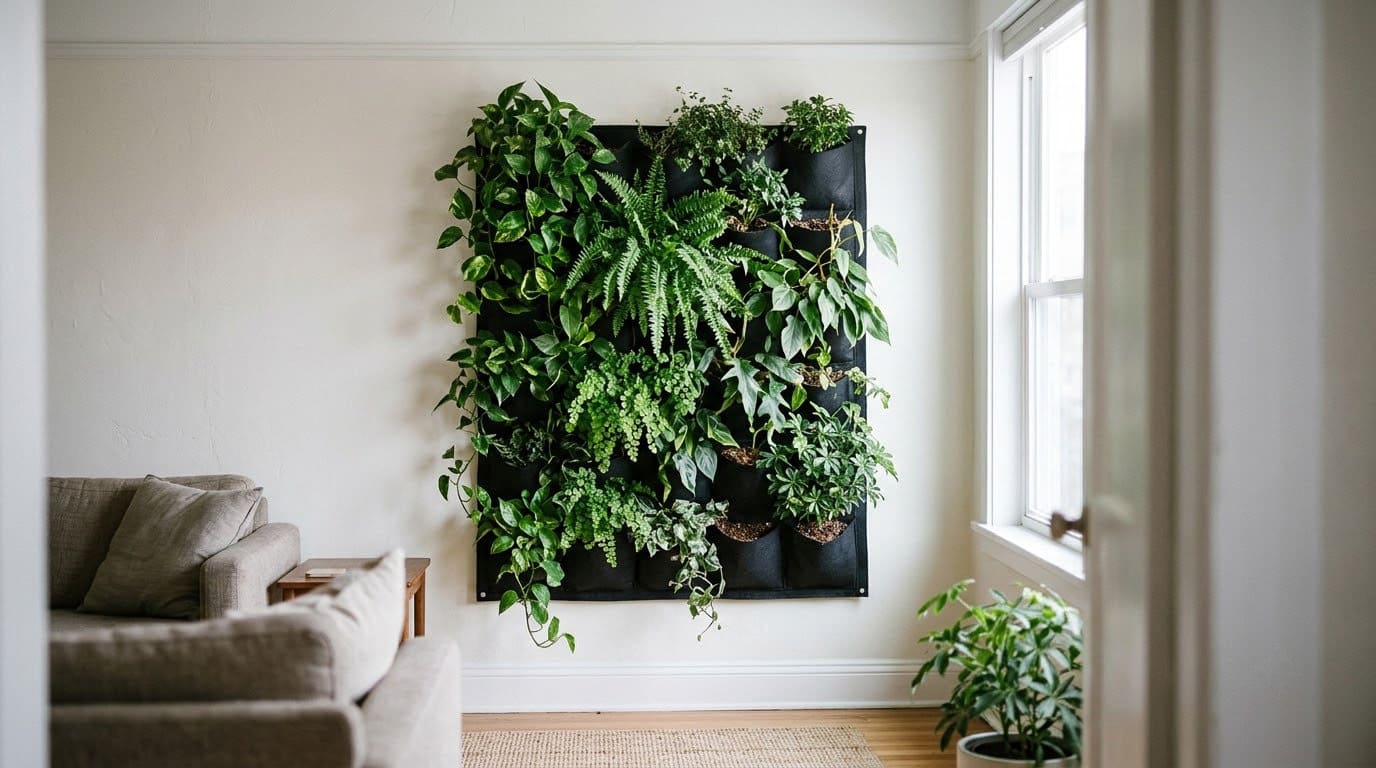
An indoor plant wall turns a blank wall into a living feature, as long as you plan for wet weight, drips, light, and curious pets before you hang a single pot.

Never miss an update — choose FarmFoodFamily as your preferred source on Google.
How it works: Tap the button below to open Google's settings page, then check the box next to FarmFoodFamily.
Tap the checkbox to turn it blue — that's how you know it's set.
An indoor plant wall turns a blank wall into a living feature, as long as you plan for wet weight, drips, light, and curious pets before you hang a single pot.
Products We Recommend
This post contains affiliate links. We may earn a commission on qualifying purchases at no extra cost to you.

SOUJAP 2 Pack 18 Pockets Vertical Wall Garden Planter
Felt pocket planters for small plants on an indoor wall
Shop Now
LED Grow Light Strips, Full Spectrum 3000K with Timer
Strip lights with 3/9/12 hour timer for shelves in dark rooms
Shop Now
VUWEZ 6 Pack Rectangular Plant Tray Saucers
Drip trays to catch water under shelves and pockets
Shop NowA wall of plants looks great in photos. But then the water runs down the paint, the shelf sags, and the leaves go yellow. Most tutorials skip those parts.
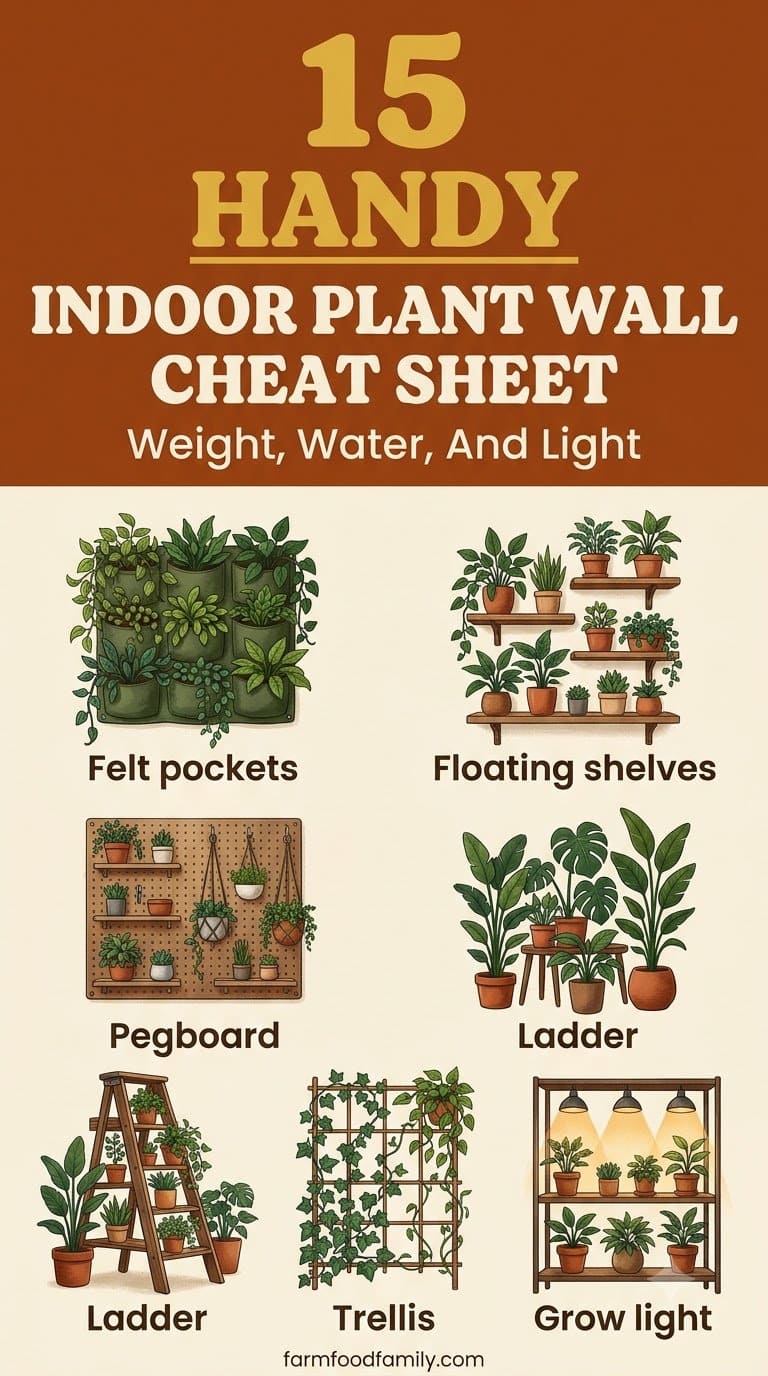
This guide gives you 15 ways to build an indoor plant wall. Some need a drill. Some need nothing but a leaning frame.
For each idea, you’ll see what to buy, how to hang it, and what to watch for. We also cover light, mold, and pet safety, since those decide whether a plant wall lasts.
Answer 4 quick questions and get matched to the exact fix for your yard — drainage, budget, layout, or something else entirely.
Take the Free QuizQuick Answer
Start with the wall, not the plants. Pick a spot with bright, indirect light, and make sure the wall can carry the wet weight of soil, pots, and water. Epic Gardening says to confirm the wall can bear the wet weight and to use a catchment system indoors to limit drips.
Choose a system that fits your skill and your lease. Felt pockets and shelves are the easiest, and a leaning ladder needs no tools. Frames with drip lines take more work.
Keep humidity in check. The EPA advises 30 to 60 percent indoor humidity. It also says to dry wet materials within 24 to 48 hours.
If you have pets, check every plant first. Pothos, philodendron, and monstera are on the ASPCA’s toxic list, so pick pet-safe plants or hang them out of reach.


Which Plant Wall Type Fits Your Home?
This table is our planning guide. The felt-pocket and pallet notes come from Epic Gardening. The rest is our own judgment.
Most yard problems trace back to one specific, fixable cause. Find yours in 4 quick questions.
Take the Free Quiz| Wall type | Wet weight | Drip risk | Renter-friendly | Best for |
|---|---|---|---|---|
| Felt pockets | Medium | Medium | With care | Small plants, big look |
| Floating shelves | Medium to high | Low | No | Pots you can lift off |
| Pegboard | Low to medium | Low | Sometimes | Small pots, herbs |
| Wood-frame wall | High | Medium to high | No | Large, permanent walls |
| Hanging pots | Low | Medium | Yes | Trailing plants |
| Leaning ladder | Medium | Low | Yes | Renters, quick refresh |
What Should You Know Before You Build?
Check light first. This Old House says indoor plant walls need bright, indirect light, with grow lights if natural light isn’t enough.
Stand in the spot at midday and look at the shadows. Faint shadows mean low light.
Next, think about weight. Water weighs about 8.3 pounds per gallon, and wet soil adds more.
A wall of damp pots can weigh far more than it looks. Screw into studs when you can, and read the rating on every anchor package.
Then protect the wall. Epic Gardening says indoor walls need a catchment system. Put a tray, gutter, or waterproof backing under every wet section.
Last, check your pets. The ASPCA lists pothos, philodendron, monstera, and peace lily as plants with insoluble calcium oxalates.
Felt pocket planters for small plants on an indoor wall
Shop NowThis post contains affiliate links. We may earn a commission on qualifying purchases at no extra cost to you.
Chewing them can cause drooling, vomiting, and diarrhea. Call ASPCA Poison Control at (888) 426-4435 or your vet if your pet eats one.
15 Lush DIY Indoor Plant Wall Ideas
1. Felt Pocket Plant Wall
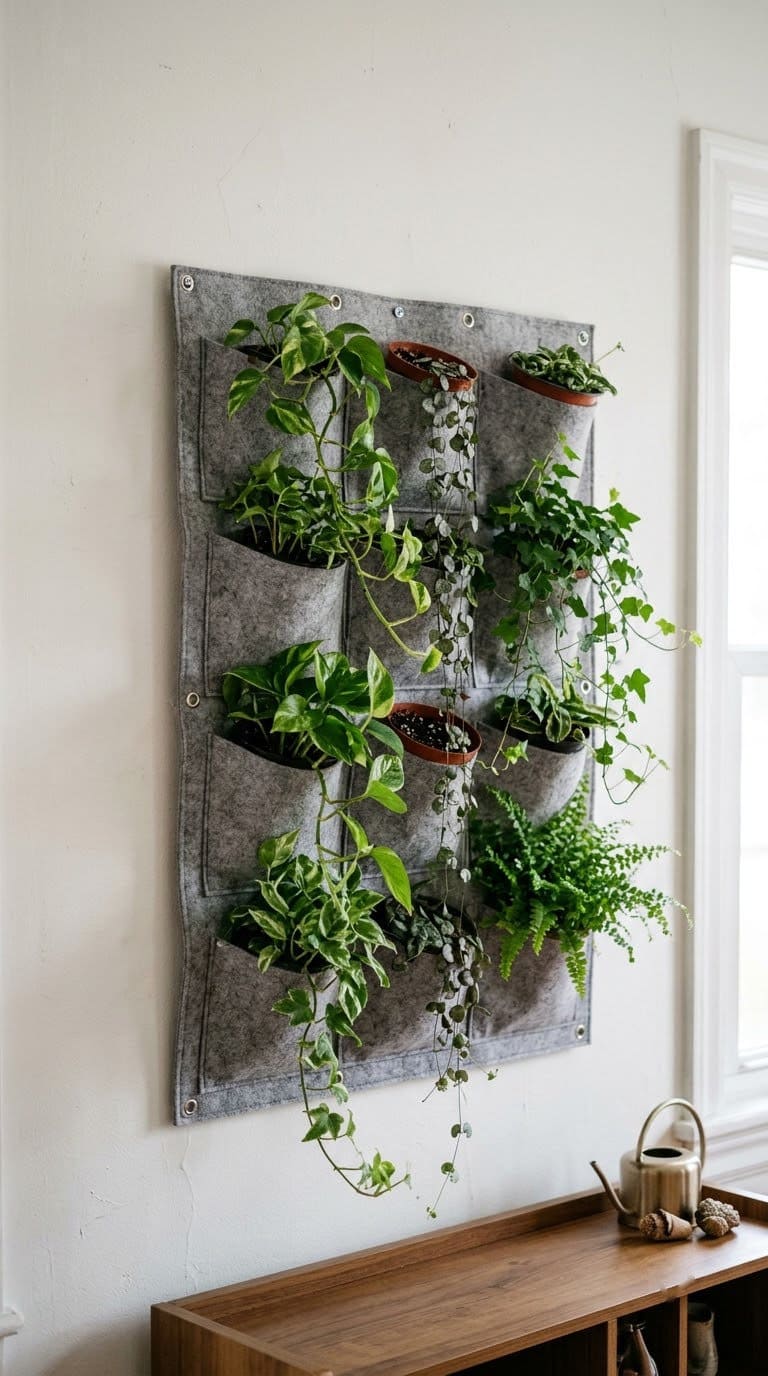
Felt pockets are the easiest living wall. Epic Gardening describes fabric strips with grommets that mount to a wall. Each pocket holds two to three plants.
The average homeowner spends $616/year on yard fixes that don't address the real problem. Find out what yours actually is — before you spend another dollar.
Take the Free QuizAnchor the strip through the metal grommets. Put the strip over a waterproof backing and a drip tray at the bottom. Water slowly with a small can.
Pick small, light plants. Pockets dry out fast, so check them often.
Cost tier: low to medium. Pairs with idea 7’s grow light setup.
2. Wood-Frame Wall With a Drip Tray
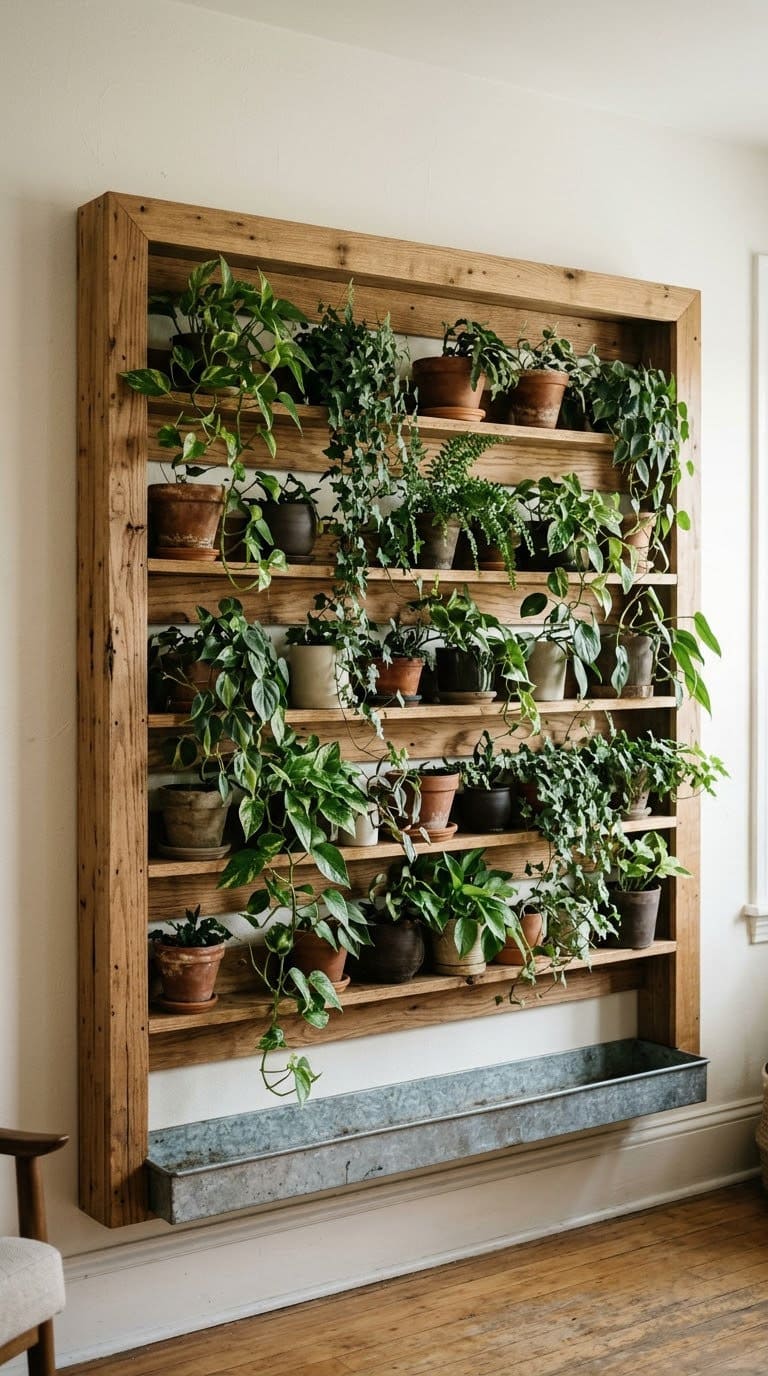
Build a 2 by 3 foot frame from 1×4 boards. Mount a waterproof backer board inside, like PVC board or sealed plywood. Add a shallow metal tray along the bottom.
Hang small pots from hooks on the frame. Let the tray catch the drips. Empty it after each watering.
Screw the frame into studs. Those sizes are our own suggestion. A wall this size can weigh a lot once it’s watered.


Cost tier: medium. Best for a permanent spot.
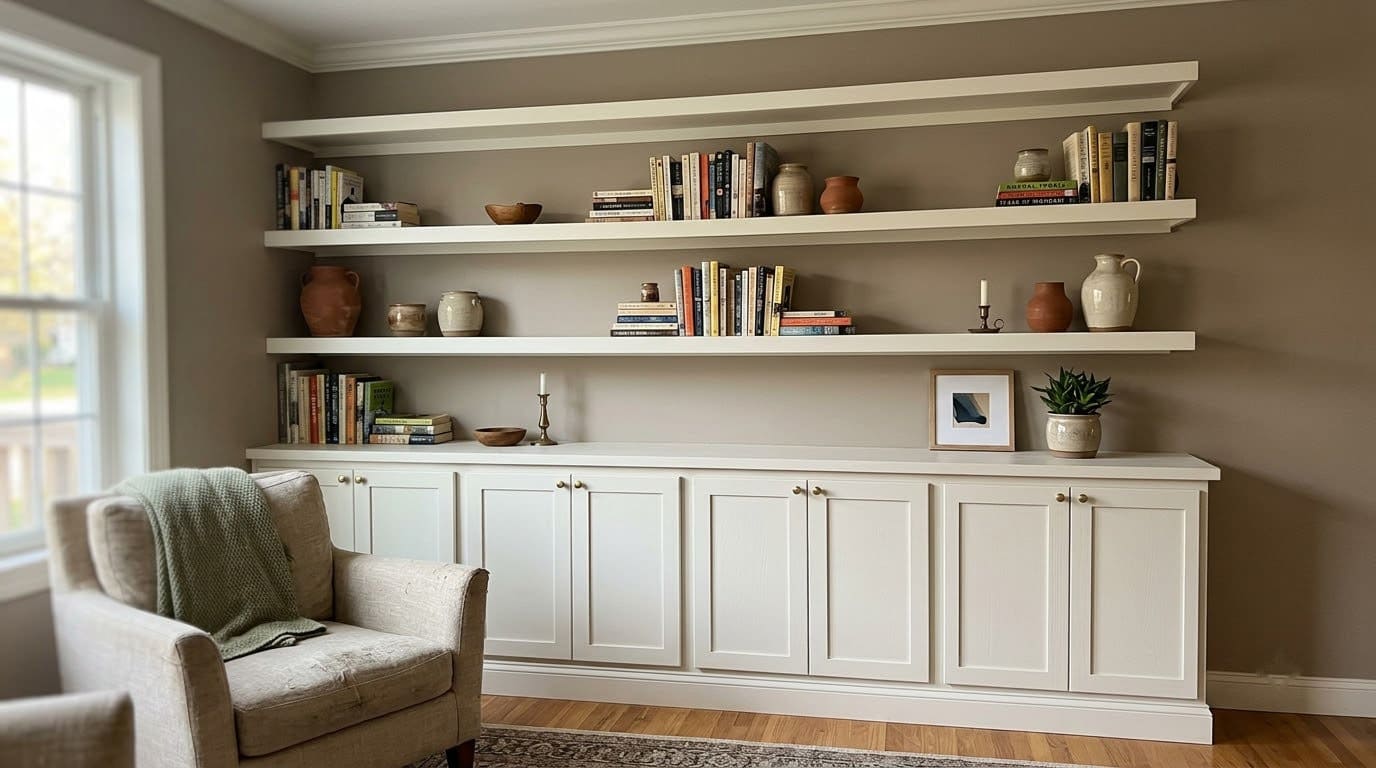
3. Staggered Floating Shelf Wall
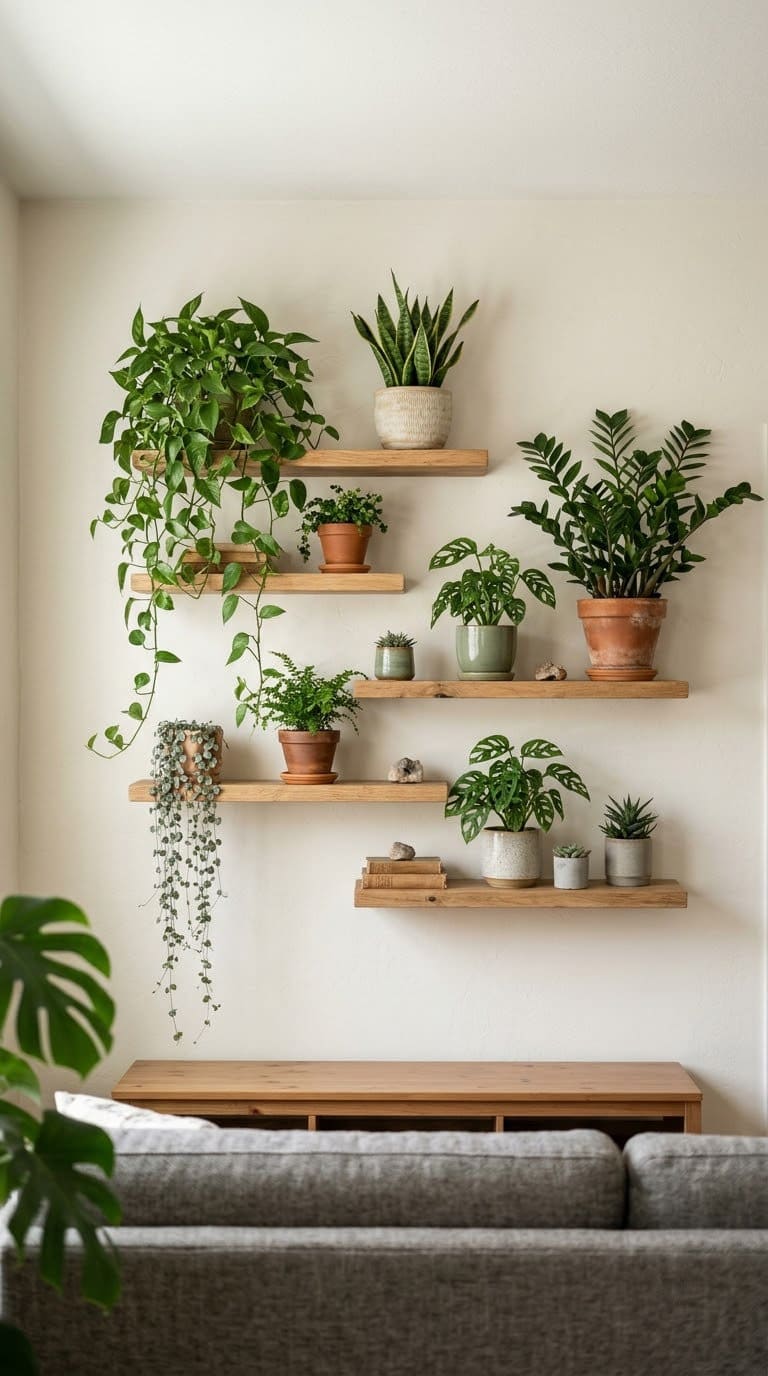
Mount five shelves in a zigzag so leaves don’t block the one below. Use shelves 24 inches long and 6 to 8 inches deep. Those sizes are our own suggestion.
Screw brackets into studs. Don’t trust a drywall anchor with a row of watered pots. Check the weight rating printed on every bracket.
Lift pots off to water them at a sink. That’s the cleanest way to avoid drips.
Cost tier: medium. See our decorating with houseplants guide for styling ideas.
4. Pegboard Plant Wall
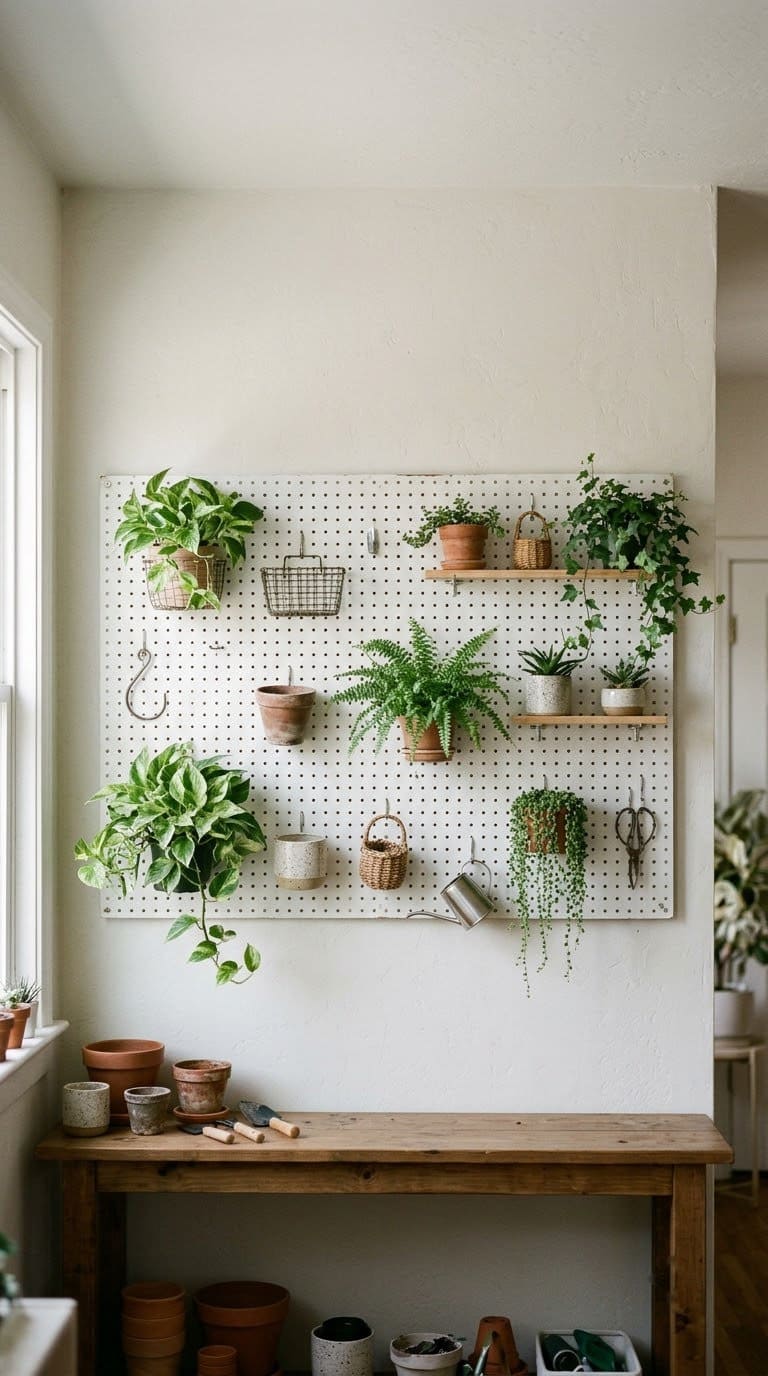
A pegboard gives you a flexible grid. Mount a 2 by 4 foot board with spacers so air can move behind it. Hang small pots with hooks and clips.
Pegboards hold light loads. Stick to 3- to 4-inch pots. Move pots around as plants grow.
The spacers also leave a gap behind the board, which helps air flow. Epic Gardening advises leaving room between the wall and the plants for air.
Cost tier: low. Works for herbs and small foliage.
5. Trellis Climbing Wall
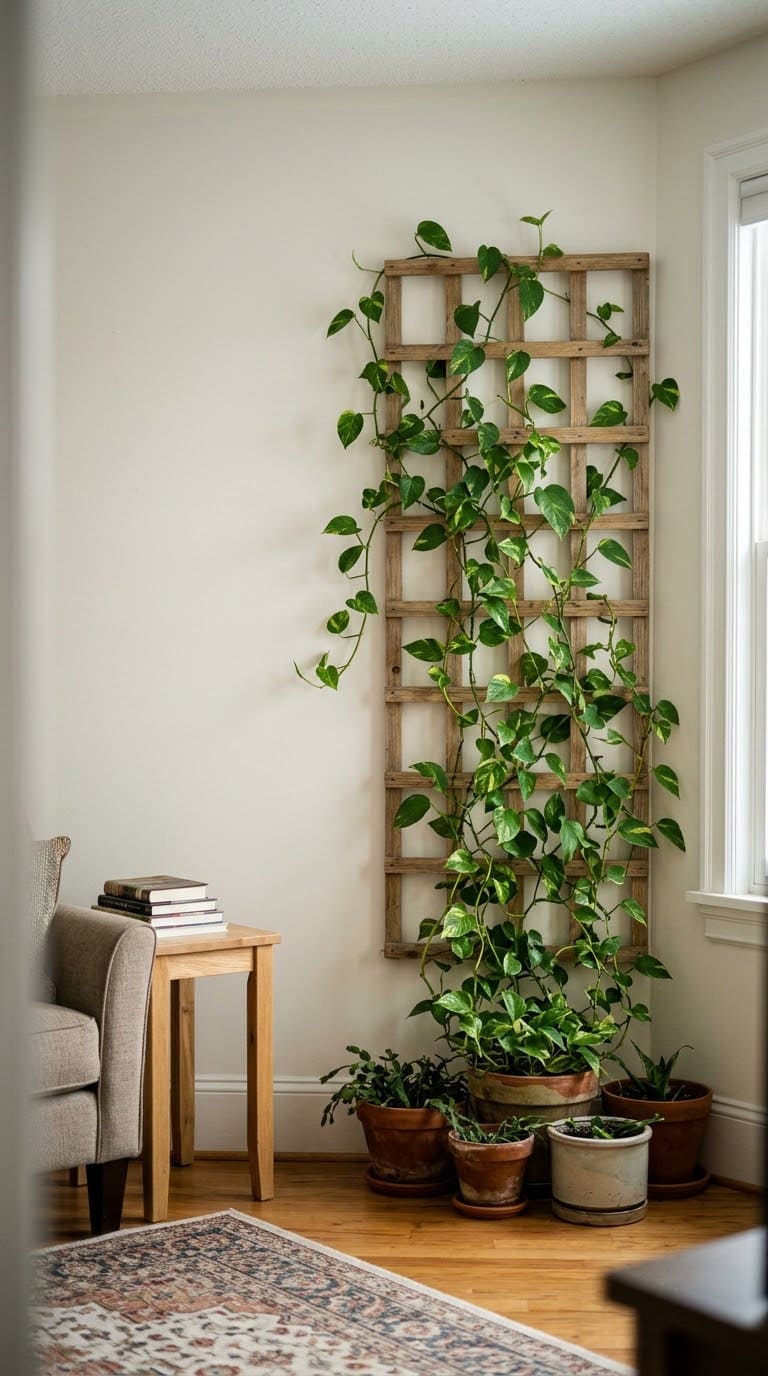
Mount a wood or wire trellis on the wall. Place a pot of climbing plants on the floor or a low stand. Train the vines up and across the trellis with soft ties.
This uses less wall weight than pockets or shelves. The soil sits on the floor, so drips are easy to catch.
Pothos and philodendron climb well. They’re also on the ASPCA toxic list, so skip this idea if pets can reach the leaves.
Cost tier: low. Pairs with idea 12’s rail system.
6. Rod and S-Hook Hanging Wall
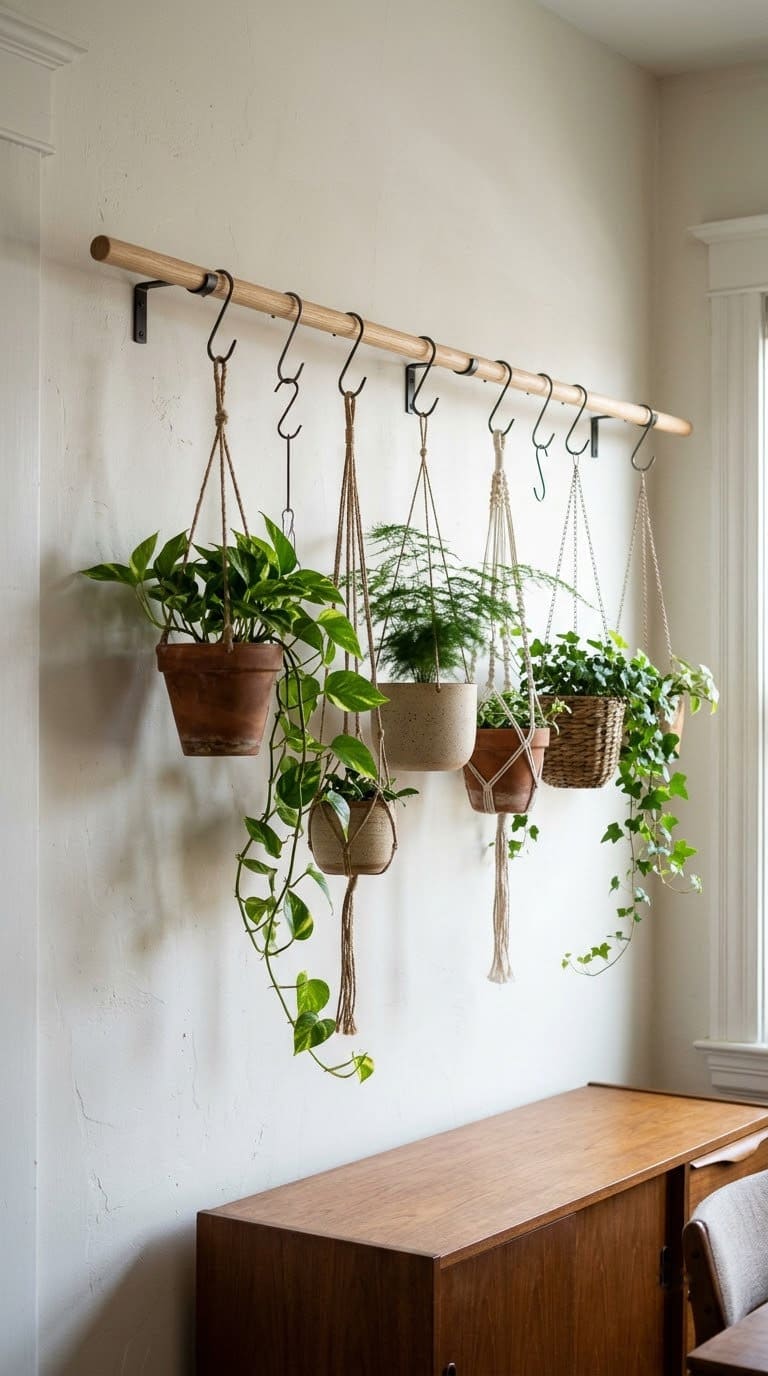
Mount a wooden rod, like a closet dowel, on two wall brackets. Hang S-hooks along it and add lightweight pots in hanging baskets.
Space hooks about 8 inches apart. Hang trailing plants at different lengths for a layered look. Those sizes are our own suggestion.
Suspended pots need frequent watering and repotting as they grow, per Epic Gardening. Hang them where you can reach.
Cost tier: low. A good renter pick if you use removable brackets.
7. Grow-Light Shelf Wall for Dark Rooms
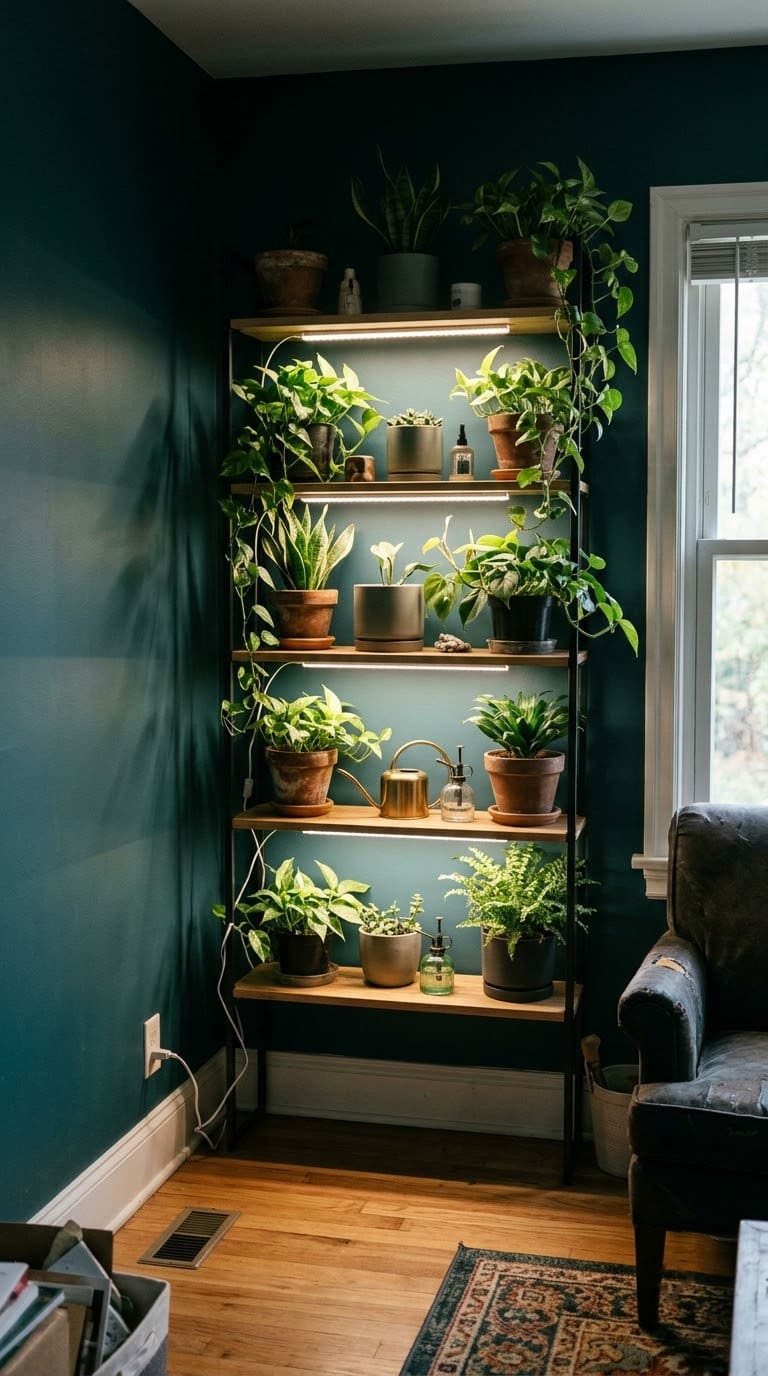
Dark rooms need help. This Old House says to add grow lights when natural light is insufficient. Mount an LED strip under each shelf.
A common guide for foliage plants runs lights about 10 to 12 hours a day, with a dark period at night. Keep lights roughly 12 to 24 inches from the leaves. Use a timer.
Cost tier: medium to high. Our low-light houseplants guide helps you choose plants.
8. Reclaimed Pallet Plant Wall
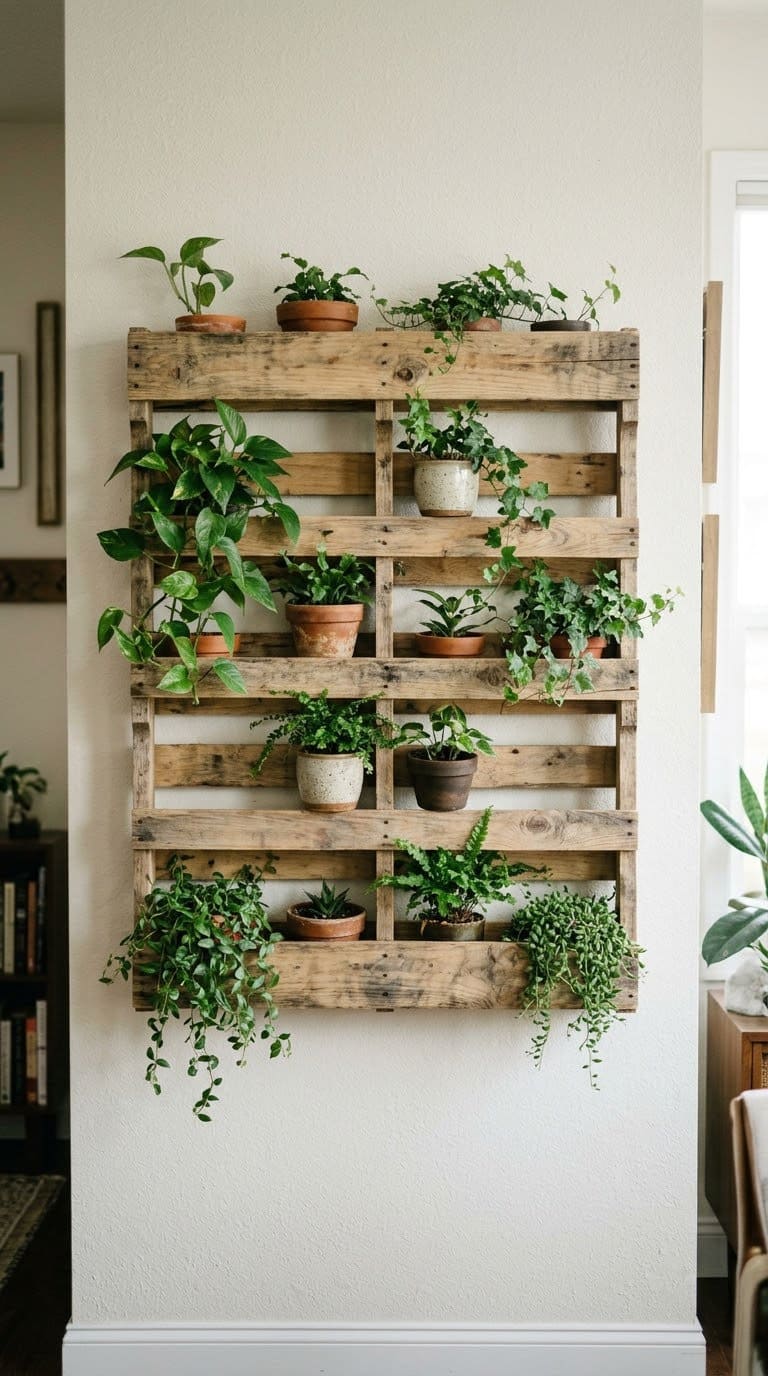
Epic Gardening lists pallets as a DIY option. It says to use new, untreated pallets or line them when growing edibles.
Sand the boards smooth. Seal them if the wall will see damp. Mount the pallet to studs with long screws.
Slide pots into the gaps and add a drip tray under the pallet. Keep the pots small.
Cost tier: low. Check pallet stamps and avoid any that look chemically treated.
9. Kitchen Herb Wall
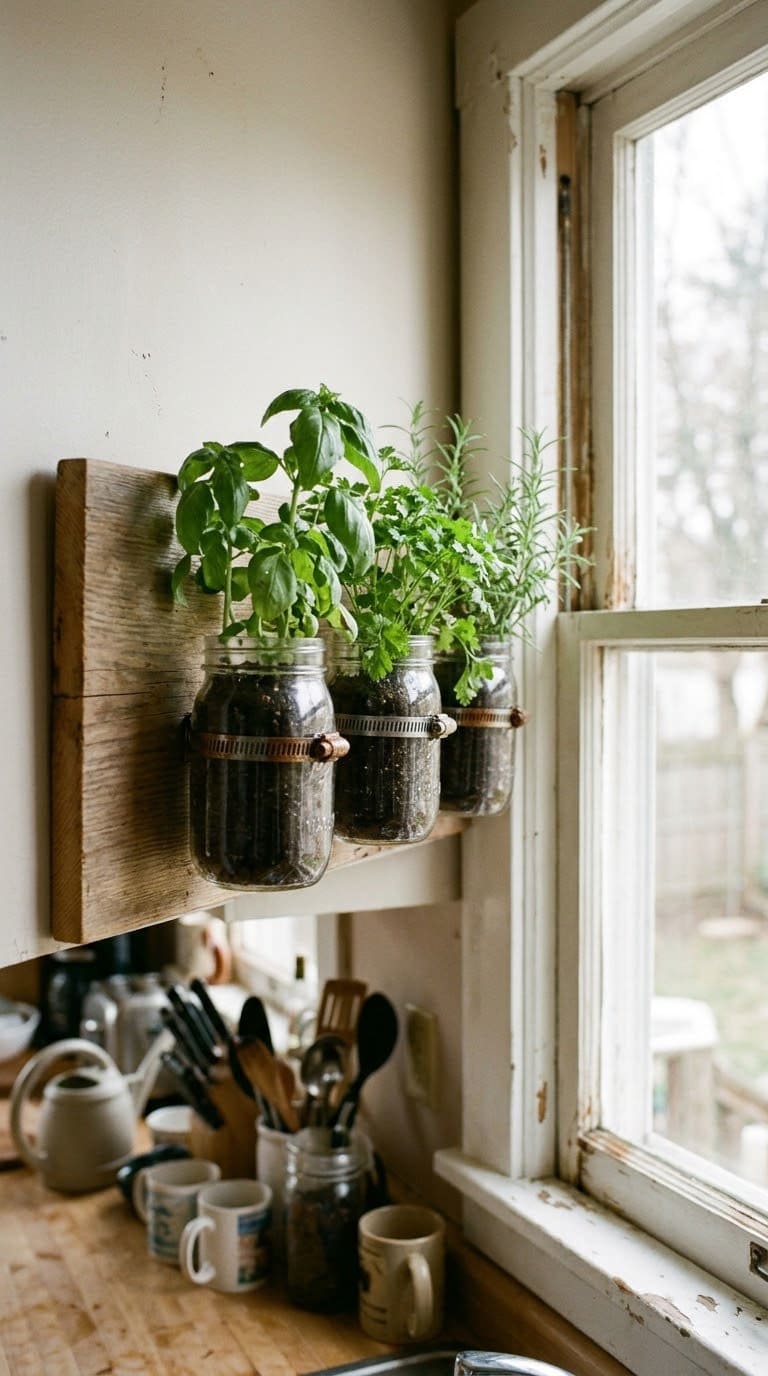
Hang herbs near a bright window. Mount a 1×6 board and screw on pipe clamps or hooks to hold small jars or pots.
Herbs need strong light. A south- or west-facing window works best, per Epic Gardening’s orientation notes. Snip leaves as you cook.
Use jars with drainage inside a bigger pot to avoid wet drips. Our hanging herb garden ideas have more layouts.
Cost tier: low.
10. Macramé Hanger Grid
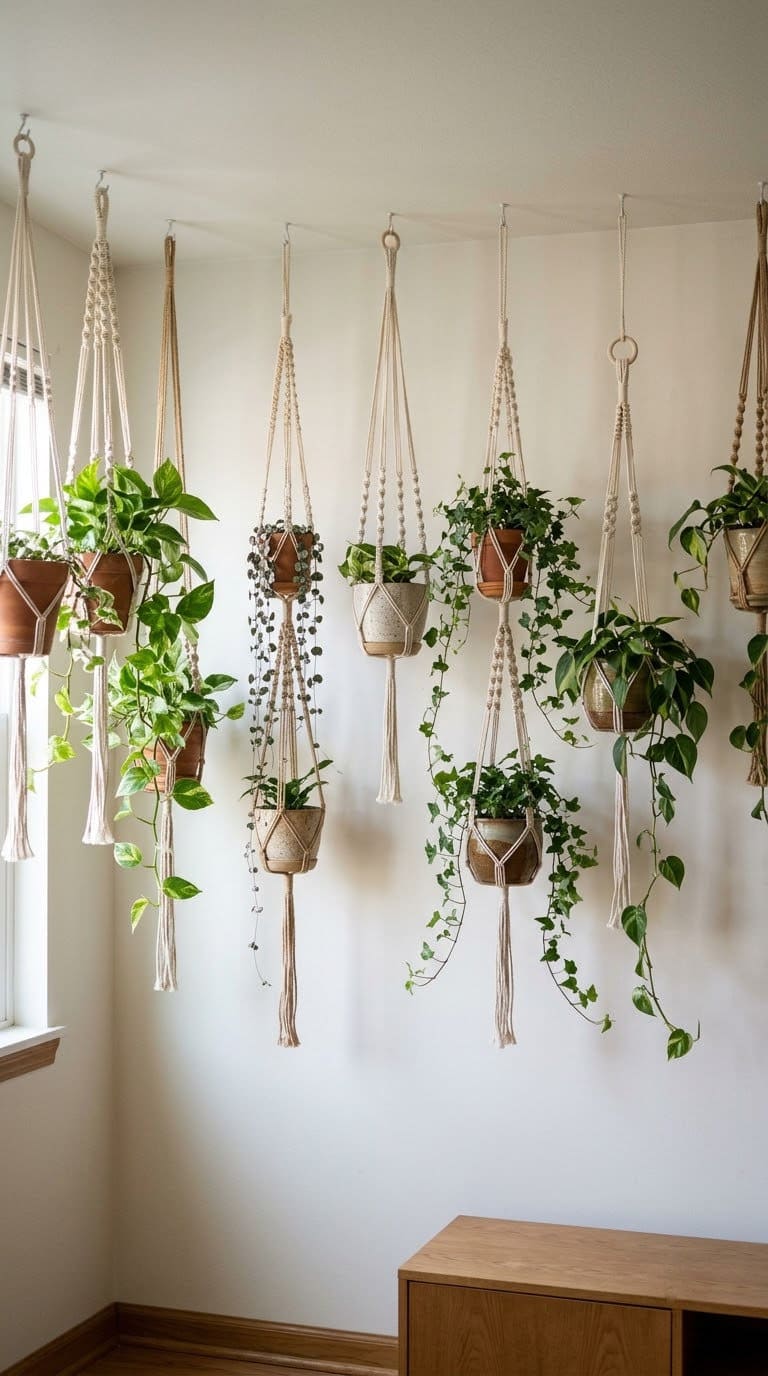
Install three to five ceiling or wall hooks in a loose grid. Hang each pot at a different height. Use pots no bigger than 6 inches.
Keep the pots at least a hand’s width from the wall so leaves don’t touch paint. This helps air flow and keeps stems from rubbing.
Water over a sink. Hanging pots dry out fast, so check them every few days.
Cost tier: low. Works in rentals with ceiling hooks, if your lease allows.
11. Succulent Frame Wall Art
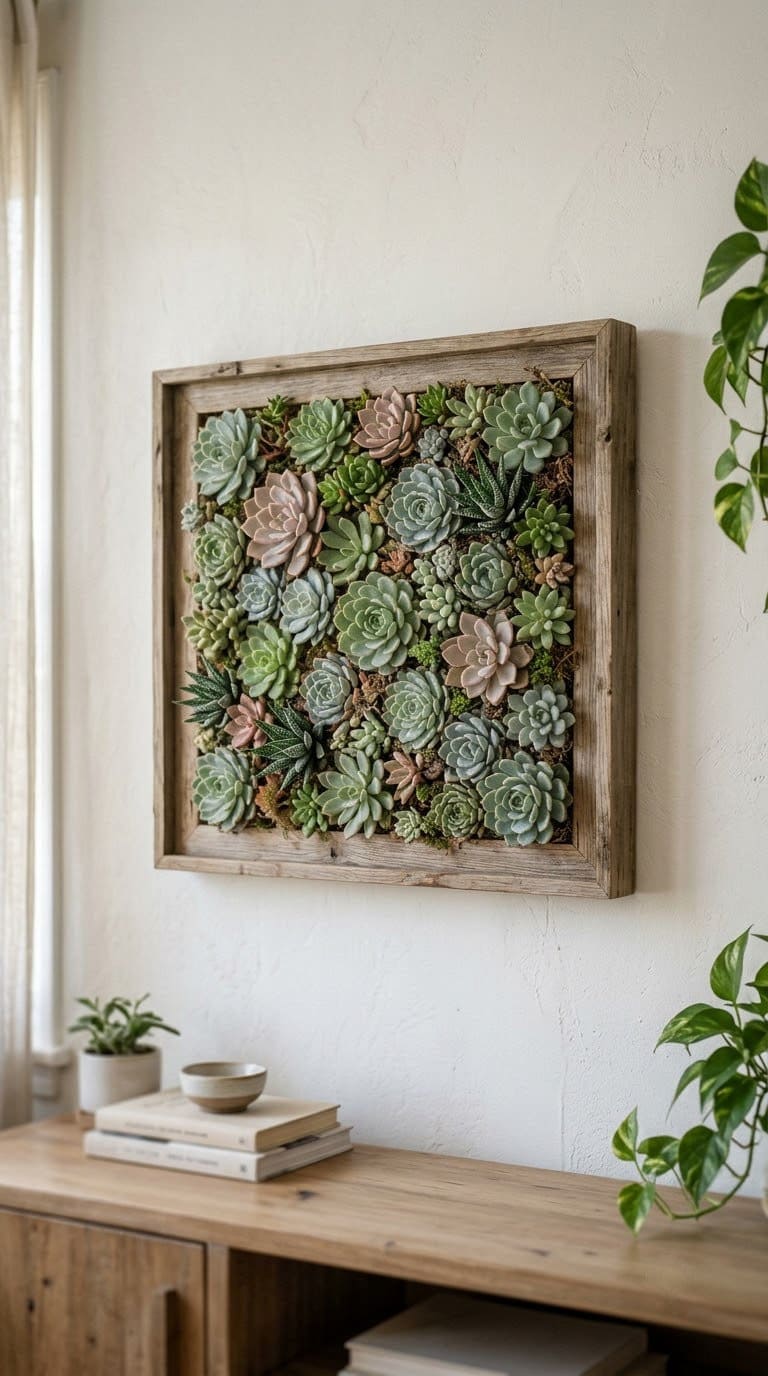
Build a shallow box 2 inches deep with a wire mesh front. Fill it with cactus mix and press in cuttings. Lay it flat for a few weeks before hanging.
Succulents want bright light and dry soil. Water lightly by laying the frame flat. Hang only when roots have formed.
A small frame is light, but still screw it into a stud or use a heavy-duty hanger. Those sizes are our own suggestion.
Cost tier: low to medium. See our succulent container ideas for plant picks.
12. Rail-and-Hook Display
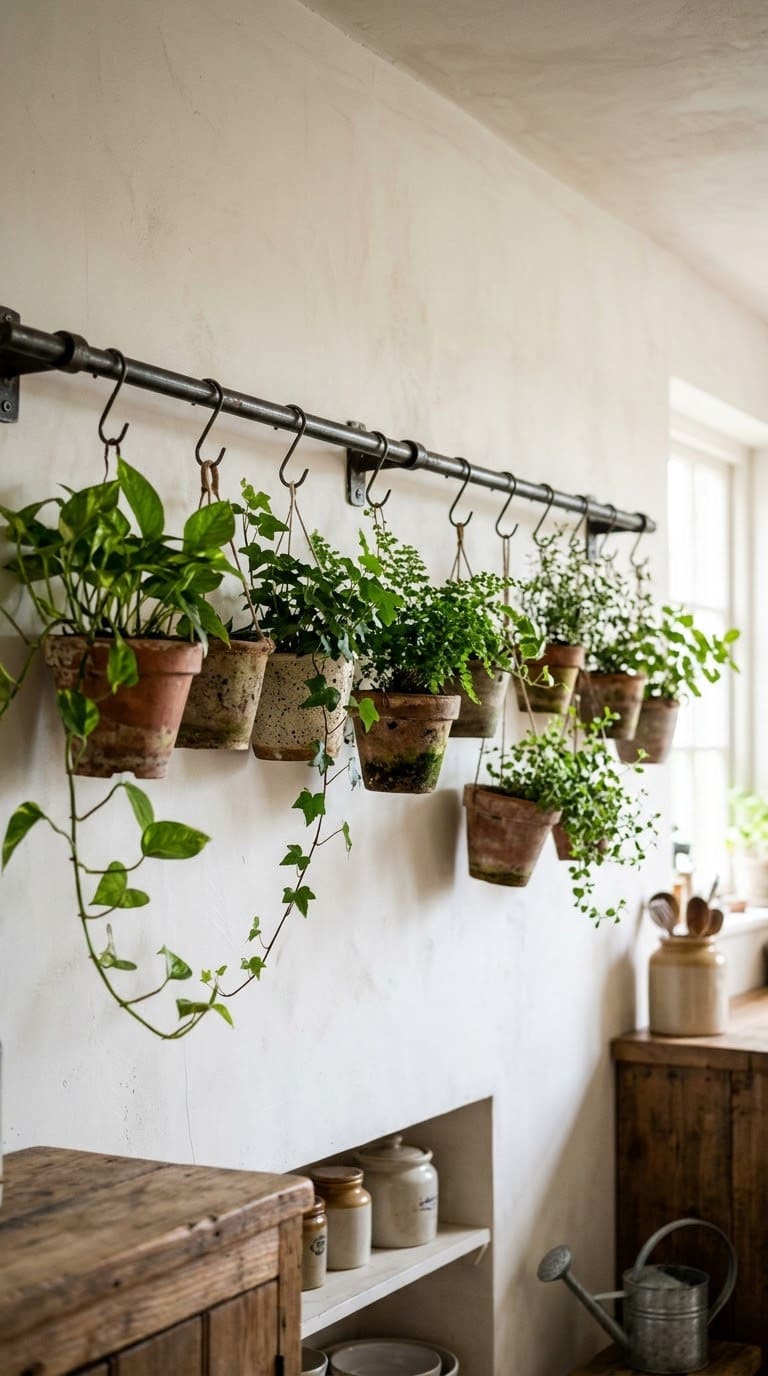
A long rail spreads weight over several studs. Mount it level, then hang pots on hooks along the rail.
Space the hooks about 6 inches apart. Move them to rearrange as plants grow. This is a flexible wall for people who change their minds.
Use lightweight pots. Check the weight rating on the rail and the screws.
Cost tier: medium.
13. Preserved Moss Wall Frame
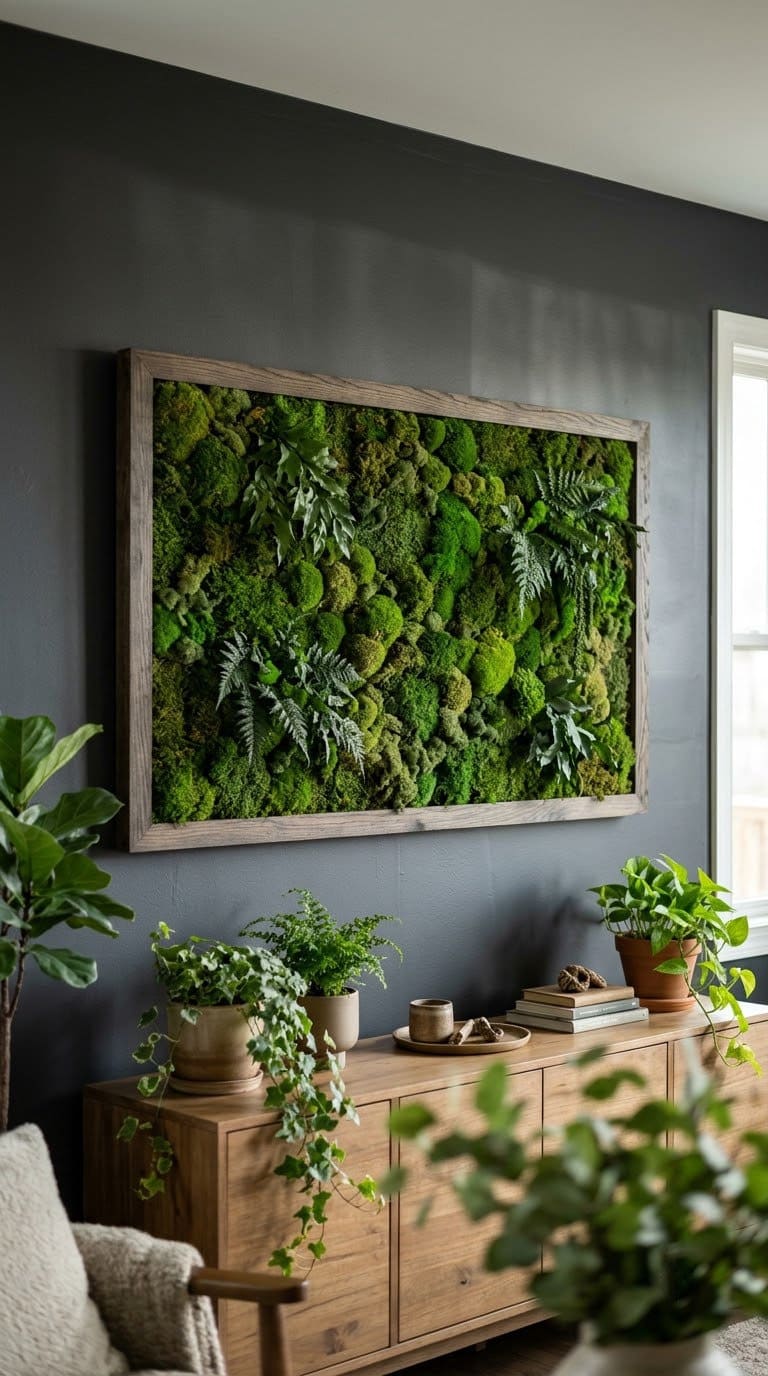
Skip the water entirely with preserved moss. Glue sheets of preserved moss to a board or into a frame. Mount it like a picture.
It needs no light, no soil, and no watering. It won’t clean air or grow, so treat it as decor, not a living wall.
Keep it away from direct sun and humid rooms. Our own take, with no source.
Cost tier: medium. A fit for a dark hallway.
14. Tension Pole Plant Tower
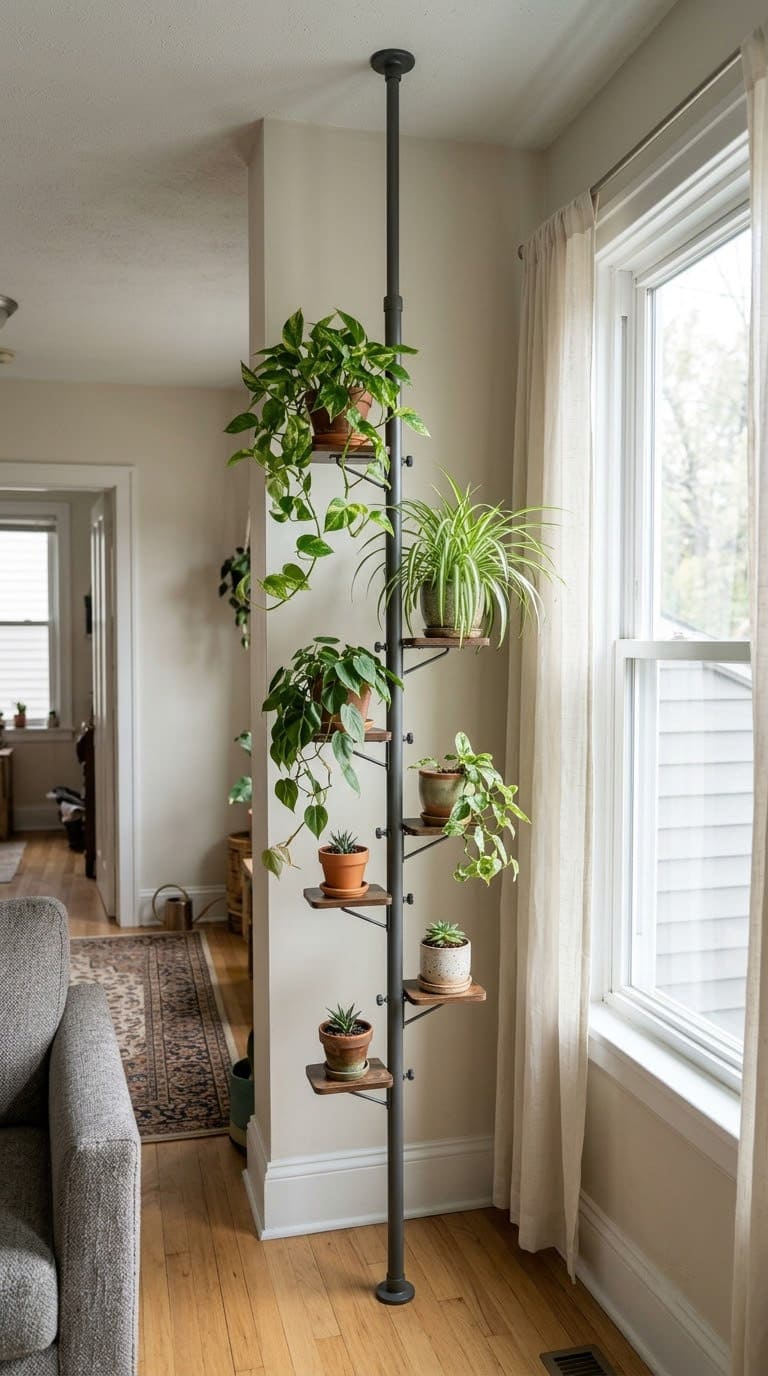
Wedge a tension pole between floor and ceiling. Clip on shelves or pot rings at different heights.
No drilling means no wall damage. It also keeps soil weight off the wall. Check that the ceiling can take the pole’s pressure.
Set a tray on the floor to catch drips. This is a strong renter option.
Cost tier: medium.
15. Leaning Ladder Plant Wall
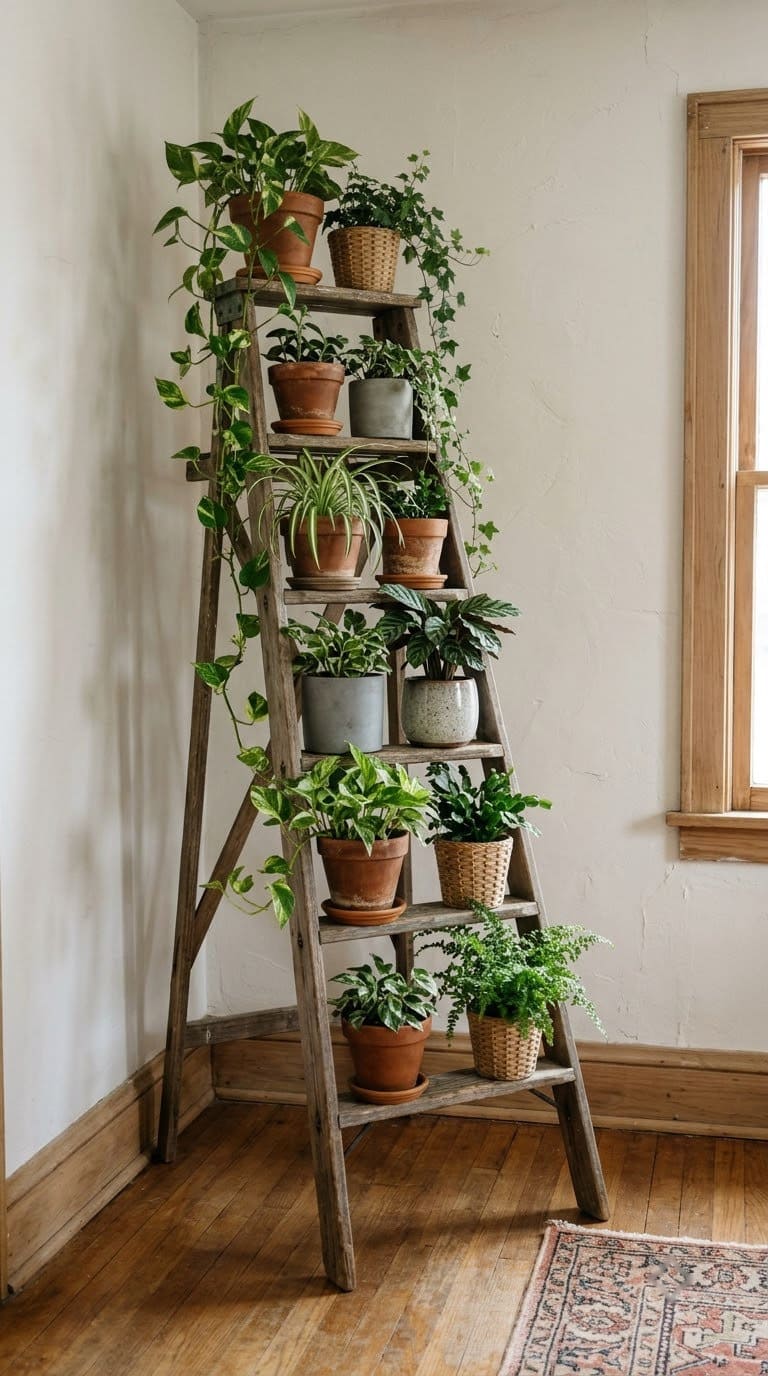
Lean a wooden ladder against the wall and place pots on the rungs. Use a 4- to 6-foot ladder. Tie it to the wall or secure it so it can’t tip.
Weight stays on the floor and the rungs, not the drywall. Move the ladder to clean or rearrange.
Put a tray under the bottom pots. Our indoor gardening in a bedroom post has ideas for small spaces.
Cost tier: low. The easiest start for beginners.
Which Plants Suit an Indoor Plant Wall?
This Old House names medusa fern, peace lily, philodendron, pothos, and spider plant for indoor walls. Epic Gardening adds that tropicals suit indoor and shaded spots, while succulents handle drier conditions with bright light.
Match plants to the light you measured. Trailing vines like pothos fill pockets and rails quickly. Compact plants fit pegboards and frames better.
Choose dwarf or compact plants for small growing areas, per Epic Gardening. Big leaves get heavy and crowd the wall.
Check pet safety before you buy. Peace lily, philodendron, and pothos are on the ASPCA’s list, so look for pet-safe swaps if your cat or dog chews leaves.
Group plants with the same water needs. Put thirsty plants low, where drips land. Put drought-tolerant plants high.
What Does a Weekend Build Plan Look Like?
Start on Friday evening by measuring the wall and finding studs. Mark them with painter’s tape. Order any parts you’re missing.
On Saturday morning, mount the structure. That could be brackets, a rail, a frame, or a pegboard. Check that it’s level and doesn’t wobble.
Saturday afternoon is for protection. Add the backing, trays, and any grow lights. Test the lights and timer before any soil goes in.
On Sunday, plant and hang. Water slowly over a sink first, then place pots on the wall. Watch for drips for the first few days.
How Do You Care for a Plant Wall?
Check moisture by touch. Epic Gardening says living walls dry out faster than in-ground plants, and suggests watering when the soil is dry a couple of inches down. A moisture meter helps on small walls, as This Old House notes.
Feed every two to three weeks in the active season, per Epic Gardening. Replace potting media about every two years.
Leave space for air to move. Open a window now and then. Epic Gardening and This Old House both stress air flow and avoiding overwatering.
Watch humidity. The EPA’s range is 30 to 60 percent. If a spill soaks the wall or floor, dry it within 24 to 48 hours.
Inspect new plants before you add them. This Old House advises checking plants from outside sources for pests.
Rotate pots now and then. Plants lean toward light, so turning each pot a quarter turn keeps growth even. Trim leggy stems so the wall keeps its shape.
Common Mistakes to Avoid
Hanging pots without a drip plan is the first one. Epic Gardening says indoor walls need a catchment system to limit drips.
Ignoring wet weight is the second. Epic Gardening says to confirm the wall can bear it.
Crowding plants against the wall is the third. Leave room for air between the wall, the structure, and the leaves.
Choosing toxic plants where pets roam is the fourth. The ASPCA lists pothos, philodendron, monstera, and peace lily.
Skipping a test run is the fifth. This Old House says to connect and test any irrigation before you rely on it, so run water through the system with the plants still on the floor.
Letting a spill sit is the sixth. The EPA says to dry wet building materials and furnishings within 24 to 48 hours, so wipe up drips the same day and fan the area if the wall got wet.
Overloading shelves is the seventh. Add one pot at a time, then check the bracket for sag before you add the next.
FAQ
How do I keep water from damaging the wall?
Use a waterproof backing and a catchment tray under every wet section. Epic Gardening says indoor walls need a catchment system to limit drips.
How much weight can my wall hold?
It depends on the wall and the fasteners. Screw into studs when you can, and read the rating on every anchor. Epic Gardening says to confirm the wall can bear the wet weight.
What humidity is safe for a plant wall?
The EPA advises reducing indoor humidity to 30 to 60 percent to decrease mold growth.
Are pothos and philodendron safe around pets?
No. The ASPCA lists them with peace lily and monstera as plants with insoluble calcium oxalates. Call ASPCA Poison Control at (888) 426-4435 if your pet chews one.
What are the best plants for an indoor plant wall?
This Old House lists medusa fern, peace lily, philodendron, pothos, and spider plant for indoor walls. Check pet safety before you buy.
Never miss an update — choose FarmFoodFamily as your preferred source on Google.
How it works: Tap the button below to open Google's settings page, then check the box next to FarmFoodFamily.
Tap the checkbox to turn it blue — that's how you know it's set.