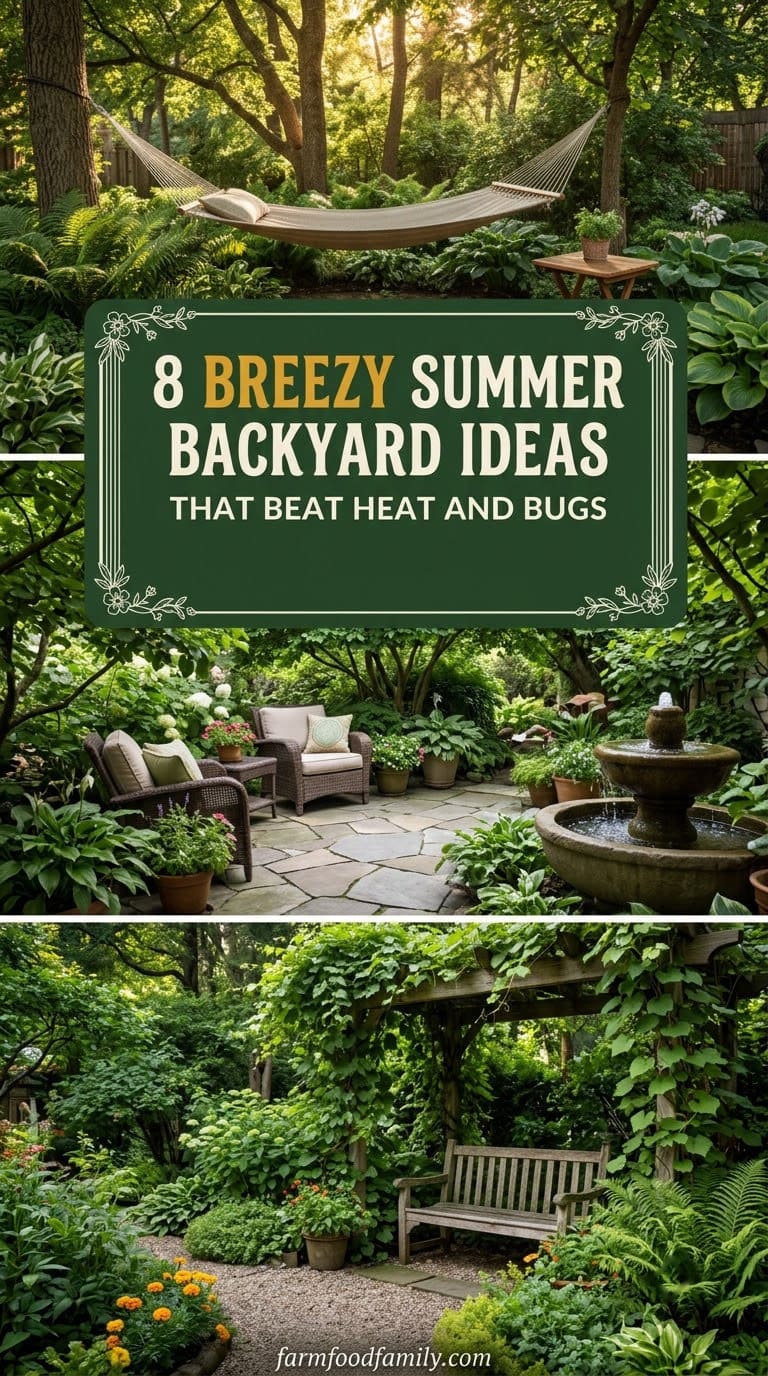
8 Breezy Summer Backyard Ideas That Beat Heat and Bugs
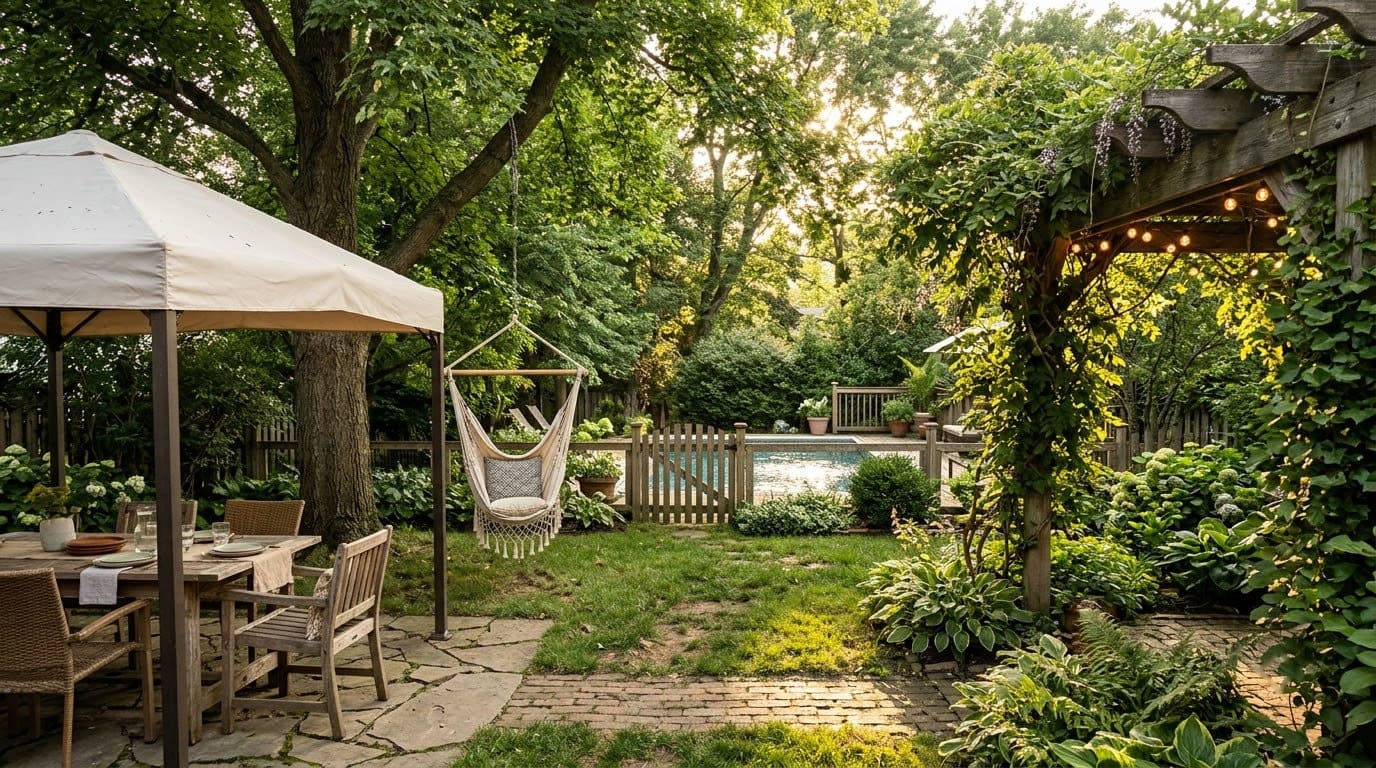
A summer backyard works when it gives you shade, cool air, safe water and fewer mosquitoes, so plan those first and add the fun after.

Never miss an update — choose FarmFoodFamily as your preferred source on Google.
How it works: Tap the button below to open Google's settings page, then check the box next to FarmFoodFamily.
Tap the checkbox to turn it blue — that's how you know it's set.
A summer backyard works when it gives you shade, cool air, safe water and fewer mosquitoes, so plan those first and add the fun after.
Summer pulls everyone outside. Then the sun hits, the mosquitoes come out and the patio turns into a griddle.
A good summer yard solves those problems before it adds the fun. Shade, cool drinks, safe water, bug control and safe fire come first.
These eight ideas are built around the summer season. Each one gives you the plan and the checks, and points you to our full guide for the build.
Quick Answer
Plan for heat first. The CDC says to schedule outdoor activity for the coolest part of the day or evening. It adds that a fan can raise body temperature above 90°F, so use fans only below that.
Put shade over the spot where you’ll sit, not the spot that looks nicest.
Answer 4 quick questions and get matched to the exact fix for your yard — drainage, budget, layout, or something else entirely.
Take the Free QuizCut mosquito breeding. The CDC says to empty and scrub, turn over, cover or throw out anything that holds water once a week.
Fence the water. PoolSafely.gov says a pool fence should be at least four feet high with a self-closing, self-latching gate.

Keep a fire pit well back. Bob Vila says to clear 5 feet around it and keep sheds 10 to 20 feet away.
And watch the food clock. The CDC says never leave perishable food out more than 2 hours, or 1 hour above 90°F.
Which Idea Fits You?
Pick by the summer problem you want to fix. This table sorts the eight ideas below.
| Idea | Summer problem it fixes | Budget tier | Skill | Main risk |
|---|---|---|---|---|
| 1. A shade zone | Sun and heat | Low to high | Beginner to pro | Unsecured sails |
| 2. A cool-down station | Overheating | Low | Beginner | Dehydration |
| 3. A mosquito-smart yard | Bites | Low | Beginner | Standing water |
| 4. A safe splash zone | Kids and water | Low to high | Beginner | Unsupervised water |
| 5. An outdoor food table | Food safety | Low | Beginner | Food left out |
| 6. A fire pit night | Evenings | Mid | Intermediate | Burns and sparks |
| 7. A movie night | Evenings | Low to mid | Beginner | Cords in wet grass |
| 8. A lawn games and lounge corner | Boredom | Low | Beginner | Trip hazards |
Before You Start: Four Summer Rules
Four rules cover most summer yard problems. Learn them once and apply them to every idea below.
What does the heat do to your plan?
The CDC says people at higher risk include children, adults 65 and older, pregnant people, outdoor workers and people with asthma or heart disease. Plan shade and breaks for them.
Most yard problems trace back to one specific, fixable cause. Find yours in 4 quick questions.
Take the Free QuizIt lists the signs of overheating as muscle cramps, unusually heavy sweating, shortness of breath, dizziness, headache, weakness and nausea.
What does standing water do?
Mosquitoes breed in small pools. The CDC lists tires, buckets, toys, pools, birdbaths, flowerpot saucers and trash containers as common sources.
Walk the yard once a week and tip out anything that holds water. It takes five minutes and cuts the bites at the source.
What does the fence do?
A pool or splash area needs a barrier. PoolSafely.gov says to surround the water on all sides with a fence at least four feet high that children can’t climb.
It also says water should be reachable only through a self-closing, self-latching gate.
What does the sun do to food?
Bacteria multiply fast in warm food. The CDC says they grow rapidly between 40°F and 140°F.
Keep cold food cold and hot food hot. Use a thermometer, not guesswork.
1. A Shade Zone
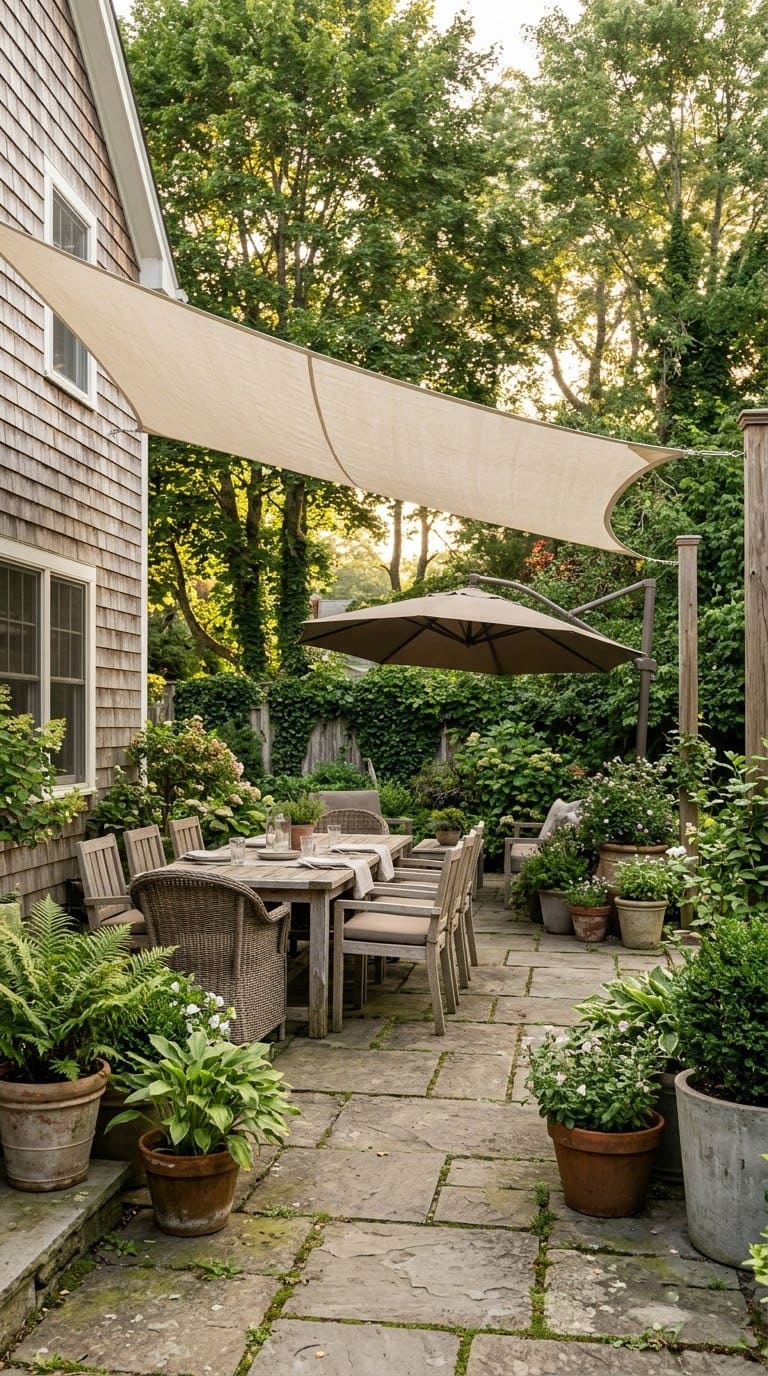
Shade is the first thing a summer yard needs. It cools the patio, protects skin and keeps your furniture from baking.
Decide where the sun hits at your usual time outside. Stand on the patio in the afternoon and watch where the shadows fall. Put the shade over the place you’ll sit, not the place that looks nice.
Pick the structure. A freestanding umbrella is the quickest fix for a small table. A shade sail covers a bigger area for less money. A pergola or pavilion gives lasting shade and a place to hang lights.
Anchor it well. A shade sail catches wind like a sail. Fix each corner to a strong post or a solid wall, and keep the fabric taut. Take it down in a storm.
The average homeowner spends $616/year on yard fixes that don't address the real problem. Find out what yours actually is — before you spend another dollar.
Take the Free Quiz


Add living shade. A deciduous tree on the west side of the patio gives shade in summer and lets sun in during winter. Plant it where its roots and branches won’t reach the house.
Test the shade at three times. Check the spot at noon, mid-afternoon and early evening. Place a chair there and note when the sun reaches it. A shade that works at noon may leave you in the sun at five.
Pick the fabric well. A woven shade cloth lets air pass and stays cooler than a solid tarp. A solid cover blocks rain too. Choose by the weather you get.
Set the height. Hang a sail or a canopy high enough that hot air can rise and escape. A low cover traps heat under it.
Check it each week. Look at the ties, the posts and the fabric for fraying. Tighten anything that has loosened in the wind.
For more shade structures, see our backyard pavilion ideas and backyard oasis ideas. Budget: low to high. Skill: beginner to pro.
2. A Cool-Down Station
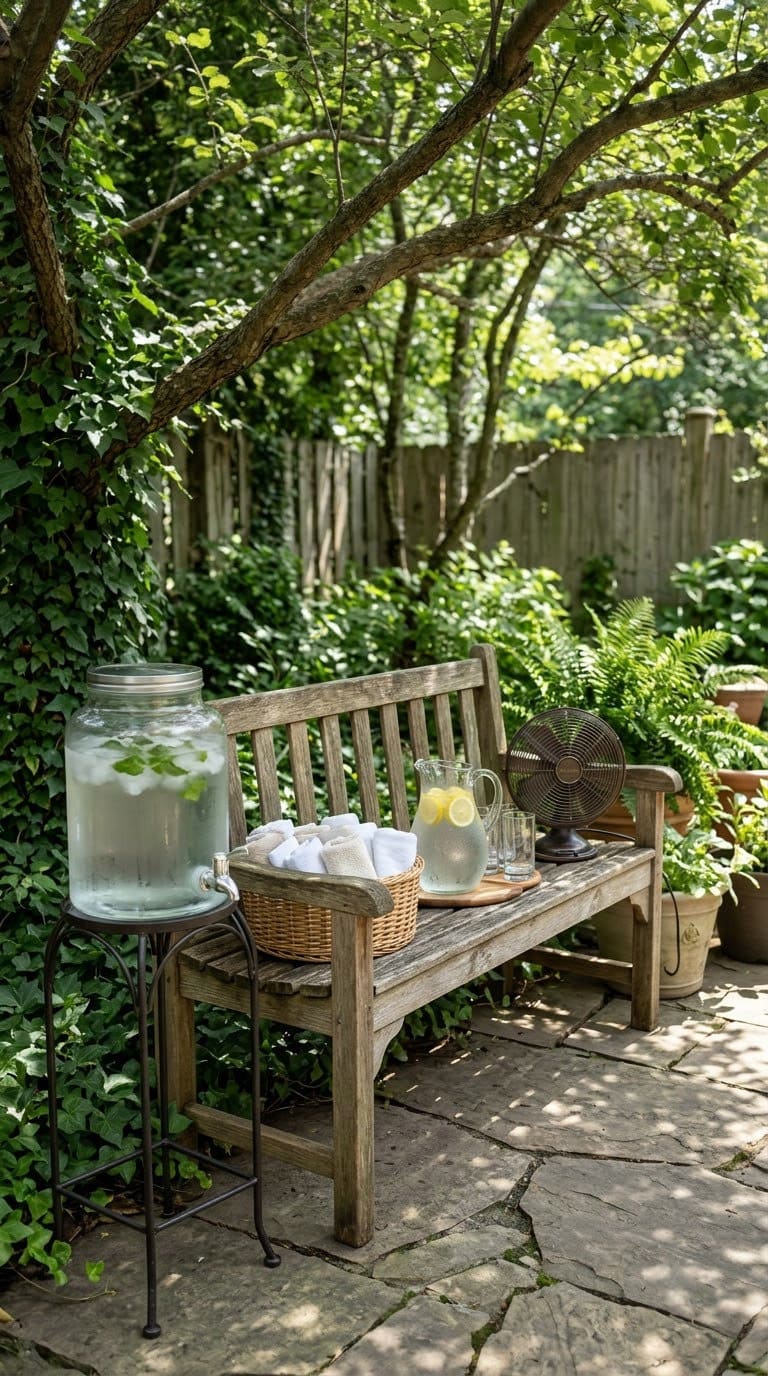
A cool-down station gives everyone a place to recover. Set it up in the shade, close to where people play.
Put out a large jug of water with cups, a bowl of cut fruit and a basket of cool damp cloths. Add a seat and a spot to rest. The CDC says to carry a water bottle and refill it throughout the day, even if you aren’t very active.
Check the drinks. The CDC says to limit drinks high in sugar, sodium, caffeine and alcohol. It says pale yellow or clear urine usually means you’re drinking enough.
Use fans with care. The CDC says to use fans only when temperatures are below 90°F, since above that a fan can increase body temperature. On a very hot day, move people indoors or into deep shade.
Know the signs. Post a card near the station that lists the signs of overheating: cramps, heavy sweating, shortness of breath, dizziness, headache, weakness and nausea. Move anyone who shows them to the shade and get medical help if needed.
Time the day. Schedule games and chores for the early morning or evening.
Chill the water. Freeze a few bottles of water the night before. Put them in the jug or cooler to keep the water cold without watering it down.
Add a mister or a damp cloth. A cool, damp cloth on the neck helps people feel better fast. Keep a few cloths in a cooler so they stay cold.
Stock the basics. Pack a first aid kit, sunscreen and a thermometer. Keep a shaded rug or mat so people can sit on something cool.
Plan for pets. Give pets shade and a bowl of fresh water. Check on them often, and bring them indoors in the hottest part of the day.
Budget: low. Skill: beginner.
3. A Mosquito-Smart Yard
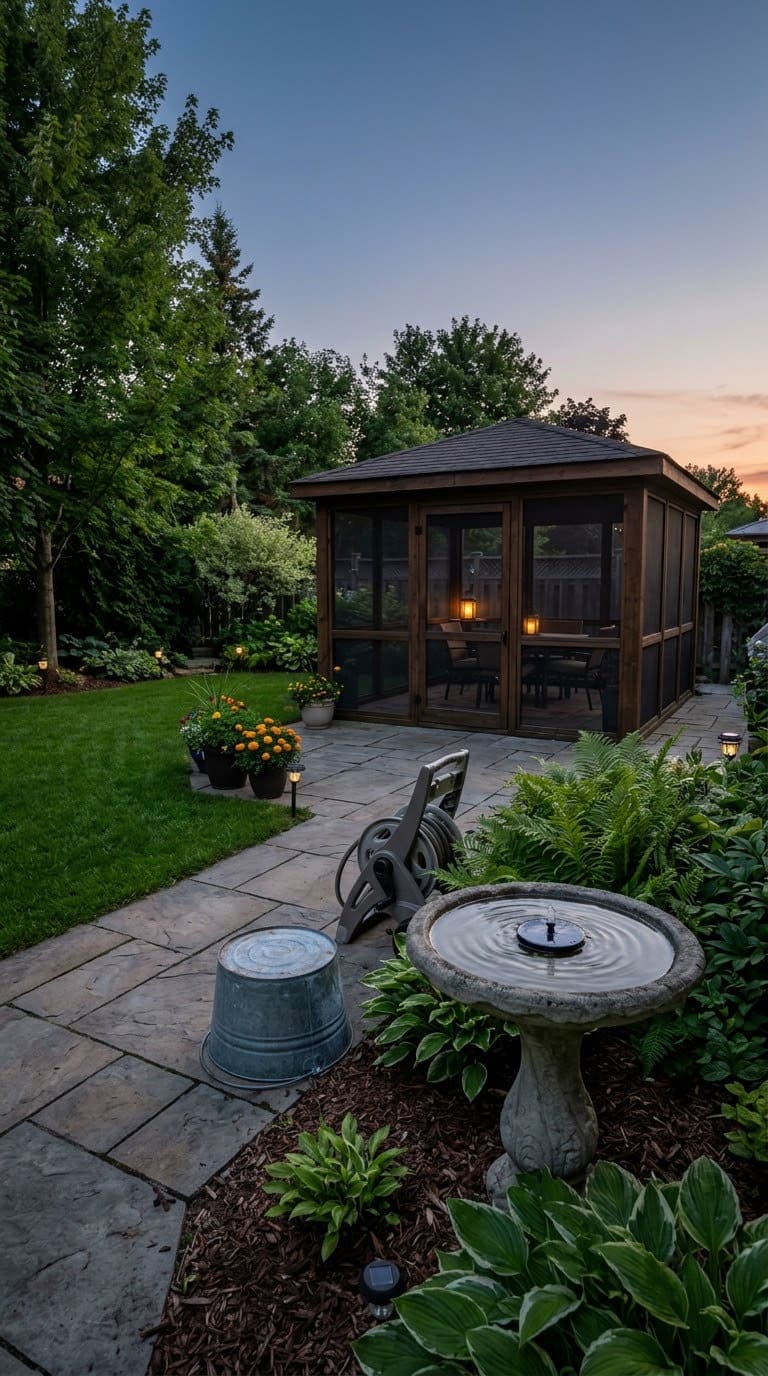
Mosquitoes can ruin an evening. The best fix starts with the water.
The CDC says to empty and scrub, turn over, cover or throw out containers that hold water once a week. Check buckets, toys, birdbath bowls and flowerpot saucers.
Do a weekly sweep. Walk the yard with a bucket. Tip out every container, scrub the ones you keep and turn them upside down. Change the birdbath water and scrub it too.
Use screens. The CDC says to use screens on windows and doors and repair any holes. A screened porch or gazebo gives you a bite-free space.
Choose a repellent that’s registered. The CDC lists EPA-registered repellents with DEET, picaridin, IR3535, oil of lemon eucalyptus, PMD or 2-undecanone. Look for an EPA registration number on the label. It says not to use oil of lemon eucalyptus or PMD on children under 3.
Put sunscreen on first. The CDC says to apply sunscreen first and repellent second.
Skip the plant myth. Plants such as lemongrass aren’t on the CDC’s list of EPA-registered repellents, and the CDC says the effectiveness of non-registered repellents is unknown. Use them for scent and looks, not for protection.
Pick a sweep day. Choose the same day each week, such as Sunday morning. A fixed day turns it into a habit.
Use a checklist. Walk the same route each time: the deck, the shed, the garden beds, the play area and the gutters. Tip out anything that holds water.
Fix the places that fill again. If a tarp pools water, tighten it so water runs off. If a bucket keeps filling, turn it over or store it in the shed.
Add a fan. A breeze helps keep mosquitoes away from a seating area. Use it below the 90°F limit the CDC gives for fans.
For more planting ideas, see our backyard landscaping ideas. Budget: low. Skill: beginner.
4. A Safe Splash Zone
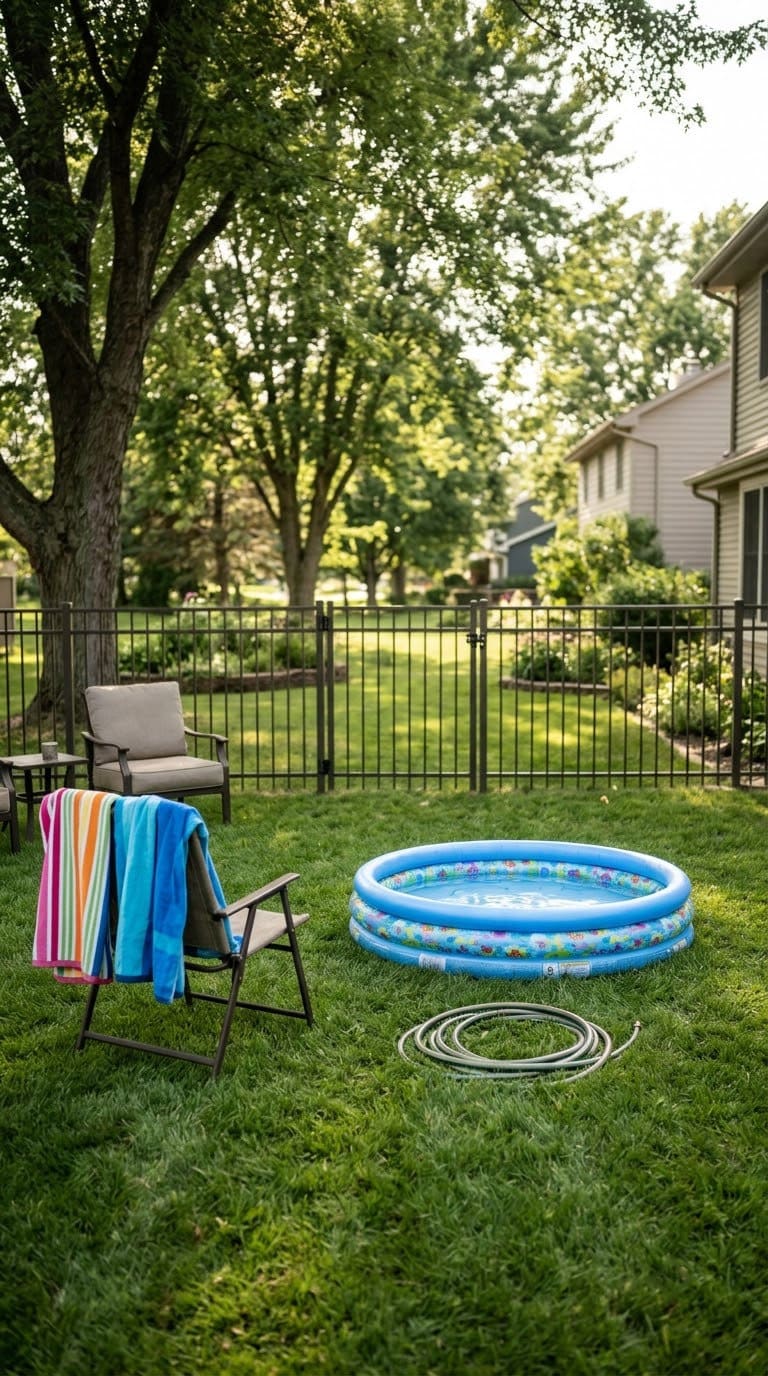
Water play is the best summer fun and the biggest risk. A little planning keeps it safe.
PoolSafely.gov lists seven steps. Always watch children in or near water, and never leave them alone. Name one adult as the Water Watcher, and make watching their only job.
Fence it. PoolSafely.gov says to surround the water with a fence at least four feet high that children can’t climb. Use a self-closing, self-latching gate.
Add alarms and covers. It says to install a door alarm between the house and the pool area, and to keep covers in working order. It also says to learn CPR and to teach children to swim.
Know the drains. For a spa or pool, keep children away from drains and don’t use one with a loose or missing cover.
Empty small pools. After play, tip out a small pool and turn it over. That also helps with mosquitoes, since the CDC lists pools as a water source.
Pick a flat, firm spot. A small pool needs level ground. Check the spot for sticks and stones, and fix any slope before you fill it.
Set the gate and fence first. Build or check the fence before you add water. A fence is the first line of defense, and the gate matters as much as the fence.
Keep a basket nearby. Put towels, sunscreen and a phone in a basket near the water. The Water Watcher can then stay put.
Rotate the watch. A Water Watcher gets tired, so pass the job to another adult every so often.
For pool ideas, see our backyard inflatable pool ideas and amazing backyard ideas for kids. Budget: low to high. Skill: beginner.
5. An Outdoor Food Table
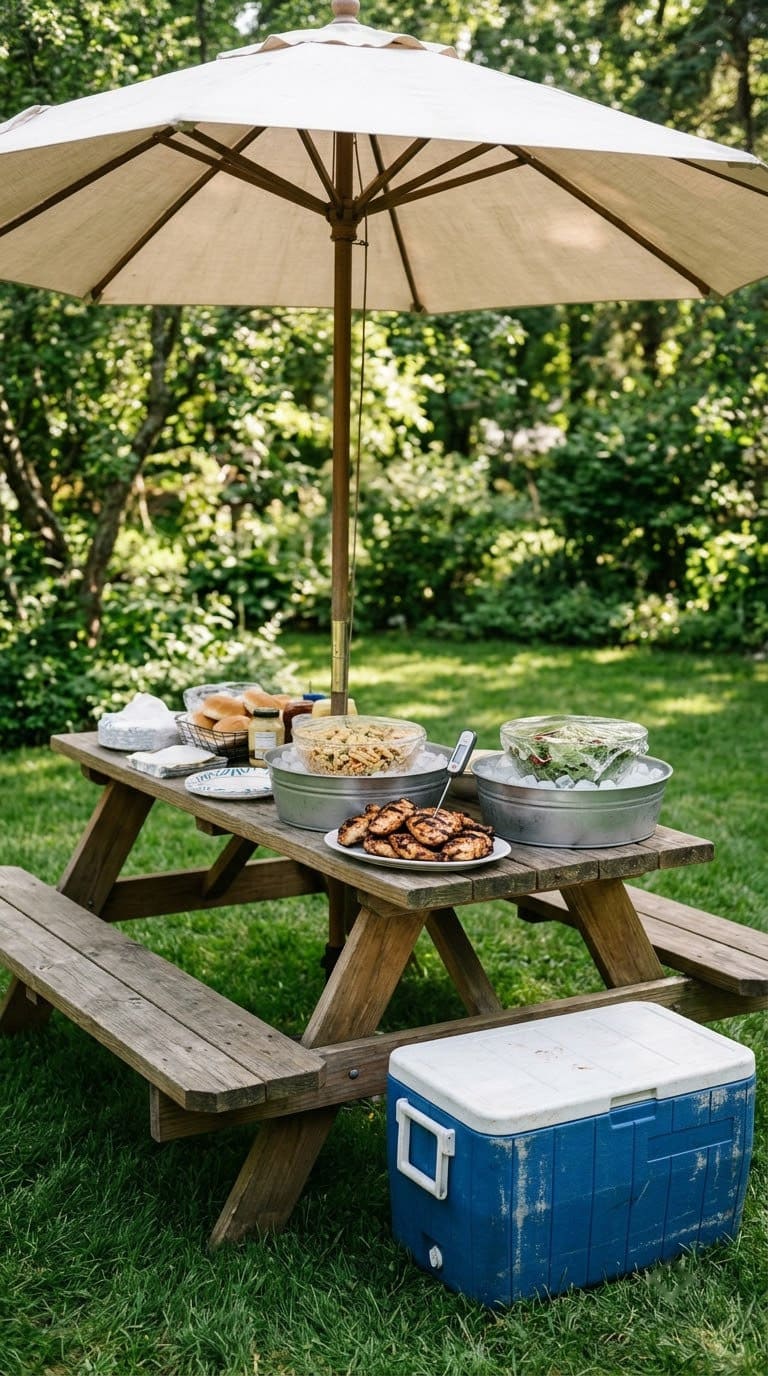
An outdoor meal needs a plan for heat. Warm food spoils fast.
The CDC says never to leave perishable food out for more than 2 hours, and for more than 1 hour above 90°F. It says bacteria multiply rapidly between 40°F and 140°F.
Set up the table. Put cold salads and dairy in bowls set in larger bowls of ice. Keep the cooler in the shade with the lid shut. Serve in small amounts and refill from the cooler.
Use a thermometer. The CDC says the only reliable way to tell if food is done is a food thermometer. It lists 165°F for poultry and leftovers, 160°F for ground beef and pork, and 145°F with a 3-minute rest for whole cuts of beef, pork and lamb.
Plan for cleanup. Put leftovers back in the fridge within 2 hours, or 1 hour on a hot day.
Add a handwash spot. Set out a jug of water, soap and paper towels near the grill.
Make a cold chain. Keep cold food in the cooler until the moment you serve it. Put the cooler in the shade and don’t open it more than you need to.
Plan the grill zone. Keep raw meat and cooked food on separate plates. Use a clean plate and clean tongs for cooked food.
Time the meal. Set a timer when you put food out, so you remember the 2 hour limit, or 1 hour if it’s above 90°F.
Choose heat-friendly dishes. Pick salads without mayonnaise and cold fruit. Keep dishes small and swap them out for fresh ones from the cooler.
Budget: low. Skill: beginner.
6. A Fire Pit Night
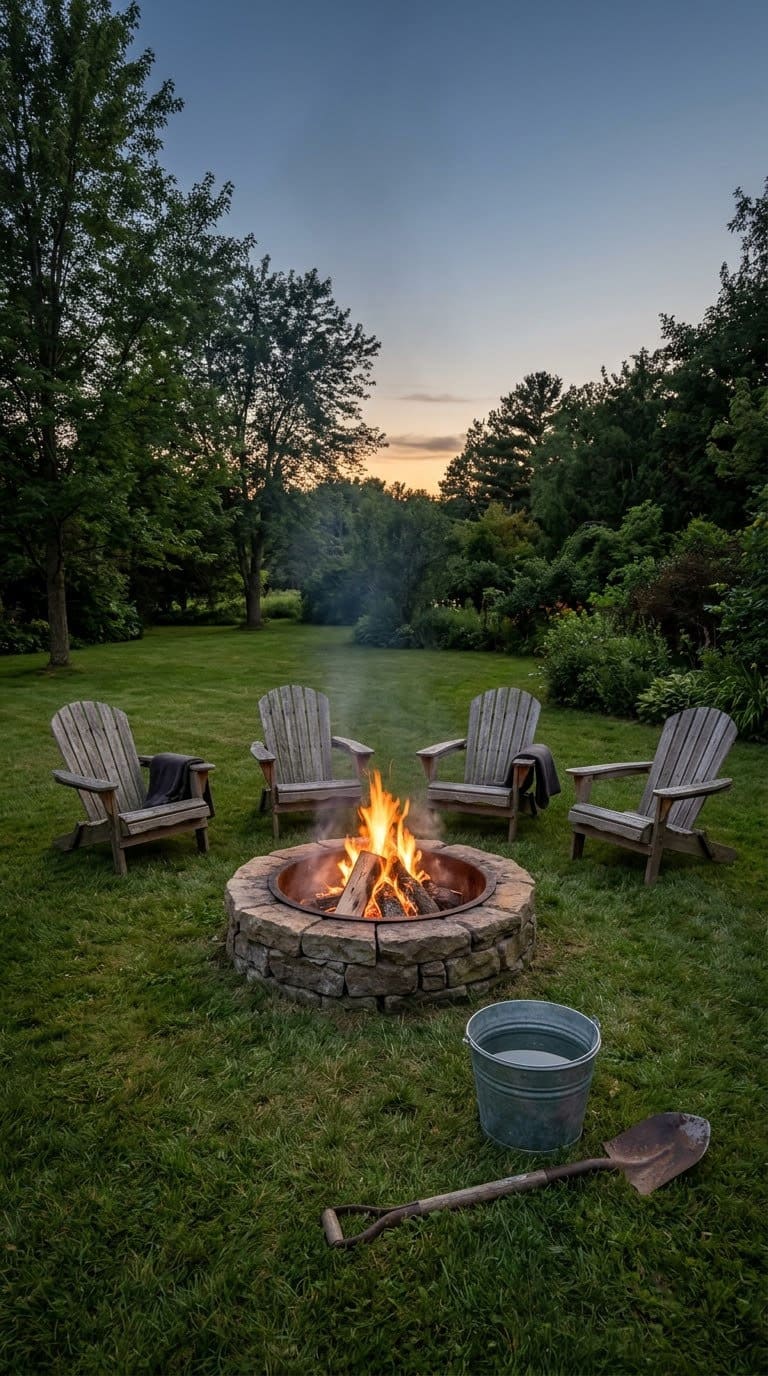
A fire pit makes a summer evening. It also needs space and rules.
Bob Vila’s fire pit guide, by Caitlin Castelaz and Teresa Odle, says to clear a circle of at least 5 feet around the fire. It says to keep sheds and other structures 10 to 20 feet away, and chairs 3 to 4 feet from a wood fire.
Place it well. Keep the pit away from overhangs, string lights and branches. The guide says 12 feet is the minimum clearance to branches overhead, and 20 feet is ideal.
Keep water close. It says to keep water and a shovel nearby, plus a fire blanket and an extinguisher. Before you leave, pour water over the embers and turn the logs.
Burn the right fuel. Use seasoned hardwood. Never burn treated wood, trash or plastic, and never use lighter fluid or gasoline.
Check the rules. The guide says to follow local ordinances and no-burn alerts, since some areas ban fires in dry weather. Never leave a fire unattended.
Set up the seats. Place chairs 3 to 4 feet from a wood fire, as Bob Vila’s guide advises. Keep children 3 to 10 feet from the flames.
Plan for wind. Check the forecast before you light the fire. The guide says not to use the pit on a windy day, since sparks can land on brush or the house.
Use a spark screen. Handle a metal screen with a glove or a tool, since it gets hot. Tie back long hair and roll up loose sleeves.
Put it out well. Pour water over the embers, stir the ashes and turn the logs. Check the pit again the next day, as the guide advises.
For layouts, see our backyard fire pit lounge ideas. Budget: mid. Skill: intermediate.
7. A Backyard Movie Night
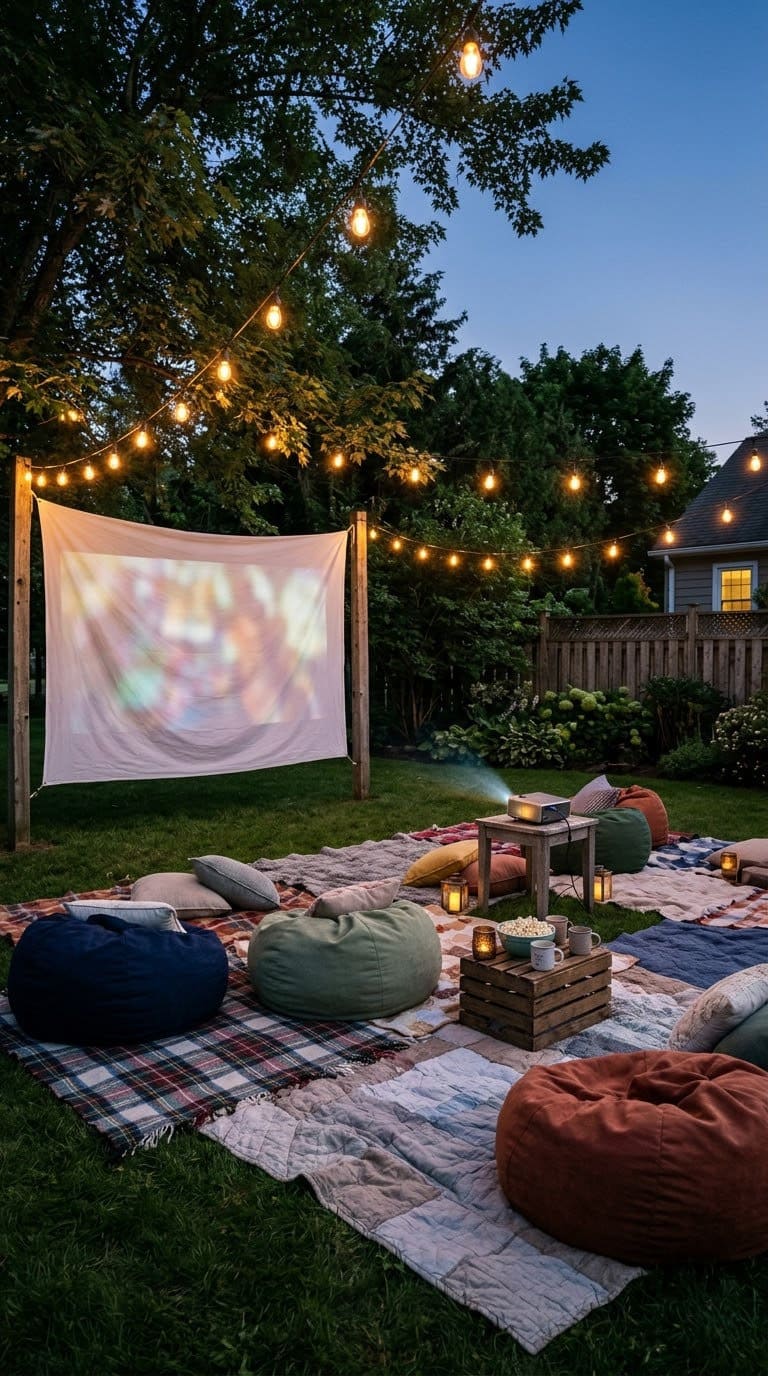
A movie night is a cool way to use a summer evening. It needs a screen, a projector and a safe setup.
Hang a white sheet or a projector screen between two sturdy posts. Place the projector on a table, level with the screen. Lay out blankets and bean bags on the lawn.
Start after sunset. Dusk gives you the darkest sky. Time the movie for when the heat has eased.
Mind the cords. Run extension cords along the edge of the lawn and keep plugs off wet grass. Use an outdoor-rated cord and cover. Keep drinks away from the cords.
Add mosquito control. Do the weekly water sweep earlier in the day, and put repellent on before everyone settles in.
Plan the snacks. Serve snacks in small portions so nothing sits out too long, as the CDC advises.
Test the picture at dusk. Try the screen and the projector before guests arrive, so you don’t fumble in the dark.
Place the seating. Put blankets and bean bags on the lawn, with taller seats at the back. Leave an aisle for walking.
Add a snack table. Keep it far from the cords and put the snacks in covered bowls so bugs stay out.
Pick the sound. Place a speaker so the sound reaches everyone, and keep the volume kind to neighbors.
For more event ideas, see our graduation party backyard ideas. Budget: low to mid. Skill: beginner.
8. A Lawn Games and Lounge Corner
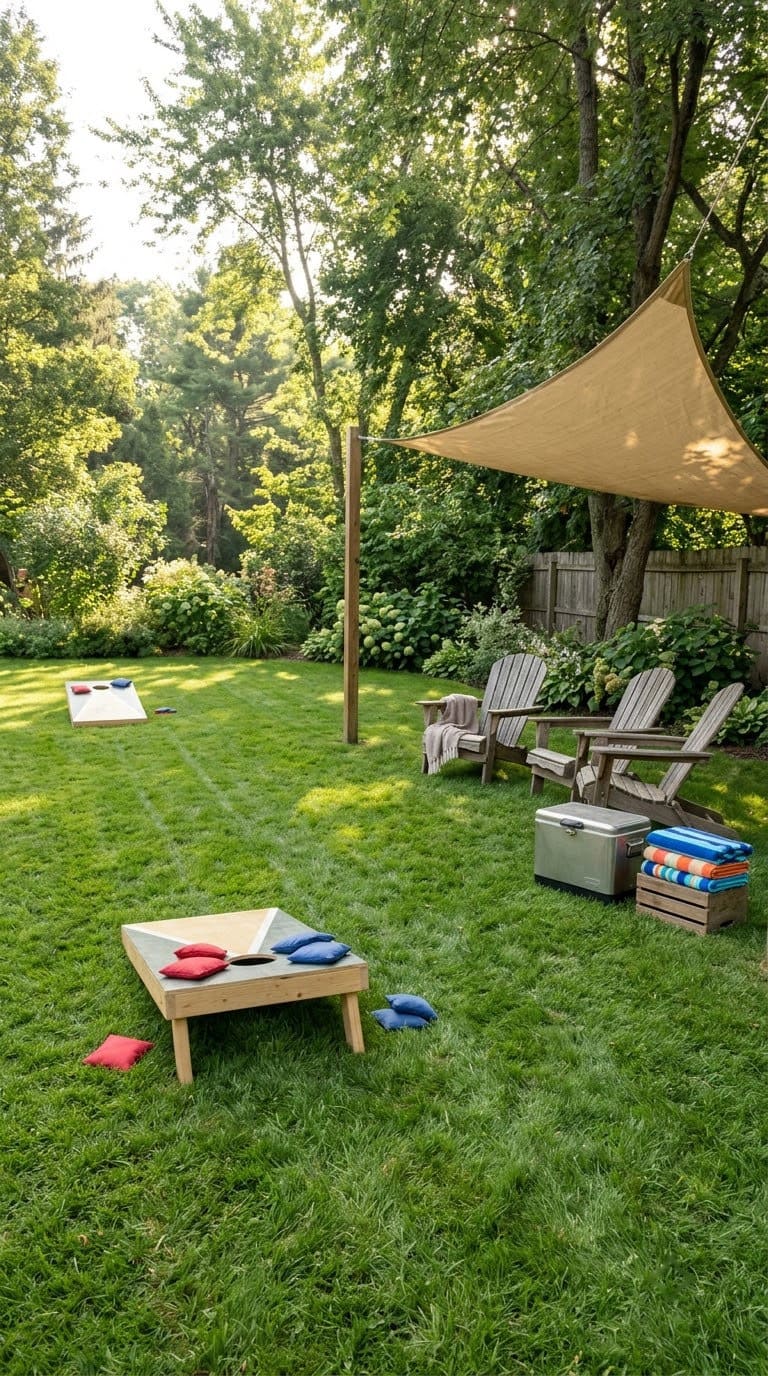
A lawn games corner keeps everyone busy and out of the heat. It works best in the morning or evening.
Pick a flat, mowed patch. Set up one or two games with a clear border, such as cornhole or ring toss. Put chairs in the shade to the side.
Plan the layout. Keep the play area away from the fire pit, the pool and the grill. Leave a wide path to the shade and the water station.
Check the ground. Walk the lawn before play and pick up sticks, toys and holes. Tidy cords and hoses so nobody trips.
Rotate the roles. Let kids rest in the shade between games. Remind everyone to drink water.
Choose games for heat. Pick low-effort games, like cornhole or ring toss. Save running games for early morning or evening.
Mark the boundaries. Use rope or cones to mark the play area. A clear border keeps kids away from the pool and the fire pit.
Add a ball bin. A basket for balls and toys keeps the lawn clear.
Close the day. Pick up all the gear at the end of the night so the mower and the dew don’t ruin it.
For game ideas, see our DIY backyard games and backyard playground ideas. Budget: low. Skill: beginner.
Which Idea Fits Your Yard?
Your yard decides the plan more than your taste does. Here’s how we’d sort it.
A small patio. Pick an umbrella for shade, a cool-down station and the mosquito sweep. A fire pit and a pool rarely fit.
A big lawn. You can add a splash zone, a games corner and a fire pit. Keep each in its own zone with a clear gap.
A yard with kids. Start with the fence, the Water Watcher and the shade. Add games after the safety items.
A yard with pets. Add shade, fresh water and a cool-down spot for them too. Keep pets away from the fire pit and the grill.
For pet-friendly ideas, see our cat friendly backyard ideas.
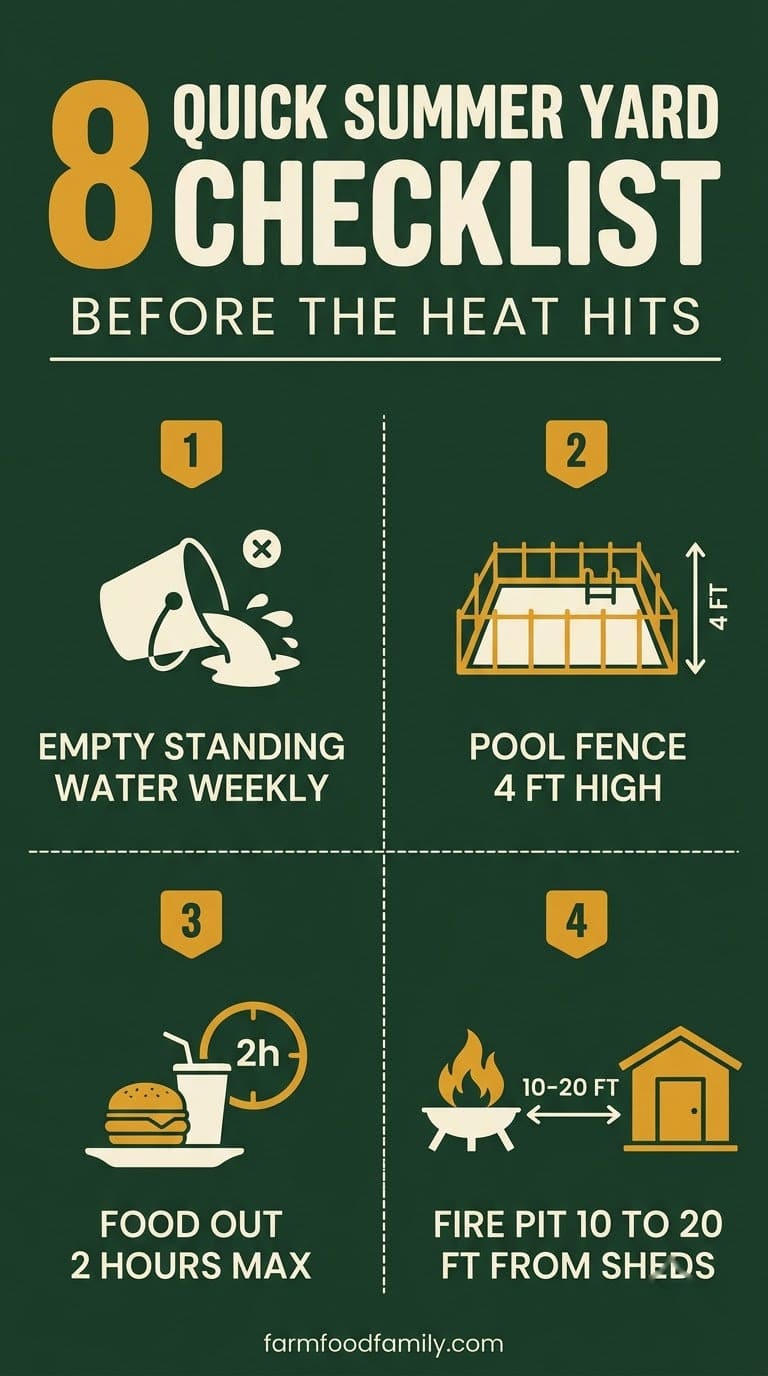
A Summer Yard Checklist
Run this list at the start of the season, then again each month. It takes about ten minutes.
| Check | Done? |
|---|---|
| Shade structures are anchored and the fabric is sound | |
| Water jug, cups and cloths are stocked | |
| Standing water is emptied, scrubbed or covered | |
| Pool fence and gate latch work | |
| Cooler, thermometer and soap are ready | |
| Fire pit area is clear and water is nearby | |
| Cords are outdoor-rated and off wet grass | |
| Lawn is free of sticks, toys and holes |
A Weekend Plan
You can set up most of this in one weekend. Here’s a simple plan.
On Friday evening, walk the yard and do the first mosquito sweep. Note where the sun and shade fall. On Saturday morning, set up the shade and the cool-down station.
On Saturday afternoon, check the fence and gate, and set up the food table. On Sunday, set up the games corner and plan a fire pit or movie night for the evening.
How Do You Heat-Proof Your Yard Surfaces?
Dark surfaces get hot in the sun. A paver, a deck board or a metal slide can burn bare feet.
Touch a surface with the back of your hand before kids walk on it. If it’s too hot for you to hold your hand there, it’s too hot for bare feet.
Cool the area with shade, a light-colored rug or a quick spray of water. Keep shoes by the door for hot days.
What to Do First
Start with the safety items, then add the fun. This order keeps summer easy.
First, set up the shade and the cool-down station. Second, do the weekly mosquito sweep and fix any standing water. Third, check the fence and the gate on any water play.
Then set up the food table, the fire pit rules and the games.
Common Mistakes to Avoid
Most summer yard problems come from a short list of oversights. Here’s what to watch for.
Leaving water standing. The CDC says to empty and scrub water containers once a week. Do it on the same day each week.
Skipping the fence. PoolSafely.gov says a pool or spa needs a fence at least four feet high with a self-latching gate.
Leaving food out. The CDC says no more than 2 hours, or 1 hour above 90°F. Use a timer.
Setting the fire pit too close. Bob Vila’s guide says to clear at least 5 feet around it and keep structures 10 to 20 feet away.
FAQ
How do I keep mosquitoes out of my yard?
Empty and scrub water containers once a week, use screens and wear an EPA-registered repellent, per the CDC.
How high should a pool fence be?
PoolSafely.gov says at least four feet, with a self-closing, self-latching gate.
How long can food sit out in the summer?
The CDC says no more than 2 hours, and no more than 1 hour if it’s above 90°F.
How far should a fire pit be from the house?
Bob Vila’s guide says to keep structures 10 to 20 feet away, and to clear a circle of at least 5 feet around the fire.
How do I keep my yard cool in summer?
Add shade, plant trees on the west side and use light-colored surfaces. Set up a cool-down station and plan outdoor time for the early morning or evening, as the CDC advises.
Is it safe to use a fan outside in the heat?
The CDC says to use fans only below 90°F. Above that, a fan can raise body temperature, so move to the shade or indoors.
What’s the best summer yard idea on a budget?
Start with an umbrella, a water jug and the weekly mosquito sweep. They cost little and fix the biggest summer problems.
Can I use a fire pit in summer?
Check your local rules first. Bob Vila’s guide says some areas ban fires, so follow local ordinances and no-burn alerts.
Related Posts
Never miss an update — choose FarmFoodFamily as your preferred source on Google.
How it works: Tap the button below to open Google's settings page, then check the box next to FarmFoodFamily.
Tap the checkbox to turn it blue — that's how you know it's set.