This Type of Garden Fountain Is Good Luck in Feng Shui — Here’s Where to Put It, and Which Work Best
The short answer: a tiered or gently cascading fountain with visible, audible, continuously moving water, placed near the entrance with water flowing toward the house, but the type you choose matters almost as much as where you put it.


Never miss an update — choose FarmFoodFamily as your preferred source on Google.
How it works: Tap the button below to open Google’s settings page, then check the box next to FarmFoodFamily.
Tap the checkbox to turn it blue — that’s how you know it’s set.
Not every fountain earns its keep in feng shui terms. A fountain that trickles too quietly, sits in the wrong spot, or was chosen for looks alone can end up as decoration rather than the active, wealth-supporting feature feng shui treats water as capable of being.
Here’s what actually matters, cross-checked against real electrical code that neither major feng shui fountain guide currently online bothers to mention.
The type that works best: tiered, with genuinely continuous flow
Kartar Diamond, founder of Feng Shui Solutions™ and a classically-trained consultant practicing since 1992, notes that most people enjoy outdoor water features right up until maintenance becomes the deciding factor, which is exactly why fountain type matters as much as fountain symbolism.
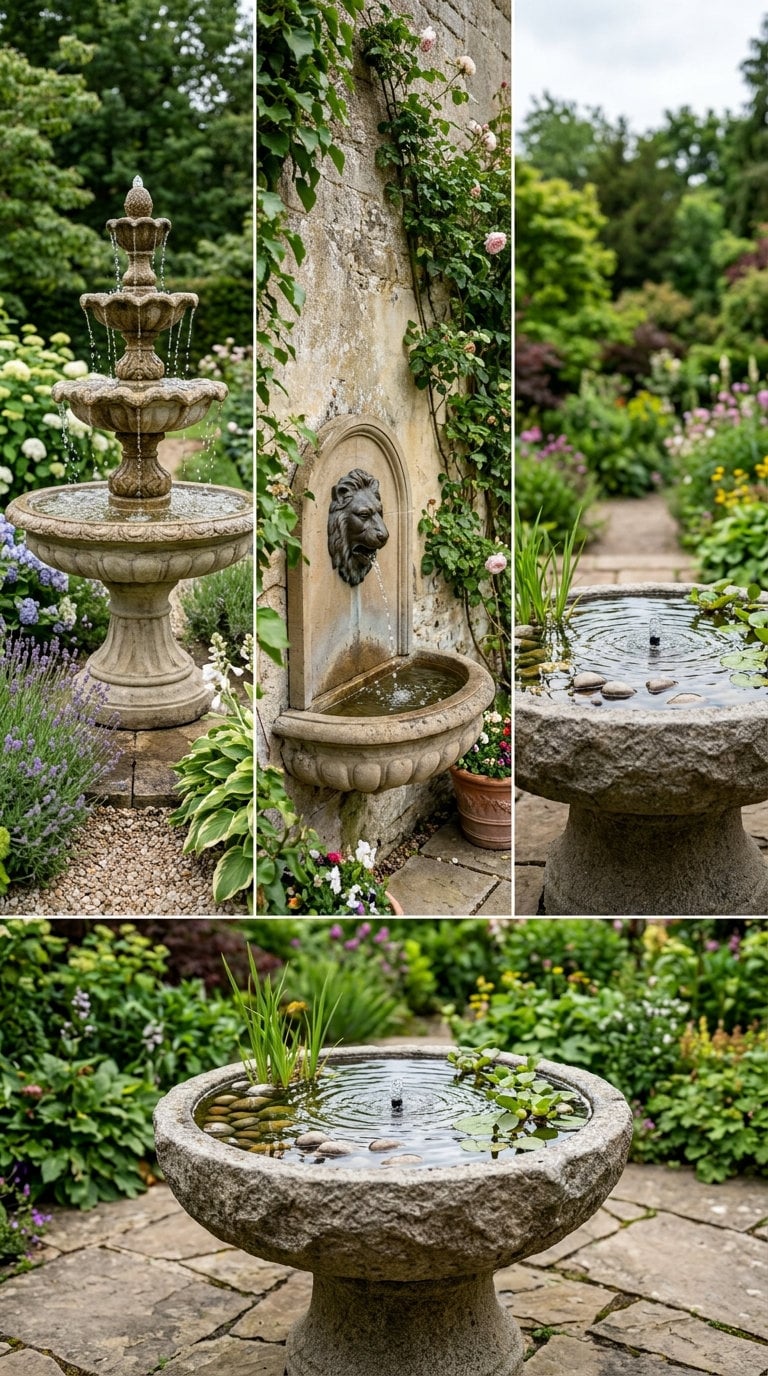
Tiered fountains are the most consistently recommended type: multiple levels give the water a longer, more visible path to fall through, which reads as sustained, layered movement rather than a single quick splash.
Wall-mounted fountains are a strong second choice for tighter spaces, their vertical flow is associated with ambition and forward movement.


Freestanding garden fountains (a standalone basin-and-pump feature, not attached to a pond) are considered capable of the most significant energy shift precisely because they can be sized and placed with the most flexibility, our DIY garden fountain landscaping ideas guide has real examples of all three types.
Answer 4 quick questions and get matched to the exact fix for your yard — drainage, budget, layout, or something else entirely.
Take the Free QuizSolar versus electric is the practical decision most guides skip. Solar fountains avoid running a permanent electrical line, genuinely useful if you’re placing the fountain somewhere with no nearby outlet, but they only run reliably in direct sun and go quiet on overcast days or after dusk, which undercuts the “continuous flow” requirement feng shui cares about.
A wired electric fountain with a timer keeps the water moving consistently regardless of weather, at the cost of needing a code-compliant outdoor circuit (see below).
Where to put it: facing the entrance, water flowing toward the house

The consistent placement guidance across every real source checked for this piece: position the fountain so it’s visible from, or oriented toward, your main entrance, with the water flowing toward the house, not away from it.
Water flowing away is read the same way an infinity pool edge or an outward-curving driveway is, symbolically pulling opportunity off the property instead of drawing it in.
Southeast and north are the two most frequently cited favorable directions, southeast for wealth and abundance, north for career growth, with south the one direction to actively avoid (fire element clashing with water).
East is a reasonable third choice, tied to health and family growth. If you’re deciding between a front or backyard placement, browse our front yard fountain ideas and backyard fountain ideas galleries side by side.
Where not to put it
Skip directly beneath a balcony, staircase overhang, or roofline, the water’s energy is considered suppressed rather than freely rising when it’s boxed in overhead.
Most yard problems trace back to one specific, fixable cause. Find yours in 4 quick questions.
Take the Free Quiz
The top-recommended type from this article, layered continuous flow
Shop NowThis post contains affiliate links. We may earn a commission on qualifying purchases at no extra cost to you.
Avoid placing it right next to a bathroom or near cluttered, neglected corners of the yard, both are treated as undermining the wealth symbolism water is supposed to carry. And don’t flank your entrance with two fountains on either side, a single, well-placed fountain is considered stronger than a symmetrical pair, which is thought to create competing rather than complementary flow.
Match the material to the effect you actually want

The fountain’s material carries its own elemental association layered on top of the water itself. Stone and cast concrete fountains lean into the earth element, grounding and stability.
Metal fountains support the metal element, associated with clarity and precision, and pair naturally with a west or northwest placement.
If you want to reinforce a wood-element area (east or southeast), pairing the fountain with real wood-adjacent plantings nearby, bamboo, cedar, tall grasses, does more than the fountain material alone.
Fountain types at a glance
| Type | Best for | Feng shui strength |
|---|---|---|
| Tiered | Most yards, longer visible water path | Most consistently recommended |
| Wall-mounted | Tight spaces | Vertical flow tied to ambition |
| Freestanding | Flexible sizing/placement | Most significant potential energy shift |
| Solar-powered | No nearby outlet | Weaker: inconsistent flow in shade/at night |
| Wired electric | Reliable, code-compliant setup | Strongest: continuous flow regardless of weather |
Do you need an electrician to install a garden fountain?
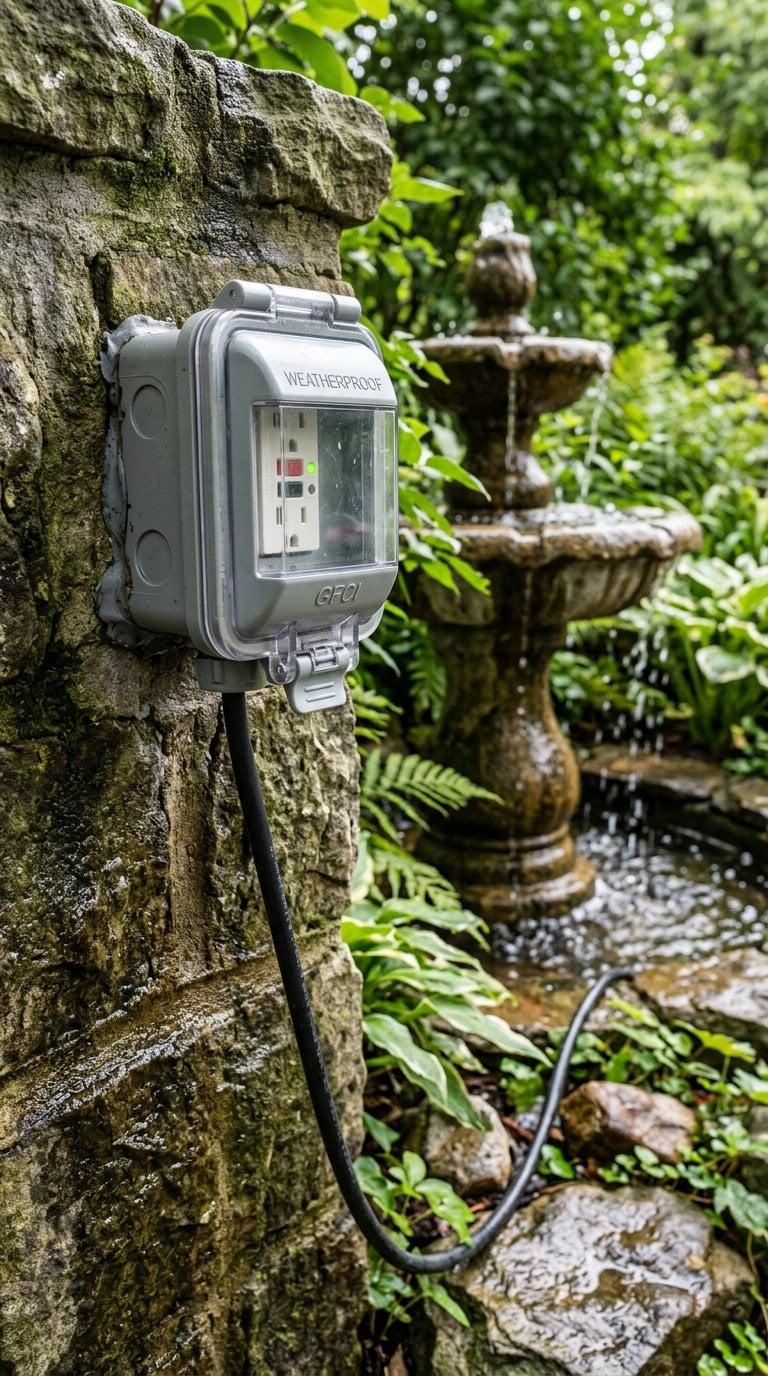
This is the gap in every source checked for this piece, and it’s genuinely more important than the compass direction. Once a fountain has a pump, it’s an electrical fixture sitting in or near standing water, and the National Electrical Code, Article 680, Part V, governs permanently installed fountains specifically.
Submersible pump equipment must be GFCI-protected, and any electrical receptacle within 20 feet of the fountain’s edge needs Class A GFCI protection (or Class C SPGFCI for higher-voltage circuits).
The Electrical Safety Foundation International (ESFI) reinforces the broader principle behind this code section: any outdoor electrical fixture near water needs GFCI protection as a baseline, not an upgrade.
In practice: if you’re wiring a fountain to a permanent outdoor outlet rather than running it on battery or solar power, that outlet needs to be a GFCI outlet (or protected by a GFCI breaker), full stop.

This isn’t optional based on fountain size or how far it feels from “real” water. Our guide to buying water fountains covers this same electrical checklist from the shopping side.
The average homeowner spends $616/year on yard fixes that don't address the real problem. Find out what yours actually is — before you spend another dollar.
Take the Free QuizWhat we learned the hard way
The solar-vs-electric decision is the one people regret most, in both directions. Someone who installs a solar fountain in a partly shaded spot ends up with an inconsistent trickle that undercuts the whole point of the purchase, while someone who runs a permanent electrical line without confirming GFCI protection first can end up needing an electrician to retrofit the circuit after the fact, a more expensive fix than getting it right during installation.
Maintenance is the second thing people underestimate. A fountain that isn’t cleaned regularly, per Premier Ponds’ real maintenance guidance, weekly exterior wipe-downs, monthly interior scrubbing with a mild diluted-vinegar solution, and regular pump/filter checks, turns cloudy and algae-prone within a season, which defeats the “clean, moving water” principle feng shui is built around in the first place.
FAQs
Do I need an electrician to install a garden fountain? If it’s plugging into a permanent outdoor electrical outlet, that outlet needs GFCI protection per NEC Article 680, Part V, so at minimum, have an electrician confirm your outdoor circuit is properly protected before wiring in a fountain, even if the fountain itself is a simple plug-and-play unit.
Is a solar fountain as good as an electric one for feng shui? It depends on your yard’s actual sun exposure. A solar fountain that runs inconsistently because of shade doesn’t provide the continuous flow feng shui values as much as a reliable electric fountain does, sun exposure matters more than the solar-vs-electric choice itself.
Can I place two fountains, one on each side of my entrance? It’s generally discouraged; a single, well-placed fountain is considered to carry stronger, more focused energy than a symmetrical matched pair.
What if my only good spot is under a covered porch or overhang? That’s one of the placements to avoid if you have any flexibility at all; the water’s rising energy is considered suppressed under an overhead structure. If it’s truly your only option, prioritize an alternate favorable direction (southeast or north) to help offset it.
Related reading on farmfoodfamily.com: for the same “water flowing toward the house” principle applied to a larger water feature, see our koi pond placement guide.
Related Posts
- 25 Beautiful Small Ponds with Waterfalls for a Peaceful Outdoor Retreat
- 7 Feng Shui Rules for Your Backyard Pool You Should Know Before You Swim
- Where to Position a Koi Pond for Good Luck, According to Feng Shui Experts
- Front Yard Fountain Ideas
- Backyard Fountain Ideas
- DIY Garden Fountain Landscaping Ideas
- Guide to Buying Water Fountains
- DIY Water Feature Ideas
Products We Recommend
This post contains affiliate links. We may earn a commission on qualifying purchases at no extra cost to you.
Teamson Home Two-Tier Outdoor Water Fountain
The top-recommended type from this article, layered continuous flow
Shop Now
Biling Solar Fountain Pump Kit
For the solar option discussed, good for spots without a nearby outlet
Shop Now
Intermatic Weatherproof Outdoor Outlet Cover
Covers the real NEC 680 electrical safety requirement for a wired fountain
Shop NowNever miss an update — choose FarmFoodFamily as your preferred source on Google.
How it works: Tap the button below to open Google's settings page, then check the box next to FarmFoodFamily.
Tap the checkbox to turn it blue — that's how you know it's set.