5 Bedroom Feng Shui Mistakes That Are Wrecking Your Sleep — And Easy Fixes
Feng shui treats the bedroom as the one room where mistakes compound every single night, and a couple of the “energetic” reasons behind these mistakes turn out to have a real, checkable explanation once you look past the symbolism.


Never miss an update — choose FarmFoodFamily as your preferred source on Google.
How it works: Tap the button below to open Google’s settings page, then check the box next to FarmFoodFamily.
Tap the checkbox to turn it blue — that’s how you know it’s set.
Anjie Cho, architect and Feng Shui educator, founder of Mindful Design Feng Shui School, treats sleep as a uniquely vulnerable state in feng shui terms: lying down for hours in one spot every night makes you more sensitive to whatever’s happening in the room around you than almost any other daily activity.
That framing holds up surprisingly well against real sleep science, even where the specific feng shui explanation doesn’t.
Here are the five mistakes worth actually fixing, and what’s really going on behind each one.
Mistake #1: Keeping phones, TVs, and routers in the bedroom

The feng shui reasoning: electronics represent fiery, dynamic energy that disrupts the calm, yin-dominant state a bedroom needs to support real rest.
What’s actually happening: the Sleep Foundation‘s 2024 expert panel found there isn’t strong enough evidence that blue light specifically impairs adult sleep, the oft-repeated “blue light ruins your sleep” claim is more nuanced than most articles (feng shui or otherwise) let on.



What the panel did find disruptive was the engagement itself, scrolling, messaging, watching something absorbing, keeps the brain alert regardless of screen color. The practical fix (keep devices out of the bedroom, or at least out of reach at night) ends up being the same whether you believe the feng shui explanation or the sleep-science one.
The fix: charge phones in another room, or at minimum across the room rather than on the nightstand, and treat the bedroom as a screen-free zone after a set time rather than relying on a blue-light filter to solve it.
Mistake #2: Storing clutter, especially “charged” items, under the bed
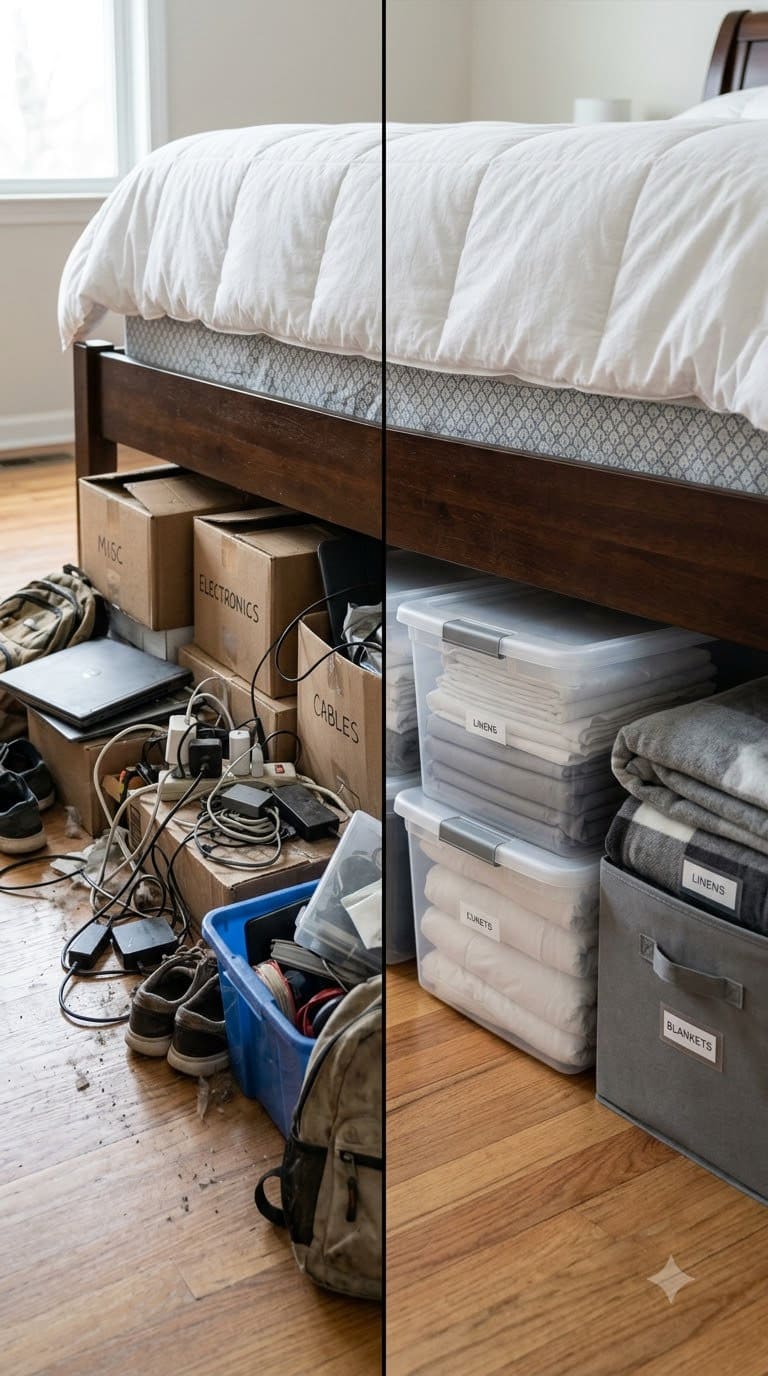
The feng shui reasoning: you spend roughly a third of your life directly above whatever’s stored under your bed, and clutter there, especially electronics, workout gear, or old paperwork, is thought to interfere with the room’s qi and your ability to fully recharge.
What’s actually happening: this one holds up on pure practicality even without the symbolism. A cluttered under-bed space is a common dust and allergen trap, and the visual/mental awareness of “stuff” nearby (even unseen) is a documented low-grade cognitive distraction for some people at bedtime.
The fix: if you need the storage space, limit it to soft, “neutral” items like out-of-season bedding, not electronics or unfinished projects. Our guide on how to rearrange furniture for good sleep covers this and several other layout fixes in more depth.
Mistake #3: Sleeping on bedding with no real safety or material standard behind it

The feng shui reasoning: “toxic,” low-vibration bedding materials are thought to work against a restful environment; the fix usually offered is vague, organic, non-toxic, ethically sourced linens.
What’s actually happening: there’s a real, checkable standard hiding behind the vague “toxic bedding” language that almost no feng shui source names.
Every mattress legally sold in the U.S. must meet CPSC’s 16 CFR Part 1633, a federal open-flame flammability standard that limits how much heat a mattress fire can release, giving occupants more time to escape. This isn’t the same claim as “toxic,” but it’s the actual, verifiable safety fact in the neighborhood of what these articles are gesturing at.
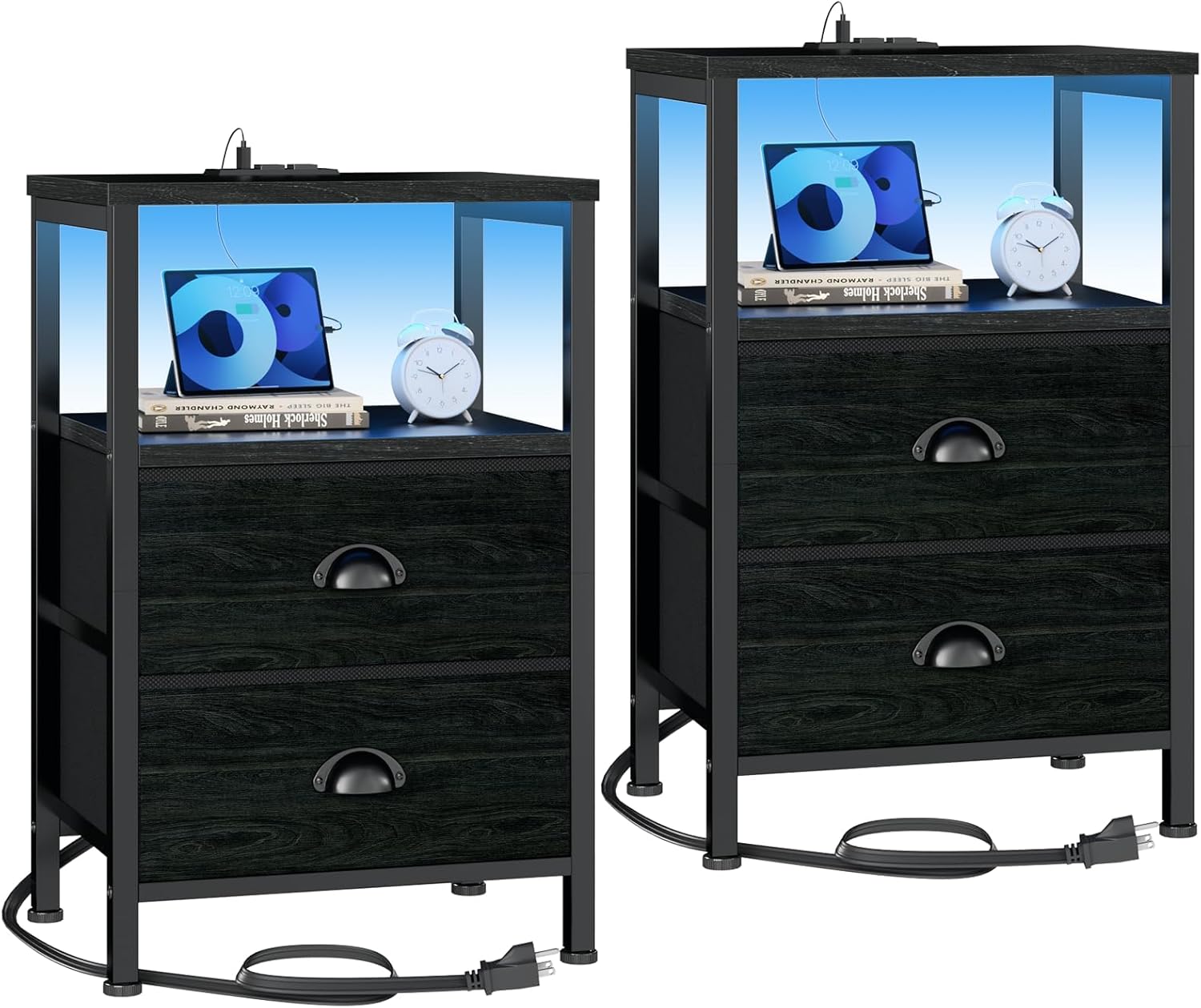
Directly solves mistake #4's imbalance issue with a matched pair
Shop NowThis post contains affiliate links. We may earn a commission on qualifying purchases at no extra cost to you.
If you’re shopping for a new mattress, our types of mattresses guide and why mattress comfort is the cornerstone of a happy family home cover the material and comfort side in more depth than symbolism alone can.
The fix: don’t chase vague “high-vibration” marketing claims. Confirm the mattress meets the standard federal flammability requirement (virtually all legally sold U.S. mattresses do), and separately prioritize genuinely breathable, natural-fiber sheets if synthetic bedding runs hot for you, that’s a comfort fix, not a safety one, but it’s a real one.
Mistake #4: Mismatched nightstands and an unbalanced bed setup

The feng shui reasoning: uneven nightstand heights (or having only one nightstand when two people share the bed) is thought to create imbalance, symbolically favoring one partner’s stability and rest over the other’s.
What’s actually happening: matched nightstands at a height close to the mattress surface aren’t just symbolic, they’re genuinely more functional: a nightstand noticeably lower or higher than the mattress makes reaching a glass of water or turning off a lamp awkward at exactly the moment you’re trying to wind down, not power through a task.
The fix: pair nightstands of equal height on both sides if two people share the bed, and aim for a surface close to mattress height rather than picking pieces purely for look.
Mistake #5: Sleeping in the “coffin position,” feet pointed at the door
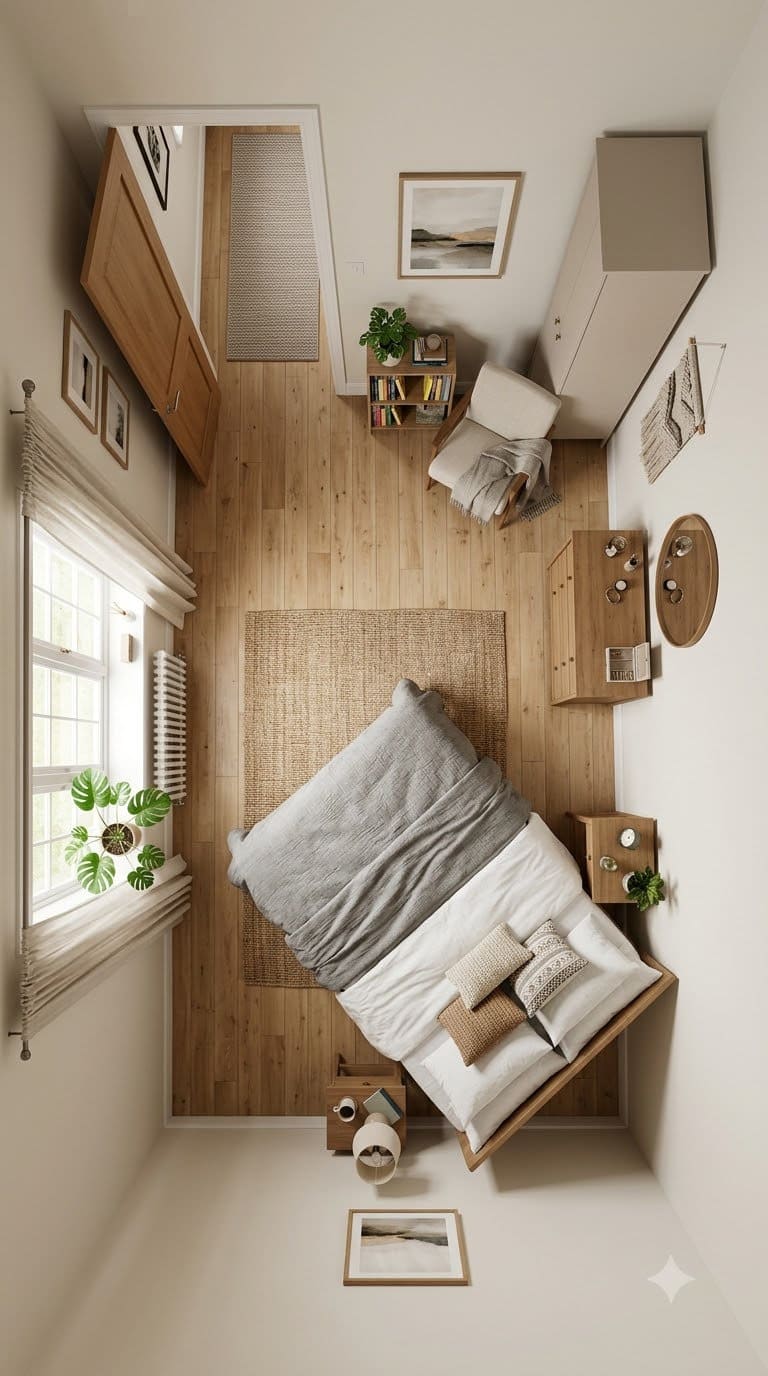
The feng shui reasoning: positioning the bed so your feet point directly at the bedroom door is traditionally called the “death position,” associated historically with how a body was carried out of a room feet-first; it’s considered one of the more serious bedroom feng shui mistakes.
What’s actually happening: independent of the specific historical association, sleeping directly in line with a door, feet or head pointed at it, also puts you in a poor “commanding position,” unable to see who or what enters the room without turning your head, which taps into a well-documented, low-level vigilance response most people have around sleeping with their back to an open entrance. The feng shui fix and the practical comfort fix point the same direction here.
The fix: reposition the bed diagonally from the door if possible, so you can see the entrance without lying directly in its line. If your room’s layout genuinely doesn’t allow repositioning, a solid headboard and a nightstand or low furniture piece between the foot of the bed and the doorline softens the effect without a full rearrange, our awkward bedroom layout ideas guide has real solutions for exactly this kind of constrained room.



The 5 mistakes at a glance
| Mistake | Feng shui reasoning | What’s actually happening |
|---|---|---|
| Electronics in the bedroom | Fiery energy disrupts yin-dominant rest | Sleep Foundation: it’s the engagement, not blue light, that keeps you alert |
| Clutter under the bed | Interferes with qi and recharging | Real dust/allergen trap and low-grade cognitive distraction |
| No safety-standard bedding | “Toxic,” low-vibration materials | CPSC 16 CFR Part 1633 flammability standard is the real, checkable fact |
| Mismatched nightstands | Symbolic imbalance between partners | Genuinely less functional at an uneven height |
| Coffin position (feet at door) | Historical “death position” association | Poor commanding position, low-level vigilance response |
What we learned the hard way
The electronics rule is the one people resist most, specifically because “just don’t use your phone in bed” sounds like generic advice they’ve already ignored.
Reframing it around the Sleep Foundation’s actual finding, that it’s the engagement, not the light, helps explain why a “night mode” screen filter alone doesn’t fix a scrolling habit the way physically removing the device from the room does.
The mattress-standard point surprises people in the other direction: many assume “toxic bedding” claims must refer to some specific banned chemical, when the real, checkable fact is a flammability standard, not a toxicity one.
Knowing the difference helps you evaluate a genuine safety claim instead of a marketing one when you’re actually shopping.
FAQs
Do I really need to remove all electronics from my bedroom? Full removal is the strongest version of the fix, but even keeping devices out of arm’s reach from the bed (across the room, not on the nightstand) captures most of the practical benefit.
What if my room layout only allows the “coffin position”? Use a solid headboard and a low furniture piece or nightstand between the bed’s foot and the doorline to soften the direct sightline. A full reposition isn’t always necessary if the room genuinely doesn’t allow it.
Is there a real safety issue with old or secondhand mattresses? Potentially, yes, older mattresses (especially pre-2007) may predate the current CPSC flammability standard, and any mattress with an altered or removed law tag should be treated with caution regardless of feng shui.
Can plants help offset any of these mistakes? Feng shui and real research on indoor plants both support this: our guides on houseplants for restful sleep and bedroom plants for better sleep cover which varieties genuinely help versus which are just decorative.
Related reading on farmfoodfamily.com: if you’re rethinking your whole room’s layout, not just these five fixes, see our zen bedroom ideas and meditation bedroom ideas for full-room approaches built around the same restfulness goal.
Related Posts
- How to Rearrange Furniture for Good Sleep
- Types of Mattresses
- Houseplants for Restful Sleep
- Awkward Bedroom Layout Ideas
- Zen Bedroom Ideas
- Bedroom Storage Solutions for Small Spaces
Products We Recommend
This post contains affiliate links. We may earn a commission on qualifying purchases at no extra cost to you.
Furologee Nightstand Set of 2
Directly solves mistake #4's imbalance issue with a matched pair
Shop Now
Budding Joy Under-Bed Storage Containers (4-Pack)
Keeps mistake #2's under-bed storage limited to soft, neutral items like linens
Shop Now
ANJANK Wireless Charging Station
Lets you charge devices across the room instead of on the nightstand, supporting mistake #1's fix
Shop NowNever miss an update — choose FarmFoodFamily as your preferred source on Google.
How it works: Tap the button below to open Google's settings page, then check the box next to FarmFoodFamily.
Tap the checkbox to turn it blue — that's how you know it's set.