Eggshells, Coffee Grounds, Wood Ash: Which Garden Hacks Actually Work
One of these three kitchen-scrap garden hacks is basically a myth, one works but way too slowly to matter this season, and one is genuinely useful if you check one number first.

Never miss an update — choose FarmFoodFamily as your preferred source on Google.
How it works: Tap the button below to open Google’s settings page, then check the box next to FarmFoodFamily.
Tap the checkbox to turn it blue — that’s how you know it’s set.
Garden folklore is a real mix of things that genuinely work and things that just sound like they should.
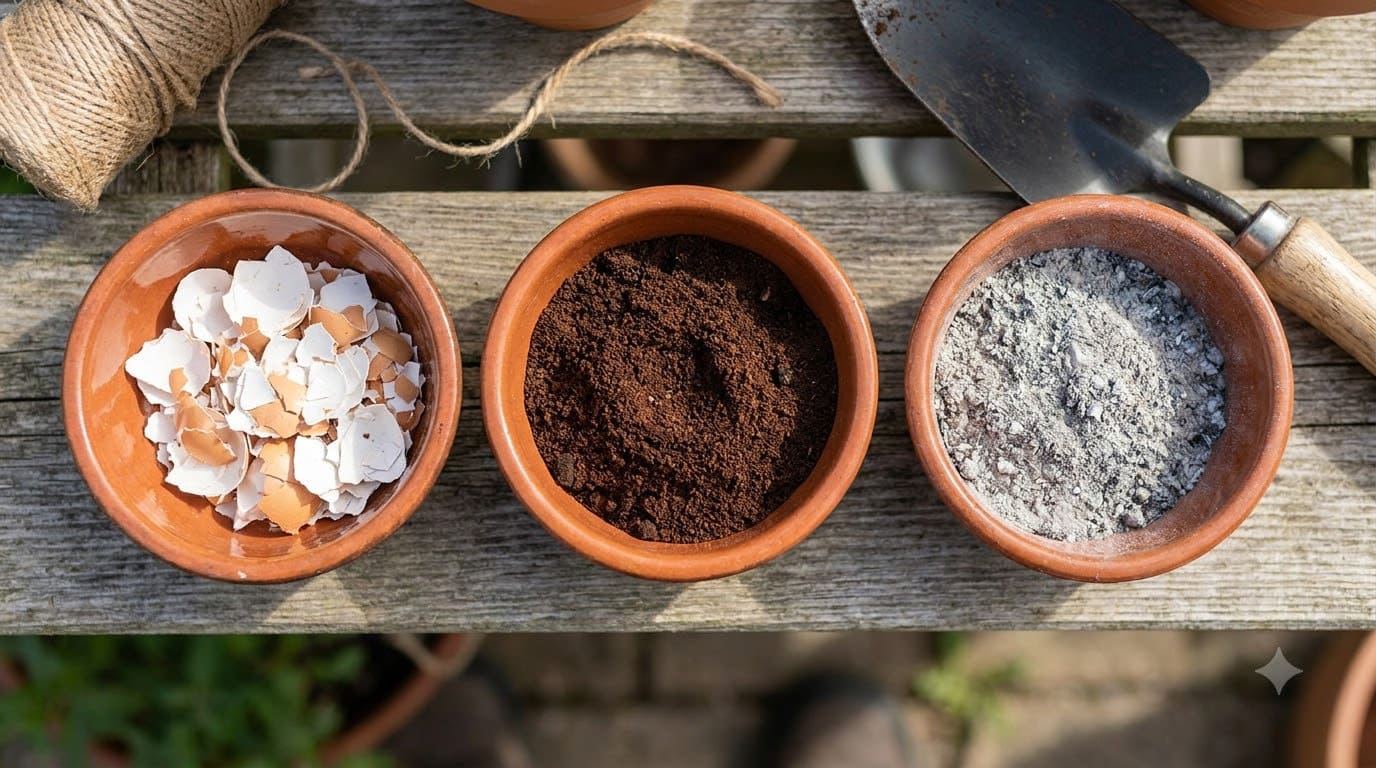
Eggshells, coffee grounds, and wood ash are three of the most repeated kitchen-scrap garden hacks online, the same category of scraps that show up constantly in advice about what actually belongs in a home compost pile, and they deserve three separate, honest answers instead of one blanket “yes, kitchen scraps are great for your garden.”
Eggshells: Myth or Real?
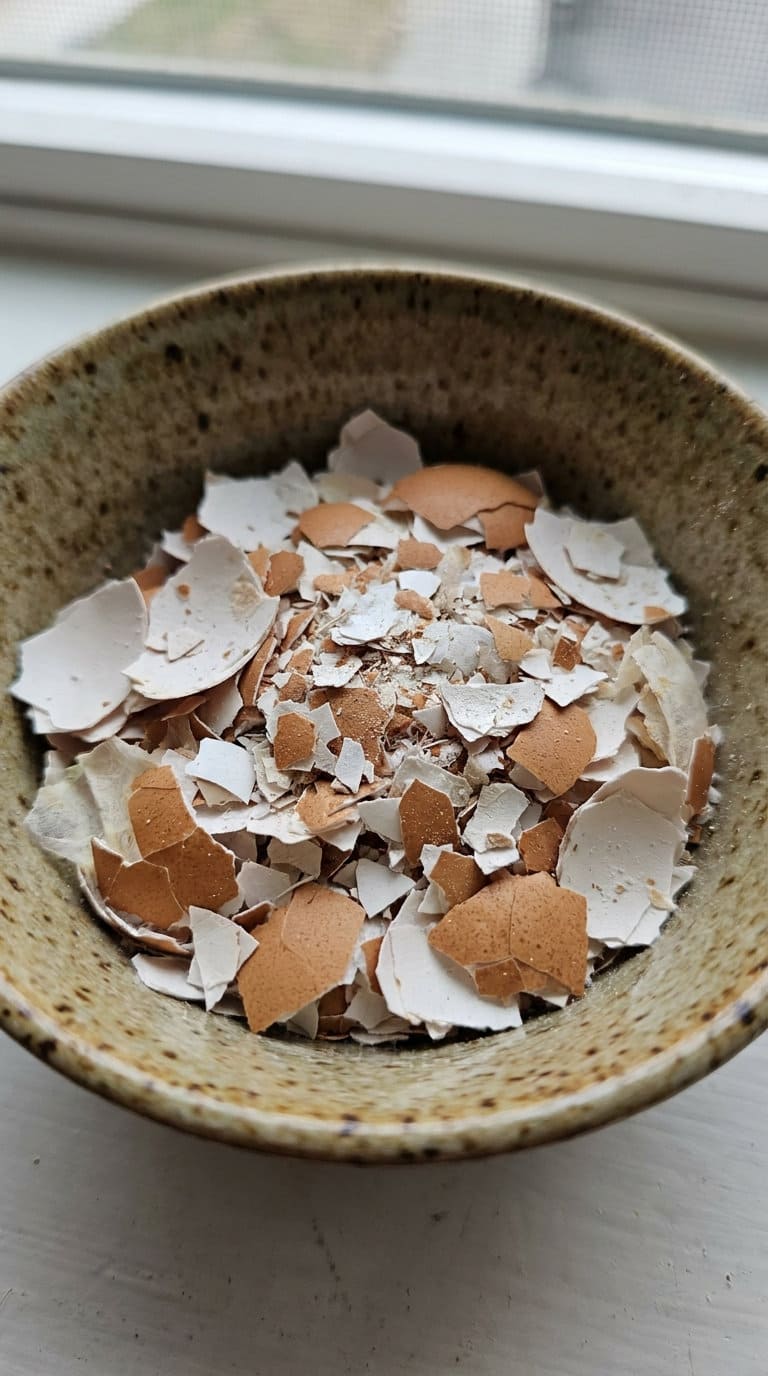
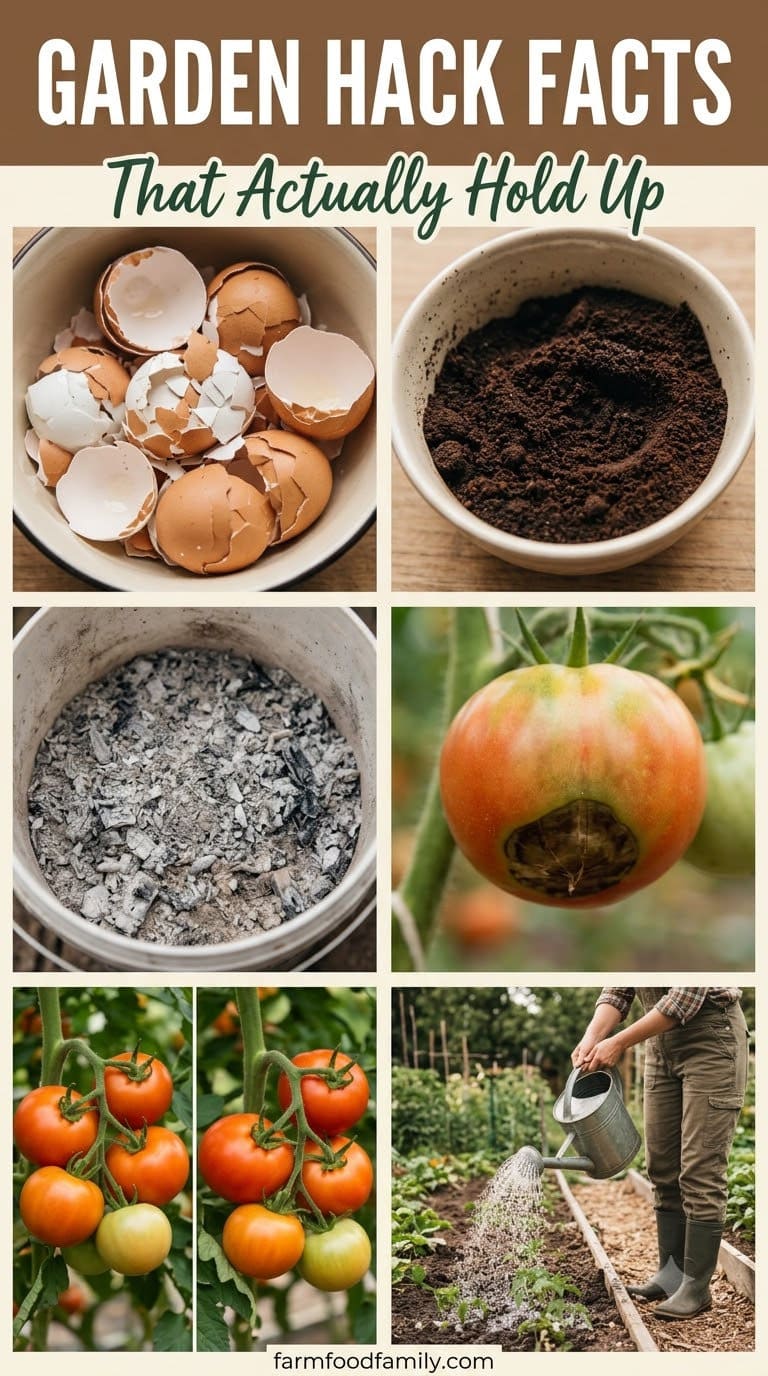
Mostly myth, at least for the season you’re worried about. Per University of Illinois Extension, eggshells take 1 to 5 years to break down in soil, which means the calcium inside them isn’t available to this year’s plants regardless of how many you scatter around the base of a tomato.
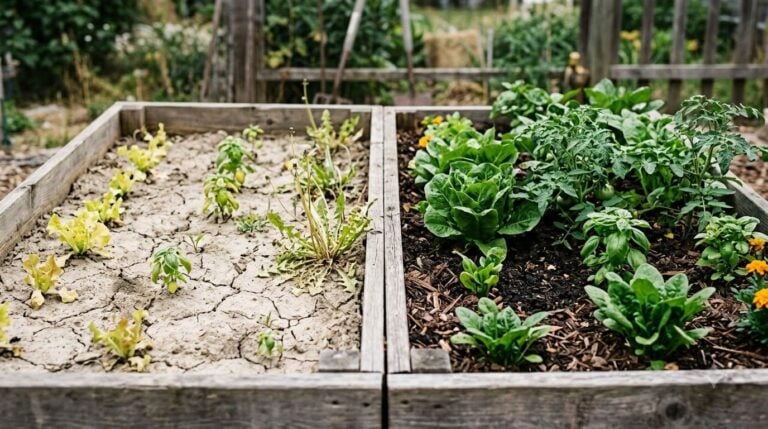
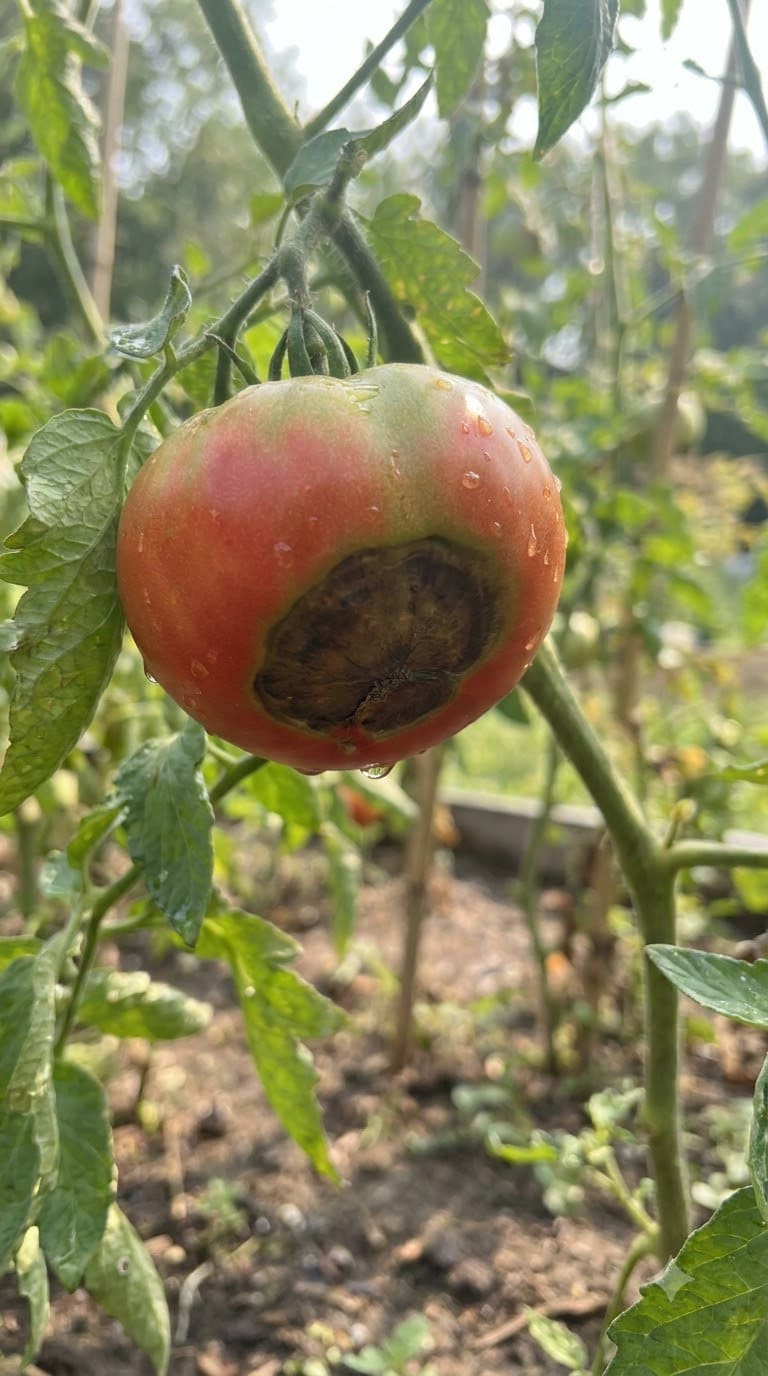
Most soils already have adequate calcium in the first place, so the deficiency eggshells are supposed to fix often isn’t the actual problem. That matters most for blossom-end rot specifically, since the real cause is usually inconsistent watering interrupting how calcium gets transported into developing fruit, not a lack of calcium in the soil itself.
Scattering eggshells around a plant with blossom-end rot treats a symptom that isn’t the real mechanism, while the actual fix, consistent, even watering rather than long dry stretches followed by heavy soaks, gets skipped entirely.
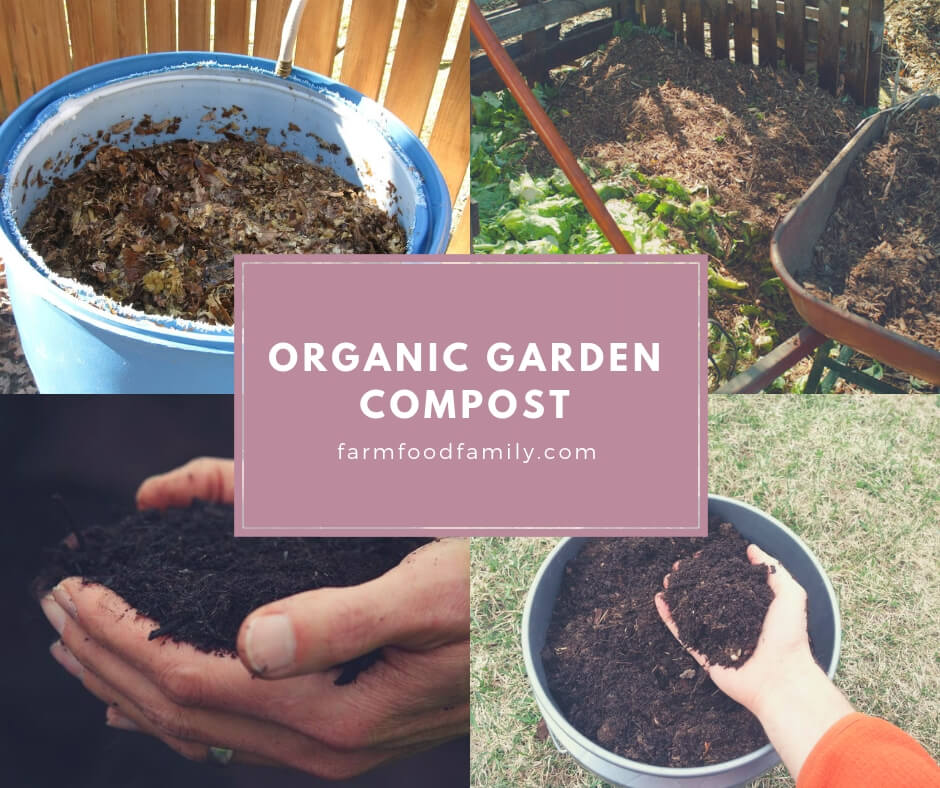

The one place eggshells genuinely help is crushed into a compost pile built the right way, where they’ll eventually break down and contribute to the finished product over time.
Answer 4 quick questions and get matched to the exact fix for your yard — drainage, budget, layout, or something else entirely.
Take the Free QuizCoffee Grounds: Myth or Real?
Also mostly myth, specifically for the most common claim about them. Per University of Illinois Extension, coffee grounds do not reliably lower soil pH despite being one of the most repeated garden tips online.
What they do offer is real: carbon, nitrogen, and micronutrients that genuinely benefit soil as organic matter, just not through the acidifying effect most people are actually using them for.
Applying a thick layer of fresh grounds directly to a bed can actually work against you by reducing water infiltration into the soil. If lowering soil pH is your actual goal, elemental sulfur is the real, affordable option that Illinois Extension points to instead.
The better use for coffee grounds is adding them to a compost pile, following the same real material-balance guide that keeps a pile from tipping too far nitrogen-heavy, where they contribute real nutrient value to the finished product without the direct-application downsides.
Wood Ash: Myth or Real?
Genuinely real, with one number you need to check first. Per Michigan State University Extension, wood ash averages roughly 0-1-3 (N-P-K), calcium is its most abundant element, and it functions similarly to agricultural lime, with a liming effect somewhere between 8 and 90 percent of lime’s neutralizing power depending on the ash.
Some research has shown it can increase plant growth up to 45 percent compared to traditional limestone. The real catch: wood ash only helps if your soil pH is already below 6.5, the target range for most garden soil.
Apply it above that threshold and you risk pushing your soil too alkaline, which can actually interfere with plant growth instead of helping it.
Most yard problems trace back to one specific, fixable cause. Find yours in 4 quick questions.
Take the Free Quiz
The real prerequisite check before applying wood ash, confirms whether your soil pH is actually below the 6.5 threshold where it helps
Shop NowThis post contains affiliate links. We may earn a commission on qualifying purchases at no extra cost to you.
This isn’t optional caution, it’s the difference between wood ash working for you or against you, and a real soil test, repeated every 2 to 3 years, is the only way to know which side of that line you’re on, the same testing habit worth building into any real soil prep routine.
The Verdict: Comparison Table
| Hack | Real or myth | Actual best use |
|---|---|---|
| Eggshells | Mostly myth for this season, real long-term | Add to compost, don’t expect a quick calcium or blossom-end-rot fix |
| Coffee grounds | Myth for pH, real for nutrients | Add to compost; use elemental sulfur if you actually need to lower pH |
| Wood ash | Real, but pH-dependent | Only apply if a soil test confirms pH below 6.5 |
The Season I Blamed Everything Except the Real Cause of My Blossom-End Rot
I had a rough tomato season where half my fruit developed blossom-end rot, and I did what every garden forum told me to do: I buried crushed eggshells around every plant, convinced I was fixing a calcium problem. The rot kept happening anyway, and I genuinely couldn’t figure out why the “proven fix” wasn’t working.
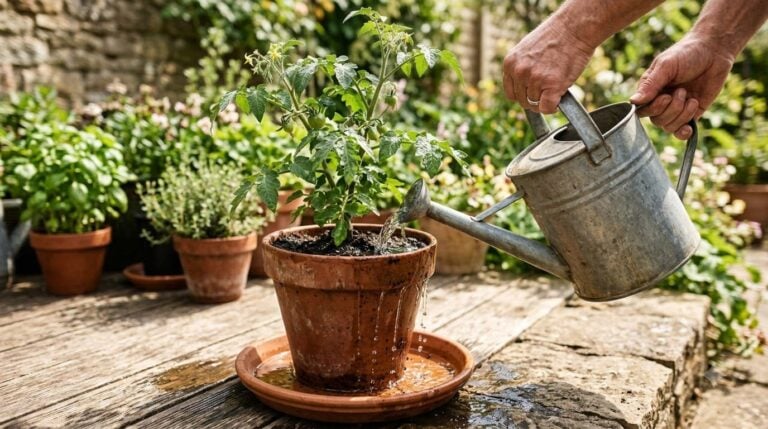
It wasn’t until I looked past the eggshell advice entirely that I found the real issue: my watering had been wildly inconsistent that summer, long dry stretches followed by heavy soaks, which is exactly the kind of pattern that disrupts calcium transport into developing fruit regardless of how much calcium is sitting in the soil.
Once I switched to a consistent watering schedule, the same fix that comes up constantly in real fertilizing timing advice for fruiting crops, instead of adding more eggshells, the rot largely stopped within a couple weeks.
The eggshells weren’t wrong to add to my compost pile, they just were never going to fix a problem that was actually about water delivery, not a shortage of calcium in the ground.
FAQs
Do eggshells really help with blossom-end rot? Not directly, and not quickly. Eggshells take 1 to 5 years to break down, per University of Illinois Extension, and blossom-end rot is usually caused by inconsistent watering disrupting calcium transport to fruit, not an actual soil calcium shortage.
Do coffee grounds lower soil pH like people say? No, this is a genuine myth. Coffee grounds don’t reliably lower soil pH, though they do add real nutrient value as organic matter. Elemental sulfur is the actual recommended option if you need to lower pH.
Is wood ash actually good for the garden? Yes, but only under the right conditions. Wood ash provides real potassium, calcium, and a liming effect similar to agricultural lime, but it only helps if your soil pH is already below 6.5. Applying it to soil above that threshold can push pH too high and hurt plant growth.
Should I put eggshells and coffee grounds directly on my garden beds? It’s generally better to add both to a compost pile first rather than applying them directly. This lets them break down and contribute real nutrients to the finished compost without the direct-application drawbacks, like coffee grounds reducing water infiltration.
The average homeowner spends $616/year on yard fixes that don't address the real problem. Find out what yours actually is — before you spend another dollar.
Take the Free QuizRelated Posts
Products We Recommend
This post contains affiliate links. We may earn a commission on qualifying purchases at no extra cost to you.
XLUX Soil pH Meter, 3-in-1 Soil Tester
The real prerequisite check before applying wood ash, confirms whether your soil pH is actually below the 6.5 threshold where it helps
Shop Now
Espoma Organic Soil Acidifier, 6 lb. (Elemental Sulfur)
The real, affordable way to lower soil pH, unlike the coffee grounds myth
Shop Now
Luster Leaf 1601 Rapitest Soil Test Kit (pH, N, P, K)
A real way to check your soil's actual nutrient and pH status before relying on any of these three hacks
Shop NowNever miss an update — choose FarmFoodFamily as your preferred source on Google.
How it works: Tap the button below to open Google's settings page, then check the box next to FarmFoodFamily.
Tap the checkbox to turn it blue — that's how you know it's set.