Small Square Garden Ideas: 9 Genuinely Useful Ways to Make a Boxy Yard Feel Bigger
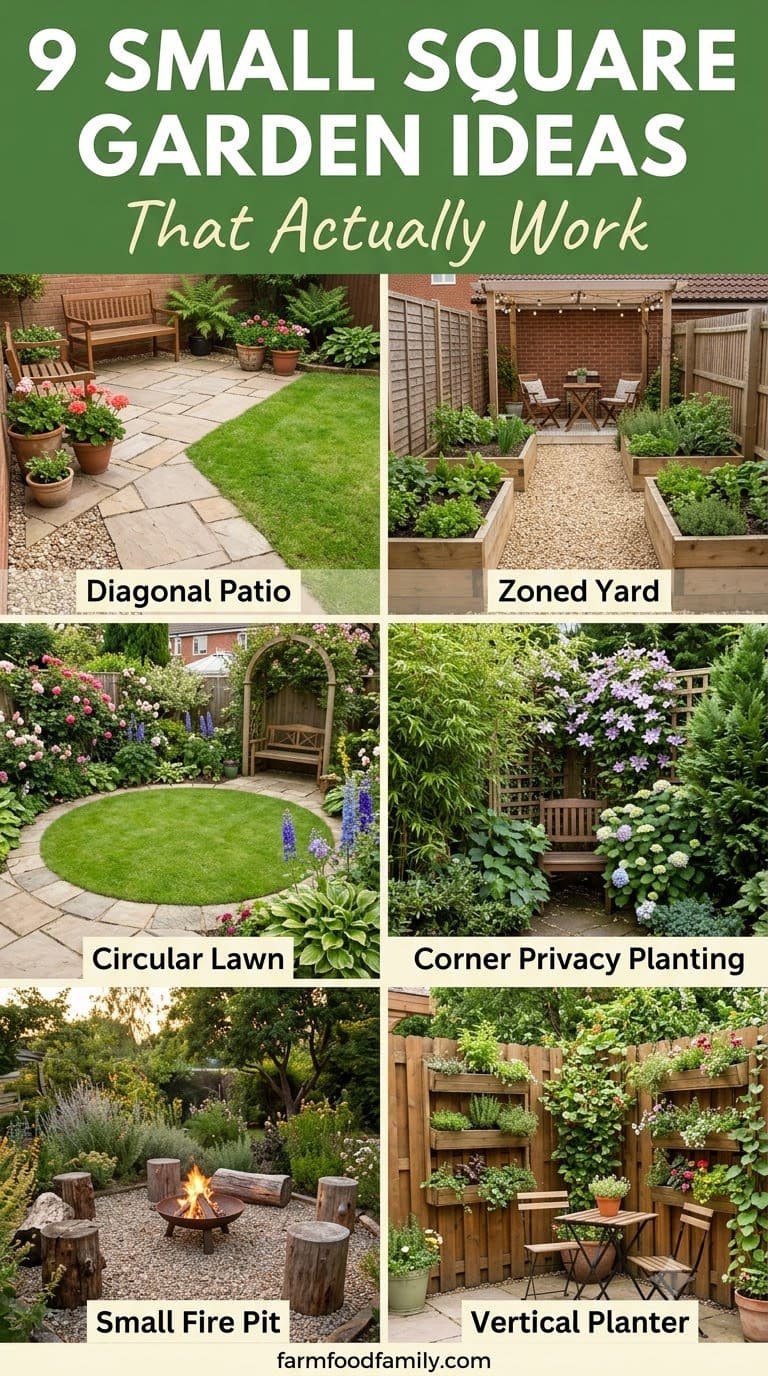
A square backyard isn’t actually small, it just repeats its own fence line until you break the geometry on purpose, and these nine fixes show exactly how.

Never miss an update — choose FarmFoodFamily as your preferred source on Google.
How it works: Tap the button below to open Google’s settings page, then check the box next to FarmFoodFamily.
Tap the checkbox to turn it blue — that’s how you know it’s set.
If you’ve got a perfectly square backyard, chances are it came with a new-build house or a townhouse lot, and chances are it also came with zero personality. A square yard is not the same design problem as a narrow side yard or a long rectangle. Those shapes at least give you a direction to work with.
A square just sits there. Every straight line you add to it (a rectangular patio, a centered lawn, a fence-hugging border) ends up echoing the same boundary shape, and the whole thing reads smaller and more boring than it actually is.
The fix isn’t more stuff. It’s breaking that repetition on purpose, using diagonal sightlines, real zoning, and features sized for the space you actually have instead of the space you wish you had.
My Own Small Square Yard Taught Me This the Hard Way
I measured my first “small” backyard project years ago and it came out to almost exactly 24 by 24 feet, a near-perfect square behind a townhouse. On paper that’s 576 square feet, more than plenty of narrow side yards I’d worked with. In person it felt like a shoebox.
I made the classic mistake first. I centered a lawn square in the middle, ran a straight gravel path along one fence, and called it done.
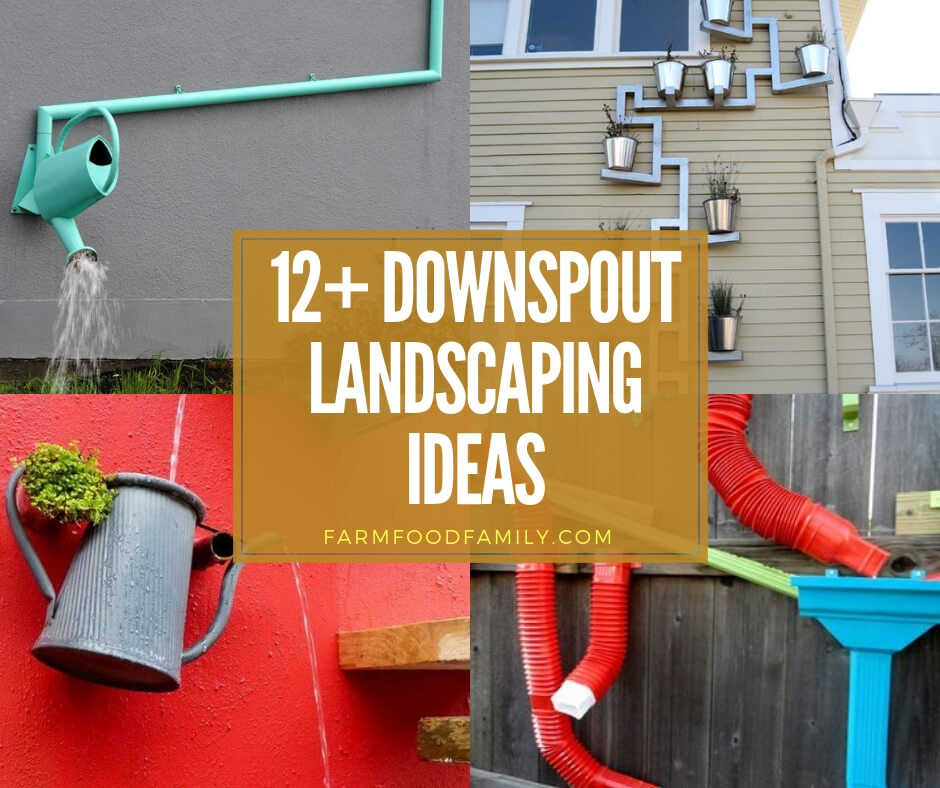
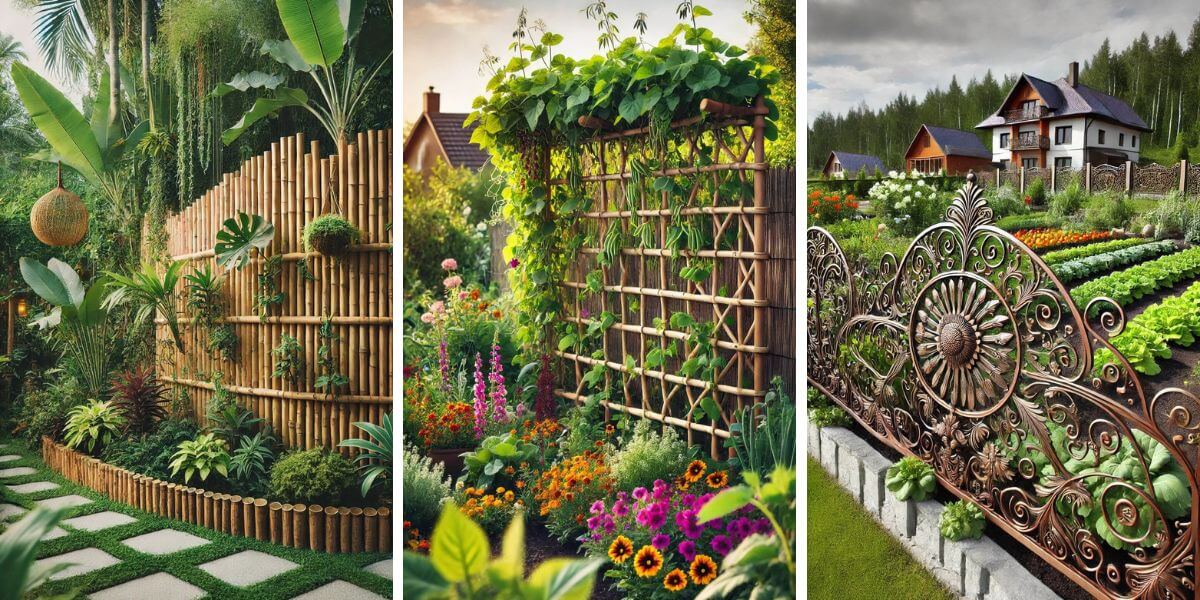
It looked, honestly, like a beige carpet, which is close to how UK garden designer Lee Burkhill has described the exact same problem on his own site. Nothing wrong, nothing interesting, nowhere for the eye to land.
Answer 4 quick questions and get matched to the exact fix for your yard — drainage, budget, layout, or something else entirely.
Take the Free QuizThe furniture mistake came next. I bought a rectangular dining set sized for a “normal” patio and it ate almost a third of the usable space once you accounted for chair pull-out room.
This turns out to be a common enough complaint that homeowners post about it on Houzz’s own forum, threads literally titled some version of “is my furniture too big for this space,” usually about exactly this kind of small square patio.
What actually fixed it wasn’t adding more plants or buying a bigger umbrella. It was rotating the whole layout 45 degrees off the fence line. That one change did more than any single plant purchase I made that year, and it’s idea one below for a reason.
1. Rotate the Whole Layout 45 Degrees
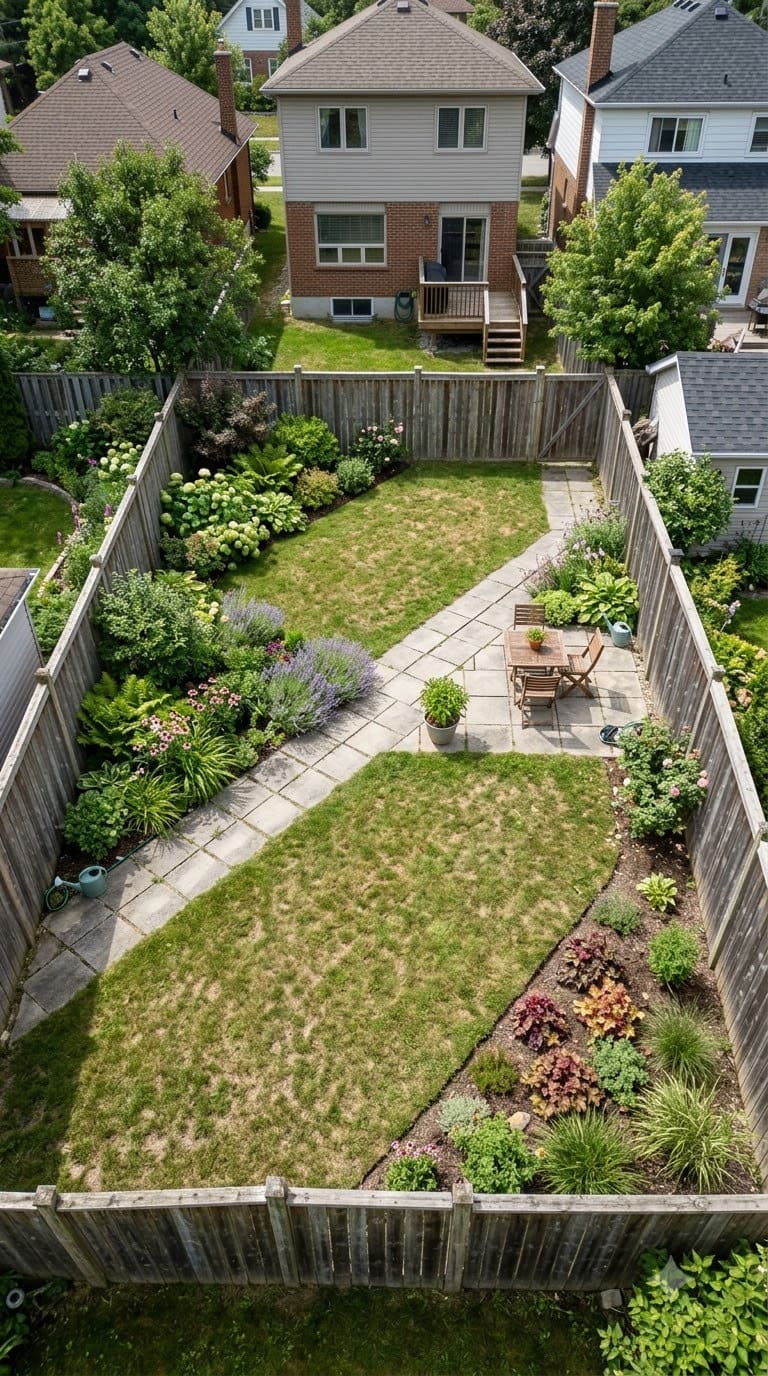
This is the single highest-leverage fix for a square footprint, and it comes straight from Burkhill, an RHS-qualified garden designer and presenter on BBC1’s Garden Rescue.
Instead of laying your patio, path, and planting beds parallel to the fence, rotate the whole layout 45 degrees so it runs on a diagonal across the square. You don’t need to rebuild anything to test this, string a line from one corner to test the sightline before you commit any materials.
The effect is immediate once it’s in place. Diagonal lines create longer sightlines than the actual boundary allows, so your eye travels farther before it hits a fence, and the corners left over from the rotation become natural triangular planting pockets instead of dead space. A small square that felt like a shoebox at 24 by 24 feet reads noticeably deeper once the patio and beds run on that 45-degree line instead of squared off to the fence.
It costs almost nothing extra if you’re planning a new patio anyway, you’re just changing the angle of the layout, not the materials. If you’re re-laying an existing straight patio, expect more cut pavers at the edges, and more waste, which is the honest tradeoff here.
Most yard problems trace back to one specific, fixable cause. Find yours in 4 quick questions.
Take the Free Quiz
A folding steel bistro table and 2 chairs sized right for an 8x8 ft patio zone, folds flat for storage, $105.99 with a 4.6-star rating across 2,447 reviews at time of writing, a direct fit for the "size the patio to the table" idea above.
Shop NowThis post contains affiliate links. We may earn a commission on qualifying purchases at no extra cost to you.
A straight grid layout is faster to install, cheaper on material waste, and easier for a DIY crew to get right on the first try. If your budget is the main constraint and you’re not planning to hire a designer, a straight layout with strong zoning (idea two) can get you most of the visual benefit without the extra angle-cutting work. Save the full diagonal rotation for a real redesign on an established lot where you’ve got the budget and patience for the extra layout planning.
2. How Many Zones Can a Small Square Garden Actually Fit?
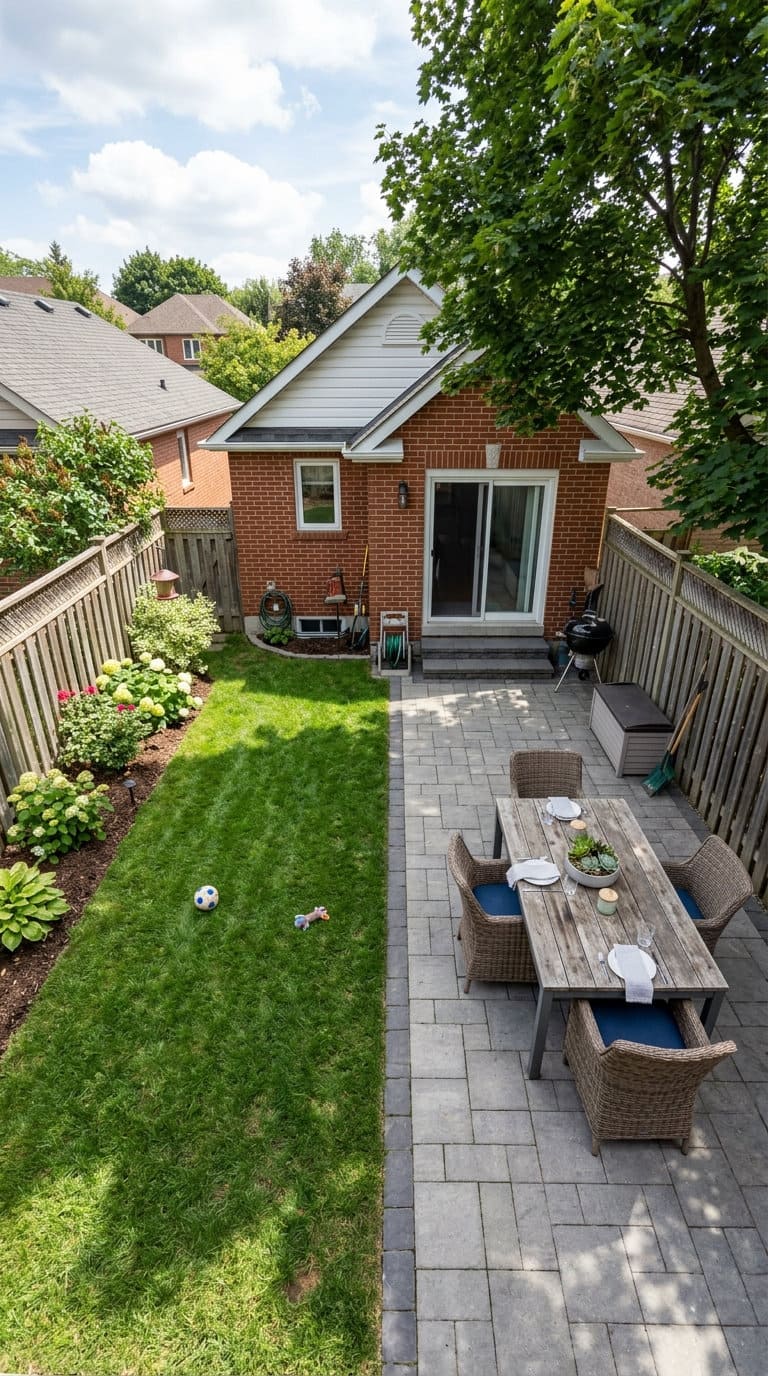
Fewer than you’d think, and that’s fine. Burkhill’s own rule of thumb is that a comfortable entertaining zone needs roughly 3 by 3 meters, about 10 by 10 feet, once you account for a table, chairs, and enough room to actually pull a chair out and walk around it.
Run that math against a 24×24 ft square and you can fit two real zones, maybe a tight third, not five. His stated principle is worth repeating here directly: it’s better to have one properly sized functional zone than to squeeze in three inadequate ones. A single 10×10 dining zone you can actually use beats three cramped corners that all feel too small.
For a household with kids or pets, that math often means keeping one zone as open lawn for running around and committing the rest to a single well-sized patio, not splitting the yard into a lawn strip, a garden bed, and a tiny patio that satisfies nobody. For an adult-only household focused on entertaining, that same footprint can go entirely to a dining zone plus one smaller lounge corner, no lawn required at all.
Budget-wise, a gravel seating zone runs cheap, often a few hundred dollars in materials for a DIY 10×10 pad. A built paver or poured patio of the same size runs considerably more once you add a proper base and edging, so match the zone count to what you can actually afford to finish well rather than half-finishing three.
3. Circular Lawn, Square Lawn, or Diagonal Lawn?
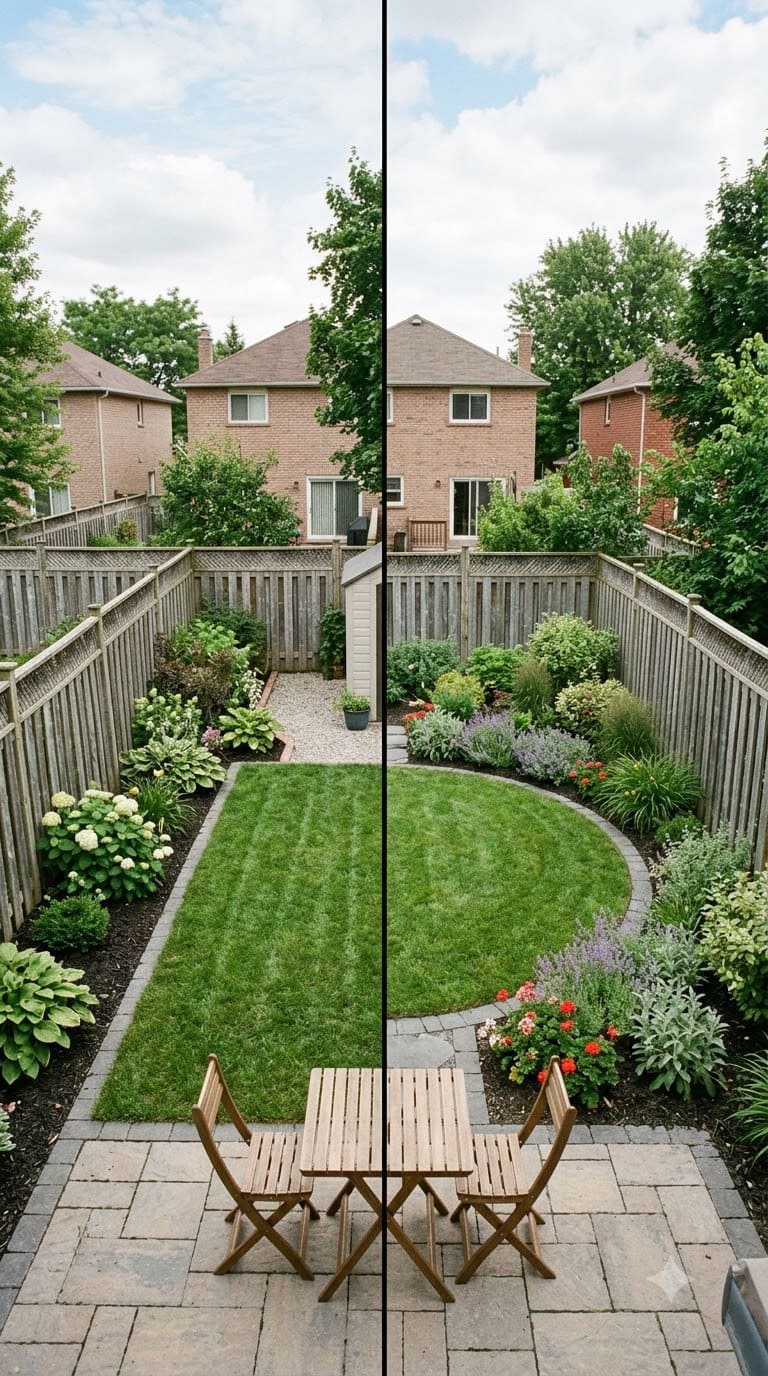
This is the other fix Burkhill names directly: swap a square lawn for a circular one. A centered circle draws your eye inward toward the middle of the space instead of tracing the fence line the way a square lawn does, and it reads as an intentional shape rather than a leftover patch of grass.
Here’s how the three main options actually compare for a small square yard.
| Lawn Shape | Feels Like | Install Cost | Best For |
|---|---|---|---|
| Square (parallel to fence) | Repeats the boundary, smallest-feeling option | Lowest, no re-edging needed | Budget-only fixes, temporary setups |
| Circular, centered | Draws the eye inward, most “designed” look | Moderate, requires re-edging the lawn | Established lots doing a real redo |
| Diagonal-edged | Longest sightlines, most dynamic | Moderate to higher, more edge-cutting | Yards already getting the full 45-degree layout treatment |
If you’re only changing one thing in your yard this season, the circular lawn edge is a low-effort, high-impact swap. It’s mostly a matter of re-cutting the existing lawn’s edge, no new materials required in most cases.
4. Solve Privacy Corner by Corner, Not Fence by Fence
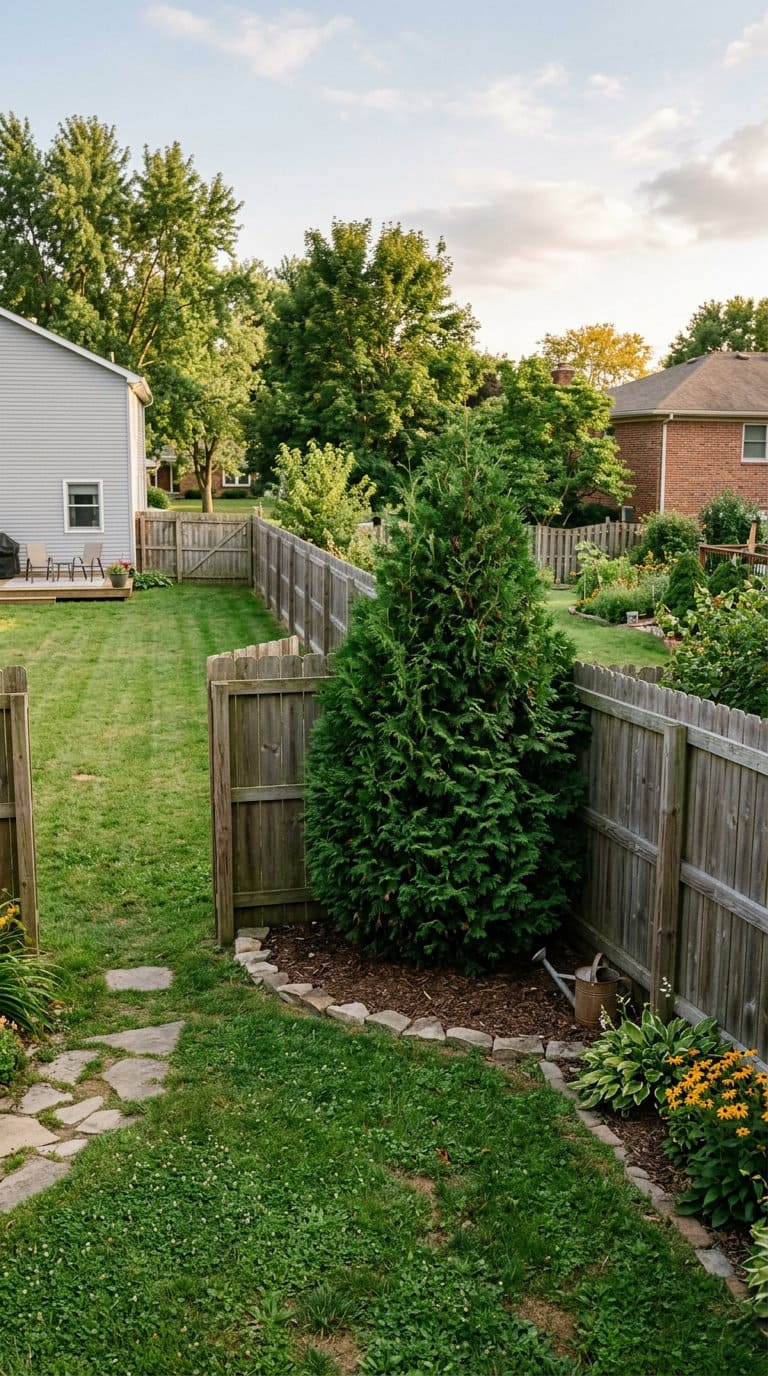
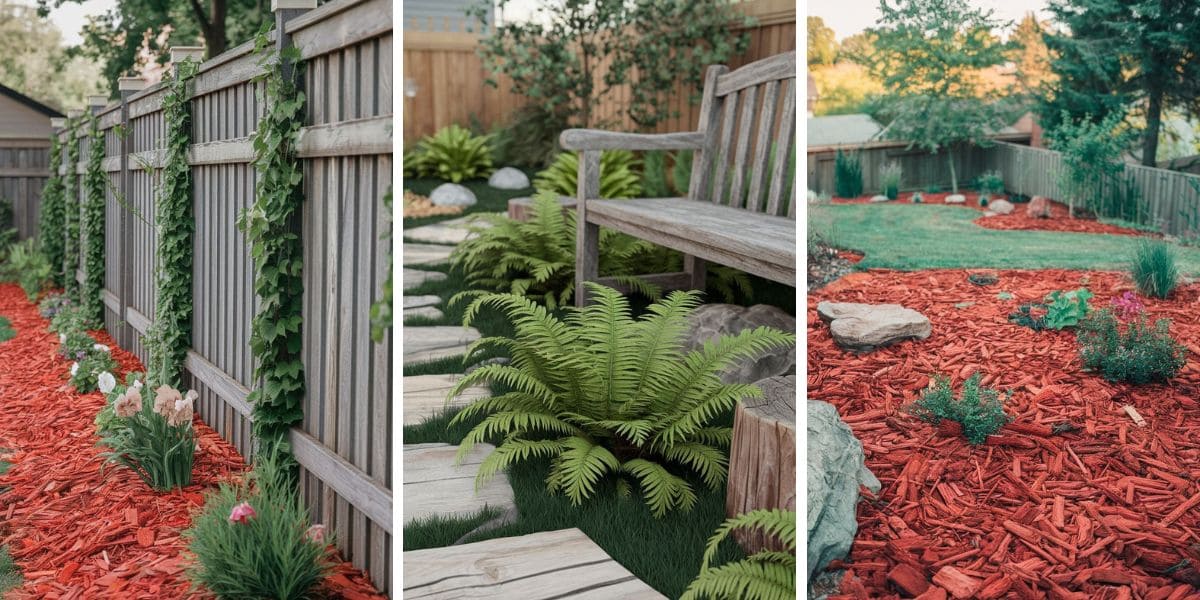
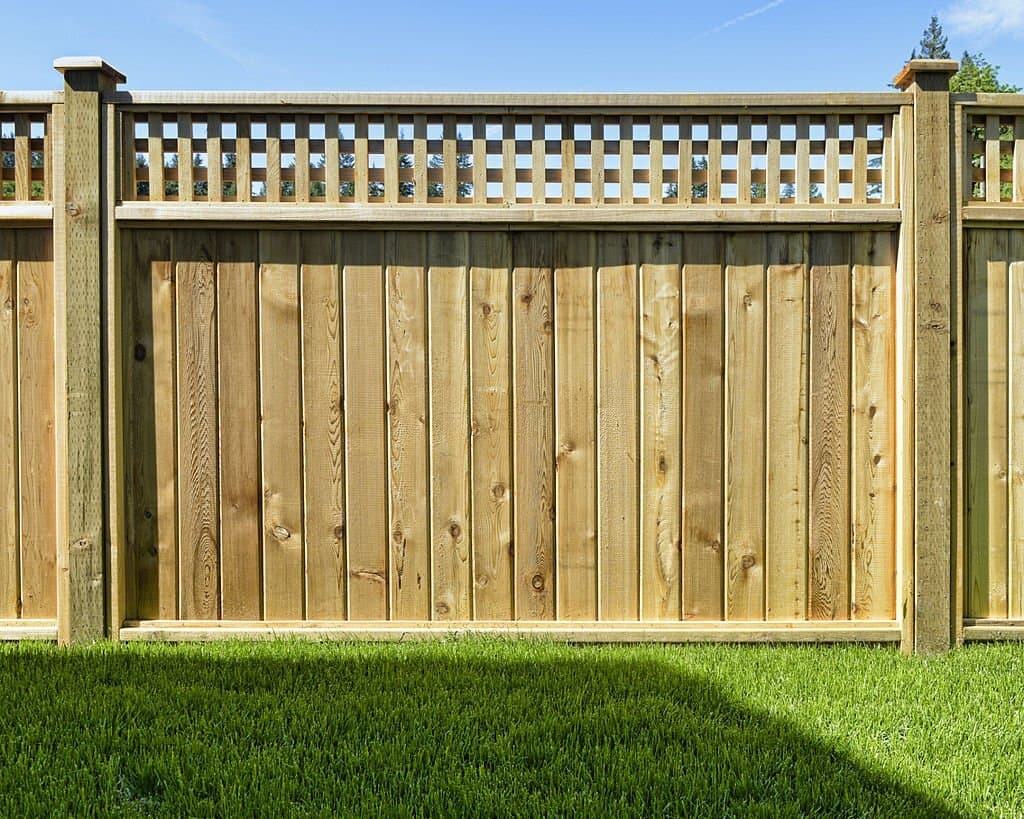
A narrow side yard has a simple privacy problem: one long fence line facing a neighbor. A square yard has a genuinely different one. Because every corner in a square has a direct sightline to every other corner, and often to two neighboring yards at once rather than one, a single privacy fence rarely solves the whole problem.
The average homeowner spends $616/year on yard fixes that don't address the real problem. Find out what yours actually is — before you spend another dollar.
Take the Free QuizThe fix is to identify your worst two sightlines, usually the corners facing a neighbor’s window or a shared side yard, and screen those specifically instead of building a uniform hedge around the entire perimeter.
A single dense shrub planted at the right corner, or one vertical trellis panel positioned to block a specific line of sight, does more real work than a low hedge running the full fence length.
This is also just cheaper. Planting or building at two problem corners costs a fraction of screening an entire perimeter, and it leaves the rest of the yard open enough that the space still feels bigger, not more enclosed.
For related fence-line privacy fixes on a narrower lot, our deck privacy ideas guide covers screening options that also work well for a single problem corner here.
5. Right-Size the Features (Skip the Full Pergola and the Oversized Fire Pit)
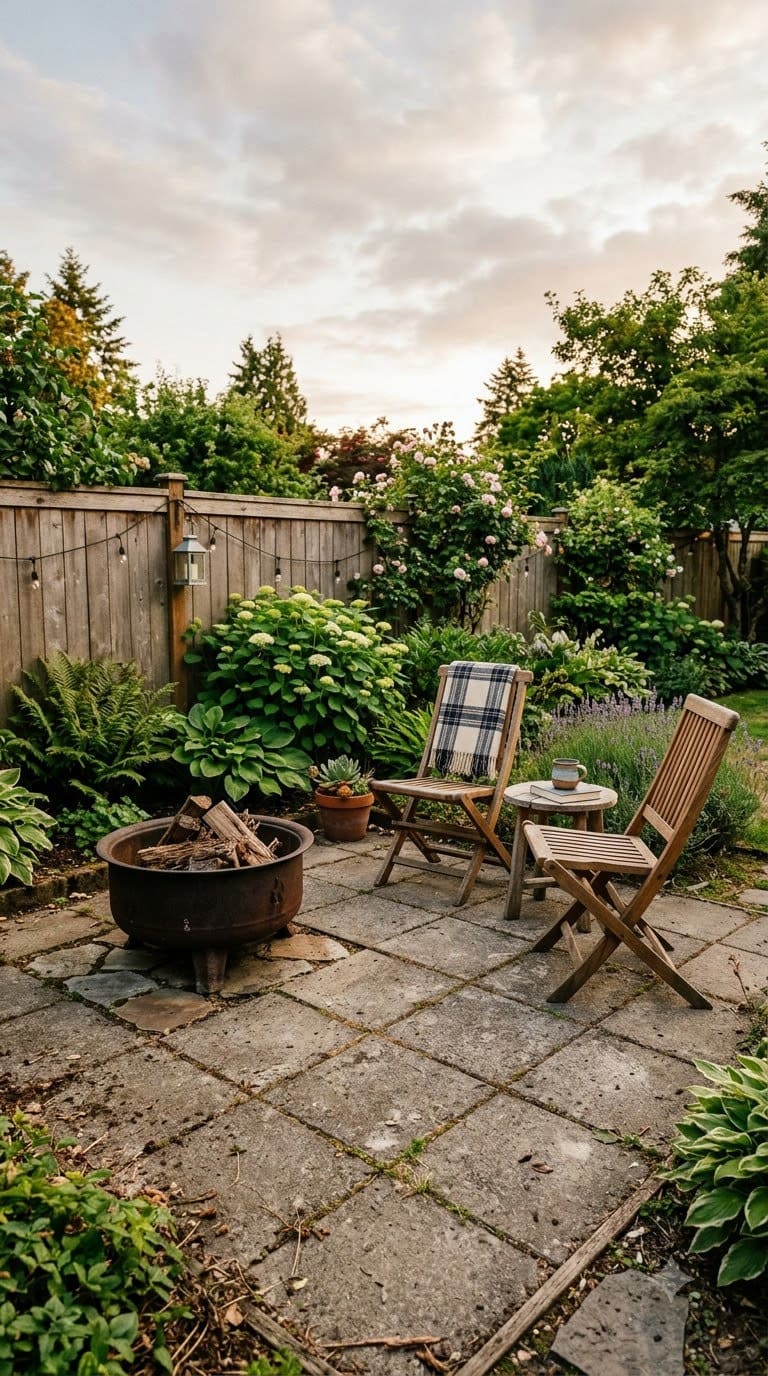
This is the mistake I see most often on a small square lot, and it’s rarely discussed in the generic roundup articles. A standard 10×10 ft pergola kit, the size most home centers stock by default, eats close to a fifth of the total footprint on a 24×24 ft square once you factor in clearance around the posts.
Scale down instead. A wall-mounted shade sail or a slatted overhead screen attached to the house gives you real shade without planting four posts in the middle of your usable space.
The same logic applies to fire pits: a 30 to 36 inch fire pit with proper clearance fits comfortably into a small patio zone, while a large built-in fire feature sized for a full-acre backyard will crowd out every chair around it.
If you already have a full-size pergola or an oversized fire pit and don’t want to replace it, at minimum push it to one corner of your rotated layout (idea one) rather than centering it, so it doesn’t compound the boxed-in feeling.
Our pergola ideas and rustic fire pit ideas guides both include smaller-footprint options sized closer to what a compact square yard can actually absorb.
6. Grow Up, Not Out
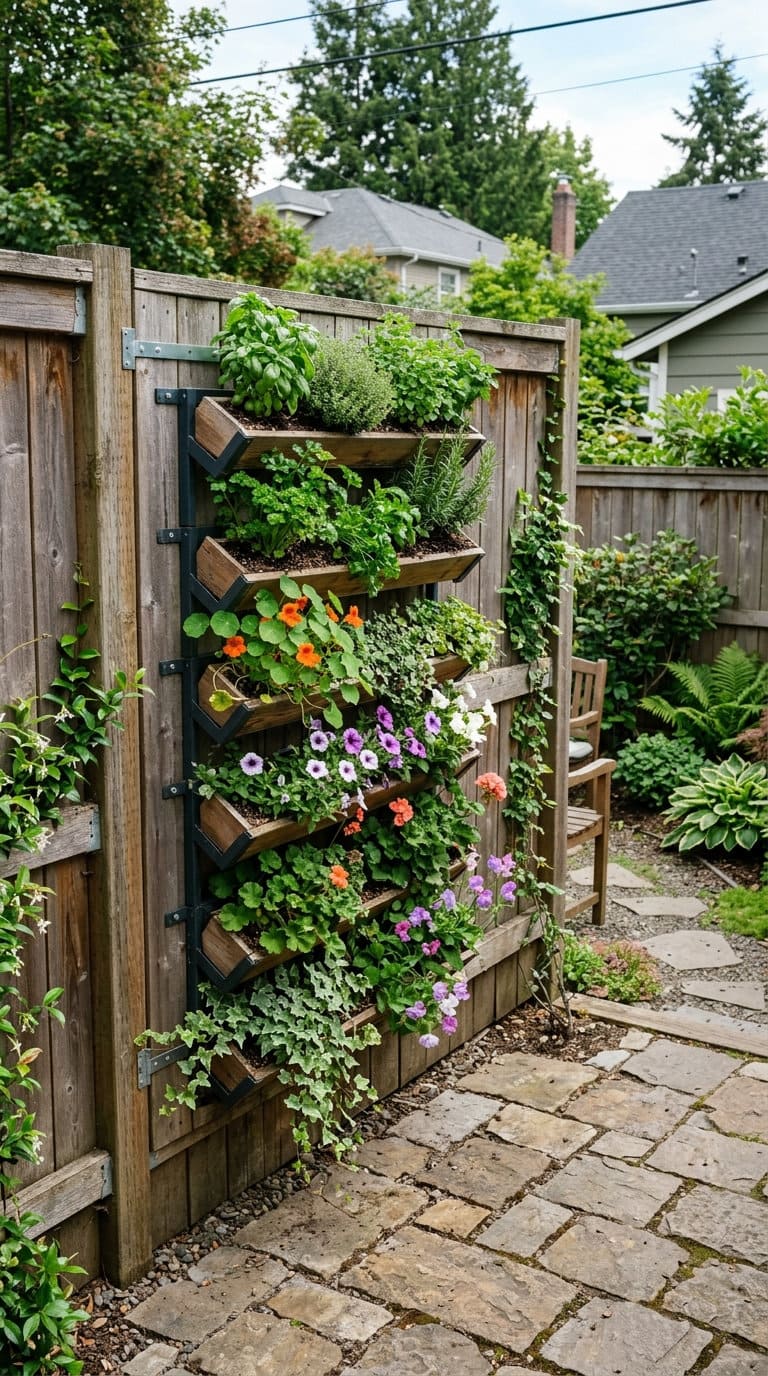
You don’t need more ground footprint to grow more, you need more vertical surface.
Penn State Extension’s guidance on gardening in tight spots specifically recommends containers and vertical structures as the highest-value move when floor space is the constraint, not the sunlight or soil.
A wall-mounted planter system, a single freestanding vertical garden frame, or climbing plants trained up an existing fence panel all add real growing space without taking a single square foot of the yard’s usable floor. This is especially useful for the kids/pets household from idea two, since it keeps the open lawn area clear while still giving you room to garden.
Cost ranges widely here. Repurposed containers and a simple trellis run under $50 in most cases, while a built cedar vertical garden structure can run several hundred dollars depending on size.
Our vertical garden ideas using plastic bottles guide is a genuinely low-cost starting point if budget is tight this season.
7. Repeat a Small Plant Palette Instead of Collecting One-Offs

Burkhill’s planting advice for small squares runs against most people’s instinct. Rather than buying one of everything that looks nice at the nursery, pick five to seven reliable perennial varieties and plant each in a bigger block or drift.
Repetition reads as intentional design in a small footprint, where a dozen different one-off plants just reads as clutter competing for attention. It’s also often cheaper per plant, since buying multiples of fewer varieties usually qualifies for nursery bulk pricing where one-each purchases don’t.
This matters more the smaller your square actually is. A 15×15 ft courtyard-style square has room for maybe three plant varieties total if you want the repetition effect to actually register, while a full 24×24 ft lot can support the full five to seven range Burkhill describes.
8. Size the Patio to the Table You Actually Own
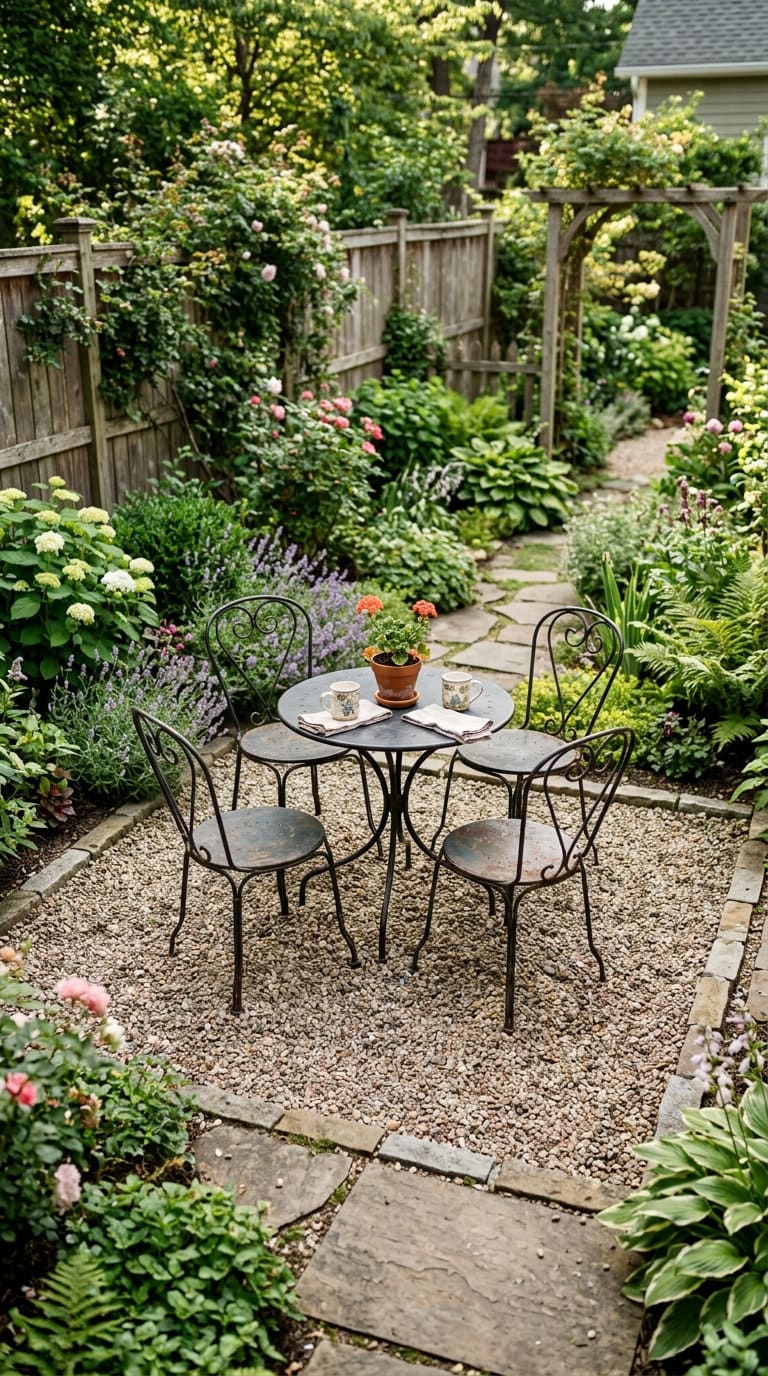
Michigan State University Extension’s home garden planning guidance makes a simple point that applies directly here: size the space to what you’ll actually use, not to a guess.
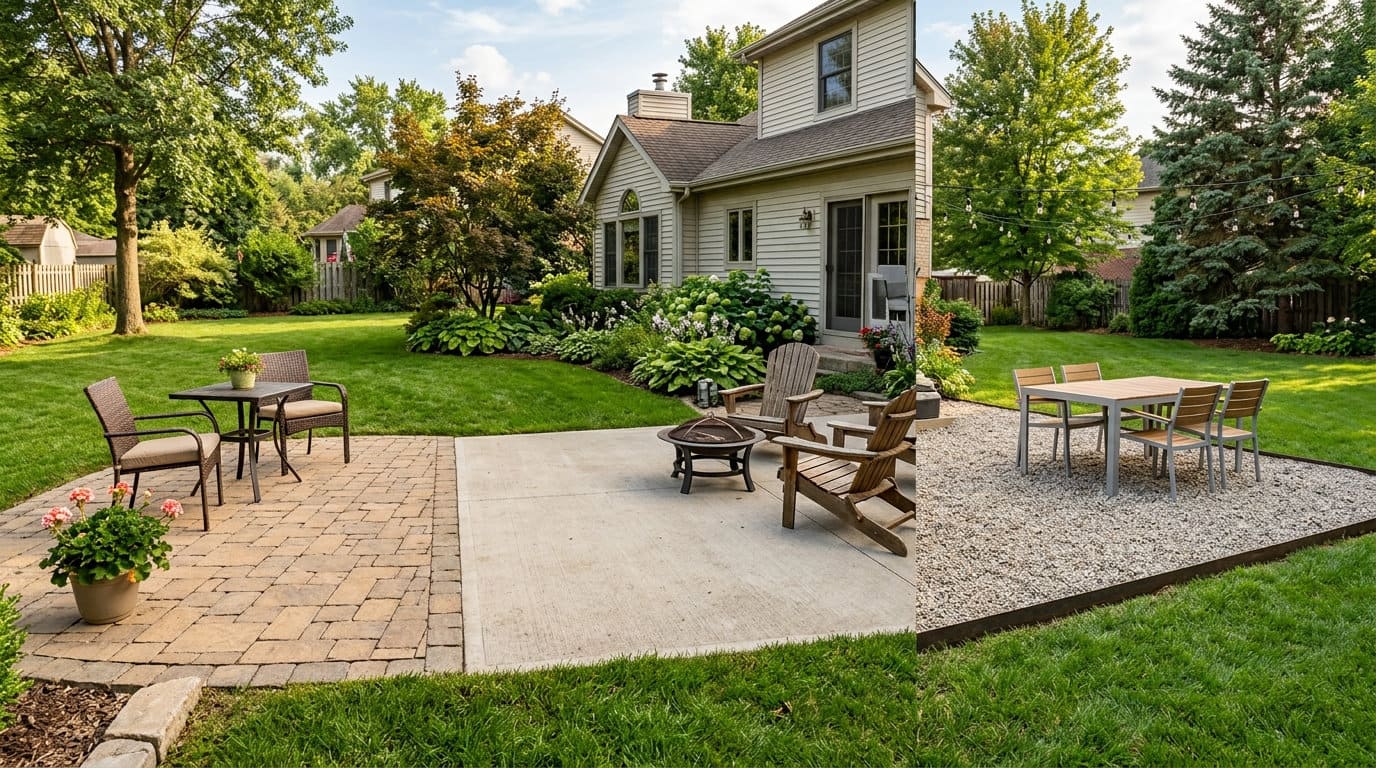
A 4-person bistro set needs roughly an 8×8 ft paved area once you include enough clearance to pull chairs back and walk past. Measure your actual furniture, or the furniture you’re planning to buy, before you pour a patio pad or order pavers.
This sounds obvious and it is still the single most common mistake homeowners report on forums like Houzz: buying or sizing a patio first and the furniture second, then discovering the chairs don’t actually fit with room to sit down.
A gravel patio in this size range is one of the cheapest hardscape fixes available for a small square yard. Our gravel patio ideas guide walks through sizing and edging options if you’re starting from scratch.
9. Put One Strong Focal Point Off-Center, Not in the Middle
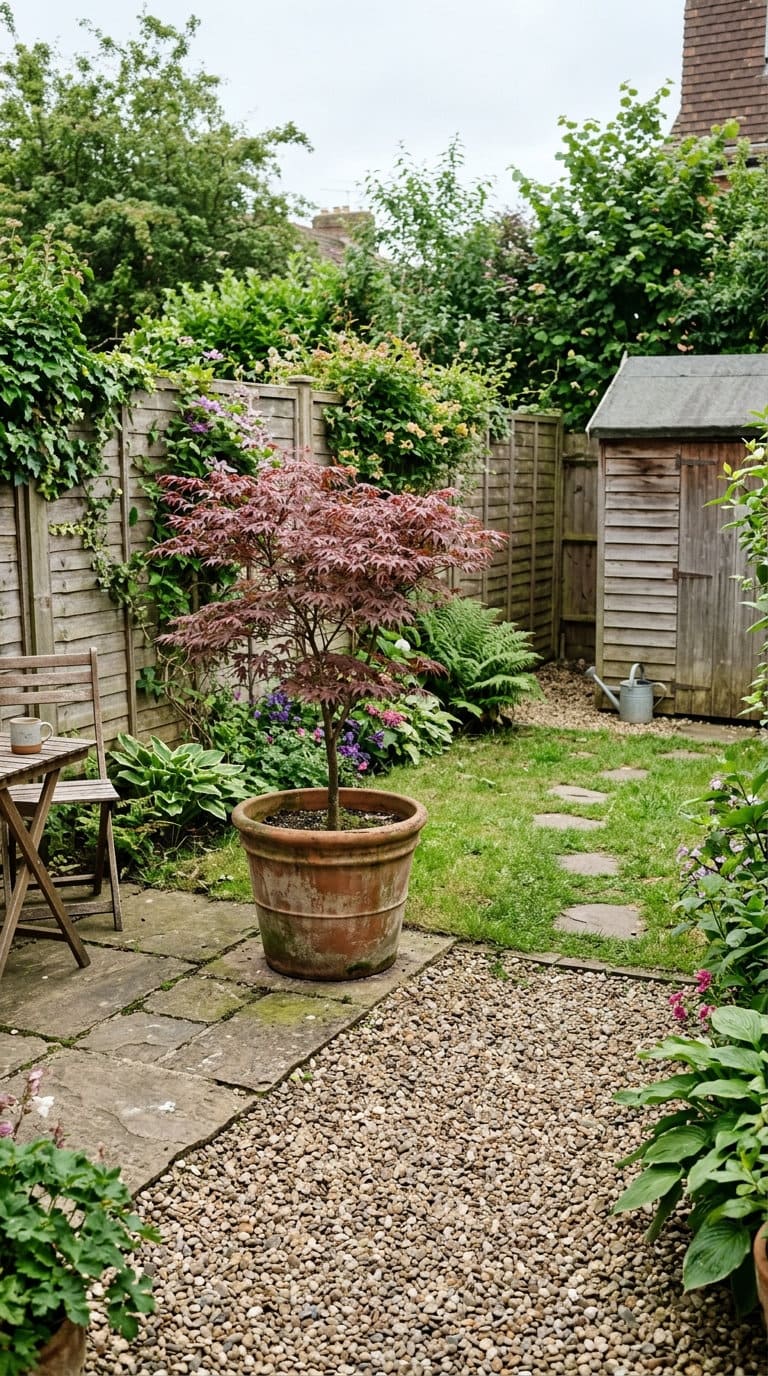
Burkhill applies a rule-of-thirds grid to small squares: divide the yard into a mental 3×3 grid and place your one strongest feature (a specimen tree, a water feature, a large planted container) at one of the grid intersections, not dead center.
An off-center focal point creates what he calls good visual tension, it reads as considered rather than obvious, the same reason a centered lawn square feels flatter than an off-center circular one. This costs nothing beyond wherever you were already planning to place the feature. It’s purely a placement decision.
For a townhouse or new-build owner on a tight first-year budget, this can be as simple as one large planted container placed at an off-center point rather than a built structure. Our zen garden ideas guide has several focal-point examples sized for exactly this kind of compact footprint.
Frequently Asked Questions
Is a square backyard harder to landscape than a rectangular one?
It’s a different problem, not necessarily a harder one. A rectangle already gives you a direction, long or short, to build a layout around, while a square gives you no default direction at all, which is why so many square yards end up with one centered feature and nothing else.
What is the best shape for a small square garden?
There’s no single best shape, but breaking the square’s own geometry, through a diagonal layout, a circular lawn, or an off-center focal point, consistently outperforms designs that repeat the square boundary with a centered lawn or a perimeter border.
How do you make a small square garden feel bigger?
Rotate the layout 45 degrees to create longer sightlines, use zoning to give each section a real job instead of one blanket lawn, and keep features sized to the actual footprint. All three work together, and the diagonal rotation tends to have the biggest single visual impact per dollar spent.
How much space do you need for a patio in a small square yard?
Plan for roughly 8×8 feet for a 4-person bistro set and closer to 10×10 feet for a full dining table with four chairs and real walking clearance, per general small-space garden planning guidance from Michigan State University Extension. Measure your actual furniture before sizing the patio pad.
Related Posts
- 30 Practical Tiny Backyard Ideas to Maximize Your Space
- 12+ Genius Deck Privacy Ideas You’ll Wish You Knew Sooner
- 25 Stunning Gravel Patio Ideas That Will Transform Your Backyard
Products We Recommend
This post contains affiliate links. We may earn a commission on qualifying purchases at no extra cost to you.
Alpine Corporation 3-Piece Folding Bistro Set
A folding steel bistro table and 2 chairs sized right for an 8x8 ft patio zone, folds flat for storage, $105.99 with a 4.6-star rating across 2,447 reviews at time of writing, a direct fit for the "size the patio to the table" idea above.
Shop Now
Pure Garden 32-Inch Wood-Burning Fire Pit
A compact 32-inch fire pit with a mesh spark screen, poker, and cover, sized to fit a small patio corner instead of a full-yard fire feature, $136.99 with a 4.4-star rating across roughly 1,200 reviews at time of writing.
Shop Now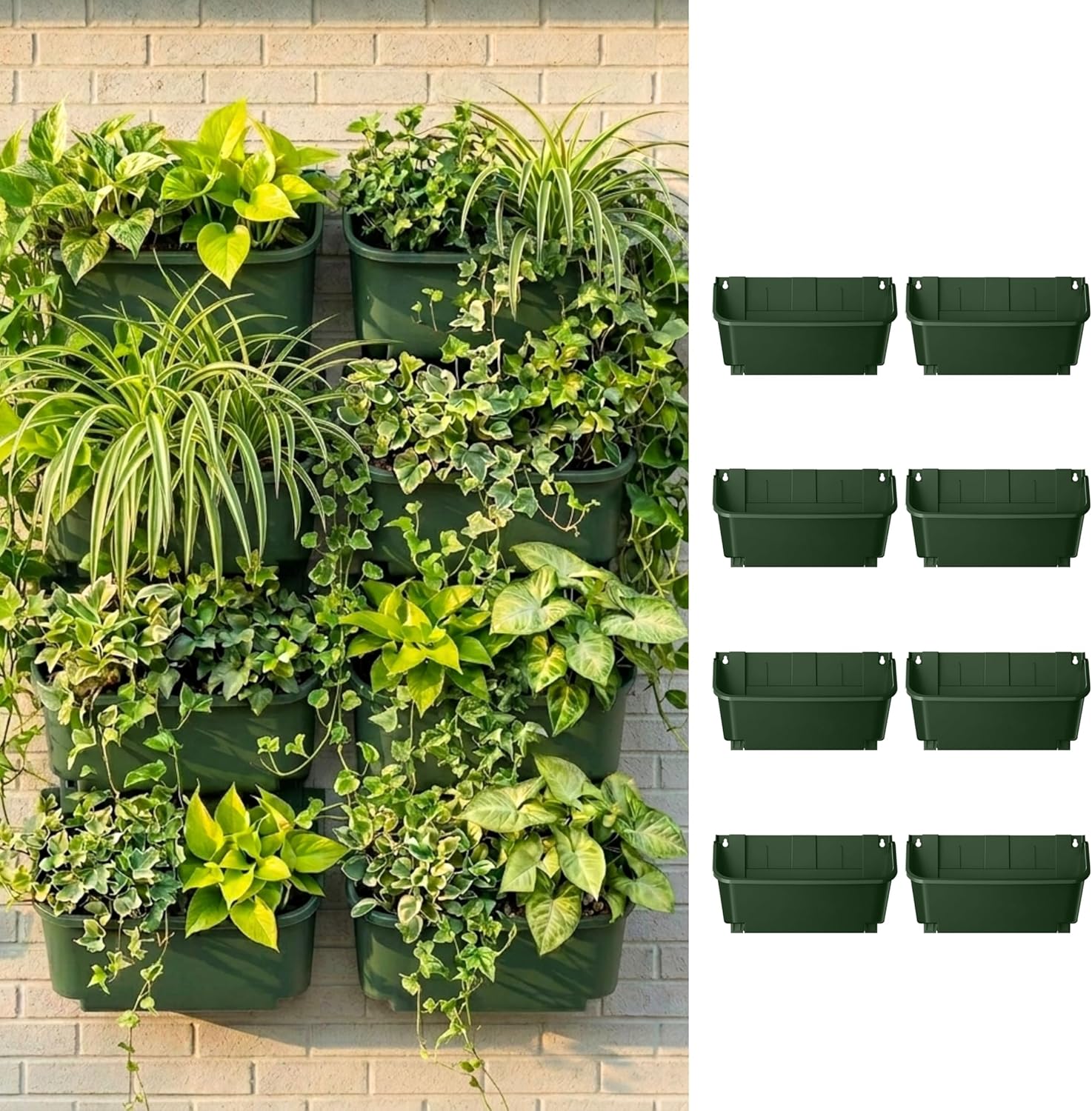
LaLaGreen 8-Pack Vertical Wall Planter
An 8-pocket wall-mounted planter set for a fence or wall, adds growing space without using any ground footprint, $37.99 with a 4.5-star rating across 35 reviews at time of writing, matches the "grow up, not out" idea above.
Shop NowNever miss an update — choose FarmFoodFamily as your preferred source on Google.
How it works: Tap the button below to open Google's settings page, then check the box next to FarmFoodFamily.
Tap the checkbox to turn it blue — that's how you know it's set.