7 Design Tricks for Narrow Front Gardens That Make Them Feel Luxurious, In Spite of Their Size
A narrow front garden doesn’t need more width to make a strong first impression, it needs these 7 tricks landscape designers actually use to make a tight strip feel considered.

Never miss an update — choose FarmFoodFamily as your preferred source on Google.
How it works: Tap the button below to open Google’s settings page, then check the box next to FarmFoodFamily.
Tap the checkbox to turn it blue — that’s how you know it’s set.
Before a guest ever steps inside, they’ve already formed an opinion of your home based on the front garden alone. That’s true even when the front garden is a narrow 4-to-6-foot strip between the sidewalk and the house, the kind of space rowhouses, townhomes, and older city lots tend to have.
The good news: a narrow front garden isn’t a smaller version of a luxurious one, it’s a different design problem with its own solutions. These 7 tricks come from real landscape designers who work with exactly this kind of tight, narrow space every day, not generic advice scaled down from a larger yard.
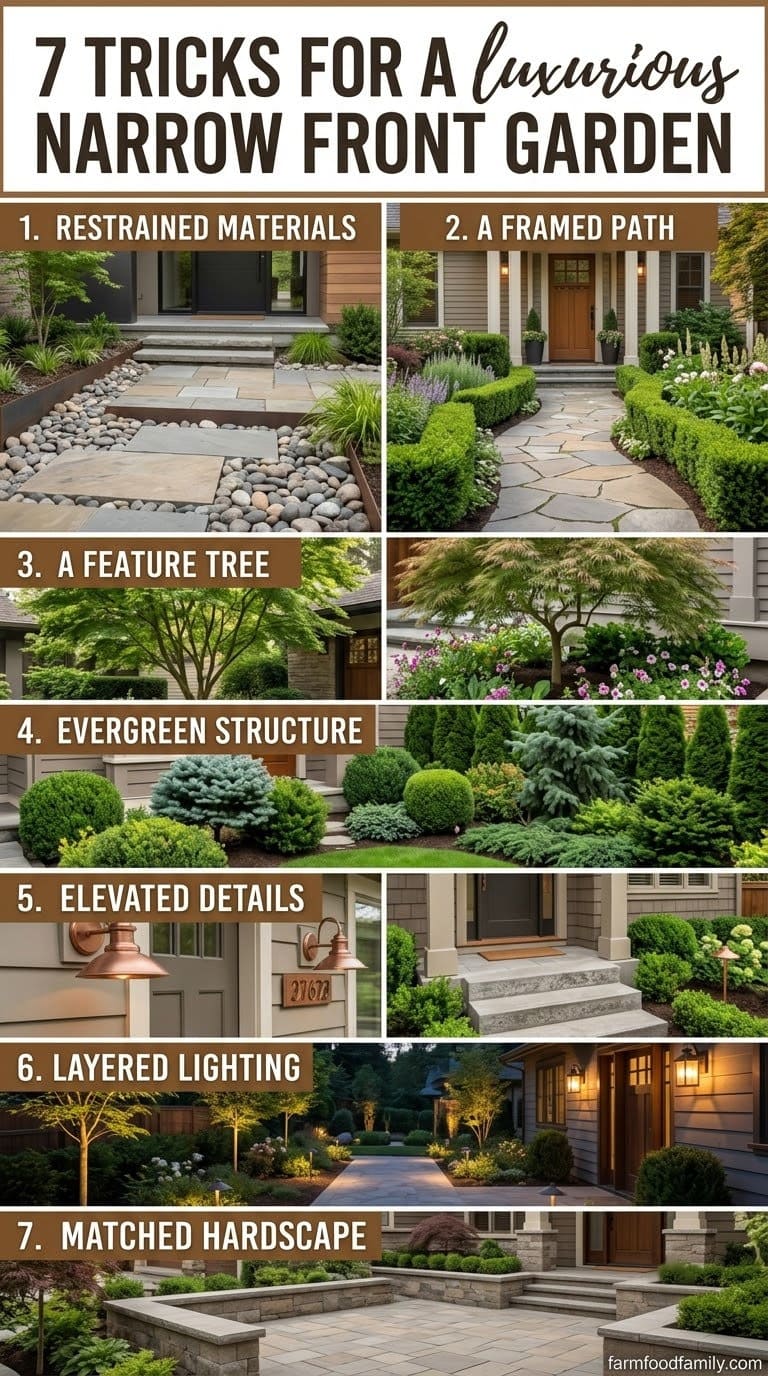
Quick Answer: A narrow front garden reads as luxurious through 7 real design moves, not through square footage. Keep the material palette restrained, one or two high-quality materials instead of many competing ones. Design the path to the front door as a deliberate feature, not just a function. Draw the eye upward with one multi-stem tree or climbing plant instead of spreading everything sideways. Build the planting around evergreen structure so it looks considered in every season, not just summer.
Invest in a few elevated details, house numbers, a door knocker, real pots, rather than many cheap ones. Layer the lighting instead of flooding the space with one bright fixture. And match the hardscape material to the house’s own facade so the whole front reads as one connected design. Landscape designers Sophie Bertrand and Gina Taylor both build their narrow London front gardens around this exact restraint-first approach.
At a Glance: The 7 Tricks
| # | Trick | What It Fixes |
|---|---|---|
| 1 | Keep the material palette restrained | Too many competing materials reading as cluttered, not luxurious |
| 2 | Design the path as a feature, not just a function | A front door that isn’t the clear destination |
| 3 | Draw the eye upward | A flat, ground-level design with no sense of height |
| 4 | Build around evergreen structure | A front garden that only looks good for one season |
| 5 | Invest in a few elevated details | Cheap, mismatched hardware undercutting the whole design |
| 6 | Layer the lighting | A front garden that disappears after dark |
| 7 | Match hardscape to the house facade | A front garden that feels disconnected from the house itself |
Trick #1: Keep the Material Palette Restrained
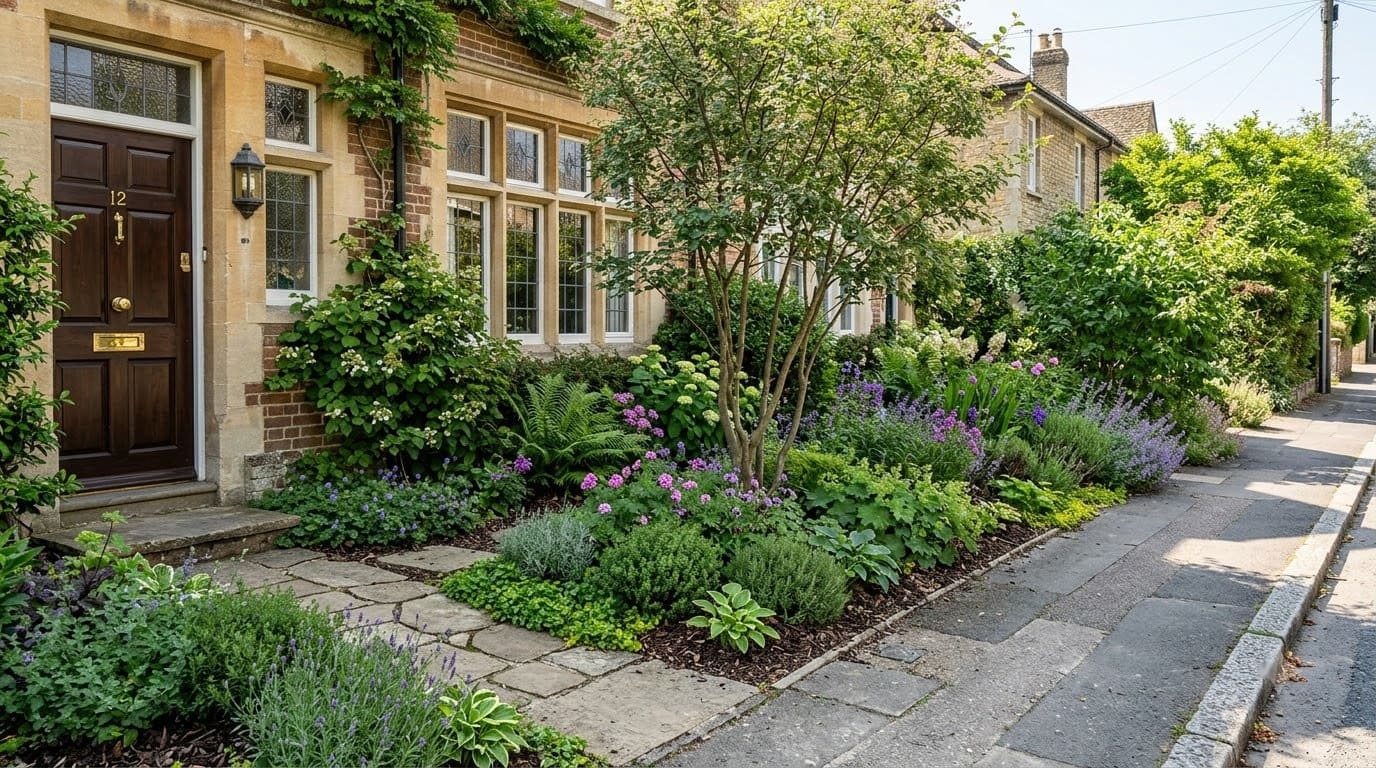
The instinct in a small space is to add more. More paving styles, more ornament, more plant varieties. The theory is that it fills the space and makes it feel complete. It does the opposite.
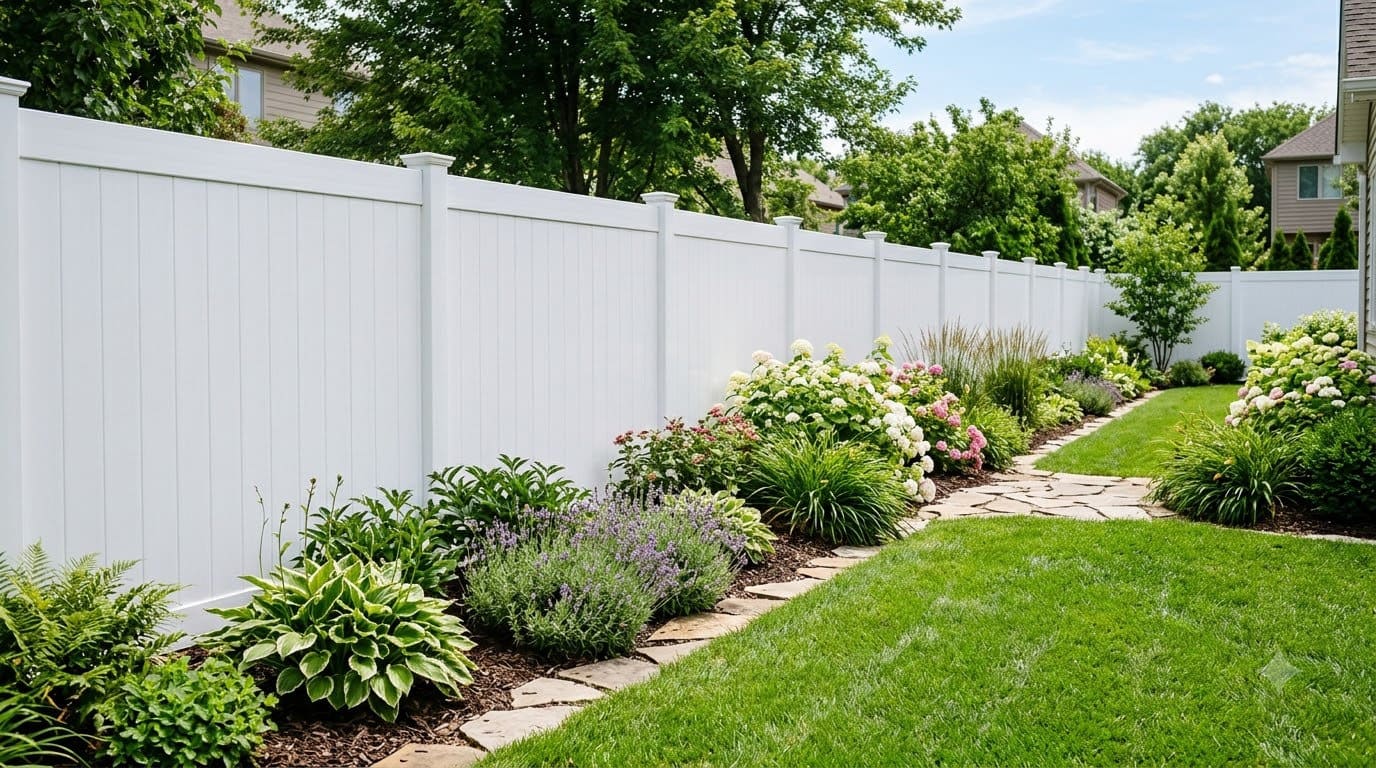
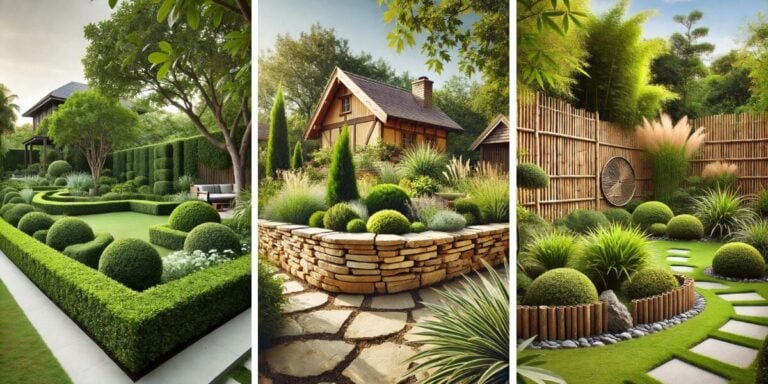
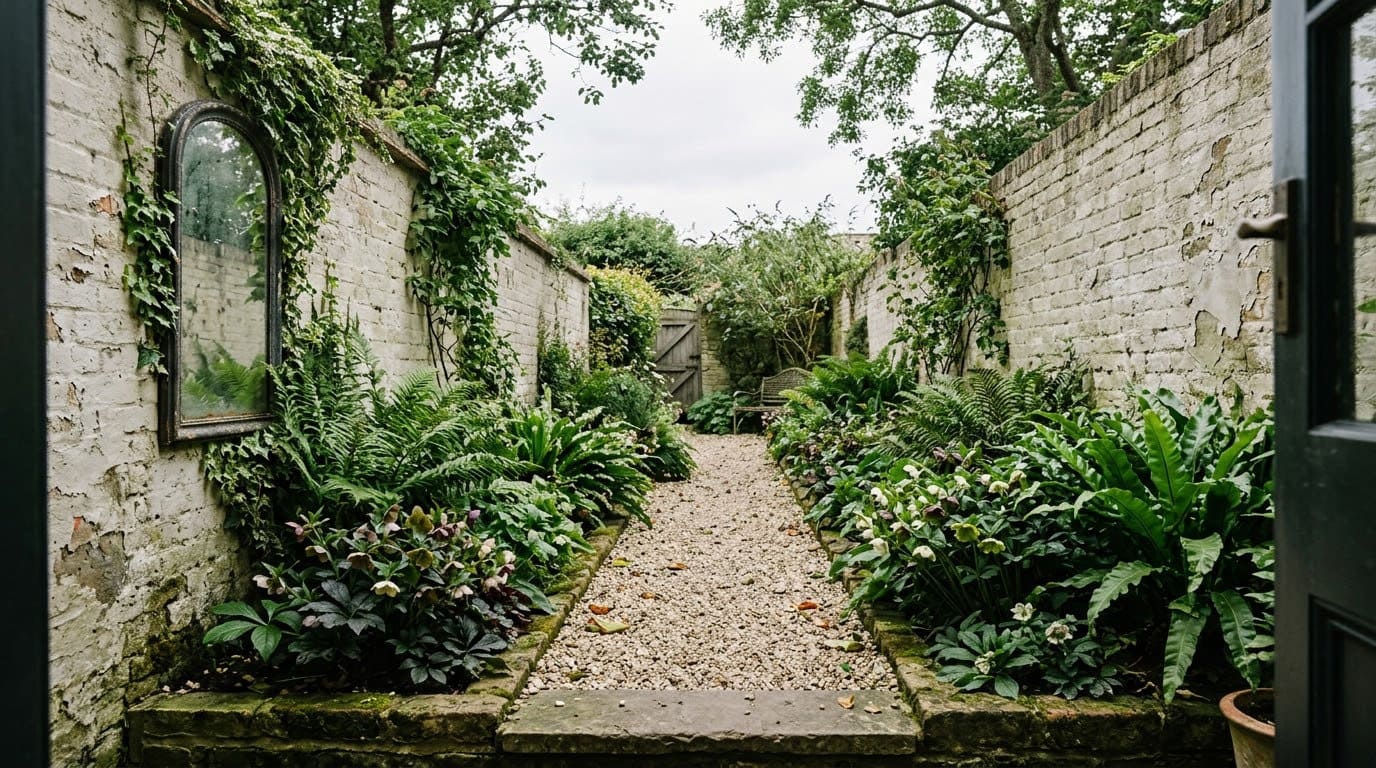
London designer Sophie Bertrand, head of design at Rosebank Landscaping, is direct about it: “Small front gardens work best when the design is restrained. Rather than trying to include too many features, focus on a clear layout with a limited palette of materials and planting.” Her own approach favors “a restrained palette of high-quality materials with plenty of texture.” Natural stone, gravel, or clay tile. One primary material occupies most of the space, with only small trims added on top.
Answer 4 quick questions and get matched to the exact fix for your yard — drainage, budget, layout, or something else entirely.
Take the Free QuizQuick tip: Pick your primary material first, before you plan anything else, and commit to using it for at least 70% of the hardscape surface. Every other material you add after that should be a deliberate trim or accent, never a second “main” material competing for attention.
Trick #2: Design the Path as a Feature, Not Just a Function
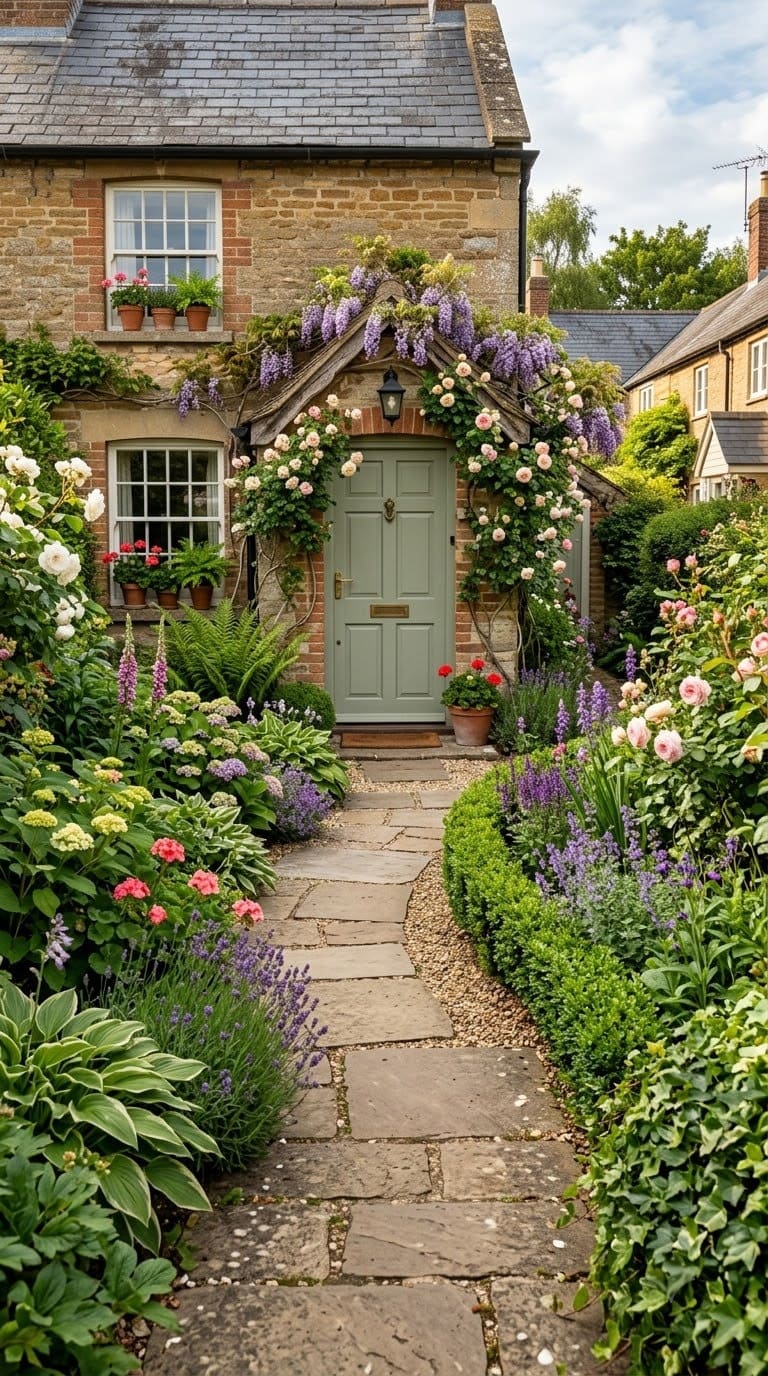
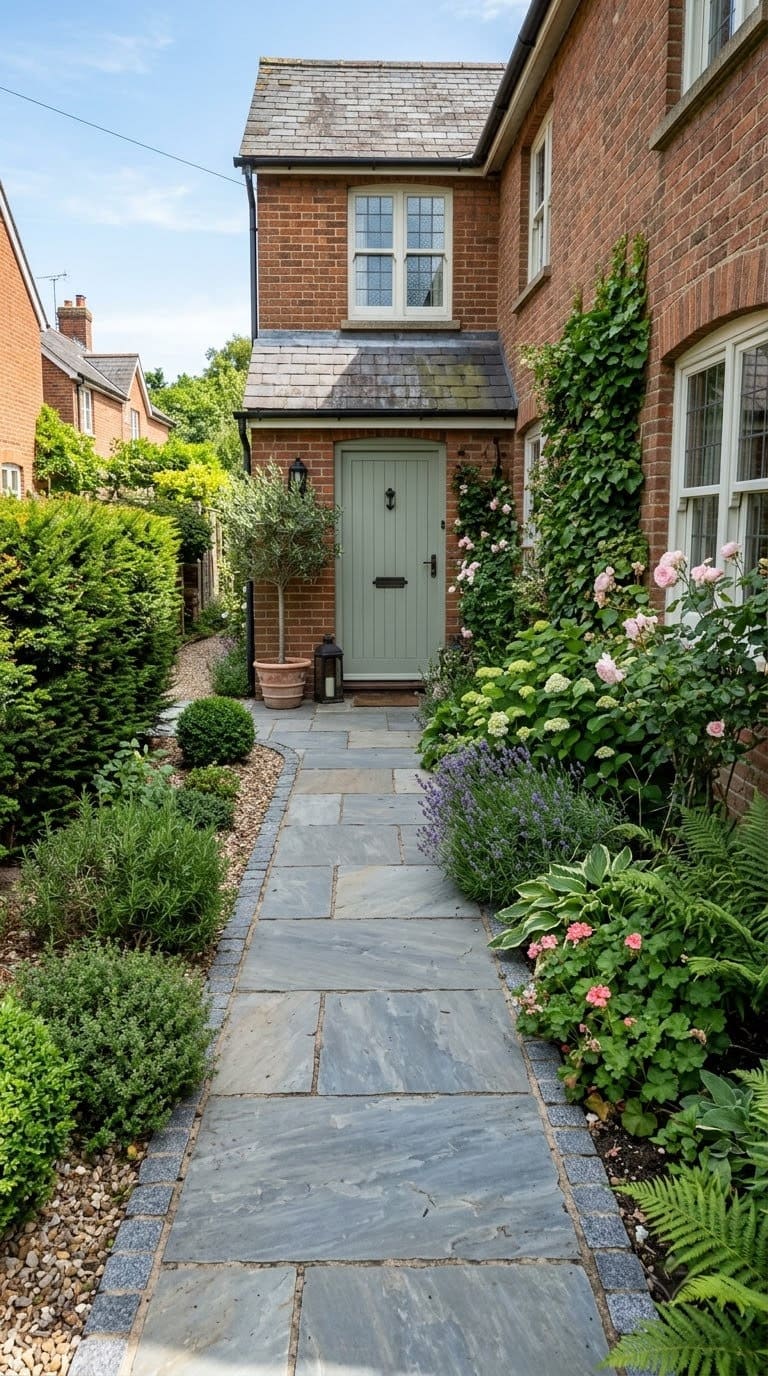
Your front door is the actual destination of a front garden, and the path leading to it should say so clearly. A path that just happens to connect the sidewalk to the door wastes the single most functional design element a narrow front garden has. It’s worth real thought, not an afterthought.
East London designer Gina Taylor puts it simply: “A clearly defined path gives the garden structure and makes the entrance feel welcoming.” Sophie Bertrand takes the idea further. She recommends you “treat the journey to the front door as a design feature.” Use paving and planting to frame the entry, not just lay a straight, functional strip of concrete.
Quick tip: Even a gentle curve, not a dramatic one, adds a sense of a designed journey instead of a shortcut. If the path is already straight and you’re not replacing it, frame it instead. Add low planting or edging along both sides so the walk feels intentional, even without changing its shape.
Trick #3: Draw the Eye Upward
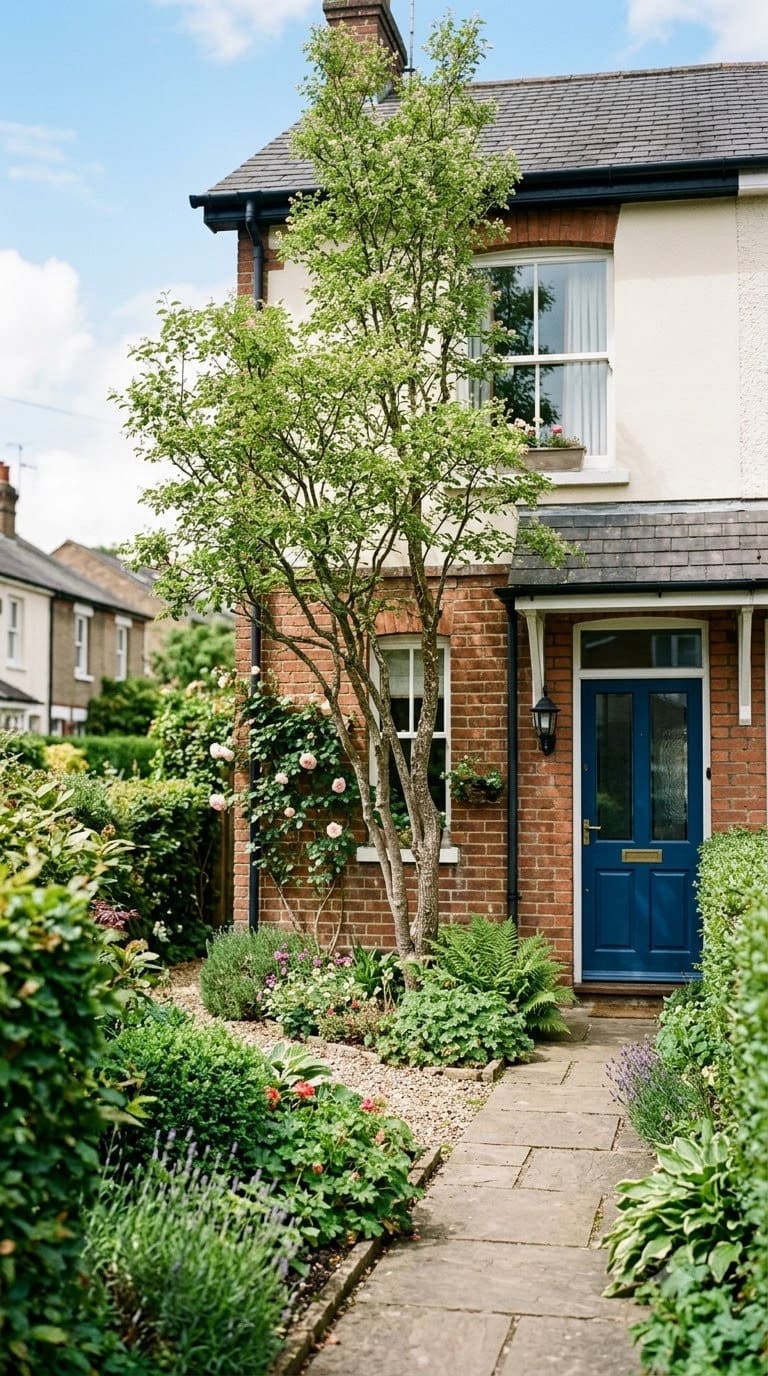
A narrow front garden has almost no room to spread sideways. But it has unlimited room to go up. That’s the dimension most narrow front gardens forget to use. Height does the visual work that width can’t in a tight space.
Sophie Bertrand recommends “a carefully positioned multi-stem feature tree” to “draw the eye upwards, softening the relationship between the house and the garden.” Gina Taylor adds climbing plants and evergreen shrubs to the same list. They “draw the eye upwards and create a sense of depth without taking up too much ground space,” with the bonus of adding privacy along the way.
Quick tip: One vertical element is usually enough for a genuinely narrow strip, not several. A single well-placed multi-stem tree or one climbing plant trained up a simple support does more for the sense of height than scattering three or four shorter vertical accents around the space.
Most yard problems trace back to one specific, fixable cause. Find yours in 4 quick questions.
Take the Free Quiz
Directly solves Trick #6 (layered lighting, accenting a feature plant)
Shop NowThis post contains affiliate links. We may earn a commission on qualifying purchases at no extra cost to you.
Trick #4: Build the Planting Around Evergreen Structure
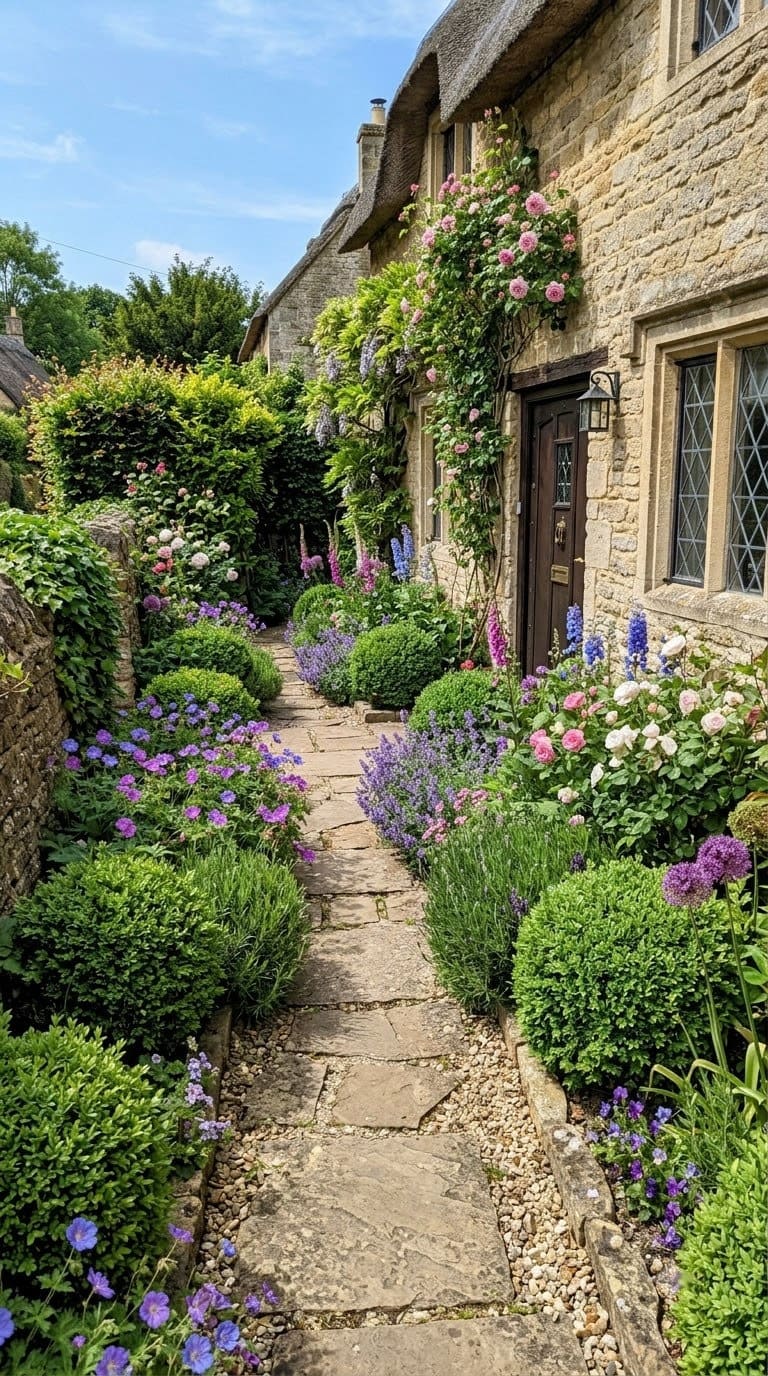
A front garden planted entirely with summer-blooming flowers looks wonderful in June and forgettable by November. In a narrow space, every plant has to earn its spot. That’s a real design gap, not just a minor seasonal dip.
“Evergreen planting provides the backbone of a successful front garden, ensuring it feels welcoming throughout the year,” Sophie Bertrand says. Gina Taylor’s real-world plant list backs this up. For evergreen structure: yew, pittosporum, sarcococca, ferns, compact grasses. Layered on top for seasonal color: hardy geraniums, astrantia, Japanese anemones, hellebores, foxgloves, and spring bulbs like narcissi and alliums.
Quick tip: Aim for roughly two-thirds evergreen structure to one-third seasonal color in a narrow bed. That ratio keeps the garden from ever looking bare, while still leaving real room for the seasonal blooms that make it feel alive rather than static.
Trick #5: Invest in a Few Elevated Details
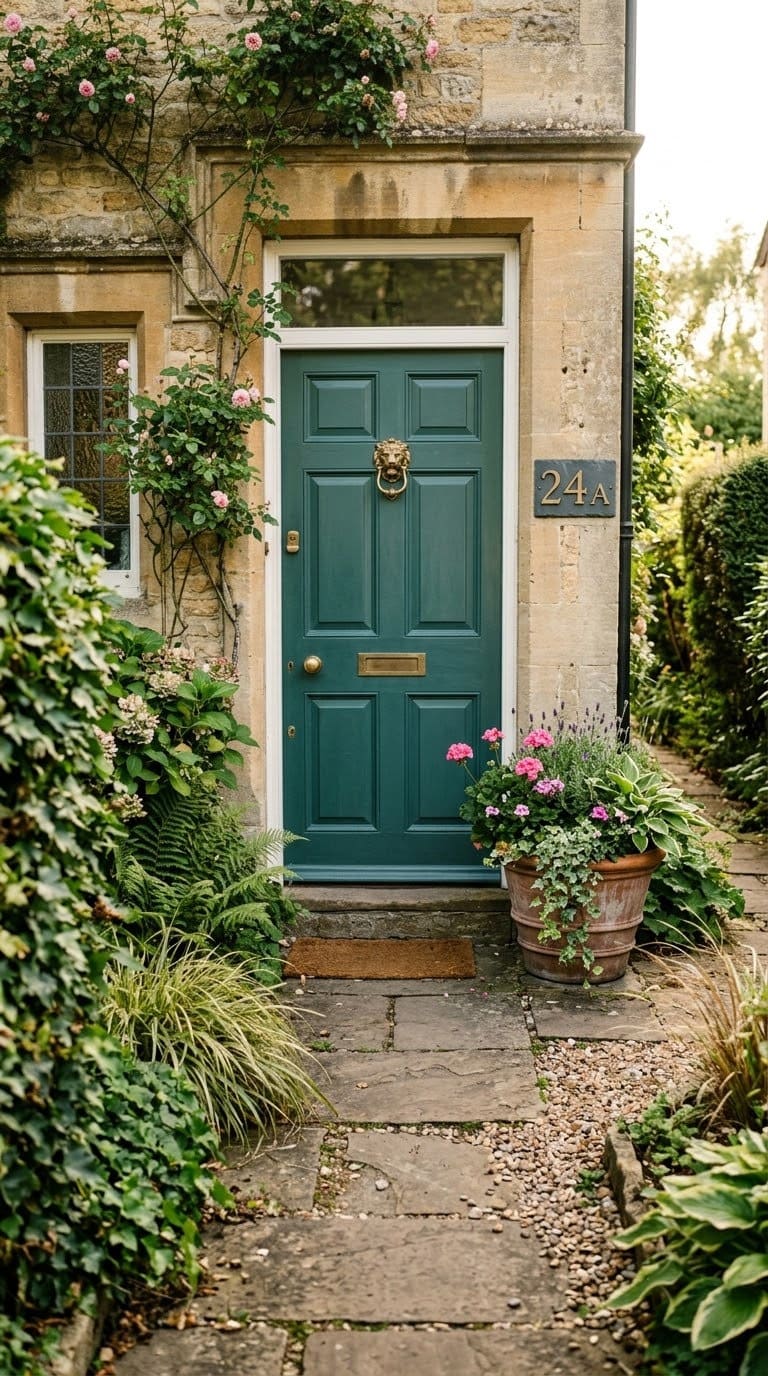
With less space, every individual choice carries more visual weight. The small, easy-to-skip details end up mattering more in a narrow front garden than they would in a larger one.
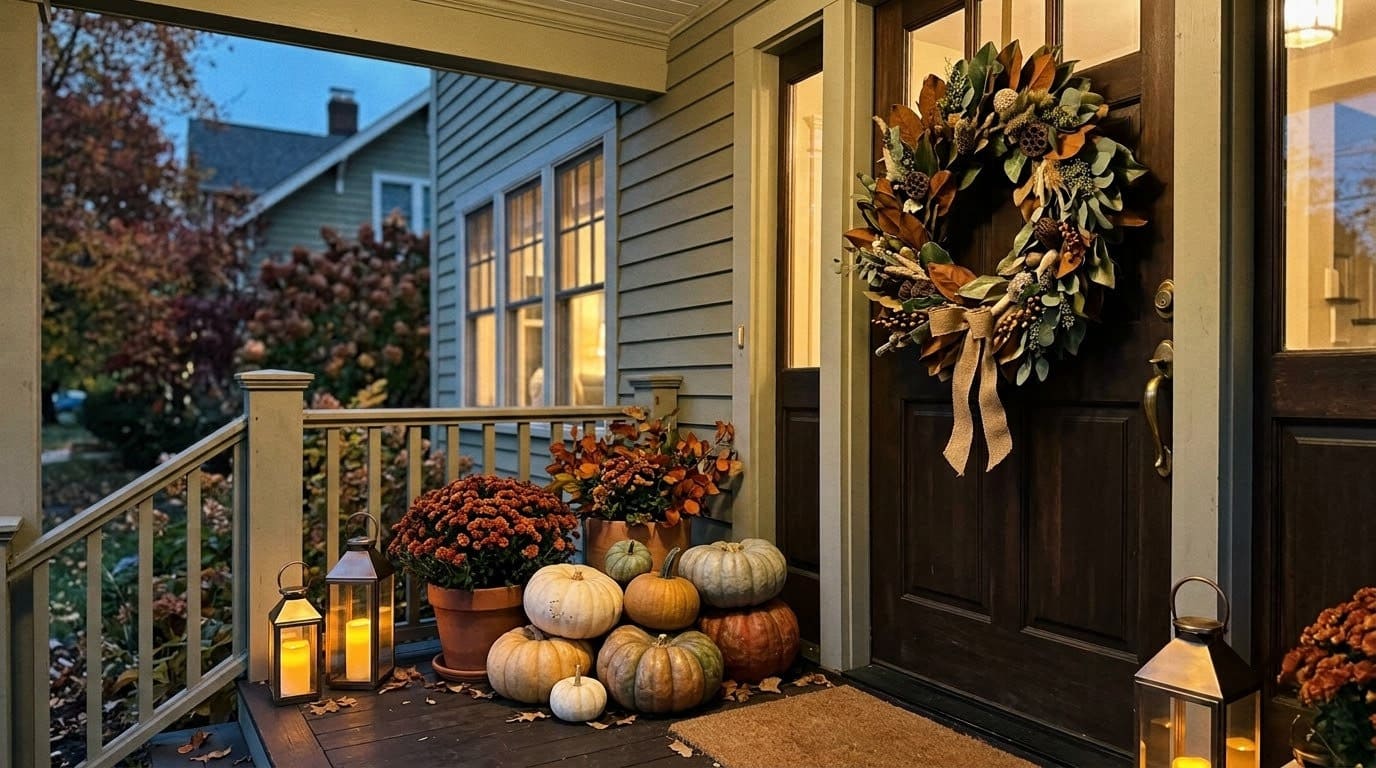
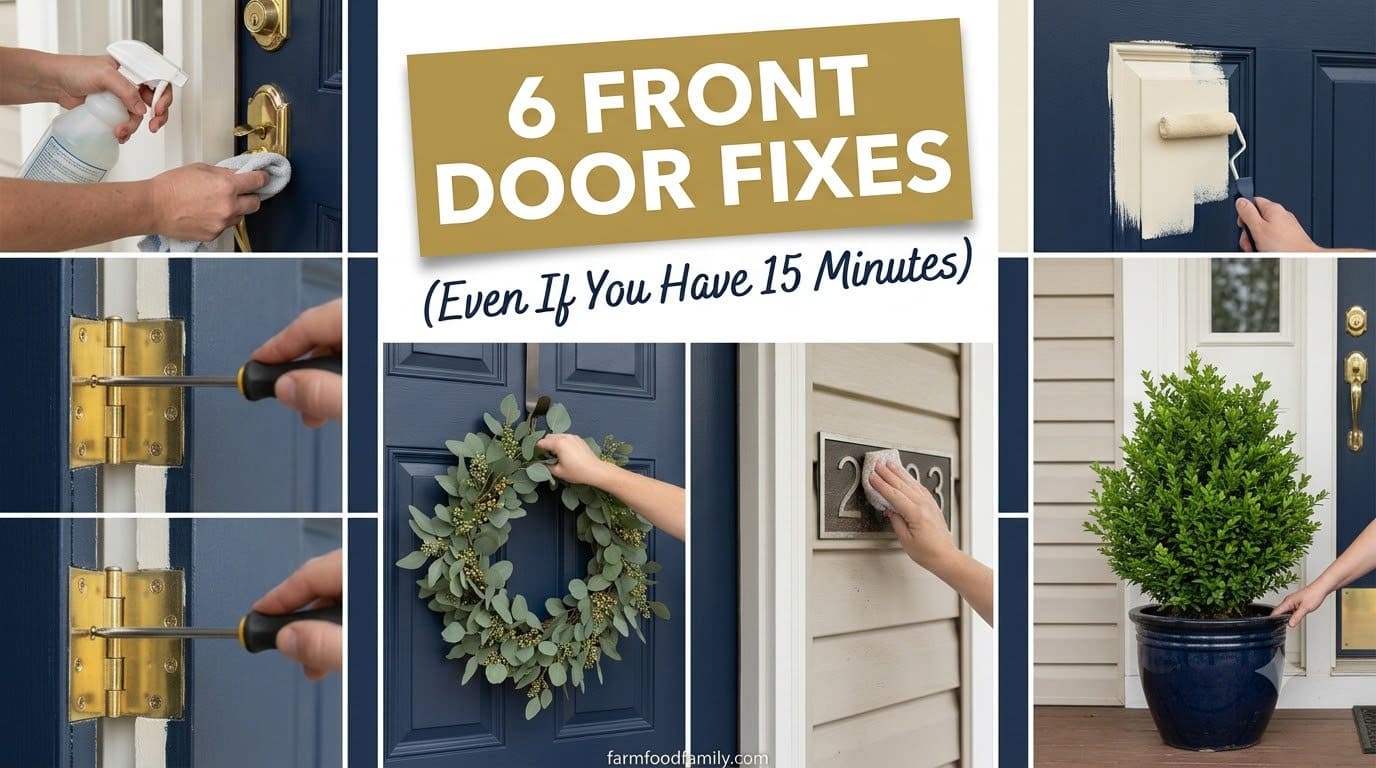
Gina Taylor lists exactly what to prioritize: “Beautiful house numbers, discreet bin storage, a well-chosen wall light and attractive pots can elevate even the smallest space.” The logic is straightforward. A narrow front garden doesn’t have room to hide a cheap, mismatched detail the way a larger space might. Every fixture is close enough to be seen clearly.
Quick tip: Pick two or three details to genuinely upgrade. Don’t spread a small budget across ten. A single well-chosen door knocker and one quality planter, both handled properly, do more for how the whole space reads than ten mediocre touches scattered around.
Trick #6: Layer the Lighting
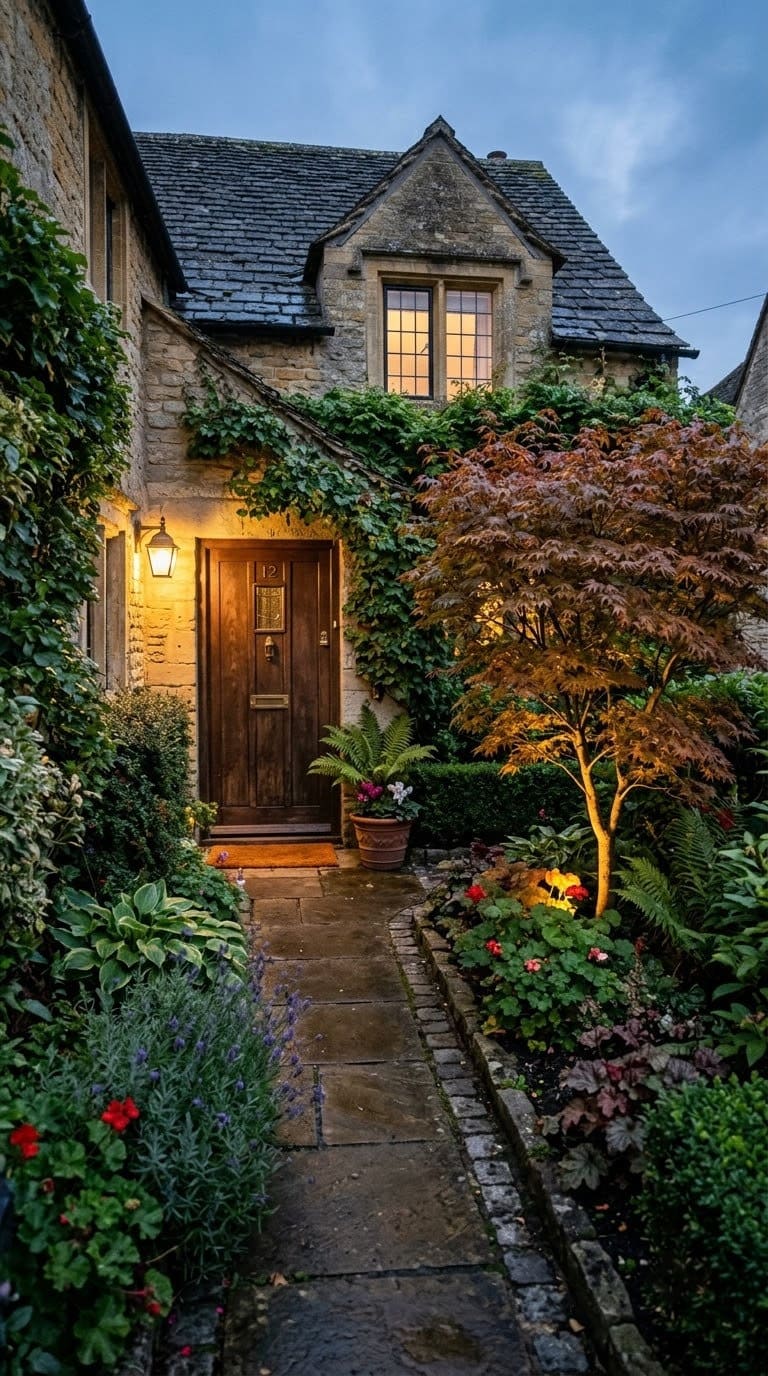
A front garden that goes completely dark at dusk disappears from how your home is perceived for roughly half the day. A single bright floodlight solves the visibility problem. It doesn’t solve the design problem.
Brooklyn architect Christopher Dameron, founder of Dameron Architecture, describes the actual technique: “After sunset, strategically placed lighting can highlight a garden’s more polished or luxurious elements. Focusing light on the most attractive features allows the rest of the garden to fall into darkness and can radically reshape the way you perceive the space.” Path lights spaced every 6 to 8 feet keep a walkway evenly lit without looking cluttered. One small uplight aimed at your Trick #3 feature tree does more for the overall mood than a single porch floodlight ever will.

Quick tip: Layer at least two light types even in a small space. One functional light at the door or along the path for safety. One accent light aimed at a single feature, like the multi-stem tree from Trick #3. A single light source, no matter how bright, reads as utilitarian. Two light sources at different heights read as designed.
The average homeowner spends $616/year on yard fixes that don't address the real problem. Find out what yours actually is — before you spend another dollar.
Take the Free QuizTrick #7: Match the Hardscape to the House’s Own Facade
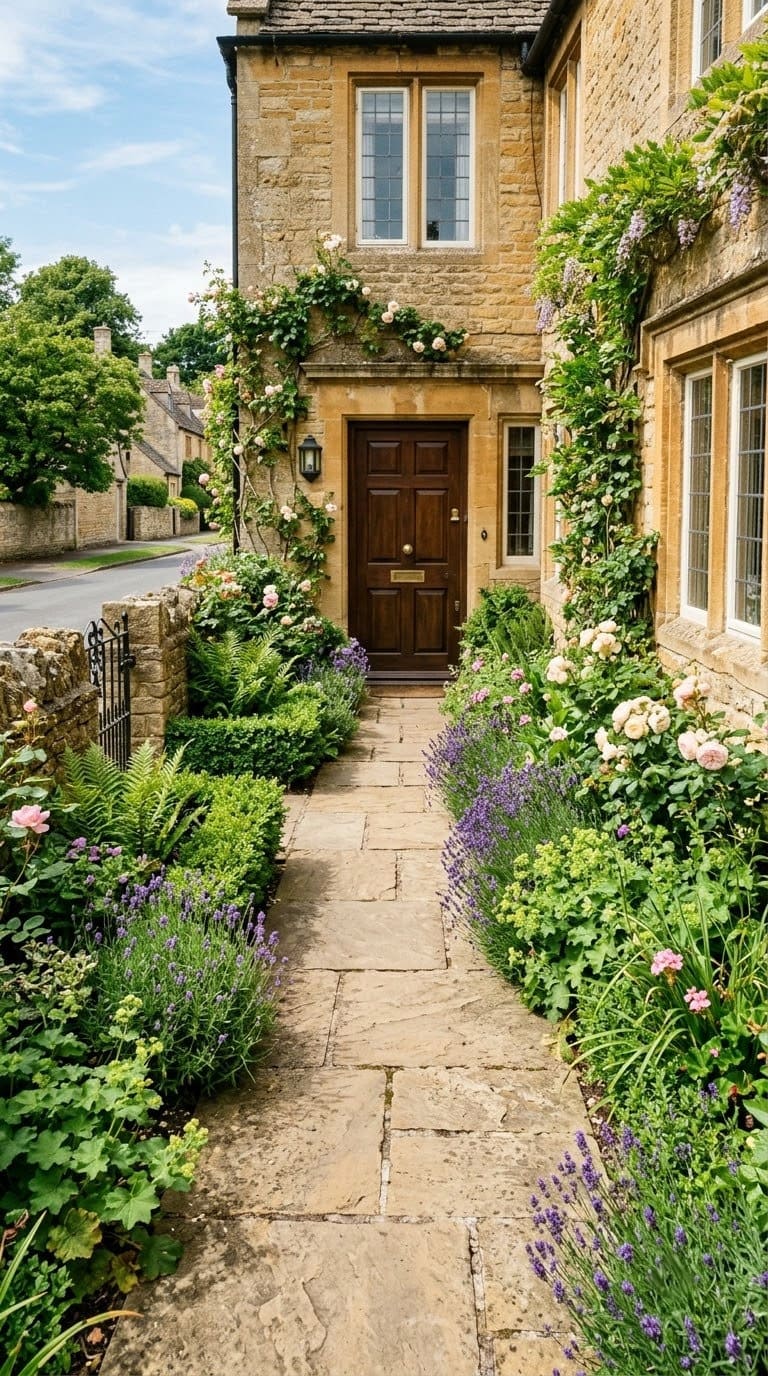
A front garden’s hardscape sits directly against the house, closer than almost any other landscaping decision on the property. That makes a mismatch between the two more noticeable here than almost anywhere else in the yard.
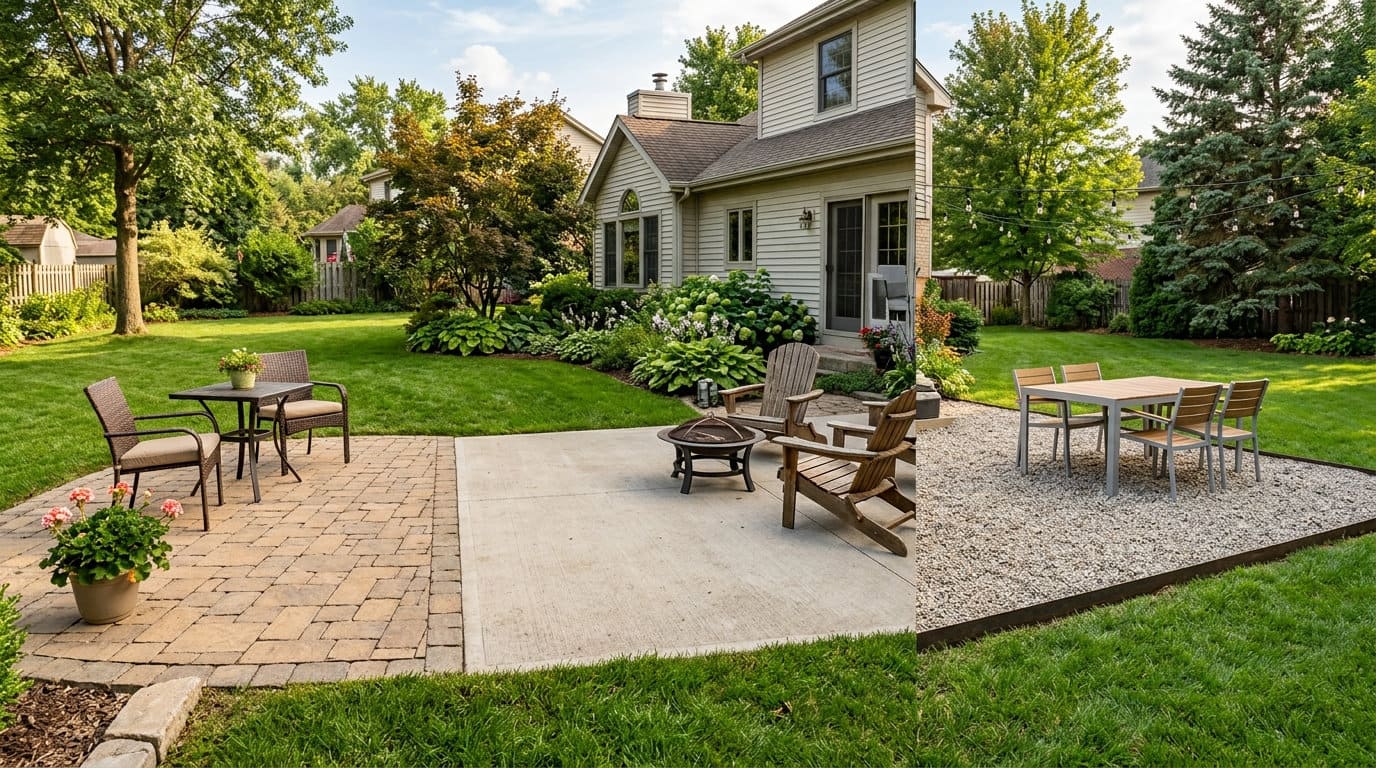
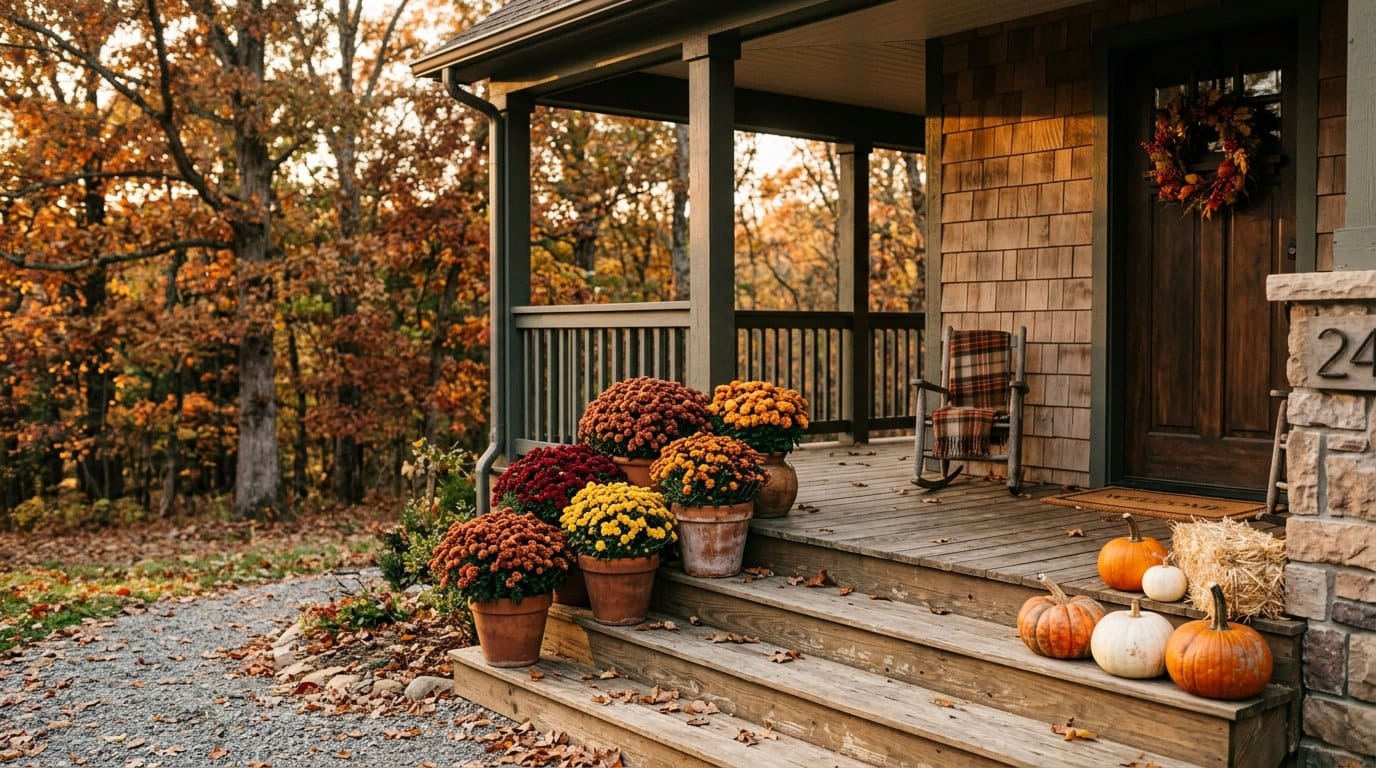
Matching color is the simplest version of this. A house with tan or brown siding pairs naturally with pavers in a similar tan or brown blend. A house with a stone foundation or brick detailing gives you an obvious material to echo in the front path itself. Beyond color, matching line and style matters too. A traditional house with classic architectural details generally calls for classic stonework. A modern, minimalist facade calls for cleaner, simpler lines instead of an ornate pattern that fights the house’s own design language.
Quick tip: If your house has a stoop or entry step in a specific material, stone, brick, poured concrete, match your front path to that material specifically, not just the siding color. That’s the single fastest way to make the hardscape feel like it was designed as one project with the house, rather than added on afterward.
Which Trick to Start With
If you’re only doing one thing this weekend, start with Trick #1, simplifying the material palette. It costs nothing beyond your own time if you’re not replacing hardscape, and it makes every other trick on this list read better once it’s done. A well-placed feature tree still looks like an afterthought sitting in a bed that’s fighting three different paving materials for attention.
After that, tackle the tricks in rough order of cost. Trick #2 (framing the path with planting) and Trick #4 (evergreen structure) are usually next since they’re planting-only changes, no hardscape required. Trick #5 (elevated details) and Trick #6 (layered lighting) come next, small purchases rather than construction. Save Trick #7 (matching hardscape to the facade) for whenever you’re already planning to redo the paving anyway, since it’s the one trick on this list that genuinely benefits from being paired with a bigger project rather than tackled alone.
What We Learned Redesigning Our Own Narrow Front Garden
Our front garden is a 5-foot-wide strip between the front steps and the sidewalk. For years it held whatever didn’t fit anywhere else: a mismatched planter, a garden hose reel, a single struggling rosebush nobody had chosen on purpose.
The single biggest change wasn’t adding a feature. It was subtracting materials. We had three different paving types crammed into that 5-foot strip: old concrete, a patch of gravel, and a few leftover pavers from a different project. Pulling all three down to one consistent material, plus one multi-stem tree by the door and a single wall light, did more for how the whole front of the house reads than any individual addition would have. Guests started commenting on the front garden for the first time. Nothing about the actual square footage had changed.
We did the materials first, purely because it was the cheapest of the three changes and we weren’t sure the rest was worth the budget yet. That order turned out to matter. Once the ground read as one consistent surface instead of three stitched-together patches, it became obvious exactly where the tree needed to go and where the wall light would actually do something, instead of guessing at both while the paving still looked unfinished underneath them.
Frequently Asked Questions
How wide does a front garden need to be for these tricks to work?
There’s no real minimum. Every trick on this list, restraint, a designed path, vertical height, evergreen structure, layered details, layered lighting, matched materials, works in a strip as narrow as 3 to 4 feet. The tricks are specifically designed around not needing extra width.
Should I hire a designer for a front garden this small?
Not necessarily. A genuinely narrow front garden costs less than a full backyard redesign, which makes it a reasonable one to tackle yourself using the principles above. A designer is worth it mainly if you’re changing the hardscape structurally, regrading, adding retaining walls, not just replanting and relighting an existing layout.
What’s the fastest way to make a narrow front garden feel more expensive this weekend?
Simplify the materials first. Removing one competing paving type or ornament style, without adding anything new, usually does more visible work in a single afternoon than any new purchase. Pair that with one well-placed accent light near the door for an evening difference too.
Do I need evergreen plants specifically, or will any low-maintenance plant work?
Evergreens specifically matter here because they hold the garden’s structure through the months when nothing is blooming. A low-maintenance deciduous plant still leaves the garden looking bare in winter. True evergreen structure, even just one or two well-placed shrubs, is what keeps a narrow front garden from having an obvious off-season.
Related Posts
Products We Recommend
This post contains affiliate links. We may earn a commission on qualifying purchases at no extra cost to you.
nipify 5W Outdoor Spotlights, 2-Pack
Directly solves Trick #6 (layered lighting, accenting a feature plant)
Shop Now
HASWARE 4" Polished Brass House Number Sign
Directly solves Trick #5 (one elevated, well-chosen detail)
Shop Now
Worth Garden Large Terracotta-Style Planter, Set of 2, 17.5"
Directly solves Trick #5 and Trick #3 (an elevated detail that can also anchor height)
Shop NowNever miss an update — choose FarmFoodFamily as your preferred source on Google.
How it works: Tap the button below to open Google's settings page, then check the box next to FarmFoodFamily.
Tap the checkbox to turn it blue — that's how you know it's set.