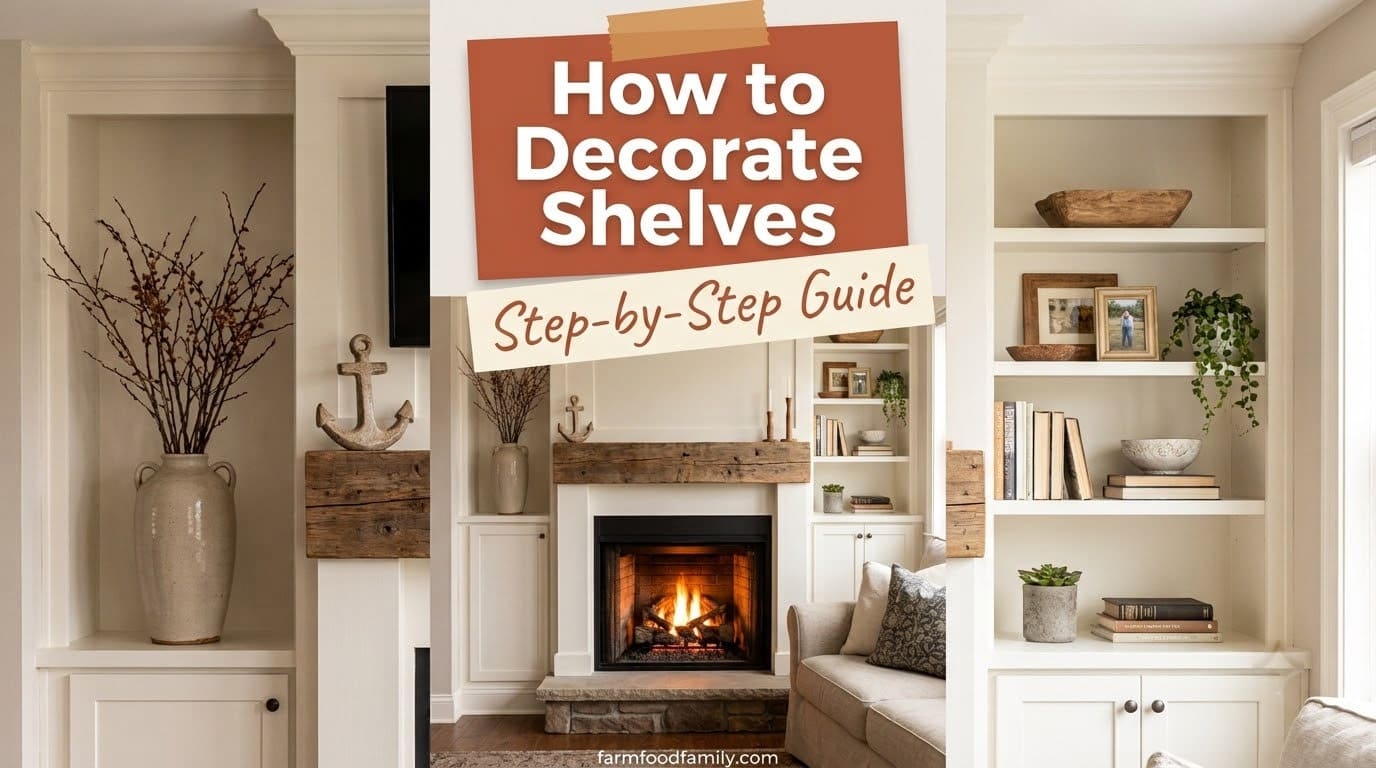
9 Signs You’re Pushing Your Furniture Against the Walls for No Reason
Against the wall is a real choice for small rooms and tight traffic lanes, but most of us do it on autopilot, so here are nine signs the habit is quietly working against your room.

Never miss an update — choose FarmFoodFamily as your preferred source on Google.
How it works: Tap the button below to open Google’s settings page, then check the box next to FarmFoodFamily.
Tap the checkbox to turn it blue — that’s how you know it’s set.
Almost everyone lines the walls with furniture. We do it on move-in day and never touch it again. And most of us believe it makes the room look bigger.
Here is the thing. Against the wall is a perfectly good choice in the right room. The mistake is doing it to every single piece without asking why.
This article has nine signs the habit is hurting your room. After that, there is a clear list of when against-the-wall is genuinely the right call, and how to pull furniture in without the room feeling emptier.
Quick Answer
Is your furniture against the wall for a reason or a reflex? Pushing every piece to the edges is a habit, not a rule, and it usually backfires. It leaves a dead void in the center, spreads seats too far apart to talk, and strands your side tables and the TV.
Designers describe the result as “stiff and boxy” or a “void in the center.” Floating the main seating even a few inches, and building one seating group around a focal point, makes a room feel larger and more finished, not smaller.



Against the wall is still right in specific cases. Those are a room under about 11 feet in one direction, a single real traffic lane, a piece that does two jobs like a desk or daybed, and most bedrooms.
The quick test for any piece is simple. Can you name the reason it is on that wall? If not, pull it in 3 to 4 inches and see how the room feels.
How to use this list
You will not have all nine of these. Skim for the two or three that describe your room.
Then read the “when it’s actually right” section before you move anything. Some of your walls have a good reason.
1. You can’t say why the sofa is on that wall
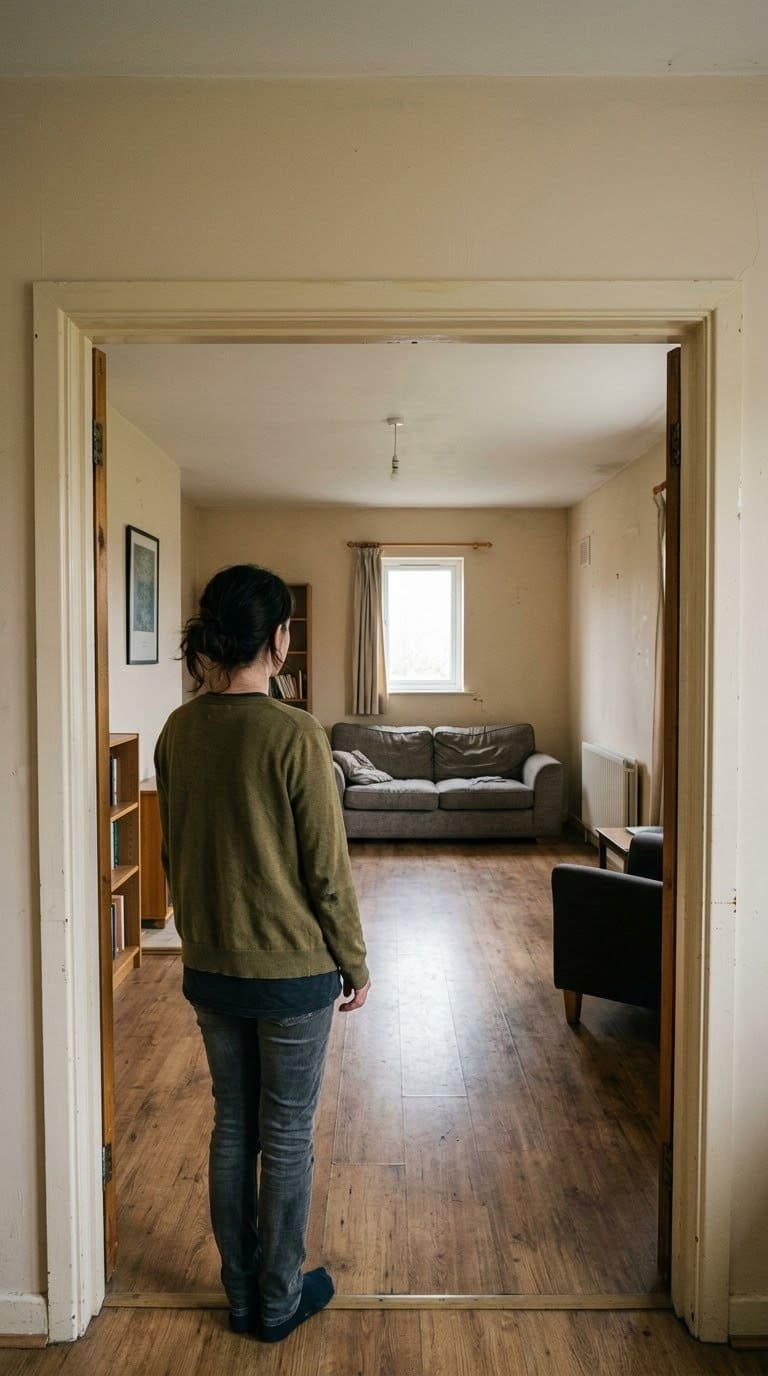
Try to finish this sentence about your biggest pieces. “This is against the wall because ___.”
If the honest answer is “that’s where it went when we moved in” or “it looks bigger this way,” that is the sign. The room is arranged by habit, not by any decision you made.
The “looks bigger” part is a myth worth naming. Designer Asma Florençon of Atelier Varenne says floating furniture feels backwards but “actually gives the impression of larger spaces by letting the walls recede.” Furniture pinned to the edges draws a hard line around the room, so you read its size at a glance.
Quick fix: For each big piece, say the reason out loud. No answer means pull it in a few inches and live with it for a week. Starting a layout from what each piece is for, rather than which wall is free, is the whole idea behind planning a room on purpose.
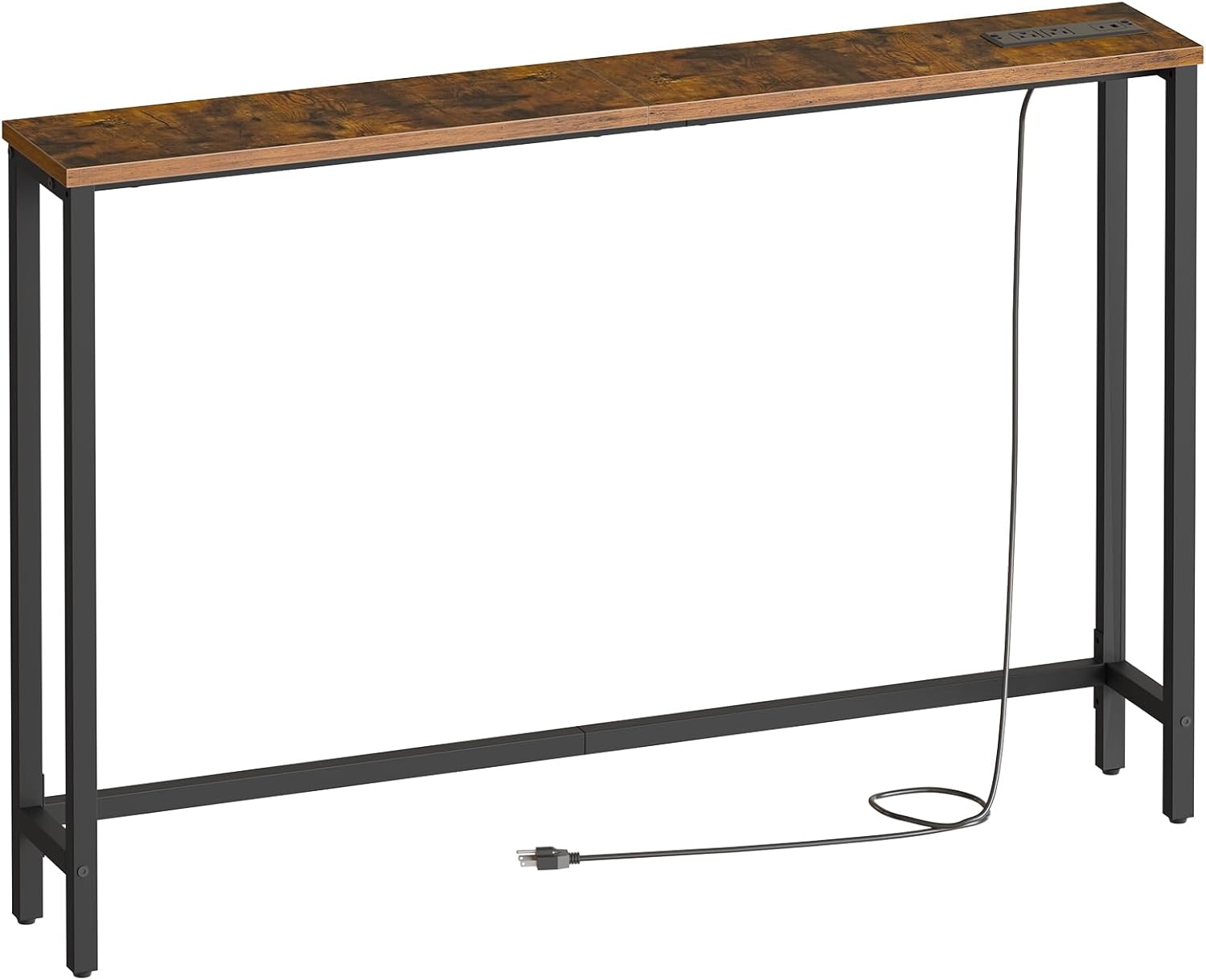
A slim behind-the-couch table that finishes the back of a floated sofa and adds a surface plus outlets, so pulling the sofa off the wall does not leave a raw back on show
Shop NowThis post contains affiliate links. We may earn a commission on qualifying purchases at no extra cost to you.
2. There’s a bare void in the middle you walk around
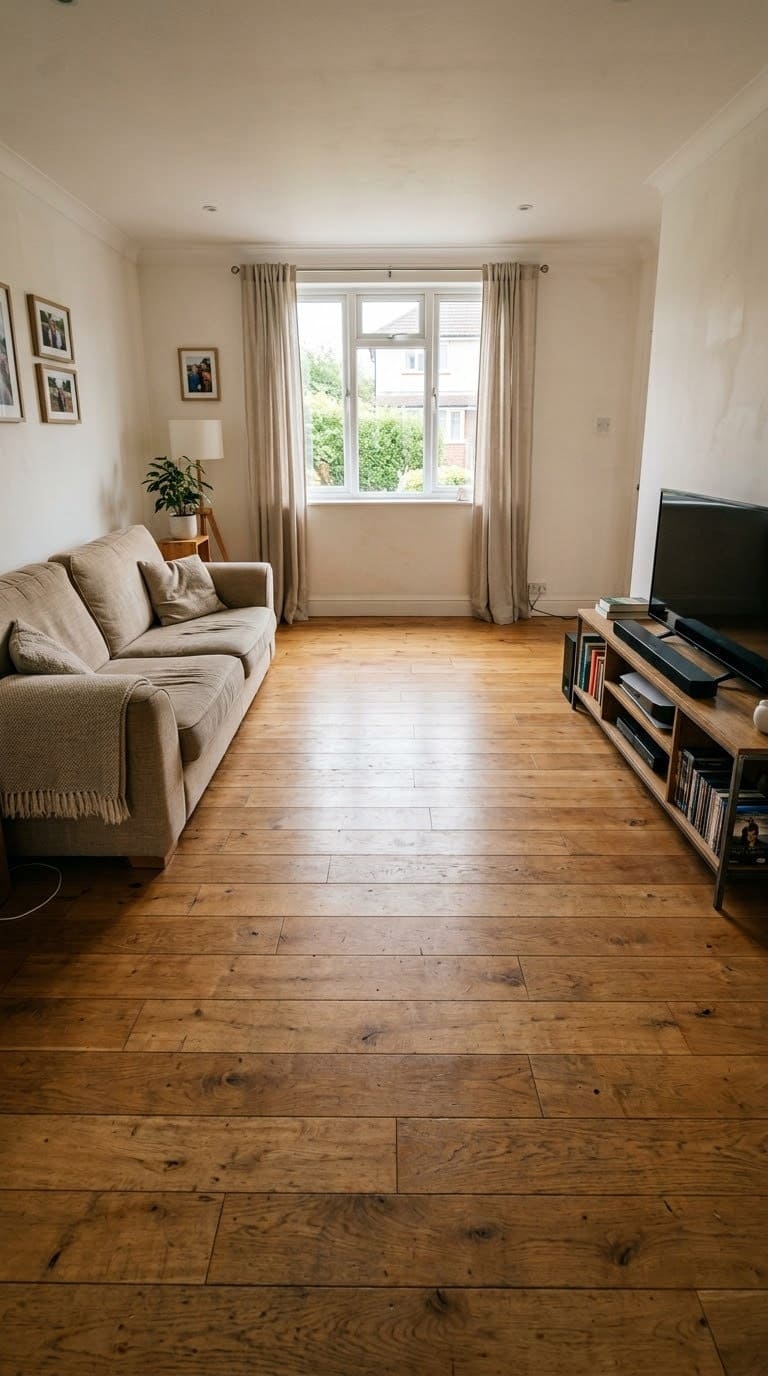
Look at the center of the room. If there is a stretch of empty floor wider than a walkway, with nothing in it, that is the void.
Anna Kroesser and Amelia Strat of Kroesser + Strat Design put it plainly. “With all of the biggest furniture volumes pushed up against the wall, the room ends up feeling like it has a void in the center.”
Quick fix: Pull the seating in to close the gap. Aim for 3.5 to 8 feet between facing seats and 14 to 18 inches from the sofa to the coffee table. The middle of the room should feel like a room, not a hallway. A coffee table or a large ottoman in the center gives the space something to hold onto.
3. People talk across the room, not to each other
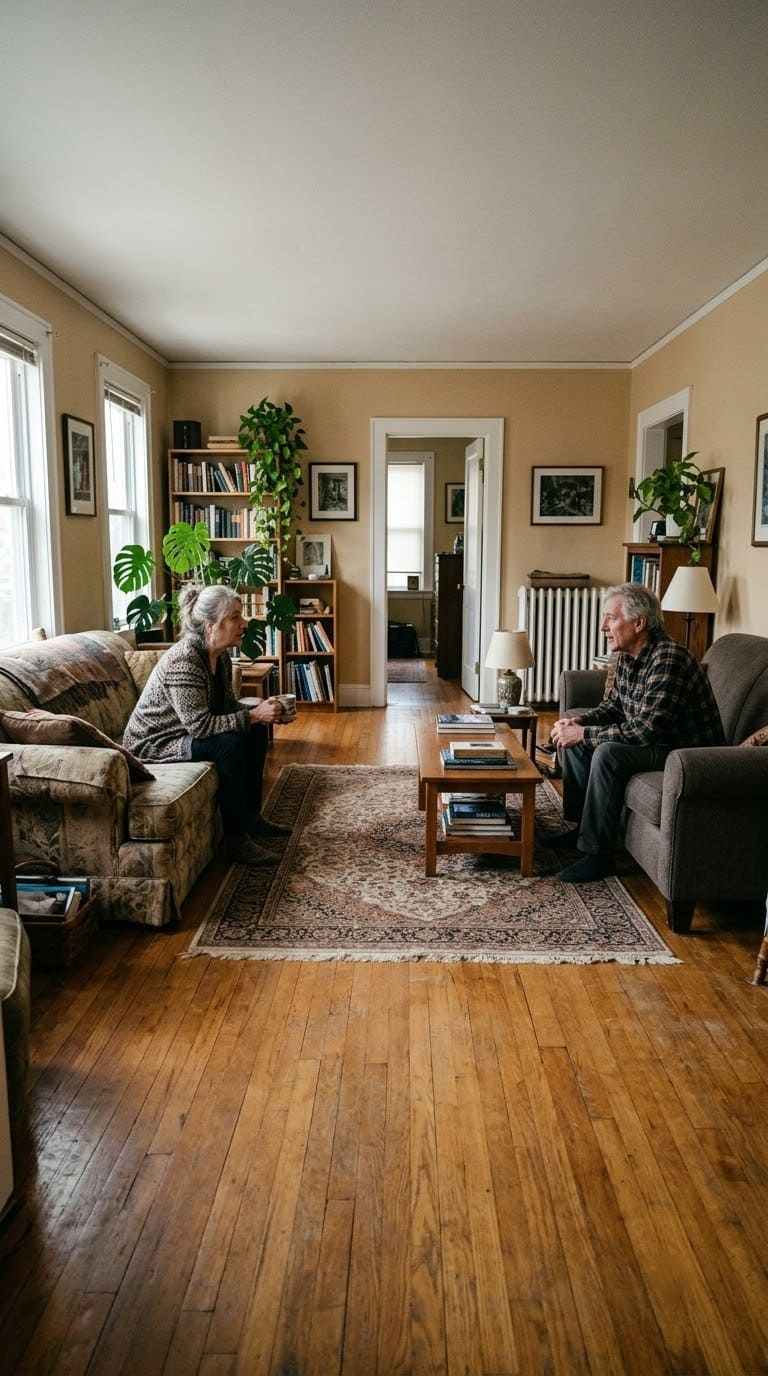
Notice what happens when people sit down. If you raise your voice to be heard, or guests drift onto their phones, the seating is too spread out.
Past about 8 feet, a seating group breaks apart. Seats along opposite walls of a 14-foot room are more than 12 feet apart, which is too far for anyone to feel part of the same group.
Quick fix: Build one tight seating group instead of a scattered ring. Two chairs pulled in near the sofa beat four seats spread across three walls. If you have a big sectional doing the wall-hugging, closing it into a real group is the fix.
4. Your side tables and the remote are out of reach
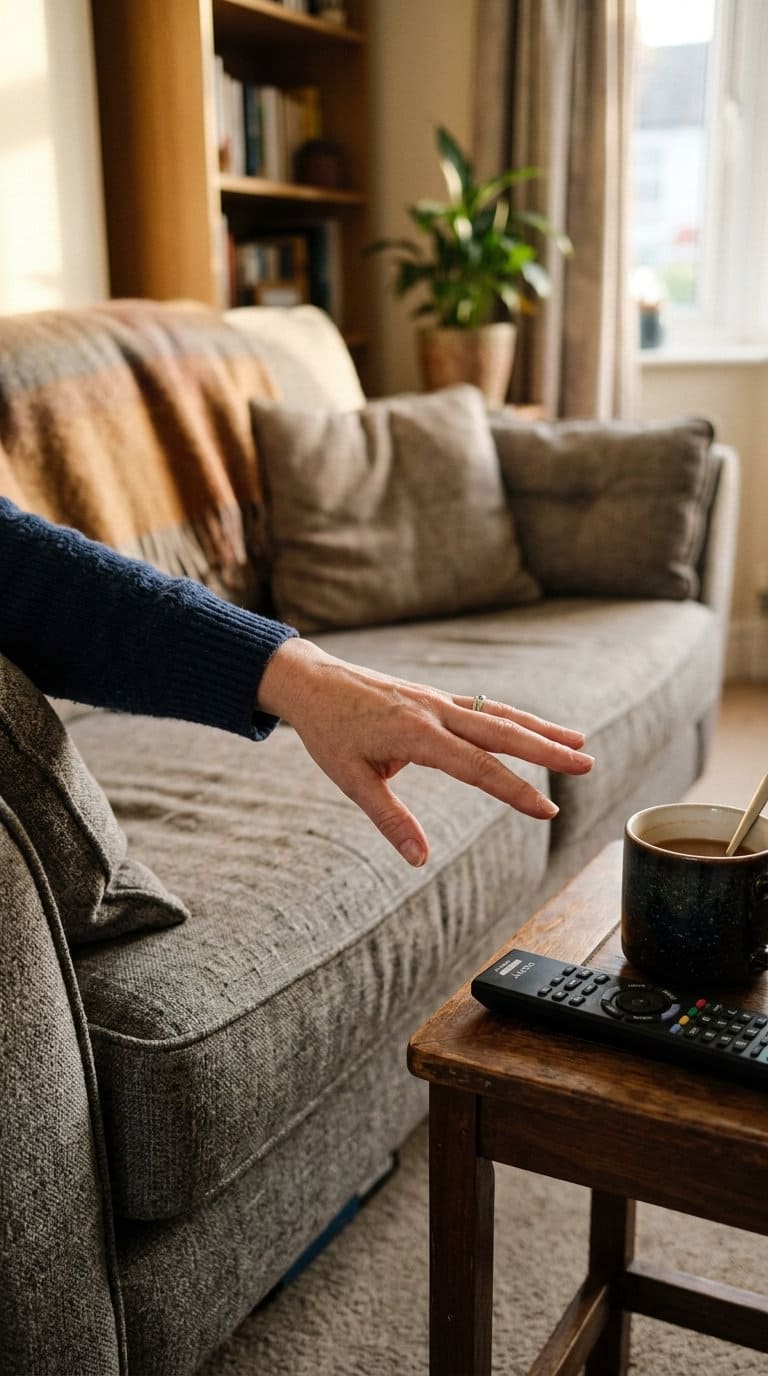
Here is a small daily tell. If you have to stand up to set down a drink or grab the remote, your surfaces are in the wrong place.
It usually happens because the end tables sit at the far ends of a wall-length sofa run, out past where anyone actually sits.

Quick fix: A floated sofa can have a table on both sides and a console behind it. Everything you reach for should be within an arm’s length of your seat. A narrow console table behind the sofa adds a surface and finishes the back at the same time.
5. The TV is marooned across the room
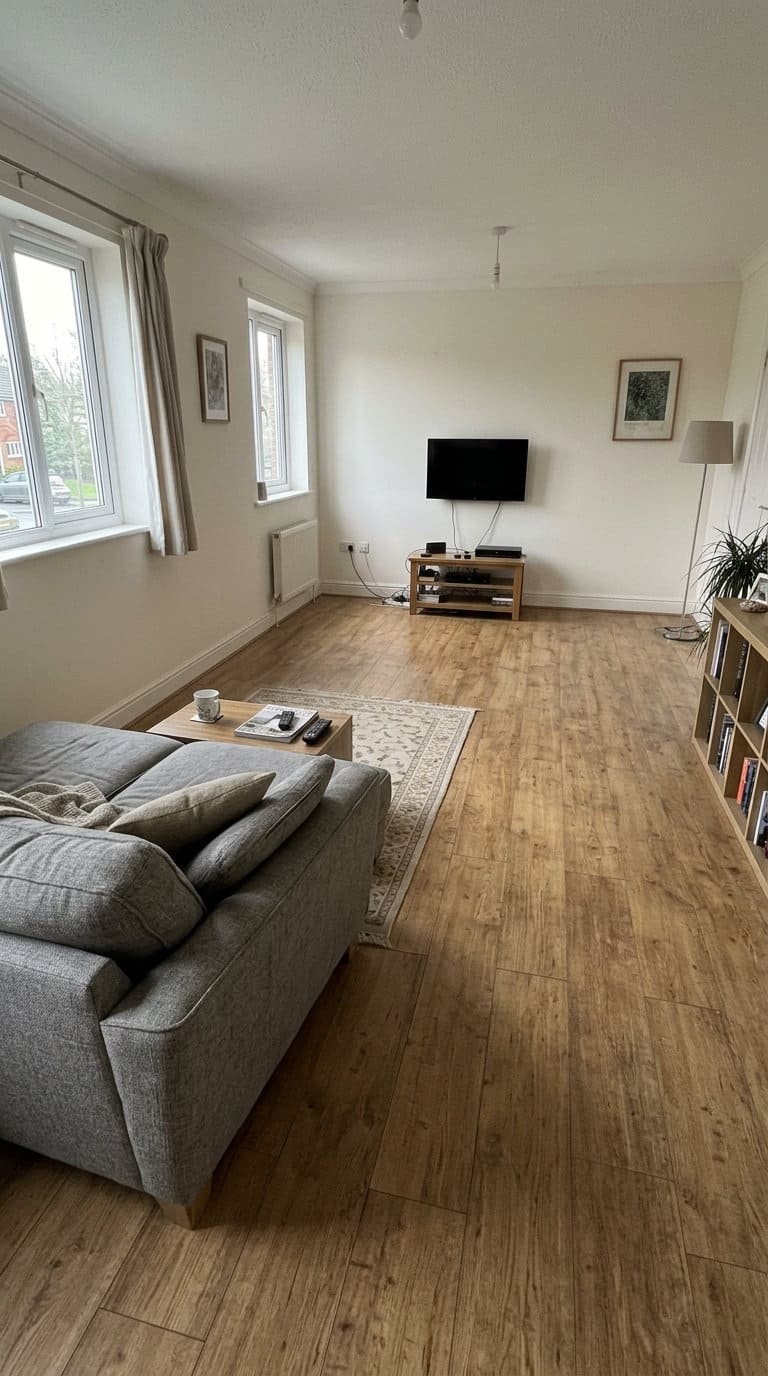
If the sofa is on one wall and the TV is on the opposite one, check how the picture feels. A small image, or a squint, means the sofa is too far back.
A good viewing distance is about 1.5 to 2.5 times the screen’s diagonal. A 65-inch TV wants a sofa around 8 to 13 feet away, not 18.
Quick fix: Pull the sofa in toward the TV wall. In a large room, float it in the middle and let the back of the room become a second zone for a desk or a reading chair. When a fireplace and a TV both want to be the focal point, placing the seating between them usually solves it.
6. Your rug only touches one piece of furniture
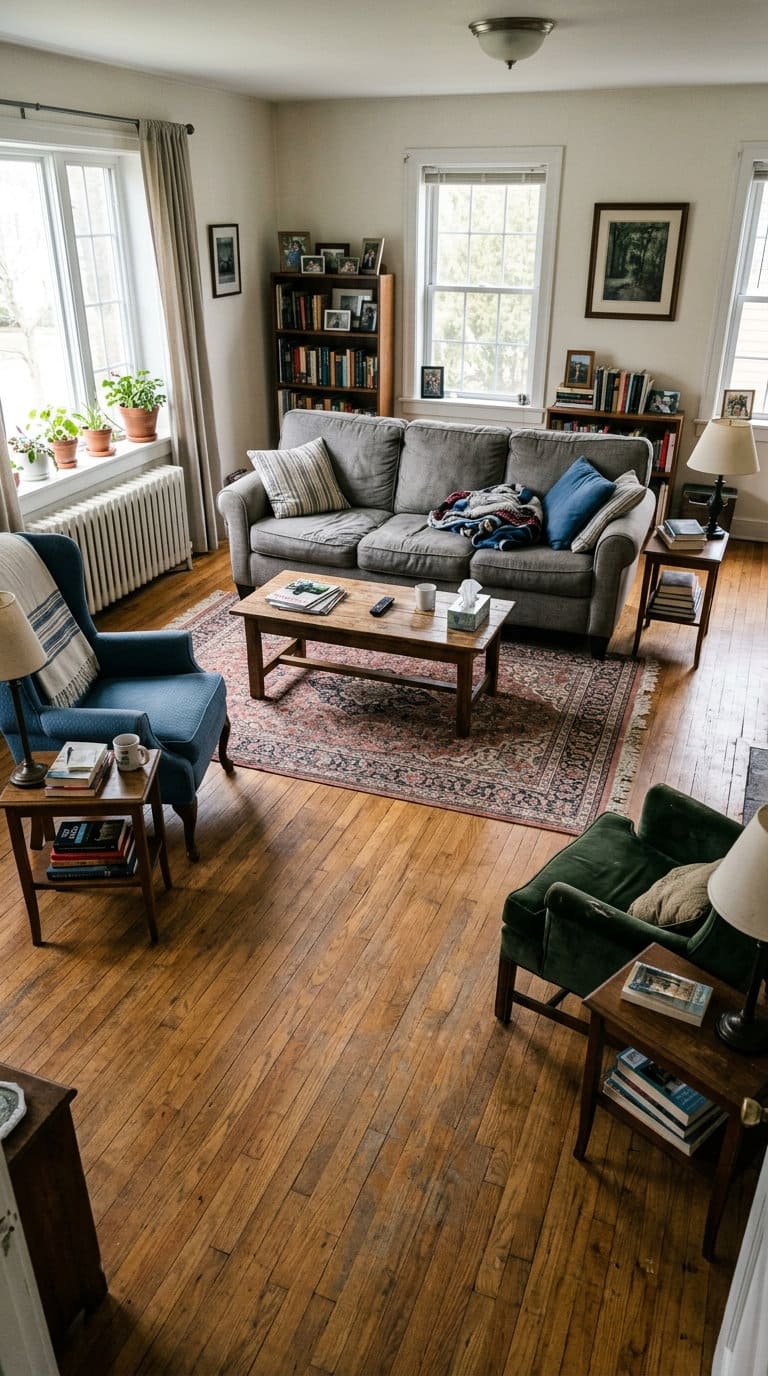
A wall-hugging layout almost always breaks the rug. The sofa ends up on the rug and the chairs sit on bare floor, because the seating is spread too wide for any normal rug to reach.
The other version is buying an enormous rug just to touch everything, which then runs nearly to the baseboards and looks like carpet.
Quick fix: Pull the seating onto one rug so the front legs of every piece sit on it. An 8 by 10 is the working minimum for a standard living room. Size the rug to the seating group, not to the walls.
7. The room reads like a waiting room
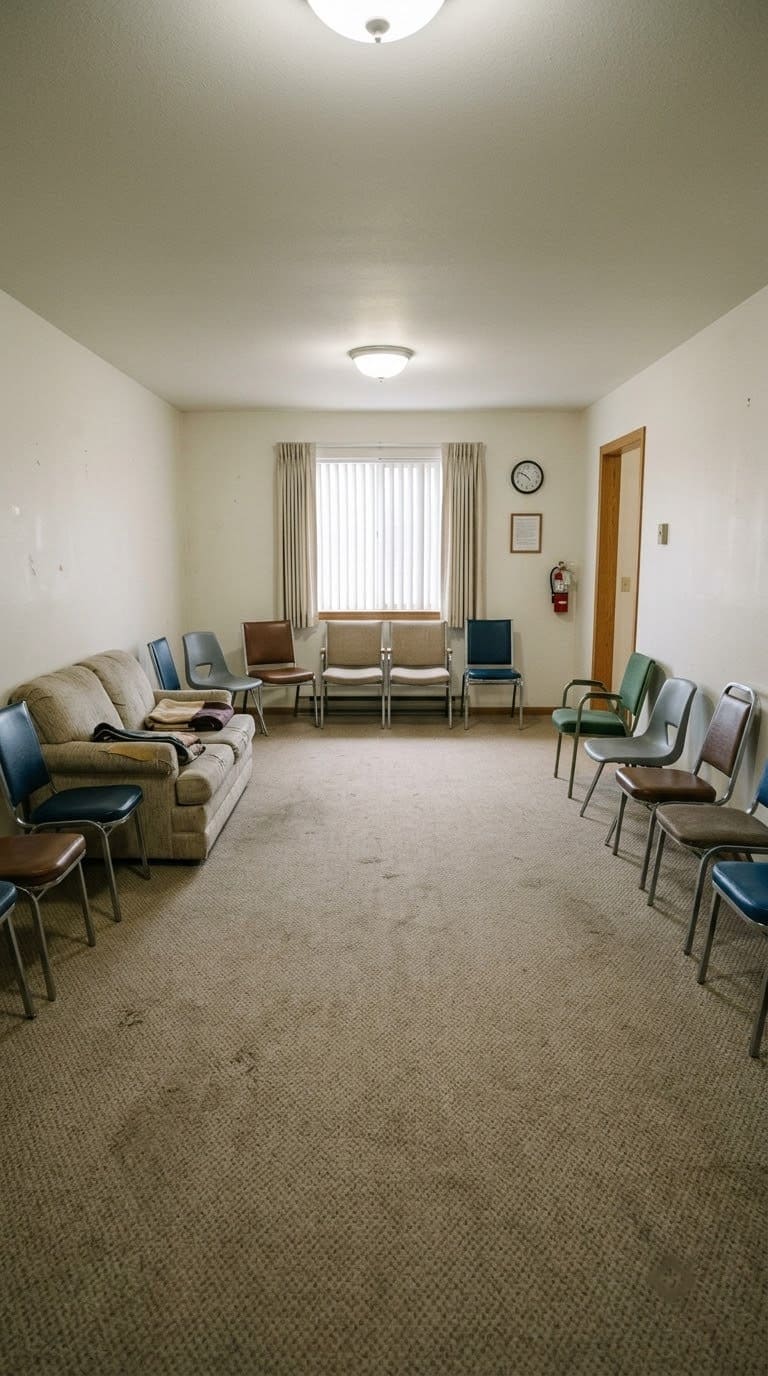
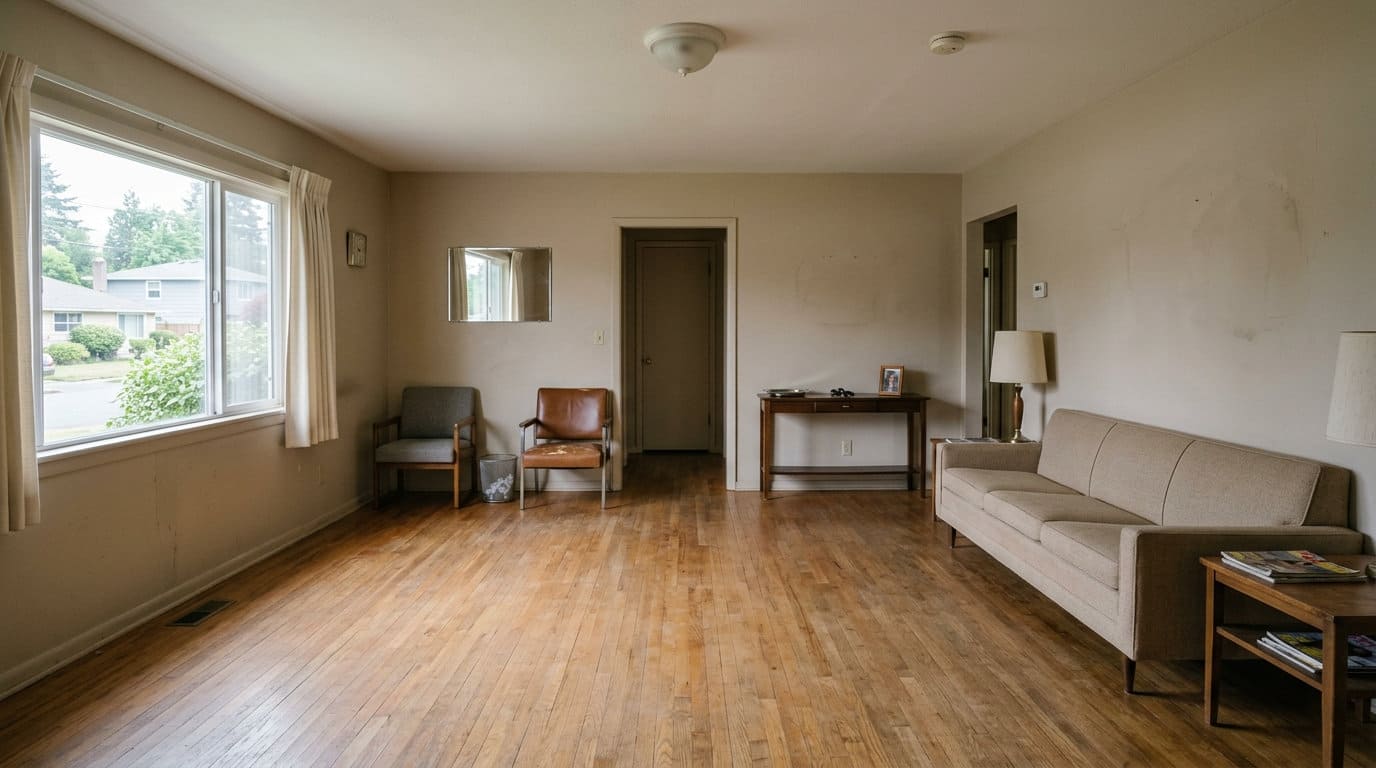
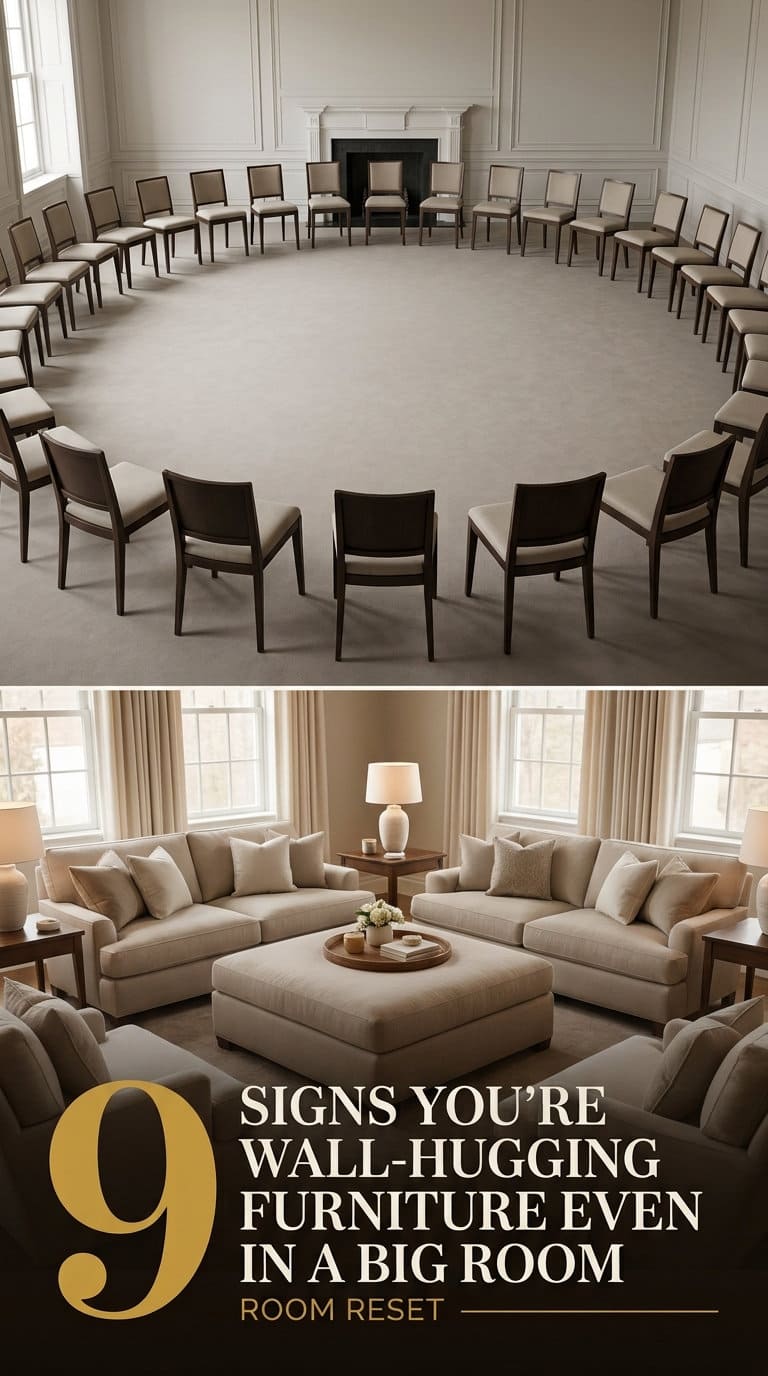
Some rooms have a certain waiting-room look. A ring of seats faces inward around the edges, nothing anchors the center, and it feels a little like a lobby.
Sarah West Interiors describes the fix well. Resisting the urge to line the walls turns a room “from being stiff and boxy to warm and dimensional.”
Quick fix: Break the ring. Angle one chair, float the sofa, and put a coffee table or an ottoman in the middle. The eye and the body both need a center to move toward. This lineup-on-the-walls layout shows up on most lists of common living room missteps for a reason.
8. Even the pieces that don’t need a wall are on one
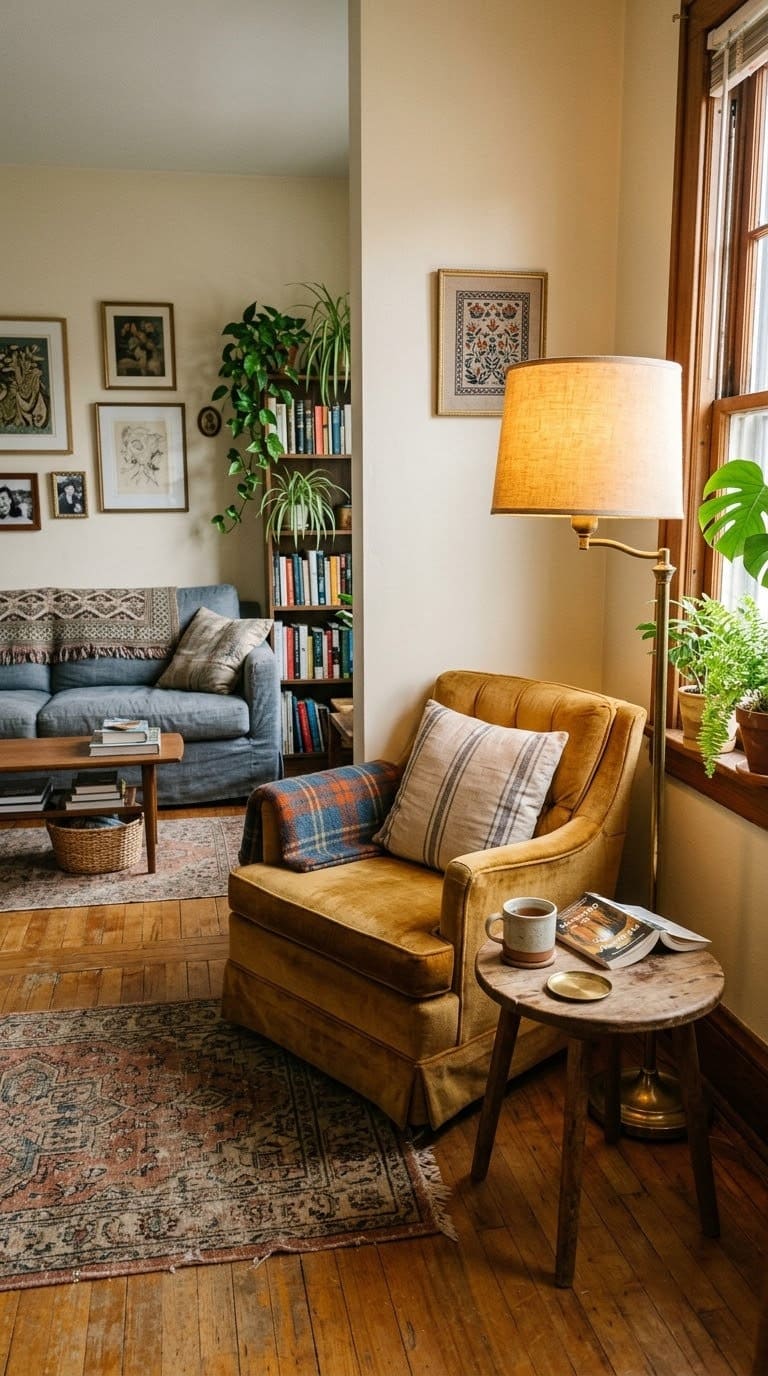
Look past the sofa. An accent chair, a slim bookshelf, a bench, a plant stand, all shoved against a wall out of the same reflex.
Gabriela Eisenhart of Silo Studios makes the distinction. Even when a small room needs the couch on a wall, “float the accent chairs elsewhere” so not every piece hugs a wall.
Quick fix: Keep only the pieces with a real reason on the walls. Pull a reading chair into a corner at an angle, or beside the sofa, where someone would actually sit in it. A corner lamp makes that pulled-in chair feel deliberate.
9. Furniture is blocking a window, a vent, or a door swing
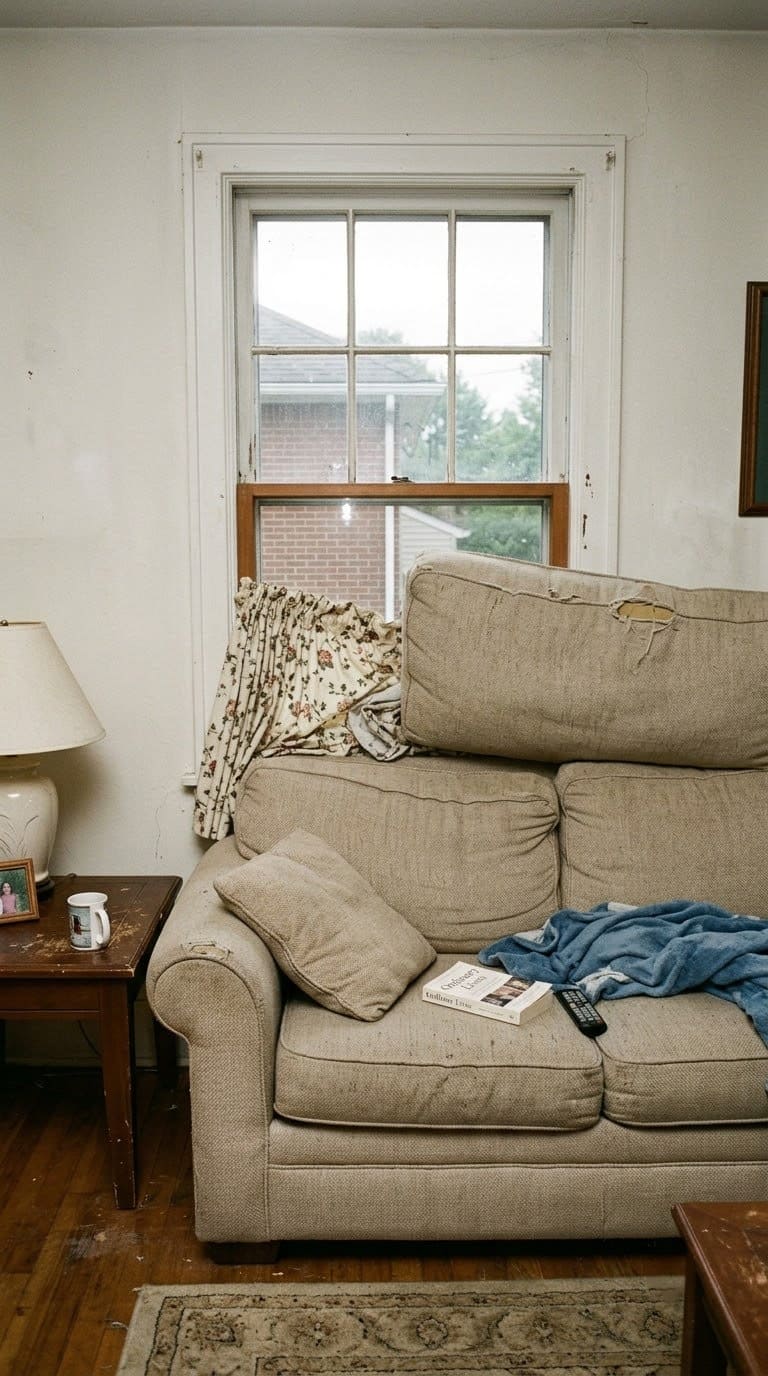
This is the clearest sign the wall-only rule has hit its limit. A sofa sits under a window you can no longer open, a chair catches the door every time it swings, or a console covers a floor vent.
It happened because that was “the only wall left,” which means the walls ran out before the furniture did.
Quick fix: Float the piece that is causing the conflict. A sofa back can sit a few inches in front of a window and still look right, especially with a console behind it. In a long or awkwardly shaped room where the good walls are scarce, floating one piece is usually the only way to make it work.
When pushing furniture against the wall is actually the right call
This is the part the “don’t line the walls” advice usually skips. Against the wall is correct when there is a reason:
- The room is under about 11 feet in one direction. Floating would eat the walkway you need.
- There is one true traffic lane through the room, and the sofa has to sit outside it.
- The piece is dual-purpose. A desk, a daybed, a console you drop keys on, all work best with the back covered.
- It’s a bedroom. Most beds belong centered on a wall, and the nightstands need that wall too.
- It’s a tall or heavy anchor piece. A full bookcase, a piano, or a hutch looks unmoored floating in space.
- You rent, and there is exactly one arrangement that keeps the single path clear.
Gabriela Eisenhart’s point about small rooms applies here. So does Jo Littlefair of Goddard Littlefair, who says floating should have “a reason behind it which then speaks of authenticity.” The reverse is just as true, so keep a piece on the wall when you have a reason, not a habit.
If your room is really small, the wall is often the right answer, and a small-space layout works with that rather than against it. Before you commit a big piece to the middle of a room, measure the piece and the clearances so you know it will actually fit floated.
How to float furniture without the room feeling emptier
The risk with floating is overcorrecting and ending up with furniture stranded in the middle of nowhere. Here is how to avoid that:
- Pull the main seating in. Even 3 to 4 inches looks planned. 18 to 24 inches off the wall is the sweet spot when the room allows, and it leaves room for a console.
- Build one seating group around a focal point, whether that is the fireplace, a window, or the TV. Not several small ones.
- Put the front legs of every seat on one rug.
- Finish the back of a floated sofa with a console, a sofa table, a bench, or a pair of low bookcases. Leave 30 to 36 inches behind it if people walk there, otherwise a few inches is fine.
- Fill the corner you just opened up with a floor lamp or a tall plant, so the edges do not look bare.
Steph Schlegelmilch of Studio Seva sums up the payoff. Space between the furniture and the walls “promotes better flow and a more functional floor plan.” In an open-plan space, the back of a floated sofa is also a natural way to separate one zone from another without a wall.
Reflex or reason, a quick audit of every piece
Run each piece in the room through this table.
| Piece | A real reason to keep it on the wall | A reflex, pull it in |
|---|---|---|
| Sofa | Room under about 11 ft that way, or the only spot outside the traffic lane | “It looks bigger,” or there is 4-plus feet of dead floor in front of it |
| Accent chair | A spare seat used a few times a year | You would sit in it more often if it were near the sofa |
| Console or sofa table | It’s a drop zone by the door | It’s just filling a wall behind nothing |
| Bookcase or hutch | Tall, heavy, needs a wall to look anchored | It could zone the back of a floated sofa instead |
| Bed | Almost always, centered on a wall, nightstands need it | Only if it blocks a closet or a window you use |
| Dining table | Only if the room is tiny, otherwise leave 36 to 48 in around it | One side pushed to a wall to “save space” |
| TV console | The TV wall is the focal wall | The sofa is now 15 ft away to match it |
What we learned pulling a marooned sectional off the wall
A few things only became clear after we actually moved a room instead of reading about it.
We had an L-shaped sectional running the full length of a long wall, with chairs on the opposite wall and a 6-foot bare aisle down the middle. It felt like sitting in a bus.
Pulling the sectional 14 inches off the wall and adding a console behind it did more than any decor ever had. The room felt smaller in the good way, like a room instead of a corridor.
The TV had been about 16 feet from the main seat. Moving the sofa in cut that to roughly 10, and the picture stopped looking like a laptop across the room.
We kept one thing on the wall on purpose, a tall bookcase, because it looked wrong anywhere else. That is the whole point. On the wall for a reason, not by default.
The mistake we almost made was floating everything, including a chair nobody sits in, which just put an obstacle in the walkway. We pushed that one back against the wall where it belonged.
What to fix first
You do not have to redo the whole room at once. Here is a sane order.
| Priority | Fix | Effort | Payoff |
|---|---|---|---|
| Do this first | Pull the main sofa in 3 to 4 inches and live with it a week | 5 minutes | You find out fast whether floating helps your room |
| This week | Close the seating into one group, 8 ft max between facing seats | An afternoon | Conversation and the TV both start working |
| This week | Get every front leg onto one rug | A shopping trip if the rug is too small | The group finally reads as intentional |
| This month | Add a console or bench behind the floated sofa | A weekend | The back looks finished and you gain a surface |
| Ongoing | Audit every other piece against the reflex-or-reason table | As you go | Only what needs a wall stays on one |
Frequently asked questions
Does pushing furniture against the wall really make a room look bigger? No. It draws a hard border around the room so you read its size at a glance. Floating the main seating a little often makes a room feel larger and more finished, because the walls then read as space around the furniture rather than a frame.
How far should a sofa be off the wall? Even 3 to 4 inches looks planned rather than shoved. 18 to 24 inches is the sweet spot when the room allows, which also leaves room for a console table behind it.
My living room is small, do I have to float the sofa? No. Small rooms, roughly under 11 feet in a direction, are the main case where the sofa belongs on a wall. Float the accent chairs instead, so not every piece is stuck on a wall.
What do I put behind a floated sofa? A console or sofa table, a bench, or a pair of low bookcases. Leave 30 to 36 inches of clearance if people walk behind it, otherwise a few inches is enough.
Should furniture ever touch the wall? Yes, whenever there is a reason. A small or narrow room, a single traffic lane, a dual-purpose piece like a desk, most beds, and tall heavy anchor pieces like a bookcase or a piano.
Related Posts
Products We Recommend
This post contains affiliate links. We may earn a commission on qualifying purchases at no extra cost to you.
HOOBRO 47.2" Narrow Console Table with Power Outlets
A slim behind-the-couch table that finishes the back of a floated sofa and adds a surface plus outlets, so pulling the sofa off the wall does not leave a raw back on show
Shop Now
Nakagishi Washable 8x10 Boho Area Rug, Beige
A big low-pile rug that reaches the front legs of a pulled-in seating group, instead of a rug that only touches the sofa
Shop Now
X-PROTECTOR Felt Furniture Sliders, 16 Pack
Lets you test-move a heavy sofa or sectional a few inches at a time without scratching the floor while you find the right spot
Shop NowNever miss an update — choose FarmFoodFamily as your preferred source on Google.
How it works: Tap the button below to open Google's settings page, then check the box next to FarmFoodFamily.
Tap the checkbox to turn it blue — that's how you know it's set.