8 Whimsical DIY Birdcage Planter Ideas That Drain Well and Hang Safely
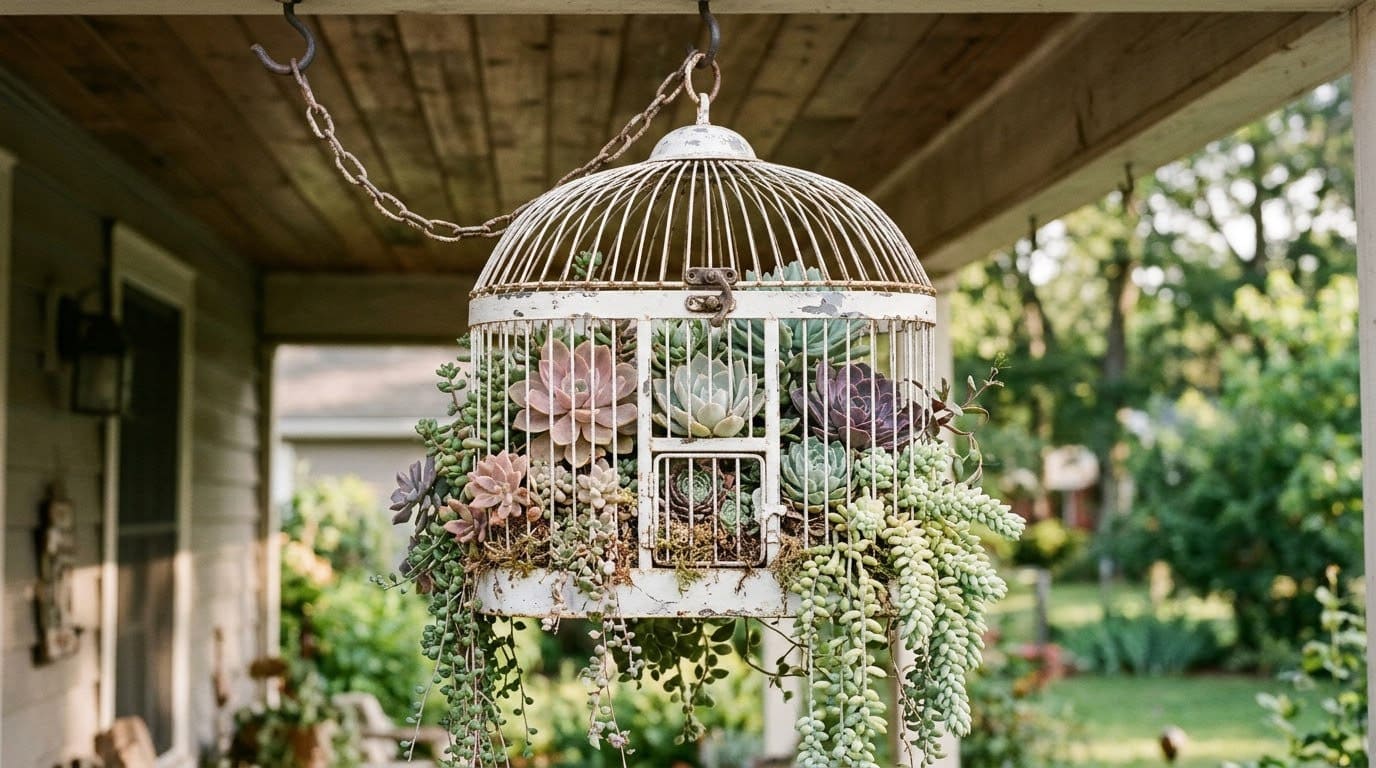
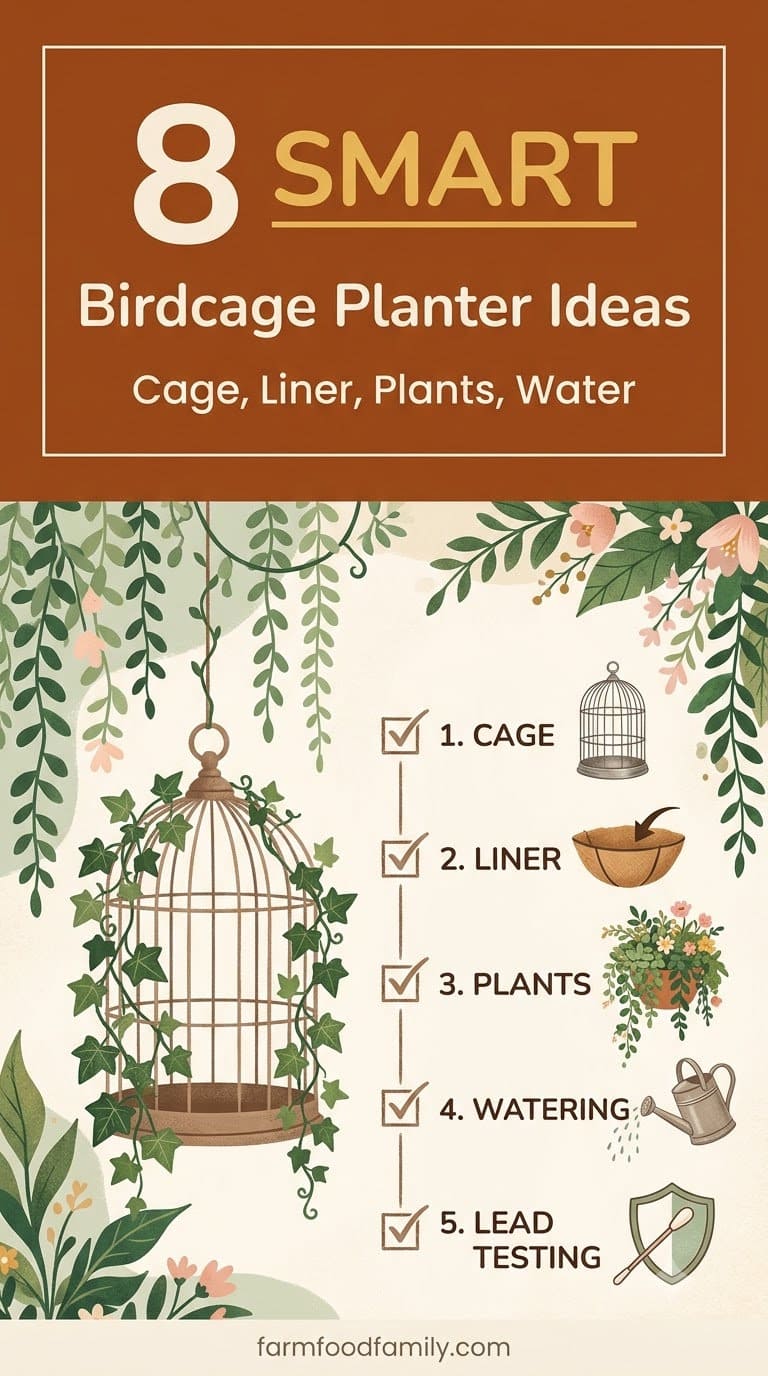
A birdcage planter turns a thrift-store find into a hanging garden, as long as the cage opens from the top, holds a proper liner and drains before you hang it.

Never miss an update — choose FarmFoodFamily as your preferred source on Google.
How it works: Tap the button below to open Google's settings page, then check the box next to FarmFoodFamily.
Tap the checkbox to turn it blue — that's how you know it's set.
A birdcage planter turns a thrift-store find into a hanging garden, as long as the cage opens from the top, holds a proper liner and drains before you hang it.
Products We Recommend
This post contains affiliate links. We may earn a commission on qualifying purchases at no extra cost to you.

6 Pack 12 Inch Coco Liners for Hanging Baskets
Coconut coir liners to trim and fit inside a birdcage so the soil stays in.
Shop Now
Horticultural Perlite, 10 Quart
Lightens bagged potting soil for succulents, as Estep suggests when cactus mix is hard to find.
Shop Now
Iron Birdcage Hanging Planter
A ready-made birdcage-shaped hanger where you set a potted plant inside, for a no-thrift-store option.
Shop NowBirdcage planters look easy in photos. Then the soil washes out through the bars, the cage rusts or the plants cook in July.
Most of those problems come from three choices: the cage, the liner and the plants. Get those right and the rest is simple.
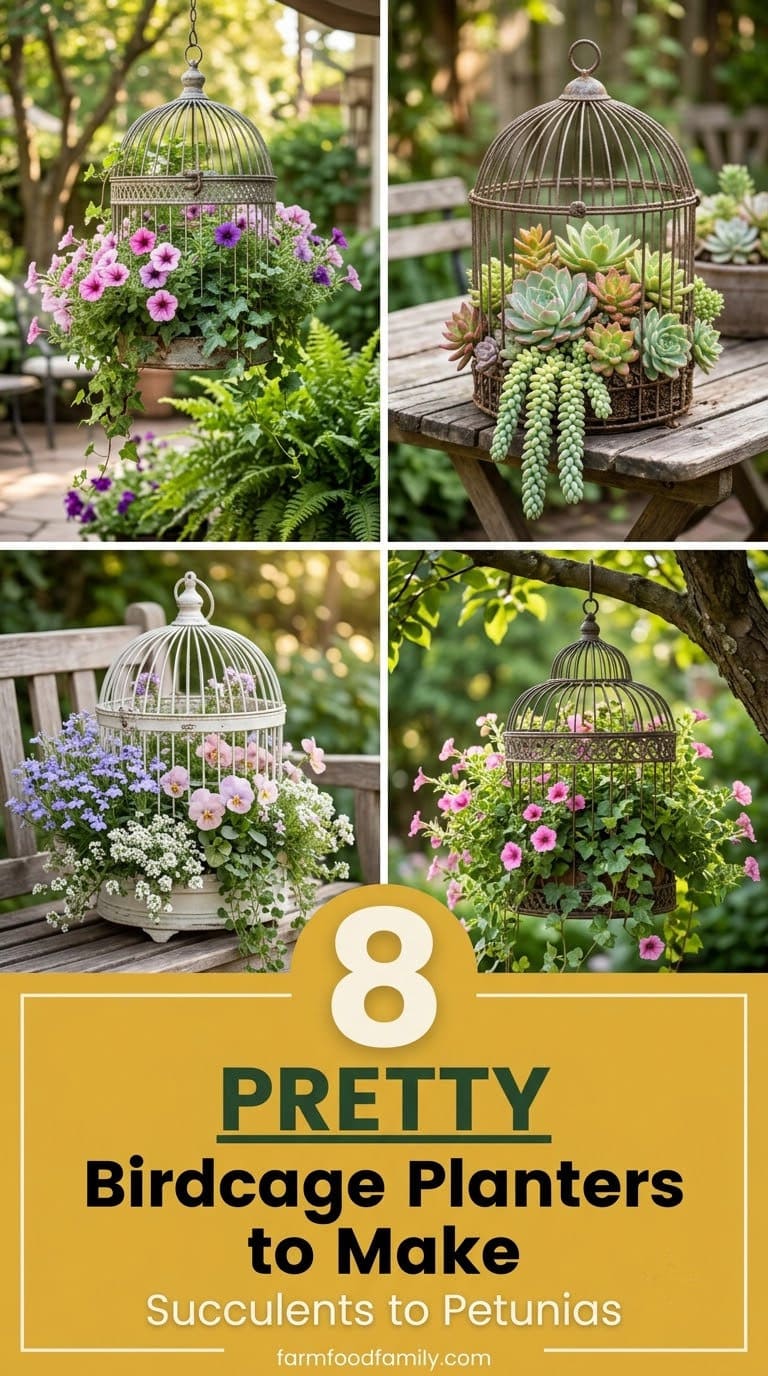
These eight ideas run from a classic succulent cage to a petunia basket and a pots-in-cage mix. Each one lists the materials, the sizes and the mistakes to dodge.
Answer 4 quick questions and get matched to the exact fix for your yard — drainage, budget, layout, or something else entirely.
Take the Free QuizQuick Answer
Pick a cage that opens from the top. Stephanie Rose of Garden Therapy says cages with only a small front door are hard to plant. Melissa Will of Empress of Dirt also says to check that the cage has a door or opening.
Line it, then plant. A coir or sphagnum moss liner holds the soil in, and a succulent mix drains better than garden soil. Patti Estep of Hearth and Vine says to let the soil dry out completely before you water.
Water by feel. Estep suggests starting with 1/2 cup of water per cup of soil, then adjusting.
Mind the weight. After a soak, let the cage drain for 30 minutes before you rehang it, as Rose advises.
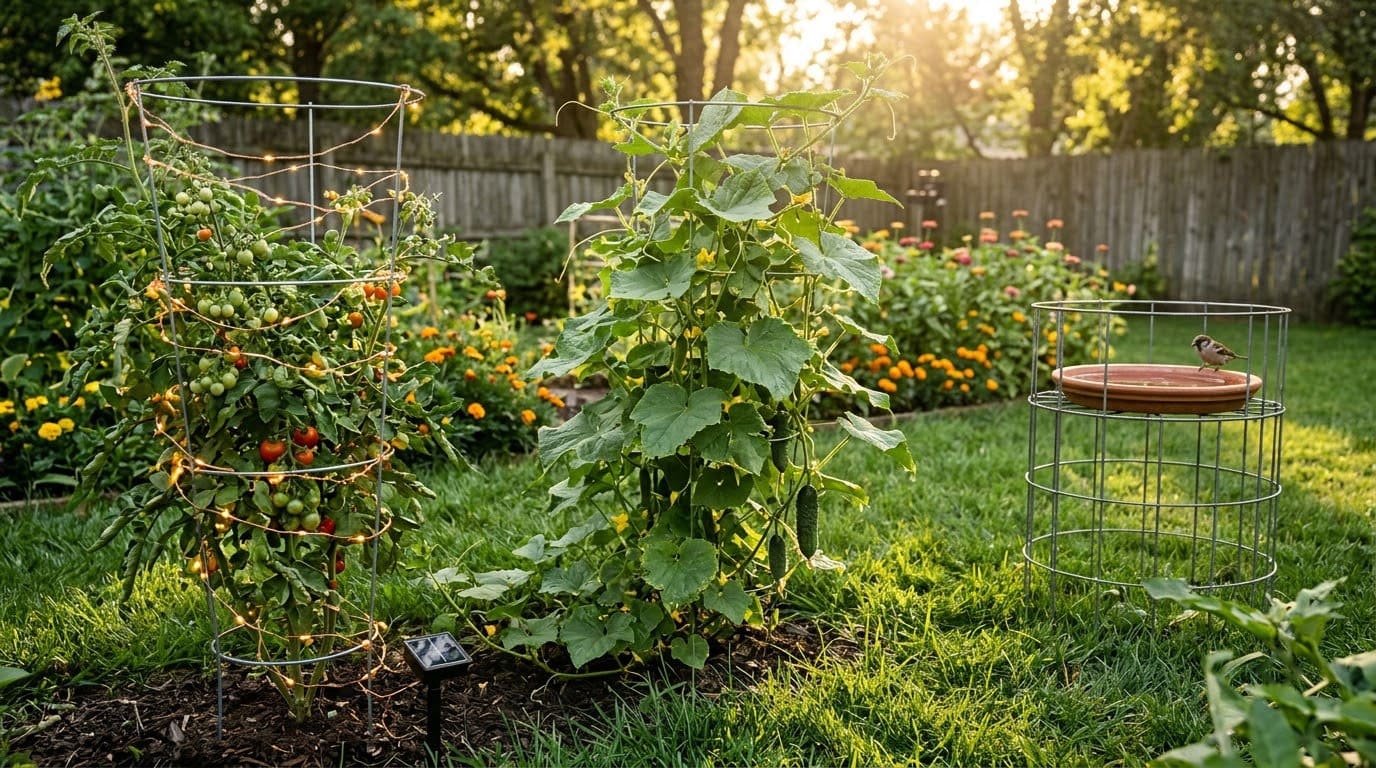

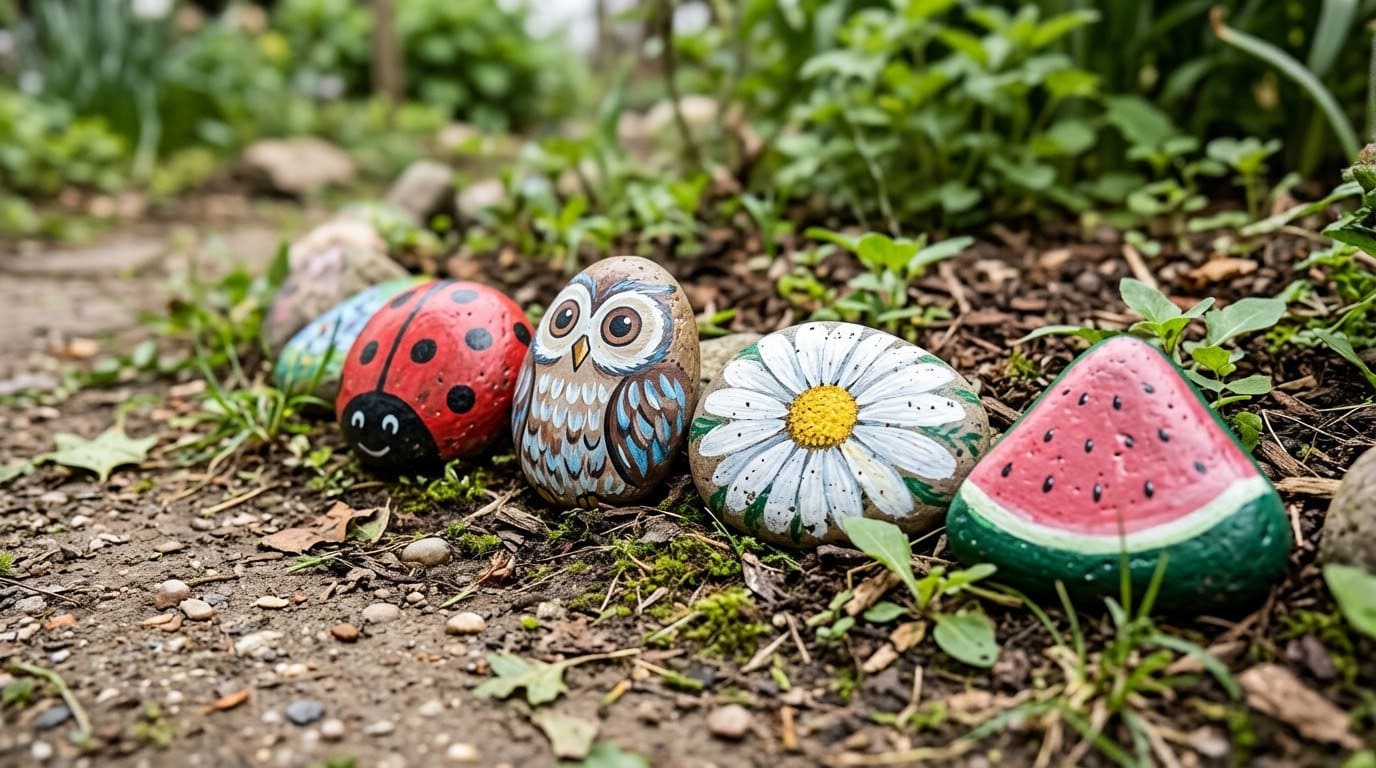
Test any antique cage for lead before it holds edible plants, and keep herbs in pots inside the cage.
Most yard problems trace back to one specific, fixable cause. Find yours in 4 quick questions.
Take the Free QuizWhich Idea Fits You?
Pick by plant, skill and where the cage will live. This table sorts the eight builds below.
| Idea | Time | Skill | Budget tier | Best spot |
|---|---|---|---|---|
| 1. Coir-lined succulent cage | 1 hour | Beginner | Low | Sun, hanging |
| 2. Moss-lined stand planter | 1 hour | Beginner | Low | Bright window or porch |
| 3. Layered overflowing cage | 1 hour | Intermediate | Low to mid | Sun, patio table |
| 4. Petunia and trailing-flower cage | 45 minutes | Beginner | Low | Sun or part sun |
| 5. Pots-in-cage mixed planter | 30 minutes | None | Low | Any light |
| 6. Herb and nasturtium cage | 45 minutes | Beginner | Low | Sunny kitchen porch |
| 7. Tabletop centerpiece cage | 30 minutes | None | Lowest | Patio or garden stand |
| 8. Vintage cage as a display frame | 30 minutes | None | Lowest | Covered porch |
Before You Start: Cage, Safety and Drainage
These three things decide whether a birdcage planter lasts. Settle them first.
Pick the right cage
Rose says the cage should open from the top. Cages with only a small front door look pretty, but they’re hard to fill.
Will adds that many cages look bigger in photos than they are. She also says to confirm the cage is well made and can handle outdoor conditions. If the bars sit too close together, she says you can cut out sections with snippers or bolt cutters.
Carol of The Gardening Cook used a cage about 10 inches wide and 15 inches tall, with a top that swivels open. That’s a good size for a first project.
Check for lead and rust
Old cages can carry old paint. State health departments in Vermont and Idaho say to assume antique or salvaged items contain lead until they’re tested, according to search results.
So here’s our rule. Test an old cage with a hardware-store lead kit before it holds food plants. Don’t sand a finish you haven’t tested.
Coconut coir liners to trim and fit inside a birdcage so the soil stays in.
Shop NowThis post contains affiliate links. We may earn a commission on qualifying purchases at no extra cost to you.
Christy Rae Ammons at Hunker says to scrub off rust with sandpaper and optionally seal the metal with outdoor spray paint. Will also recommends exterior all-purpose spray paint for rust protection.
On a new cage, that’s fine. On an old one, test first.
The average homeowner spends $616/year on yard fixes that don't address the real problem. Find out what yours actually is — before you spend another dollar.
Take the Free QuizPlan for drainage
Many cages have no drain holes. Estep says her planter has none, so she suggests drilling a few at the bottom, or tilting the cage over a sink after watering.
If you can’t drill, use a loose coir or moss liner so extra water seeps out through the bars. Our guide to planting succulents in containers without drainage explains the tradeoffs.
1. A Coir-Lined Succulent Cage
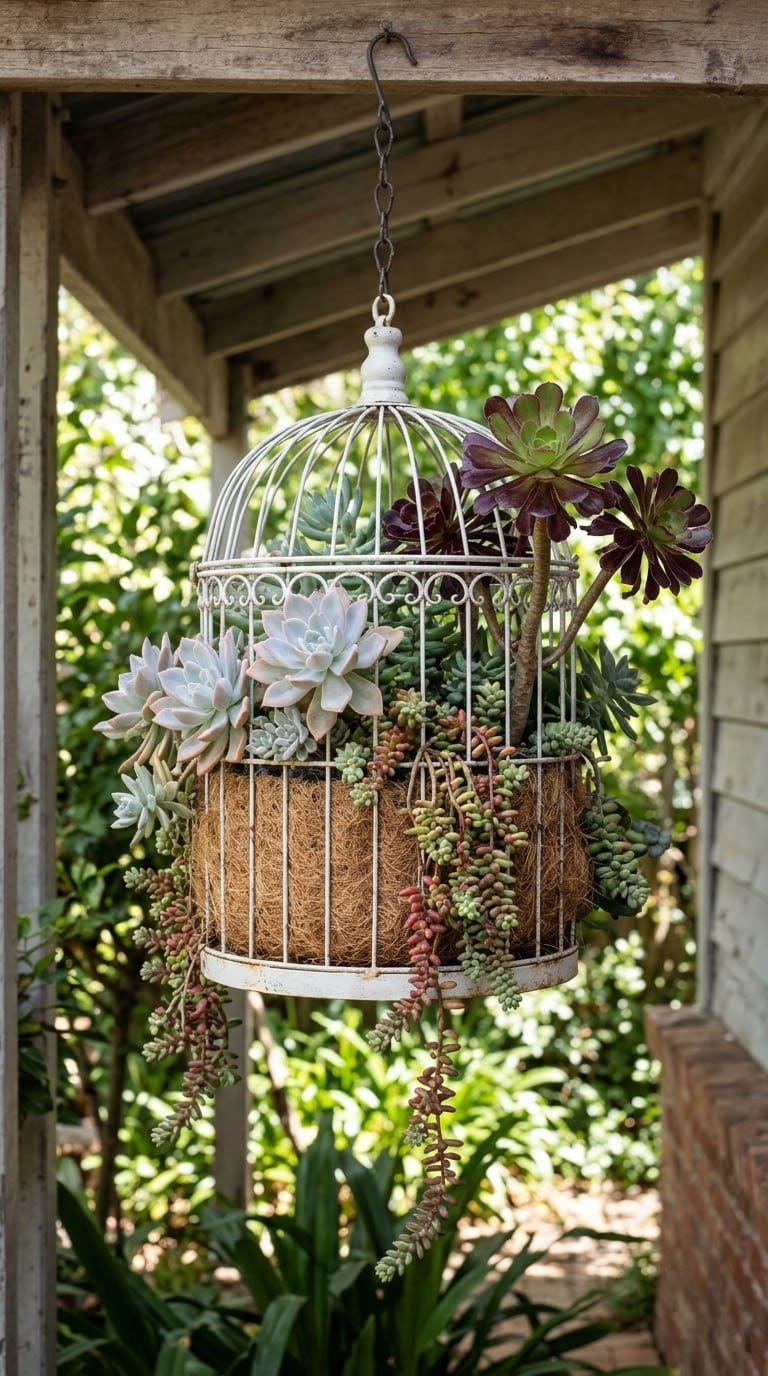
This is the classic. Rose’s tutorial uses a top-opening cage, a coconut coir hanging basket liner, cactus soil and an assortment of succulents.
Line and fill. Fit the liner inside the cage like a nest. Trim it with scissors if it’s too big. Then add a layer of cactus and succulent soil.
Plant in order. Rose plants the draping sedum first and pulls its foliage through the cage holes. Next comes a filler in the center. Last, she tucks in the tall “thriller” plants through the door and side gaps.
Pick the trio. She used Echeveria “Black Prince” and Aeonium for thrillers, Crassula “Campfire” as filler and Sedum spurium “Elizabeth” as the spiller. That sedum turns red in cooler weather.


Water well after planting. But wait until the soil is mostly dry afterward.
Budget: low. For more draping plants, see our trailing and hanging succulents guide.
2. A Moss-Lined Stand Planter
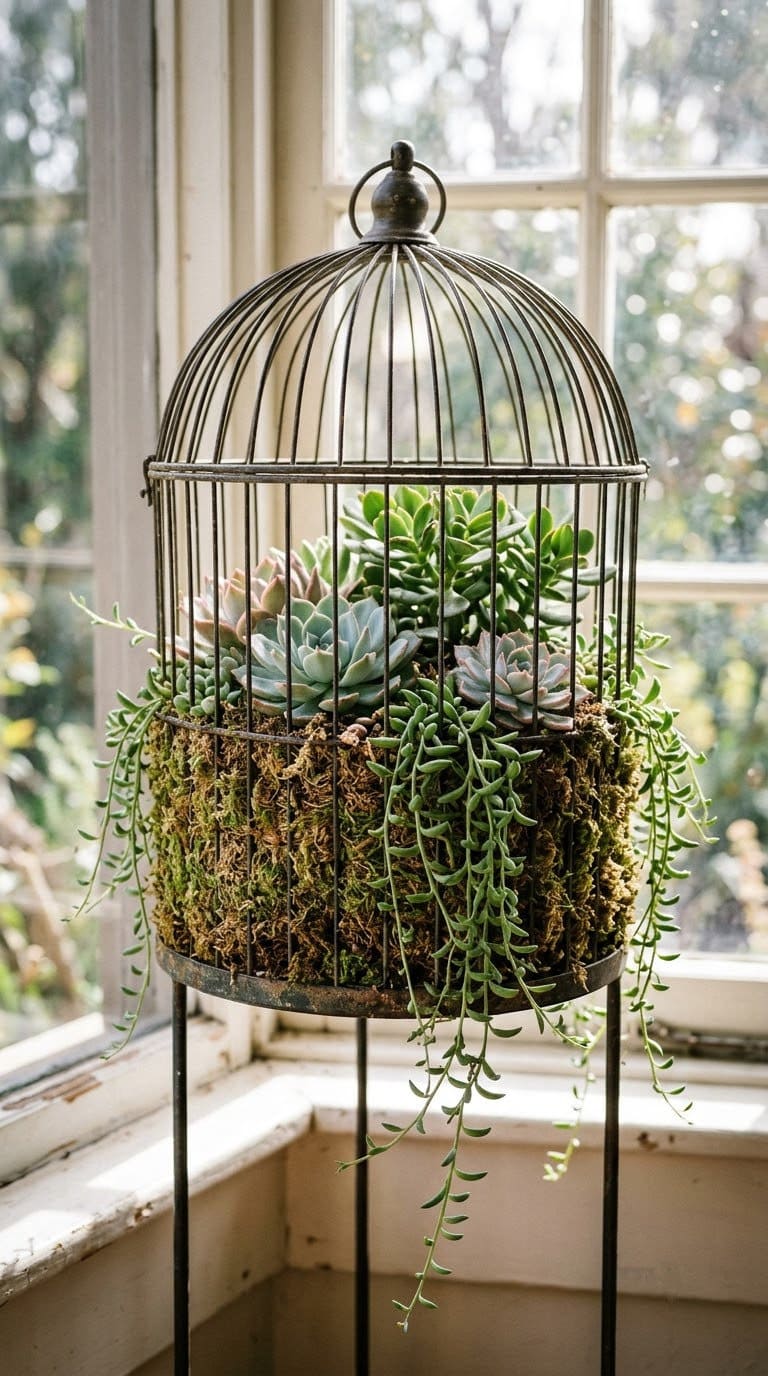
Moss gives a softer, woodland look. Estep’s version takes about an hour and costs about $25.
Soak and squeeze. Soak sphagnum moss in water for about 15 minutes. Squeeze out the water, lay the moss on the base and build it up the sides.
Add soil and plants. Add a layer of soil, then the succulents, then more soil. Press moss into gaps with a wooden skewer, and tuck it into bare spots with a pencil or chopstick.
Estep used echeveria, crassula and string of bananas. She also suggests string of pearls, burro’s tail, sedum and a tiny aloe.
If you can’t find cactus soil, she says to add perlite to bagged potting soil. Sheet moss or a coco liner can replace the sphagnum. Budget: low.
3. A Layered Overflowing Cage
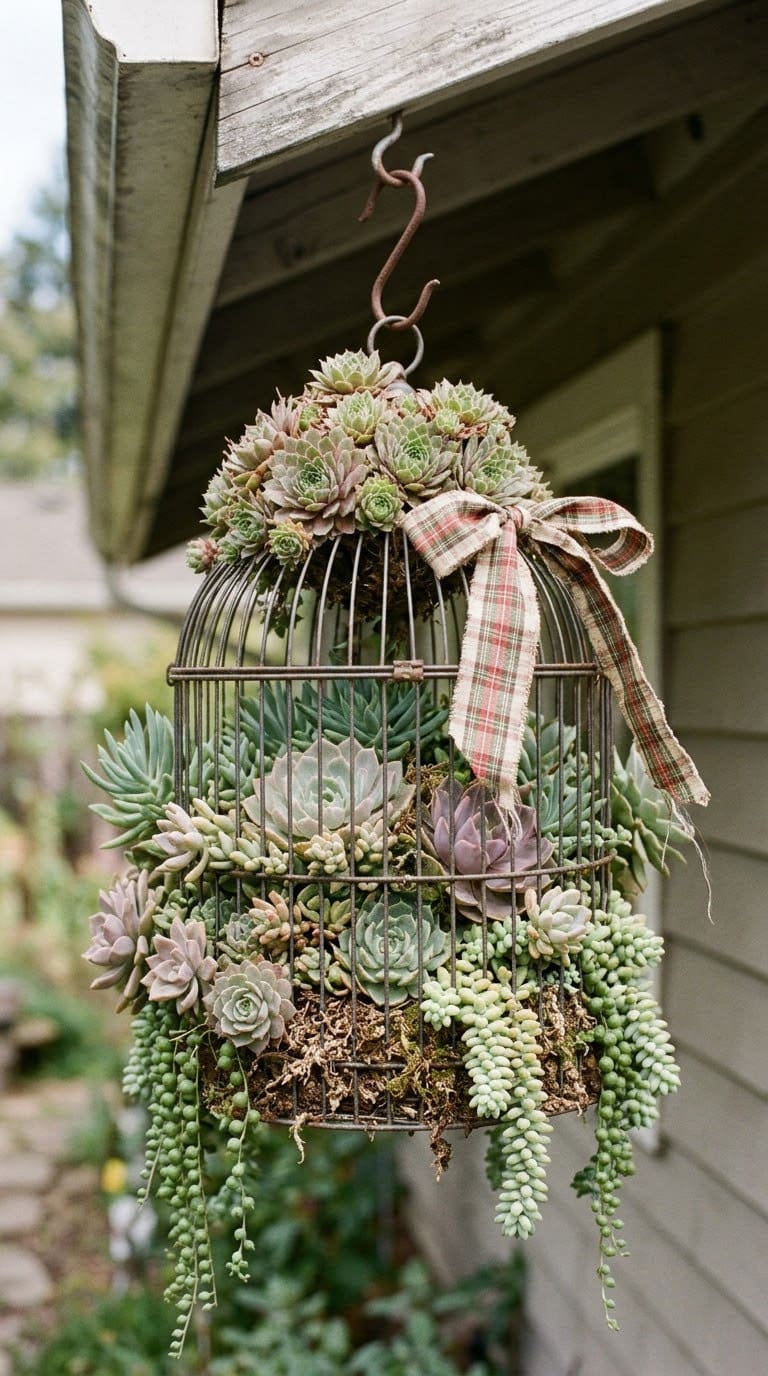
This one packs the cage. Carol’s tutorial uses about 30 succulents of different sizes, and it takes about an hour.
Size the liner. Cut a circle of coco coir liner three inches larger than the base of the cage. Save the scraps to fill gaps.
Build in layers. Lay succulents on their sides so they poke through the cage openings. Add about 2 inches of soil for each new layer. Her cage took about five layers.
Finish on top. She ends with a large succulent face up, such as a hens and chicks, then fills gaps with coir and closes the cage. Two pieces of ribbon tie to the top.
Hang it from an eave hook, a tree or a fence post. Or just set it on a patio table. Budget: low to mid.
4. A Petunia and Trailing-Flower Cage
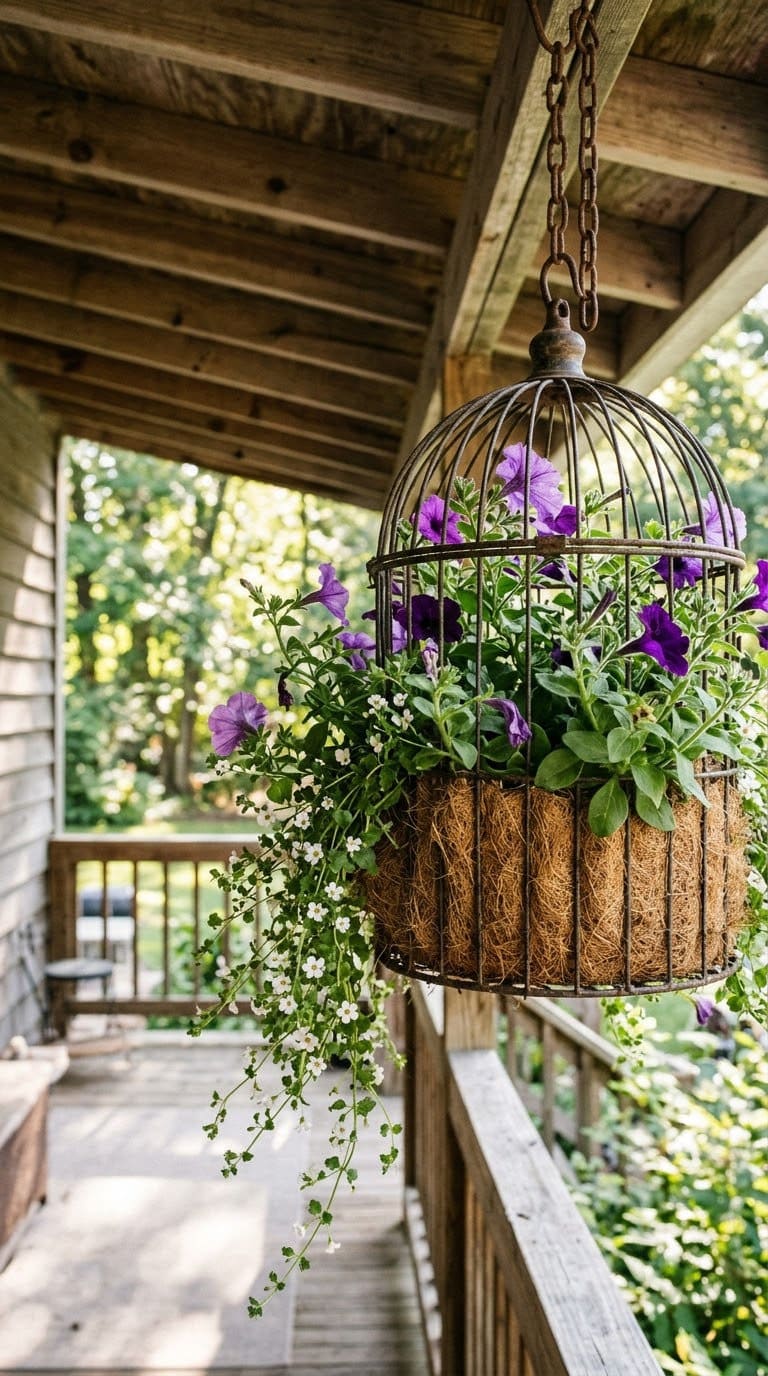
Flowers fill a cage fast. Ammons at Hunker plants petunias in a cage with a coconut coir liner and potting mix.
Plant several. Use more than one plant for a fuller look. Position the stems so the flowers poke through the bars, or open the door so they spill out.
Mix trailers. Will lists trailing flowering annuals that work in cages: bacopa, lobelia, nasturtium, fuchsia, geranium, ivy, petunia and sweet potato vine. She warns that creeping Jenny is considered invasive in parts of North America.
Hunker says you may need to water often, as with any hanging basket. Choose plants for your light, since Will says to match plants to sun, part sun or shade. Budget: low.
5. A Pots-in-Cage Mixed Planter
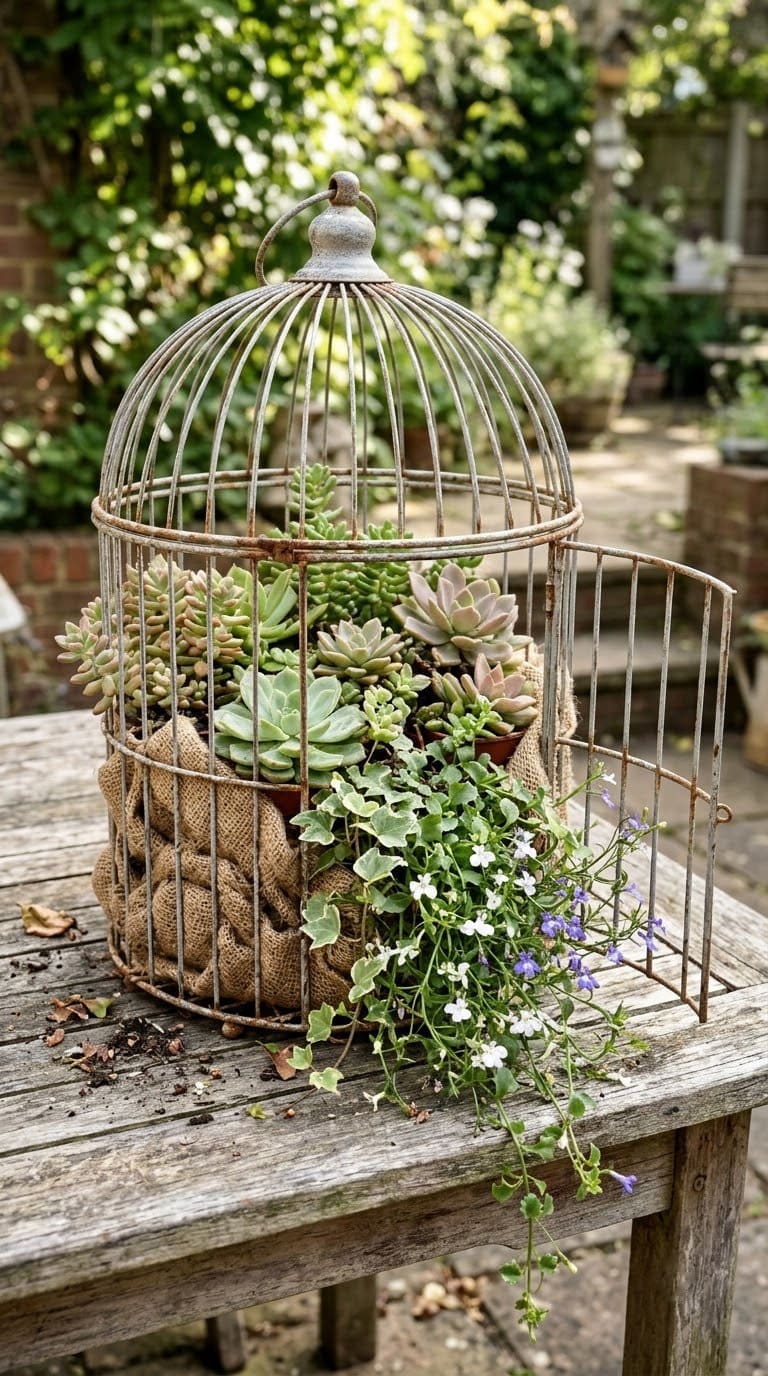
This is the easiest way to mix plants that need different soil. Will suggests keeping each plant in its plastic pot and setting the pots inside the cage.
Use the right mix. A lighter mix suits succulents and cacti. A regular container mix suits flowering annuals. Pots let each plant keep its own.
Hide the pots. Cover them with liner or burlap, or leave them showing. Will’s other option is to form a planting area about 3 to 5 inches deep.
Protect your lungs. She also says to wear an N95 mask when potting, since mixes can harbor pathogens.
This method also makes swapping seasonal plants easy. Budget: low.
6. An Herb and Nasturtium Cage
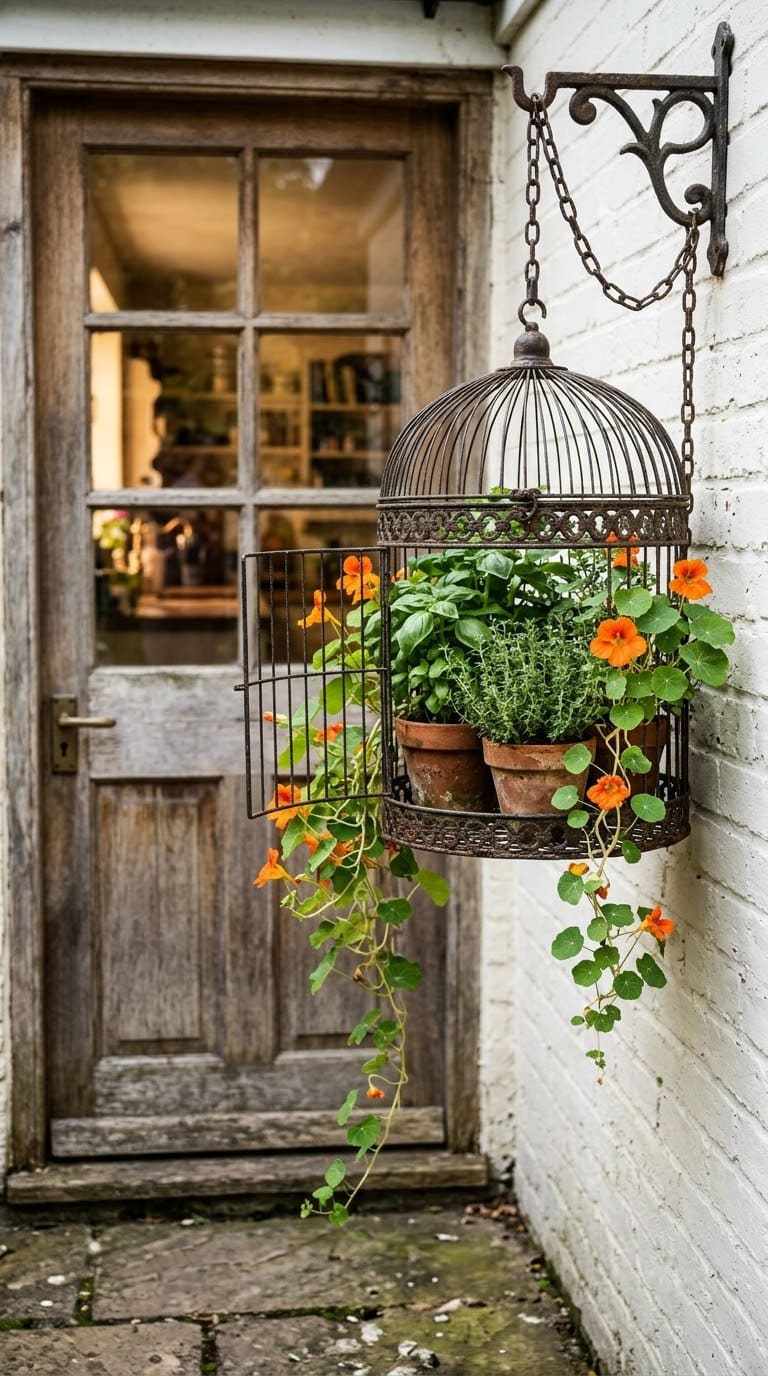
A kitchen-door herb cage is handy and pretty. Will lists nasturtium among her trailing choices.
Use pots, not soil. Keep herbs in their own pots inside the cage, as in idea 5. That makes it easy to lift them out to harvest and to wash them.
Use a new or tested cage. Don’t plant food in a cage with unknown paint. See the lead note above.
For more herb ideas, see our hanging herb garden ideas. Budget: low.
7. A Tabletop Centerpiece Cage
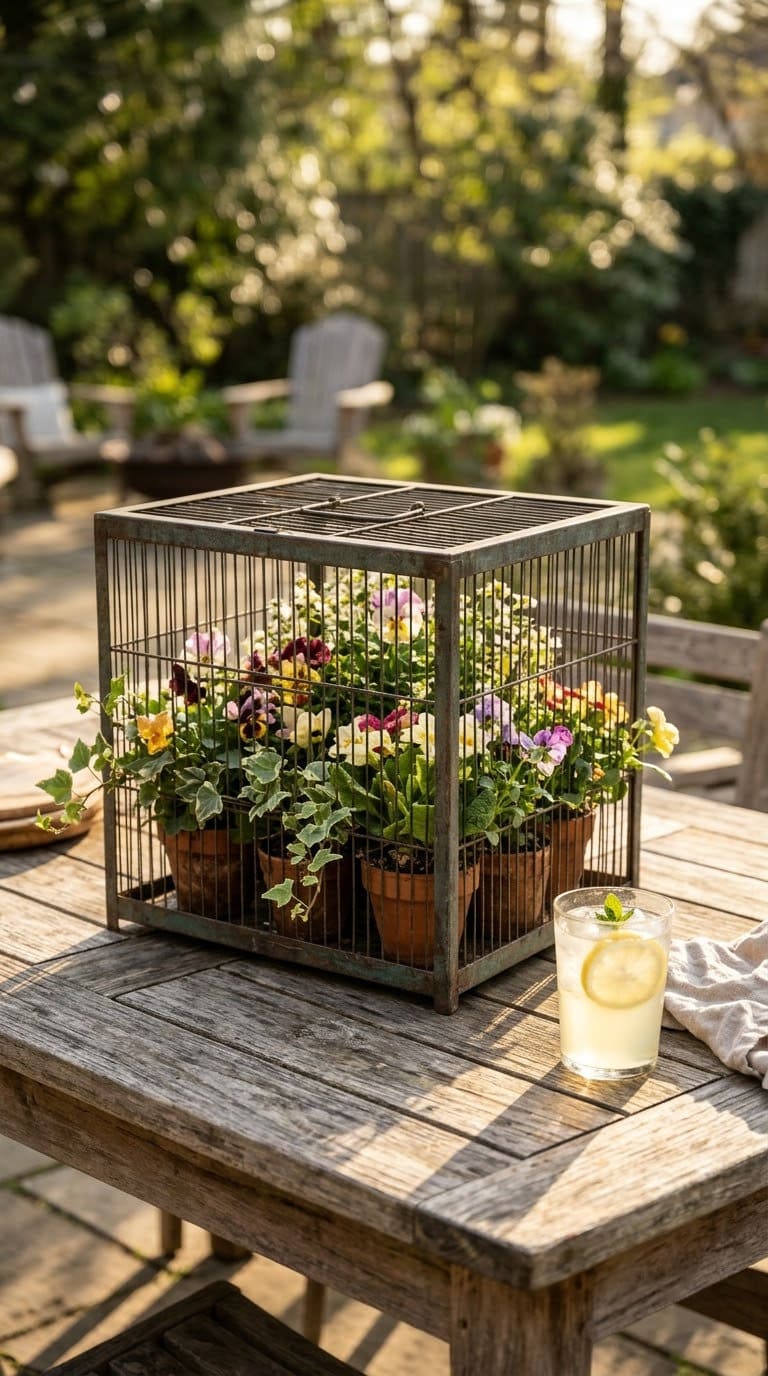
A cage doesn’t have to hang. Ammons says to hang it on a porch or in a yard, but you can also set it on an elevated stand in the garden. A boxy cage works on a patio table.
Carol says the same: display it on a patio table or hang it.
Pick a stable base. Use a cage with a flat bottom, so wind doesn’t tip it. Choose a stand with a wide foot.
This is the lowest-cost version, because it needs no hanging hardware. See our outdoor hanging planter ideas for sturdier hooks. Budget: lowest.
8. A Vintage Cage as a Display Frame
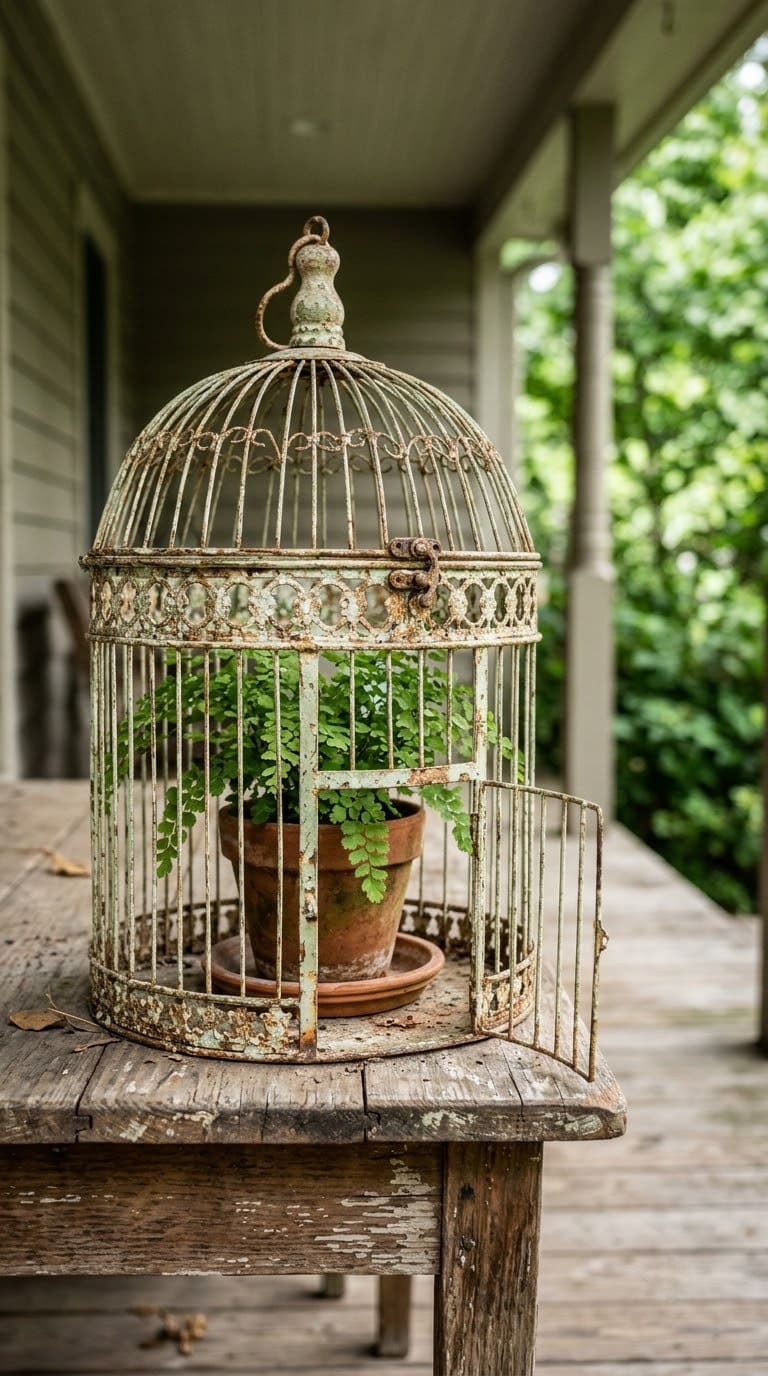
If your cage is old and untested, keep the plants away from it. Put a small potted plant on a saucer inside the cage, and treat the cage as decor.
Keep soil off the metal. The pot stays separate from the bars, so soil and water never touch old paint.
Choose a sheltered spot. A covered porch limits rain on flaking paint. Our vintage garden decor ideas has more salvage styles. Budget: lowest.
Which Liner Should You Use?
The liner decides how much soil stays in and how fast the cage dries. Here is how the sources’ options compare.
| Liner | Used by | Good for | Watch out for |
|---|---|---|---|
| Coconut coir basket liner | Rose, Carol, Ammons | Quick fit, holds soil in the bars | Trim or size it to the base |
| Sphagnum moss | Estep | Looks soft, holds moisture | Squeeze it out first, it adds weight |
| Burlap pocket | Will | Hiding pots or forming a planting area | Use a pocket about 3 to 5 inches deep |
| Chicken wire with moss | Will | Cages with wide bar gaps | Needs shaping to fit |
Carol cuts her coir circle three inches larger than the cage base. Estep says only a small amount of moss is needed, and that sheet moss or coco liner can replace it.
If your cage has a solid base, pick coir for a light, loose fit. If you want a mossy look, use sphagnum and squeeze it well.
How Do You Water and Hang a Birdcage Planter?
Watering is where most cages fail. Rose says to soak the bottom of the cage in a few inches of water for one hour. Then let it drain for 30 minutes before you rehang it.
That drain time matters because a wet cage is heavy. Rose says to make sure the branch can support the weight. We’d add one habit: check the hook or chain rating before you hang a full cage.
Estep gives a starting rule of 1/2 cup of water per cup of soil, then adjust. Rose warns that a cage planter dries out quickly in hot summer months.
Our how to water succulents properly guide covers the timing in more detail.
What Does a Birdcage Planter Cost?
Costs vary by cage, plants and liner. Estep puts her moss-lined build at about $25. Carol estimates $10 to $50 for hers.
| Tier | Builds |
|---|---|
| Lowest | Tabletop centerpiece, vintage display frame |
| Low | Coir-lined cage, moss-lined stand, petunia cage, pots-in-cage, herb cage |
| Low to mid | Layered overflowing cage |
The main cost is the cage itself and about 30 succulents for the layered version.
Common Mistakes to Avoid
Most failures trace back to a few habits.
Choosing a cage with a tiny door. Rose says these are hard to plant.
Skipping the liner. Soil falls out through the bars without a coir or moss liner.
Hanging it dripping wet. Rose says to drain it for 30 minutes first.
Overwatering. Estep says to let the soil dry out completely before you water.
Planting food in an untested antique. Assume old paint contains lead until tested.
FAQ
What kind of birdcage works best as a planter?
One that opens from the top, per Rose. Will adds that it should be well made and able to handle outdoor conditions.
What can I use to line a birdcage planter?
A coconut coir hanging basket liner, sphagnum moss or sheet moss. Rose uses coir and Estep uses sphagnum.
How often should I water a birdcage planter?
Let the soil dry out before you water, says Estep. Rose says to soak the cage for an hour and drain it for 30 minutes.
Are antique birdcages safe for plants?
Test them for lead first. Health departments advise assuming old items contain lead until tested, according to search results. Keep edible plants out of untested cages.
Which plants hang best from a birdcage?
Trailing succulents such as sedum, string of pearls and burro’s tail work well. Will also lists bacopa, lobelia, nasturtium and petunia.
Related Posts
Never miss an update — choose FarmFoodFamily as your preferred source on Google.
How it works: Tap the button below to open Google's settings page, then check the box next to FarmFoodFamily.
Tap the checkbox to turn it blue — that's how you know it's set.