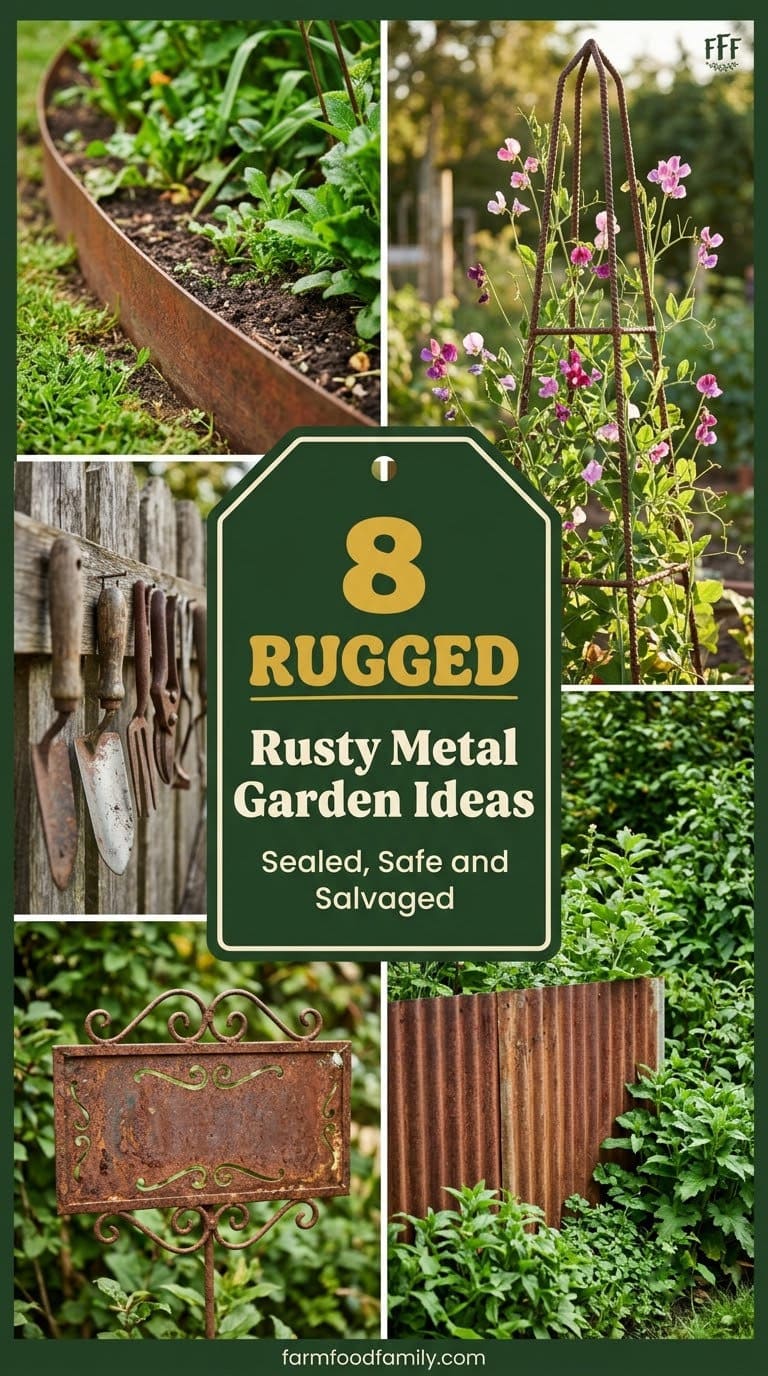
8 Rugged Rusty Metal Garden Ideas You Can Make From Salvage
Rusty metal gives a garden instant age and texture, as long as you know which rust is safe to handle, how to seal it and which salvage to leave behind.

Never miss an update — choose FarmFoodFamily as your preferred source on Google.
How it works: Tap the button below to open Google's settings page, then check the box next to FarmFoodFamily.
Tap the checkbox to turn it blue — that's how you know it's set.
Rusty metal gives a garden instant age and texture, as long as you know which rust is safe to handle, how to seal it and which salvage to leave behind.
Products We Recommend
This post contains affiliate links. We may earn a commission on qualifying purchases at no extra cost to you.
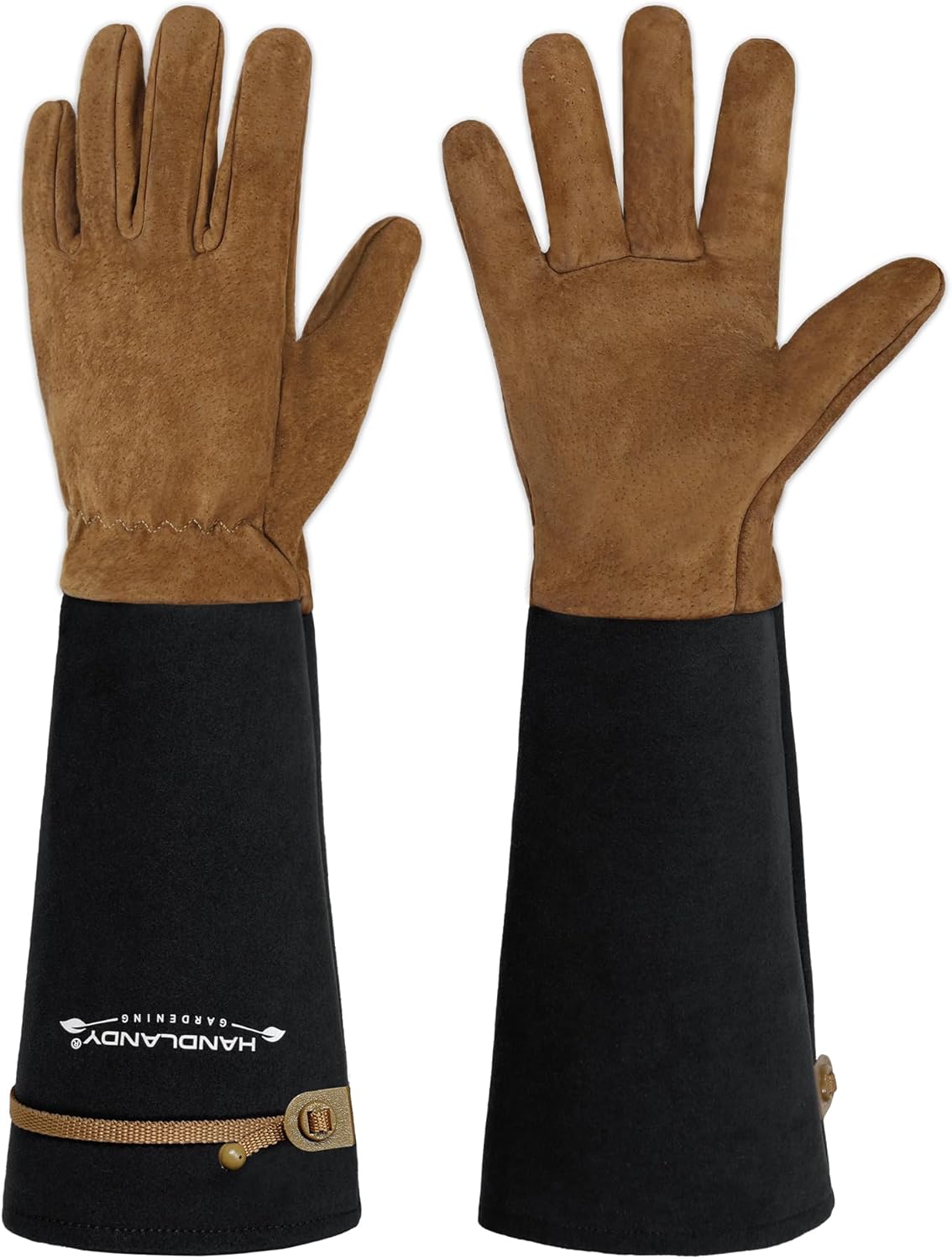
HANDLANDY Long Pigskin Leather Gardening Gloves
Forearm-length leather gloves for handling sharp, dirty salvage metal.
Shop Now
NoCry Anti-Fog Safety Goggles, ANSI Z87.1
Splash protection for the vinegar and peroxide rusting spray and for grinding edges.
Shop Now
Bealee 16 oz Spray Bottles, 3-Pack
Plastic spray bottles for the vinegar step and the peroxide, vinegar and salt mix.
Shop NowRust has a bad reputation. People see orange flakes and think of danger, waste and neglect.
In a garden, it’s a color and a texture that new materials can’t copy. Rust looks warm against green leaves, and it ages well.
This guide covers eight projects, plus the parts most galleries skip: the tetanus myth, how to rust metal fast, how to seal it so it stops staining and which old metal to avoid.
Answer 4 quick questions and get matched to the exact fix for your yard — drainage, budget, layout, or something else entirely.
Take the Free QuizQuick Answer
Rust itself doesn’t cause tetanus. The CDC says tetanus comes from bacteria in the environment that enter through broken skin, and a dirty deep wound is the real risk. Keep your tetanus booster current, wear gloves and treat puncture wounds seriously.
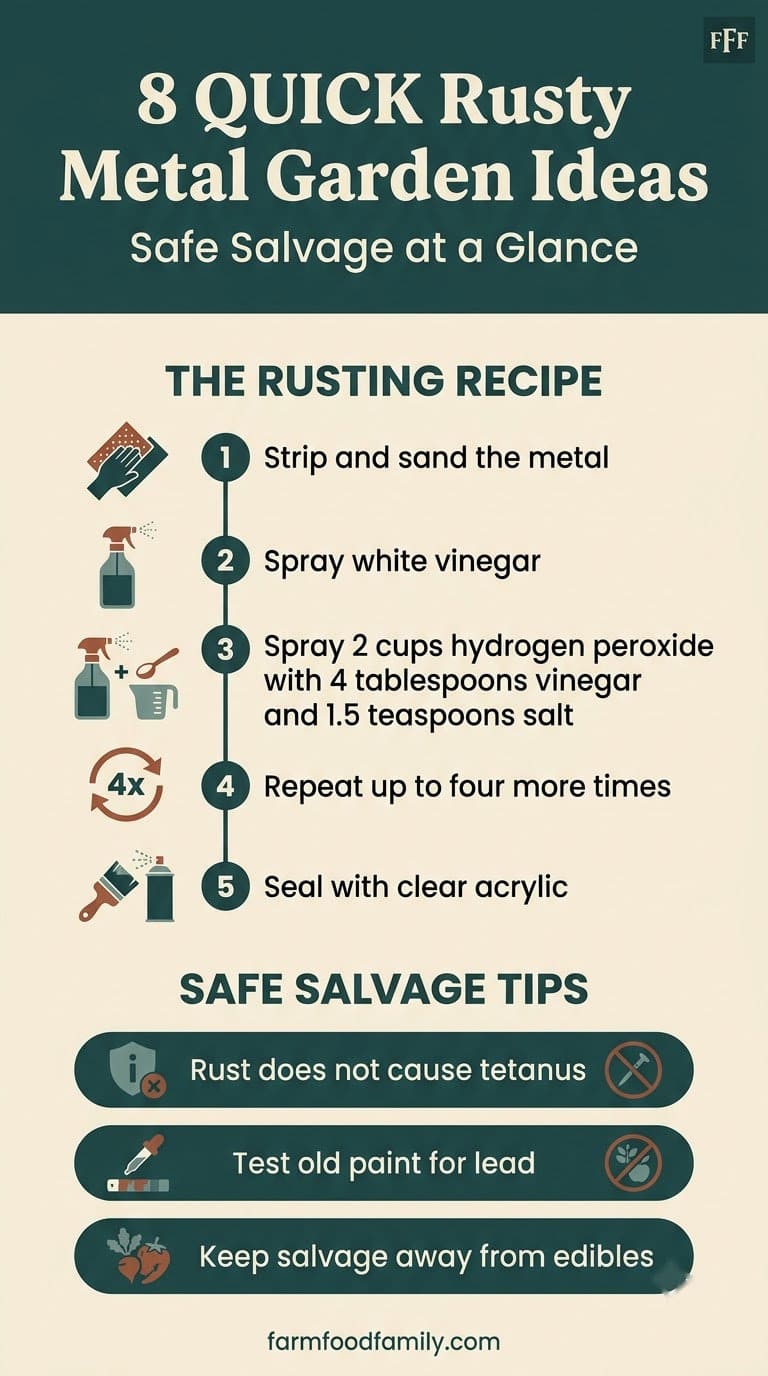
You can make new metal look old in about an hour. Bob Vila’s recipe sprays vinegar first, then a mix of hydrogen peroxide, vinegar and salt, and finishes with a clear acrylic sealer to set the look.
Seal anything that sits near concrete, wood or a patio, because loose rust stains. Avoid old painted metal unless you’ve tested it for lead.
Use salvaged metal for edging, trellises and art. But keep it away from food contact, and wear gloves every time you handle it.


Ask where a piece came from before you buy it. A flea market seller can often tell you what an old drum or tool was used for.
Most yard problems trace back to one specific, fixable cause. Find yours in 4 quick questions.
Take the Free QuizWhich Project Fits You?
Pick by effort and risk. This table sorts the eight builds below.
| Project | Time | Skill | Budget tier | Main risk |
|---|---|---|---|---|
| 1. Fast-rusted patina finish | One hour | None | Lowest | Fumes, splashes |
| 2. Rusty steel edging | One day | Beginner | Low to mid | Rust staining paving |
| 3. Rebar obelisk | One afternoon | Beginner | Low | Sharp ends |
| 4. Old tool garden art | One afternoon | None | Lowest | Sharp edges, lead paint |
| 5. Rusty metal sign | One evening | Beginner | Lowest | Sealer fumes |
| 6. Salvage wind chime | One evening | Beginner | Lowest | Sharp edges |
| 7. Corrugated screen panel | One weekend | Intermediate | Mid | Wind load, staining |
| 8. Rusty planter | One afternoon | Beginner | Low | Contamination, drainage |
Rust Safety: Read This First
Most of the fear around rust comes from one myth. The facts are simpler, and they change how you work.
Does Rust Cause Tetanus?
No. The CDC explains that tetanus is caused by Clostridium tetani bacteria found in the environment, and that these bacteria enter the body through broken skin, usually through injuries. A recent wound raises the risk, especially a deep one or one contaminated with dirt.
The CDC page doesn’t mention rust. Its advice is to stay current on the 10-year tetanus booster and to see a healthcare provider for puncture or deep wounds, or wounds with dirt. Rusty metal in a garden is often sharp and dirty, so the danger is real, but the cause is the wound, not the rust.
What About Old Paint and Galvanizing?
An Ask Extension expert answering a question about galvanized beds says zinc can leach into soil in acidic conditions (pH below 6). Most garden soils run pH 6 to 7, and the expert advises testing soil pH annually. The same answer notes older galvanized metal may contain trace lead or cadmium.
Old painted metal can also carry lead paint. Blogger Beth Bryan recommends testing with a swab kit by scraping through every paint layer, though a commenter on her post says swab kits can be unreliable. When in doubt, don’t use old painted salvage near edible plants or kids.
How to Rust New Metal Fast
You don’t have to wait years. This is the fastest method we found, from Bob Vila and Manasa Reddigari.
Forearm-length leather gloves for handling sharp, dirty salvage metal.
Shop NowThis post contains affiliate links. We may earn a commission on qualifying purchases at no extra cost to you.
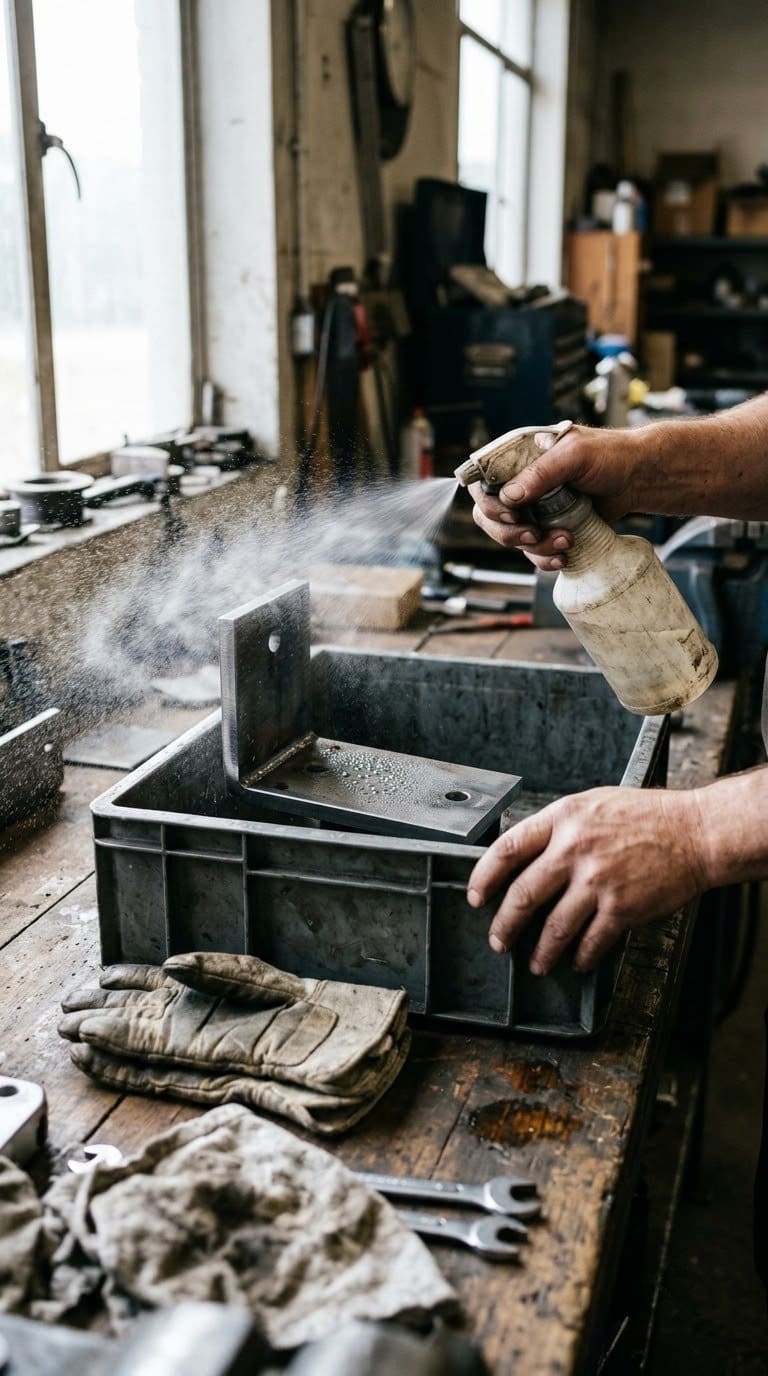
Vila’s rusting guide starts with prep. Strip any paint, then sand the surface lightly with fine-grit sandpaper to remove protective coating. Work outdoors on a hot day with gloves and goggles.
Spray white vinegar over the metal and let it air-dry in the sun for five minutes or longer. Then mix 2 cups of hydrogen peroxide, 4 tablespoons of white vinegar and 1½ teaspoons of table salt in a spray bottle. Shake until the salt dissolves, spray it on and let it dry in the sun.
The average homeowner spends $616/year on yard fixes that don't address the real problem. Find out what yours actually is — before you spend another dollar.
Take the Free QuizOne round gives a subtle patina. For a deeper look, repeat up to four more times. When it’s dry, spray a thin coat of clear acrylic sealer.
The guide says the sealer sets the rust and creates a barrier that keeps rust from staining nearby metal or wood. It doesn’t say how many sealer coats to use or how long to cure. Check your can.
The 8 Best Rusty Metal Garden Ideas
1. A Fast-Rusted Patina Finish
This is the technique behind every other project. You can age new steel, brackets, wire and hardware to match old pieces.
Prep matters most. Paint or a coating blocks rust, so strip it and sand. Use the Vila recipe above and test on a scrap first.
Quick tip: rust a few extra pieces while you’re at it. Brackets, screws and washers that match the finish tie a project together, and they save you a second round of mixing.
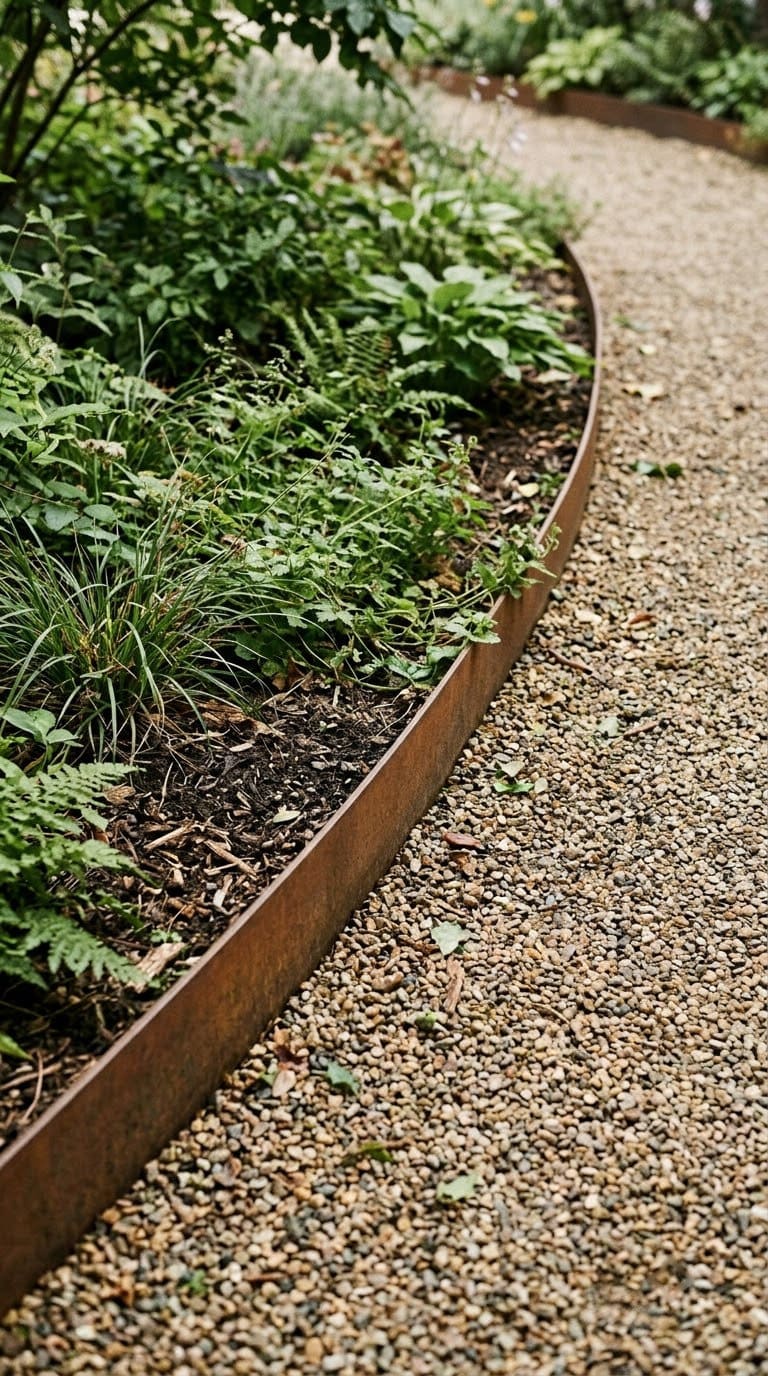
2. Rusty Steel Edging
Steel edging gives beds a crisp line and ages beautifully. Rust makes it blend into soil.


Pre-rust the edging with the method above, then seal it if it will sit beside paving. Bury most of the strip so only a narrow band shows. Dig a trench along the bed edge, set the edging, backfill and tamp.
Loose rust can stain a patio or path. Seal the part that sits next to hard surfaces. For other edging looks, see the guide to garden edging ideas.
Quick tip: lay the edging out on the lawn first and mark the curve with a garden hose. Cut the trench along the hose line, and the strip will follow a smooth curve instead of a series of kinks.
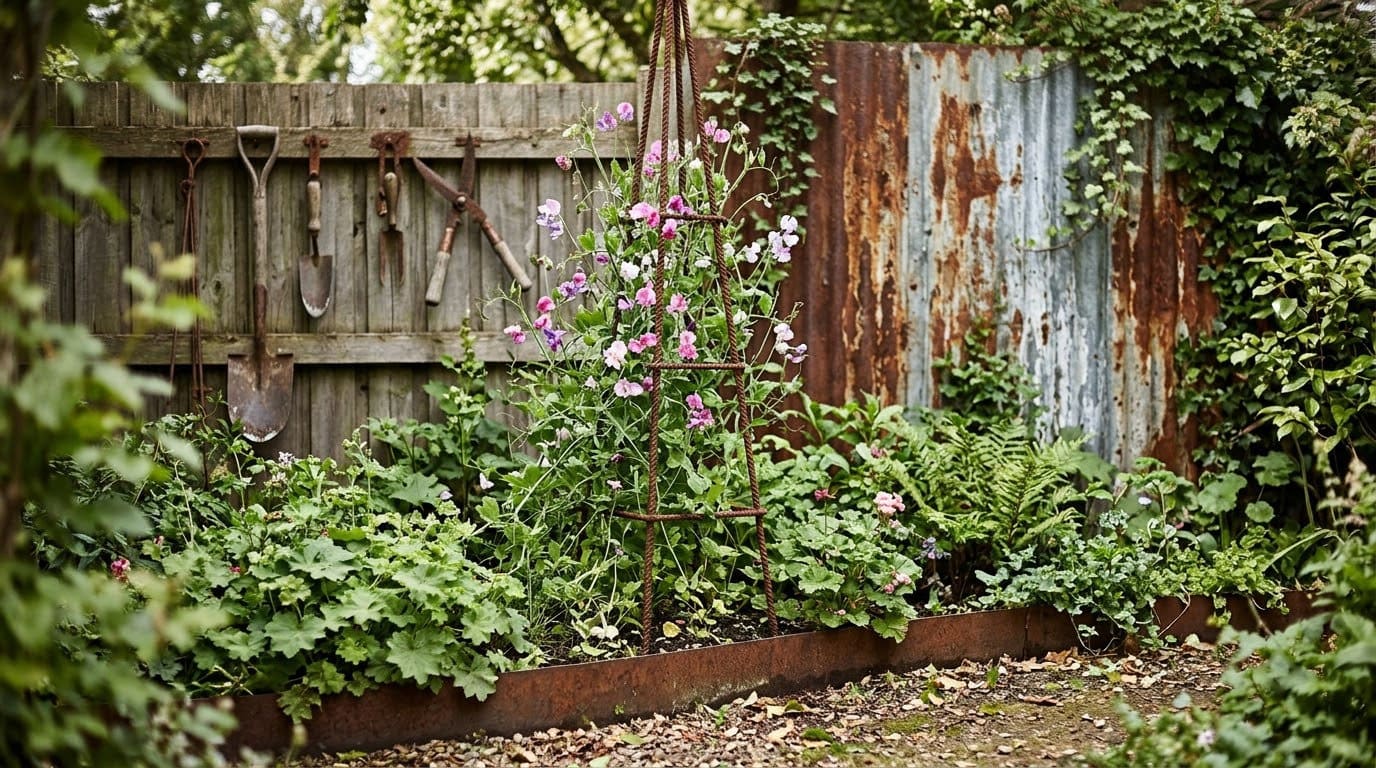
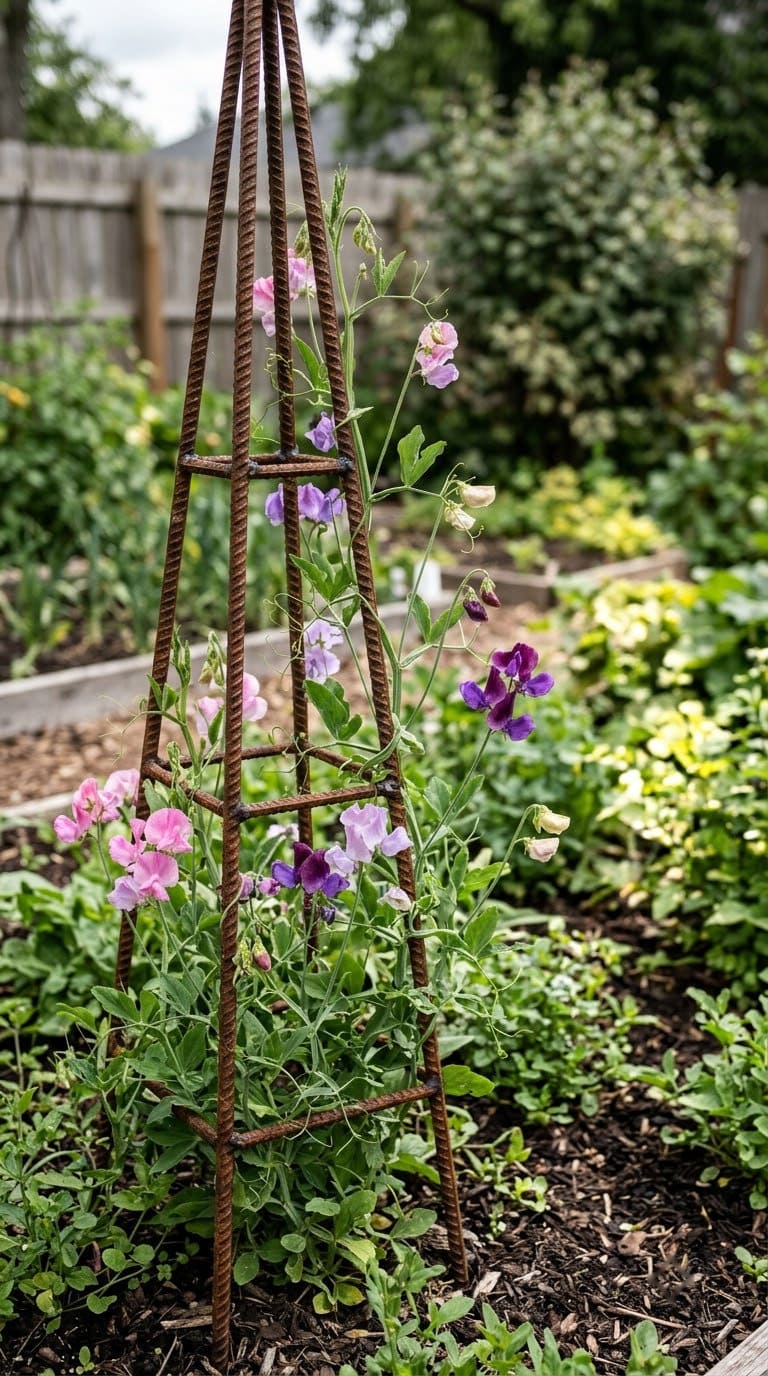
3. A Rebar Obelisk
An obelisk gives climbers height without a big build. Rebar rusts naturally and looks right in a cottage bed.
Use four lengths for the legs and tie them at the top with wire. Space the legs wider at the bottom, and add horizontal rings of wire for vines to grip. Push the legs deep into the soil so wind doesn’t tip it.
Cap or bend sharp ends. A tennis ball or a cap over each tip keeps eyes safe when you lean in to tie vines.
Climbing sweet peas and beans look great on it. See more ideas in fence trellis ideas.
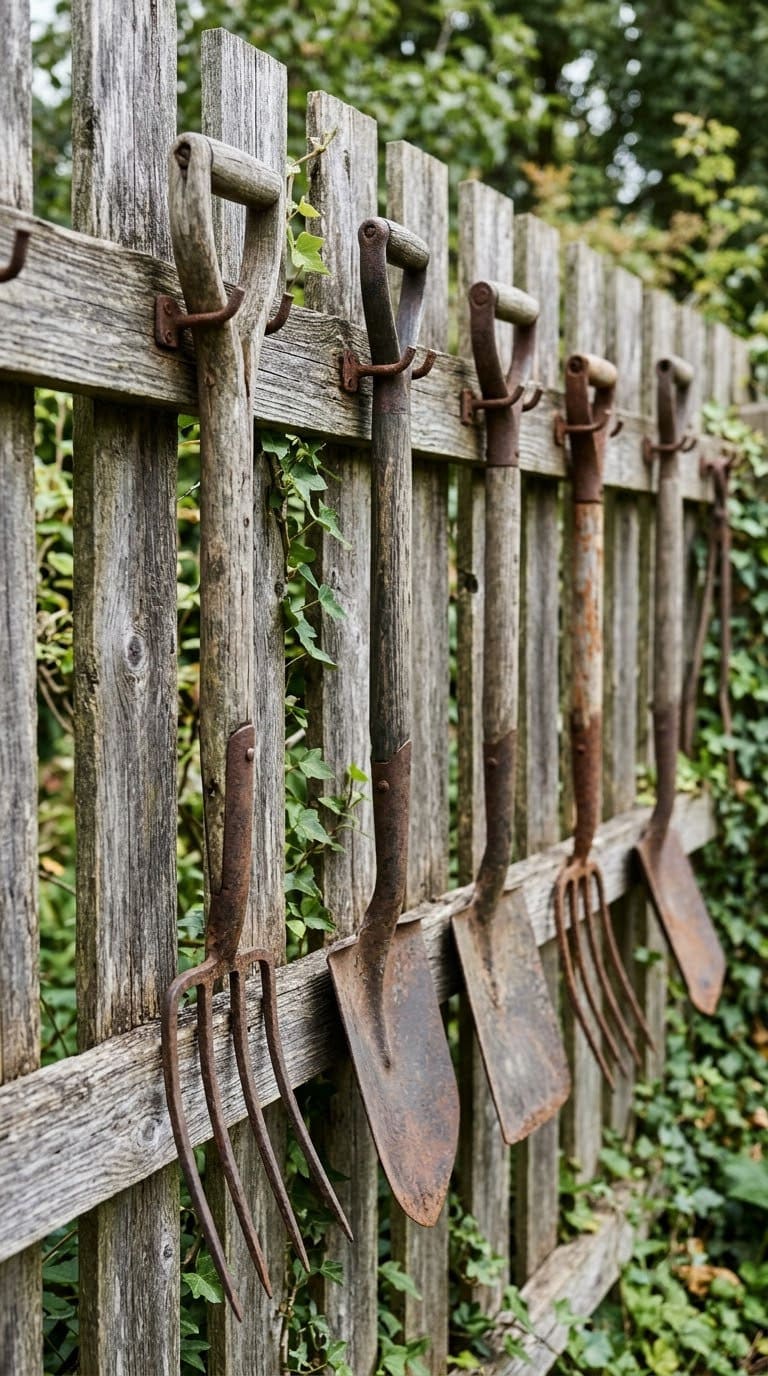
4. Old Tool Garden Art
Old shovels, rakes and forks make fast garden art. They already have the age.
Hang them on a fence or shed wall, or cluster them in a bed. Mount each tool with screws through the handle, not the head. Wear gloves, because edges are sharp and often dirty.
Skip tools with flaking paint unless you’ve tested it. Also keep tools out of reach of kids. For more inspiration, see these garden art DIY projects.
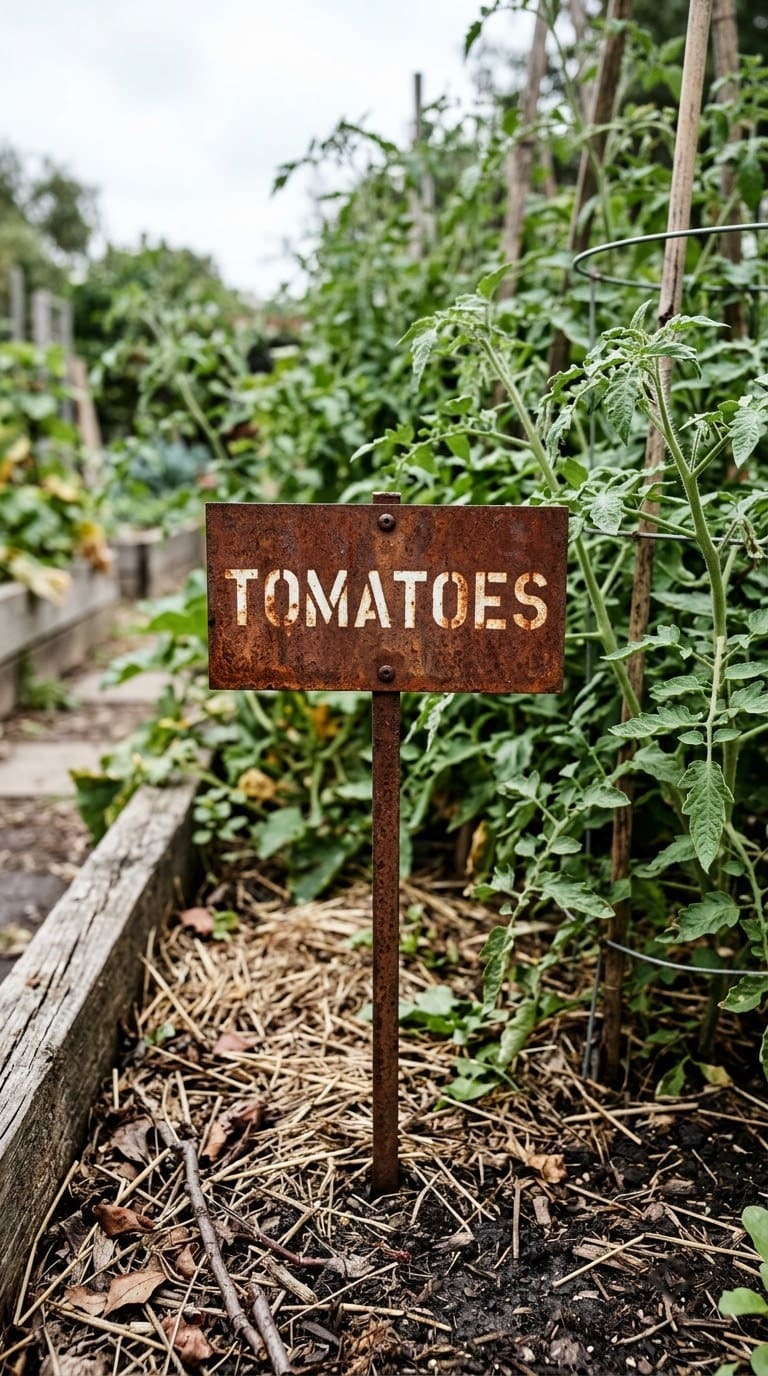
5. A Rusty Metal Garden Sign
A rusty sign says what’s growing, or where the path goes. It’s quick and cheap.
Cut a flat piece of steel, rust it with the method above and seal it. Paint letters with a stencil in a color that pops against the rust. Mount the sign on a stake so it stands at eye level.
Quick tip: keep the lettering to one word if you can. Short words read from across the yard, and a stencil with fewer letters is much easier to line up.
Seal the letters too, so the paint doesn’t flake in the rain. See DIY garden sign ideas for layouts.
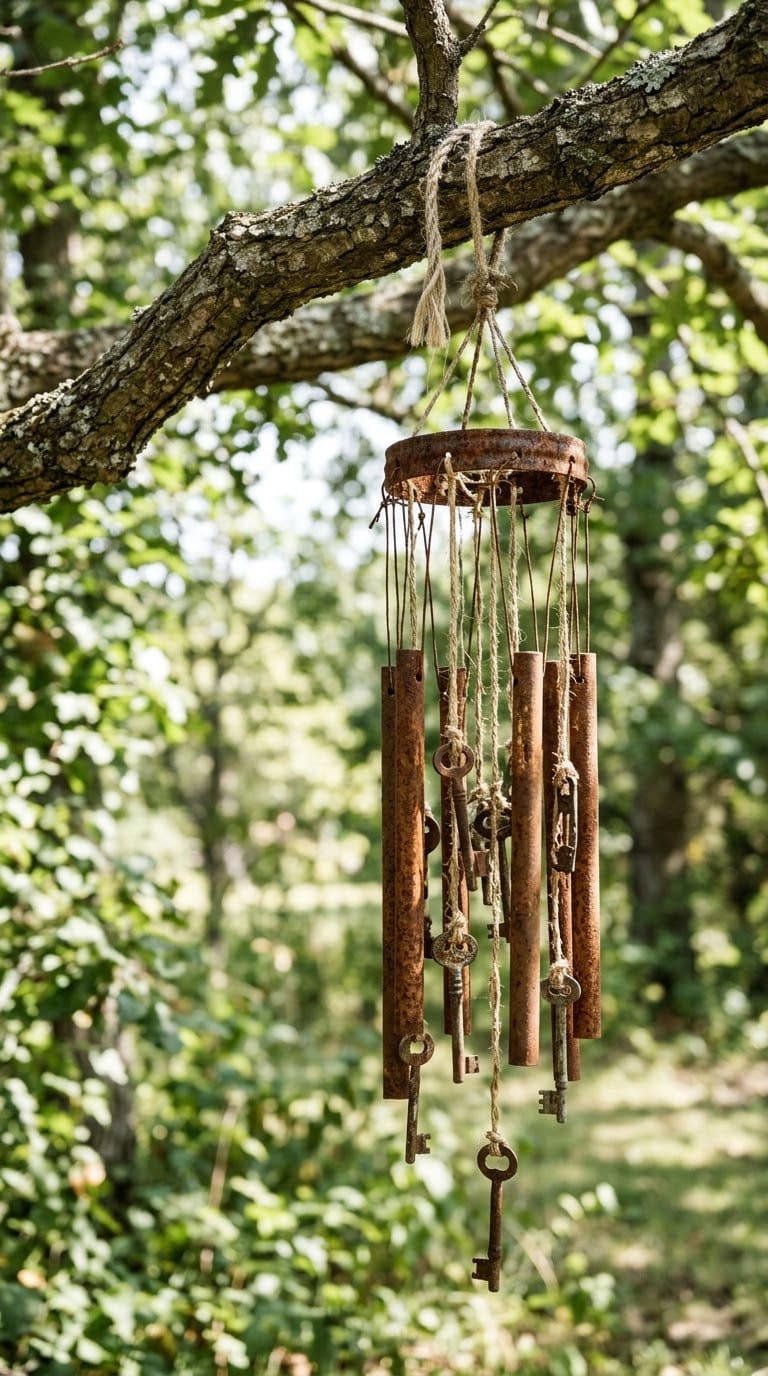
6. A Salvage Wind Chime
Old metal pieces can ring beautifully. Pipes, keys, spoons and washers all make sound.
Hang pieces from a ring of wood or metal with fishing line or wire. Vary the lengths so the tones differ. Rust the pieces first, then seal them so the sound stays clear.
Smooth every edge with a file. A rough edge can cut a hand or snag a child’s sleeve. Hang the chime away from windows and walkways.
Quick tip: hold the pieces up in the air and tap them before you tie them on. Pieces that clank dull in your hand will sound dull on the chime, so pick the ones that ring.
7. A Corrugated Metal Screen Panel
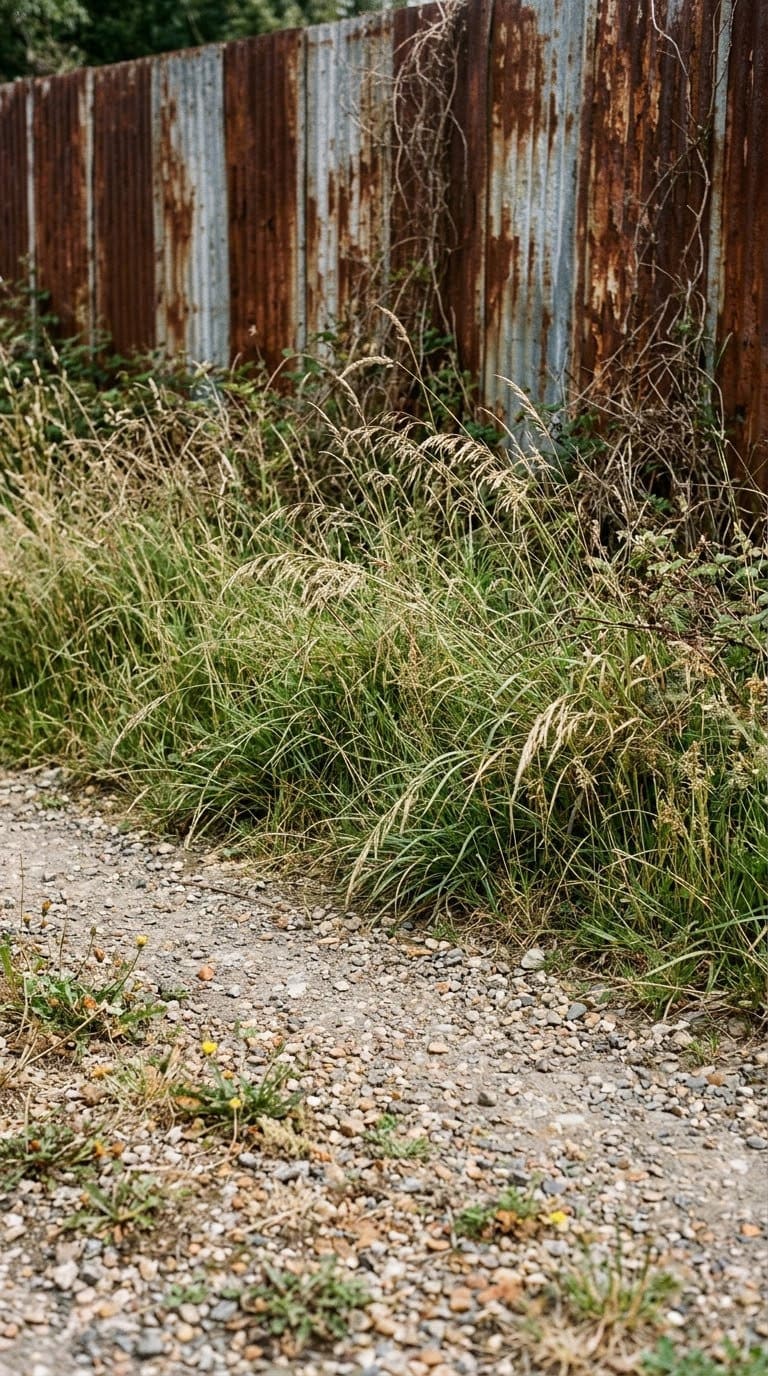
A rusty corrugated panel makes a bold backdrop. It hides a bin, a shed or a bare wall.
Mount it between posts with screws into a frame, not just nails. Leave small gaps at the bottom for airflow. Large panels catch wind, so brace the posts well.
New corrugated or weathering steel can stain nearby concrete for months while it weathers, according to retailer notes.
Keep it over soil or gravel at first.
Read more in corrugated metal fence ideas.
8. A Rusty Planter
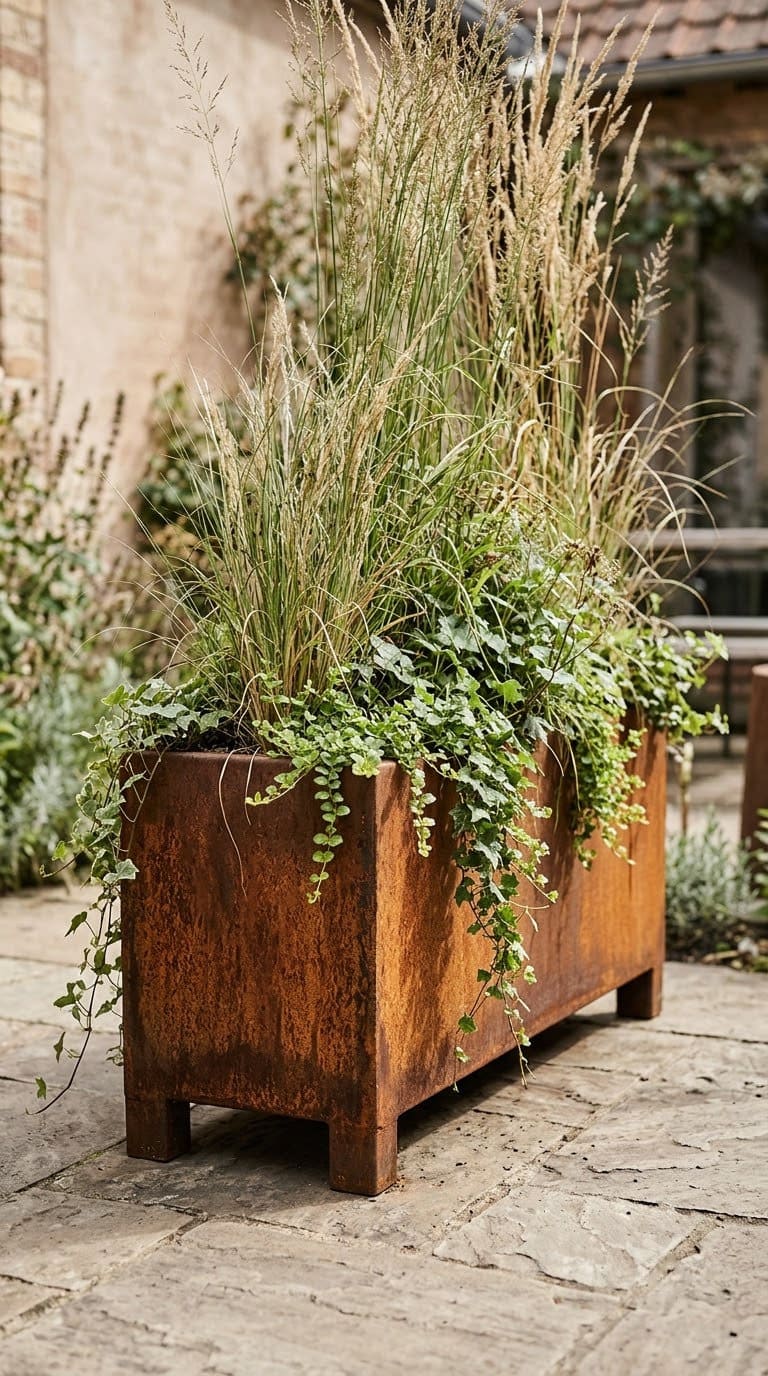
A rusty planter looks great with soft plants. It’s also where most mistakes happen.
Pick a container that didn’t hold chemicals. Add drainage holes at the bottom, and set it on feet so water can escape. Line the inside if you’re planting edibles, or grow ornamentals instead.
Avoid salvaged drums or tanks whose past use you don’t know. Pick a planter big enough that soil doesn’t dry out in a day, because thin metal in sun heats the roots.
Quick tip: set a few stones in the bottom over the drain holes so soil stays in and water still escapes.
Sealing and Staining: What to Expect
Rust doesn’t stop on its own. It keeps flaking until you seal it or it weathers to a stable layer.
Use clear acrylic sealer on pieces near patios, wood decks or fences. Vila’s guide notes it sets the look and keeps rust from staining nearby metal or wood. Test the sealer on a scrap, because some can change the color.
Place new pieces over soil or gravel while they weather. Use feet or risers under planters on paving, and a tray where staining would matter.
Which Salvage Should You Avoid?
Some old metal isn’t worth the risk. This table sums it up.
| Salvage | Concern | What to do |
|---|---|---|
| Old painted metal | May contain lead paint | Test, or skip |
| Old galvanized metal | Zinc in acid soil, possible lead or cadmium | Keep away from edible beds, test soil pH |
| Barbed wire | Cuts and snags | Skip it in a family garden |
| Unknown drums or tanks | Chemical residue | Don’t use for planting |
| Heavy flaking rust | Weak structure | Use for decor only |
Where to Find Salvage Metal
Good pieces are cheap if you know where to look. Start with places that sell old tools and hardware by the pile.
Flea markets, yard sales, farm auctions and scrap yards all sell old steel. Ask the seller what the piece was used for and how old it is. Look for solid metal with a surface that flakes lightly, not metal that crumbles.
Check every piece for sharp edges, cracks and thin spots. File or grind sharp corners smooth. Bring work gloves, because most salvage is dirty.
A Simple Weekend Plan
Break the work into clear steps so nothing gets rushed.
Saturday morning: Gather your metal, strip any paint and sand every piece. Rust new metal with the Vila method, since sun speeds the process.
Saturday afternoon: Seal the dry pieces with clear acrylic. Let them cure fully before you handle them or place them near paving.
Sunday: Build and install. Set edging first, then obelisks and panels, then hang art and signs last.
Cost Tiers at a Glance
Costs vary by region and supplier, so think in tiers.
| Tier | Projects |
|---|---|
| Lowest | Patina finish, tool art, signs, wind chimes |
| Low | Rebar obelisk, rusty planter |
| Low to mid | Steel edging, corrugated screen |
Salvage pieces cost little, but sealer, paint and hardware add up. Buy sealer once and use it across projects.
Care and Upkeep
Rust is low-maintenance, but not no-maintenance. A quick check each season keeps pieces safe and tidy.
Look for loose flakes, sharp edges and shaky mounts. Touch up the sealer where it has worn thin. Test the structure of heavier pieces, like obelisks, by giving them a firm shake.
Check the soil under planters and edging. If rust stains appear on paving, move the piece onto gravel or add feet or a tray.
Common Mistakes to Avoid
Most failures come from skipping prep.
Skipping the sand step. Paint and coatings block the rust.
Forgetting gloves and goggles. Hydrogen peroxide and vinegar give off fumes and splash.
Placing new rust on a patio. Runoff can stain.
Using old metal in edible beds. Lead, zinc and unknown residues are the reasons to be careful.
Ignoring wound care. See a provider for deep puncture wounds, whatever caused them.
FAQ
Does rust cause tetanus?
No. The CDC says tetanus comes from bacteria in the environment that enter through broken skin. Stay current on your 10-year booster and see a provider for deep or dirty wounds.
How do I rust metal fast?
Strip and sand it, spray vinegar, then spray a mix of hydrogen peroxide, vinegar and salt. Repeat for a deeper look and seal with clear acrylic.
Will rust stain my patio?
It can. Seal pieces that sit near paving and keep new rusting pieces over soil or gravel.
Is galvanized metal safe for vegetable beds?
An Ask Extension expert says zinc can leach in acidic soil below pH 6. Test your soil pH each year.
Can I use old painted metal?
Only after testing for lead. When in doubt, use it for decor away from edibles and kids.
Related Posts
Never miss an update — choose FarmFoodFamily as your preferred source on Google.
How it works: Tap the button below to open Google's settings page, then check the box next to FarmFoodFamily.
Tap the checkbox to turn it blue — that's how you know it's set.