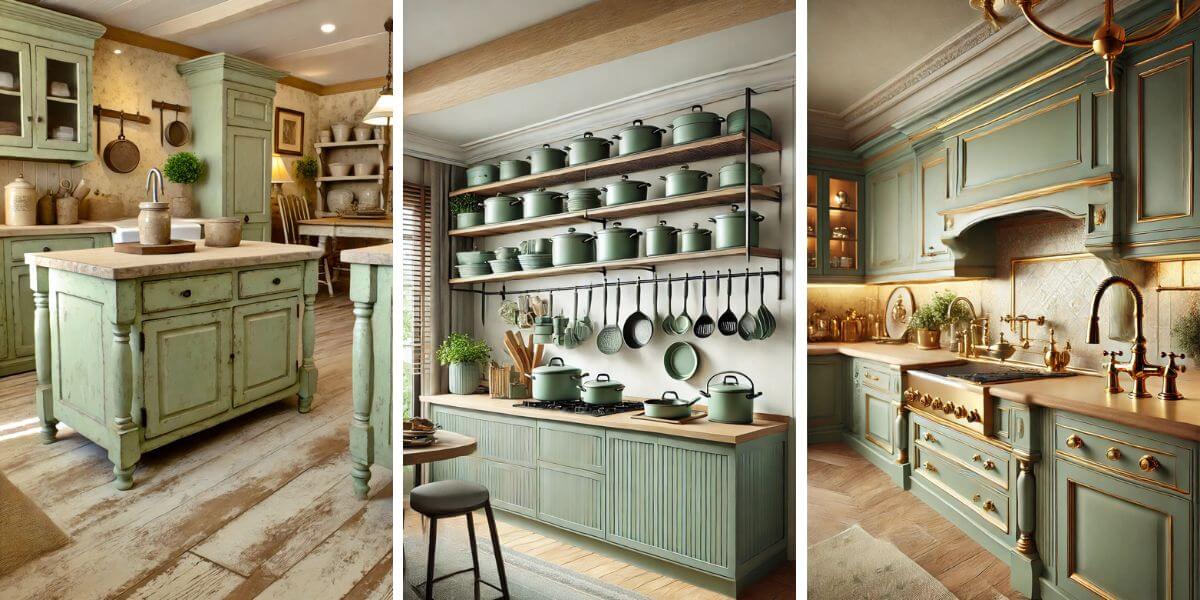
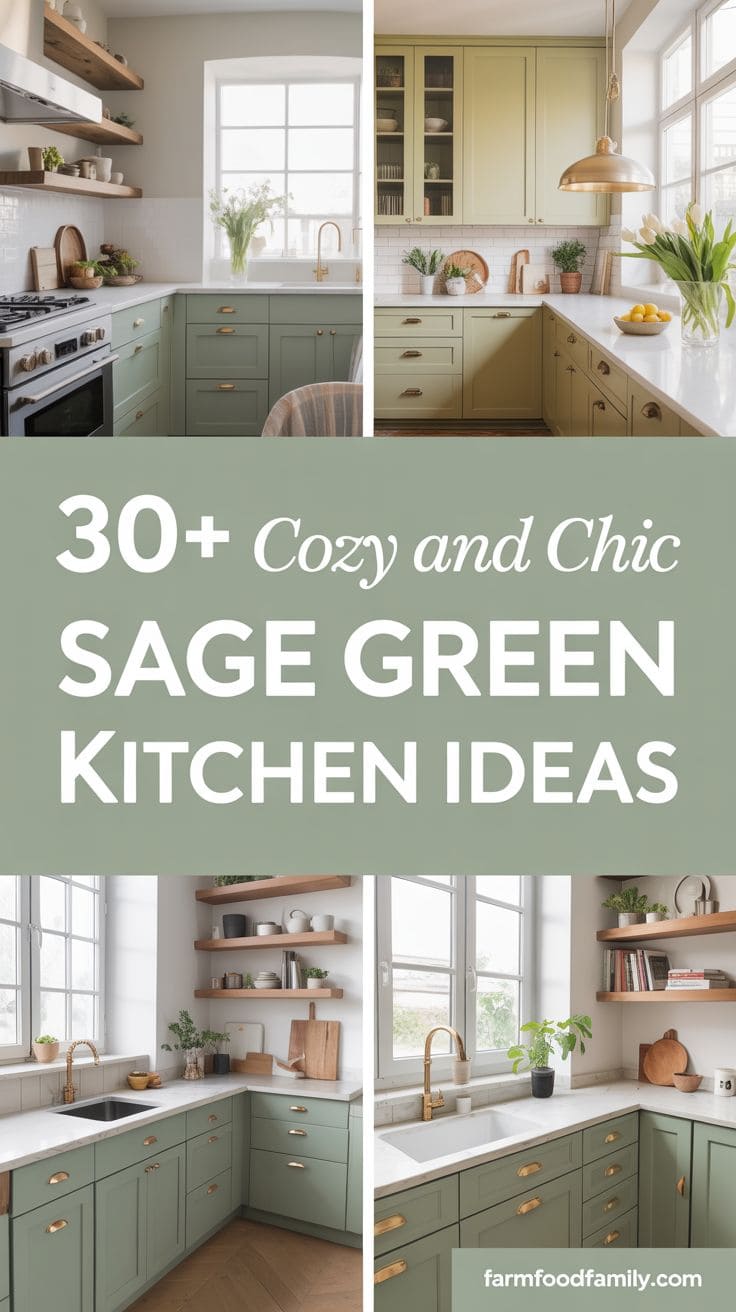
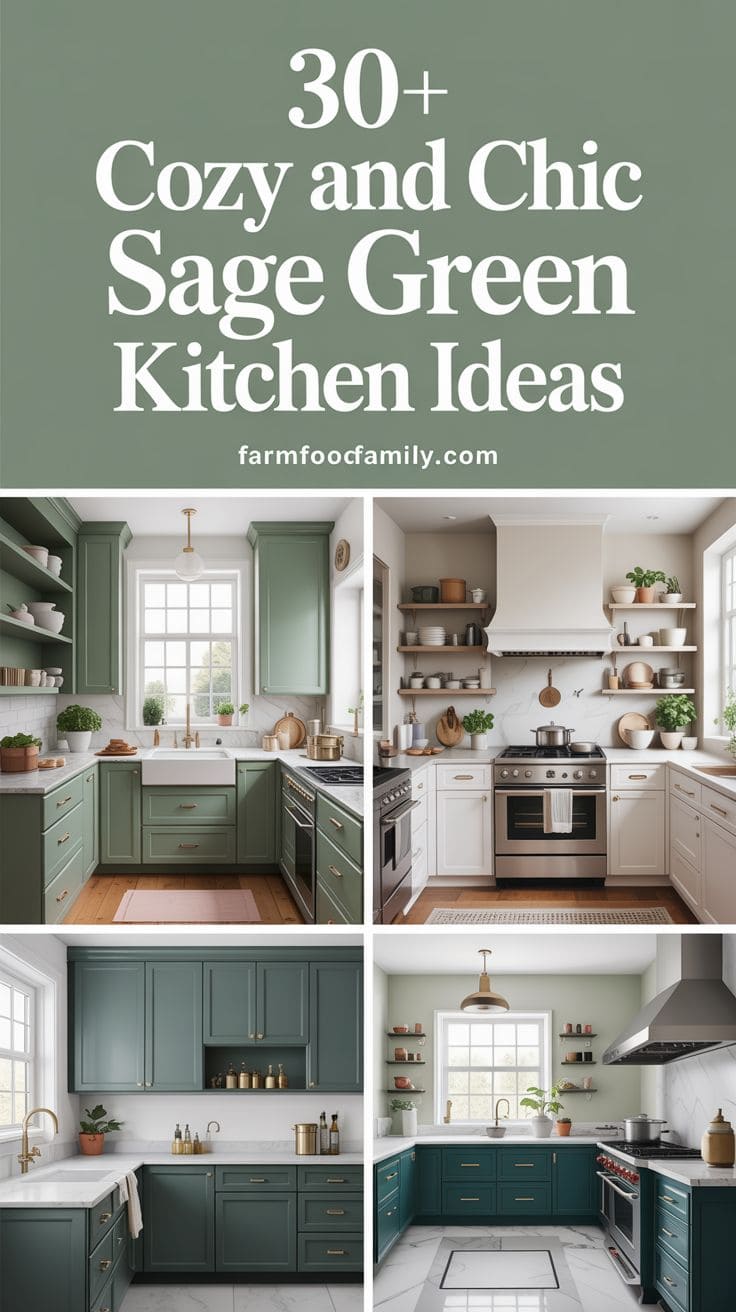
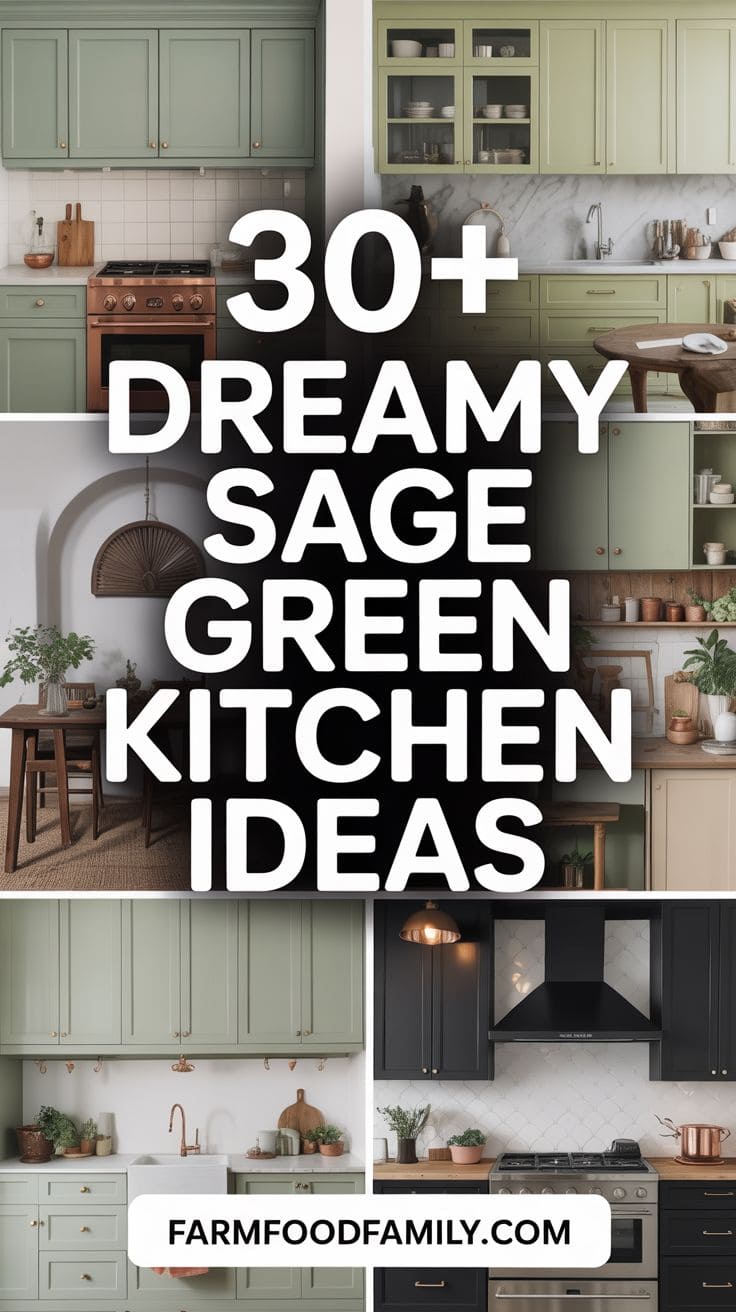
29 Gorgeous Sage Green Kitchen Ideas to Elevate Your Cooking Space
Sage green isn’t just having a moment, it’s actually backed by real numbers. In the National Kitchen and Bath Association’s 2026 Kitchen Trends Report, 86% of designers named green a trending kitchen color, second only to neutrals as a broad category (96%) and well ahead of blue (78%) and brown (67%). Sage specifically is the lighter…

Never miss an update — choose FarmFoodFamily as your preferred source on Google.
How it works: Tap the button below to open Google’s settings page, then check the box next to FarmFoodFamily.
Tap the checkbox to turn it blue — that’s how you know it’s set.
Sage green isn’t just having a moment, it’s actually backed by real numbers. In the National Kitchen and Bath Association’s 2026 Kitchen Trends Report, 86% of designers named green a trending kitchen color, second only to neutrals as a broad category (96%) and well ahead of blue (78%) and brown (67%).
Sage specifically is the lighter half of that green wave, the NKBA data splits it out as light green/sage at 56% versus dark green/emerald/olive/juniper at 51%, meaning sage edges out the darker greens as the more popular pick.
Jake Arnold, principal at 4C Design Group, put it simply: “I love to use shades of sage. They feel like a neutral, yet they’re unexpected.” That’s really the whole appeal, sage green does the quiet, flexible job a neutral is supposed to do, but it actually has personality.
One honest question before the 29 ideas below: will this look dated in five years? The real answer depends on which sage you pick, more on that in the FAQ section. For now, here are 29 ways people are actually using it.
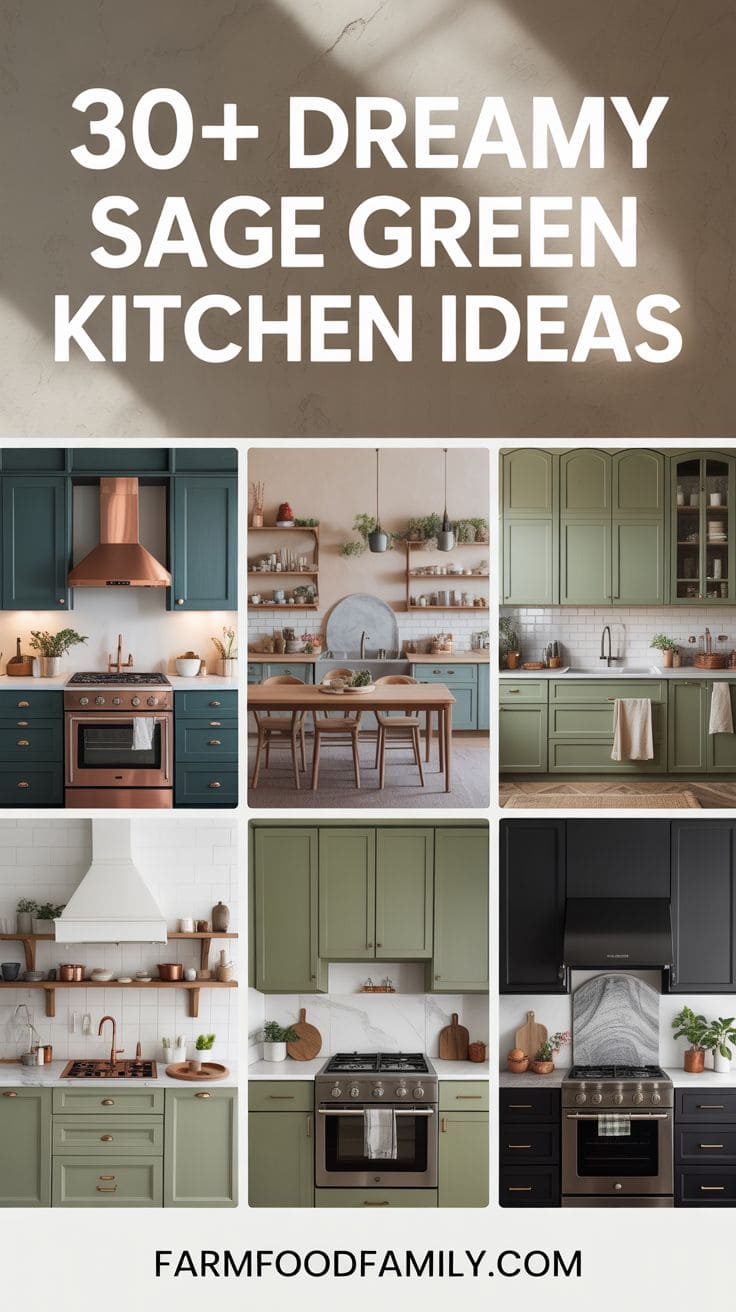
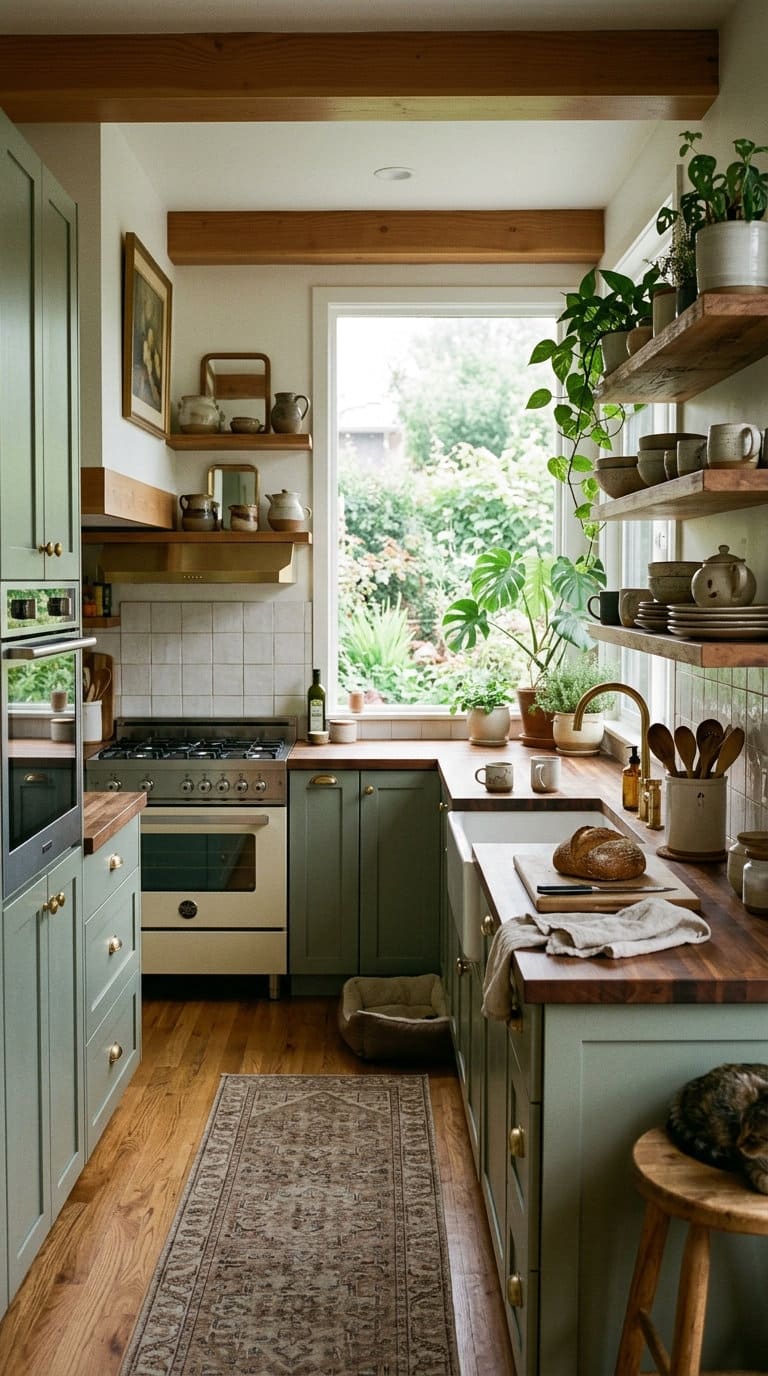
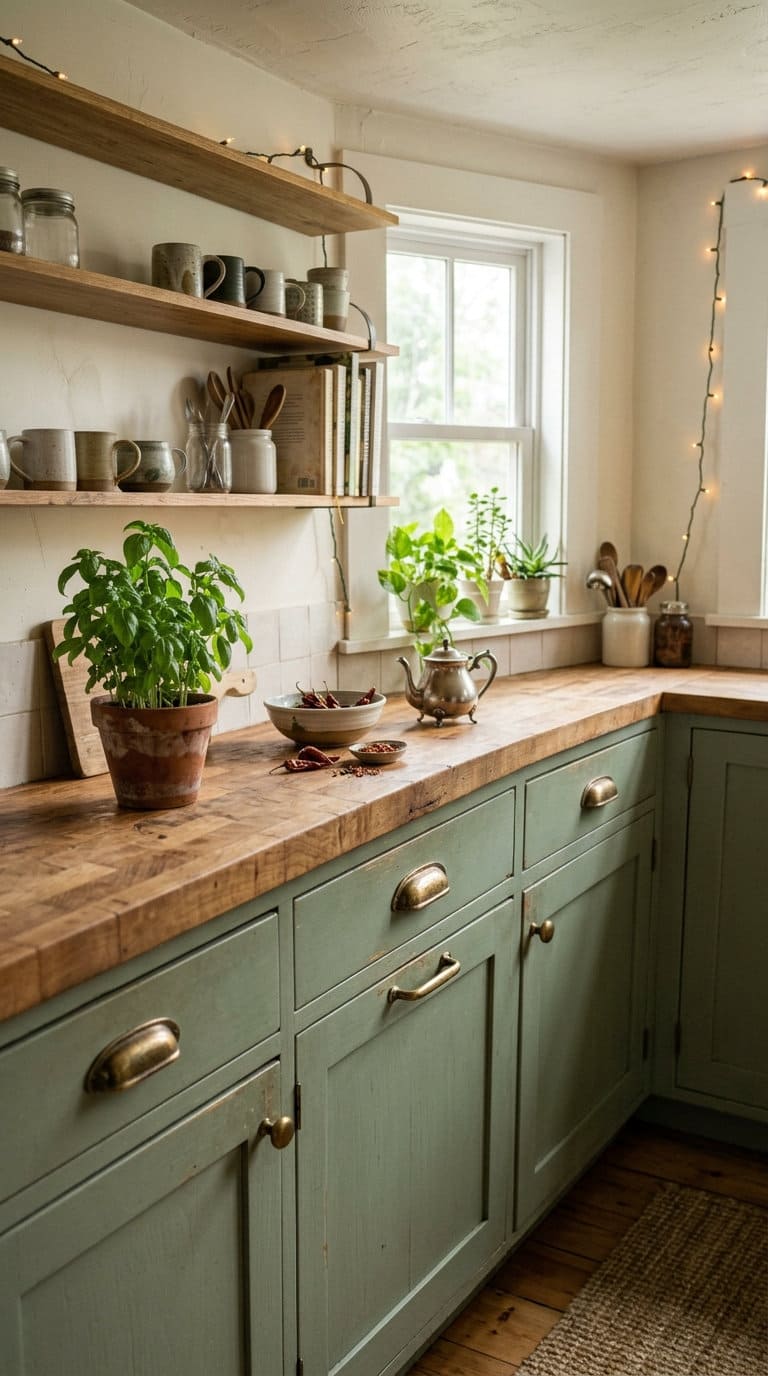
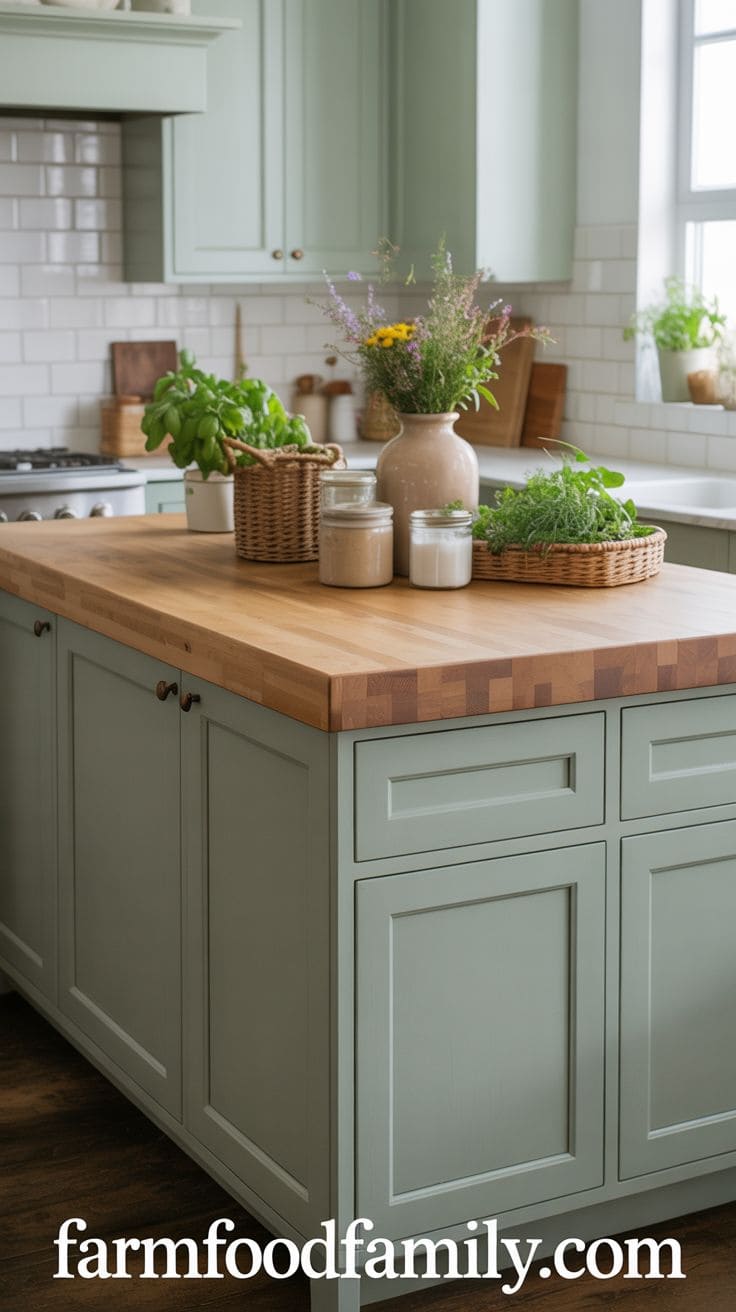
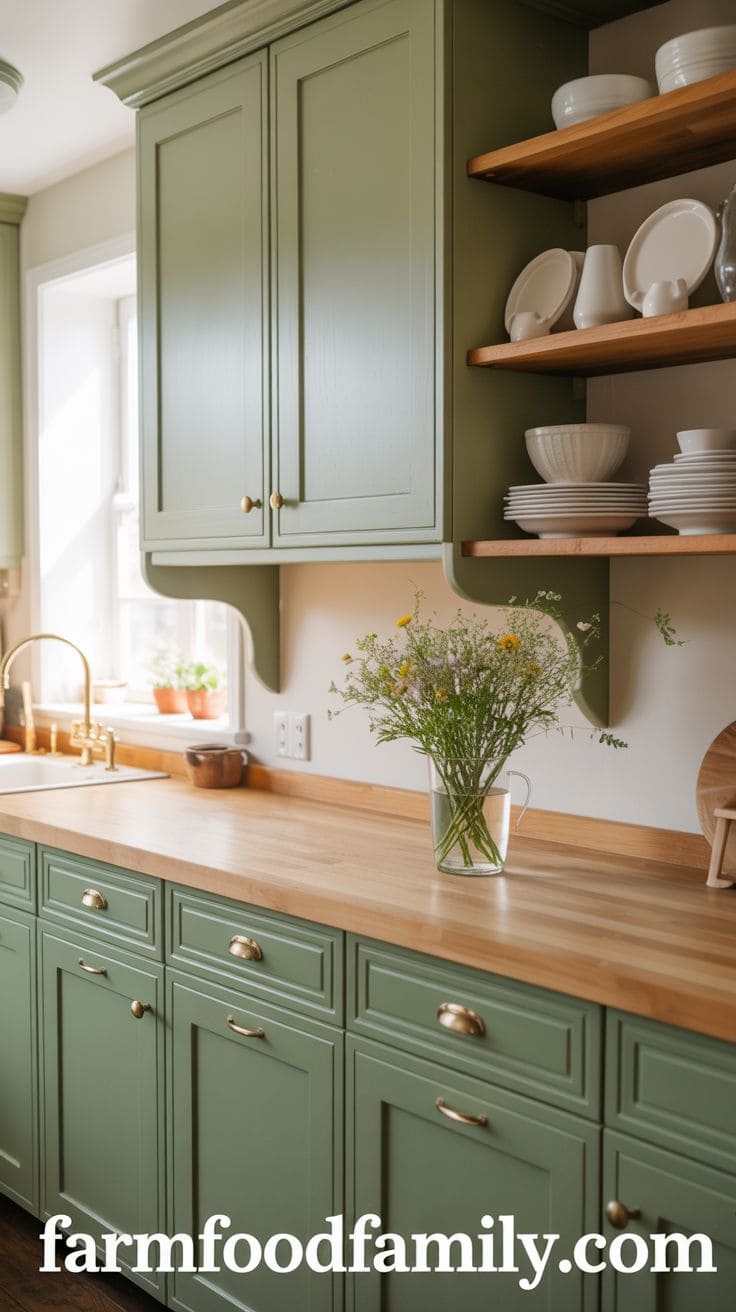
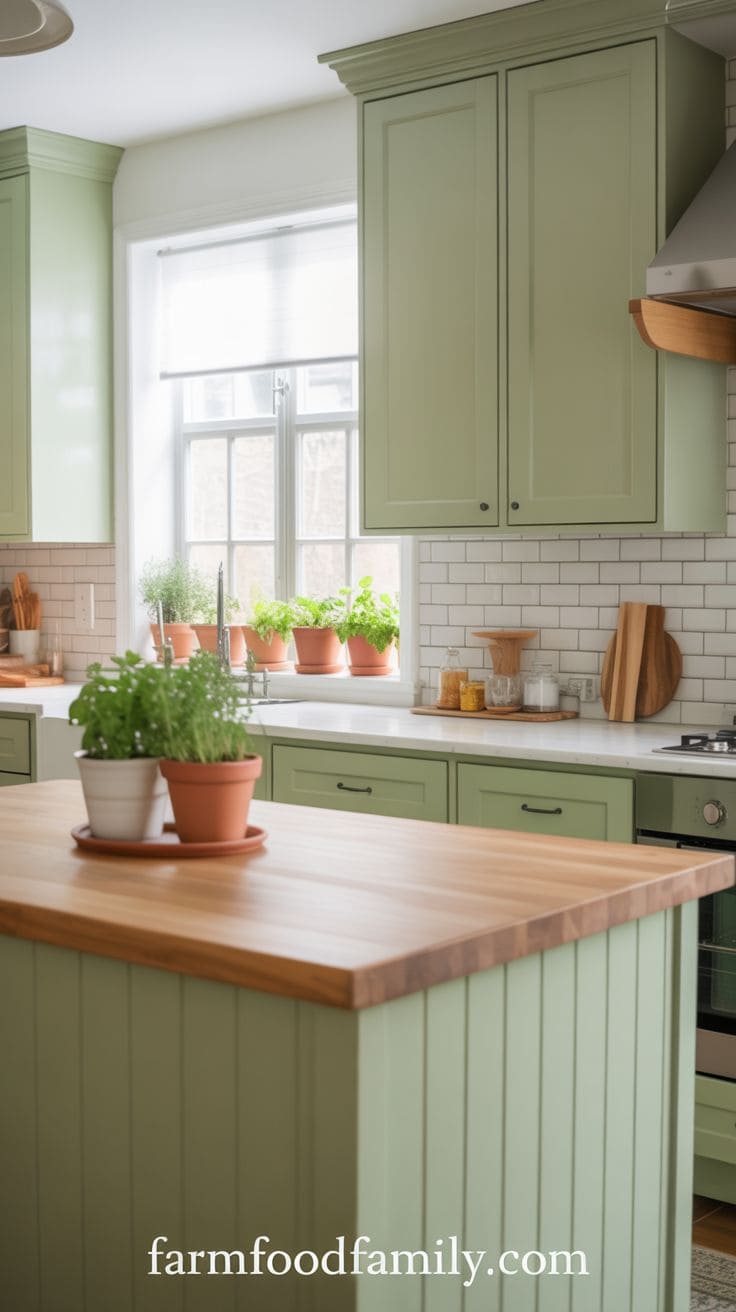
1. Sage Green Cabinets and Butcher Block Countertops
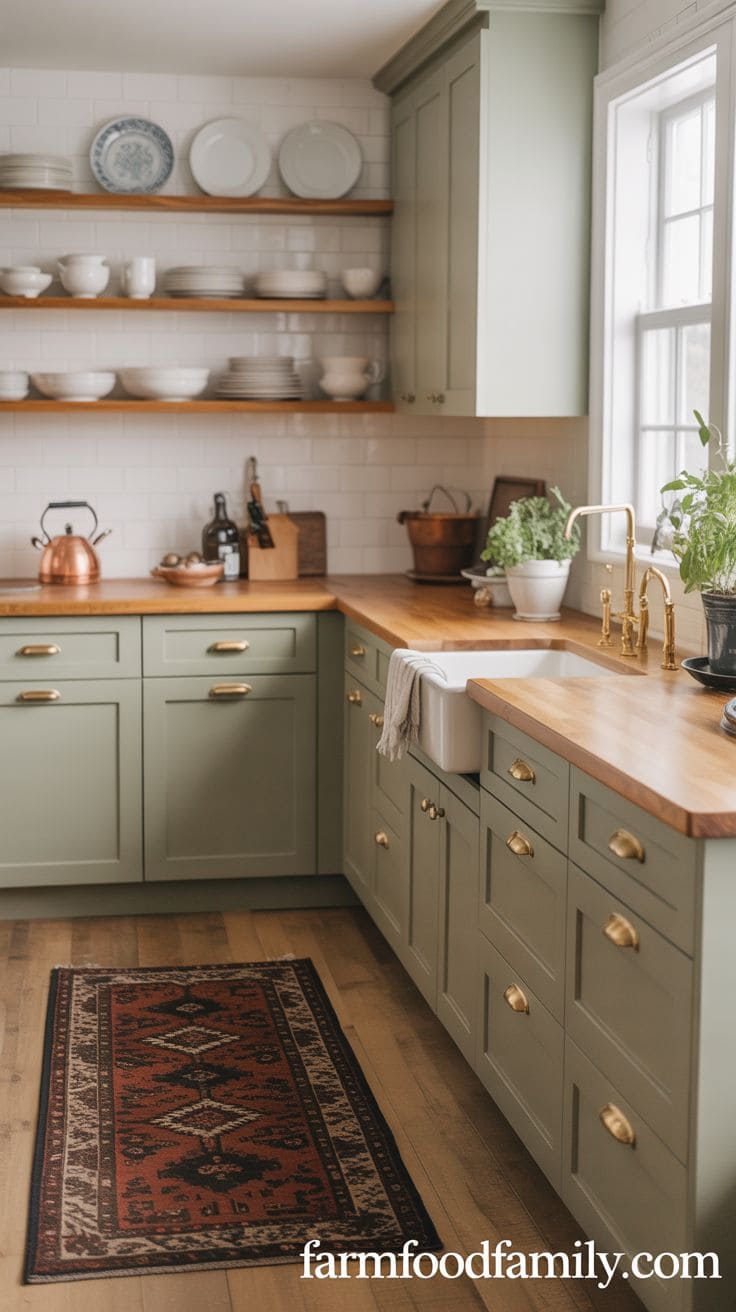
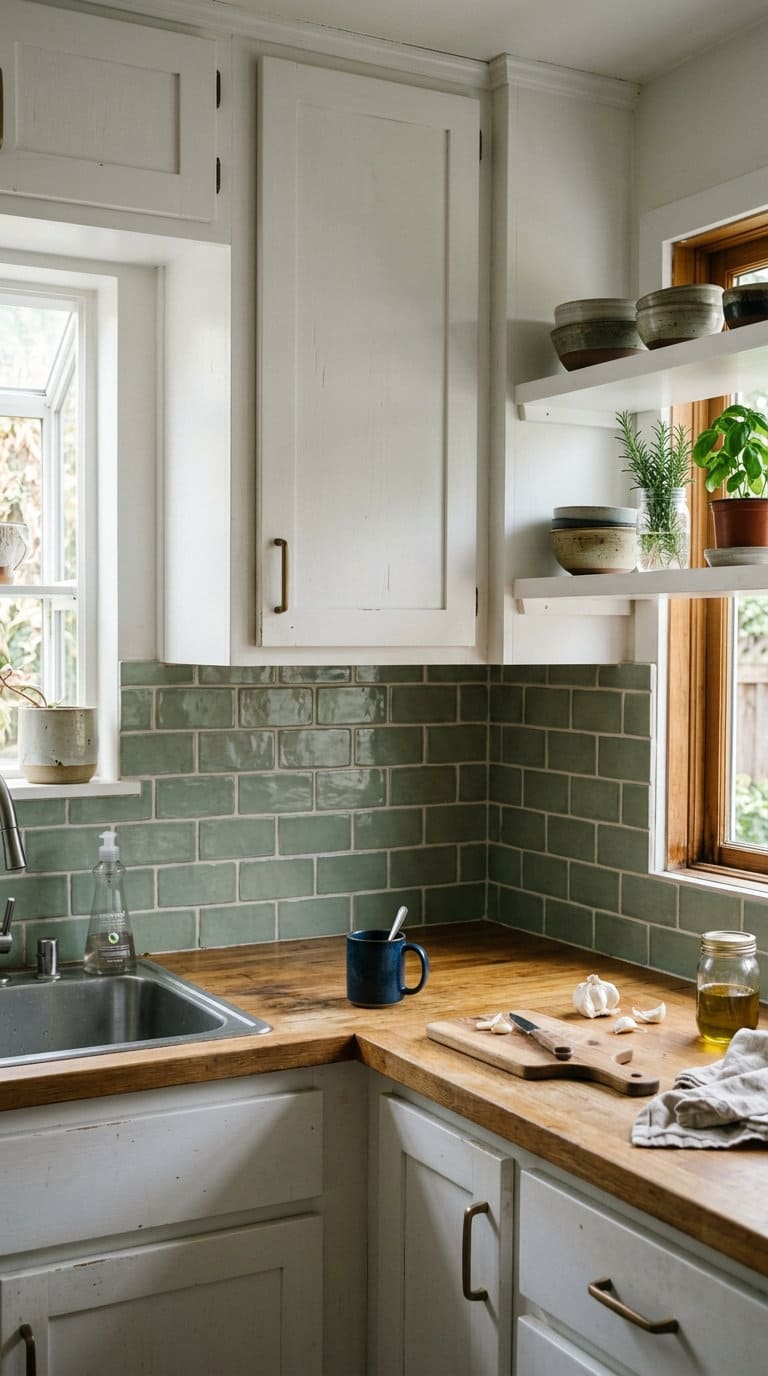
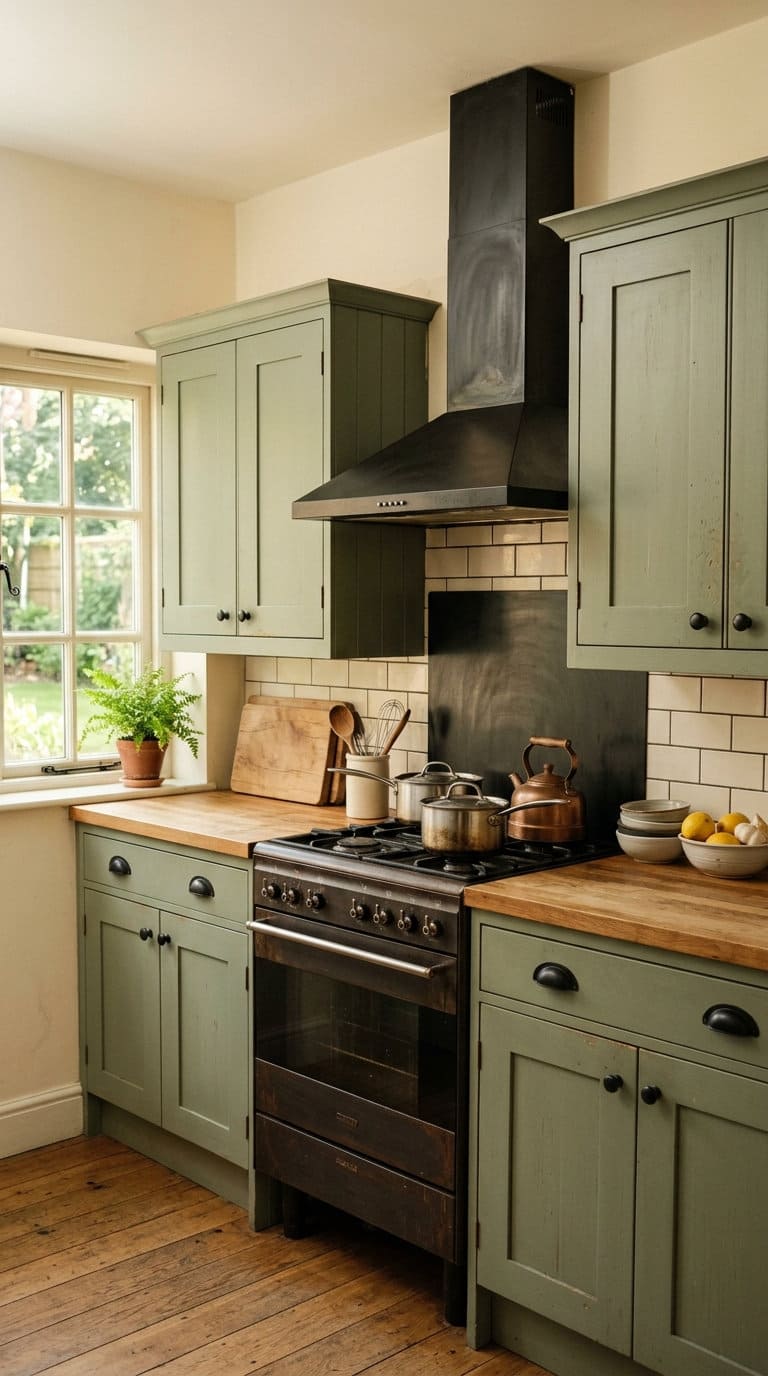
Sage green cabinets and butcher block worktops work well together to create a rustic and cozy kitchen.

The gentle green provides a sense of freshness, while the wood tones of the butcher block keep things grounded and comforting.
This combination works especially well in farmhouse and cottage-style kitchens, but it can also work in more modern settings depending on the hardware and finishes.
Open shelves in complementing wood tones can add warmth.
Brass or matte black hardware adds a stylish finishing touch, providing either classic charm or modern elegance.
Display plants, woven textures, and porcelain dishes to add depth to the design.
This look is very livable and easily creates a welcoming, functional environment.
2. Sage Green Subway Tile Backsplash
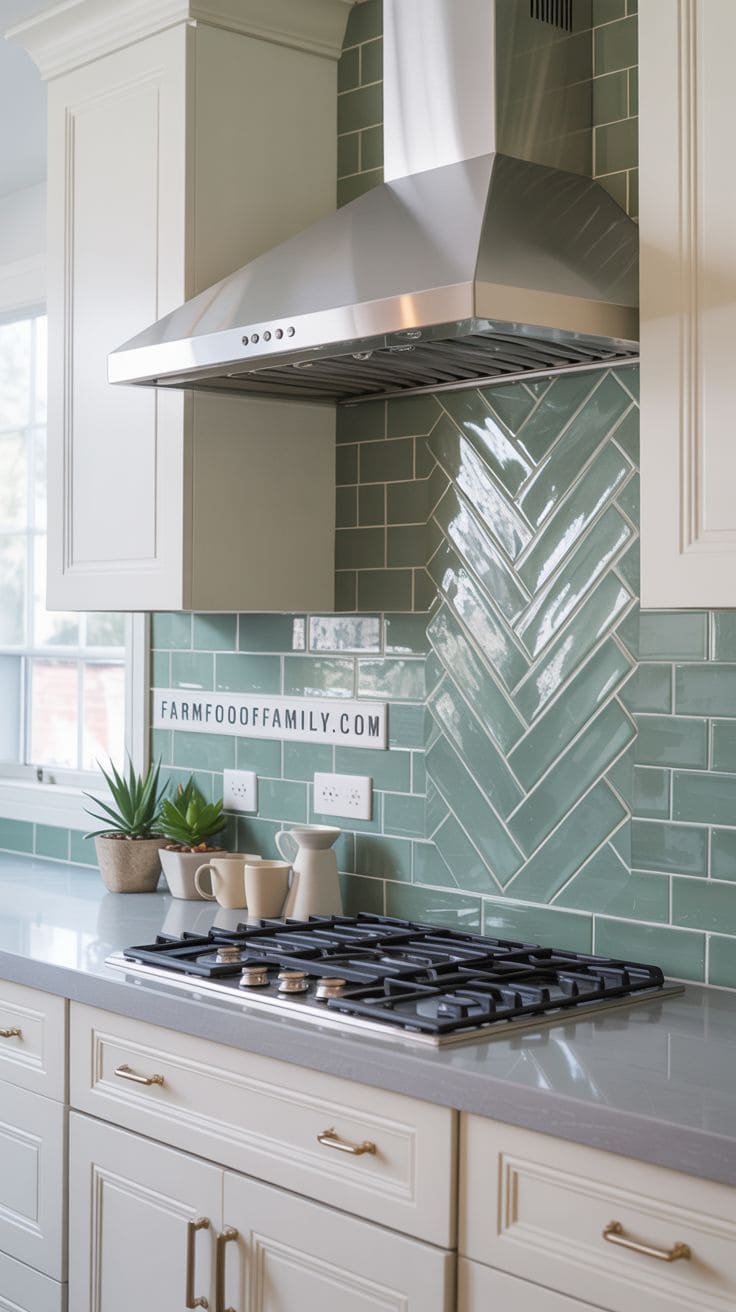
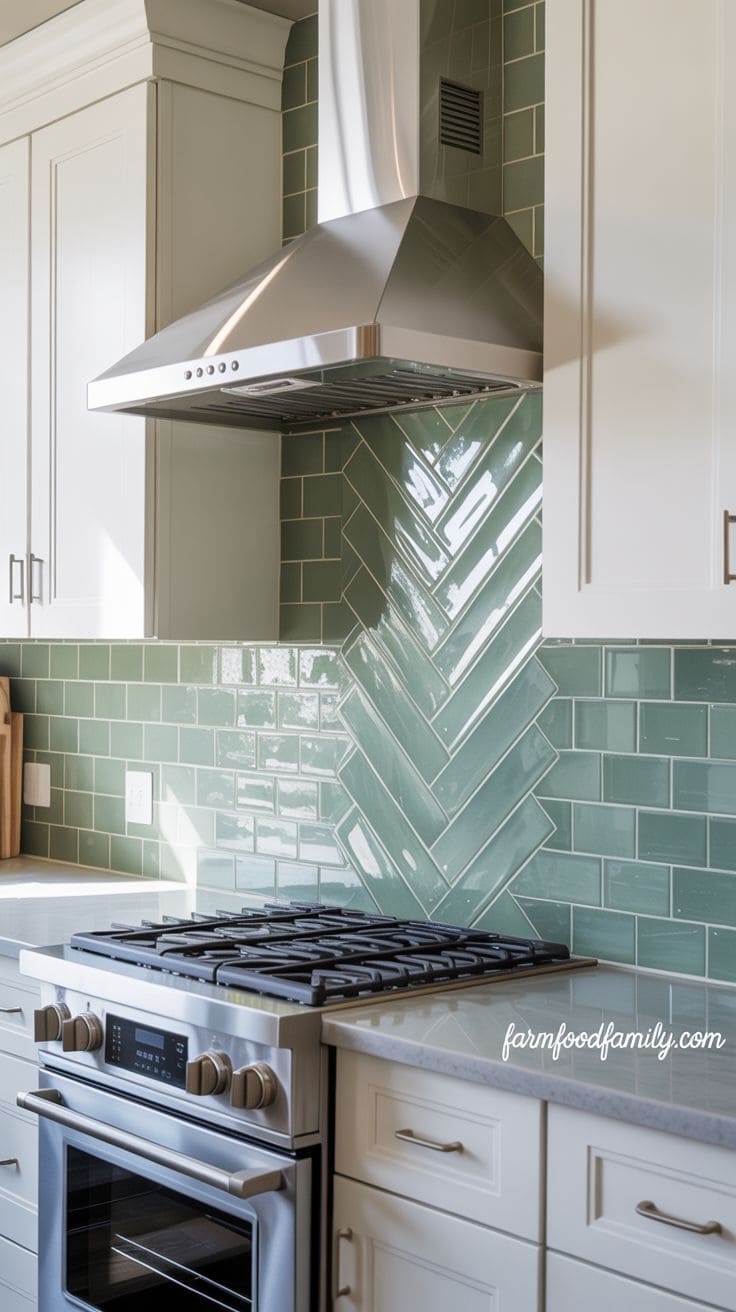
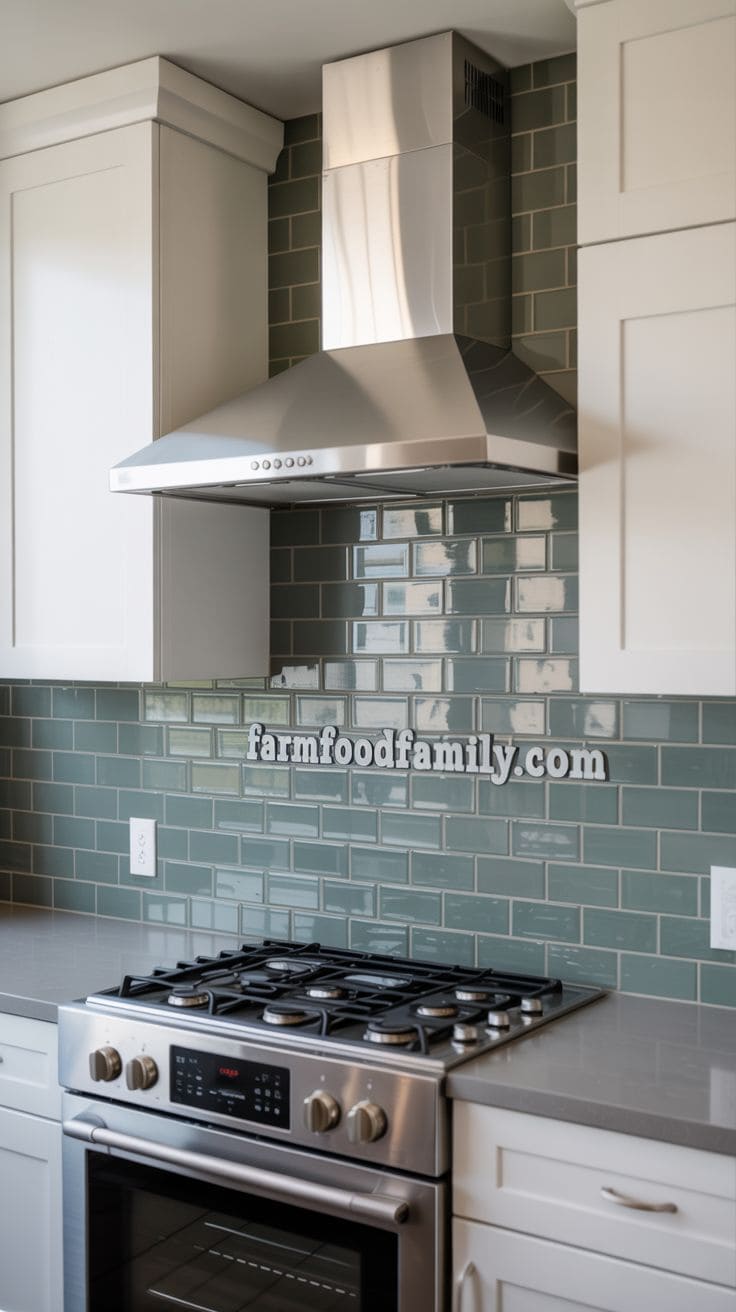
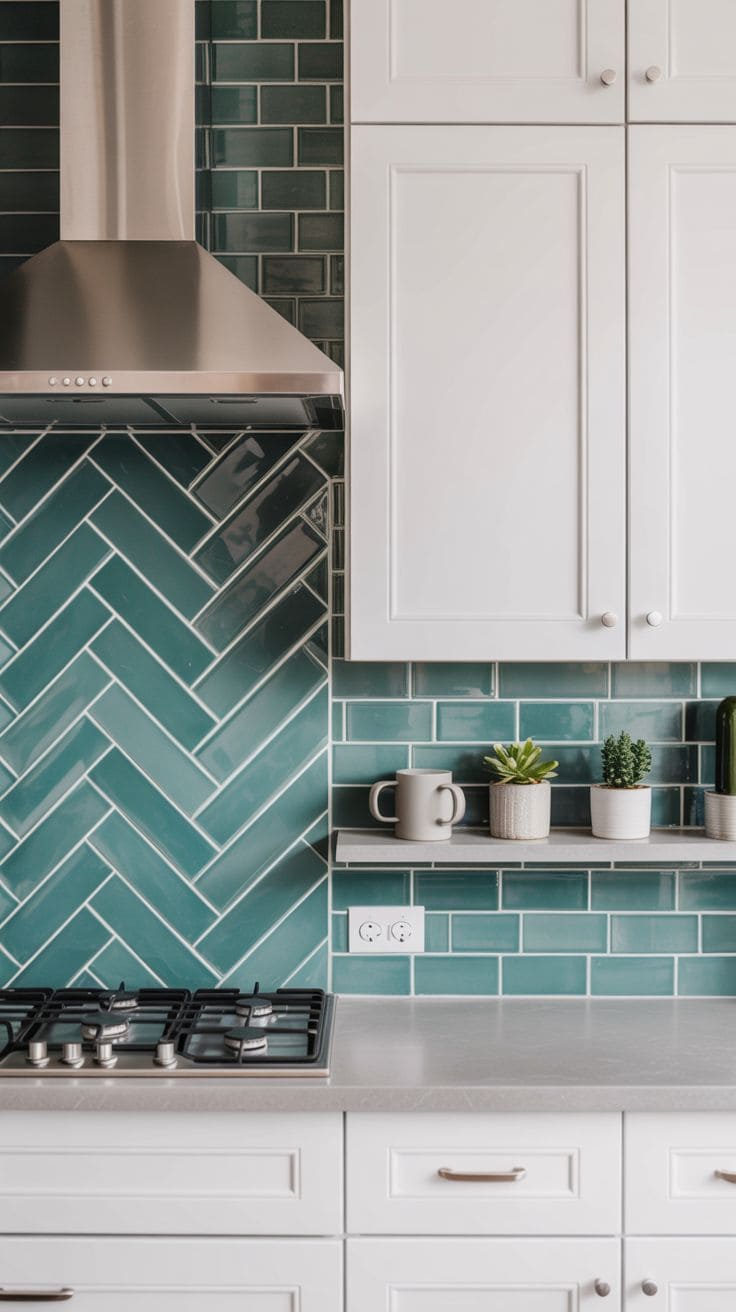
Using sage green subway tiles as a backsplash gives just enough color and personality to your kitchen without overpowering it.
Whether glossy or matte, these tiles add texture and dimension, particularly when used with white or light gray cabinets.
This style works well in modern, transitional, or Scandinavian kitchens with a neutral palette that nevertheless desires personality.
Green tiles create an earthy backdrop that complements both stainless steel equipment and wood accents.
Consider using a contrasting grout color, such as white or light gray, or a herringbone pattern for added flair.
If you currently have white or wood cabinets and want a modest but effective upgrade, this backsplash option is worth considering.
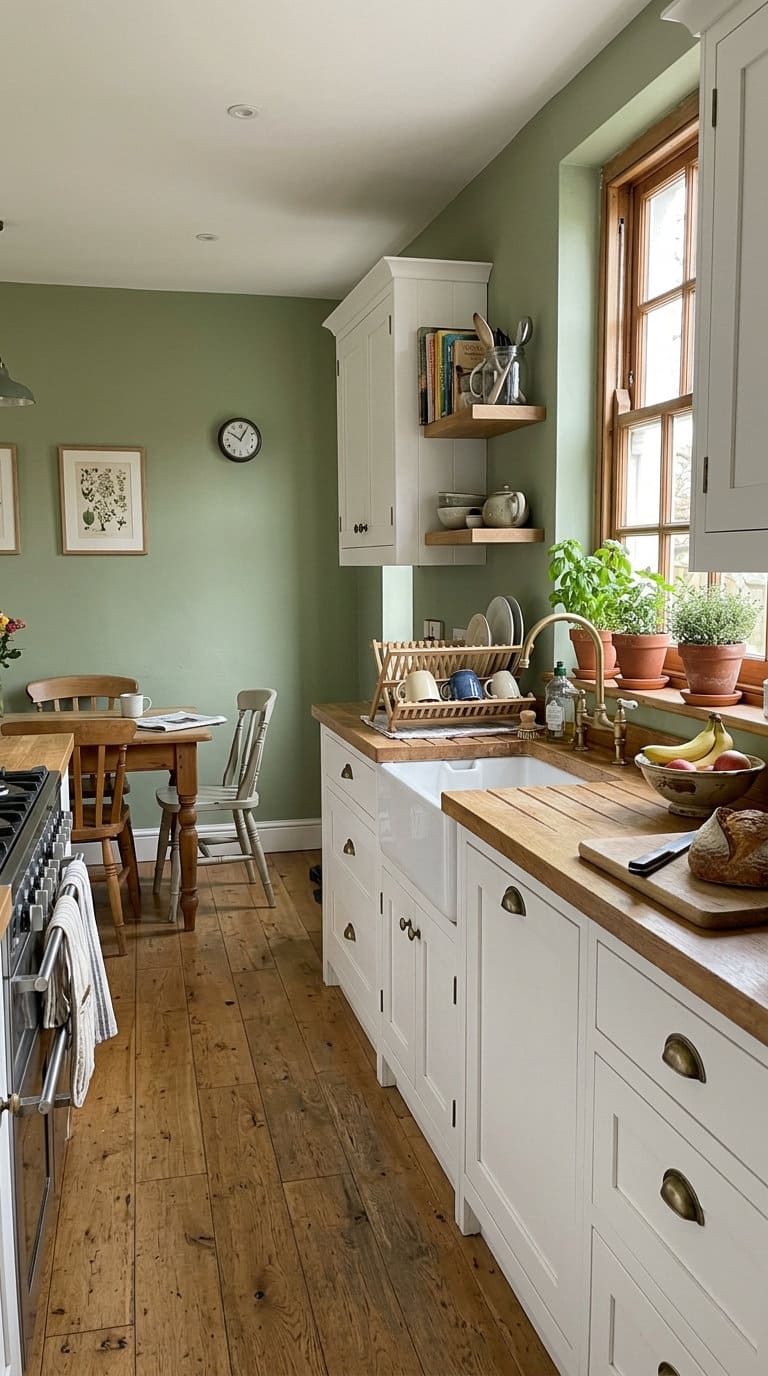
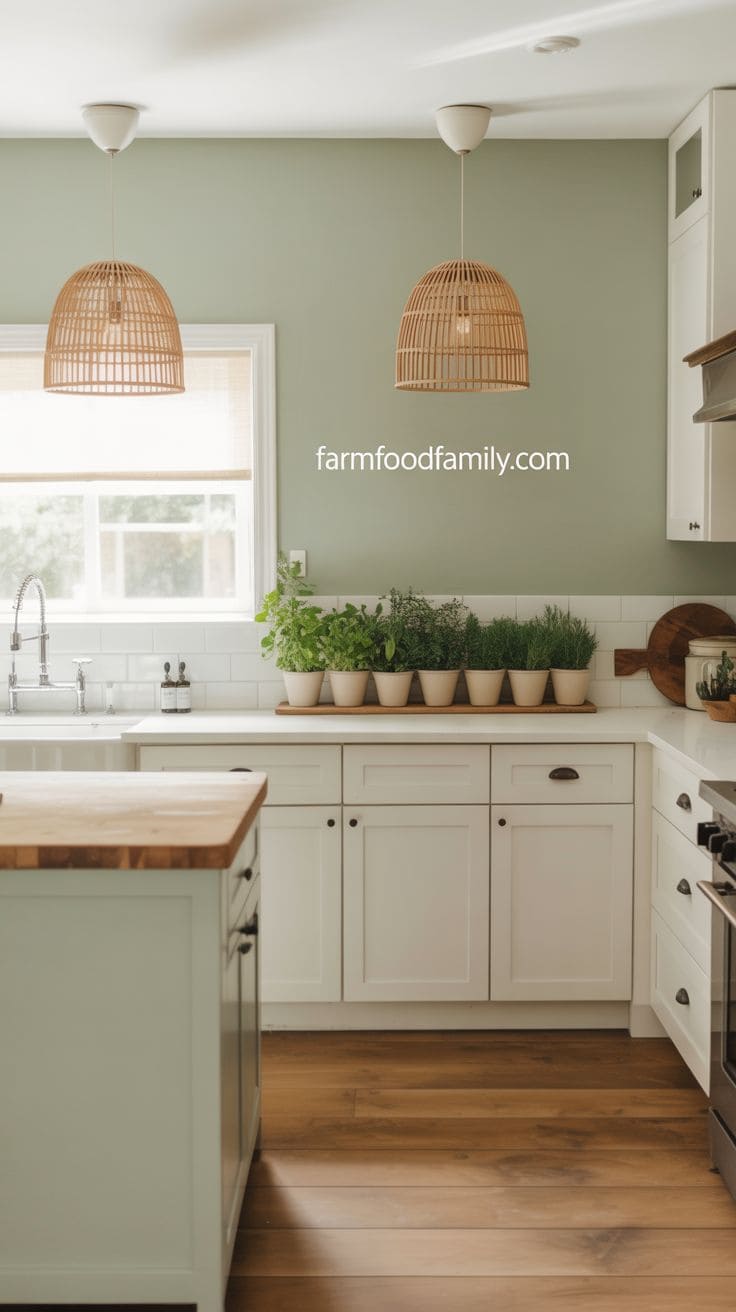
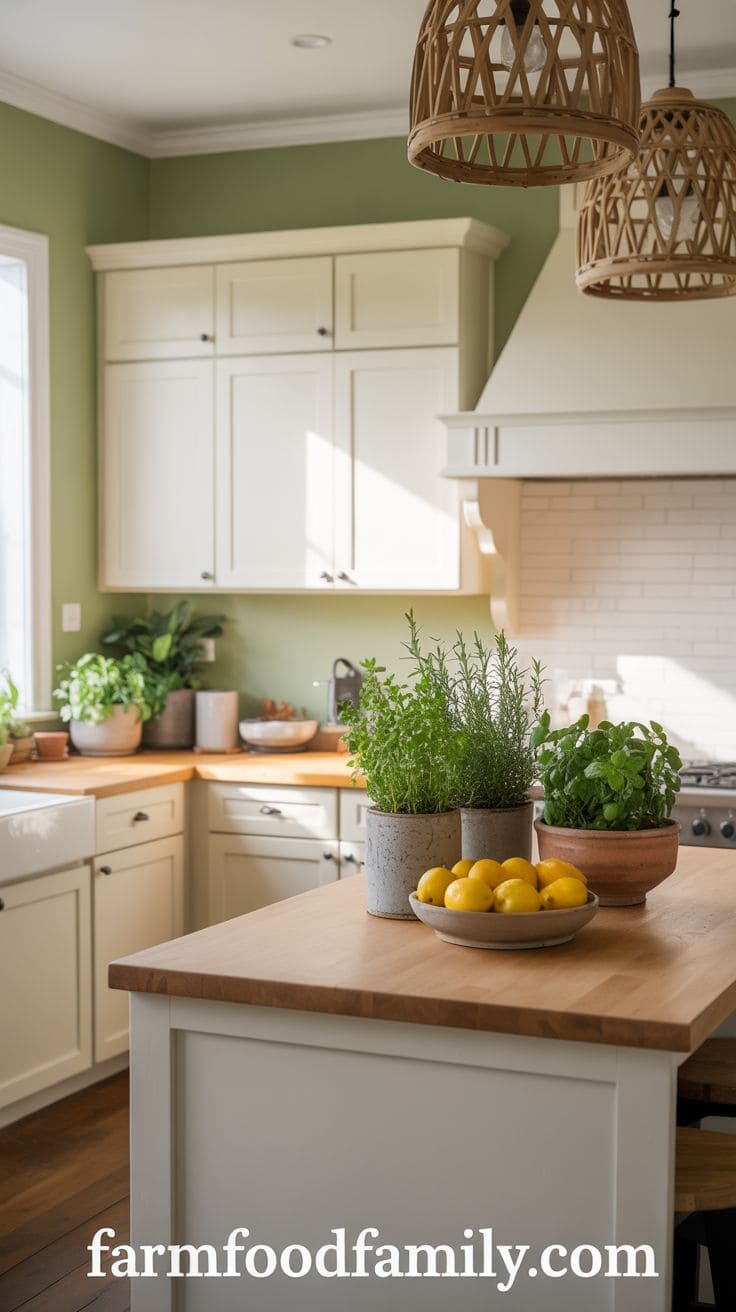
3. Sage Green Walls with White Cabinets
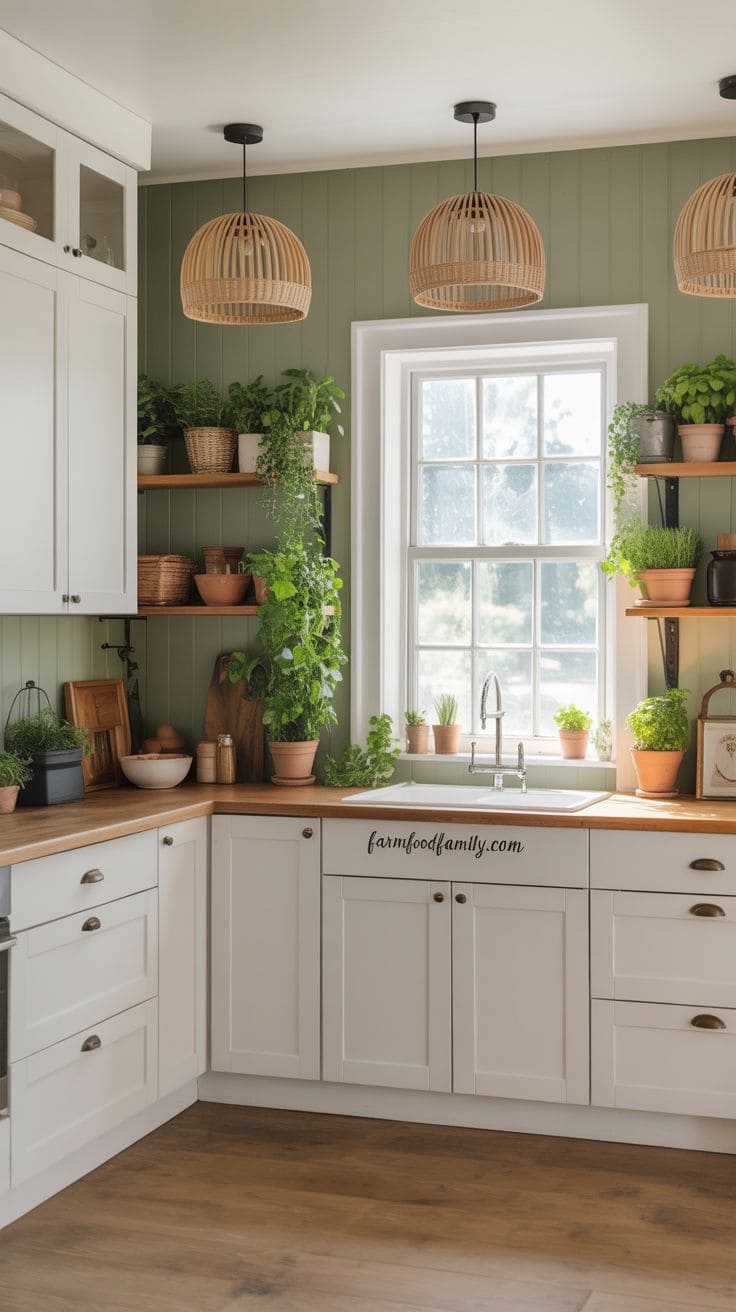
Sage green walls combined with white cabinetry result in a crisp, balanced kitchen that seems both new and ageless.
The soft green creates a calm, nature-inspired backdrop that introduces color without overwhelming, while the clean white adds brightness and structure.
This combination works well with a number of styles.
The sage walls add a sense of warmth and serenity to the kitchen, making it seem grounded, while the white cabinets bounce light around the area, keeping it spacious and open.
You can enhance this palette by using natural materials such as wood or rattan into shelving, stools, or decor.
The contrast of these colors evokes both serenity and flair, making it a lovely and adaptable design option.
4. Sage Green with Marble
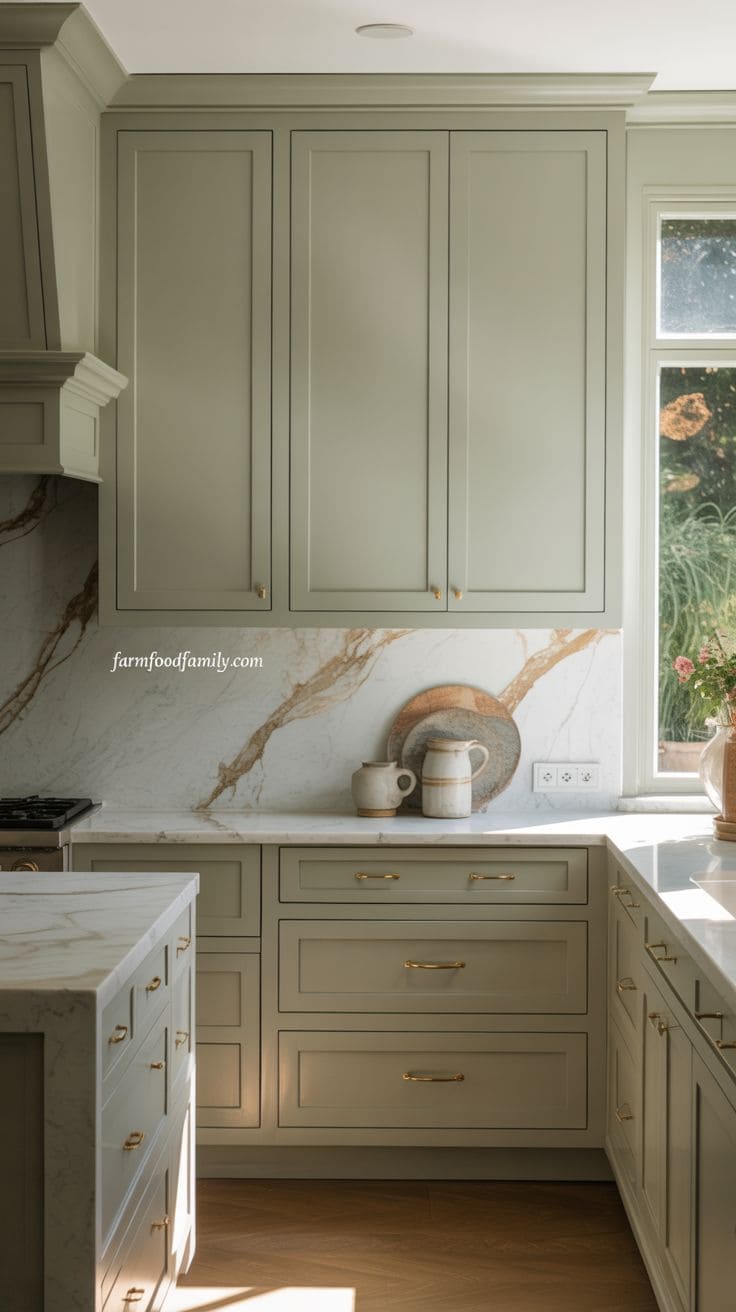
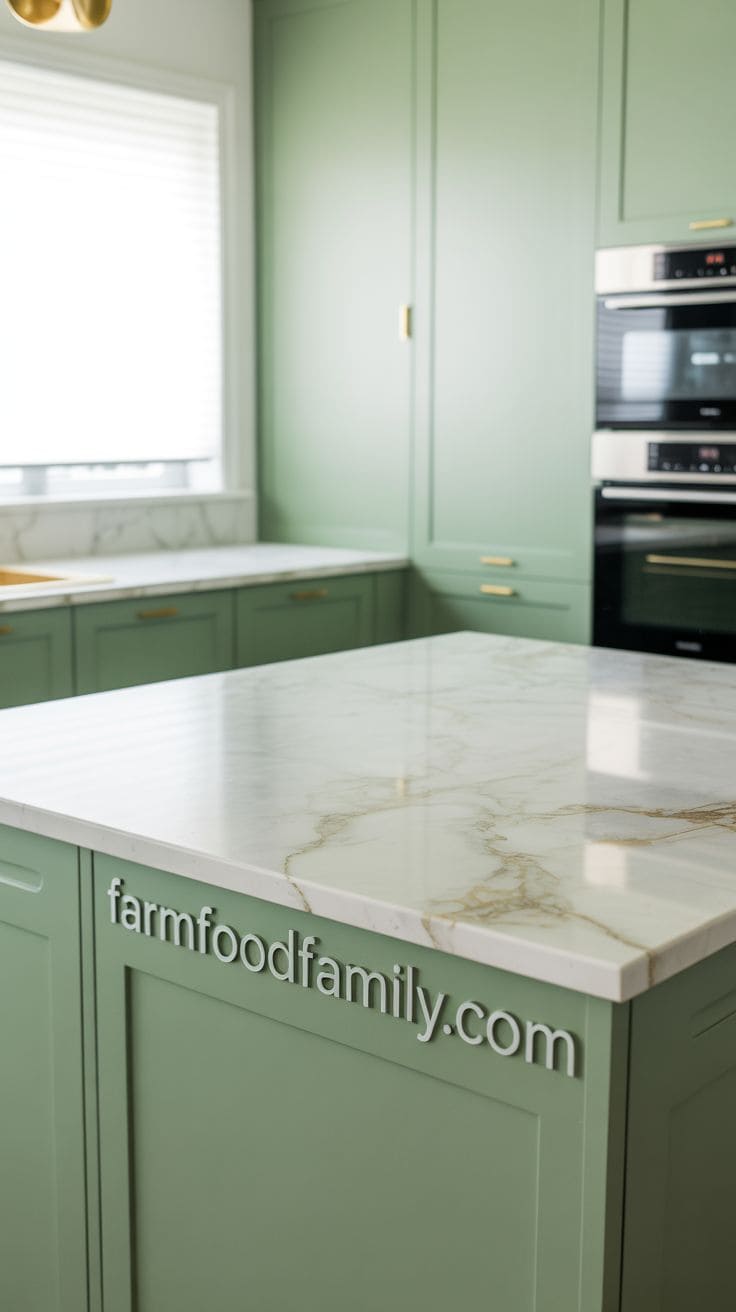
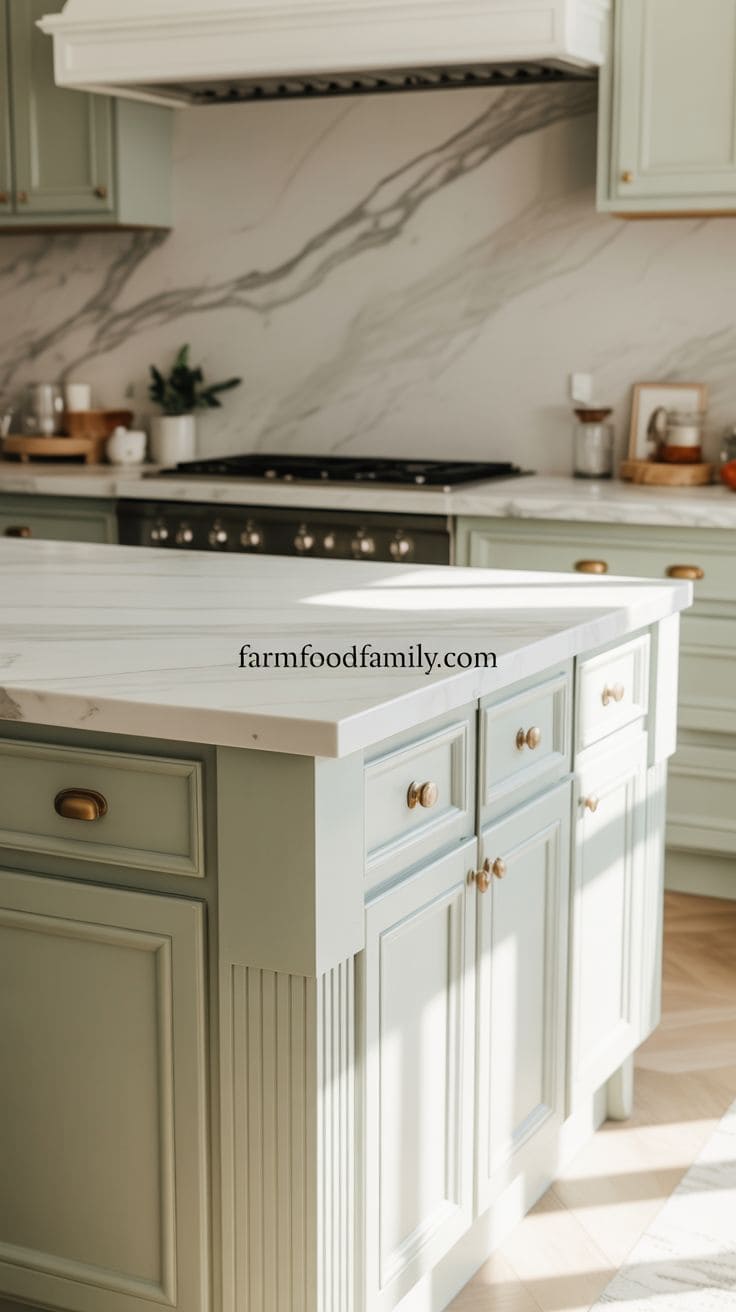
Sage green will seem even more elegant when paired with marble countertops and backsplashes.
This combination creates a luxury yet calm look that is perfect for transitional or upscale kitchens. The soft green provides freshness, and the marble adds sophistication.
Choose white marble with grey or gold veining to naturally connect the two tones together.
This palette is ideal for those who desire a sophisticated look while still feeling personal and warm. To achieve a more polished look, consider fluted cabinet details or glass-front uppers.
This concept works especially effectively in environments that highlight material and texture.
It’s a fantastic combination of nature-inspired colors and high-end design, resulting in a kitchen that feels like a tranquil, elegant refuge.
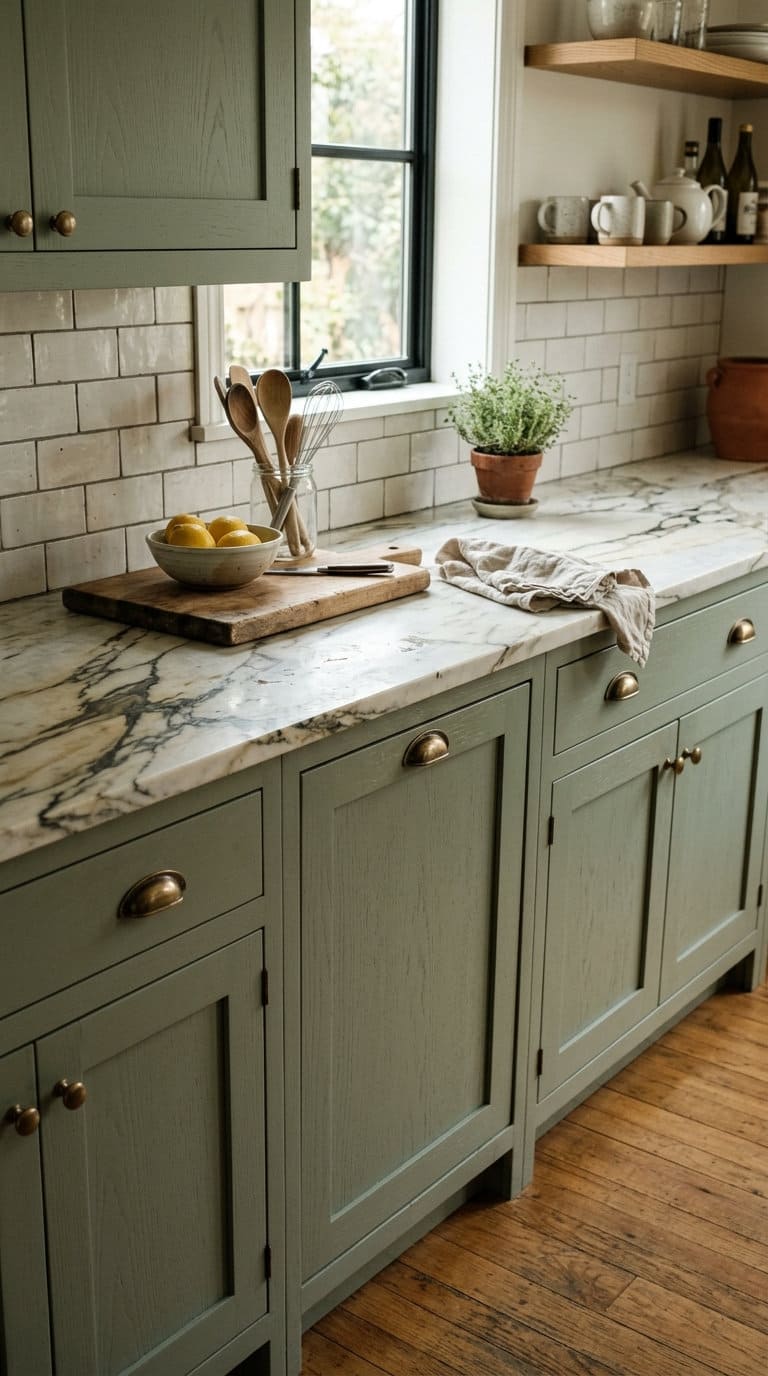
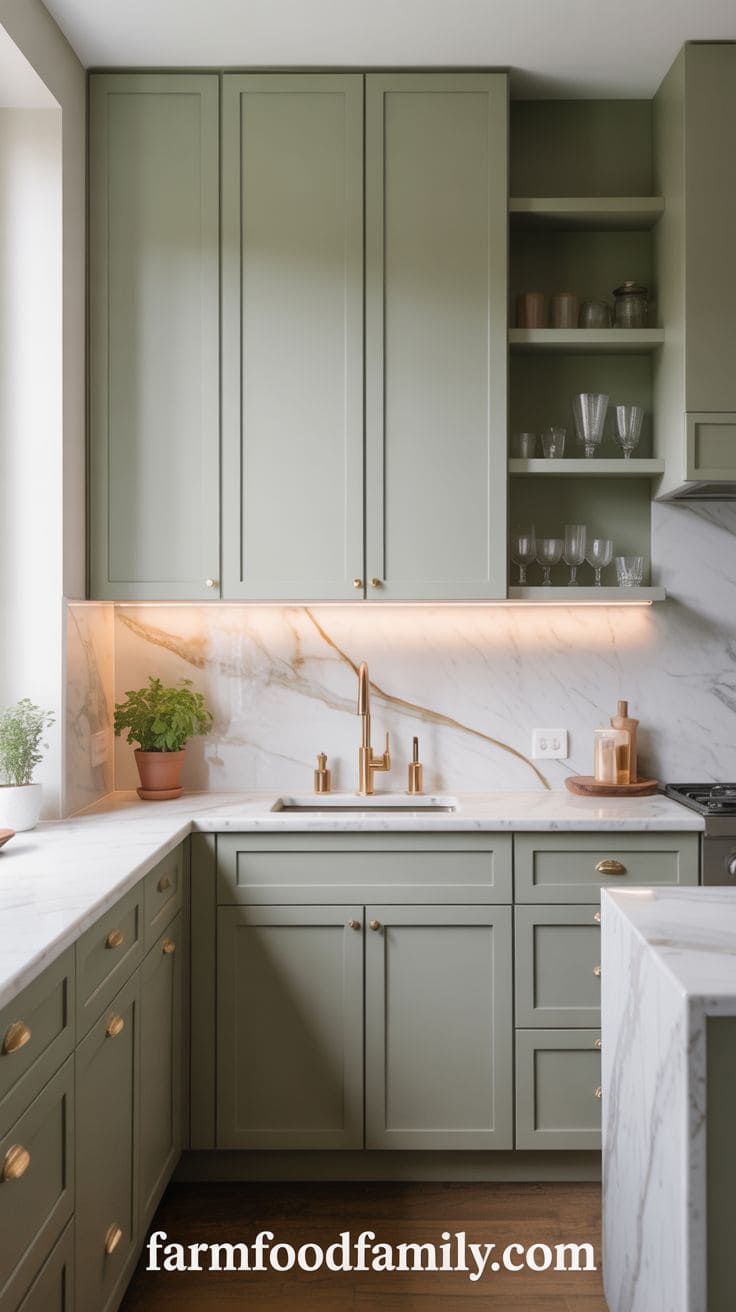
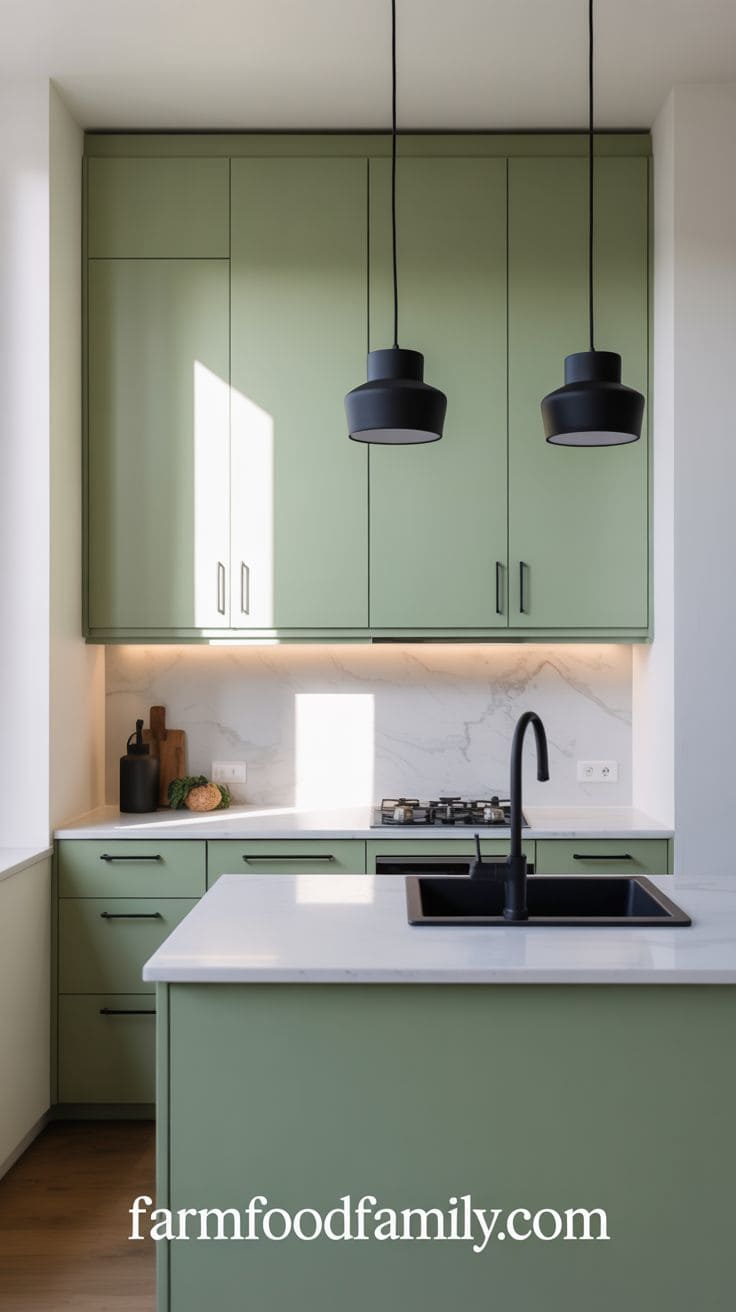
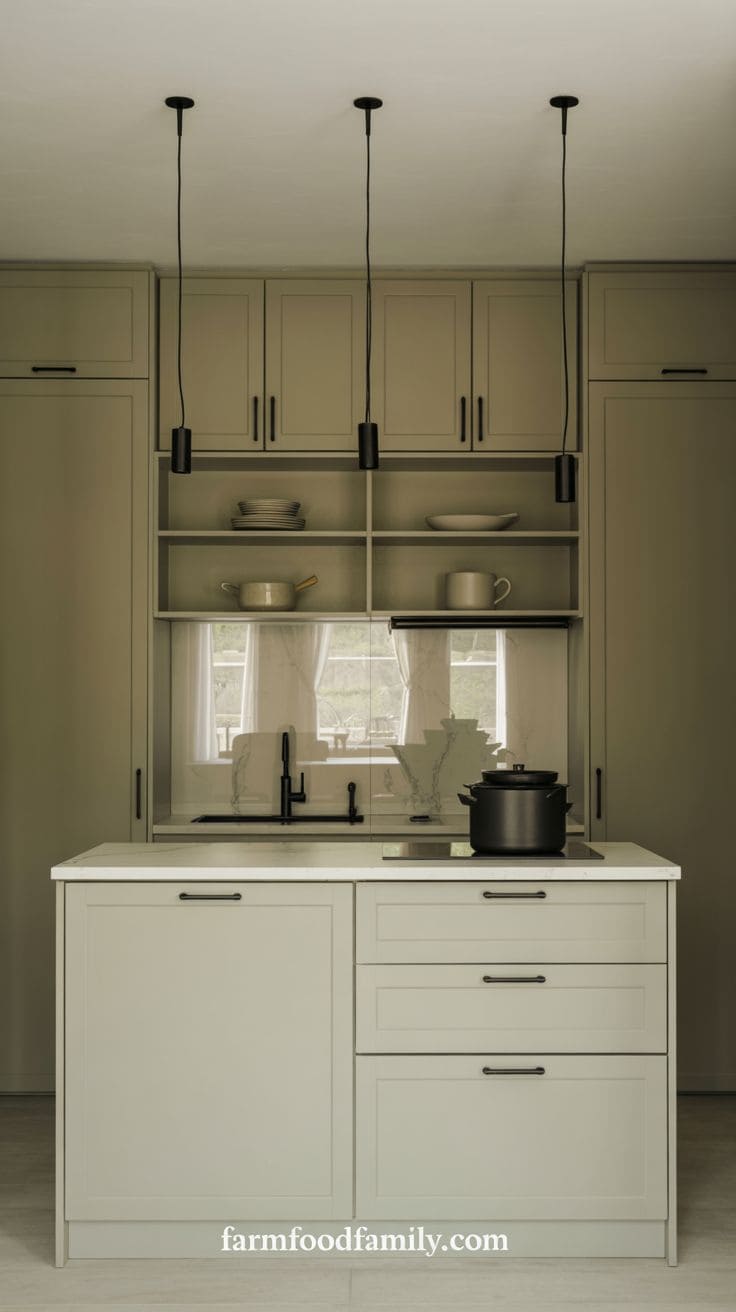
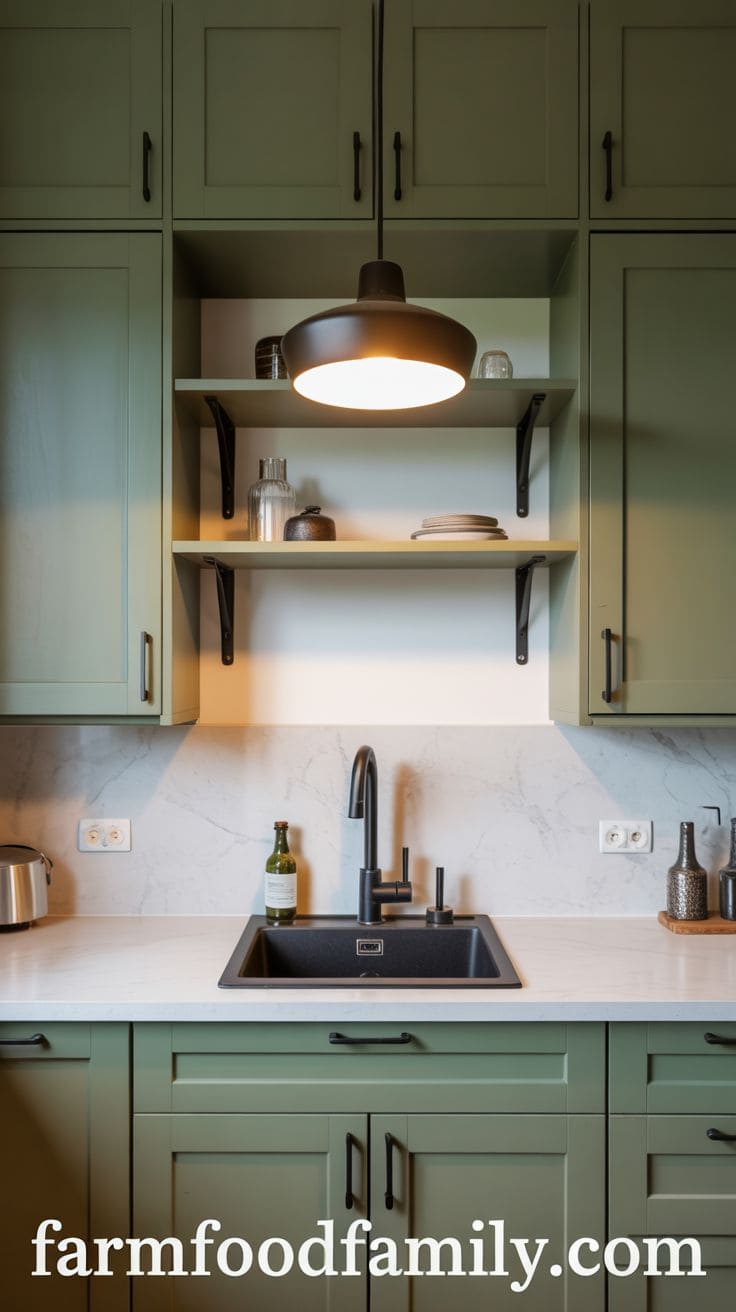
5. Modern Sage Green Cabinets with Black Accents
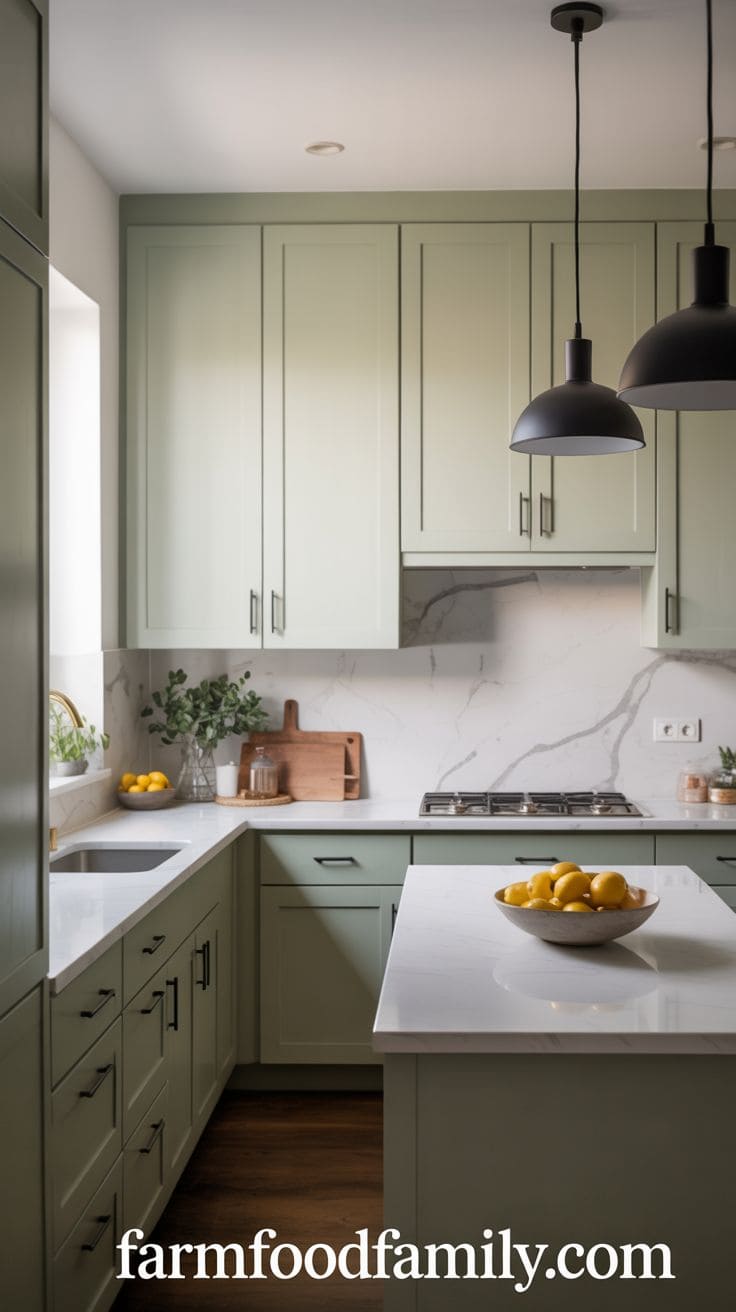
Smooth, flat-front sage cabinets with black hardware, fixtures, and accessories provide a more sophisticated and minimalist look in sage green.
This combination is sleek, clean, and slightly edgy without sacrificing warmth.
The gentle green prevents the area from appearing too stark, while the black adds contrast and visual impact.
To accentuate the design trend, use matte black light fixtures, faucets, or even a black sink.
Sleek white or marble-look countertops and backsplashes serve to balance the tones and keep the space feeling fresh.
The contrast feels deliberate and well-balanced, giving sage green a contemporary edge.
6. Accent Wall
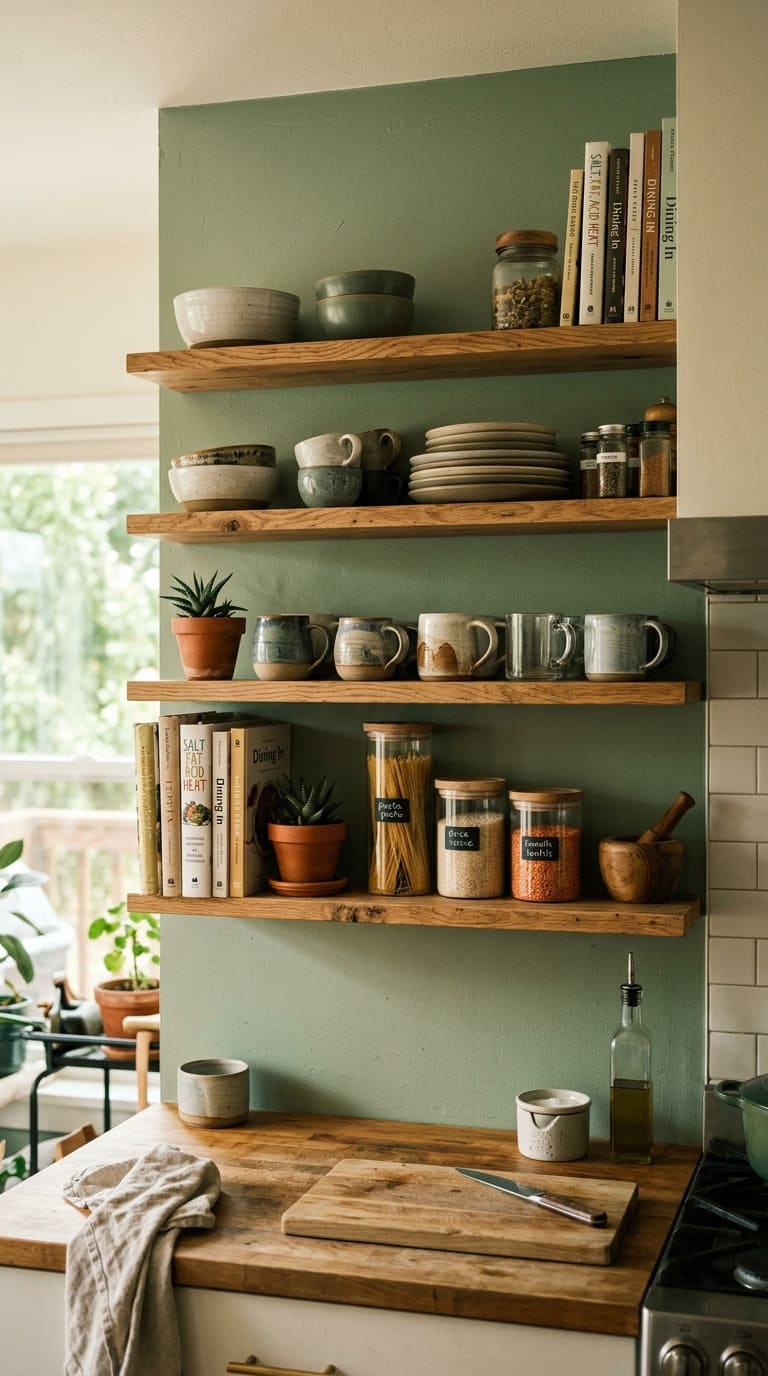
A single sage green wall, usually behind open shelving or the range, gives you the color’s calming effect without committing the whole kitchen to it. It’s the cheapest entry point on this list, a gallon of paint and an afternoon.
One thing worth knowing: north-facing kitchens pull cool-toned sage toward teal or blue under natural light.
If your kitchen doesn’t get much direct sun, look for a sage with a yellow undertone (Sherwin-Williams Clary Sage and Svelte Sage are both built to hold their green rather than drifting cool) so the wall reads as sage rather than something closer to teal.
7. Retro Appliances
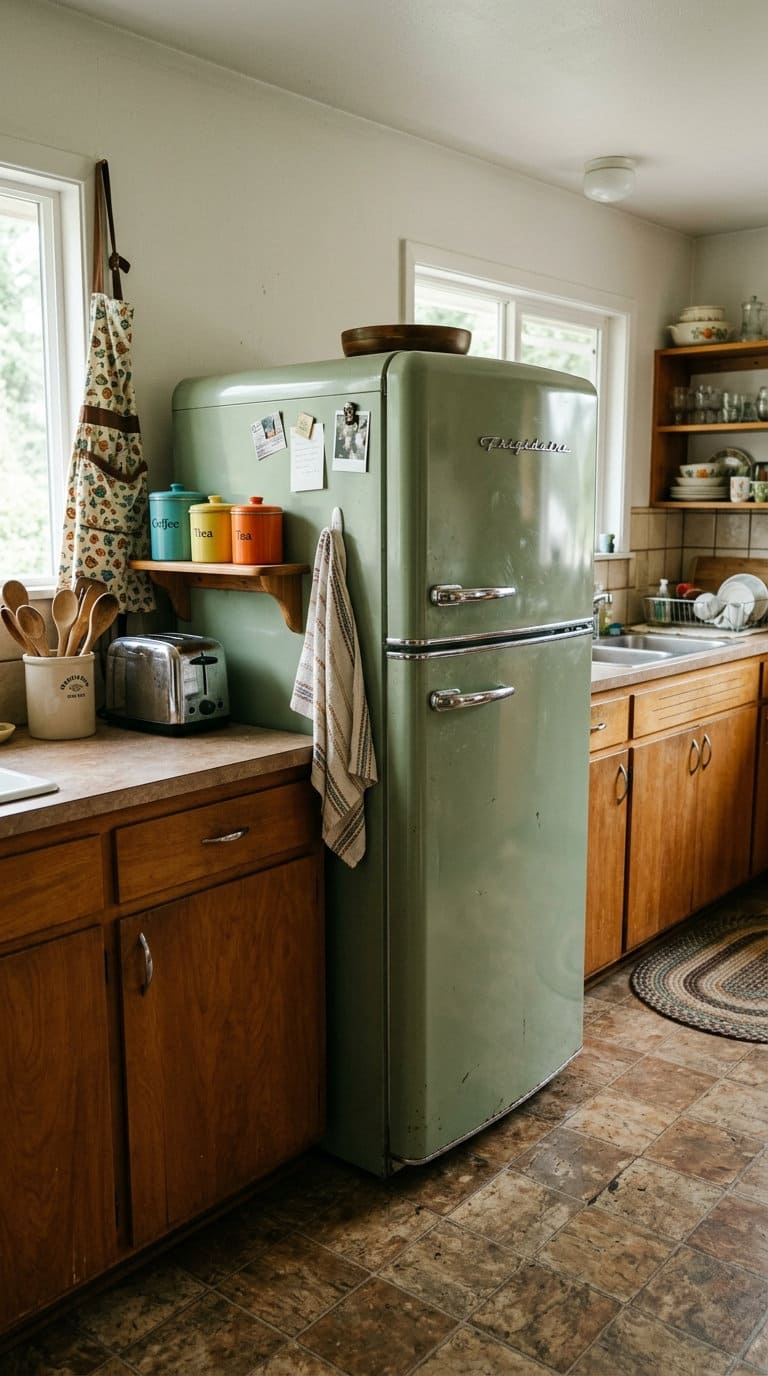
Pastel or sage-toned retro-style refrigerators and stoves (Smeg and similar brands make them) lean into a mid-century look that pairs naturally with sage cabinetry or walls.
It’s a genuinely bigger investment than paint, retro-style appliances typically cost more than standard equivalents, so this is more of a “commit to the whole look” idea than a quick weekend project.
8. Sage and Wood
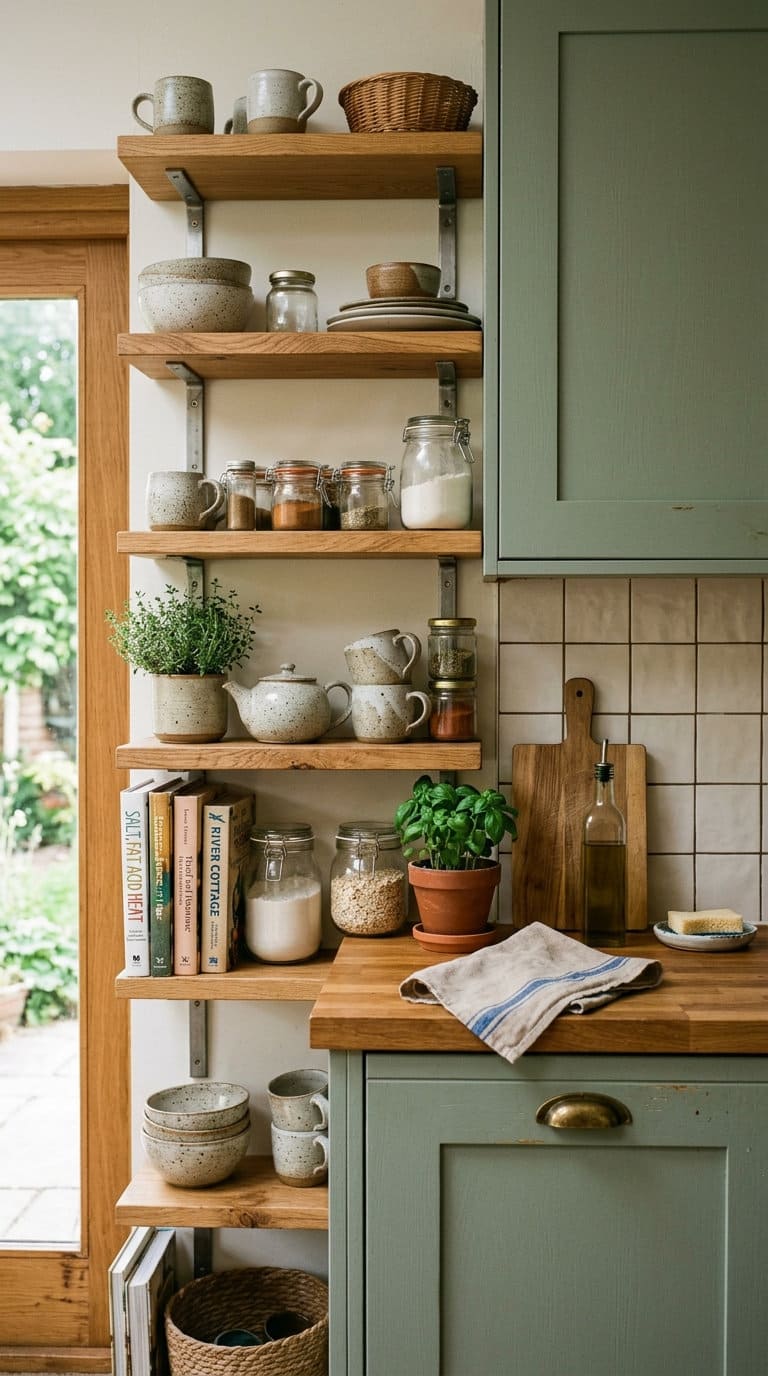
Open shelving, exposed ceiling beams, or a butcher block island in warm wood tones next to sage green surfaces is one of the most reliable pairings in this whole list.
Wood keeps sage from reading as cold or clinical, which matters more than people expect, a kitchen that’s all cool green and white surfaces with no warm material anywhere is exactly the combination that risks feeling sterile.
9. Sage Green Tiles (Flooring)
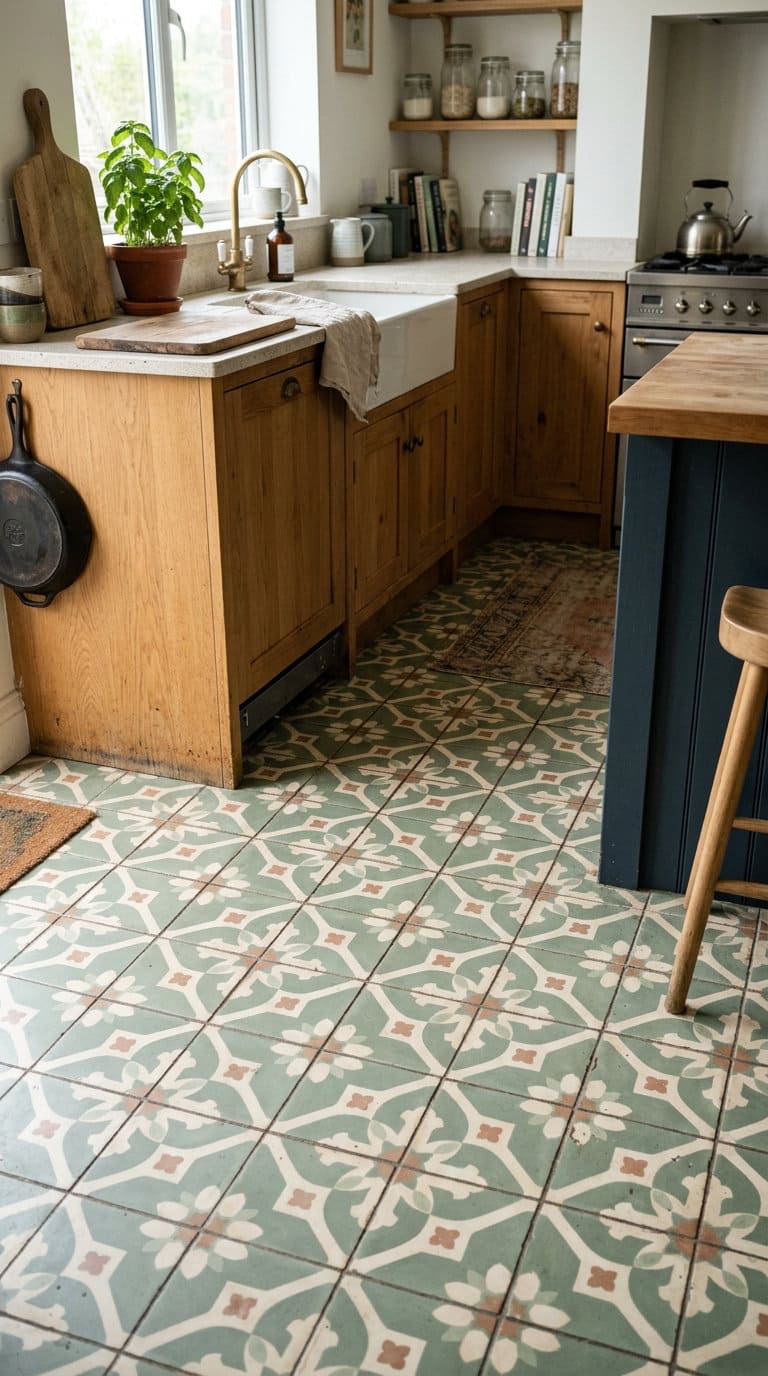
Sage green isn’t only for cabinets and walls, sage-toned floor tile (encaustic or cement-look patterns especially) works as a quieter alternative to bold patterned tile while still adding real color underfoot.
This is a bigger job than a backsplash swap, budget for a proper floor installation rather than a DIY afternoon.
10. Farmhouse Chic
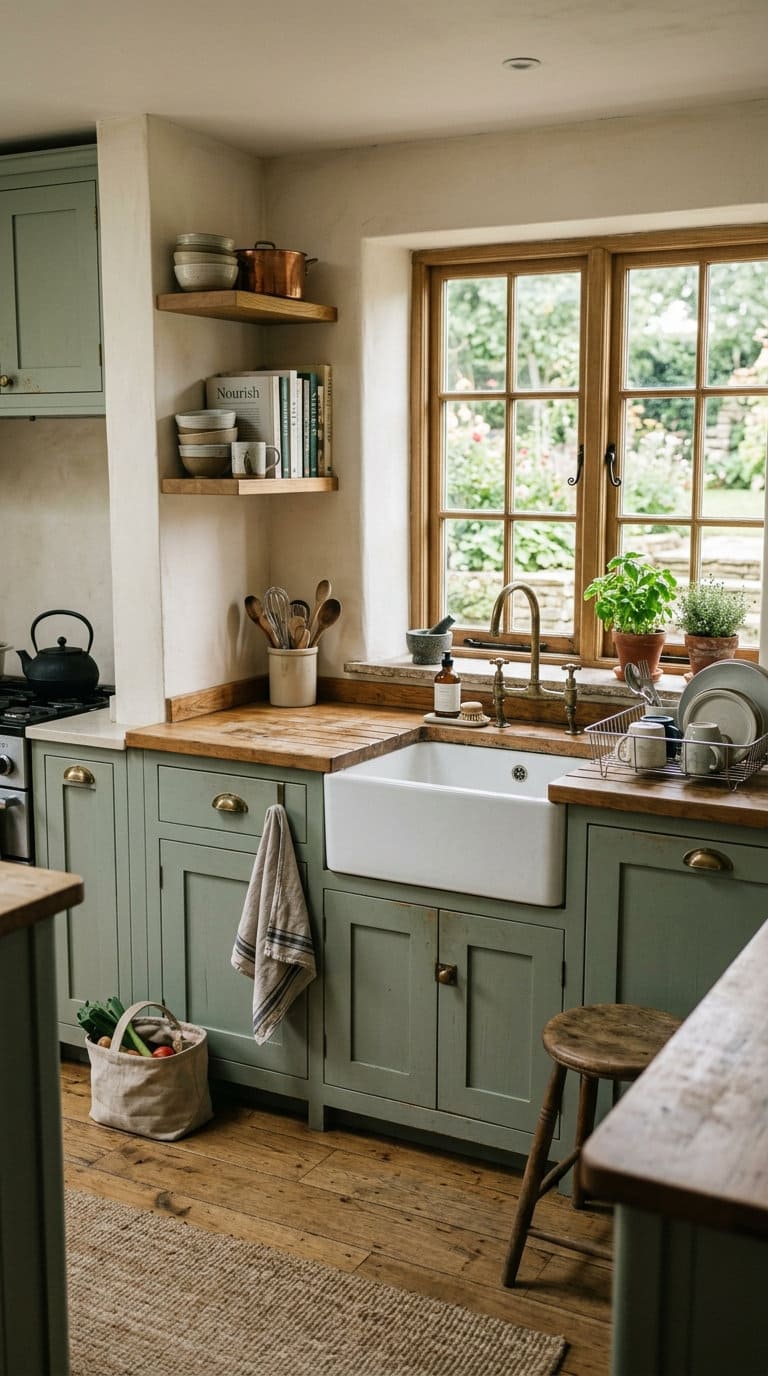
Apron-front sinks, open shelving, and distressed or shaker-style cabinet fronts in sage green hit the farmhouse look directly.
This is one of the pairings that shows up most in real 2026 kitchen trend coverage, sage plus exposed brick, plus wood, plus vintage-style fixtures.
11. Modern Minimalism
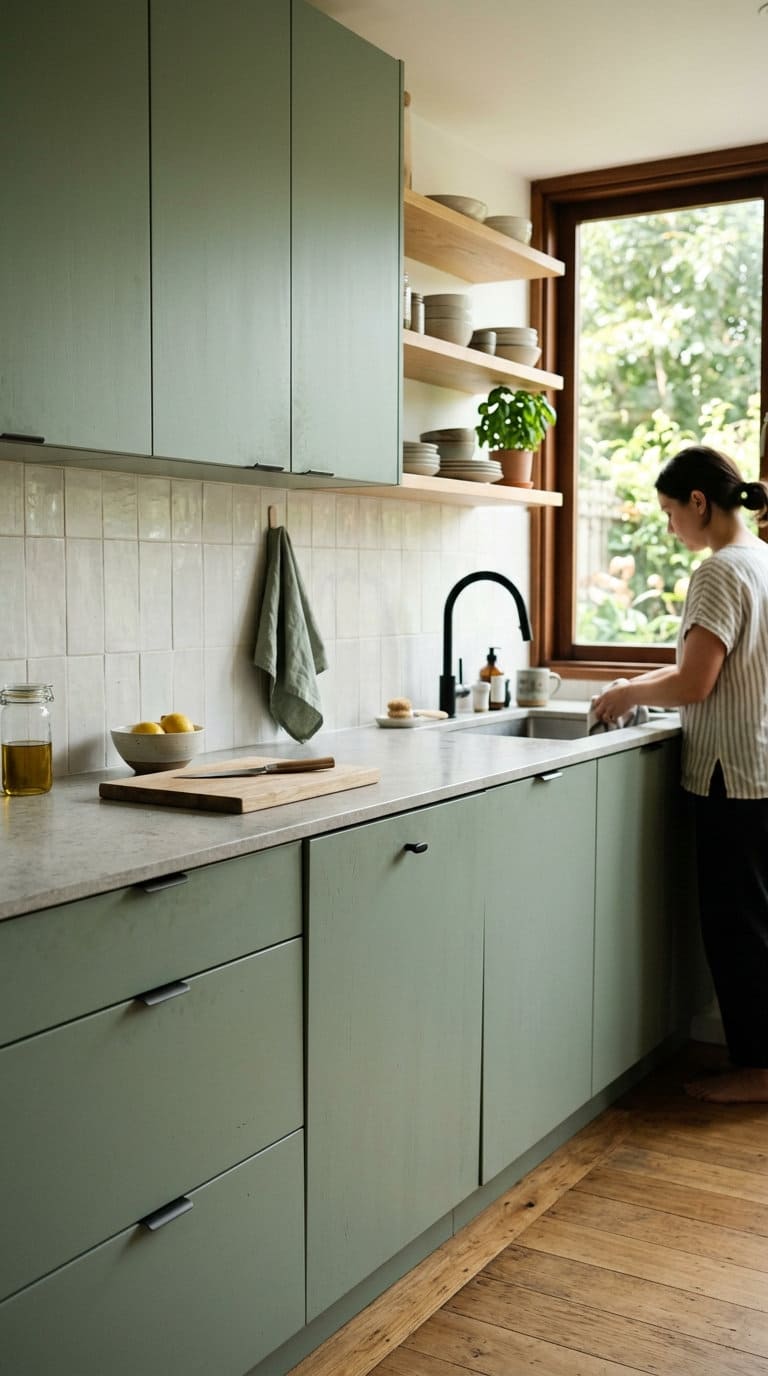
Flat-panel or slab-front sage green cabinets with minimal hardware and clean lines take the color in a completely different direction than farmhouse chic.
This is also where the “will it look dated” question matters most, a muted, slightly gray-leaning sage (something closer to Farrow & Ball’s Vert de Terre) reads as a calm, classic neutral in a minimal kitchen.
A very pale, cool-toned sage is the version more likely to read as sterile or trend-chasing once the trend moves on.
12. Floating Sage Shelves
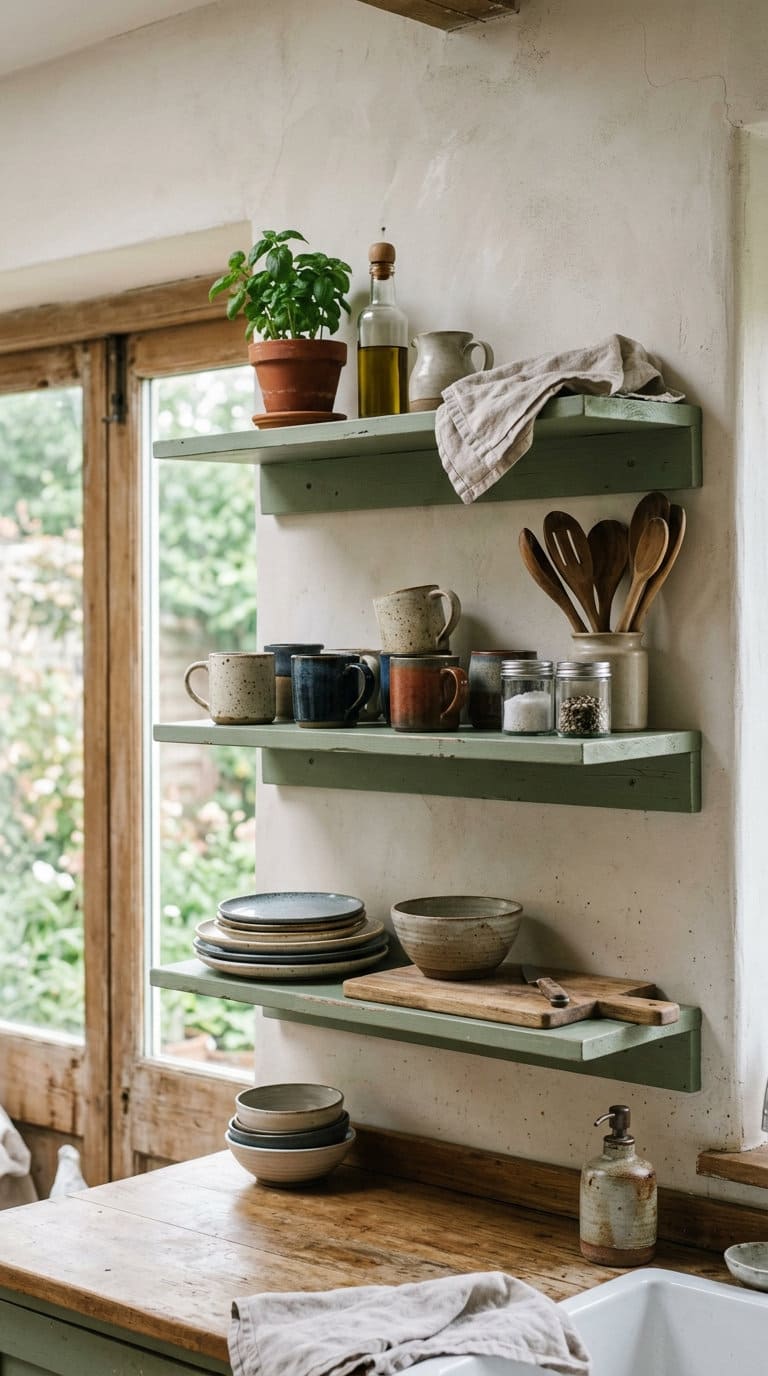
Floating shelves painted or stained in sage green (or simply sage-colored brackets under wood shelves) add color without the commitment of full cabinetry. Good option if you’re renting or not ready to repaint everything.
13. Sage Green Bar Stools
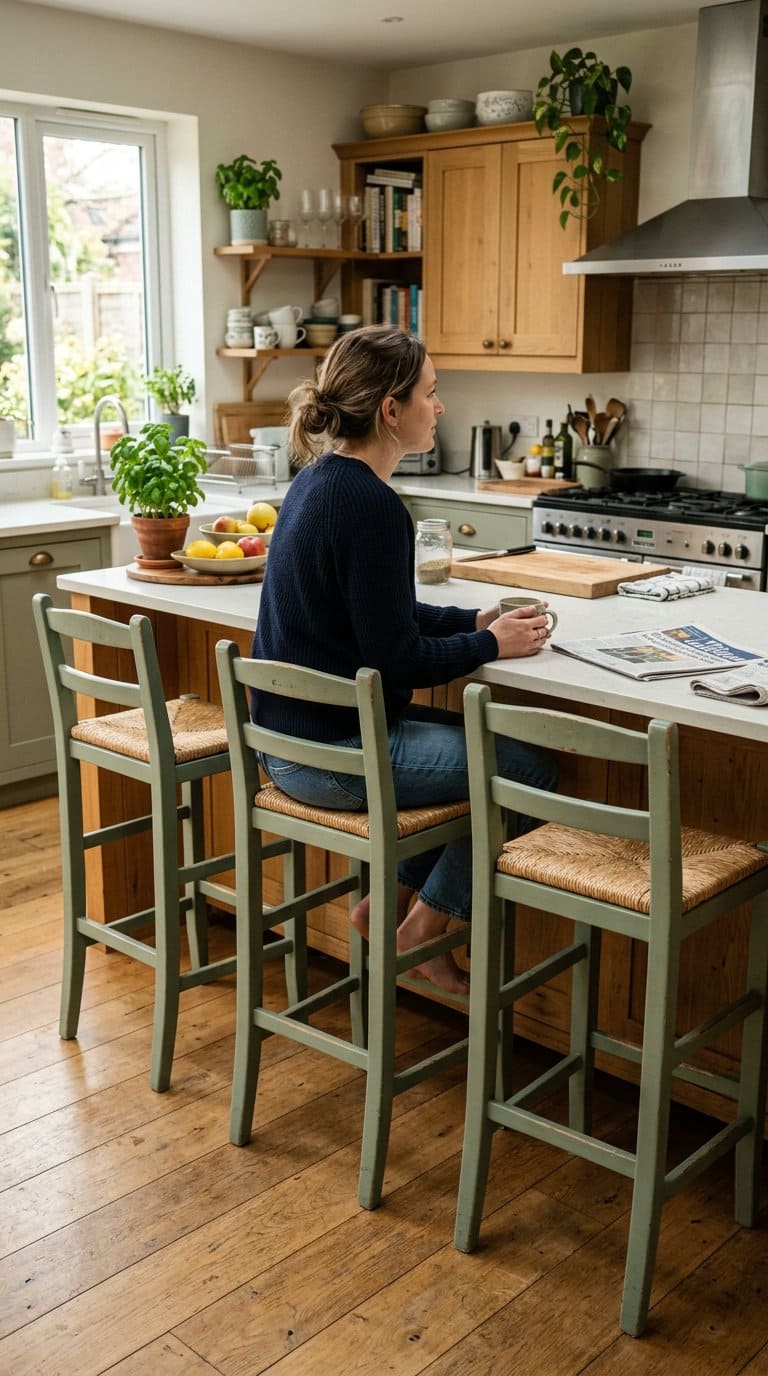
A few sage green bar stools at an island bring in color as an easily swappable accent, no paint or contractor needed. This is the lowest-risk way to test whether you actually like living with the color before committing to cabinets or walls.
14. Vintage Finds
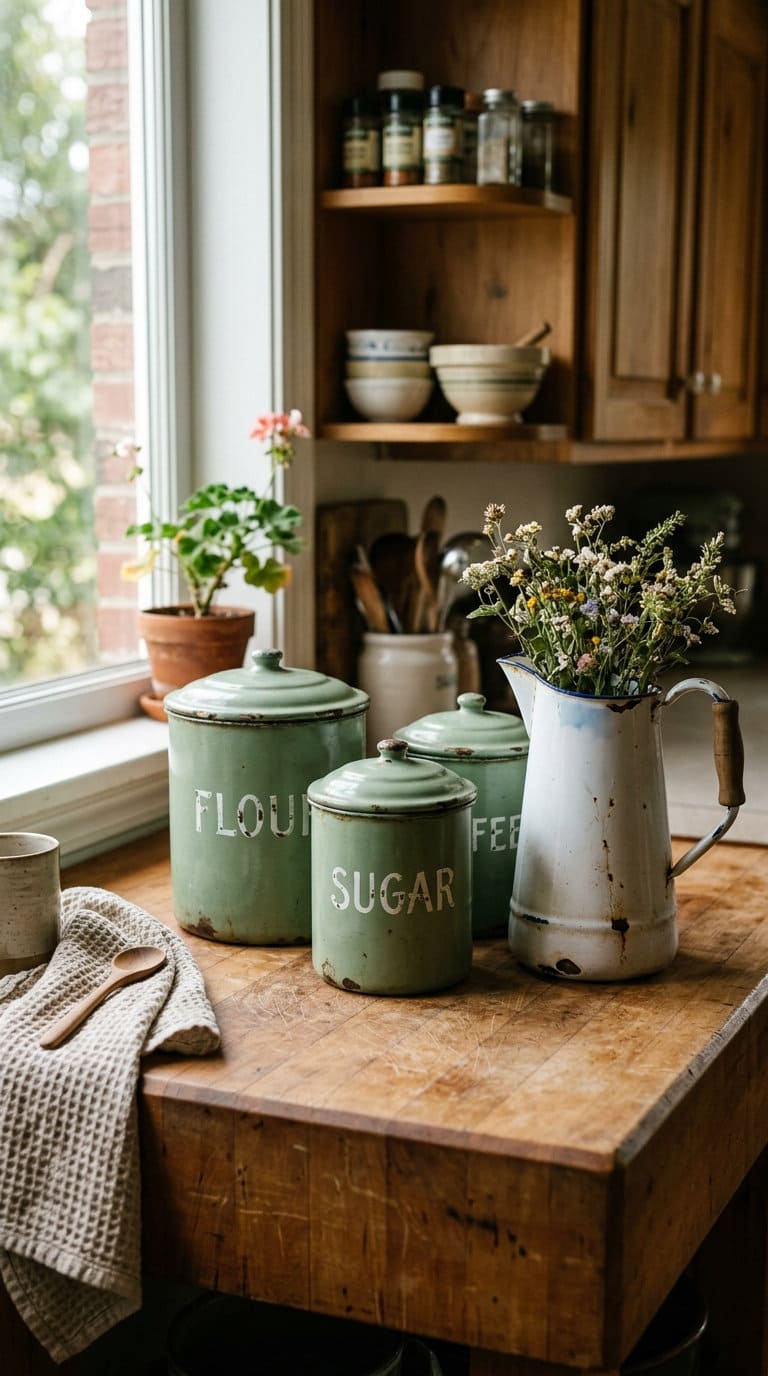
Vintage sage green canisters, an old enamel pitcher, or a secondhand hutch in a faded sage tone adds real character fast, and it’s usually cheap if you’re patient about thrift shops and estate sales.
15. Coordinated Cookware
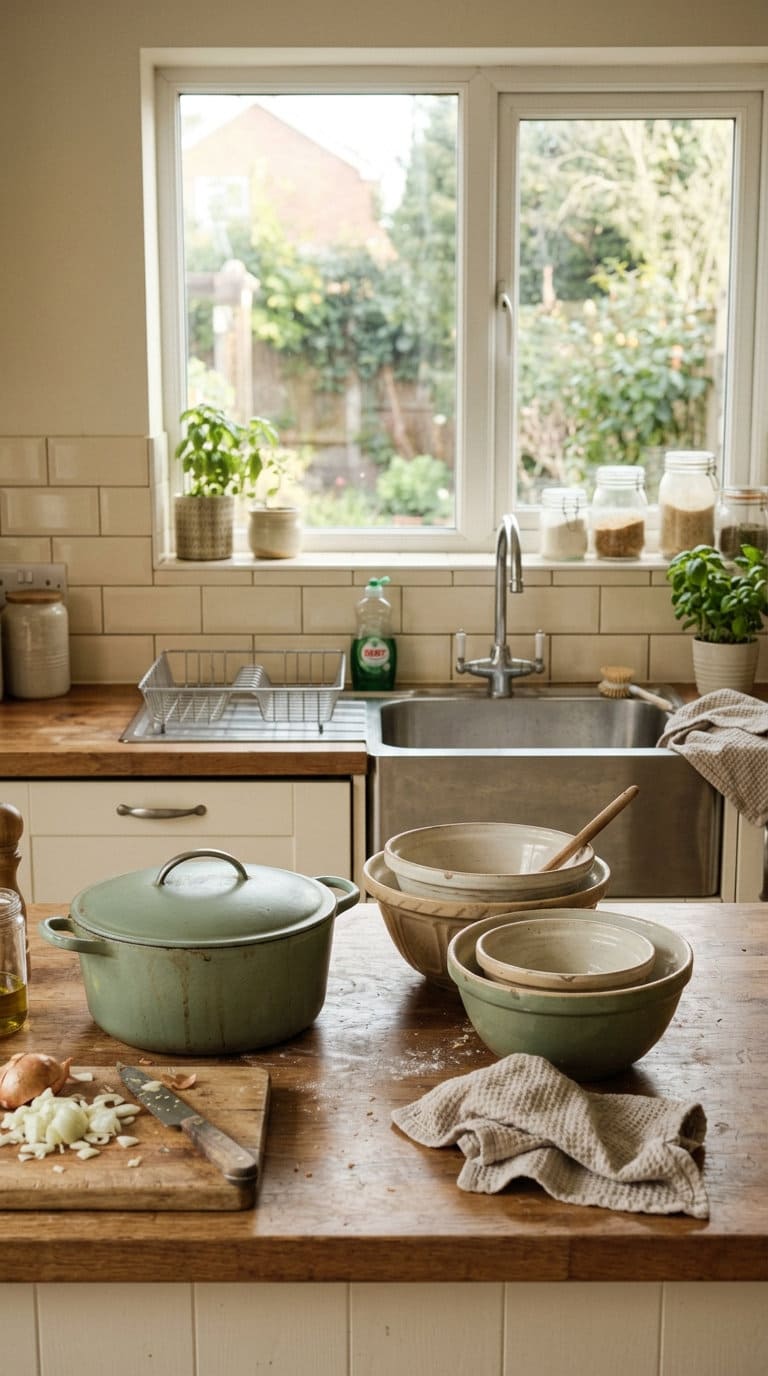
Sage green Dutch ovens, mixing bowls, or small appliances (a stand mixer, an electric kettle) left out on the counter double as functional decor. Cheap way to add color if you already own or were going to buy this cookware anyway.
16. Textured Walls
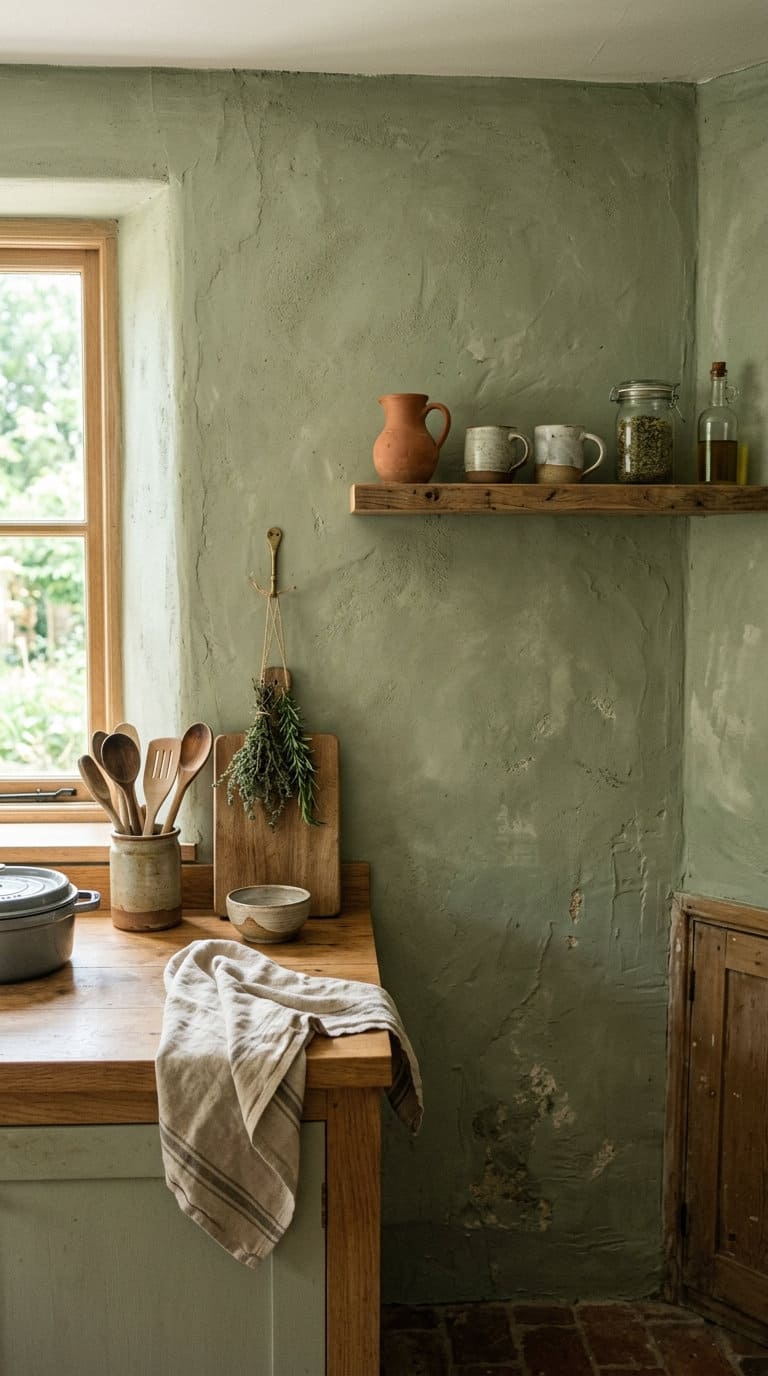
Limewash, venetian plaster, or a textured paint technique in sage green adds depth beyond flat color. This is a more skill-intensive DIY than a standard paint job, or budget for a professional if you want the texture done well, a botched limewash job is harder to fix than a bad flat-paint job.
17. Gold Fixtures
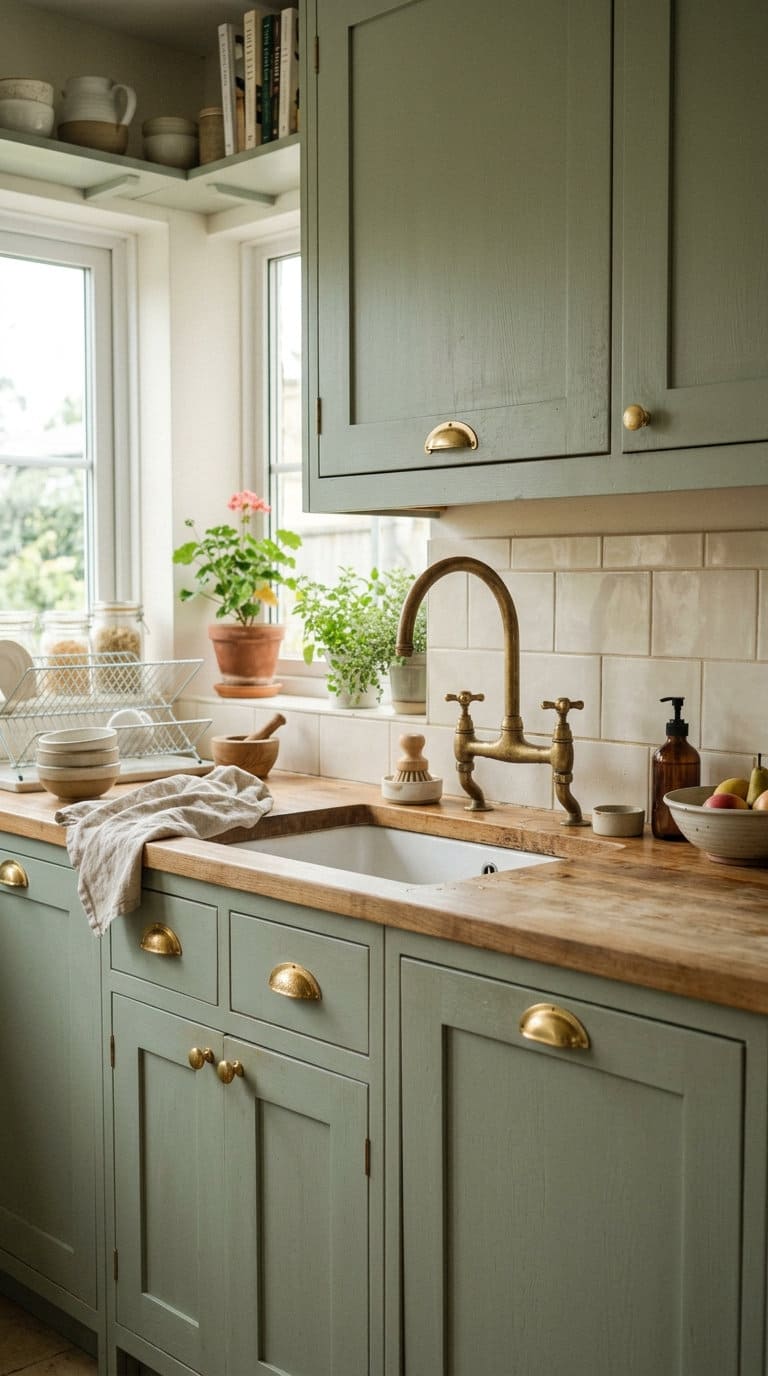
Gold or brass faucets, cabinet pulls, and pendant lights against sage green cabinets is one of the most consistently recommended pairings across current kitchen trend coverage, the warm metal keeps the green from feeling cold.
18. Window Treatments
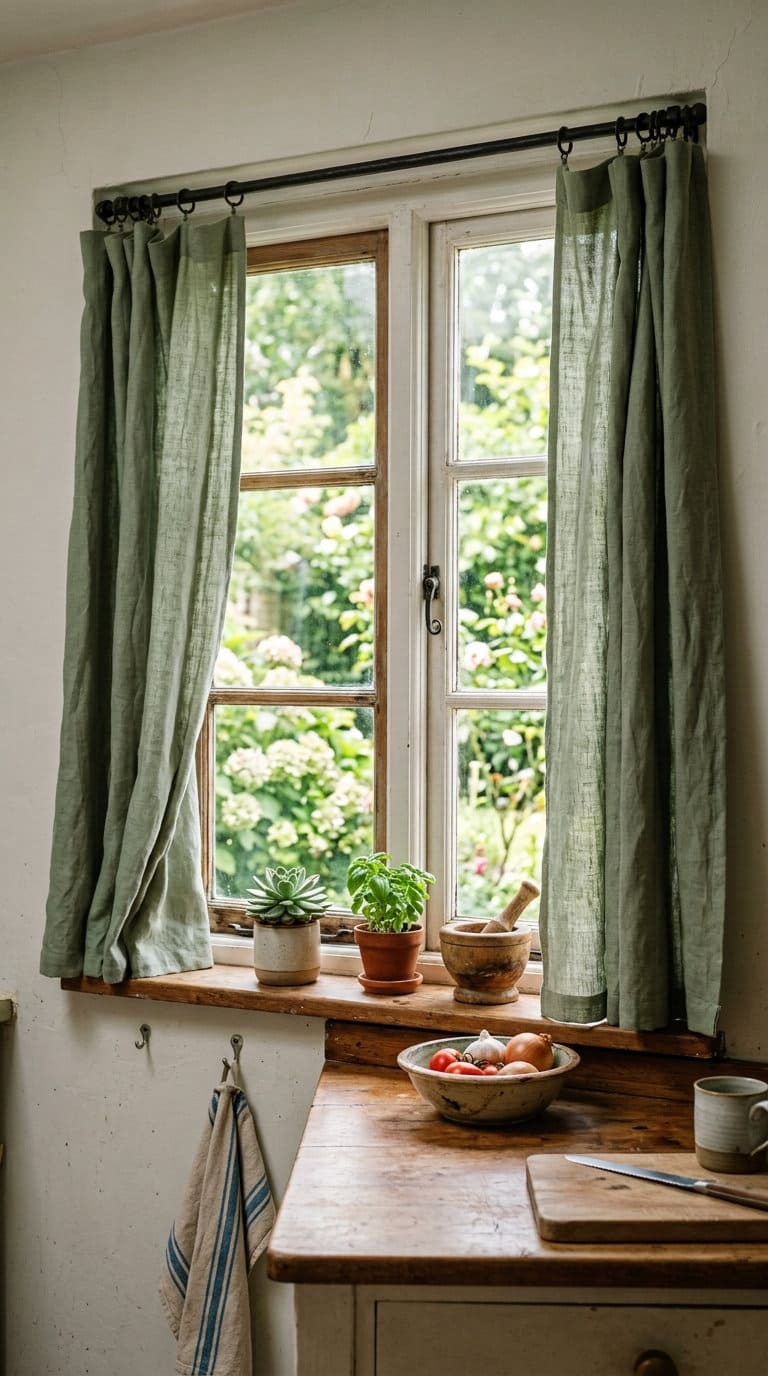
Simple linen or cotton curtains, or a woven roman shade, in a soft sage or a complementary cream, softens a kitchen without competing with cabinet color. Keep it simple, busy patterned window treatments tend to fight with an already-present wall or cabinet color rather than complementing it.
19. Artwork
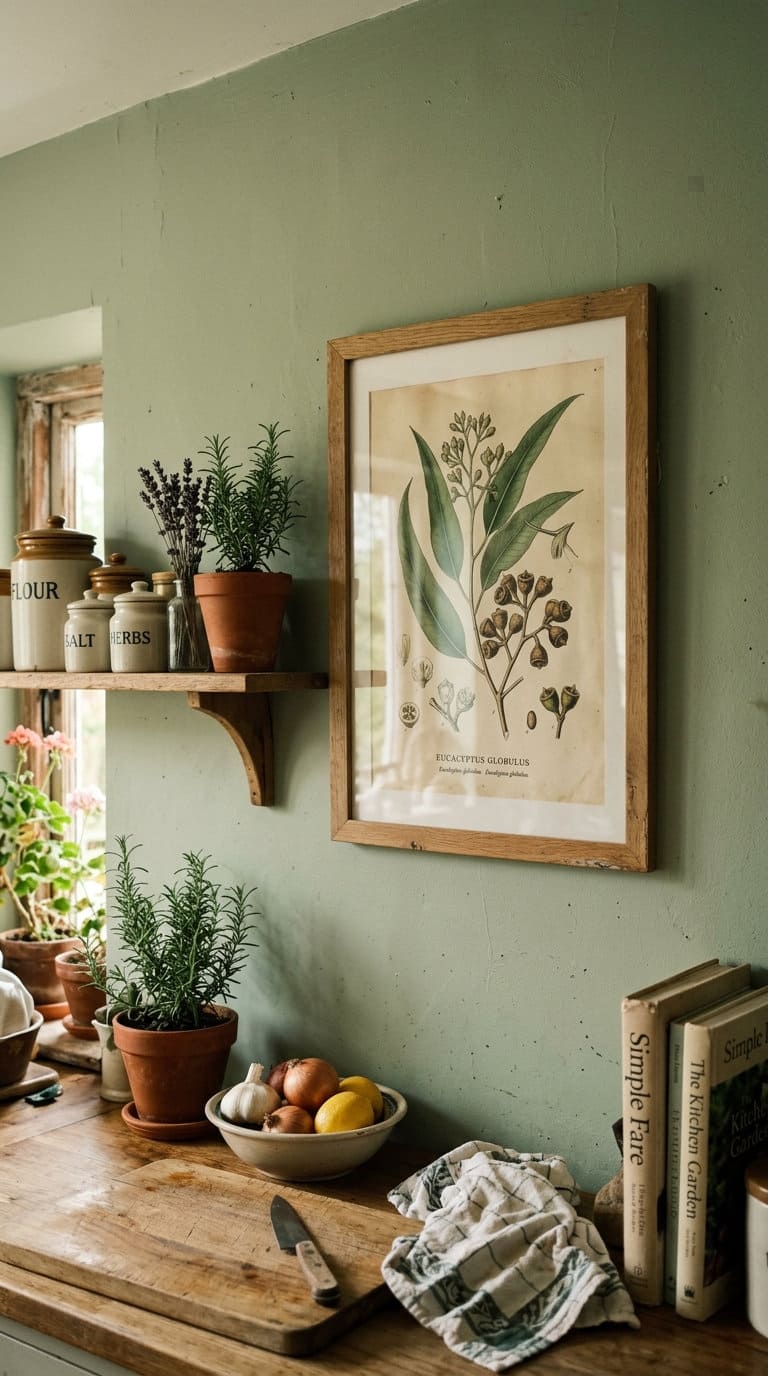
Botanical prints, simple line art, or a piece with warm earth tones plays well against sage green walls or cabinets without needing to match the green exactly. Contrast in tone matters more than a perfect color match here.
20. Sage Green Utensil Holder
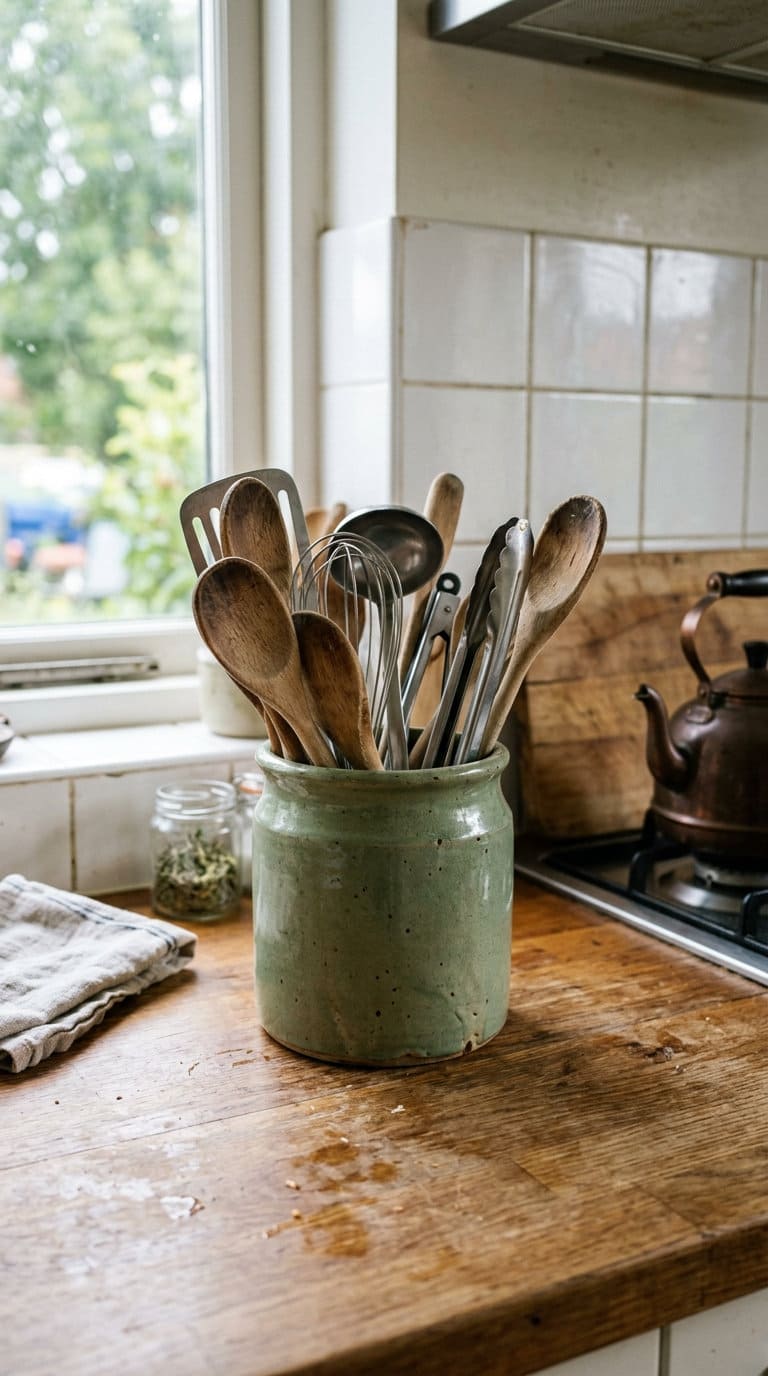
A single sage green utensil crock or canister set is about the smallest, cheapest way to test the color in a kitchen before touching a paintbrush.
21. Patterned Flooring
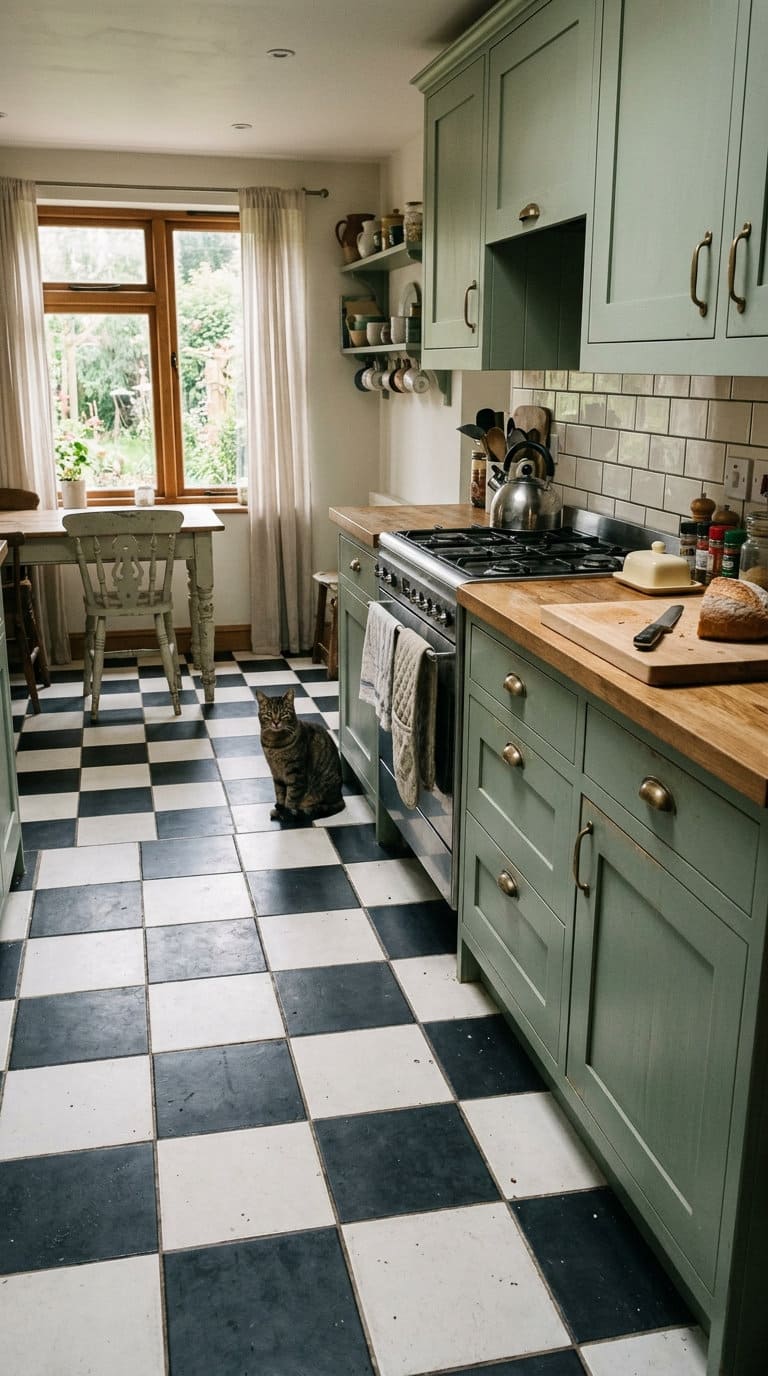
Black-and-white checkerboard, encaustic cement tile, or a bold geometric floor pattern grounds a sage green kitchen with visual structure. Sage acts as the calm backdrop that lets a busy floor pattern be the star rather than competing with it.
22. Industrial Elements
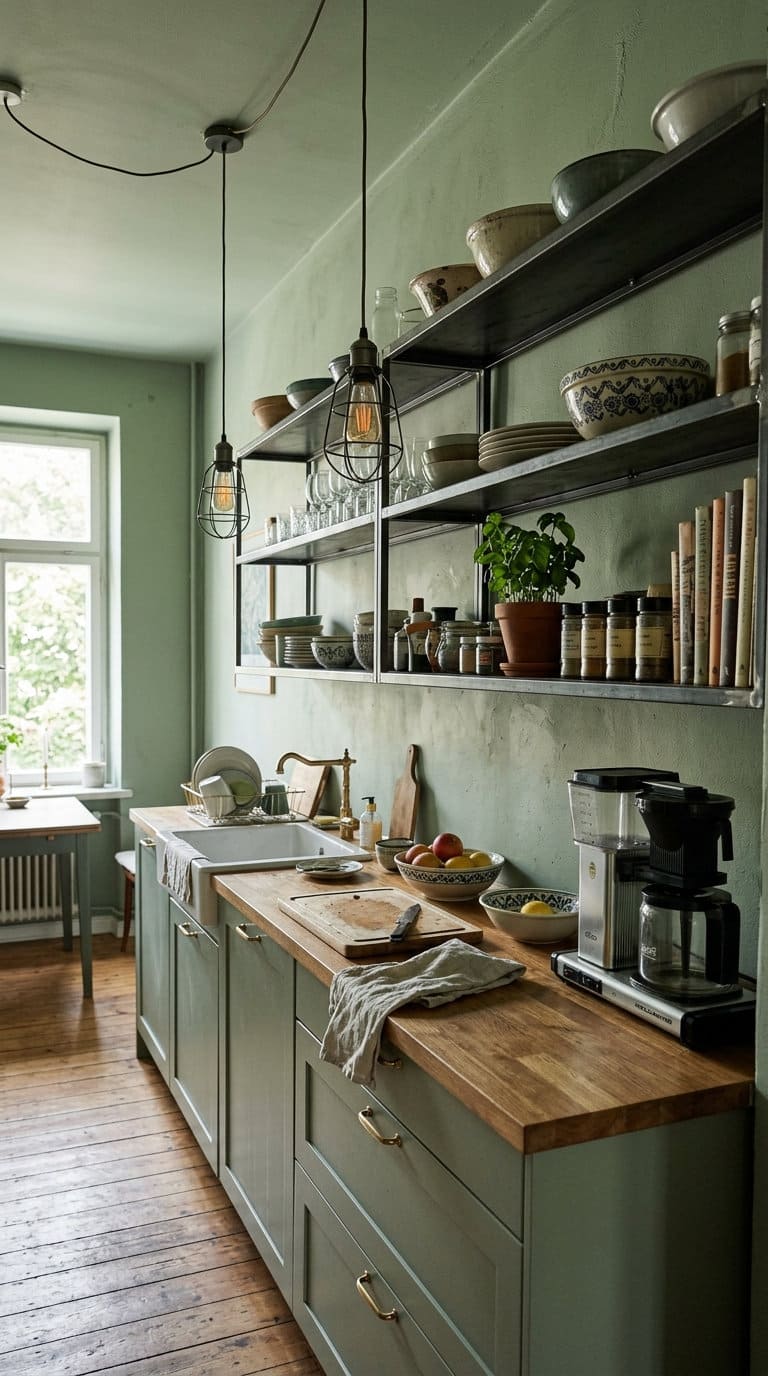
Exposed metal shelving, black steel-framed cabinet doors, or factory-style pendant lighting against sage green softens what would otherwise be a cold, hard-edged industrial look.
The green is doing real work here, tempering harsh metal and glass rather than just decorating around it.
23. Eco-Friendly Materials
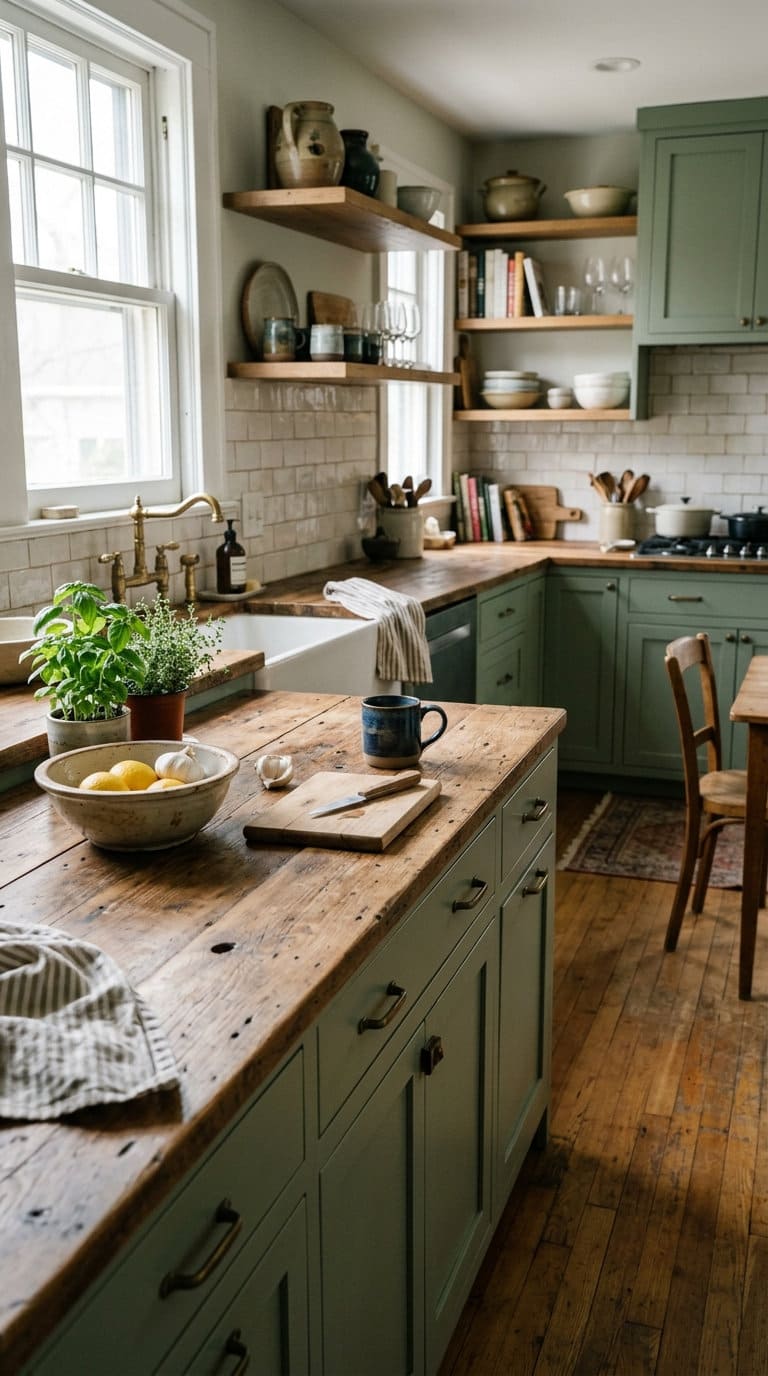
Reclaimed wood counters, recycled glass tile, or FSC-certified cabinetry in sage green lets the color choice pair with a genuinely sustainability-minded renovation, not just an aesthetic one.
24. Soft Furnishings
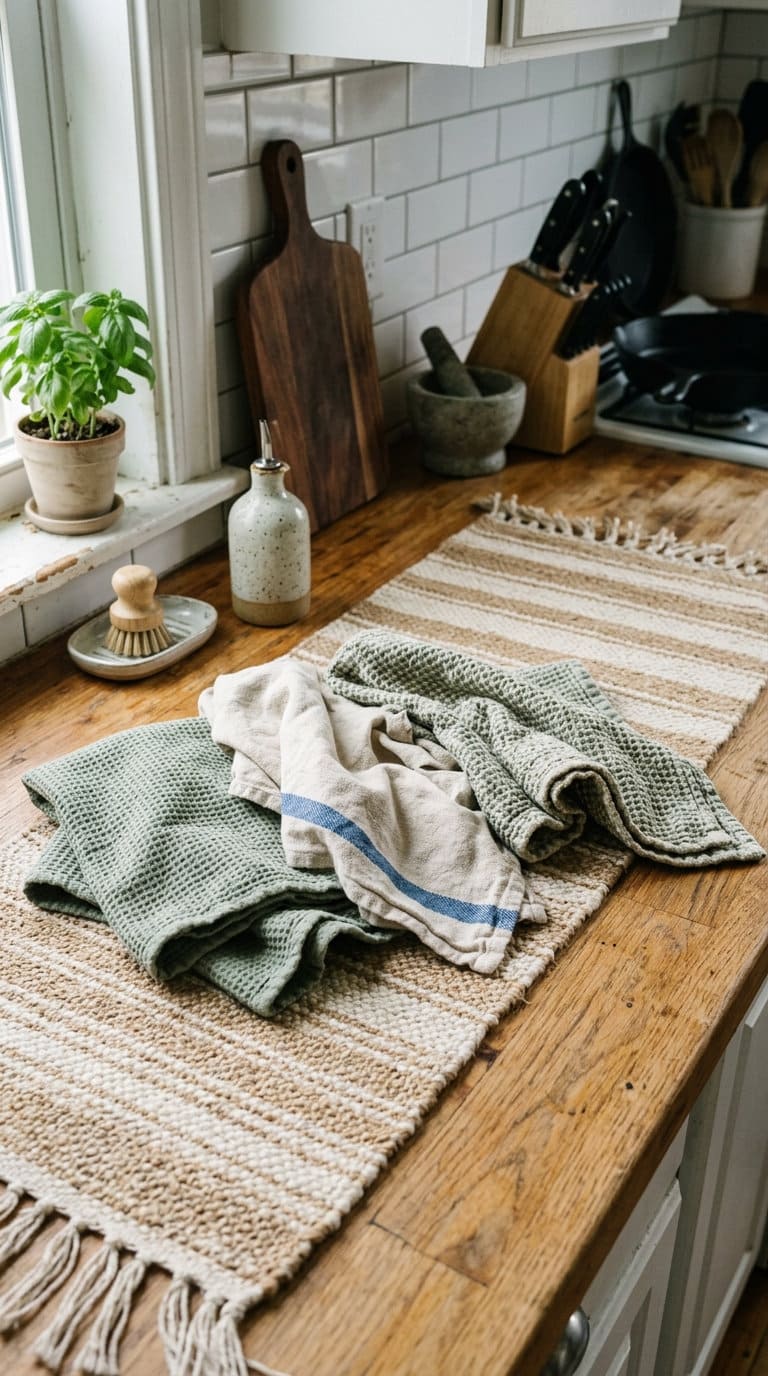
Cushions on a breakfast nook bench, a woven runner, or simple dish towels in sage and cream tones round out the color scheme without touching a single hard surface. Cheapest and most reversible idea on this entire list.
25. Ceiling in Sage
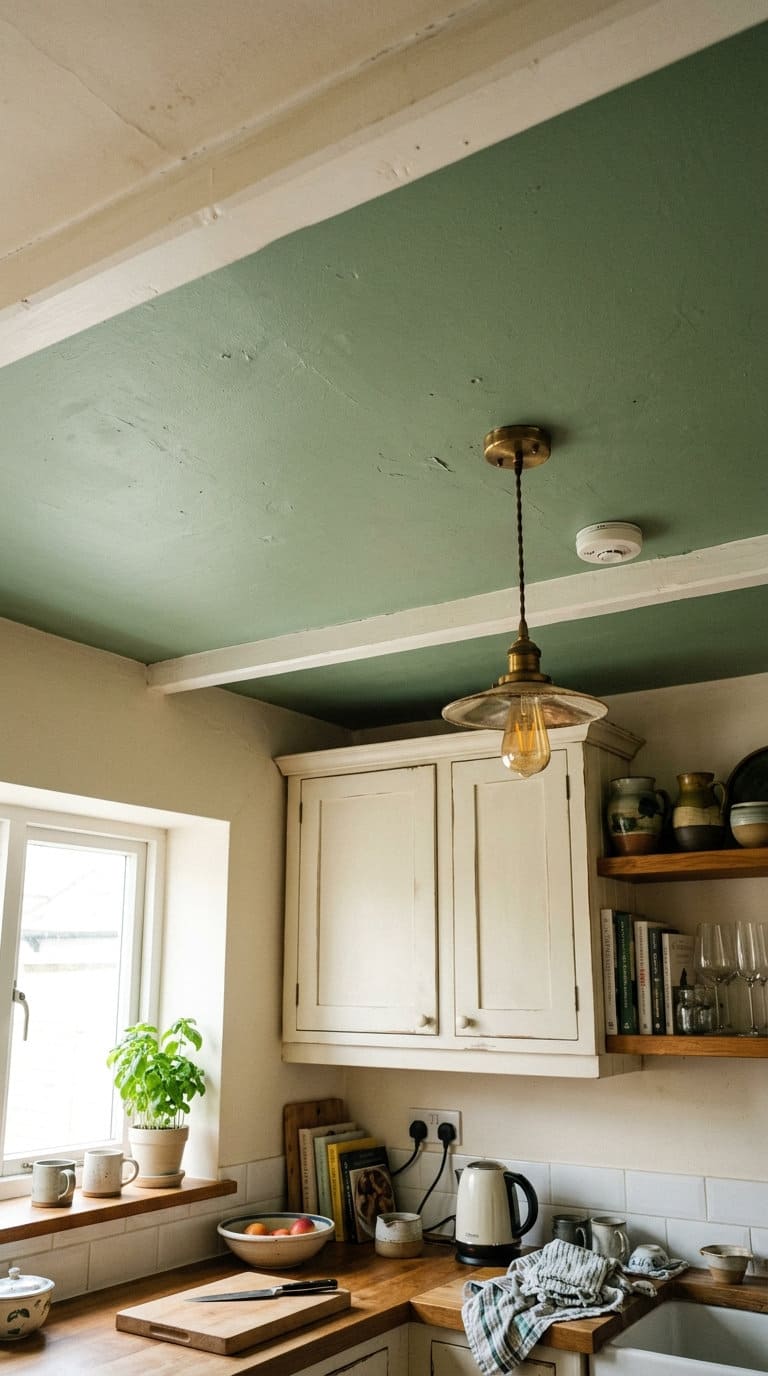
Painting the ceiling itself in a soft sage, rather than the usual white, gives a kitchen a cocooning, finished feel, especially in a room with lower ceilings where a stark white ceiling can feel like an afterthought.
Test this in the room’s actual light before committing, ceiling paint reflects onto every other surface in the room more than people expect.
26. Mix and Match
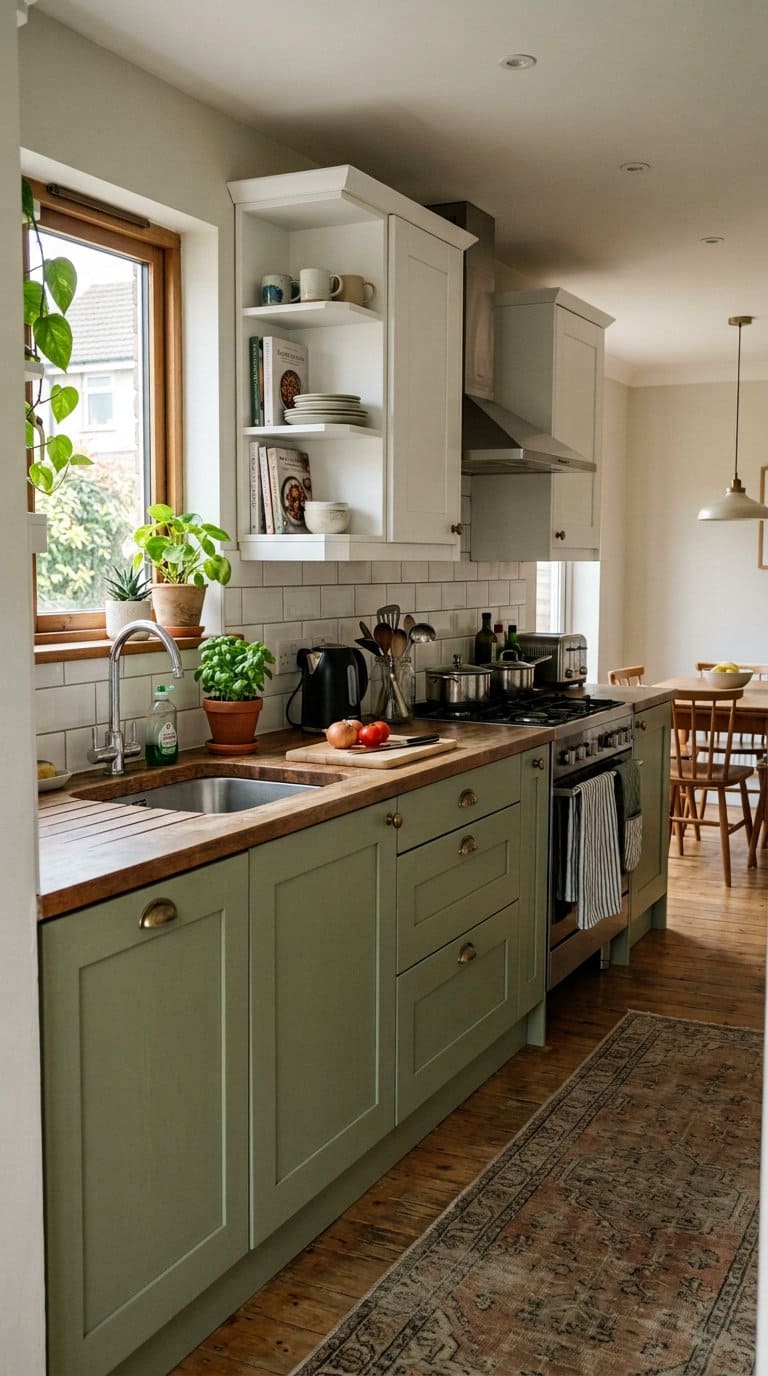
Not every cabinet run has to match. Sage lowers with white or wood uppers, or a sage island against neutral perimeter cabinets, keeps a large kitchen from feeling like one flat block of color.
27. Elegant Lighting
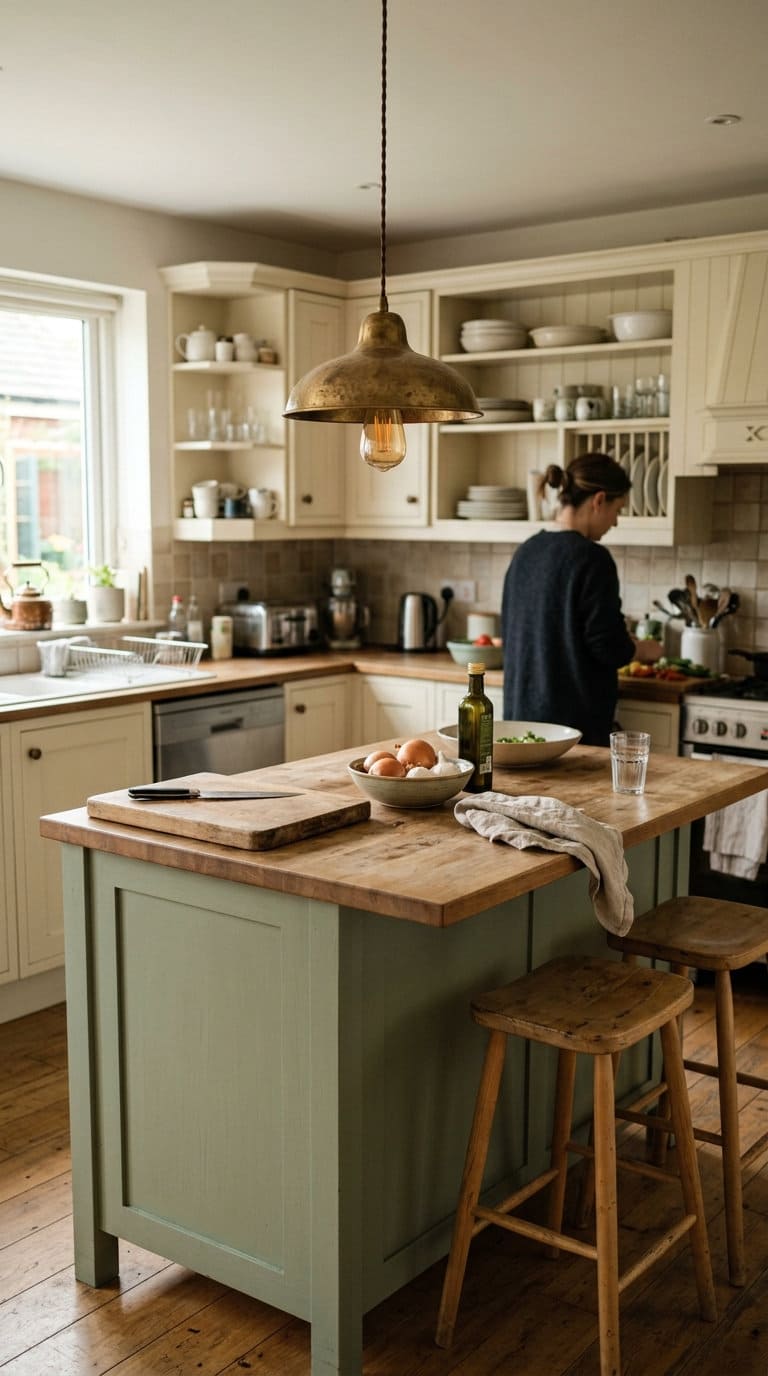
A glass or brass pendant light, or a small crystal-adjacent fixture, over an island elevates sage green cabinetry into something that reads as considered rather than just “the trendy color of the year.” Lighting is genuinely one of the higher-leverage, lower-cost upgrades on this list relative to its visual impact.
28. Seasonal Decorations
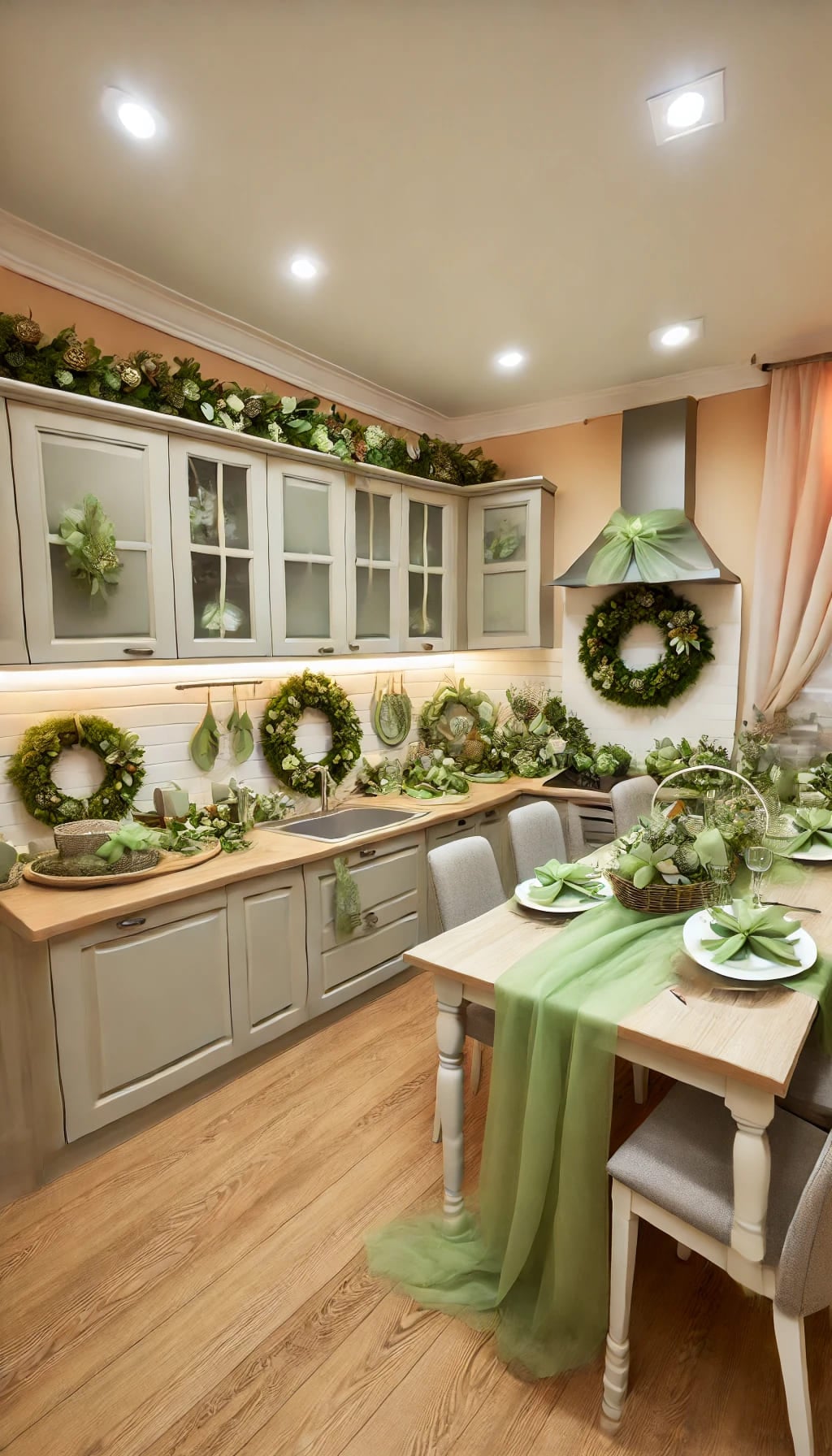
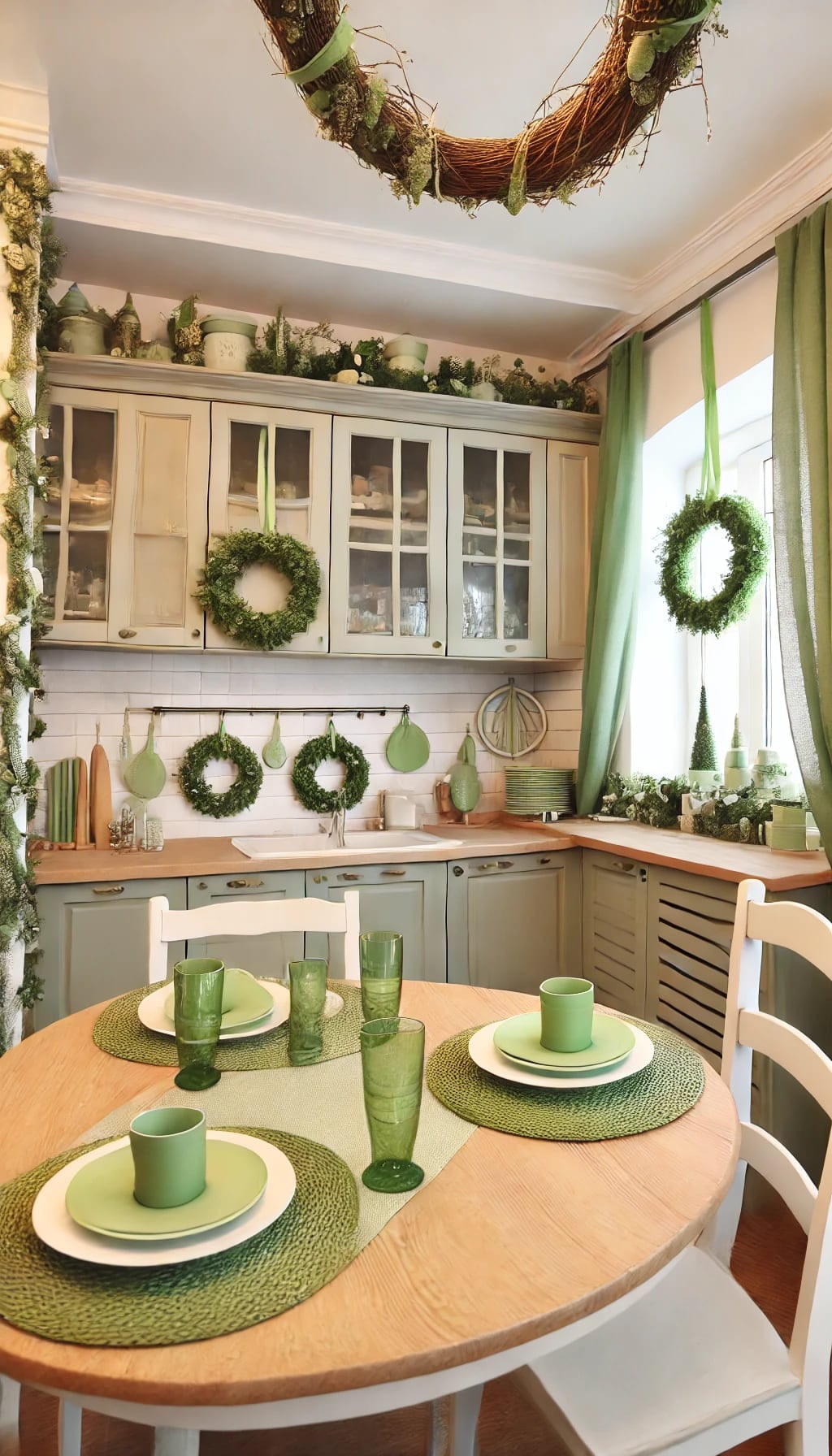
Sage green is neutral enough to carry seasonal decor, dried wheat and pumpkins in fall, greenery and warm candles in winter, fresh herbs and citrus in spring and summer, without ever needing to be redecorated around.
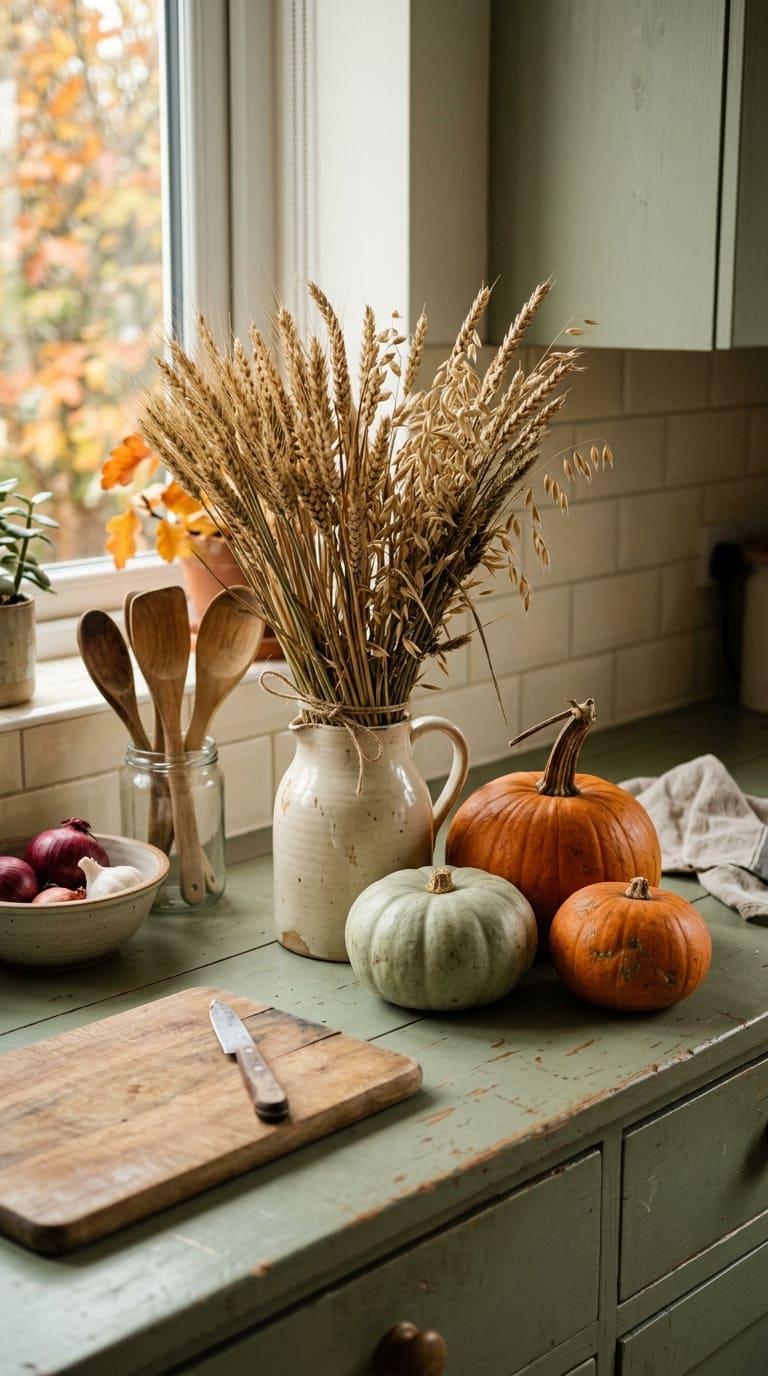
29. DIY Projects
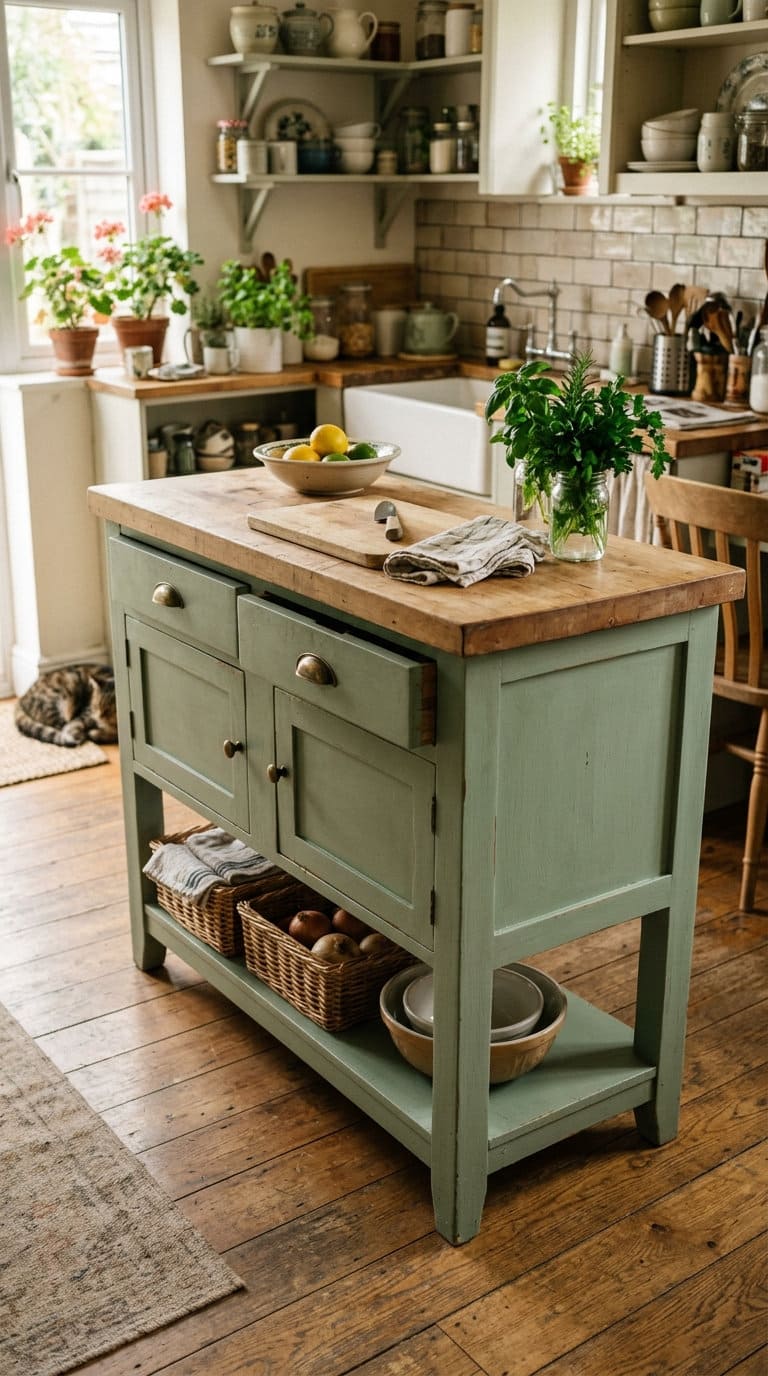
Repainting an old dresser as a kitchen island, building simple open shelves, or refinishing secondhand stools in sage green are the most budget-friendly way to get the look without a full renovation.
A cabinet-grade paint (not standard wall paint) with a proper bonding primer, and about a week of cure time before heavy use, makes the difference between a DIY finish that holds up and one that chips within a season, more on that in the FAQ.
Curious how this color plays in other rooms of the house? This sage green bathroom piece covers the same color in a completely different context. If your current kitchen leans more retro than farmhouse, this retro pink kitchen roundup is worth a look for a different color direction entirely. And if you’re weighing a full renovation rather than a color refresh, these kitchen renovation tips cover the budget side of that decision.
FAQs
Will a sage green kitchen look dated?
It depends which sage you pick. A muted, slightly gray-leaning sage (something like Farrow & Ball’s Vert de Terre) reads as classic rather than trend-chasing, which is part of why designers keep coming back to it decade after decade. A very pale, cool-toned sage is the version that risks feeling sterile or dated fastest, especially if it’s the only color choice in an otherwise all-white, all-cool-toned kitchen with no warm material anywhere.
Does sage green look different depending on the light in my kitchen?
Yes. North-facing kitchens get cooler, bluer natural light, which pulls a cool-toned sage further toward teal or blue than you might expect from a paint chip. If your kitchen doesn’t get much direct sun, a sage with more yellow undertone, Sherwin-Williams Clary Sage or Svelte Sage are both built for this, holds its green better than a cooler-toned sage would in the same room.
What paint finish holds up best on kitchen cabinets?
Semi-gloss or satin, not the flat or eggshell finish you’d use on a wall. Cabinet paint is formulated with more resin and binder than wall paint, which cures into a harder finish that resists chipping around handles and everyday bumps. A proper bonding primer first and about a week of cure time before loading cabinets back up with daily use makes a real difference in how long the paint job actually lasts.
What colors pair best with sage green cabinets?
White, brass or gold hardware, natural wood, terracotta, and black accents all show up repeatedly in real kitchens for good reason. On the black pairing specifically, designer Jessica Mikesell’s experience is a useful data point: she expected black plus green to feel too dark and found the opposite, it read as cozier, not gloomier.
It’s a Neutral With Actual Personality
Sage green earns its place in 2026’s trend data honestly, it does everything a safe neutral is supposed to do while still looking like an actual decision rather than a default. Pick the right undertone for your kitchen’s light, use a real cabinet-grade paint if you’re doing it yourself, and it holds up as a genuinely classic choice rather than a passing trend.
Sage green brings an effortlessly calm and stylish presence to the kitchen, offering a range of options for expressing personal style. It doesn’t matter whether it’s rustic, modern, vintage, or luxurious.Its versatility makes it an ideal color for everything in the kitchen.
Whether you go all-in or introduce it in subtle touches, sage green elevates your kitchen into a more peaceful and inviting space.
If this article helped you design a great kitchen, leave a comment below and share it with family and friends!
Never miss an update — choose FarmFoodFamily as your preferred source on Google.
How it works: Tap the button below to open Google's settings page, then check the box next to FarmFoodFamily.
Tap the checkbox to turn it blue — that's how you know it's set.