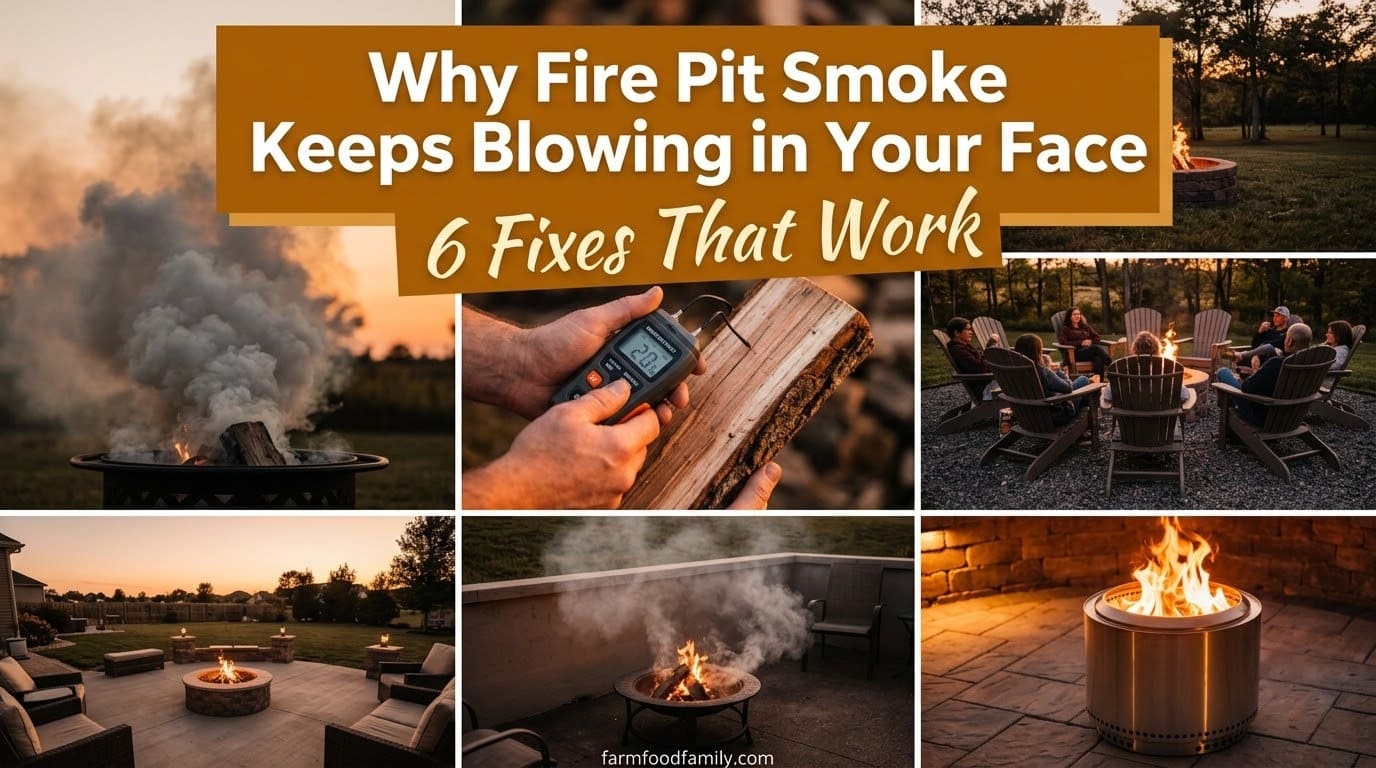
Why Fire Pit Smoke Keeps Blowing in Your Face: The Actual Science (Plus 6 Fixes That Work)
It’s not bad luck and it’s not the wind changing on you. A forest fire scientist explains the physics, and here’s exactly how to stop it.

Never miss an update — choose FarmFoodFamily as your preferred source on Google.
How it works: Tap the button below to open Google’s settings page, then check the box next to FarmFoodFamily.
Tap the checkbox to turn it blue — that’s how you know it’s set.
Quick Answer: Fire pit smoke follows you because your body blocks airflow toward the fire, creating a small low-pressure pocket that pulls the rising smoke column toward you no matter where you sit. Environment Canada research scientist Kerry Anderson explains that hot air rising off the fire gets drawn into this pocket, and since your head sits at the top of your body, smoke ends up right in your eyes. Wind direction, wet or unseasoned firewood, and seating placed too close or fully enclosed by walls or screens all make the effect worse, and simply switching to the “upwind” seat often isn’t enough to escape it. The genuine fixes are burning dry wood under 20% moisture, sitting farther back at an angle with a clear escape path on one side, and adjusting your seating layout based on a short test fire rather than fighting the smoke from a fixed spot all night.
It’s Not Just You, and It’s Not Bad Luck
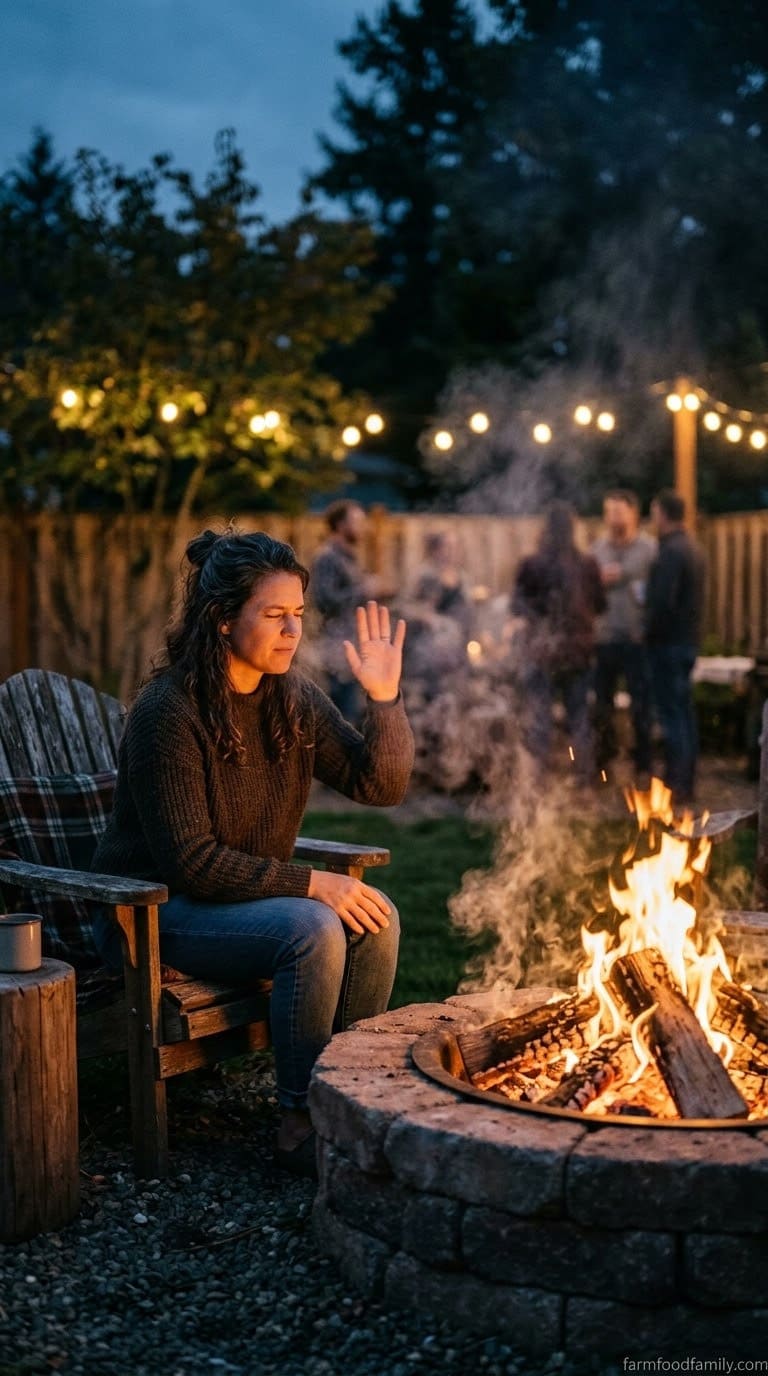
If you’ve ever hopped seats around a fire pit trying to escape the smoke, only to have it find you again a few minutes later, you’re not imagining it. There’s a genuine physical mechanism behind why smoke tracks a person around a fire, and understanding it changes how you fix the problem.
Most advice online just says “sit upwind,” which ignores that wind direction shifts constantly and isn’t even the main mechanism at play. This guide covers the actual science, then the practical layout, fuel, and equipment fixes that address what’s actually causing it.
The Actual Physics: Why Smoke Follows You Specifically
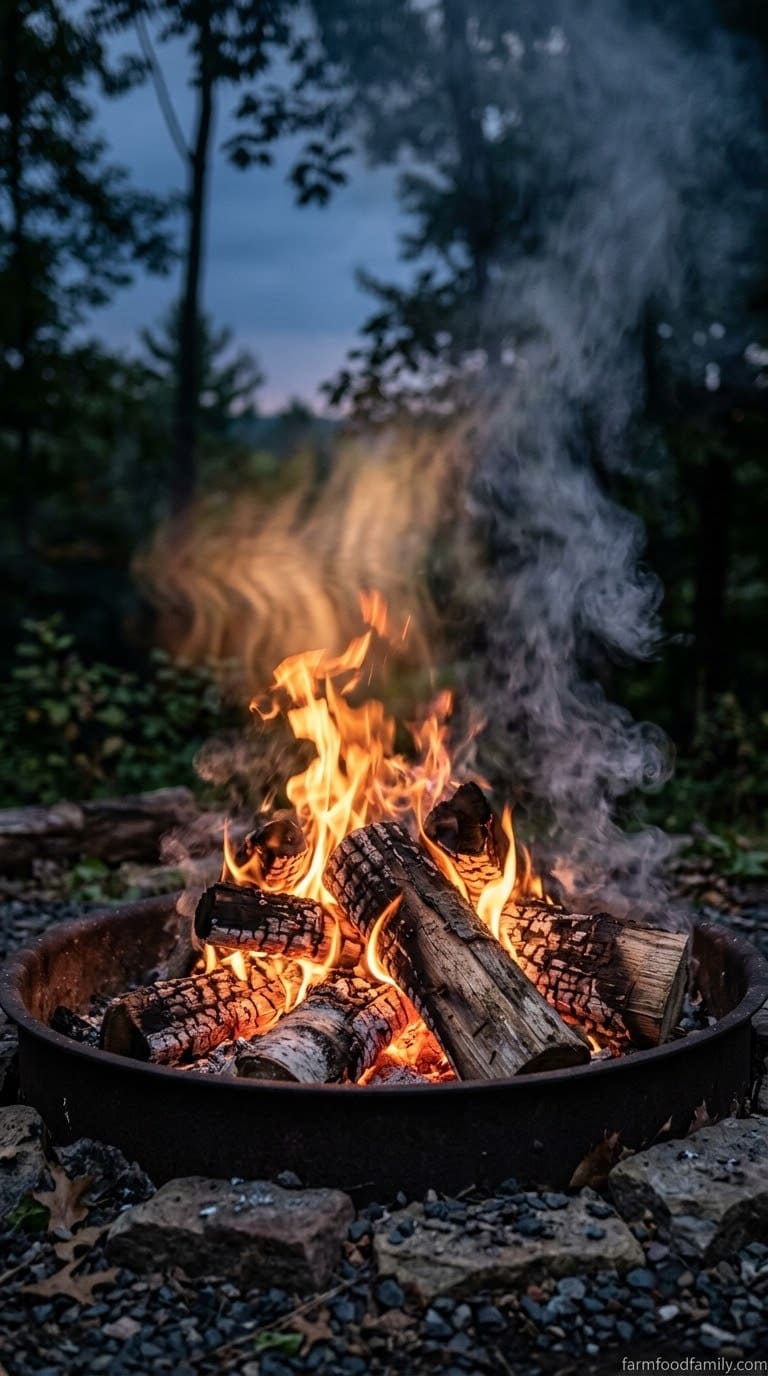
Fire heats the surrounding air, and hot air is less dense, so it rises. That rising column creates a low-pressure zone that pulls in cooler air from around the fire to replace it, which is what keeps a fire drawing steadily upward in a fairly stable convection column.
When you sit down next to that fire, your own body blocks part of that inward airflow. That creates a second, smaller low-pressure pocket right where you’re sitting, and the rising smoke column bends toward it to fill the gap.


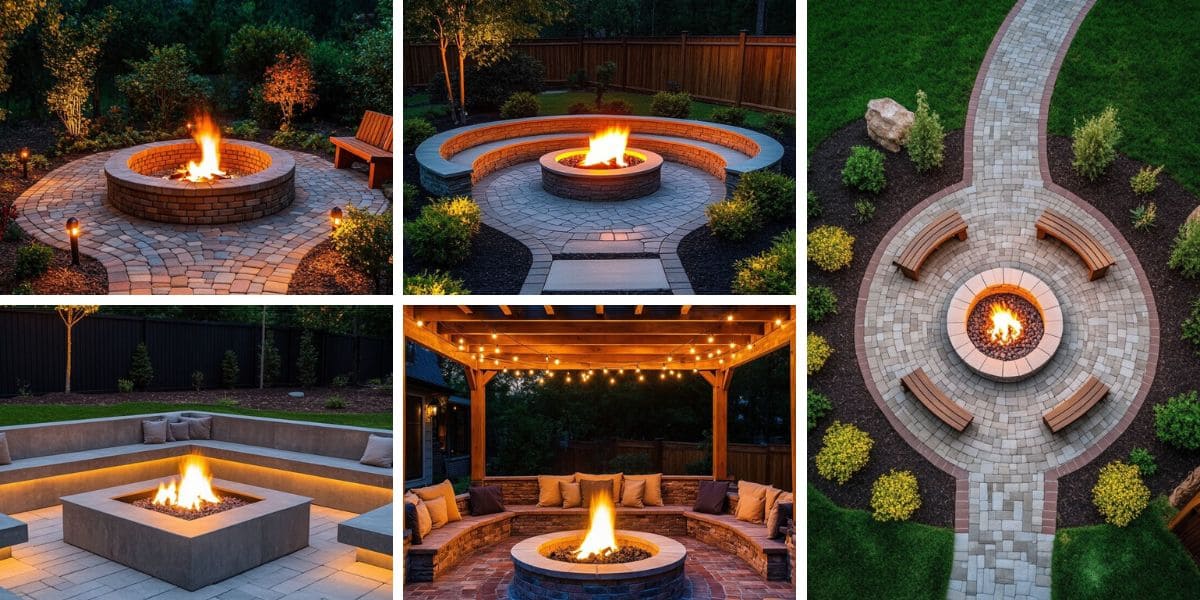
Kerry Anderson, a research scientist with more than 30 years at the Canadian Forest Service who now models smoke behavior for Environment Canada, put it directly: “What ends up happening is the fire is heating the air and that creates buoyancy, which is the scientific term for hot air rises. And what ends up happening is the hot air that’s rising ends up being brought into this vacuum, so it gets pulled toward you.” He adds the reason it always seems to end up in your eyes specifically: “With the head at the top of your body, the smoke is drawn into your eyes.”
Answer 4 quick questions and get matched to the exact fix for your yard — drainage, budget, layout, or something else entirely.
Take the Free QuizThis is why moving to the “upwind” side sometimes doesn’t help. The low-pressure pocket your own body creates can pull smoke toward you even against a mild breeze, and Anderson’s own research notes that wind is usually the bigger factor once you’re outside a sheltered backyard, since it can override the low-pressure effect entirely in an open field or campsite. In a typical fenced backyard, though, wind gets broken up and redirected by fences, sheds, and trees long before it reaches the fire pit, so the low-pressure pocket around each person often ends up doing more of the work than the breeze does.
Quick Self-Diagnostic: Which Cause Is Actually Yours
Before jumping to a fix, it helps to know which factor is doing the most damage in your specific setup.
| What you notice | Likely cause | Fix to try first |
|---|---|---|
| Smoke follows every seat, even the “upwind” one | The low-pressure pocket effect (see above) | Fix 2: seating distance and angle |
| The fire hisses, pops, and smokes heavily right from ignition | Wet or unseasoned wood | Fix 1: check moisture content |
| Smoke is fine until it hits a fence or wall, then rolls back down | A nearby solid barrier | Fix 4: rethink screens and walls |
| Everyone gets smoked out regardless of where they sit | An enclosed or fully-surrounded layout | Fix 3: open one side |
| The fire itself burns weak and smoky even with dry wood | Restricted airflow at the base | Fix 5: pit design and depth |
What Makes It Worse
| Factor | Why it matters |
|---|---|
| Wet or unseasoned firewood | Burns cooler and produces far more visible smoke and creosote |
| Seating too close to the flame | A tighter low-pressure pocket forms, pulling smoke in more strongly |
| Walls, fences, or solid screens near the pit | Block the smoke’s natural rise and roll it back down at face height |
| No open escape side | Smoke has nowhere to vent except through the seating area |
| In-ground or walled fire pit design | Restricts airflow at the base, which weakens the draft and increases visible smoke |
Fix 1: Burn Properly Seasoned Wood (Under 20% Moisture)
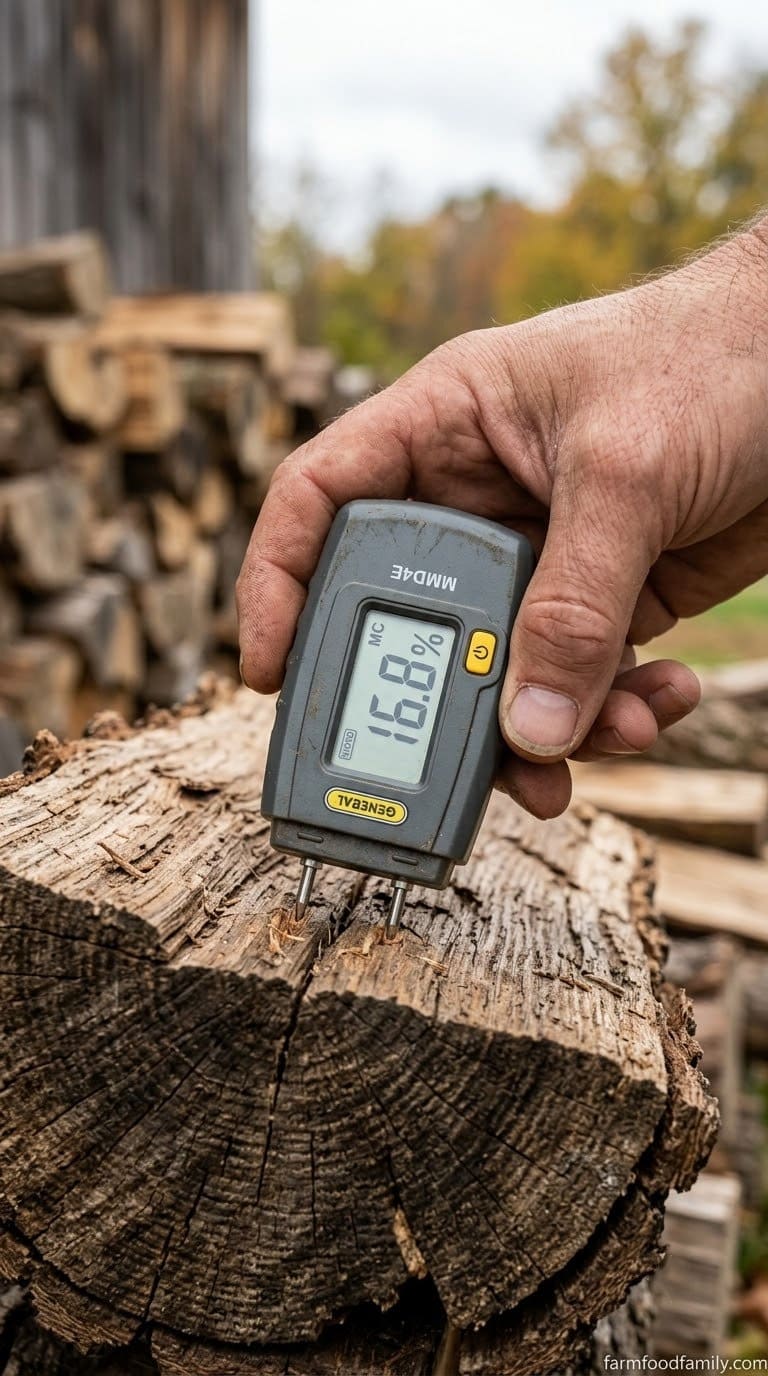
This is the single biggest fuel-related fix, and it’s the one most people skip. Wet or “green” firewood burns at a lower temperature, and that incomplete combustion is what produces thick, visible smoke and creosote in the first place.
The EPA’s Burn Wise program recommends firewood with a moisture content of 20% or less. Properly seasoned wood looks darker, weighs noticeably less than green wood of the same size, and sounds hollow when two pieces are knocked together, rather than dull and dense.
Practical test: A cheap moisture meter (the kind sold for firewood or lumber) gives you an actual number in seconds instead of guessing, and it’s worth doing on a few different splits from the same stack since moisture can vary piece to piece. Seasoning fresh-cut wood properly takes 6 to 12 months of covered, stacked, well-ventilated drying, so this is a fix to plan ahead for, not one you can solve the night of a cookout.
If you’re buying rather than seasoning your own, kiln-dried firewood (usually sold in smaller bundles at hardware stores or gas stations) is already under that 20% threshold and costs more per log for exactly that reason. Split, stacked firewood also dries faster than whole rounds, since more surface area is exposed to air.
Fix 2: Move Seating Back and Off-Angle, Not Just “Upwind”
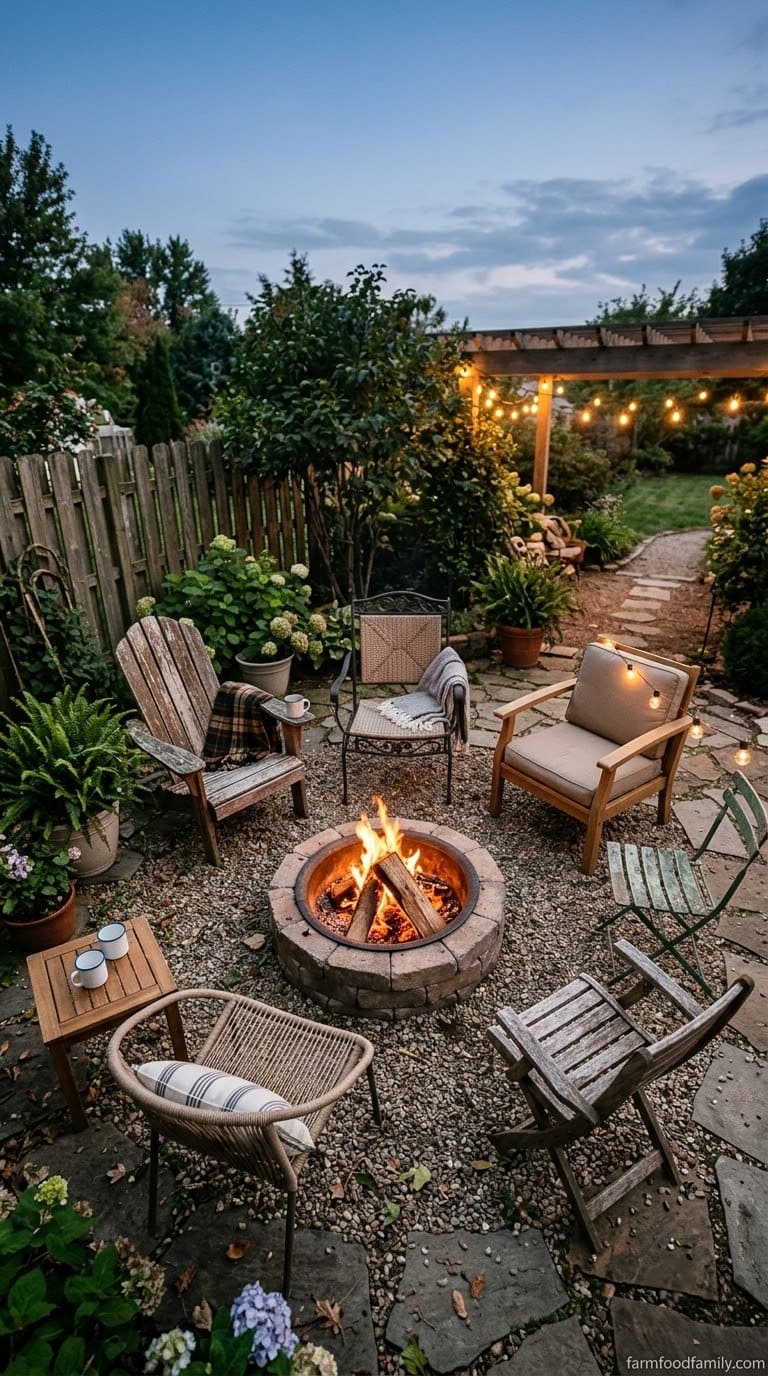
Since your own body creates the low-pressure pocket that pulls smoke toward you, simply moving farther from the flame reduces how strongly that pocket forms.
Most yard problems trace back to one specific, fixable cause. Find yours in 4 quick questions.
Take the Free Quiz- Keep seating roughly 4 to 6 feet from the flame edge, not right up against the pit
- Angle chairs 30 to 45 degrees off the smoke’s current path rather than sitting directly across the fire from it
- Run a short 10-minute test fire before committing to a seating layout, and shift any chair that gets hit repeatedly 2 to 4 feet sideways
A chair sitting 8 feet away but directly in the smoke’s path can end up worse off than a chair 6 feet away angled slightly to the side. This matters even more with a full group around the fire, since each person’s body adds its own small low-pressure pocket, and a tightly packed circle stacks those pockets on top of each other, which is part of why a crowded fire pit gathering tends to smoke out more chairs than a two- or three-person one.
Fix 3: Leave One Side of the Fire Pit Open
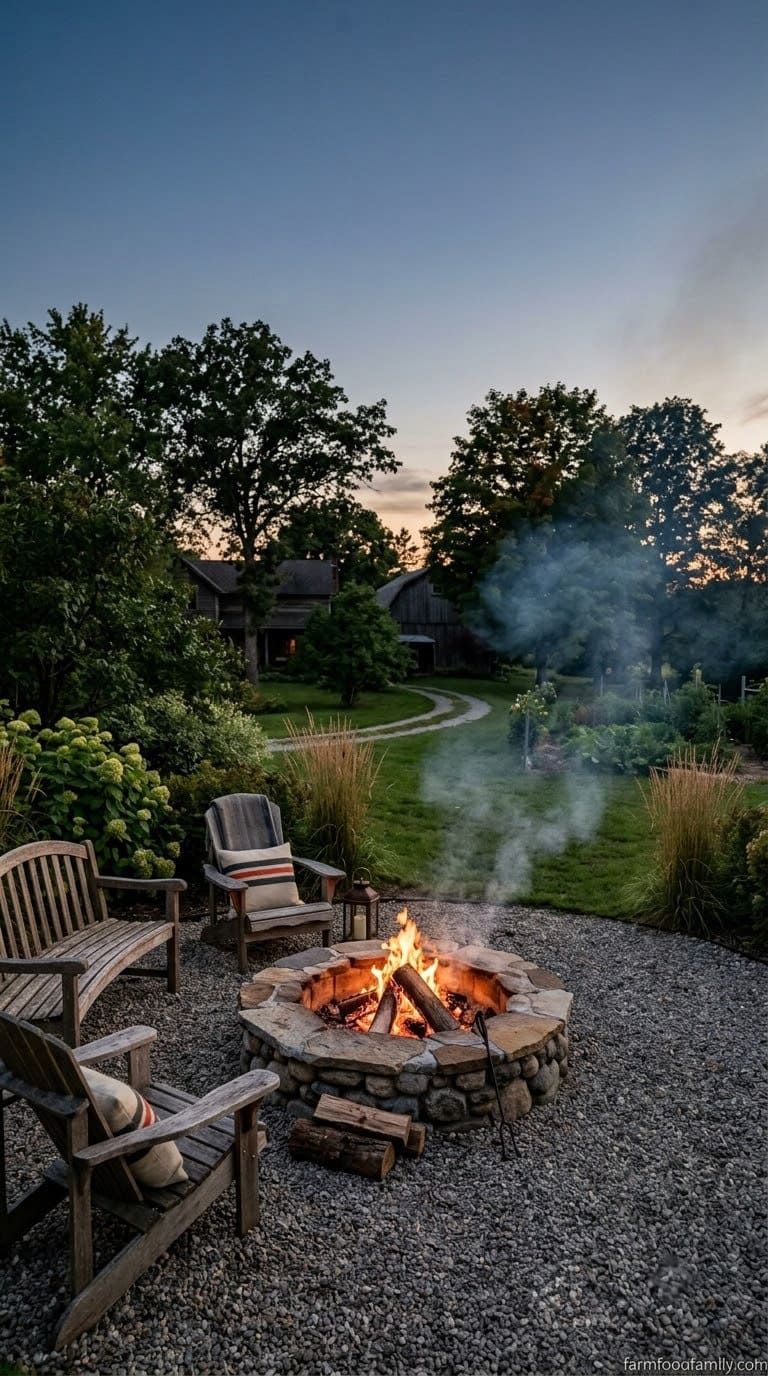
Smoke needs somewhere to go once it rises. If seating, a fence, or a solid patio wall surrounds the fire pit on every side, the smoke has nowhere to vent except back down into the seating area.
Leave a 4 to 6 foot gap on at least one side of the fire pit layout, ideally the side facing away from prevailing wind. This gives the rising smoke column a clear path out instead of trapping it in a circle of bodies and furniture.
Fix 4: Be Careful with Solid Screens and Walls
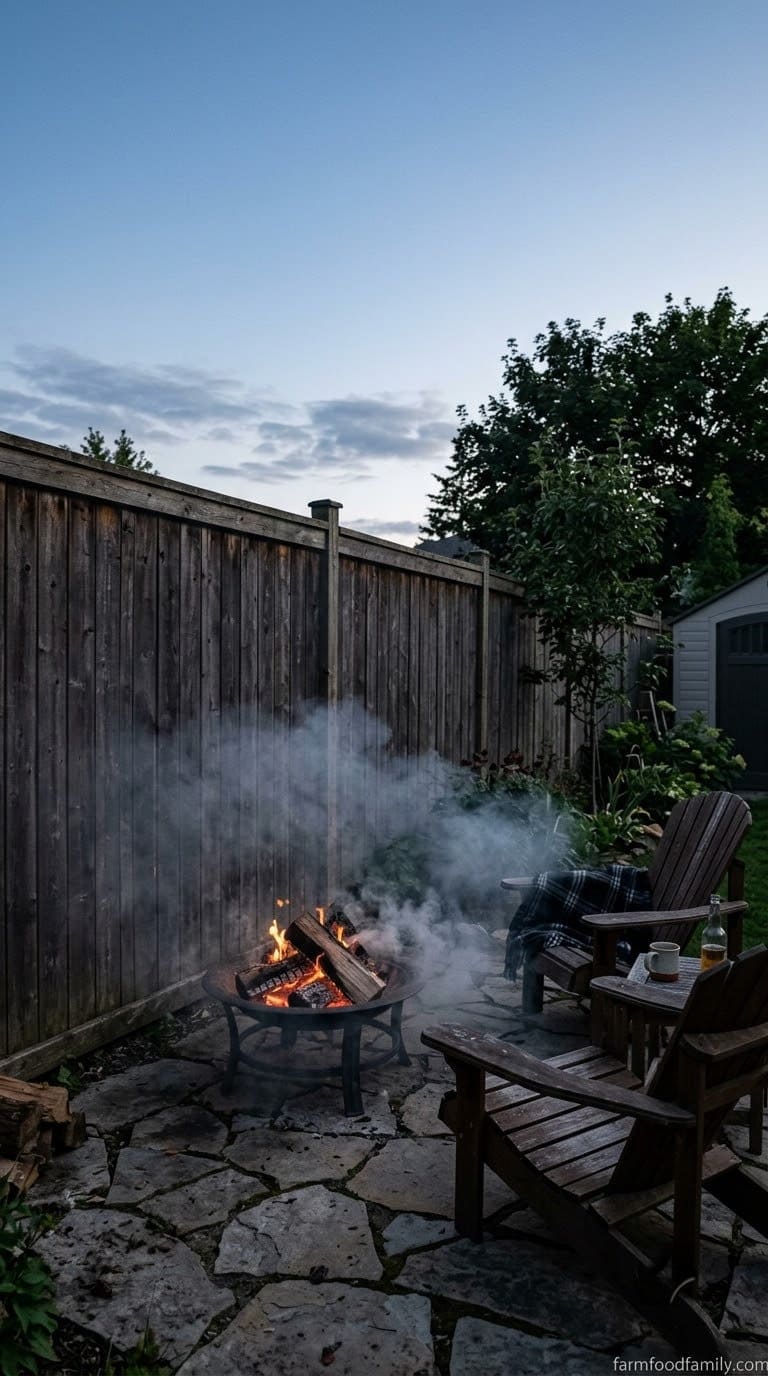
A patio wall, fence, or solid decorative screen placed close to a fire pit can actually make smoke worse, not better, even though it looks like it should block wind.
A solid barrier slows the breeze that would otherwise carry smoke up and away, and at typical patio distances it can trap smoke at sitting height instead. A mesh spark screen directly over the fire (for ember safety) is a different thing entirely and doesn’t cause this problem, since it doesn’t block horizontal airflow the way a solid wall does.
If your fire pit already sits close to a wall or fence and moving it isn’t an option, adding a low windbreak farther out (a row of tall planters, for instance) can redirect airflow before it ever reaches the wall, instead of letting the wall trap smoke against it.
Fix 5: Choose a Fire Pit Design That Doesn’t Choke Its Own Airflow
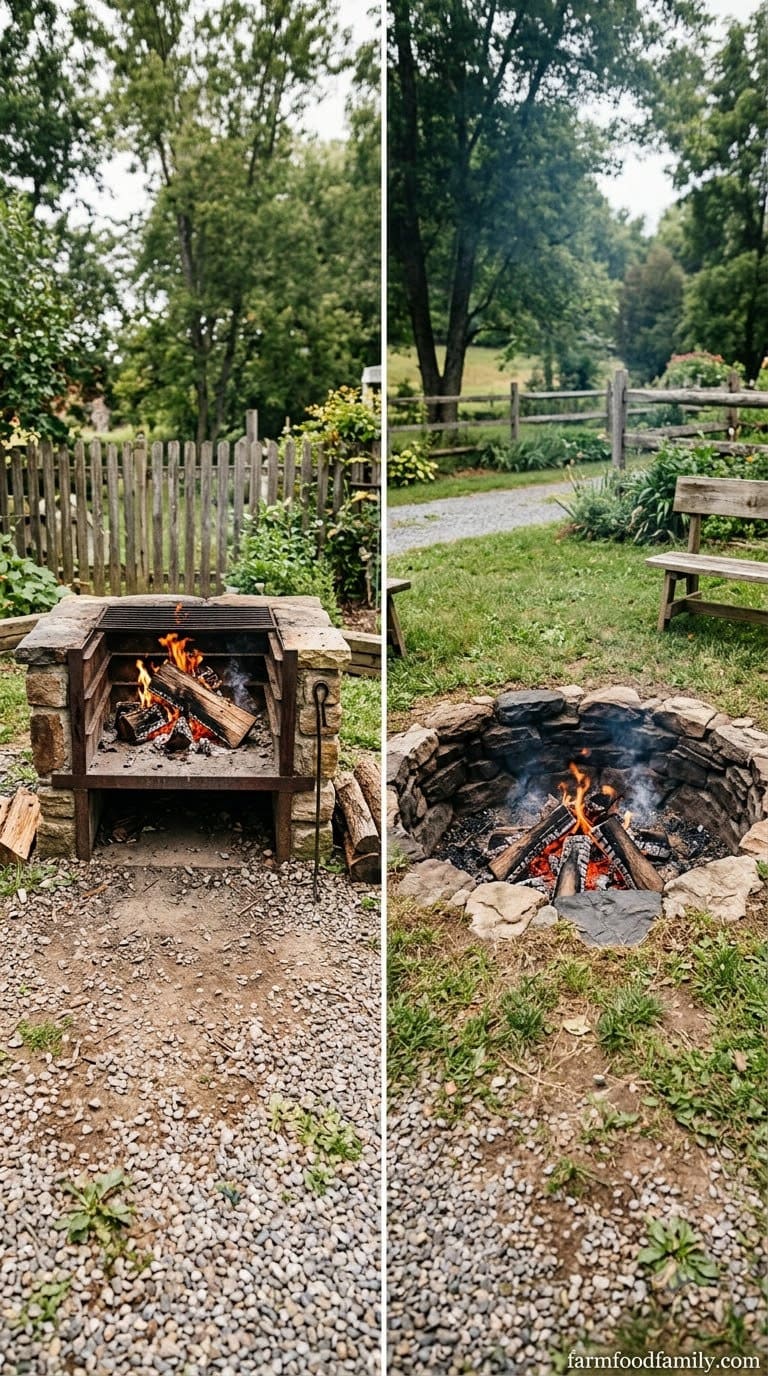
A fire’s draft, the steady upward pull of air through the flame, depends partly on airflow reaching the base of the fire. A deep in-ground pit or one boxed in by tall solid walls can restrict that intake air and produce a weaker, smokier burn even with good dry wood.
Raised fire pits and open-sided designs generally draft more cleanly than sunken or heavily enclosed ones, all else being equal. As a rough guideline, walls taller than about 12 to 16 inches above the fuel bed start to meaningfully choke airflow on an otherwise open design, so if you’re building a permanent fire pit, this is worth factoring into the plan before it’s poured in concrete.



Fix 6: Consider a Smokeless (Secondary-Combustion) Fire Pit
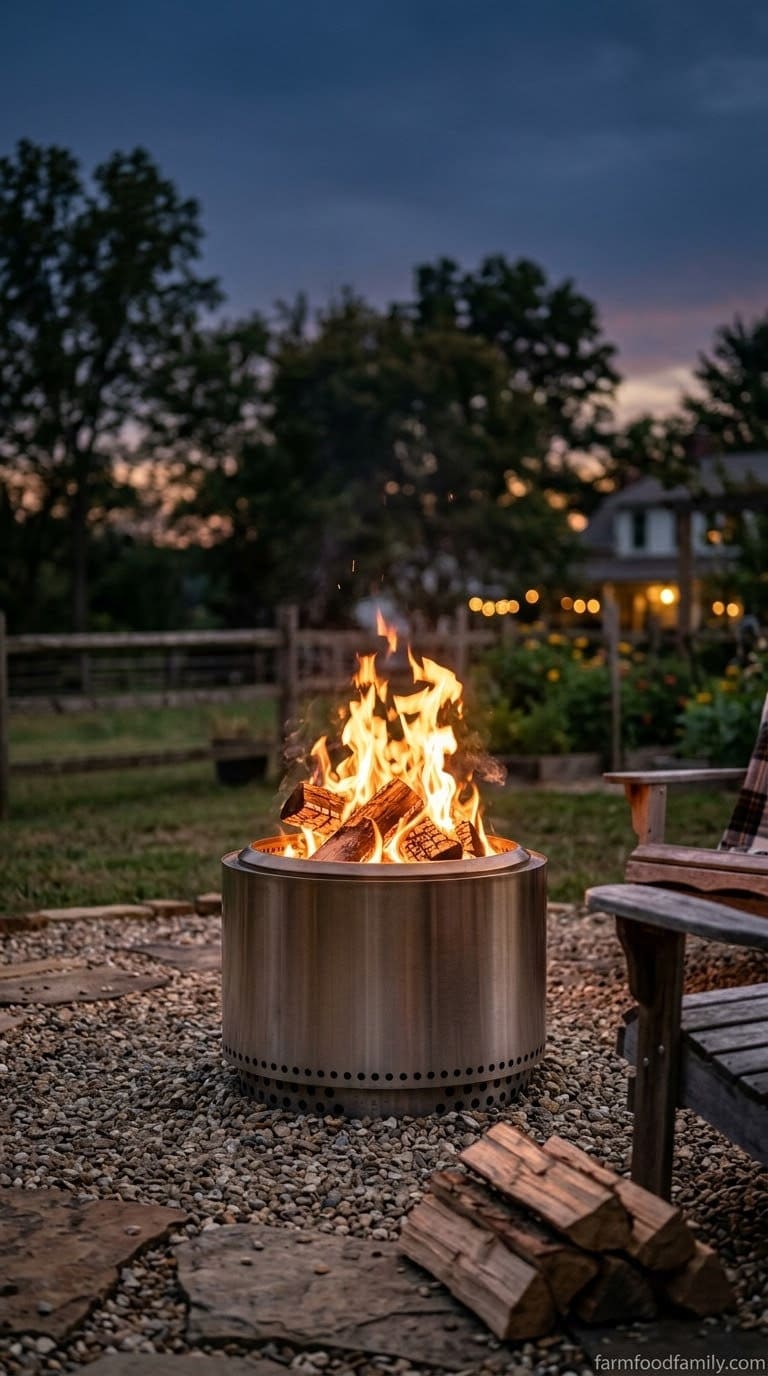
Double-wall smokeless fire pits use a genuinely different mechanism, not just a taller design. Air enters through vents at the base of the outer wall, rises through the gap between the double walls where it’s preheated to roughly 500 to 700°F, then exits through small holes near the top of the inner wall, aimed back down over the fire.
That superheated air reignites unburned smoke particles before they escape, a process called secondary combustion, which is what visibly cuts smoke output compared to an open fire pit burning the exact same wood. It’s a genuine option for people who’ve already tried better wood and seating layout and still get more smoke than they want, not a replacement for those basics.
One maintenance note: ash buildup inside the base vents is the most common reason a smokeless pit stops performing over time, since it partly blocks the intake air the whole double-wall system depends on. Emptying ash out of the base vents every few uses keeps the secondary-combustion airflow working the way it’s designed to.
The average homeowner spends $616/year on yard fixes that don't address the real problem. Find out what yours actually is — before you spend another dollar.
Take the Free QuizWhat I Learned Fighting a Downwind Seat All Summer
For most of a summer, one chair at our fire pit was the designated “smoke chair,” and whoever sat there just accepted it. Moving that chair 3 feet sideways and slightly off-angle from the fire, instead of directly across from it, fixed more of the problem in one afternoon than an entire season of switching seats mid-conversation ever did. The wood was the same. The wind was the same. The only thing that changed was the angle, and honestly, it’s a little annoying that the fix was that simple the whole time.
Fire Pit Smoke FAQ
Why does fire pit smoke always seem to follow me specifically? Your body blocks airflow moving toward the fire, creating a small low-pressure pocket beside you. The rising smoke column bends toward that pocket to fill it, and since your head is at the top of your body, the smoke ends up in your eyes regardless of where you move.
Does sitting upwind actually stop the smoke? It helps, but it isn’t the whole fix. The low-pressure pocket your own body creates can still pull smoke toward you even on the upwind side, especially in light or shifting wind, though wind does tend to dominate the effect outdoors in an open field or campsite without much wind shelter.
Does wet firewood really make that much difference? Yes. Firewood above roughly 20% moisture content burns cooler and less completely, which is what produces thick, visible smoke. Properly seasoned wood under 20% moisture burns hotter and noticeably cleaner.
Will a fire pit screen stop the smoke? A mesh spark screen is for ember safety, not smoke control, and doesn’t meaningfully change airflow. A nearby solid wall or fence is a different issue and can actually trap smoke at sitting height instead of blocking it.
Are smokeless fire pits actually smokeless? Not completely, but they cut visible smoke significantly through a genuine secondary-combustion process, reburning smoke particles with preheated air before they escape. They work best alongside dry wood and a reasonable seating layout, not as a standalone fix for wet fuel or bad placement, and ash buildup in the base vents is the most common reason one stops working as well over time.
Does the shape of the fire pit matter, round versus square? Less than wall height and openness do. A round pit distributes the low-pressure pocket effect evenly around the perimeter, while a square or rectangular pit can create slightly stronger pockets in the corners where two sides of seating meet, but wall height and how enclosed the layout is matter more than the shape itself.
Related Posts
- 15 Stunning Rock Fire Pit Ideas to Transform Your Backyard (2026)
- 71+ Cheap & Easy DIY Backyard Fire Pit Ideas For Outdoor Living
- 20+ Stunning Patio Extension Ideas for Stylish Outdoors
Never miss an update — choose FarmFoodFamily as your preferred source on Google.
How it works: Tap the button below to open Google's settings page, then check the box next to FarmFoodFamily.
Tap the checkbox to turn it blue — that's how you know it's set.