How to Grow a Real Vegetable Garden on a Sloped Yard Without Losing It to the Next Rainstorm
A slope will grow vegetables just fine, but only if you stop the water and the fertilizer from leaving before your plants get to use them.

Never miss an update — choose FarmFoodFamily as your preferred source on Google.
How it works: Tap the button below to open Google’s settings page, then check the box next to FarmFoodFamily.
Tap the checkbox to turn it blue — that’s how you know it’s set.
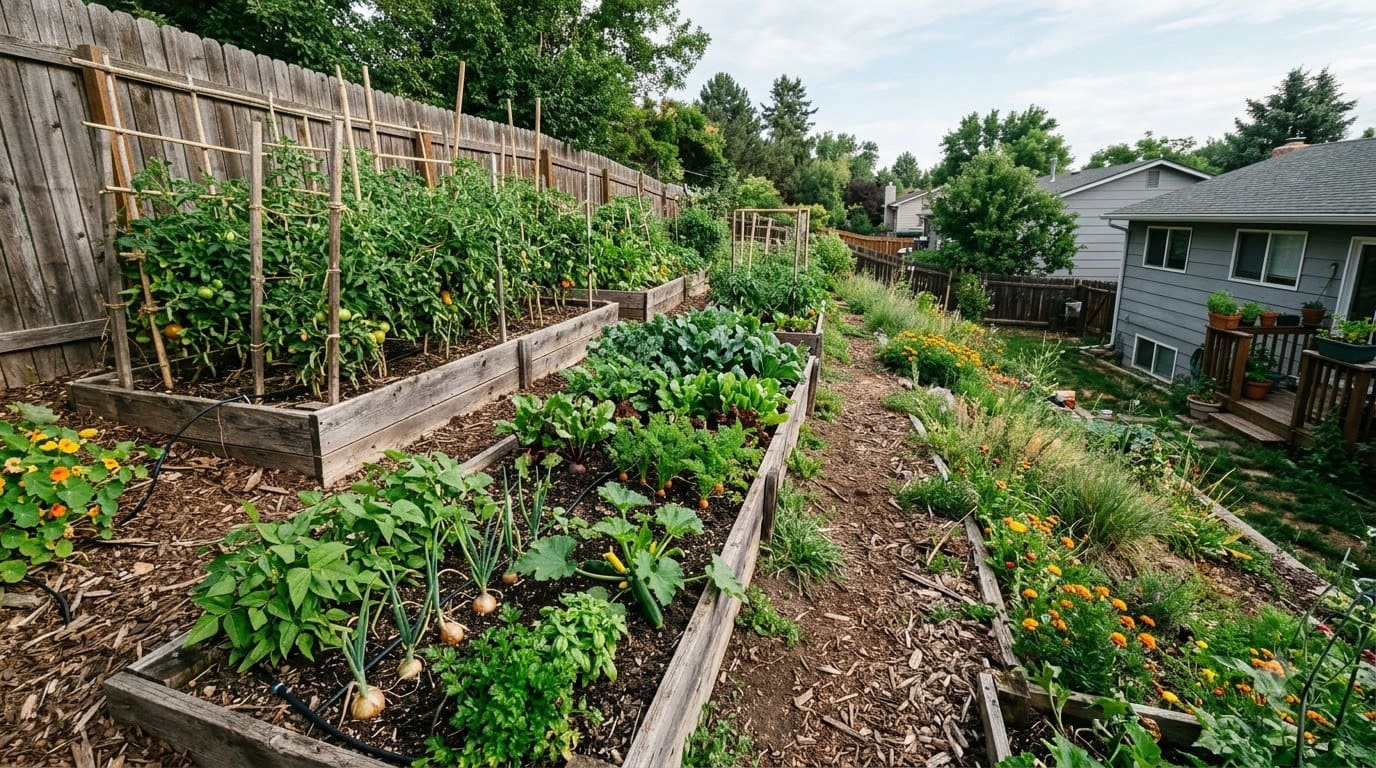
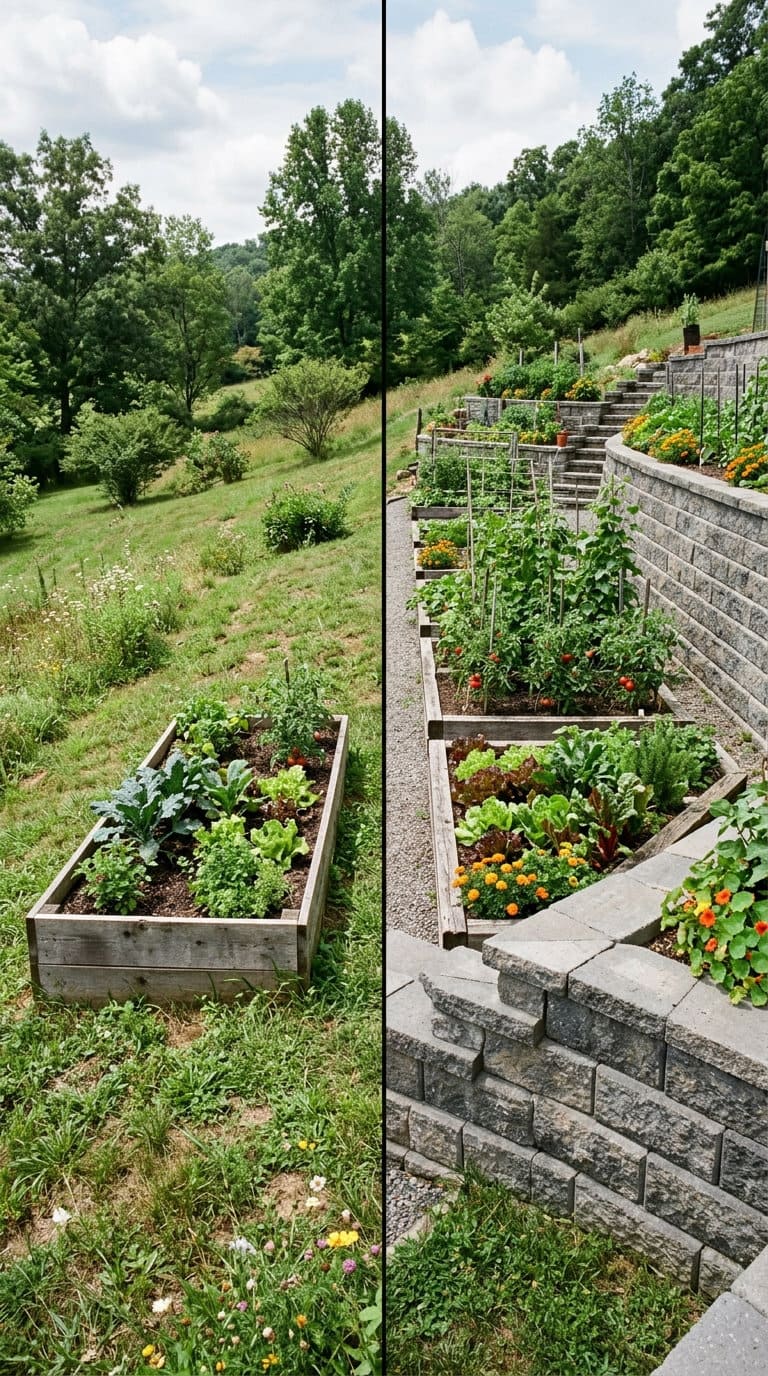
A vegetable garden on a slope works when you match the approach to the actual grade: raised beds with minor leveling for anything under about 5 percent, a hybrid of beds and small terraces for 8 to 16 percent, and full terracing with engineered retaining walls once you cross 20 percent.
According to Aaron Steil, Consumer Horticulture Extension Specialist at Iowa State University Extension and Outreach, slopes past 50 percent won’t reliably support planting at all. The two things that actually break a hillside vegetable garden are water and fertilizer running off before roots can use them, so drainage and soil-holding structure come before bed layout, and bed orientation for sun exposure comes after that.
Get those three things right and a slope is just a yard with better views and a built-in reason to walk around it.
I’ve fought a slope for vegetables before, and the thing nobody tells you upfront is that it’s not really a building project. It’s a water-management project that happens to have tomatoes in it.
How steep is your slope, actually?
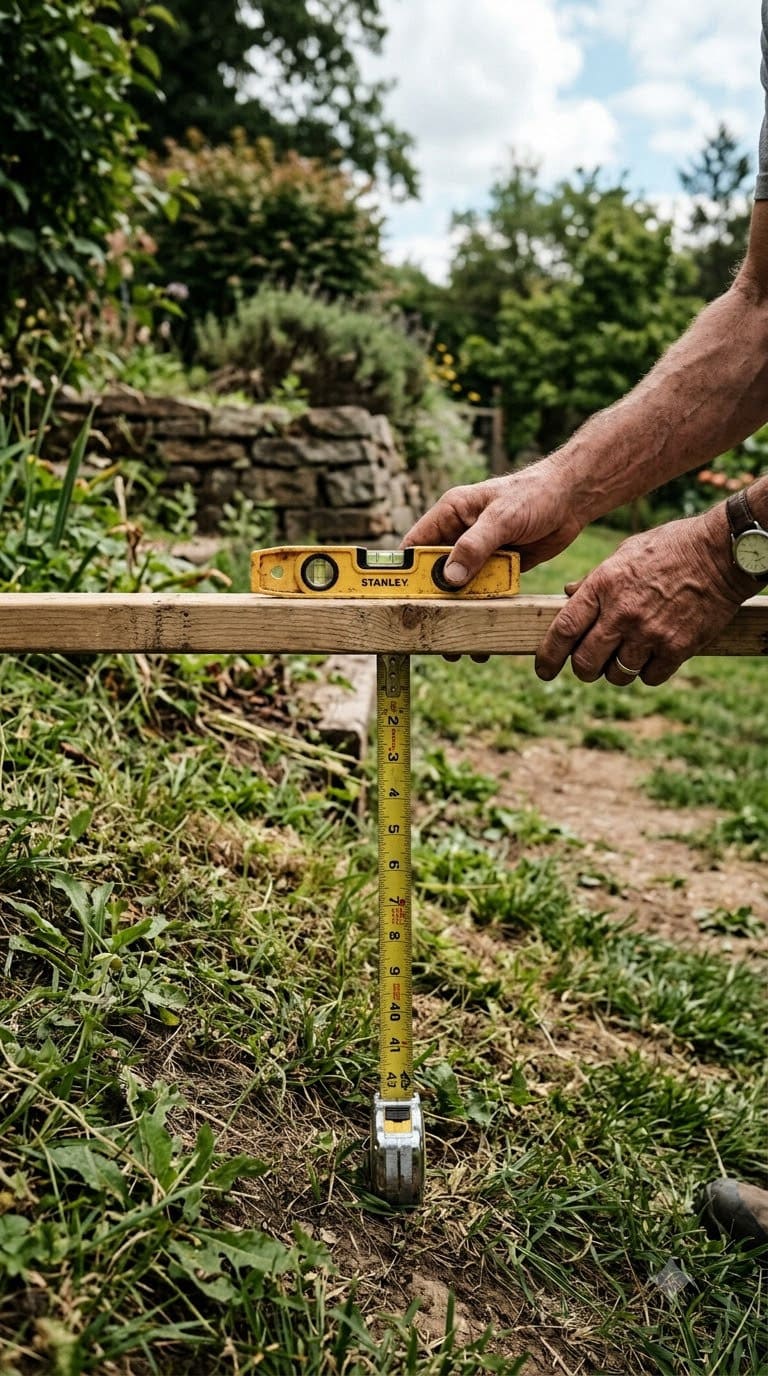
Before you buy a single board, figure out what you’re actually dealing with, because the right approach changes completely depending on the number. Lay a straight board across the slope, put a level on it, and measure the gap at the low end over a known run, or just use a level app on your phone against a board.
A rise of 1 foot over 20 feet of run is a 5 percent grade. Two feet over 10 feet is 20 percent.
Answer 4 quick questions and get matched to the exact fix for your yard — drainage, budget, layout, or something else entirely.
Take the Free QuizPer Aaron Steil’s Iowa State University Extension guidance, the working categories are gentle (under 5 percent, about a 1:20 ratio), moderate (8 to 16 percent, roughly 1:12 to 1:6), and steep (20 percent or more, about 1:5).
Very steep ground, around 30 percent, is unmowable, and anything past about 50 percent won’t reliably hold a garden bed at all without major structural work.
A gentle slope is honestly the easy case. You can get away with raised beds and some minor leveling, no retaining wall required. A moderate slope needs a mix, maybe one low terrace and raised beds stepped into the grade above it, similar in spirit to the tiered layouts covered in our wider guide to turning a sloped yard into a multi-level layout, just sized for rows and crops instead of a patio.
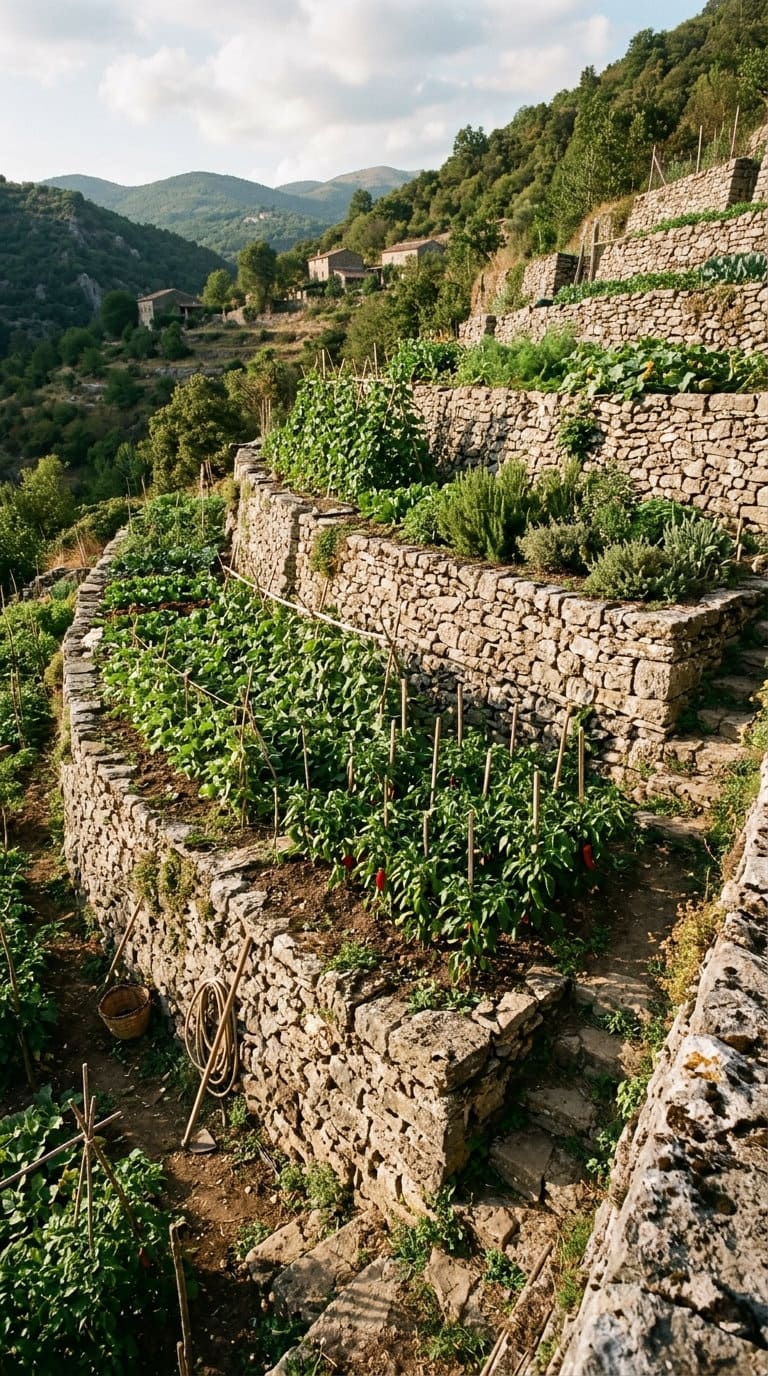
A steep slope is a different project entirely, full terracing, engineered retaining walls built the way a taller retaining-wall project would be planned, and in most places a permit once any single wall crosses roughly 3 to 4 feet in height.
Raised beds vs. full terracing: which one fits your slope
This is the fork in the road, and it’s worth being honest about the tradeoffs instead of defaulting to whatever looks nicest on Pinterest.
| Slope | Best approach | Rough cost | DIY-friendly | Lifespan |
|---|---|---|---|---|
| Gentle (under 5%) | Raised beds, minor grading | Low | Yes, a weekend job | 10-20 years depending on material |
| Moderate (8-16%) | Hybrid: 1-2 low terraces plus raised beds stepped into the grade | Moderate | Yes, with some digging | 15-30 years |
| Steep (20%+) | Full terracing, engineered walls over roughly 3-4 ft | High | Partial, walls over 18 in typically need bracing or professional design | 30-50+ years |
If money is the constraint, it’s worth pricing out the lower end of the range too, plenty of the budget-friendly moves for a sloped yard apply just as well when the end goal is food instead of decor. Money is the real blocker for a lot of people on steeper ground, not ambition.
A gardener working a 30 percent slope with rocky clay soil, posting under the name Melissa Benton on the permies.com forum, described exactly this problem: her land needed terracing but “the cost of wood for building terraces” was more than she could afford. The thread’s replies are honestly a better cheap-terracing playbook than most articles I’ve read. One responder, Bryant RedHawk, suggested reusing the rock you dig out while cutting swales to dry-stack retaining walls instead of buying lumber.
Most yard problems trace back to one specific, fixable cause. Find yours in 4 quick questions.
Take the Free Quiz
Tool-free snap-lock composite bed kit built for stacking into a stepped, multi-level layout on a slope, HDPE/wood-fiber boards that won't rot or splinter like cedar.
Shop NowThis post contains affiliate links. We may earn a commission on qualifying purchases at no extra cost to you.
Another, Casie Becker, recommended packing swales with free ramial wood chips from local tree trimmers to hold moisture and stop erosion, and keeping the lower hillside in soil-holding perennials so only the upper section gets disturbed for annual vegetables.
If you’re not sure yet, the honest rule is: measure your slope first, then pick the row in the table. Don’t let a Pinterest photo of a full-terrace hillside garden talk you into building one on a 6 percent grade that would’ve been fine with raised beds.
Why fertilizer runoff matters more here than in a flower bed
This is the part that gets skipped in most sloped-yard content, because most of it is written for decorative landscaping, not food production. It matters more for vegetables specifically.
The USDA Natural Resources Conservation Service’s Terrace Conservation Practice Standard (Code 600) exists to stop two things moving downslope together: sediment and the nutrients attached to it, phosphorus specifically. On a decorative bed, losing some topsoil is a cosmetic problem.
On a vegetable bed, losing the compost or fertilizer you just worked in means you fed the ditch instead of your tomatoes, and it means some beds end up starved while runoff concentrates nutrients somewhere you don’t want them, usually downhill in a spot that isn’t yours.
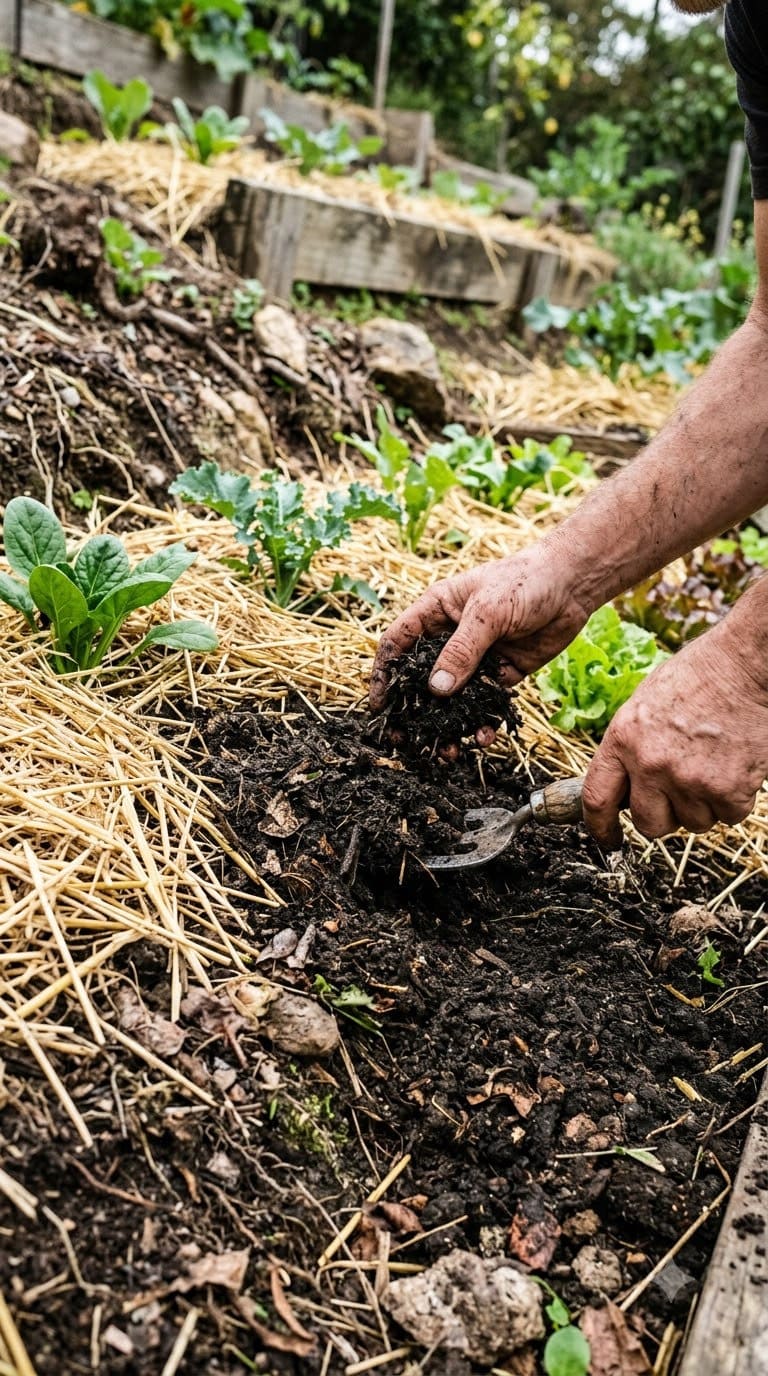
The fix is unglamorous, and it pairs well with getting the surface drainage on the rest of the slope sorted at the same time, since a bed that stays wet from yard runoff will keep losing nutrients no matter how carefully you feed it. Work compost and fertilizer into the top few inches of soil instead of broadcasting it on the surface, and mulch immediately after.
A thick layer of straw or shredded leaves right after amending keeps the first hard rain from just carrying everything you added straight downhill. It’s a five-minute habit that saves you from re-feeding the same bed three times a season.
Which way does your slope face, and why it decides what you can grow
Aspect changes everything about what will actually thrive. A south or southeast-facing slope runs warmer, gets fewer frost problems, and suits sun-hungry crops like tomatoes, peppers, corn, and summer squash, though a scorching mid-summer spot on a south face is exactly where the tricks in our shade cloth guide for vegetable gardens come in handy for anything that bolts in too much direct heat.

A north-facing slope stays cooler and thaws later in spring, which sounds like a downside until you realize it’s actually the better spot for leafy greens, brassicas, and anything that bolts fast in real heat.
The average homeowner spends $616/year on yard fixes that don't address the real problem. Find out what yours actually is — before you spend another dollar.
Take the Free QuizRow orientation is where the advice genuinely conflicts depending on your grade, and it’s worth stating that plainly instead of picking one rule and pretending there’s no tension. For sun exposure alone, rows running north to south catch the most even light across the day.
For erosion control, rows should follow the contour of the slope, running across it rather than up and down, so water has to cross each row instead of running straight down a channel between them.
On a gentle slope where erosion risk is low, optimize for sun and run rows north-south. On anything moderate or steeper, contour wins, full stop, because a straight row pointed downhill turns into a drainage channel the first time it really rains, and you’ll lose both soil and plants to it.
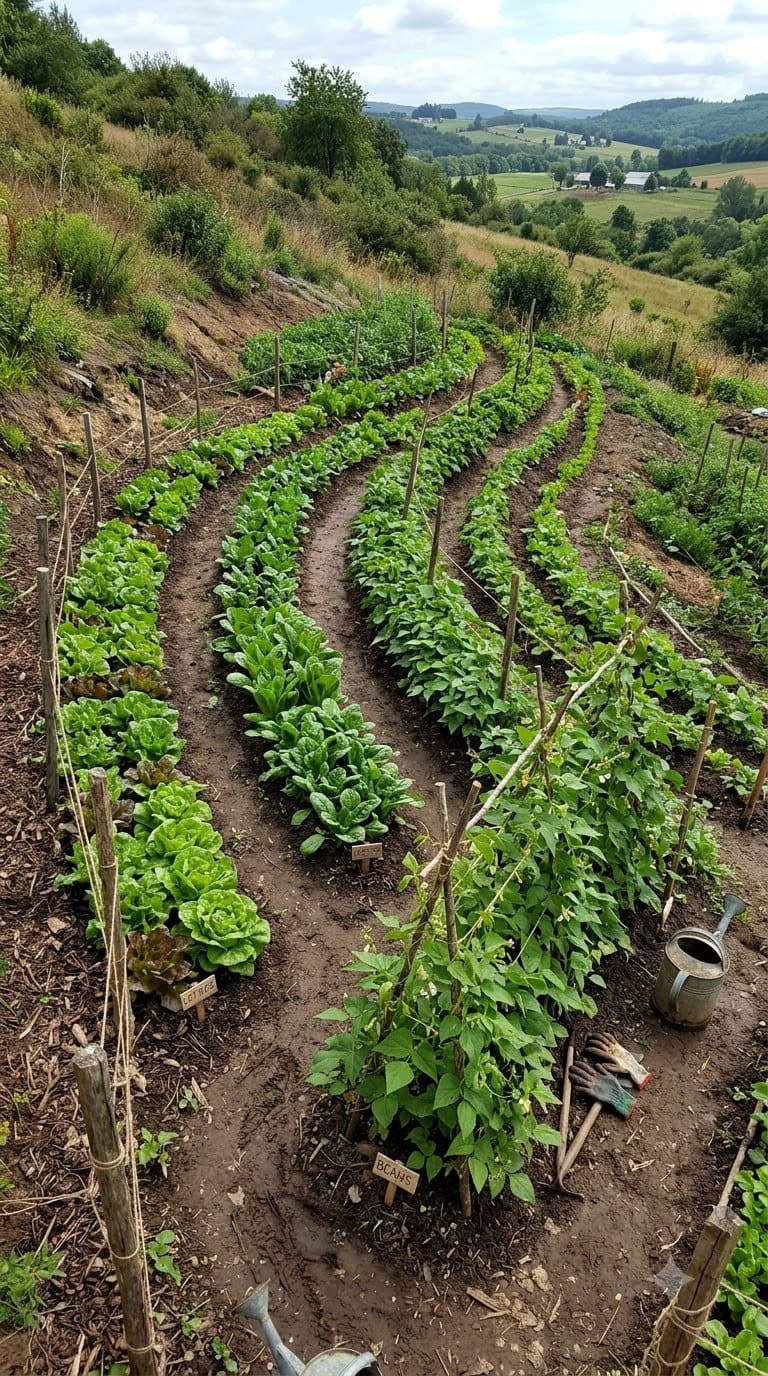
Size terraces and beds like you’re growing food, not hosting dinner
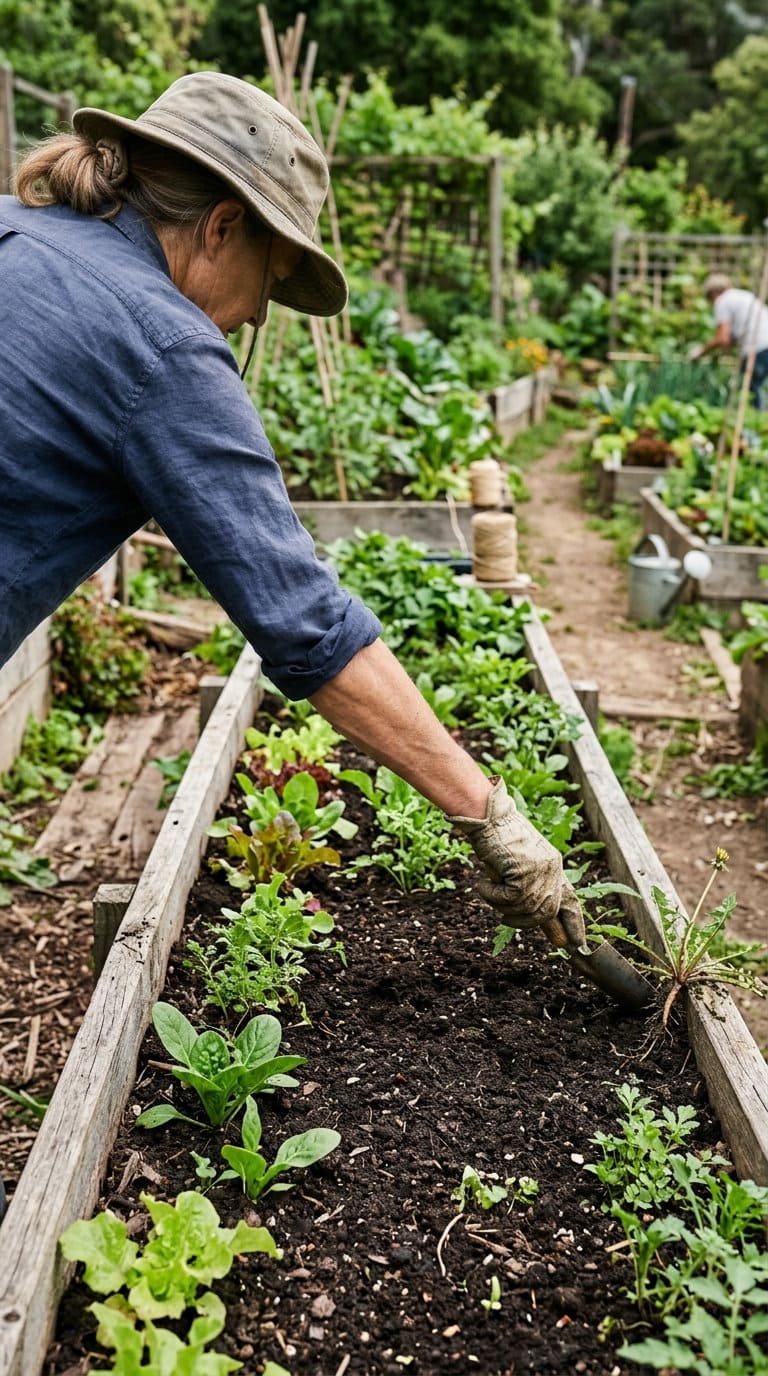
A lot of sloped-yard advice sizes terraces for patio furniture. A vegetable terrace has different math. Aaron Steil’s guidance from Iowa State Extension puts a small planting terrace at 2 to 3 times the width of whatever’s being planted, root ball included, which for row vegetables generally works out to a usable bed depth of about 3 to 4 feet, enough to plant and reach across without stepping on the soil.
That’s narrower than the 10 to 12 feet you’d want for a dining terrace, and it’s worth not over-building a terrace deeper than you need, since deeper terraces mean more retained soil, more wall pressure, and more cost for no extra growing benefit.
If you’re building the boxes rather than open rows, the sizing logic in our raised vegetable garden bed guide still applies once you’ve picked the terrace depth.
Stagger your rows instead of stacking them in a straight vertical line down the slope, even within a single terrace. A staggered layout forces water to zigzag instead of finding one clean channel, which matters even on ground that looks flat enough that you’d never think about it.
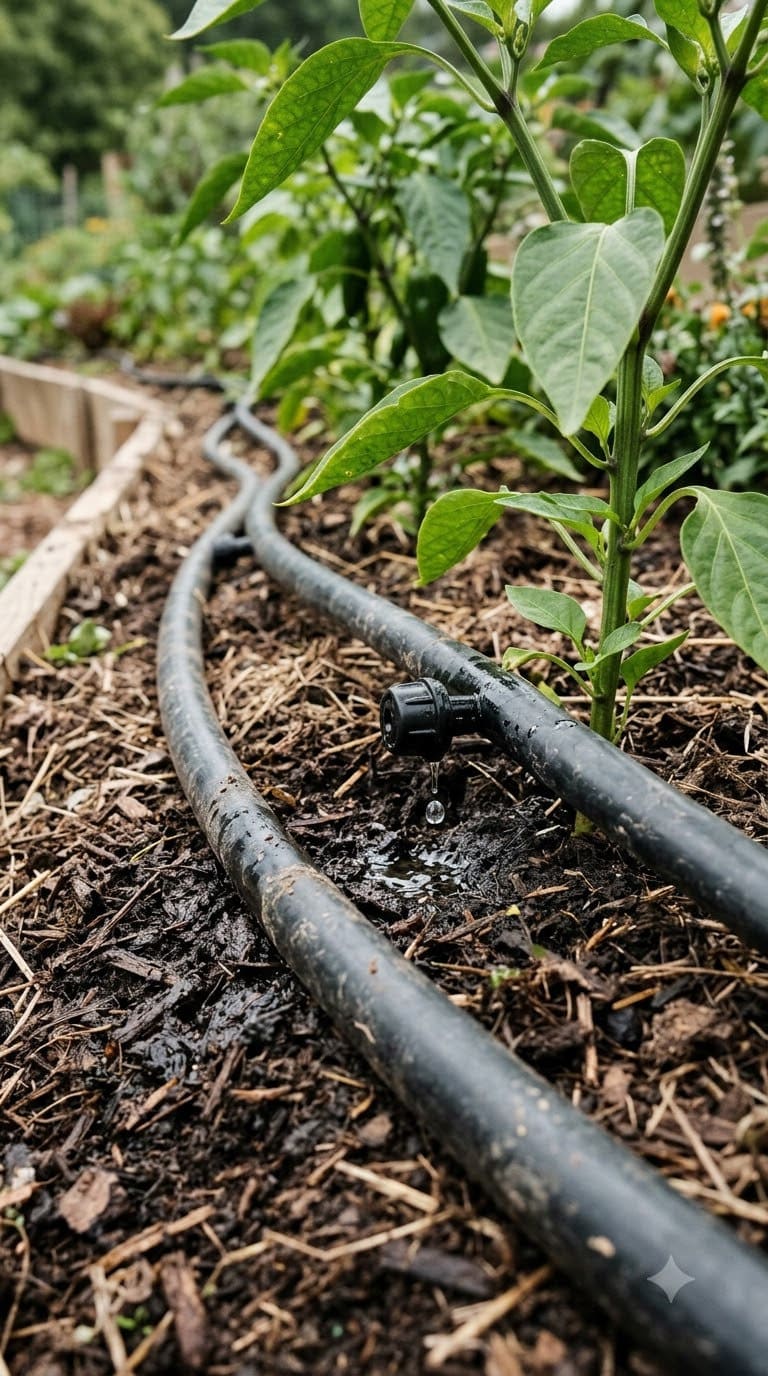
Water on a grade behaves differently than water on flat ground
Overhead sprinklers are close to the worst option on a slope, most of the water runs off before it soaks in, and you end up with a soggy bottom terrace and a bone-dry top one from the same watering session.
Drip irrigation or soaker hoses laid along the contour of each terrace do a much better job getting water to the root zone before gravity takes over.
If you’re hand-watering, use the cycle-and-soak method: water until you see runoff start at the base of the bed, stop, let it soak in for ten or fifteen minutes, then water again. Repeating that two or three times moves more water into the soil than one long soak that mostly runs off the top.
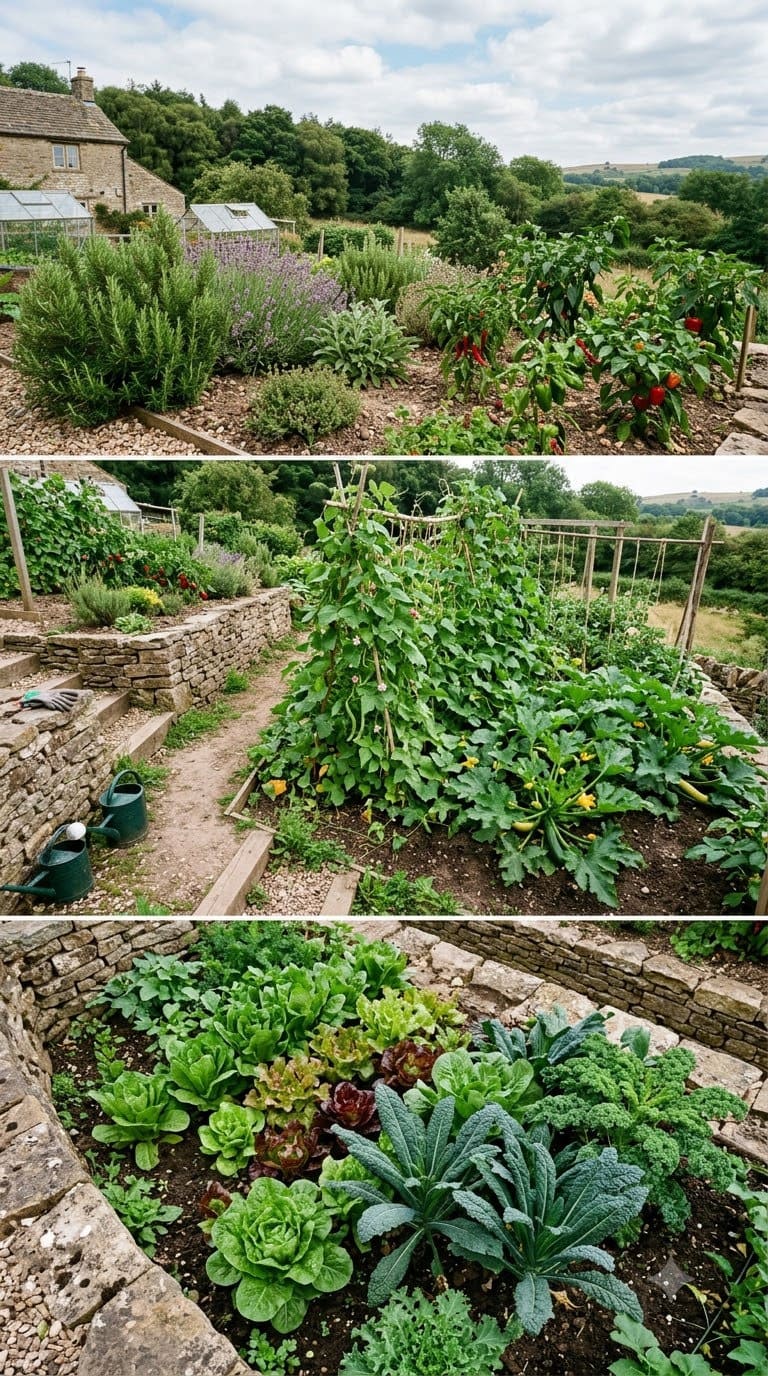
It also helps to plan for the microclimate you already have instead of fighting it. The top of a slope dries out fastest and warms up first in spring. The bottom stays moist longer and is the natural spot for anything that wants consistent moisture, think lettuce, spinach, and other shallow-rooted greens, while drought-tolerant herbs and deep-rooted crops do better higher up where the soil drains fast.
What actually goes wrong (a real pain-point rundown)
I think the biggest misconception people bring to a sloped vegetable garden is that it’s mostly a building problem, get the terraces up and you’re done. From what I’ve seen in gardener forums and from working ground like this myself, the building part is honestly the easy half.
The lumber cost catches people off guard first, that’s the Melissa Benton problem from earlier, and it’s a real one, not a minor inconvenience. Terrace collapse or bowing is the second, usually from a wall built without accounting for the water pressure building up behind it rather than from bad carpentry. And the one almost nobody plans for ahead of time: shade creep.
A terrace built above another one starts casting a longer shadow as the sun angle drops through the season, and a bed that got full sun in June can end up shaded by August depending on how tall the retaining wall above it is and how far south it sits.
If you’re stacking multiple terraces, sketch out where the shadows will fall in late summer before you finalize which crops go on which level, not just where the sun hits on the day you’re building.
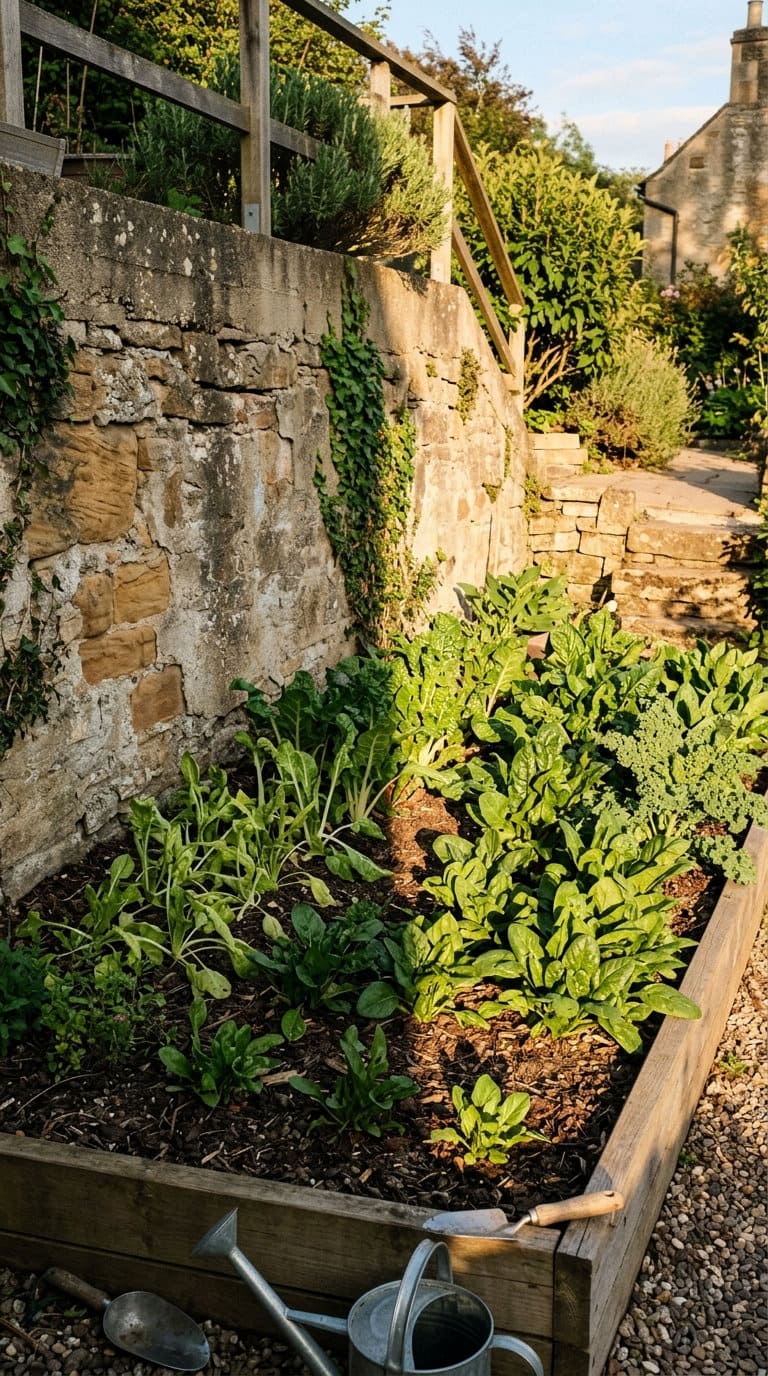
None of this is a reason to avoid a sloped vegetable garden. It’s just not a weekend project once you’re past a gentle grade, and pretending otherwise is how a wall ends up bowing two years in.
One more practical thing worth planning early: if deer or rabbits are an issue on your property, fencing a terraced bed is more awkward than fencing a flat plot, so it’s worth reading through vegetable garden fence ideas before you finalize the terrace layout, not after.
Best vegetables by slope position
| Slope position | Conditions | Good crops |
|---|---|---|
| Upper slope | Drier, warms and dries fastest, most sun on a south-facing grade | Rosemary, thyme, oregano, peppers, drought-tolerant tomato varieties |
| Mid-slope | Moderate moisture and sun, the most “average” growing conditions on the hill | Beans, squash, cucumbers, most standard row crops |
| Lower slope | Moist, cooler, more shade risk from terraces above later in the season | Lettuce, spinach, kale, other leafy greens and brassicas |
FAQs
Do I need a permit for a retaining wall in my vegetable garden?
Often yes, once a wall crosses roughly 3 to 4 feet in height, though the exact threshold varies by city and county. Anything shorter, in the 18-inch-and-under range, is usually within normal DIY territory without triggering a permit or requiring engineered bracing.
Can I just plant straight down a slope without building terraces?
On a gentle grade, under about 5 percent, yes, especially if you mulch heavily and orient rows across the contour rather than straight up and down. On anything moderate or steeper, plain row planting turns into a drainage channel during heavy rain and you’ll lose soil, fertilizer, and plants together.
How do I stop a raised bed from sliding downhill?
Cut into the slope so the bed sits on a leveled step rather than resting on the angled grade, and stake the frame with rebar rather than wood stakes on anything beyond a gentle slope, since rebar holds better against the sideways pressure of wet soil.
What’s the cheapest way to terrace a vegetable garden?
Dry-stacked stone, using rock you excavate on-site while digging swales or leveling terraces, is close to free if your soil has usable rock in it. A gabion wall, wire cages packed with stone, is the next cheapest option and handles drainage better than a solid wall since water passes through the gaps instead of building up behind it.
Related Posts
- 20+ Brilliant Small Sloped Garden Ideas You’ll Wish You Tried Sooner
- 40+ Gorgeous Tiny Backyard Slope Ideas You’ll Want to Copy
- 20+ Sloped Side Yard Ideas That Turn Awkward Spaces Into Eye Candy
Products We Recommend
This post contains affiliate links. We may earn a commission on qualifying purchases at no extra cost to you.
Frame It All Composite Terraced Multi-Level Raised Garden Bed Kit, 4' x 8' x 11"
Tool-free snap-lock composite bed kit built for stacking into a stepped, multi-level layout on a slope, HDPE/wood-fiber boards that won't rot or splinter like cedar.
Shop Now
Rain Bird GARDENKIT Drip Irrigation Raised Bed Garden Watering Kit
Complete drip kit with pressure-compensating emitters and 35 ft of tubing for up to a 4' x 8' bed, suited to running irrigation along the contour of a terraced vegetable garden instead of overhead sprinkling.
Shop Now
Straw Wattle Erosion Control Log, 9" x 8'
Biodegradable straw erosion-control log staked across a slope to slow runoff and hold soil and mulch in place for one to two years while new plantings establish.
Shop NowNever miss an update — choose FarmFoodFamily as your preferred source on Google.
How it works: Tap the button below to open Google's settings page, then check the box next to FarmFoodFamily.
Tap the checkbox to turn it blue — that's how you know it's set.