25 Clever Coat Closet Organization Ideas That Fit Every Coat, Boot and Bag
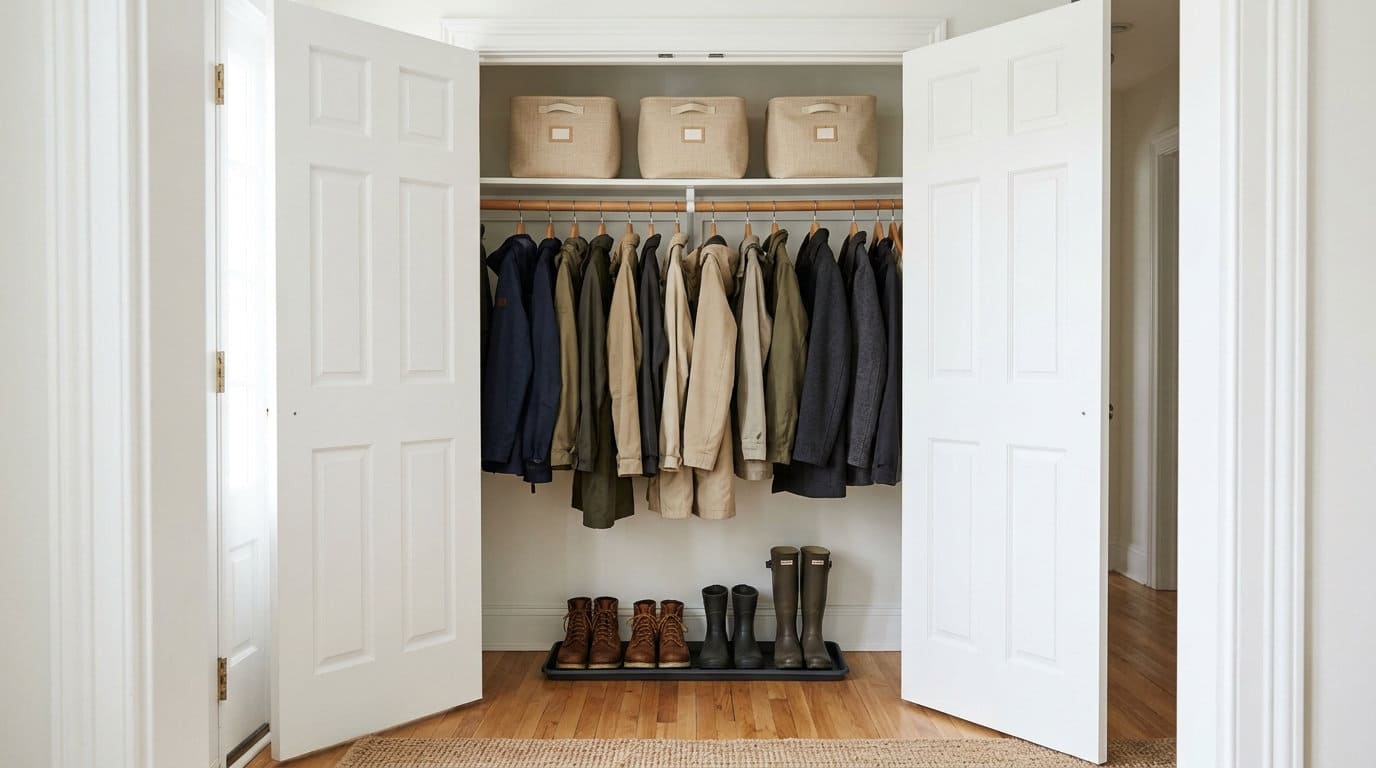
A tidy coat closet takes one weekend and a tape measure, as long as you set the rod at the right height and let wet gear dry before it goes in.

Never miss an update — choose FarmFoodFamily as your preferred source on Google.
How it works: Tap the button below to open Google's settings page, then check the box next to FarmFoodFamily.
Tap the checkbox to turn it blue — that's how you know it's set.
A tidy coat closet takes one weekend and a tape measure, as long as you set the rod at the right height and let wet gear dry before it goes in.
Products We Recommend
This post contains affiliate links. We may earn a commission on qualifying purchases at no extra cost to you.

Ninamar Boot Tray, 20 x 15 Inch, 2 Trays
Two lipped trays that catch snow, mud and salt under the short side of the rod. Rinse them weekly in winter.
Shop Now
LYNK Professional Over the Door Hooks, 9 Hook
A no-drill hook rack for the back of the closet door. Check that your door still closes with it in place.
Shop Now
Amazon Basics Slim Velvet Non-Slip Hangers, 50-Pack
Slim matching hangers that free up rod space and stop light jackets from sliding off.
Shop NowA cluttered coat closet is the first thing guests see and the last thing anyone wants to open. The good news is that most of them don’t need more space. They need a better plan.
These 25 ideas are grouped by where they go: the rod, the shelf, the door, the floor and the small stuff. Each one has a quick how-to, a test and a tip. You’ll also find the measurements to check first, a cost table and the mistakes that undo a makeover in a month.
Quick Answer
Start by taking every coat out. Keep only what your family wears this season, and move the rest to bins or another closet. Donate what nobody wore last year.
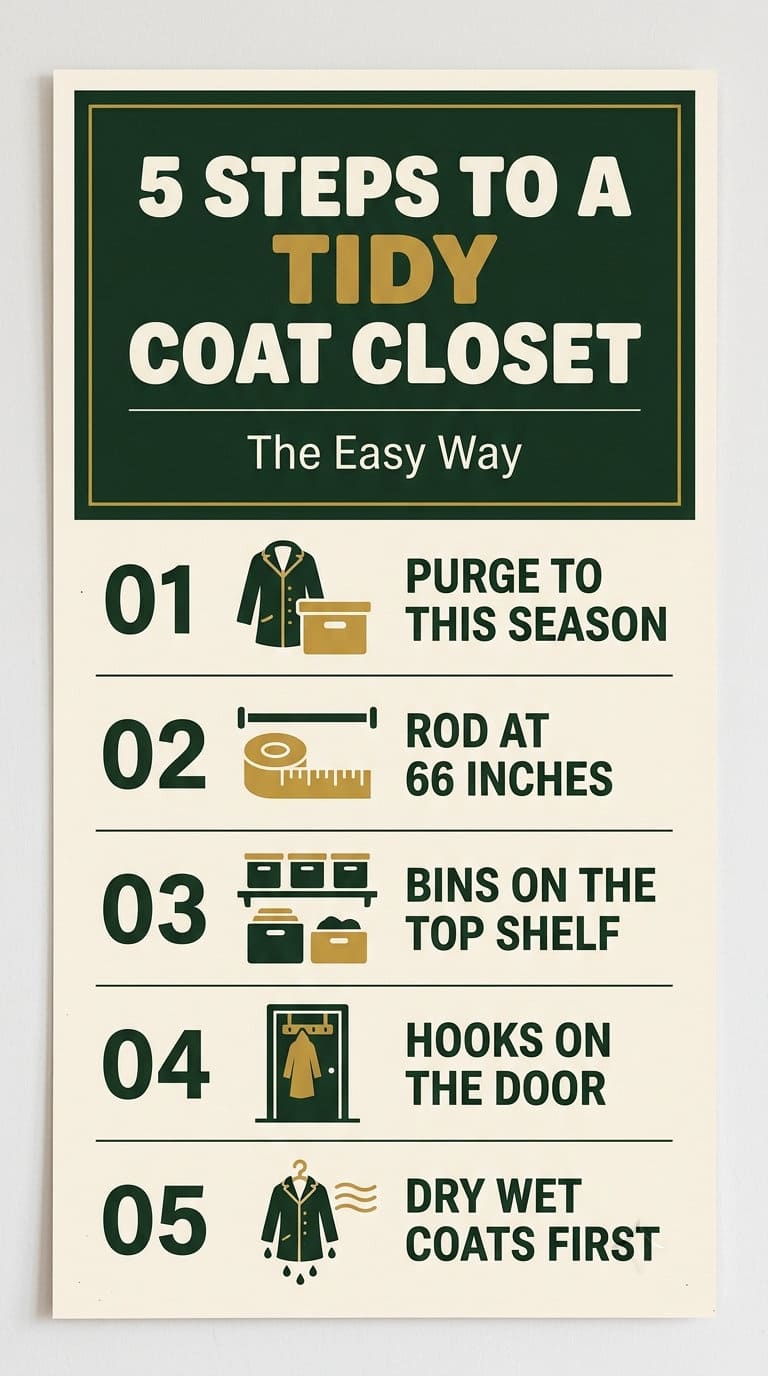
Next, set the rod at the right height. Bob Vila’s guide puts a single rod 66 inches off the floor. It also says to keep the rod at least 12 inches from the back wall, so coats don’t crush.
Then split the closet into three zones. The top shelf holds bins for hats, gloves and spare items.
The rod holds coats you wear each week. The floor holds a boot tray and a bin for bags.
Finally, use the door and the side walls. Hooks and an over-door rack add space for leashes, totes and kids’ jackets. Let wet coats dry first, since damp gear in a closed space can grow mold.
How do you measure a coat closet before you buy anything?
Measure before you shop. Most coat closet buys fail because they don’t fit the depth or the door swing.
Grab a tape and note four numbers: width, depth, height to the shelf, and how far the door opens. Bob Vila’s closet rod guide notes that the average closet is about 24 inches deep. That depth is what lets a puffy coat hang straight.
| What to measure | Target | Why it matters |
|---|---|---|
| Single rod height | 66 inches to the bottom of the rod | Long coats clear the floor |
| Double rod heights | Top 81 3/4 in, lower 40 1/2 in | Two rows of short jackets |
| Kids’ lower rod | About 30 inches | Kids can reach on their own |
| Rod to back wall | At least 12 inches | Coats don’t squash |
| Rod below shelf | At least 2 inches | Hangers lift off easily |
Check: hang your longest coat on a test hanger. If the hem touches the floor, a double rod won’t work on that side.
What goes where? The 3-zone plan
Every coat closet works better with three clear zones. Put the things you grab daily at hand height. Put the rare stuff up high.
| Zone | What lives there | Height |
|---|---|---|
| Top shelf | Off-season hats, spare gloves, umbrellas, guest items | Above the rod |
| Rod and walls | Daily coats, bags, leashes, kids’ jackets | Hand height |
| Floor | Boots, shoes, sports bags, a bin for returns | Below the hems |
Tip: give each person one hook or one section of rod. When it’s full, something goes.
Rod and Hanging Ideas
1. Reset the Rod to the Right Height
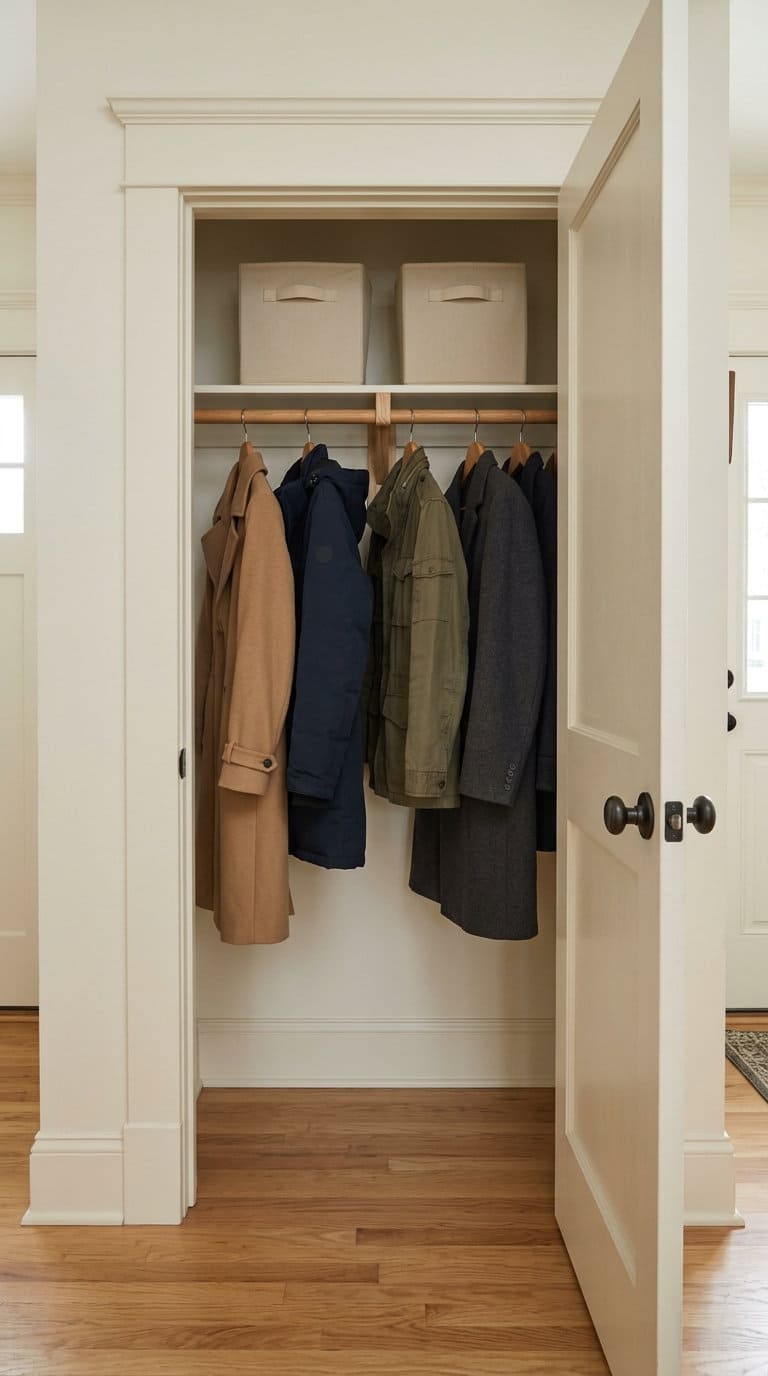
A rod set too low is the most common coat closet problem. Long coats pile on the floor and boots get buried.
Take the rod down and check the height. Mount it at 66 inches for a single rod, measured to the bottom of the rod. Screw the brackets into studs, not just drywall.
Test: hang your longest winter coat. You want a few inches of air under the hem.
Two lipped trays that catch snow, mud and salt under the short side of the rod. Rinse them weekly in winter.
Shop NowThis post contains affiliate links. We may earn a commission on qualifying purchases at no extra cost to you.
2. Add a Second Rod for Short Jackets
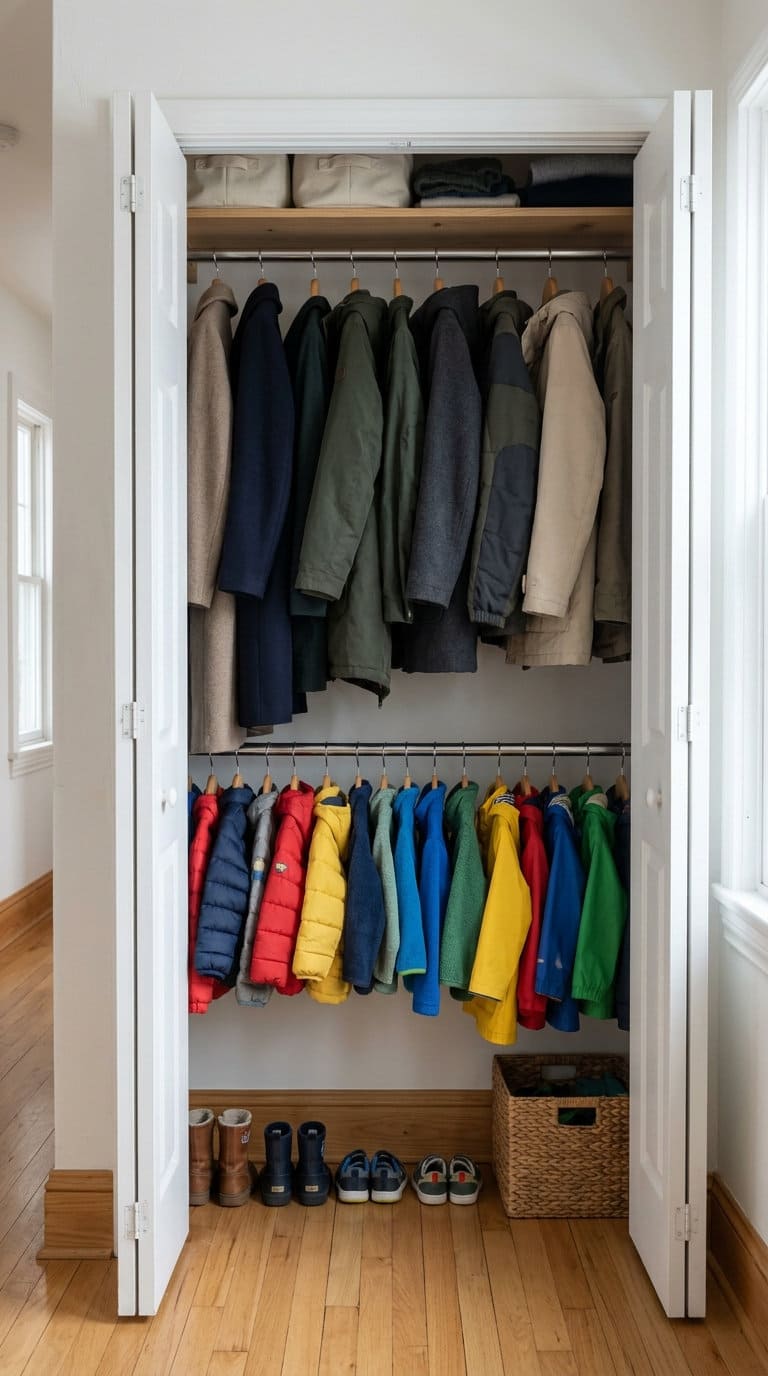
Most families own more short jackets than long coats. A second rod turns one row into two.
Use the double rod heights from the table above on one side only. Keep the other side single for long coats and dresses. A hanging rod extender clips on with no tools and works well in rentals.
Tip: put the kids’ jackets on the lower rod. That frees the top rod for adults.
3. Swap to Slim, Matching Hangers
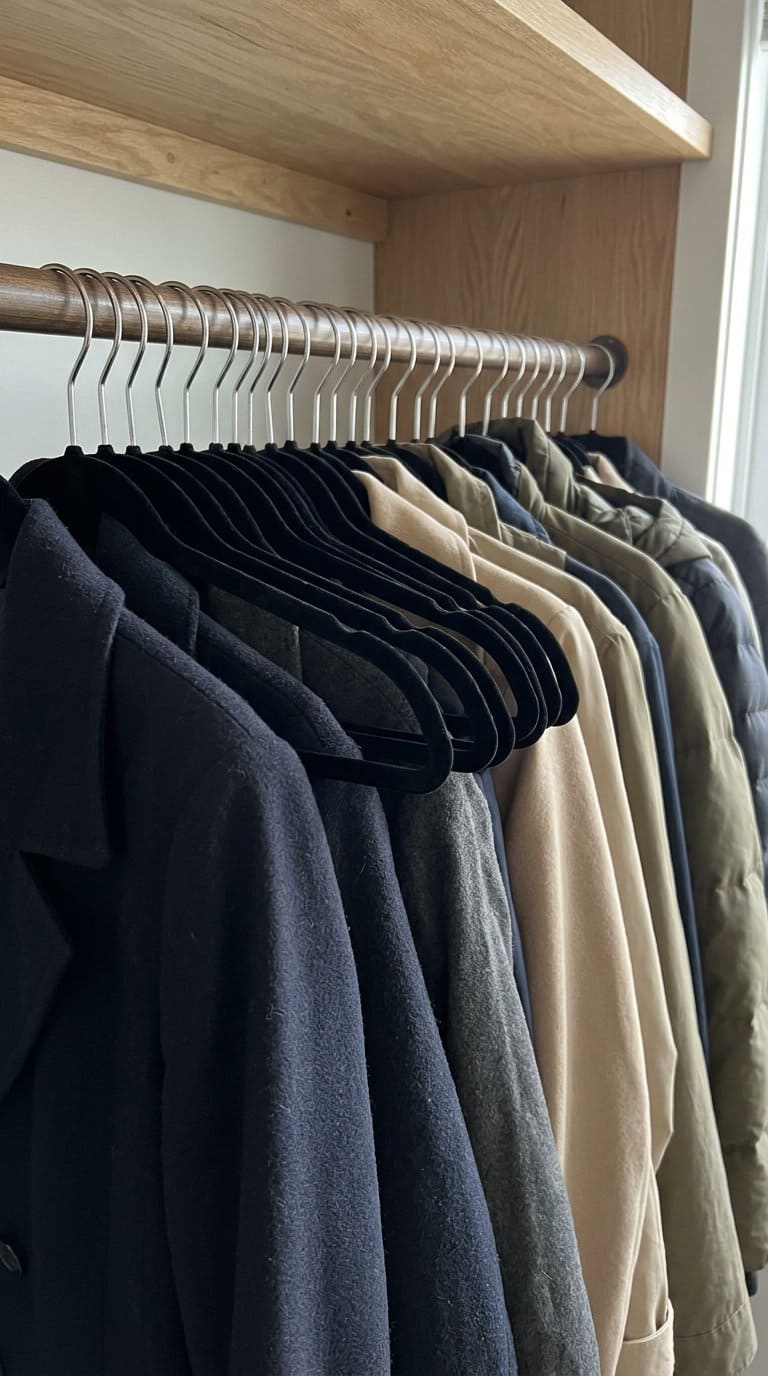
Mixed hangers waste inches. Thick plastic and wire hangers tangle and slide.
Switch to one type of slim, non-slip hanger. Wood hangers suit heavy wool coats, since they hold the shoulder shape. Velvet slim hangers work for light jackets.
Check: count your hangers. Give each coat one and remove the extras. Empty hangers take space too.
4. Hang Coats in One Direction
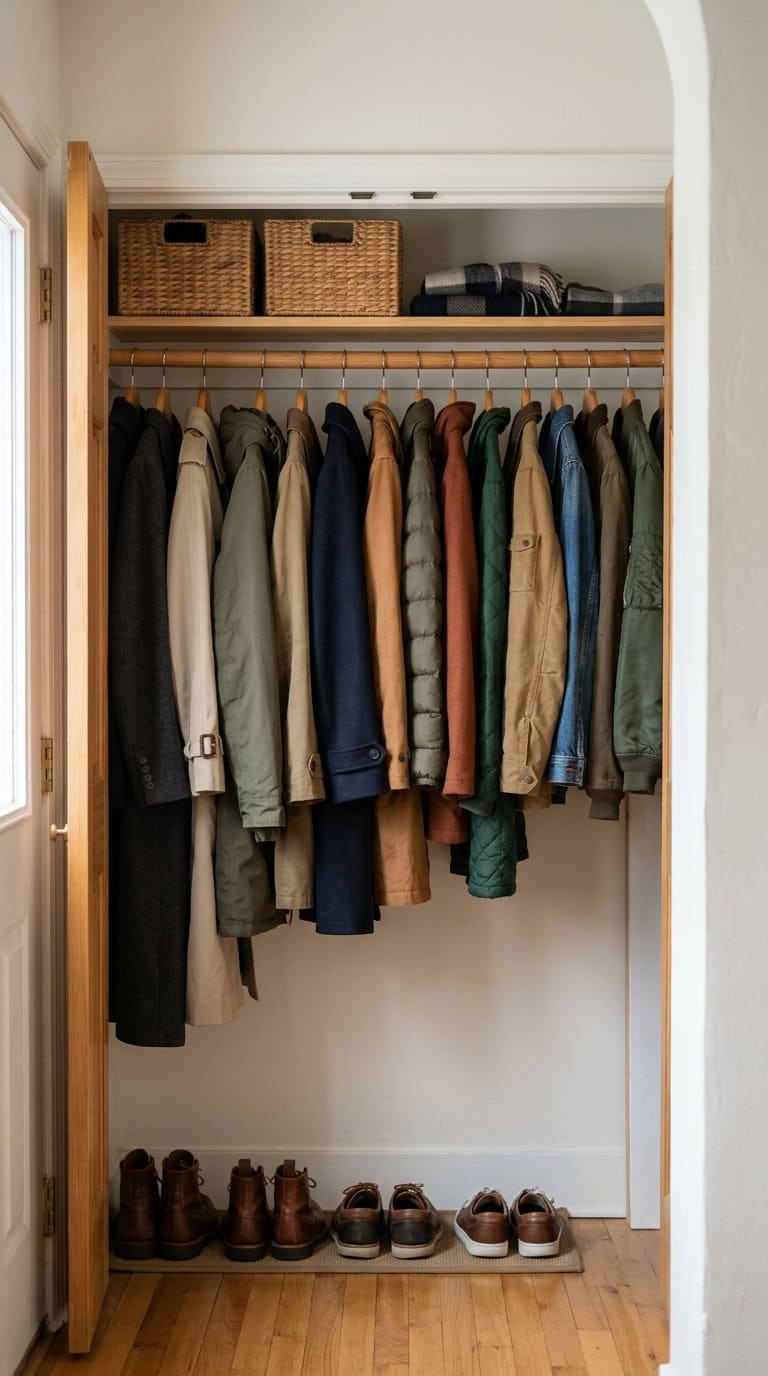
This sounds small, but it saves space. Face every coat the same way, zipped or buttoned.
Hang them from longest to shortest, left to right. The short end leaves floor room below for a boot bench. And it’s easier to spot a coat that doesn’t belong.


Tip: hang guest coats at the open end so you aren’t digging past your own.
5. Use Cascading Hooks for Bags and Scarves
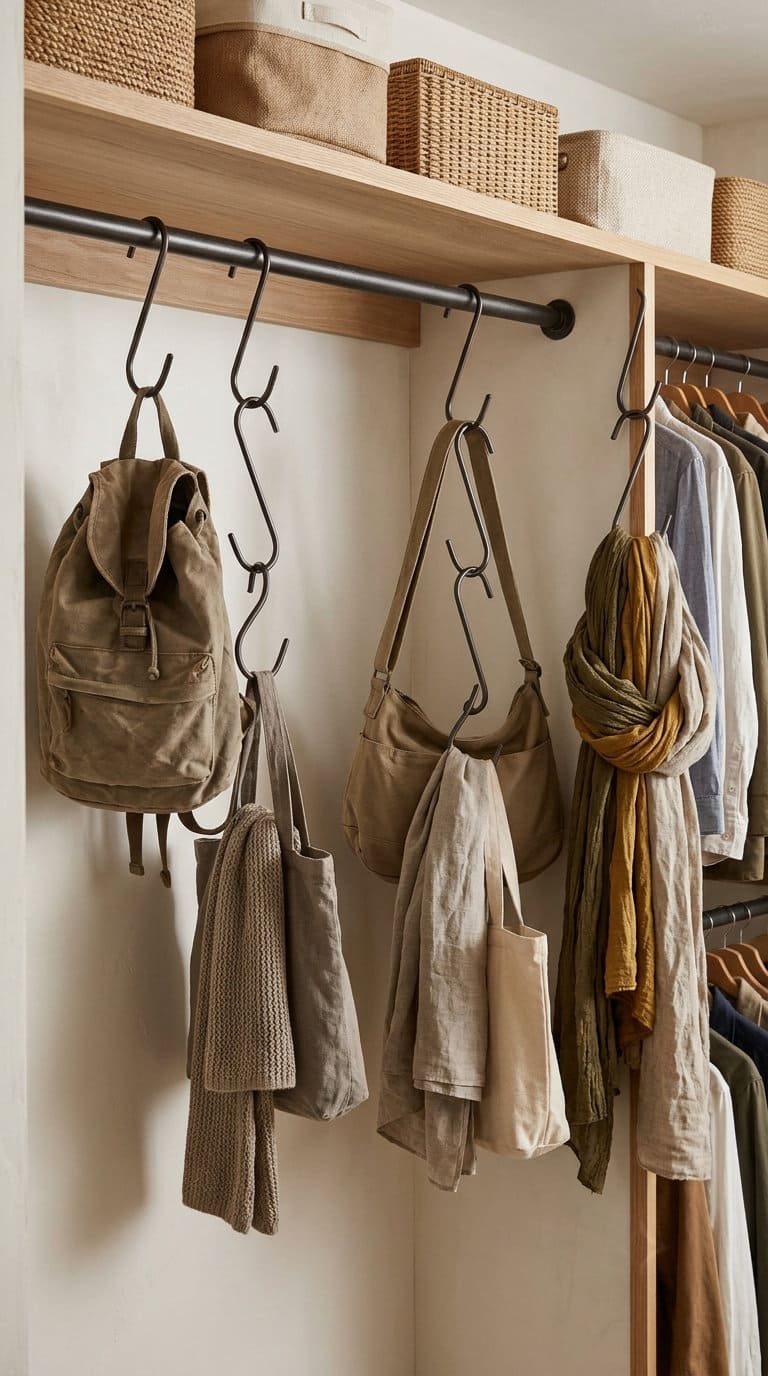
Bags and scarves love to fall off hangers. A cascading hanger or S-hooks on the rod fix that.
Slip a few S-hooks over the rod at one end. Hang totes, backpacks and scarves from them. Keep heavy bags near a bracket so the rod doesn’t bow.
Test: push on the middle of the rod. If it sags, add a center support bracket.
6. Give Puffy Coats Their Own Space
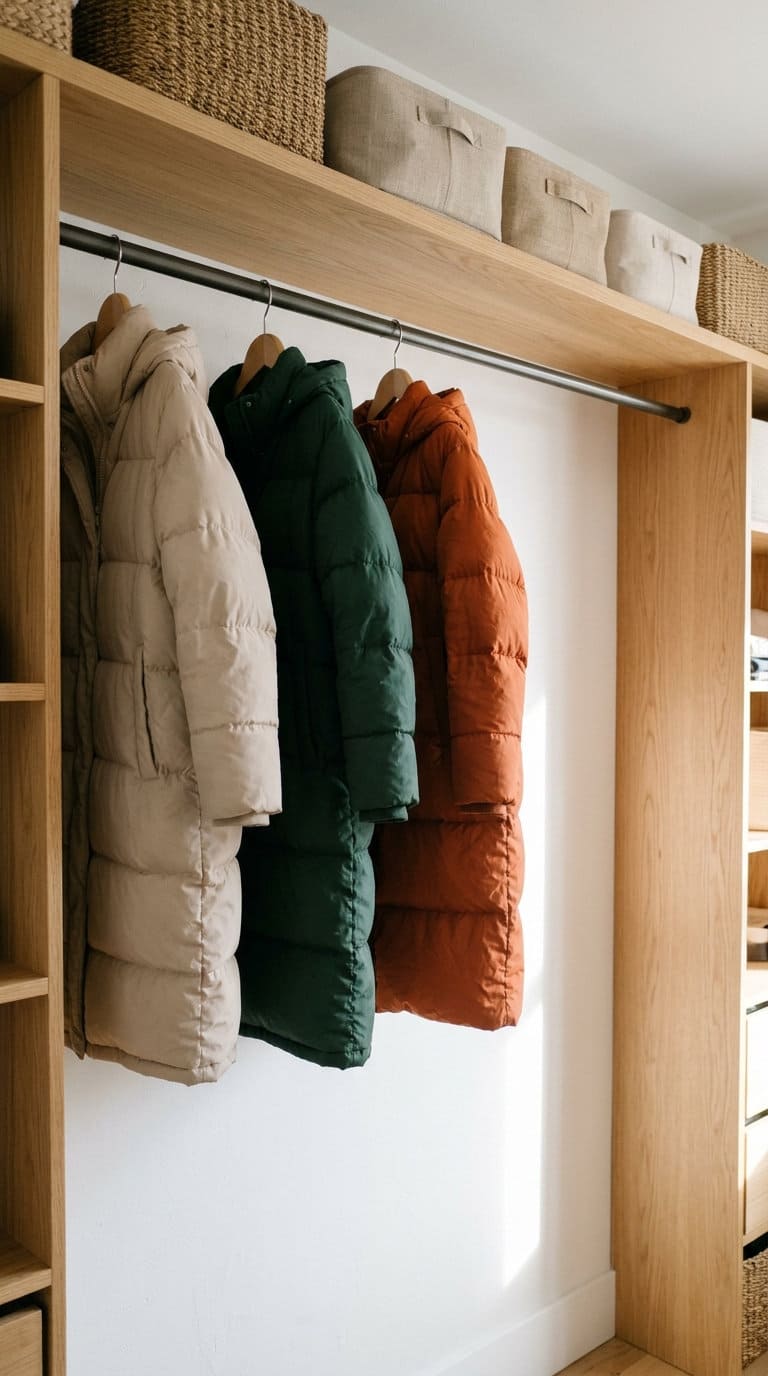
Puffer coats take far more room than a rain jacket. Crushed, they lose warmth.
Group them at one end with a little air between. If you can’t spare the rod space, hang them on wall hooks instead. Store off-season puffers loose, not crushed in a bag.
Tip: a shelf divider at that end keeps them from creeping into the rest.
Shelf and Top Ideas
7. Add a Second Shelf Above the First
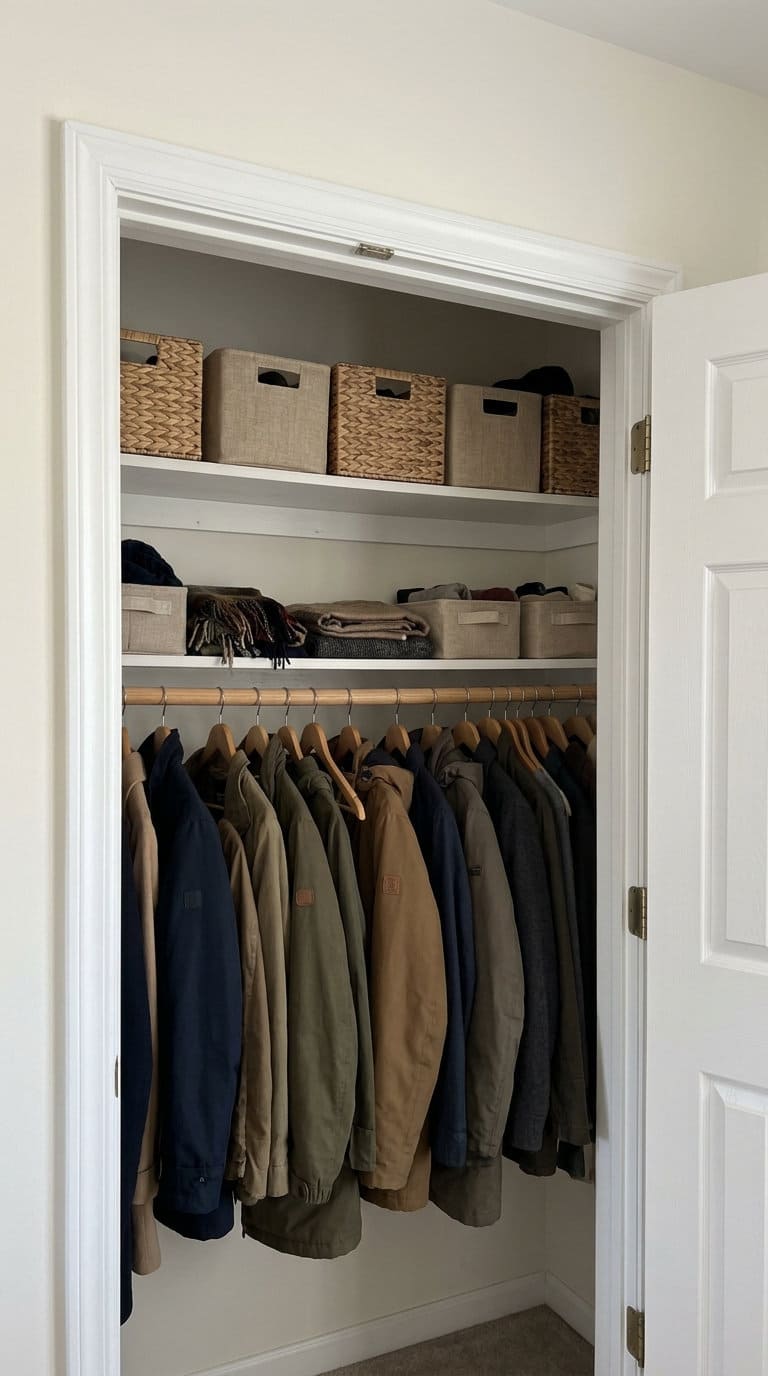
The space above the top shelf is often wasted. Most closets have a foot or more of dead air up there.
Add a second shelf with brackets, or set a shelf riser on the first one. Use the top shelf for the stuff you grab once a season.
Check: leave enough space to lift a bin out without hitting the ceiling.
8. Line Up Labeled Bins
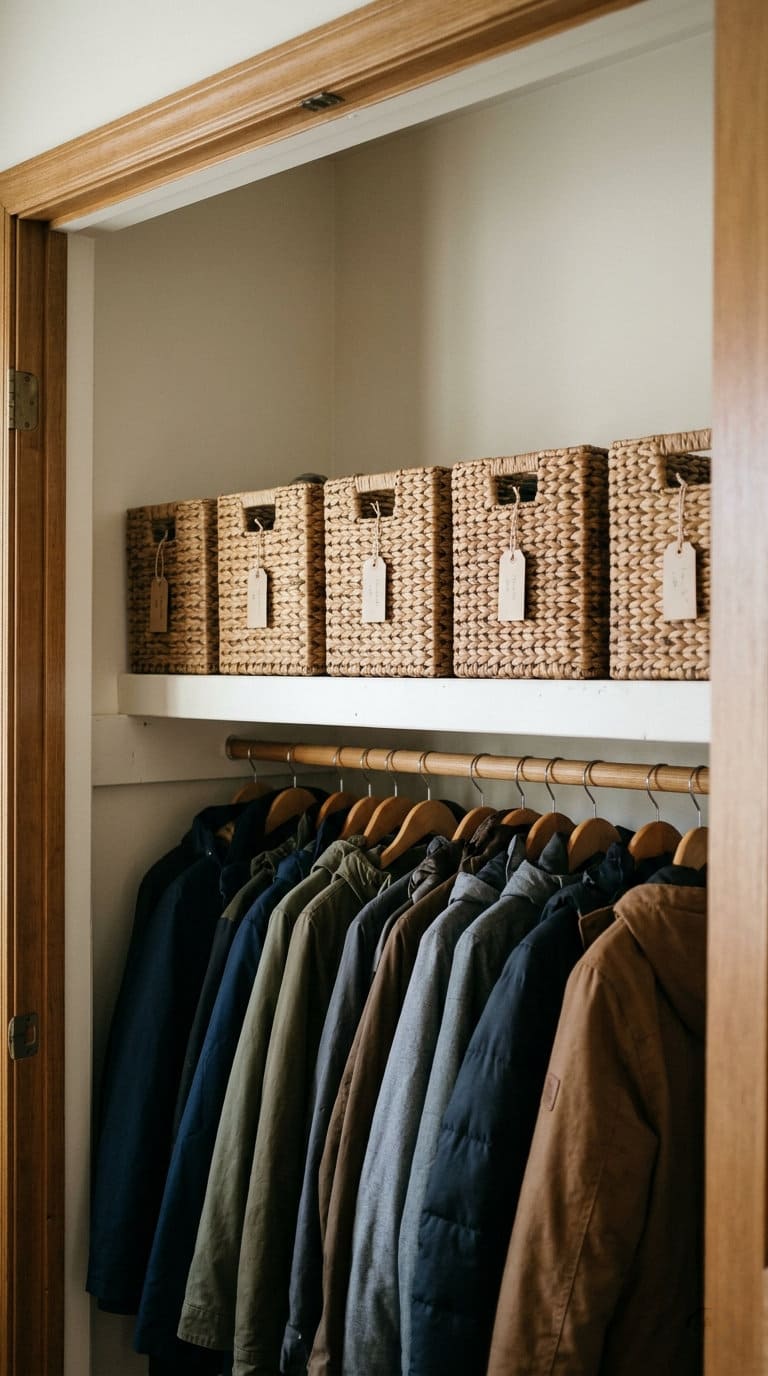
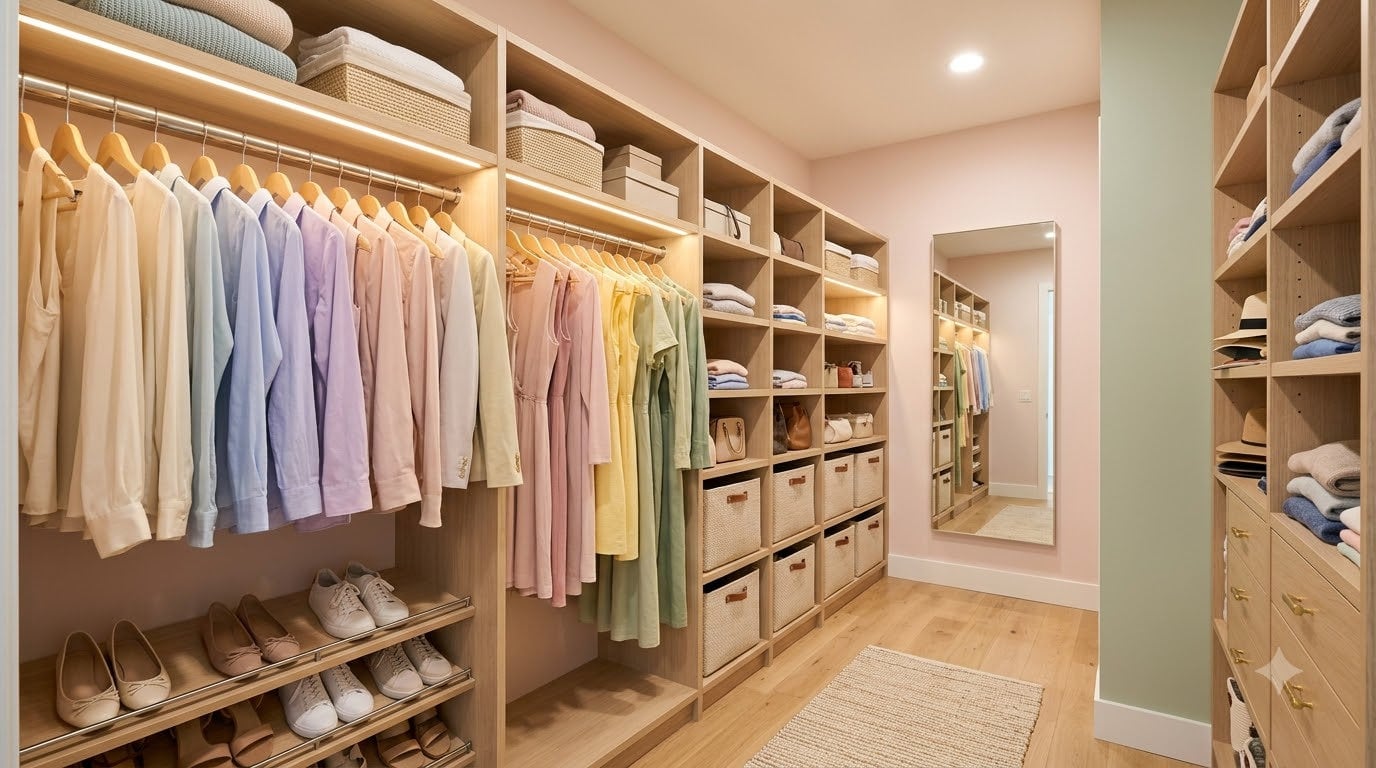
Bins stop the shelf from turning into a heap. They also make it easy for kids to put things back.
Pick one size and one color so the shelf looks calm. Label each bin by person or by item: hats, gloves, sunscreen, dog stuff. Lidded bins work best for the top shelf.
Tip: a bin with a cutout handle is easier to pull down from above your head.
9. Use Clear Bins for Things You Need Fast
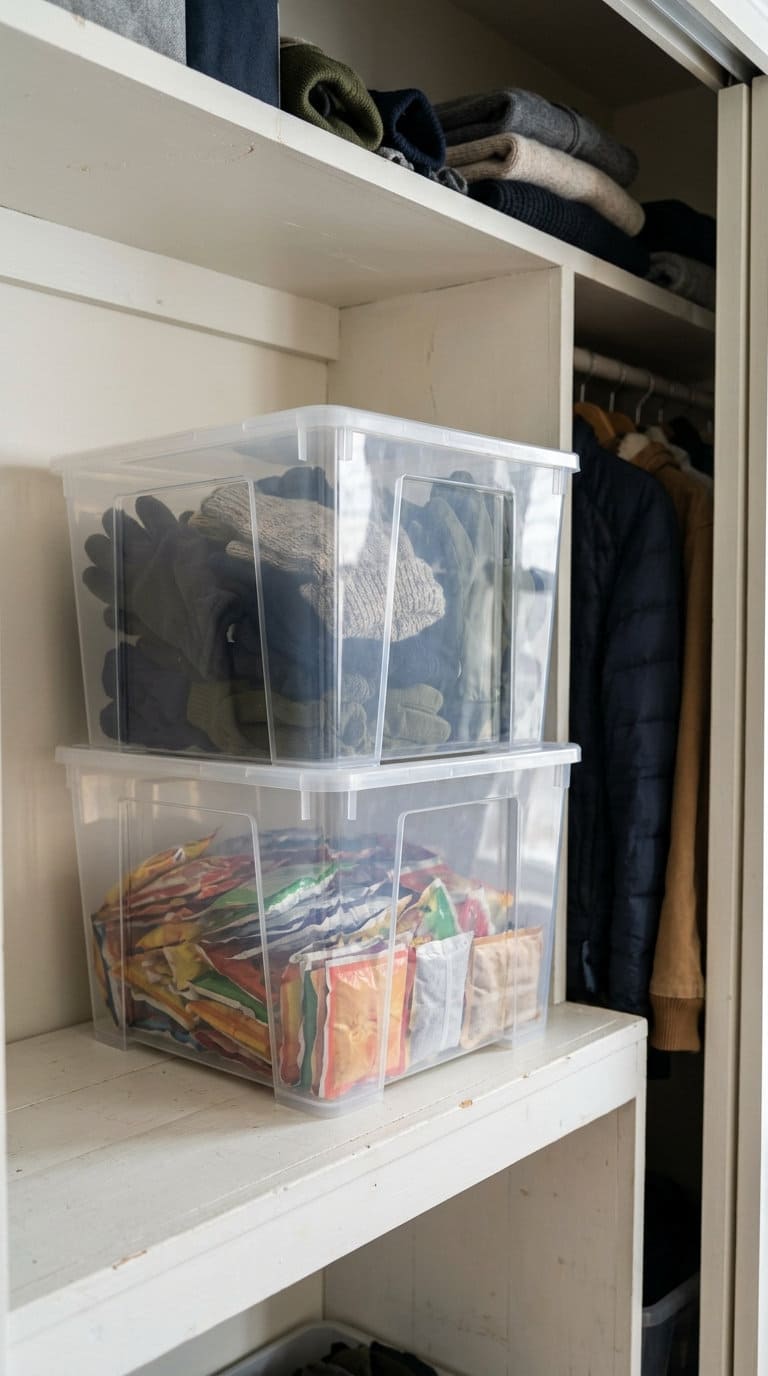
Clear bins let you see what’s inside without pulling them down. They’re great for the middle shelf.
Fill them with grab-and-go items. Think spare masks, flashlights, hand warmers and reusable bags. Set them front and center.
Test: can you find gloves in under ten seconds? If not, the bin is too full.
10. Add a Shelf Divider for Folded Items
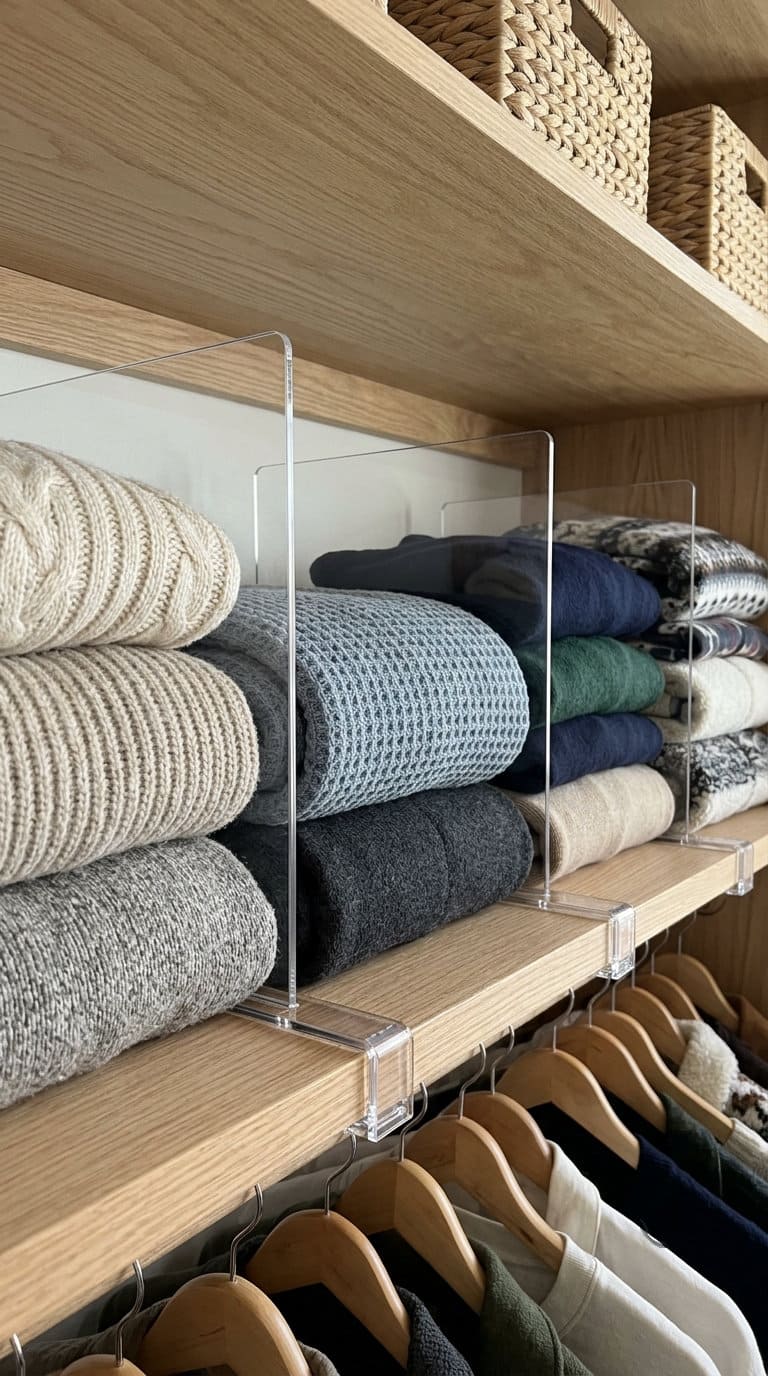
Folded sweaters and blankets slump into each other on a long shelf. Clip-on dividers keep each stack upright.
Slide dividers onto the shelf about a stack-width apart. Use one section for a throw blanket and another for folded scarves. This works well in a wide closet.
Tip: put one bin of guest slippers here if you have a no-shoes house.
Door Ideas
11. Mount an Over-the-Door Rack
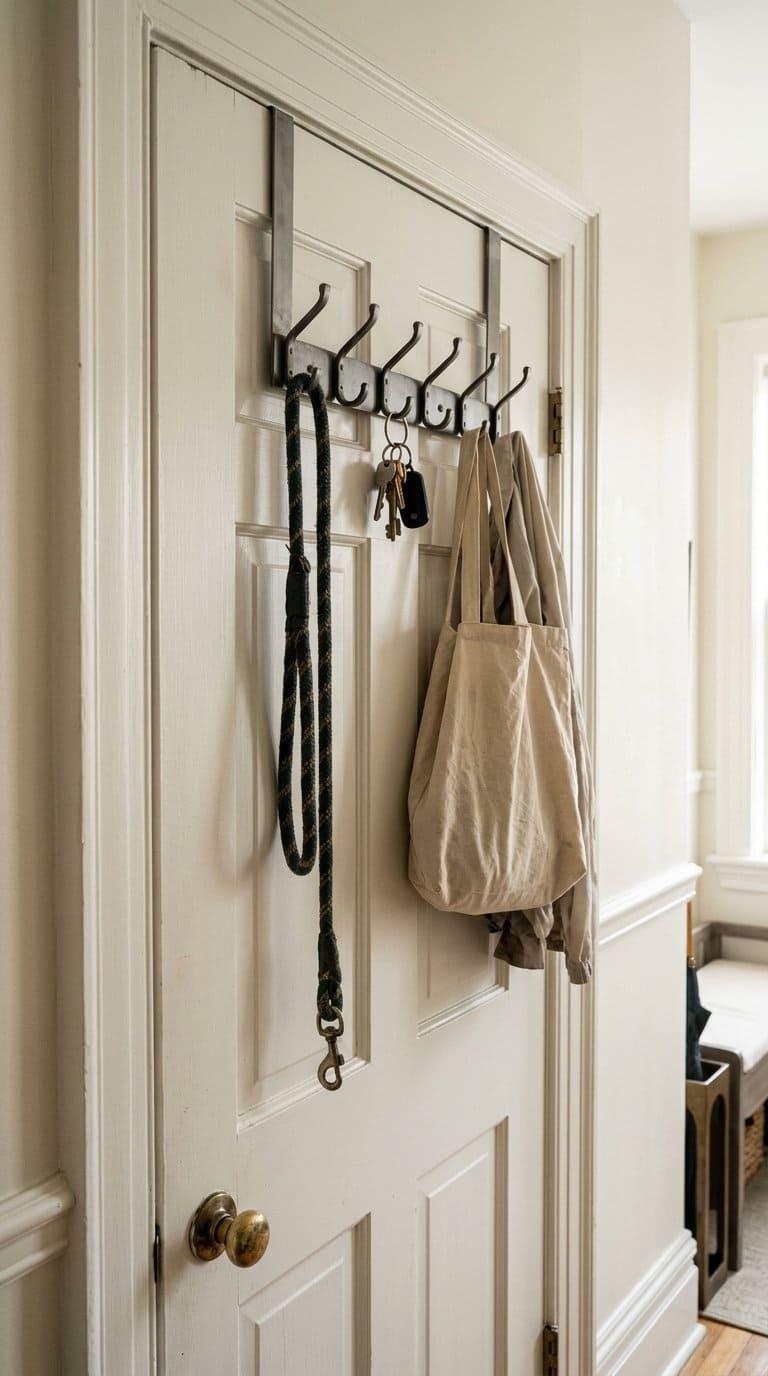
The back of the door is free space most people ignore. An over-door rack adds a row of hooks with no drilling.
Check the gap at the top of the door first. A thick door frame can stop the rack from closing. Look for a rack that fits your door’s thickness.
Tip: use these hooks for things you grab on the way out, like keys, leashes and a reusable bag.
12. Hang a Clear Pocket Organizer
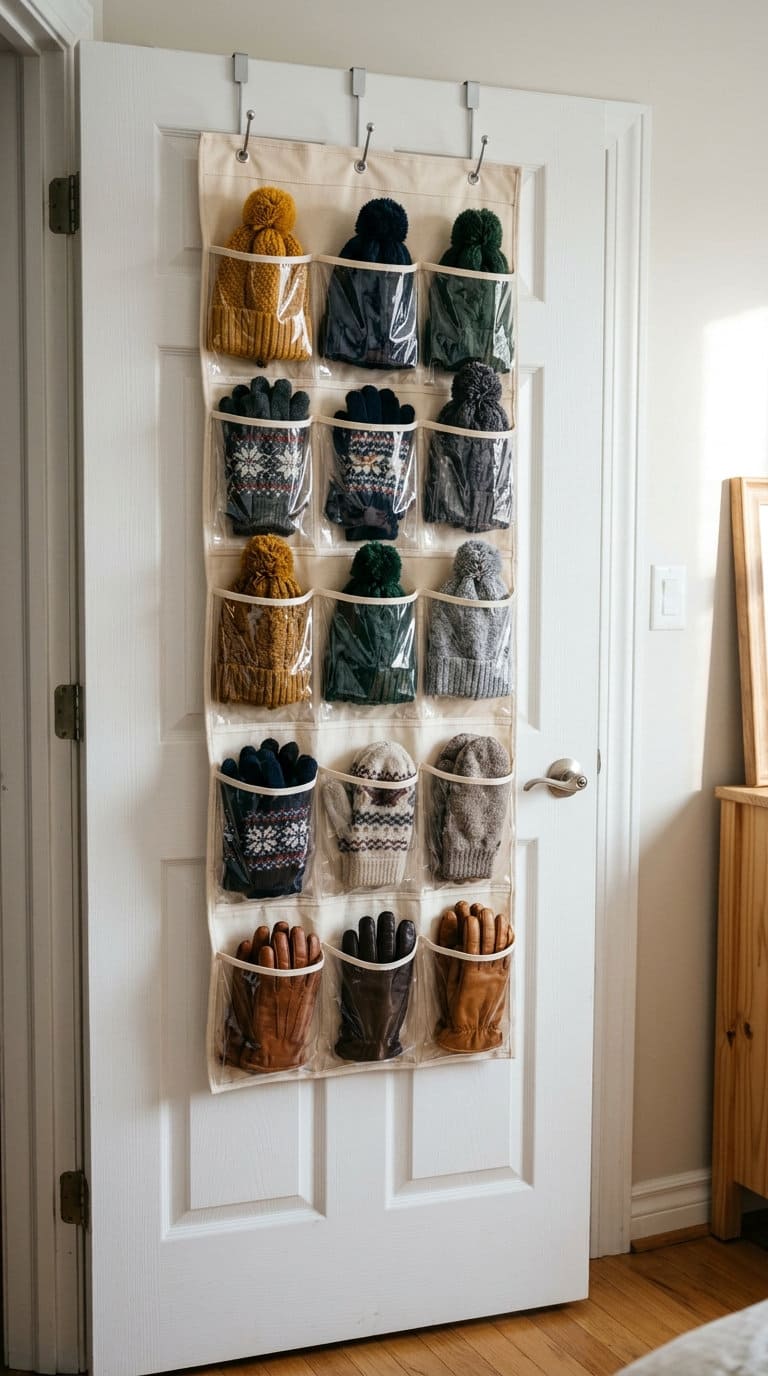
A clear shoe organizer isn’t just for shoes. Its pockets hold hats, gloves, sunglasses and dog bags.
Hang it over the door and give each kid one row. The clear pockets make it easy to see what’s there. It’s one of the cheapest fixes on this list.
Check: make sure the door still closes with the pockets full.
13. Add a Mirror Inside the Door
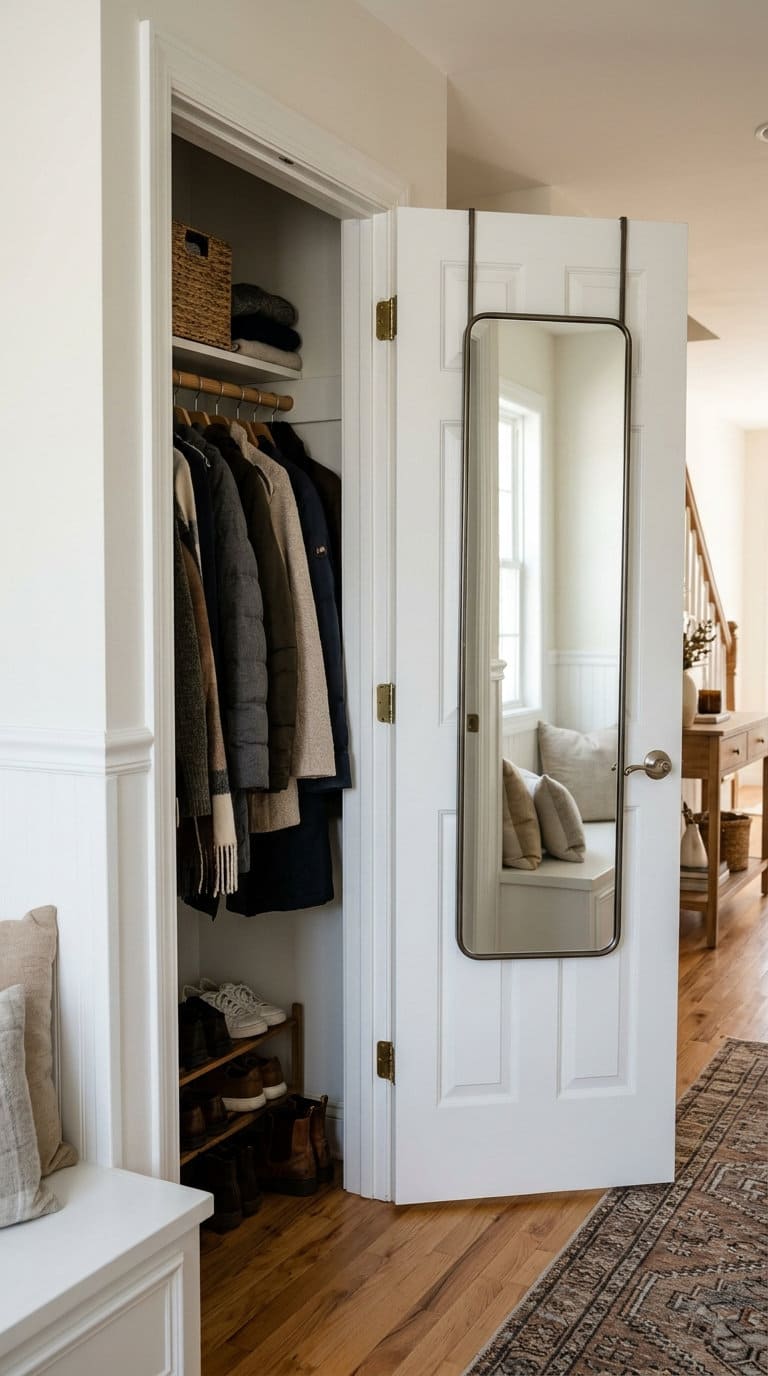
A mirror on the inside of the door is handy on the way out. You check your coat, hat and teeth in one look.
Use a light door mirror with mounting clips. Don’t mount a heavy framed one on a hollow door.
Tip: a mirror also bounces light into a dark closet, so you can see the back.
14. Swap the Door if It Blocks the Space
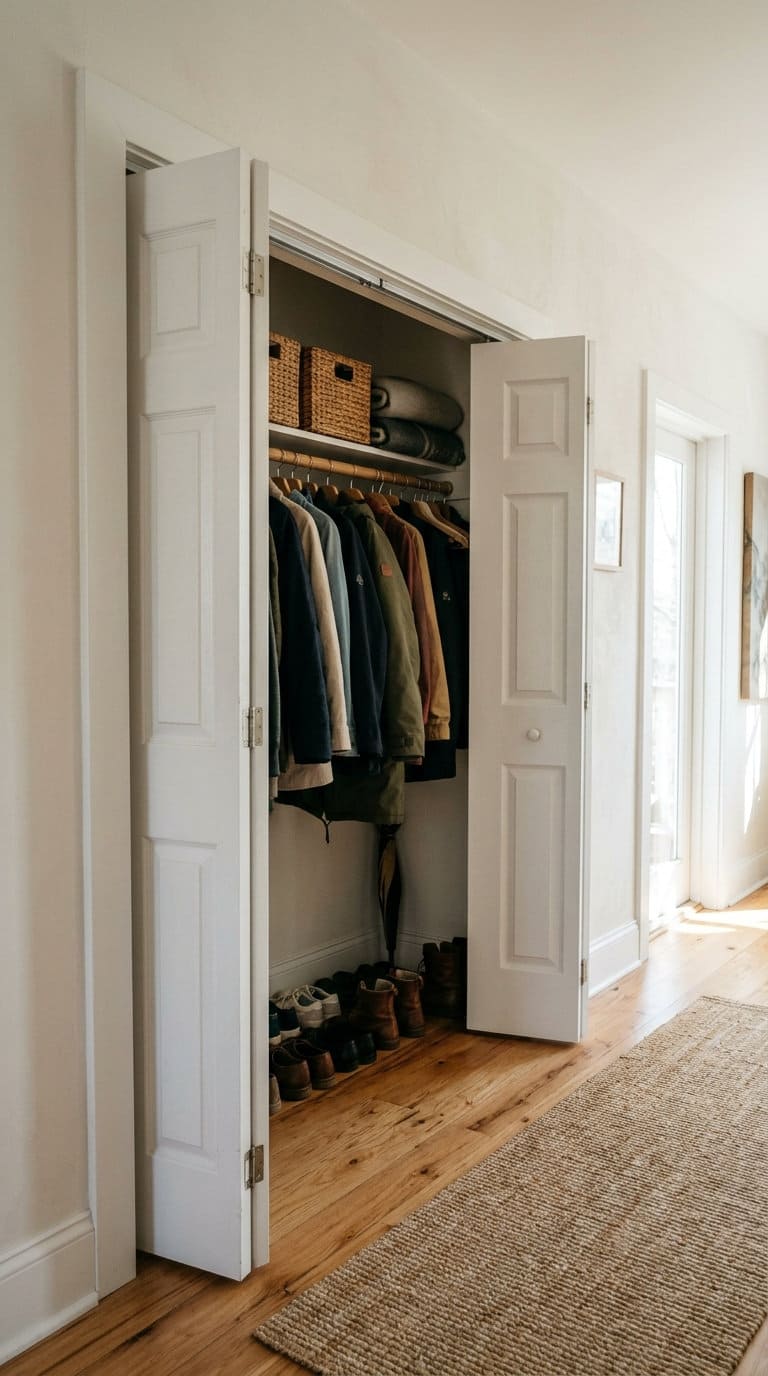
Some coat closet doors fight you. A bifold that sticks or a swing door that hits a wall can make the closet hard to use.
If the door is the problem, think about a lighter style. A curtain, a sliding door or a bifold can open the whole front. Our breakdown of the different closet door styles and how they open helps you choose.
But measure the hall first. A swing door needs clear floor in front of it.
Floor and Boot Ideas
15. Set Down a Boot Tray
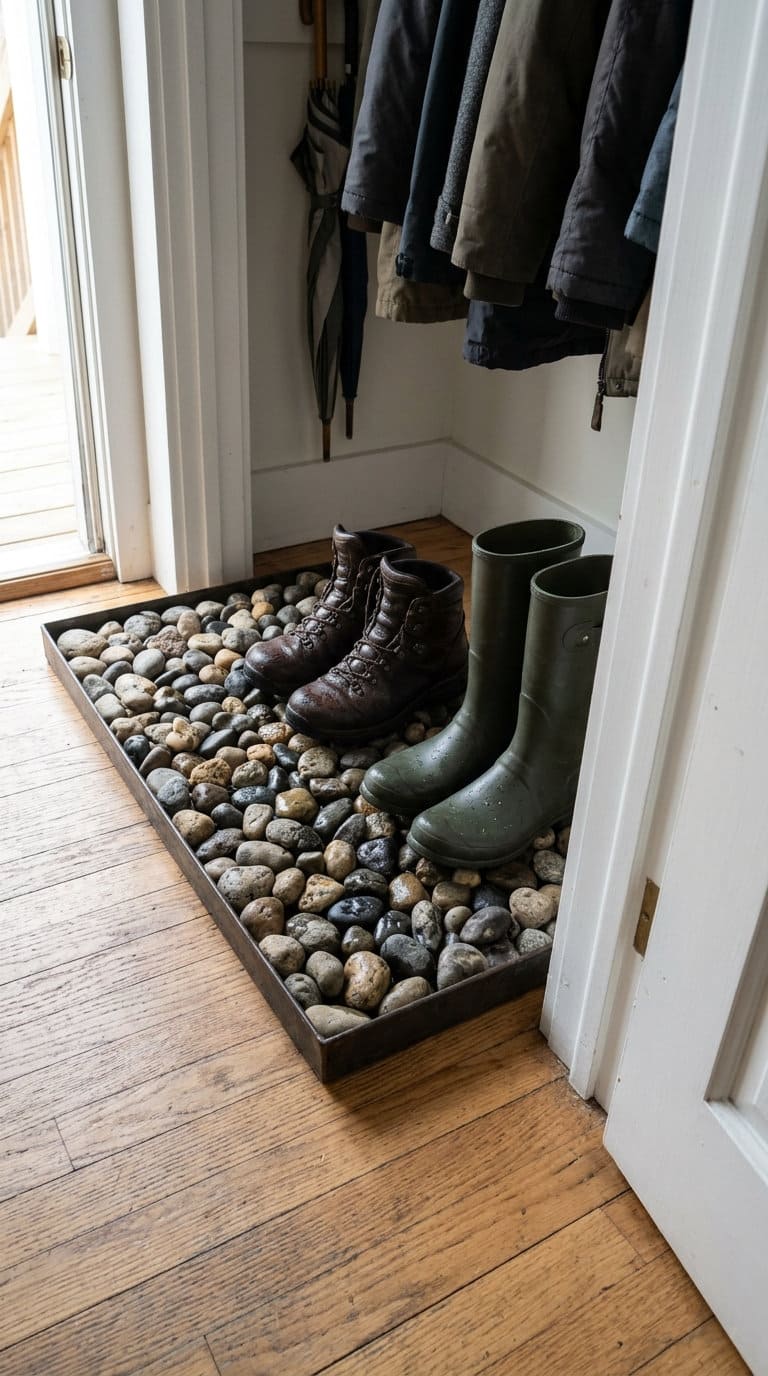
Wet boots ruin closet floors. A boot tray catches snow, mud and salt.
Pick a tray with a raised lip. Put a layer of river rocks in it if you want boots to drain and dry faster. Empty and rinse it once a week in winter.
Tip: place the tray right under the short side of the rod, where hems don’t hang.
16. Add a Two-Tier Shoe Rack
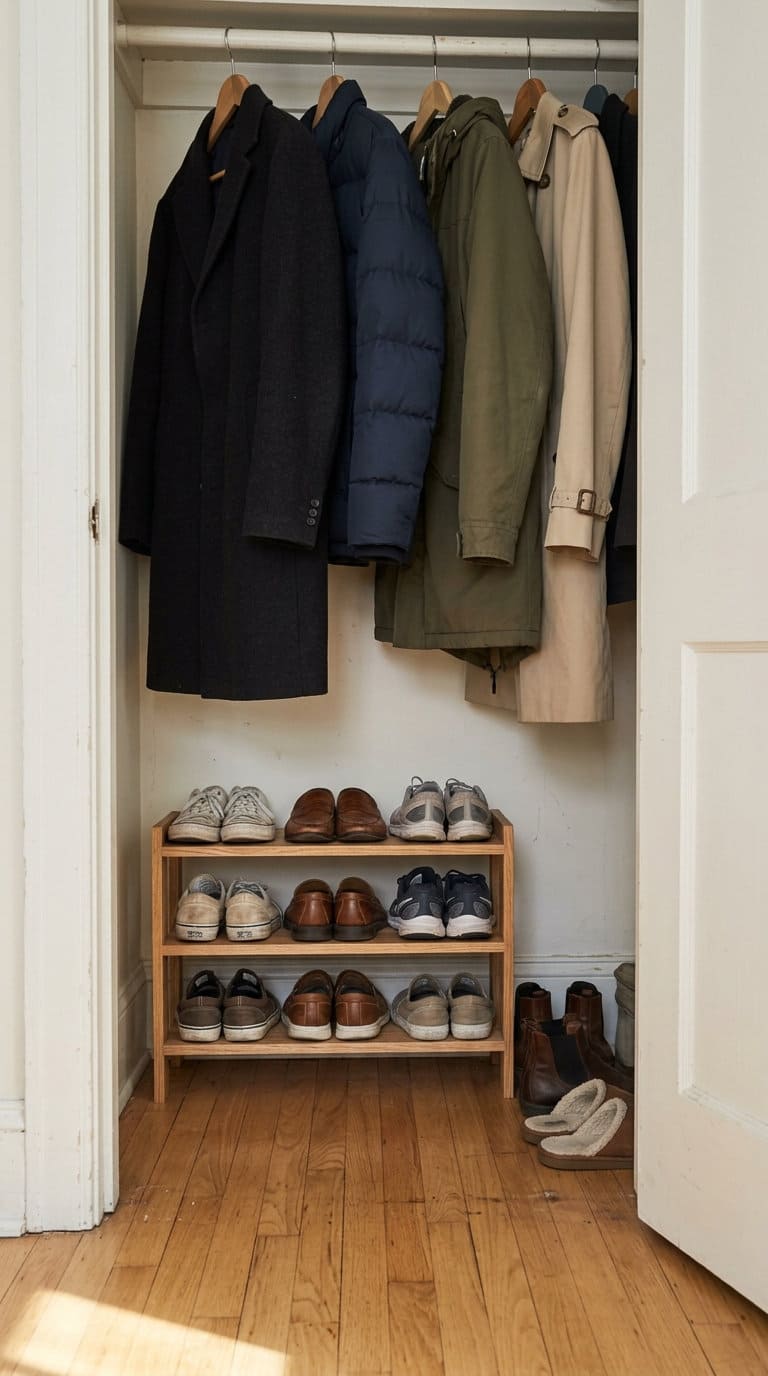
A shoe rack doubles the floor space. Shoes on two levels are easy to see and grab.
Choose a rack that fits the closet width with an inch or two to spare. Keep everyday shoes on top and boots below. For more ideas on where shoes can live, see these simple ways to stop shoe piles by the door.
Check: measure the floor depth under the coats, not the full closet depth.
17. Fit a Small Bench if Width Allows
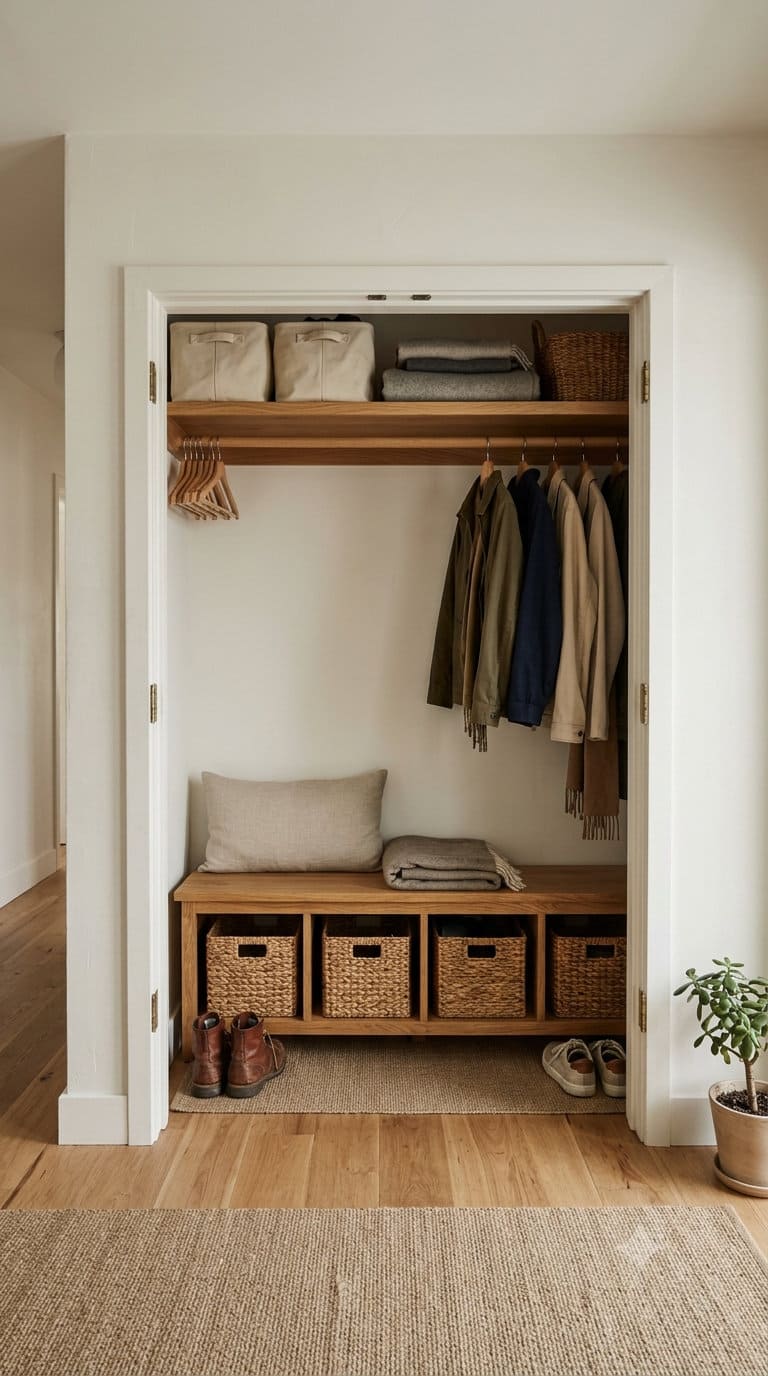
A wide closet can hold a low bench. It gives you a seat to pull on boots and storage inside.
Pick a shallow bench that still lets the doors close. Lift-top benches hide sports gear. Open cubby benches hold baskets.
Tip: remove the doors on a wide closet and the bench turns it into a mini mudroom.
18. Keep a Bin for Things That Leave the House
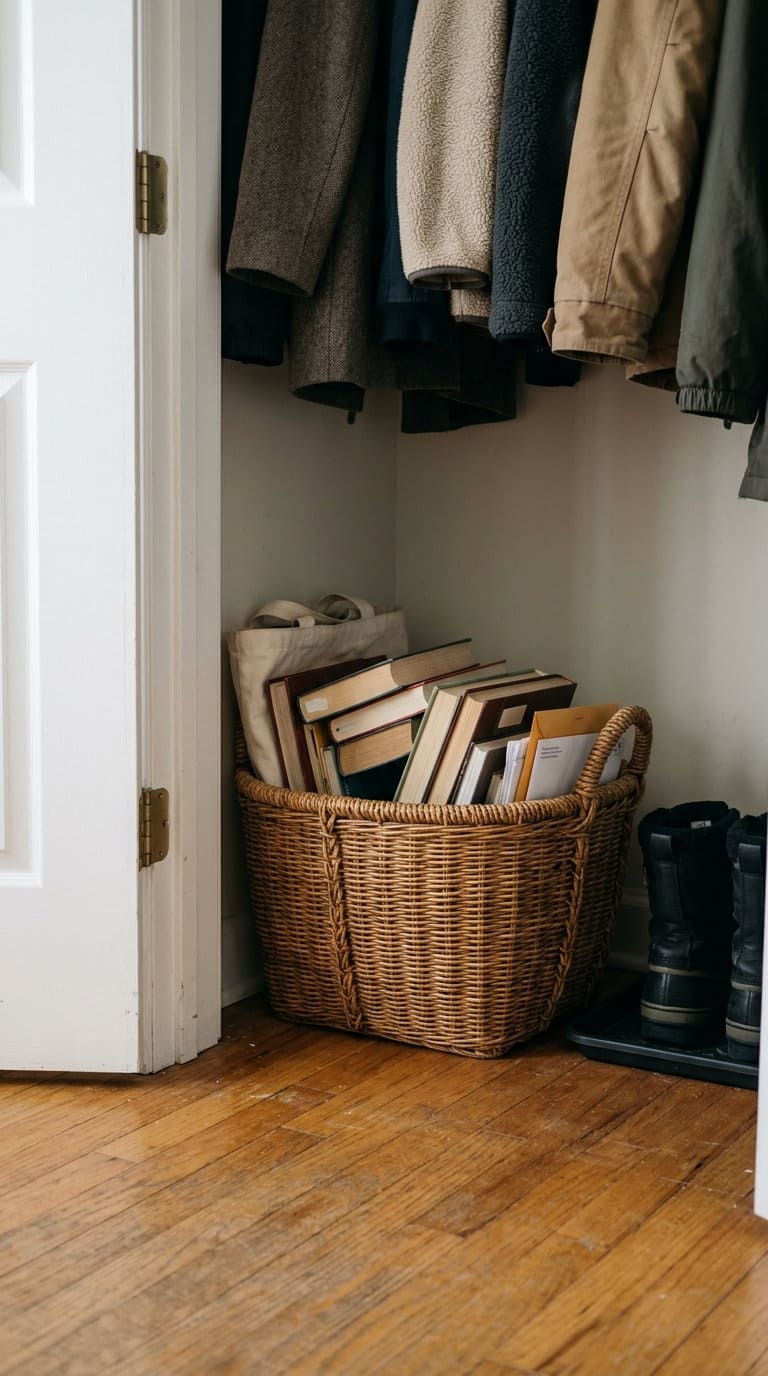
Every home has stuff waiting to go out. Library books, returns and borrowed dishes pile up by the door.
Give them one bin on the closet floor. When you leave, check the bin. When it’s empty, you’re caught up.
Tip: label it “Out” so everyone uses it.
19. Use Upright Holders for Tall Boots
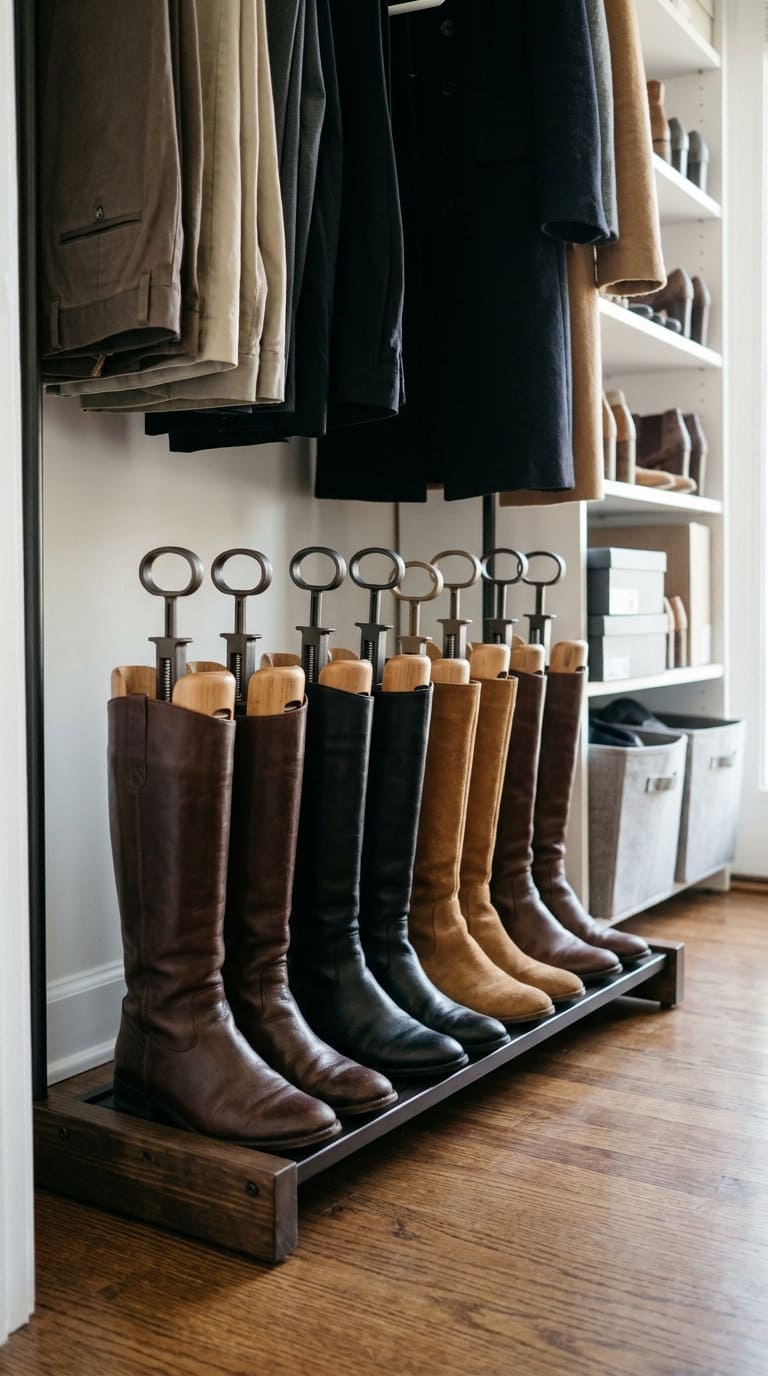
Tall boots flop over and crease. An upright boot holder keeps them standing.
Use boot shapers or a boot rack with tall arms. Slip a pool noodle cut to length inside each boot if you want a cheap fix.
Check: let boots dry before you add the shapers.
Small Stuff, Kids and Guests
20. Put Kids’ Hooks at Their Height
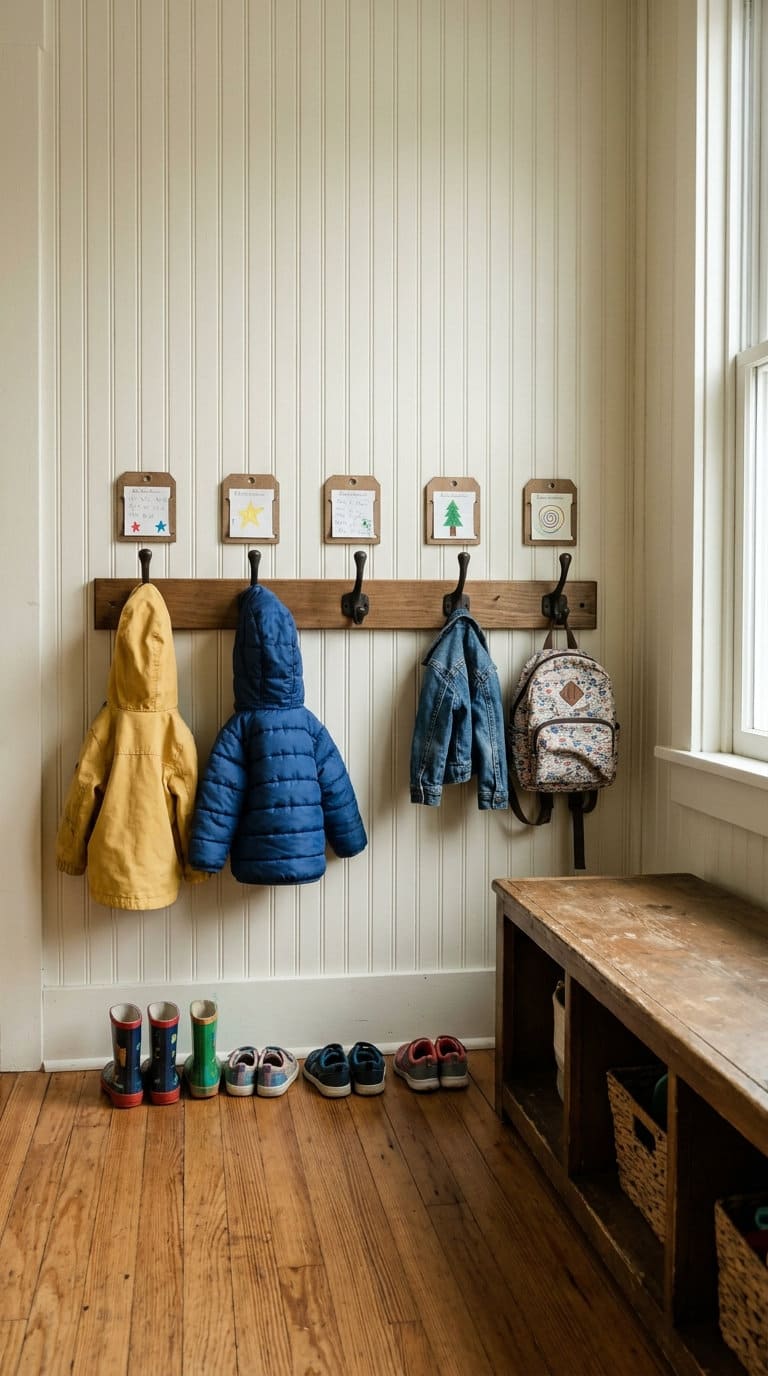
Kids can’t reach a 66-inch rod. If they can’t hang it, it lands on the floor.
Mount a row of hooks at about waist height for your kids. Add a photo or name label above each hook. Raise them as kids grow.
Tip: two hooks per child works well, one for a coat and one for a bag.
21. Add Hooks on the Side Walls
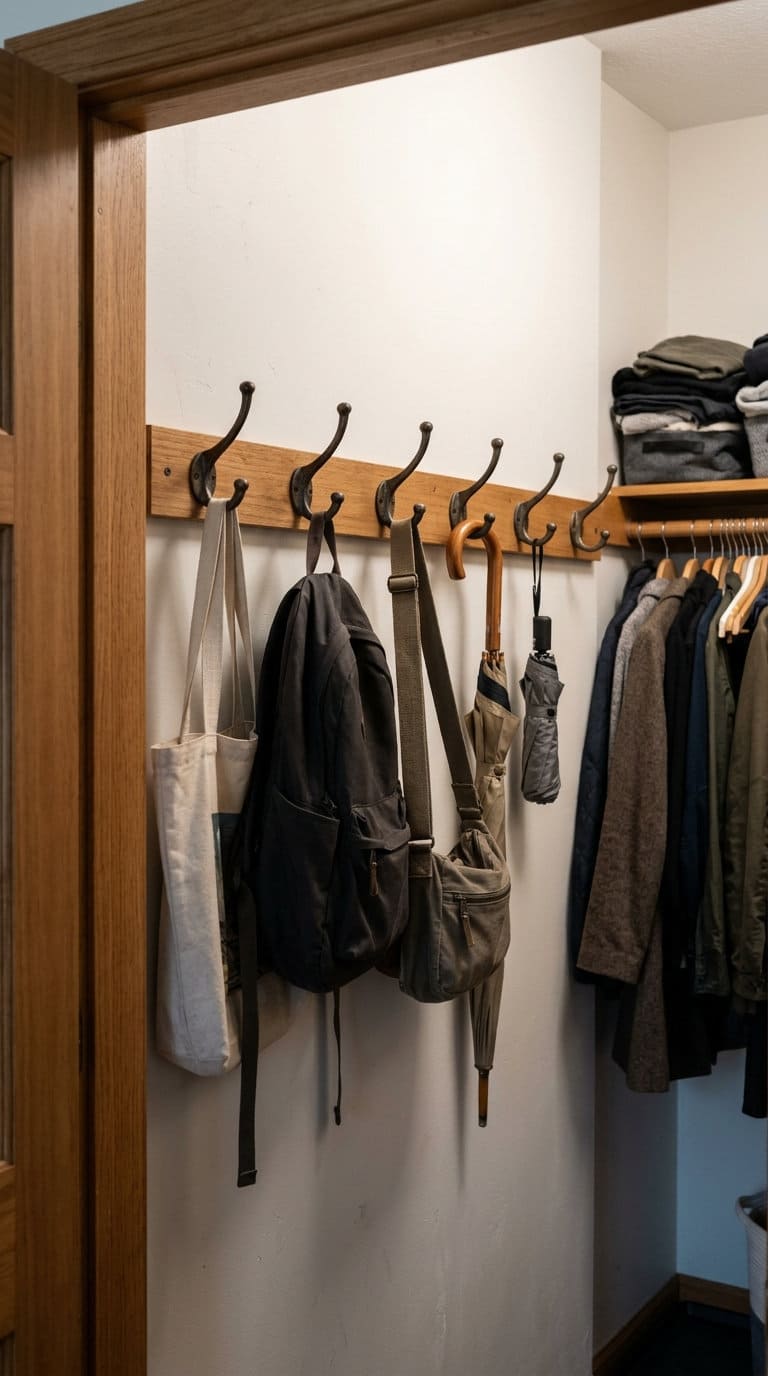
The side walls of a closet are free space. Hooks there hold bags, leashes and umbrellas.
Professional organizer Shira Gill puts it simply in Domino’s guide to coat clutter: “Hooks solve everything.” She notes that two rows of hooks only need 2 to 3 feet of wall.
Check: screw hooks into studs or proper anchors. Loaded hooks pull out of bare drywall.
22. Make a Pet Station
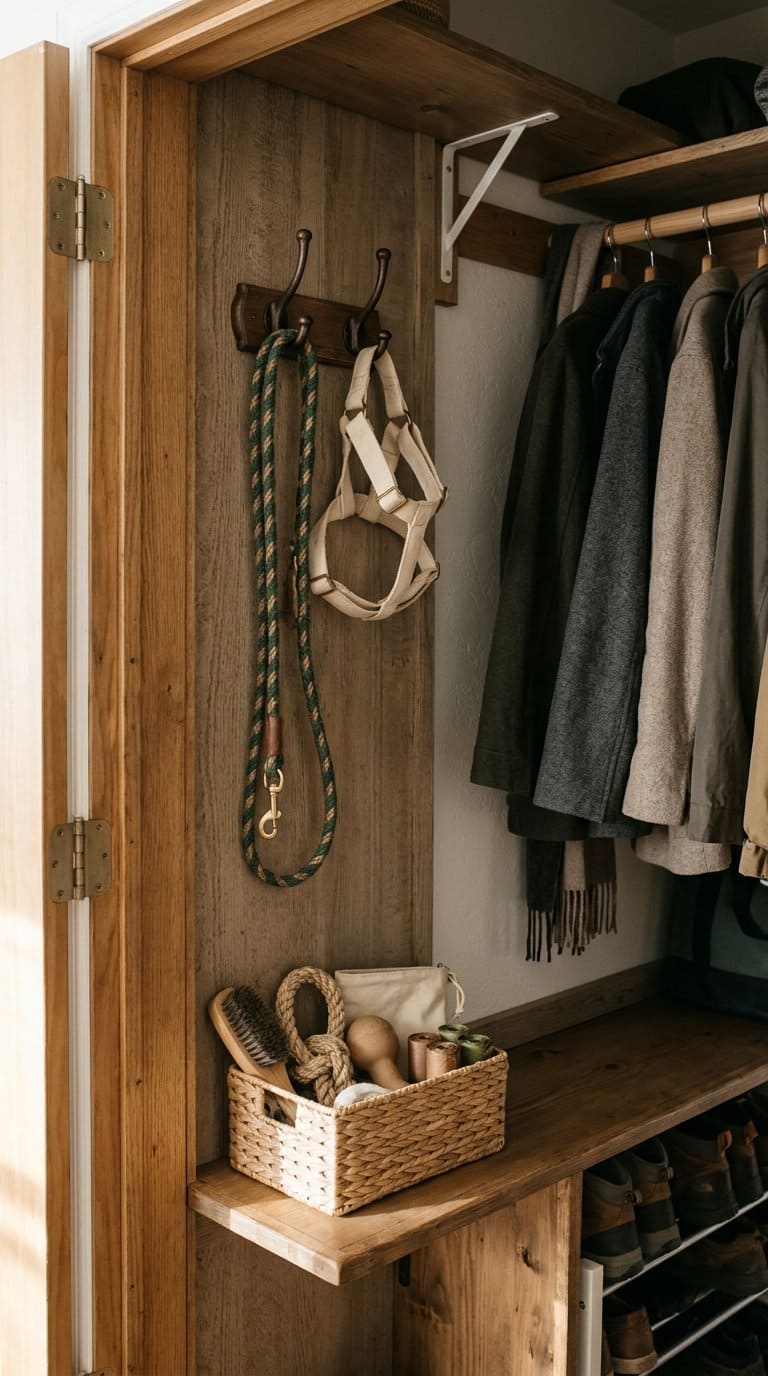
Dog gear always ends up scattered. Leashes, bags and treats need one home.
Put a hook for leashes near the front of the closet. Add a small bin with waste bags, a towel and treats. Keep a dog towel on a hook to wipe muddy paws.
Tip: this pairs well with idea 11’s door rack if the closet is tight.
23. Save a Section for Guests
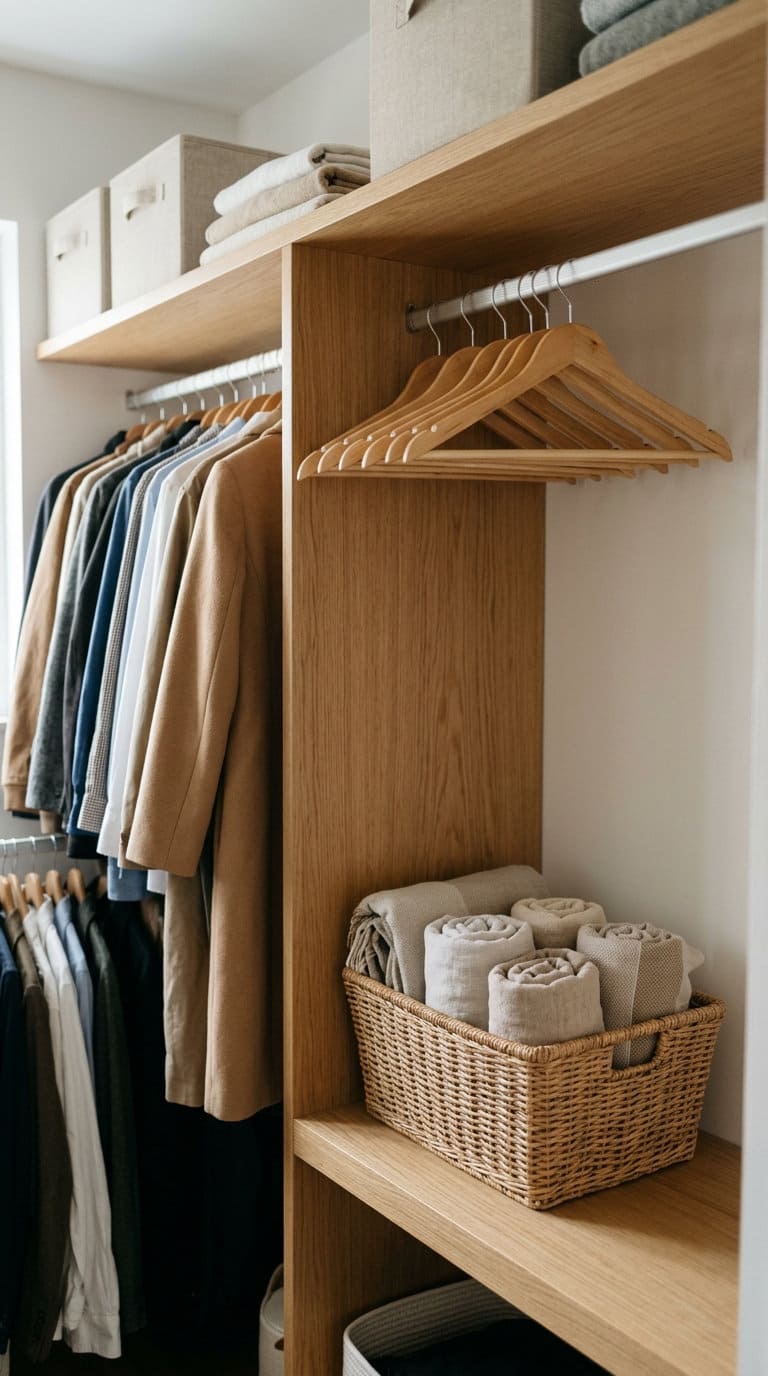
Guests shouldn’t have to dig through your family’s coats. Save a few hangers just for them.
Keep three or four empty hangers at one end of the rod. Add a small basket for guest gloves and hats. This makes hosting smoother in winter.
Tip: a basket of spare socks or slippers is a nice touch for a no-shoes home.
24. Rotate Coats Every Season
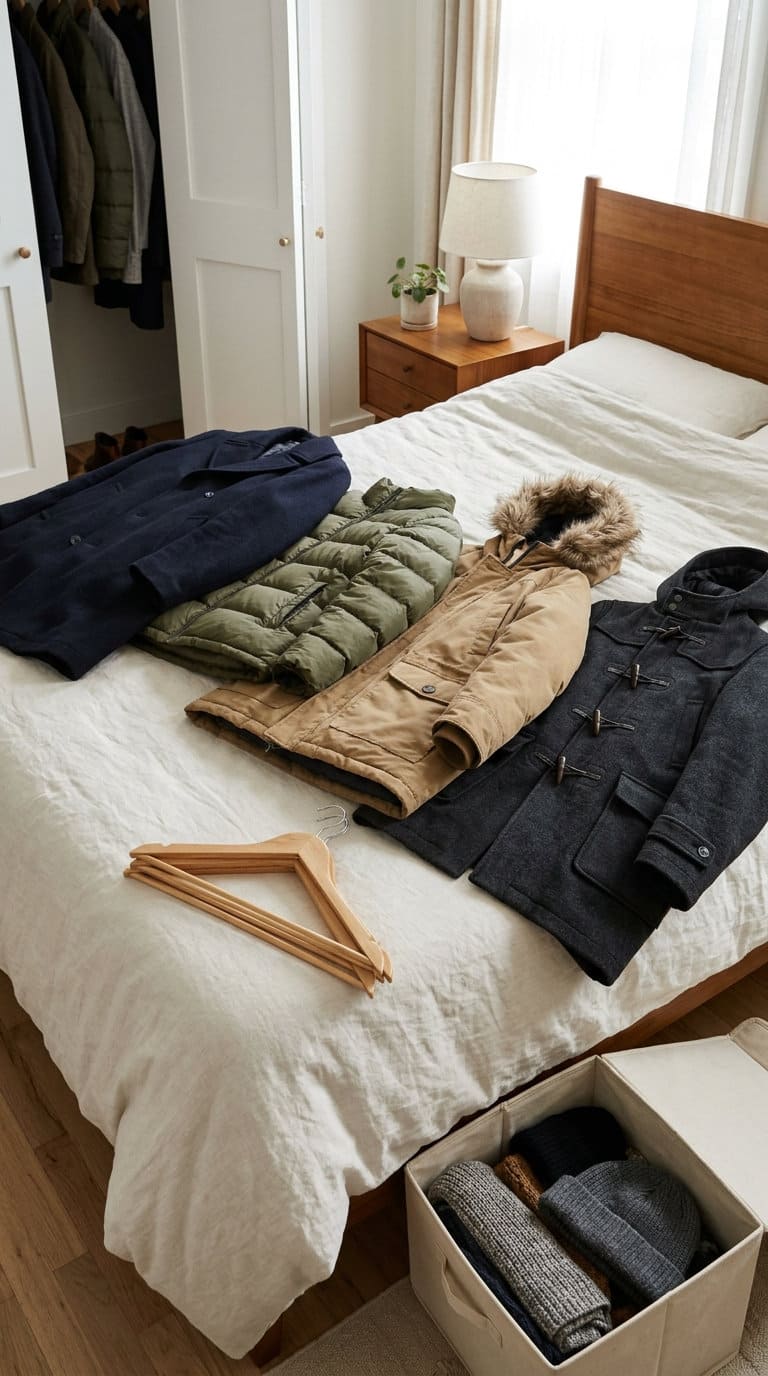
A closet full of every coat you own will always be crowded. Rotation is the fix.
At the start of each season, take every coat out.
Rachel Rosenthal of Rachel and Co. suggests piling all your jackets on the bed to see what you really own. She points out there are only seven days in a week, so you likely wear a few coats often.
Store the off-season coats in a bedroom closet or under the bed. Our guide to low-cost bedroom closet setups has room for the overflow.
25. Add a Light Inside
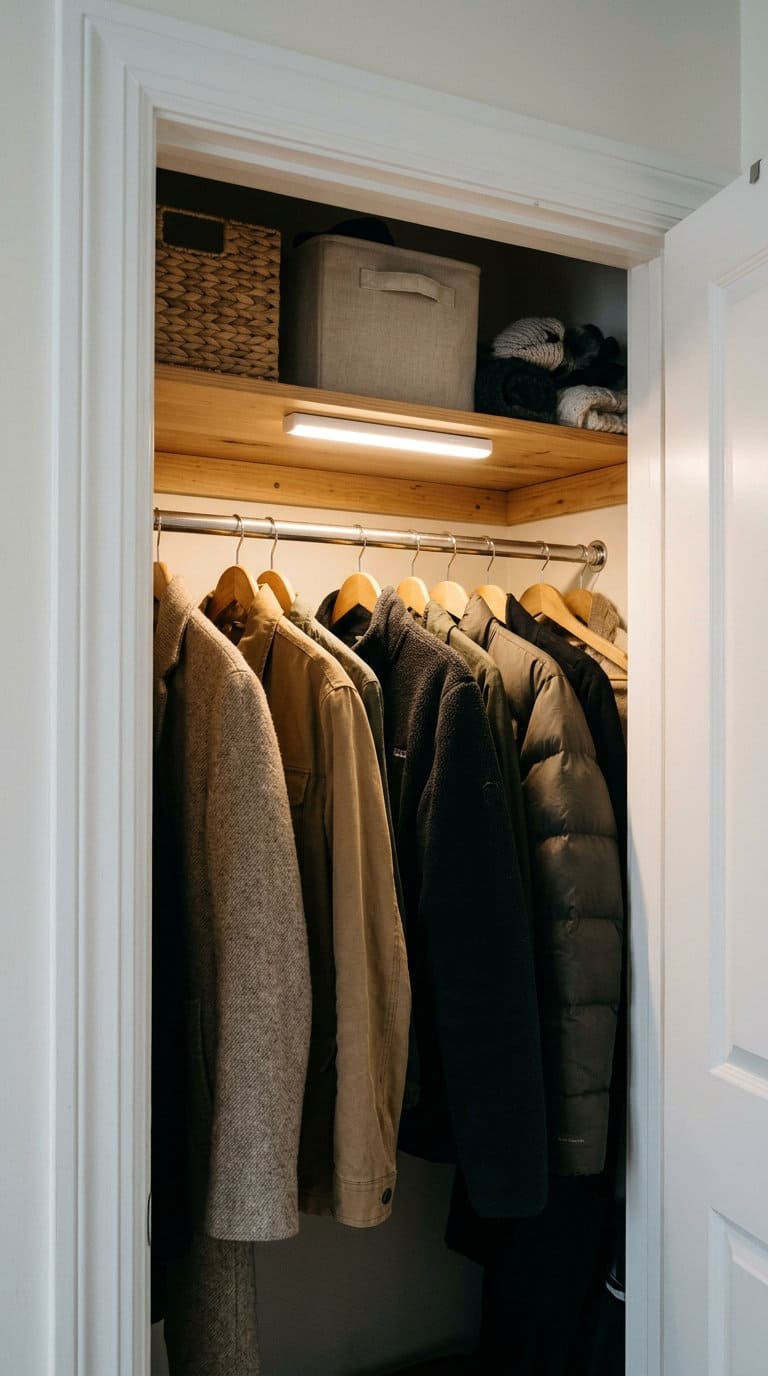
Most coat closets are dark. If you can’t see the back, things get lost.
Stick a battery LED light to the ceiling or under the shelf. Motion-sensor lights turn on when you open the door. No wiring needed.
Tip: pick a warm white light so coat colors look true.
What does a coat closet makeover cost?
You can fix most coat closets for very little. The table shows three levels. Costs are rough and depend on your store and closet size.
| Level | What it includes | Effort |
|---|---|---|
| Low cost | Purge, new hangers, a rod extender, over-door rack, a boot tray | An afternoon, no tools |
| Mid range | New rod at the right height, a second shelf, matching bins, wall hooks | A weekend, a drill and a stud finder |
| Full refresh | Closet system with drawers, a bench, new door, built-in lighting | A pro or a skilled DIYer |
Tip: do the free steps first. A purge often solves half the problem before you buy anything.
Common Mistakes to Avoid
The first mistake is hanging wet coats straight away. Damp gear in a closed space traps moisture.
The EPA’s guide to mold and moisture says to dry wet items within 24 to 48 hours to prevent mold. It also says to keep indoor humidity below 60 percent, ideally between 30 and 50 percent.
So let wet coats and boots dry on a hook or rack outside the closet first. If the closet smells musty, a small humidity meter will tell you if moisture is the cause. The EPA notes these meters cost about $10 to $50.
The second mistake is buying before purging. You end up organizing stuff you don’t need. Take everything out, keep what you wear, then shop for what’s left.
The third mistake is overloading the rod. A long rod packed with heavy coats can bow and pull out of the wall.
Add a center bracket on any long rod. And screw into studs.
The fourth mistake is ignoring the door. A rack that won’t let the door close, or a door that blocks the hall, makes the closet harder to use. Measure the swing before you add anything to it.
How do you keep a coat closet tidy?
A good setup still needs a quick reset. Five minutes a week keeps it from sliding back.
Each weekend, pull out anything that isn’t a coat, bag or shoe. Empty the boot tray. Put stray gloves back in their bin.
At each season change, do the full rotation from idea 24. Check that kids’ hooks are still at the right height. Donate what nobody wore.
If your entry has no closet at all, these small entryway ideas with hooks and benches and these fixes for odd, tight entries can help. And if the door itself is the problem, browse these fresh looks for closet doors.
Frequently Asked Questions
How high should a coat closet rod be?
Bob Vila’s guide puts a single rod 66 inches off the floor, measured to the bottom of the rod. For a double rod, set the top at 81 3/4 inches and the lower at 40 1/2 inches.
How deep should a coat closet be?
The average closet is about 24 inches deep, per Bob Vila. Keep the rod at least 12 inches from the back wall so coats hang without crushing.
How do I stop my coat closet from smelling musty?
Dry wet coats and boots before you put them away. The EPA advises keeping indoor humidity below 60 percent and drying wet items within 24 to 48 hours.
What should not go in a coat closet?
Skip anything you don’t use on the way in or out. Off-season coats, cleaning supplies and holiday decor belong in another space.
How many coats should each person keep in the closet?
Keep only what each person wears this season. Organizer Rachel Rosenthal notes most of us repeat the same few coats each week.
Related Posts
Never miss an update — choose FarmFoodFamily as your preferred source on Google.
How it works: Tap the button below to open Google's settings page, then check the box next to FarmFoodFamily.
Tap the checkbox to turn it blue — that's how you know it's set.