14 DIY Headboard Ideas for Your Bedroom That Mount Safe and Look Custom
A headboard can be a fabric panel, a plank wall or a salvaged door, but it must hang from studs and any old wood needs a lead check first.

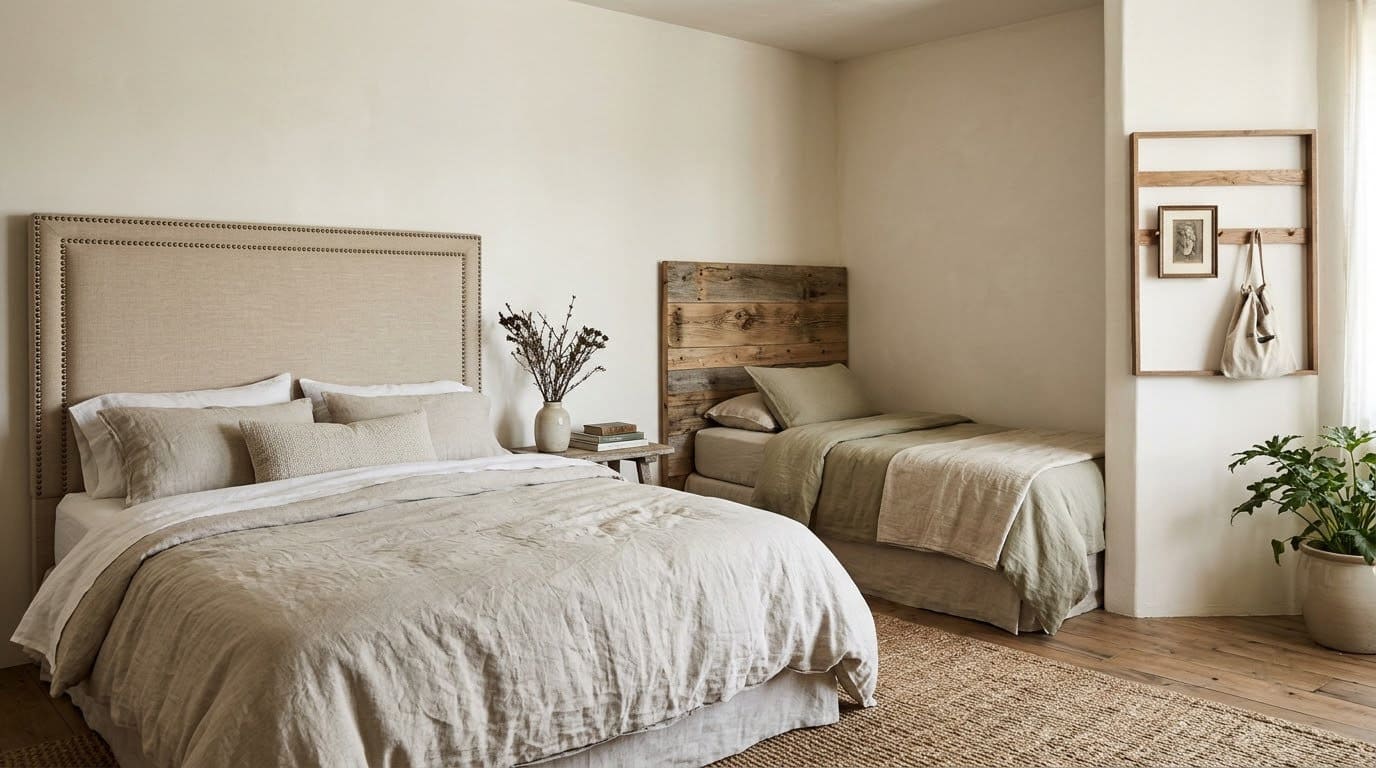
Never miss an update — choose FarmFoodFamily as your preferred source on Google.
How it works: Tap the button below to open Google's settings page, then check the box next to FarmFoodFamily.
Tap the checkbox to turn it blue — that's how you know it's set.
A headboard can be a fabric panel, a plank wall or a salvaged door, but it must hang from studs and any old wood needs a lead check first.
Products We Recommend
This post contains affiliate links. We may earn a commission on qualifying purchases at no extra cost to you.

34 Inch Heavy Duty French Cleat Hanger, Z Clips, 2 Pairs, up to 300 lbs (listing says for headboards)
A metal cleat set for hanging a wood, door or upholstered headboard. Screw it into studs, and weigh your headboard first.
Shop Now
GoTo Foam 1 in x 24 in x 72 in Firm Upholstery Foam, Made in USA
1-inch high-density foam, the thickness This Old House calls typically enough. Two sheets side by side cover a queen panel.
Shop Now
YEAHOME Upholstery Staple Gun, Heavy Duty, 4-in-1, With 4000 Staples
A manual staple gun for batting and fabric on the back of the plywood. Wear eye protection.
Shop NowThe best DIY headboards are easy to hang and easy to live with. A plywood panel wrapped in foam and fabric takes about five hours, according to This Old House. A wall-mounted wood or door headboard needs a French cleat and studs, so plan your mount first.
But weight matters. This Old House says drywall holds only 5 to 10 pounds on a plain nail, and anything over 25 pounds needs heavy-duty anchors or studs.
Check old wood too. The EPA says to assume lead paint is present if you can’t tell how old a home is, so mist the work area before you sand or cut.
These 14 ideas give you steps, a style tip and a safety note for each one. Pick one headboard, measure the wall, find the studs, and finish it in a weekend.
How Do You Choose a DIY Headboard?
Start with the bed and the wall. A headboard can stand on the bed frame, or hang from the wall. A wall-mounted one frees up floor space, but it needs studs.
Match the style to your room. A fabric panel feels soft and quiet, and a wood headboard feels warm and rustic.
A painted headboard feels light and costs very little.
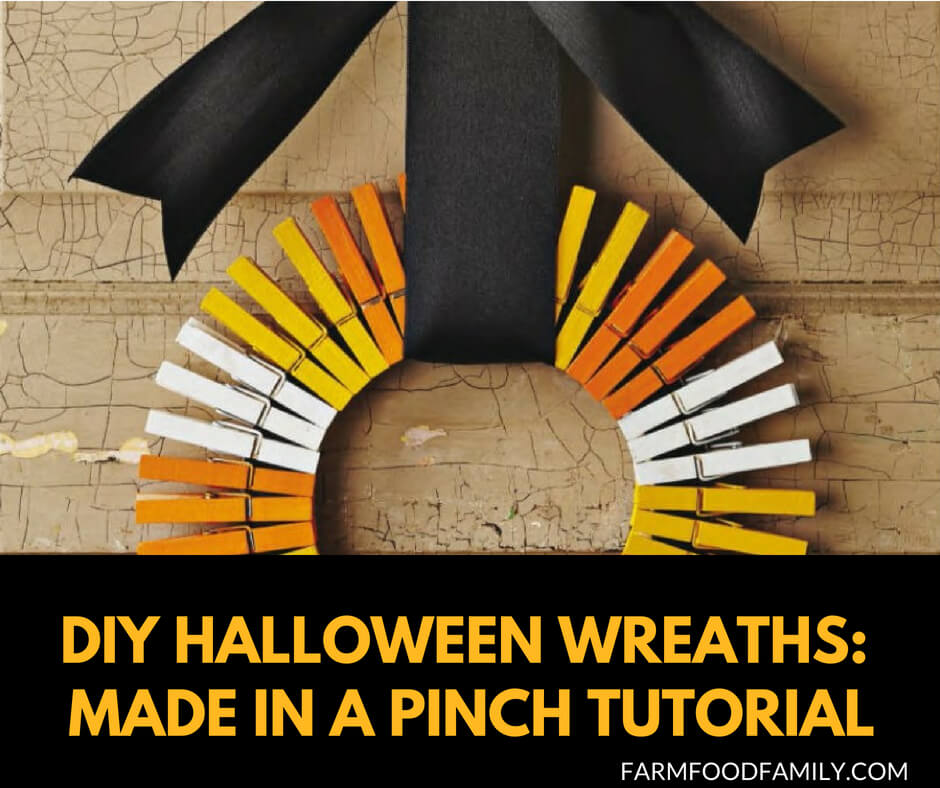

Then think about the work. Some headboards need a saw. Others need only a staple gun or a roll of tape.
Use this table to compare. The skill levels and costs are our own guess, apart from the This Old House figures.
| Style | Look | Skill | Renter OK |
|---|---|---|---|
| Upholstered panel | Soft, plush | Medium | Yes, if freestanding |
| Reclaimed wood | Rustic | Medium | No |
| Pallet | Casual | Medium | No |
| Painted shape | Modern | Easy | Ask first |
| Curtain or fabric | Soft | Easy | Yes |
| Peel-and-stick planks | Warm | Easy | Check the label |
If you rent, start with fabric or a freestanding frame. They leave few marks.
What Safety Rules Apply to DIY Headboards?
Headboards lean against your head and hang over your bed. Read these rules first.
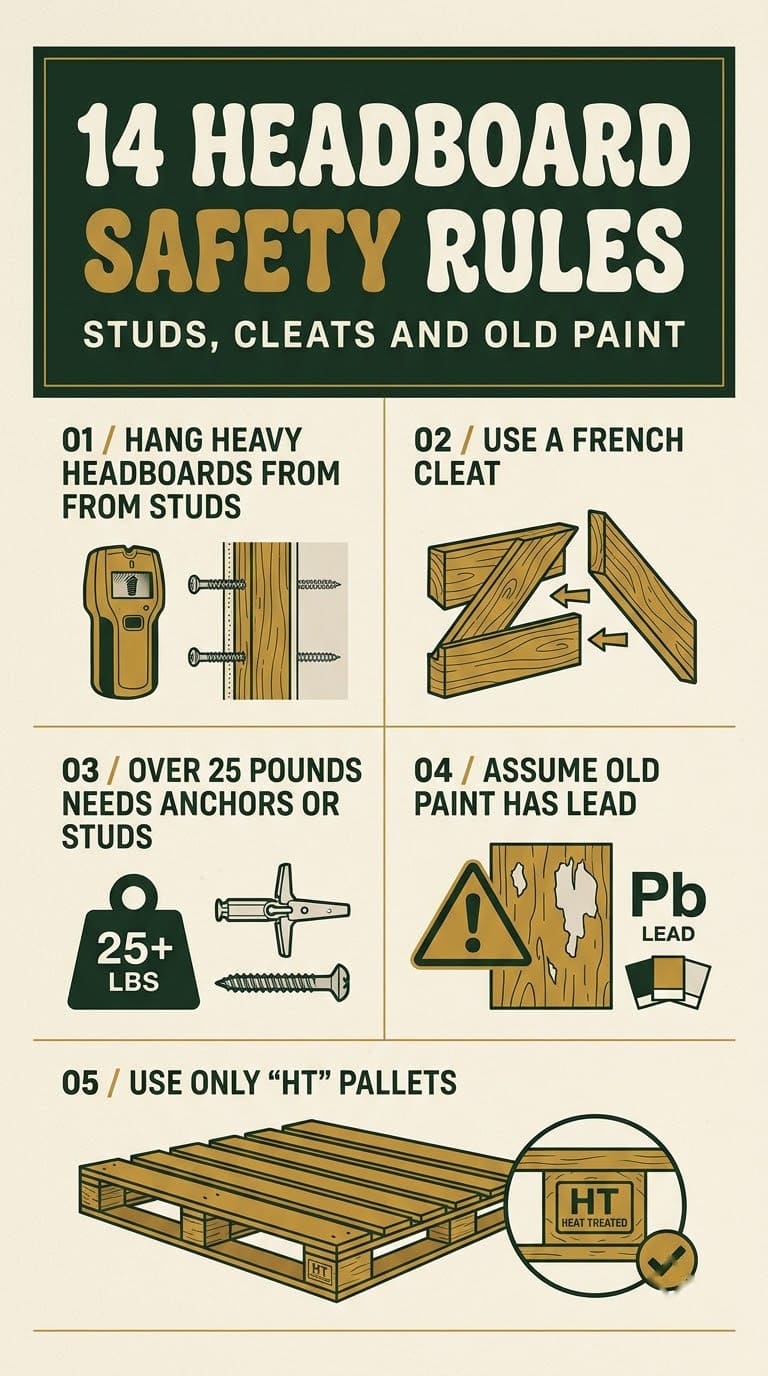
Hang heavy ones from studs. This Old House says drywall alone typically supports 5 to 10 pounds on a plain nail. It says items over 25 pounds need heavy-duty anchors and screws. It calls the French cleat the way to hang big items across more than one stud.
Use a French cleat. The same guide says to rip a 45-degree bevel in 3/4-inch plywood or a 1×6, then cut it in two. Screw one strip to the studs with the lip facing up. Fix the other to the headboard with the lip facing down, then lift the headboard until the bevels lock.
Check old wood for lead. The EPA says homes built before 1978 may have lead paint, and that scraping, drilling and cutting make dust that may hold lead. It says to mist the area before you sand, scrape, drill or cut, to keep dust down. It also says DIY projects can easily create dangerous lead dust.
Choose pallets with care. University of Illinois Extension educator Candice Miller, quoted by Earth911, says to use only pallets stamped HT, which means heat treated. She says to avoid MB pallets and unmarked ones.
A metal cleat set for hanging a wood, door or upholstered headboard. Screw it into studs, and weigh your headboard first.
Shop NowThis post contains affiliate links. We may earn a commission on qualifying purchases at no extra cost to you.
Air out new paint. The EPA’s painting guide says to keep windows open about 2 to 3 days after painting. It says to keep young children and people with breathing problems out of freshly painted rooms.
1. Upholstered Panel Headboard
A fabric panel is the classic DIY headboard. This Old House rates it 2 out of 5 for skill, with a cost of $100 to $500 and a time of about 5 hours.
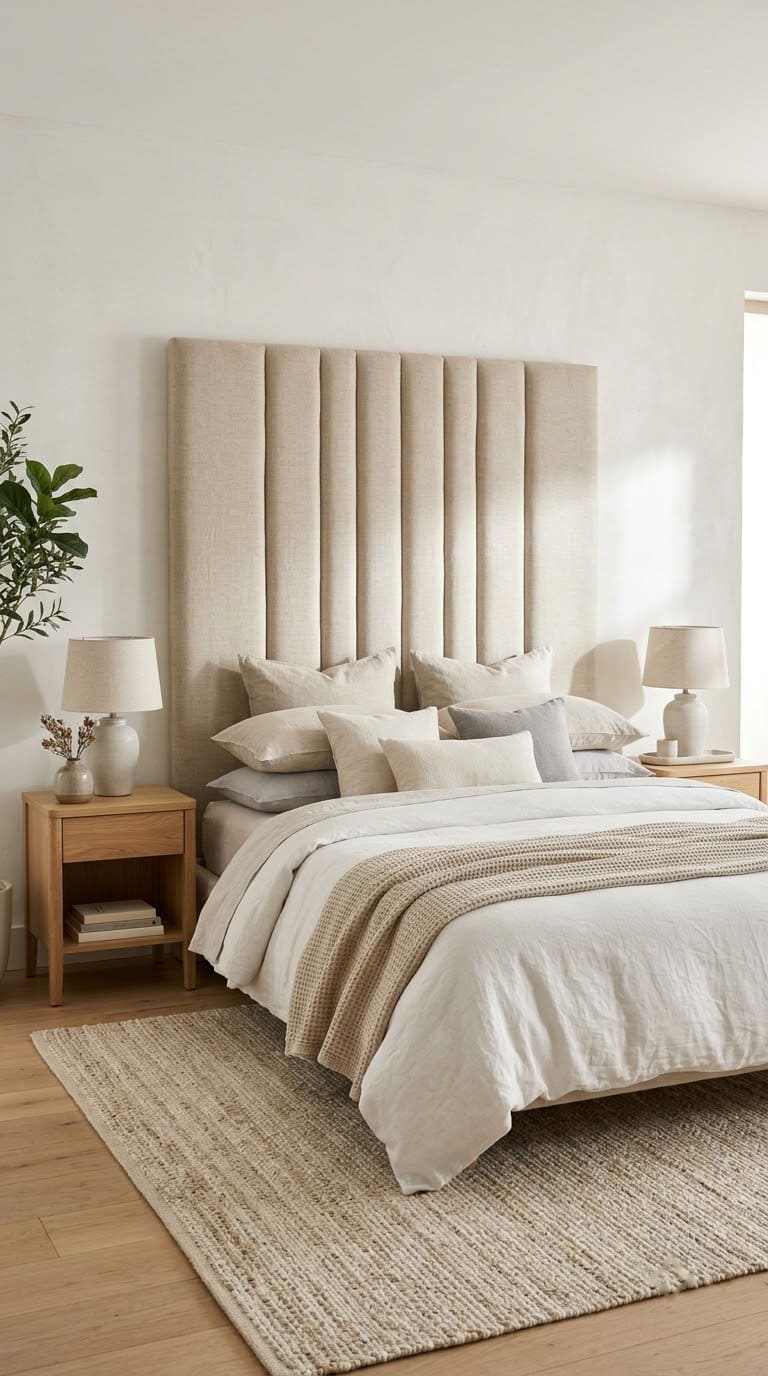
- Measure the bed. This Old House says a queen headboard may run about 60 inches wide and 28 inches tall.
- Cut a sheet of 1/2-inch plywood to size, or have the store cut it.
- Trace the plywood on 1-inch high-density foam, and cut the foam with a utility knife. Glue it down with spray adhesive.
- Lay batting over the foam. Pull it tight from the center of each side, and staple it to the back.
- Wrap the fabric the same way, and fold the corners like a gift.
- Add D-rings or a cleat, and mount into studs.
Style tip: pick linen, velvet or faux leather. All three are sturdy upholstery choices.
Safety: wear eye protection when you use the staple gun.
More: see our grey headboard bedroom ideas.
2. Nailhead Trim Edge
Nailhead trim gives a plain panel a tailored edge. This Old House lists nailhead trim as an optional extra for the upholstered panel.
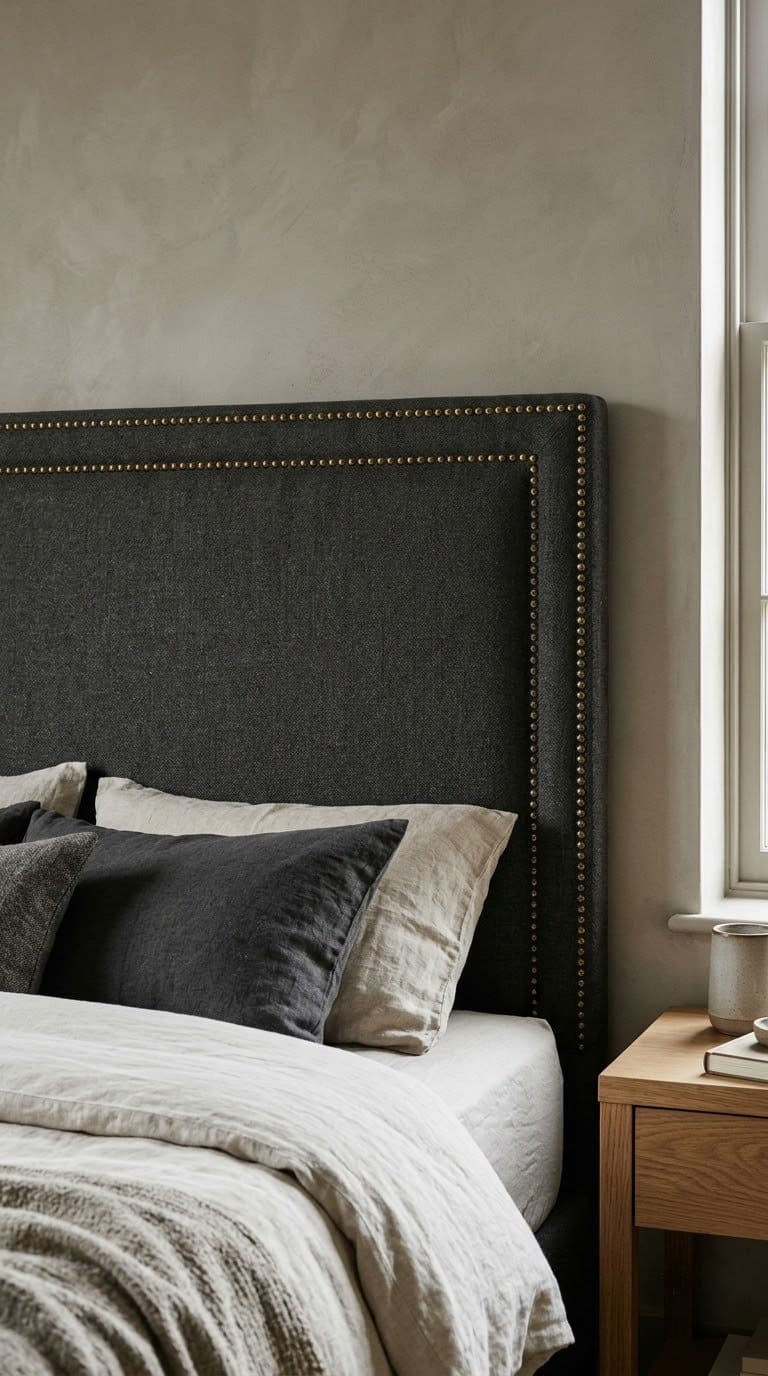
- Finish the upholstered panel first.
- Mark a straight line along the edge with a straightedge.
- Tap the nails in along the line, spaced evenly.
- Check the spacing from a few feet back.
Style tip: use brass nails on a dark fabric for contrast.
Safety: hold small nails with pliers so you don’t hit your fingers.

3. Curtain Headboard
A curtain headboard is the easiest soft look. Hang a rod above the bed, and add floor-length panels. It is our own take on the idea from the old page.
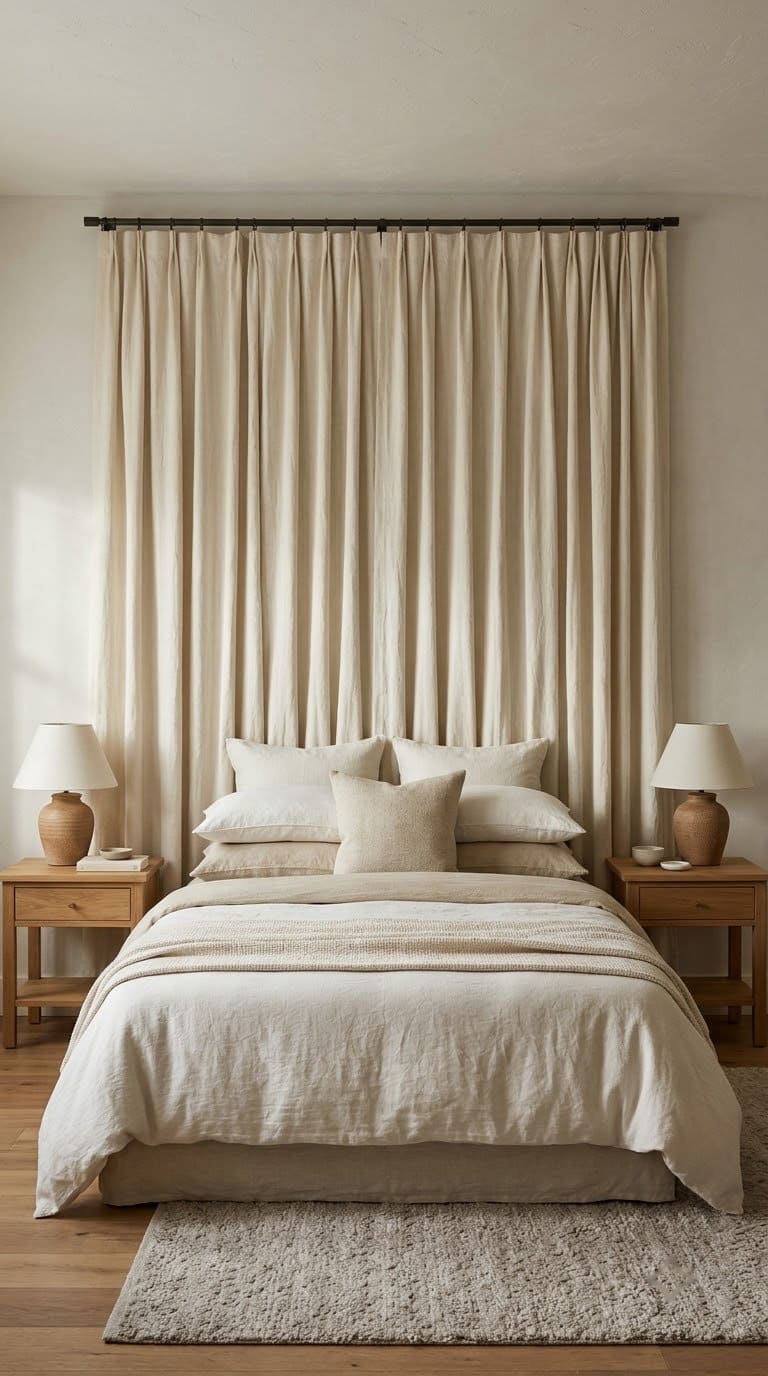
- Mount a curtain rod into studs, a few inches wider than the bed.
- Hang two long panels, with clips or rings.
- Pull the panels back to frame the bed.
- Add a lamp on each side.
Style tip: use a heavy fabric so it hangs in deep folds.
Safety: pick cordless panels, with no pull cords near the bed.
4. Reclaimed Wood Plank Headboard
Reclaimed boards give a warm, rustic look. This is a project for a wall-mounted headboard with a French cleat.
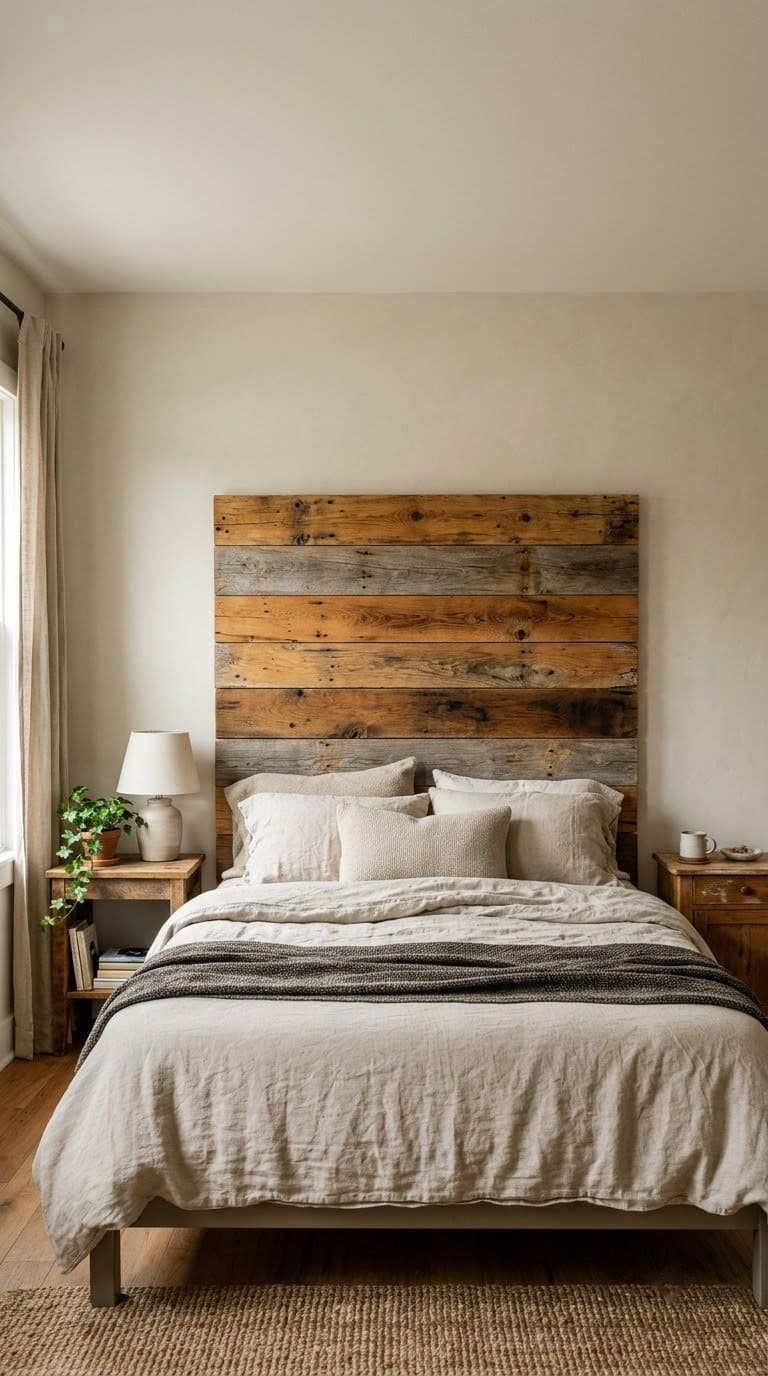
- Check the wood for old paint. The EPA says to assume lead paint in older buildings.
- Mist the boards before you cut or sand.
- Join the boards on two cross braces with screws.
- Seal the face, and let it dry.
- Mount with a French cleat into the studs.
Style tip: mix wood tones for a rich look.
Safety: skip dry sanding. Wear a respirator rated for fine dust. The respirator tip is our own.
5. Herringbone or Chevron Wood Headboard
A herringbone pattern adds energy to a plain board. Cut short boards at 45 degrees, and lay them in a zigzag.
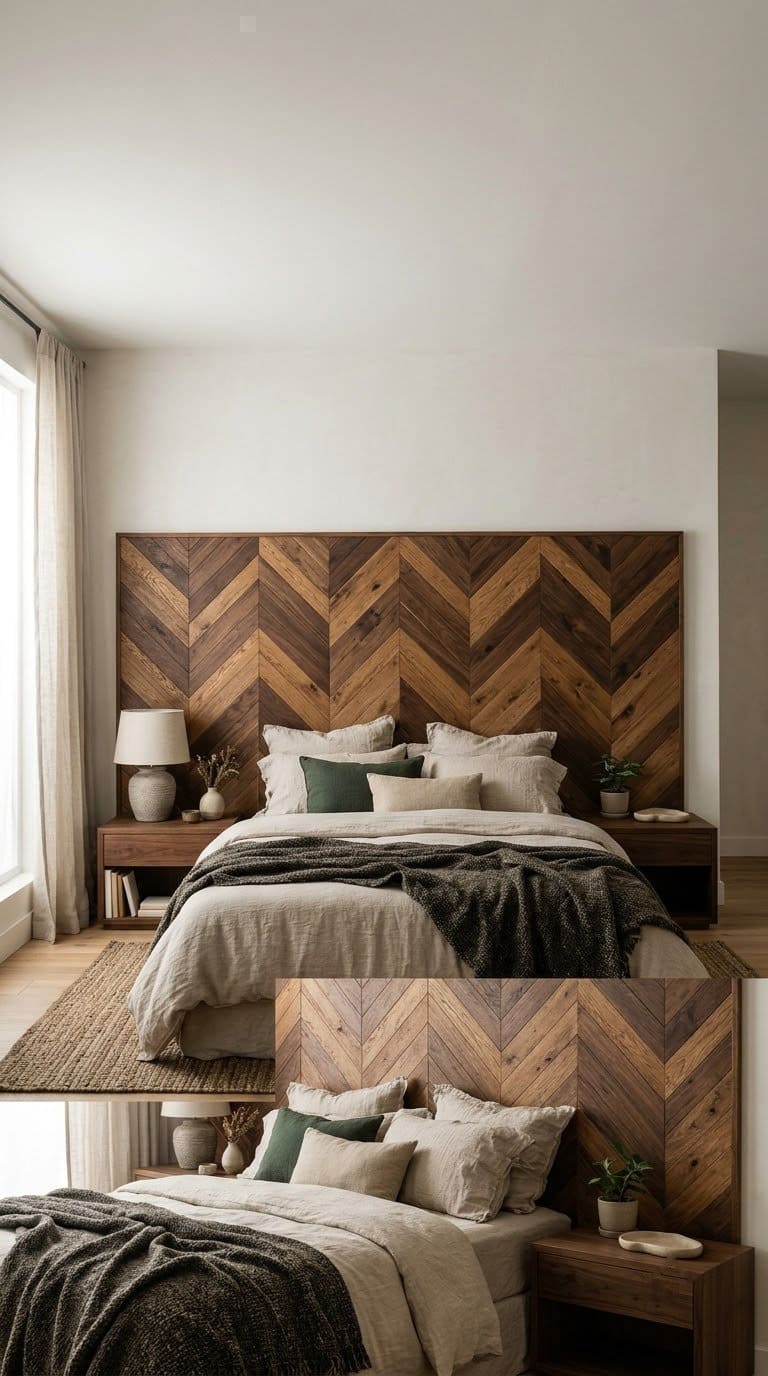
- Cut a plywood base to size.
- Mark a center line.
- Cut the boards at matching angles, and glue them on.
- Trim the edges flush.
Style tip: use two stain colors for more contrast.
Safety: wear eye and ear protection when you cut.
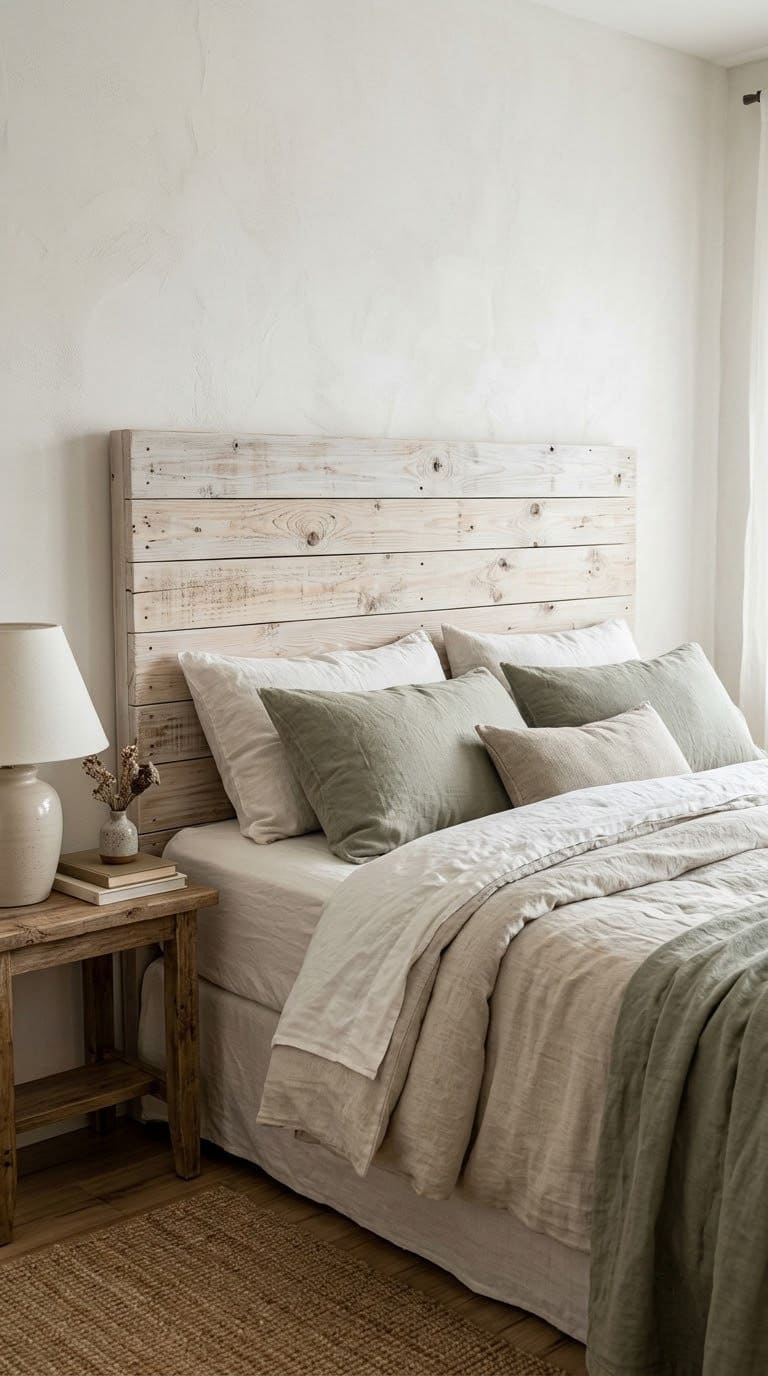
6. Pallet Headboard
A pallet headboard is cheap and casual. Pallets need care. University of Illinois Extension educator Candice Miller says to use only pallets stamped HT, and to avoid MB or unmarked ones.
- Check the stamp. Walk away from any pallet that is marked MB or has no stamp.
- Take the pallet apart with a pry bar, and wear gloves.
- Sand the boards, and wear a dust mask.
- Join the boards on cross braces.
- Seal the face, and mount with a French cleat.
Style tip: whitewash the wood for a light look.
Safety: remove every nail and splinter before it sits near your bed.
More: see our DIY space-saving bed frame ideas.
7. Old Shutter Headboard
Old shutters make a vintage headboard. Lay two or three side by side behind the bed.
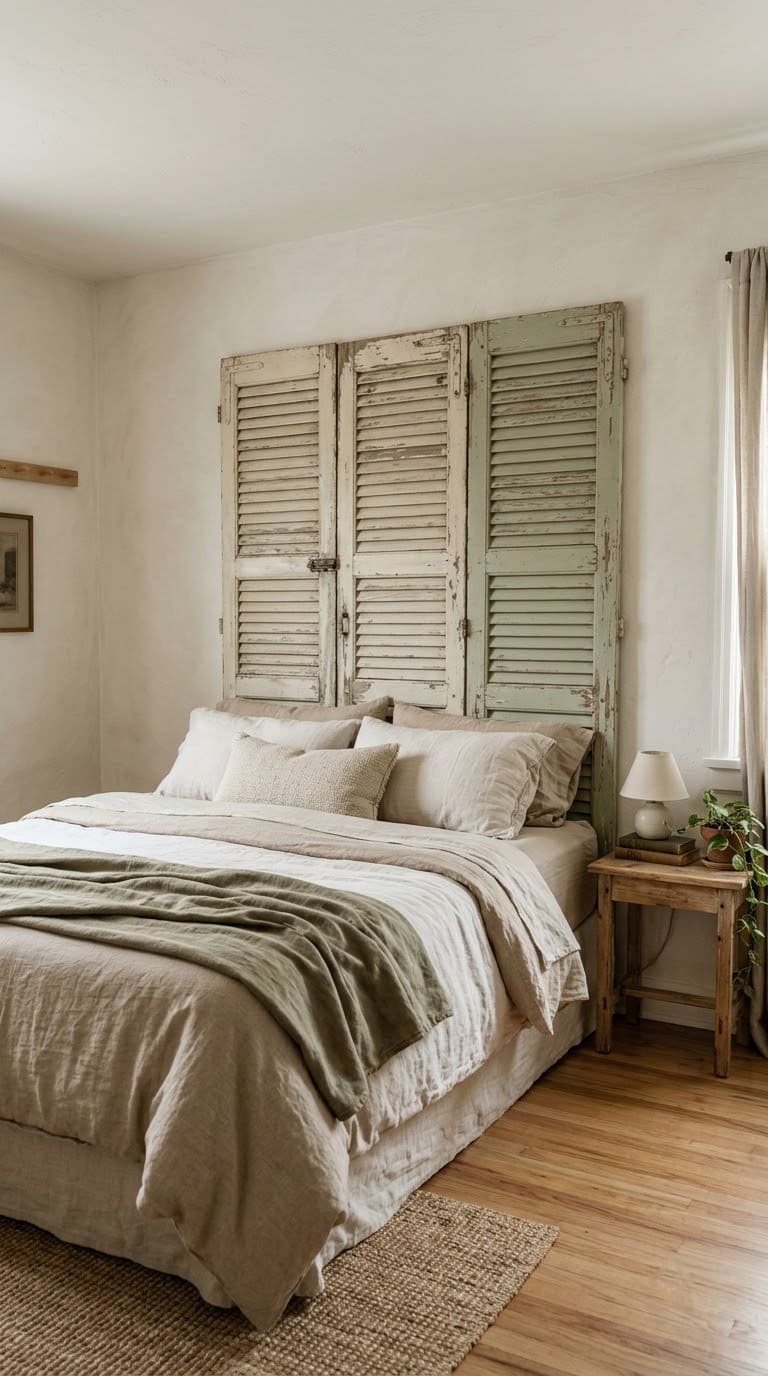
- Assume the paint has lead if the shutters came from an older home, or hire a certified lead inspector.
- Brush off loose dust with a damp cloth.
- Seal old paint with a clear coat, and don’t sand it.
- Join the shutters with flat brackets.
- Mount with a French cleat.
Style tip: leave some chipped paint for charm, once sealed.
Safety: the EPA says lead dust forms when paint is scraped or sanded. Seal, don’t scrape.
8. Old Door or Window Headboard
A salvaged door makes a bold, tall headboard. A vintage window makes a lighter one.
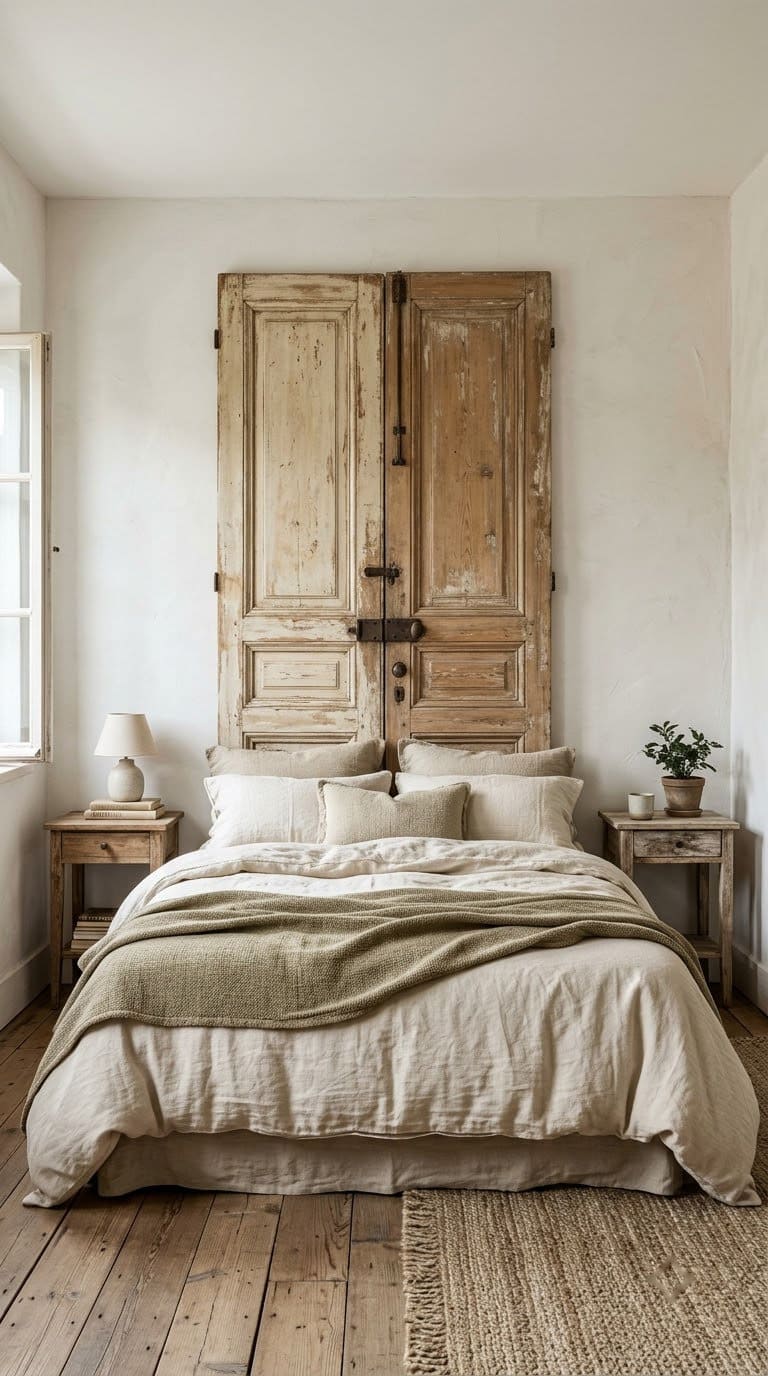
- Pick a door or window that is as wide as the bed or a bit wider.
- Assume old paint has lead, and seal it. Don’t scrape it.
- Weigh the piece, and plan on studs.
- Mount it with a French cleat, or fix it to the wall at two studs.
Style tip: a door with panels gives the room a framed look.
Safety: a door is heavy. Get a helper, and use studs. This Old House says items over 25 pounds need heavy-duty anchors or studs.
9. Painted Headboard on the Wall
A painted headboard costs almost nothing. Tape a shape on the wall behind the bed, and paint it.
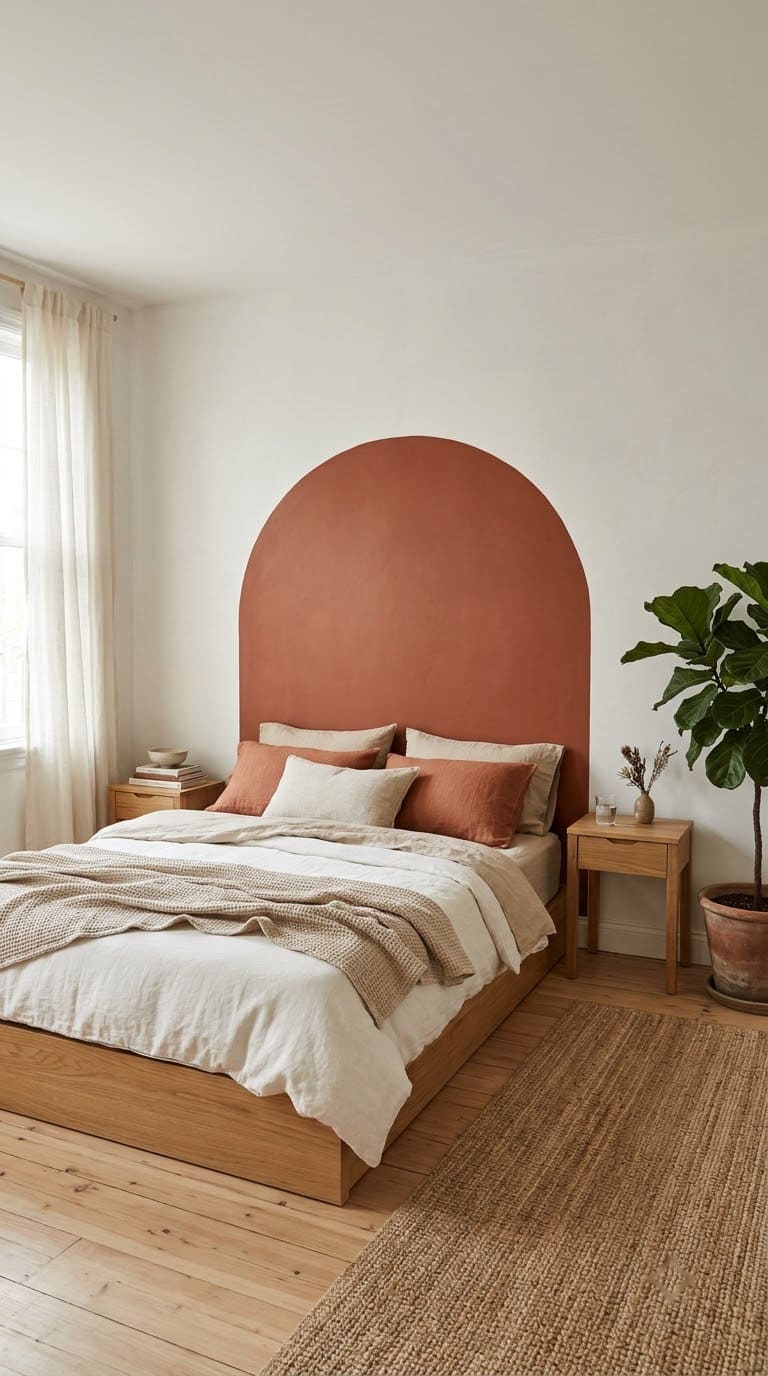
- Mark the shape with a pencil, such as an arch or a rectangle.
- Press painter’s tape along the lines.
- Roll on two coats of paint.
- Pull the tape while the paint is still damp.
Style tip: pick a deep color for drama.
Safety: the EPA says to keep windows open about 2 to 3 days after painting, and to keep young children out of the room until then.
More: see our bedroom wall decor ideas.
10. Peel-and-Stick Plank Headboard
Peel-and-stick planks give a wood look with little work. They suit a renter who wants a warm wall.
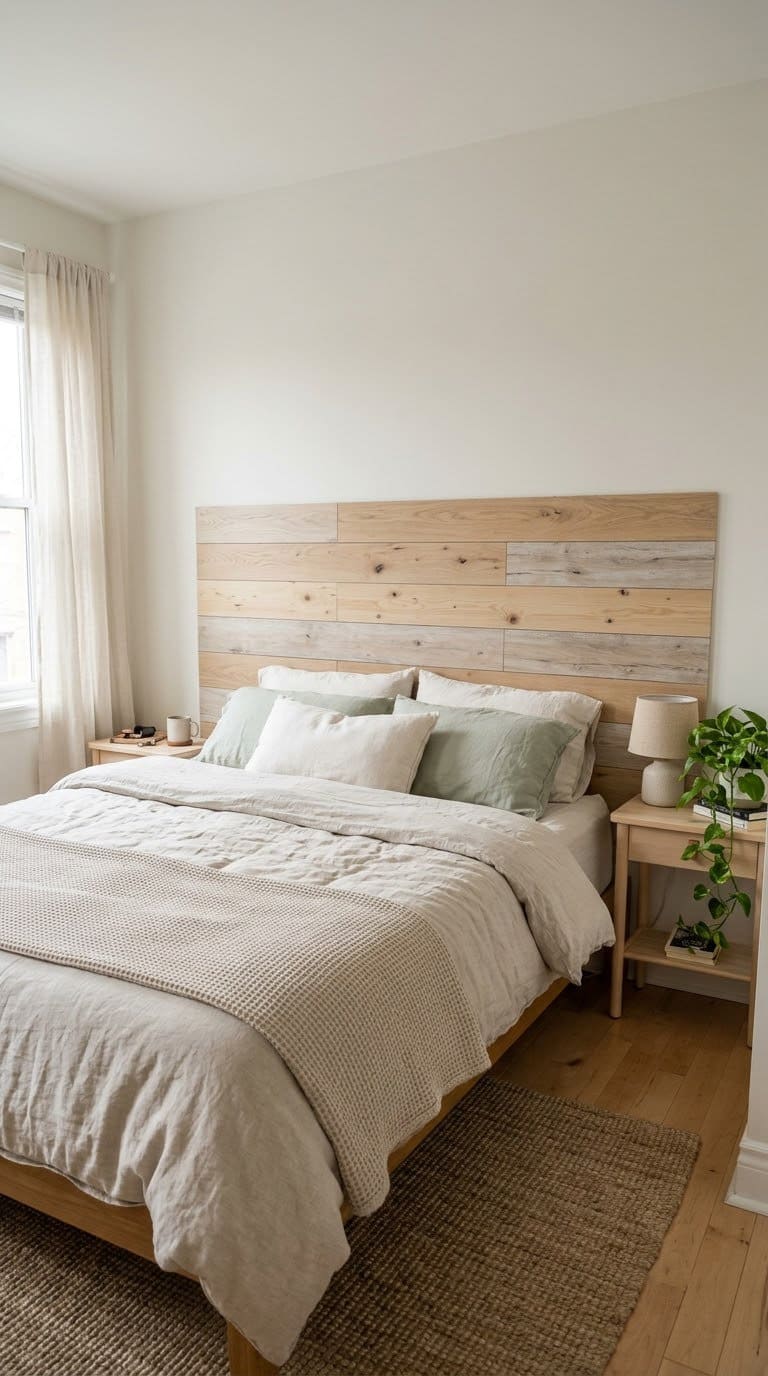
- Clean the wall, and let it dry.
- Mark the width of the headboard with a level line.
- Peel and press each plank in a row.
- Trim the last plank to fit.
Style tip: pick a light wood tone for a calm look.
Safety: test one plank in a hidden spot first.
11. Woven or Rope Headboard
Woven rope or cane adds soft texture. Rope can wrap around a board, and cane can sit in a frame.
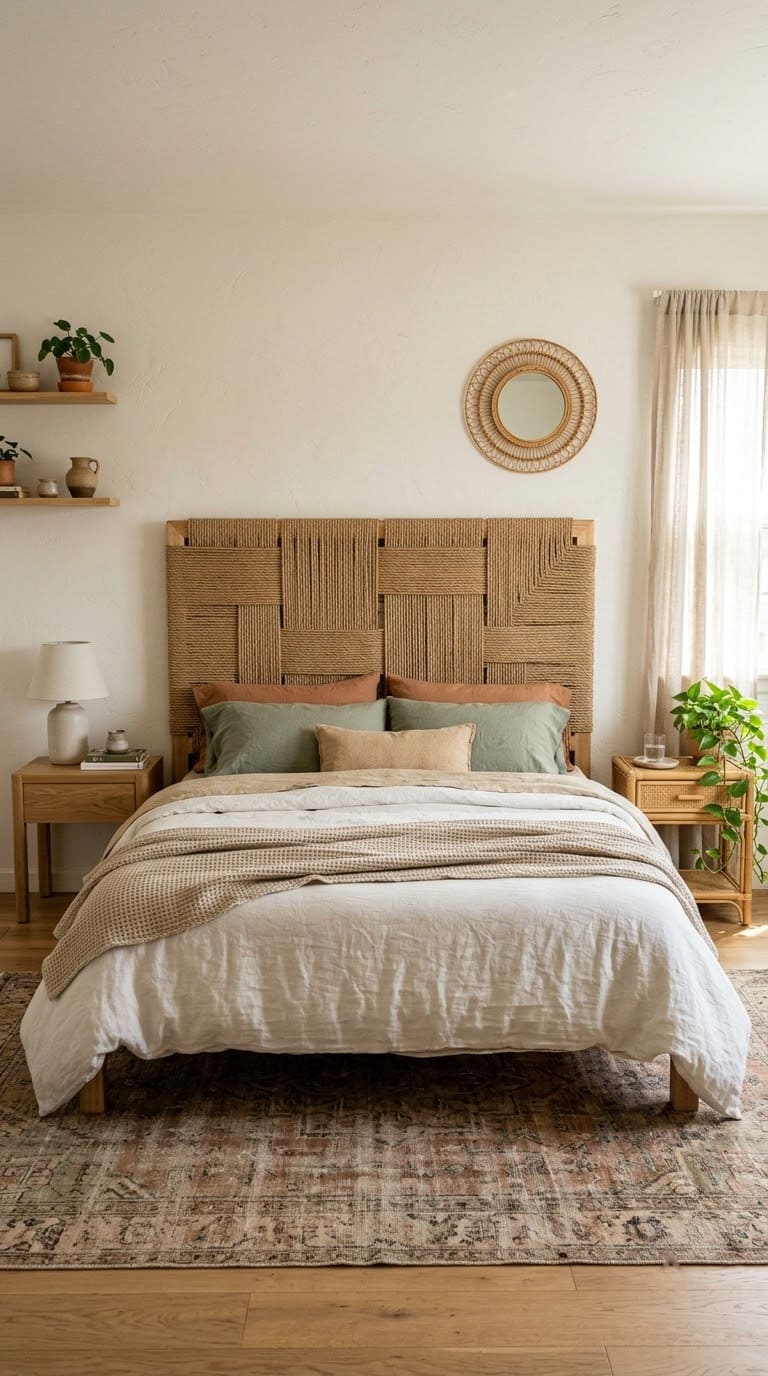
- Build a simple wood frame.
- Wrap rope around the frame in tight rows, or stretch cane across it.
- Glue the ends.
- Hang the frame on a cleat.
Style tip: pick natural rope in a warm tone.
Safety: keep the frame away from candles and heaters.
12. Floating Headboard With LED Lights
A floating panel with soft lights adds a glow. The lights sit behind the panel and wash the wall.
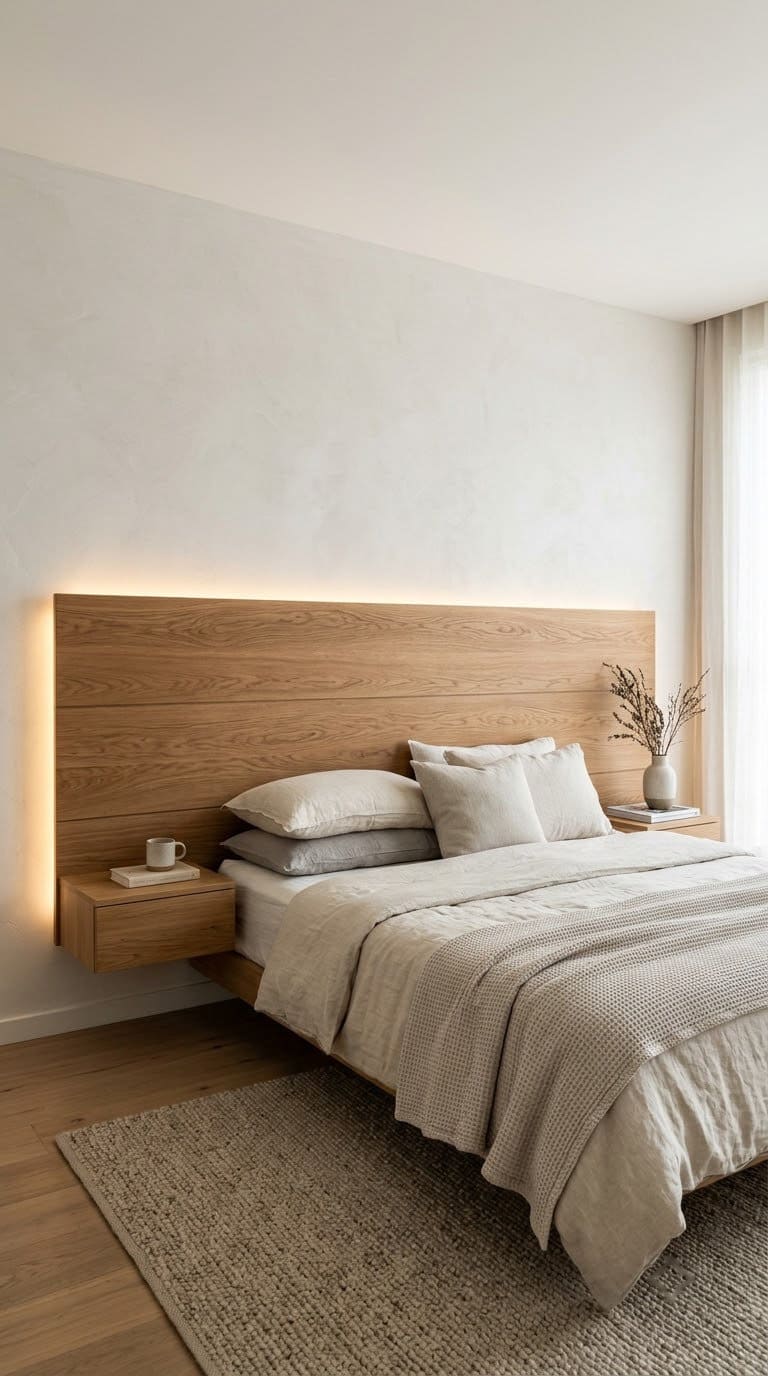
- Build a panel that hangs on a cleat, with a gap from the wall.
- Stick a warm LED strip on the back edge.
- Run the cord down behind the panel to an outlet.
- Test the lights before you mount the panel.
Style tip: use warm white LEDs for a soft glow.
Safety: use a listed power supply. Keep cords out of the bed. That tip is our own.
13. Bookshelf Headboard
A bookshelf headboard holds books and a lamp. It is heavy. It is also the biggest risk here.
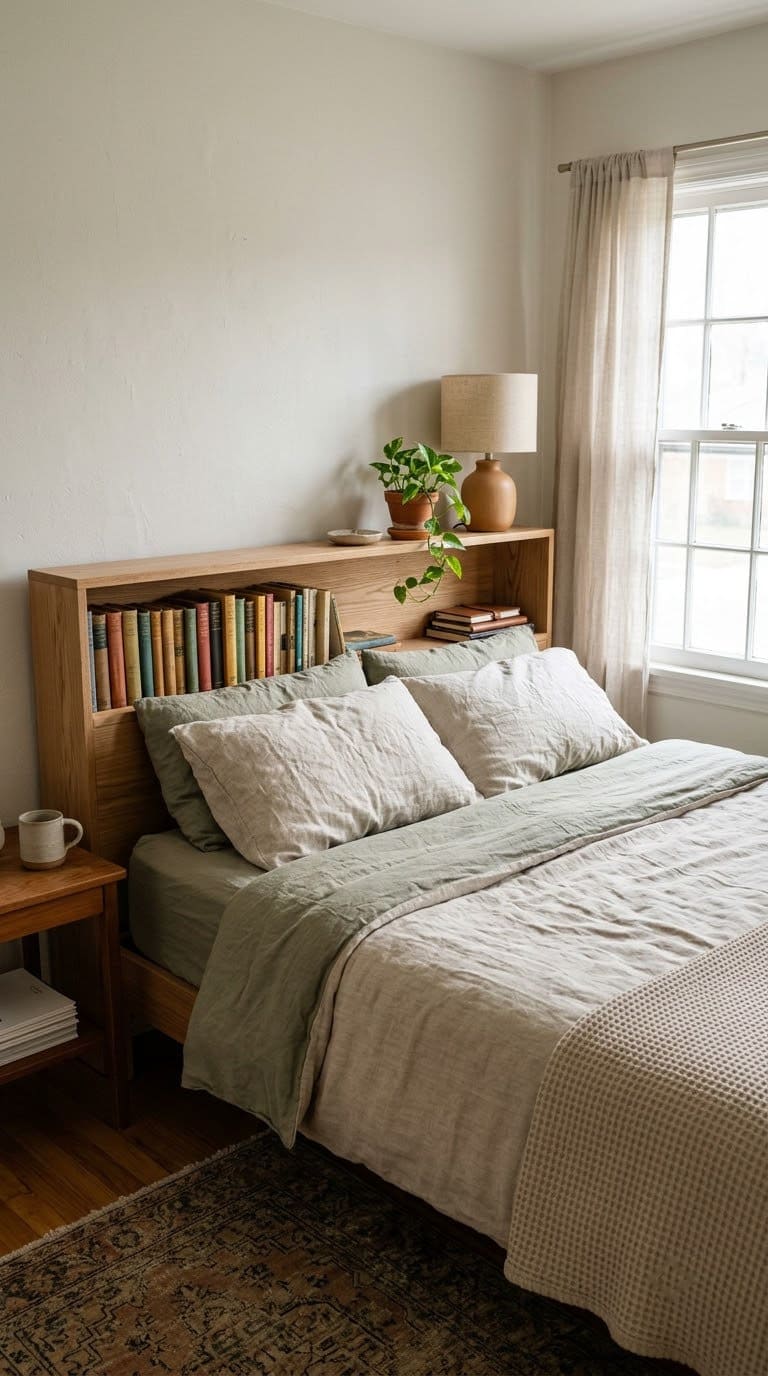
- Pick a low, narrow shelf that fits behind the bed.
- Anchor it to wall studs.
- Keep heavy books on the lowest shelf.
- Leave the top shelf for light items.
Style tip: use baskets to hide clutter.
Safety: anchor it well. Skip glass and heavy objects on the top shelf. This tip is our own.
14. Pegboard Headboard
A pegboard headboard can be tufted or painted. It is a clever base for a button look.
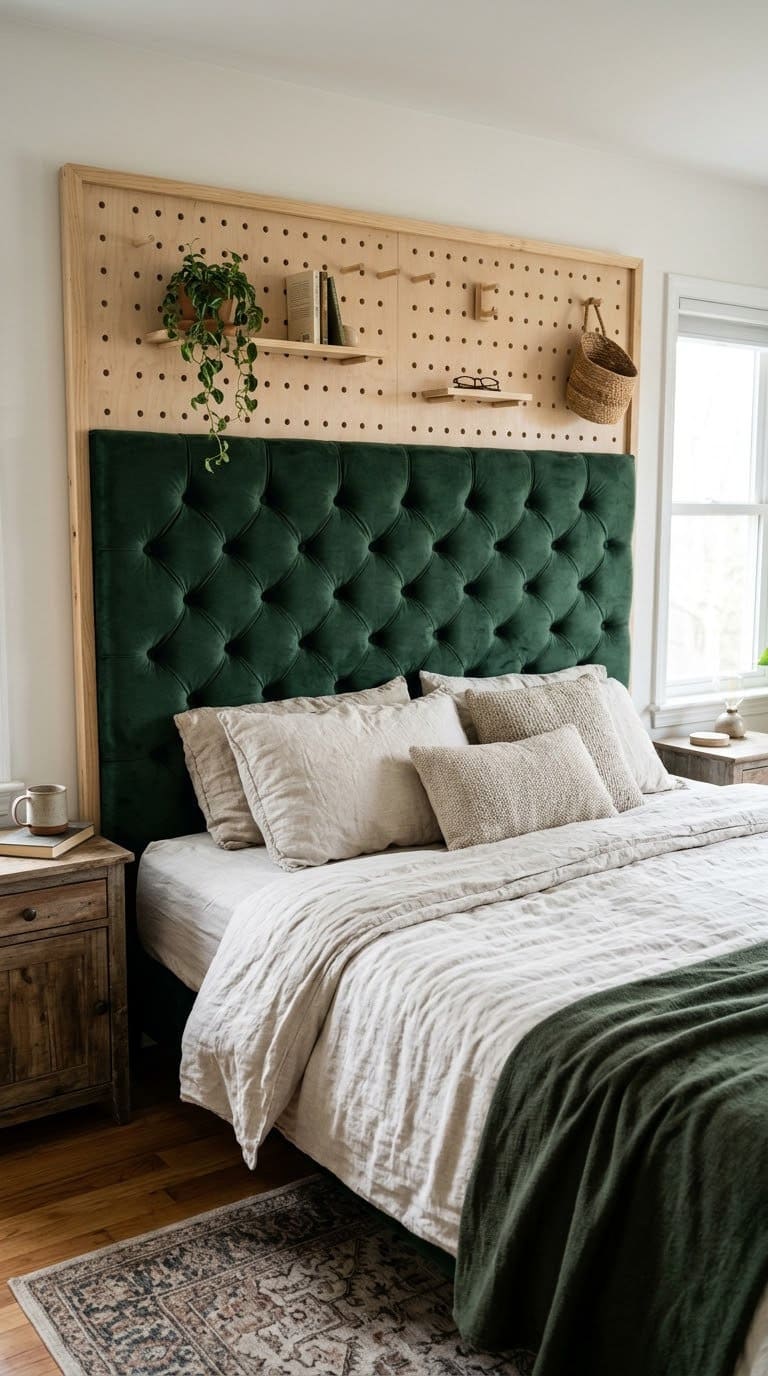
- Cut a sheet of pegboard to size.
- Add foam and fabric, as in idea one.
- Poke buttons through the holes with a thread.
- Mount it on a cleat.
Style tip: use a velvet fabric for a rich look.
Safety: wear gloves when you cut the board.
What Does a DIY Headboard Cost?
Costs vary by store. The ranges below are our own guess, apart from the This Old House figures.
| Idea | Cost | Time |
|---|---|---|
| Upholstered panel | $100 to $500 | About 5 hours |
| Painted shape | Low | A day |
| Curtain headboard | Low to mid | 1 hour |
| Plank headboard | Mid | A weekend |
| Pallet headboard | Low | A weekend |
| Bookshelf headboard | Mid | A day |
Common Mistakes to Avoid
- Hanging heavy pieces on nails. Use studs and a French cleat.
- Sanding old paint. The EPA says lead dust forms when paint is sanded.
- Using the wrong pallet. Use only pallets stamped HT.
- Skipping the airing. The EPA says to ventilate for 2 to 3 days after painting.
- Leaving cords loose. Keep cords out of the bed.
- Skipping the test. Try the mount with a light load first.
Your Weekend Plan
Friday evening: Measure the wall, and find the studs. Pick your style.
Saturday morning: Cut the base. Build the panel.
Saturday afternoon: Add the fabric, paint or boards.
Sunday: Hang it on a cleat. Add pillows and a lamp.
FAQ
How big should a DIY headboard be?
This Old House says a queen headboard may run about 60 inches wide and 28 inches tall. You can choose other sizes.
What do I use to hang a heavy headboard?
A French cleat, screwed into studs. This Old House says to use heavy-duty anchors or studs for items over 25 pounds.
Is it safe to use old wood for a headboard?
Only after a lead check. The EPA says to assume lead paint in older homes, and to mist before you sand or cut.
Are pallets safe for a headboard?
Only HT pallets. University of Illinois Extension educator Candice Miller says to avoid MB and unmarked pallets.
How long should I air out a freshly painted bedroom?
The EPA says to keep windows open about 2 to 3 days.
Related Posts
Never miss an update — choose FarmFoodFamily as your preferred source on Google.
How it works: Tap the button below to open Google's settings page, then check the box next to FarmFoodFamily.
Tap the checkbox to turn it blue — that's how you know it's set.