13 Kitchen Accent Wall Ideas That Handle Heat
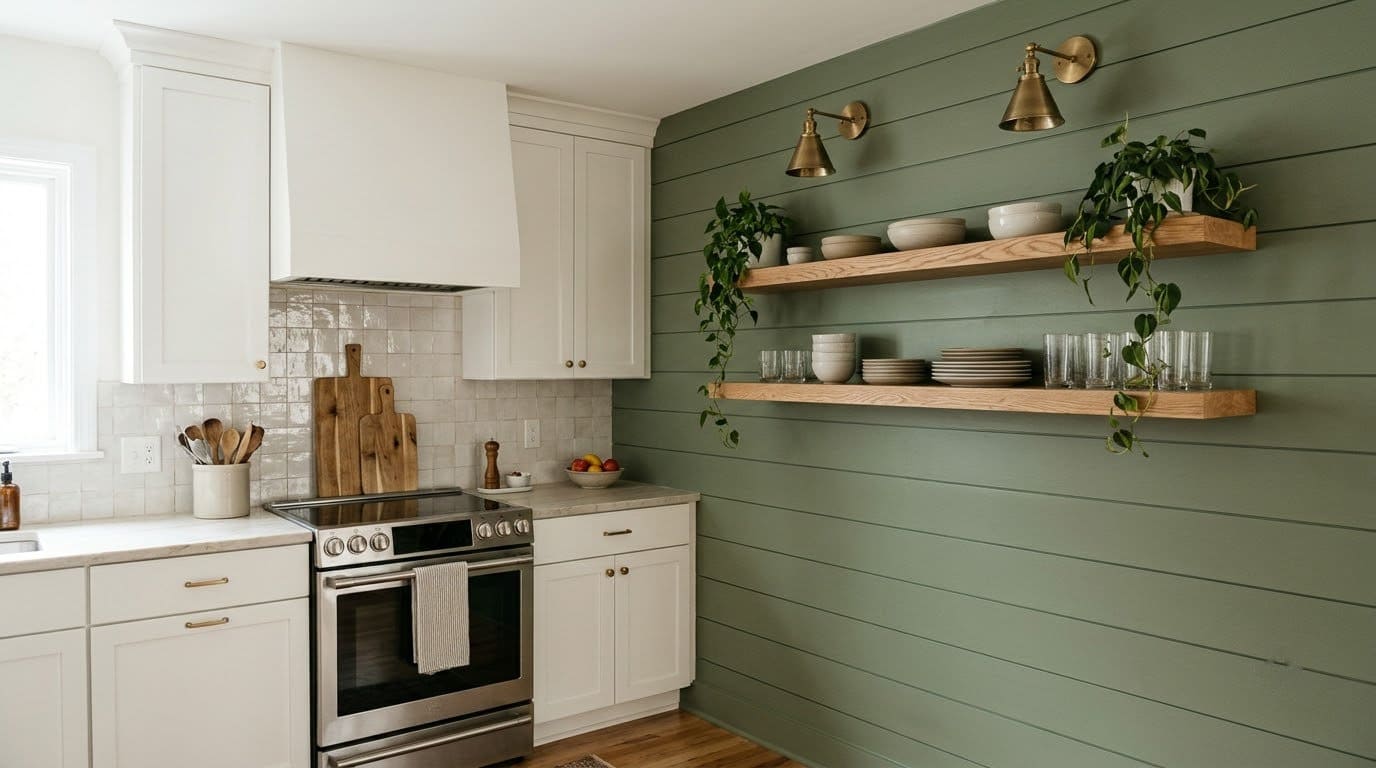
Tile and brick shrug off splashes. Painted shiplap and vinyl wallpaper suit walls far from the stove.

Never miss an update — choose FarmFoodFamily as your preferred source on Google.
How it works: Tap the button below to open Google's settings page, then check the box next to FarmFoodFamily.
Tap the checkbox to turn it blue — that's how you know it's set.
Tile and brick shrug off splashes. Painted shiplap and vinyl wallpaper suit walls far from the stove.
Products We Recommend
This post contains affiliate links. We may earn a commission on qualifying purchases at no extra cost to you.

CiCiwind Peel and Stick Wallpaper, White Shiplap Wood Look, Waterproof, 78.7 x 17.7 in
A vinyl-look peel-and-stick shiplap paper for a quiet kitchen wall. Hunker says vinyl suits kitchens, but keep it away from the stove and test a corner first.
Shop Now
STICKGOO 10-Sheet Peel and Stick Subway Tile Backsplash, 3D Vinyl, White
A peel-and-stick tile look for a splash zone you can swap later. It is vinyl, so check the label for heat limits before using it near a burner.
Shop Now
Povlen Stud Finder Wall Scanner With Wood, Metal and AC Wire Detection
A stud finder for mounting shelves, rails and shiplap into framing. It also flags live AC wire, but turn off power before drilling near wiring.
Shop NowThe best kitchen accent walls fit the material to the job. Tile and brick handle splashes. Painted shiplap and vinyl wallpaper suit walls farther from the stove, and paint works almost anywhere.
Designer Magda Callery tells Family Handyman that shiplap by a stove needs moisture-resistant paint.
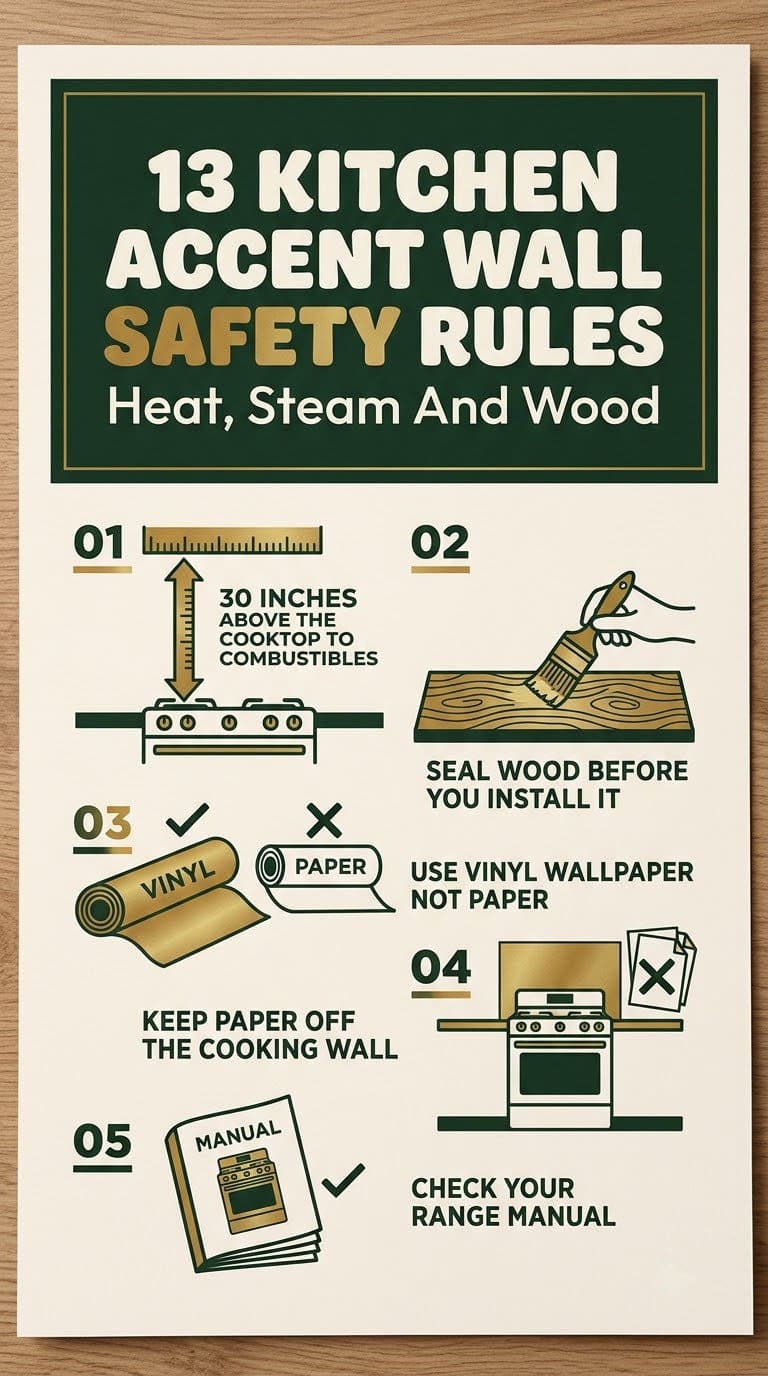
Mind the stove. The 2024 International Fuel Gas Code says a household cooktop needs at least 30 inches of clearance to combustible material above it. It allows 24 inches with protection.
And keep wallpaper away from heat and steam. Hunker says regular wallpaper shouldn’t come into direct contact with heat or humidity.
These 13 ideas give you steps, a style tip and a safety note for each one. Pick one wall, check the clearances, and finish it in a weekend. Then add shelves, a light or a small plant.
How Do You Choose a Kitchen Accent Wall?
Pick the wall first. A kitchen has a cooking wall, a sink wall and a quiet wall. The quiet wall is the safest place for bold paint, wallpaper or wood.
Then match the material to the mess. A wall by the stove or sink gets steam, grease and splashes. A wall by the table gets few.

Use this table to match a spot to a material. The ratings are our own guess, except where noted.
| Material | Near the stove | Near the sink | Quiet wall |
|---|---|---|---|
| Ceramic tile | Great | Great | Good |
| Brick, sealed or painted | Good | Good | Great |
| Painted shiplap | With care | With care | Great |
| Vinyl wallpaper | Not close | With care | Great |
| Regular wallpaper | No | No | Good |
| Paint | Good, washable | Good, washable | Great |
If your kitchen is small, pick one wall and one material. It looks calm and planned.
What Safety Rules Apply to Kitchen Accent Walls?
A kitchen wall faces heat and water. Read these rules first.
Keep clearance above the cooktop. The 2024 fuel gas code says a cooktop needs at least 30 inches of clearance to combustible material and metal cabinets above it. It allows 24 inches if the underside is shielded with millboard and sheet metal, or if a metal hood is installed.
Your range manual and local code control, so check both.
Plan for the wall’s finish near heat. The This Old House backsplash guide says fire codes typically require clearance between gas burners and flammable materials. Wood, beadboard and wallpaper count, so keep them out of that zone.
Seal wood. This Old House says shiplap and beadboard must be sealed before installation and resealed over time to resist stains and water damage. Callery recommends moisture-resistant paint.
Choose the right wallpaper. Hunker says vinyl or vinyl-coated wallpaper is best for a kitchen, since it handles moisture and wipes down. It says regular wallpaper should be kept away from heat and humidity.
A vinyl-look peel-and-stick shiplap paper for a quiet kitchen wall. Hunker says vinyl suits kitchens, but keep it away from the stove and test a corner first.
Shop NowThis post contains affiliate links. We may earn a commission on qualifying purchases at no extra cost to you.
Work safely. Cutting tile, brick or wood makes dust. Wear a dust mask and eye gear. Ask a pro for gas, electric or sconce wiring. That tip is our own.
1. A Shiplap Feature Wall With Shelves
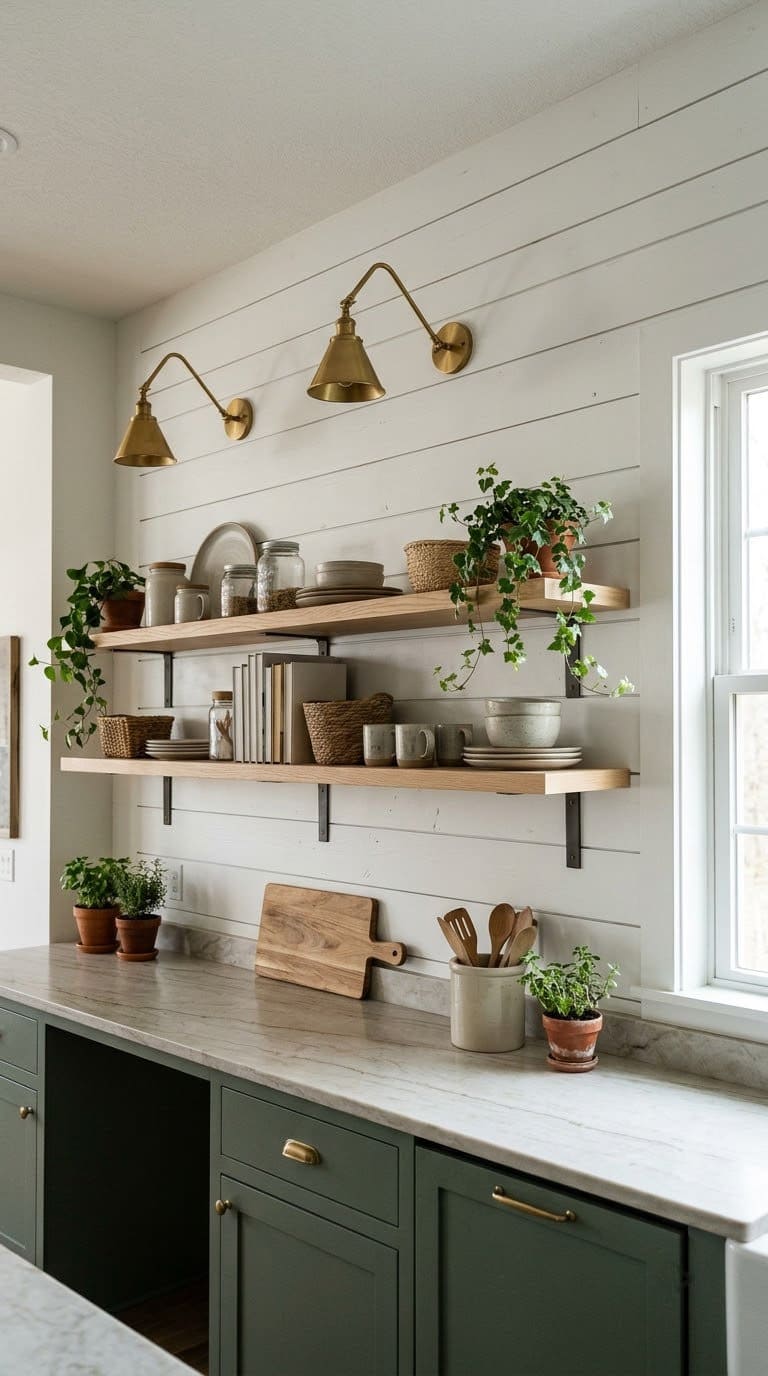
One shiplap wall adds warmth without taking over. Callery says to use shiplap on one feature wall and keep the rest of the kitchen simple. One example pairs the paneled wall with open shelving and sconce lighting.
- Pick the quiet wall, away from the stove and sink.
- Buy pre-primed shiplap, and paint each board before you install it. Callery recommends cabinet-grade paint.
- Fix the boards to studs, working from the bottom up.
- Add shelves and sconces after the boards are up.
Style tip: keep the rest of the walls plain.
Safety: hire an electrician for sconce wiring.
Tip: wipe a test patch with a damp cloth before you commit.
Check: stand back and view the wall from the door.
Note: tape a sample to the wall for a day before you buy.
More: see our shiplap accent wall ideas.


2. Shiplap Painted to Match the Cabinets
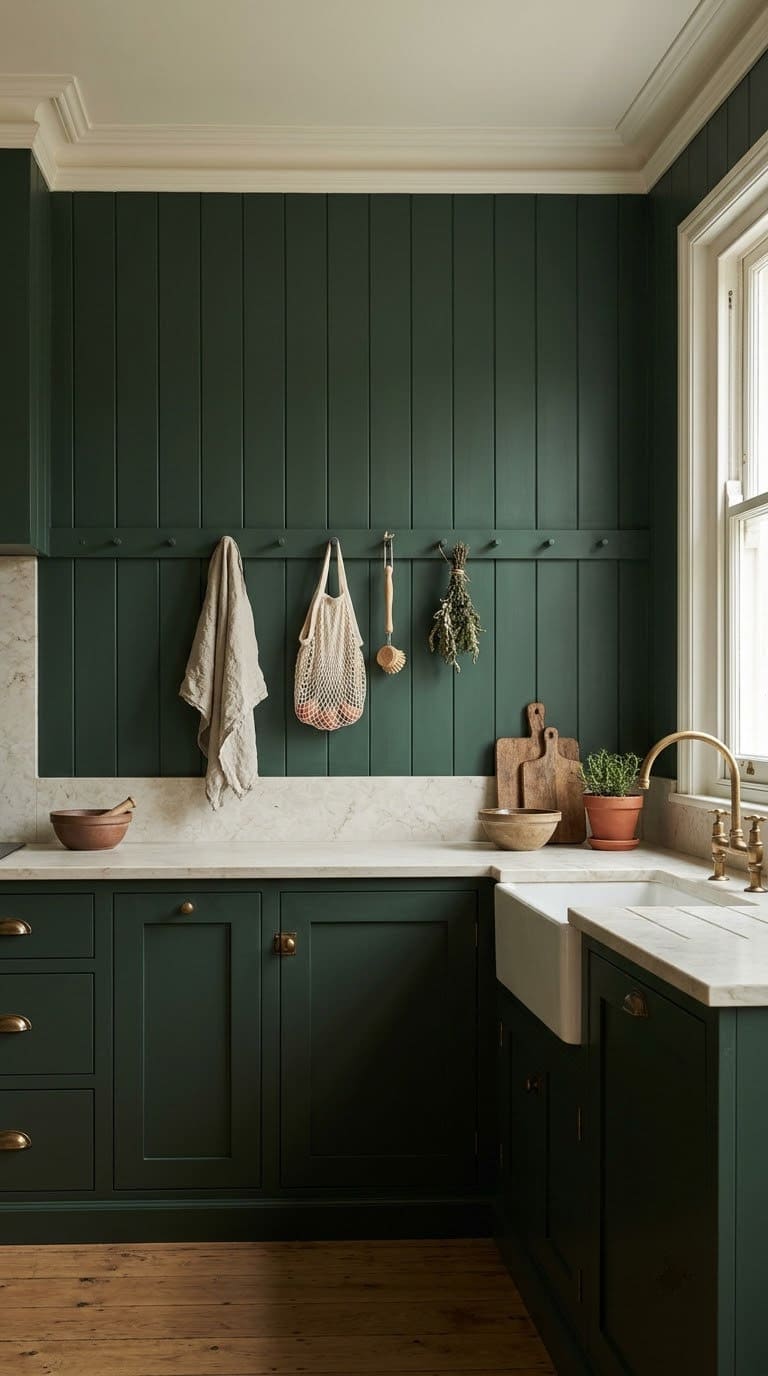
Matching color makes shiplap look built in. Callery’s examples use green boards to the ceiling and dark green boards that match the cabinets. She says tall boards make the ceiling feel taller.
Dark boards add texture without taking over.
- Pick the paint color from your cabinet maker’s sample.
- Prime and paint the boards before you hang them.
- Run the boards up and down for height.
- Touch up the nail holes with matching paint.
Style tip: add a peg rail in the same color.
Safety: keep the boards out of the cooktop clearance zone.
Tip: wipe a test patch with a damp cloth before you commit.
Check: stand back and view the wall from the door.
Note: tape a sample to the wall for a day before you buy.
3. Vertical Shiplap Behind the Stove
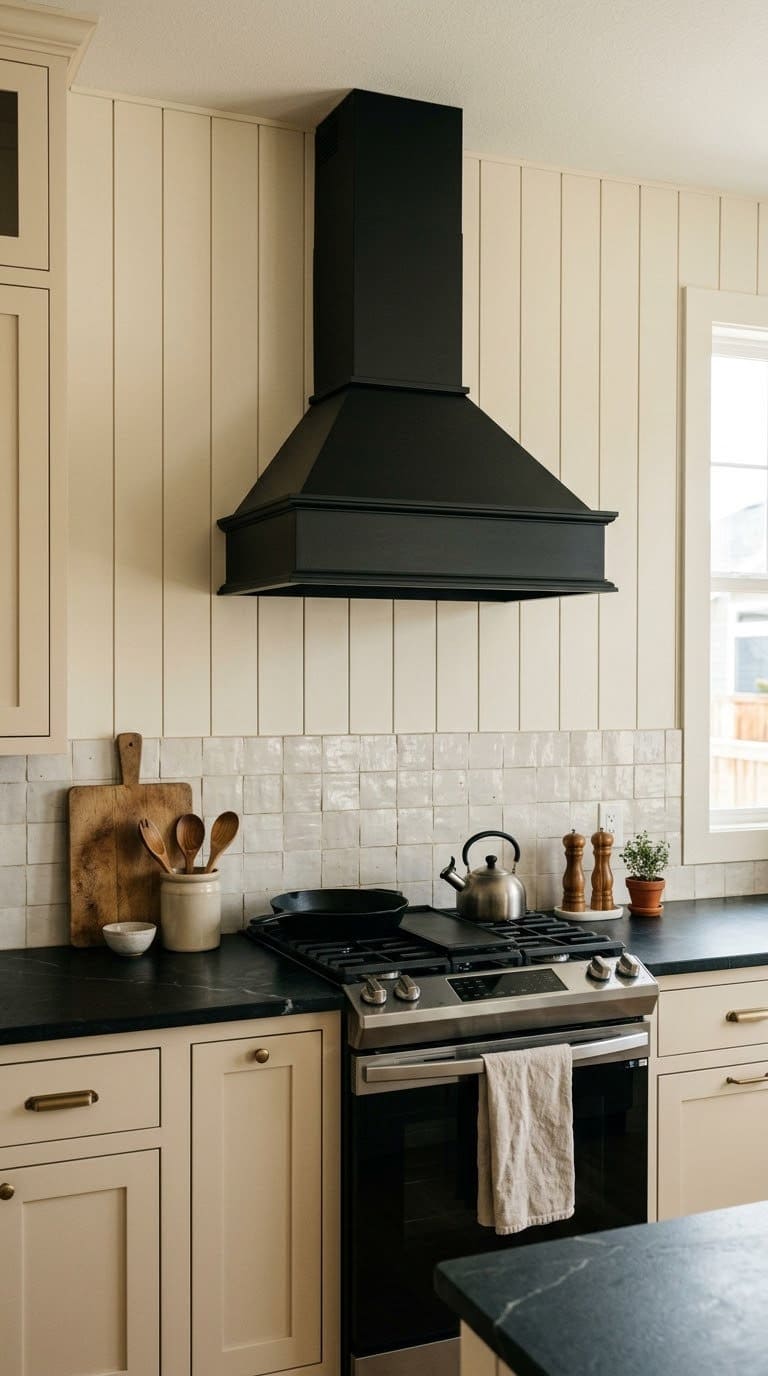
This look is pretty but risky. Callery shows creamy vertical boards behind a range with black counters and a hood. The guide notes shiplap is less durable than tile, so it needs protection in cooking areas.
- Check the range manual for wall clearances.
- Stay at least 30 inches below combustible material above the cooktop, or use the protected 24-inch option.
- Seal or paint with moisture-resistant paint.
- Plan to wipe the boards often.
Style tip: pick a creamy white that hides splashes better than pure white. That tip is our own.
Safety: for a gas range, ask a pro before you cover the wall behind it.
Tip: wipe a test patch with a damp cloth before you commit.
Check: stand back and view the wall from the door.
Note: tape a sample to the wall for a day before you buy.
4. A Brick Accent Wall
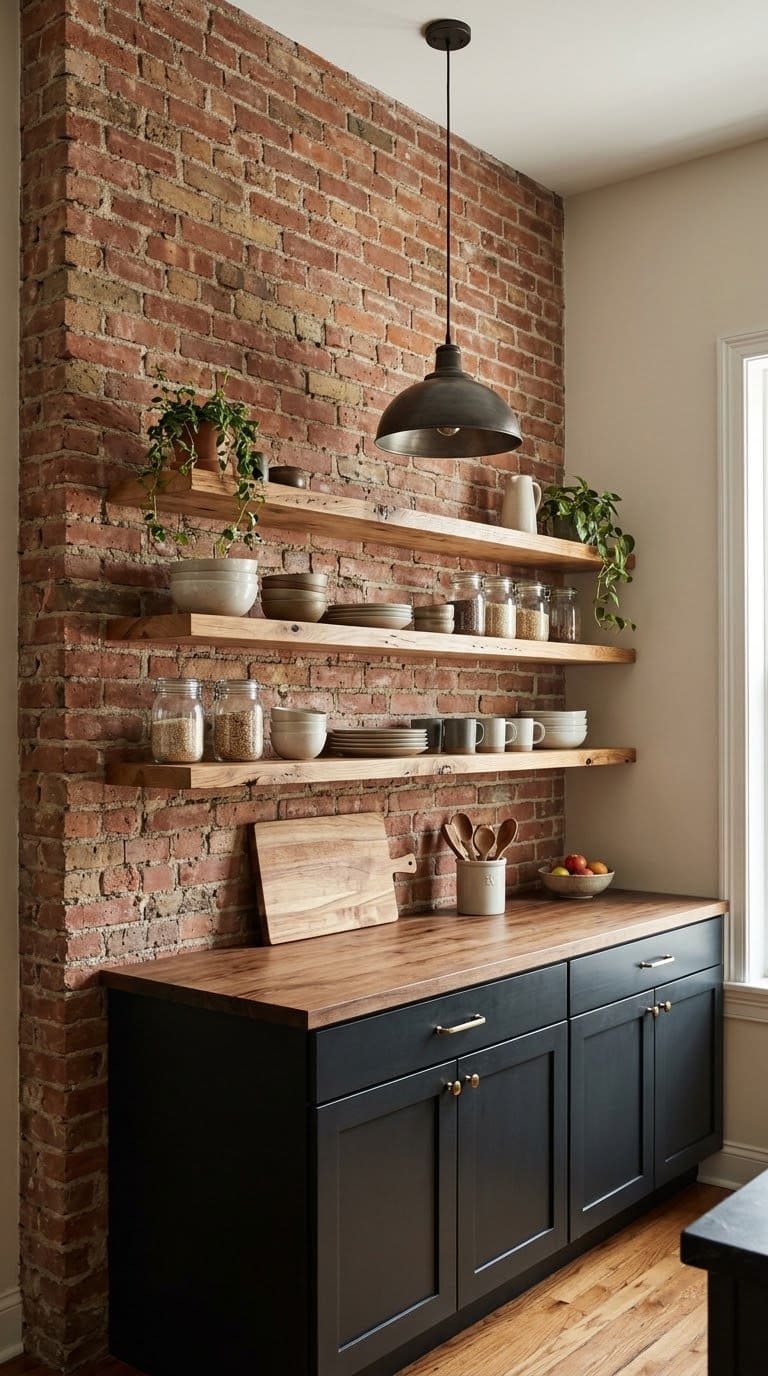
Brick adds texture and character. The Hunker brick backsplash guide says real brick can be new or old, or faux, and that brick veneer is a budget alternative. It puts materials at about $5 to $16 per square foot, with installation at $7 to $20 per square foot.
- Choose real brick, veneer or a brick-look panel.
- Mark the area, and prep the wall.
- Set the brick in mortar, or fix the panel with adhesive.
- Seal or paint the finished wall.
Style tip: use stacked bond for a clean look, or herringbone for pattern.
Safety: real brick is heavy. Check that the wall can carry it, or choose veneer. That tip is our own.
Tip: wipe a test patch with a damp cloth before you commit.
Check: stand back and view the wall from the door.
Note: tape a sample to the wall for a day before you buy.
More: see our brick backsplash kitchen ideas.
5. A Painted or Whitewashed Brick Wall
Paint makes brick easier to clean. One guide says real brick is hard to clean because its clay is porous and rough, and that painted brick is much easier to clean. It also describes a whitewash made from thin white grout or watered-down white paint.
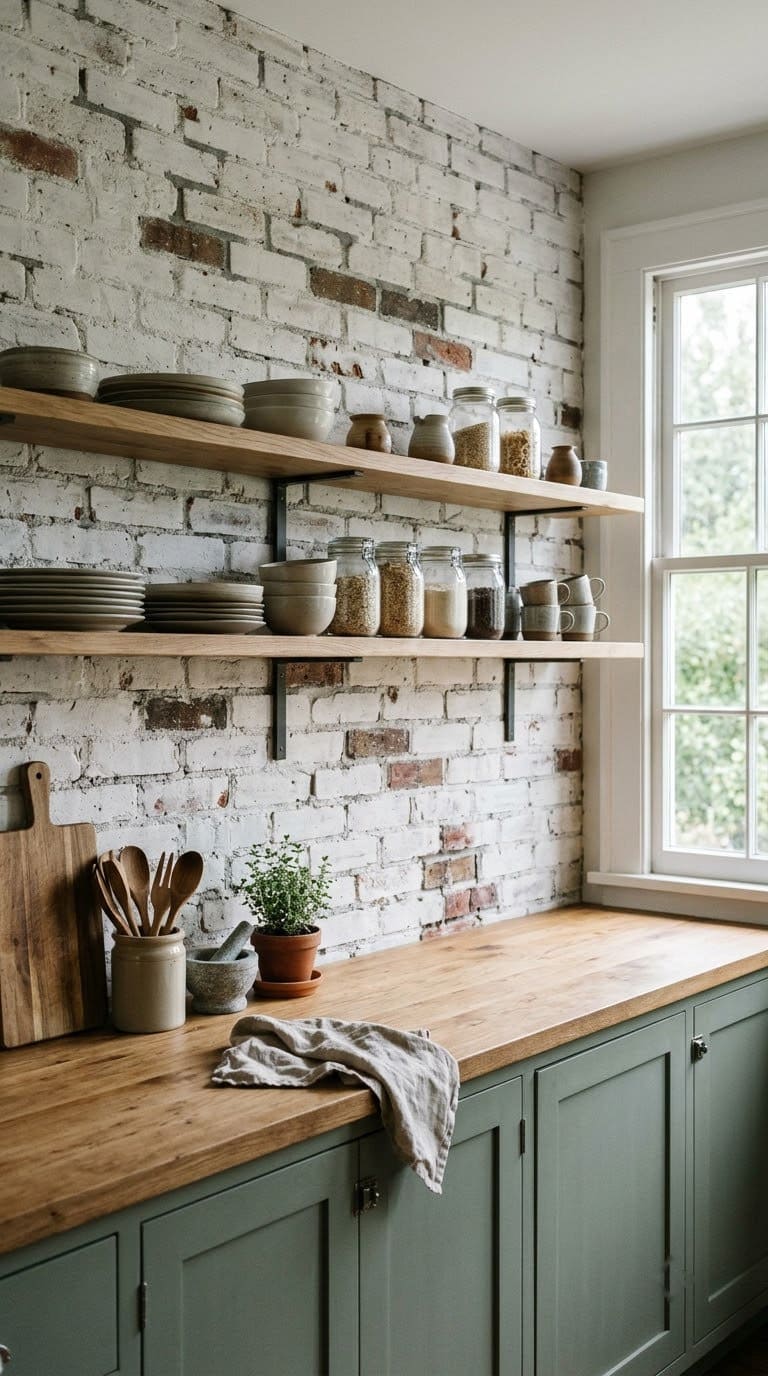
- Scrub the brick, and let it dry.
- Brush on watered-down white paint in sections.
- Wipe back some paint for a worn look.
- Seal the wall.
Style tip: leave a few bricks darker for contrast.
Safety: test a small spot first.
Tip: wipe a test patch with a damp cloth before you commit.
Check: stand back and view the wall from the door.
Note: tape a sample to the wall for a day before you buy.
6. A Wood or Beadboard Accent Wall
Wood warms a kitchen with steel appliances and stone counters. One guide says beadboard runs about $18 to $26 per square foot installed. It says shiplap and beadboard must be sealed before installation and resealed over time.
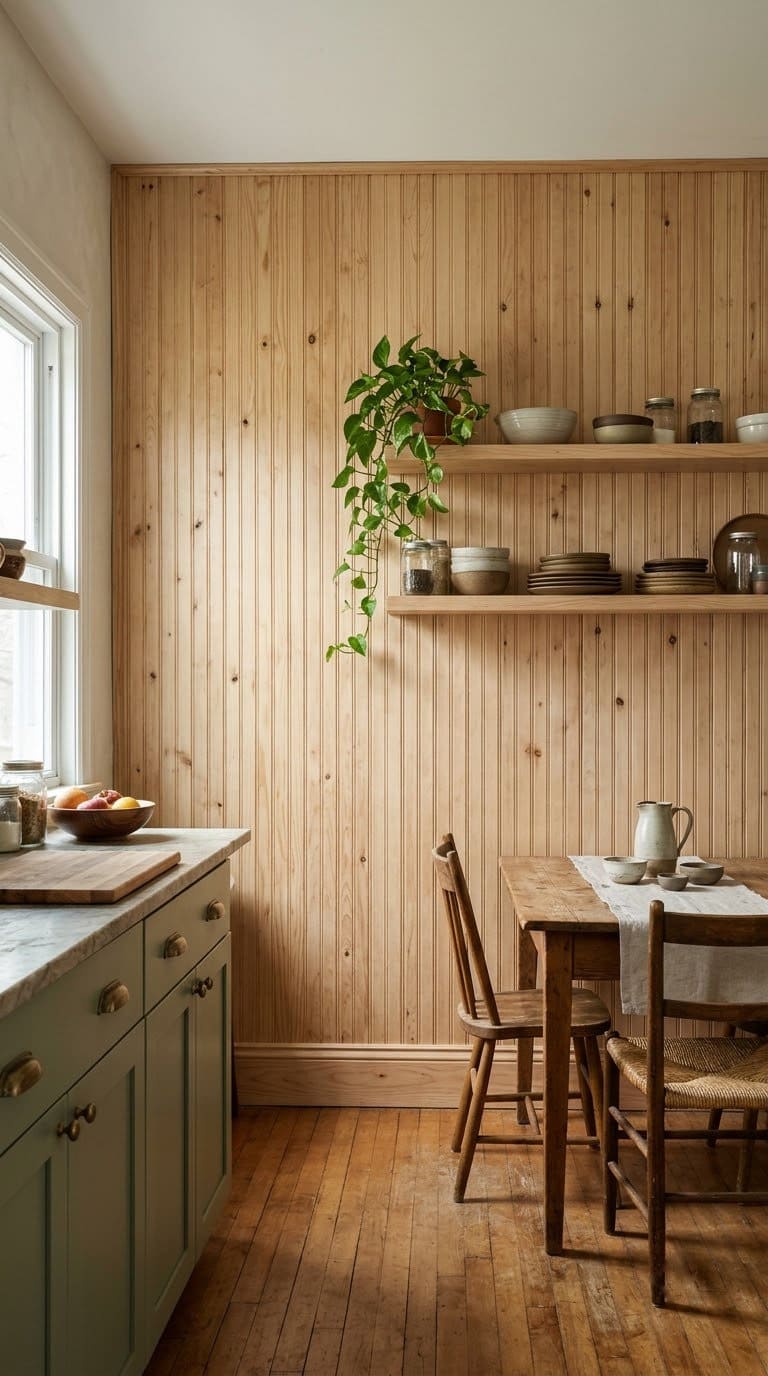
- Pick a wall away from the stove.
- Seal each panel on all sides before you install it.
- Fasten the panels to studs.
- Reseal the wall each year or two. That timing is our own.
Style tip: use a lighter wood in a small kitchen.
Safety: keep wood out of the clearance zone above and beside burners.
Tip: wipe a test patch with a damp cloth before you commit.
Check: stand back and view the wall from the door.
Note: tape a sample to the wall for a day before you buy.
More: see our wood accent wall ideas.
7. A Tile Accent Wall
Tile is the toughest choice near the stove and sink. One guide says ceramic tile is resistant to stains and moisture, at about $12 to $32 per square foot including labor. It says glass tile runs about $18 to $42 and shows water spots and fingerprints.
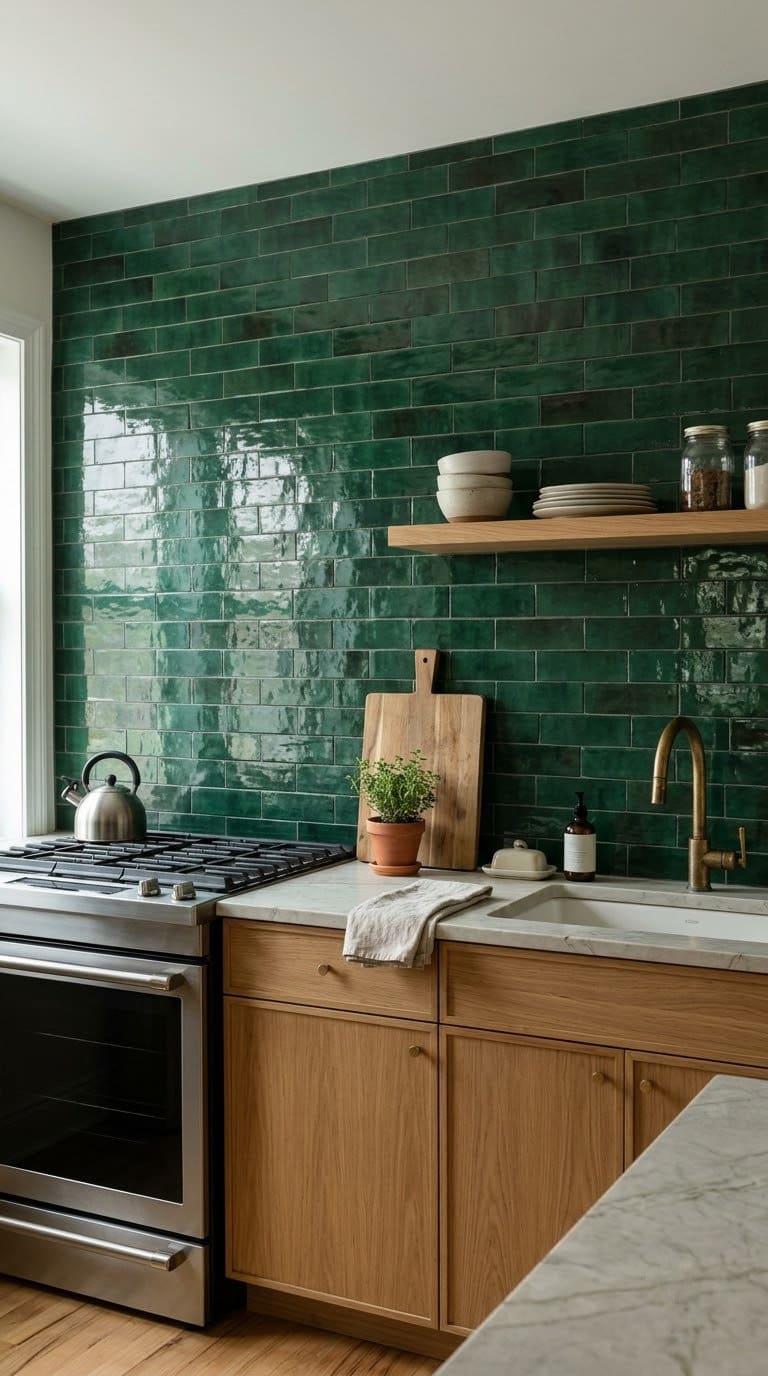
- Pick a tile that suits the wall’s use.
- Lay out the pattern on the floor first.
- Set the tile with the right adhesive, and grout it.
- Seal the grout.
Style tip: use one bold color or a simple pattern.
Safety: wear eye protection and a dust mask when you cut tile.
Tip: wipe a test patch with a damp cloth before you commit.
Check: stand back and view the wall from the door.
Note: tape a sample to the wall for a day before you buy.
8. A Metal Panel Behind the Stove
Metal resists heat and wipes clean. One guide says stainless steel tile runs about $25 to $75 per square foot installed, and works behind stoves and sinks. It warns too many shiny surfaces can clash with metal appliances.
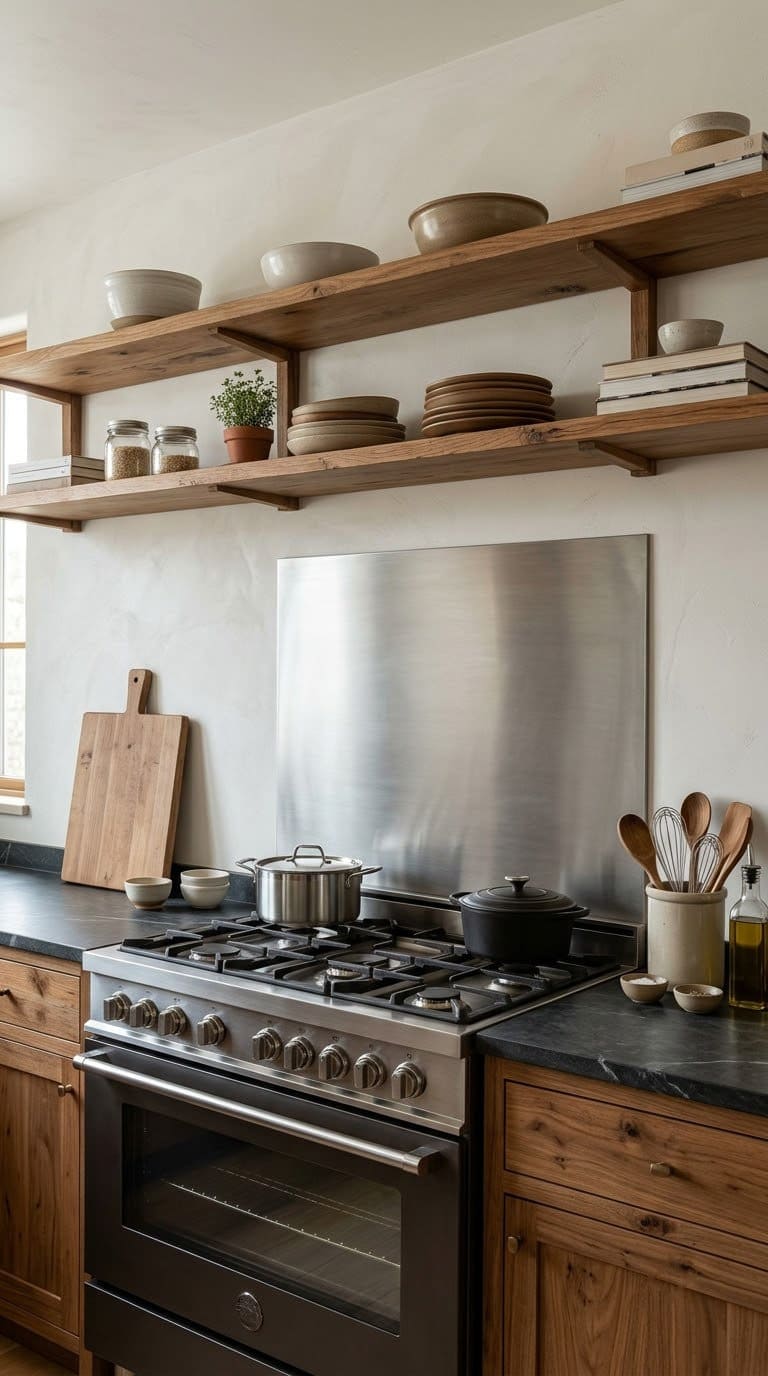
- Measure the area behind the cooktop.
- Order a panel or tile cut to size.
- Install it with adhesive made for metal.
- Wipe the surface clean.
Style tip: pair it with warm wood shelves.
Safety: make sure the panel doesn’t block any vent or gas shutoff. That tip is our own.
Tip: wipe a test patch with a damp cloth before you commit.
Check: stand back and view the wall from the door.
Note: tape a sample to the wall for a day before you buy.
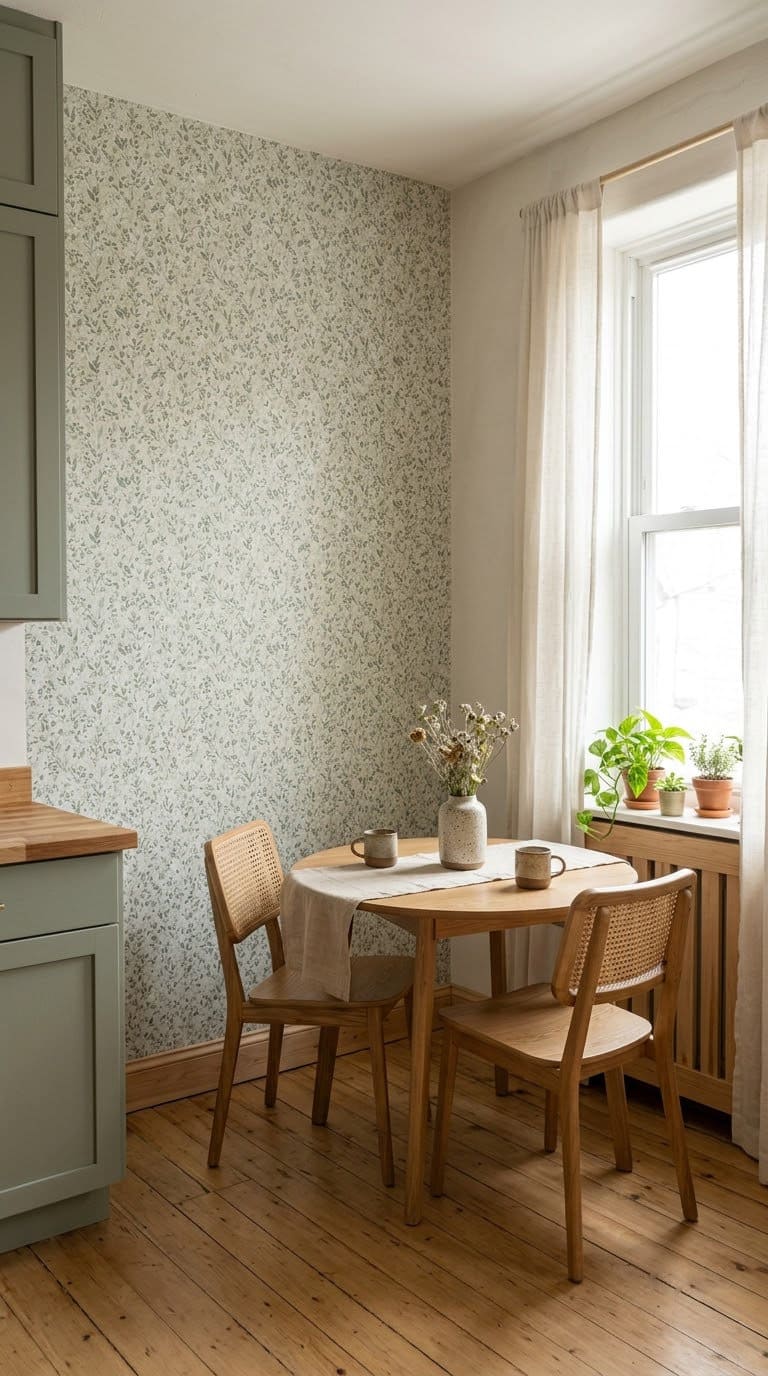
9. A Vinyl Wallpaper Accent Wall
Vinyl wallpaper brings pattern and wipes clean. One guide says vinyl or vinyl-coated wallpaper is best for the kitchen. It says to keep regular paper away from heat and humidity.
- Pick the wall farthest from the stove.
- Clean and dry the wall.
- Hang the paper, and smooth out bubbles.
- Trim the edges with a sharp blade.
Style tip: use a small print in a small kitchen.
Safety: peeling and blistering from steam, grease and heat are the main risks, per Hunker. Keep paper off the cooking wall.
Tip: wipe a test patch with a damp cloth before you commit.
Check: stand back and view the wall from the door.
Note: tape a sample to the wall for a day before you buy.
More: see our kitchen wallpaper ideas.
10. A Mural Wallpaper
A mural turns a wall into art. Joanna Gaines, writing about a small cottage kitchen, said it lacks space but makes up for it in character. The same guide notes the mural was a monochrome line-art landscape in grays that matched the marble counters and cabinets.
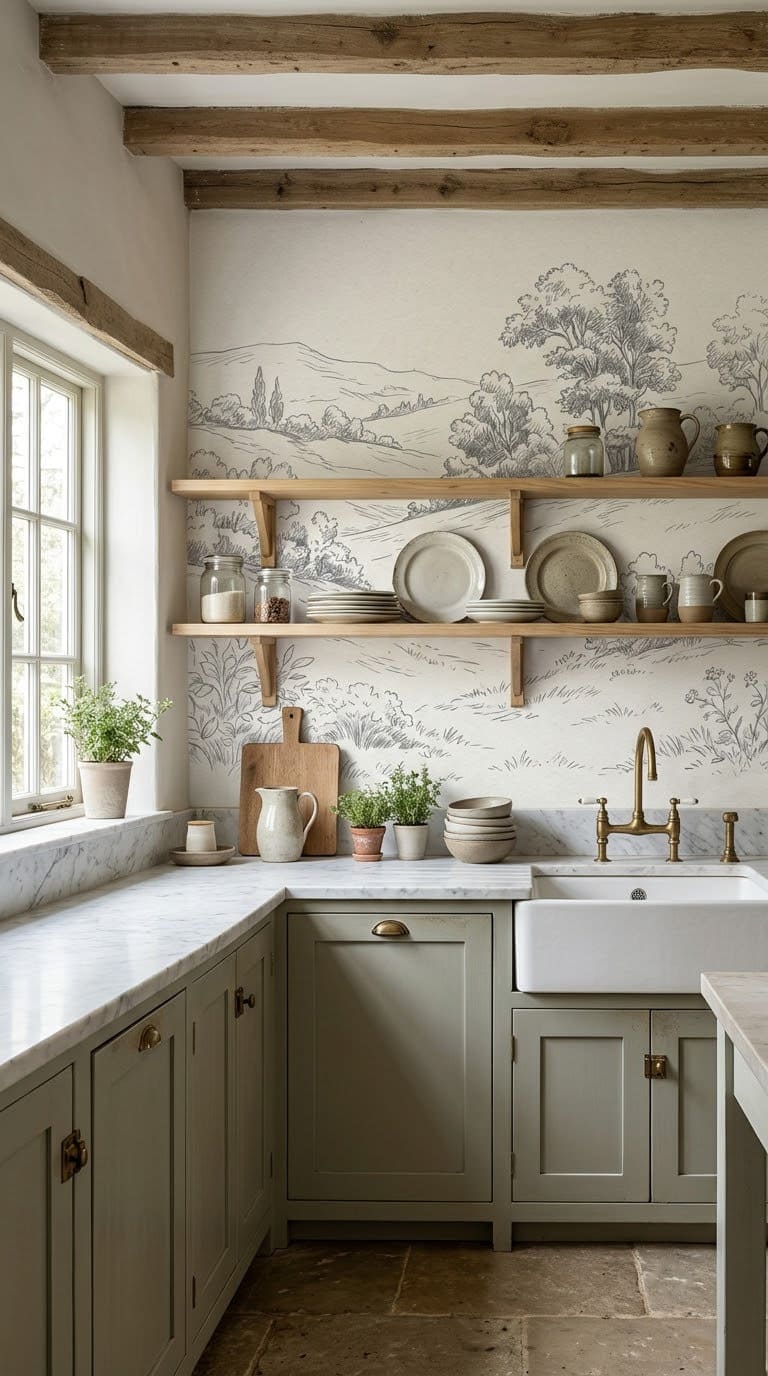
- Choose a mural in colors that match the counters.
- Measure the wall, and order a bit extra.
- Hang each panel in order.
- Seal the seams, if the maker says to.
Style tip: pick a quiet color scheme for a small kitchen.
Safety: keep the mural away from the stove.
Tip: wipe a test patch with a damp cloth before you commit.
Check: stand back and view the wall from the door.
Note: tape a sample to the wall for a day before you buy.
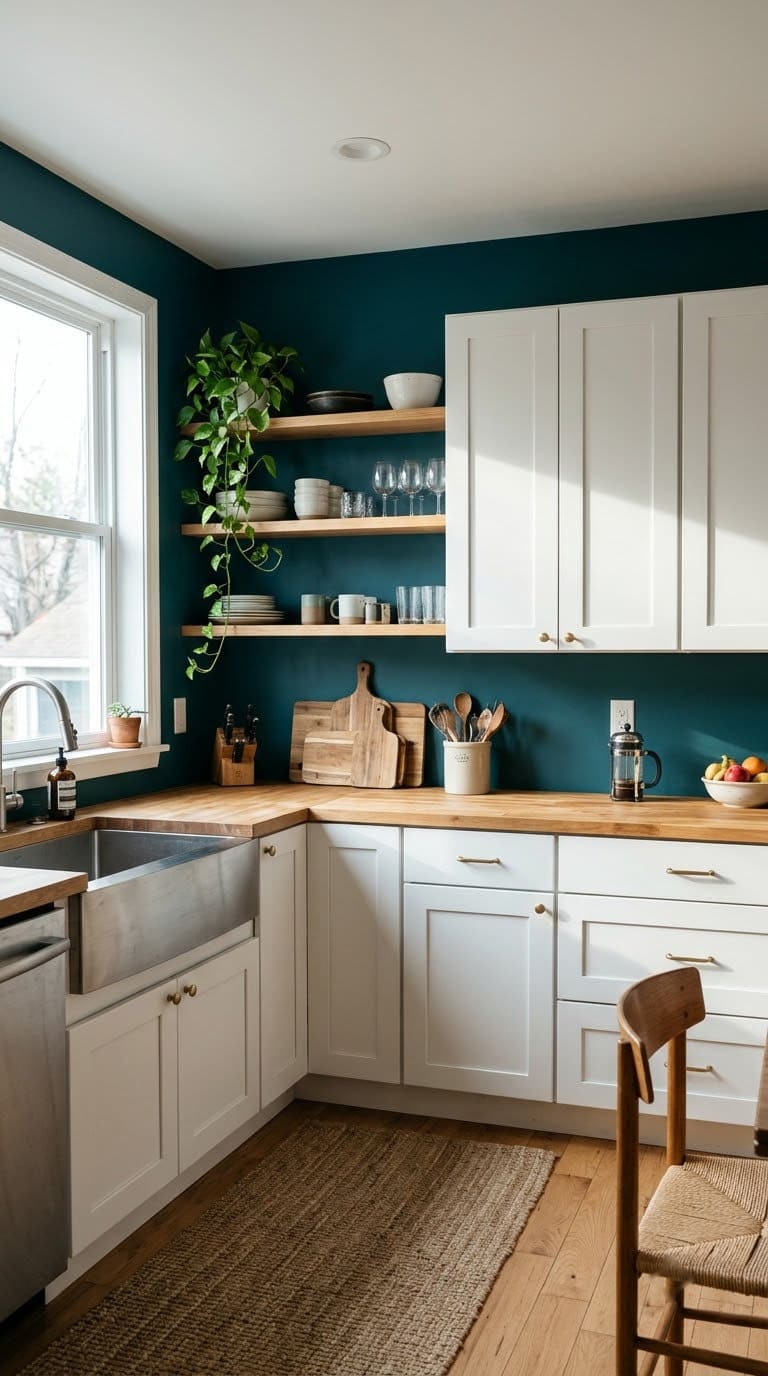
11. A Painted Accent Wall
Paint is the cheapest, fastest accent. This is our own take, since the sources didn’t cover paint sheen. Pick a washable finish, and a color that links to the cabinets.
- Wash the wall, and let it dry.
- Tape the edges and trim.
- Prime if you are changing the color a lot.
- Roll on two coats, and let each dry.
Style tip: pick a deep color on a quiet wall.
Safety: open the windows while you paint, and until the smell is gone. That tip is our own.
Tip: wipe a test patch with a damp cloth before you commit.
Check: stand back and view the wall from the door.
Note: tape a sample to the wall for a day before you buy.
More: see our painted accent wall ideas.
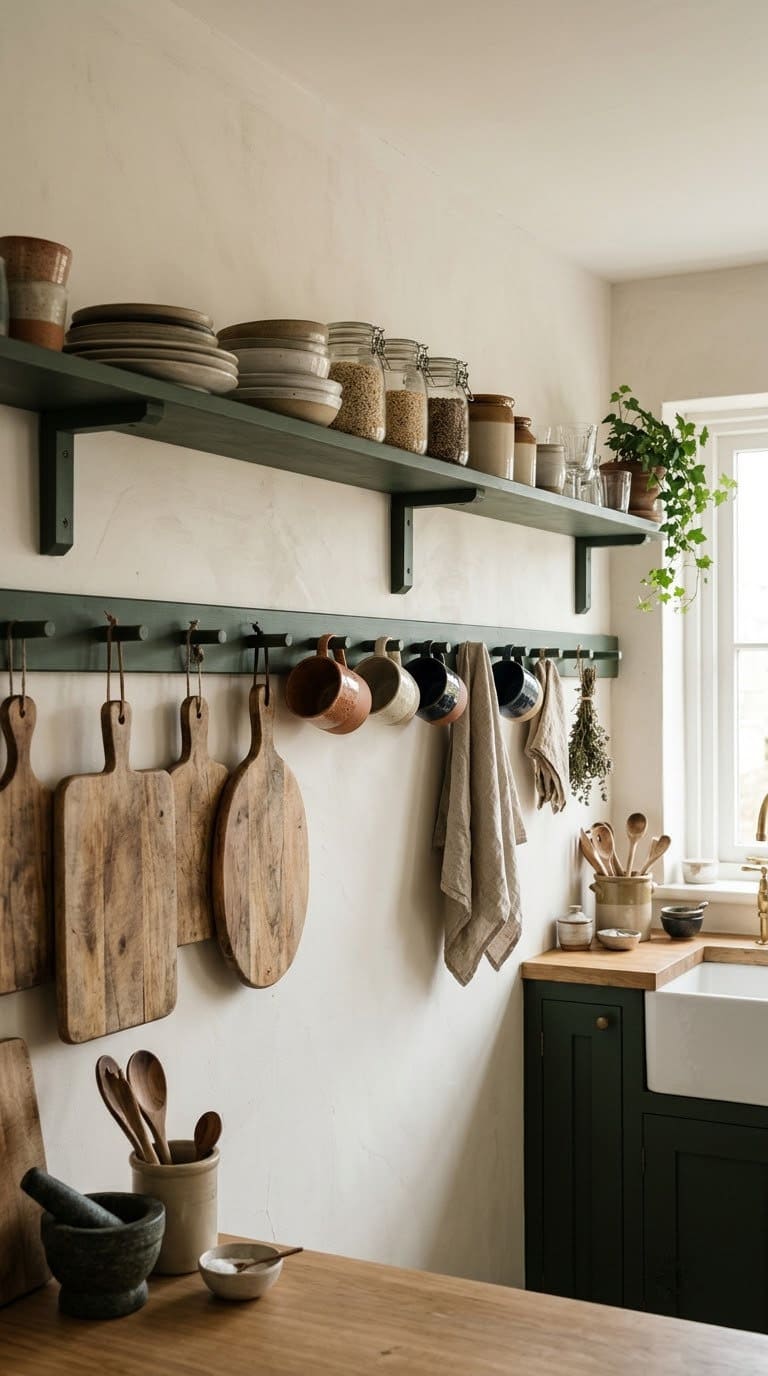
12. A Peg Rail and Open Shelf Wall
A peg rail makes a wall useful. Callery shows a full-wall peg rail in dark green shiplap and a shelf wall with sconce lighting. It stores mugs, boards and towels.
- Mark the studs.
- Mount the rail level, into the studs.
- Add pegs, and hang light items.
- Put a shelf above or beside it.
Style tip: pick a peg rail in the same color as the wall.
Safety: don’t hang anything near the burners.
Tip: wipe a test patch with a damp cloth before you commit.
Check: stand back and view the wall from the door.
Note: tape a sample to the wall for a day before you buy.
More: see our kitchen wall decor ideas.
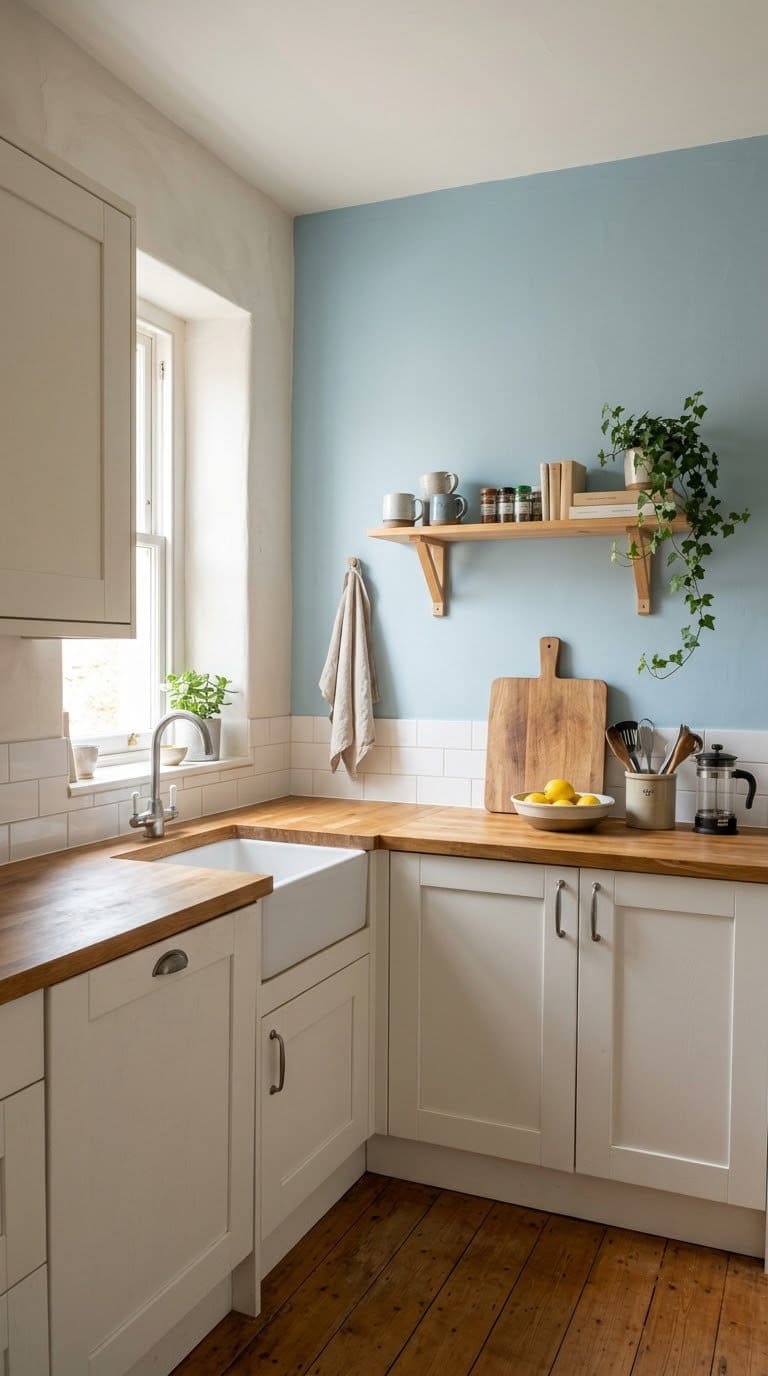
13. A Small Kitchen Accent Wall
A small kitchen needs one calm focal point. This is our own take, based on the old page’s small-kitchen section.
Pick one wall and one material. Keep the rest of the walls plain.
- Pick the wall your eye lands on first.
- Choose a light or mid color.
- Add one material, such as paint, wallpaper or shiplap.
- Add a small shelf and a light.
Style tip: run the boards or the stripes up and down for height.
Safety: keep the wall near the stove clear and easy to wipe.
Tip: wipe a test patch with a damp cloth before you commit.
Check: stand back and view the wall from the door.
Note: tape a sample to the wall for a day before you buy.
What Does a Kitchen Accent Wall Cost?
Costs vary by region and store. The ranges below come from the sources where noted. The rest are our own guess.
| Material | Cost | Source |
|---|---|---|
| DIY shiplap | $6 to $13 per sq ft | Callery, via Family Handyman |
| Brick materials | $5 to $16 per sq ft | Hunker |
| Brick install | $7 to $20 per sq ft | Hunker |
| Ceramic tile | $12 to $32 per sq ft | This Old House |
| Glass tile | $18 to $42 per sq ft | This Old House |
| Beadboard | $18 to $26 per sq ft | This Old House |
| Stainless tile | $25 to $75 per sq ft | This Old House |
| Paint | Low | Our guess |
Common Mistakes to Avoid
- Putting wood or paper next to burners. The code asks for 30 inches above the cooktop.
- Skipping the seal on wood. This Old House says to seal before and after install.
- Using regular wallpaper by the stove. Hunker says it can peel and blister.
- Picking glass tile and hating the spots. This Old House says it shows water spots and fingerprints.
- Choosing real brick without a plan to clean it. Hunker says it is hard to clean.
- Painting a wall you can’t wipe. Choose a washable finish.
Your Weekend Plan
Friday evening: Pick the quiet wall. Measure and check the stove clearances.
Saturday morning: Prep, prime and seal the materials.
Saturday afternoon: Hang the boards, paper or tile.
Sunday: Add shelves, lights and a coat of sealer. Step back, and check the view from the door.
FAQ
What is the best accent wall for a kitchen?
Tile or brick near the stove and sink. Paint, shiplap or vinyl wallpaper on a quiet wall.
Can I put shiplap behind a stove?
With care. Callery says to use moisture-resistant paint. The fuel gas code asks for 30 inches of clearance above a cooktop, so check your manual and local code.
Is wallpaper OK in a kitchen?
Vinyl is. Hunker says regular wallpaper should be kept away from heat and humidity.
How much does a tile accent wall cost?
This Old House says ceramic tile runs about $12 to $32 per square foot including labor.
Is real brick hard to clean in a kitchen?
Yes. Hunker says real brick is porous and rough, and painted brick is much easier to clean.
Related Posts
- Kitchen Backsplash Ideas for White Cabinets
- Farmhouse Kitchen Backsplash Ideas
- Kitchen Floor Tile Ideas
Never miss an update — choose FarmFoodFamily as your preferred source on Google.
How it works: Tap the button below to open Google's settings page, then check the box next to FarmFoodFamily.
Tap the checkbox to turn it blue — that's how you know it's set.