12 Ingenious Wine Bottle Bird Feeder Ideas for Seed and Nectar
A wine bottle can feed birds all season, as long as you keep it clean, hang it away from windows, and never use honey or red dye in the nectar.

Never miss an update — choose FarmFoodFamily as your preferred source on Google.
How it works: Tap the button below to open Google's settings page, then check the box next to FarmFoodFamily.
Tap the checkbox to turn it blue — that's how you know it's set.
A wine bottle can feed birds all season, as long as you keep it clean, hang it away from windows, and never use honey or red dye in the nectar.
Products We Recommend
This post contains affiliate links. We may earn a commission on qualifying purchases at no extra cost to you.

DECOHS 9 Pcs Hummingbird Feeder Tubes with Red Floral Tip, with 3 Brushes
Feeding tubes and stoppers for DIY nectar bottles
Shop Now
Double Shepherd's Hook Bird Feeder Pole, 108 Inch
Tall pole with 5-prong base for hanging feeders
Shop Now
38 Pcs Hummingbird Feeder Cleaning Brush Kit, 3 Size
Brushes for feeder ports, tubes, and bottles
Shop NowA used wine bottle holds a lot of seed. Turn it upside down over a small tray and the feeder refills itself as birds eat.
But a bottle feeder also brings problems. Seed can spill, nectar can spoil, and a dirty feeder can spread disease.
This guide gives you 12 wine bottle bird feeder ideas, split into seed feeders and hummingbird feeders. You’ll get sizes, safe recipes, and the cleaning schedules that keep birds healthy.
Answer 4 quick questions and get matched to the exact fix for your yard — drainage, budget, layout, or something else entirely.
Take the Free QuizQuick Answer
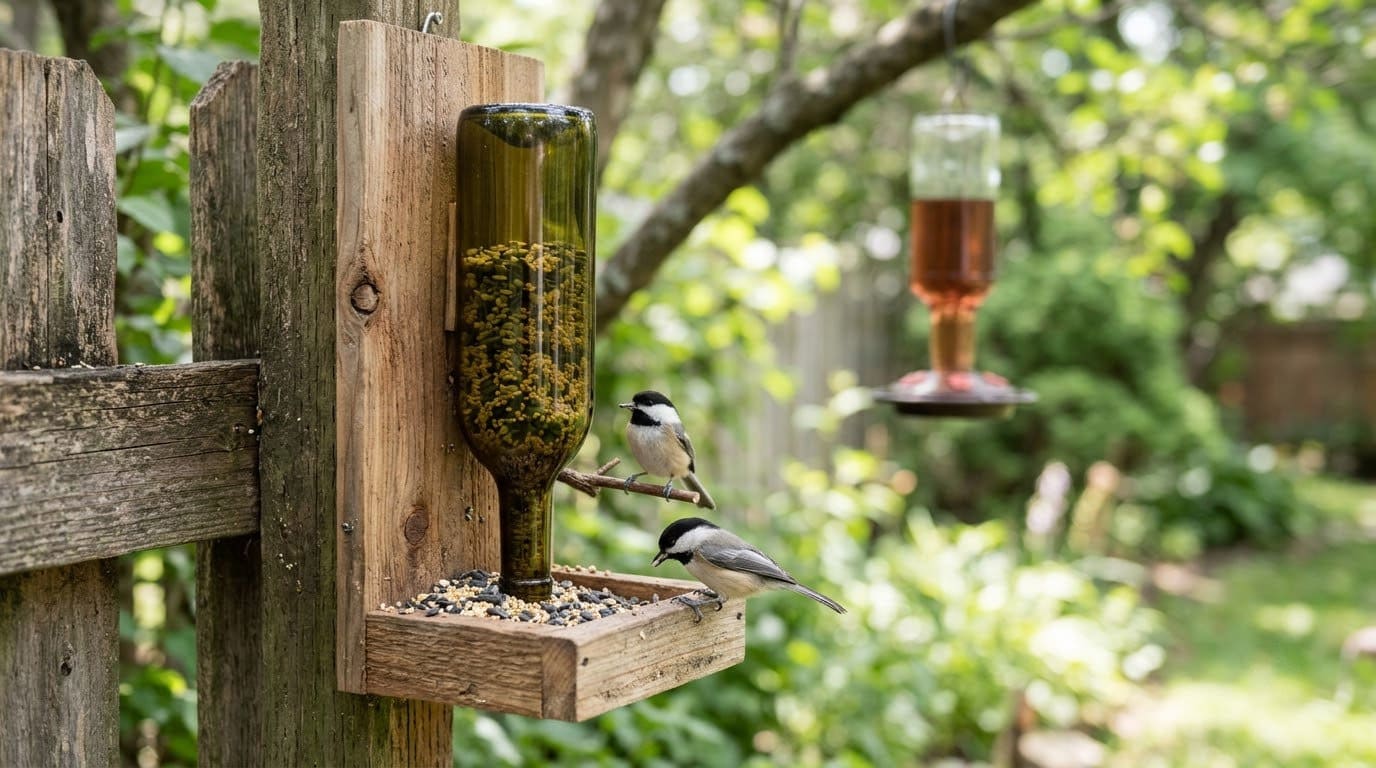
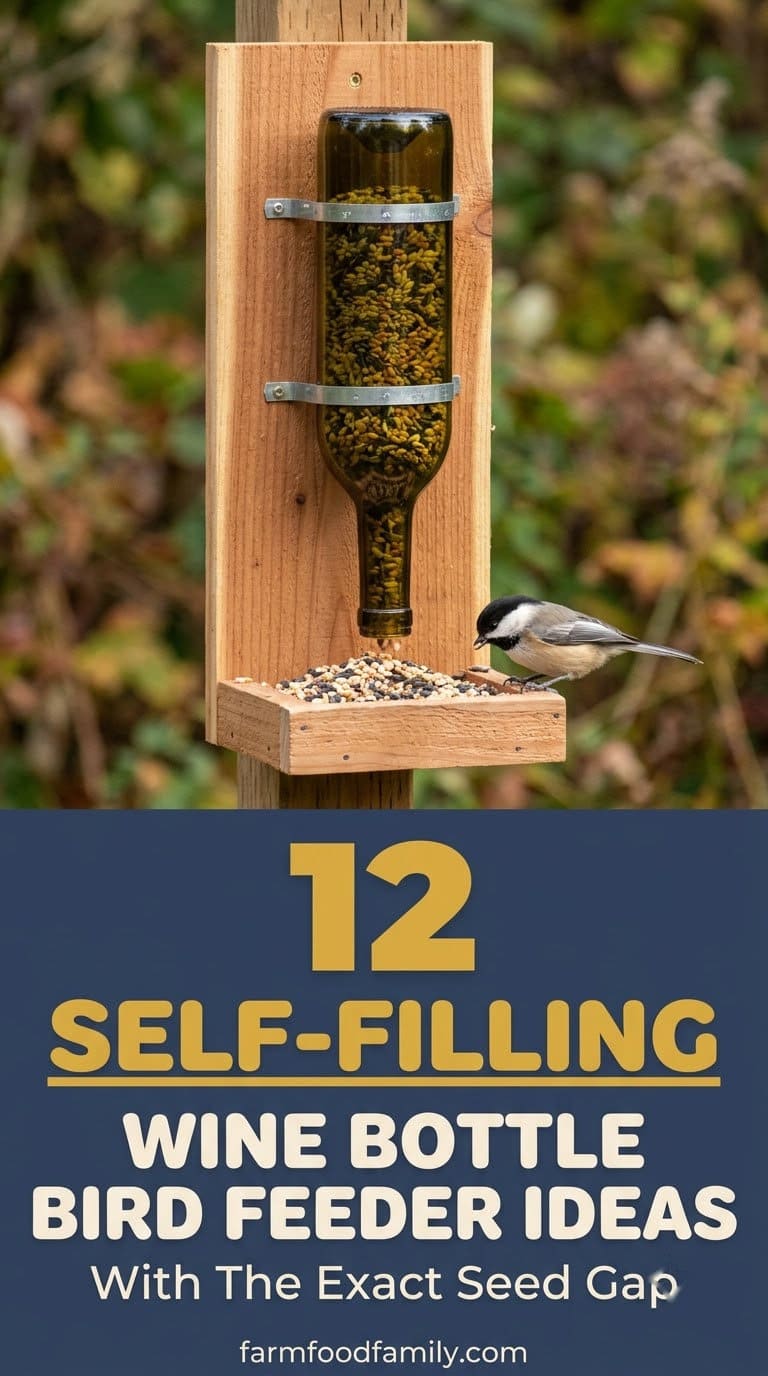
For seed, mount an upside-down bottle over a tray so the neck sits about 3/4 inch above the tray floor. Hunker writer Erika Dale shares a cedar design with three screws holding the bottle in place.
For hummingbirds, mix 1 part white sugar to 4 parts water. The Smithsonian’s National Zoo says never to use honey or red dye, and to change nectar every other day.
Clean seed feeders at least every two weeks, per Clemson Extension. Place feeders well away from windows, or treat the glass so birds can see it clearly. Keep the seed dry, wash hands after you handle feeders, and check the feeder every day or two.
Don’t drill or cut the bottle. Use clips and screws instead, so the glass stays whole and safe for birds and for you.


Which Wine Bottle Feeder Should You Build?
This table is our planning guide. The seed feeder, nectar, and cleaning notes come from the sources linked in this article. The skill and cost columns are our own estimates.
Most yard problems trace back to one specific, fixable cause. Find yours in 4 quick questions.
Take the Free Quiz| Type | Feeds | Clean how often | Skill level | Cost tier |
|---|---|---|---|---|
| Seed feeder with tray | Chickadees, finches, cardinals | At least every 2 weeks | Intermediate | Low |
| Hanging cradle feeder | Seed | At least every 2 weeks | Beginner | Low |
| Hummingbird nectar feeder | Hummingbirds | Every other day, or twice a week in heat | Beginner | Low |
| Decorative painted bottle | Either | As above | Beginner | Low |
What Should You Know Before You Start?
Pick the bottle. Choose a clean, intact bottle with a round shoulder.
Hunker’s design uses a bottle roughly 3 to 3-1/2 inches across. Remove labels and wash it well.
Pick the wood. Erika Dale says to use untreated, rot-resistant lumber like cedar, redwood, or cypress. She says to avoid pressure-treated lumber, and to keep paint off the interior, because finishes could harm birds.
Don’t drill or cut glass. A cut edge or a cracked bottle can hurt birds and people. Hold the bottle with screws and clips instead of holes.
Wear gloves when you wash bottles. Check each bottle for chips before you hang it.
Where Should You Hang a Bird Feeder?
Keep feeders away from windows or very close to them. A common rule is to place feeders either less than 3 feet or more than 30 feet from glass. That rule came from search summaries of Audubon and wildlife agency reports.
Feeding tubes and stoppers for DIY nectar bottles
Shop NowThis post contains affiliate links. We may earn a commission on qualifying purchases at no extra cost to you.
If you can’t move the feeder, treat the window. The American Bird Conservancy says to apply markings on the outside of the glass, with gaps of 2 inches or less.
Hang it where you can see it, but with shrubs nearby for cover. Keep it away from places where cats can ambush birds.
The average homeowner spends $616/year on yard fixes that don't address the real problem. Find out what yours actually is — before you spend another dollar.
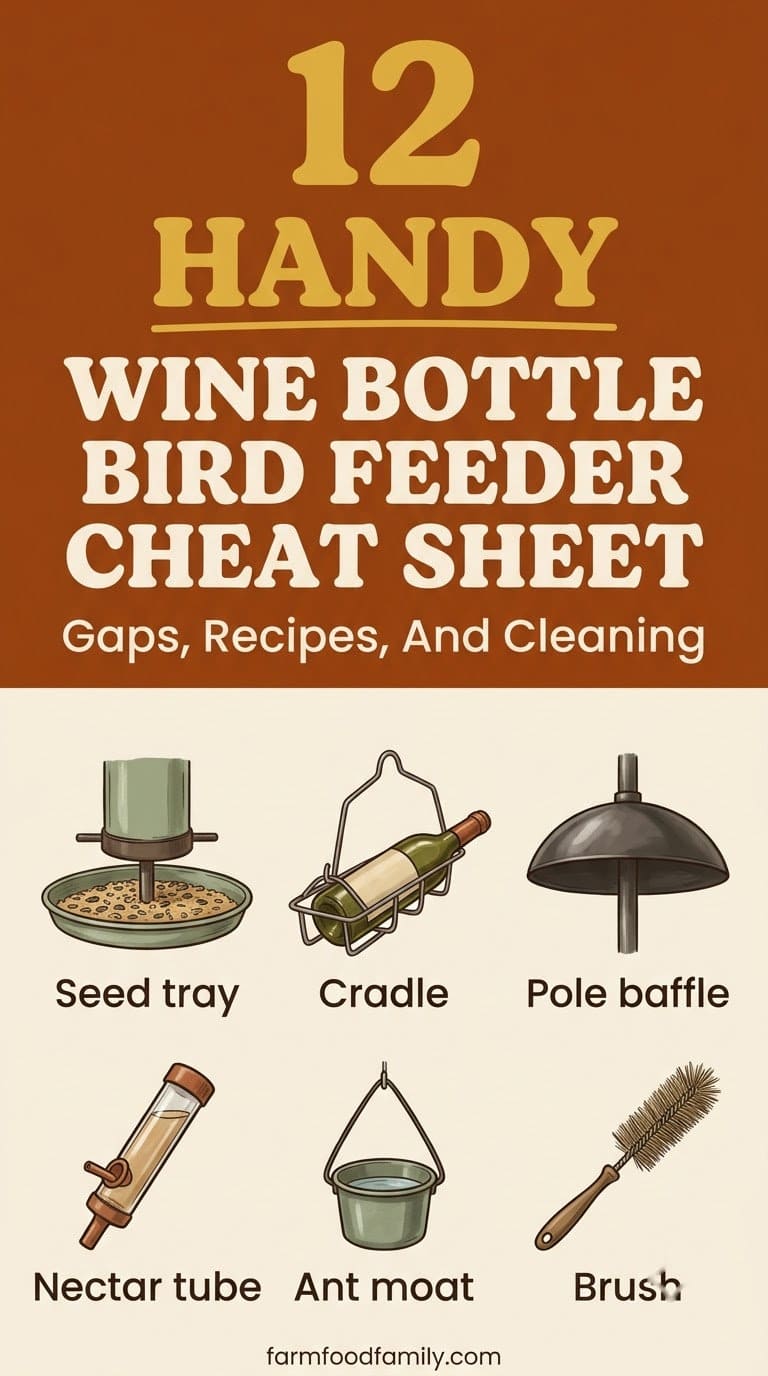
Take the Free QuizFor squirrels, use a pole with a baffle. Retailers suggest a pole at least 7 feet from a fence or tree, but we found no university source on baffle height.
12 Ingenious Wine Bottle Bird Feeder Ideas
1. Cedar Backboard Seed Feeder
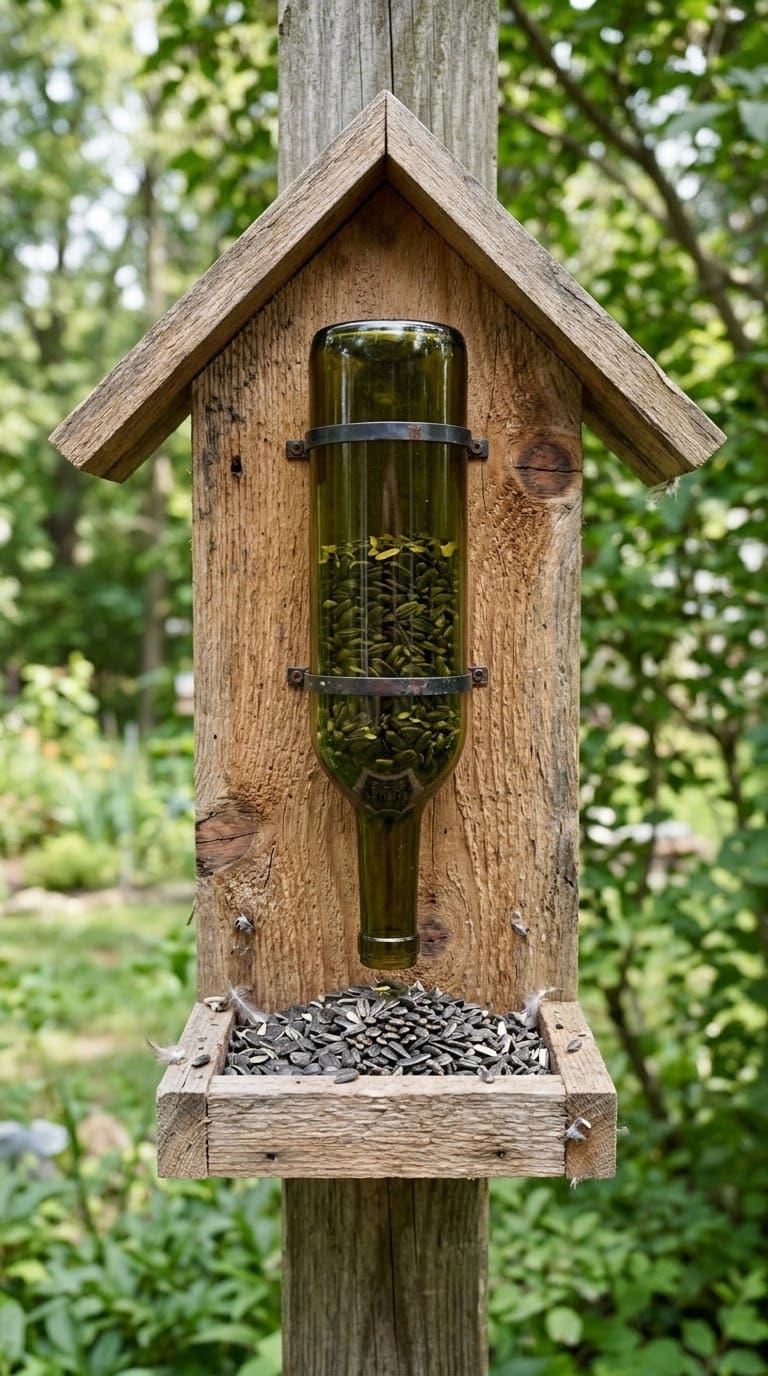
This is the cleanest build. Cut a house-shaped backboard from a 1-by-6 board.
Mark 45-degree angles with a speed square. The roof line sits about 1-1/2 inches below the bottle’s open end.
Make a base about 4 inches deep, and trim it with 1-by-2 pieces. Glue and nail the parts, and add L brackets where the base meets the backboard.
The bottle pops out from the front for refilling. Hang it from a hook at the top. Hunker credits the design to HowToLou.
Cost tier: low. Pairs with idea 3.


2. Three-Screw Bottle Cradle
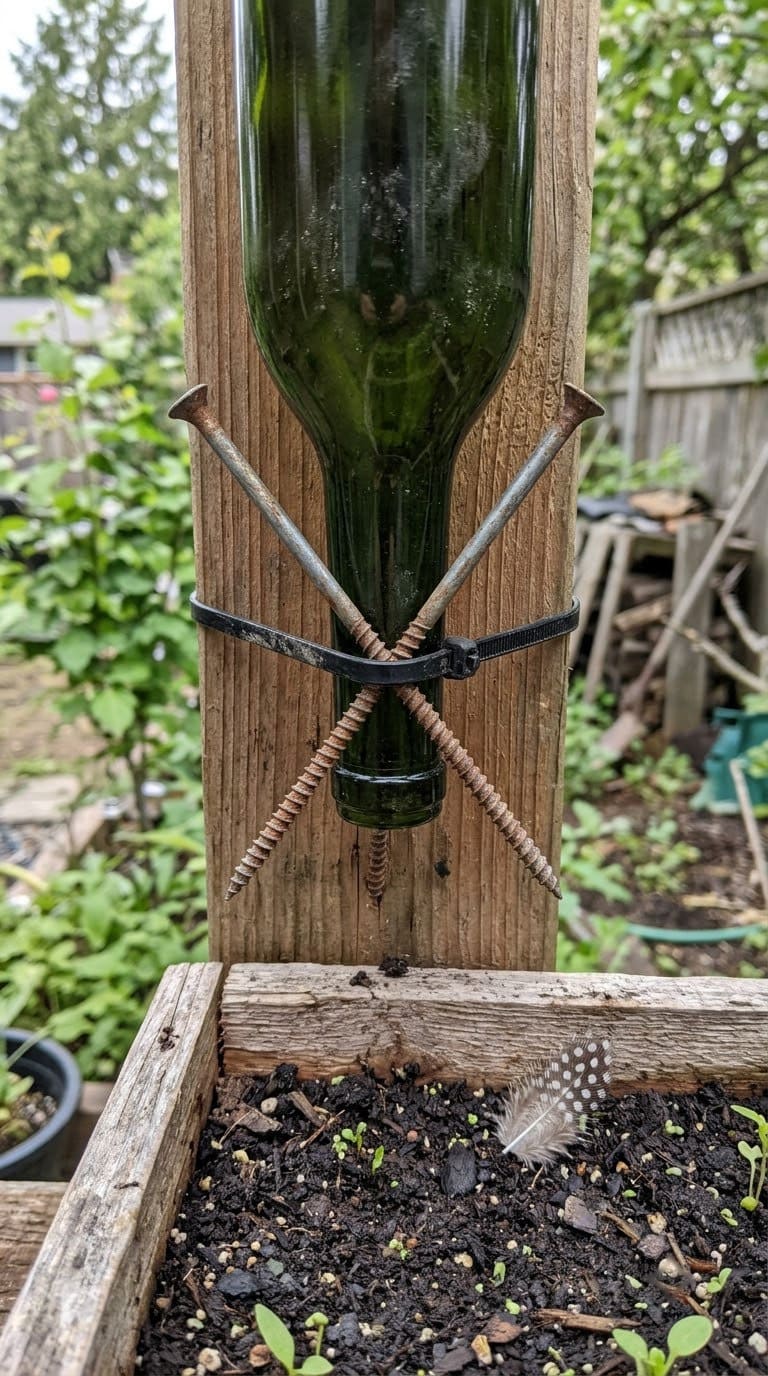
This is the key trick. Erika Dale sets a middle screw about 3/4 inch above the tray base. Two taller outer screws sit about 1 inch high.
Zip-tie the three screws together to make the cradle. Rest the bottle’s edge on the middle screw so it floats about 3/4 inch above the tray.
As birds eat, seed refills the tray up to the bottle’s mouth. Adjust the gap if seed flows too fast.
Cost tier: low. Use exterior screws.
3. Wall or Fence Mount Version
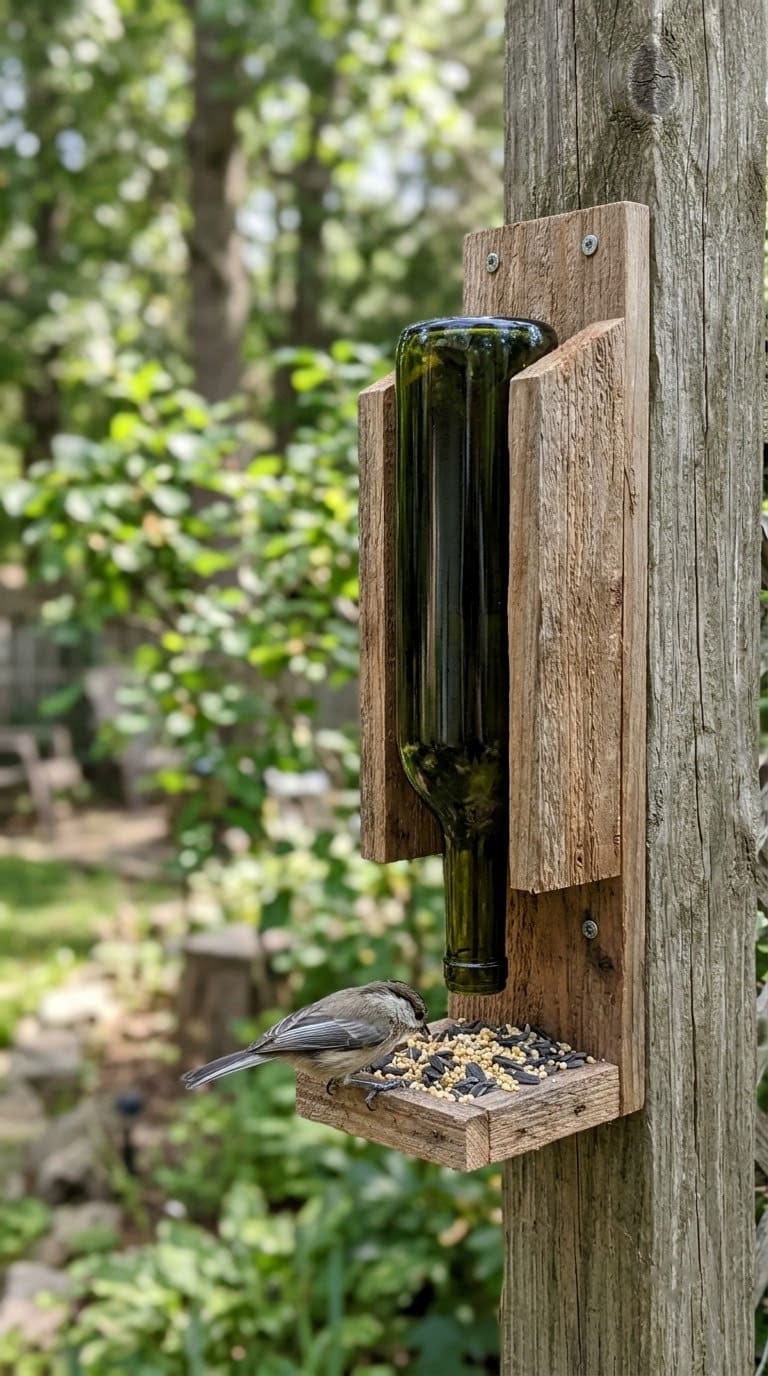
Instead of a hook, drive screws through the backboard to mount the feeder on a wall or fence. Pick a post you can reach easily.
Put it where you can see it from a window, but watch the distance from glass. Seed that spills will land under the feeder, so choose a spot over a path or a mulch bed.
Sweep spilled seed about once a month, per Clemson. Our bird feeding basics guide covers seed types.
Cost tier: low.
4. Paracord Hanging Feeder
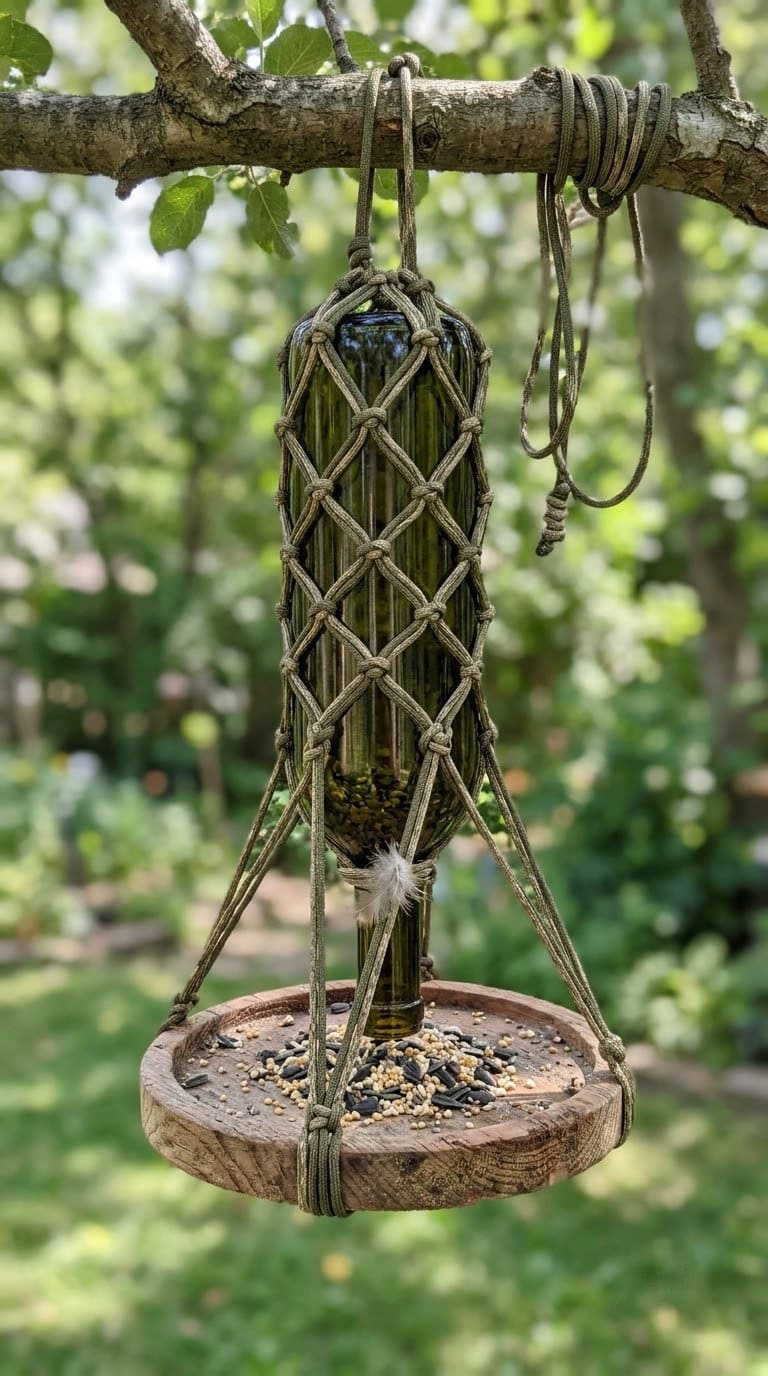
Wrap the bottle with paracord and tie a loop to hang it. Hang a small dish or tray below the neck.
Check knots each month. Paracord stretches, and a loose cord can drop the bottle.
Use a strong, high branch. Keep the feeder out of reach of kids and pets. This design came from a search result we could not open.
Cost tier: low.
5. Pole-Mounted Feeder With Baffle
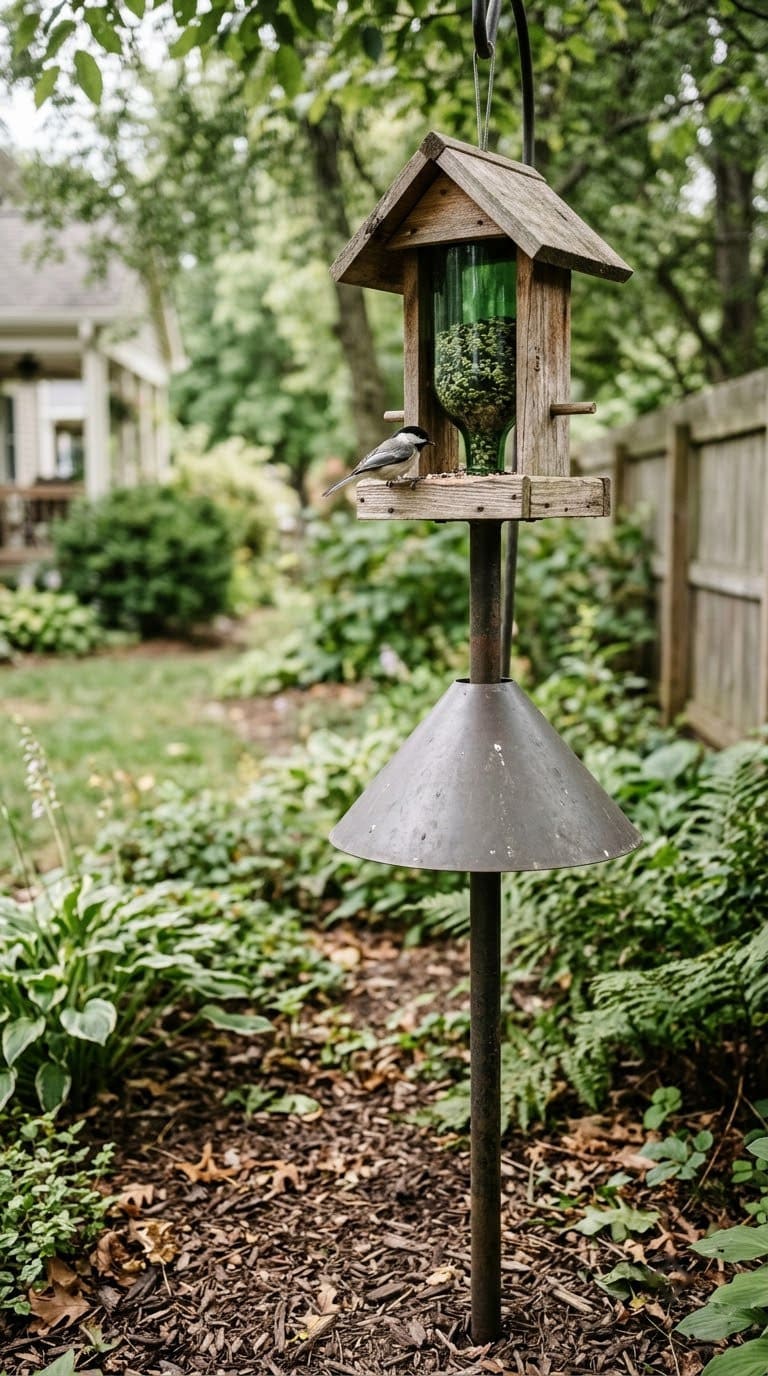
A pole keeps squirrels and cats farther away. Mount the backboard feeder to a 4-by-4 or a metal pole.
Add a metal baffle below it. Retailers suggest a baffle at least 4-1/2 feet up the pole, with 5 feet better.
Place the pole well away from fences and trees. Squirrels can leap several feet, so give them nothing to jump from. See our squirrel feeder plans for a decoy.
Cost tier: medium.
6. Window-Safe Placement Kit
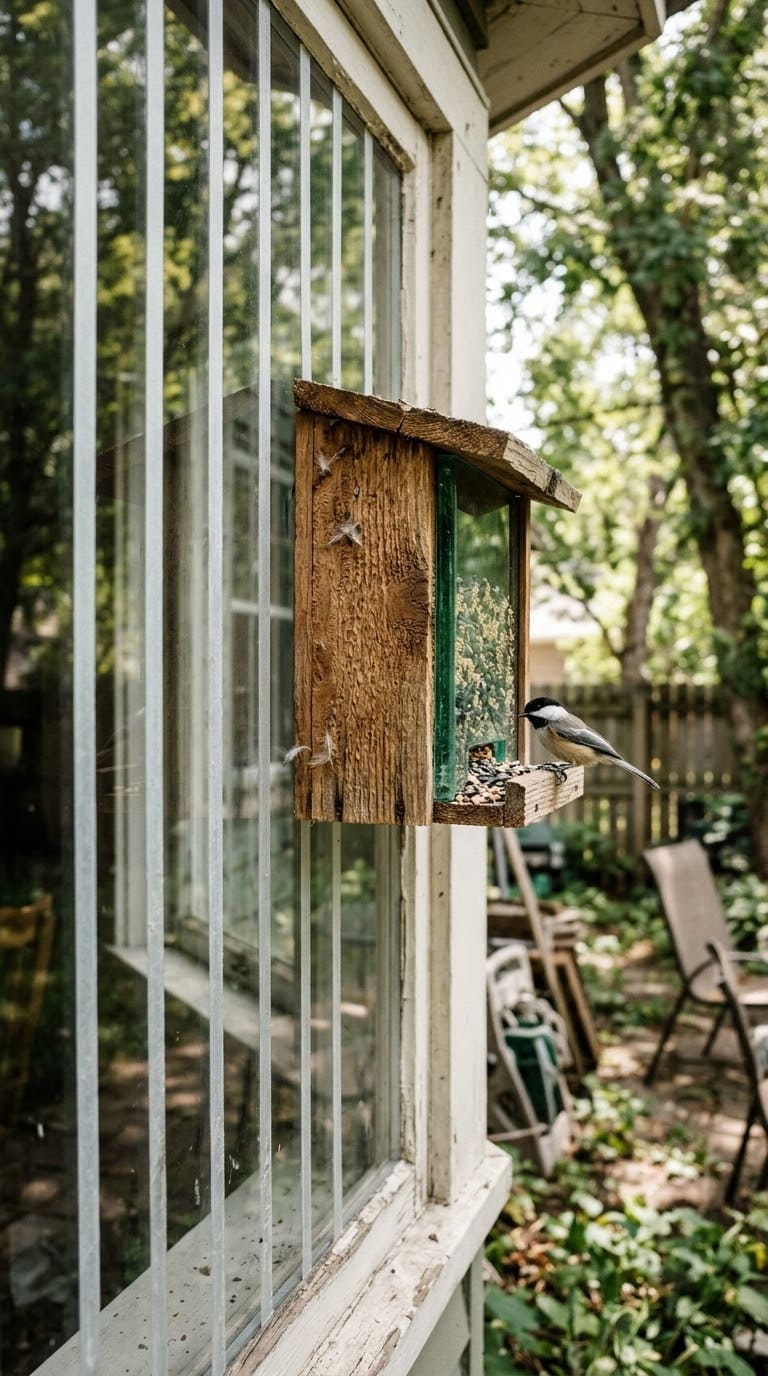
Feeders near glass are risky. The American Bird Conservancy says to apply treatments on the outside of the glass and keep gaps to 2 inches or less.
Stripes should be at least 1/8 inch wide. Dots should be at least 1/4 inch across.
Either place the feeder within about 3 feet of the glass or more than 30 feet away. Our birds hitting window post covers more.
Cost tier: low.
7. Wine Bottle Hummingbird Feeder
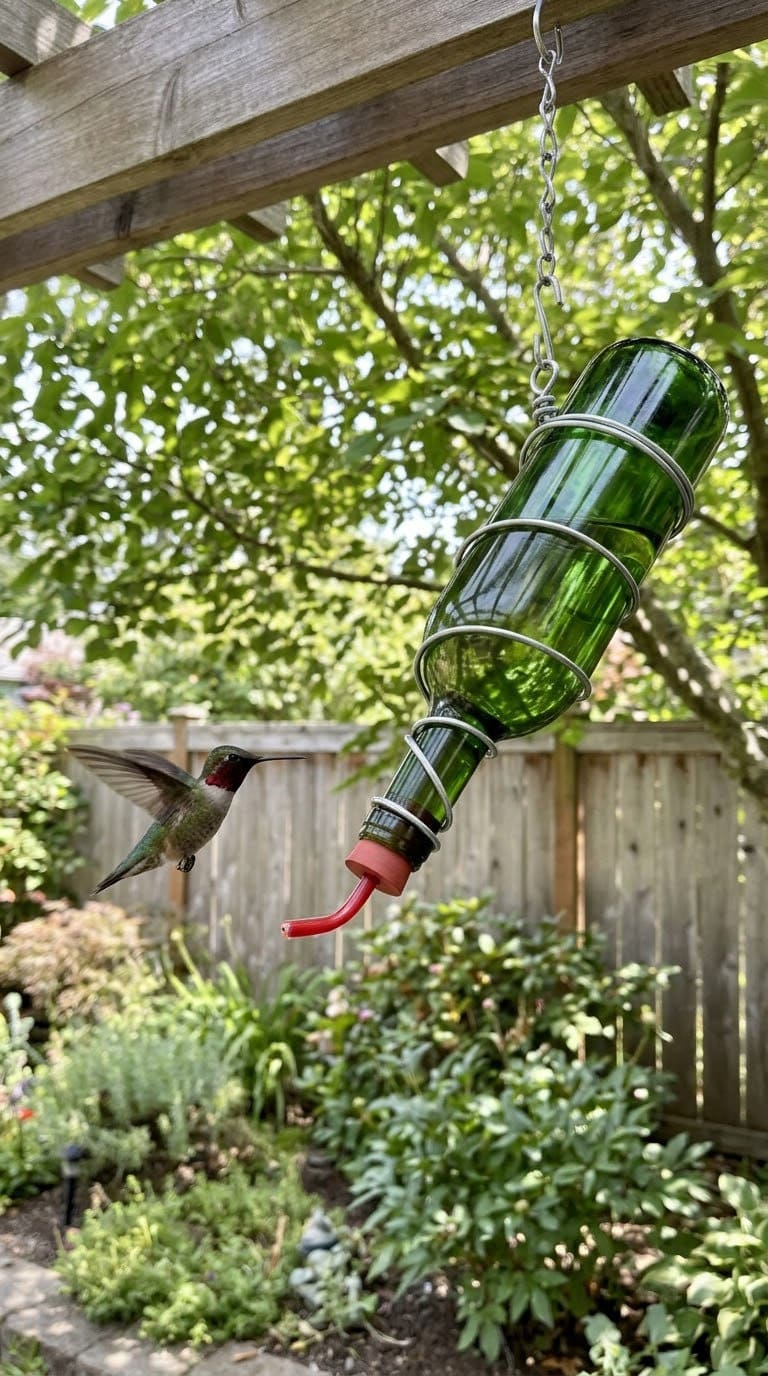
Use a hummingbird feeder stopper or tube that fits a wine bottle neck. These are sold as feeder kits. They make a seal, so nectar doesn’t leak.
Fill it with 1 part white sugar to 4 parts water. The Smithsonian’s National Zoo says to use refined white table sugar and stir until it dissolves. Boiling isn’t necessary.
Hang it in light shade near red or orange flowers. Our flowers that attract hummingbirds guide has plant picks.
Cost tier: low to medium.
8. Wire Cradle Hummingbird Hanger
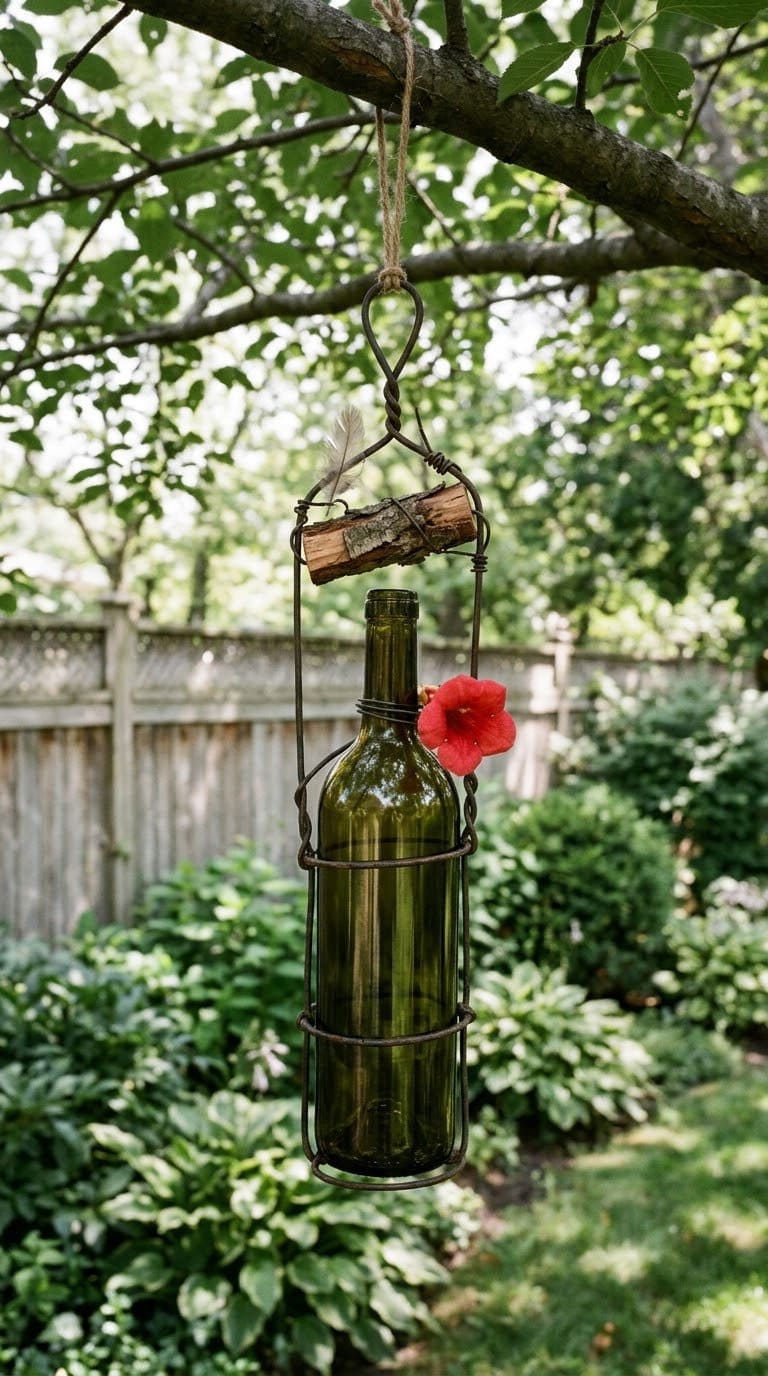
A wire cradle holds a bottle without any drilling. Wrap strong wire around the neck and shoulder, twist the ends, and add a hanging loop.
Check the twist often. Wire can slip or rust. Use coated wire and test the hold before you fill the bottle.
Add a red flower or ribbon near the port. Penn State says hummingbirds are drawn to red feeder parts, and red dye in the nectar is unnecessary.
Cost tier: low.
9. Ant Moat Add-On
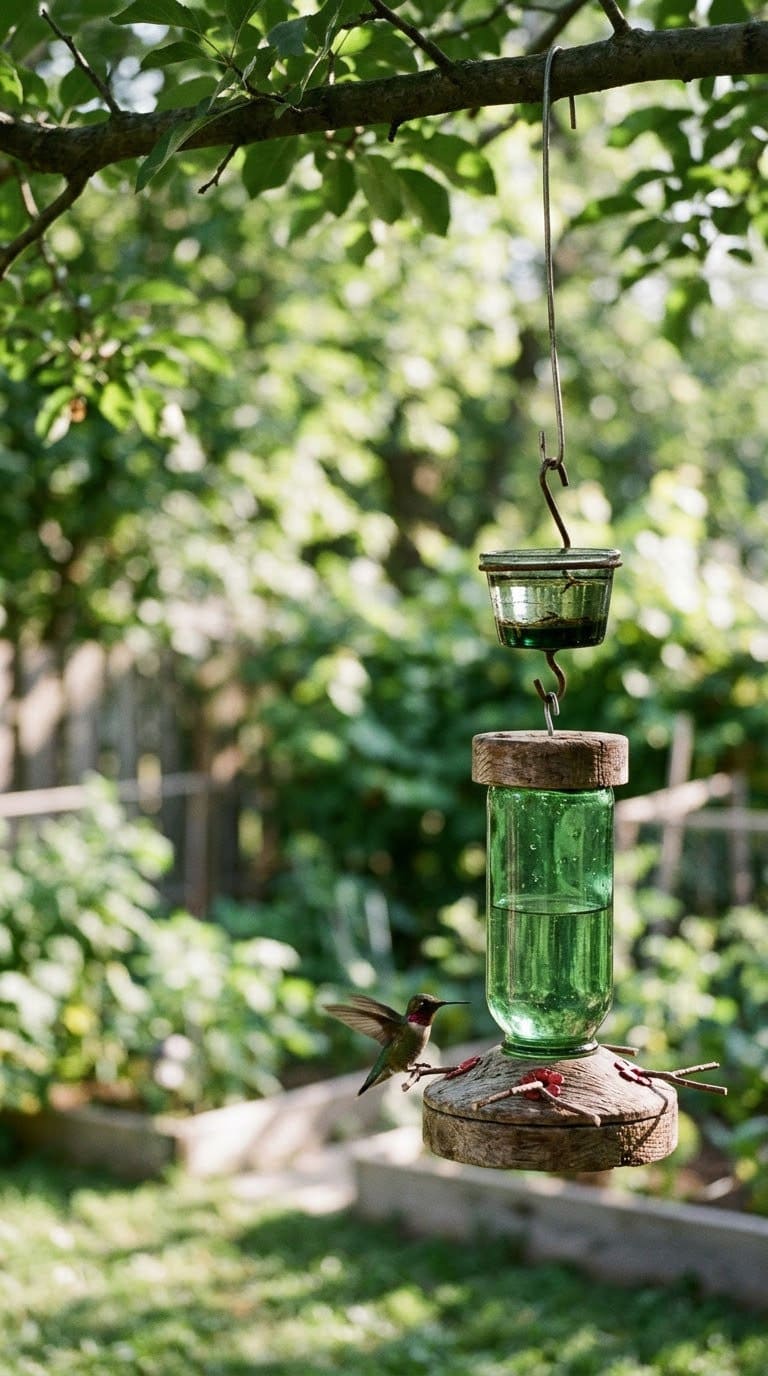
Ants love sugar water. Hang a small water cup above the feeder to make a moat.
Ants can’t cross the water. Refill the cup in hot weather. This is general practice, not a sourced rule.
Keep the cup from touching the nectar. Clean it each time you clean the feeder.
Cost tier: low.
10. Decorative Painted Bottle
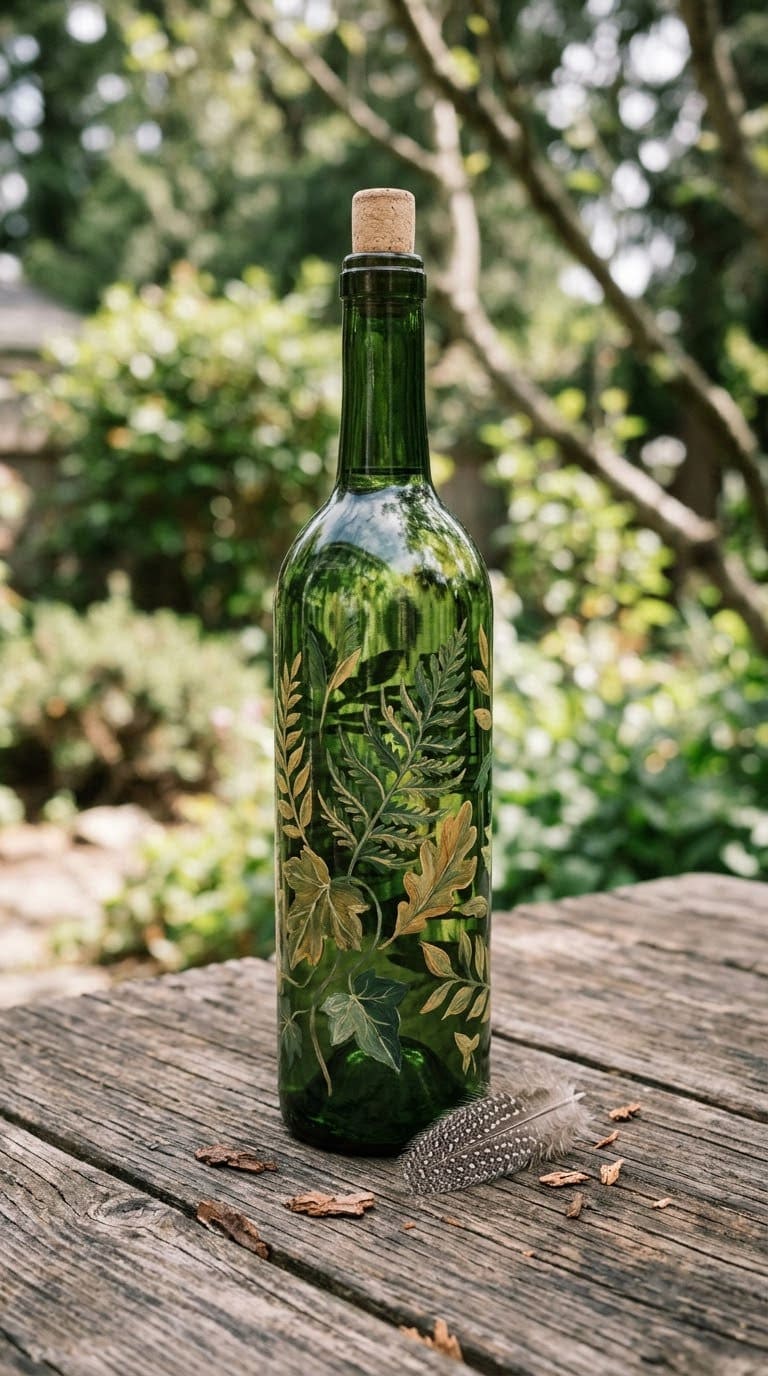
Paint the outside for a custom look. Erika Dale says decorative paint goes on the outside of the frame only, and to keep finishes off the interior.
Leave the area where birds feed unpainted. Use exterior paint on wood, and let it cure fully before use.
Skip glitter and glue near ports. Birds can ingest small bits.
Cost tier: low.
11. Feeding Station With Bath
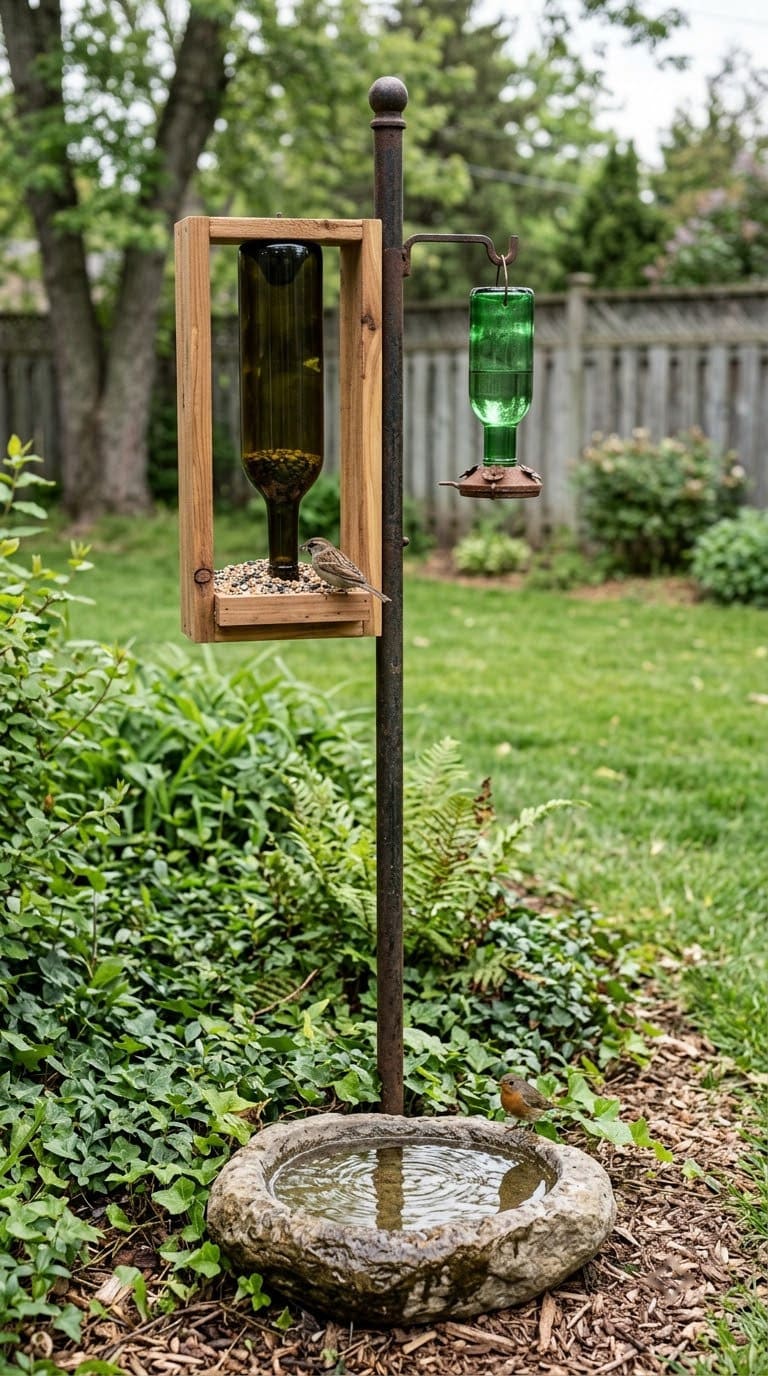
Group a seed feeder, a nectar bottle, and a bath on one pole. Birds love water as much as food.
Keep the bath clean and shallow. Our DIY bird bath ideas show simple builds.
Place the pole in a spot with cover but no cat hiding spots. Space the pieces so the water doesn’t foul the seed.
Cost tier: medium.
12. Winter Feeding Setup
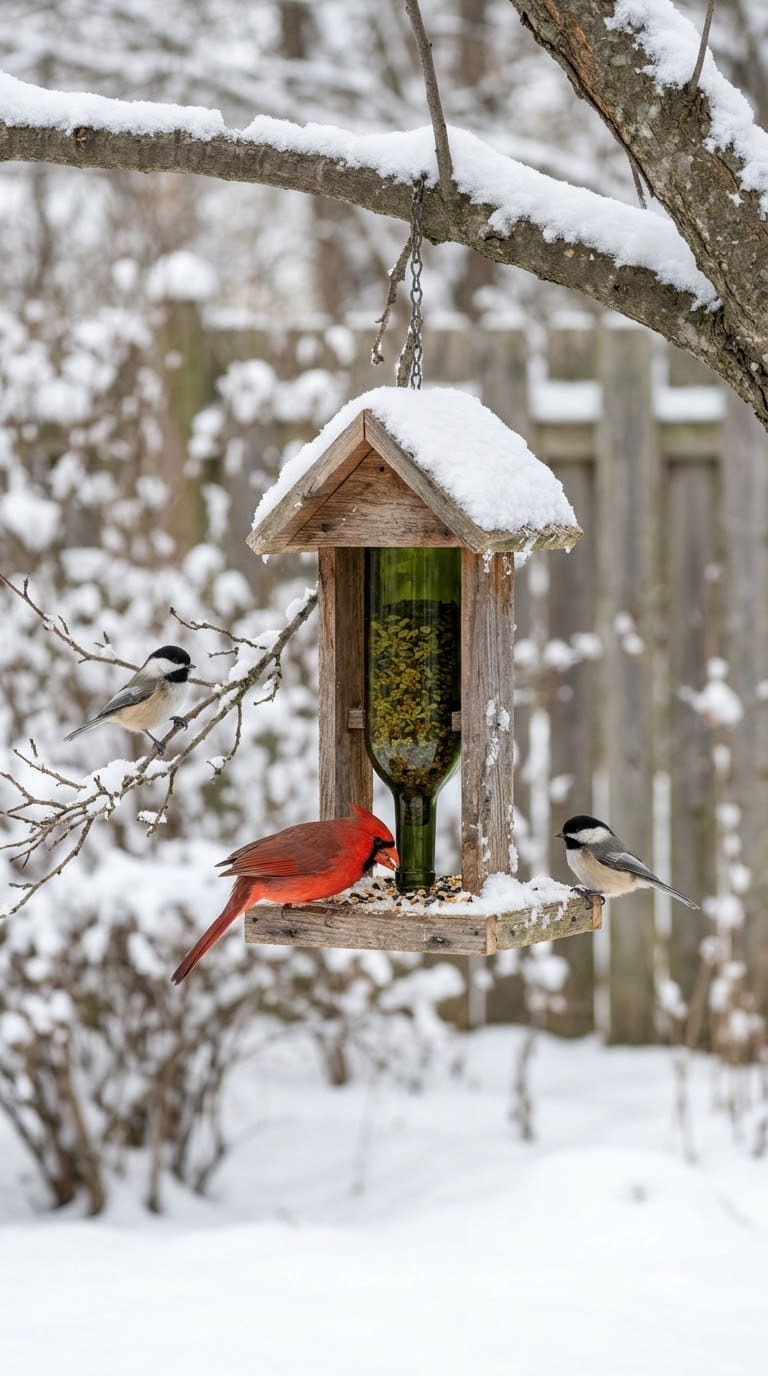
Winter birds need steady food. Keep the bottle full of seed and brush off snow.
Clean seed feeders at least every two weeks, per Clemson Extension, and more often in wet weather. Scrub, soak for 10 minutes in 1 part bleach to 9 parts water, rinse, and dry completely.
Sweep spilled seed and hulls about once a month. Take down nectar feeders before hard freezes.
Cost tier: low.
What Seed Should You Put in a Bottle Feeder?
Use clean, dry seed that flows. Black oil sunflower is a popular choice, and retailers say it draws cardinals, chickadees, titmice, and nuthatches. That claim comes from a seller, so treat it as a guide.
Avoid large, sticky mixes. Wet or clumped seed can clog the neck and stop the flow. If the seed won’t drop, tap the bottle or widen the gap slightly.
Keep seed dry. Rain can turn a full tray into moldy mush. Clemson says moldy seed and droppings can spread disease, so toss any seed that smells or clumps.
Fill only what birds will eat in a week or two. A full bottle in damp weather is a bad idea. Small batches stay fresh.
What Does a Weekend Feeder Project Look Like?
On Friday, collect bottles and wood. Wash the bottles and remove labels. Check each one for chips and cracks.
On Saturday morning, cut and assemble the wood. Cut the backboard, nail the base, and add brackets. Let any exterior paint dry before you add the bottle.
On Saturday afternoon, build the cradle. Set the middle screw about 3/4 inch above the tray. Zip-tie the three screws together, then test the bottle with water first.
On Sunday, hang it and fill it. Pick a spot away from windows, add seed, and watch from a distance. Move it if no birds come after a week or two.
How Much Does a Wine Bottle Feeder Cost?
Very little. Wine bottles are free, and a 1-by-6 board of cedar is cheap. Screws, zip ties, and brackets are the other costs.
Hummingbird feeders cost even less. Sugar, water, and a stopper or feeder tube are the main parts. Nectar costs a few cents per refill.
Compare with store feeders. A bought feeder saves time, but a bottle feeder suits custom looks. Many people make one for fun and buy one for easy cleaning.
Spend extra on a good pole and baffle if squirrels are a problem. That is where a small budget pays off, because it protects your seed and saves you from refilling the feeder twice a day.
How Do You Keep Kids Safe Around Glass Feeders?
Handle glass with care. Adults should wash bottles, check for chips, and set up screws. Kids can paint wood, pick a hanging spot, and help fill the tray.
Hang feeders out of reach of small children. A fallen bottle can break. Use strong hooks and check them each month.
Sweep up spilled seed and broken glass right away. Wear gloves for cleanup, and keep pets away.
Teach kids to watch quietly. A feeder is a great way to learn bird names and habits, and a notebook turns it into a simple science project they can keep all year.
How Do You Keep Wine Bottle Feeders Clean?
Wash every feeder on a schedule. Clemson Extension says to clean seed feeders at least every two weeks, and more often if there are many visitors, rain, or dead birds nearby.
Scrub each part first. Then soak for 10 minutes in a 10 percent bleach solution, which is 1 part bleach to 9 parts water. Rinse and let it dry before refilling.
For hummingbird feeders, Clemson says to refill twice a week and wash weekly with 4 parts vinegar to 1 part water. The Smithsonian’s National Zoo says to change nectar every other day, and at least twice a week in hot weather.
If the nectar looks cloudy or moldy, wash the bottle right away. Moldy seed and droppings can spread disease.
Common Mistakes to Avoid
Using honey in nectar is the first one. Penn State says fermented honey can cause a fatal fungal disease in hummingbirds.
Adding red dye is the second. The Smithsonian’s National Zoo says not to add red dye.
Drilling glass is the third. Use a cradle or screws instead.
Skipping cleaning is the fourth. Clemson says moldy seed and droppings can grow mold, harbor bacteria, and spread disease.
FAQ
How do I make a wine bottle bird feeder?
Hunker’s design holds an upside-down bottle over a tray with three screws, so the neck floats about 3/4 inch above the tray. As birds eat, seed refills the tray.
What is the right nectar recipe?
Use 1 part white table sugar to 4 parts water, per the Smithsonian’s National Zoo and Penn State Extension. Never use honey, and don’t add red dye.
How often should I change hummingbird nectar?
The Smithsonian’s National Zoo says every other day, and at least twice a week in hot weather.
How often do I clean a seed feeder?
At least every two weeks, per Clemson Extension, and more often in rain or heavy use.
Where should I hang a feeder?
Hang it away from windows, or treat the glass on the outside with markings 2 inches apart or less, per the American Bird Conservancy.
Never miss an update — choose FarmFoodFamily as your preferred source on Google.
How it works: Tap the button below to open Google's settings page, then check the box next to FarmFoodFamily.
Tap the checkbox to turn it blue — that's how you know it's set.