15 Breezy Outdoor Curtain Ideas for Patios and Pergolas
Outdoor curtains add shade, privacy, and soft style to a patio or pergola, as long as you choose the right fabric and hardware and keep them away from flame.

Never miss an update — choose FarmFoodFamily as your preferred source on Google.
How it works: Tap the button below to open Google's settings page, then check the box next to FarmFoodFamily.
Tap the checkbox to turn it blue — that's how you know it's set.
Outdoor curtains add shade, privacy, and soft style to a patio or pergola, as long as you choose the right fabric and hardware and keep them away from flame.
Products We Recommend
This post contains affiliate links. We may earn a commission on qualifying purchases at no extra cost to you.


General Tools 1/2" Grommet Tool Kit, 12 Brass Grommets
Brass grommets and tool for hanging panels
Shop Now
Outdoor curtains turn a bare patio into a room. They block sun, hide a view, and make the space feel finished.
But they also face weather that indoor drapes never see. Wind whips them, sun fades them, and damp air grows mildew.
This guide gives you 15 outdoor curtain ideas with the fabric, the hardware, and the safety notes for each. Where we couldn’t find a source, we say so.
Answer 4 quick questions and get matched to the exact fix for your yard — drainage, budget, layout, or something else entirely.
Take the Free QuizQuick Answer
Pick the fabric for your weather, then pick hardware that won’t rust, and plan for wind and fire before you hang anything. Table and Hearth chose rope instead of metal rods because salty air rusts metal quickly.
For a cheap start, use canvas drop cloths, which come in big sizes and need little sewing. Emily McCauley used four 6 by 9 foot cloths, painted a 3-inch edge, and treated each side with fabric waterproofer.
Weight the hems and add tiebacks so wind can’t whip the panels. Take them down in storms, and let them dry fully before you store them so they don’t grow mildew.
Keep fabric away from flame, because fire is the one risk that can’t be fixed after the fact. The Infrared Heater Safety Council lists fabric as a combustible, so follow every heater’s clearance rules.

Which Outdoor Curtain Type Fits Your Space?
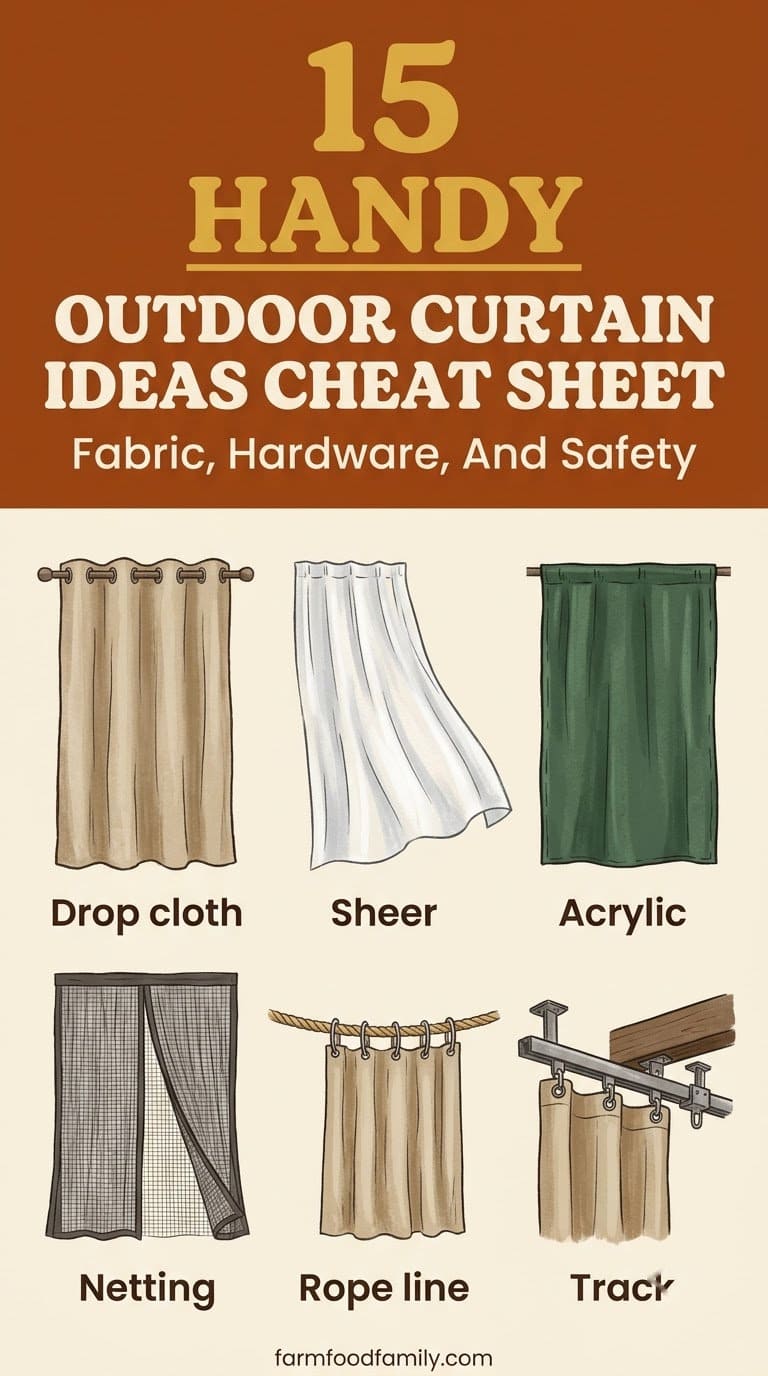
This table is our planning guide. The drop cloth and netting notes come from the sources linked in this article. The rest is our own judgment.
Most yard problems trace back to one specific, fixable cause. Find yours in 4 quick questions.
Take the Free Quiz| Type | Sun | Rain | Wind | Cost tier |
|---|---|---|---|---|
| Canvas drop cloth, treated | Good | Fair, dries fast | Needs weights | Low |
| Sheer polyester | Fair | Fair | Poor | Low to medium |
| Solution-dyed acrylic | Very good | Very good | Good | High |
| Mosquito netting | Fair | Good | Fair | Medium |
How Do You Choose Fabric and Hardware?
Start with the weather. Canvas drop cloths are cheap and tough.
A DIY pergola panel from Dannyelle Nicolle-Ramjist of Life Is a Party isn’t waterproof. It gets wet in rain and dries quickly in the sun.
For lasting color, many people use solution-dyed acrylic, the kind sold under the Sunbrella name. Retail care guides say it resists fading and mildew, but dirt can still grow mildew, so wash it gently.
Pick hardware that won’t rust. Brass grommets resist rust, per Life Is a Party. In salty air, use rope, as Table and Hearth did.
Plan the hang. Measure from the ground to the beam, then add about 2 inches at the top and bottom for hems. Let the panel hover just above the floor or pool slightly, depending on your style.
What Safety Rules Apply to Outdoor Curtains?
Fire is the biggest risk. The Infrared Heater Safety Council says clearances are the required minimum distances that combustible objects can be placed from a heater. Fabric is on its list of combustibles.
Cotton canvas panels for DIY curtains
Shop NowThis post contains affiliate links. We may earn a commission on qualifying purchases at no extra cost to you.
Follow the clearance printed on your heater. Ask your local fire marshal if you’re unsure. Keep curtains away from fire pits, candles, and grills too.
Next, think about wind. In a storm, take panels down or tie them back tightly. Loose panels can pull hardware out.
The average homeowner spends $616/year on yard fixes that don't address the real problem. Find out what yours actually is — before you spend another dollar.
Take the Free QuizFinally, think about mildew. Let fabric dry before you fold it. Store it dry for winter.
15 Breezy Outdoor Curtain Ideas
1. Drop Cloth Curtains on Grommets
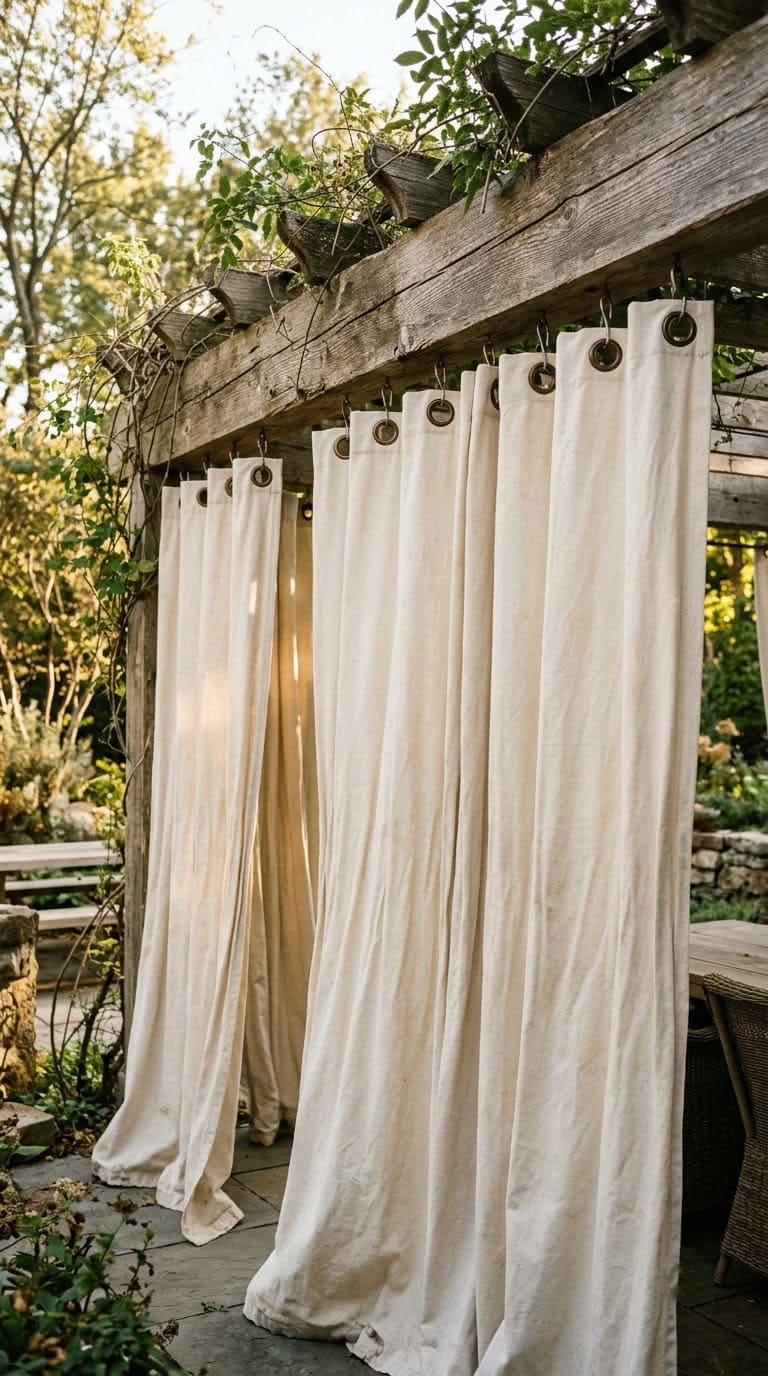
Dannyelle Nicolle-Ramjist used one 8 by 12 foot heavy-duty drop cloth. She cut four strips to fit the gaps between her pergola’s top pieces, with seam allowance.
She hemmed all four sides and set a brass grommet in each corner with a kit from the hardware store. She tied the strips to the pergola with zip ties. Pre-wash the cloth before you cut it.
Her total was $77 Canadian including tax. Keep the strips taut so they don’t twist in wind, and wash and store them each fall.
Cost tier: low. See our pergola ideas.
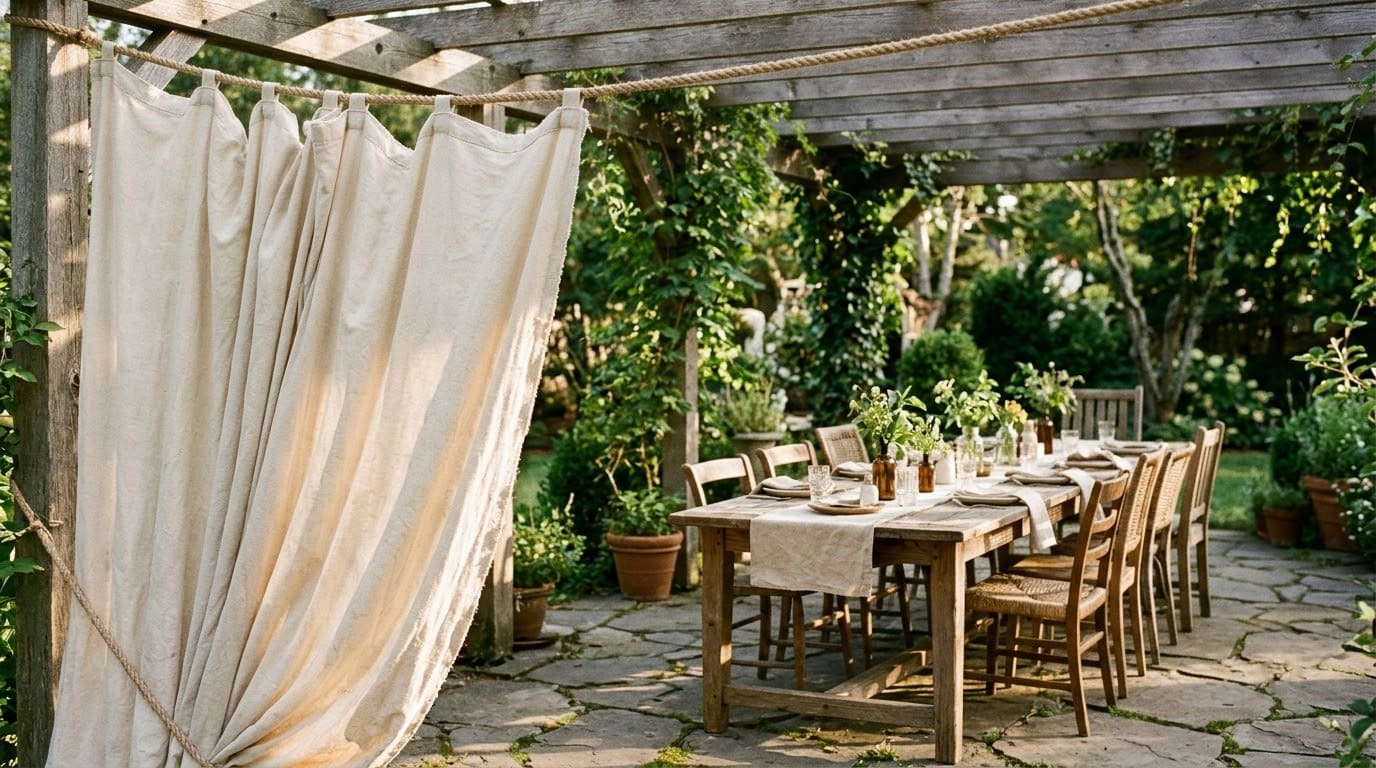
2. No-Sew Painted-Edge Canvas Panels
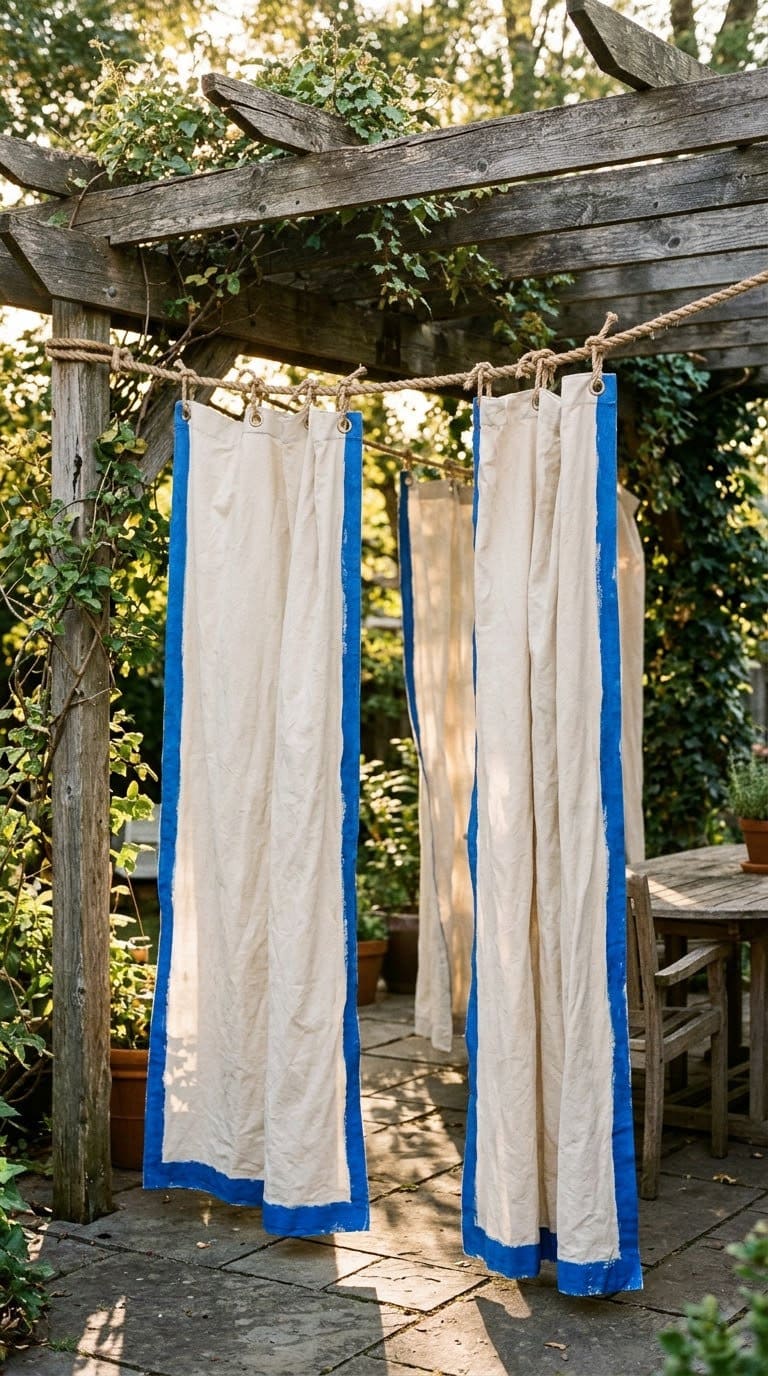
Emily McCauley used four canvas drop cloths, each 6 by 9 feet. She taped off everything except a 3-inch strip along each edge. She sprayed that strip with two coats of outdoor paint on each side.


She treated each side with a fabric waterproofer and says water beads right off. She hung the panels on drapery clips threaded onto rope.
Screw large eye screws between the lowest horizontal planks, and tie the rope tight. No rod is needed.
Cost tier: low. Pairs with idea 12’s wind kit.
3. Rope-and-Clip Curtain Line
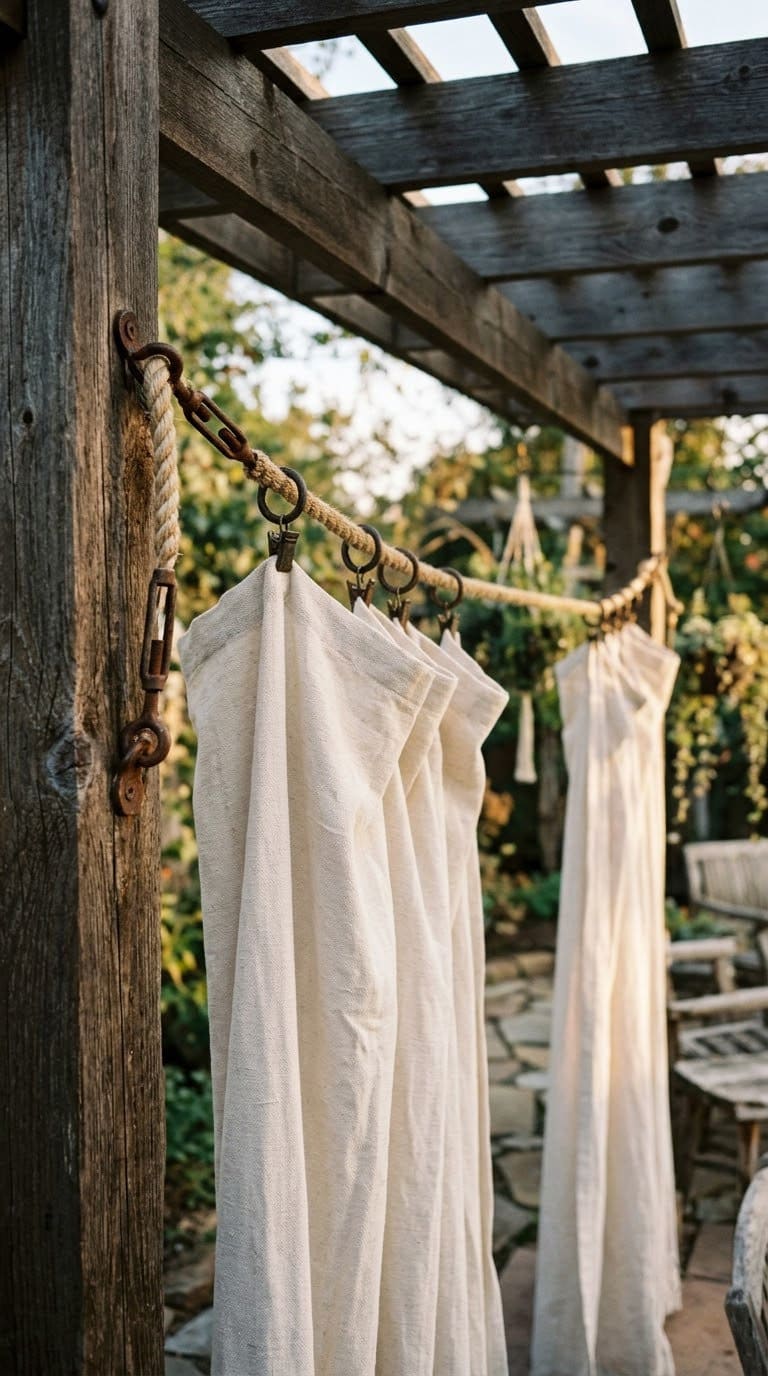
A rope line replaces a heavy rod. Tie rope to eye screws on each post, pull it taut, and add a tie halfway down.
Clip the panels on with drapery clips, so you can slide them open. Rope works in salty or sunny places where metal rusts, as Table and Hearth explains.
Check the knots each season. Rope stretches over time, so retie it.
Cost tier: low.
4. Long Sheer White Panels
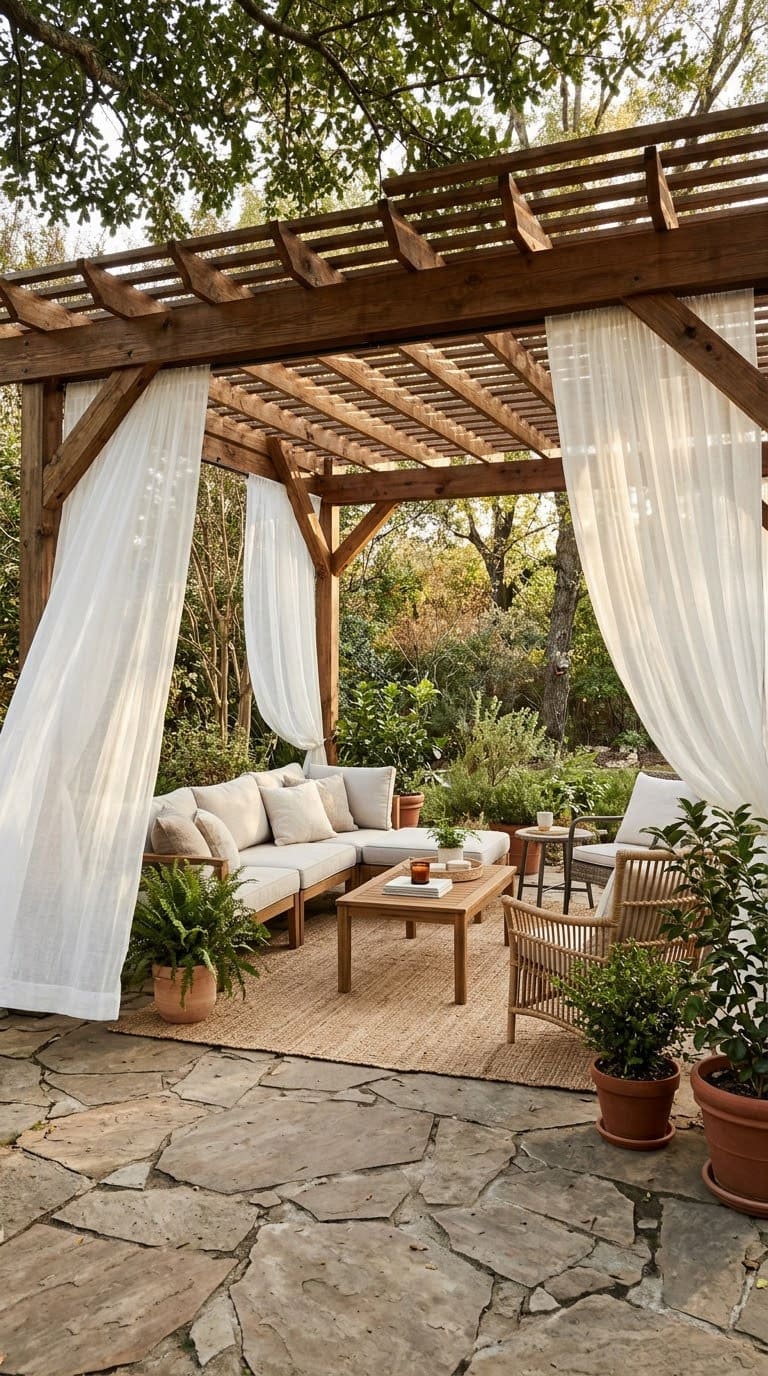
Sheers give a soft, airy look. They don’t give much privacy or rain protection.
Choose a fabric made for outdoor use and slightly heavier than indoor sheer. Heavier fabric hangs straighter and billows less. That is a general design tip, not a sourced fact.
Weight the hems and add tiebacks. Take sheers down in strong wind.
Cost tier: low to medium. Great for sheltered patios.
5. Solution-Dyed Acrylic Panels
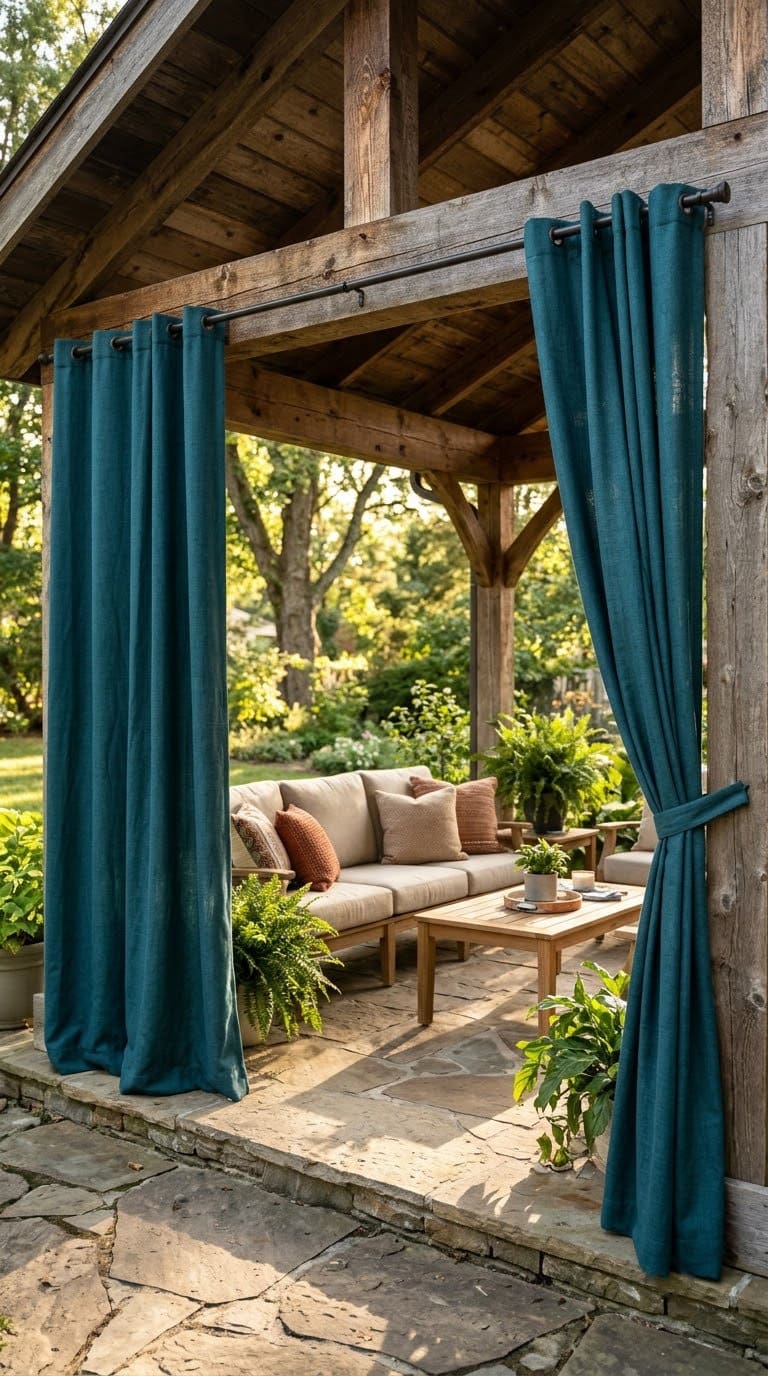
If you want curtains that last, buy performance fabric. These resist sun fade and mildew, per retail care guides.
Clean them with a soft brush and mild soap in lukewarm water. Rinse well and air dry. Avoid harsh detergents.
They cost more, but you won’t replace them each year. Check the manufacturer’s label before you use bleach.
Cost tier: high.
6. Mosquito Netting Curtains
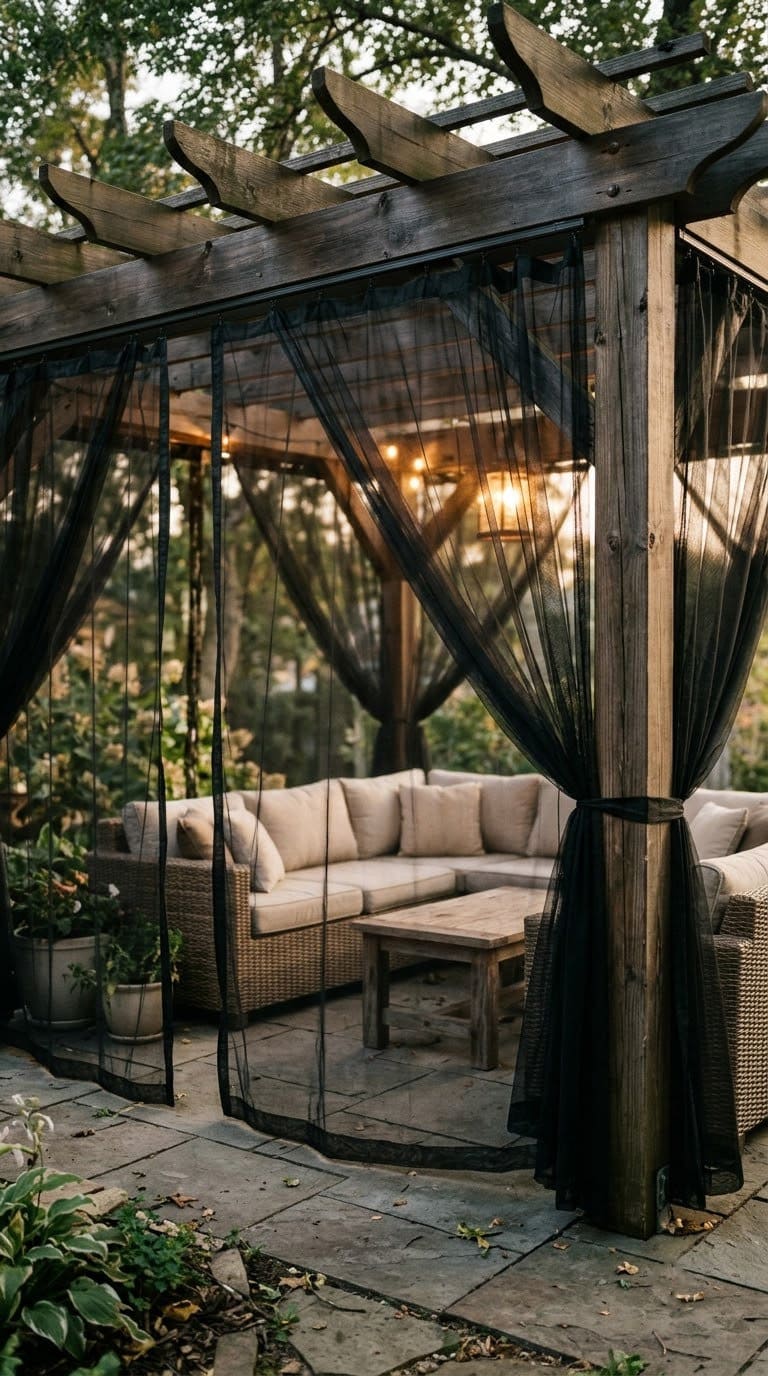
Netting keeps bugs out and lets air through. Mosquito Curtains sells No-See-Um mesh for places where standard mosquito mesh can’t block smaller insects.
Their netting is 100 percent polyester with lock-stitch edges that won’t unravel. Attach it with snaps, grommets, or webbing. Use elastic cord for tension, and Velcro or cable ties for removable setups.
Ask the seller for the mesh opening before you buy, since vendor figures vary. Nets can trap heat, so choose a breezy site.
Cost tier: medium.
7. Porch Privacy Panels
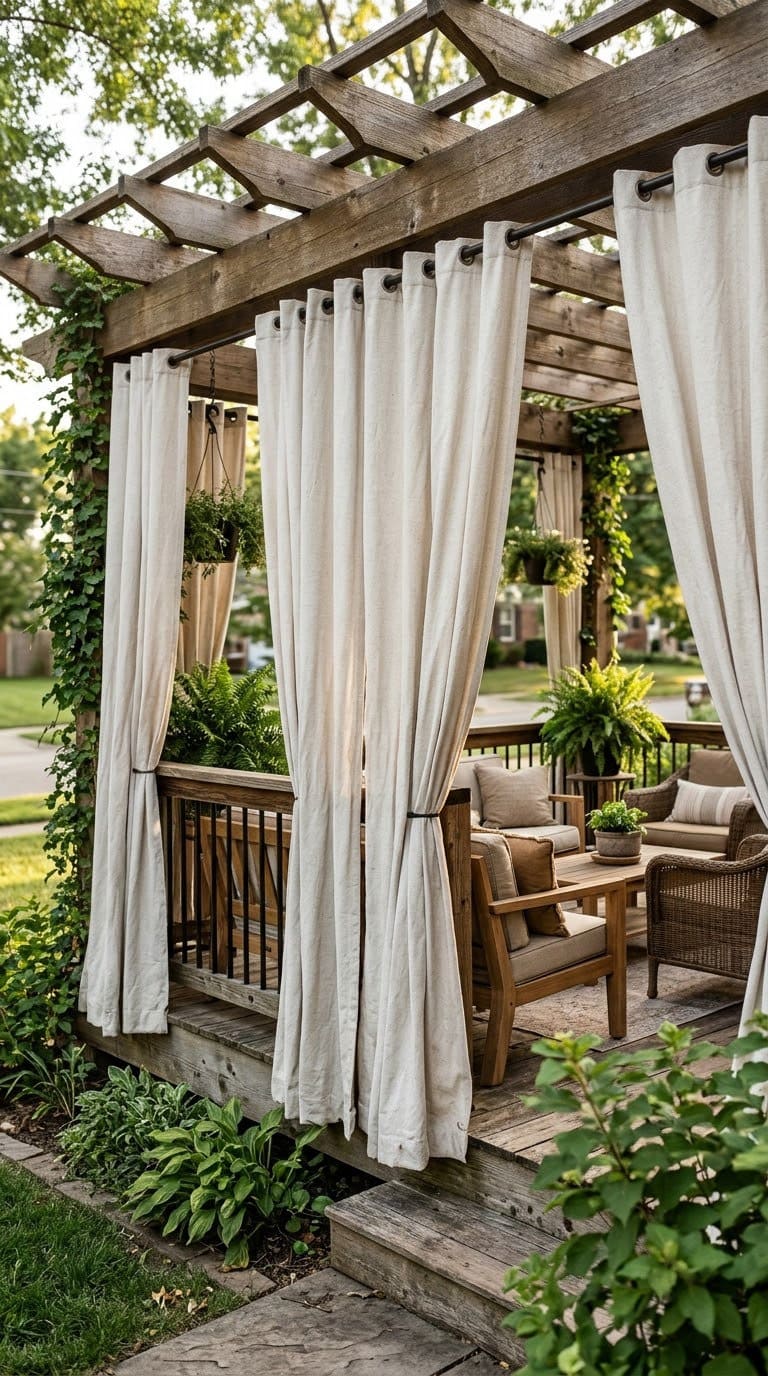
Hang floor-length panels along the open sides of a porch. Use a sturdy rod with a bracket every few feet so it doesn’t sag.
Tie back each panel when you want a view. Let panels hang just above the floor so they stay out of puddles.
For more privacy ideas, see our deck privacy ideas.
Cost tier: medium.
8. Pipe and Drop Cloth Curtain Rod
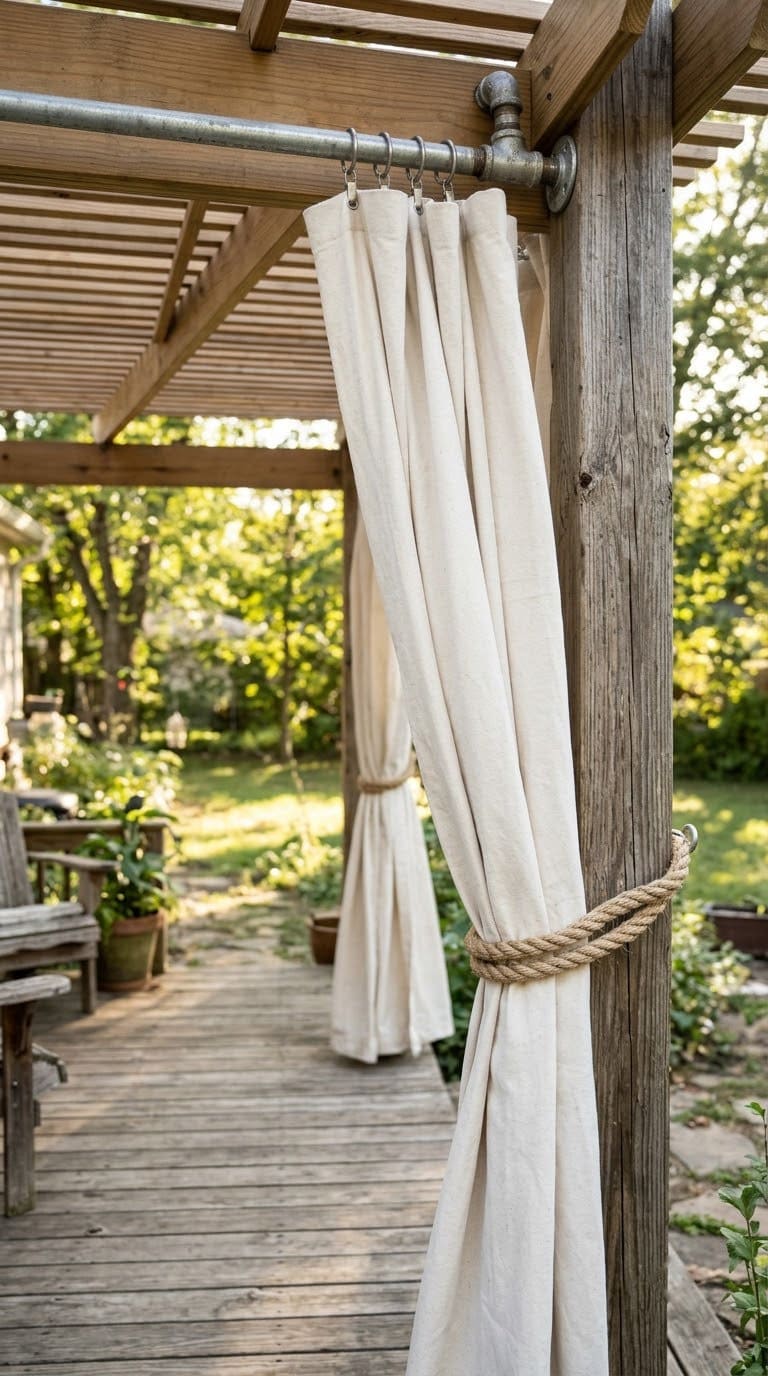
Use a length of conduit pipe as a rod, painted with rust-proof spray. Hold it with pipe brackets screwed into posts.
Drop cloth panels pair well with a rope tieback for a nautical look. Seal the ends of the pipe so rain doesn’t collect inside.
This idea is our own suggestion, not from a source. Check the load before you hang heavy panels.
Cost tier: low to medium.
9. Boho Layered Curtains With Tiebacks
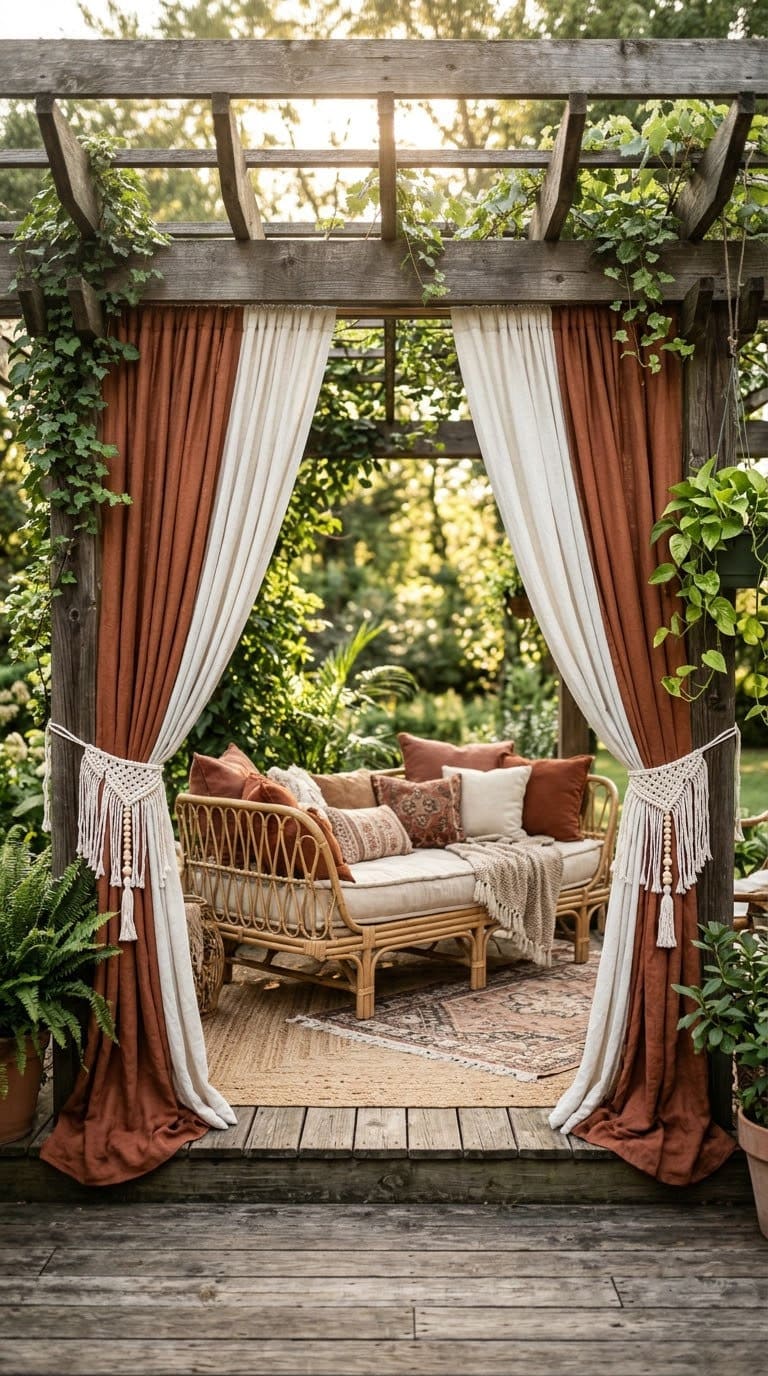
Layer a light panel over a heavier one for depth. Use a macramé or rope tieback on each panel.
One tieback per curtain keeps panels open. Choose outdoor-rated fabric and keep cushions off wet ground.
Mix textures but keep a tight color palette, so the space reads calm.
Cost tier: medium. Pairs with idea 10’s swing.
10. Curtains Around a Hanging Bench
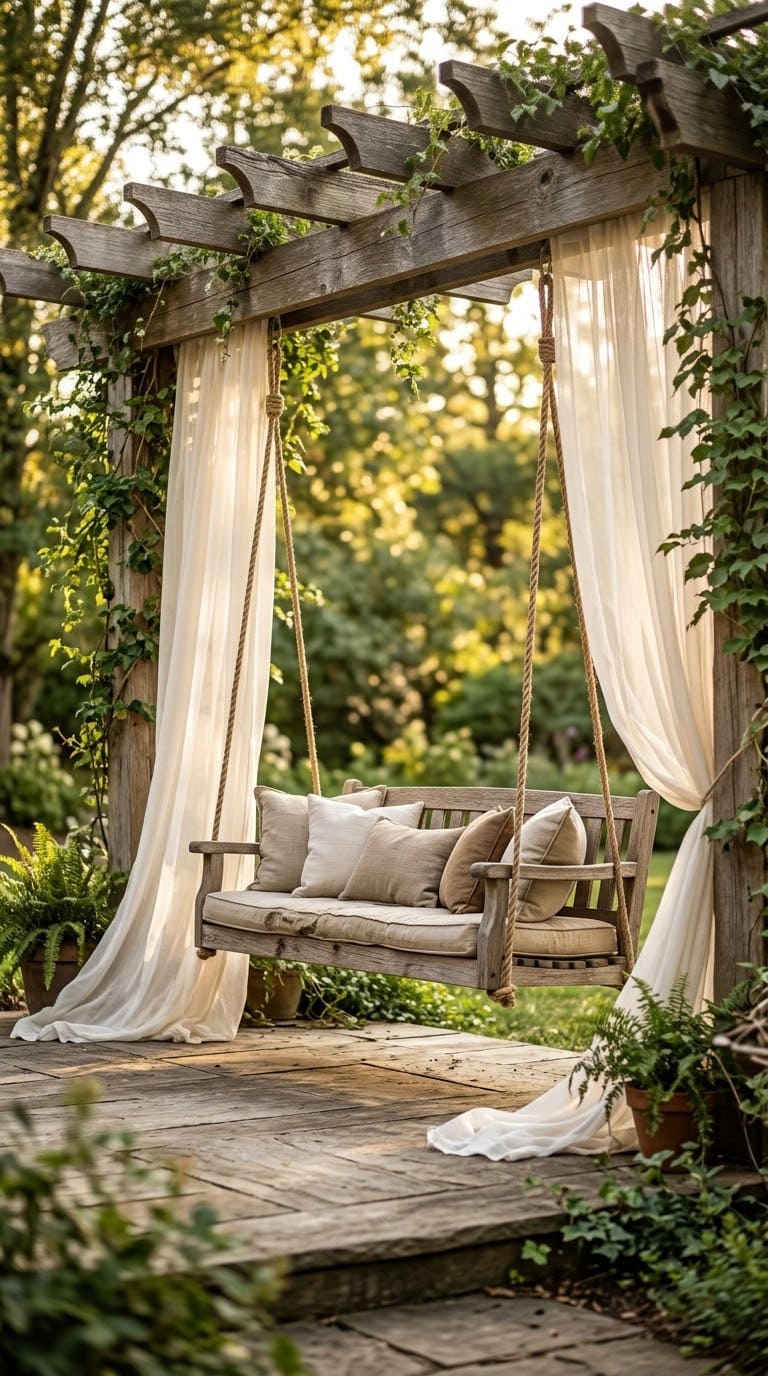
A swing with curtains creates a cozy nook. Fix the swing to a beam rated for it, and hang curtains on a separate line.
Keep curtains clear of the swing’s arc. Panels that catch the swing could pull down the rod.
Anchor the swing into framing, not decorative trim. Pick a frame built for hanging weight.
Cost tier: medium to high.
11. Striped Canopy Valance
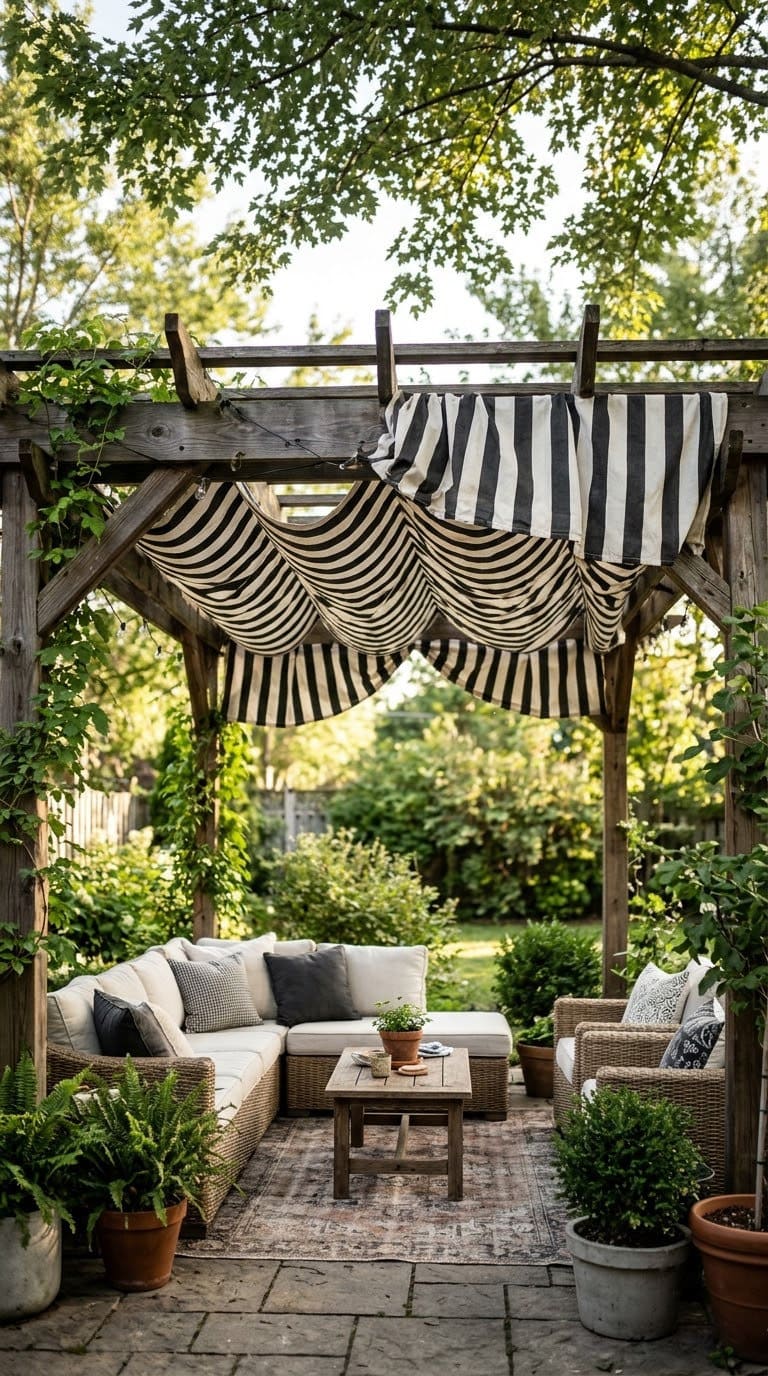
A striped valance across the top adds shade and style. Use a heavy outdoor fabric and weigh down the edges.
Attach it with grommets and zip ties, as Life Is a Party does, or with rope. Keep fabric taut to avoid twisting.
Take it down in storms. Large flat pieces catch wind like a sail.
Cost tier: medium. This design is our own suggestion.
12. Wind-Proof Weights and Tiebacks
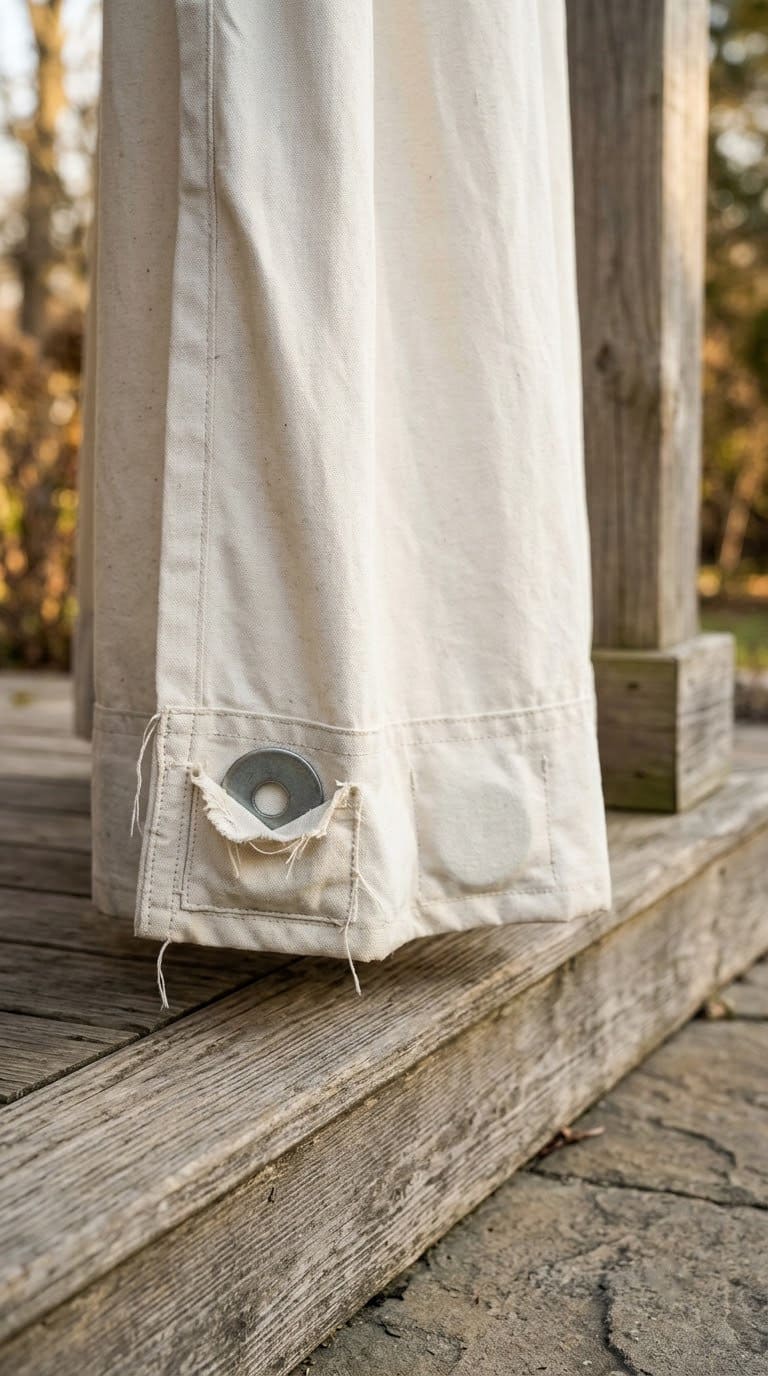
Sew weights into the bottom hem to keep panels from flying. Washers or small weights spaced about every 12 inches work well. That spacing comes from a DIY tutorial.
Add one tieback per panel to hold it open. Use end stops so panels don’t slide along a rod.
Pick a slightly heavier fabric for windy spots. Take down panels before storms.
Cost tier: low.
13. Tension Rod Panels for Renters
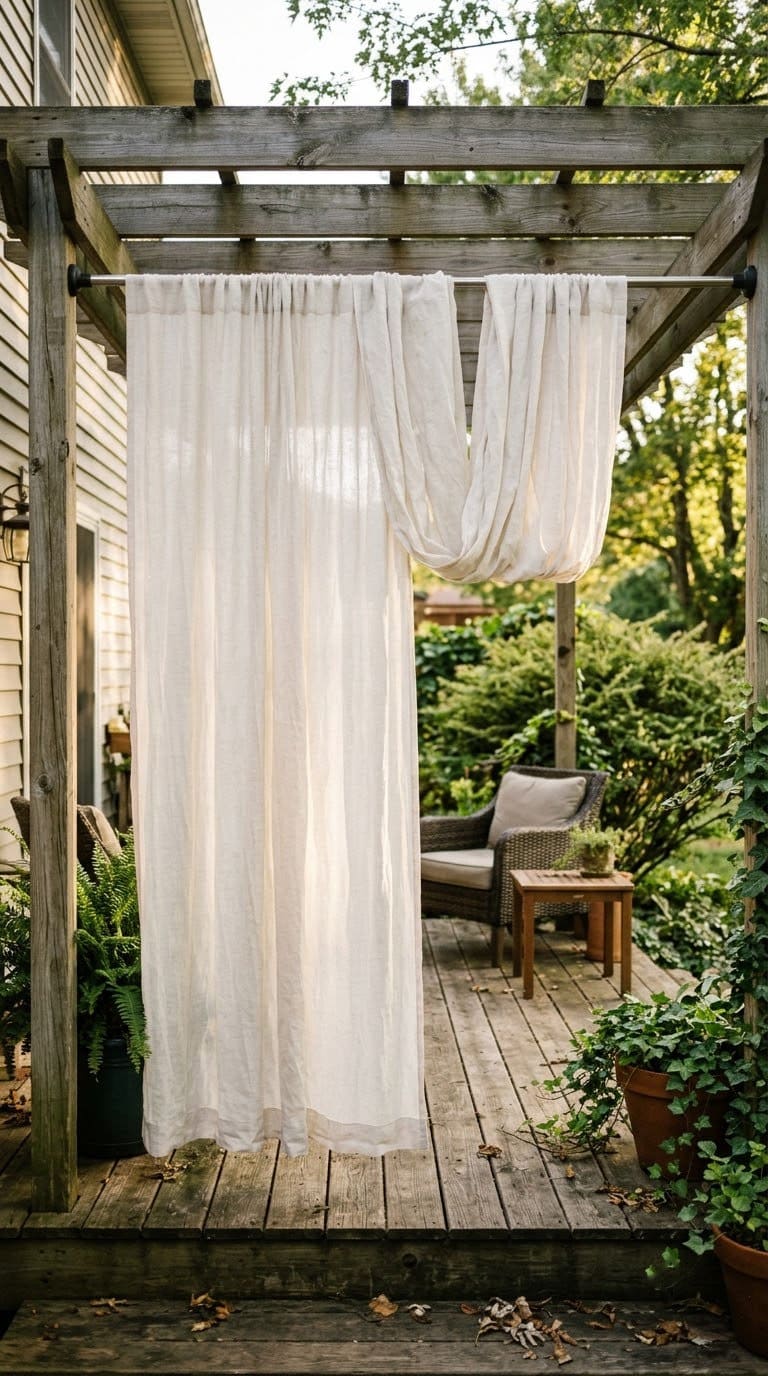
If you can’t drill, use a tension rod between two posts. Choose a rod rated for the panel weight.
Keep panels light, so the rod can’t slip. Check the rod each week.
Tension rods fail in wind, so use them only in sheltered spots. Our screened-in porch ideas show sheltered settings.
Cost tier: low.
14. Tulle and Beach-Style Curtains
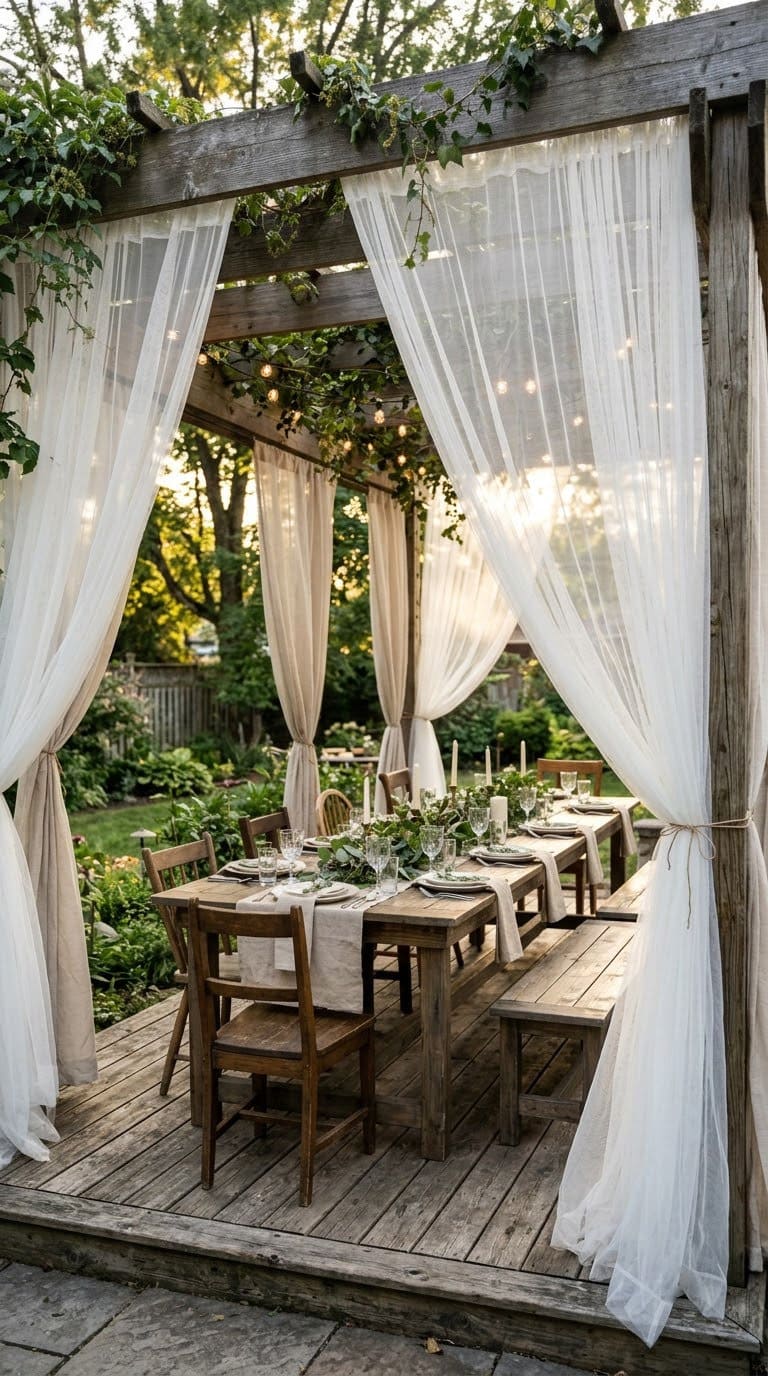
Tulle is for parties and calm days. It’s light and soft, and it can tear on rough hardware.
Hang it from a smooth rod or line. Take it down before wind or rain.
Don’t use it near flame. Fabric burns easily, per the IRSC list of combustibles.
Cost tier: low. Great for weddings and birthdays.
15. Track-Mounted Sliding Panels
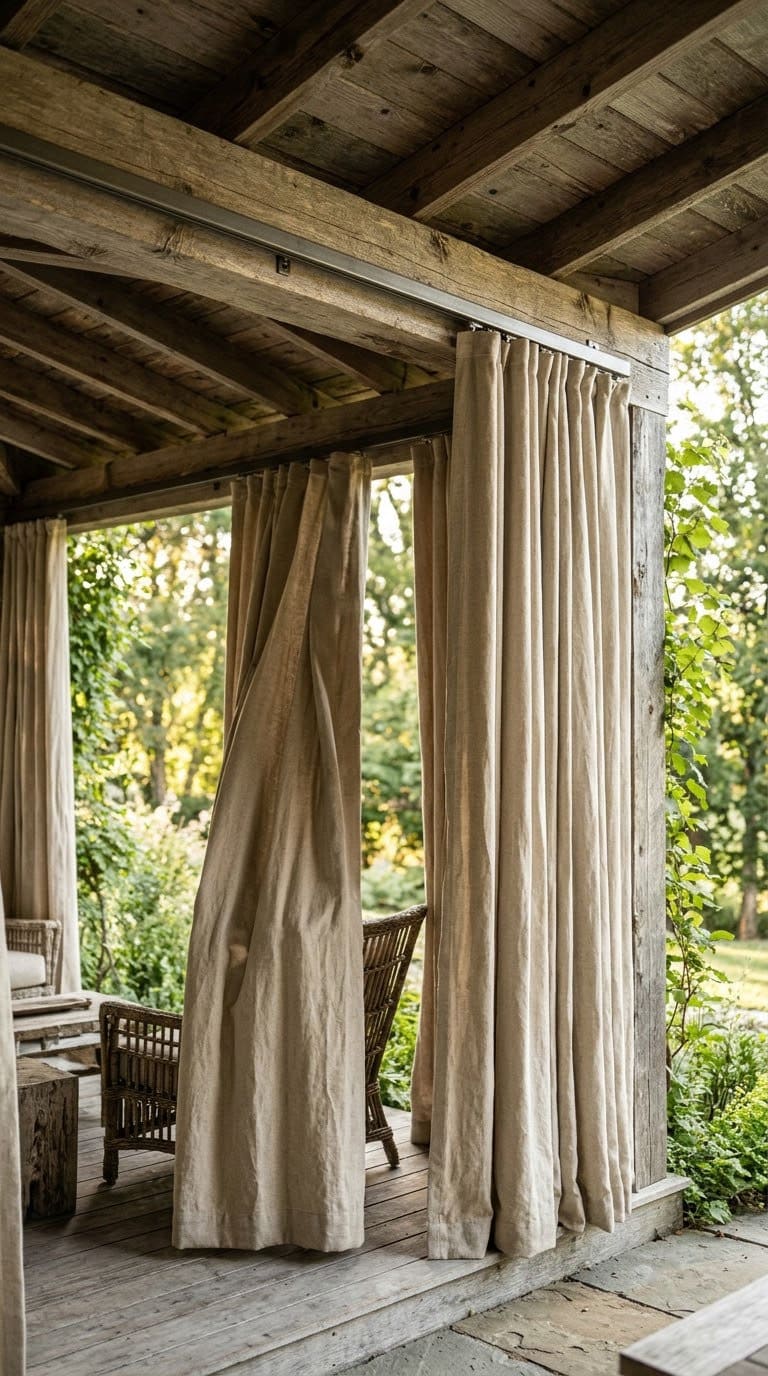
A ceiling track lets panels slide open and closed in one motion. Mount it into joists or beams, not just a ceiling board.
Use panels made for outdoor use. Heavy fabric needs a strong track. Check the track’s load rating.
Pick this for a permanent covered patio. Our diy sun shade ideas show other ways to block the sun.
Cost tier: high.
How Much Fabric Do You Need?
Measure the width of the opening first. For a full, gathered look, many designers use fabric about 1.5 to 2 times the opening width. That is a common design rule, not a sourced figure.
Flat panels need less. Life Is a Party cut strips to fit the gaps between her pergola’s top pieces and kept them taut. Taut strips don’t twist in wind.
Measure the height from the ground to the beam, then add hem allowance. One tutorial adds about 2 inches at the top and bottom. Decide if you want the panel to hover above the floor or pool slightly.
Buy a little extra. Fabric shrinks, so pre-wash and dry it before you cut, as Life Is a Party advises.
Which Curtain Fits Your Climate?
In hot sun, choose light colors and tight weaves. Light panels reflect heat and block glare, and solution-dyed acrylic holds its color best.
In wind, choose heavier fabric, hem weights, and tiebacks. Keep panels narrow, so they catch less wind, and take them down before storms.
In rain or humidity, choose fabric that dries fast, and treat canvas with waterproofer. Let panels dry fully before you store them.
Near the coast, skip metal and use rope, brass grommets, and plastic hooks. Salty air rusts steel quickly, as Table and Hearth found.
Where bugs bite, add netting panels. Mosquito Curtains sells No-See-Um mesh for smaller insects, and heavy mosquito mesh for strong airflow.
What Does a Weekend Curtain Project Look Like?
On Friday evening, measure the opening and choose the fabric. Check your local rules and your landlord’s. Buy hardware that won’t rust.
On Saturday morning, pre-wash the fabric and cut it to size. Hem the edges, or tape off a border if you’re painting it.
On Saturday afternoon, treat the fabric. Spray waterproofer on both sides, and let it dry. Install the rope, rod, or eye screws while it dries.
On Sunday, hang the panels and test them. Stand in a breeze and see how they move. Add weights or tiebacks where needed.
How Do You Care for Outdoor Curtains?
Brush off dust and leaves each month, and rinse off bird droppings and pollen as soon as you see them. A soft brush and mild soap solution handles most dirt. Rinse well.
Dry panels fully before storage. Damp fabric grows mildew, and you’ll smell it in spring.
Wash drop cloth panels each fall, as Life Is a Party does, and store them for winter. Expect some discolor over time.
Check hardware each season. Replace rusted pieces and retie rope.
Look at the fabric where it touches hooks and grommets. Wear shows up there first, so add a patch or move the attachment point before a tear spreads.
Common Mistakes to Avoid
Hanging curtains near a heater is the first one. Read your heater’s manual before you place a single panel. The Infrared Heater Safety Council lists fabric as a combustible and says clearances must be kept at all times.
Using metal hardware near the coast is the second. Table and Hearth chose rope because salty air rusts metal quickly.
Assuming drop cloth is waterproof is the third. Life Is a Party says the fabric isn’t waterproof.
Leaving panels up in storms is the fourth. Wind can pull out hardware and tear fabric.
Skipping the pre-wash is the fifth. Life Is a Party advises washing and drying fabric before cutting to account for shrinkage.
Storing damp panels is the sixth. Damp fabric grows mildew, so dry it fully before you fold it.
FAQ
Can outdoor curtains stay up all year?
Not always. Life Is a Party removes and washes its drop cloth panels each fall and stores them for winter.
Are drop cloth curtains waterproof?
No. Life Is a Party says its fabric isn’t waterproof and dries quickly in the sun. Table and Hearth treats each side with fabric waterproofer.
What kind of hardware should I use near the ocean?
Table and Hearth used rope and eye screws, since salty air rusts metal quickly.
How do I keep curtains away from fire?
Follow the clearances printed on your heater. The Infrared Heater Safety Council says clearances are required minimum distances for combustibles like fabric.
Do outdoor curtains keep bugs out?
Only netting does. Mosquito Curtains sells No-See-Um mesh for smaller insects that standard mosquito mesh can’t block.
Never miss an update — choose FarmFoodFamily as your preferred source on Google.
How it works: Tap the button below to open Google's settings page, then check the box next to FarmFoodFamily.
Tap the checkbox to turn it blue — that's how you know it's set.