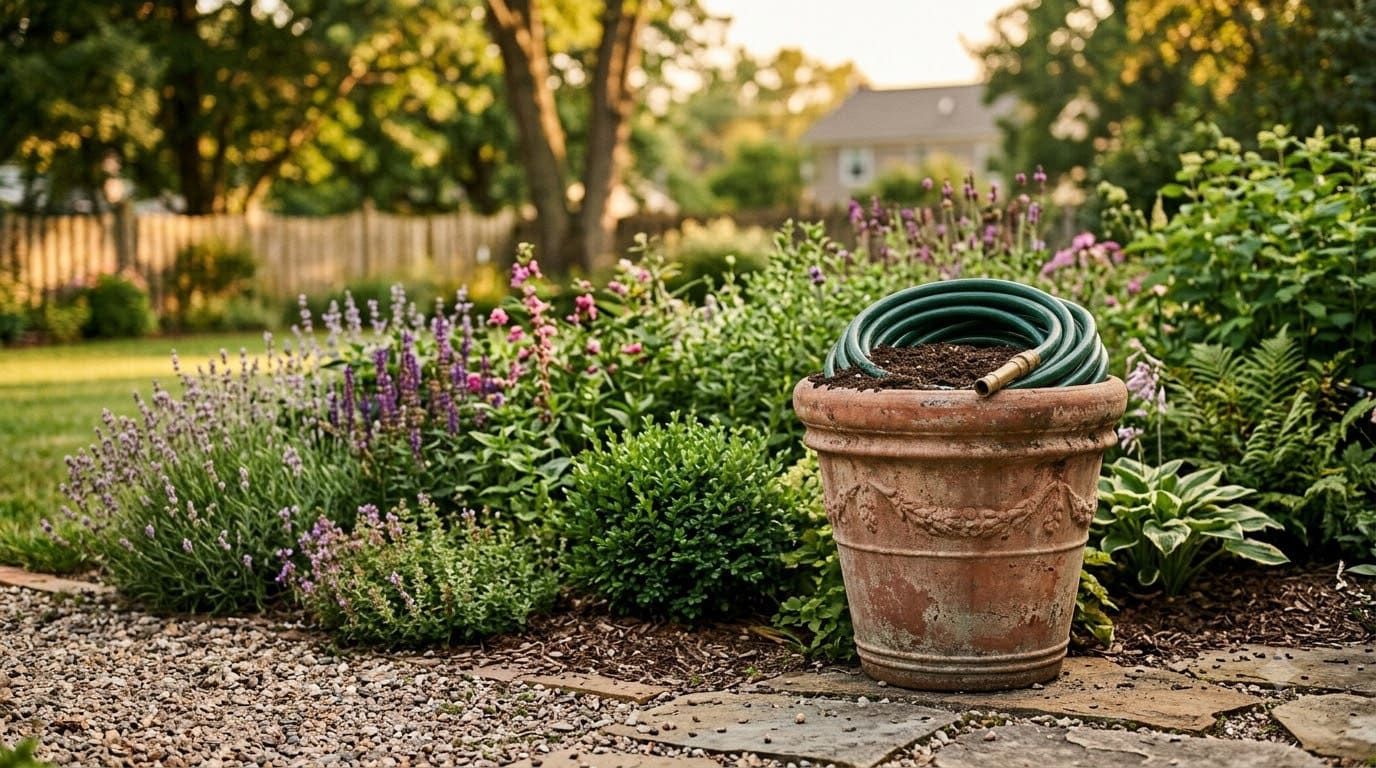
The Clever Cardboard Weed Killer: Lasagna Gardening Done Right (and Where It Fails)
Cardboard smothers grass and weeds by blocking their light, as long as you overlap the sheets, bury them under thick mulch, and skip the weeds that just grow around it.

Never miss an update — choose FarmFoodFamily as your preferred source on Google.
How it works: Tap the button below to open Google’s settings page, then check the box next to FarmFoodFamily.
Tap the checkbox to turn it blue — that’s how you know it’s set.
Quick Answer
Cardboard kills weeds by blocking light. Lay plain brown cardboard over cut-down grass and soak it.
Overlap the edges by at least 8 inches. Then bury it under 4 to 6 inches of mulch, per Oregon State University Extension.
The bed usually needs about six months to break down before you plant. Fall is the easiest time to start.
Texas A&M AgriLife Extension says it suits perennials best. It works less well for annual flowers and vegetables.
It fails on runners and vines. Oregon State says lasagna composting may not smother blackberry, bindweed, morning glory, or quackgrass.

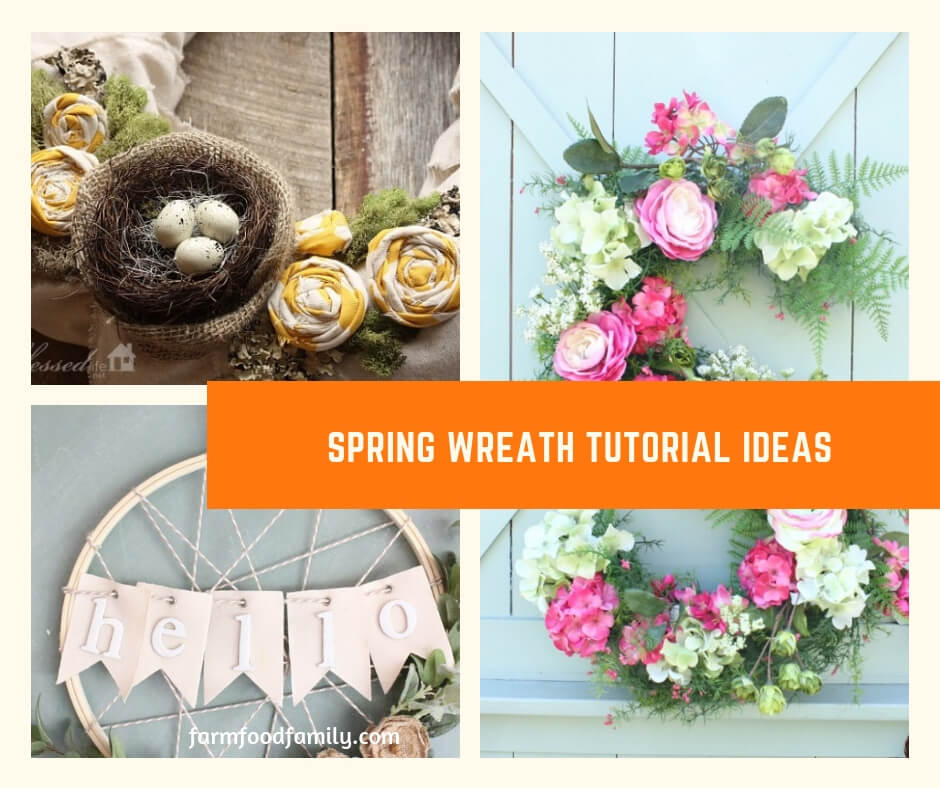

It also fails wherever a crack lets in light. Thin mulch and gaps sink most beds.
Answer 4 quick questions and get matched to the exact fix for your yard — drainage, budget, layout, or something else entirely.
Take the Free QuizExperts don’t fully agree on it. A Washington State plant scientist says it can work for well-maintained annual beds. She now advises against cardboard as a mulch.
What is the cardboard weed killer?
It’s a simple idea. You cover weeds with cardboard and top it with mulch.
Then time does the work. Gardeners call it lasagna gardening, lasagna composting, or sheet mulching.
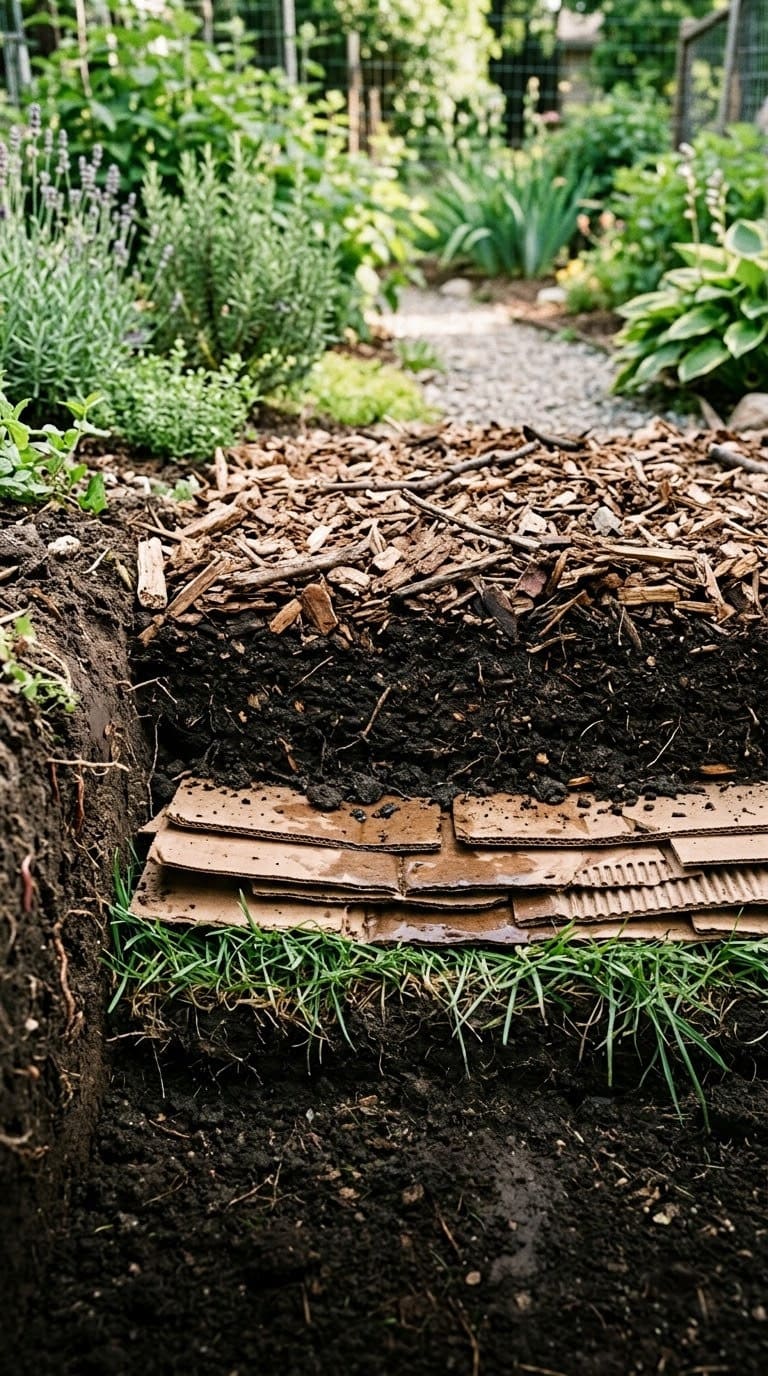
The name comes from the layers. Cardboard goes down first. Mulch or compost goes on top, and sometimes leaves and clippings.
No digging is involved. No herbicide either.
How does cardboard kill weeds and grass?
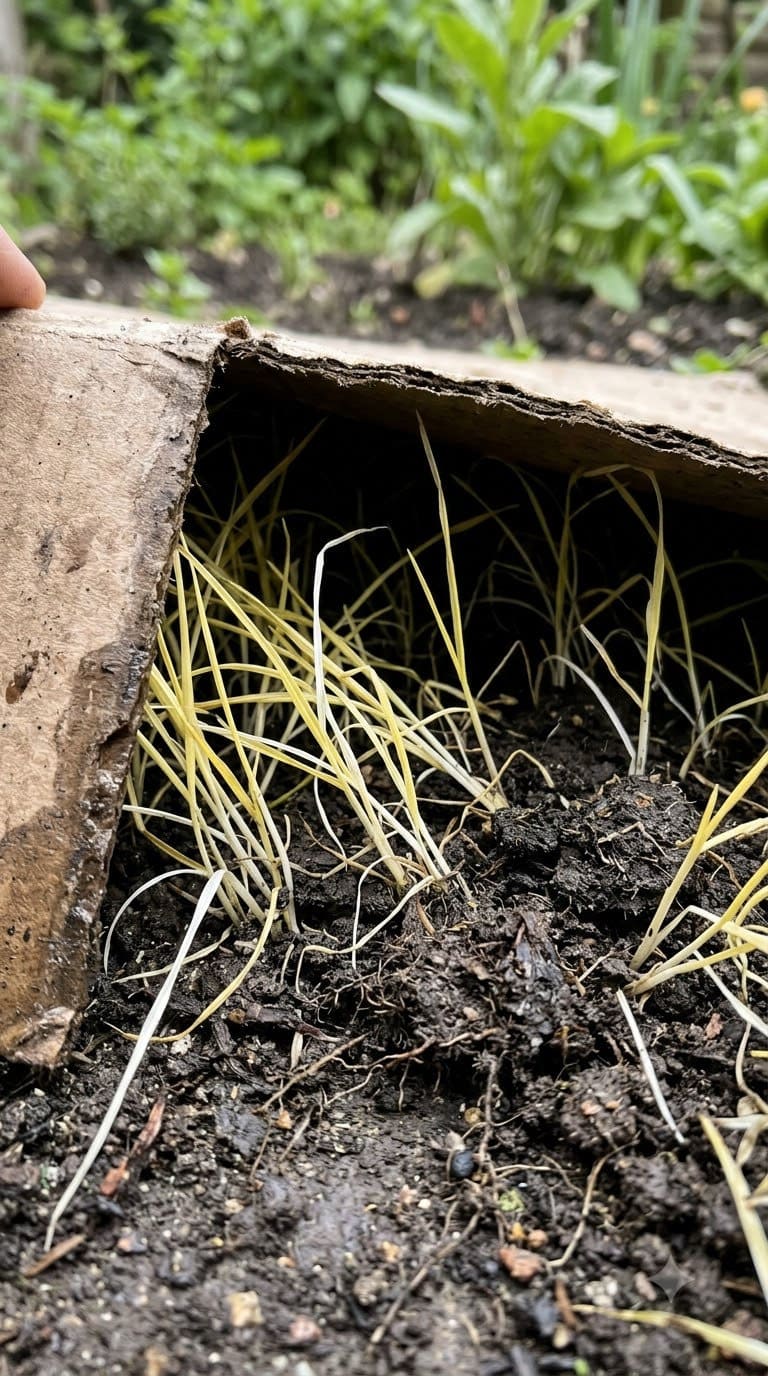
It starves them of light. Plants can’t make food without sunlight. Grass and weeds under cardboard and mulch slowly die off.
The cardboard also breaks down over a few months. Oregon State says earthworms then move in. They loosen the soil and leave nutrient-rich castings.
Most yard problems trace back to one specific, fixable cause. Find yours in 4 quick questions.
Take the Free Quiz
Plain brown, unprinted, flat kraft cardboard with no tape or labels to peel off. It's sold as a craft product and costs more than free boxes from a store, so treat it as a backup if you can't find big boxes.
Shop NowThis post contains affiliate links. We may earn a commission on qualifying purchases at no extra cost to you.
UC Davis horticulturist Stacey Parker sums up the goal in one line. She says the goal is to keep the grass from ever seeing daylight.
That’s why gaps matter most. Jayla Fry of Texas A&M puts it plainly. Every shred or hole is a chance for light to get through.
Which cardboard should you use?
Use plain brown corrugated cardboard. Oregon State says to avoid anything shiny, glossy, or printed. Texas A&M agrees and adds that slick, heavily colored boxes are out.
Pull off every bit of tape and every staple first. Take off labels too. They don’t break down, and they leave gaps or residue.
Big boxes work best. Fry recommends keeping cardboard in large, whole pieces.
Moving boxes and shipping cartons qualify. So do appliance boxes.
Parker used bike boxes she got free from local bike shops. Ask a furniture or appliance store what they’re throwing out.
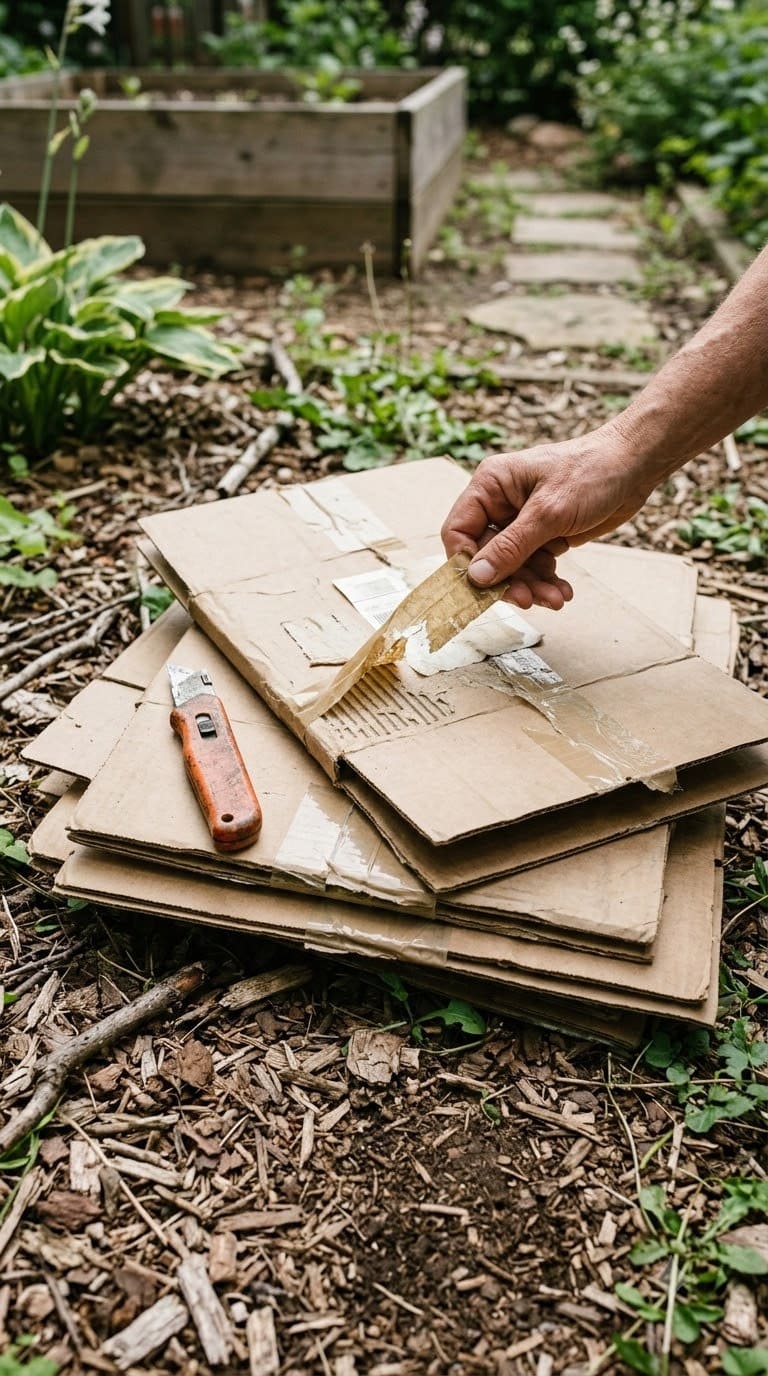
How do you make a cardboard weed barrier step by step?
Most of the work is gathering boxes and hauling mulch.

You need plenty of cardboard, a hose, and a lot of mulch. A pair of scissors or a utility knife helps around trees and edges.
The average homeowner spends $616/year on yard fixes that don't address the real problem. Find out what yours actually is — before you spend another dollar.
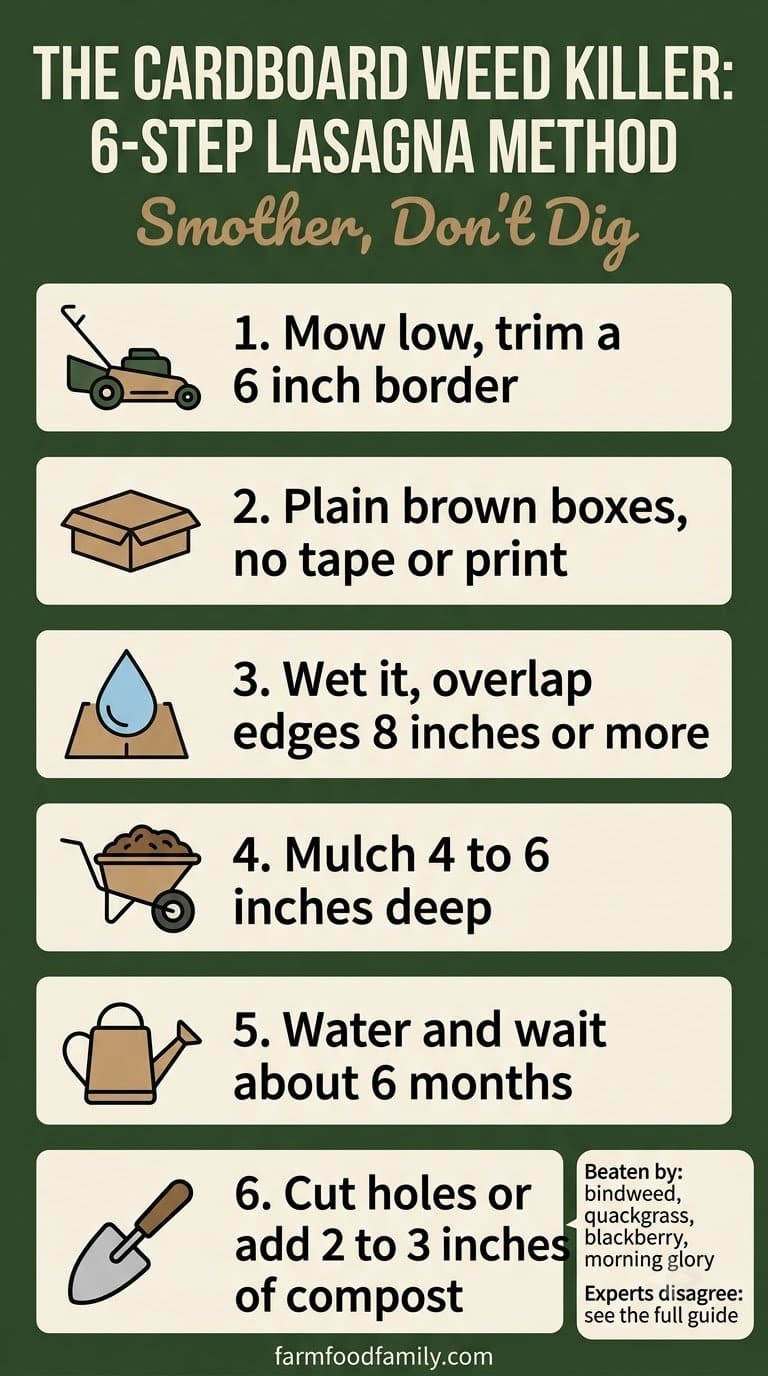
Take the Free QuizStep 1: Mow low and edge the bed
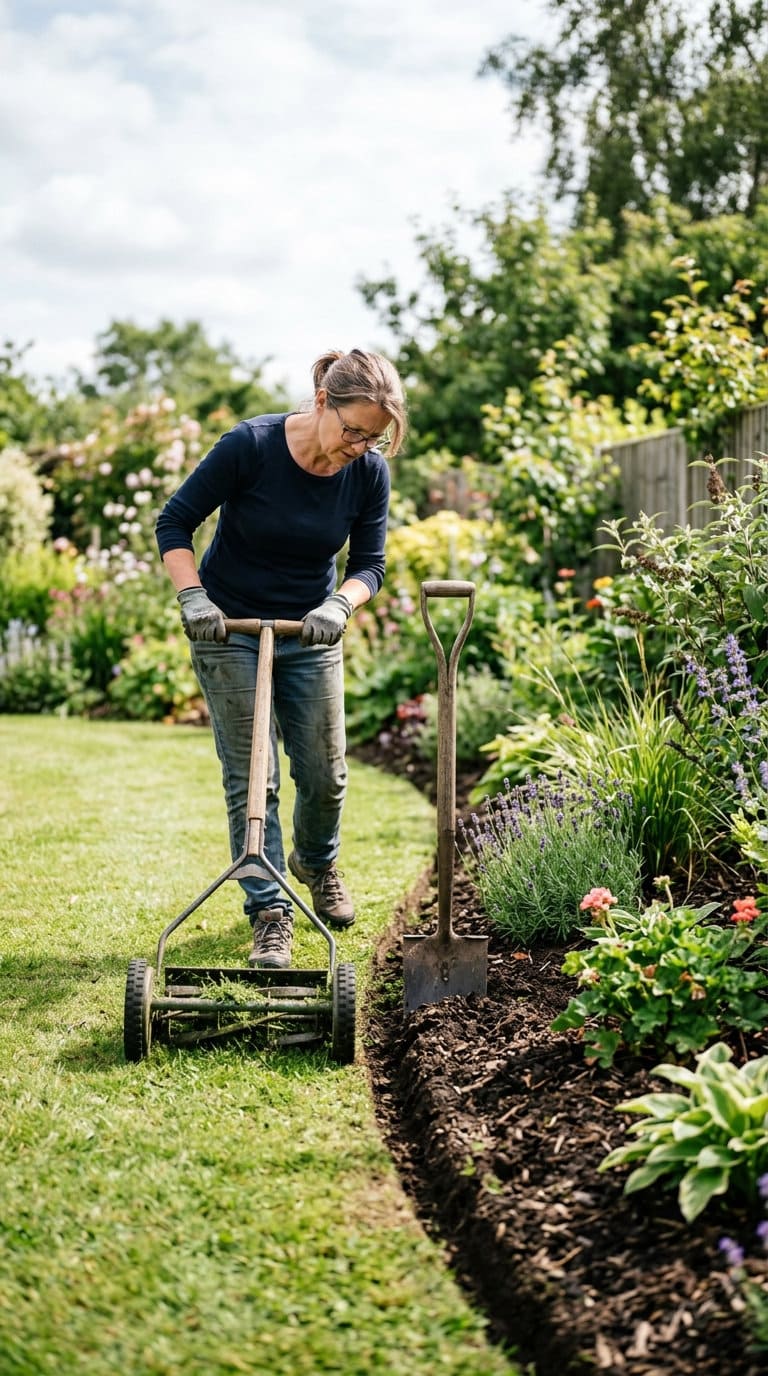
Cut the grass and weeds as low as you can. Parker’s first step is to cut the lawn as low as possible.
The Hennepin County Master Gardeners say to mow the area first. It makes the layers easier to lay.
Along a sidewalk, Parker also removes a border of lawn about 6 inches wide. That small trench lets the cardboard and mulch tuck in tight. It keeps edges neater too.
Step 2: Gather large, flat sheets
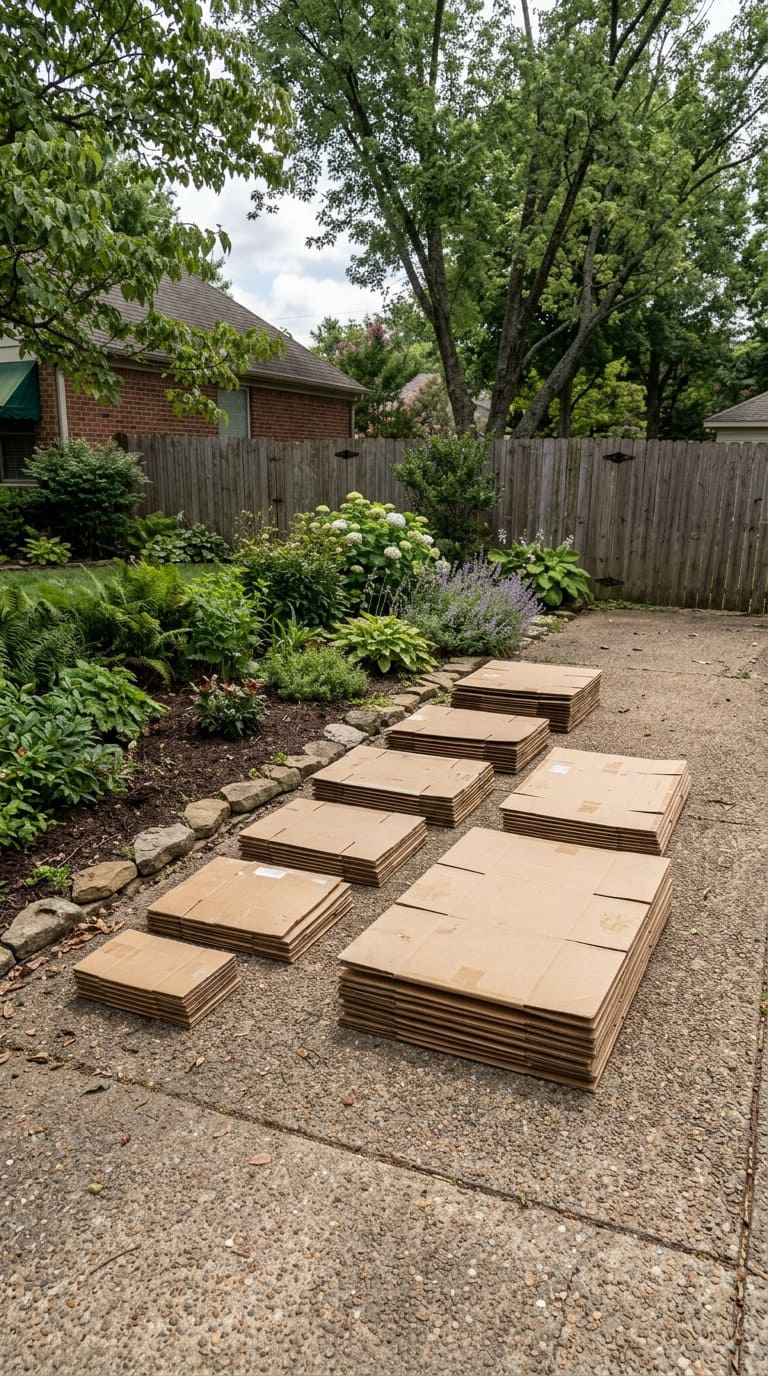
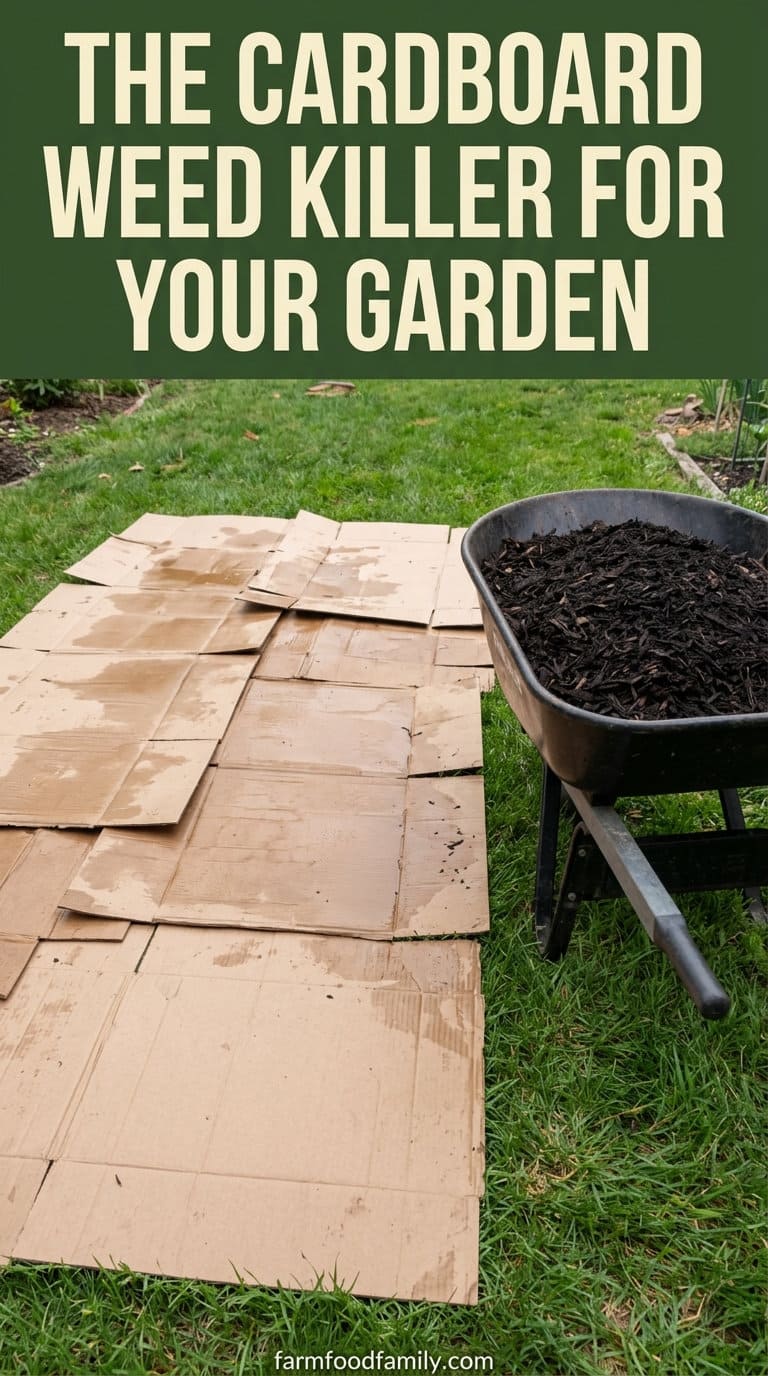
Flatten your boxes and stack them by the bed. Cut sheets to fit around trees, posts, and corners. Save the big pieces for open ground.
Have more than you think you’ll need. Overlap eats a lot of cardboard.
Step 3: Wet it down and lay it with a big overlap
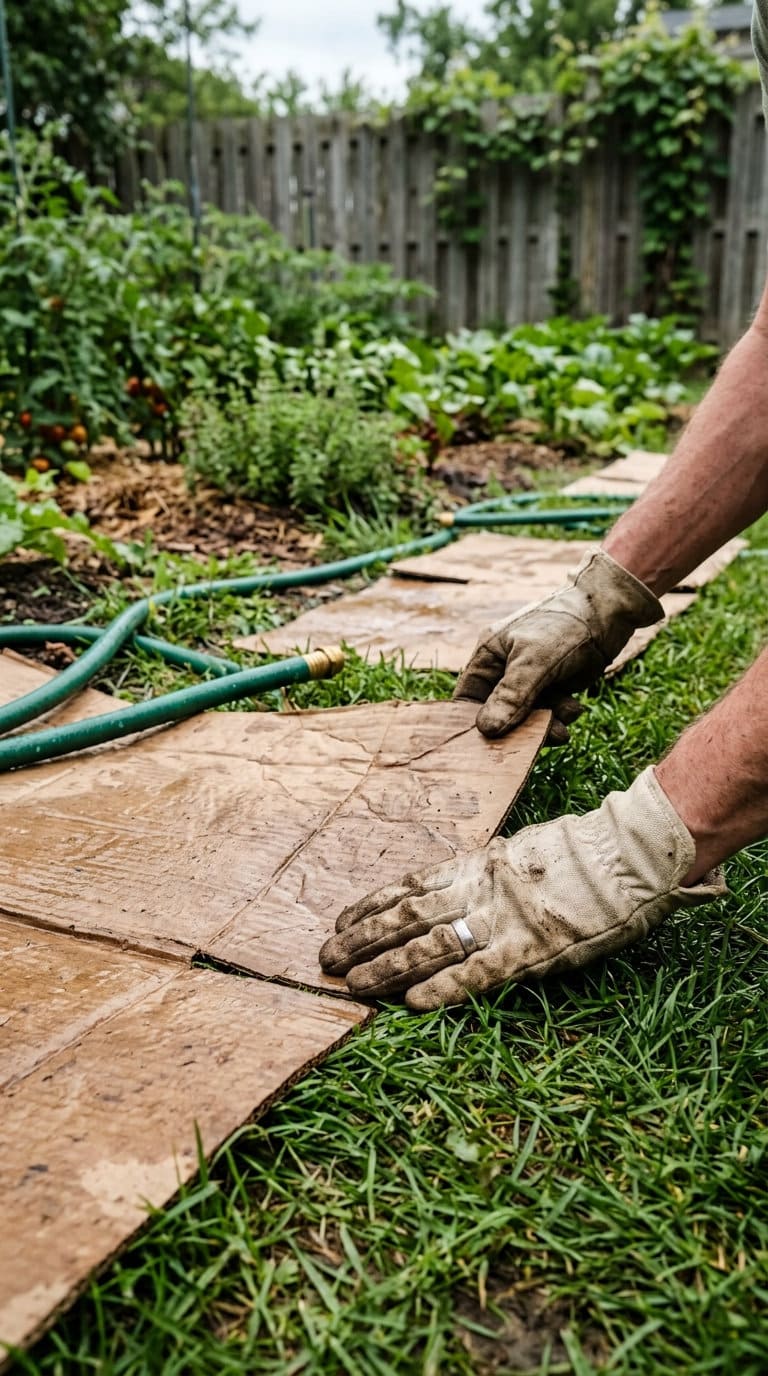
Soak each sheet with water as you lay it. Wet cardboard stays put in wind, and it molds around bumps. Oregon State says it should be well soaked before you use it.
Overlap every edge by at least 8 inches. The Oregon State guide gives that number, and it’s a good one. A narrow overlap invites weeds to find the seam.
The same guide mentions 4 to 6 overlapping layers of cardboard, newspaper, or heavy paper. But it also warns that a very thick stack will slow the breakdown.
Step 4: Bury it under 4 to 6 inches of mulch
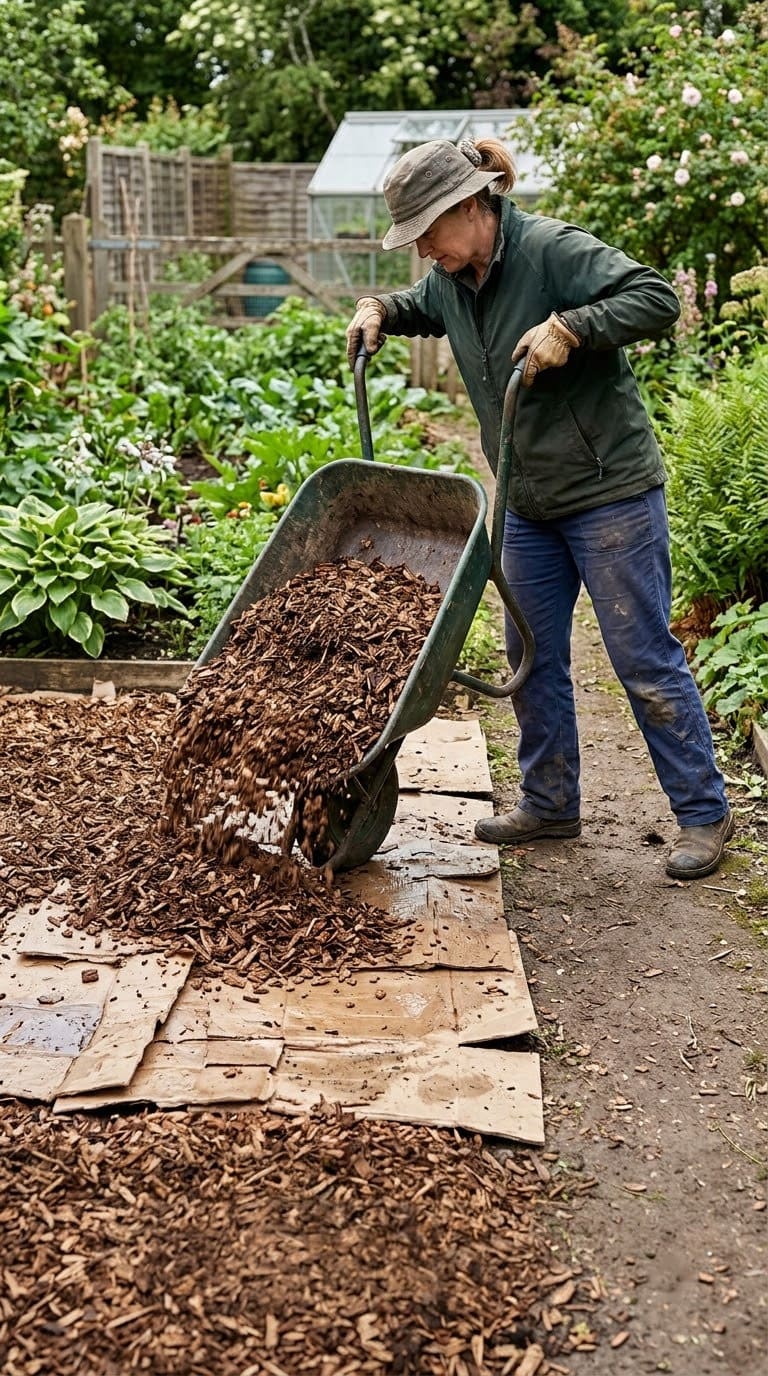
Cover the cardboard right away. Oregon State and UC Davis both say 4 to 6 inches of mulch on top. Texas A&M’s Fry mentions about 3 inches, so there’s a range.
We’d go thicker. Parker put down her first mulch delivery and measured about an inch. She said that’s not enough to smother a lawn.
A single cubic yard of mulch is 27 cubic feet. Spread 4 inches deep, it covers about 81 square feet. At 6 inches, it covers about 54.
Step 5: Water it and wait
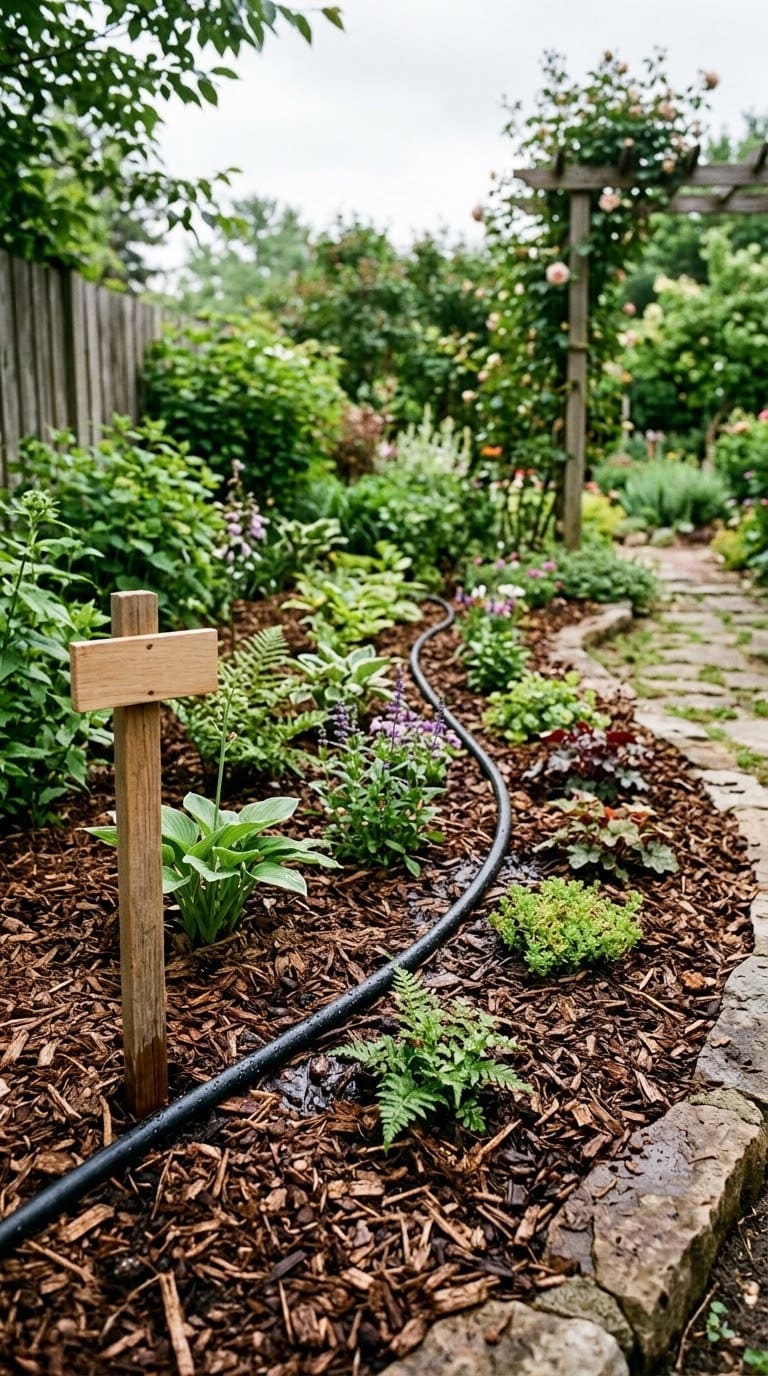
Water the finished bed well and check it now and then. If you see a crack or a weed, add mulch on top right away. UC Davis says extra mulch fixes a crack.
Then wait. Oregon State says the bed is ready in about six months.
Your climate changes that. It may take longer to break down enough.
Step 6: Plant when the cardboard has softened
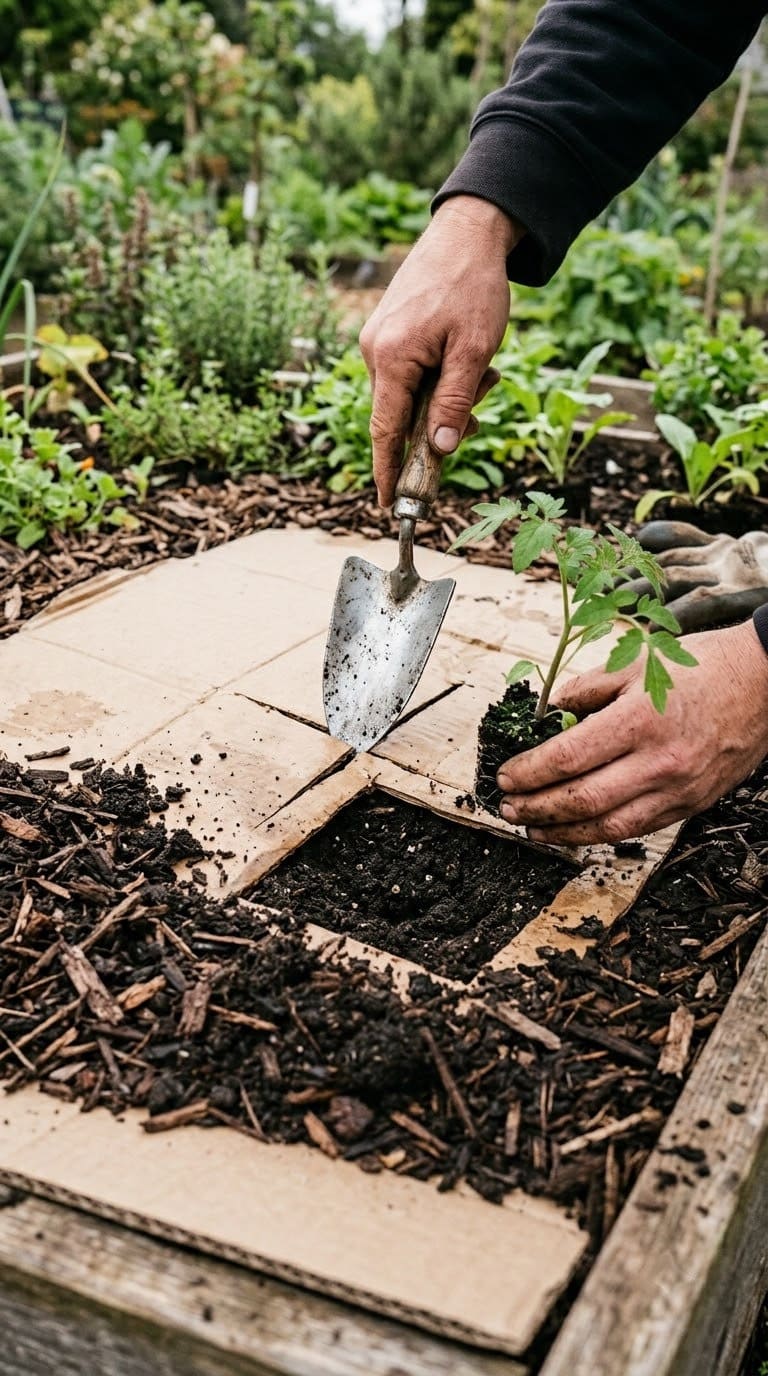
Once the cardboard is soft, cut a hole and set the plant in. Oregon State says you can cut holes for new plants. You can also lay cardboard around plants already there.
For a faster start, add 2 to 3 inches of compost or garden soil on top. Oregon State gives that as an option. You plant into the fresh layer.
How much cardboard and mulch do you need?
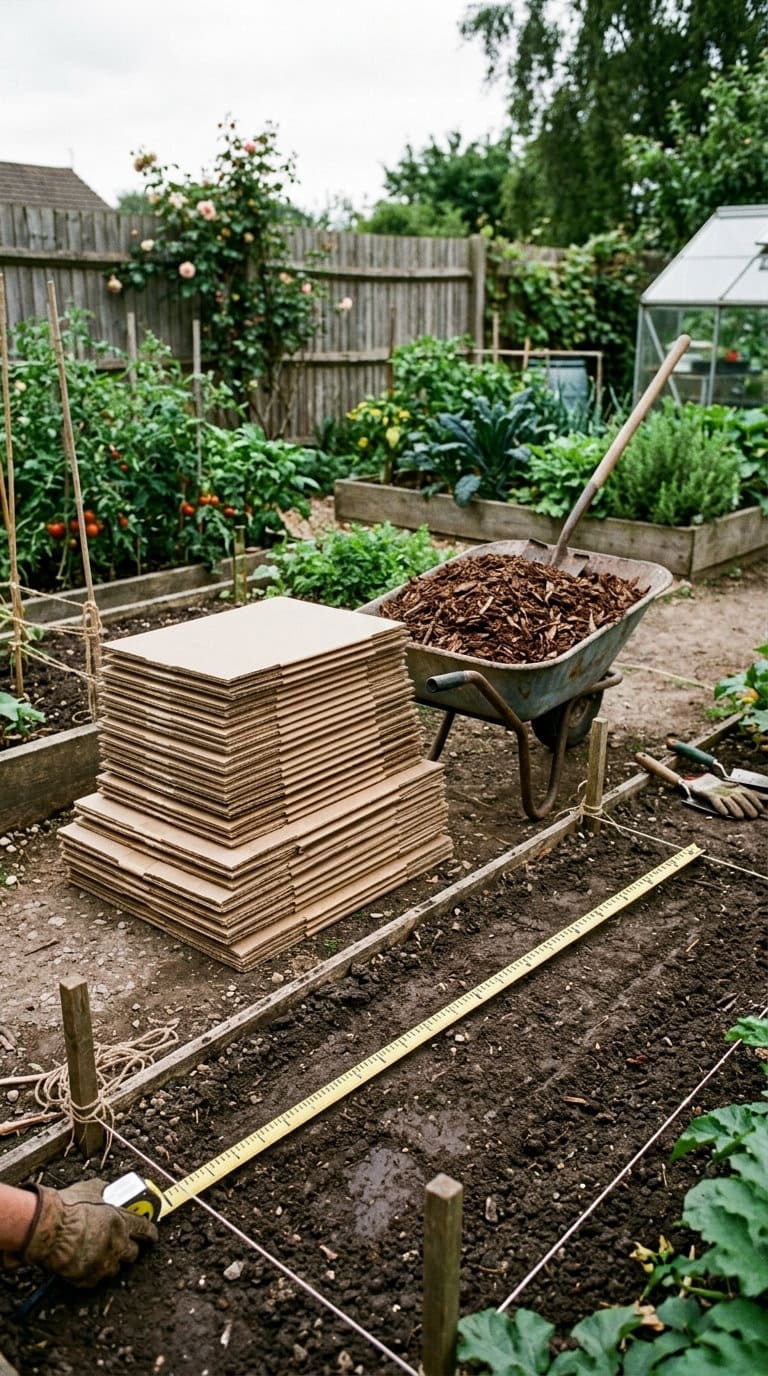
Measure the bed first. Length times width gives you square feet, and that number drives everything else.
Take a 10 by 10 foot bed, which is 100 square feet. At 4 inches deep, that’s about 1.2 cubic yards of mulch.
At 6 inches, it’s about 1.9 cubic yards. Those figures come from simple math, not from a source, so round up.
For cardboard, count the overlap. Every seam eats at least 8 inches.
A few big sheets go further than many small ones. Ask for boxes a week ahead so you aren’t short on laying day.
When is the best time to start?
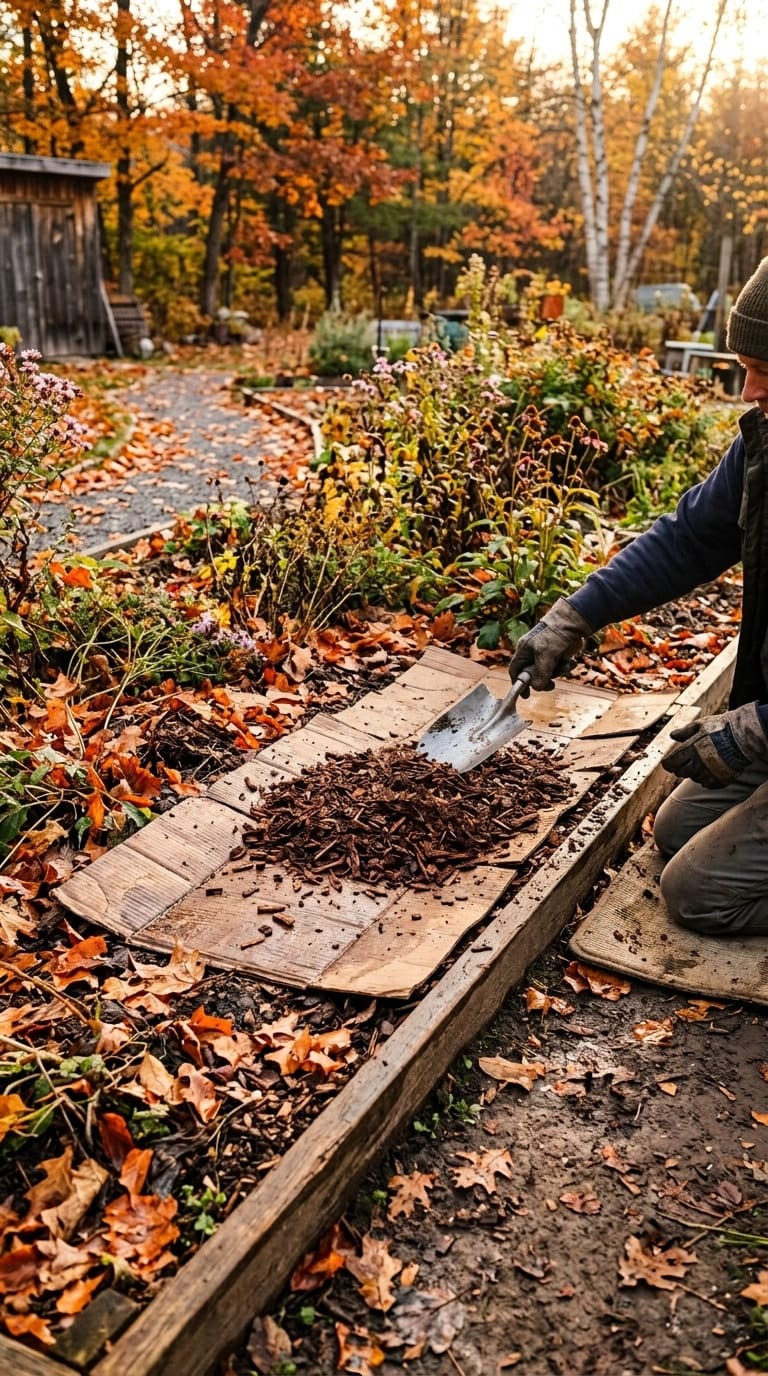
Fall is easiest. The layers break down slowly over winter, and the bed is ready by spring. Oregon State calls fall an excellent time for exactly that reason.
Sources disagree a little, though, and it depends on your climate.
| Source | Suggested timing |
|---|---|
| Oregon State University Extension | Fall, then plant in about six months |
| UC Davis Arboretum (Parker) | Late winter or early spring while the lawn is alive, then plant in fall |
| Hennepin County Master Gardeners (newspaper method) | Fall for spring planting, or spring and summer with at least a month, usually two |
Parker’s reasoning is worth remembering. In California, lawns go dormant in summer without water.
She wanted to cover grass that was still growing. Then the cardboard could kill it before it slept.
Which weeds beat cardboard?
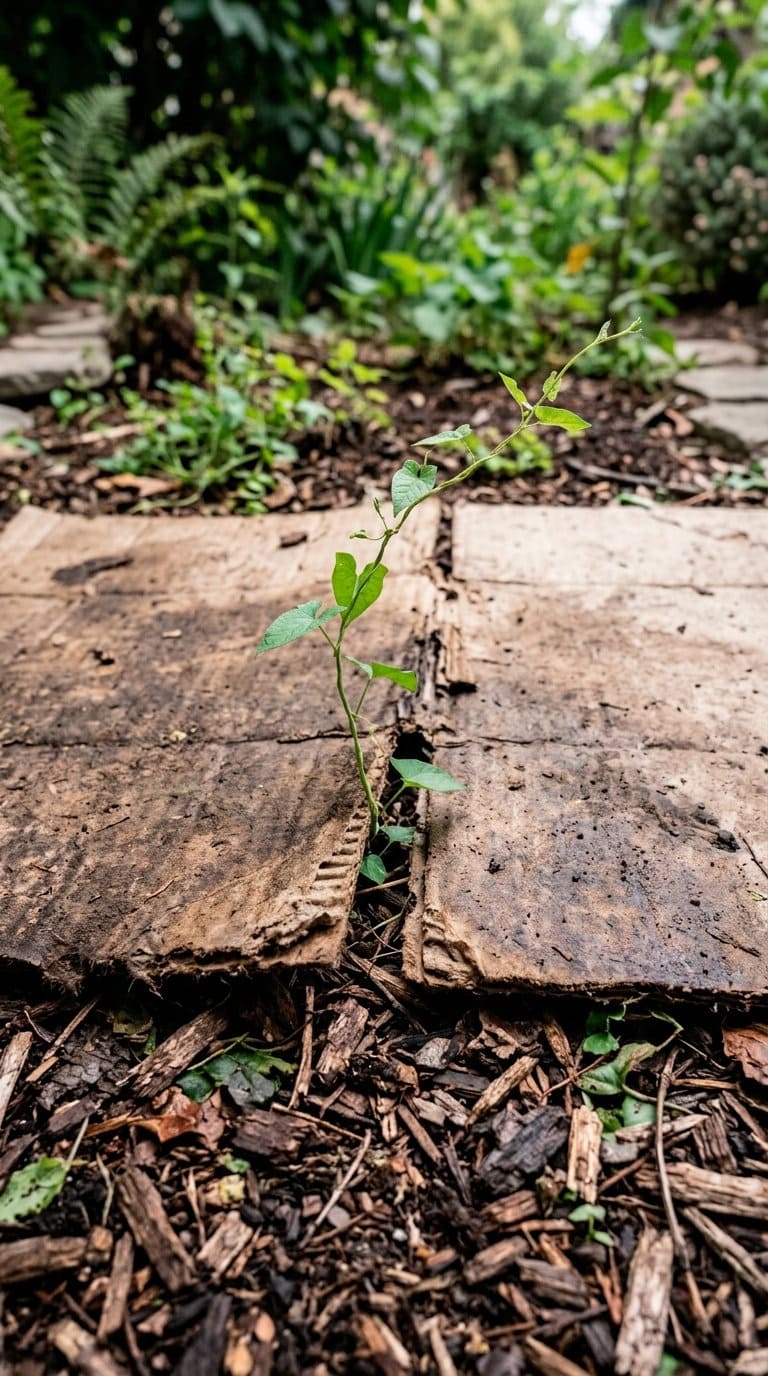
Runners and vines beat it. Oregon State names blackberry, bindweed, morning glory, and quackgrass as plants lasagna composting may not smother.
Those weeds spread underground and can grow long distances to find light. They pop up at the edges or through any crack.
With a bad patch, dig out as many roots as you can first. Then watch the edges closely all season, and pull runners the day you see them.
We’d also pick a fall start for weedy spots. It gives the cardboard a full winter head start.
Does the science actually back cardboard?
Partly. Three university sources back it for building beds. One well-known researcher says it doesn’t belong on soil at all.
Linda Chalker-Scott is a plant scientist at WSU Extension. Her 2008 fact sheet is called The Myth of Paper-Based Sheet Mulch.
Her bottom line is that they can work for annual beds if you maintain them. She says permanent landscapes and neglected sites aren’t good places for them.
Her fact sheet lists six catches. Termites preferred cardboard over wood chips as food in one study. Voles nest under sheets.
Sheets can blow away. Dry sheets can turn hydrophobic, so rain runs off instead of soaking in.
Then in 2024, she went further on The Garden Professors blog. Her post, Cardboard does not belong on your soil. Period., says cardboard should never be used as a mulch.
She says no published research supports landscape use. Her own 2019 work found huge differences in gas movement between mulches.
She also says corrugated cardboard contains dioxin and PFAS. She recommends arborist wood chips instead.
That last claim needs a careful read. Chalker-Scott cites Fernandes and colleagues (2023) for the chemical levels.
That study in Science of the Total Environment tested recycled chicken bedding. It looked at how contaminants moved into eggs and tissue. It wasn’t a garden study.
We found no published study of PFAS or dioxin uptake into vegetables from cardboard mulch. So the honest answer is that the risk isn’t measured, not that it’s proven safe.
If you grow food there, use plain brown cardboard with no tape or print. Skip anything waxed or greasy.
| Source | Position on cardboard |
|---|---|
| Oregon State Extension | Recommends it for beds, notes it limits water and air flow |
| Texas A&M AgriLife (Fry) | Works, best for perennials, less effective for annuals and vegetables |
| UC Davis Arboretum (Parker) | Recommends it for lawn removal |
| WSU, 2008 fact sheet (Chalker-Scott) | Can work for well-maintained annual beds, not permanent landscapes |
| WSU, 2024 blog post (Chalker-Scott) | Never use it as a mulch |
| Hennepin County Master Gardeners | Prefers newspaper, says cardboard breaks down slower and may contain unsafe glues |
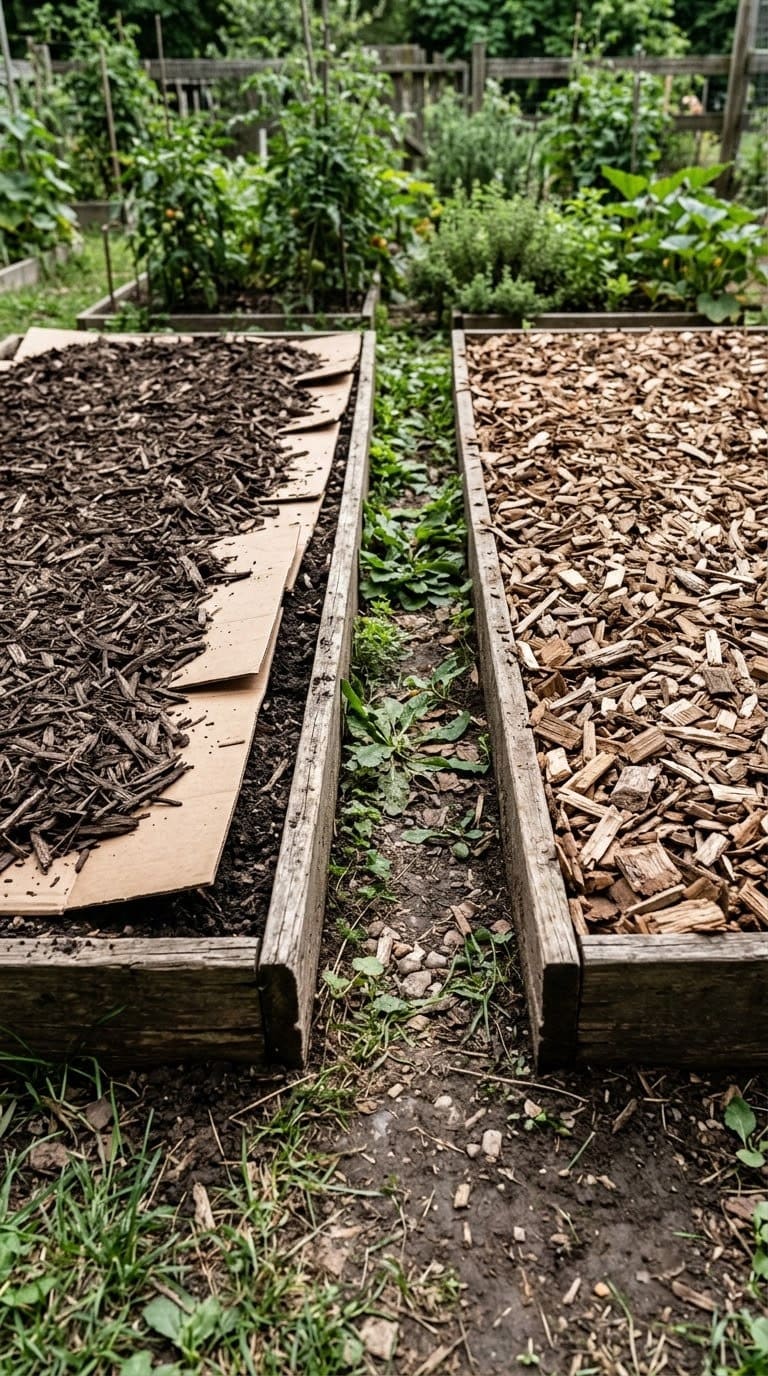
How does cardboard compare with newspaper and wood chips?
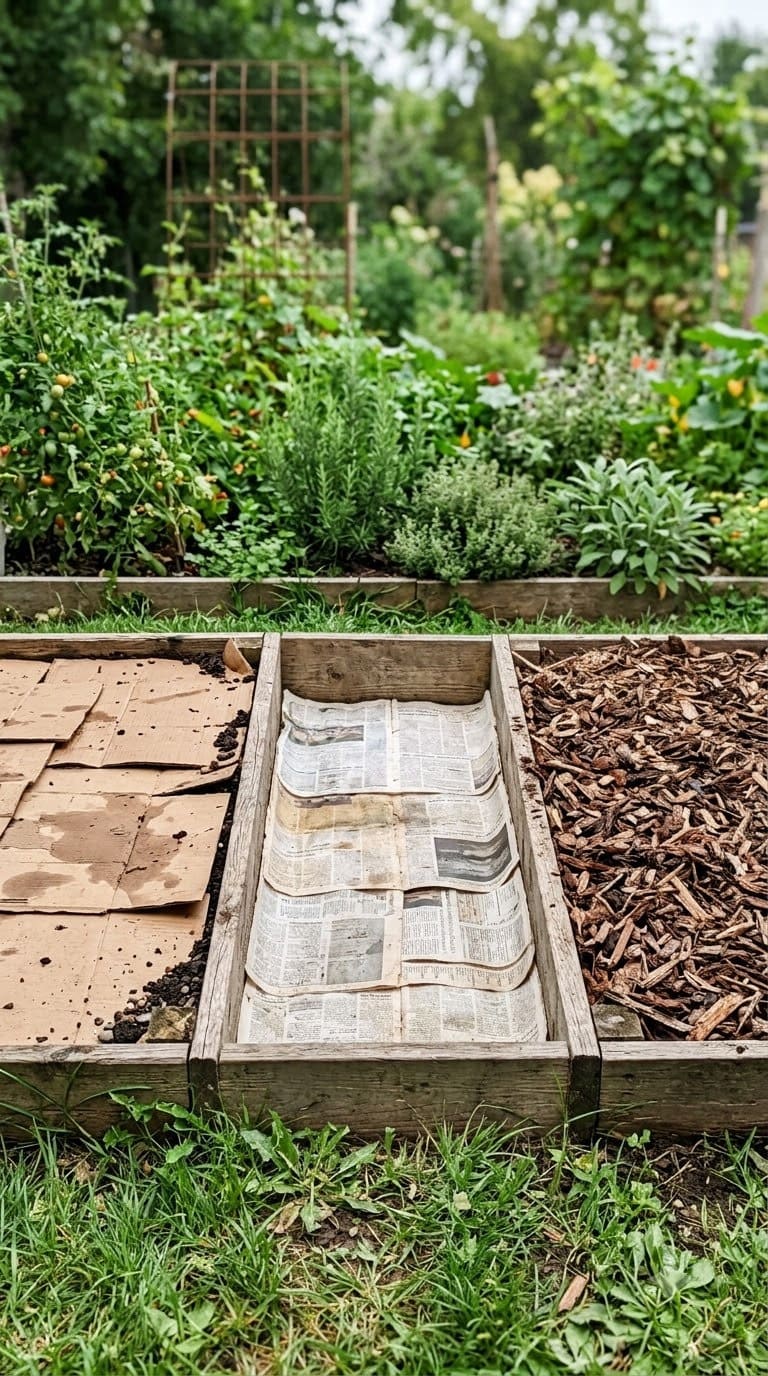
They each win at something different. Hennepin says newspaper breaks down faster than cardboard. Chalker-Scott says wood chips move air and water better than either one.
Hennepin’s Meleah Maynard starts with 5 to 8 sheets of newspaper. Next comes 4 to 6 inches of topsoil mixed with compost. Then she adds 3 to 4 inches of organic mulch.
She says to skip glossy pages and cardboard. Cardboard breaks down slower and may contain unsafe glues for edible beds.
| Material | Break-down speed | Best fit |
|---|---|---|
| Plain brown cardboard | Slower, about six months per Oregon State | Lawn removal and big weedy areas |
| Newspaper (5 to 8 sheets) | Faster than cardboard, per Hennepin | Vegetable beds you want ready sooner |
| Wood chips alone | Slow, but they let air and water through | Trees and long-lived plantings, per Chalker-Scott |
Our guide on how to get rid of a lawn full of weeds covers other methods.
What gardeners learn the hard way
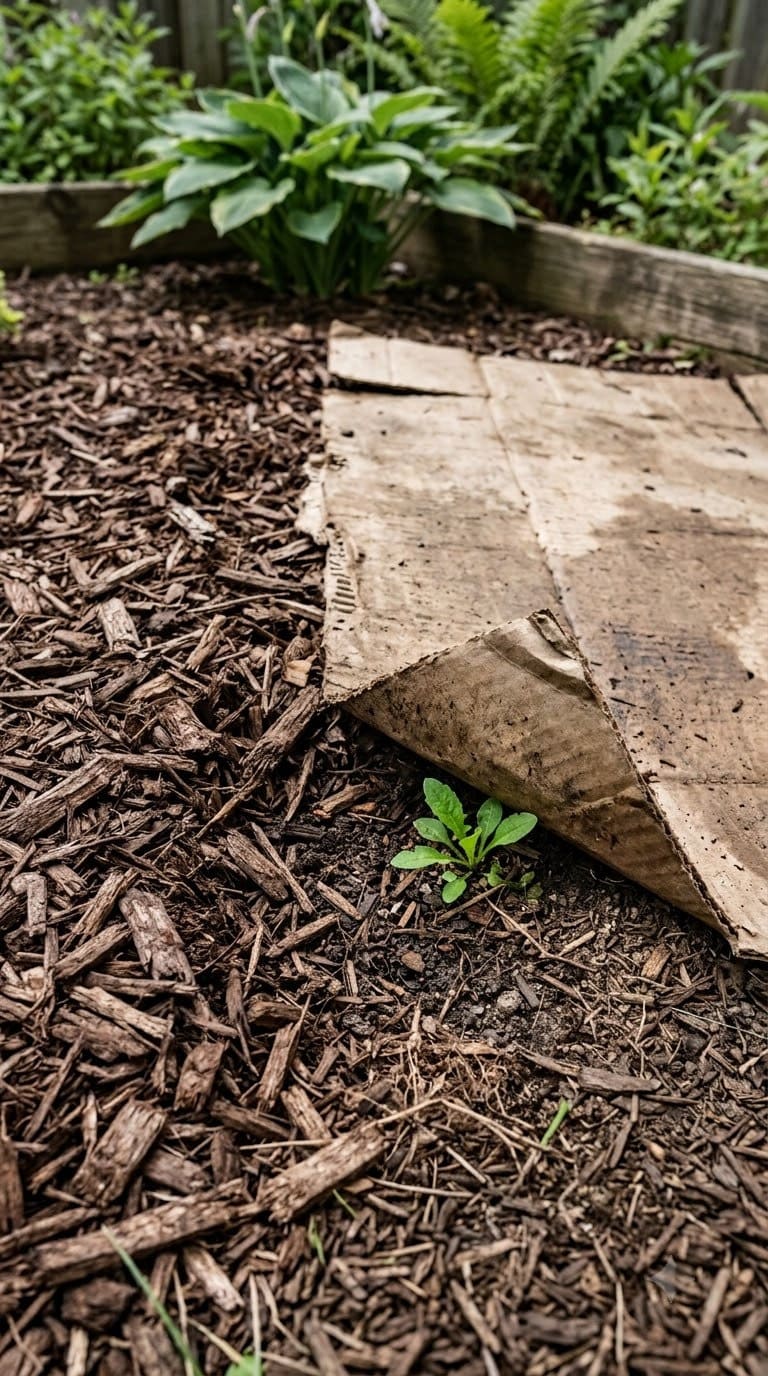
The most common failure is a gap. Parker saw a crack in her cardboard reveal hardy weeds reaching for light. Fry says every shred or hole is a chance for light to get through.
So lay it wet, overlap it big, and check it a week later. Any spot where cardboard has shifted needs more mulch right away.
The second problem is thin mulch. Parker’s first delivery gave her about an inch of mulch.
She said that wasn’t enough to smother a lawn. Oregon State and UC Davis both say to aim for 4 to 6 inches.
Third, water can be an issue. Oregon State says cardboard limits the flow of water and air into the soil.
Fry says it can slow water soaking in. She suggests drip irrigation beneath the cardboard.
That fits WSU’s warning about dry sheets. Dry cardboard can shed water. Keep the bed lightly moist, especially in a droughty summer.
Fourth, think about what you’re growing. Texas A&M says cardboard is best for trees, shrubs, and other perennials.
It’s less effective for annual flowers and vegetables. That’s because planting through it takes some creativity.
Oregon State treats it as a way to build vegetable beds. WSU says it can work for annual beds if you maintain them.
Both can be true. Just expect more hands-on care in a vegetable bed.
How do you plant into a cardboard bed?
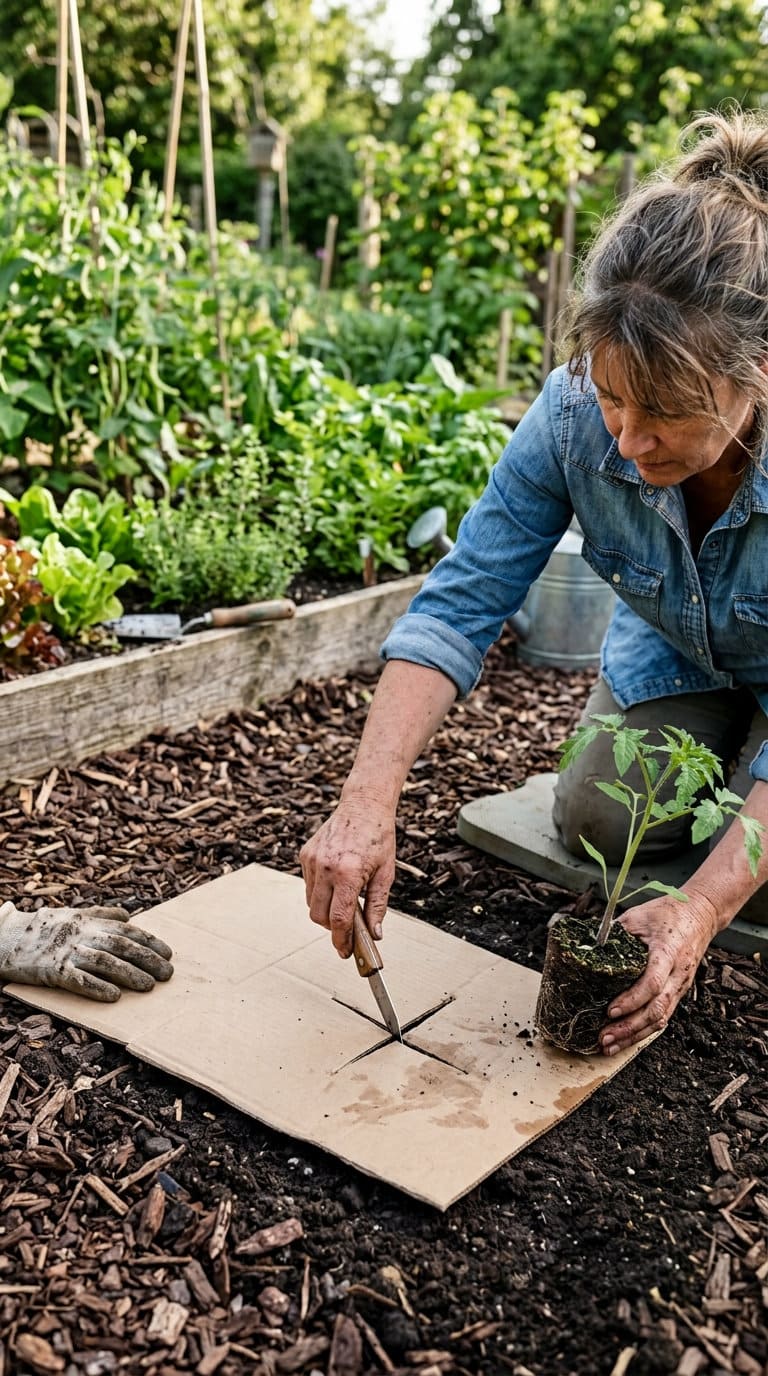
Wait until the cardboard is soft. Then cut an X or a hole, pull mulch aside, and set the plant in.
Oregon State says you can also lay cardboard around plants already in the ground. That works well for shrubs and trees you want to keep.
For seeds and small transplants, the compost-on-top method is easier. Put 2 to 3 inches of compost or garden soil over the mulch.
Plant into that. Our guide to making garden compost step by step shows how to make your own.
For a taller bed, Oregon State says lasagna beds can reach 18 inches to 3 feet. A raised vegetable garden bed frame helps hold those layers in place.
What mistakes should you avoid?
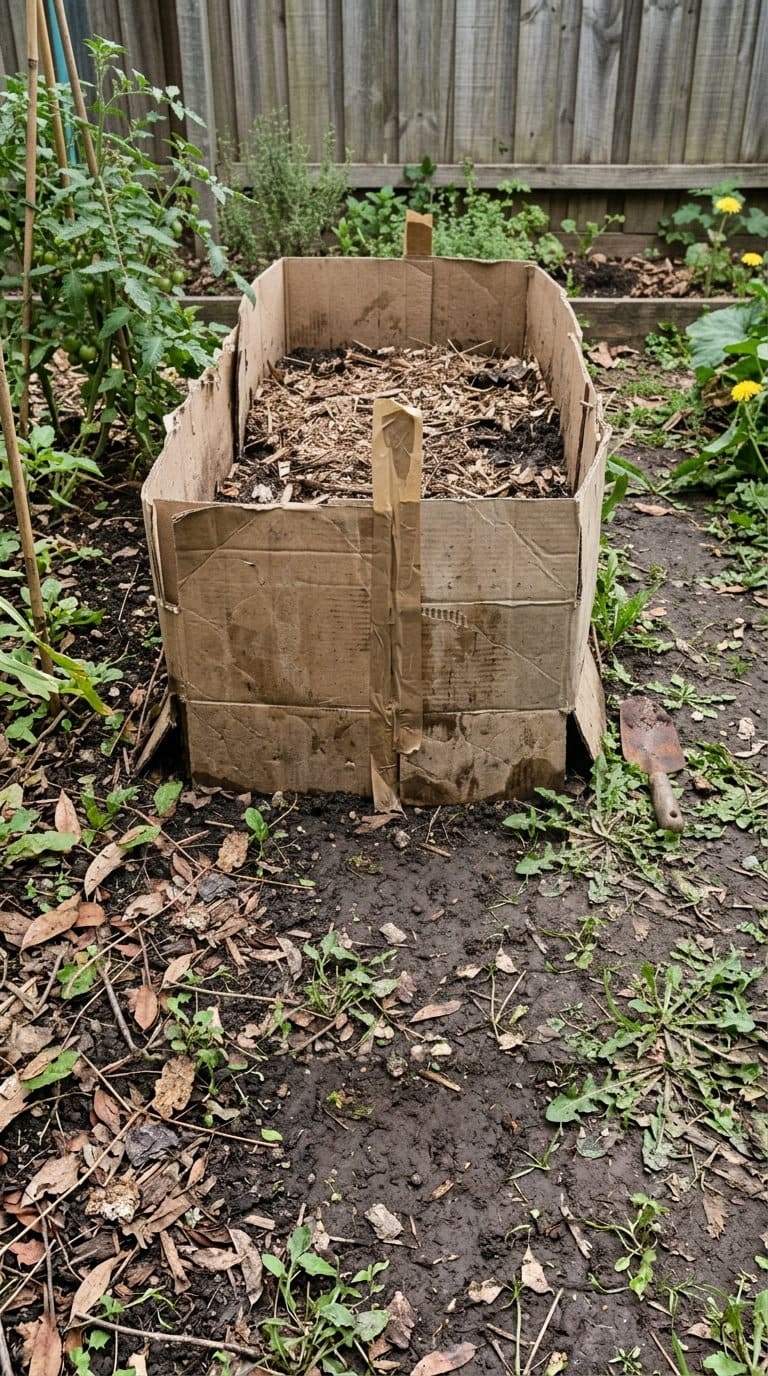
The first is using the wrong cardboard. Glossy, printed, and taped boxes leave residue and slow the breakdown. Stick to plain brown.
The second is skipping the overlap. Anything under 8 inches invites weeds through the seam.
The third is skimping on mulch. If you can still see cardboard, you need more. A guide to why mulch matters in the garden explains what a thick layer does.
Another is planting too soon. The bed needs months to break down, so be patient.
And don’t ignore the edges. That’s where quackgrass and bindweed slip in.
Finally, tidy the edge. A crisp border keeps grass from creeping back under the mulch. Our garden edging ideas cover neat options.
On a tight budget? Our post on cheap gardening ideas has more ways to save.
Frequently asked questions
Is cardboard safe for a vegetable garden?
Nobody has measured it. We found no published study on PFAS or dioxin uptake into vegetables from cardboard sheet mulch. Use plain brown cardboard with no tape or print, and skip waxed or greasy boxes.
Can I use newspaper instead of cardboard?
Yes. The Hennepin County gardeners prefer newspaper.
They use 5 to 8 sheets. They say to skip glossy pages.
How long does cardboard last in the garden?
Oregon State says a bed may take 6 months or longer to break down. Texas A&M says you get at least a season, sometimes longer. You’ll need to reapply eventually.
Does cardboard attract termites?
It can. WSU’s 2008 fact sheet says termites preferred cardboard over wood chips as food in one study. It adds that voles often nest under sheets.
Can I plant right away?
Not through fresh cardboard. Wait until it softens. Or add 2 to 3 inches of compost or soil on top.
Related Posts
Products We Recommend
This post contains affiliate links. We may earn a commission on qualifying purchases at no extra cost to you.
Flipside Products 32" x 40" Kraft Corrugated Project Sheets, Pack of 10
Plain brown, unprinted, flat kraft cardboard with no tape or labels to peel off. It's sold as a craft product and costs more than free boxes from a store, so treat it as a backup if you can't find big boxes.
Shop Now
Colwelt Saw-Tooth Half Moon Lawn Edger, 38-Inch
A long-handled half-moon edger with a serrated steel blade for cutting the clean border trench in Step 1.
Shop Now
HAUTMEC 25mm Extra Heavy-Duty Utility Knife
A ratchet-lock knife with a reinforced handle for trimming cardboard around trees, posts, and corners in Step 2.
Shop NowNever miss an update — choose FarmFoodFamily as your preferred source on Google.
How it works: Tap the button below to open Google's settings page, then check the box next to FarmFoodFamily.
Tap the checkbox to turn it blue — that's how you know it's set.