30+ Genius Narrow Backyard Ideas (and the One Layout Mistake to Avoid)
Most narrow-backyard guides are just normal-yard advice shrunk down. That misses the actual problem. A narrow lot isn’t a small version of a wide one, it’s a different shape entirely, and the instinct that works fine in a wide yard (a straight line of privacy planting across the back) is exactly the move that makes…

Never miss an update — choose FarmFoodFamily as your preferred source on Google.
How it works: Tap the button below to open Google’s settings page, then check the box next to FarmFoodFamily.
Tap the checkbox to turn it blue — that’s how you know it’s set.
Most narrow-backyard guides are just normal-yard advice shrunk down. That misses the actual problem. A narrow lot isn’t a small version of a wide one, it’s a different shape entirely, and the instinct that works fine in a wide yard (a straight line of privacy planting across the back) is exactly the move that makes a narrow one feel like a hallway instead of a garden.
This guide starts with that mistake, then moves into ideas that actually work with the shape instead of fighting it.
The one layout mistake to avoid
Here’s the instinct almost everyone has with a narrow yard: plant a solid privacy screen straight across the back to block the neighbors. It feels like the obvious move.
It’s also, according to a 72-comment r/landscaping thread specifically about small-backyard privacy, the exact thing to avoid. One commenter put it bluntly: “Planting a straight line across the back is a mistake anyway. It boxes you in and makes a small yard look like a prison.”
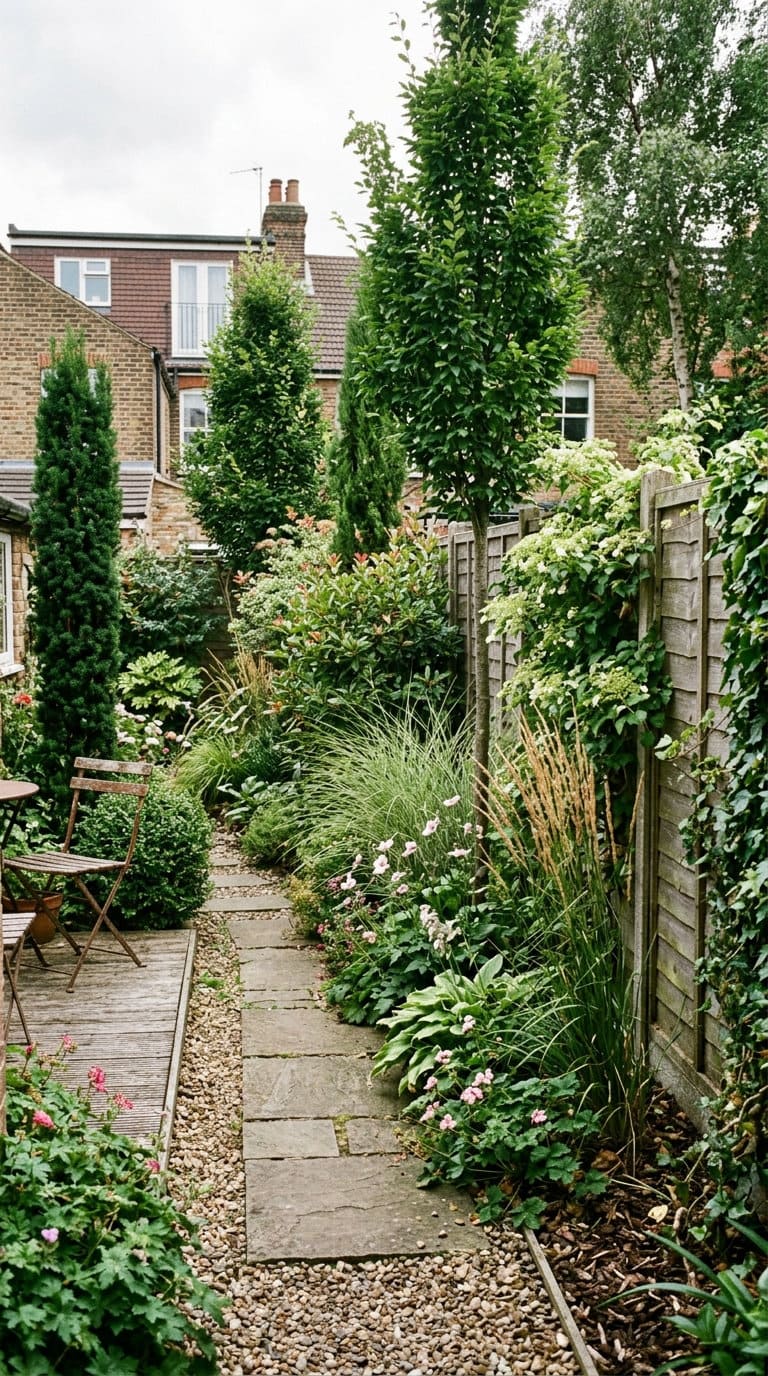
The fix isn’t skipping privacy, it’s staggering it. Offset plantings at varying heights and depths, a curved line instead of a straight one, or screening broken into a few distinct clusters rather than one continuous wall, all read as intentional design rather than a barrier.
The eye reads a broken, layered line as more space, not less, even though it’s providing the same coverage. Every idea below that touches privacy or screening builds on this principle rather than defaulting to the straight-line instinct.
Answer 4 quick questions and get matched to the exact fix for your yard — drainage, budget, layout, or something else entirely.
Take the Free QuizLayout and flow
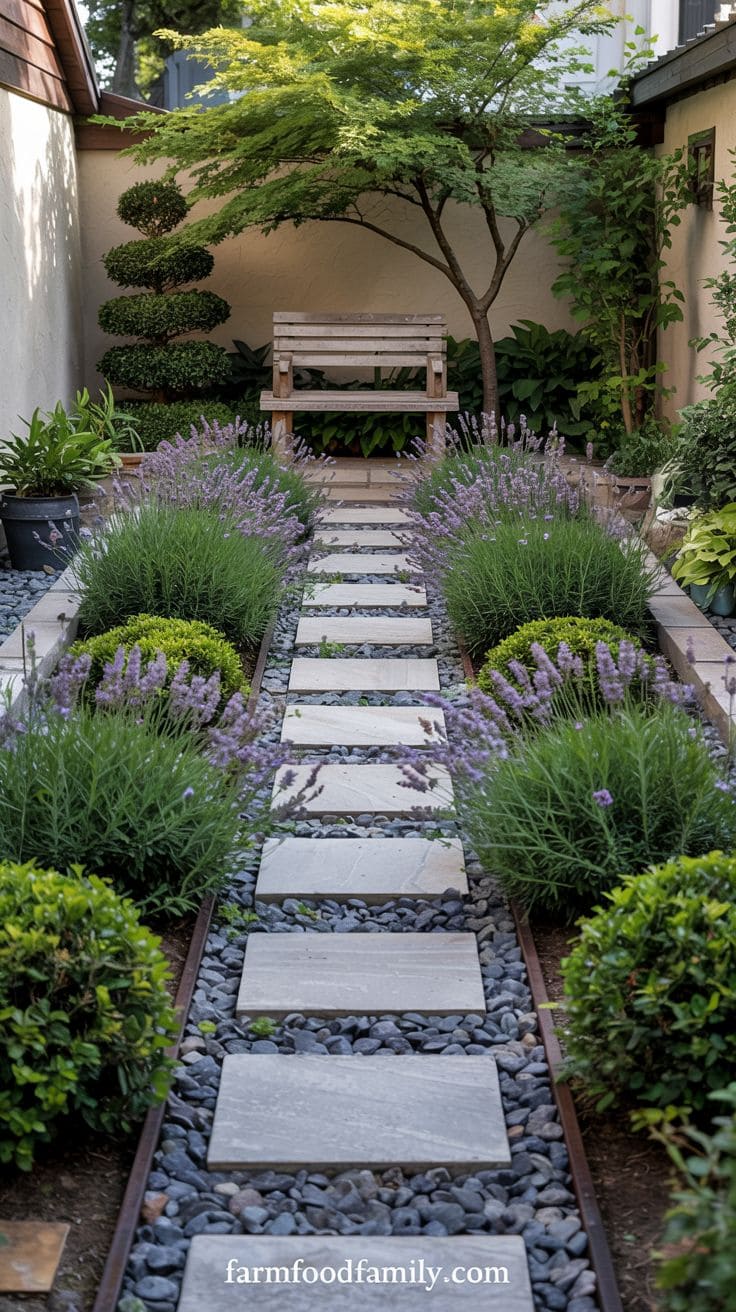
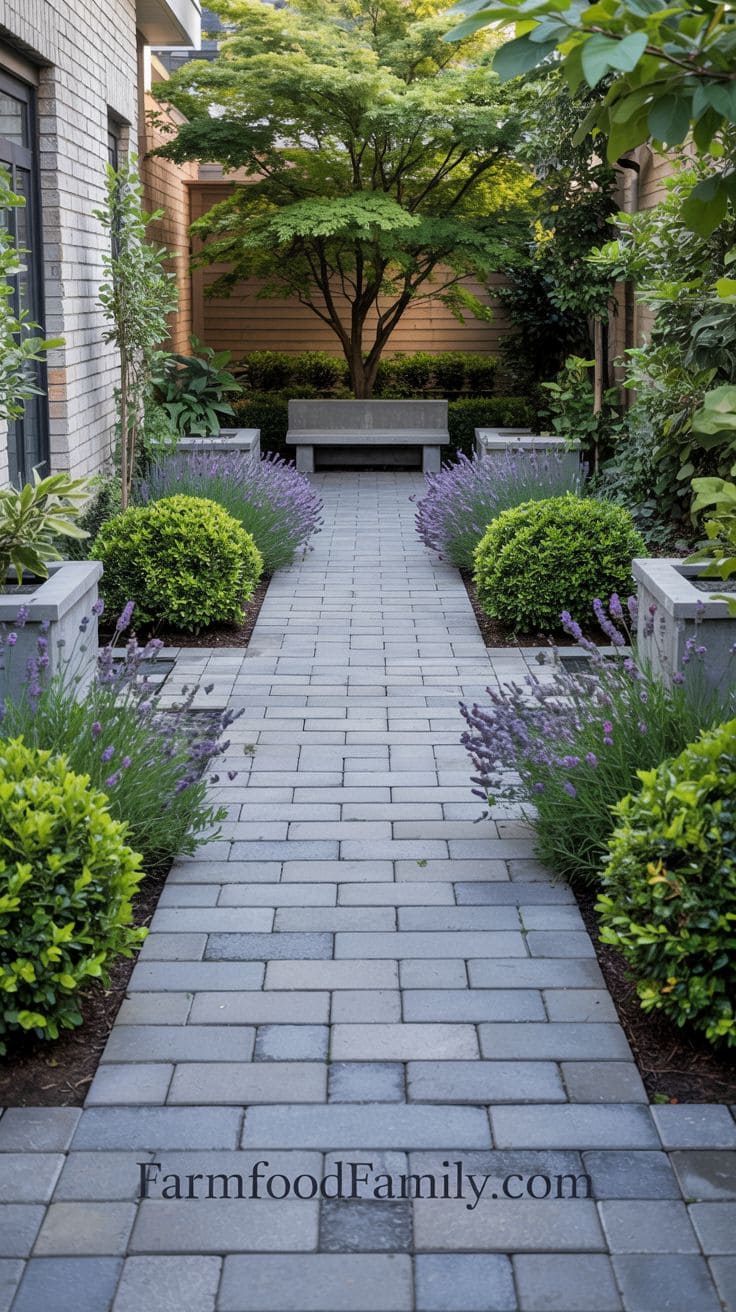
A Curved Central Pathway
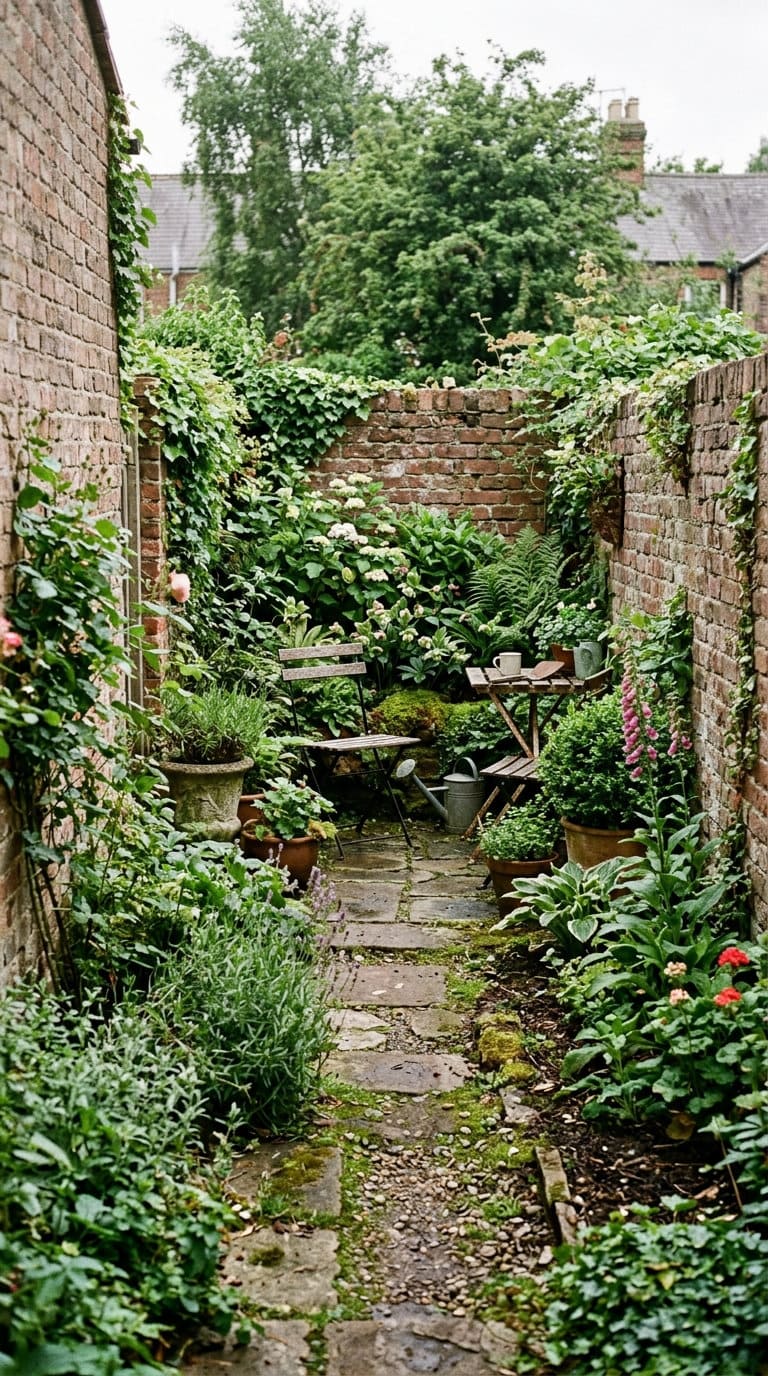
A pathway is one of the simplest ways to add structure to a narrow yard, but the shape matters more here than in a wide one: a dead-straight path emphasizes the narrowness and can read as a runway.
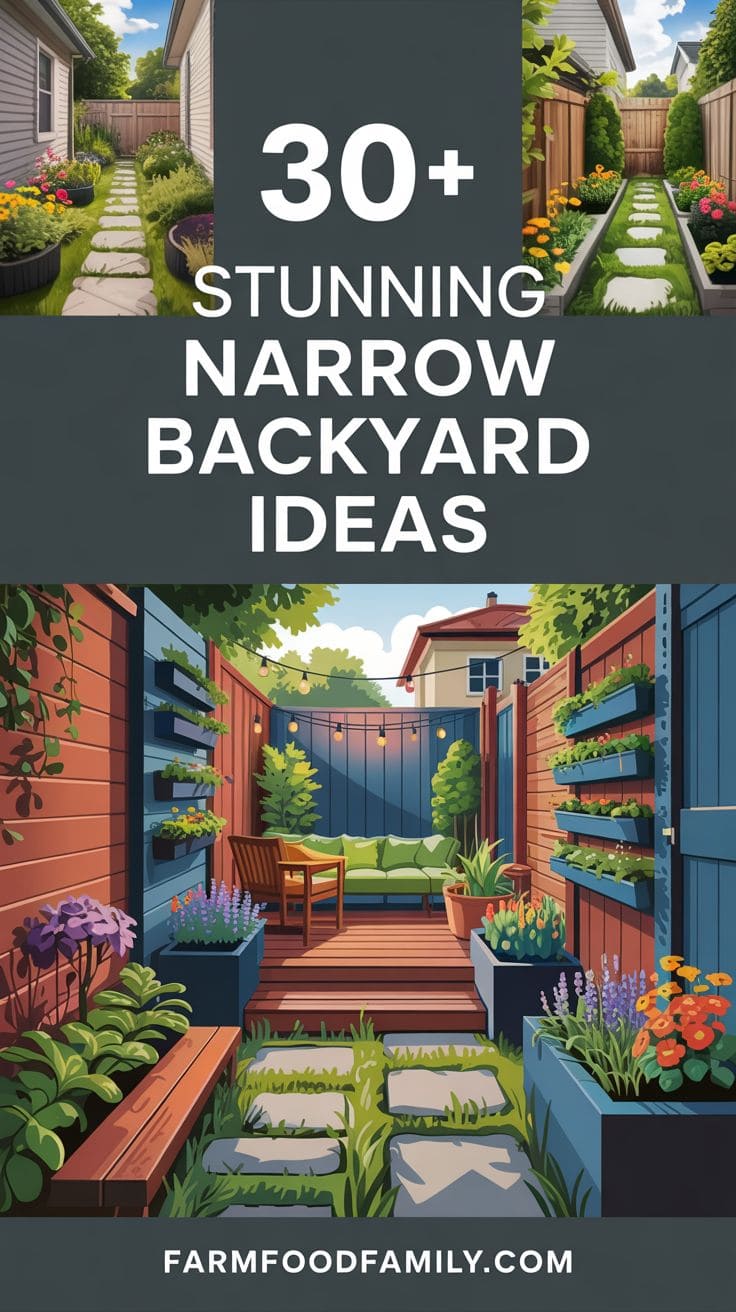
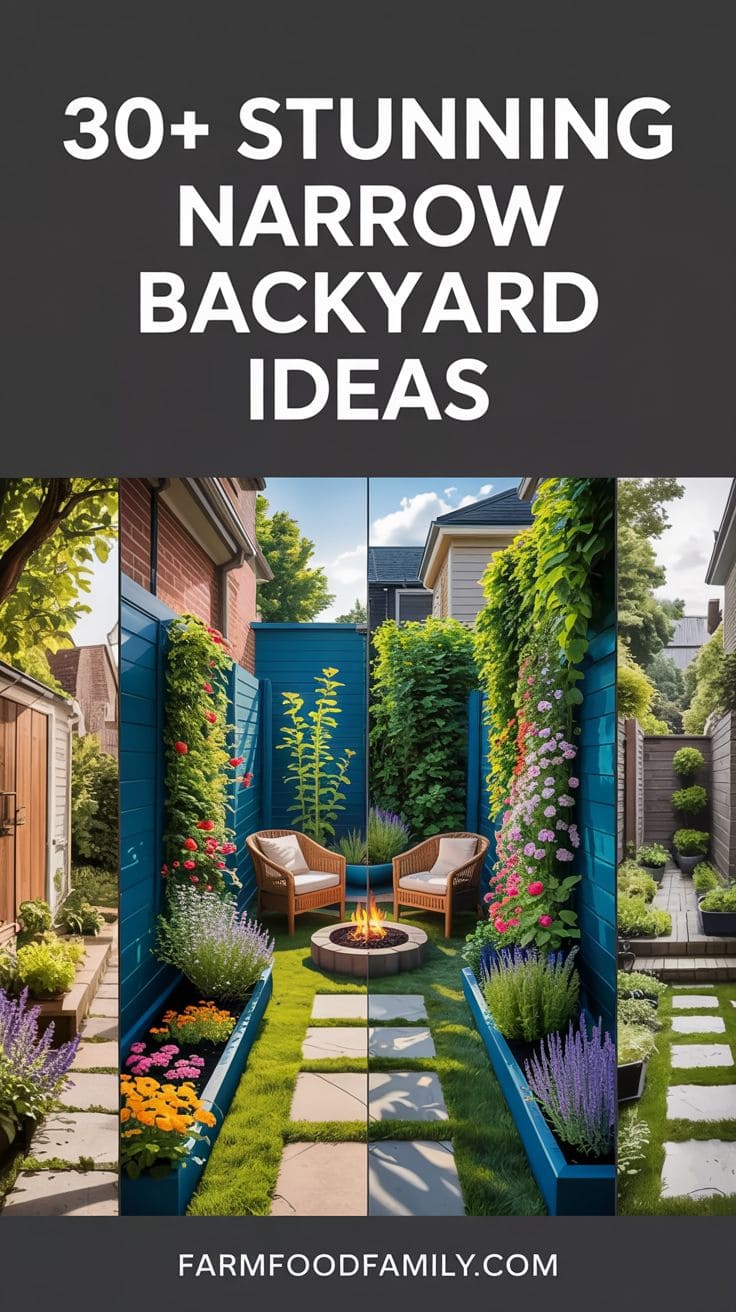
A gently curved or slightly offset path, using stepping stones, brick, gravel, or pavers, breaks up that tunnel effect while still giving the space clear organization. Flank it with low grasses or small bushes for symmetry without bulk.
Make an Eye-Catching Long Central Pathway
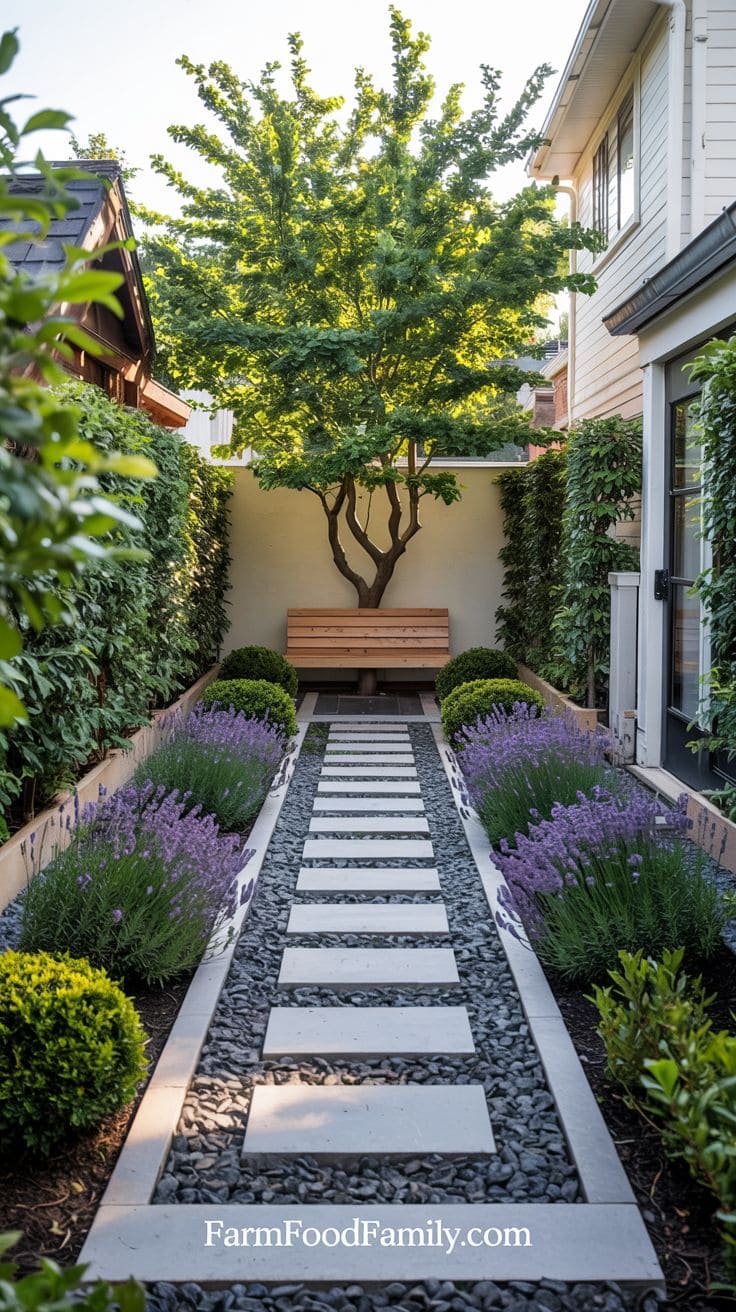
One of the simplest ways to add movement and structure to a small backyard is to create a long, straight pathway that runs down the center or slightly out to one side.
To suit your style, consider using stepping stones, brick, gravel, or pavers.
This visual line gives the idea of length and organization.
To add symmetry, flank it with soft landscaping such as low grasses, small bushes, or alternating flower beds.
If the route appears too stark, allow it to meander slightly or add garden items such as a bench or tiny fountain.
Most yard problems trace back to one specific, fixable cause. Find yours in 4 quick questions.
Take the Free QuizWith this configuration, even a small backyard feels longer and more purposefully organized.
Treat It as a Linear Room, Not One Big Space
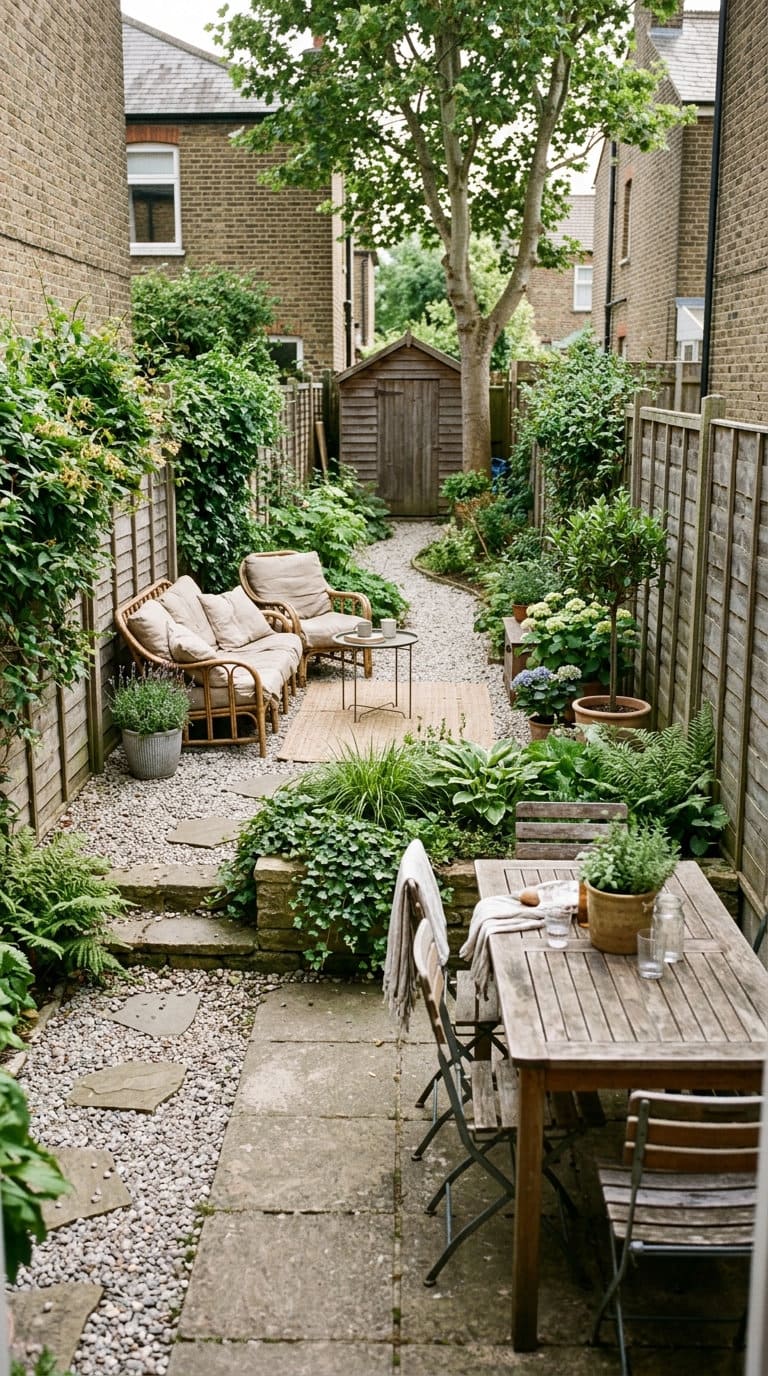
Rather than one continuous open area, divide the yard lengthwise into distinct zones, a dining spot near the house, a lounge area further back, a green pocket at the far end.
Each zone only needs to be a few feet deep to read as its own space, and the transition between zones (a change in paving material, a low planter, a change in level) does more to create the feeling of multiple rooms than physical walls ever could in a narrow footprint.
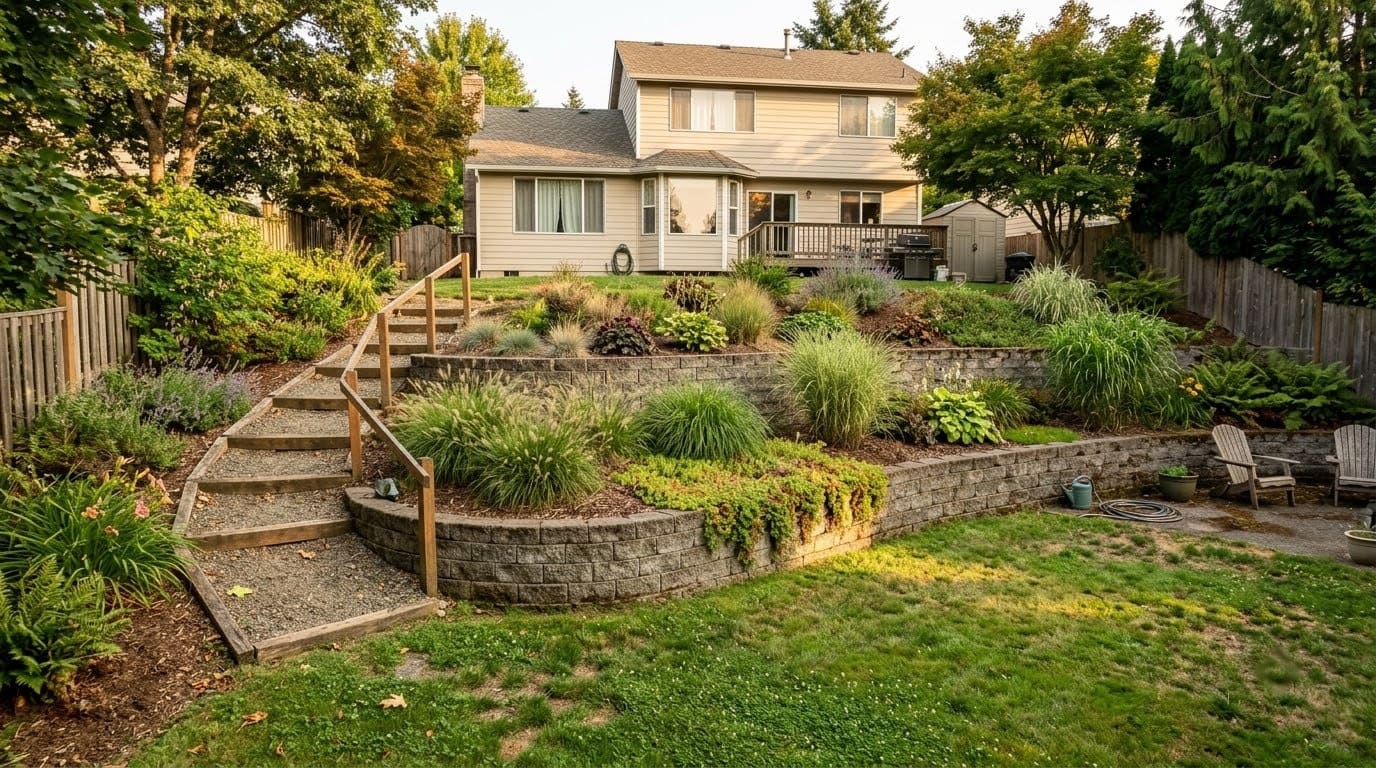
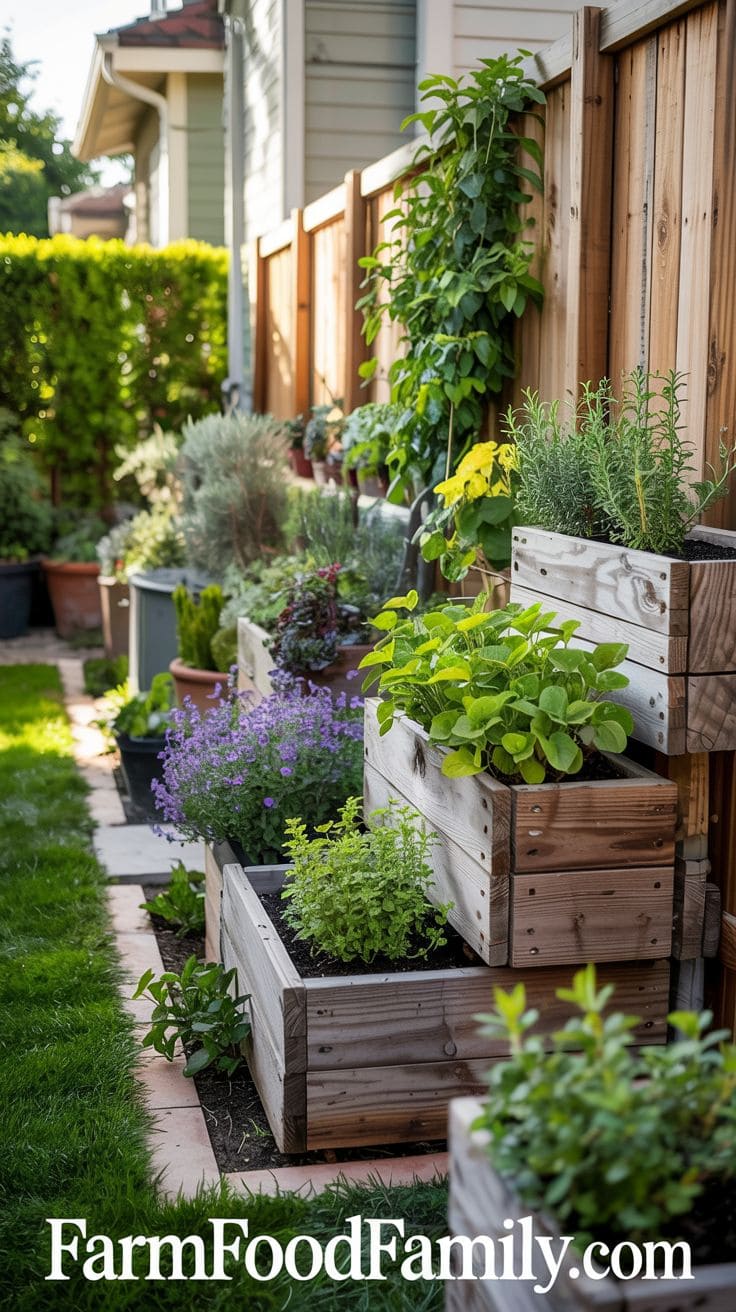
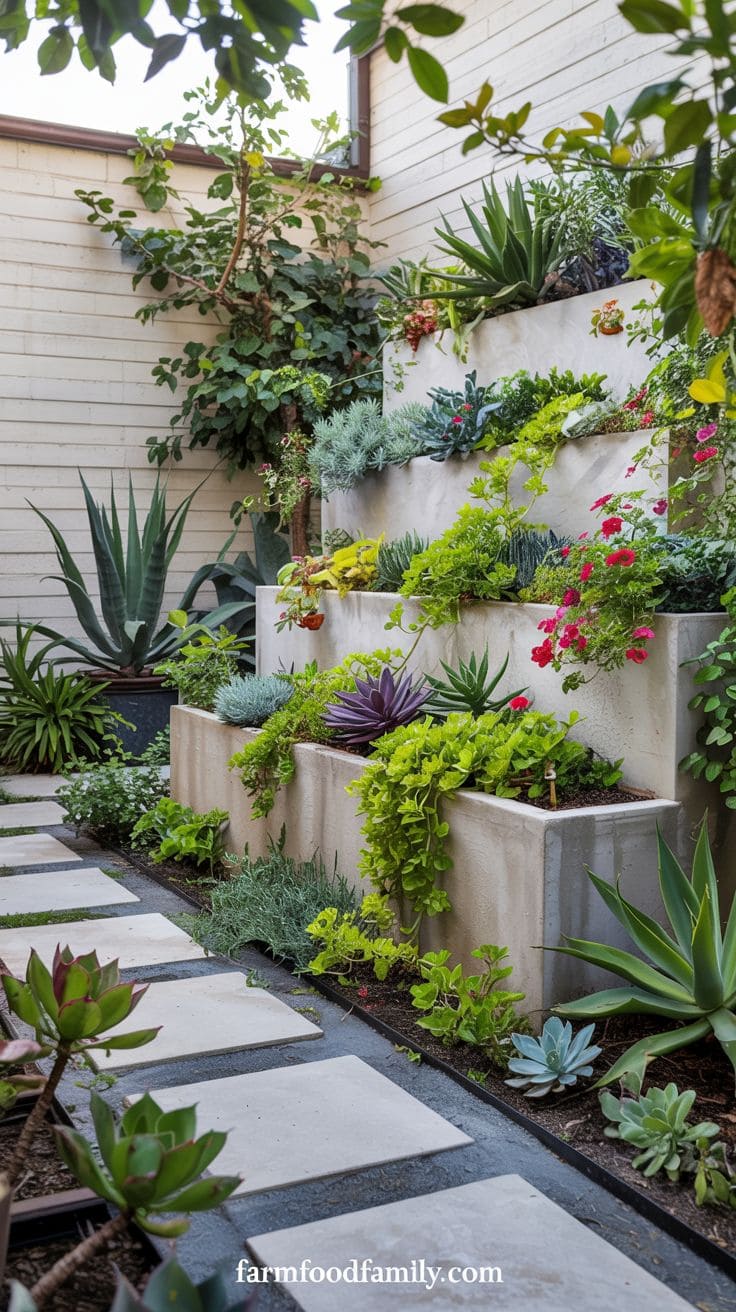
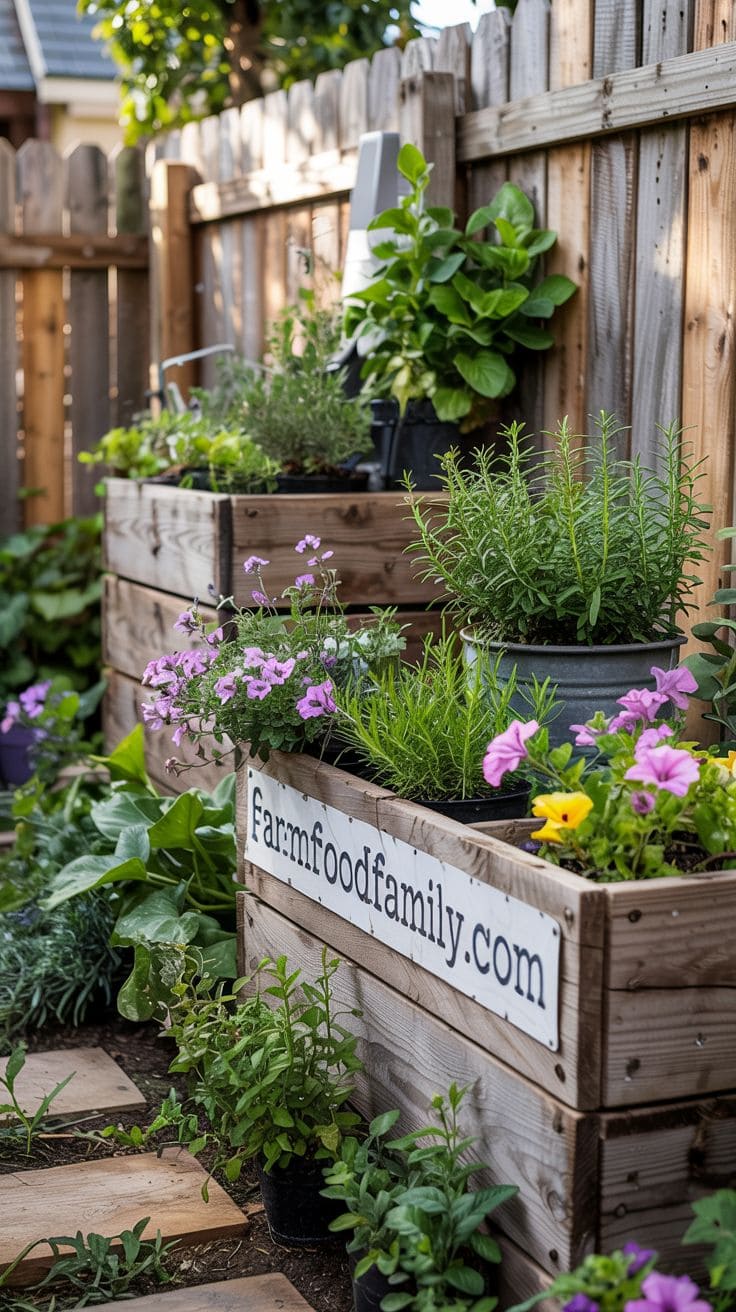
Tiered Planting Beds Along the Edges
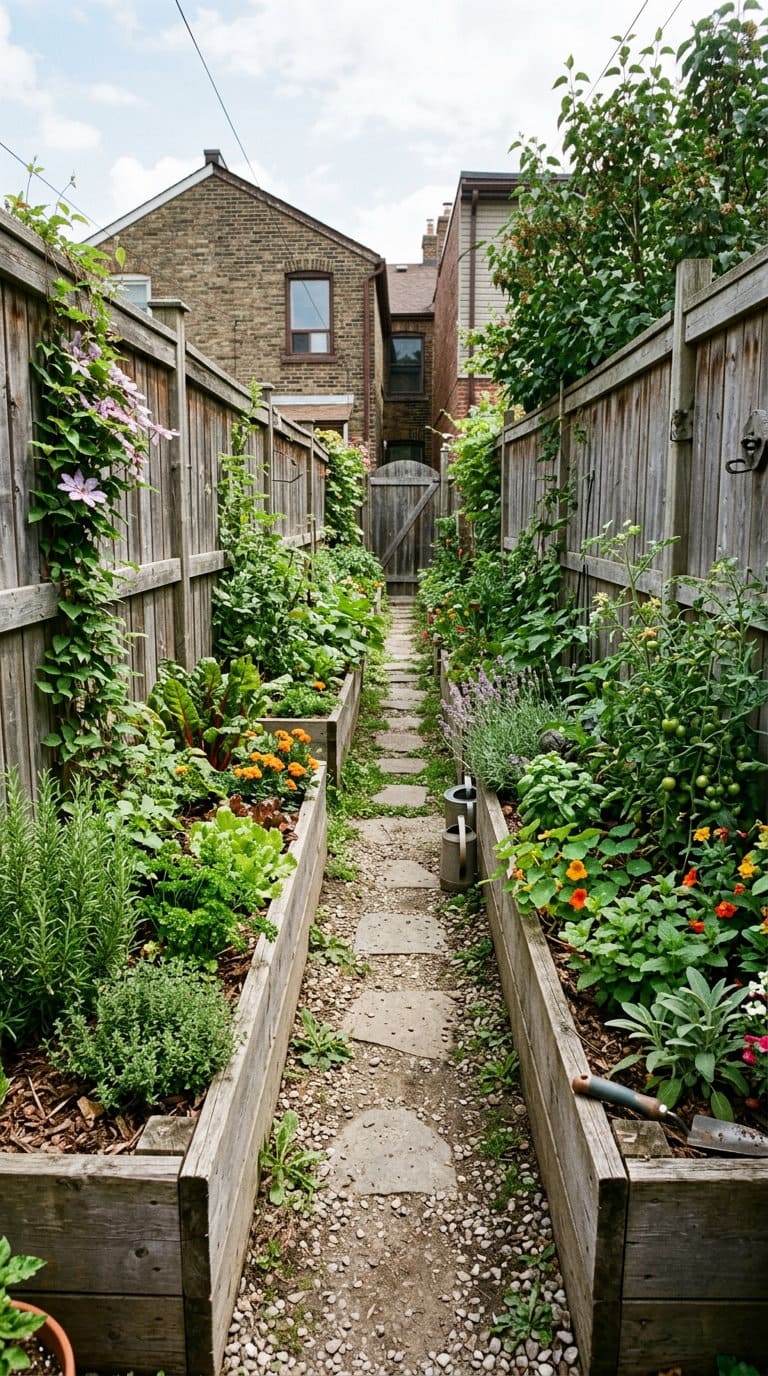
In a narrow yard, the side walls and fences are genuinely valuable real estate, arguably more valuable than the ground itself.
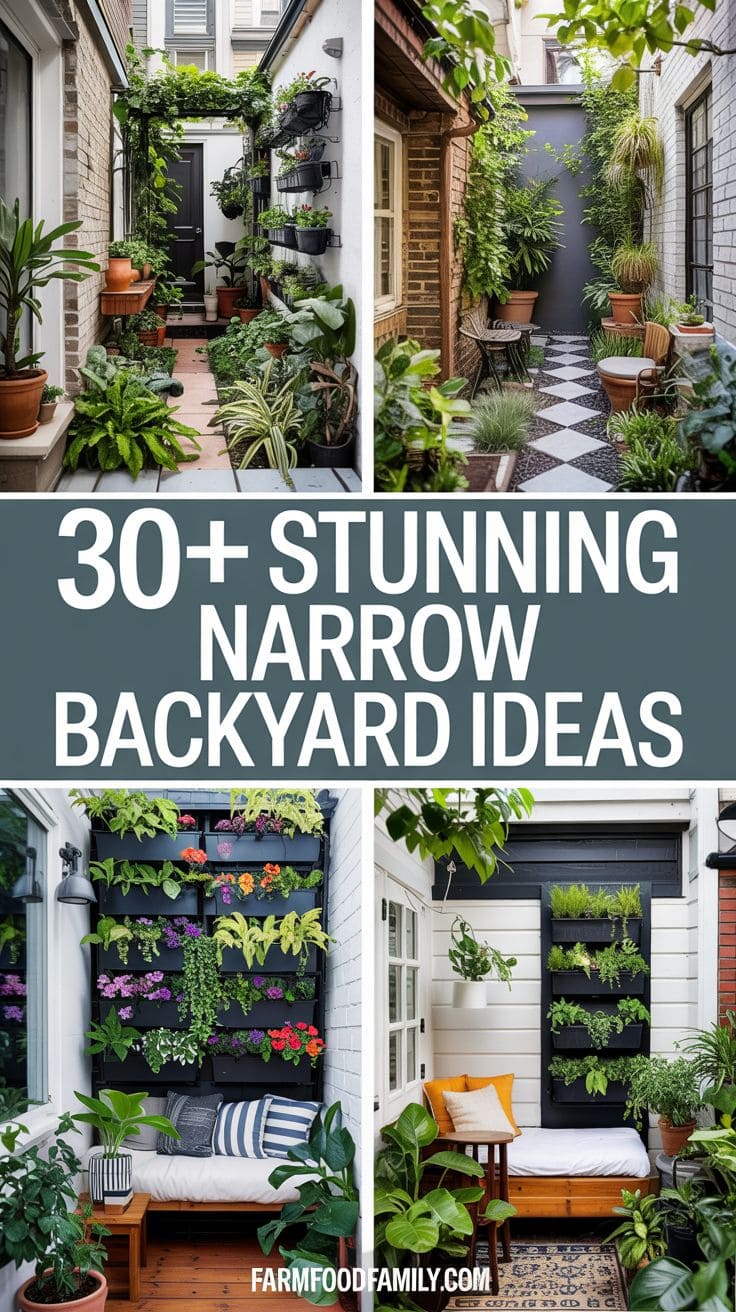
Raised or tiered beds along both sides let you grow herbs, ornamental grasses, and flowering perennials without eating into the yard’s already-limited width, and the layered height adds visual richness a flat planting bed can’t.
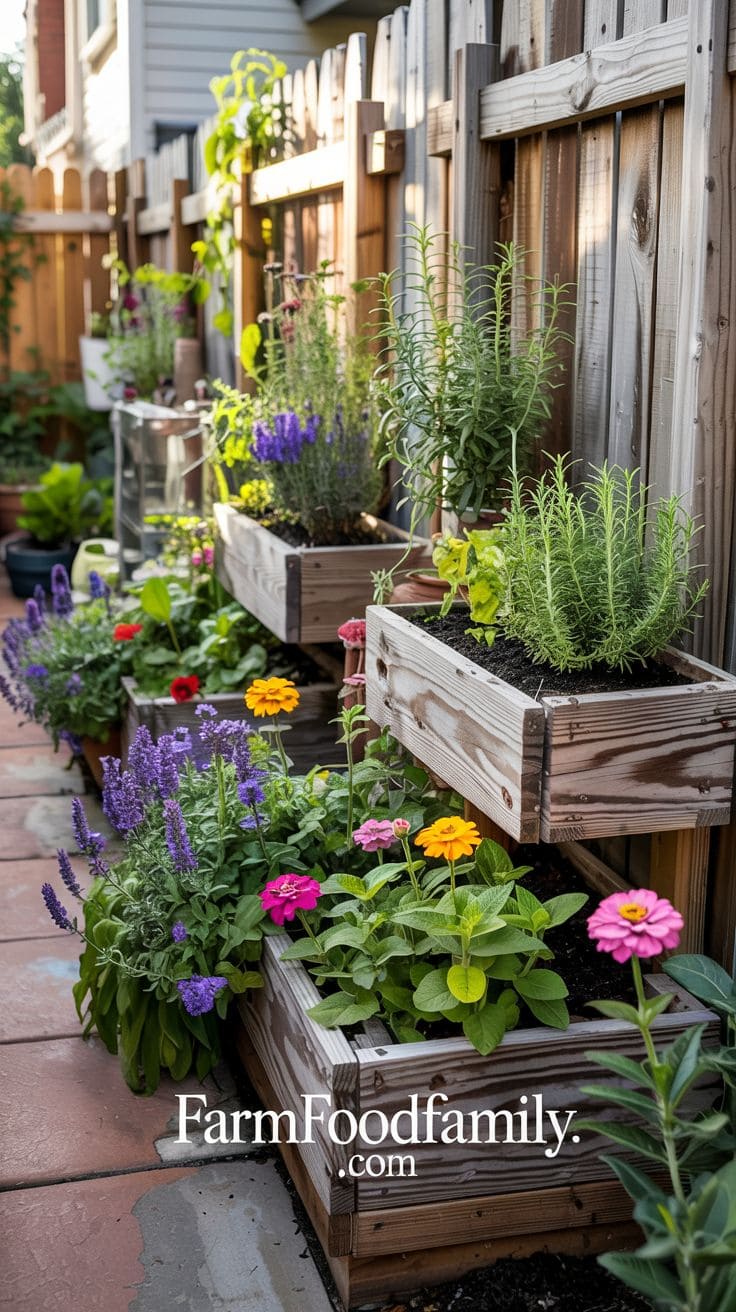
In a small yard, walls and fences become valuable real estate. Make the most of them by creating raised or tiered garden beds along the sides. Use these layers to grow herbs, decorative grasses, and flowering perennials.
Tiered beds not only reduce horizontal space, but they also add visual height and richness.
You can use wood, stone, or concrete to complement your home’s façade and overall garden aesthetic.

They help to control growth and keep your planting zones clean, while also providing an ordered structure for rotating seasonal blossoms or culinary vegetables.
This layering effect adds depth and character to a thin plot.
Vertical space
Vertical Gardening on Walls and Fences
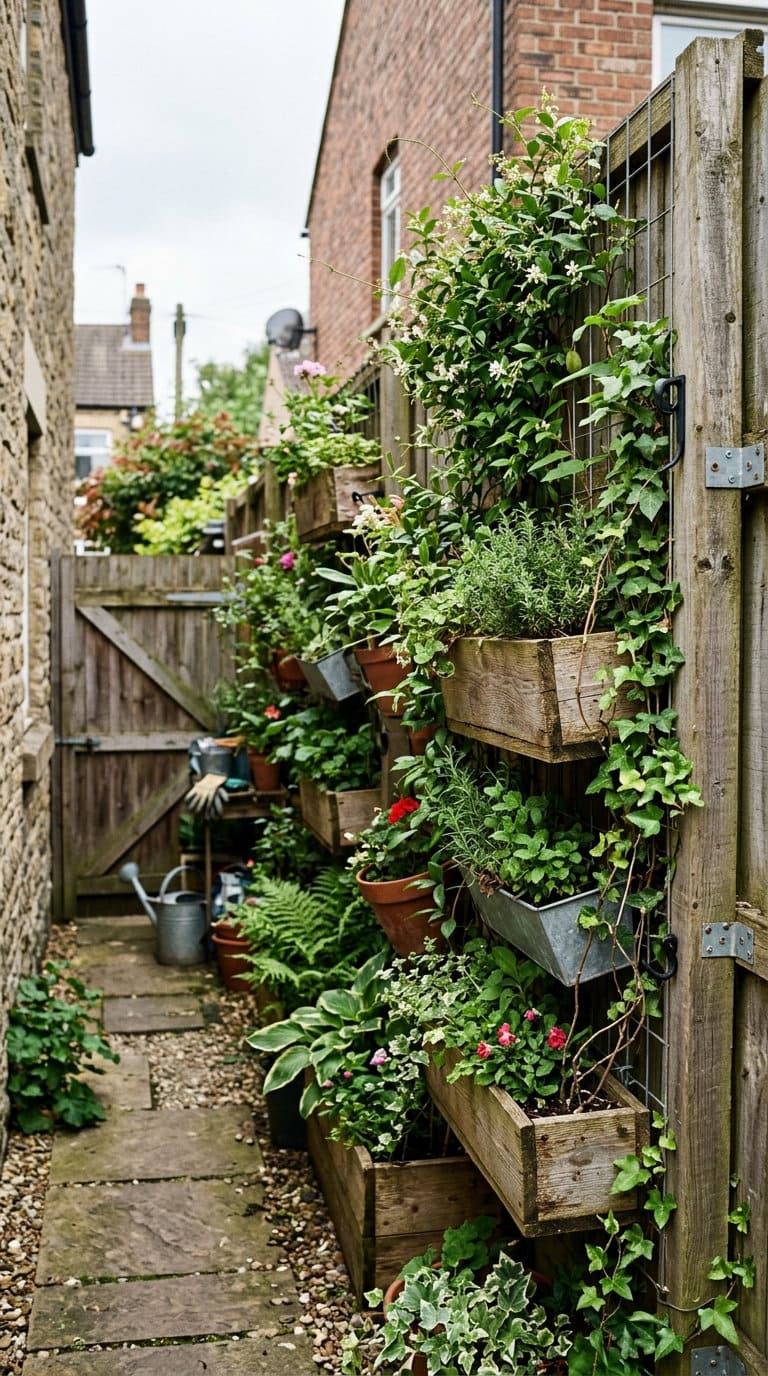
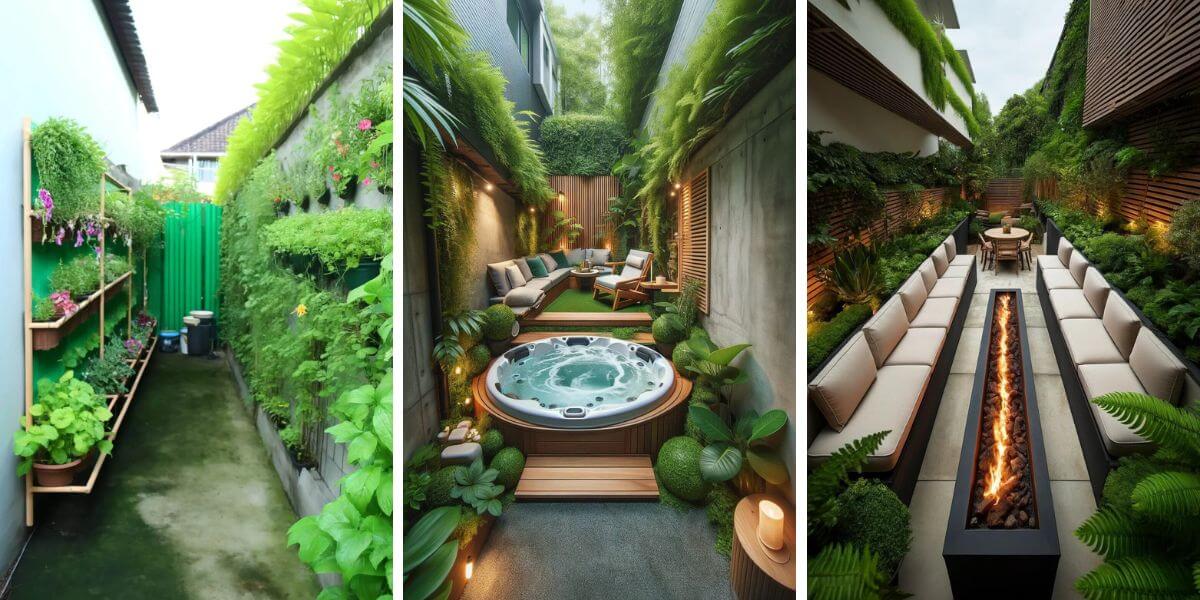
The single highest-leverage move in a narrow yard: using vertical surfaces for planting instead of floor space.
The average homeowner spends $616/year on yard fixes that don't address the real problem. Find out what yours actually is — before you spend another dollar.
Take the Free QuizWall-mounted planters, trellised climbing plants, and fence-mounted grow systems turn empty boundary walls into productive green space without claiming an inch of usable ground.
Tall, Narrow Planters
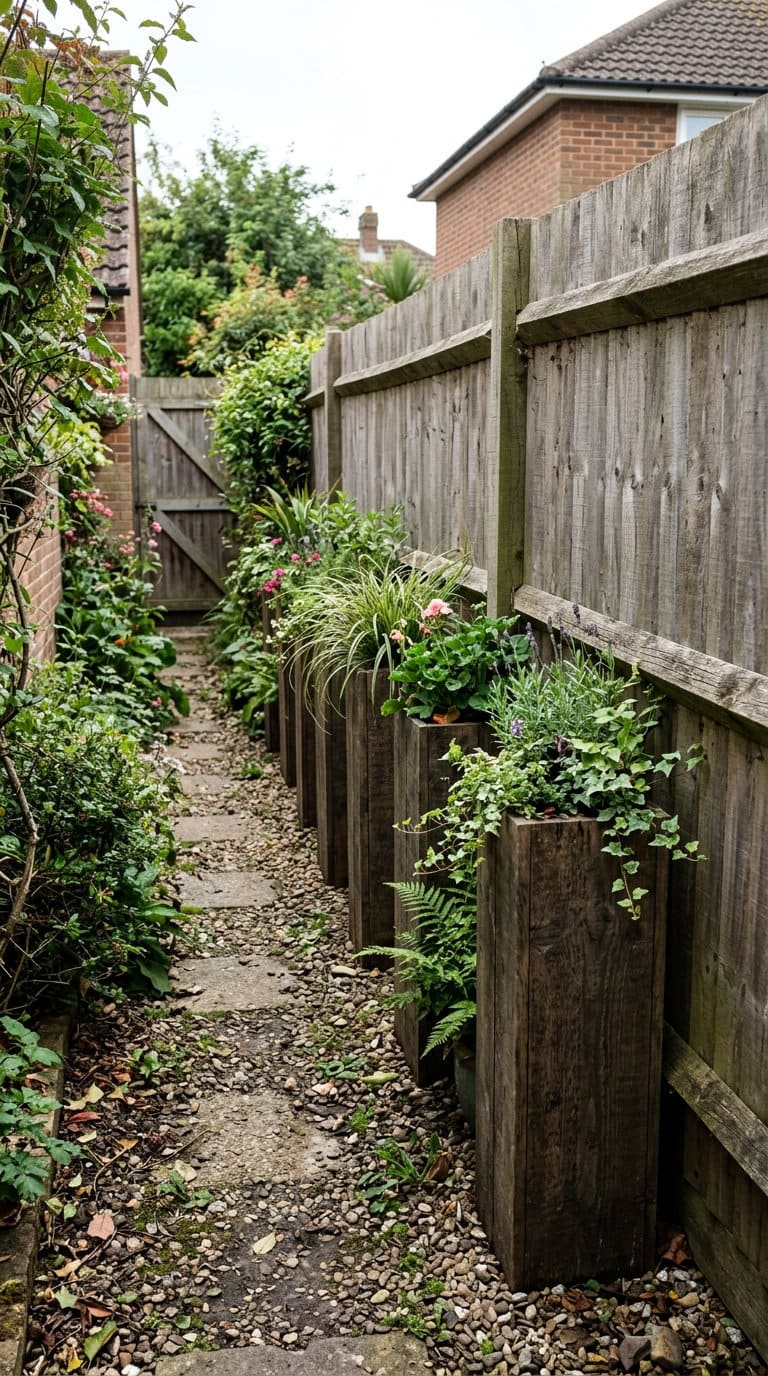
A row of slim, upright planters does the visual work of a garden bed in a fraction of the footprint.
Placed along a fence line, they add height and greenery exactly where a wide flower bed would otherwise crowd the walkway.
Hanging Gardens
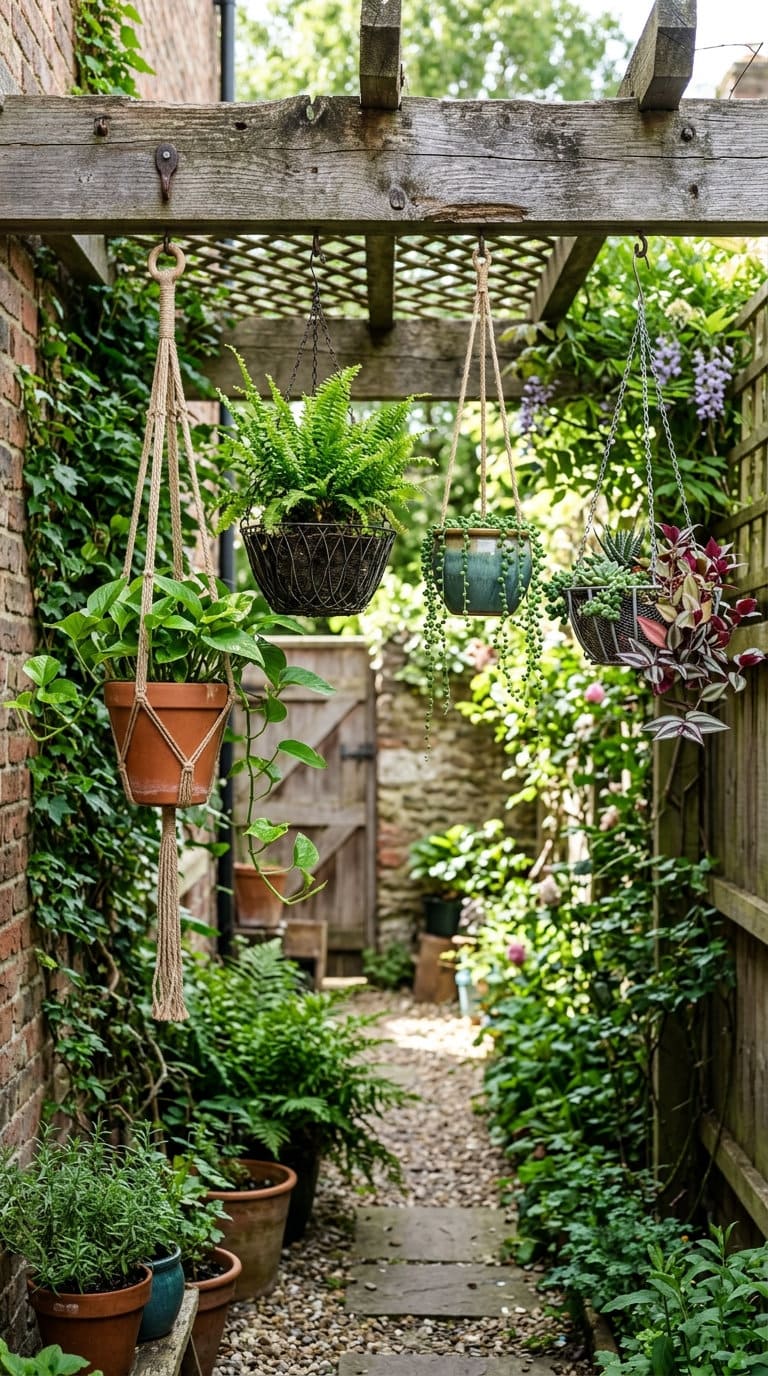
Suspended planters, from a pergola beam, a wall bracket, or an overhead structure, add a layer of greenery entirely above eye level, which is genuinely free space in a yard where ground-level real estate is the scarce resource.
Zoned outdoor living
A Defined Deck or Patio Zone
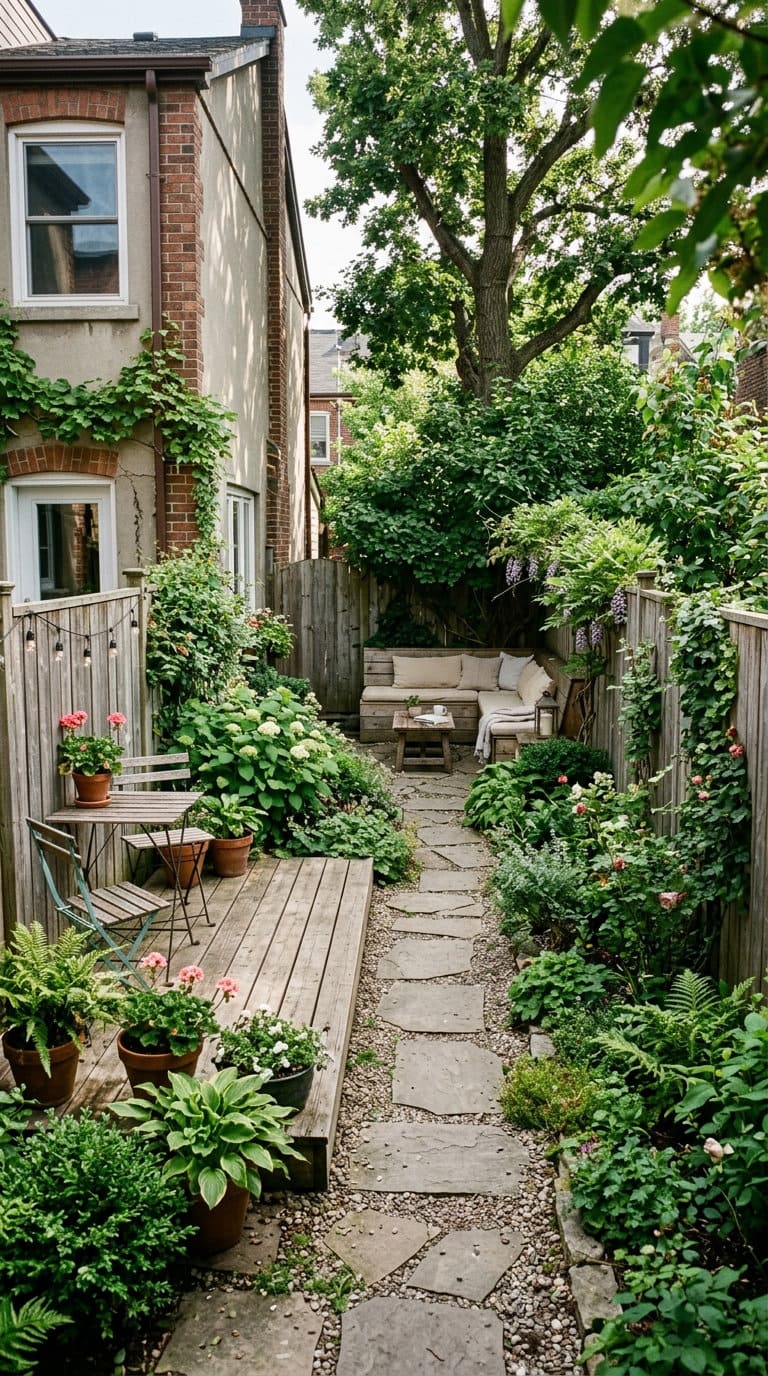
A modestly sized deck or patio, clearly bounded rather than sprawling the yard’s full width, gives the space one anchor point without dominating it.
Keep it proportional, roughly a third of the yard’s length rather than half, so there’s still room for the planting and pathway zones to breathe.
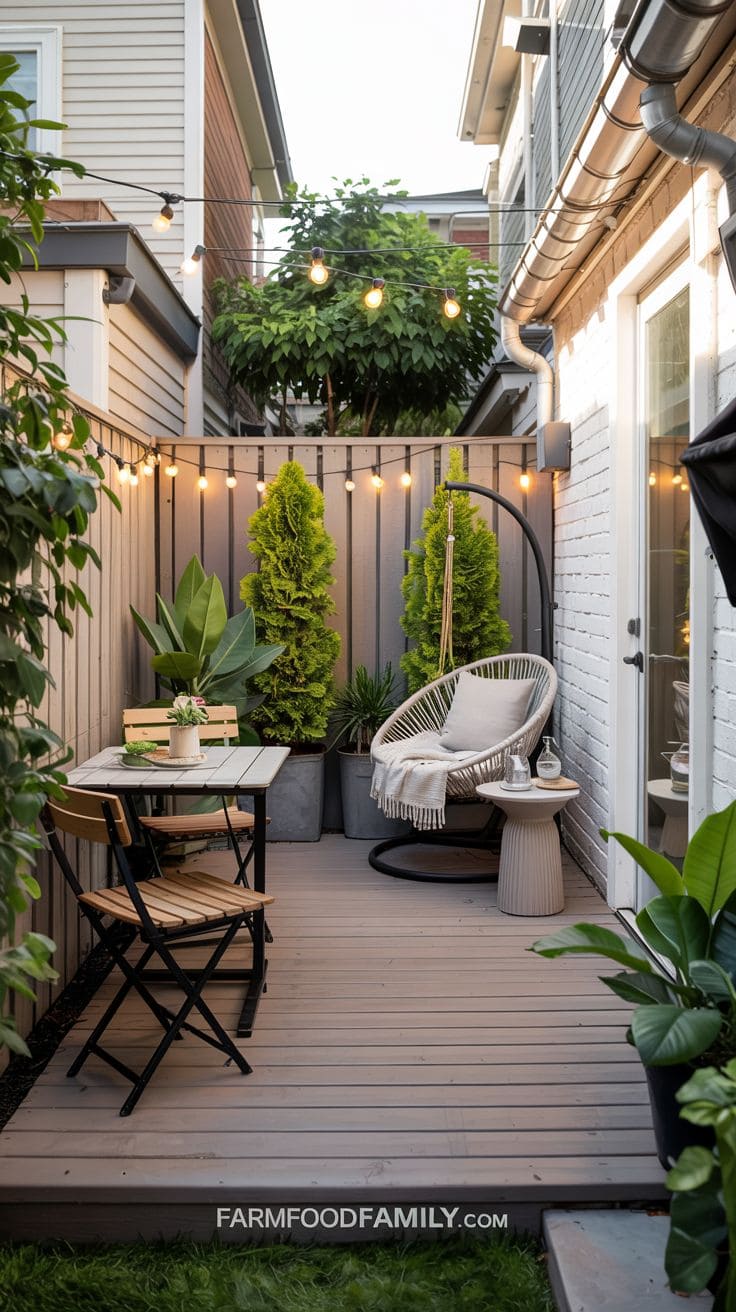
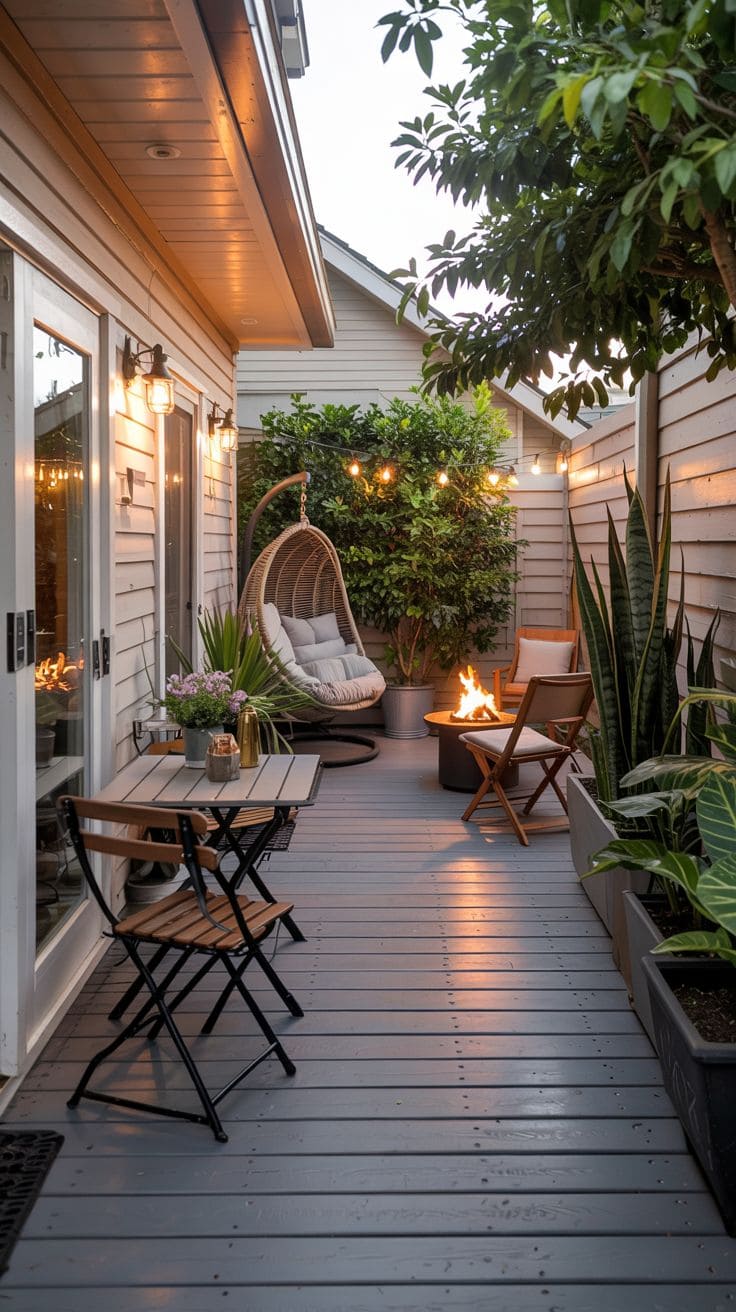
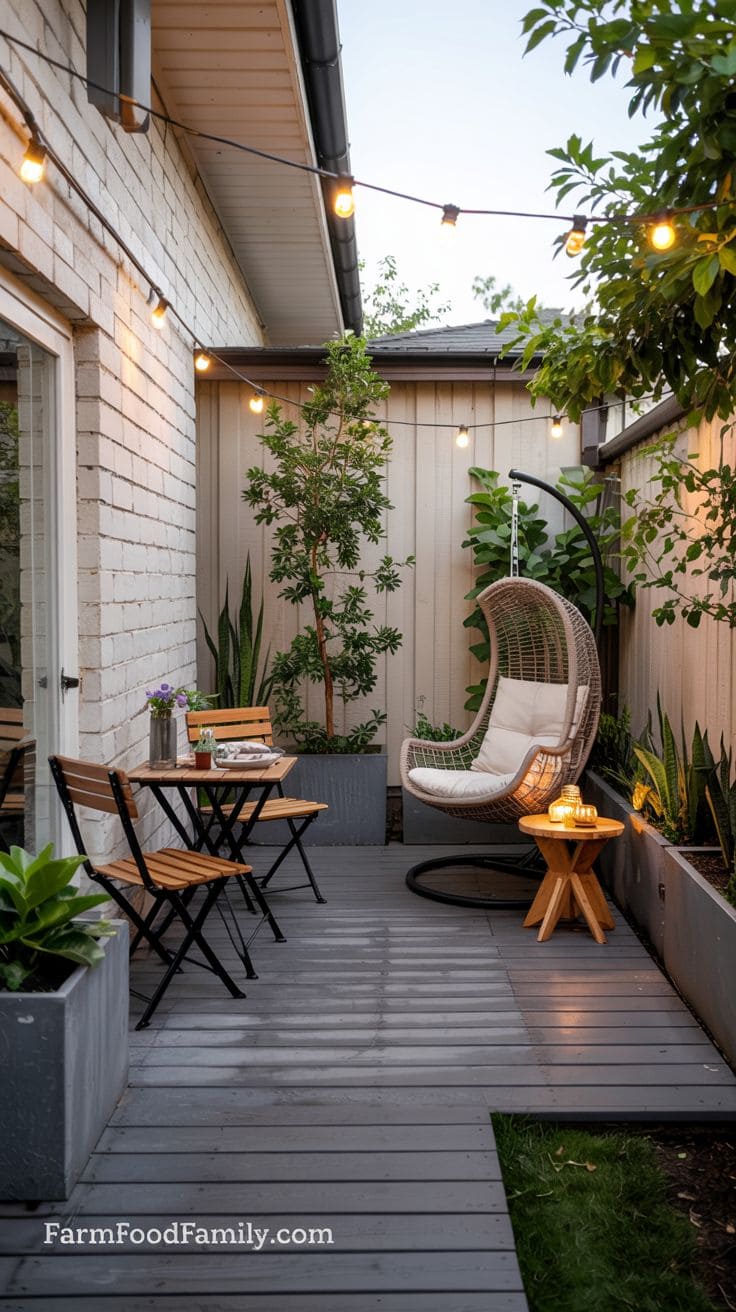
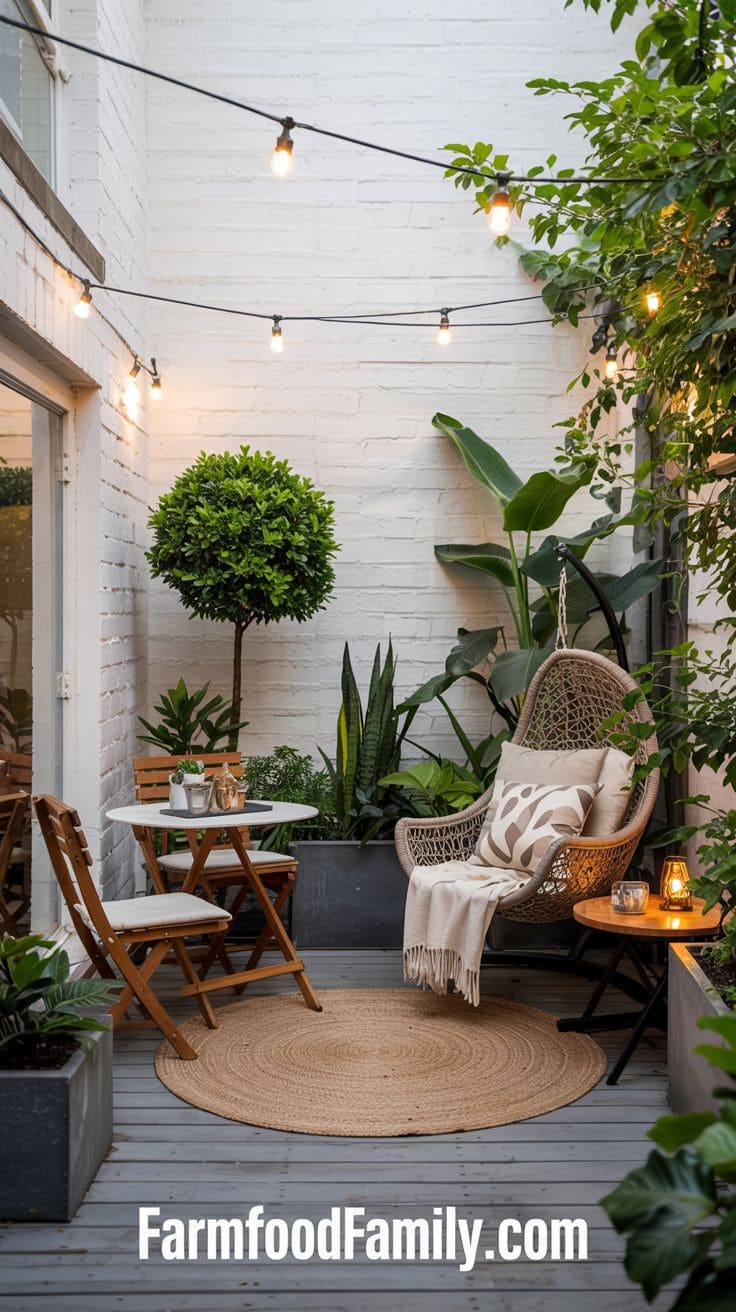
Even in a small space, you may create many functional sections by carefully dividing your deck or patio into zones.
Consider creating a dining area on one end and a lounging nook on the other, with carpets, planters, or lights to define the boundaries.
Choose narrow furniture that does not overload the space, such as bench seating, a compact bistro table, or hanging chairs that fit effortlessly.
Using consistent materials, such as wood or composite decking, can help the area feel more coherent.
Hang string lights or lanterns overhead to bring the room together and make it usable day and night.
These designated spaces allow you to use every foot productively while keeping things attractively tidy.
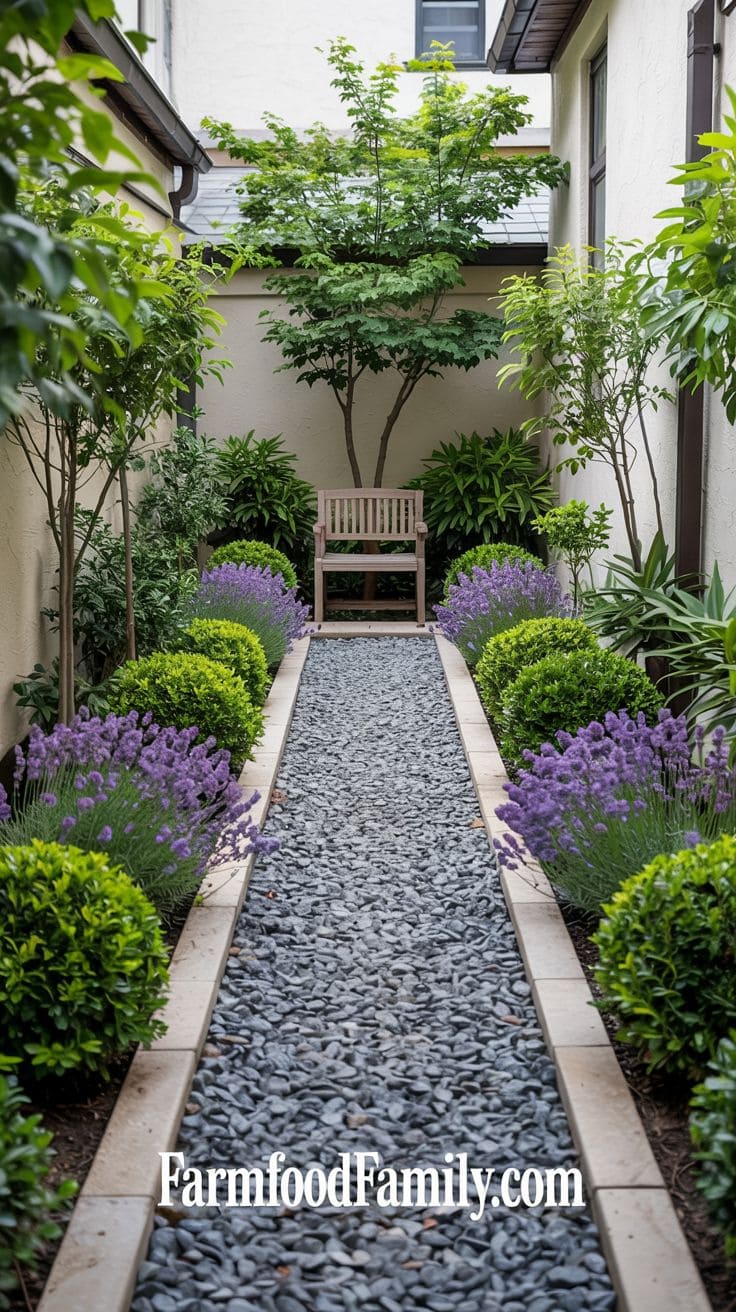
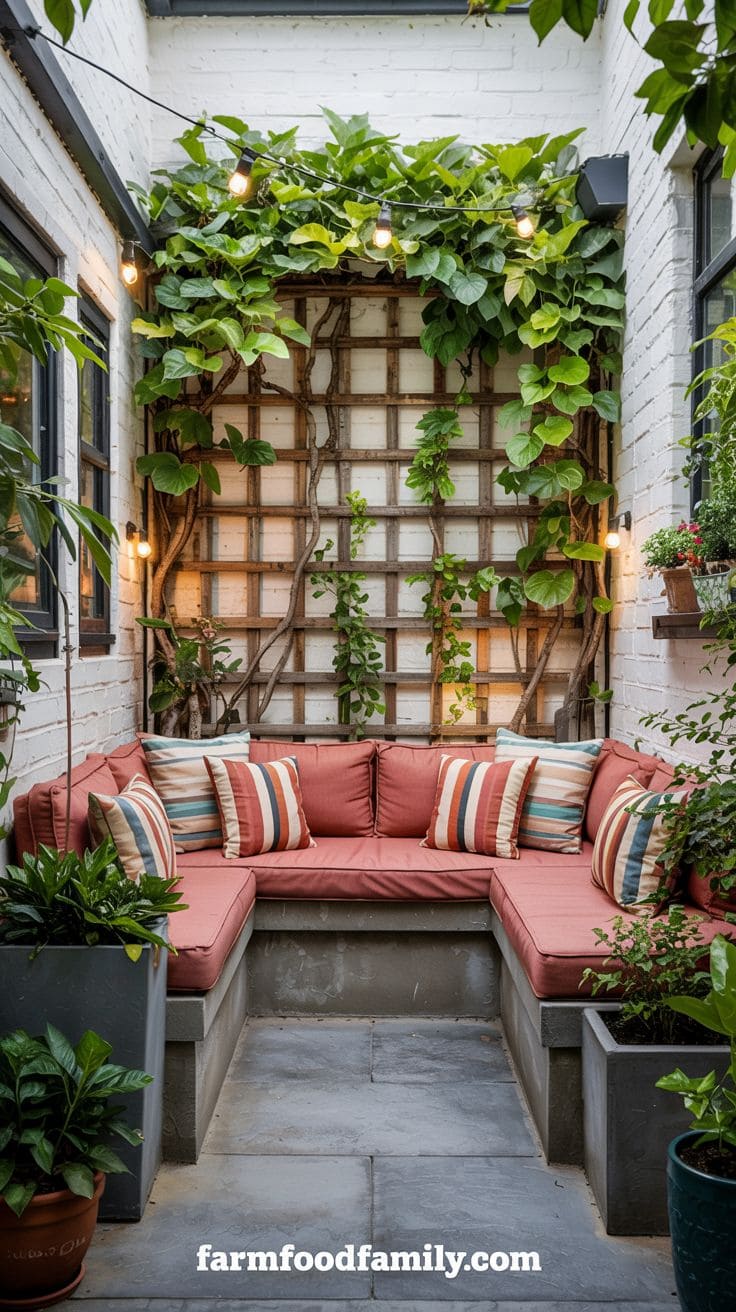
A Bench or Built-In Seat at the Far End
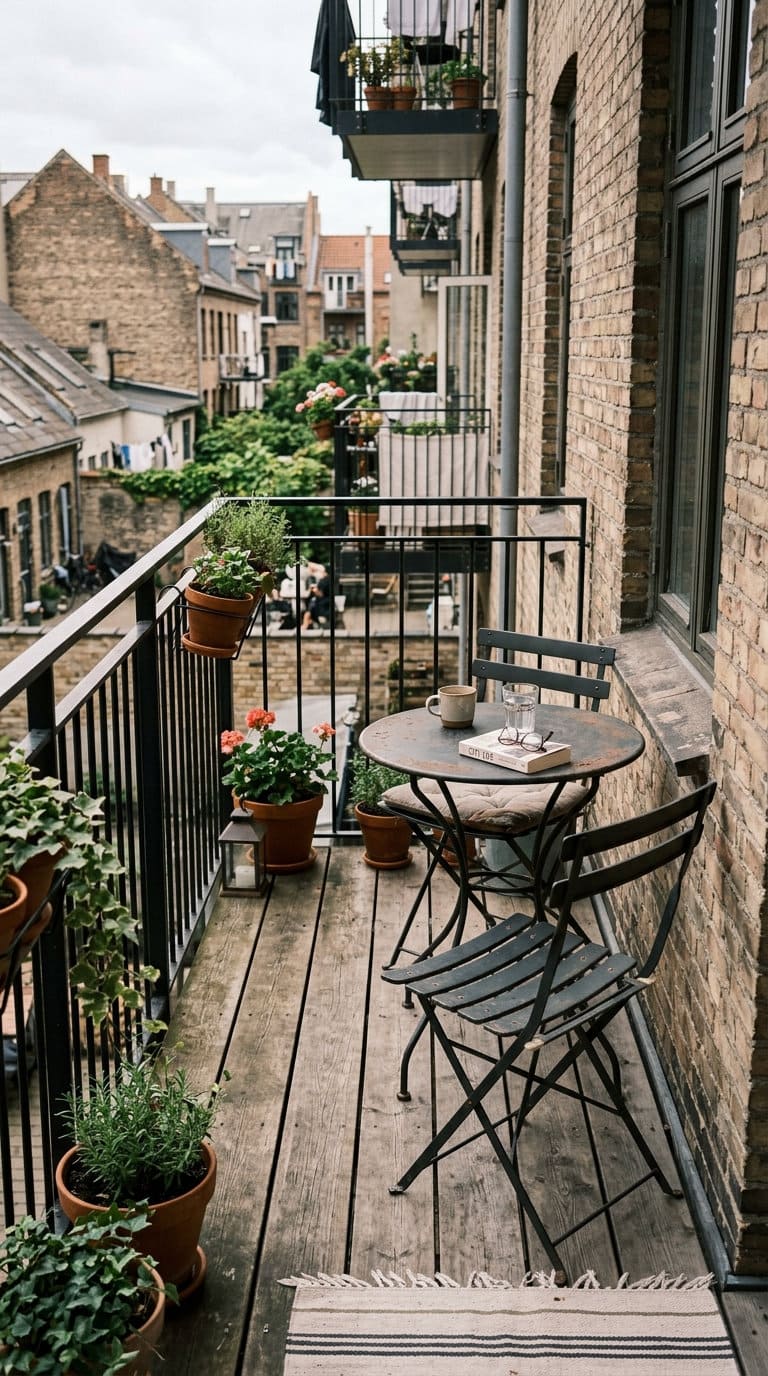
Placing seating at the yard’s far end, rather than right off the patio, gives the eye a destination to travel toward, which makes the whole length of the yard feel used rather than just passed through.
A simple built-in bench also solves furniture-footprint problems a freestanding chair set can’t in tight quarters.
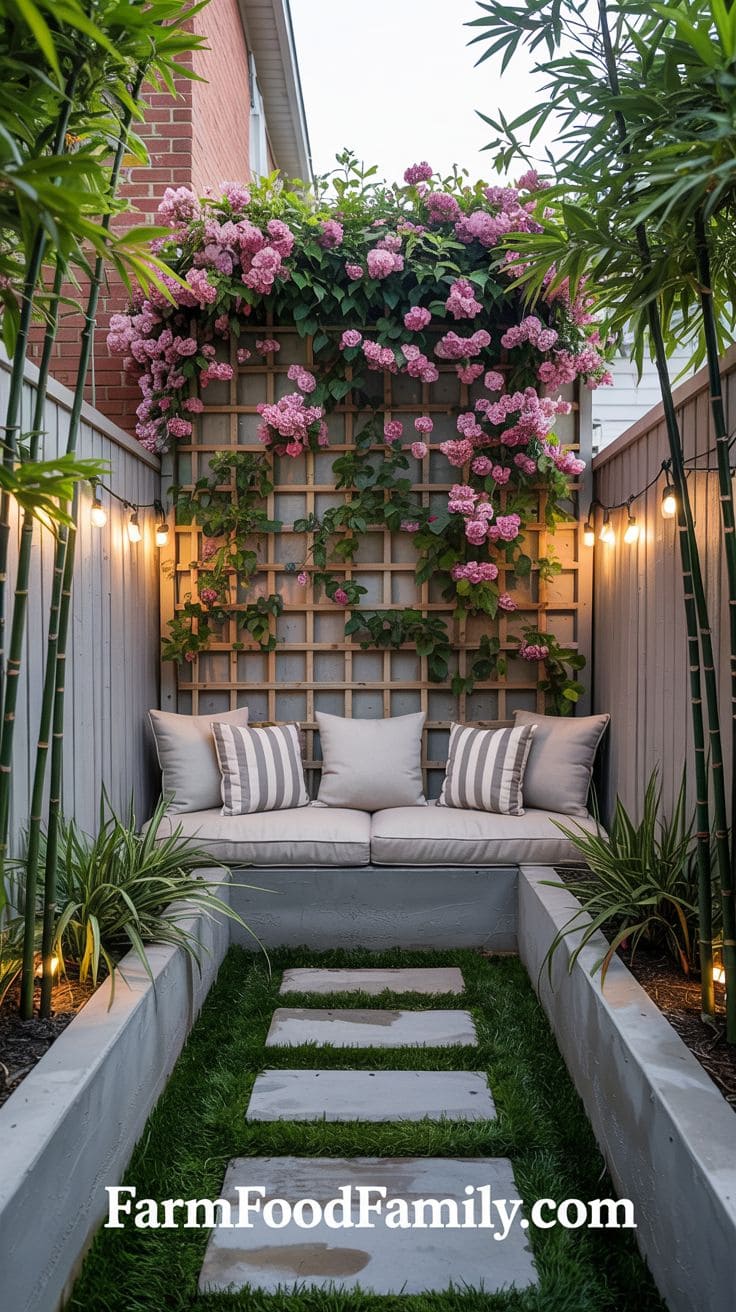
Anchor your narrow yard with a seating area at the far end to grab the eye and provide a purpose for the entire space.
A simple bench, small patio, or built-in seat backed by a trellis provides a natural resting place.
To make it more welcoming, add comfortable cushions or weather-resistant cloth.
You may also add potted plants or vertical planters to the seating area for a lush, tucked-away look.
Having a clear destination offers your yard structure and encourages you to use the entire space rather than just the part closest to the house.
It also makes the yard appear more organized and calm.
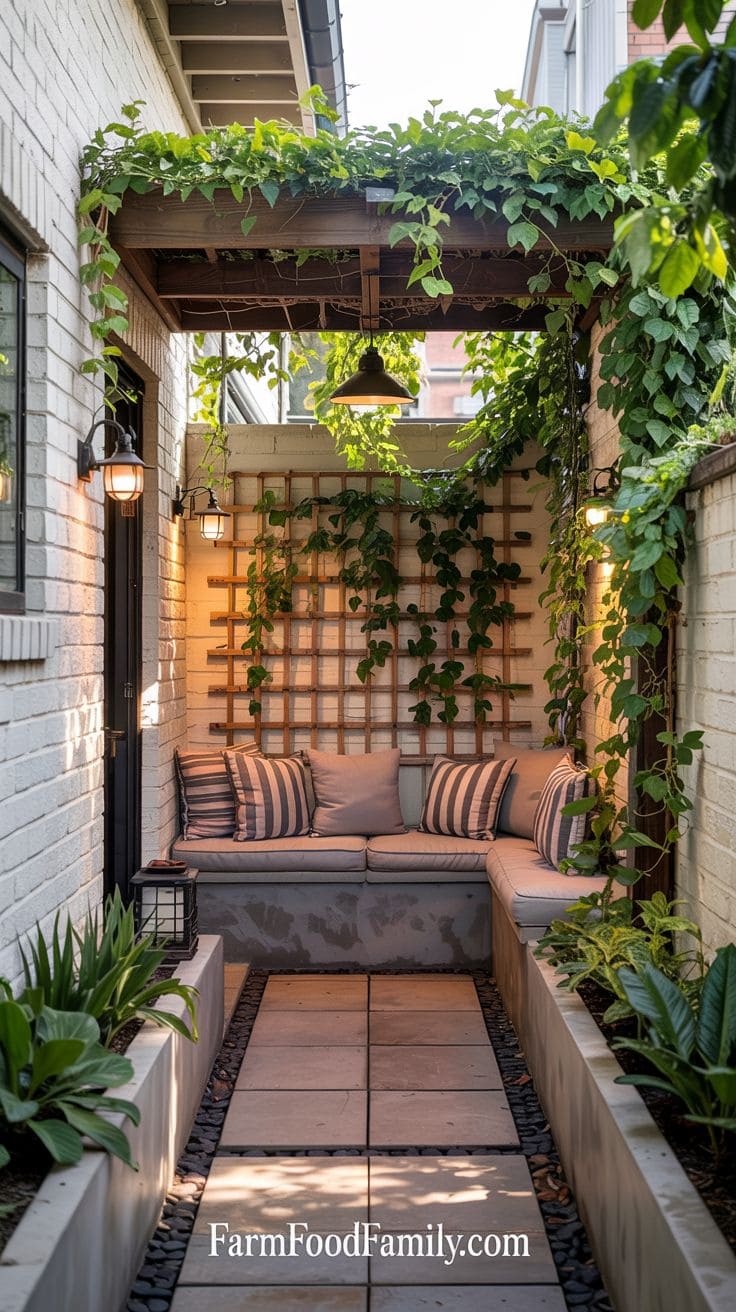
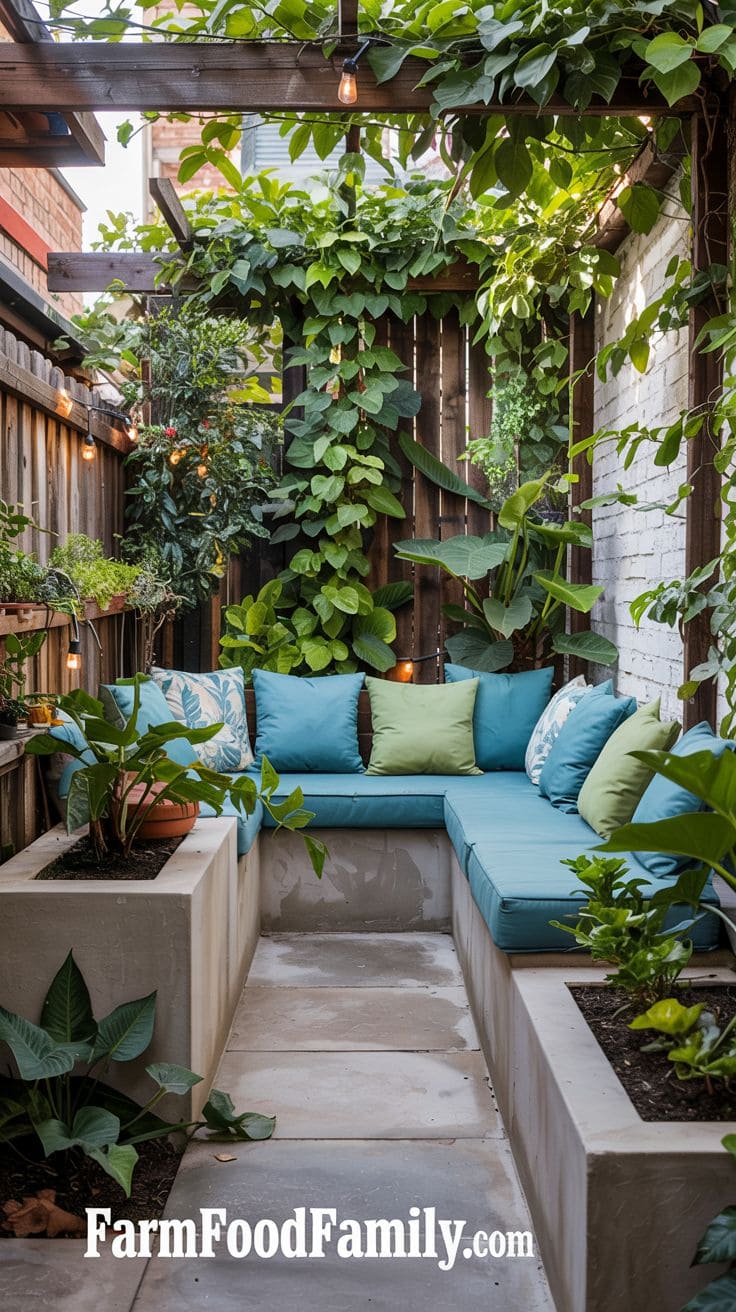
Multi-Functional, Narrow-Profile Furniture
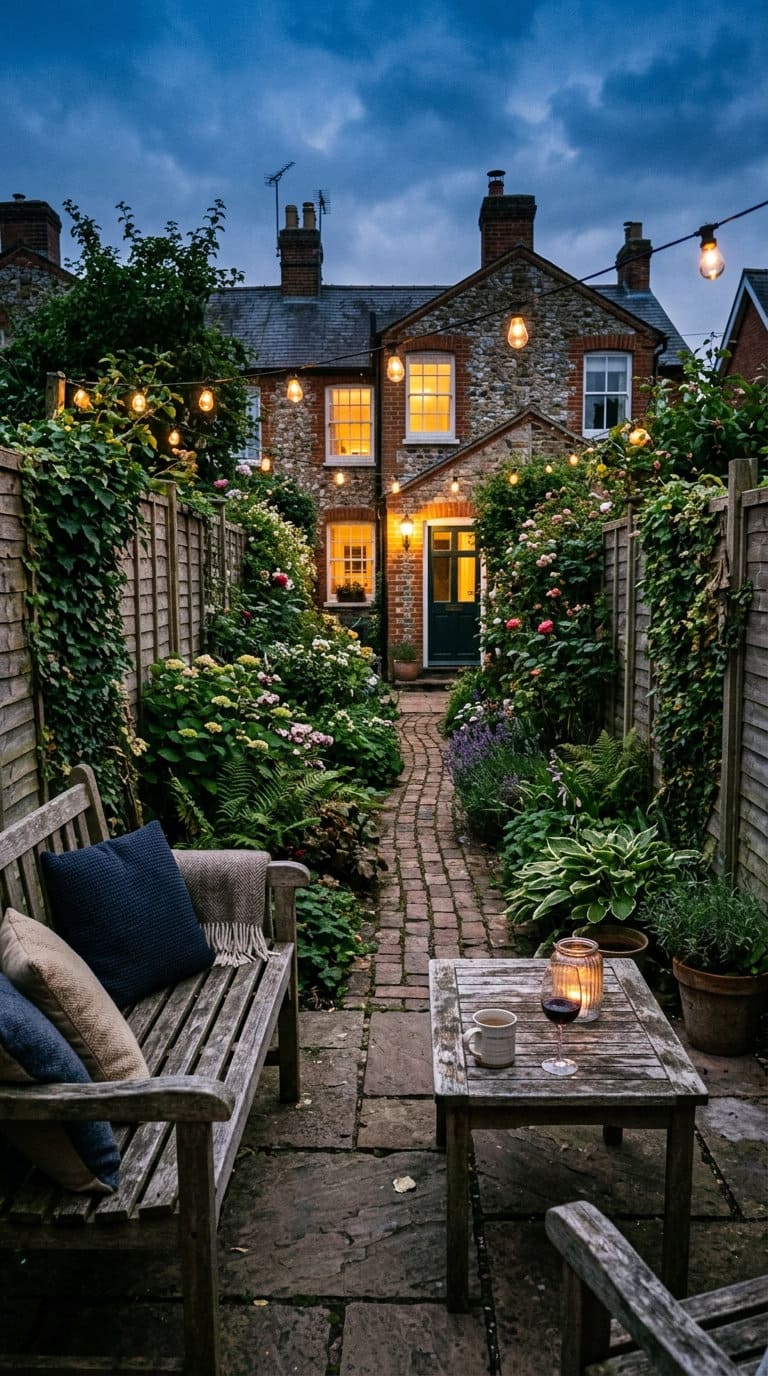
A bench with hidden storage, a slim bistro table instead of a full dining set, stackable or foldable chairs, all matter more in a narrow yard than a wide one, where every piece of furniture competes directly with usable walking space.
Screening and privacy
Staggered Tall Grasses or Slim Trees
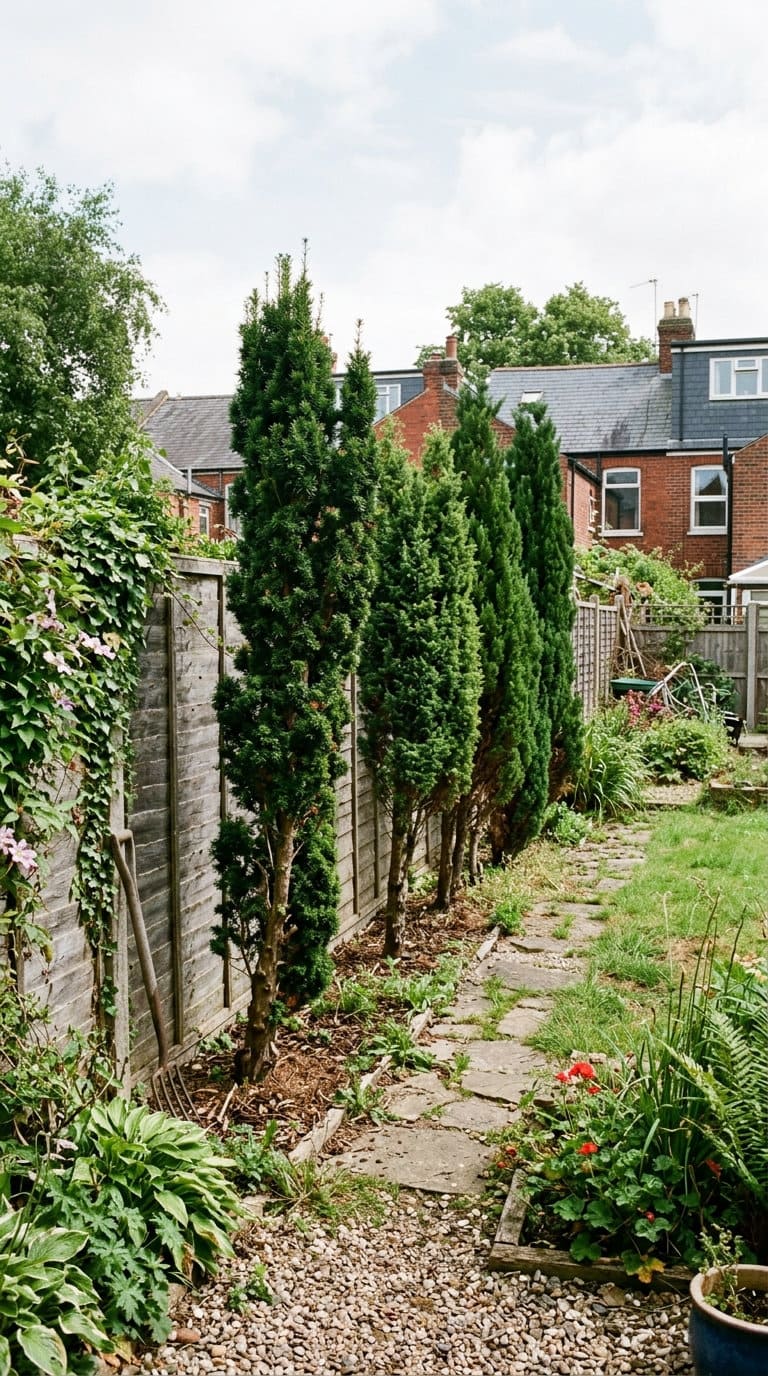
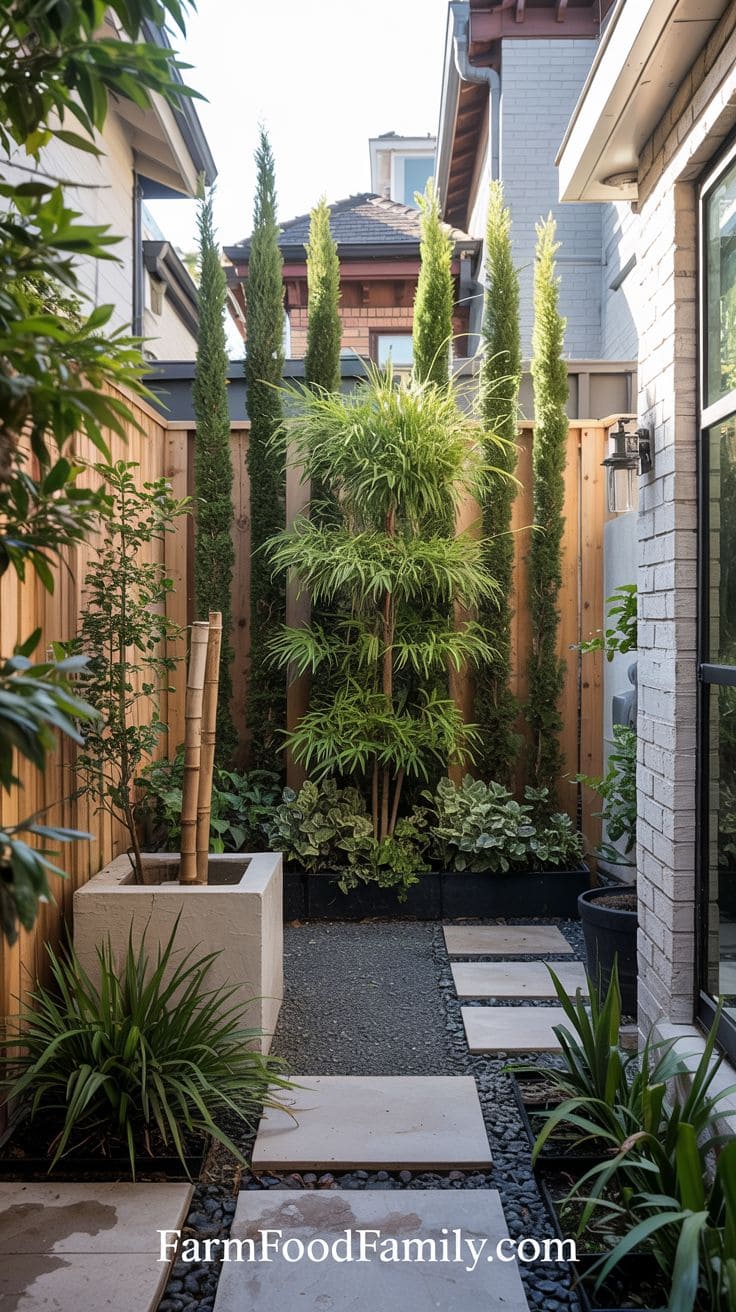
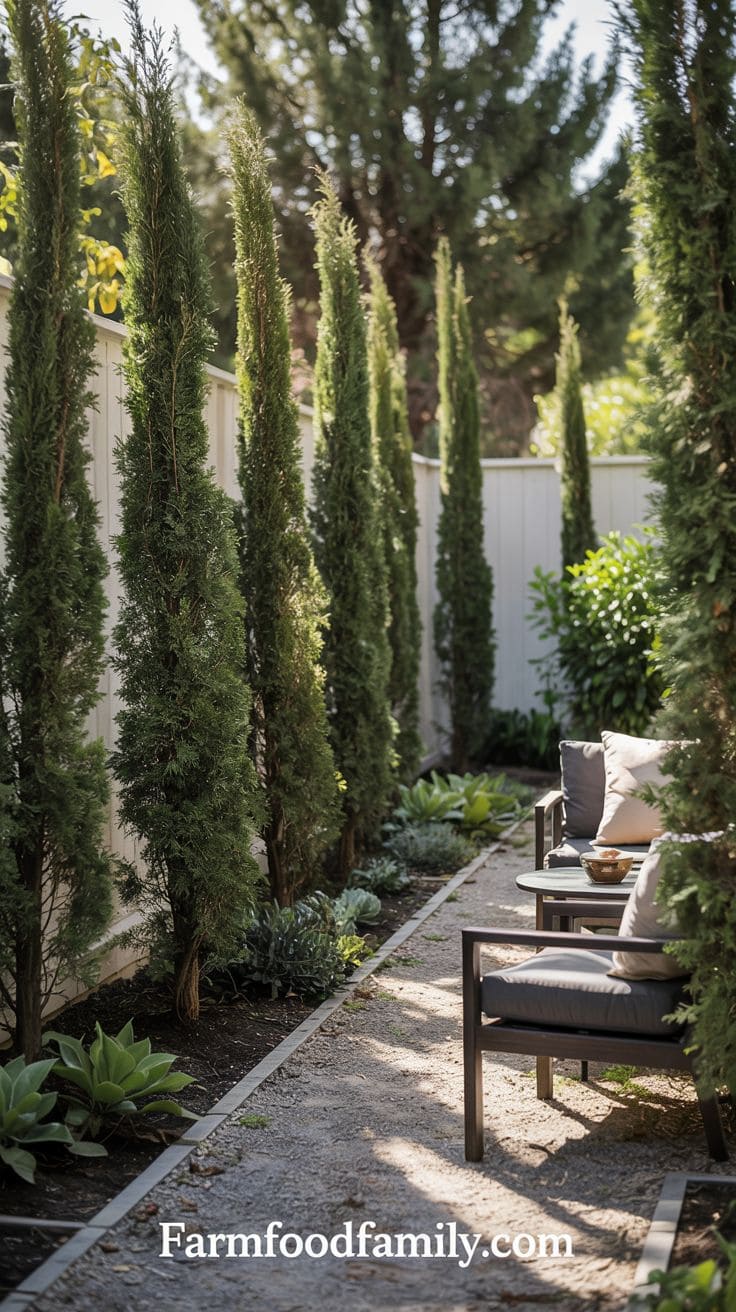
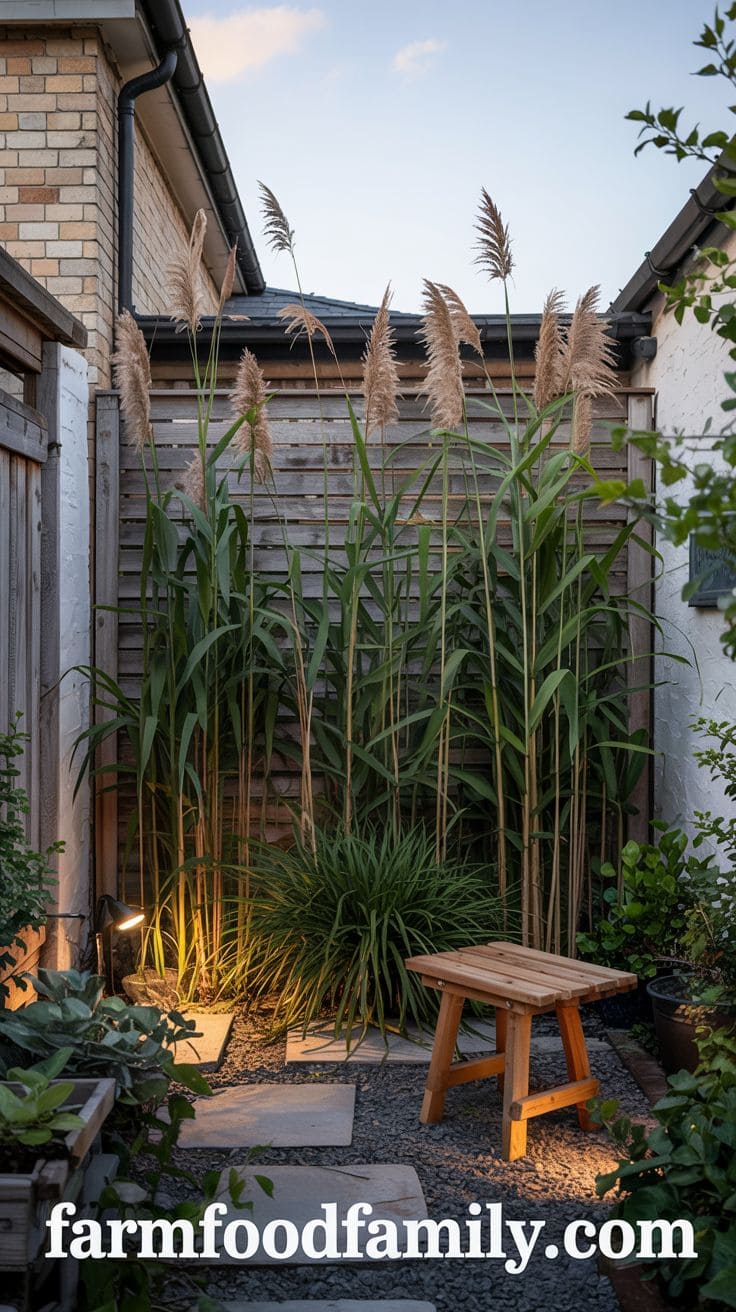
Rather than one straight hedge (see the layout mistake above), stagger tall ornamental grasses or narrow-profile trees, columnar varieties work especially well, at varying points along the boundary.
This provides real privacy while avoiding the boxed-in feeling a continuous wall of green creates.
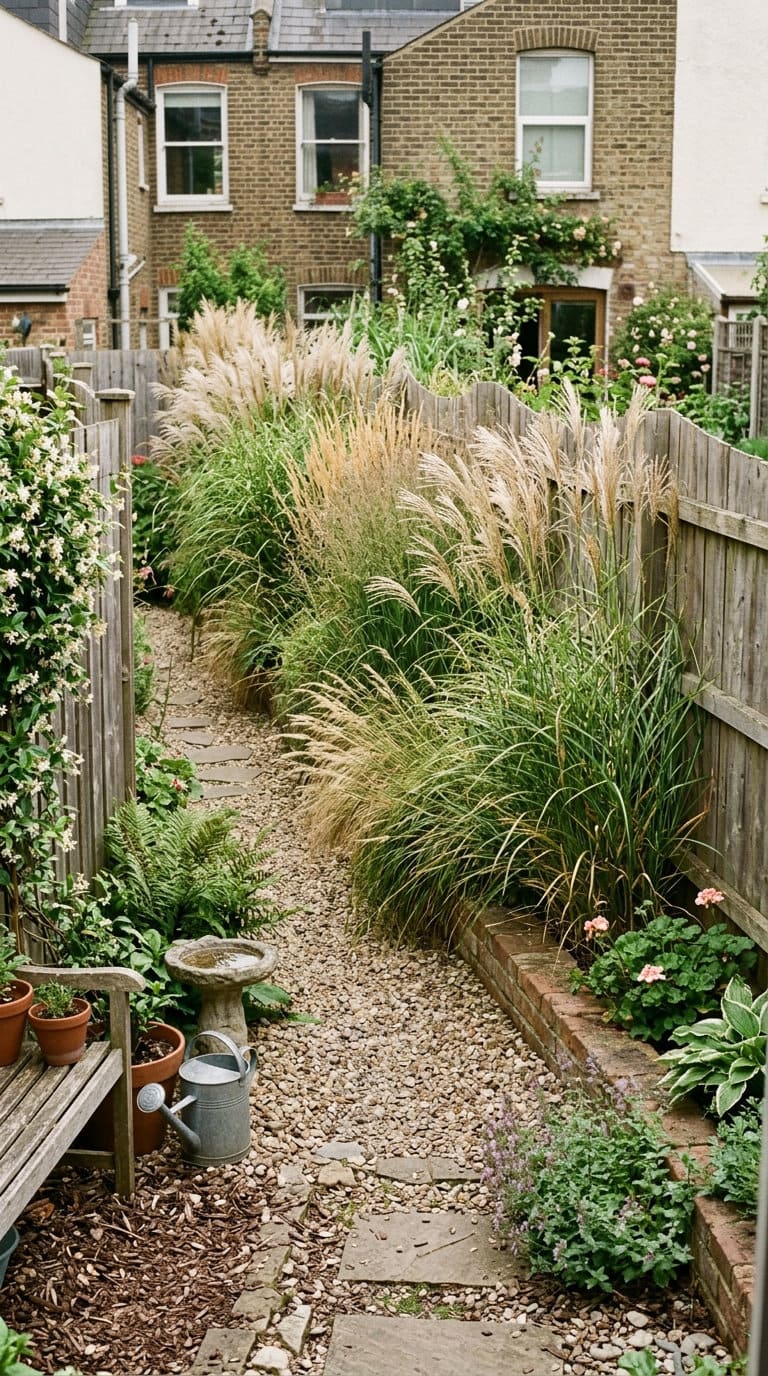
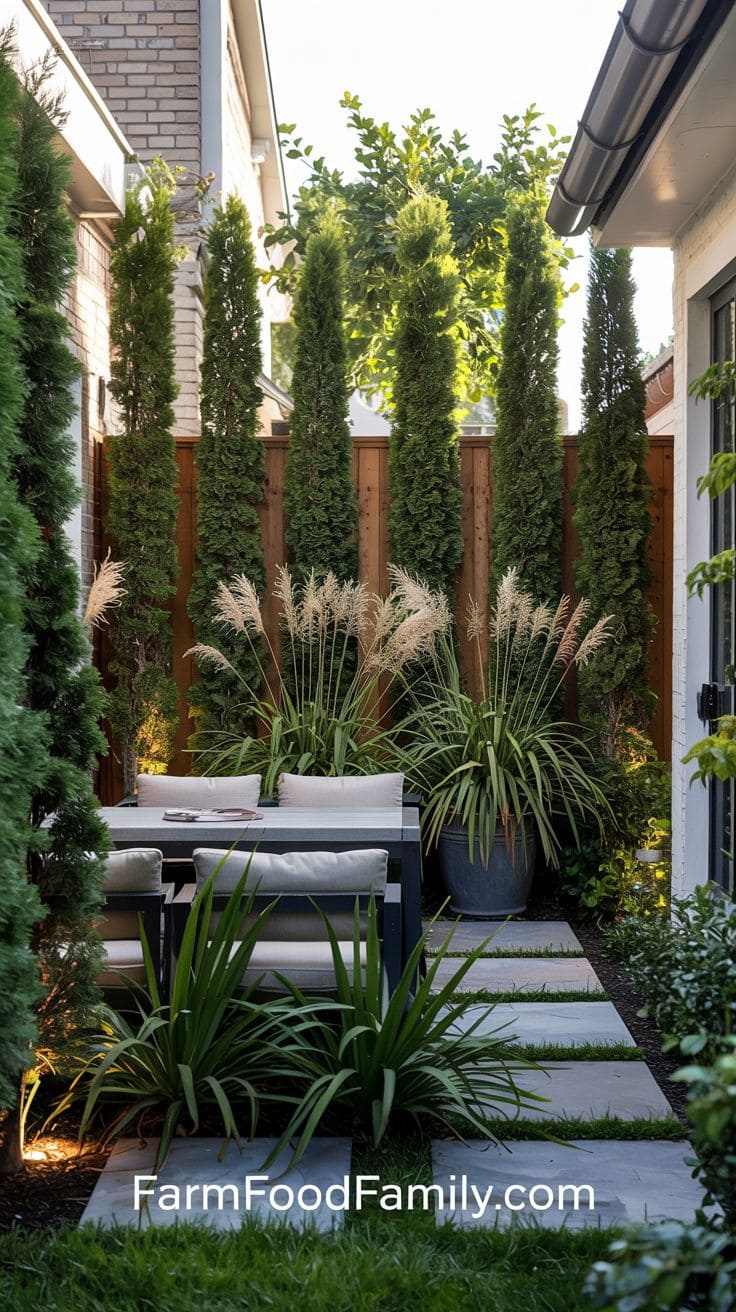
If your narrow backyard feels too exposed, consider planting vertical vegetation such as bamboo, Italian cypress, or decorative grasses. These thin plants provide natural privacy without requiring too much width.
You can enclose the space by lining one or both sides of the yard rather than creating a full fence.
As they sway in the breeze, they soften your yard’s lines and provide movement. Furthermore, they frequently require less maintenance than standard hedges.
Plant them in tidy rows in raised pots or directly into the soil, with a gravel bed underneath to clearly designate their territory.
A Decorative Screen or Divider
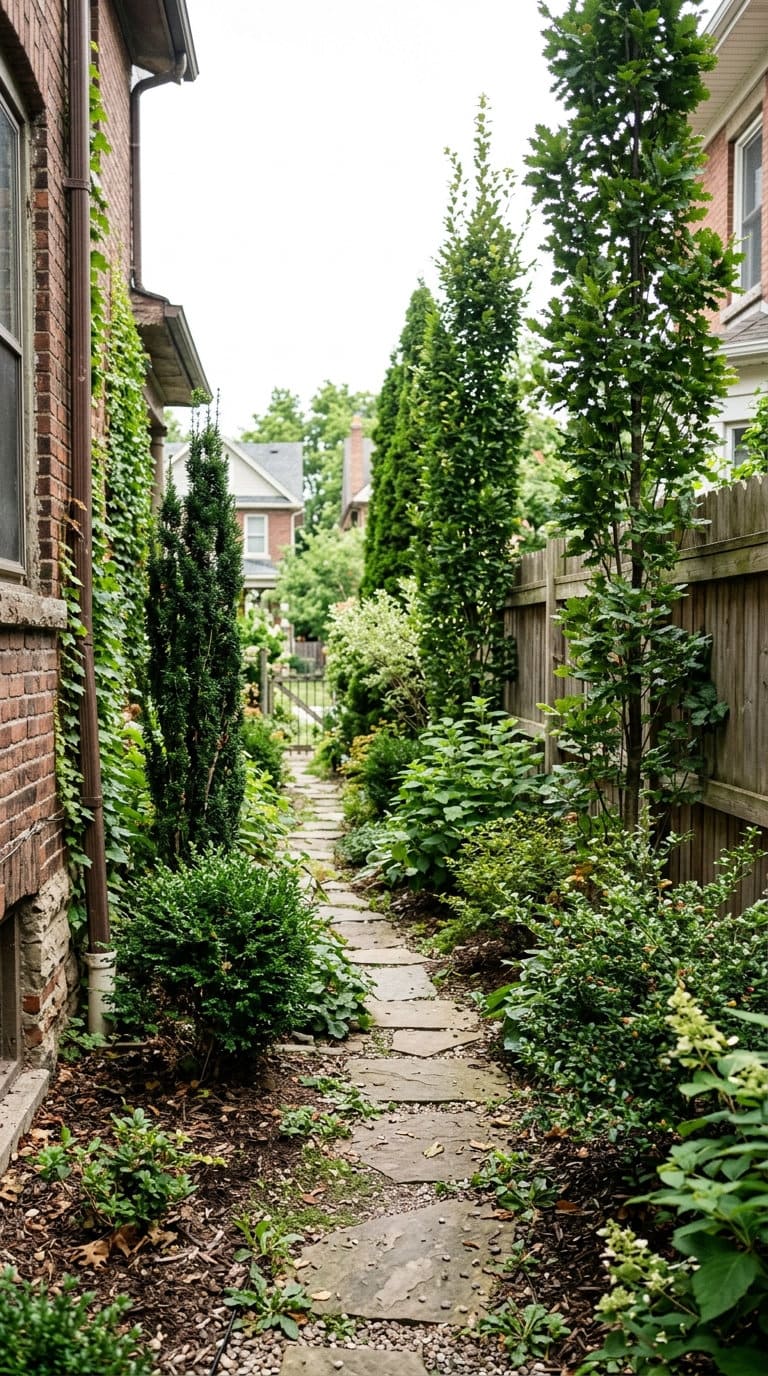
A slatted wood panel, a metal privacy screen, or a woven fence section placed at an angle rather than square to the boundary does double duty: it blocks a specific sightline (from a neighbor’s window, for instance) without running the yard’s full width, and it reads as a design feature rather than a fence extension.
Small-space extras
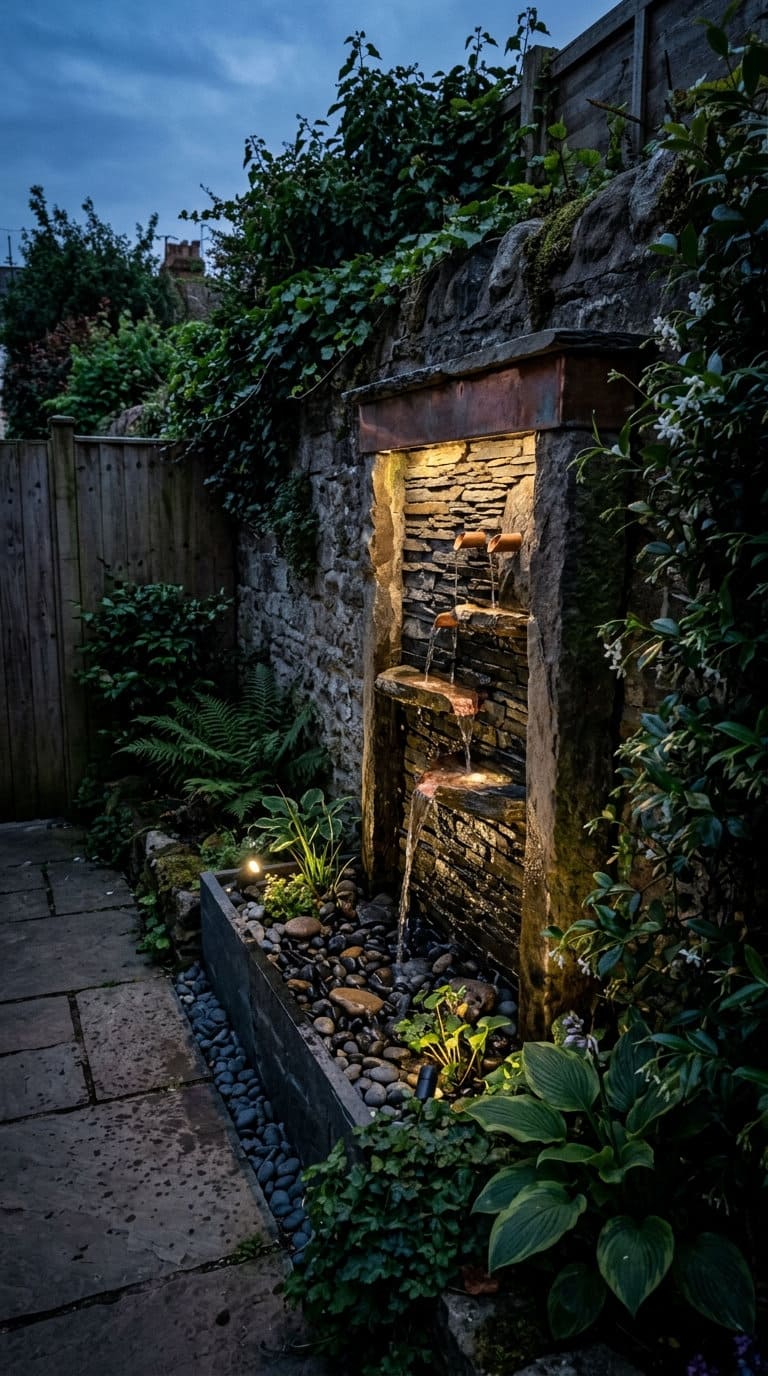
A Slimline Water Feature
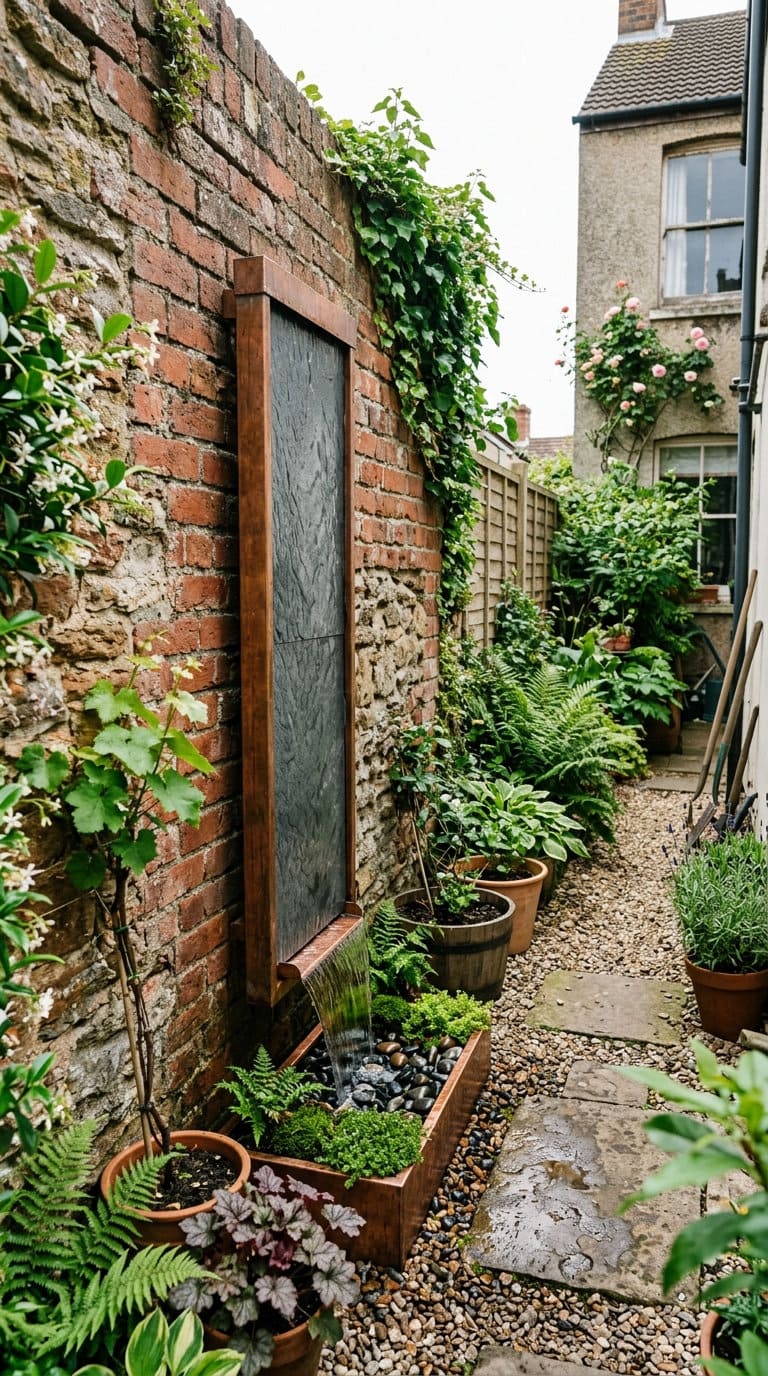
A wall-mounted fountain or a narrow, vertical water feature adds sound and movement without the footprint of a pond or full-width water feature, genuinely well-suited to a boundary wall in a narrow yard.
A Compact Storage Solution
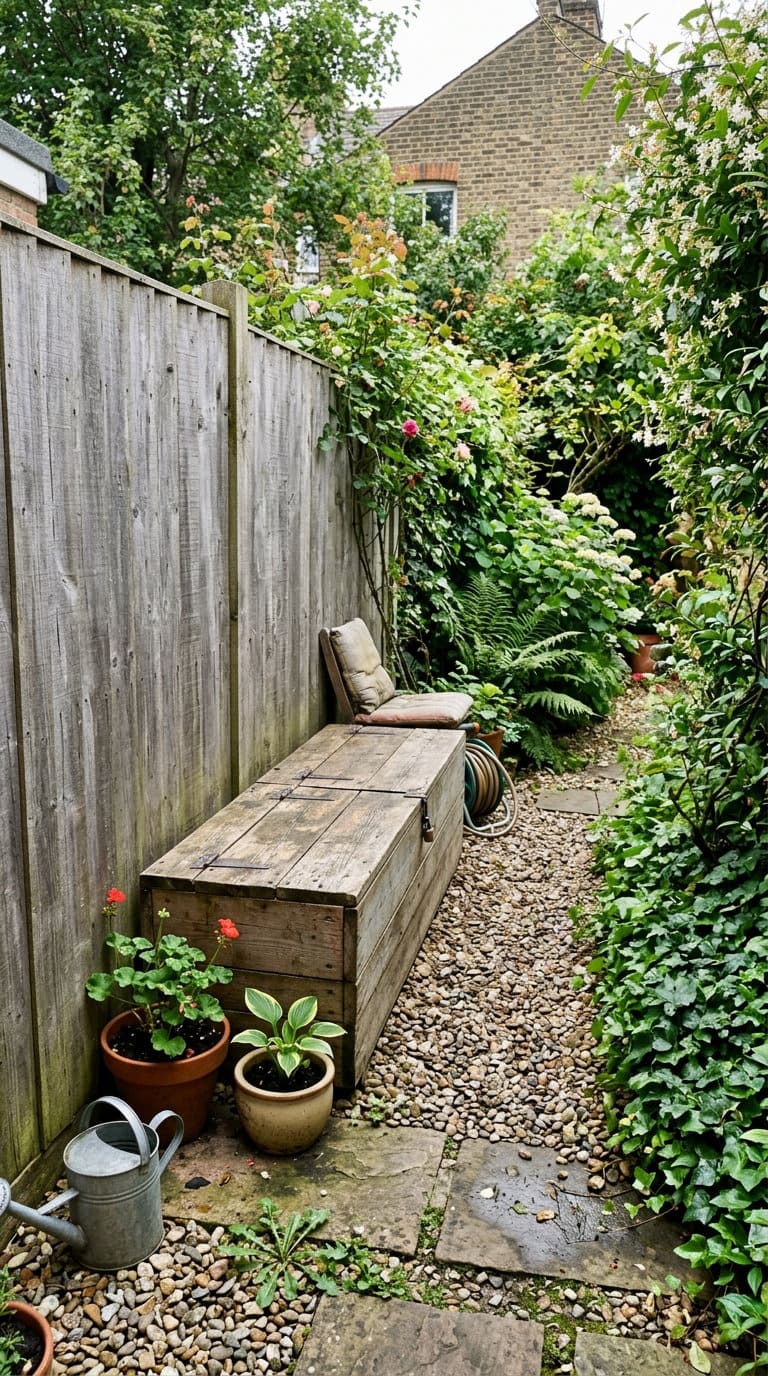
Fitting real storage, a small shed, a bike rack, bins, into a narrow footprint is a real, common problem, not a minor detail.
A slim vertical storage unit or a low bench with built-in storage handles this without eating into the yard’s usable length the way a standalone shed typically would.
A Slim Fire Pit or Compact Fireplace
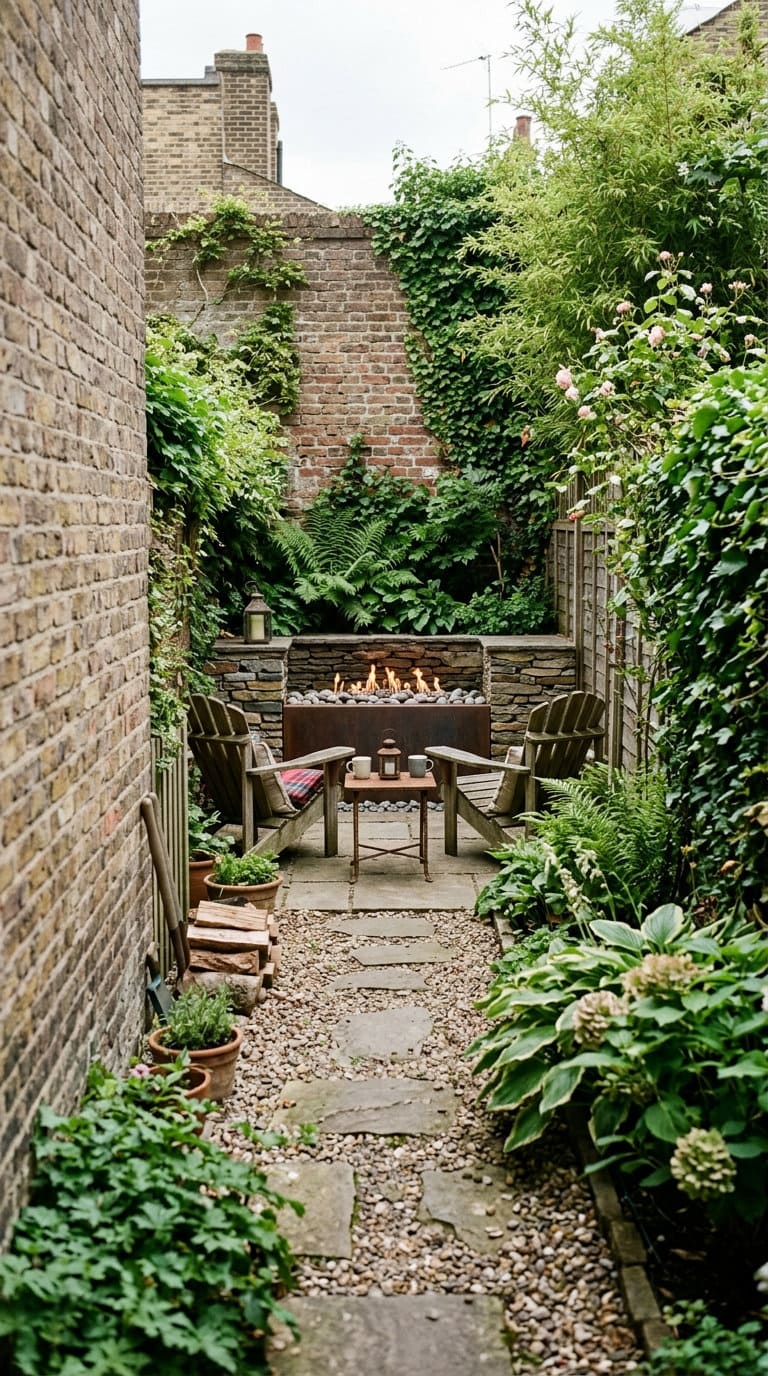
A narrow, linear fire feature (rather than a wide circular pit) fits a narrow yard’s proportions better and gives the far-end seating zone a genuine focal point after dark.
FAQs
How do I make a narrow backyard feel wider?
Curved pathways instead of straight ones, staggered rather than solid privacy screening, and zoning the yard lengthwise (treating it like a linear room with distinct areas) all do more to create a sense of space than any single feature. Renee LaGue, MLA, a landscape designer at Sandbox Land Studio whose portfolio includes row-house yards as small as 15 by 21 feet, approaches narrow spaces by focusing on vertical layering, clear circulation, and a few strategic focal points, rather than trying to fit in as many features as possible.
What’s the best way to add privacy to a narrow backyard without making it feel boxed in?
Stagger the screening instead of running it in one straight line. A real homeowner discussion on privacy in small backyards makes the case directly: a solid straight privacy line across the back is what makes a small yard feel like a box, not the privacy itself. Offset plantings at different heights, a curved screening line, or a few distinct clusters rather than one continuous wall provide the same coverage while reading as intentional design.
How much does it cost to hire a landscape designer for a small yard?
Full landscape design services typically run $1,610 to $5,490, with hourly rates between $60 and $250 per hour depending on whether it’s a designer or a licensed landscape architect, according to 2026 cost data from Lawn Love. A narrow yard project tends to land toward the lower end of that range given the smaller footprint, though complexity (retaining structures, custom built-ins) can push costs up regardless of size.
Conclusion
A narrow backyard isn’t a smaller wide yard, it’s a shape that rewards a different approach entirely: curve what would normally be straight, stagger what would normally be solid, and zone lengthwise instead of trying to fit everything into one open space.
Get that right, and the same square footage that felt like a hallway starts to feel like a real garden. And if you’re not sure how much curve is too much curve for a given path, honestly, err toward subtle, a gentle bend reads as intentional in a way an exaggerated S-curve doesn’t.
Never miss an update — choose FarmFoodFamily as your preferred source on Google.
How it works: Tap the button below to open Google's settings page, then check the box next to FarmFoodFamily.
Tap the checkbox to turn it blue — that's how you know it's set.