9 Hidden Reasons Your Living Room Feels Cold at Night No Matter the Thermostat
A thermostat only measures the air, and your body loses heat four other ways, so a living room can sit at 70 degrees and still feel cold, and these nine reasons explain which one is doing it to yours.


Never miss an update — choose FarmFoodFamily as your preferred source on Google.
How it works: Tap the button below to open Google’s settings page, then check the box next to FarmFoodFamily.
Tap the checkbox to turn it blue — that’s how you know it’s set.
The furnace runs all evening. The thermostat says 70. And you are still cold on the sofa, reaching for a blanket by 8 p.m.
Turning it up to 73 does not help. It just makes the furnace run longer and the bill go up.
Here is why. A thermostat measures one thing, the temperature of the air. Your body loses heat four ways, and the other three never show up on the dial.
This article has nine reasons a warm room still feels cold. They run from the physics to the look of the room, and each one comes with a fix.
Quick Answer
Why does a warm room still feel cold? Because your thermostat only reads the air.


Your comfort depends on six things. They are the air temperature, the average temperature of the surfaces around you, air movement, humidity, what you are wearing, and how active you are.
When you sit near a cold window or on a cold floor, your body sends heat toward it. You feel cold even at 70 degrees.
The Department of Energy says about 30 percent of a home’s heating energy is lost through windows. Small gaps around windows, outlets, and recessed lights add up to the same as a window left open all year, according to ENERGY STAR.
At night it gets worse. The sun’s warmth through the glass is gone, every outside surface is colder, and you are sitting still.
The fixes are simple. Close lined curtains at dusk, seal the drafts, put a rug on a cold floor, close the fireplace damper, and warm up the light.
How to use this list
Most cold living rooms have two or three of these, not all nine.
Some fixes are free tonight, some are a weekend, and one or two are a real project. Work the free ones first, then decide if the rest are worth it.
1. Your thermostat only measures the air, not the cold surfaces around you

This is the reason behind the other eight, so start here. The ASHRAE-55 thermal comfort framework, which UC Berkeley’s comfort tool is built on, says comfort comes from six things, not one.

The DOE-backed window fix, a honeycomb shade that traps a layer of air and cuts heat loss through the glass when it is closed at dusk
Shop NowThis post contains affiliate links. We may earn a commission on qualifying purchases at no extra cost to you.
One of those six is how warm or cold the surfaces around you are. If the walls, windows, and floor are cold, your body loses heat to them no matter what the air is doing.
What you actually feel is closer to the average of the air and the surfaces.
The tell is simple. The room feels colder the closer you sit to the window wall, and warmer in the middle of the room. An outside corner is the coldest spot of all.
Quick fix: There is no single fix for this one. It is the lens for the rest of the list. Warm the surfaces and stop the drafts, and you can often turn the dial down and still feel warmer. What the thermostat is and is not telling you is worth understanding before you fight it.
2. Big cold windows are pulling heat straight off your body

Glass is a poor barrier against the cold. The Department of Energy says about 30 percent of a home’s heating energy is lost through windows. A big cold pane a few feet from the sofa pulls heat off your body with no breeze at all.
The tell is a cool “draw” on the side of you that faces the window, even when the air is still. It is your body heat leaving toward the cold glass.
Quick fix: Close lined curtains or cellular shades at dusk, and open them during the day for free solar heat, exactly as the DOE recommends. Tightly fitted cellular shades cut heat loss through a window by 40 percent or more. On single-pane or old windows, add clear shrink film for the winter, or an interior storm panel that stays up for years. The DOE says storm windows can save 12 to 33 percent on heating and cooling. Which window treatments actually insulate matters here, and layering a lined curtain over a blind beats either one alone.
3. Cold air is leaking in around windows, outlets, and recessed lights

Warm air is escaping and cold air is sliding in to replace it, all evening. ENERGY STAR puts it well: “if you added up all the leaks, holes and gaps in a typical home’s envelope, it would be the equivalent of having a window open every day of the year.”



Sealing and insulating saves an average of 15 percent on heating and cooling. That is a lot of comfort for a tube of caulk and an afternoon.
To find the leaks, hold a lit stick of incense or a candle near a window frame. Try an outlet on an outside wall, a can light, and the bottom of an exterior door too.
If the smoke bends or the flame dances, you found one. A wet hand feels the same drafts.
Quick fix: Weatherstrip the windows and the door. Caulk the trim gaps, add foam gaskets behind the outlet and switch plates on outside walls, and put a stopper at the door. As a bigger job, have the can lights and the rim joist sealed. Finding the leaks first tells you which ones are worth the effort, and air sealing is usually the step before insulation.
4. The floor is cold and it is chilling you from the feet up

A living room over an unheated crawlspace, a slab, or a garage has a floor that sits well below room temperature. Bare feet or thin socks lose heat straight into it.
Cold feet also make the rest of you feel cold, because your body pulls blood back from your hands and feet to protect your core.
The tell is that the air at head height feels fine but your feet are cold. The bare hardwood or tile feels cold to the touch in a room that is supposedly warm.
Quick fix: A large low-pile rug with a felt pad is a real layer of insulation underfoot, not just decor. As a bigger job, add insulation under the floor. A rug is the fast version, and what goes under a cold floor is the permanent one.
5. The fireplace damper is open and working like a chimney

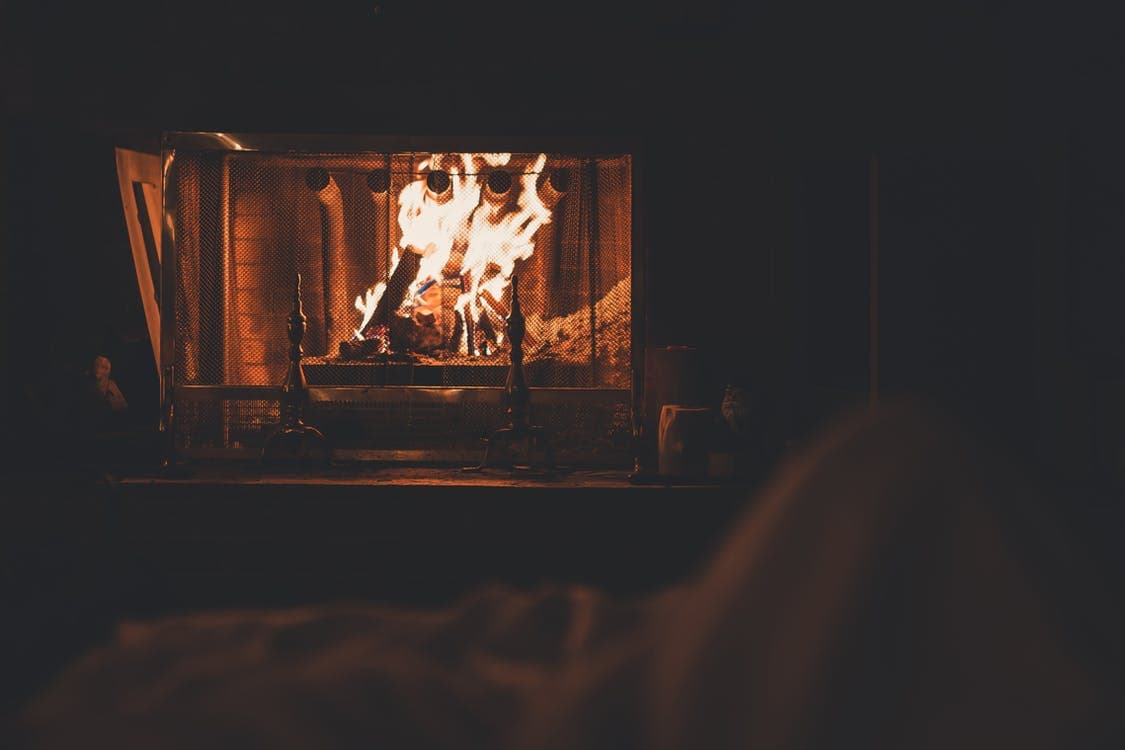
A wood or gas fireplace with the damper left open is a hole in your ceiling. Warm room air rises straight up it all night. Cold air comes down the sides to replace it.
The tell is a cool downdraft when you hold a hand near the firebox, or a faint whistle on a windy night.
Quick fix: Close the damper whenever you are not burning a fire. For a fireplace you never use, a chimney balloon or a fitted draft stopper seals it with nothing permanent. If you like the look but not the draft, an electric unit with no flue gives you the glow. The rest of the fireplace zone can stay the same.
6. The warm air is stacking up at the ceiling and leaving you cold below

Warm air is lighter, so it rises and pools at the ceiling. It is worst under a vaulted or two-story ceiling.
The warmest air in the room can be six feet above your head while you sit in the cool layer below.
The tell is that the stairs or the upstairs landing feel warmer than the sofa, and a vaulted living room never seems to catch up.
Quick fix: Run the ceiling fan clockwise on its lowest speed in winter. That pushes the warm ceiling air gently down the walls. Keep it slow, because a breeze you can feel will cool you and defeat the point.
A low, steady heat source at floor level helps too. That is one case for adding a radiator to a room that stacks its warm air up high.
7. The air is too dry, and dry air feels colder

Winter heating drives the humidity in your house way down. Dry air pulls moisture off your skin faster, and that reads as cold.
The tell is static shocks, chapped lips, a dry throat in the morning, and a cheap humidity meter reading under about 30 percent.
Quick fix: Run a humidifier to bring the room to roughly 30 to 40 percent. Do not push it higher in winter, or you will get water pooling on the cold windows and, over time, mold on the frames. Houseplants and not over-running the bathroom fan help a little, and the whole-home settings that shape comfort matter as much as the room.
8. Your thermostat is in a warm spot, so it thinks the house is warm

A thermostat on an interior hallway wall, near a supply vent, in a patch of afternoon sun, or behind an open door reads a warmer number than the living room where you actually sit. The furnace shuts off while the room you care about is still cold.
The tell is that the hallway by the thermostat feels comfortable while the living room does not, at the same set point. A thermometer left on the coffee table for an hour will usually read two to four degrees below the thermostat.
Quick fix: Check what is around the thermostat and clear anything blocking the airflow to it. Many modern thermostats take a remote sensor you can put in the living room, so it reads that room instead. Moving the thermostat is a bigger job, but sometimes it is the right one.
9. The room looks cold, so your brain reads it as cold

Your sense of warmth is partly visual. Cool-white light above 4000K makes a room read as cold.
So do bare hard floors, lots of glass and metal, no rugs, no curtains, and no throws. You feel it before you have measured a thing.
The tell is a room that photographs bright and clean but that nobody wants to sit in after dark.
Quick fix: Switch to 2700K warm bulbs, add a rug, drape a wool or chunky-knit throw over the sofa, hang lined curtains, and bring in some wood tones. None of it changes the air temperature. All of it changes how warm the room feels, and textiles that read as warmth plus a warm low light source do most of the lifting.
Why it’s worse at night specifically
Four things stack up after dark. It is why the same room that felt fine at 2 p.m. feels cold by 9.
The sun’s warmth coming through the windows is gone, so the glass and the rooms behind it cool down. The outdoor temperature drops, so every exterior wall, window, and floor gets colder, which lowers the average surface temperature in the room.
Many thermostats run an evening or overnight setback, so the air target itself drops a few degrees. And you are sitting still on the sofa, so your body makes less heat than it did while you moved around during the day.
All four land at the same time.
If you only want to fix the room for the hours it feels worst, a small heater aimed at the seating helps. A plug-in electric fireplace is the low-effort version.
Air temperature vs. the four ways you actually lose heat
| Heat-loss route | What it feels like | What the thermostat sees | The fix |
|---|---|---|---|
| Radiation to cold surfaces | A cold “draw” on the side facing a window or outside wall, no breeze | Nothing | Insulating curtains, window film, storm panels |
| Convection, meaning drafts | A moving stream of cool air across your ankles or neck | A little, if the draft reaches the thermostat | Weatherstrip, caulk, outlet gaskets, door sweep, close the damper |
| Conduction | Cold feet on a cold floor, a cold back against a wall | Nothing | Rug and pad, floor or rim-joist insulation |
| Evaporation | Skin feels cool and dry, worse with static | Nothing | Humidifier to 30 to 40 percent |
| Air temperature | The overall coolness of the air | This is the only thing it measures | Turn the heat up, which does not fix the other four |
What we learned about our always-cold living room
A few things only became clear once we stopped turning the dial and started measuring.
Our thermostat said 70 and the living room felt more like 63 every night. Turning it to 73 just made the furnace run longer.
A cheap infrared thermometer showed the window wall at 55 degrees while the inside wall was 68. The room was sending our body heat straight into the cold glass.
Lined curtains closed at dusk, a big wool rug on the bare oak floor, and closing the fireplace damper we had left open for years. Those three did most of the work.
The last piece was the ceiling fan. We had never run it in winter. Clockwise on low, it dropped the warm air off our vaulted ceiling, and the room held its heat for the first time.
We also moved the thermostat’s schedule so the evening setback did not start until we were actually in bed.
What to fix first
| Priority | Fix | Cost | What it targets |
|---|---|---|---|
| Free tonight | Close the fireplace damper, close lined curtains at dusk, run the ceiling fan clockwise on low | $0 | Drafts, radiant loss, stacked warm air |
| This week | Weatherstrip the windows and door, add outlet gaskets, put a rug on the cold floor | $30 to $150 | Leaks, cold floor |
| This season | Insulated cellular shades on the coldest windows, a humidifier for the room | $100 to $400 | Radiant loss, dry air |
| Bigger project | Seal the can lights and rim joist, add insulation under the floor or in a cold wall | A contractor or a committed weekend | The heat loss behind everything else |
| Perception, any time | 2700K warm bulbs, a wool throw, wood tones | Under $50 | How warm the room feels, not the air |
Frequently asked questions
Why does my room feel cold when the thermostat says 70? Because a thermostat only measures air temperature, and your body also loses heat by radiating to cold surfaces like windows and floors. If you are sitting next to a cold window, you feel cold at 70 because your body heat is going into the glass.
Do curtains actually keep a room warmer? Yes. The Department of Energy says about 30 percent of a home’s heating energy is lost through windows. Closing lined curtains or cellular shades at dusk cuts a large part of that, and opening them by day gives you free solar heat.
Which way should my ceiling fan turn in winter? Clockwise, on the lowest speed. That gently pushes the warm air pooled at the ceiling back down the walls. Keep it slow, because a breeze you can feel would cool you.
What humidity should my house be in winter? Roughly 30 to 40 percent. Dry air feels colder, so bringing a dry room up into that range makes the same temperature feel warmer. Going higher in winter risks water pooling on cold windows.
Why is my living room colder at night than during the day? After dark there is no solar heat coming through the windows, the outdoor temperature drops so every exterior surface gets colder, many thermostats run an evening setback, and you are sitting still so you produce less body heat.
Related Posts

Products We Recommend
This post contains affiliate links. We may earn a commission on qualifying purchases at no extra cost to you.
BlindsAvenue Cordless Cellular Honeycomb Shade
The DOE-backed window fix, a honeycomb shade that traps a layer of air and cuts heat loss through the glass when it is closed at dusk
Shop Now
Grotheory Under-Door Draft Stopper, 2 Pack
Blocks the cold air that slides in under an exterior door all evening, a five-minute fix for one of the most common drafts
Shop Now
Pauwer Washable 8x10 Low-Pile Area Rug, Beige
A real layer of insulation over a cold hardwood or tile floor so the room stops chilling you from the feet up
Shop NowNever miss an update — choose FarmFoodFamily as your preferred source on Google.
How it works: Tap the button below to open Google's settings page, then check the box next to FarmFoodFamily.
Tap the checkbox to turn it blue — that's how you know it's set.