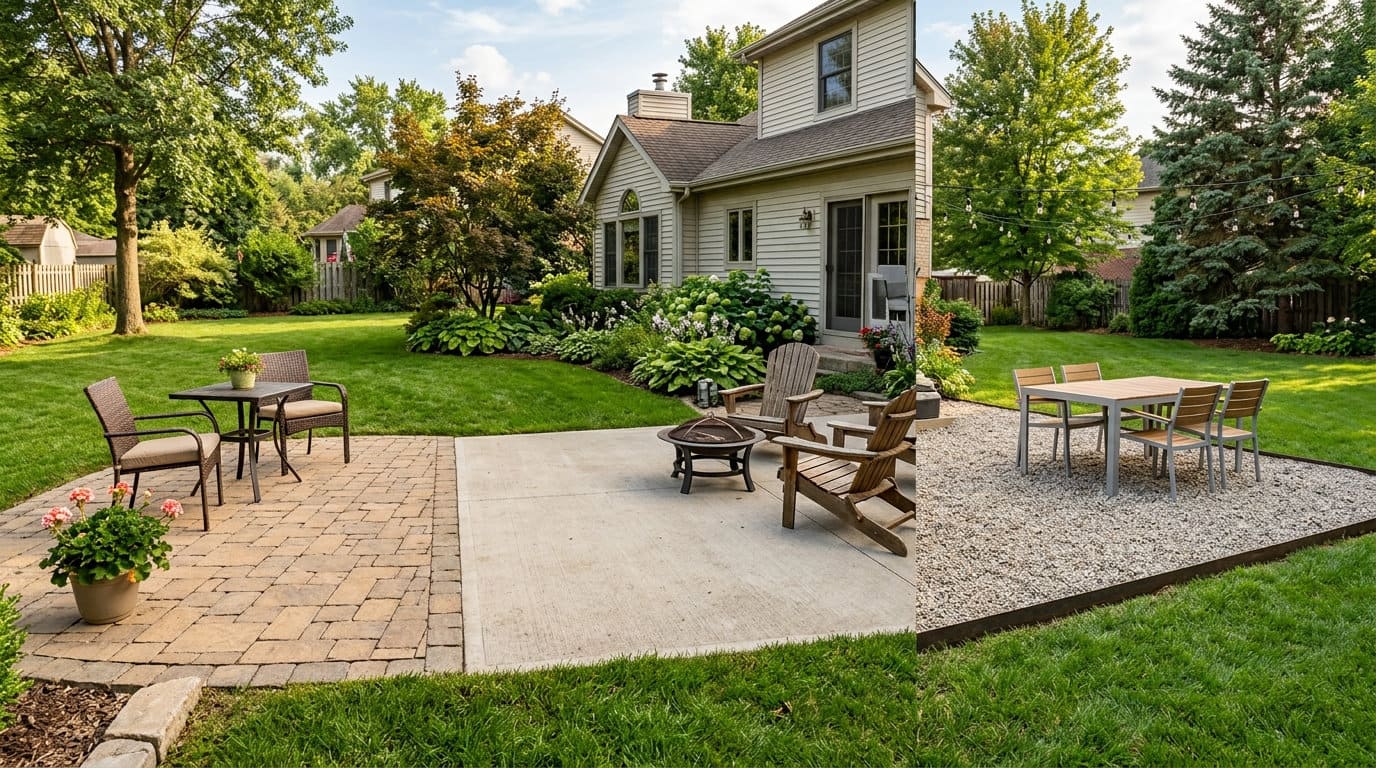
Pavers vs Concrete vs Gravel: Which Patio Surface Wins?
There’s a clear answer for cost, lifespan, and repair on all three surfaces in one table, but the catch is that the base underneath decides more of that outcome than the surface you actually pick.

Never miss an update — choose FarmFoodFamily as your preferred source on Google.
How it works: Tap the button below to open Google’s settings page, then check the box next to FarmFoodFamily.
Tap the checkbox to turn it blue — that’s how you know it’s set.
Three contractors can look at the same backyard and recommend three different surfaces. That’s not because one of them is wrong.
Pavers, poured concrete, and gravel each win on a different question. Cost today, cost over 20 years, and how bad it looks the day something goes wrong.
And that last one is the question most patio articles skip entirely.
This guide puts real numbers next to all three, then gives you a plain rule for picking one instead of an “it depends” shrug.
Quick Answer
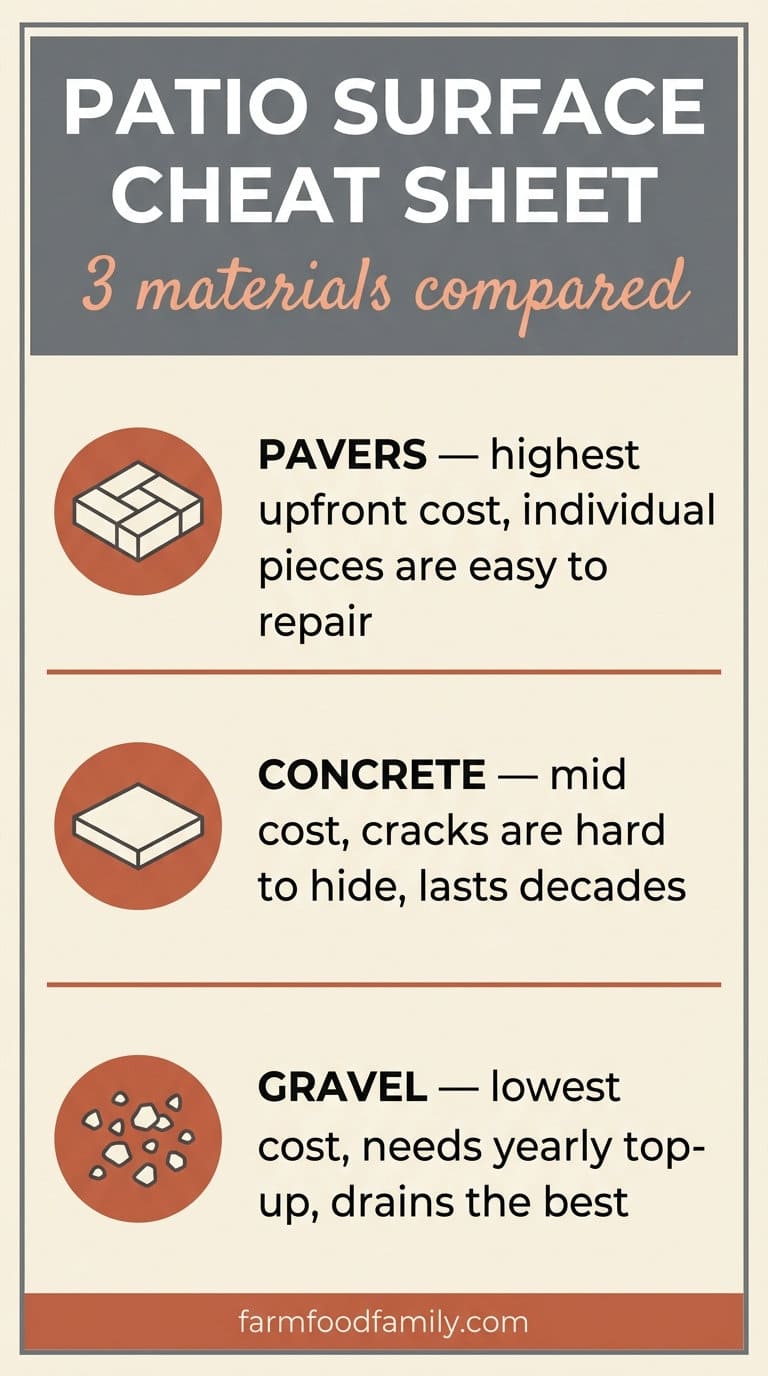
Concrete costs roughly $4 to $18 per square foot installed and lasts 20 to 30 years before cracking becomes a real risk. Pavers run $6 to $40 per square foot, and a well-built paver patio commonly lasts 25 to 50 years or more.


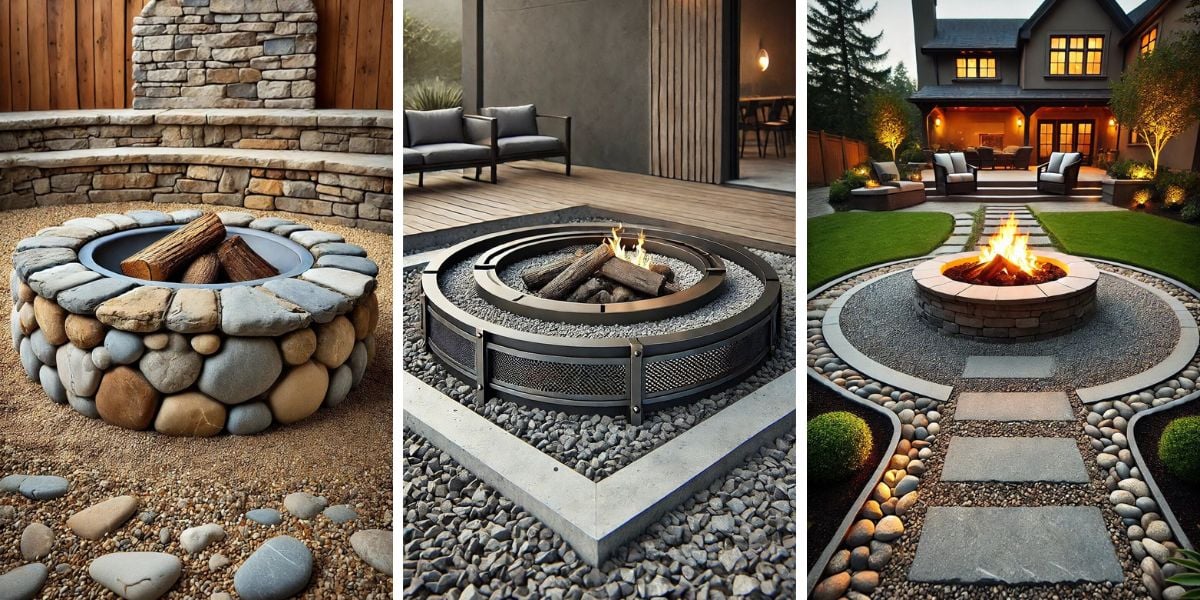
Gravel is the cheapest to install and the shortest-lived of the three, typically needing a real refresh every 10 to 15 years without regular edging and top-ups.
Answer 4 quick questions and get matched to the exact fix for your yard — drainage, budget, layout, or something else entirely.
Take the Free QuizThe real difference isn’t the sticker price, though. Concrete cracks as one continuous slab, and a patch never quite matches the surrounding color or texture. Pavers fail one unit at a time, and they get fixed the exact same way, so the repair stays invisible.
Per Roger Cook of This Old House, “if you don’t prepare the base right, the pavers won’t stay flat,” and the same rule applies to all three, per the Interlocking Concrete Pavement Institute. Get the base right, and the choice becomes mostly about budget and upkeep.
What does each surface actually cost, installed?
Concrete runs roughly $4 to $18 per square foot installed, depending on finish. A plain broom finish sits at the low end, and stamped or colored concrete pushes toward the high end. Add resealing every few years and a 20-year total often lands around $8 to $25 per square foot.
Pavers cost more up front, roughly $6 to $40 per square foot depending on the material and pattern. Concrete pavers sit toward the low end, natural stone or premium clay pavers toward the high end. Maintenance is light, mostly joint sand and occasional sealing, adding maybe $2 to $5 per square foot over 20 years.
Gravel is the cheapest to install by a wide margin, often a fraction of the paver or concrete price per square foot. The tradeoff shows up later.
Without edging and periodic topping up, gravel migrates, compacts unevenly, and needs a real refresh within 10 to 15 years. If you want to see what a finished gravel patio can look like before you commit, our gravel patio design gallery has real layout examples.
And if a hard, more traditional surface fits your style better, concrete patio designs and paver patio ideas on a budget show what each looks like finished.
Most yard problems trace back to one specific, fixable cause. Find yours in 4 quick questions.
Take the Free Quiz
Fills paver joints in a way that resists weeds and washout, the maintenance item that keeps a paver patio's repair advantage real.
Shop NowThis post contains affiliate links. We may earn a commission on qualifying purchases at no extra cost to you.
| Material | Installed cost per sq ft | Typical lifespan | DIY-friendly? |
|---|---|---|---|
| Poured concrete | $4 to $18 | 20 to 30 years | Small slabs only, control joints matter |
| Pavers | $6 to $40 | 25 to 50+ years | Yes, with proper base prep |
| Gravel | Lowest of the three | 10 to 15 years | Yes, easiest to DIY |
Which one is easiest to repair when something goes wrong?
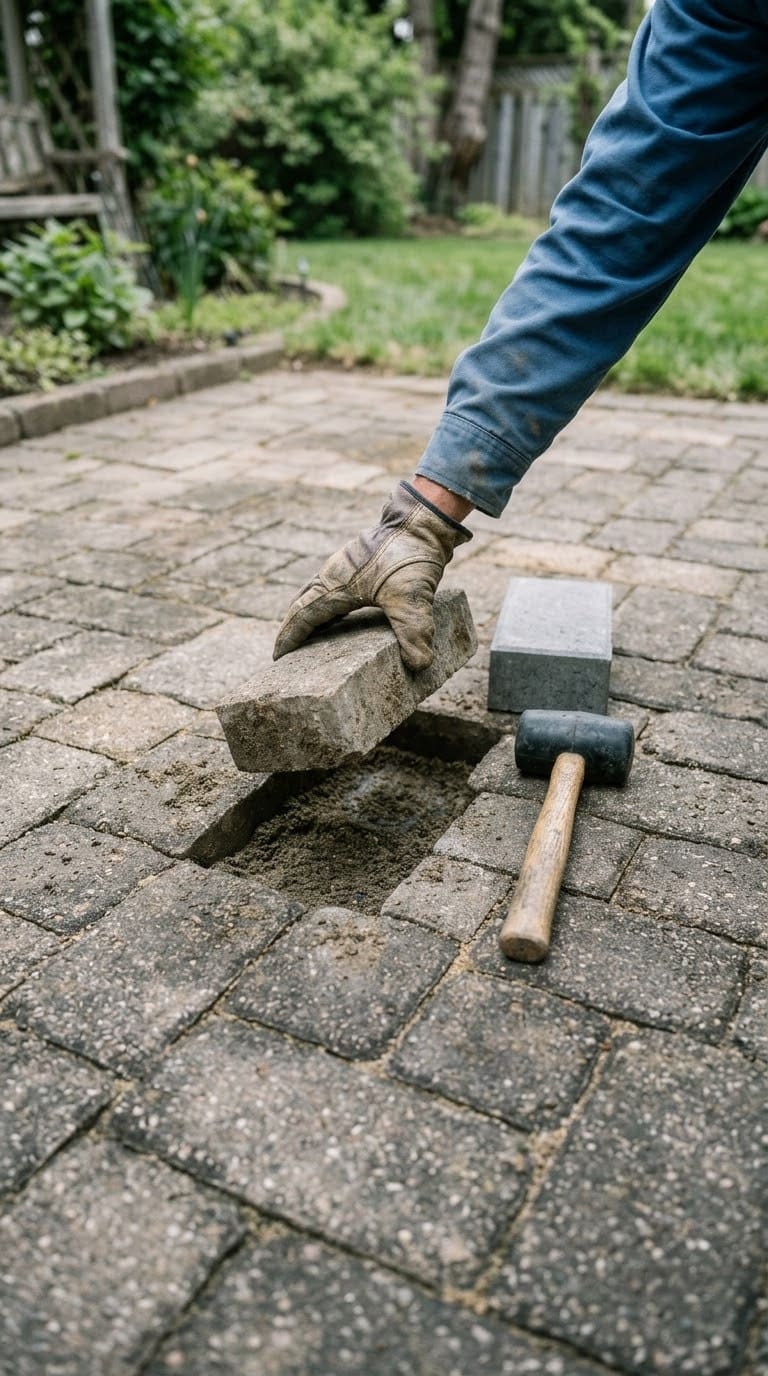
This is where the sticker price stops telling the whole story, and it’s one of the questions worth asking any contractor before you sign anything.
A poured concrete patio is one continuous slab. When it cracks, you’re cutting out a section and patching it, and a patch never quite matches the original color or texture. It reads as a scar, not a repair.
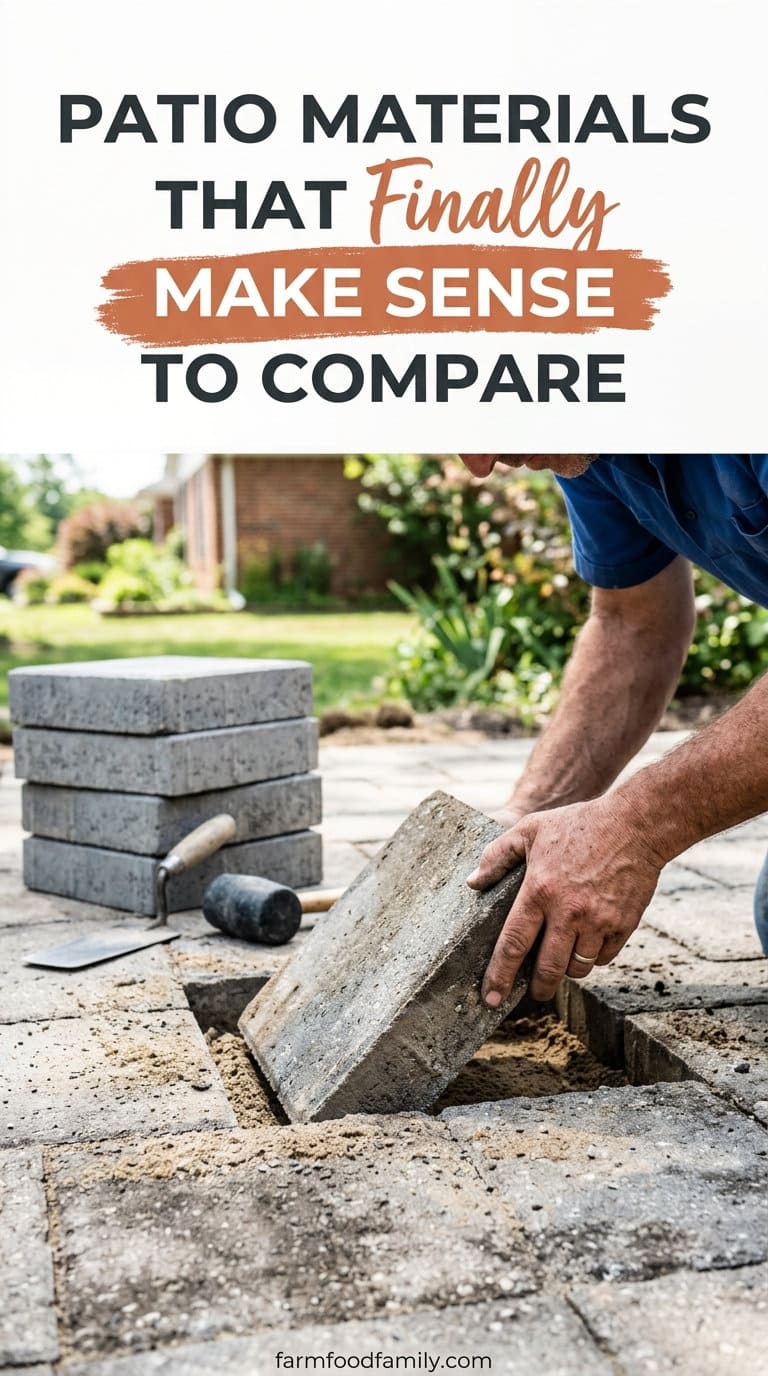
Pavers fail differently. One unit sinks or cracks, you pull it, fix the base underneath, and drop in a replacement. The rest of the patio is untouched, and the fix is genuinely invisible if you kept a few spare units from the original batch.
Gravel barely counts as a repair job. A low spot gets raked level and topped up, and a weedy patch gets pulled and refreshed. It’s maintenance, not construction.
Why does the base matter more than the surface?
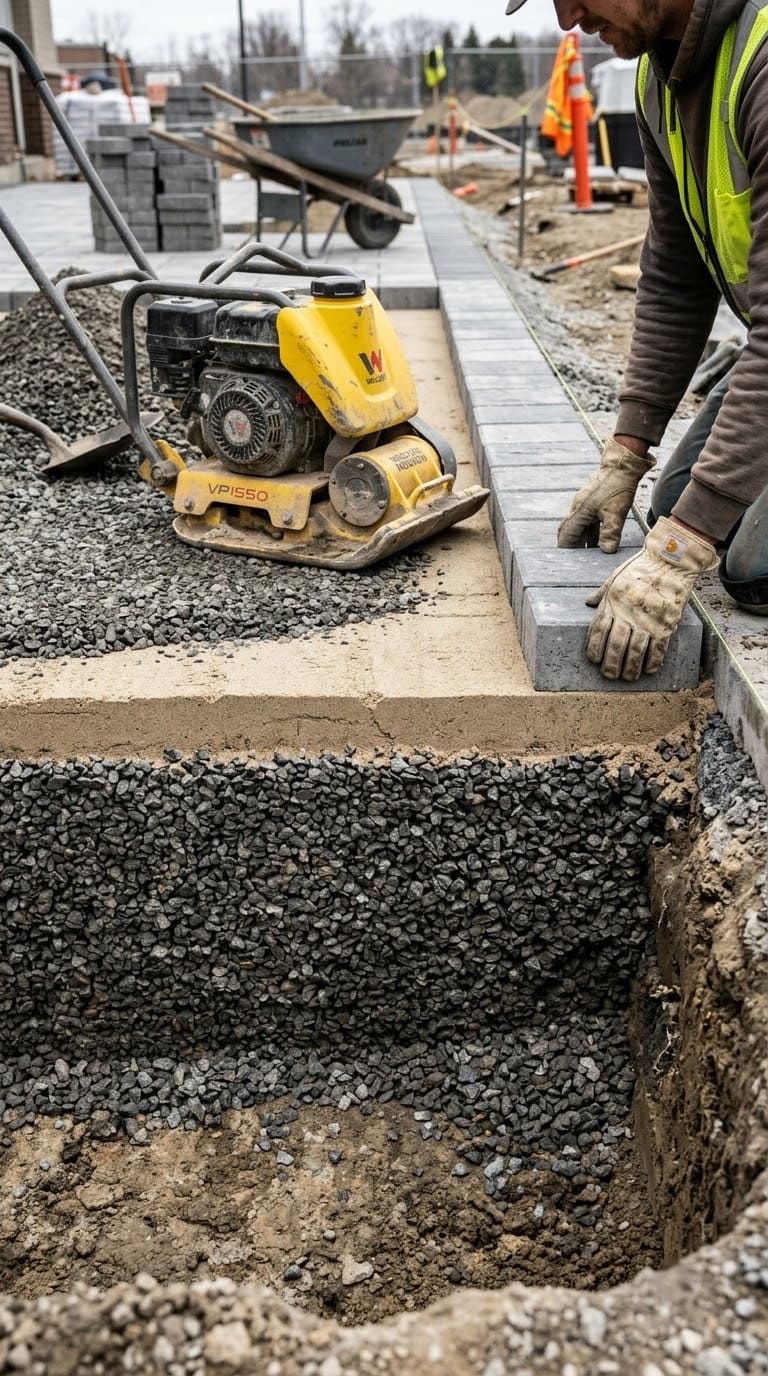
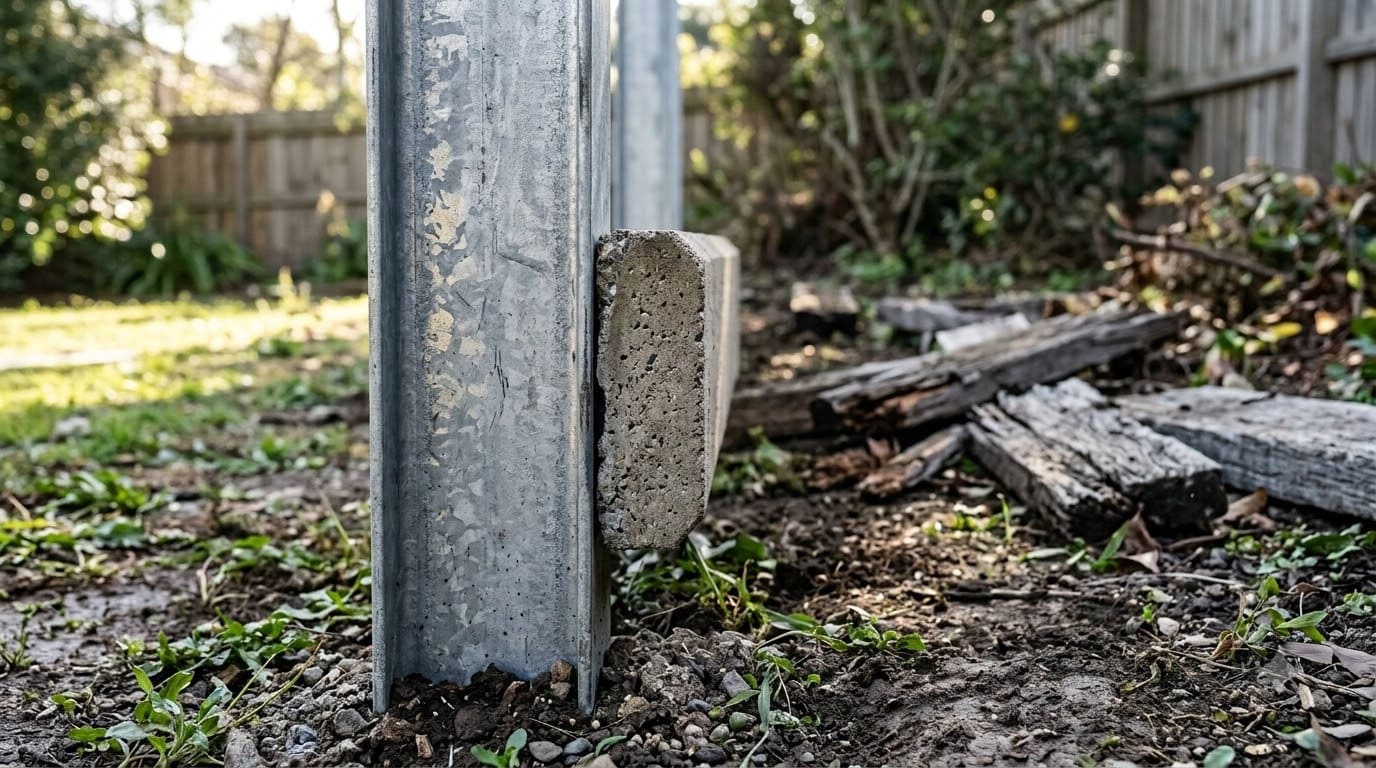
Every one of these materials fails the same way when the ground underneath isn’t ready.
Roger Cook puts it plainly: “If you don’t prepare the base right, the pavers won’t stay flat.” He builds on a foundation of compacted crushed gravel, what’s called aggregate base course, topped with a sand setting bed. The gravel drains water through while staying load-bearing, and the sand gives the surface above it something smooth and even to rest on.
The Interlocking Concrete Pavement Institute sets real numbers on this. A patio or pedestrian area needs a base at least 4 inches thick over well-drained soil, and a driveway carrying vehicle weight needs at least 6 inches.
Concrete needs the same discipline underneath, plus a well-compacted subgrade so the slab doesn’t settle unevenly and crack on its own. Even gravel needs a stable, compacted base and a landscape fabric layer, or it slowly works its way down into the soil below.



This is the same principle behind what a retaining wall actually costs, where the drainage layer behind the wall matters as much as the material stacked in front of it, and it’s why a driveway needs a deeper base than a patio in the first place. Our guide to driveway paving options covers that heavier-duty version of the same base question.
The average homeowner spends $616/year on yard fixes that don't address the real problem. Find out what yours actually is — before you spend another dollar.
Take the Free QuizWhich one drains water better?
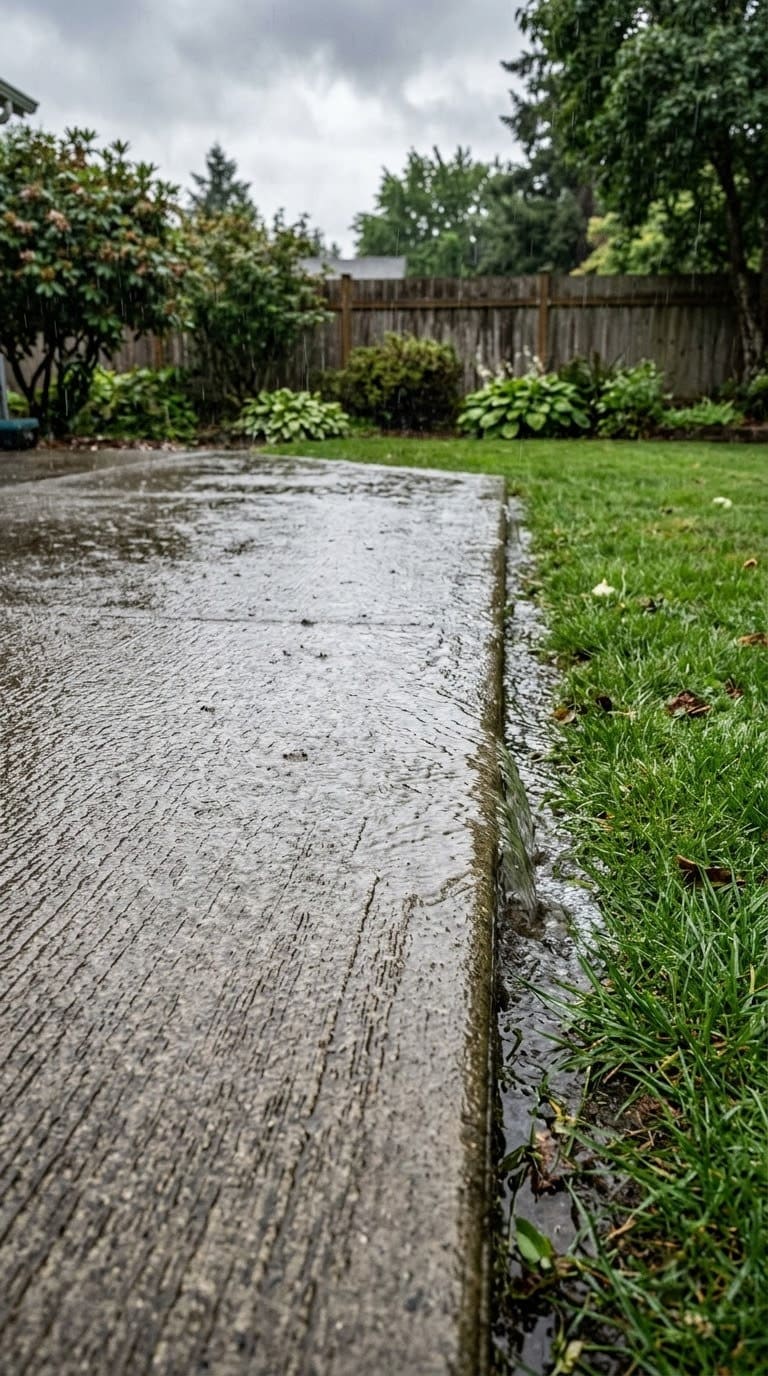
Poured concrete is impermeable. Every drop that lands on it runs off the surface, so the whole patio has to be pitched, roughly an eighth of an inch of fall per foot, away from the house.
Standard pavers pass some water through their sand-filled joints, more than a solid slab but still limited. True permeable paver systems are a different animal. Per ICPI, they’re built over an open-graded crushed stone base with joints packed with permeable material specifically so storm water can infiltrate straight through the surface instead of running off it.
Gravel is naturally the most porous of the three, which is exactly why it needs edging and a firm base. Without both, it migrates toward the lowest point and turns to mud in the wrong soil.
A patio built over heavy clay drains differently than one over sandy loam no matter which surface you pick, so it’s worth checking your soil before you commit to any of the three.
Does freeze-thaw or ground movement crack it?
Pavers are built to move. Each unit can shift slightly as the ground freezes, thaws, or settles, and the whole surface flexes without breaking.
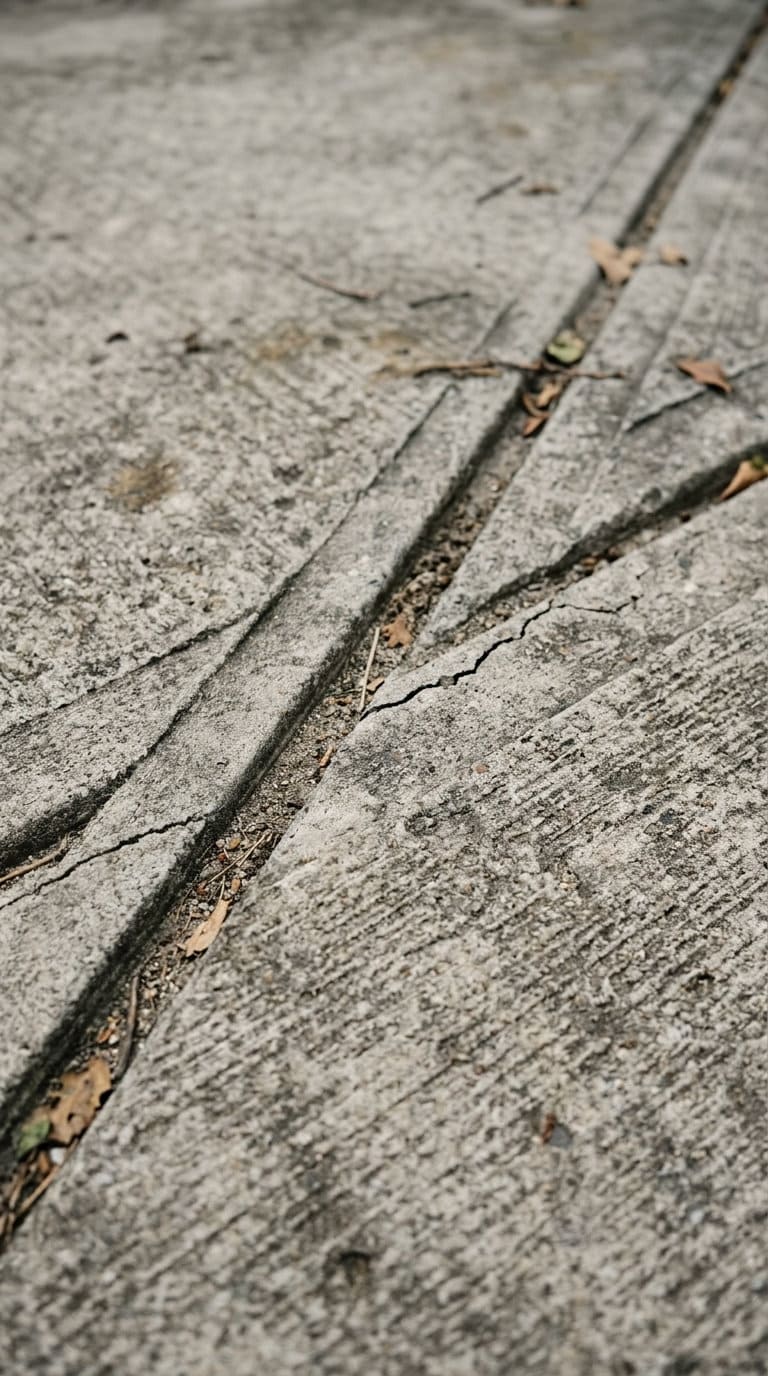
Poured concrete can’t do that. It’s one rigid slab, so it needs engineered weak points called control joints, cut into the surface within hours of the pour, so shrinkage cracking happens along a straight, deliberate line instead of a random one. A common rule of thumb spaces those joints at roughly two to two and a half times the slab’s thickness in inches, expressed in feet, a 4-inch patio slab getting joints something like every 8 to 10 feet.
Skip that step, and the concrete finds its own place to crack, usually somewhere far less tidy than a straight joint line. A stamped or colored finish makes this worse, not better, since a random crack through a decorative pattern is far more visible than one in plain gray concrete, which is worth knowing before you upgrade to stamped concrete patio designs.
Gravel doesn’t crack at all. It just shifts, which is the whole point, and it’s the one surface here that genuinely doesn’t care about freeze-thaw cycles.
What about weeds and everyday maintenance?
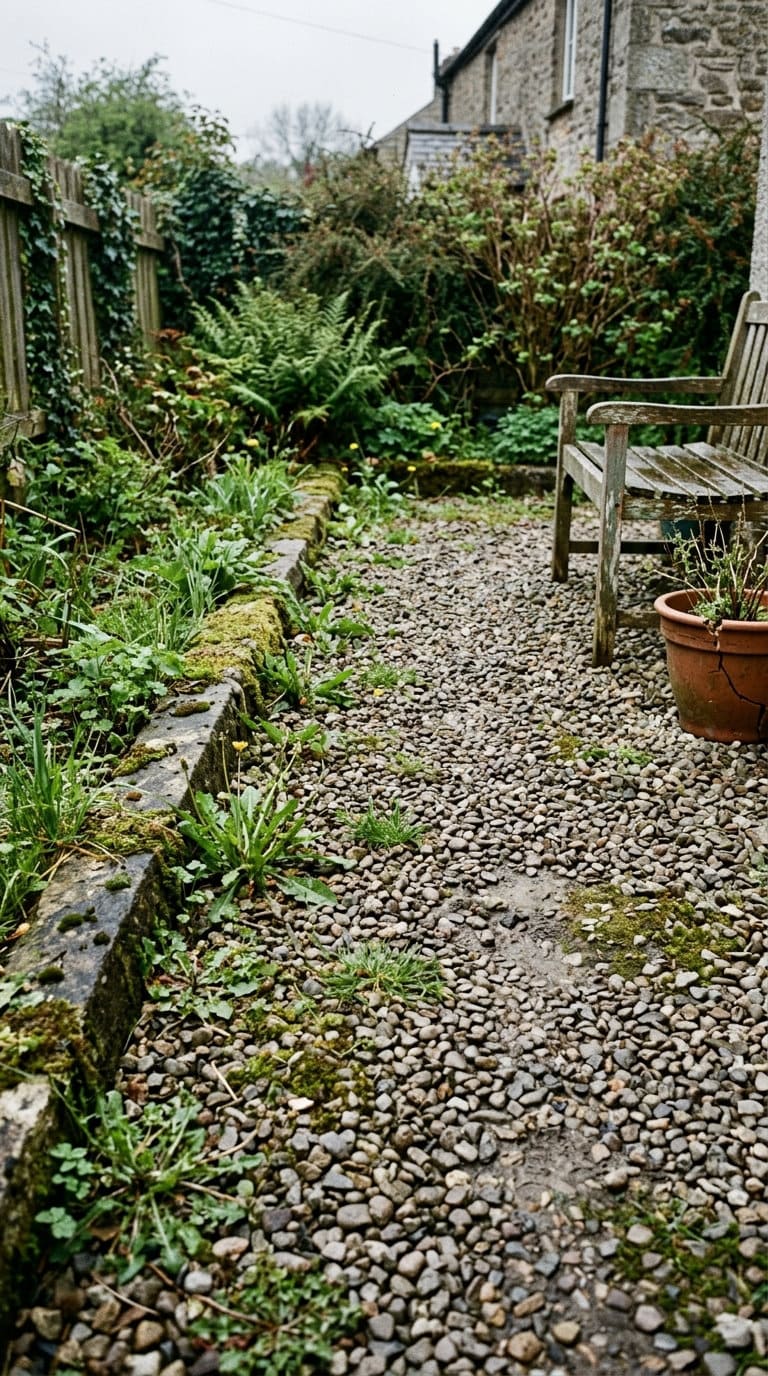
Gravel is the highest-maintenance of the three over time, which surprises people who picked it specifically to avoid work. Organic debris collects in the gaps, and without a real sub-base and occasional weeding, it turns weedy within a season or two.
Pavers with properly filled joints, especially polymeric sand, resist weeds well and mostly need a re-sanding every couple of years. Concrete needs the least routine attention of the three right up until it cracks, at which point maintenance becomes repair.
A covered patio changes this math a little for all three, since less direct rain and sun means less freeze-thaw stress on concrete, less weed pressure on gravel, and less UV fading on paver sealant. If shade is part of your plan, covered patio ideas are worth a look before you finalize the surface.
So which one actually wins?
There’s no universal winner. There’s a rule that fits your actual priority.
Climate plays a bigger role than most people expect too. Somewhere with real freeze-thaw winters punishes a poorly jointed concrete slab hard, while a mild, dry climate is far more forgiving of concrete’s one real weakness.
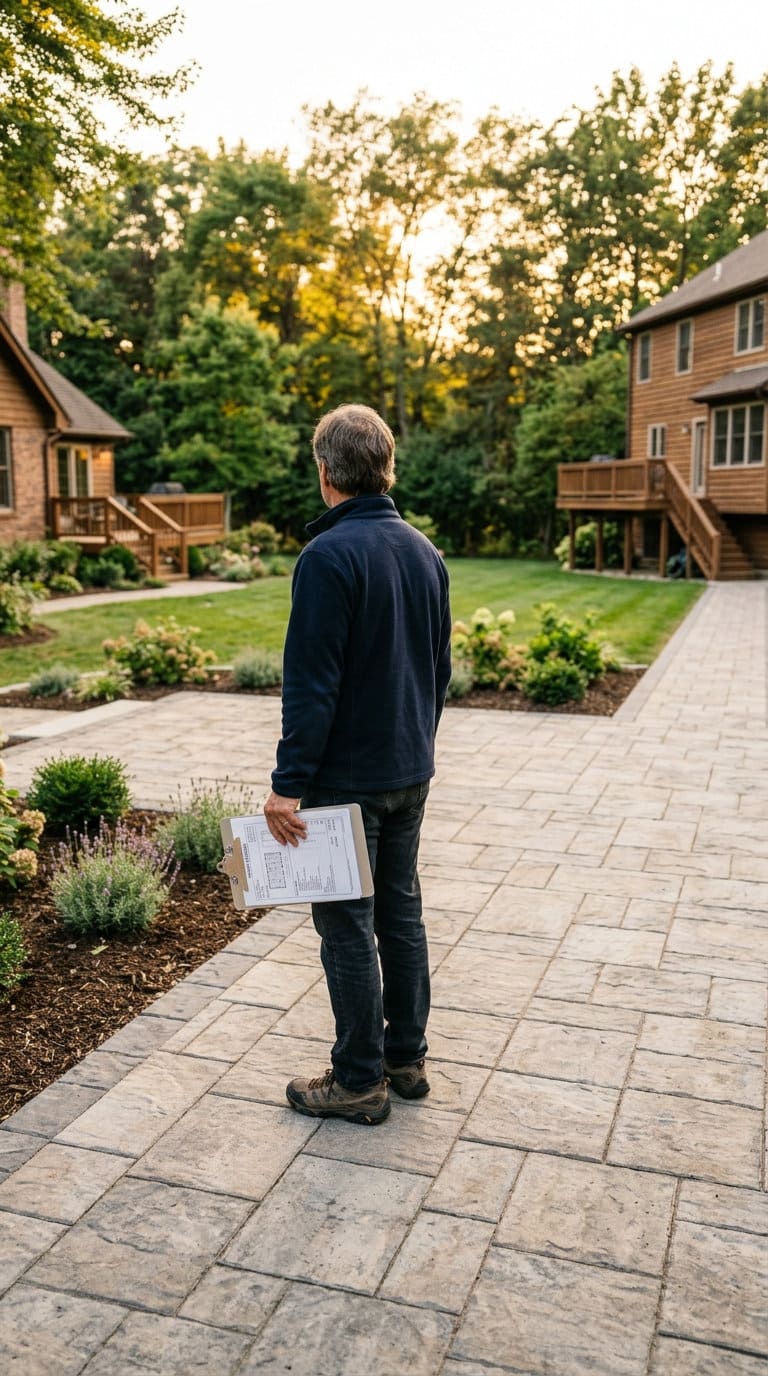
If budget today is the deciding factor and you’re willing to do upkeep, gravel or a plain concrete slab wins. If you want the lowest long-term hassle and don’t mind paying more up front, pavers win, since repairs stay small and invisible for decades. If you want the flattest, most walkable hard surface at a moderate price and you’re diligent about sealing and joints, well-built concrete wins.
| Situation | Pick this | Why |
|---|---|---|
| Tightest possible budget | Gravel | Lowest install cost, easy DIY |
| Want it flat and hard, moderate budget | Poured concrete | Cheaper than pavers, fine if joints and sealing are done right |
| Want the lowest hassle over 20+ years | Pavers | Unit-by-unit repair, no visible patch |
| Live somewhere with real freeze-thaw cycles | Pavers | They flex instead of cracking |
| Drainage or runoff is a real concern | Permeable pavers or gravel | Both infiltrate water instead of shedding it |
| Planning a fire pit or heavy furniture on top | Pavers or concrete | Gravel shifts too much under fixed structures |
| DIY weekend project, small area | Gravel or a small paver patio | Both are realistic without heavy equipment |
| Reselling the house soon | Pavers | Often reads as a higher-end upgrade than plain concrete |
What we learned comparing three real bids
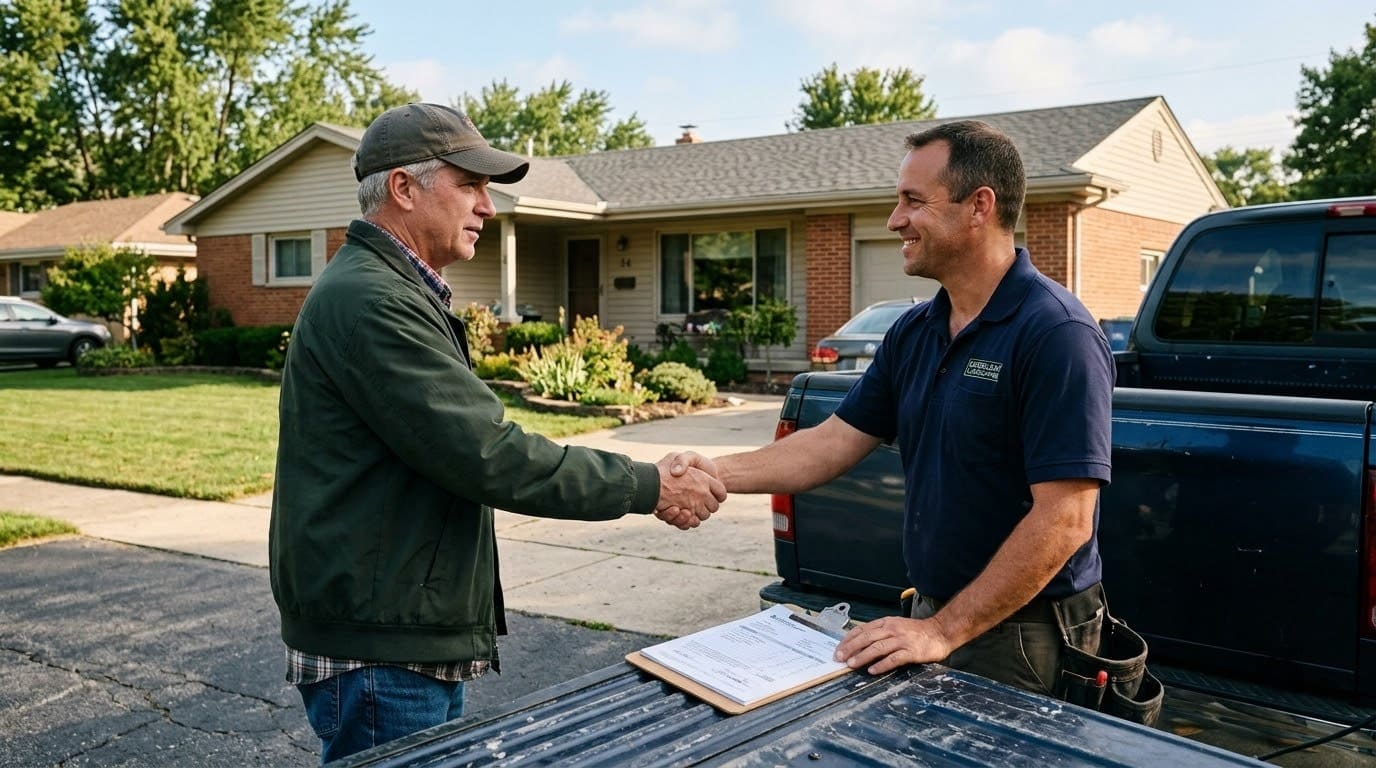
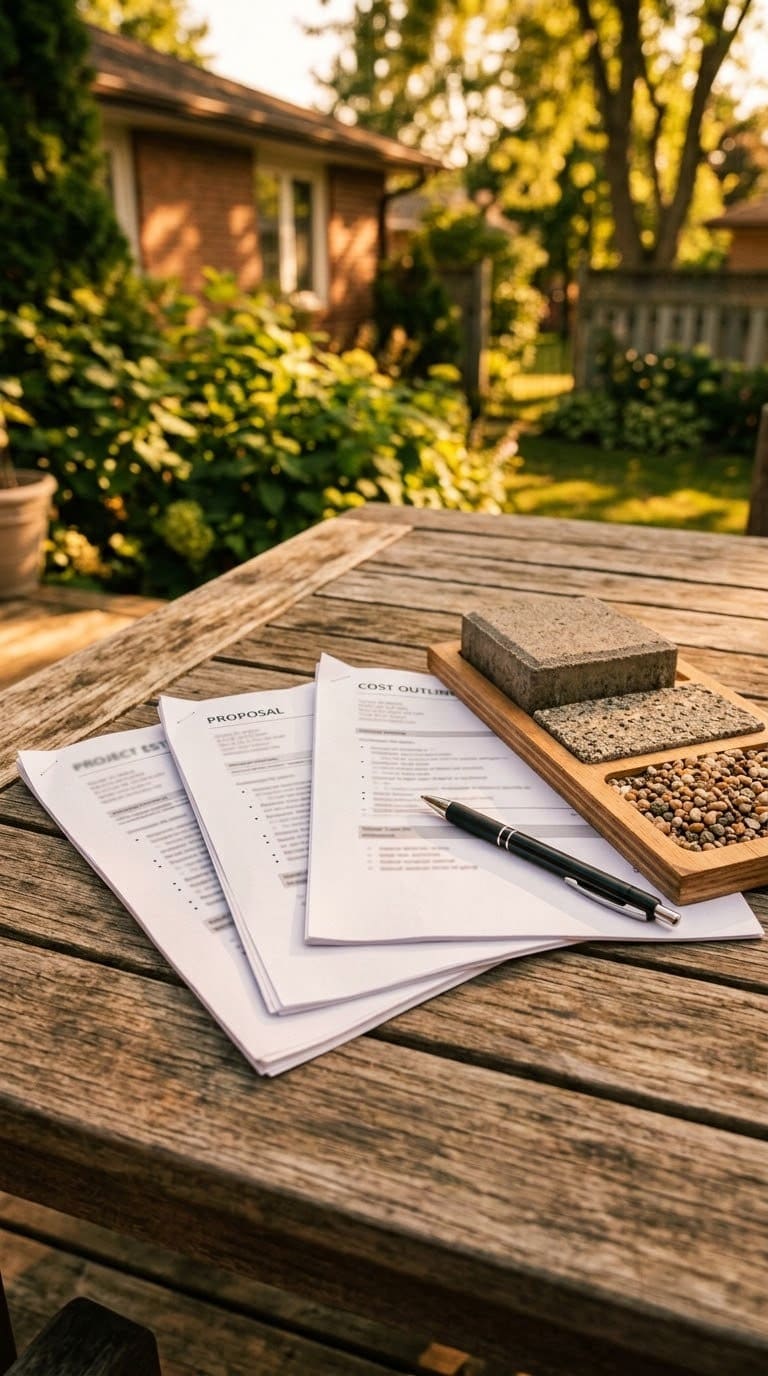
We got three quotes for the same 300-square-foot backyard patio. One for stamped concrete, one for concrete pavers, one for a gravel patio with a paver border.
All three contractors walked the same yard and measured the same slope, and none of them disagreed about the drainage plan. Where they differed was entirely in the surface material and what it would cost us five years down the road.
The concrete bid was the cheapest by a real margin, and it was tempting. Then the contractor mentioned the crack warranty only covered “structural” cracks, not the hairline ones that show up in year three or four almost everywhere concrete goes down.
The paver bid cost about 40 percent more up front. What sold us was asking the same question we’d ask anyone: what happens when one section fails.
The concrete answer was cut, patch, hope it blends. The paver answer was pull three units, check the base, drop new ones in.
We went with pavers. Two winters later, one corner near a downspout sank slightly.
We pulled four pavers, added base material, releveled, and reset them in under an hour. There’s no scar where it happened.
One honest note. If your budget only stretches to concrete, that’s a completely reasonable patio, as long as the contractor cuts real control joints and you reseal on schedule.
The material isn’t the mistake. Skipping the base and the joints is.
Pavers vs concrete vs gravel FAQ
What is the cheapest patio material? Gravel is the cheapest to install, followed by basic poured concrete. Pavers cost more up front but often cost less than concrete over 20 years once repairs and resealing are factored in.
Which patio material lasts the longest? Pavers typically last the longest, commonly 25 to 50 years or more with a properly built base, because individual units can be replaced without touching the rest of the patio. Concrete usually lasts 20 to 30 years before cracking becomes likely.
Can I install any of these myself? Gravel is the easiest DIY option. A small paver patio is realistic for a determined homeowner who gets the base preparation right. Poured concrete is the least DIY-friendly, since a botched pour or missed control joints are permanent mistakes.
Do pavers really add more resale value than concrete? Many real estate and landscaping sources treat a well-built paver patio as a stronger upgrade signal than plain concrete, since it reads as a more finished, higher-end feature. The effect depends on your local market and the quality of the installation.
How do I stop a gravel patio from getting weedy? Start with a compacted base and a layer of landscape fabric underneath the gravel, per Roger Cook’s approach, so weeds can’t root up through the stone. After that, plan on pulling occasional weeds and topping up gravel that’s migrated or thinned.
Does a concrete patio need to be sealed? Yes, resealing every 3 to 5 years helps keep moisture out and slows the freeze-thaw and staining damage that eventually leads to cracking. It’s a small recurring cost that protects a much bigger investment.
Related posts
Products We Recommend
This post contains affiliate links. We may earn a commission on qualifying purchases at no extra cost to you.
Premium Polymeric Sand, 10 lb, Titanium Gray
Fills paver joints in a way that resists weeds and washout, the maintenance item that keeps a paver patio's repair advantage real.
Shop Now
Stainless Steel Concrete Finishing Tools Set (Trowel, Edger, Groover)
For cutting clean control joints into a fresh concrete pour, the step that decides whether a slab cracks on a straight line or a random one.
Shop Now
BlumeTrec 68-Inch Adjustable Bow Rake
For leveling and maintaining a gravel patio surface, the tool that keeps it from turning weedy and uneven.
Shop NowNever miss an update — choose FarmFoodFamily as your preferred source on Google.
How it works: Tap the button below to open Google's settings page, then check the box next to FarmFoodFamily.
Tap the checkbox to turn it blue — that's how you know it's set.