
15 Resourceful Ways to Repurpose Old Bricks In Garden
Old bricks make herb spirals, bug hotels, raised beds, and borders for almost nothing, as long as you test them first and skip the uses where soft bricks crumble.

Never miss an update — choose FarmFoodFamily as your preferred source on Google.
How it works: Tap the button below to open Google's settings page, then check the box next to FarmFoodFamily.
Tap the checkbox to turn it blue — that's how you know it's set.
Old bricks make herb spirals, bug hotels, raised beds, and borders for almost nothing, as long as you test them first and skip the uses where soft bricks crumble.
Products We Recommend
This post contains affiliate links. We may earn a commission on qualifying purchases at no extra cost to you.


A pile of old bricks looks like free garden material. It is. But not every brick is up to the job.
Old bricks come in two kinds. Some are hard and last for decades. Others are soft, and they flake apart after a few winters.
This guide gives you 15 projects, with sizes, steps, and a plain call on which ones suit soft bricks. We also cover how to sort bricks, clean off mortar, and avoid the uses that fail.
Answer 4 quick questions and get matched to the exact fix for your yard — drainage, budget, layout, or something else entirely.
Take the Free QuizQuick Answer
Sort your bricks before you build. The Brick Industry Association says salvaged brick from old buildings can include soft, under-burned bricks that spall, flake, and crack in freeze-thaw weather. It also says you can’t easily tell durable units from weak ones.
Use old bricks in low-stress jobs. Herb spirals, bug hotels, planters, and decor all work well, because they don’t carry foot traffic or heat. Avoid paths, patios, and fire pit linings.
The same BIA note says salvaged brick should not be used for exterior patios, walks, and pavements. Wet ground makes the problem worse.
Test a few bricks first. Soak a sample for a day, freeze it if you can, and see what happens.

Any brick that sheds flakes goes in the decor pile, not the wall. Wear gloves and eye protection while you sort.
Most yard problems trace back to one specific, fixable cause. Find yours in 4 quick questions.
Take the Free QuizWhich Brick Projects Suit Old Bricks?
This table is our planning guide. The patio, walk, and fire pit calls come from the BIA and Western Interlock. The rest is our own judgment.
| Project | Mortar needed? | Bricks needed | Risk if bricks are soft |
|---|---|---|---|
| Herb spiral | No | About 120 | Low to medium |
| Bug hotel | No | 10 to 30 | Low |
| Raised bed wall | No | 40 to 100 | Medium |
| Edging border | No | 1 per 4 inches | Medium |
| Bird bath stand | No | 20 to 30 | Low |
| Fire pit liner | Yes | Not advised | High |
| Path or patio | Sand base | Many | High, not advised |
Can You Trust Old Bricks?
Not always. The BIA’s Technical Note 15 explains why. Older kilns fired bricks unevenly, so one batch held both hard, durable bricks and soft, under-burned ones.
Soft bricks were called salmon bricks. The note describes them as more porous, slightly larger, and lighter in color, with a pink-orange tint. It says they don’t hold up in weather the way hard-burned brick does.
Pink doesn’t always mean weak, though. The BIA says many modern pink bricks are hard-burned and meet top weathering grades.
The note also says it’s quite likely that masonry of salvaged brick will spall, flake, pit, and crack due to freezing and thawing in the presence of excessive moisture. That’s the failure you want to avoid.
How Do You Sort and Clean Old Bricks?
Sort first. Tap two bricks together. A clear ring suggests a hard brick, and a dull thud can mean a soft or cracked one.

Cowhide gloves for lifting and sorting bricks
Shop NowThis post contains affiliate links. We may earn a commission on qualifying purchases at no extra cost to you.
Set aside any brick that crumbles, flakes, or has deep cracks.
Test a few. Soak a sample in water for 24 hours, then freeze it overnight and thaw it.
The average homeowner spends $616/year on yard fixes that don't address the real problem. Find out what yours actually is — before you spend another dollar.
Take the Free QuizRepeat a few times. Bricks that shed flakes are weak.
Clean off mortar with a chisel and hammer. Work slowly, since the impact can chip a brick. Wear safety glasses and gloves.
The BIA notes that mortar particles soaked into bricks are virtually impossible to remove fully. That’s fine for dry-stacked garden projects, since you won’t rely on a mortar bond.
If you cut bricks, cut them wet. Dry cutting makes silica dust, so wear a respirator rated for it. Cut outdoors.
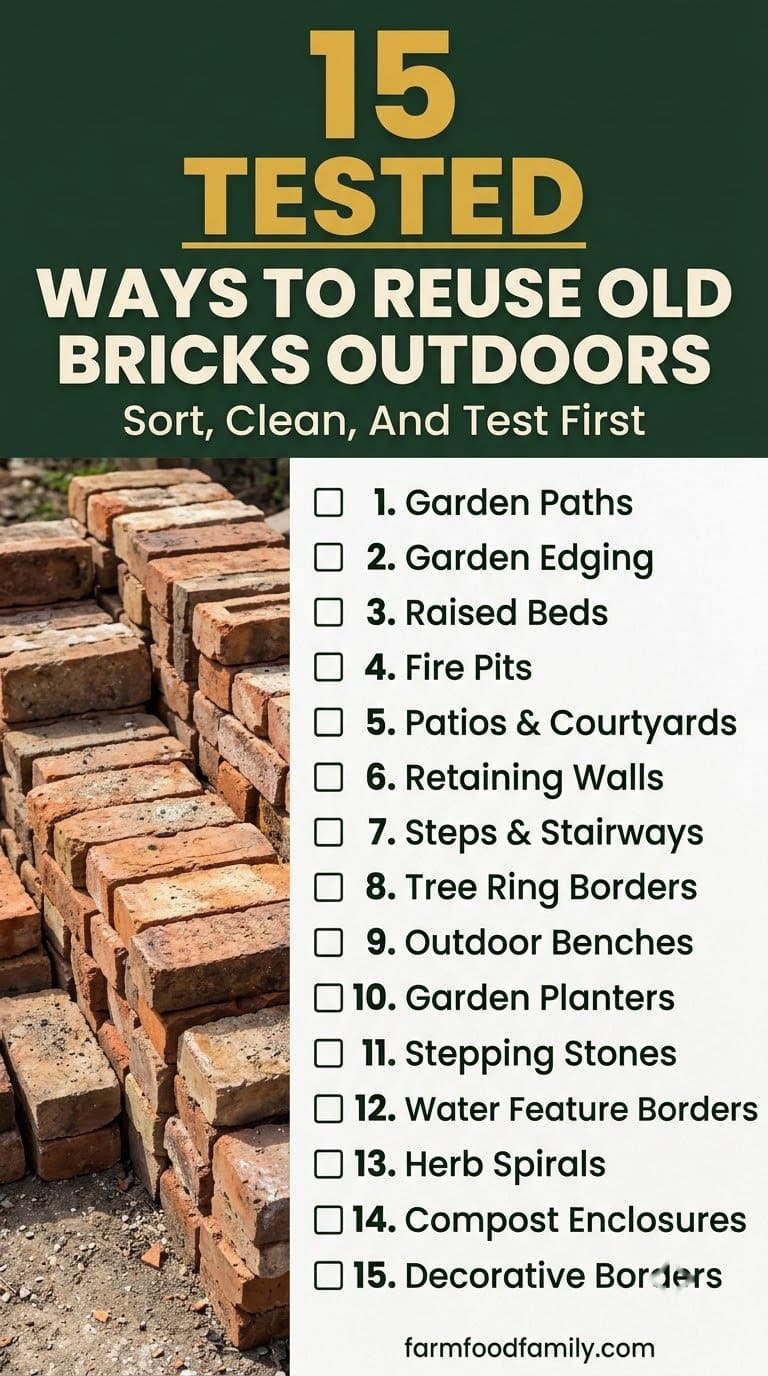
15 Resourceful Ways to Repurpose Old Bricks
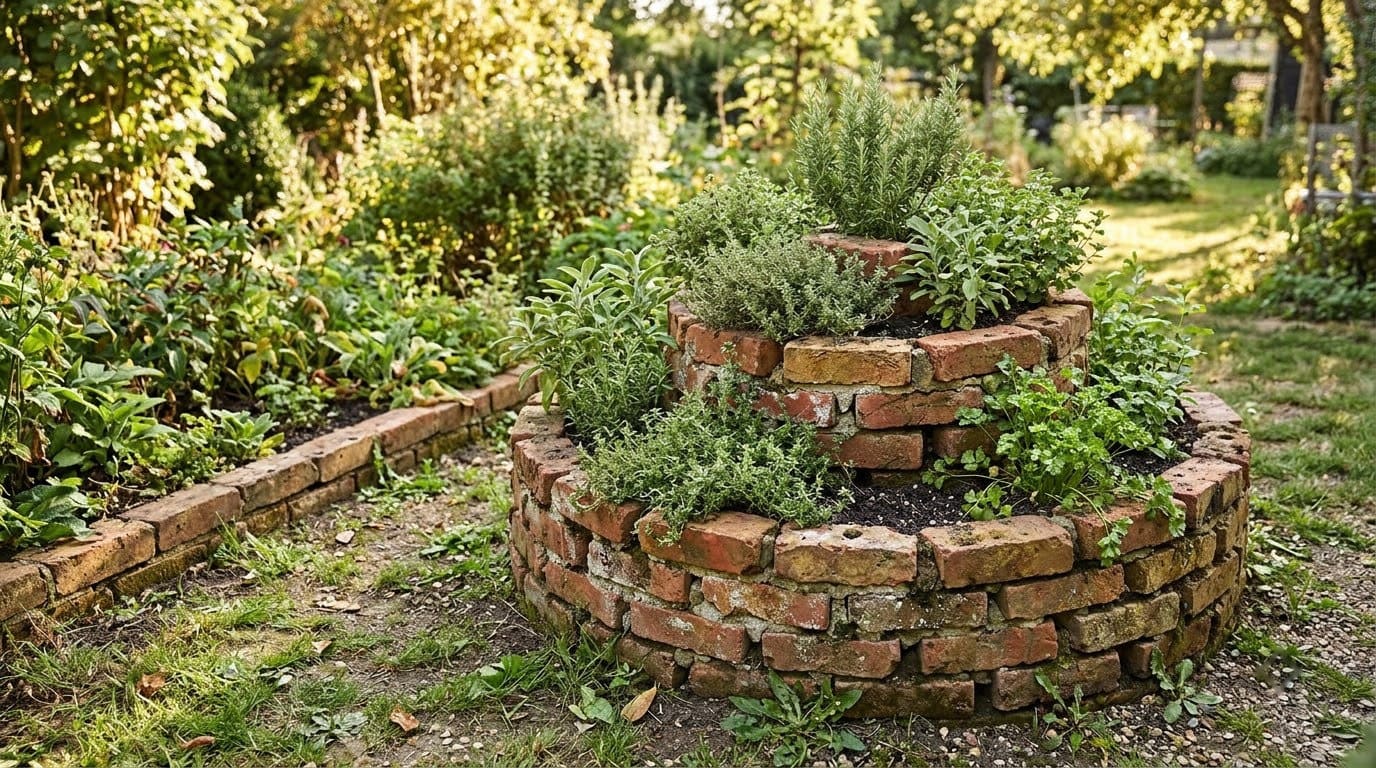
1. Brick Herb Spiral
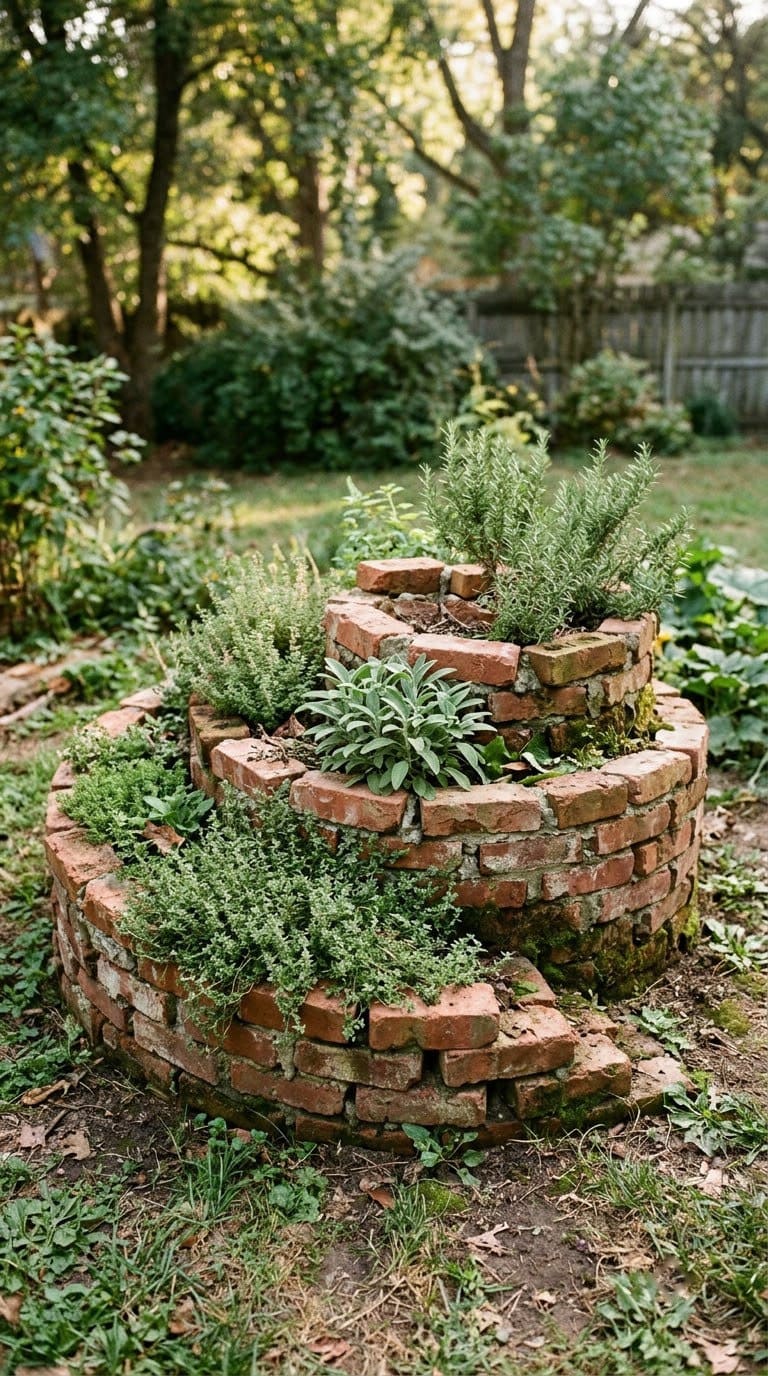
Megan Cain of Creative Vegetable Gardener built a spiral 5 feet wide and 20 inches high. It took about 120 reclaimed bricks.



Trace the outline on the ground, then lay the first course. Start each new course by counting in 2-1/2 bricks from the beginning. Repeat until you reach the height you want.
Fill it with a 50/50 mix of topsoil and compost. The soil settles, so top it off and add mulch. Choose full sun, at least 8 hours a day.
Cost tier: free to low. See our herb garden ideas for plants to grow.
2. Brick Bug Hotel
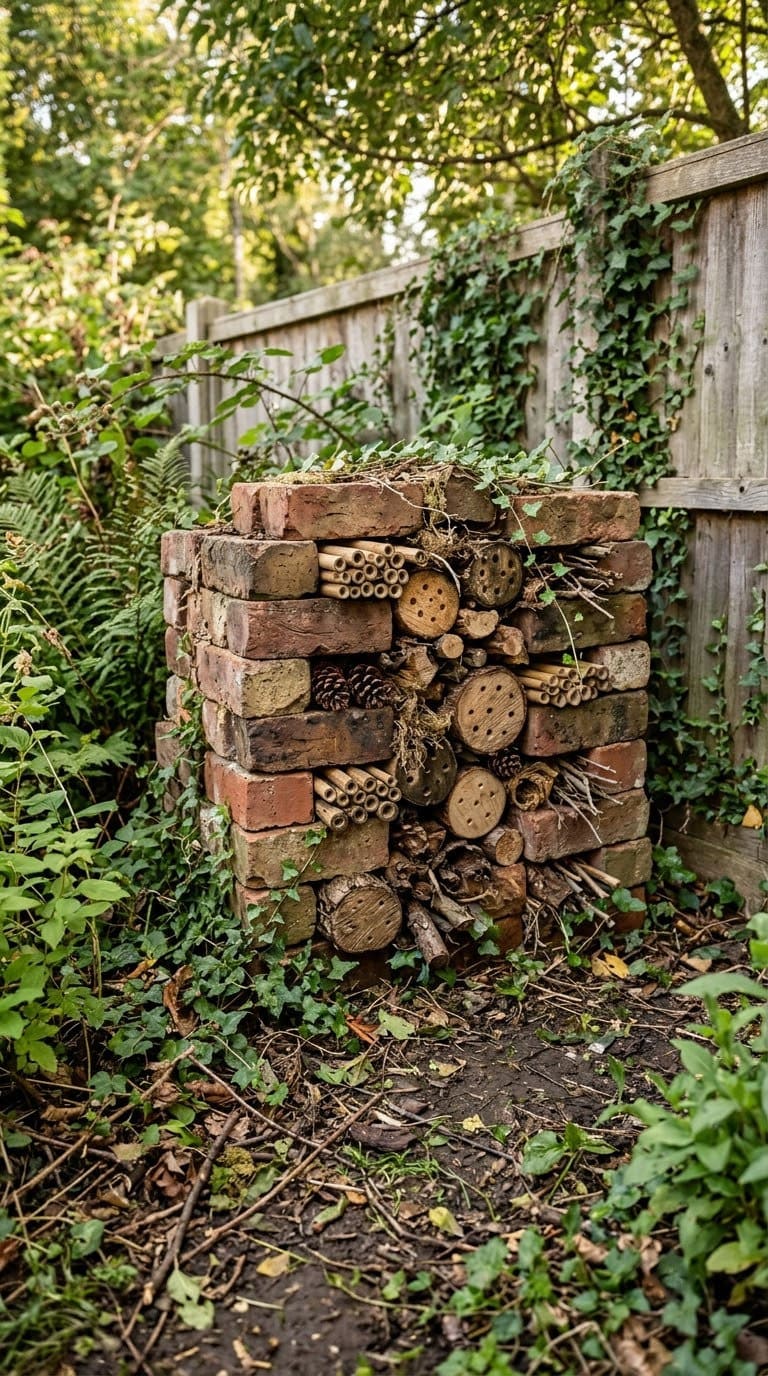
Stack bricks in a U or box shape and fill the gaps with nesting material. Use hollow stems, bamboo, drilled wood, and bark.
University of Vermont Extension master gardener Andrea Knepper says to drill holes of 2 to 10 millimeters in small pieces of untreated wood. Different insects look for different-sized cavities.
Place it facing south, at least 3 feet above the ground if you can. Pack gaps with dry leaves or straw. Clean up in early summer.
Cost tier: free. Pairs with idea 1’s herbs, which draw pollinators.
3. Brick Raised Bed Walls
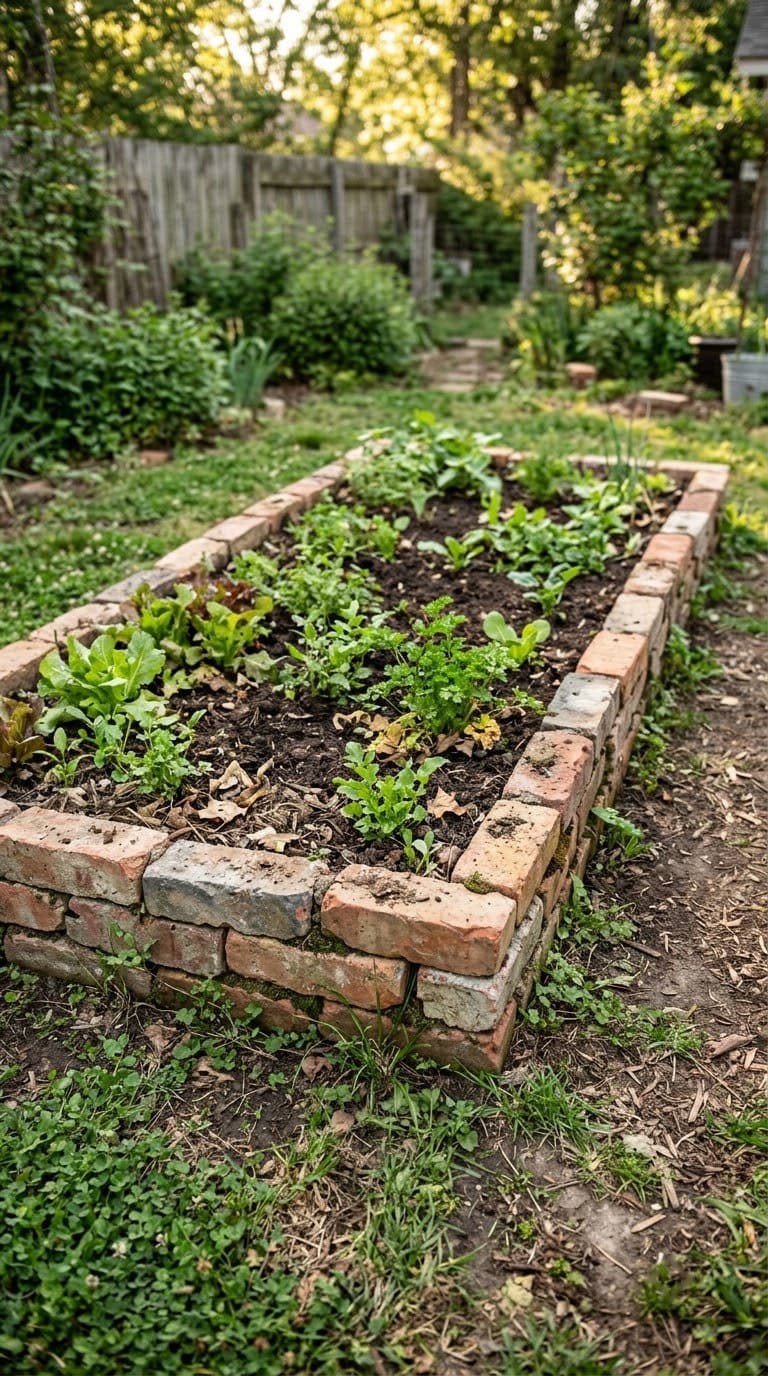
Dry-stack two courses of brick around a 4 by 8 foot bed. Set the first course in a shallow trench, 2 to 3 inches deep, so it sits level. Those sizes are our own suggestion.
Stagger the joints like a brick wall. Backfill with soil as you stack. Skip mortar so the wall can shift with frost.
Keep it low. A taller dry-stacked wall can lean or fall. See our raised vegetable garden bed guide for soil mixes.
Cost tier: low. Soft bricks may flake, so replace any that crumble.
4. Brick Edging Border
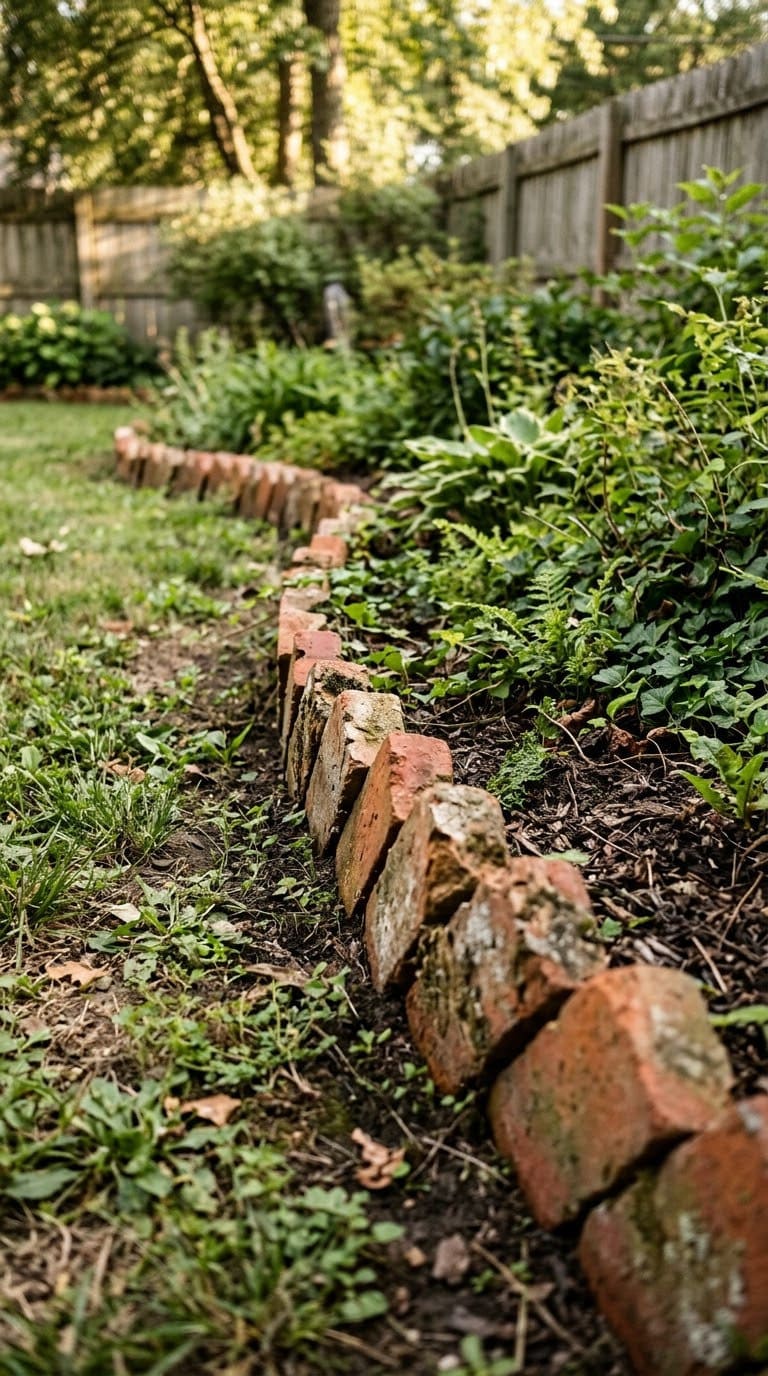
Dig a trench about 4 inches deep along the bed edge. Set bricks upright, tilted at an angle, in a sawtooth pattern. Pack soil tight on both sides.
Bricks in constant contact with wet soil are the test case for soft bricks. Choose only your hardest ones.
We cover more border styles in brick edging ideas.
Cost tier: free to low. The depth is our own suggestion.
5. Bird Bath Stand
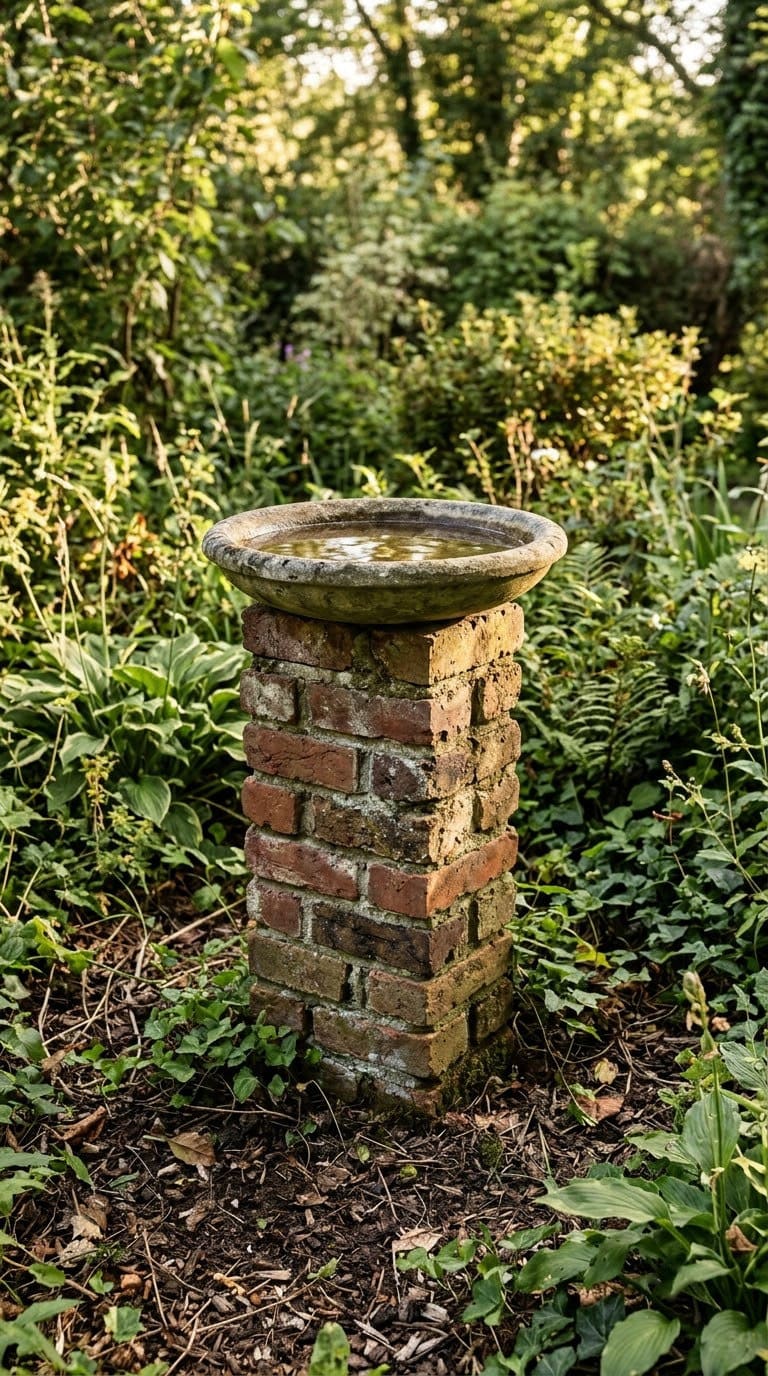
Stack bricks in a square column, with each layer turned a quarter turn. Aim for about 24 to 30 inches tall. Top it with a flat paver and a shallow bowl.
Make the base wide and level. Set it on compacted gravel so it can’t tip. Keep the water shallow and clean it often.
Dry-stacked towers can wobble. Test it by pushing the top hard. If it shifts, widen the base.
Cost tier: low. Pairs with idea 2 for a wildlife corner.
6. Brick Succulent Planter
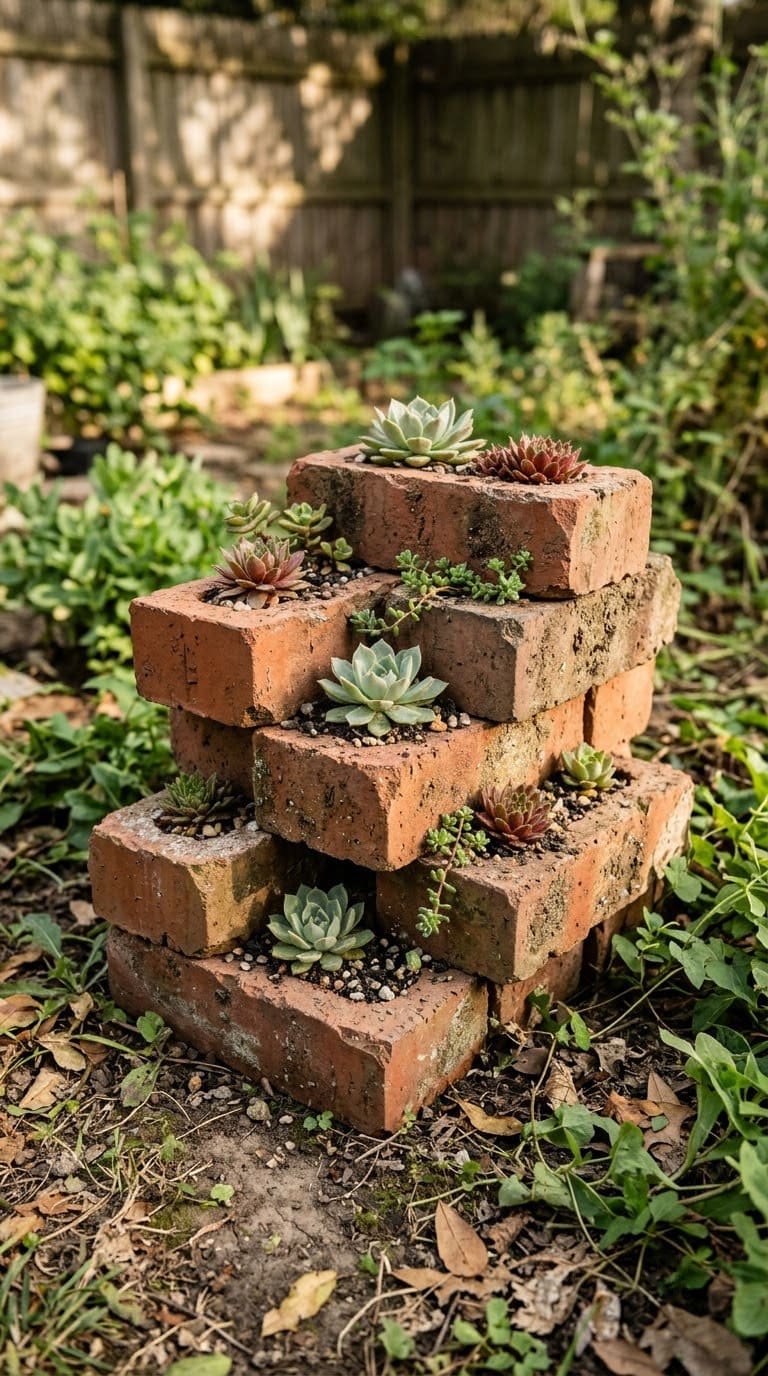
Bricks with holes make natural planters. Stack them on their sides so the cores face up. Fill the holes with cactus mix and plant small succulents.
Group three to five bricks in a stagger. The bricks warm in the sun and drain well.
Keep it in a spot that doesn’t stay soggy. Soft bricks absorb water, so avoid shade and constant drips.
Cost tier: free. Our repurposed garden container ideas have more planter picks.
7. Painted Garden Markers
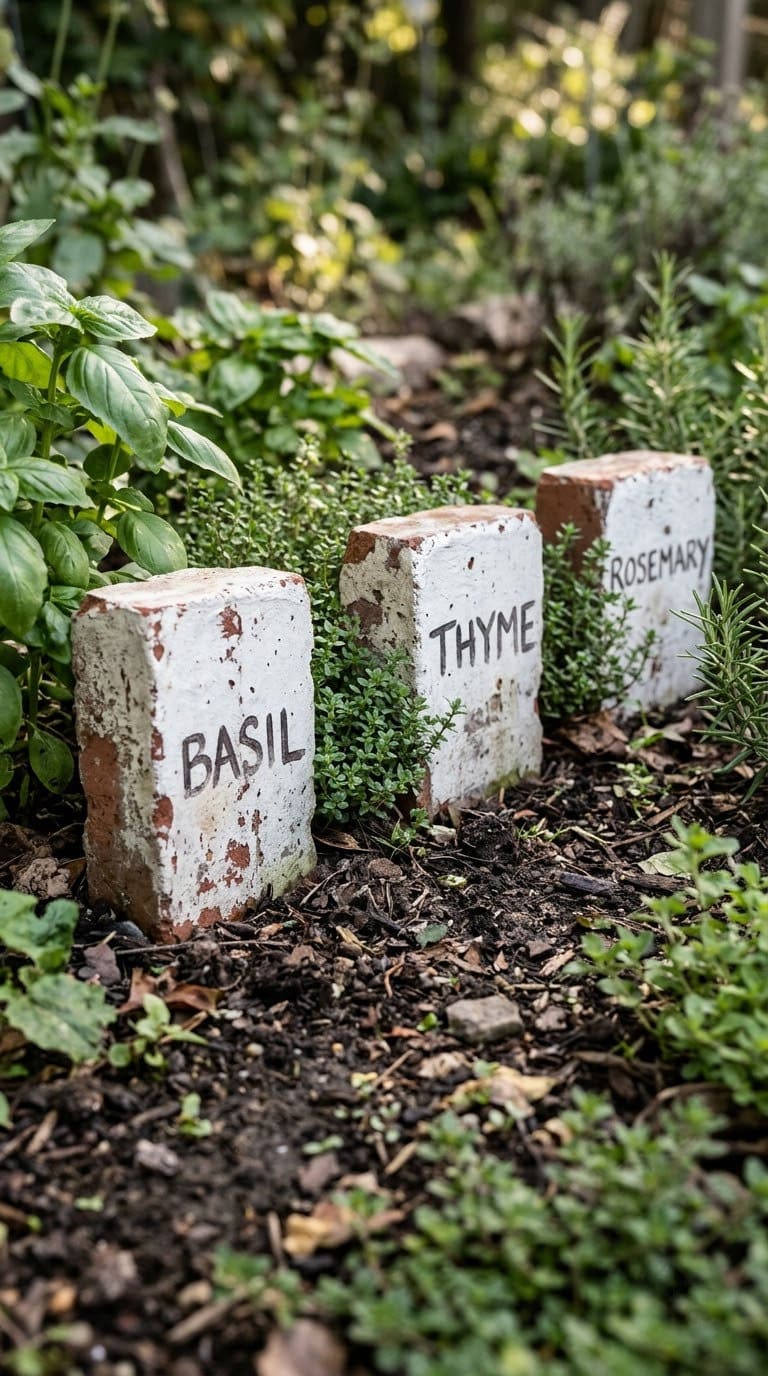
Paint one face of a brick with exterior masonry paint. Let it dry, then letter on plant names with a paint marker.
Set the brick upright at the front of the bed. A brick marker won’t blow over.
Do not seal soft bricks with a waterproof coating. The BIA warns impermeable coatings on under-burned units may speed up their breakdown. Use breathable masonry paint.
Cost tier: free to low. Pairs with idea 1.
8. Dry-Stacked Garden Bench
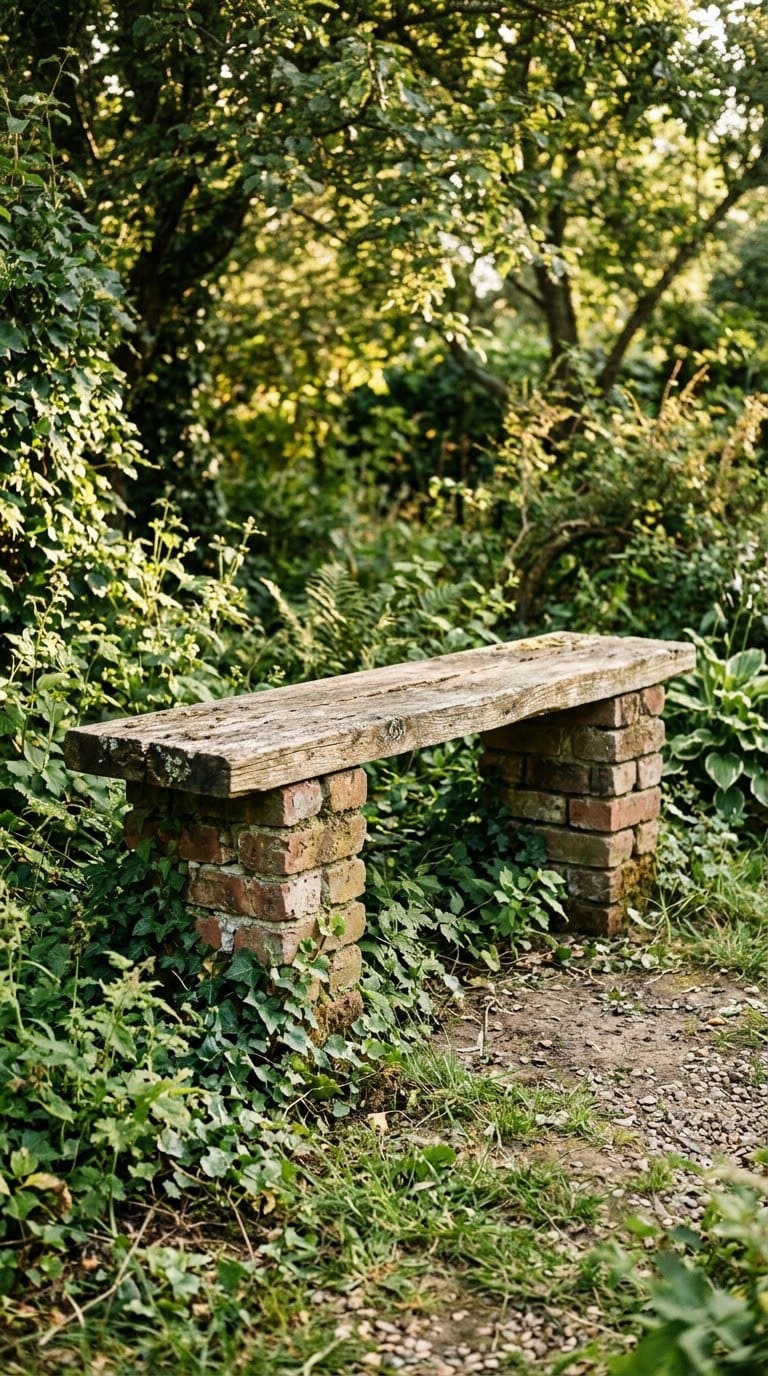
Build two piers of bricks, each 18 inches tall. Set a thick wood plank across them for the seat. A 2×10 plank works well.
Make each pier at least two bricks wide so it can’t tip. Stack on a level gravel pad. Don’t let anyone sit until you test it.
Brick piers are heavy and can pinch fingers. Wear gloves, and lift with your legs.
Cost tier: low to medium. Sizes are our own suggestion.
9. Fire Pit Surround (Not the Liner)
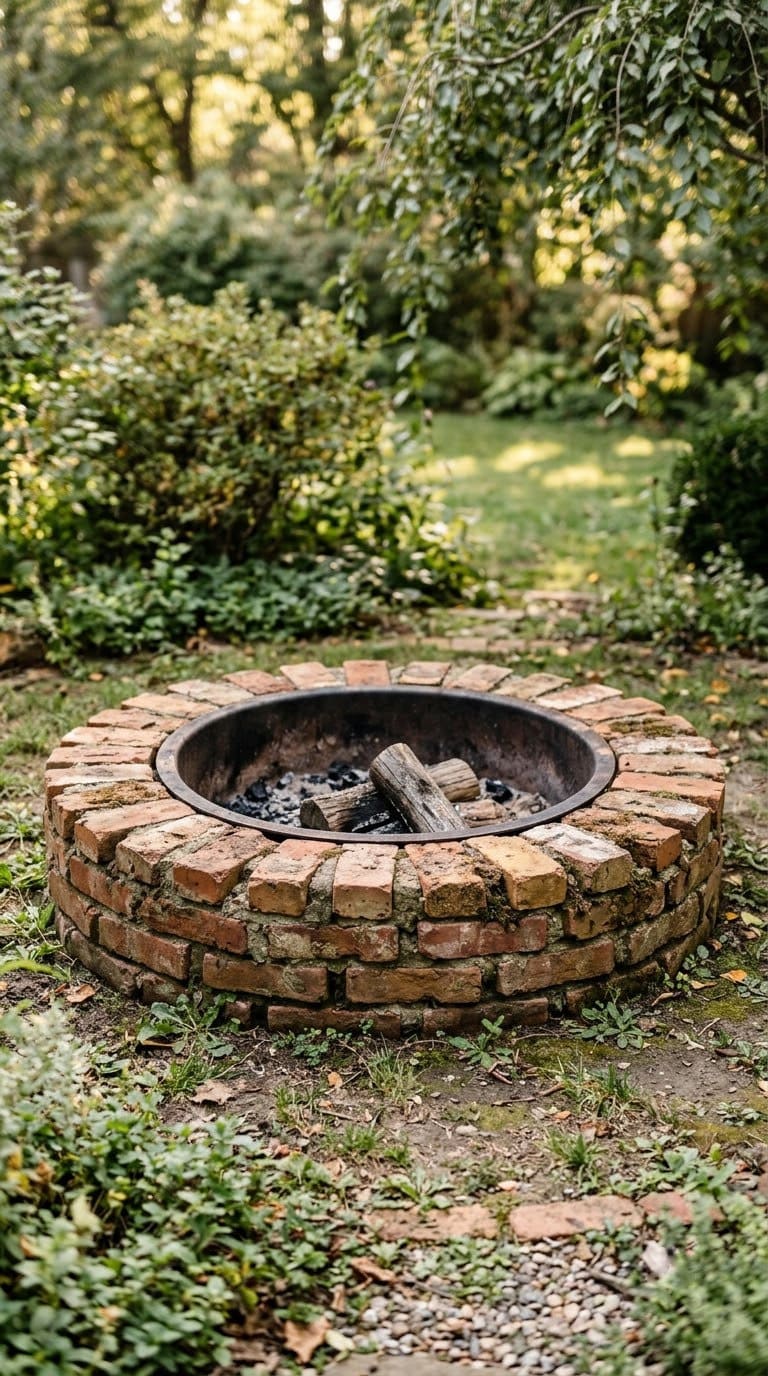
Use old bricks outside the pit, never inside. Western Interlock says regular clay brick is not fire-rated and should be used only as an exterior veneer, never inside the pit.
It explains that regular brick absorbs moisture, and heated moisture can turn to steam. That can cause cracking, flaking, and dangerous popping.
For the liner, use firebrick or a steel insert. Follow local fire rules and your pit’s manual. Our brick fire pit ideas cover safer builds.
Cost tier: medium.
10. Decorative Stepping Path
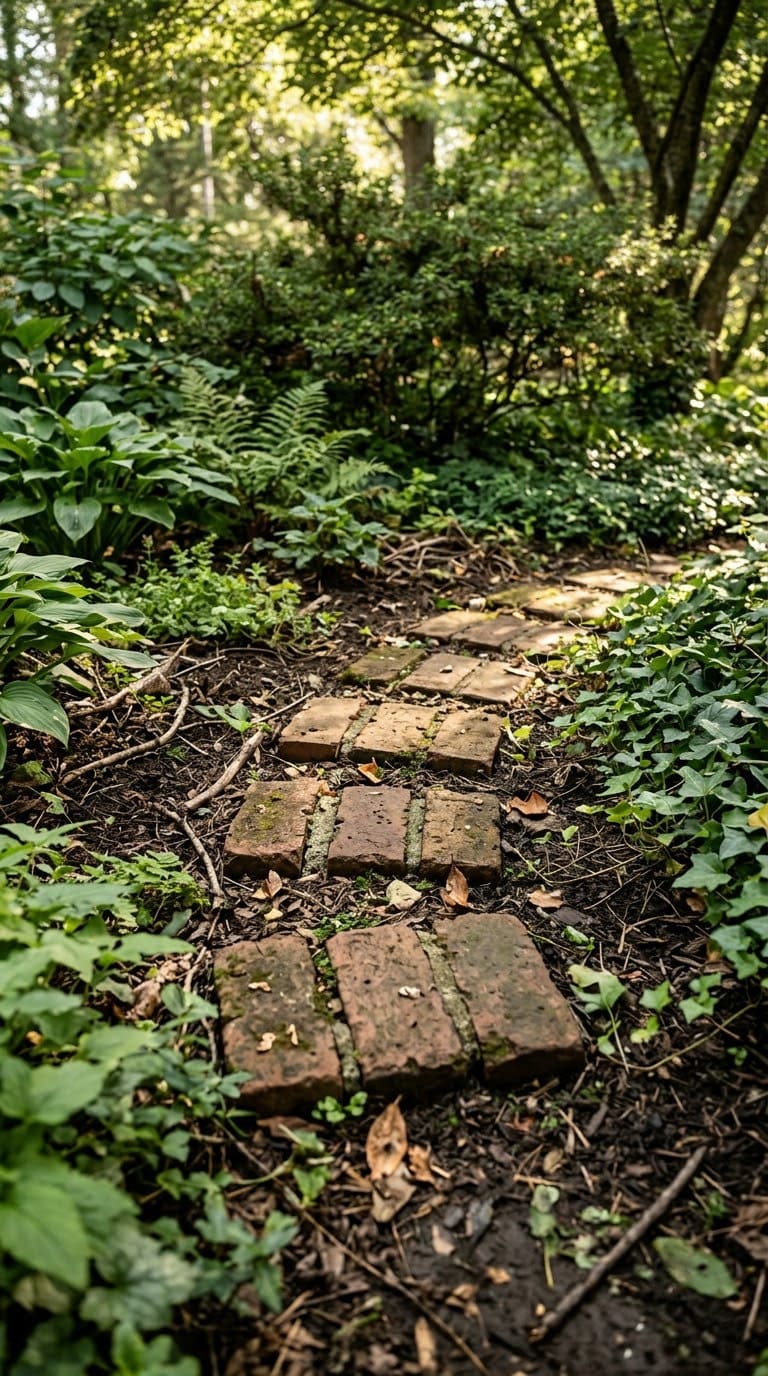
The BIA says salvaged brick shouldn’t be used for exterior patios, walks, and pavements. So keep any brick path short, decorative, and low-traffic.
Set bricks in sand over compacted gravel, with a slight slope so water drains. Use your hardest bricks, and replace any that crumble.
For main walks, use new pavers. Our backyard walkway ideas show safer options.
Cost tier: low. A short path is more forgiving than a long one.
11. Brick Mosaic Herb Bed
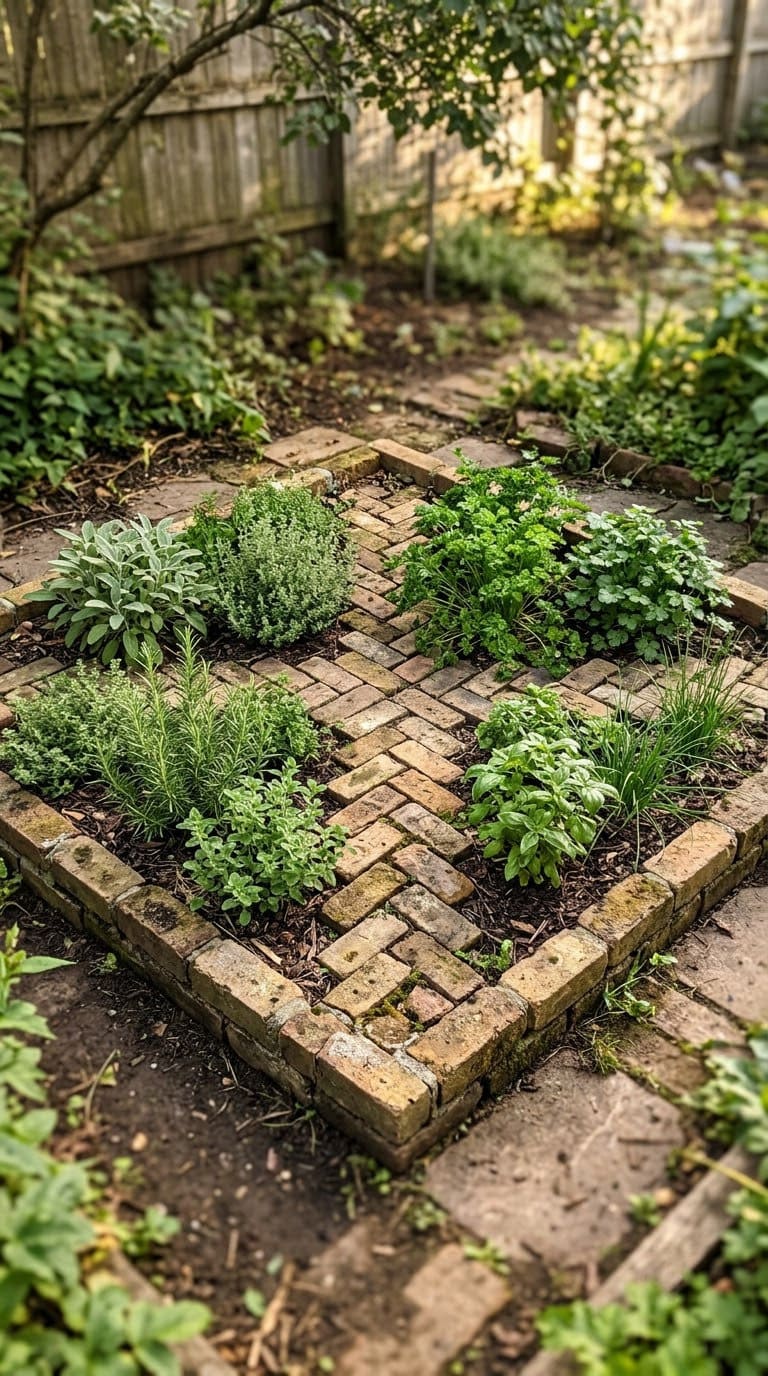
Divide a square bed into four sections with brick dividers. Set bricks on edge in a shallow trench. Plant a different herb in each quarter.
The grid also keeps spreading herbs apart. Mint is highly invasive, per Megan Cain, so give it its own section or a pot.
Pack soil tight along each divider. Check the bricks each spring.
Cost tier: low. Works in a small yard.
12. Low Dry-Stacked Garden Wall
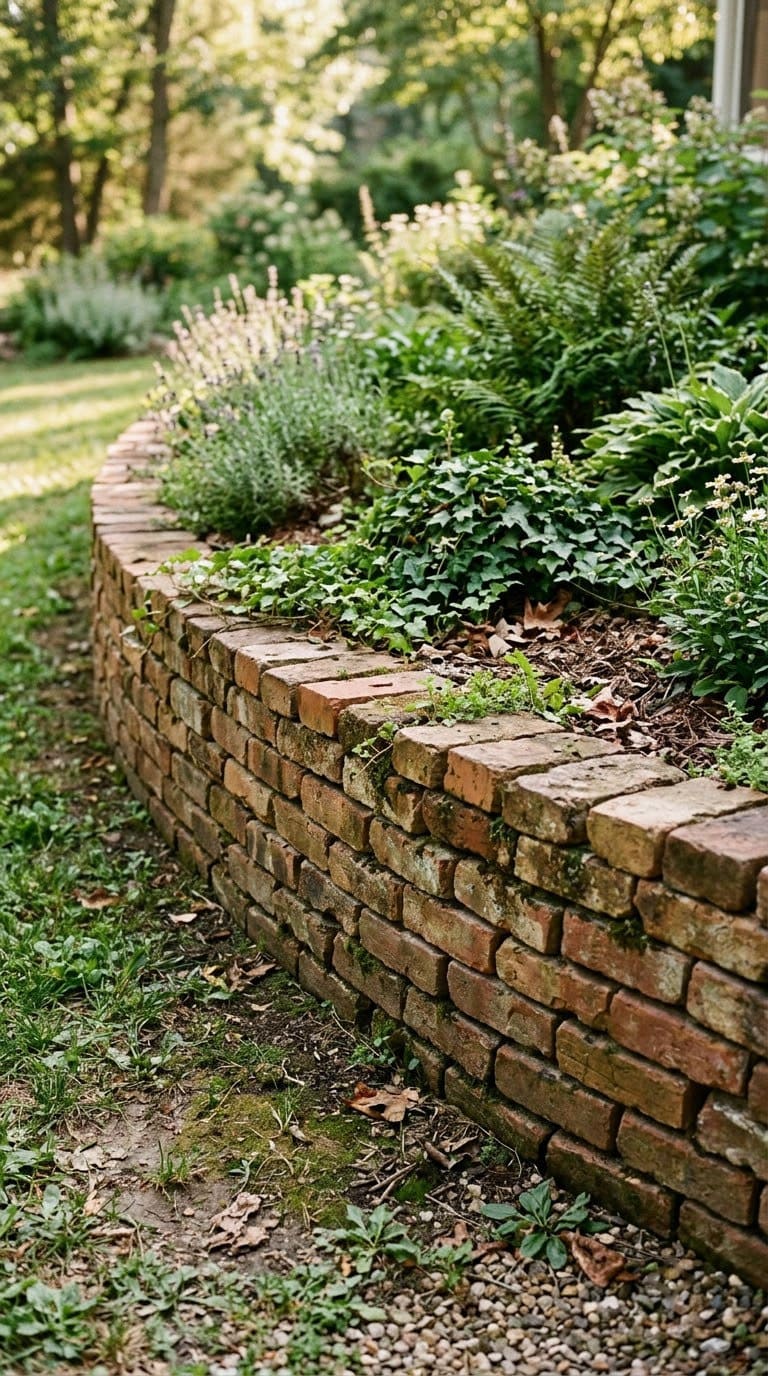
Stack a curved wall about 12 to 18 inches high around a planting bed. Offset every joint. Slope the stack slightly back into the soil.
Keep it low and don’t use it to hold back heavy soil. The BIA says walls with salvaged brick are weaker than walls of new brick. A taller wall needs a pro.
Our garden wall ideas show other styles. Check local rules for walls over a set height.
Cost tier: low to medium. Sizes are our own suggestion.
13. Brick-Framed Gravel Planting Strip
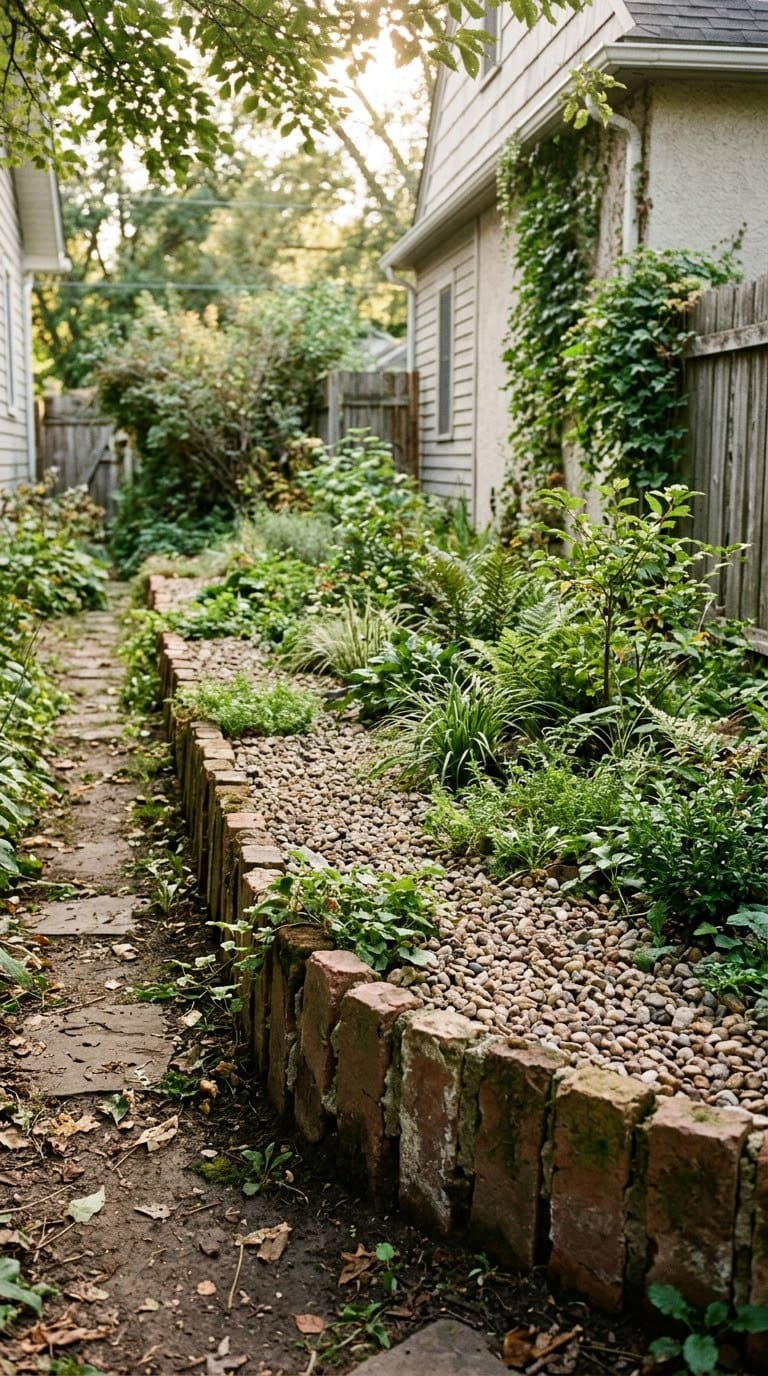
Frame a narrow side yard strip with bricks. Fill the center with gravel and add drought-tolerant plants in pockets.
The brick frame holds the gravel in place. Lay landscape fabric under the gravel to slow weeds.
This turns a bare strip into a tidy garden. Keep bricks above the wet line where you can.
Cost tier: low.
14. Stacked Brick Garden Sculpture
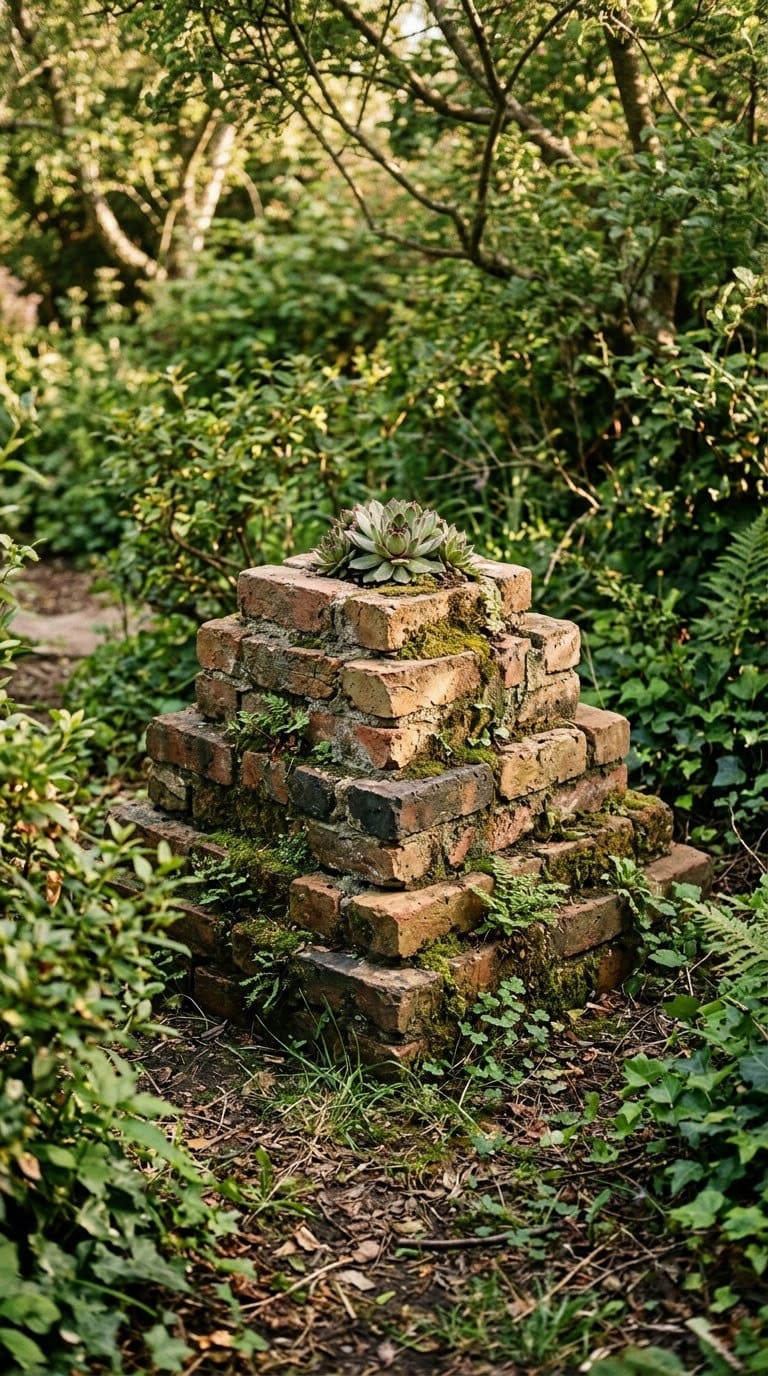
Stack bricks into a stepped pyramid or a low cairn. Use gravity, not glue. Top it with a pot or a bowl of succulents.
Keep it under 3 feet tall and on a flat gravel pad. Don’t let kids climb it.
Moss grows well on old brick in shade. It’s an easy way to age a new piece.
Cost tier: free. Our own idea, no source.
15. Brick Planter Box Frame
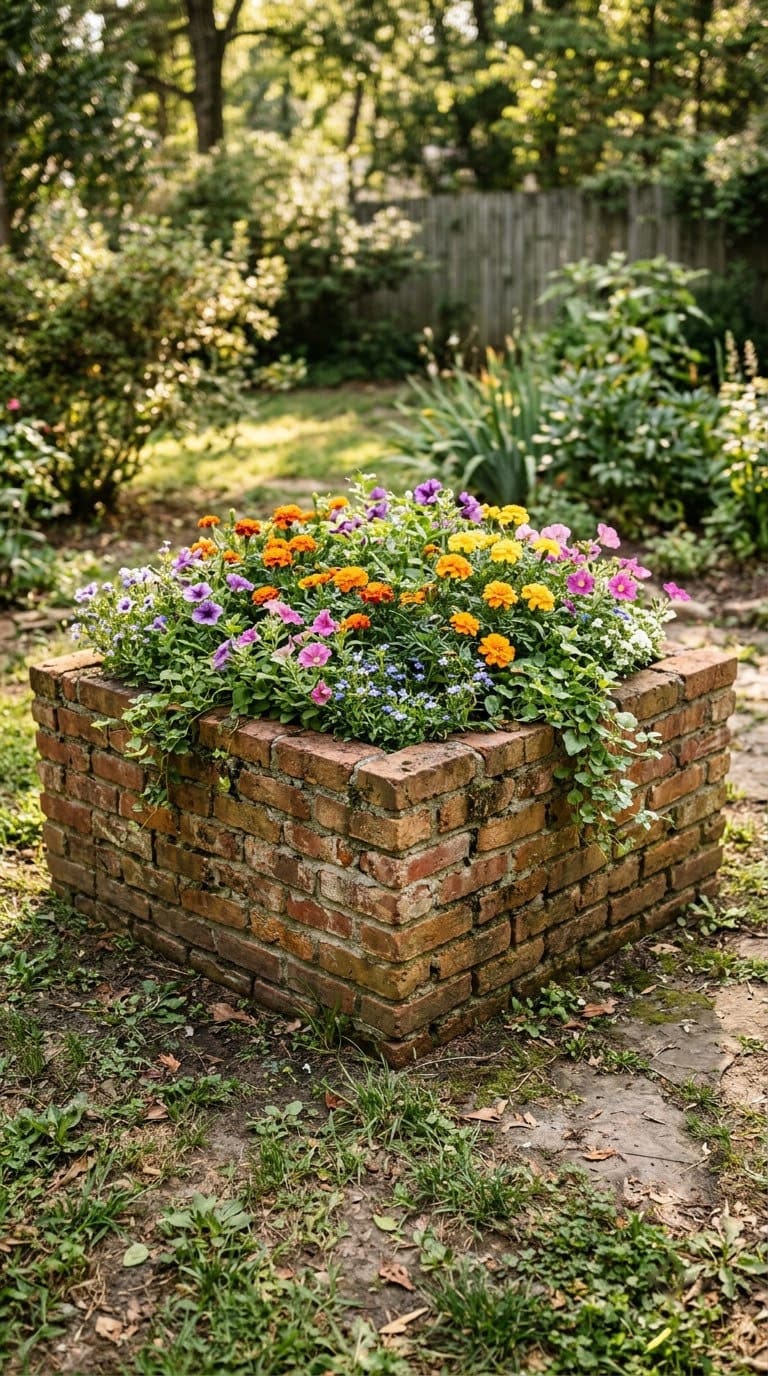
Build a square box two or three courses high on a level gravel base. Line the inside with landscape fabric to hold soil but drain water.
Fill it with potting mix and plant flowers. Offset the joints for strength.
Add a drainage hole at ground level by leaving a gap between two bricks. Keep the box above wet soil if you can.
Cost tier: low.
Where Can You Get Free or Cheap Bricks?
Check demolition sites, salvage yards, and online classifieds. Ask first. Bricks left at a site still belong to someone.
Look for bricks with fewer cracks and chips. Pick the hardest, darkest ones for the wettest spots.
The BIA notes that sorting and cleaning add labor. Plan to handle each brick at least twice. That’s the real cost of free bricks.
Bring gloves and a sturdy truck. Bricks are heavy, so load a few at a time.
What Does a Weekend Brick Project Plan Look Like?
On Friday evening, pick up your bricks and sort them into three piles. Keep hard, clean bricks for beds and walls. Use cracked ones for fill and decor.
On Saturday morning, clean off loose mortar and test a few bricks. Mark your project outline on the ground with string or flour.
On Saturday afternoon, dig trenches and level the base. A flat, tamped base matters more than anything else for a stable stack.
On Sunday, lay the bricks, fill beds with soil, and plant. Stop when your back says stop. Bricks are heavy, and this is the job where people get hurt.
How Do You Maintain Brick Garden Features?
Walk your projects each spring. Look for bricks that have flaked or cracked. Swap them out before a gap opens.
Reset any bricks that have shifted from frost. Dry-stacked work moves a little, and that is normal. Tamp the base and re-lay the course.
Keep soil and mulch away from brick faces where you can. Constant wet contact is the hardest test for soft bricks. Scrape off moss on steps or seats so they don’t get slippery.
Leave bug hotel bricks alone until early summer. The University of Vermont Extension says to clean up after insects have left, so you don’t disturb nesting.
Common Mistakes to Avoid
Building paths and patios with salvaged brick is the first one. The BIA says to avoid it, since moisture is more likely there.
Lining a fire pit with regular brick is the second. Western Interlock says to keep it outside the pit.
Sealing soft bricks with a waterproof coat is the third. The BIA warns it may speed their breakdown.
Skipping the sort is the fourth. The BIA says durable and weak bricks are hard to tell apart in a mixed lot.
Stacking too high is the fifth. A tall dry-stacked wall or tower can lean, so keep walls knee-high and test every stack by pushing on it.
Ignoring the weight is the sixth. Lift with your legs, load a few bricks at a time, and keep fingers clear when you set each one.
FAQ
Can I use old bricks for a garden path?
Keep it short and decorative. The BIA says salvaged brick should not be used for exterior patios, walks, and pavements because moisture is more likely there.
Can I use old bricks in a fire pit?
Only outside the pit. Western Interlock says regular clay brick belongs on the exterior as a veneer, never inside the pit.
How many bricks does an herb spiral need?
Megan Cain’s spiral, 5 feet wide and 20 inches high, took about 120 reclaimed bricks.
How do I know if an old brick is weak?
Soft, pink-orange bricks are often under-burned, per the BIA. Many modern pink bricks are hard, so test rather than guess.
Where should I put a bug hotel?
The University of Vermont Extension suggests a south-facing, sheltered spot at least 3 feet above the ground.
Never miss an update — choose FarmFoodFamily as your preferred source on Google.
How it works: Tap the button below to open Google's settings page, then check the box next to FarmFoodFamily.
Tap the checkbox to turn it blue — that's how you know it's set.


















Thanks. Excellent ideas for using old bricks. Will use some of them.