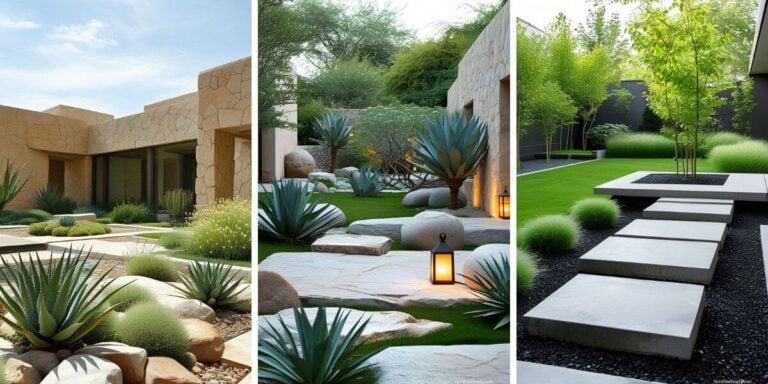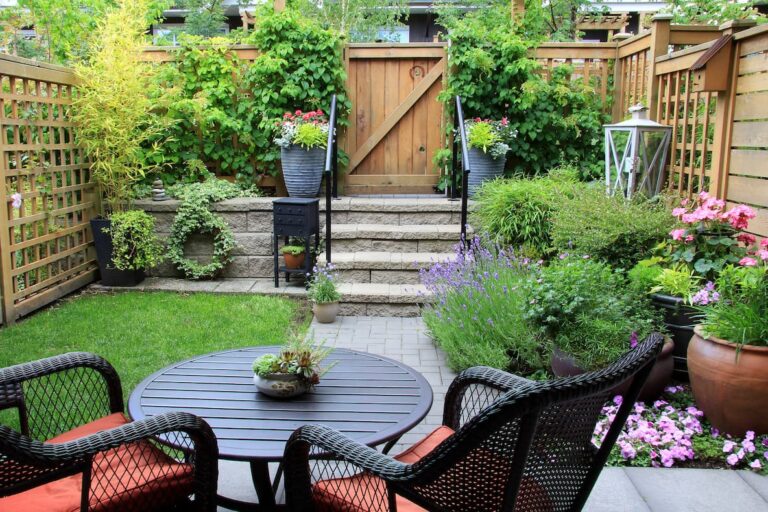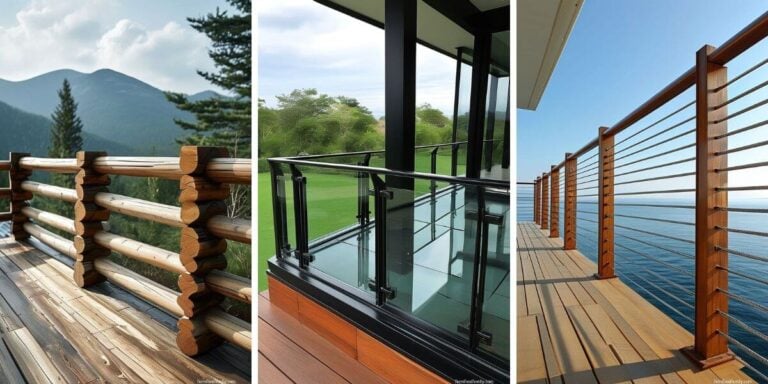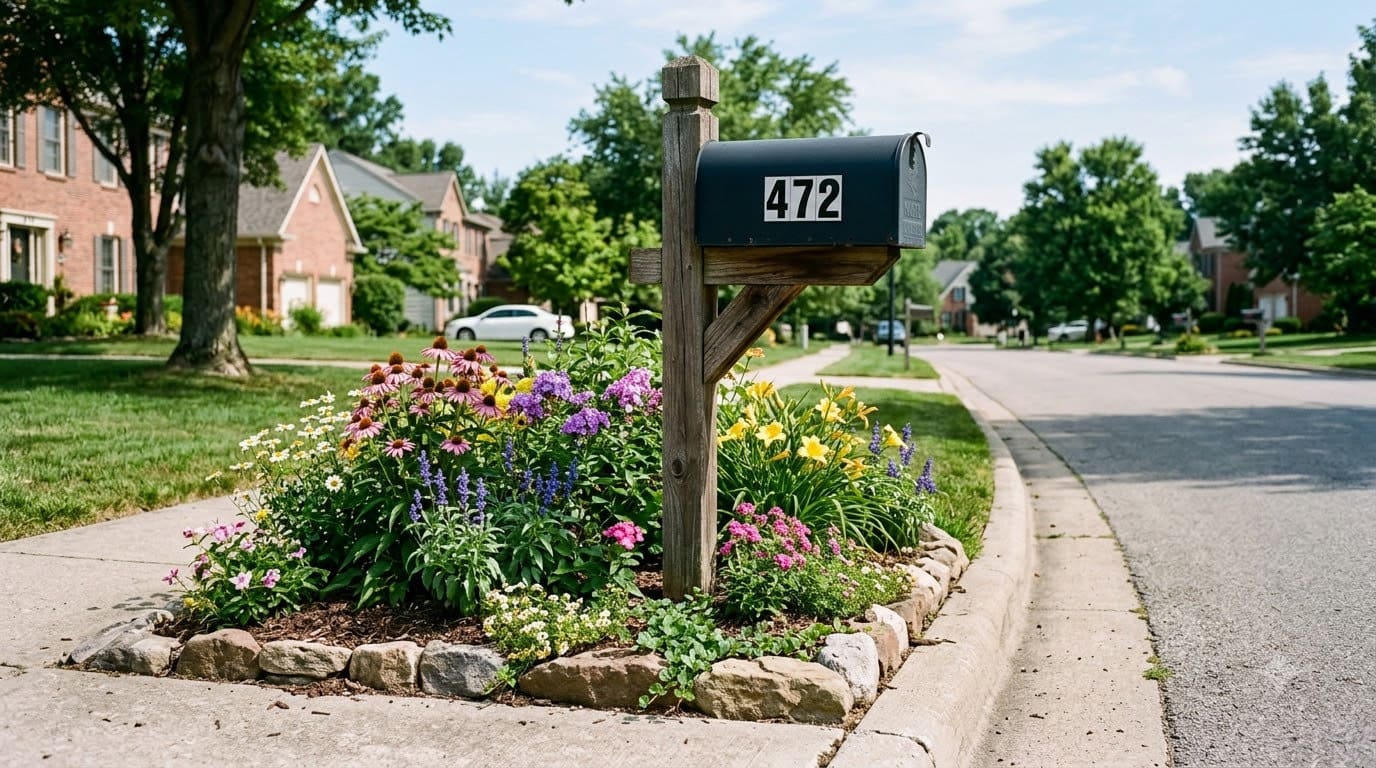
Sloped and Hillside Landscaping: The Complete, Practical Guide
There’s a clear way to read your slope and pick an approach that fits the grade and the budget, but the catch nobody tells you is that water always comes from the top, and if you plant before you divert it, you plant twice.

Never miss an update — choose FarmFoodFamily as your preferred source on Google.
How it works: Tap the button below to open Google’s settings page, then check the box next to FarmFoodFamily.
Tap the checkbox to turn it blue — that’s how you know it’s set.
A slope isn’t one problem. It’s three that overlap: erosion, drainage, and getting up and down it safely.
That’s why the fix is almost never a single move. A wall without drainage leans, and plants without diverted water wash out. Stairs without a graded landing turn into a mud chute.
This guide starts with measuring the slope in an actual number. Then it matches the approach to the grade and your budget, and covers the erosion and water fundamentals that every method depends on.
Quick Answer
Start by measuring the slope. Rise divided by run, times 100, is the percent grade. A yard that drops 4 feet over 16 horizontal feet is a 25 percent slope.
Under about 5 percent, a slope barely changes anything. From roughly 8 to 16 percent you need slope-planting technique, because water runs off before it soaks in, per Iowa State University Extension. Past about 30 percent it is too steep to mow safely.



Above 45 degrees, plants struggle to root and you need professional grading or a wall, per North Carolina Cooperative Extension.
Answer 4 quick questions and get matched to the exact fix for your yard — drainage, budget, layout, or something else entirely.
Take the Free QuizMatch the approach to the grade. Cover it with deep-rooted plants, regrade it gentler, terrace it into level beds, hold a bank with a wall, cut in stairs, and always manage the water coming from the top. Most yards use two or three of these together.
How do I measure the slope in my yard?
You want a number, not a guess.
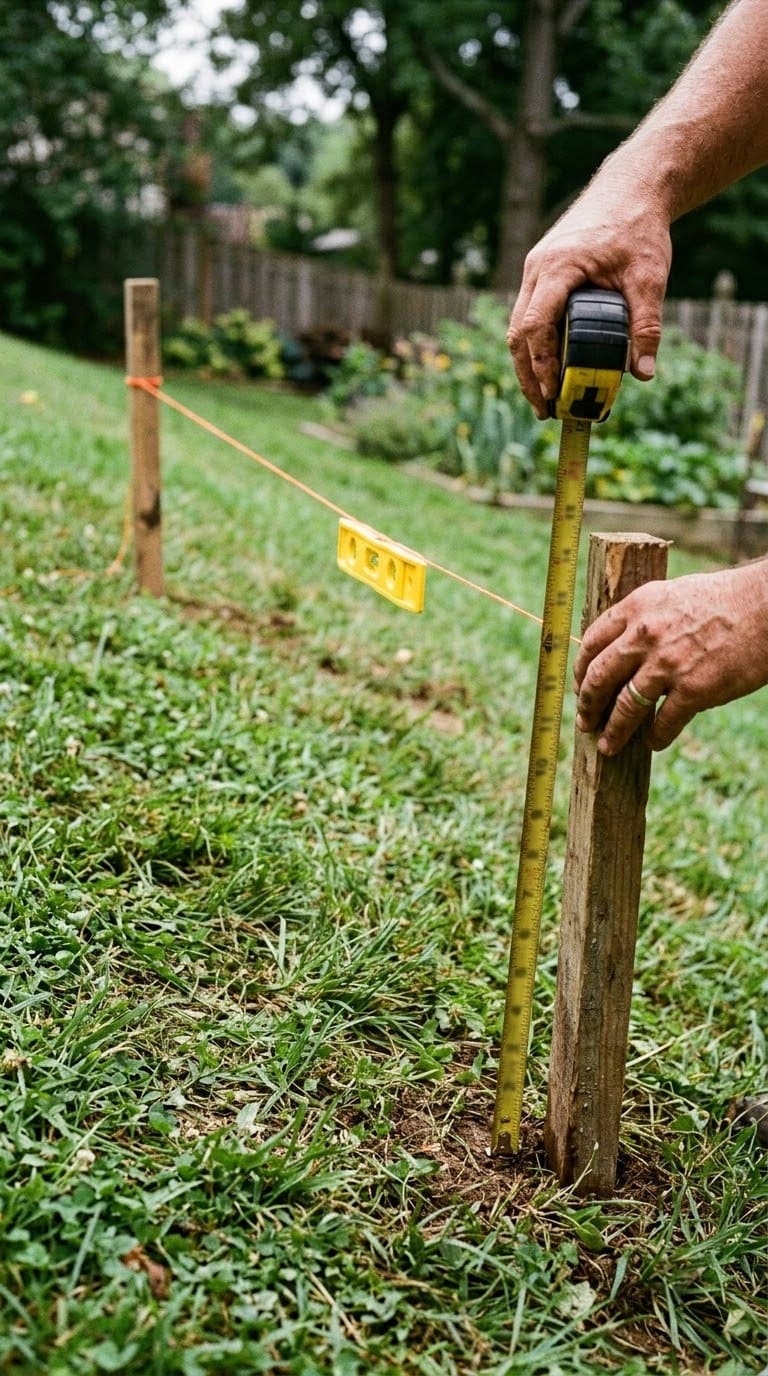
Drive a stake at the top of the slope and one at the bottom, a set distance apart, say 10 feet. Tie a string between them, level it with a line level, and measure straight down from the string to the ground at the low stake.
That drop, divided by the 10 feet of string, times 100, is your percent grade. A laser level does the same job faster.
Landscapers and codes sometimes use a ratio instead. A 3:1 slope means 3 feet of run for every 1 foot of rise, which works out to about 33 percent. A 2:1 slope is 50 percent.
| Grade | What it means | What you can do |
|---|---|---|
| Under 5% | Barely a slope | Almost anything, including lawn |
| 8 to 16% | Water runs off before it soaks in | Slope-planting technique, groundcovers, low terraces |
| 20 to 33% (3:1) | Steep, hard to mow | Groundcovers and shrubs instead of grass, terracing, walls |
| Over 33% (3:1) | Too steep for lawn or a mower | No turf, tiered walls need engineering and a permit |
| Over 45 degrees | Plants struggle to root | Professional grading or an engineered wall |
While you’re out there, check two more things. Which way does water flow across the slope when it rains, and where does it pool at the bottom.
Squeeze a handful of the soil too. Sandy or silty soil erodes fast and needs cover sooner, while clay holds together but drains poorly and can slump when it’s saturated.
Most yard problems trace back to one specific, fixable cause. Find yours in 4 quick questions.
Take the Free Quiz
Biodegradable jute mesh to pin over a bare slope so the soil holds while new plants root, then it rots away on its own.
Shop NowThis post contains affiliate links. We may earn a commission on qualifying purchases at no extra cost to you.
What are the ways to landscape a slope, and which one do I need?
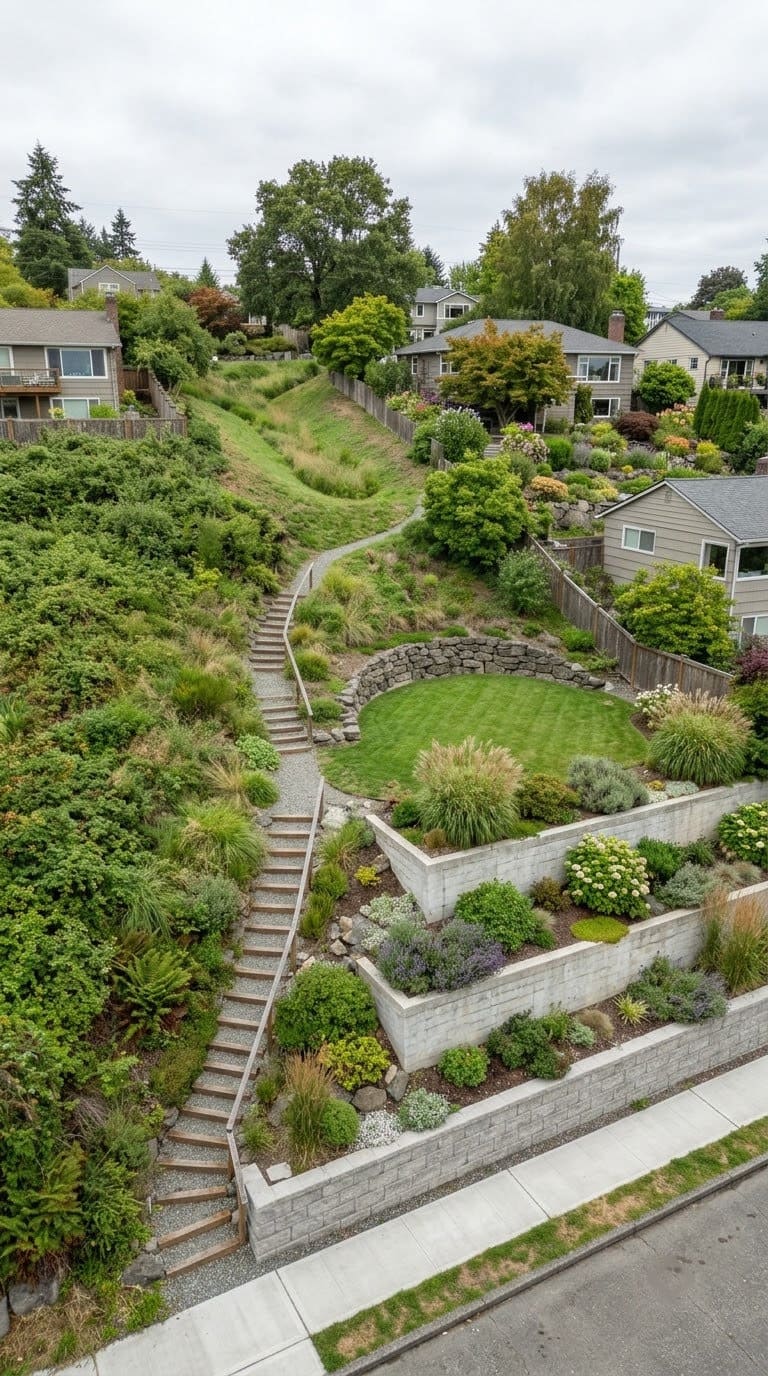
There are six, and most yards end up combining two or three.
Cover it with plants. Deep-rooted groundcovers, ornamental grasses, and shrubs knit the soil together and end the mowing. This is the cheapest approach and the foundation under every other one.
Regrade it. Cut soil off the high spots and use it to fill the low spots to make a gentler slope or a flat area. It’s earthmoving, so it needs a machine and an operator.
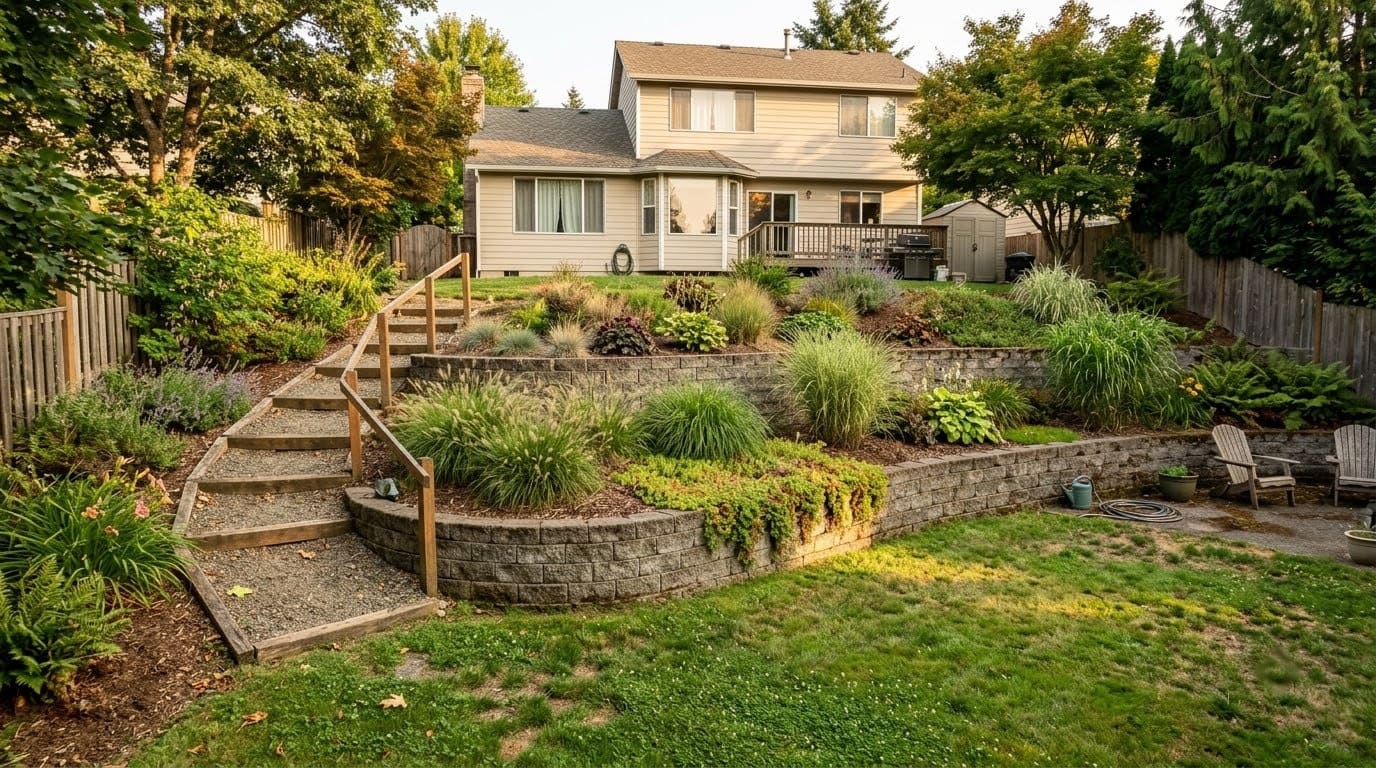
Terrace it. Step the hill into level beds held by short walls or planted berms. It works with the landform, needs less cut and fill than regrading, and every level becomes usable space.
Build a retaining wall. One wall to hold a bank and create a level shelf. Simple in concept, but past a few feet it becomes an engineered structure.
Cut in stairs or a path. A safe way up and down, straight for a gentle grade and switchbacked once it steepens.
Manage the water. Swales, drain tile, a dry creek bed, and downspout extensions that move runoff around the slope instead of through it.
| Approach | Best grade range | Rough cost | DIY? | What it solves |
|---|---|---|---|---|
| Cover with plants | Any, essential up to ~50% | $ | Yes | Erosion, mowing, low upkeep |
| Regrade / cut and fill | Under ~25% | $$ to $$$ | No | A flatter usable area |
| Terrace | ~15 to 50% | $$ to $$$ | Low walls only | Erosion, planting space, drainage |
| Retaining wall | Any localized grade change | $$ to $$$ | Under ~3 ft only | Holding a bank, a level shelf |
| Stairs or switchback path | Any you need to walk | $$ | Partly | Safe access |
| Water management | Any, especially the top | $ to $$ | Mostly | Runoff, gullies, a soggy toe |
Pick by three things: the grade, the budget, and what you want the space to do. Look at it, walk through it, sit on it, or grow food on it are four different projects.


How do I stop a slope from eroding?
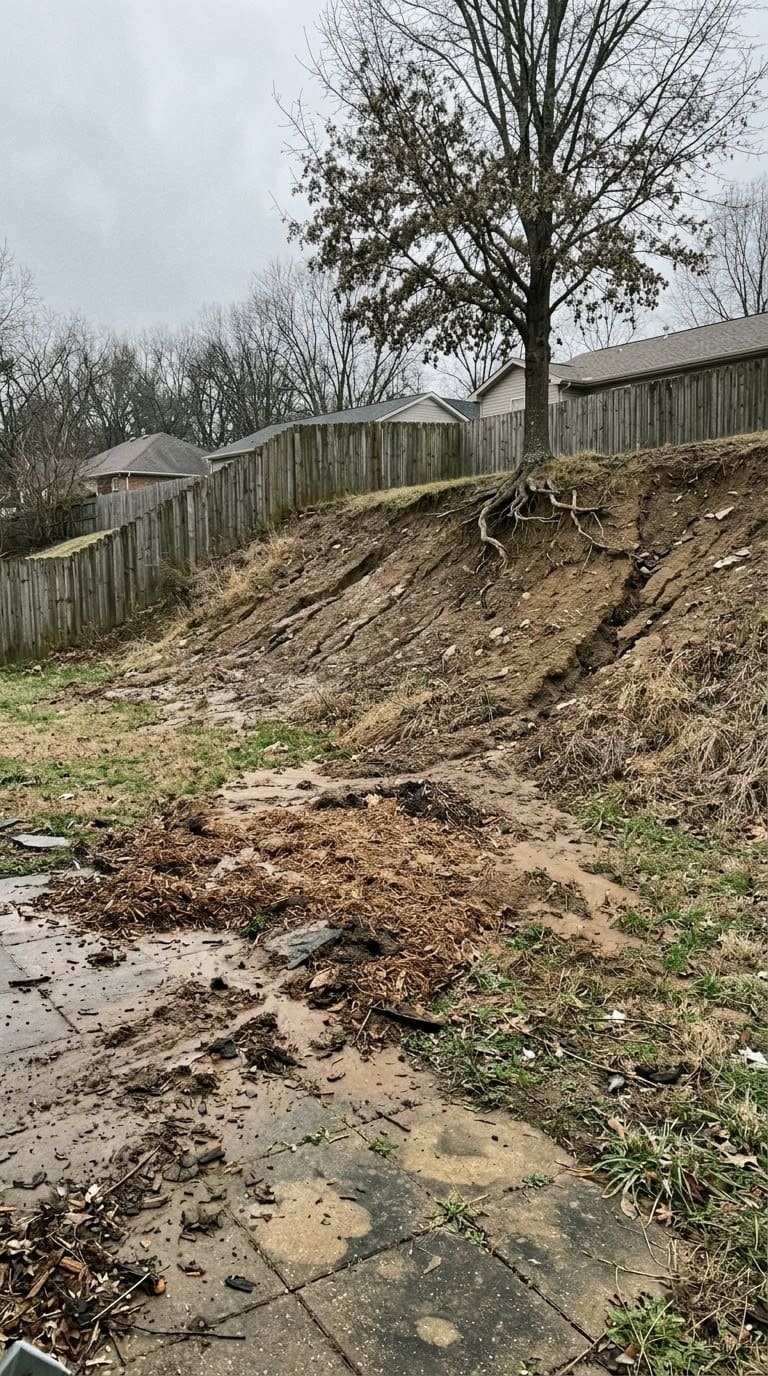
Covering the soil is the single most important thing you can do. Paul Pugliese, an extension agent with the University of Georgia, calls it the most important erosion-prevention method for a home landscape.
The average homeowner spends $616/year on yard fixes that don't address the real problem. Find out what yours actually is — before you spend another dollar.
Take the Free QuizThe order matters. Do it in this sequence.
First, divert the water at the top, before it ever reaches the slope. Then protect the bare soil while your plants get established. Then let deep and fibrous roots take over the job for good.
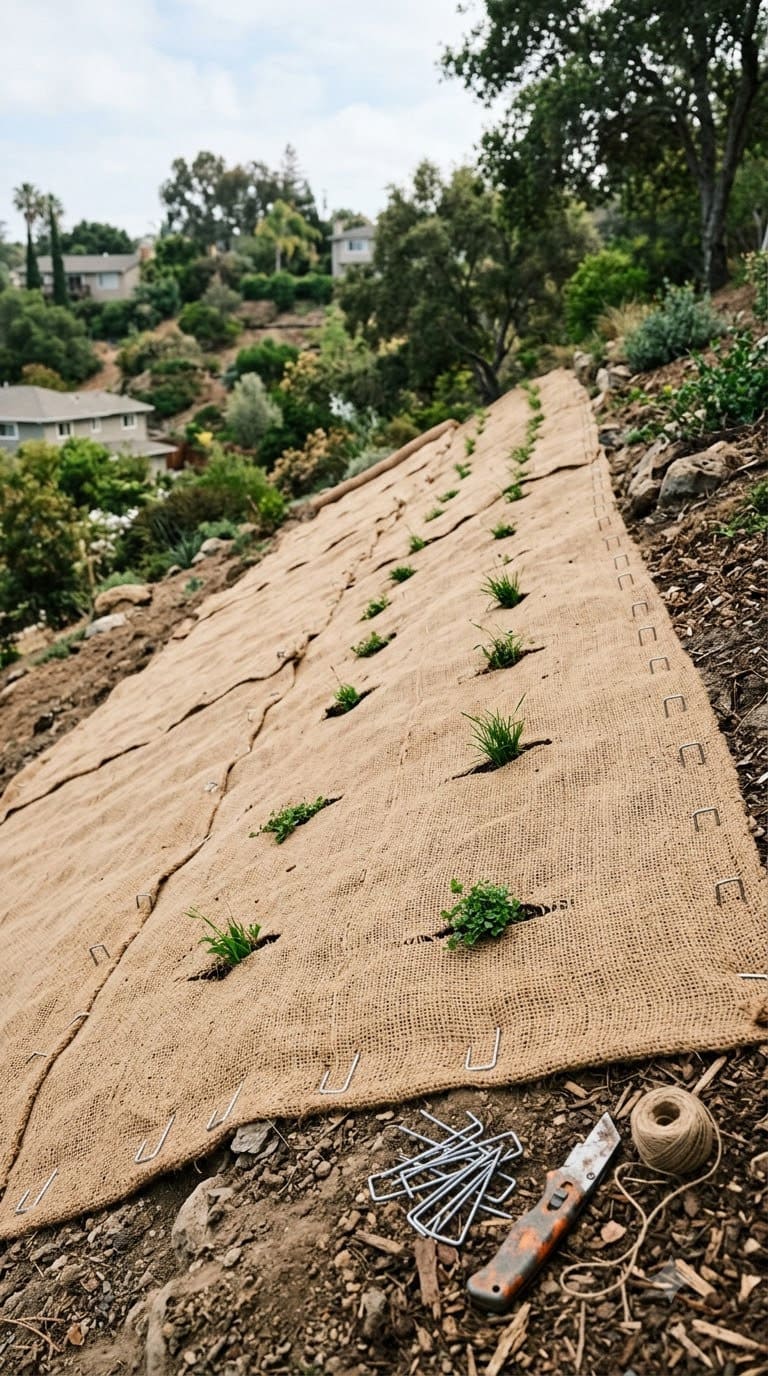
For temporary cover, you have a few options. An erosion-control blanket of jute, coir, or straw, pinned down with staples, holds soil through the first rains. Straw wattles laid across the slope on the contour slow water into short steps.
A fast-germinating cover crop like annual ryegrass, sown at the same time as your permanent plants, puts roots in the ground within days. Over grass seed, the Northern Virginia Soil and Water Conservation District recommends a quarter inch of topsoil and then a thin layer of straw.
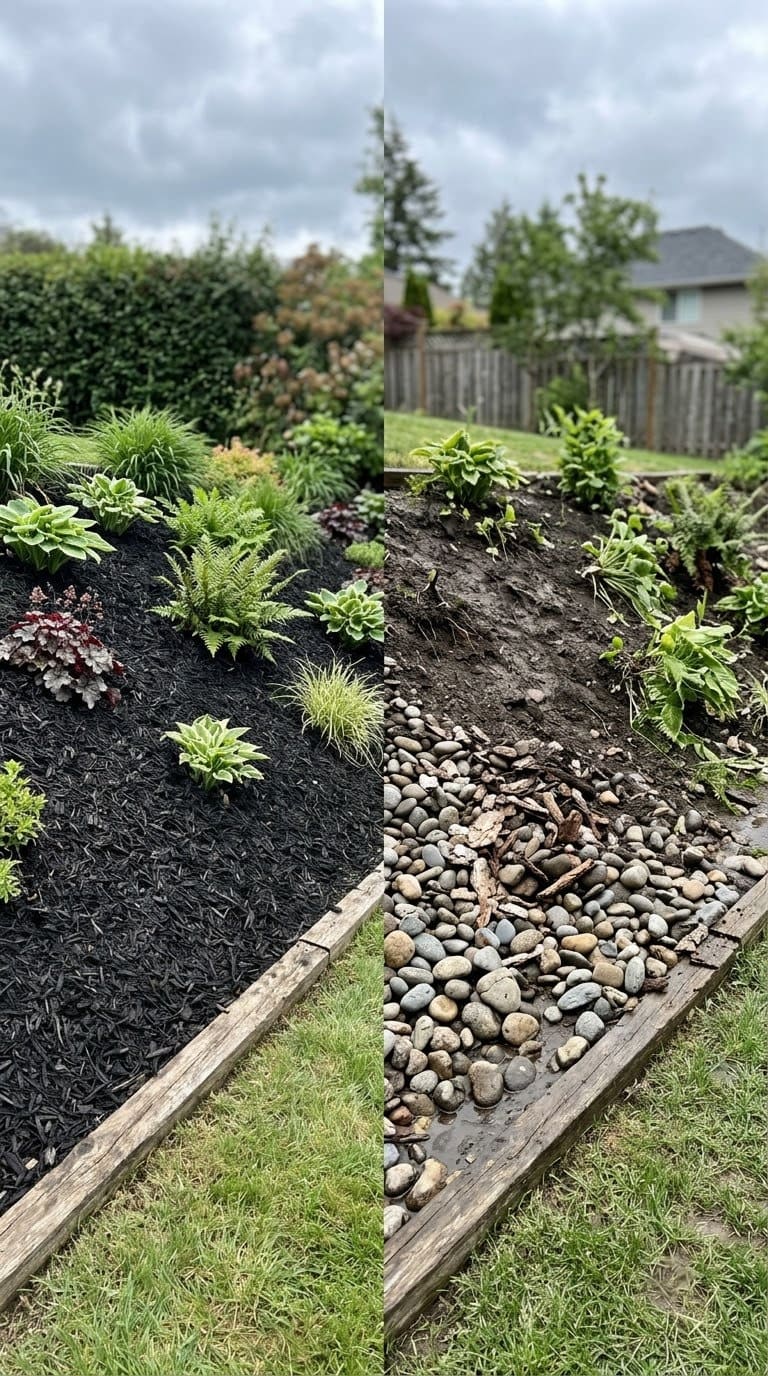
Your mulch choice changes on a slope. Shredded hardwood, leaf mold, and grass clippings knit together and stay put. Bark nuggets and river rock float and roll downhill in the first storm, per Iowa State.
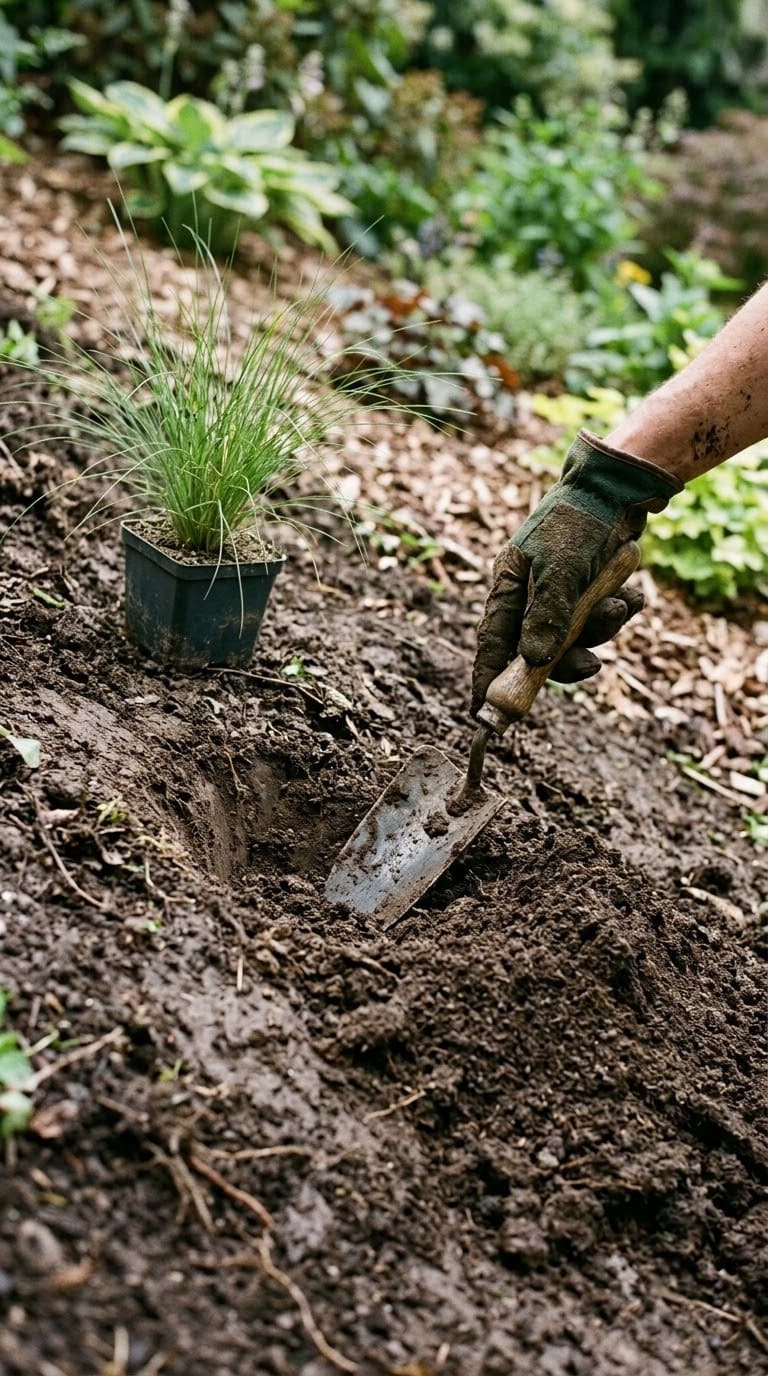
When you plant, carve a small level pocket into the bank for each plant, two to three times as wide as the root ball. Set the root ball level with the uphill side and mound soil on the downhill side, so runoff doesn’t bury the crown.
Plant in layers, a few trees or large shrubs, then medium shrubs, then groundcover, so roots hold the soil at different depths. There’s more on choosing spreading groundcovers for a slope and on layering plants by height elsewhere on the site.
What should I plant on a slope?
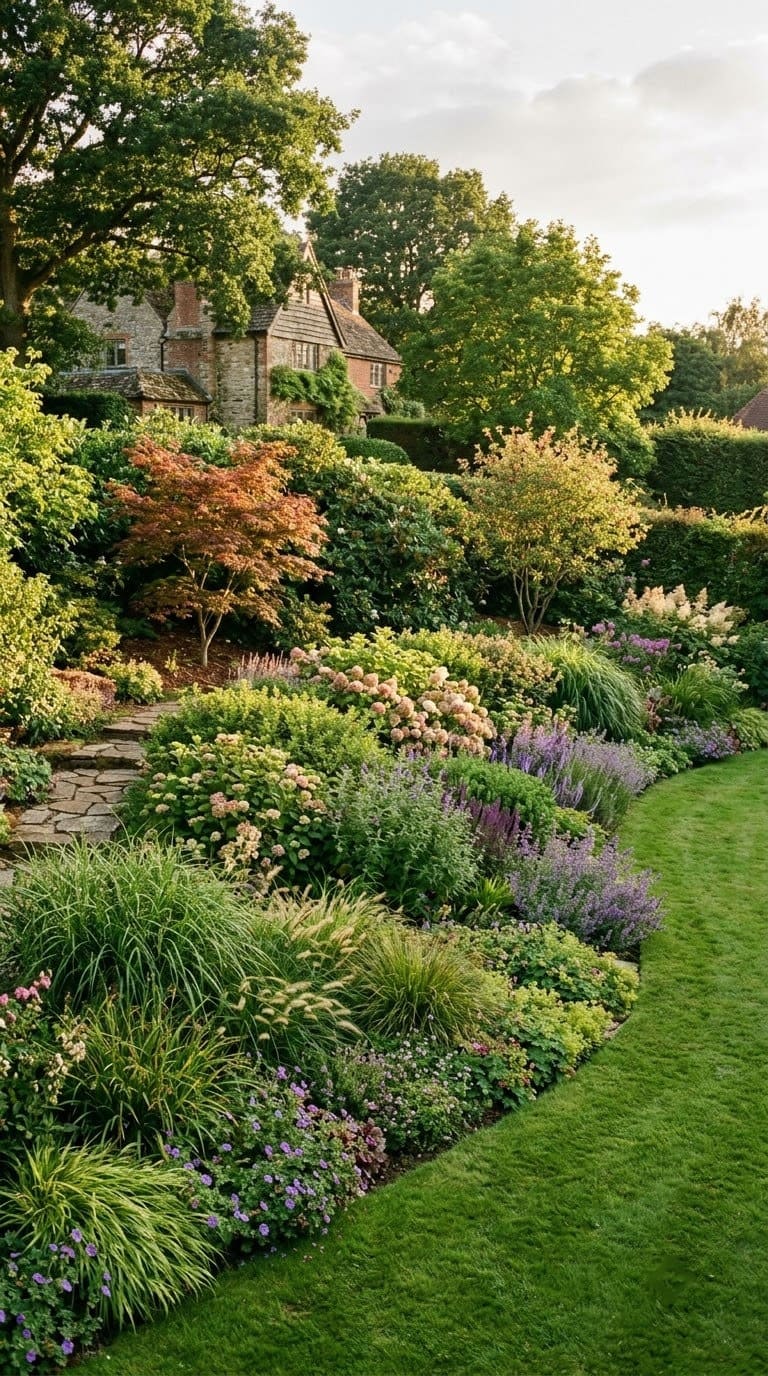
Look for four things. You want deep or fibrous roots that anchor soil, and a spreading habit that covers bare ground fast.
You also want drought tolerance, because slopes drain quickly and stay dry, per Iowa State. And low maintenance, since you won’t want to fuss over a hillside.
Plant a mix, not a monoculture. Different root systems and growth habits catch rain at different points and fail in different conditions, so the planting as a whole is more stable.
| Condition | Groundcovers | Grasses | Shrubs |
|---|---|---|---|
| Full sun, dry | Creeping sedum, creeping phlox, creeping thyme | Little bluestem, switchgrass, muhly grass | Prostrate juniper, rugosa rose |
| Full sun, tough soil | Black-eyed Susan, clustered mountain mint | Broomsedge, purpletop | Winged sumac, pasture rose |
| Part shade | Native pachysandra, wild ginger, ferns | Sedges, Virginia wildrye | Serviceberry, mountain laurel, dogwood |
| Heavy deer pressure | Most of the above hold up | Grasses are rarely browsed | Deer often skip a slope entirely |
That last row is not a joke. University of Maryland Extension notes that deer avoid slopes because they will not risk a twisted ankle for a snack, which makes a hillside a good place for plants deer normally destroy.
If your slope is steeper than 3:1, skip turfgrass entirely. Replace it with shrubs, ornamental grasses, and groundcover, and you never have to run a mower across it again.
How does water drainage work on a hillside?
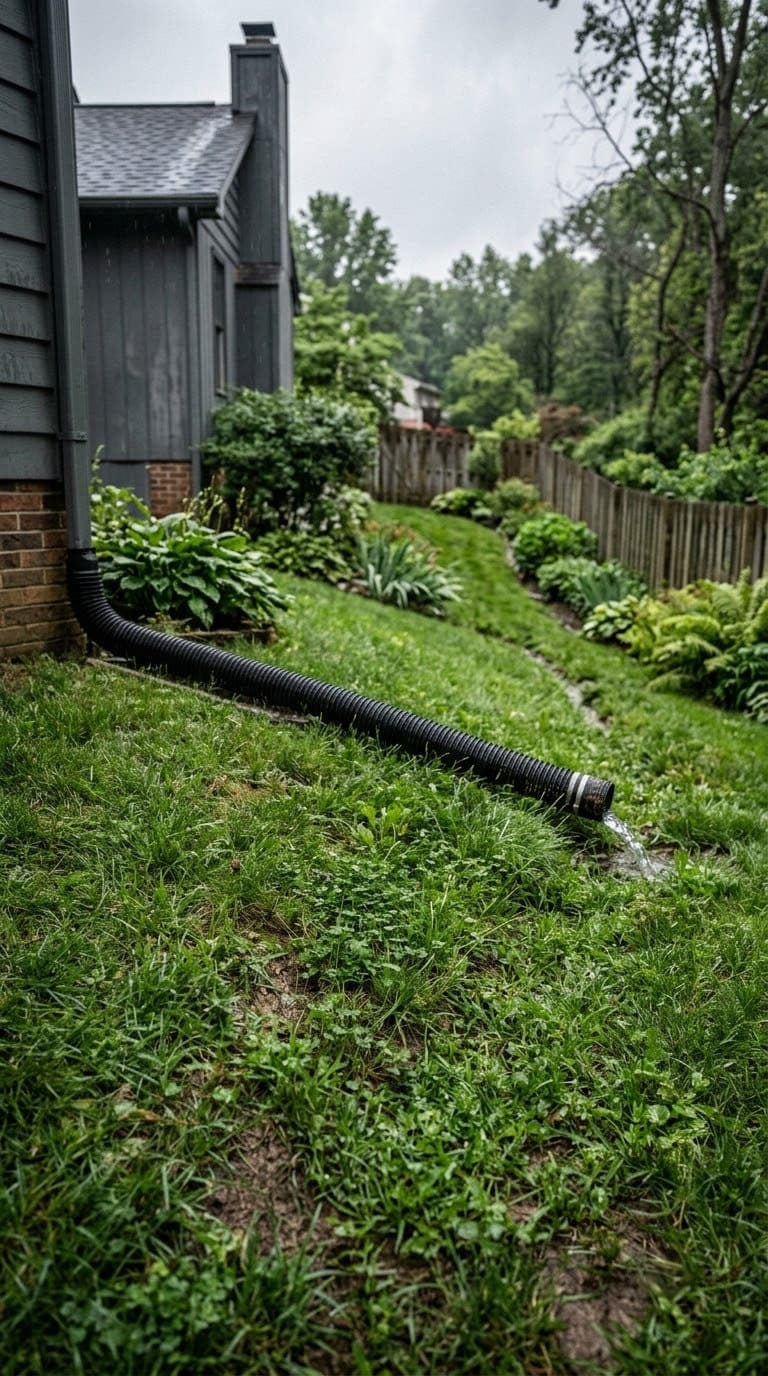
Water always comes from the top. Your roof, your driveway, and whatever runs off the land above you all hit the slope first, and they arrive with speed.
So the first move is to catch that water before it reaches the slope. Dig a shallow swale or trench along the top edge, install a run of drain tile, or extend your downspouts well past the crest of the hill. Iowa State and the Northern Virginia district both put this diversion first, ahead of any planting.
On the slope itself, terraces and level planting pockets do double duty. They catch runoff and give it time to soak in instead of racing downhill. Where water concentrates into a single channel, a dry creek bed carries that flow safely to the bottom.
At the toe of the slope, a soggy spot against the house or a fence needs its own fix. You want a drain there, and the ground should fall away from any structure at about 2 percent for the first 4 feet. Our guides to managing runoff on a sloped yard and what to do with a downspout go deeper on each piece.
Should I terrace the slope or build one big retaining wall?
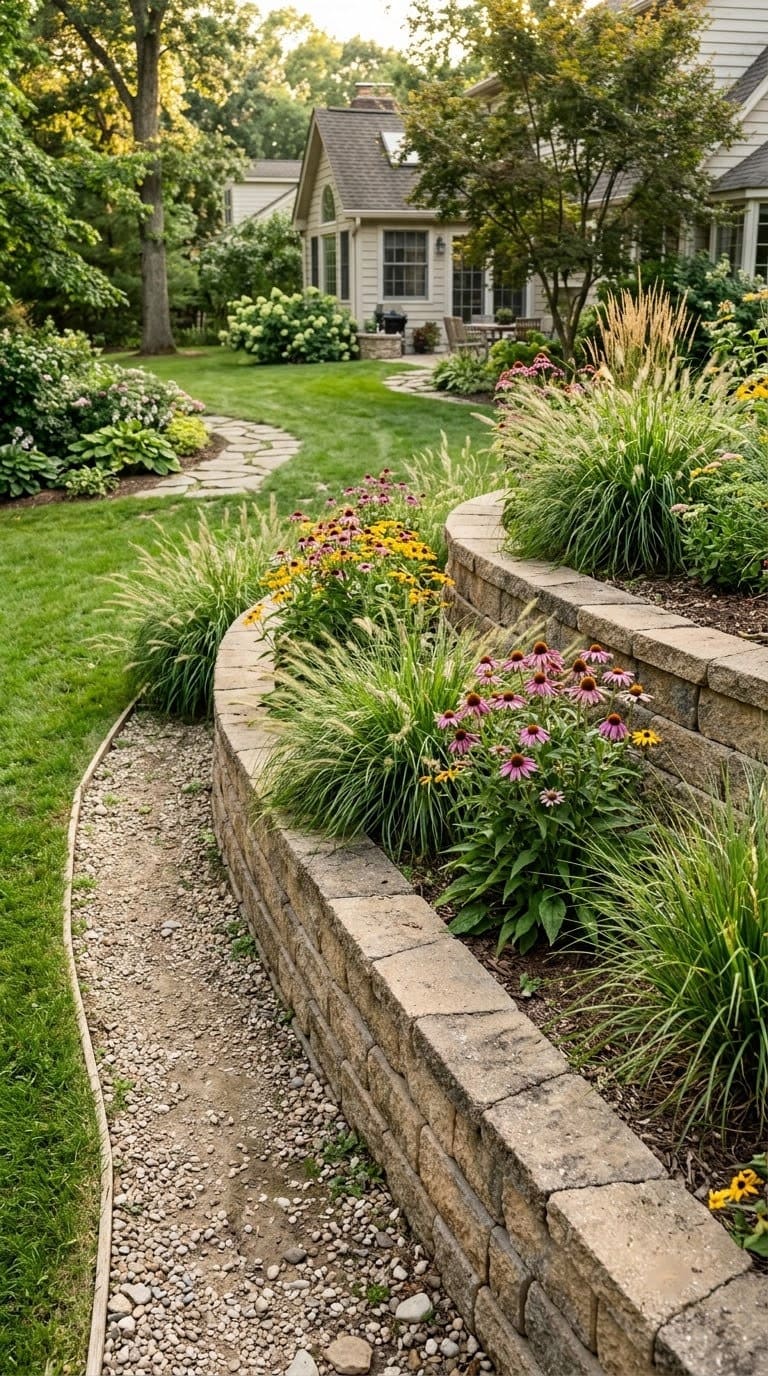
Terracing wins for most residential hillsides.
A terrace system is a series of short walls, or planted berms, that step up the hill. Each one only holds back a foot or two of soil, so it works with the landform instead of fighting it.
That means less cut and fill, better drainage, and a usable planting bed on every level. Pugliese recommends keeping each wall low, a foot or two, which also keeps it DIY and permit-free.
One tall wall means fewer structures to build, but each is a much bigger job. Once a wall passes 3 to 4 feet it becomes an engineered structure. The Northern Virginia district notes that 3:1-or-steeper tiered walls need professional engineering and a building permit, and terraces taller than 2 feet may need a permit too.
Cost follows the same line. A low DIY block terrace is affordable, while a tall engineered wall adds a stamped design, a permit, and geogrid dug back into the hill.
Our breakdown of what a retaining wall actually costs walks through the per-foot numbers and the 4-foot line where the price jumps. For the design side, see terraced front yard layouts and retaining wall ideas for a sloped yard.
How do I add stairs or a path on a slope?
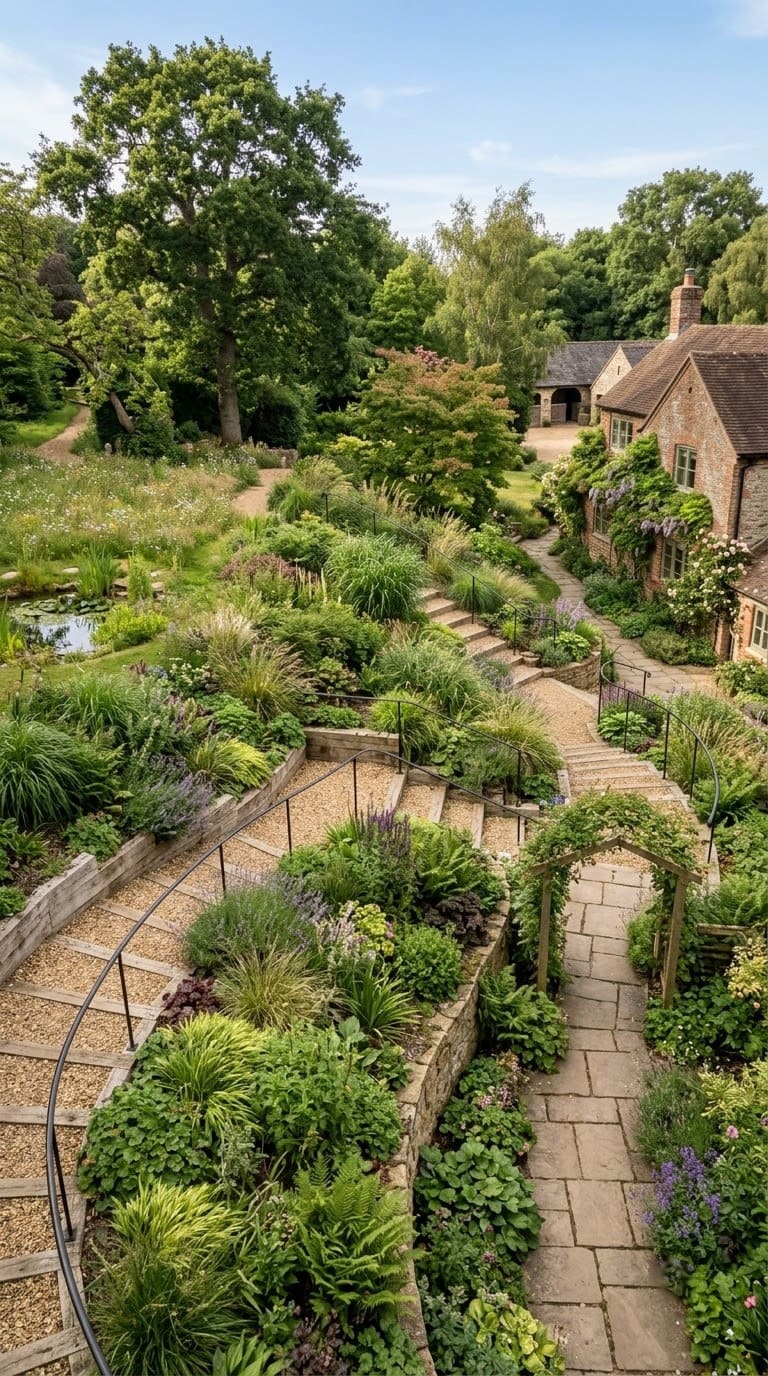
A straight run of steps works on a gentle grade. Once the hill would make a straight staircase too steep, switch to switchbacks that traverse across the slope and turn back on themselves.
A comfortable outdoor step has a rise of about 6 inches and a tread of 14 to 15 inches, which is deeper and shallower than an indoor stair. For materials, timber risers with gravel treads are the cheap DIY option, stone or block steps sit in the middle, and poured concrete is a job for a contractor.
Add a handrail once you’re past three or four steps, or wherever the drop-off beside the path is steep enough to hurt someone. There’s more on routing a walkable line through a hill in our sloped backyard walkway guide.
Can I do this myself, or do I need a pro?
Plenty of a slope project is genuine DIY. Planting, carving level pockets, pinning down an erosion blanket, laying straw wattles, extending downspouts, building a low timber or block wall under about 3 feet, and putting in a simple gravel path are all within reach of a determined homeowner.
Hire a pro for the rest. That means any wall over 3 feet or on a 3:1-or-steeper slope, regrading or cut and fill, and a slope over 45 degrees.
It also means a drainage system that ties into the street, and anything that needs a permit.
For a whole hillside, a landscape designer or architect usually earns the fee by getting the sequence and the grading right the first time. Our guide to landscape design cost covers what that runs. The plain version of the rule, from the extension agents above: a homeowner should not build a wall taller than a foot or two, and a slope past 45 degrees is not a planting project anymore.
Which slope do you actually have?
The right next step depends on your situation. Here’s where to go.
If it’s a front yard sloping down to the street or the strip along the side of the house, those have their own galleries. So does a small or tight sloped yard and a slope you’re handling on a budget.
If you want to put something specific on the hill, there are galleries for a pool on a slope, a fire pit on a slope, and using the grade for a water feature. A steep driveway and big boulders as the structure each have their own too.
The sloped-yard cheat sheet
| Situation | Do this first | Why it matters |
|---|---|---|
| You don’t know where to start | Measure the percent grade | It decides which approaches are even possible |
| The slope is eroding | Divert water at the top, then blanket the bare soil | Plants can’t establish in soil that’s washing away |
| You can’t mow it safely | Replace turf with groundcover, grasses, and shrubs | Past 3:1 a mower is dangerous, and grass roots are shallow |
| Water pools at the bottom | Add a toe drain and grade away from the house | A soggy foundation costs far more than a drain |
| You want level space | Terrace it with low walls, don’t build one tall wall | Less earthwork, better drainage, no permit at a foot or two |
| The wall would be over 3 feet | Get an engineer and pull a permit | It’s a structure now, not landscaping |
| You’re planting this season | Run the downspout extension before you plant | The first storm floats out anything you planted first |
| It’s a whole hillside | Price a landscape designer before you start buying | The sequence and grading are what a plan gets right |
What we did with our slope, and the mistake we’d undo
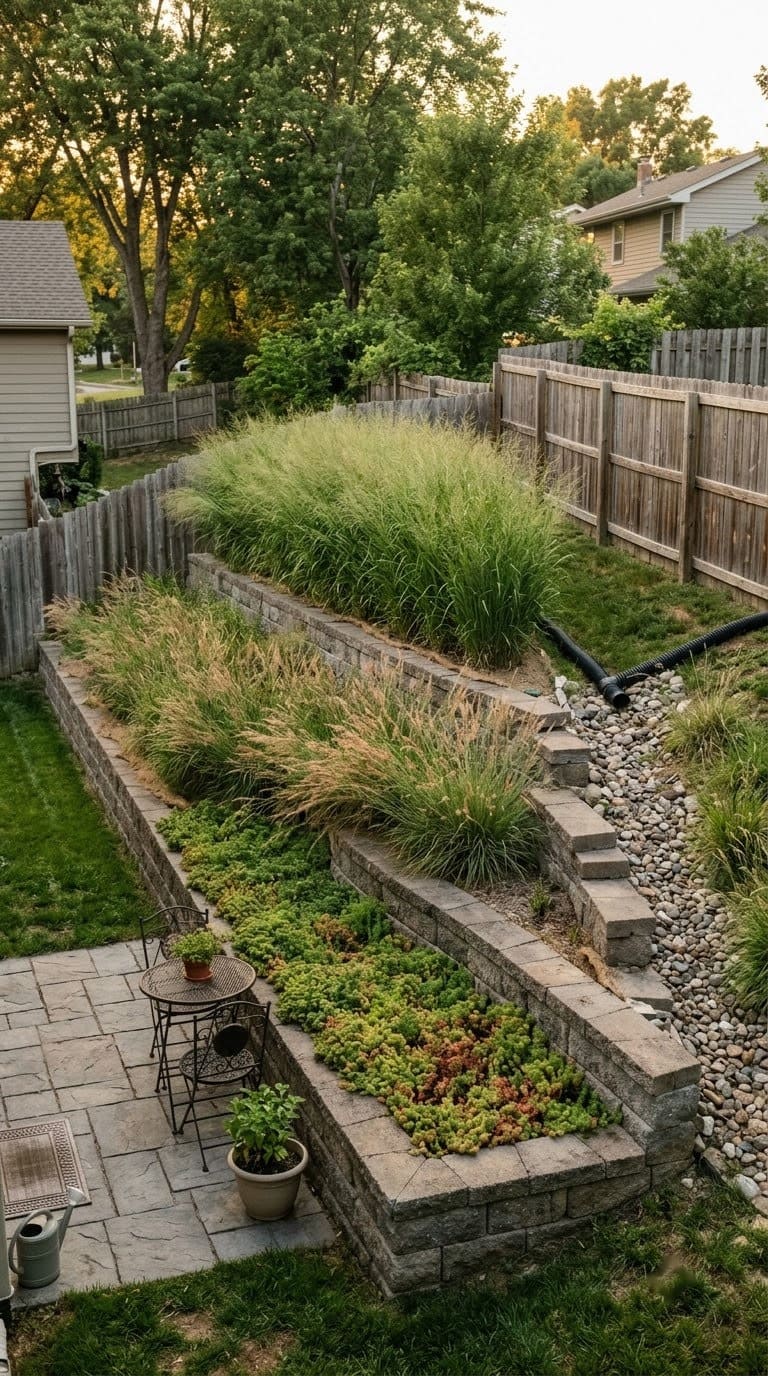
Our backyard dropped about 20 percent from the fence line down to the patio. We handled it with a diverted downspout, three low block terraces each under 2 feet, and the beds between them planted with switchgrass, little bluestem, and creeping sedum over a jute erosion blanket.
Most of it worked well. The terraces caught the water and gave it somewhere to soak in. The blanket held the soil for the one season it took the grasses to root, and after that the roots did the job.
Here’s the mistake. We planted the lower half of the slope before we ran the downspout extension across the top. The first big storm sheeted water down the whole hill and floated out about half the plugs on the lower terrace.
We redid that section in the right order, water first, then plants, and it held through the next winter. The lesson is exactly what the extension agents say. Divert the water at the top before you do anything else, and get the soil covered.
One honest caveat. Our terraces were low on purpose so we could build them ourselves without a permit. Anything taller and we’d have called a contractor and let an engineer draw it.
Sloped and hillside landscaping FAQ
What is the cheapest way to landscape a sloped backyard? Cover it with plants. Deep-rooted groundcovers, ornamental grasses, and spreading shrubs over an erosion blanket cost a fraction of terracing or a wall, and they solve erosion and end the mowing. Add a diverted downspout at the top and you’ve handled the two biggest problems for a few hundred dollars.
How steep is too steep to landscape yourself? Above 45 degrees, plants struggle to root and you need professional grading or an engineered wall, per NC Extension. For structures, don’t build a retaining wall taller than a foot or two yourself, and get an engineer for any wall over 3 feet or on a slope steeper than 3:1.
What can I plant on a steep slope to stop erosion? A mix with different root depths. In full sun, little bluestem, switchgrass, creeping sedum, and prostrate juniper. In part shade, ferns, sedges, serviceberry, and mountain laurel. Plant through an erosion blanket and water on a cycle so it soaks in instead of running off.
Do I need a permit to terrace my yard? Often, yes. The Northern Virginia district notes that terraces taller than 2 feet may require permits, and any tiered wall on a 3:1-or-steeper slope needs engineering and a permit. Keeping each terrace wall to a foot or two usually stays under the line. Check with your local building department.
How do I stop water from washing down my hill? Catch it at the top first. A shallow swale or trench along the top edge, drain tile, or downspout extensions past the crest keep runoff off the slope. Then terraces and level planting pockets on the slope catch what’s left and let it soak in.
Is it better to regrade a slope or build a retaining wall? Regrading makes the whole slope gentler but moves a lot of soil and needs a machine. A wall holds a bank in place so the rest of the yard can stay level. On a mild slope where you want lawn, regrade. Where you want to keep the grade but need a flat shelf or an end to erosion, terrace or wall it.
Related posts
Products We Recommend
This post contains affiliate links. We may earn a commission on qualifying purchases at no extra cost to you.
AK Trading Jute Erosion Control Soil Saver Mesh Blanket, 48 in x 15 ft
Biodegradable jute mesh to pin over a bare slope so the soil holds while new plants root, then it rots away on its own.
Shop Now
FEED GARDEN 6-Inch Hot-Dip Galvanized Landscape Staples, 50-pack
Heavy 11-gauge staples for pinning the erosion blanket, a soaker hose, or drip line flat against a slope so nothing slides.
Shop Now
LINEX Soaker Hose, 50 ft, with hose stakes
Slow, low-runoff watering that soaks in instead of sheeting down the hill while slope plants get established.
Shop NowNever miss an update — choose FarmFoodFamily as your preferred source on Google.
How it works: Tap the button below to open Google's settings page, then check the box next to FarmFoodFamily.
Tap the checkbox to turn it blue — that's how you know it's set.