7 Small Garden Layout Mistakes That Make a Tiny Space Feel Even Smaller
Most small gardens aren’t actually small, they’re just laid out in a way that makes every square foot fight against you, and these 7 fixes stop that.
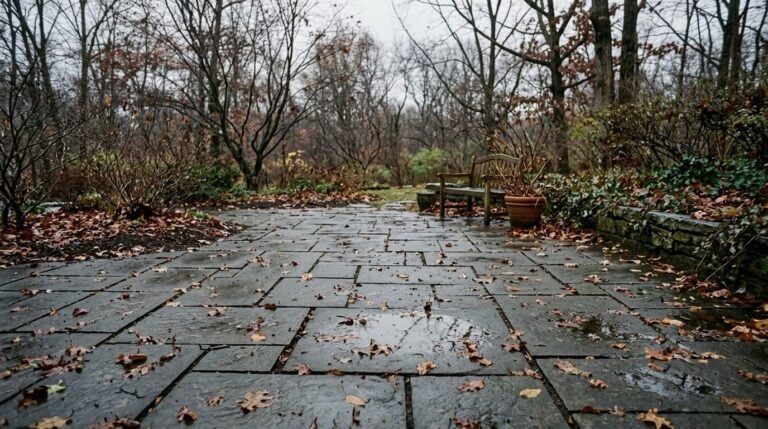
A paver patio can look flawless the day it’s laid and still sink within two years, and the difference almost always comes down to what’s buried under it, not the pavers themselves.
Feng shui treats a houseplant as living, active energy, and it turns out that’s true in a more limited way than the popular “plants purify your air” claim suggests, while the pet-safety side of the most recommended “lucky” plants is a real gap almost nobody checks.
The problem with most narrow backyards isn’t the width, it’s a straight line running down the middle of it, and these 8 tricks fix exactly that.
Skip the base compaction step, and your $2,000 patio starts sinking within two seasons. Here’s the exact depth, slope, and layering order that keeps pavers flat for good.
None of these require moving furniture or a weekend project, they’re single actions you can knock out in under an hour, and one of them is backed by genuinely recent sleep science that has nothing to do with feng shui at all.
Your side yard isn’t ugly, it’s just never had a job, and one layout change is usually all it takes to give it one.
The kitchen is the one room in feng shui that’s said to contain all five elements at once, ruled by fire (your stove), and real color-appetite research backs up more of this than you’d expect, for reasons that have nothing to do with energy.
Feng shui has always treated an exposed beam as a real weight pressing down on whoever sits or sleeps beneath it, and it turns out there’s a genuine, peer-reviewed psychology study explaining why a lowered ceiling actually changes how you think, not just how you feel.
Spongy turf and random brown patches aren’t always drought, and if you wait for the lawn to look “obviously dead,” the grubs already won.
Cover crops turn a bare, tired garden bed into free fertilizer and erosion insurance over winter, as long as you match the right species to your first-frost date and know which ones need mowing down before you plant in spring.
Follow this exact 7-step September sequence, in order, and a patchy, tired lawn can come back thick enough by spring that the neighbors ask what you did differently.
If your deck stripper is drying into a crusty film before you can scrape it, you’re using the wrong chemistry for what’s actually on your wood, and these 7 picks fix that.
A hallway is the connective tissue of a home, chi is supposed to pass through it on the way to every other room, and in an emergency, so is every person in the house, which is why a couple of these rules carry real, higher-than-symbolic stakes.
A pumpkin or winter squash won’t ripen any further once it’s off the vine, so the trick is catching the right week, not guessing and hoping for the best.
September dumps a season’s worth of garden debris on your pile all at once, and that’s exactly when a small compost mistake turns into a slimy, smelly one.
The right deck cleaner turns a gray, grimy deck back into a place you actually want to sit, as long as you match the formula to your deck material instead of grabbing whatever’s on the shelf at the hardware store.
Feng shui calls it the “commanding position,” but there’s a real, independently documented psychological theory underneath that name, one that has nothing to do with energy and everything to do with how humans evolved to feel safe enough to actually sleep.
September planting gives roots a six-to-eight-week head start before winter, as long as you pick the right six plants and skip the broadleaf evergreens that still need spring.
These five greens actually get sweeter as the thermometer drops, so the trick isn’t rushing to harvest before frost, it’s knowing which ones can shrug off a hard freeze and which ones fold at the first light one.
A mirror is treated as the single most powerful amplifier in feng shui, whatever it reflects, it’s thought to double, and a couple of the rules built around that idea turn out to have a real optical or safety explanation sitting right behind the symbolism.