48+ Best Landscaping Ideas With Mulch and Rocks That Actually Hold Up
Mulch and rock landscaping can look genuinely custom-designed once you stop picking a side, but only if you skip the one shortcut that turns into a weekend of misery later: landscape fabric under the wrong material.

Never miss an update — choose FarmFoodFamily as your preferred source on Google.
How it works: Tap the button below to open Google’s settings page, then check the box next to FarmFoodFamily.
Tap the checkbox to turn it blue — that’s how you know it’s set.
Most people treat mulch and rock like a single either/or decision. Pick the “modern” one, pick the “cozy” one, done. That’s the wrong way to think about it.
The real design move, the one that actually reads as intentional instead of default, is using both in the same yard, on purpose, where each one’s strengths matter. Mulch retains moisture and feeds the soil as it breaks down.
Rock doesn’t decompose and holds up under wind and heavy rain. Neither one is “better,” they’re doing different jobs. Alan Burke, ASLA, a landscape architect at The Outdoor Project Company, puts it simply: mulch “can provide an easy way for a homeowner to maintain higher levels of moisture in beds, and to a lesser extent inhibit weed growth.”
Quick Answer
Use organic mulch (bark, wood chips) anywhere plants need moisture retention and soil-building: active flower beds, vegetable borders, anything you’re actively growing and feeding. Use rock (pea gravel, river rock, decomposed granite) anywhere you want a permanent, low-maintenance surface that won’t wash away or need replacing every year or two: dry creek beds, pathways, foundation strips against the house.
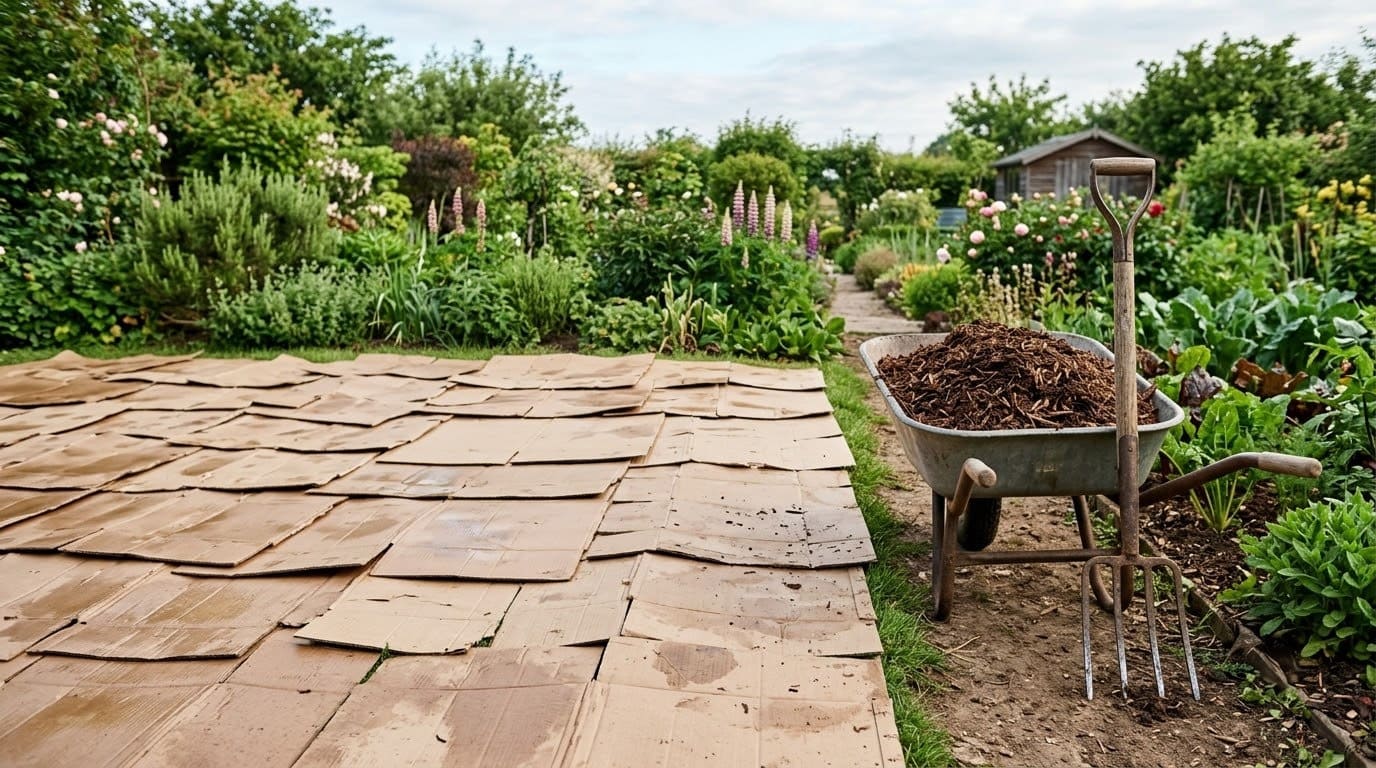
The two work best together at contrast points, where a gravel path meets a mulched bed, or where a rock ring surrounds a mulched tree base. Skip landscape fabric under mulch entirely. It blocks the very decomposition that makes mulch useful, and weeds still root into it from above.


Under rock, fabric has a narrower real use, keeping stone from sinking into soil, but expect a genuinely difficult removal job in 5 to 10 years once roots grow through it. Pea gravel is the cheapest rock option at as little as $10 per ton, with river rock running $60 to $170 per ton depending on size and quality.
Answer 4 quick questions and get matched to the exact fix for your yard — drainage, budget, layout, or something else entirely.
Take the Free QuizIs mulch or rock better for landscaping?
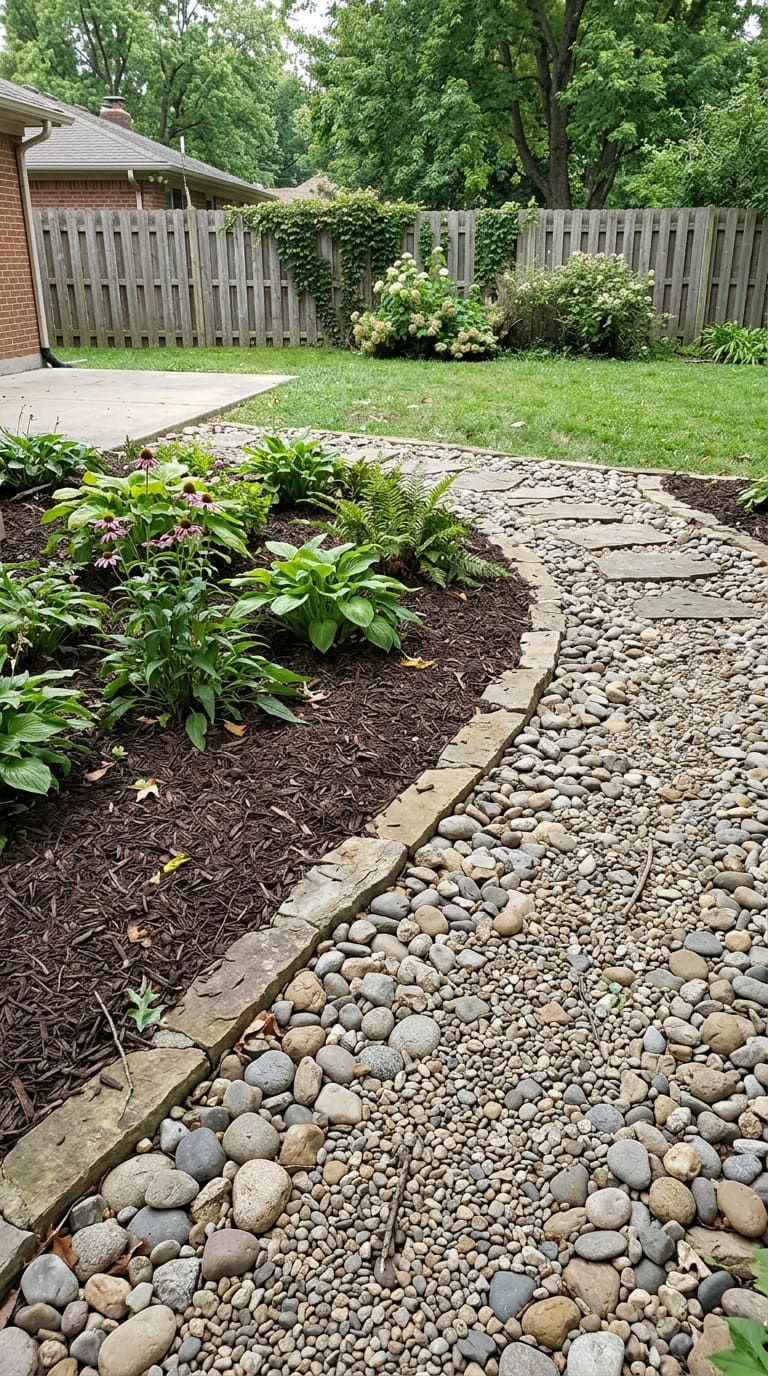
The honest answer resists a flat yes or no, but it also isn’t a coin flip. Here’s the real tradeoff:
| Rocks | Mulch | |
|---|---|---|
| Pros | Cheaper upfront, lower ongoing maintenance in theory. Doesn’t burn or wash away in wind. Suppresses weeds longer at first. Ideal for rock and cactus gardens. | Encourages plant growth and adds real nutrients to soil. Retains moisture, meaning less watering. Reduces soil compaction and erosion. |
| Cons | Doesn’t benefit the soil or plants directly. Absorbs heat, which can raise soil temperature enough to stress nearby plants. Removal is entirely manual if you change your mind. | Needs replacing annually as it breaks down. May carry weed seeds in the material itself. |
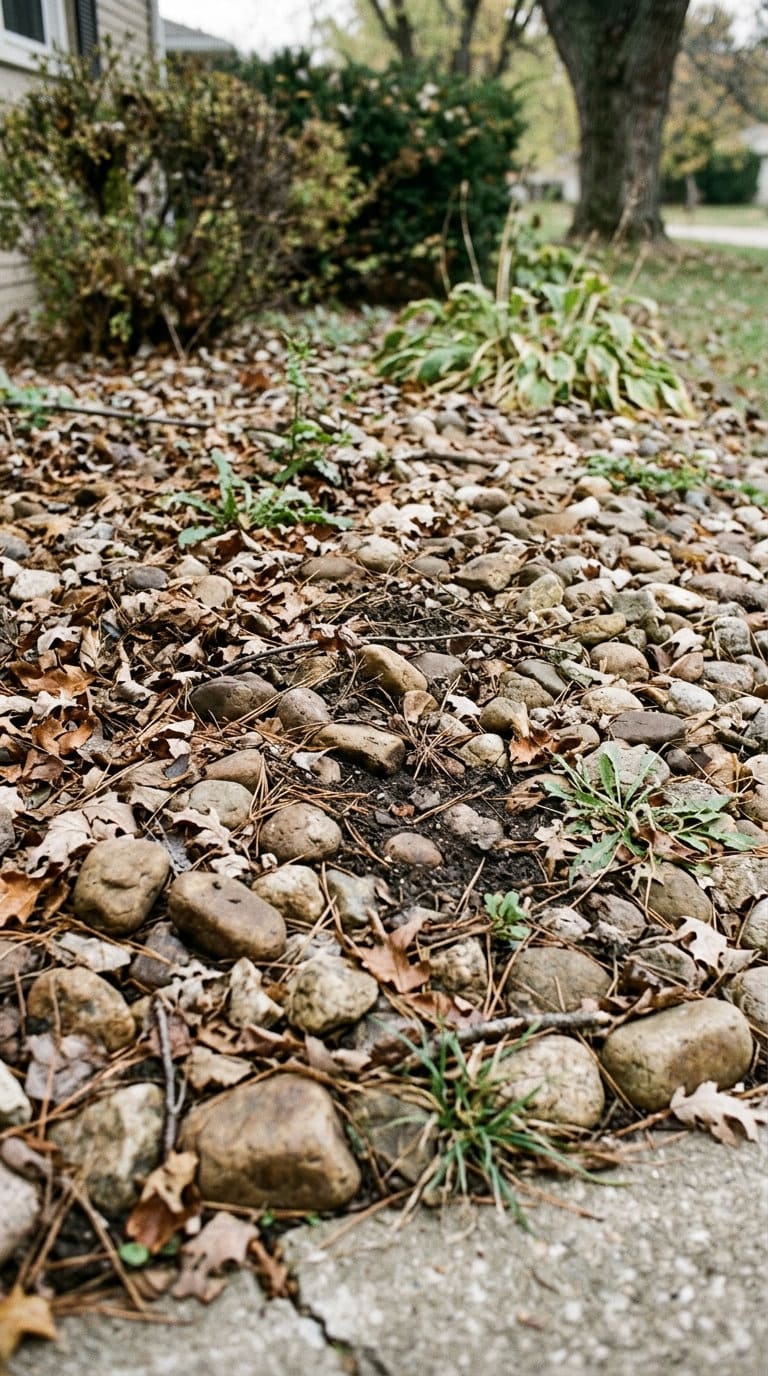
That table alone is the version every guide runs. Here’s what it leaves out: Eric Frisch, a landscape designer at Ground Source, is blunt about rock’s real long-term drawback: “rocks as a groundcover just collect landscape waste.” Leaves, dirt, and debris settle into rock beds and don’t break down or wash away the way they do in mulch, they just accumulate.
That matches what real homeowners report after living with rock landscaping for a few years. A 76-comment r/gardening thread from someone actively digging out rock and failed landscape fabric describes it plainly: “It’s awful.” Weeds, bindweed specifically in that case, root through and around the fabric meant to block them, and removing established rock plus failed fabric is a genuinely bigger job than most people expect going in. A separate 114-comment thread simply titled “I hate landscaping rocks” confirms this isn’t a one-off complaint.
None of this means rock is the wrong choice, it’s excellent for cactus and succulent beds, dry climates, and areas where you genuinely don’t want plant growth. It means going in with real expectations: rock isn’t the maintenance-free option it’s often sold as, it trades weekly upkeep for a bigger, less frequent cleanup problem.
Mulch vs. rock: the real comparison
| Organic mulch | Rock (pea gravel / river rock) | |
|---|---|---|
| Cost per ton | Roughly $30-45/ton bulk, plus $85/cubic yard installed pricing is common | Pea gravel $10-50/ton, river rock $60-170/ton (verified via Lawn Love’s own pricing data) |
| Lifespan before refresh | 1-2 years before it fades and breaks down | Effectively permanent, doesn’t decompose |
| Soil benefit | Feeds soil as it breaks down, retains moisture | None, it’s inert |
| Maintenance | Rake/top-off yearly | Collects leaves, dirt, and debris that has to be blown or raked out, or it looks neglected fast |
| Best for | Active plant beds, vegetable gardens, anything being fed and grown | Pathways, dry creek beds, foundation strips, permanent no-plant zones |
| Weight/wind resistance | Light, can blow or wash away in heavy storms | Heavy, stays put in wind and rain |
Crushed stone and road base, the cheapest rock option, run roughly $20-35/ton, useful as a sub-base under pavers or a gravel path rather than as a visible topdressing.
48 landscaping ideas with mulch and rocks
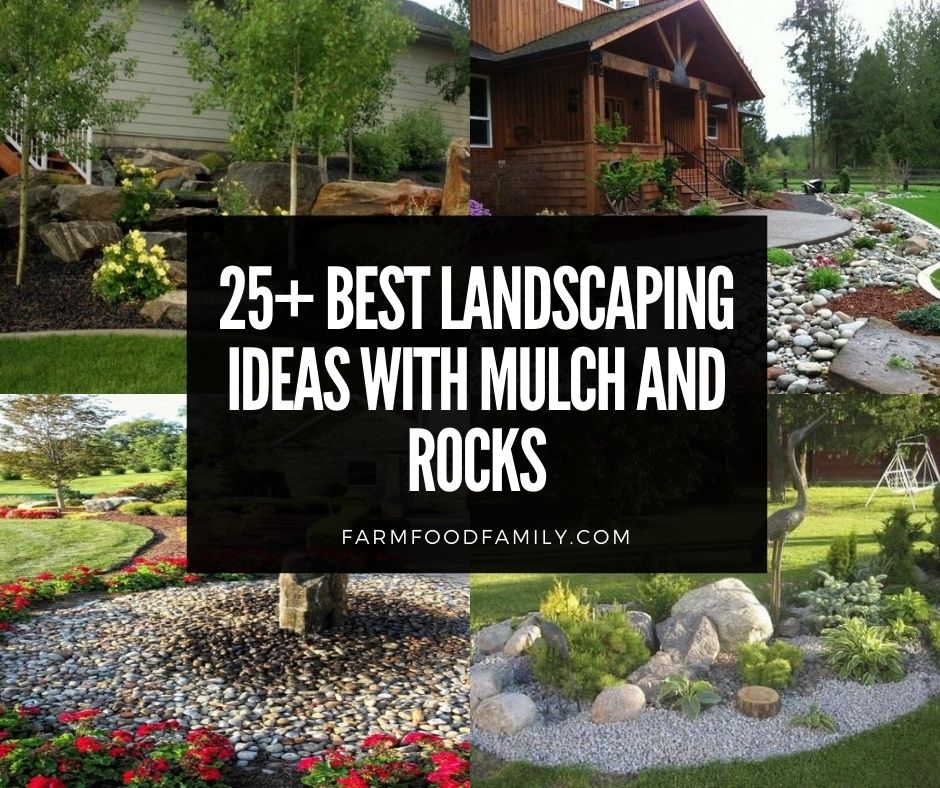
1. Basalt Rock Mulch on an Elevated Property
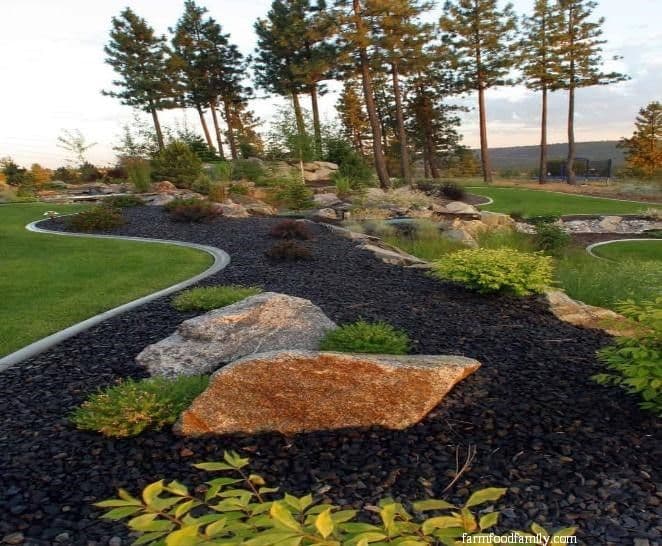
A layer of dark basalt rock mulch paired with a decorative granite boulder does real work marking the transition between a lower deck and an elevated space. The black tone of the rock also makes any nearby plants read as more vivid by contrast.
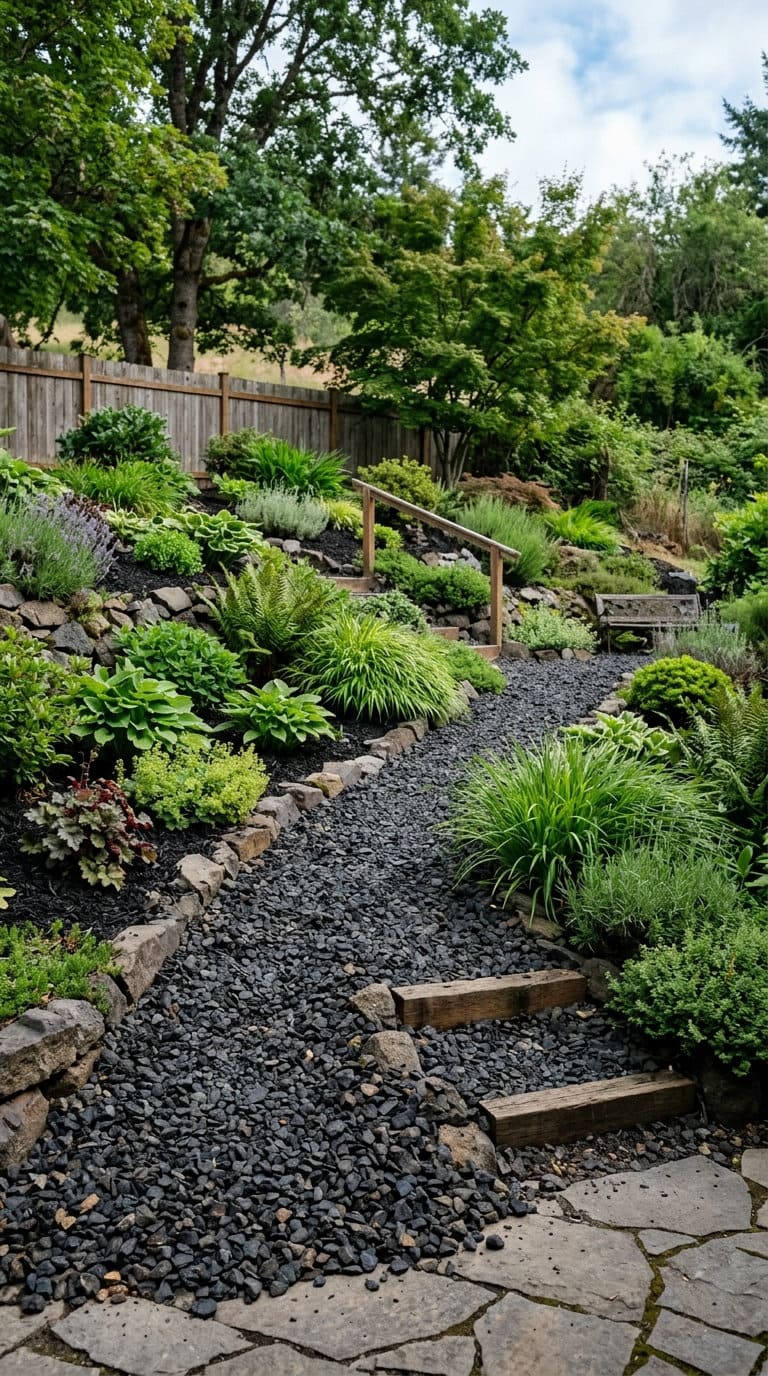
2. Rock and Straw Mulch for Uneven Ground
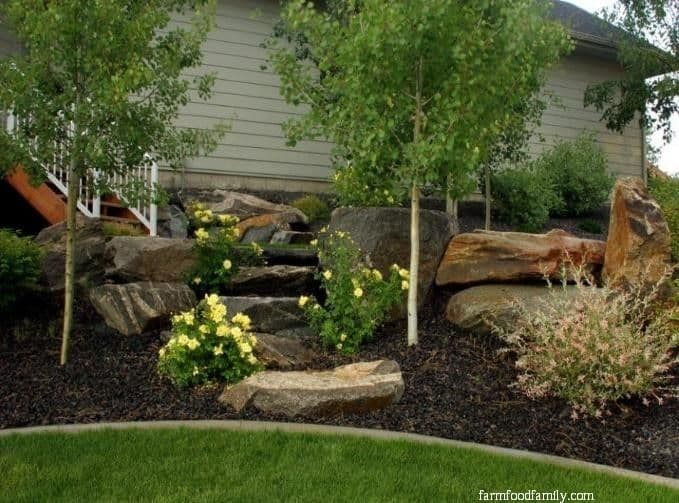
This one is a strategic combo especially for yards that are more exposed to the sun. The straw mulch keeps in the moisture and gives the illusion of an even ground.
Most yard problems trace back to one specific, fixable cause. Find yours in 4 quick questions.
Take the Free Quiz
Keeps mulch and rock beds from migrating into the lawn or path, the same edging problem ideas 18 and 20 above solve with cobblestone or steppers, but useful anywhere a hard edge is needed fast. ~$69/roll, 4.4★ (44 ratings).
Shop NowThis post contains affiliate links. We may earn a commission on qualifying purchases at no extra cost to you.
The rock boulders, as well as the plants and shrubs scattered on the soil bed are also made prominent by the dark color of the straw mulch.
3. Native landscaping for a sloped yard
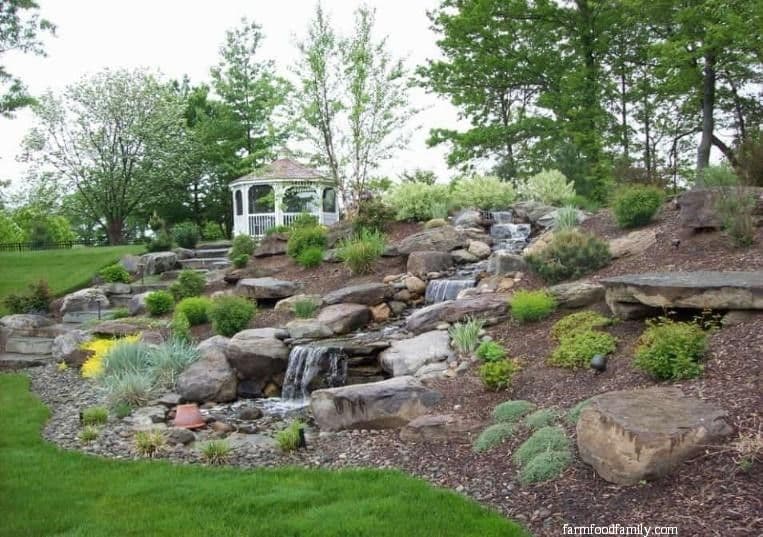
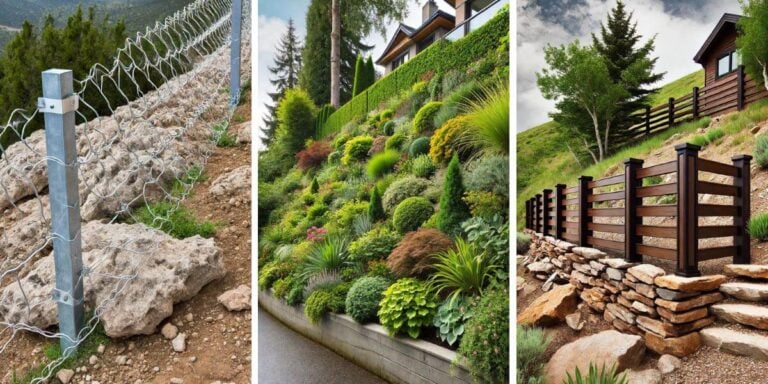
In case you have not noticed yet, rocks and mulches are the favorite combo for sloped yards.
In this idea, neutral tones of rocks and mulches are stacked and spread to make way for a tiered waterfall that falls to a small water pool. The rest of the space is then separated with bright grass turf.
4. Succulent corner landscaping
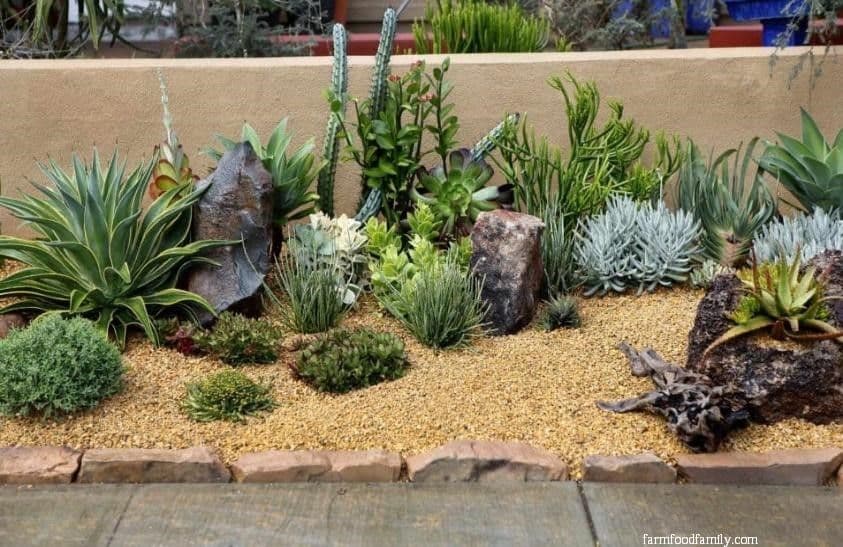
If you are into low maintenance fence landscaping, you can count on a mid-western style composed only of a gravel and stone spread for the soil bed while the whole corner landscape is edged with rugged stone.
The assortment of cacti and other desert plants completed the ensemble.
5. Rock and mulch on two different sides
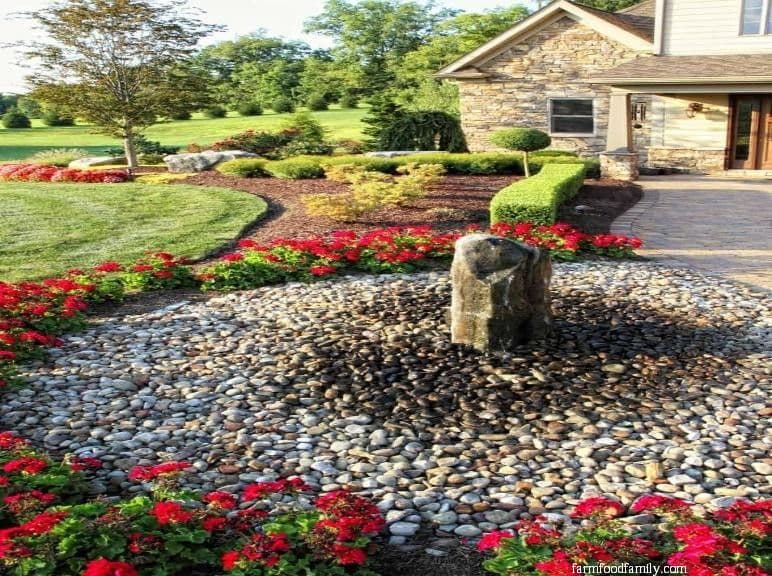
These two landscaping elements need not be together all the time. In this idea, the rocks are spread on one side to serve as the base of a water fountain.
On the other side, the red pine mulch with hedging and minimal greens offers a visual softness to the landscape and complements the turf grass well.
6. Fieldstone and Hemlock mulch

This combination brings out a crossover of classic Japanese gardens but on a rustic backdrop. The fieldstones are arranged irregularly and with different colors to serve as the path walk.
The average homeowner spends $616/year on yard fixes that don't address the real problem. Find out what yours actually is — before you spend another dollar.
Take the Free QuizTo give a cohesive look for the sloped yard, Hemlock mulch is used for ground cover. This provides an extremely neat contrast not only for the fieldstone but also the surrounding grass area.
7. Transitional backyard landscape

Nothing gets more seamless than this neat, contemporary transitional backyard. From the patio door, a spread of river rocks is used as ground cover for the seating, accentuated beautifully by the shade of a big tree.
Separating the seating would be wood chip mulch, adding warmth and coziness to the entire landscape.
8. Cost-efficient water puddling solution

For problematic sloped yards that are prone to water puddling especially during the rainy season, using mixed mulches of wood chips and bark could be a cost-efficient choice.
Cedar mulch is used for the pathway to absorb more water and create efficient drainage. It is then bordered with bark and wood chip mulch and crushed gravel for contrast.
9. Raised rock rain garden
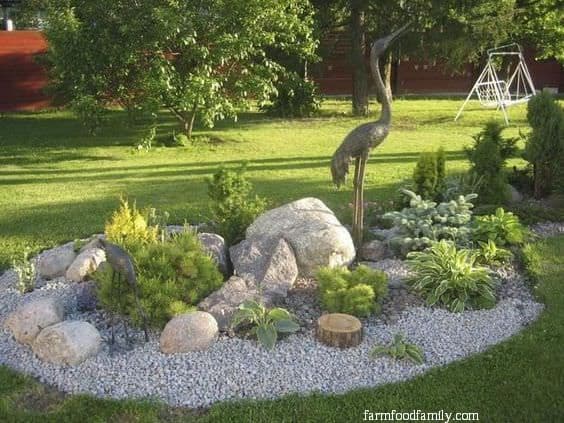
If you want to veer away from the simple raised rain garden in the middle of a vast green landscape, break the monotony of the space by using a raised rock rain garden.
It is made entirely of river rocks, complemented with bigger rocks and boulders for texture and plants for a soft edge. The decorative elements also give a fine touch to the simple look.
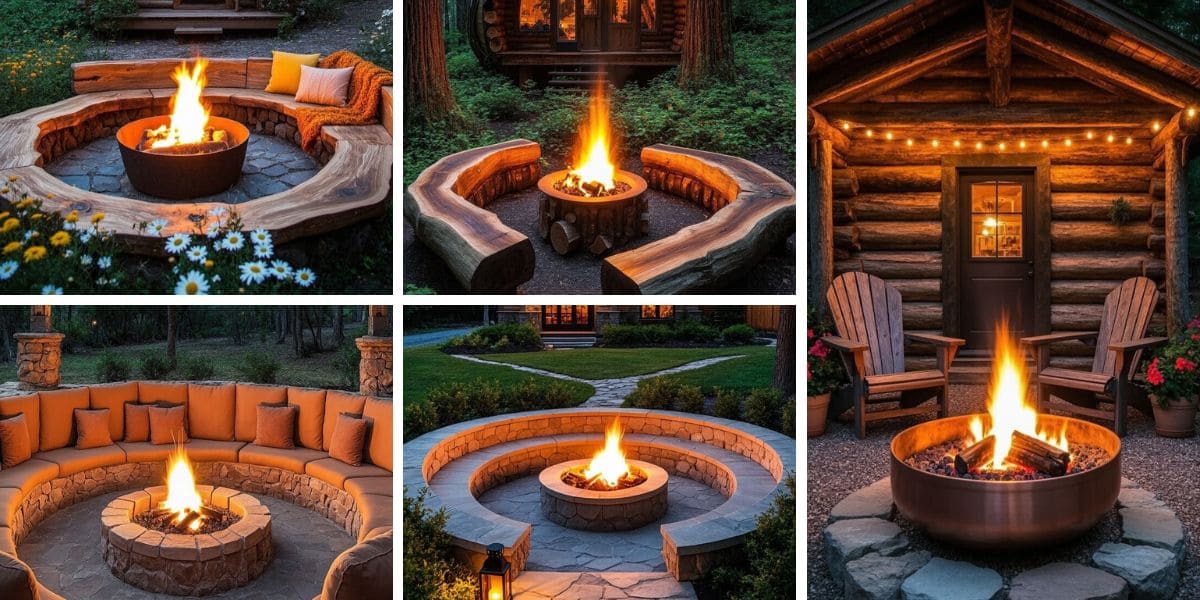
10. Corner firepit
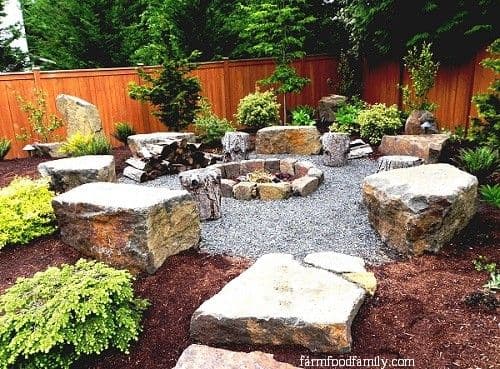
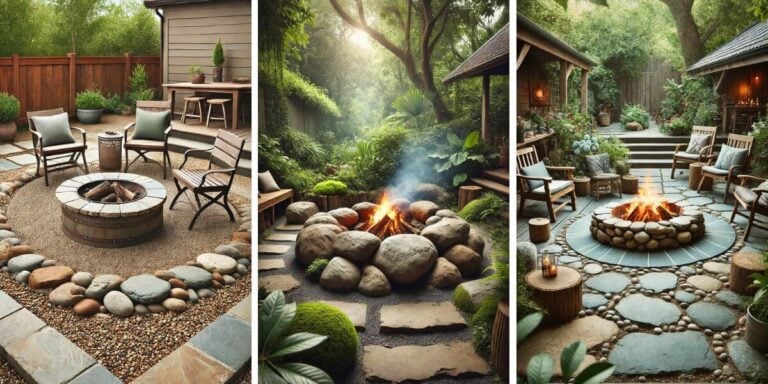
Your sloped backyard should not only be about wanting to make it look even. You can take advantage of the slope to create another space for family and friends to convene like making a corner firepit.
The flooring is made of crushed gravel, enclosed with fieldstone seating. The rest of the area is softened by cedar mulch for a cushioned walking up to the fire pit.
11. Leave the grass out
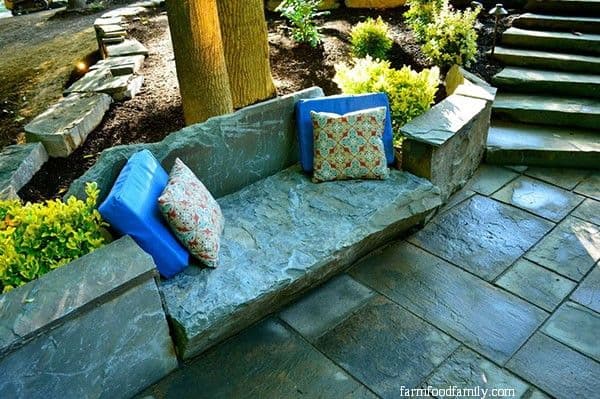
There really are some spots in the garden where the grass simply would not grow. Mostly, these would be around large trees.
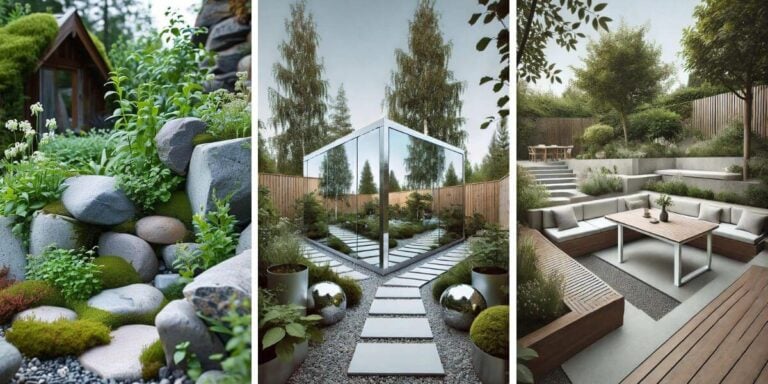
To capitalize on this, you can set a rock garden where the trees are enclosed in raised rock planters. For a functional look, you can make a stone bench around like this one.
12. Cabin look
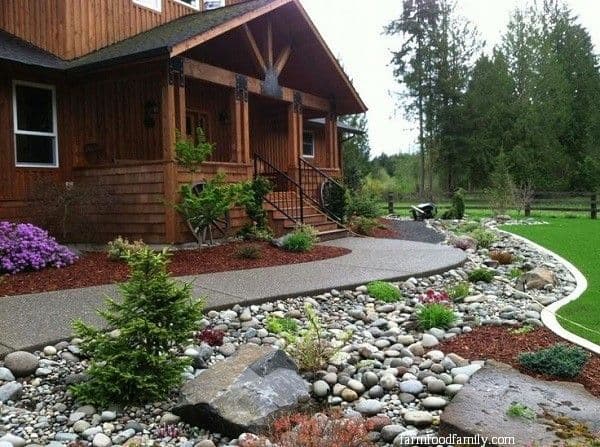
If you are in a location where there is more moisture than sun, you have to separate the rocks and the mulch to spread the contrast. By the cabin’s corners, wood chip mulch is used for the flowering plants to enhance the woody look of the cabin.
At the other end of the paver walkway, an arrangement of river rocks and pea gravel along with more naturally scattered plants is laid out.
13. Compact landscaping

Townhouses might not have enough space for an elaborate landscaping but that should not stop you from drawing inspiration from rocks and mulch.
This compact landscaping makes use of medium sized river rocks as its center. It separates two sides of mulch creating a geometric pattern that maximizes the landscape space.
This is another compact landscaping for the front yard. The river rocks are used as edging for the raised garden covered with mulch. To provide more dynamics, a twisted pattern of river rock edging is installed at another end of the landscape.
14. Rock and mulch border
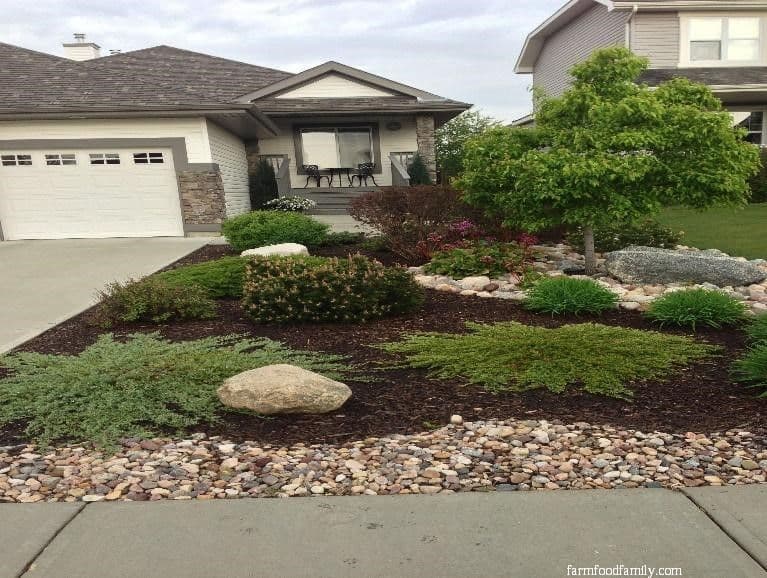
If you have two-toned stone pavers for the home, you can separate them to give each the emphasis it needs.
In this idea, the rock and mulch combo are used as a transition border. Wood chips are used for mulching the border and it is enclosed with white quartz rock as enclosure.
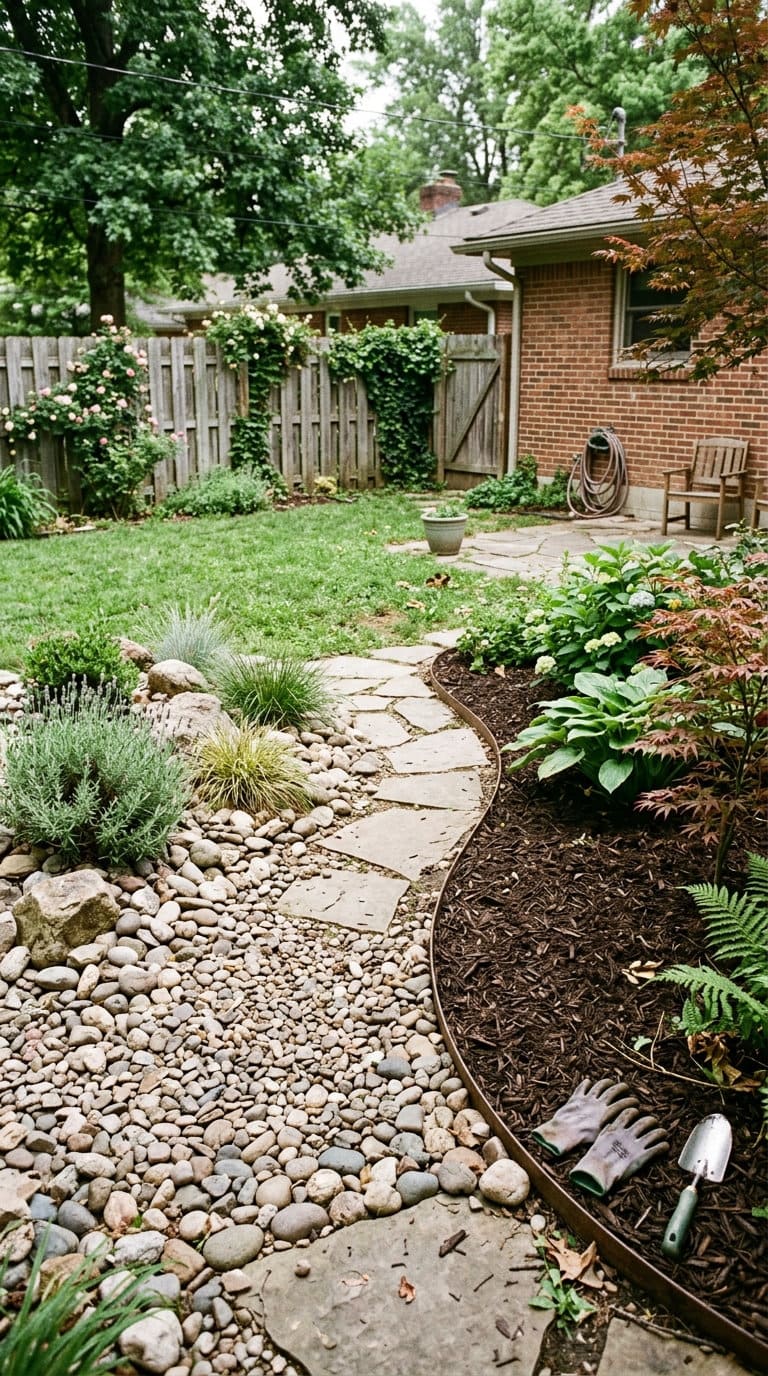
15. Replacing turf grass with rocks
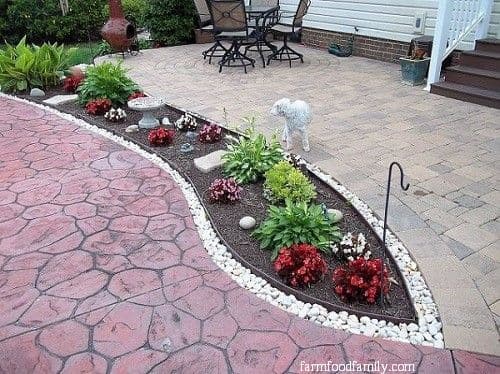
To completely make a low maintenance landscaping, you can replace turf grass with rocks. In this case, small rocks are used to spread the entire yard.
There is a raised deck leading to the patio door and another one leading to the backdoor. The pathway is also raised with wooden steps.
16. River rock planter
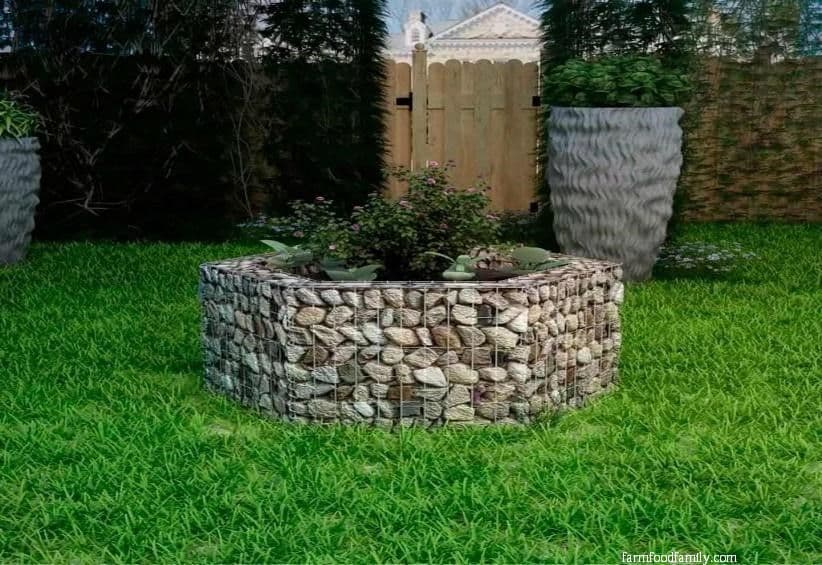
If you are not a big fan of mulching, you can innovate and make river rock planters to spread in a wide green turf.
This one made use of a galvanized steel frame and then filled with large river rocks. It is then topped with an assortment of hardy plants. It is an out of the box landscaping idea like no other.
17. Zen rock garden
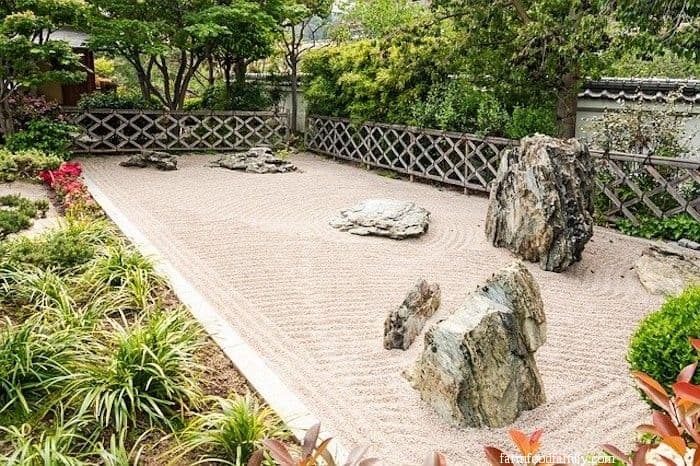
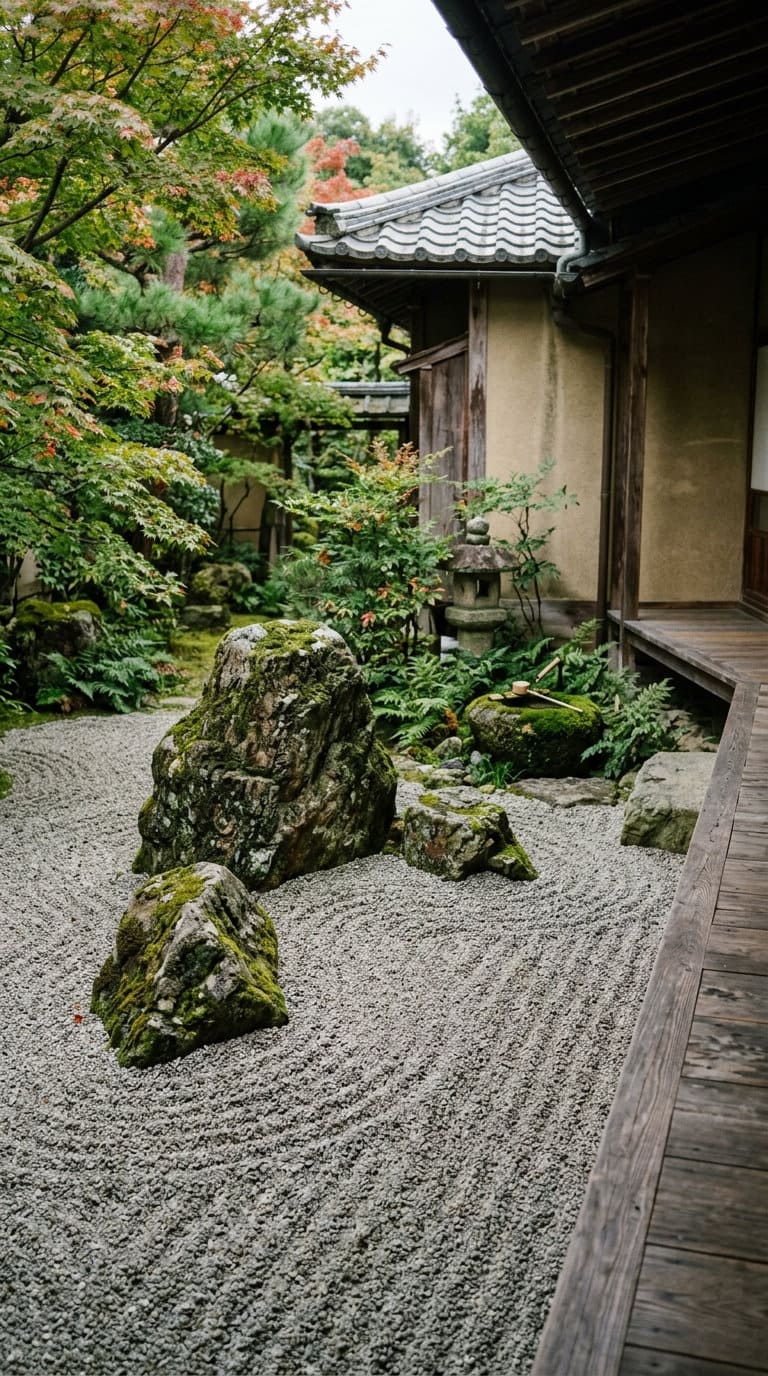
Having a zen rock garden never goes out of style. In this look, a courtyard-like space is entirely covered with crushed gravel. Mossy boulders are then placed for decorative purposes.
On the side, the graveled area is edged by mulch soil beds composed of shrubs and flowering plants. Even without the aid of water features expected from rock gardens, it still offers a serene look.
18. Best of all worlds
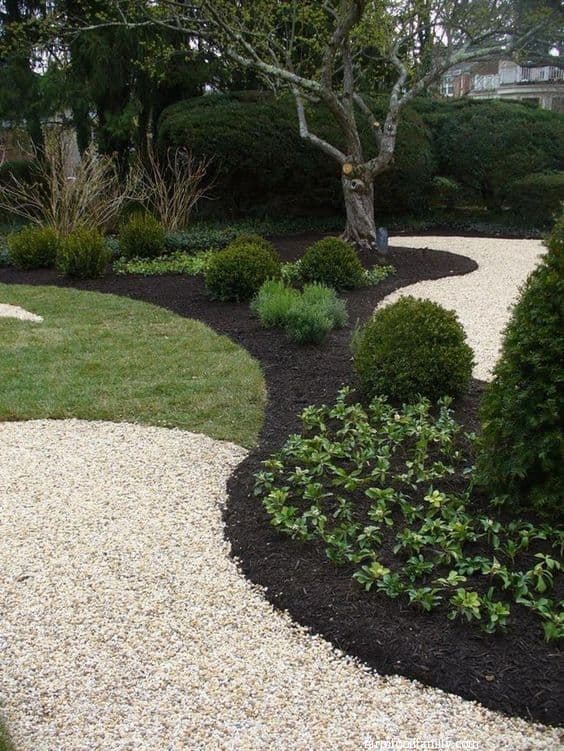
Grass, mulch, and rocks, you can have them all in a seamless look. Building on a large tree as a focal point, this one features a twisty pattern of black mulch from the tree down to the center.
It is then divided into four spaces with white river rocks on one crossed space and of green turf on the other sides, running across.
19. Black mulch bed bordered by a pea gravel path
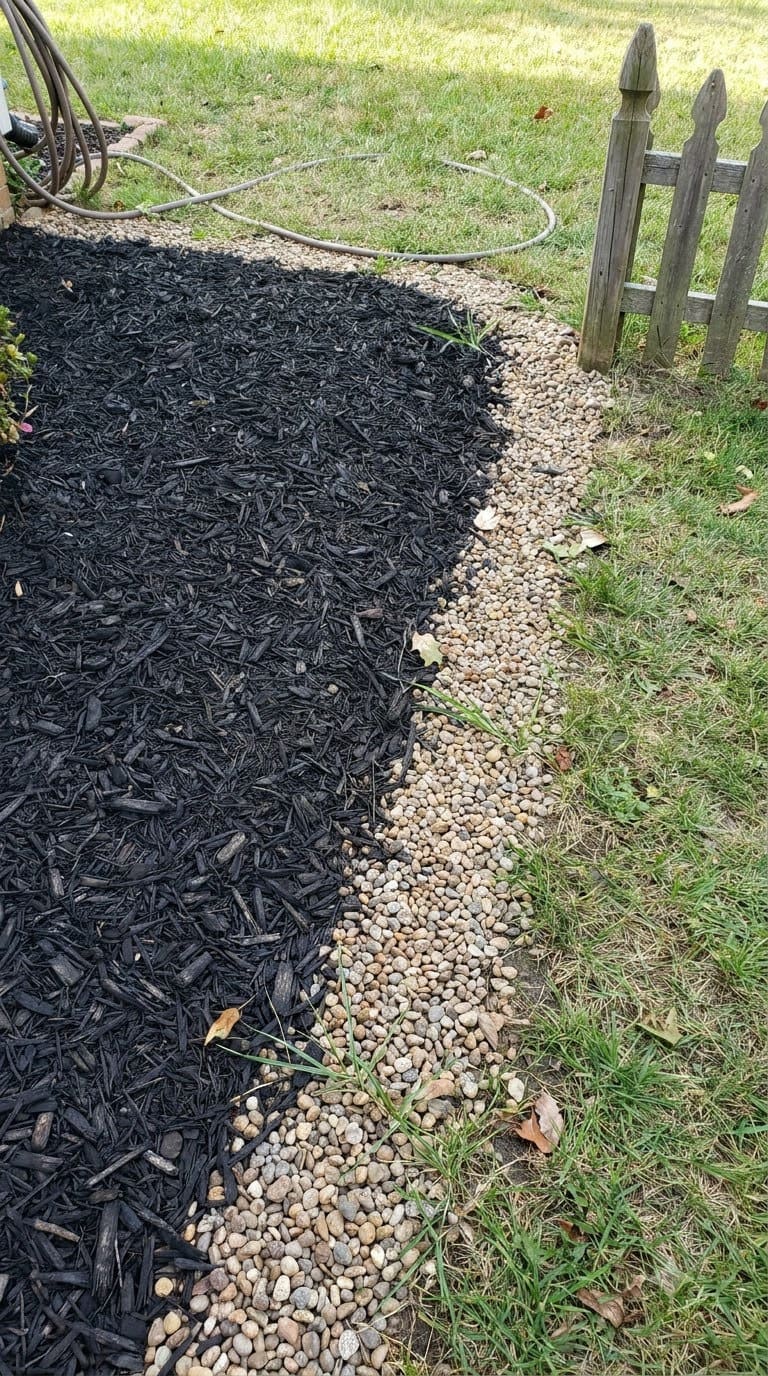
Lay 2-3 inches of dyed black mulch in the planting bed itself, then edge it with a 6-8 inch strip of pea gravel where the bed meets the lawn or walkway. If red tones fit your house better than black, our rundown of red mulch bed options covers the same border technique with a warmer color.
The gravel strip doubles as a mow edge so you’re not trimming grass by hand along the bed line. Budget tier: cheap DIY, a weekend project for most front yards.
20. River rock dry creek bed running through a mulched border
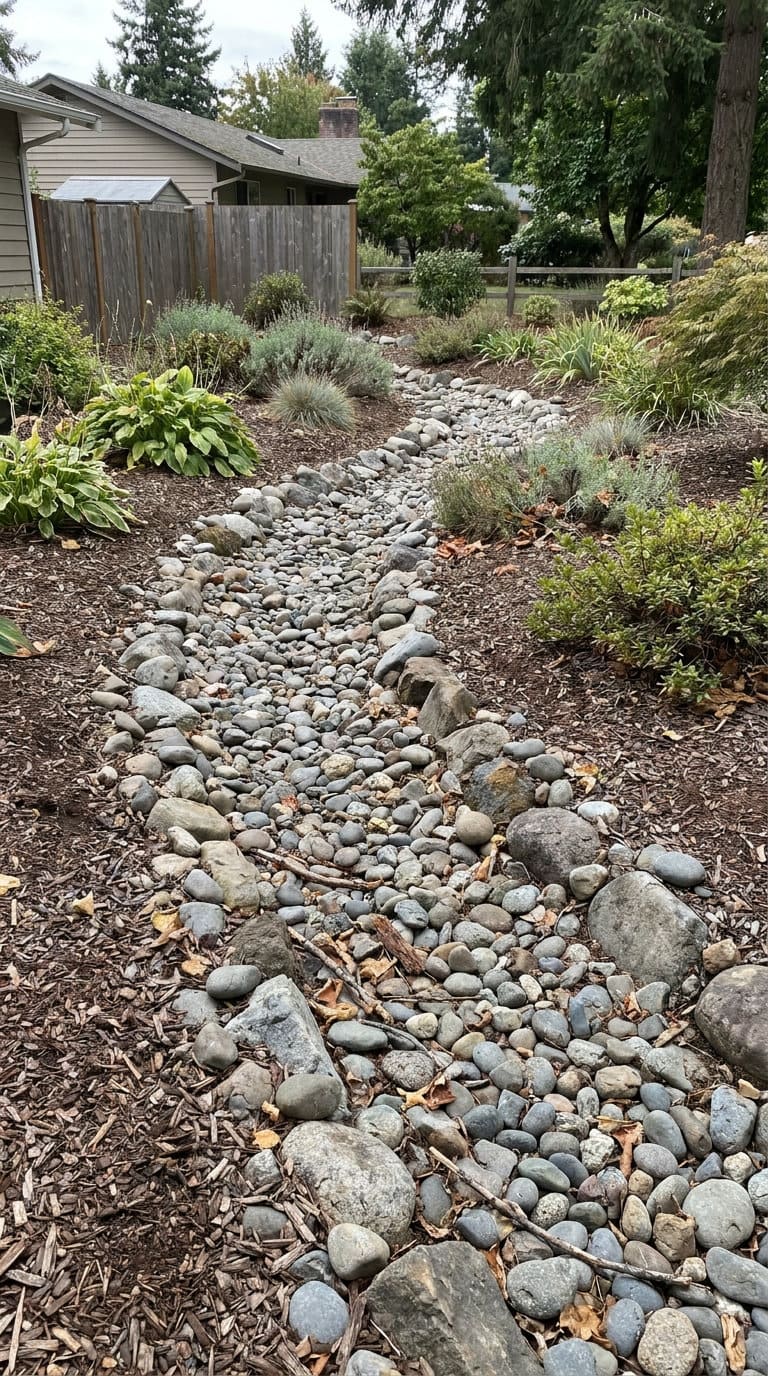
A dry creek bed, river rock laid in a shallow, curved trench, does real drainage work if you place it where water already pools after rain, not just decoratively. Dig the channel 4-6 inches deep, line it with landscape fabric specifically here (this is one of the legitimate under-rock uses), then fill with a mix of river rock sizes so it looks natural instead of uniform.
Mulch the banks on either side. Pairs well with idea 20’s slope-drainage swale if your yard has any grade to it at all.
21. Boulder cluster as a mulched bed’s anchor
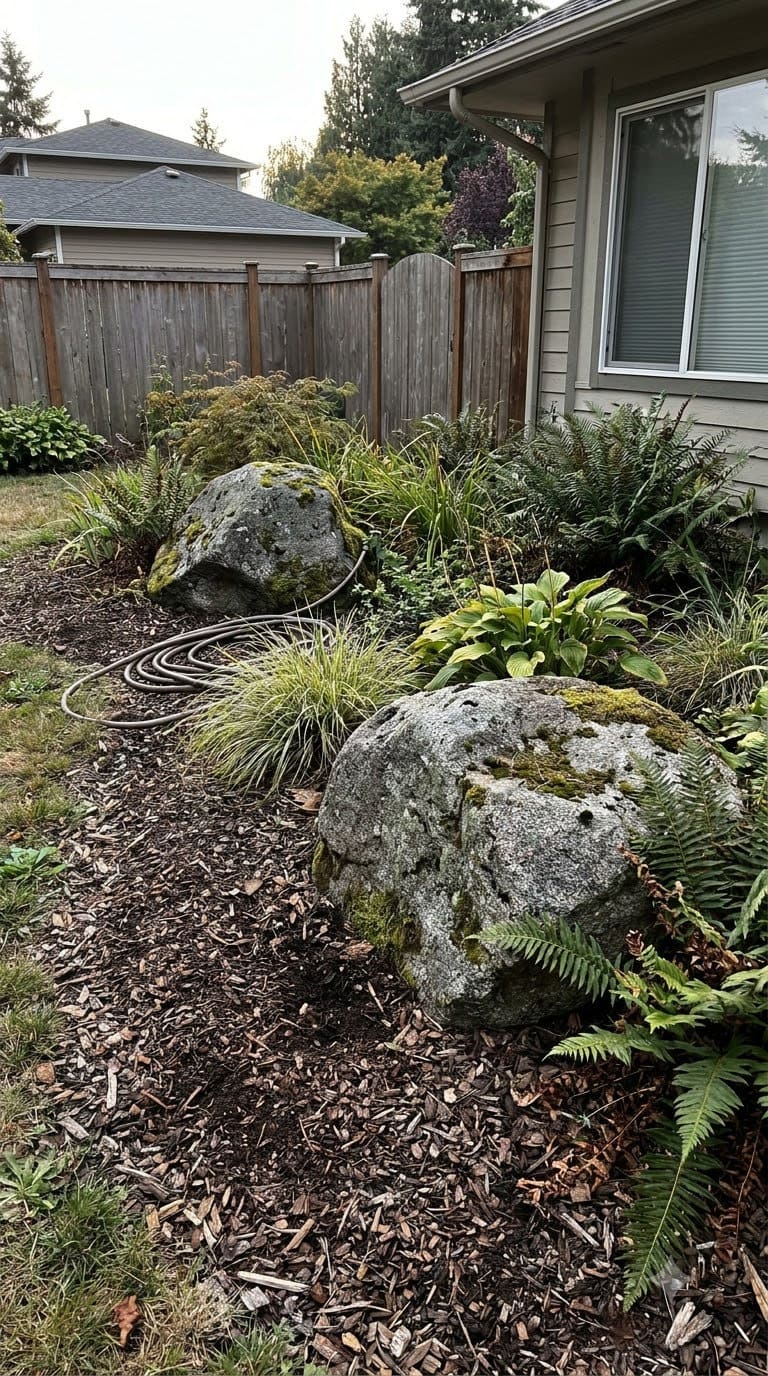
One or two real boulders (not landscaping rock, actual boulders, 18 inches or larger) set into a mulched foundation bed give it a focal point that a flat bed of shrubs alone doesn’t have. Half-bury the boulder so it looks settled into the ground rather than dropped on top, and mulch right up to its base. This is a job for a small excavator or at least two strong people, not a solo DIY lift for anything over about 150 pounds.
22. Lava rock and cedar mulch, two-tone bed
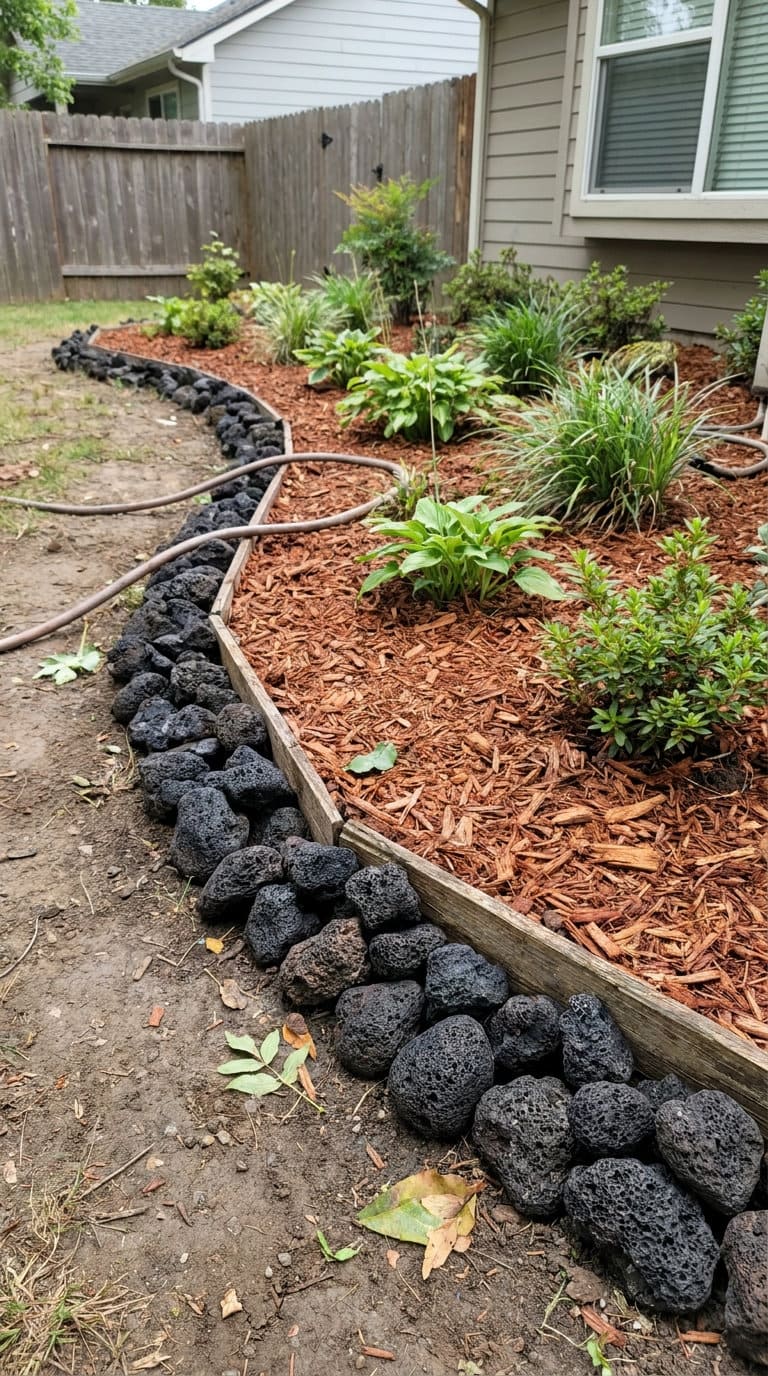
Black lava rock against reddish cedar mulch is a genuine color-contrast combo that costs less than it looks. Use lava rock as a 3-4 inch band along the bed’s front edge and cedar mulch behind it around the plants. Lava rock is lighter than river rock per volume, easier to haul yourself in bags from a home center.
23. Decomposed granite path edged with mulch beds
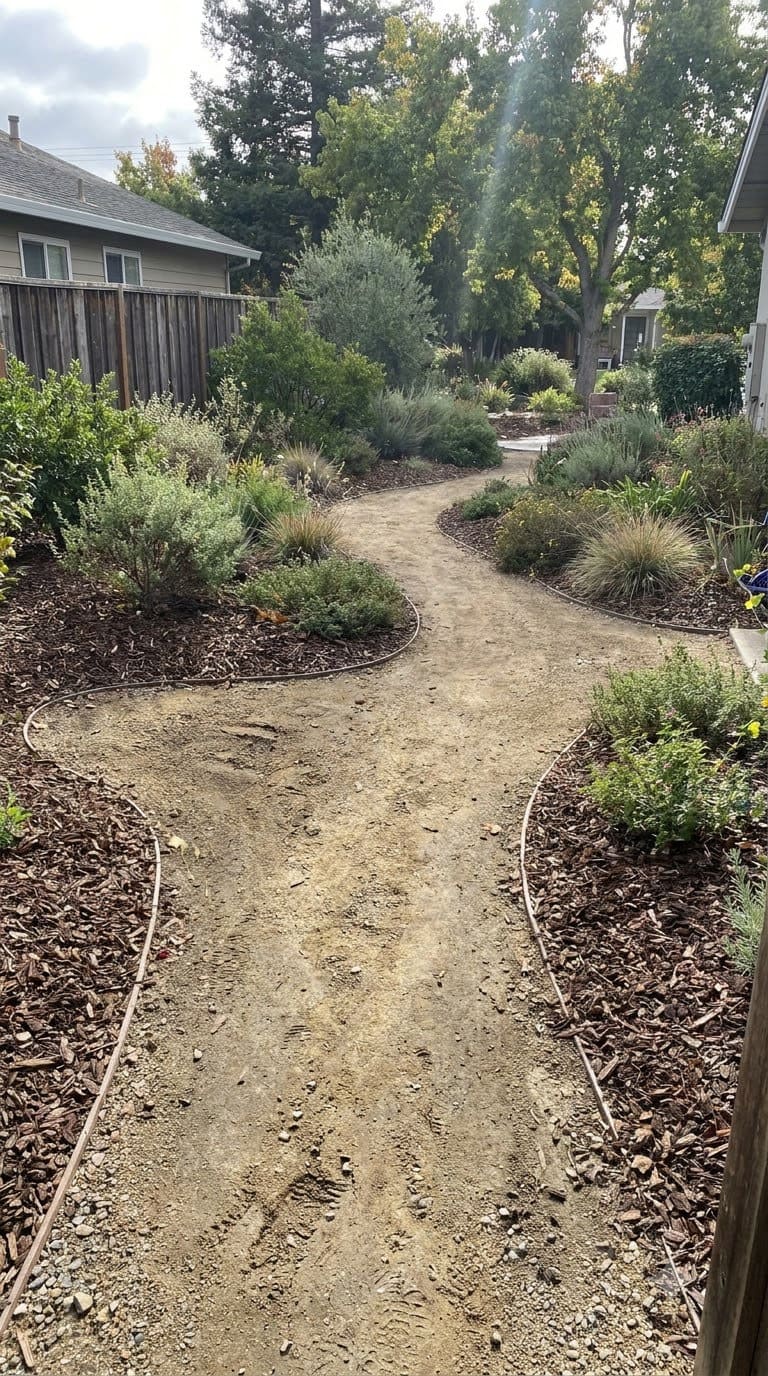
Decomposed granite (DG) compacts into a firm, walkable surface, unlike loose gravel, which makes it a real path material, not just a decorative strip. Lay 3-4 inches, compact with a hand tamper or plate compactor, and edge both sides with mulched planting beds.
DG paths need a stabilizer additive in wetter climates or they’ll erode at the edges within a season or two. If you’d rather skip compacting and just define a clean line, these edging techniques for mulched beds work just as well on the mulch side of this same path.
24. White marble chip accent strip against dark mulch
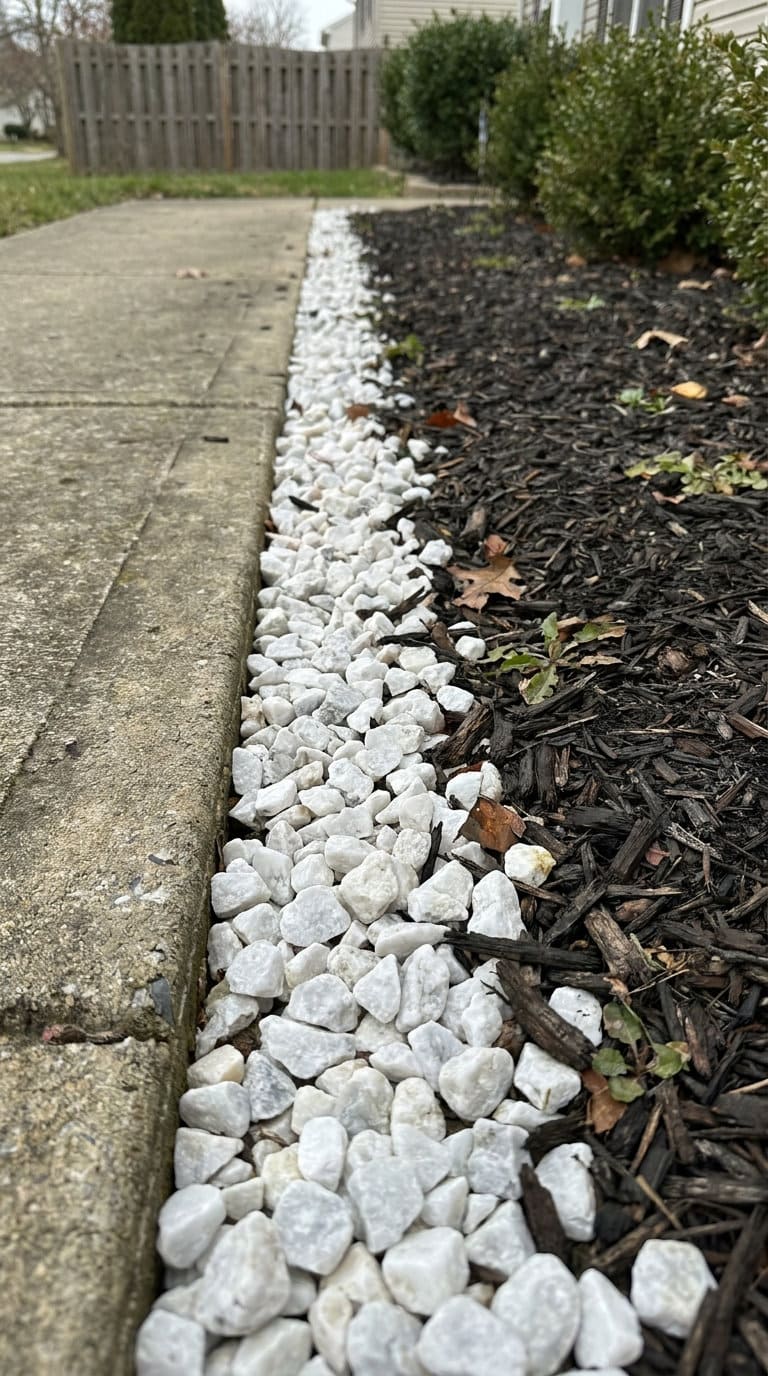
A narrow strip, 4-6 inches, of white marble chips along a walkway or bed edge next to dark mulch creates a crisp line that photographs well and helps define the bed at night under landscape lighting.
Marble chips run pricier than pea gravel per bag, so most people use them as an accent strip only, not a full bed fill.
25. Full turf replacement with rock and mulch zones
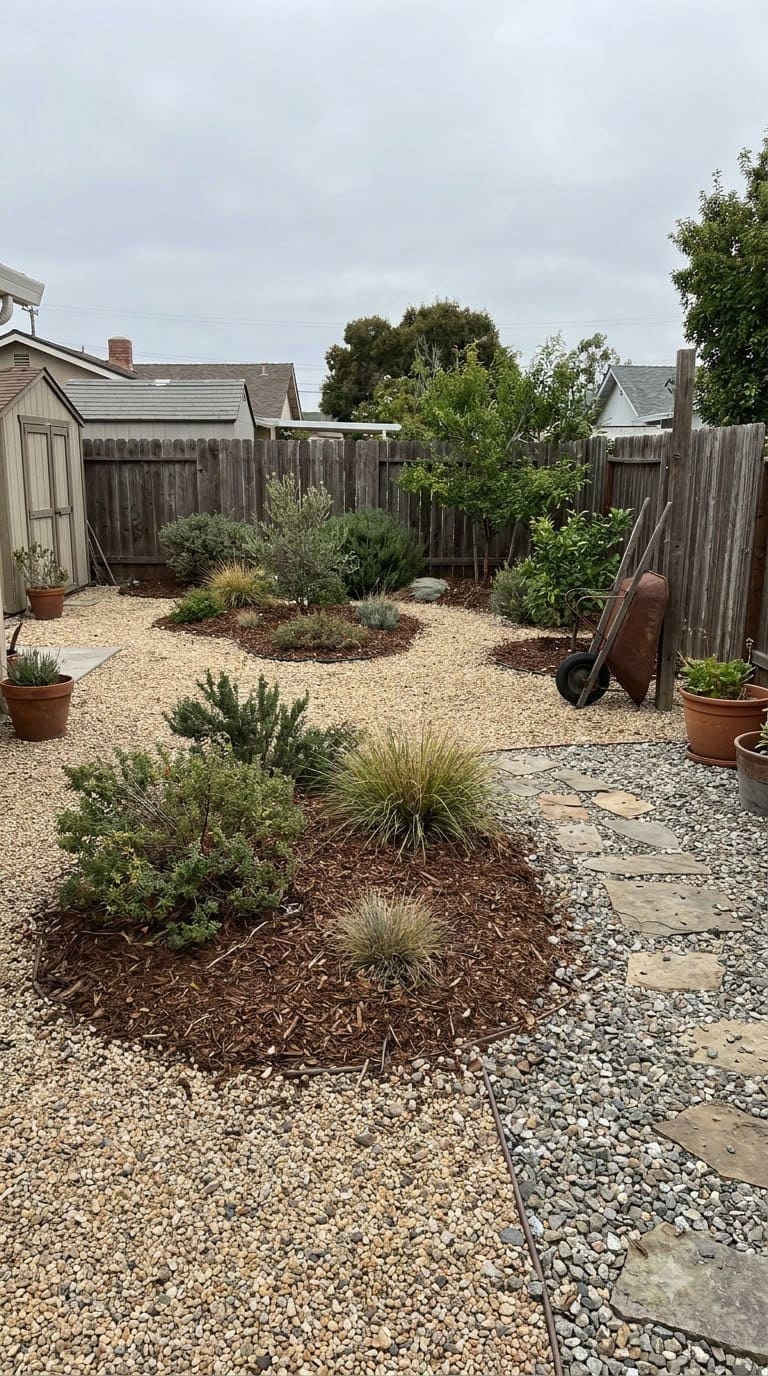
Replacing an entire lawn with a mix of gravel hardscape and mulched planting islands cuts mowing to zero and cuts water use dramatically, since you’re only irrigating the mulched plant zones, not a whole grass field. Plan roughly 60-70% hardscape/gravel to 30-40% planted mulch beds so the yard doesn’t read as an empty gravel lot.
This is a bigger-investment project, usually worth getting at least a design consultation even if you DIY the install yourself. Combining real rock with artificial turf sections instead of live grass is a common middle-ground version of this same idea worth comparing against a full gravel replacement.
26. Rock planters under shade trees where grass won’t grow
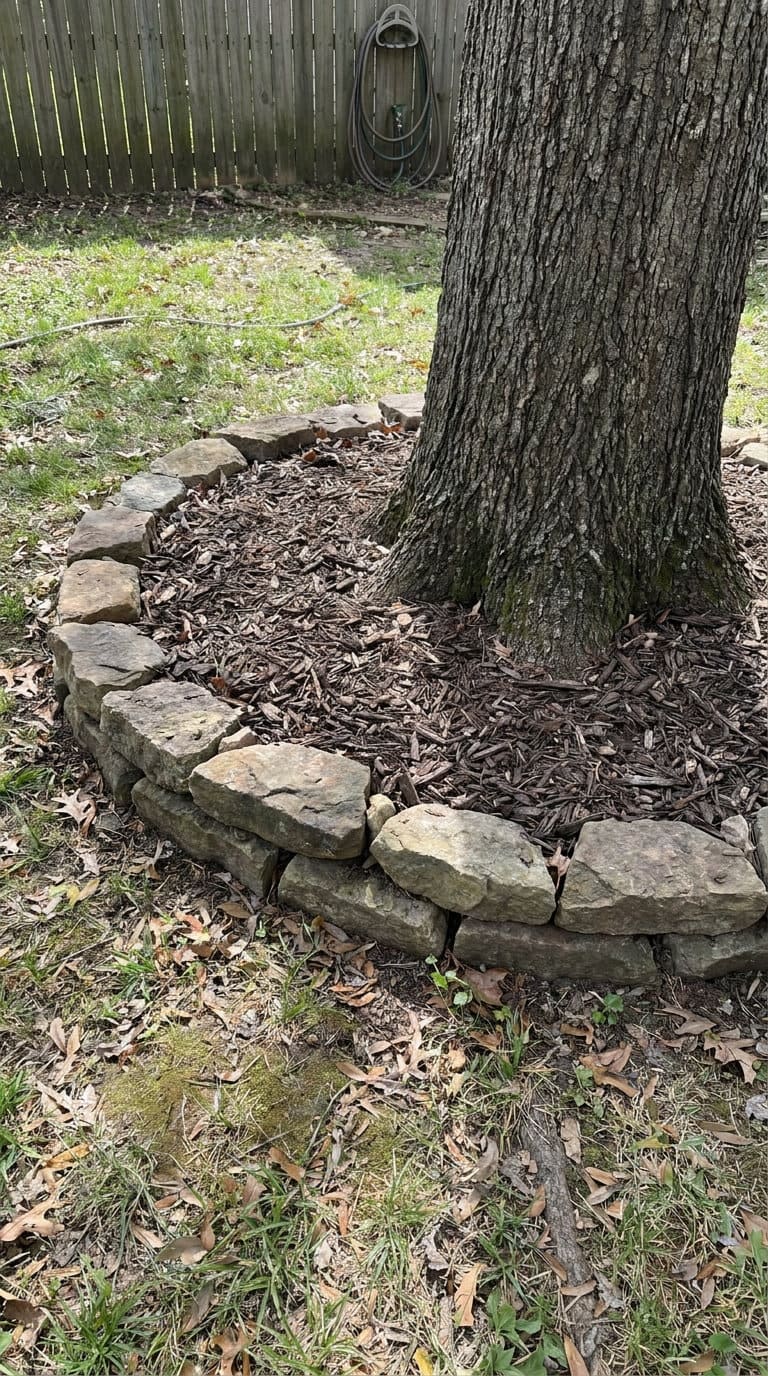
Grass struggles under a dense canopy anyway, so stop fighting it. Build a low rock border (8-12 inches tall, dry-stacked or mortared) around the tree’s drip line, fill with mulch, not rock, directly against the trunk (rock against bark traps moisture and invites rot), and rock further out toward the border edge if you want the contrast look.
27. Cabin-style contrast layout
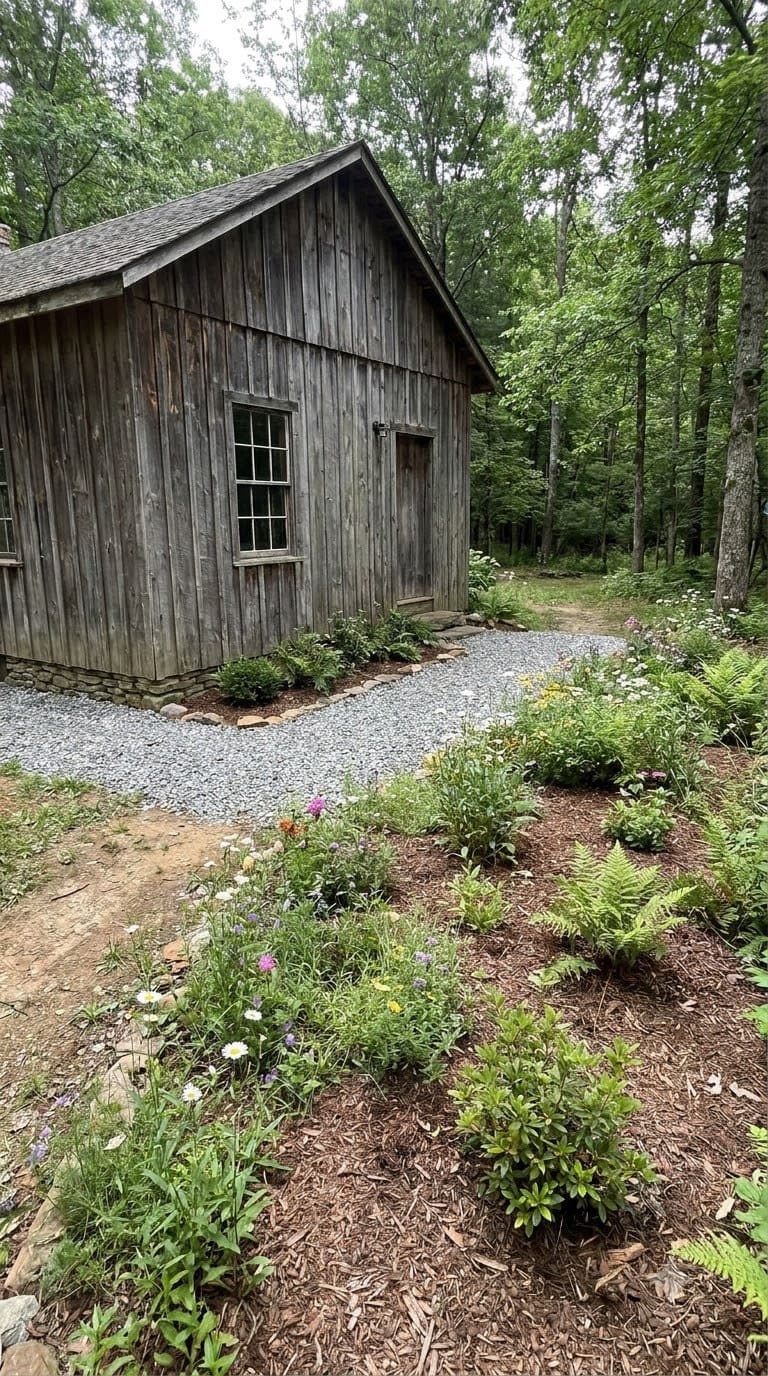
For a rustic cabin or A-frame aesthetic, use a wide gravel base right around the structure’s foundation (keeps splashback and pests off the siding) and mulched perennial beds set further out, with a split-rail or log-edge border between the two zones. Cedar or hemlock mulch fits this look better than a dyed color.
28. Xeriscape gravel bed with drought-mulch pockets
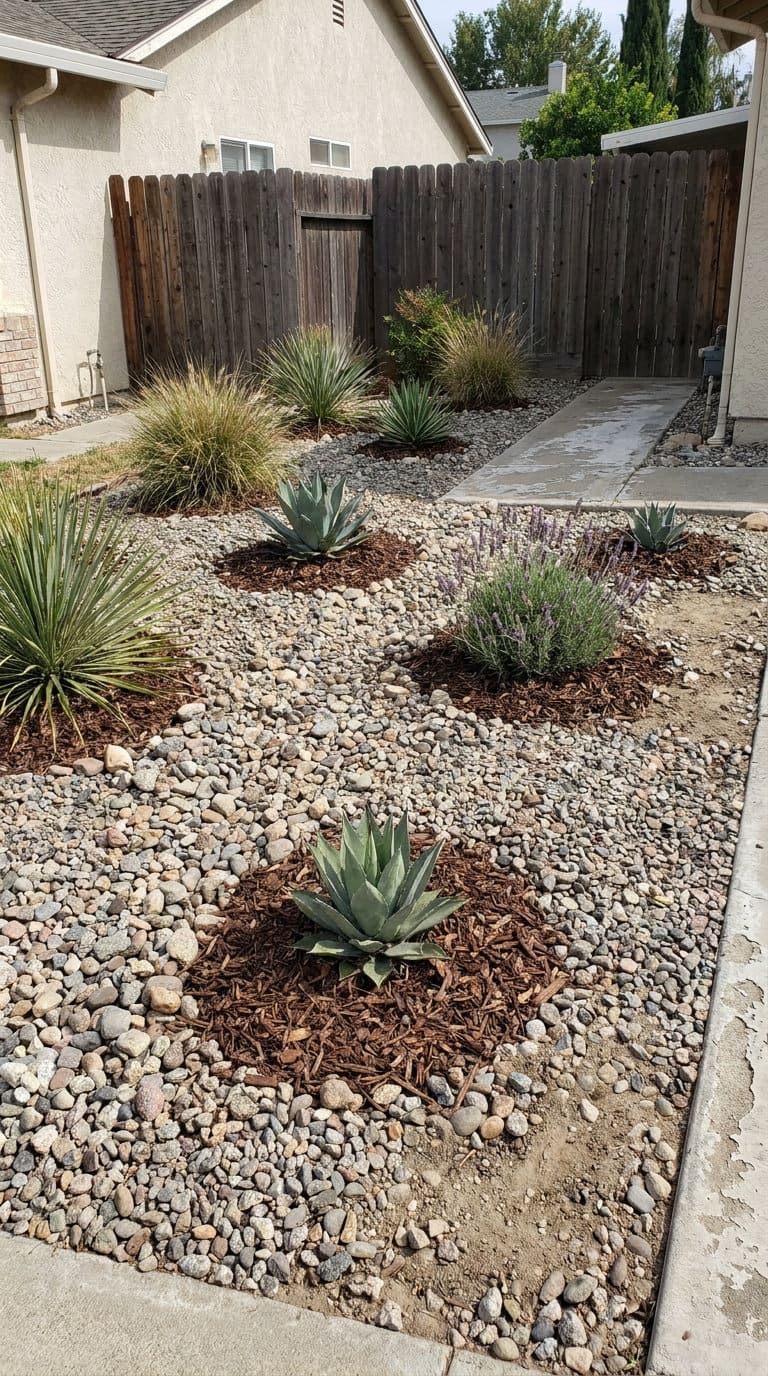
A true xeriscape bed uses gravel as the dominant surface with individual mulched “pockets” around each drought-tolerant plant, rather than one uniform bed. Each pocket only needs 2-3 inches of mulch since the plants themselves need minimal water.
See our guide on designing a garden that barely needs watering for plant picks that actually fit this setup.
29. Mexican beach pebble under a specimen shrub
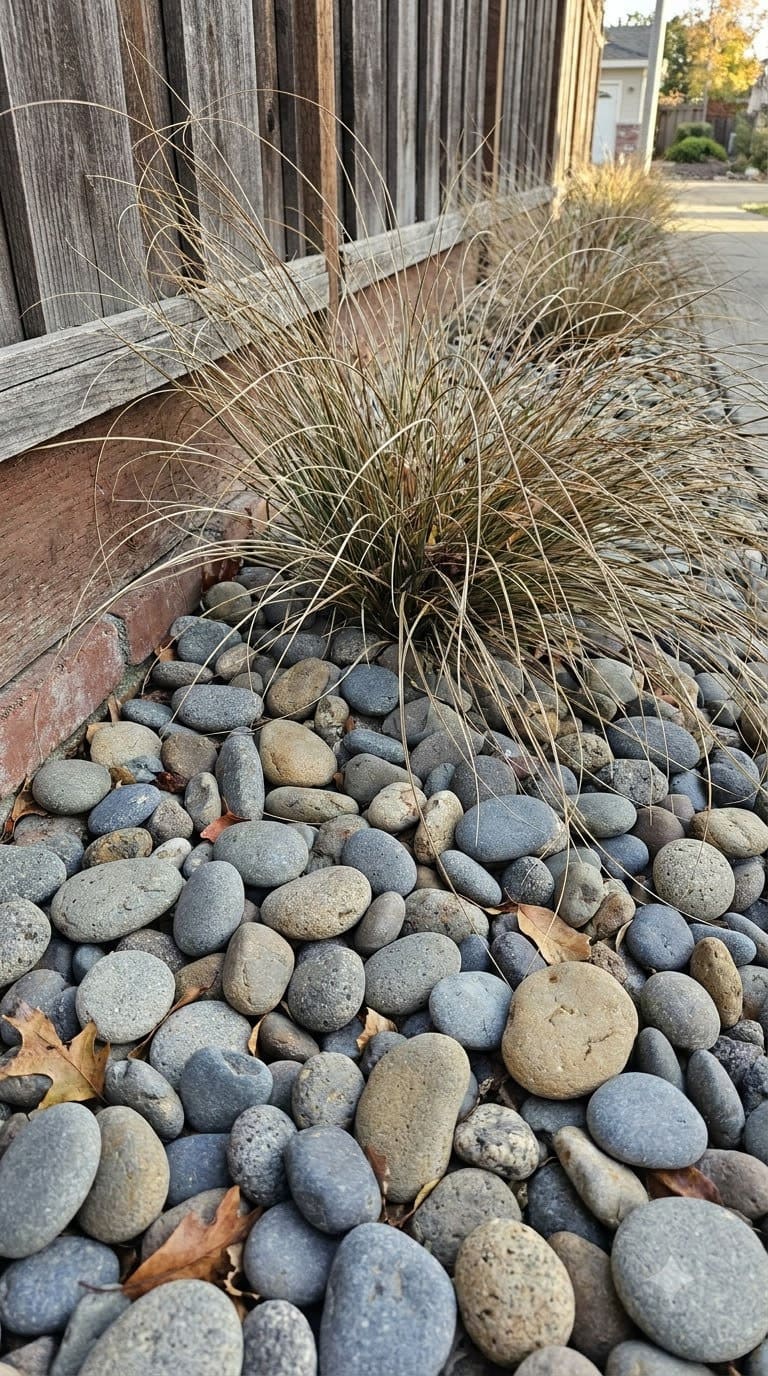
Smooth, rounded Mexican beach pebbles (not the sharp-edged crushed stone most people default to) look intentional under a single specimen shrub or ornamental grass.
Use a 2-3 inch layer, and skip the fabric underneath here specifically, since a single plant’s roots need the pebbles to shift and settle naturally as it grows.
30. Rock ring around a mature tree, done without the mulch volcano mistake
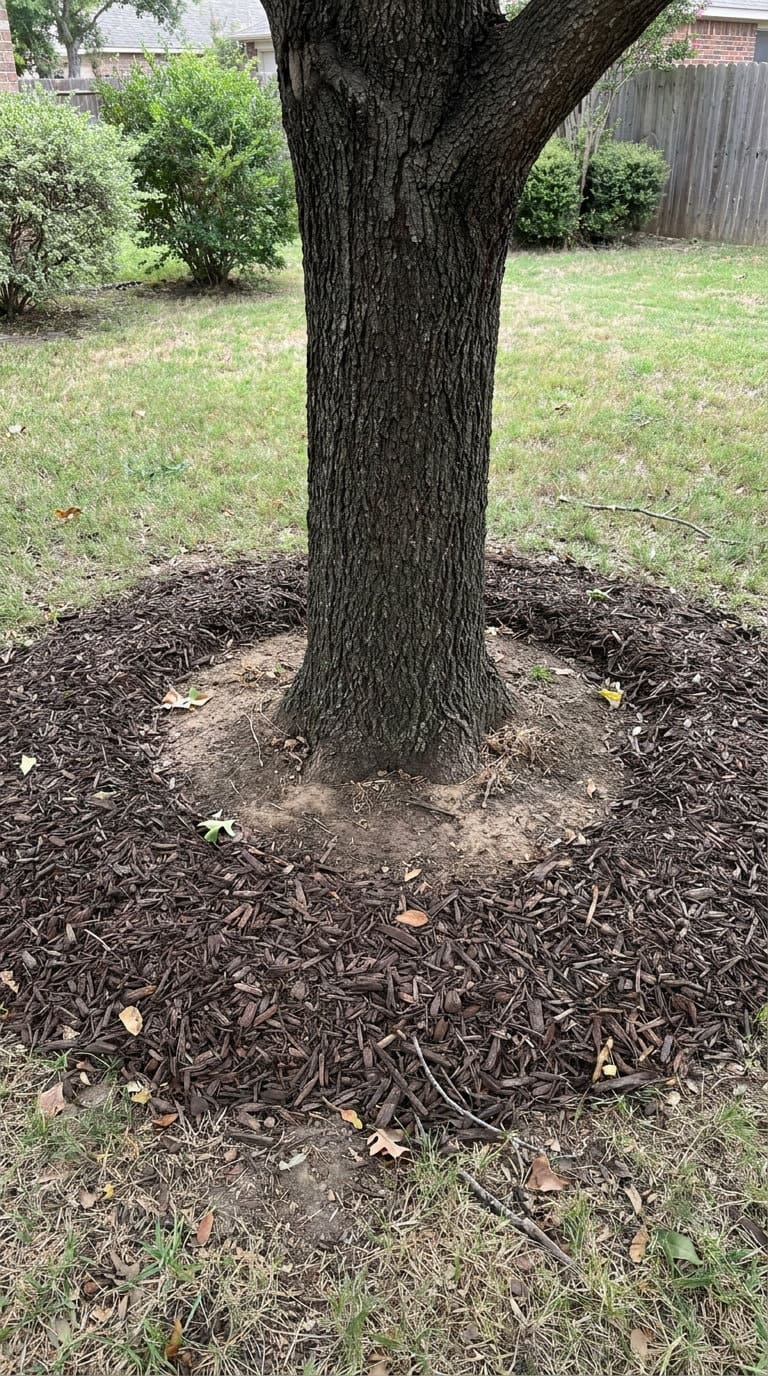
The classic mistake is piling mulch or rock up against the trunk in a cone shape, “mulch volcano” style, which traps moisture against bark and invites rot and pests. Instead, keep a 2-3 inch gap of bare soil right at the trunk, then ring outward with mulch (never rock directly on bark) to the tree’s drip line, 3 inches deep, flat, not mounded.
31. Rock under a downspout splash zone with a mulch transition
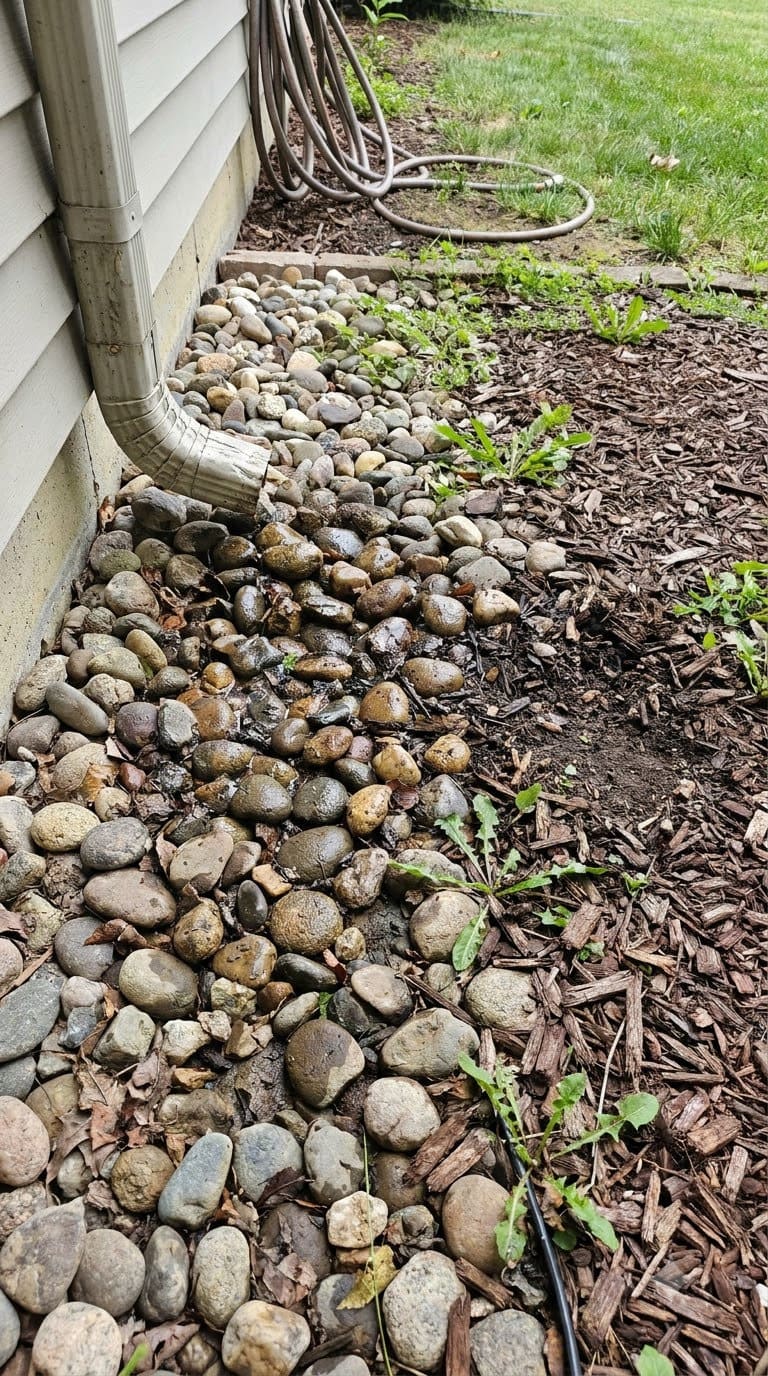
Wherever a downspout dumps water directly onto the ground, mulch erodes and washes out fast. Lay a 2-foot-wide bed of river rock right at the splash point, deep enough (4-6 inches) to absorb the impact, then transition into mulch beyond that zone where the water has slowed down.
32. Rock-and-mulch swale for a mild slope
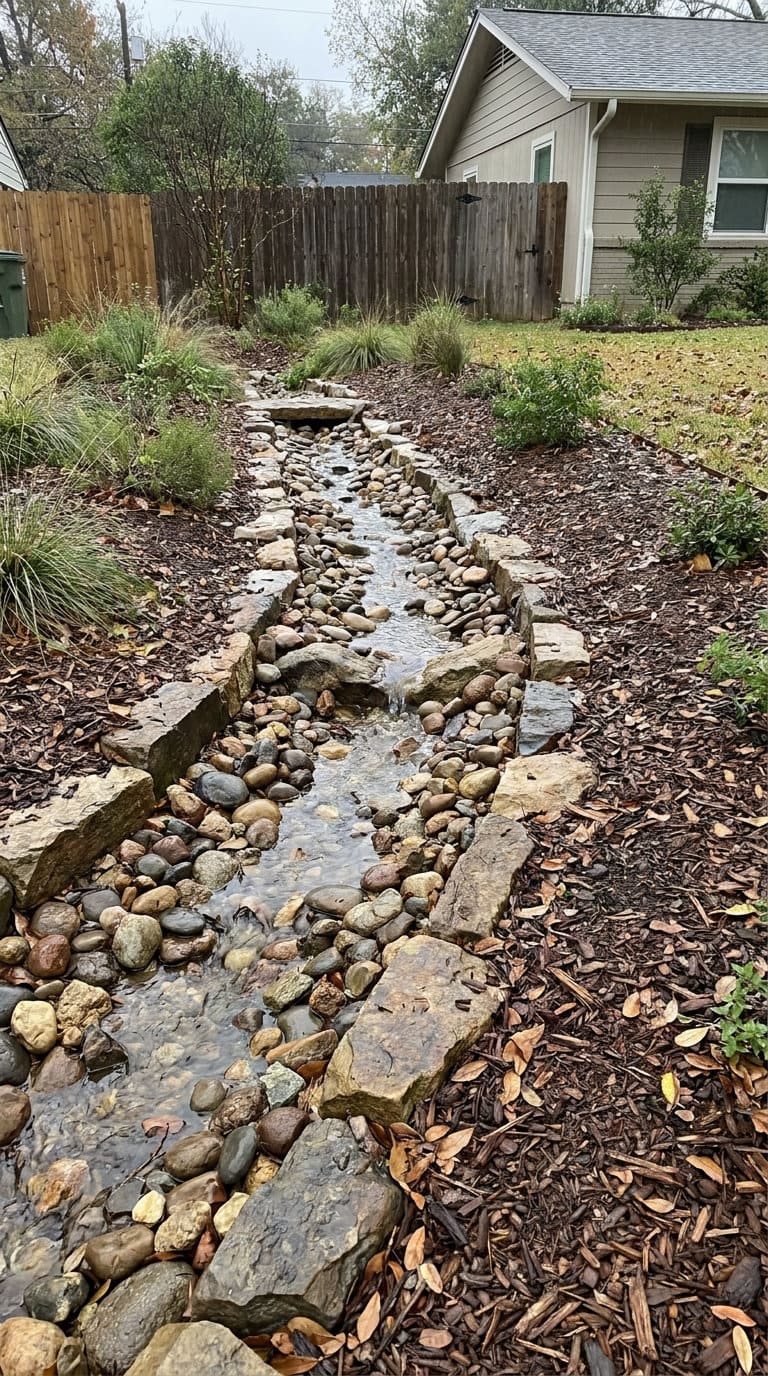
If part of your yard has any real grade, even a gentle one, a shallow swale lined with rock down the low point channels runoff instead of letting it sheet across a mulched bed and wash the mulch away.
For a yard with a genuine slope problem beyond one small wet spot, our dedicated guide to fixing drainage on sloped yards covers grading and French drain options this single idea doesn’t get into.
33. Mailbox planting bed, rock border with mulch fill
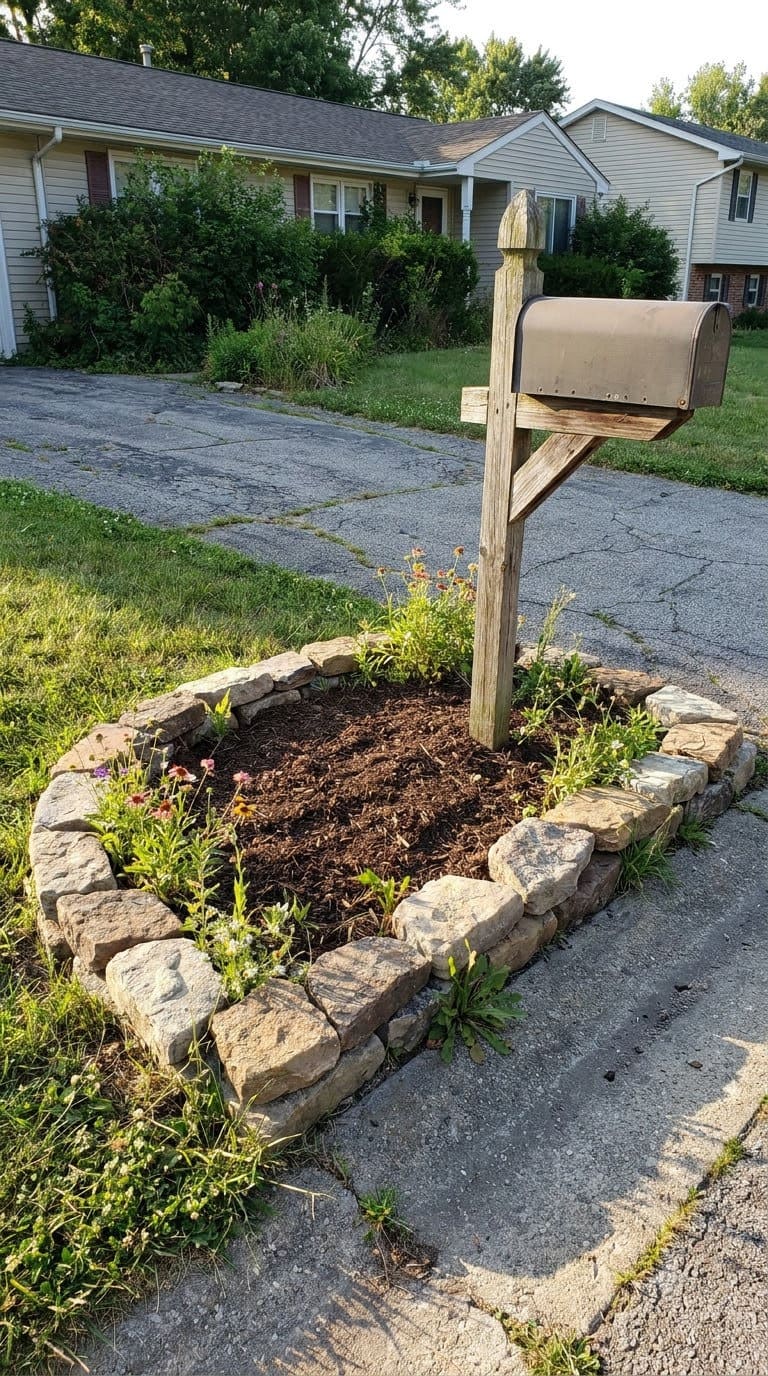
A small mailbox bed, roughly 3×3 feet, holds up better with a rock border (bricks or fieldstone work too) and mulch fill inside, since it’s a spot that gets bumped by mail carriers, trimmers, and snow plows in winter climates. Rock border resists that abuse. A soft mulch edge doesn’t.
34. Rock-edged tree ring as a mowing buffer
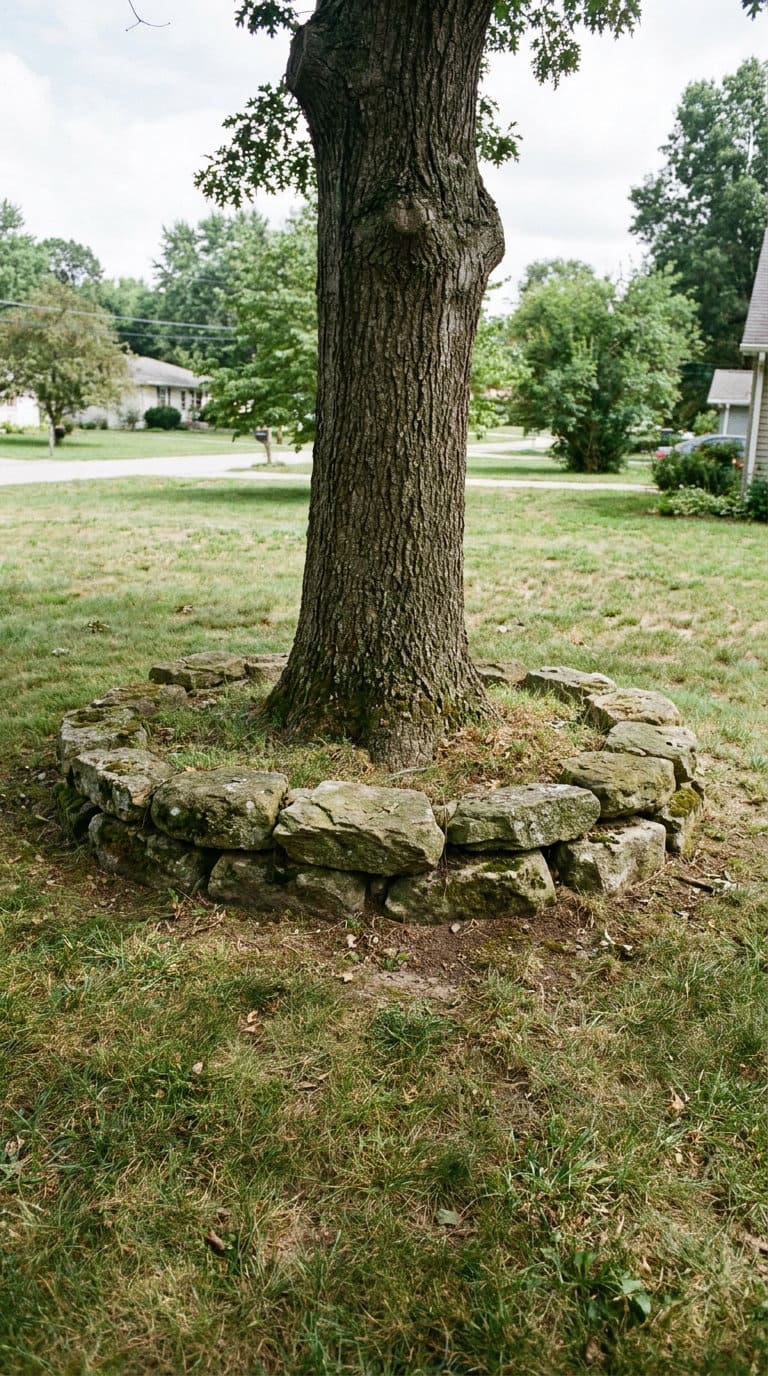
Separate from idea 12’s health-focused ring, this one is purely functional: a simple rock ring, even just a single layer of fieldstone, around any tree in the lawn stops the string trimmer from nicking bark, a real cause of tree decline nobody thinks about until the bark’s already damaged.
35. Gravel patio with a mulched planting border
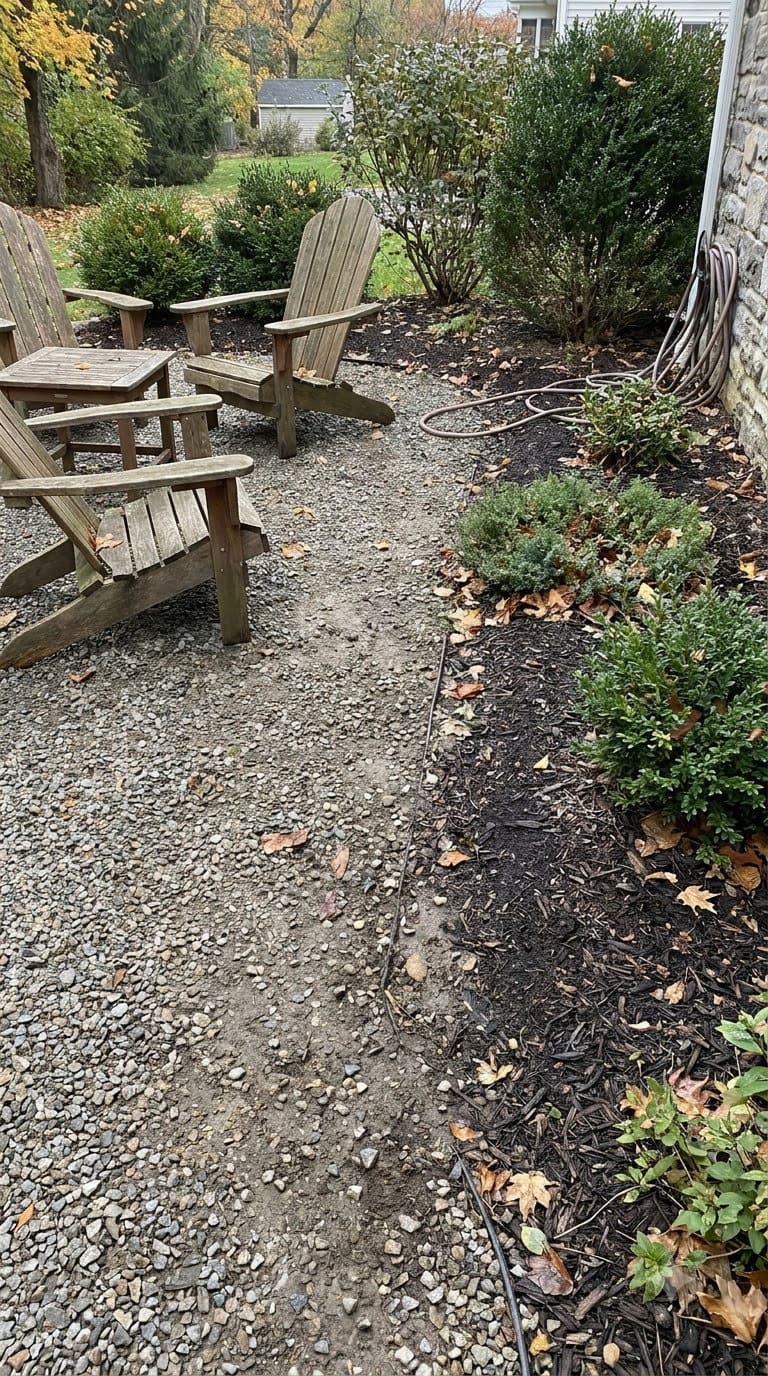
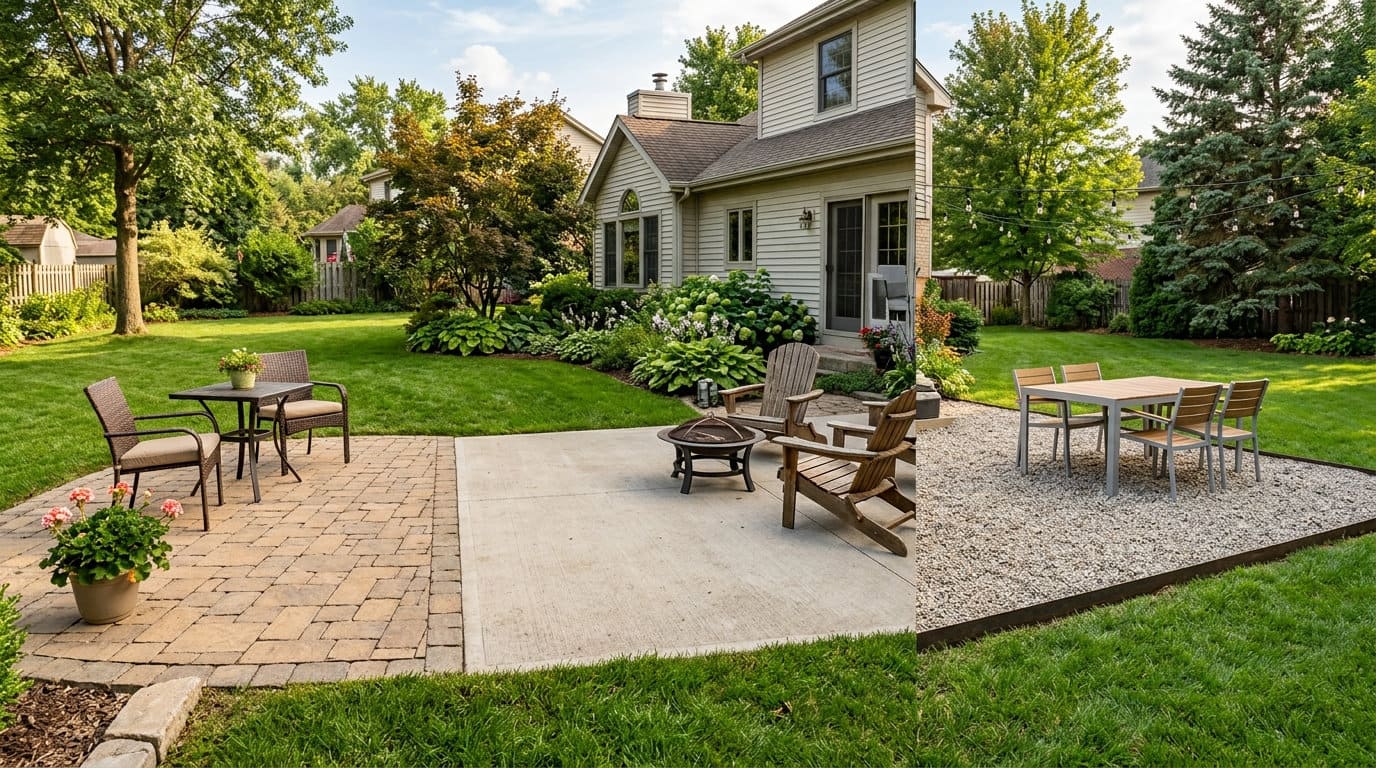
A compacted gravel patio (4-6 inches base, 1-2 inch top dressing) costs meaningfully less than pavers or poured concrete, and a mulched bed running along one or two sides softens the hard edge.
Good option if you want a real seating area without the full hardscape budget, and it pairs naturally with flowering perennials that don’t need constant babysitting planted in that softening border.
36. Dry-set stepping stones through a mulched bed
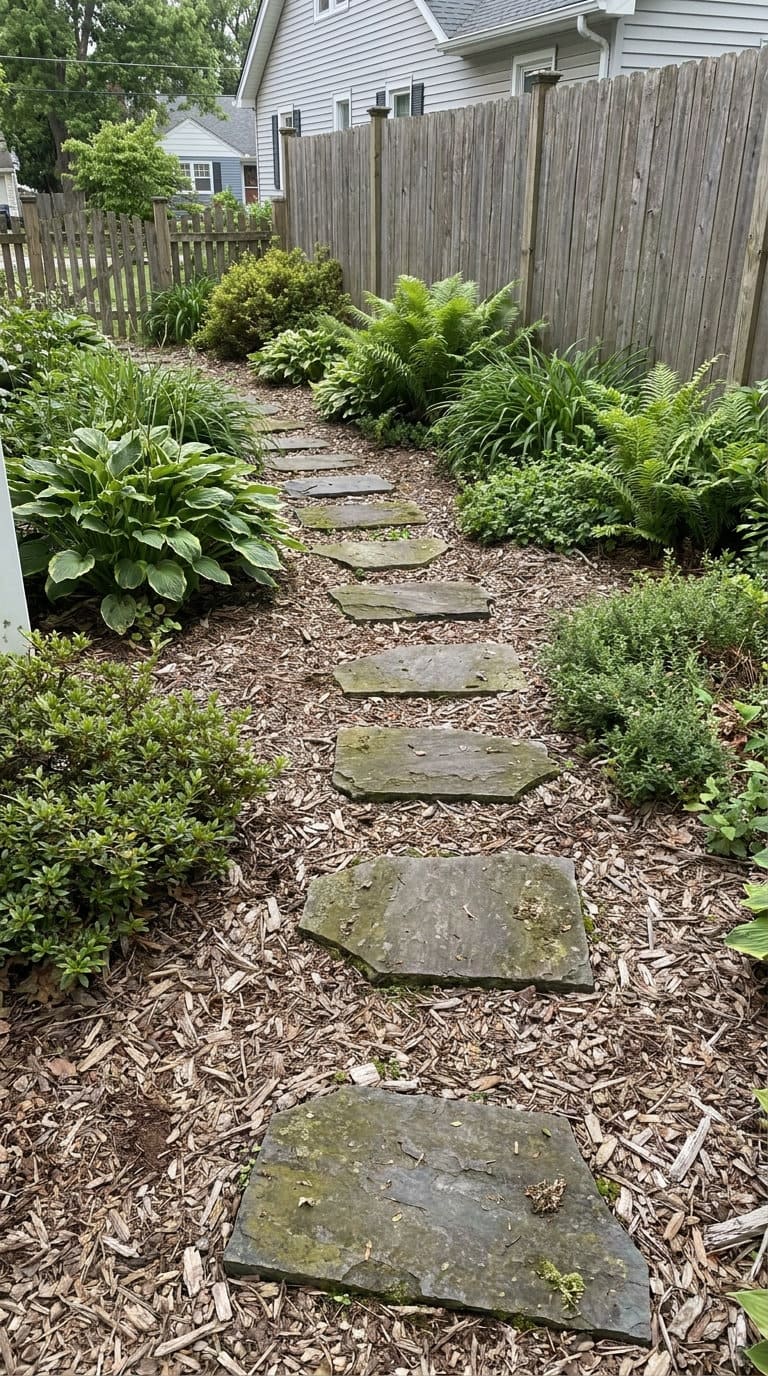
Set flat stones directly into a mulched path, spaced for a natural stride (roughly 24-30 inches apart, center to center), rather than pouring a solid walkway. Mulch fills the gaps instead of grass, which means no trimming between stones later.
37. Slate steppers bordered by rock mulch
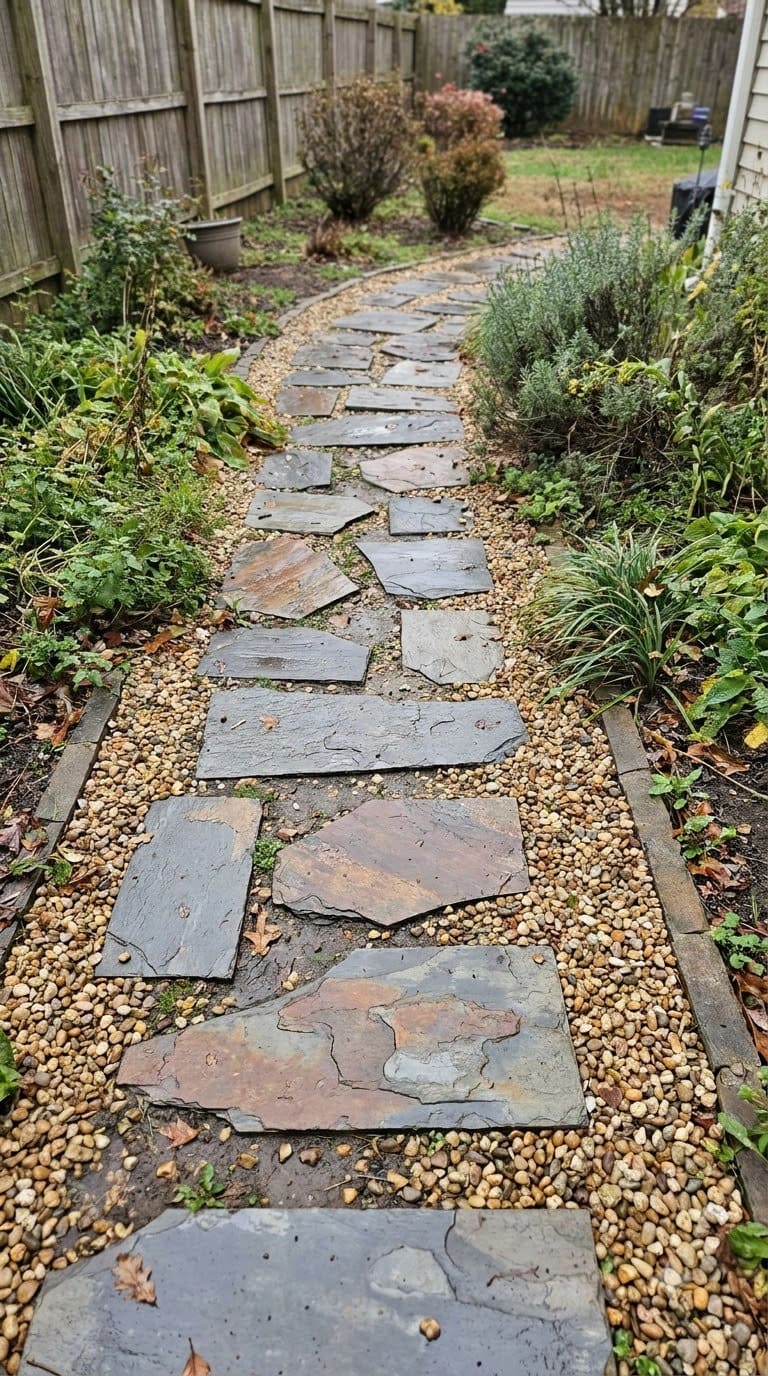
Slate has a natural cleft texture that grips better underfoot when wet than smooth stone does, worth knowing if the path gets shaded or damp. Border the slate steppers with a few inches of pea gravel rather than mulch here, since gravel won’t stain the stone the way wood mulch’s tannins can over time.
38. Cobblestone edging between lawn and a mulched bed
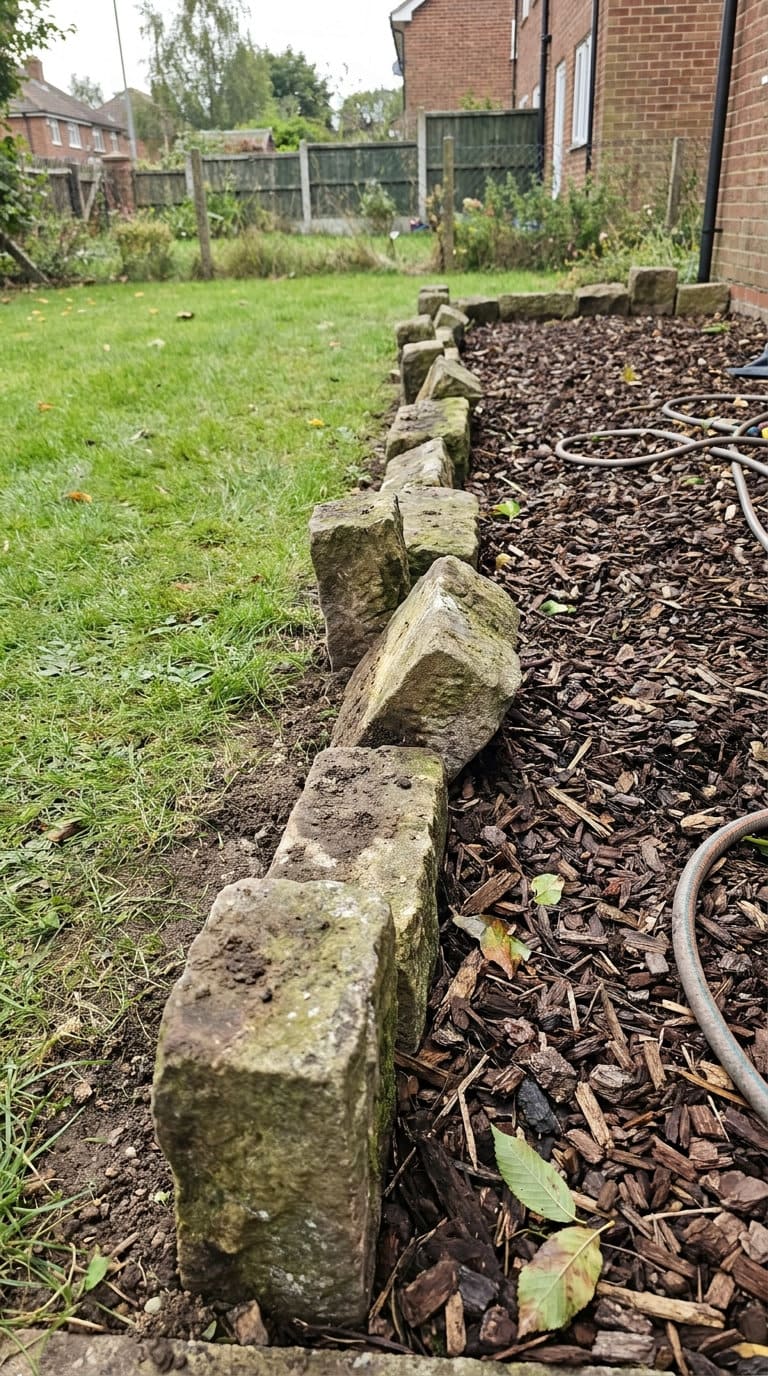
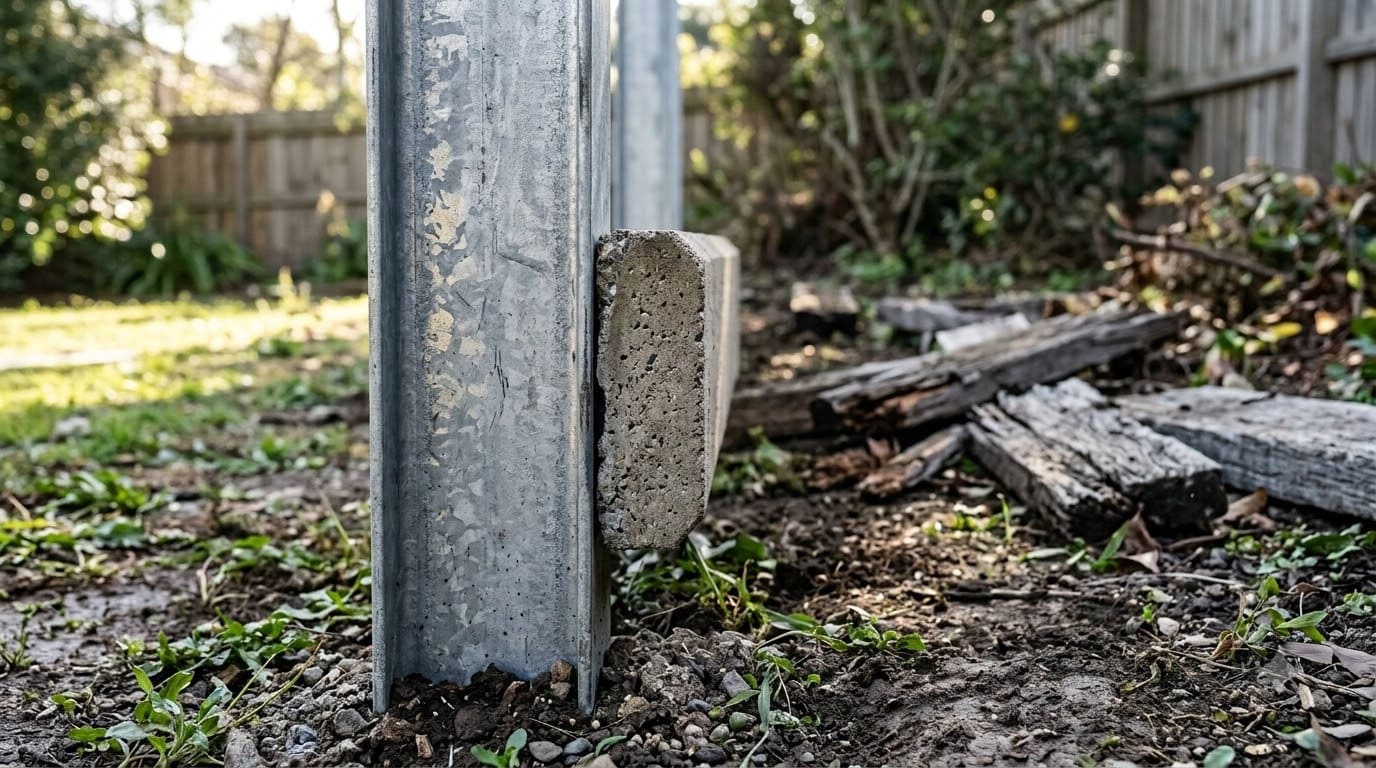
Old-style cobblestones set on their edge, half-buried, make a genuinely durable mow strip between grass and a mulched bed, one that won’t shift or sink the way plastic edging does after a few winters.
39. Contrast band along a fence line
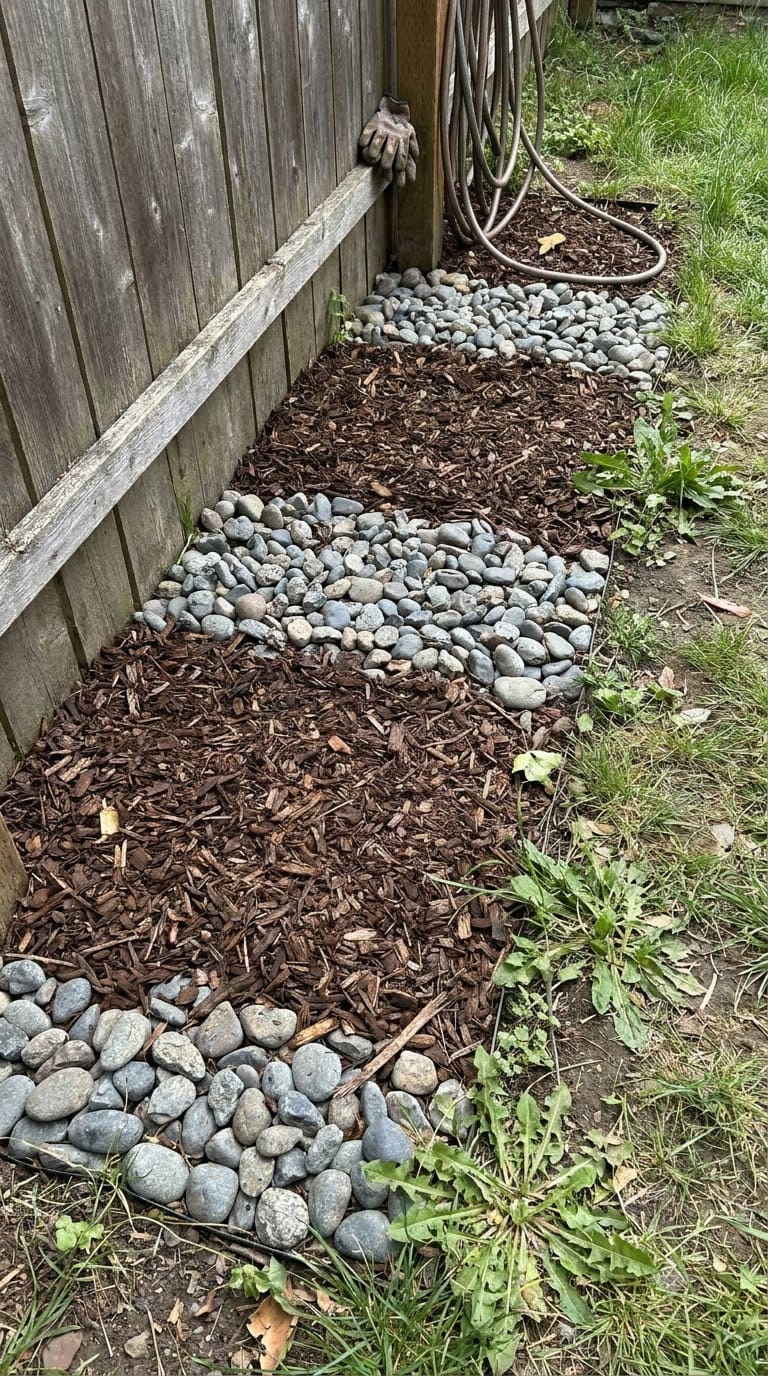
Alternating a strip of rock and a strip of mulch in a repeating pattern along a fence line is a decorative, slightly higher-effort idea that reads as deliberately designed rather than a plain bed. Keep the bands at least 12 inches wide each, narrower and the pattern just looks messy from a normal viewing distance.
If the fence sits on or near a property boundary, confirm the line with your neighbor before building anything permanent against it. White stone bands specifically show up well at dusk, this breakdown of decorative white gravel has more on getting that specific look right.
40. Gravel garden with mulched plant pockets
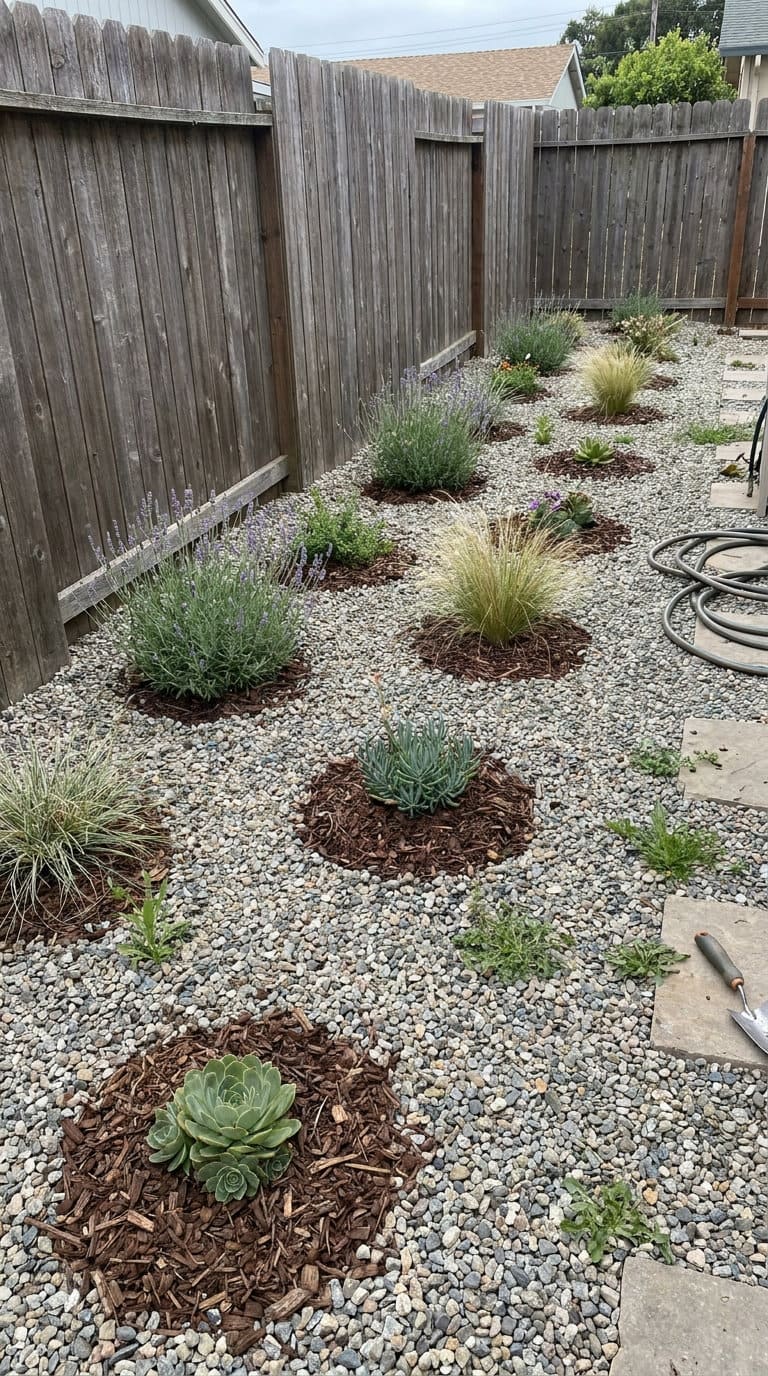
The inverse of idea 10’s xeriscape setup, a gravel garden uses gravel as the base layer across the whole bed, then individual mulched pockets are cut in wherever a plant actually goes, rather than mulching the entire bed. This uses noticeably less mulch overall (a real cost savings on a big bed) while still feeding the plants that need it.
Low-maintenance and no-grass options
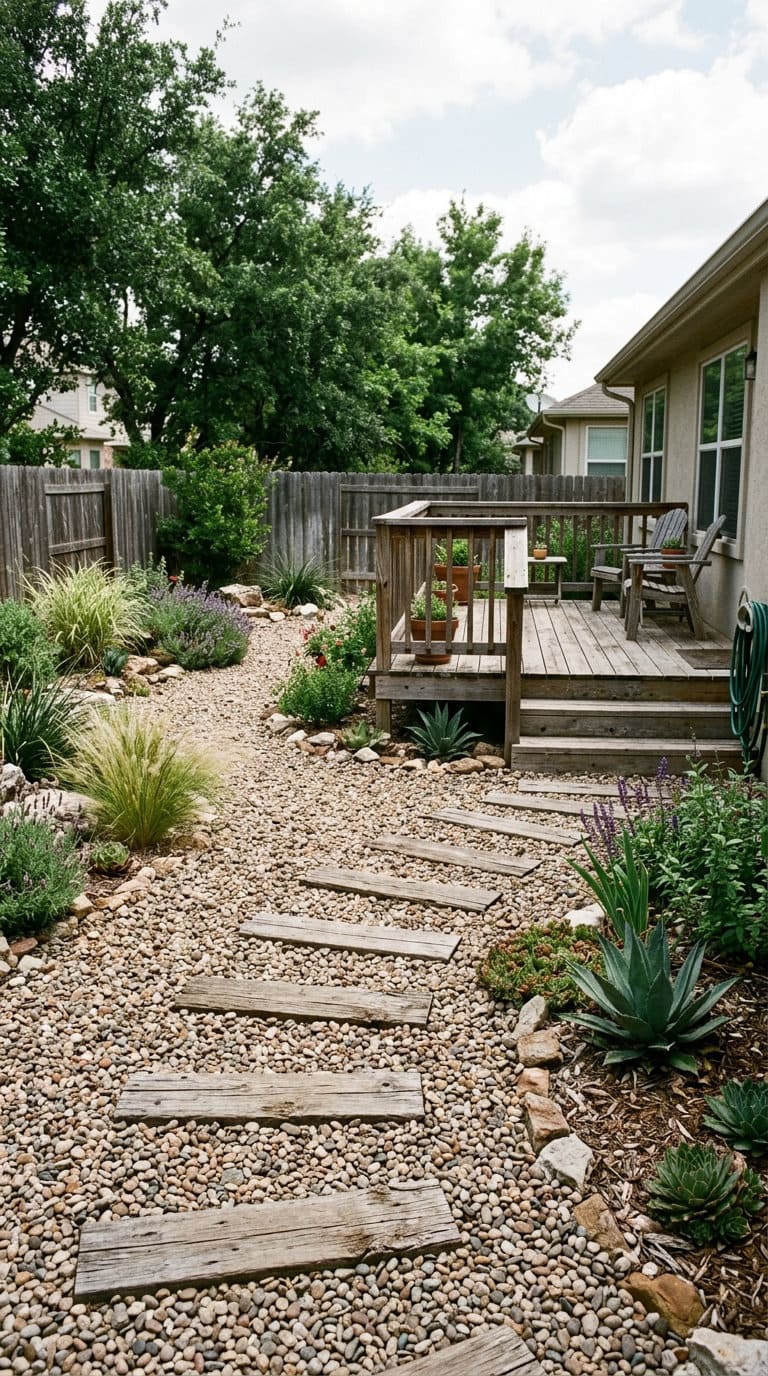
Rock Planters Under Trees Where Grass Won’t Grow. Shaded spots under large trees rarely support real turf anyway. Enclosing the tree in a raised rock planter, with an optional stone bench built around it, turns a bare, awkward spot into a functional feature instead of a dead patch.
Replacing Turf Grass Entirely With Rock. For genuinely low-maintenance landscaping, small rock spread across the full yard, paired with a raised deck and wooden-step pathways, removes lawn maintenance from the equation entirely. Worth weighing against the maintenance-reality section above before committing to this at full-yard scale.
A Cabin-Style Contrast Layout. In a moister, less sun-exposed setting, keeping rock and mulch clearly separated sharpens the contrast: wood chip mulch around a cabin’s corners for flowering plants adds to the woody feel, while river rock and pea gravel along the opposite walkway keeps that zone drier and more open.
What we learned the hard way
Honestly, the rock-versus-mulch debate online undersells how bad rock landscaping goes when nobody plans for maintenance. A recurring complaint from homeowners who’ve actually lived with a rock bed for a few years: leaves, grass clippings, and general yard debris settle into the gaps between rocks and just stay there, because raking rock is nowhere near as easy as raking mulch or grass.
Eric Frisch, a landscape designer at Ground Source, put it plainly: “I don’t mind decorative boulders, but rocks as a groundcover just collect landscape waste.” That tracks with what shows up again and again in homeowner forums, people installing a rock bed for the “no maintenance” promise and then discovering it needs almost as much upkeep as mulch, just a different kind.
And the landscape fabric problem is worse. A lot of installers still lay fabric under rock as a default, on the logic that it blocks weeds. It does, for a while.
But weed roots eventually find the tiny gaps and root straight into the fabric itself, which means pulling the fabric later means pulling out weeds that are now physically woven into it, not a quick tug.
Debra Lee Baldwin, a succulent and landscape design author who’s managed her own half-acre property for decades, doesn’t mince words about it: “Rain and irrigation need to percolate downward, and a barrier fabric diminishes its ability to do so.” She’s seen the topdressing itself, whether bark, mulch, or crushed rock, eventually slide right off the fabric from its own weight and gravity, which is the opposite of the tidy, permanent look people install fabric to get in the first place.
If there’s one thing worth doing differently from the start, it’s skipping fabric under mulch entirely (mulch needs to break down into the soil, fabric blocks that) and only using it under rock in the specific spots where you genuinely need to stop stone from sinking into soft ground, like a dry creek bed’s channel. Everywhere else, a thicker layer of the material itself does the same weed-suppression job without the removal nightmare five years later.
FAQs
Is mulch or rock better for landscaping?
It depends on the goal, but they’re not equally maintenance-free. Mulch actively improves soil and needs annual replacing as it breaks down. Rock lasts far longer without replacement but accumulates leaves, dirt, and debris over time in a way mulch doesn’t, a real drawback landscape designer Eric Frisch names directly. Rock suits dry climates and cactus or succulent beds especially well; mulch suits anywhere plant health is the priority.
What is the cheapest landscaping rock?
Pea gravel, running as low as $10 per ton, is the actual cheapest option as of 2026, according to Lawn Love’s cost data. Crushed stone and road base follow at roughly $20 to $75 per ton depending on type and region, per HomeGuide. River rock runs higher, typically $60 to $170 per ton, with pea-sized river rock at the low end of that range and premium large stones at the top.
How do you separate rock and mulch?
Edging is the standard, reliable method. Turf edging works for a softer transition; stone or concrete edging gives a more defined, permanent boundary. Either option keeps rock from migrating into mulch beds (and vice versa) over time, which matters more than it sounds, since mixed rock and mulch is genuinely difficult to separate again once it happens.
Conclusion
Mulch and rock are both legitimate, cost-efficient landscaping materials, and combining them, rather than picking one for the whole yard, is usually the smarter move: mulch where plant health matters, rock where drainage or a low-water zone matters more.
Go in knowing rock’s real tradeoff is a bigger, less frequent cleanup rather than no maintenance at all, and the combination becomes a genuinely durable design choice instead of a surprise a few years in. And if you’re still torn between the two for a specific bed, that’s probably a sign the bed itself is a good candidate for both, rock along the edge, mulch in the middle.
Products We Recommend
This post contains affiliate links. We may earn a commission on qualifying purchases at no extra cost to you.
Anleolife Galvanized Steel Landscape Edging, 60 ft x 8"
Keeps mulch and rock beds from migrating into the lawn or path, the same edging problem ideas 18 and 20 above solve with cobblestone or steppers, but useful anywhere a hard edge is needed fast. ~$69/roll, 4.4★ (44 ratings).
Shop Now
BlumeTrec 68" Adjustable Bow Rake, 17 steel tines
A wide, sturdy rake designed to pull debris out of rock beds without displacing the rock itself, the exact tool for the maintenance problem Eric Frisch describes above. ~$24, 4.6★ (410 ratings), Amazon's Choice.
Shop Now
Sunocity Heavy-Duty Woven Weed Barrier, 3.5 oz, 6 ft x 300 ft
Heavier-duty woven fabric rated for the narrow legitimate under-rock use case described above, not the lightweight spun fabric that fails fastest. ~$74/roll, 4.4★ (1,246 ratings), Amazon's Choice.
Shop NowNever miss an update — choose FarmFoodFamily as your preferred source on Google.
How it works: Tap the button below to open Google's settings page, then check the box next to FarmFoodFamily.
Tap the checkbox to turn it blue — that's how you know it's set.