Feng Shui House Rules by Room: The Complete Guide to Every Space in Your Home
Every room in a house has its own feng shui logic, and in nearly every case, a real building code, safety standard, or peer-reviewed study backs up more of the tradition than most guides ever check. This is the complete map of that cluster, room by room.


Never miss an update — choose FarmFoodFamily as your preferred source on Google.
How it works: Tap the button below to open Google’s settings page, then check the box next to FarmFoodFamily.
Tap the checkbox to turn it blue — that’s how you know it’s set.
Most feng shui guides repeat the same principles. The Bagua map’s nine zones. The “commanding position” for beds and desks. Keeping chi moving instead of stagnating. They rarely check whether any of it lines up with something real.
This hub does both. It gives a genuine summary of what matters in each space, with the real-world facts behind the strongest rules. Then it links to the full guide for each room.
We cross-checked the tradition against real codes, real science, and real market data across 38 rooms and topics.
Exterior & Garden

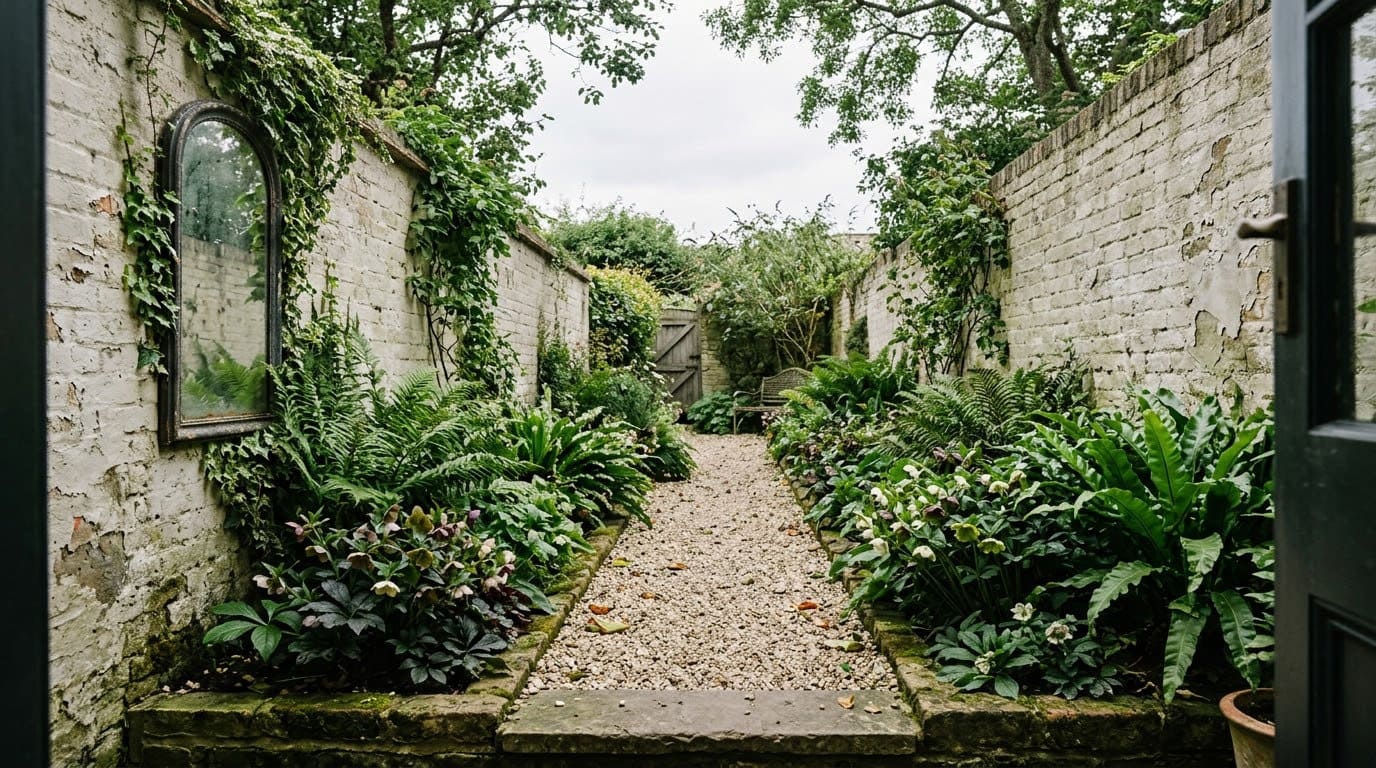
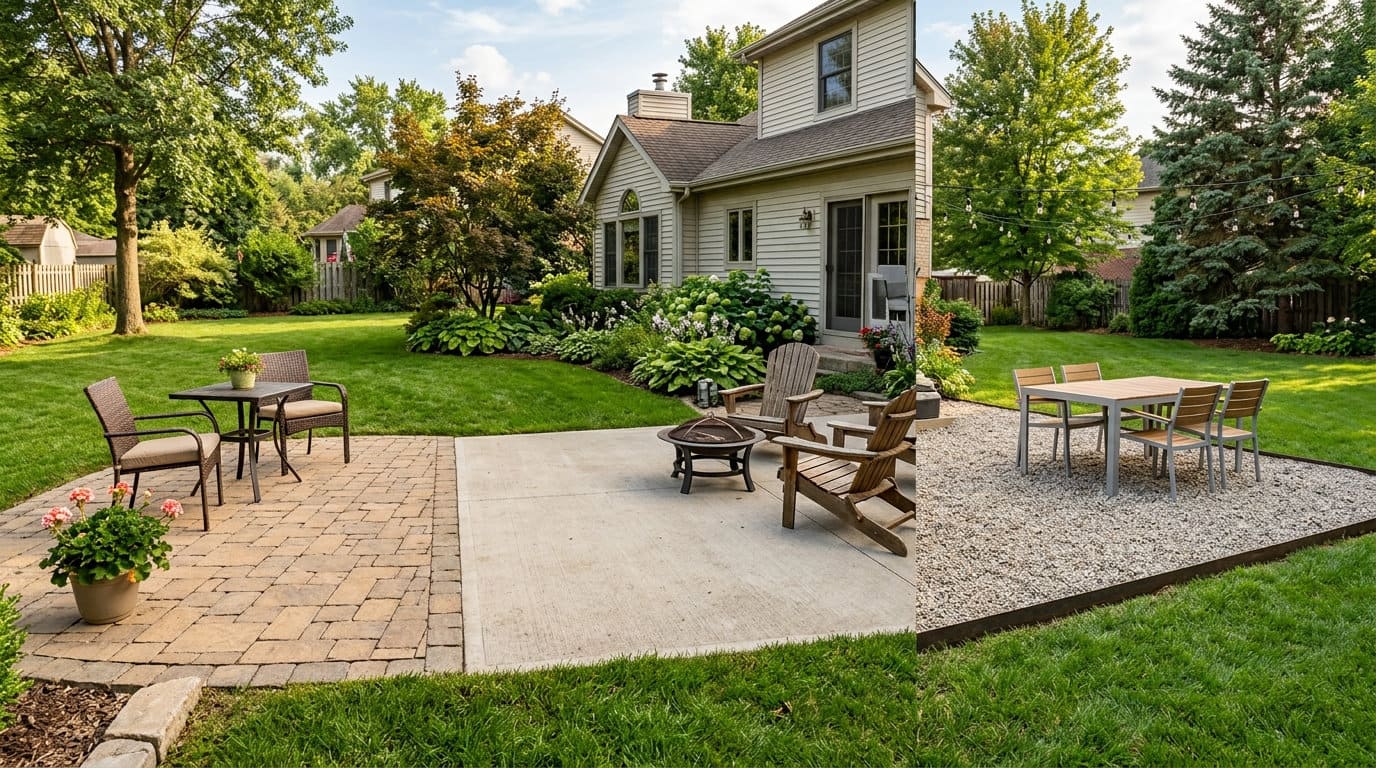
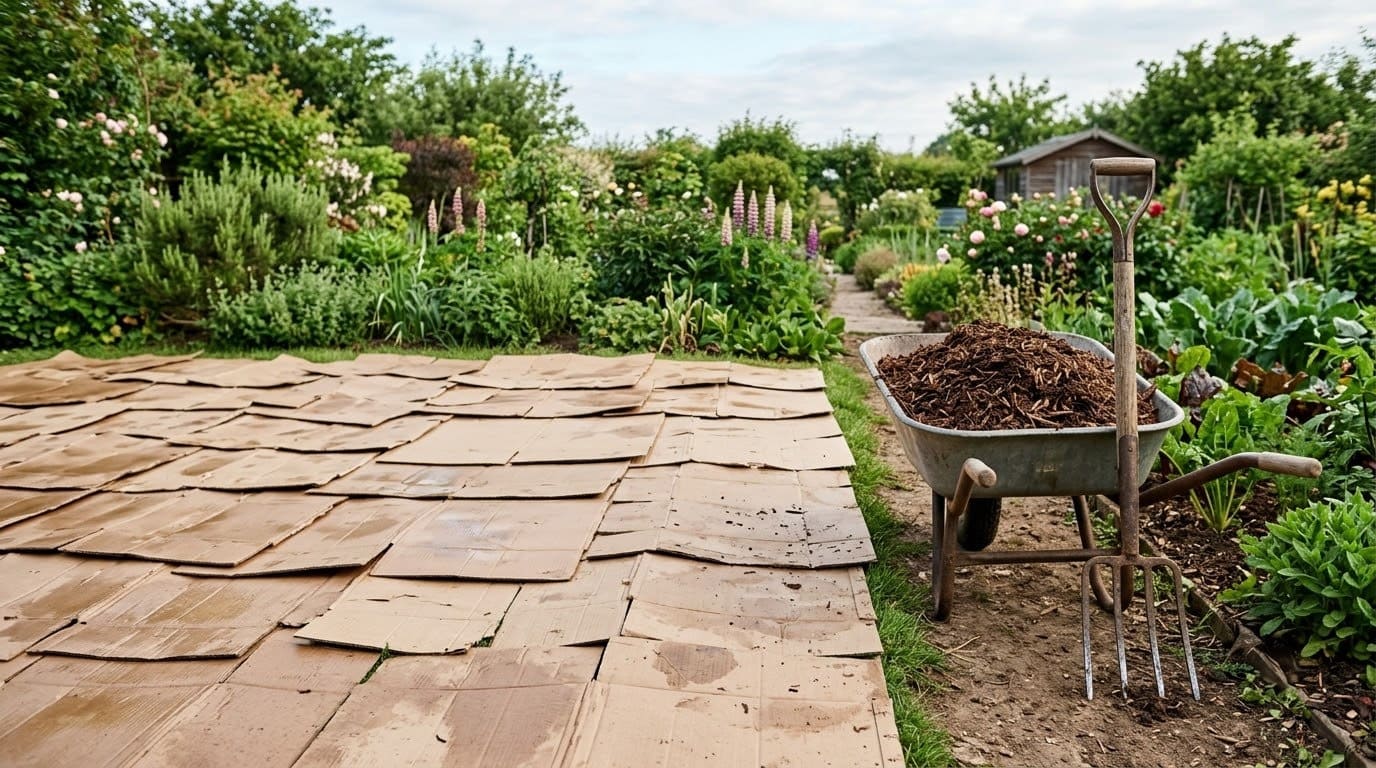
Garden Pathway. Curved beats straight for chi flow. The driveway guide covers the same logic at a larger scale. The real differentiator here is material. ASTM’s F1637 and F3132 walking-surface standards define what “safe to walk on” actually means: consistent texture, no abrupt level changes. That’s exactly what feng shui’s vague “solid, even, easy to walk on” language is gesturing at. A comparison table breaks down slip resistance, maintenance, and cost across flagstone, poured concrete, and gravel.
Driveway. A driveway that curves toward the house is favored. Real IRC grade limits (roughly 12-15% max slope for safety, 2% minimum for drainage) describe that same gentle slope. Not a coincidence. Both systems converge on what actually works in icy weather. Material matters too. Many municipalities cap impervious surface area. Permeable pavers or gravel can be the difference between a smooth permit and a stormwater fight.


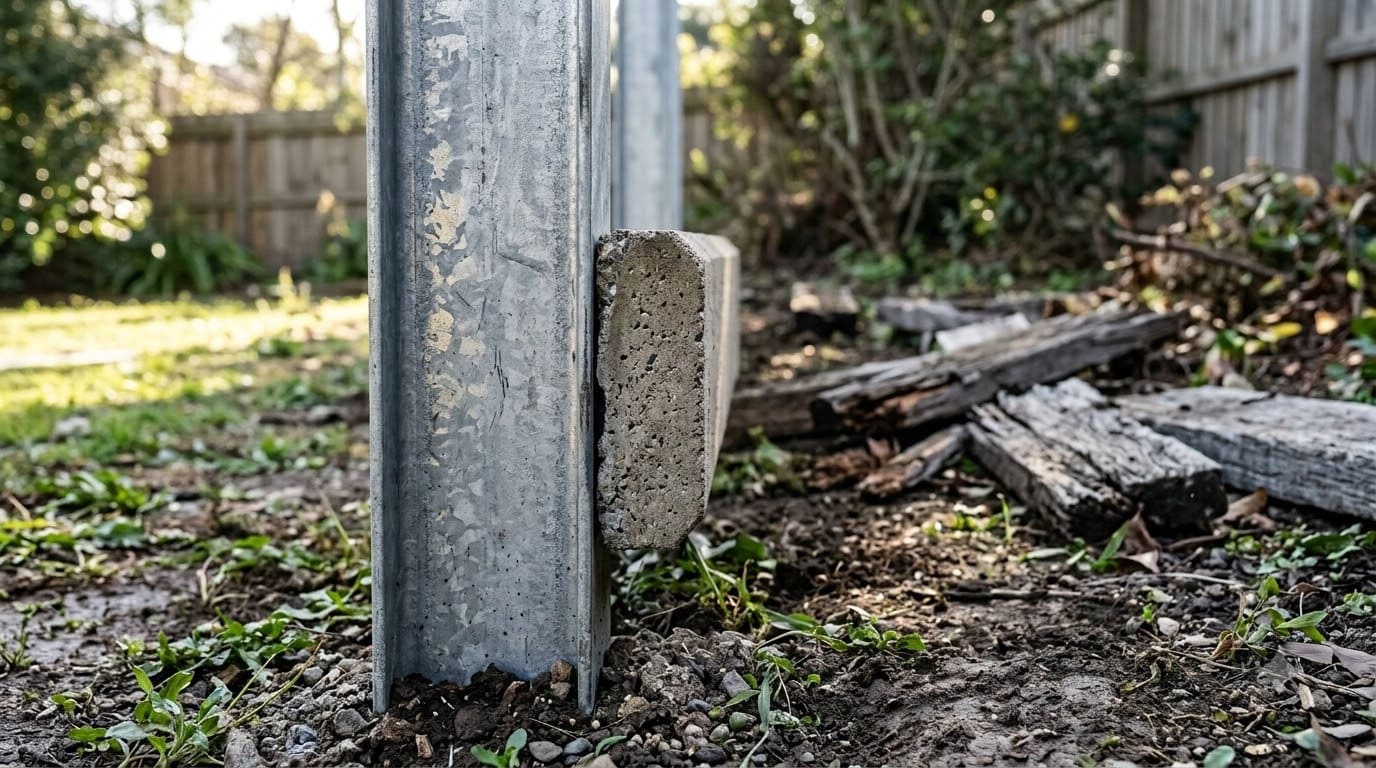
Garden Fence. Lower in front, taller in back is the traditional height guidance. The real gap every feng shui fence source skips is the property line itself. No U.S. state legally requires a survey before building a fence. But skipping one is one of the most expensive mistakes homeowners make. A fence six inches over the line can trigger a real legal dispute. Material has its own real number too. Pressure-treated posts rated for general ground contact last 15 to 25 years. The same post in a poorly-draining spot can rot out in half that time.
Garden Lighting. Light the entrance and the path first, feng shui’s “mouth of chi” logic. The real code layer nobody mentions is electrical. NEC Section 210.8(F) requires GFCI protection on the 120-volt side of any outdoor lighting transformer. Low-voltage cable needs at least 6 inches of burial depth. The color-temperature rule is more surprising. DarkSky International’s real wildlife research shows warm light at 2700K or lower protects nocturnal species like fireflies. That’s the same warm tone feng shui already favors for a welcoming feel.
Garden Colors and the Five Elements. Red, brown, white, and black round out the wood element your plants already provide by default. Each color carries a real, checkable fact. Red flowers genuinely attract hummingbirds, their retinas prioritize red over the blue tones bees favor. Rubber mulch chosen for its brown tone can leach heavy metals into soil, per a real Washington State University review. Light-colored gravel reflects up to 70% of sunlight versus roughly 5% for dark mulch. Dark hardscape can reach 140-160°F in direct summer sun, a real barefoot-burn risk, not just a design choice.
Backyard Wealth Plants. Seven plants make this list: citrus, clumping bamboo, star jasmine, peony, Money Tree, Jade Plant, and chrysanthemum. Each ties to a different feng shui goal. Each is fact-checked for USDA hardiness zone and real ASPCA pet toxicity. The standout warning is running bamboo. Cooperative extension offices document it spreading 3 to 5 feet a year. It requires full rhizome destruction to control. That’s a genuinely different plant from the clumping variety this guide actually recommends.
Japanese Maple Placement. East or southeast, off to the side of the entrance, is the traditional spot. The real questions most guides skip are root distance and sun exposure. The root system is genuinely shallow and non-aggressive, roughly 6 feet from a foundation is safe for dwarf cultivars. Harsh afternoon light, not feng shui placement, is the real reason a red maple’s color scorches and fades by midsummer.
Outdoor Water Feature Placement. North, east, or southeast, with water always flowing toward the house. This general guide covers what koi ponds and garden fountains share in common. The real gap: standing water is the CDC’s single most-cited, most preventable mosquito-breeding risk. A female mosquito needs as little as one tablespoon to lay up to 300 eggs. A running pump satisfies the feng shui “moving water” goal. It also denies mosquito larvae the still surface they need.
Backyard Pool. Placement and shape matter symbolically. The real story is CPSC’s drowning-prevention fencing standard and NEC’s pool bonding code. A compliant fence blocks the kind of unsupervised access, often just 5 minutes, in which most child drownings happen. Both standards are entirely absent from typical feng shui pool advice.
Koi Pond. Southeast placement and the traditional 9-fish configuration (8 gold or red, 1 black) are the classic rules. CPSC treats decorative ponds as a real drowning risk alongside pools. Nearly every koi pond guide skips that detail entirely.
Garden Fountain. Tiered fountains with continuous flow are favored over solar units that go quiet on cloudy days. NEC Article 680 requires real GFCI protection for any fountain pump. No feng shui fountain guide mentions that code requirement.
Wind Chime. Metal chimes are traditionally strongest. They’re also the loudest. Real noise-ordinance research shows a metal chime in gusty wind can reach 60-70 decibels. That’s enough to violate nighttime limits that a bamboo chime simply won’t.
Mailbox & House Numbers. Lucky numbers get most of the attention. USPS’s real placement spec (41-45 inches high, 6-8 inches from the curb) matters just as much. So does county fire-district reflective-visibility requirements, for a mailbox that actually works in an emergency.
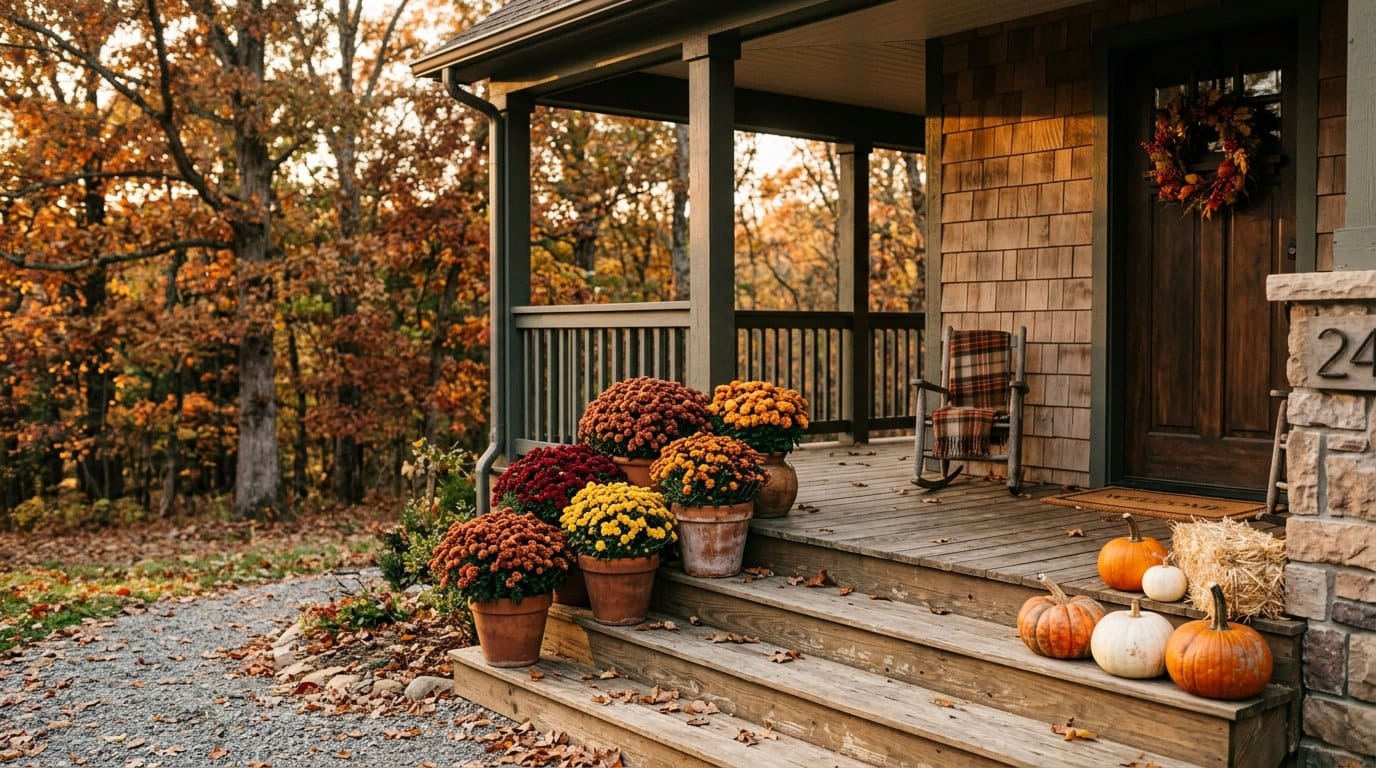
Plants to Avoid Near the Front Door. Sharp “poison arrow” plants are the classic warning. Several plants carry real ASPCA toxicity flags too. Oleander and lilies specifically cause cardiac toxicity and kidney failure in cats. That matters more than symbolism for any household with pets.
Front Yard Rules. This overview ties the whole exterior together. Keep the entrance open. Balance both sides symmetrically. Buffer street noise with a fence or hedge. Keep the whole yard maintained, not just the entrance. Real acoustic data shows an 8-foot solid fence delivers a genuine 5-15 decibel traffic-noise reduction. NAR’s own figures put lawn care at a 217% resale ROI, one of the highest-return home improvements measured.
Your Home’s Front-Facing Direction. Kua numbers and compass direction are foundational feng shui calculations. A real 1997 peer-reviewed Carnegie Mellon paper actually modeled this methodology computationally. Real DOE data adds a practical layer: south-facing orientation can cut heating and cooling costs by around 25%.
Front Door
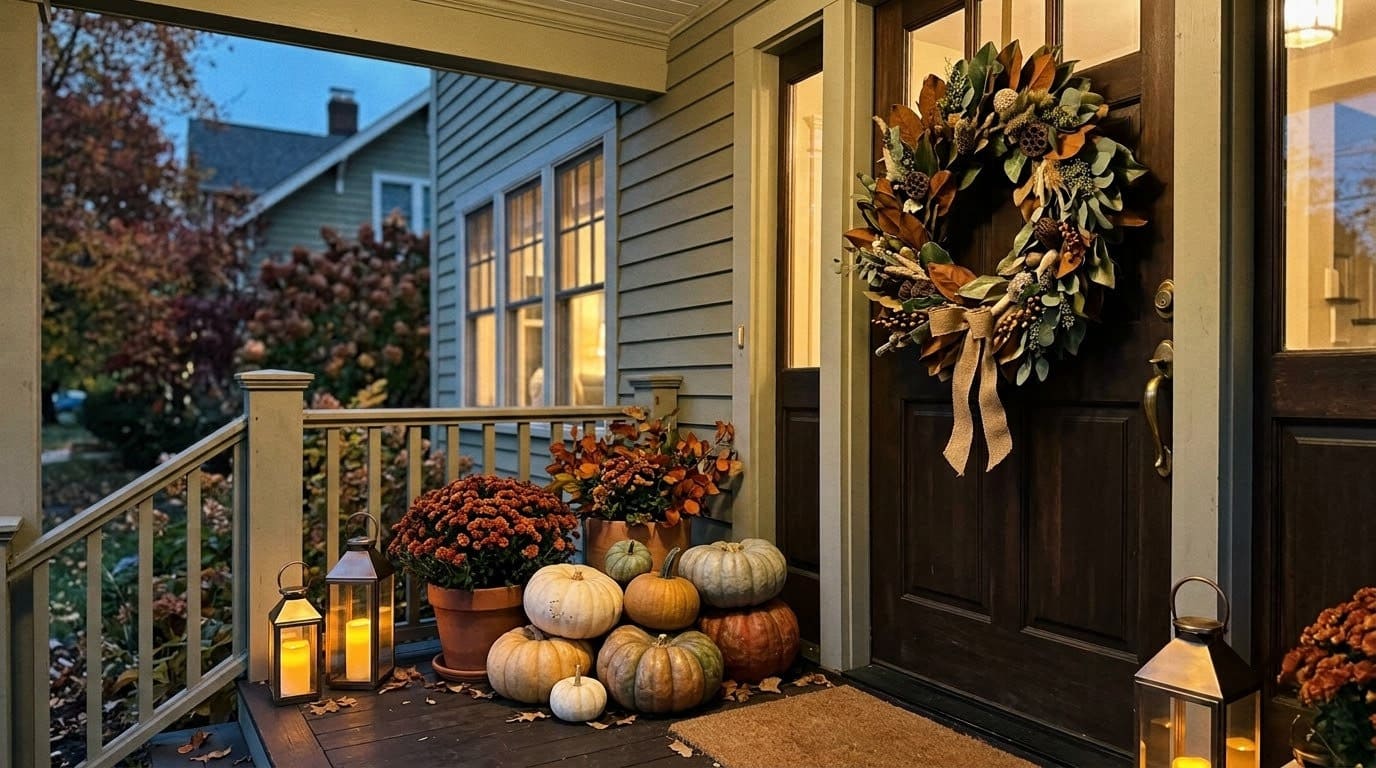
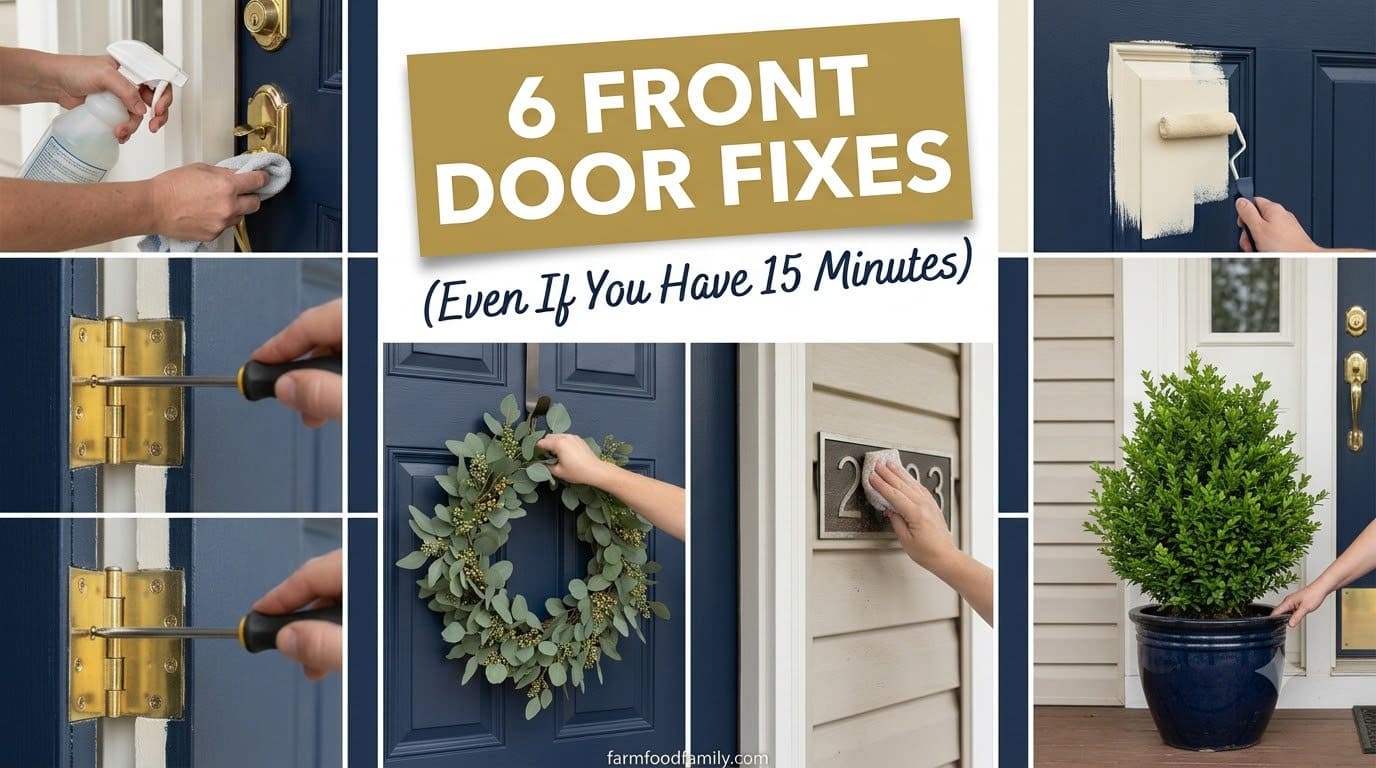
6 Front Door Quick Fixes. Clean the entrance. Fix a sticking hinge. Check the lock. Brighten the approach. Add healthy plants. Skip citrus diffusers near cats. Six fast wins, under an hour combined.
The highest-stakes one by far is the lock. FBI data shows over 60% of burglars enter through a door. An ANSI Grade 1 deadbolt withstands over 800 pounds of force, versus roughly 150 for a standard lock alone.


Entryway & Transitions
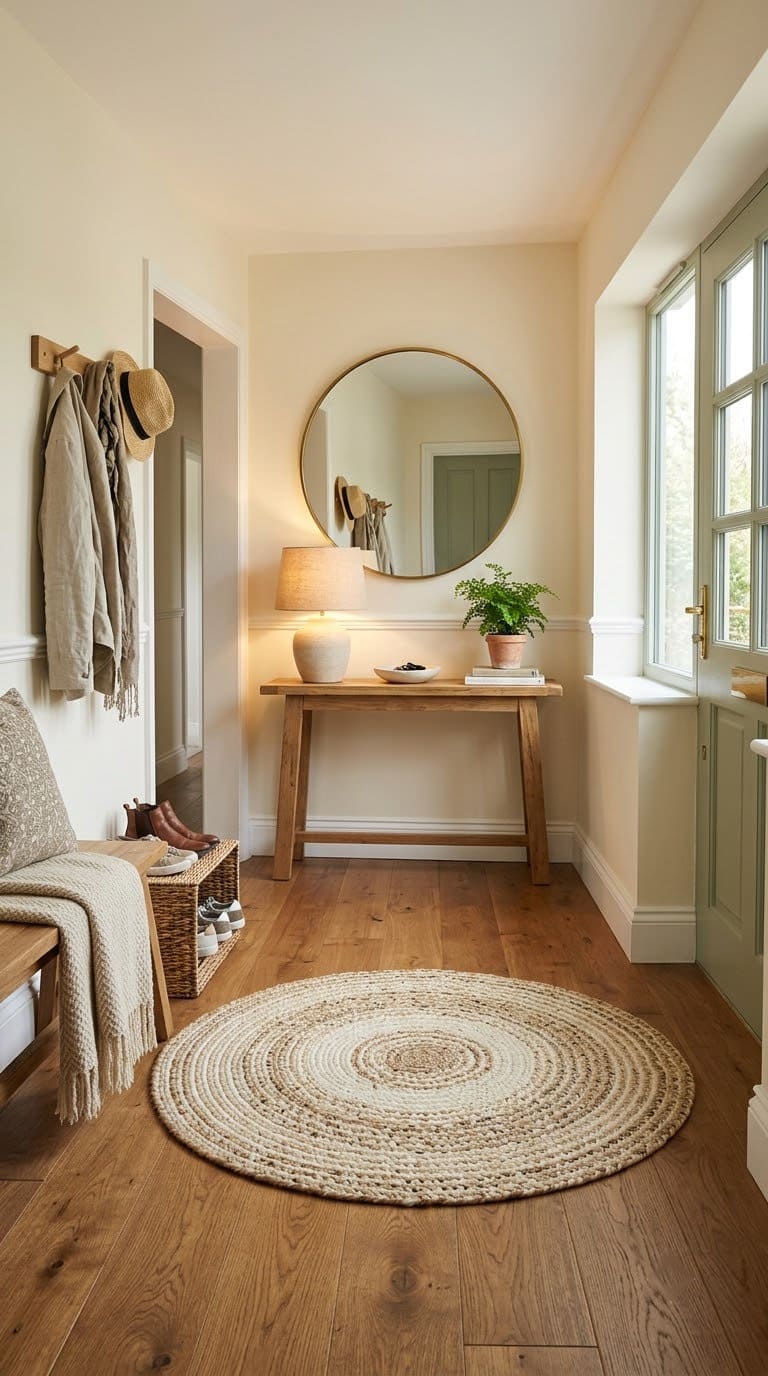
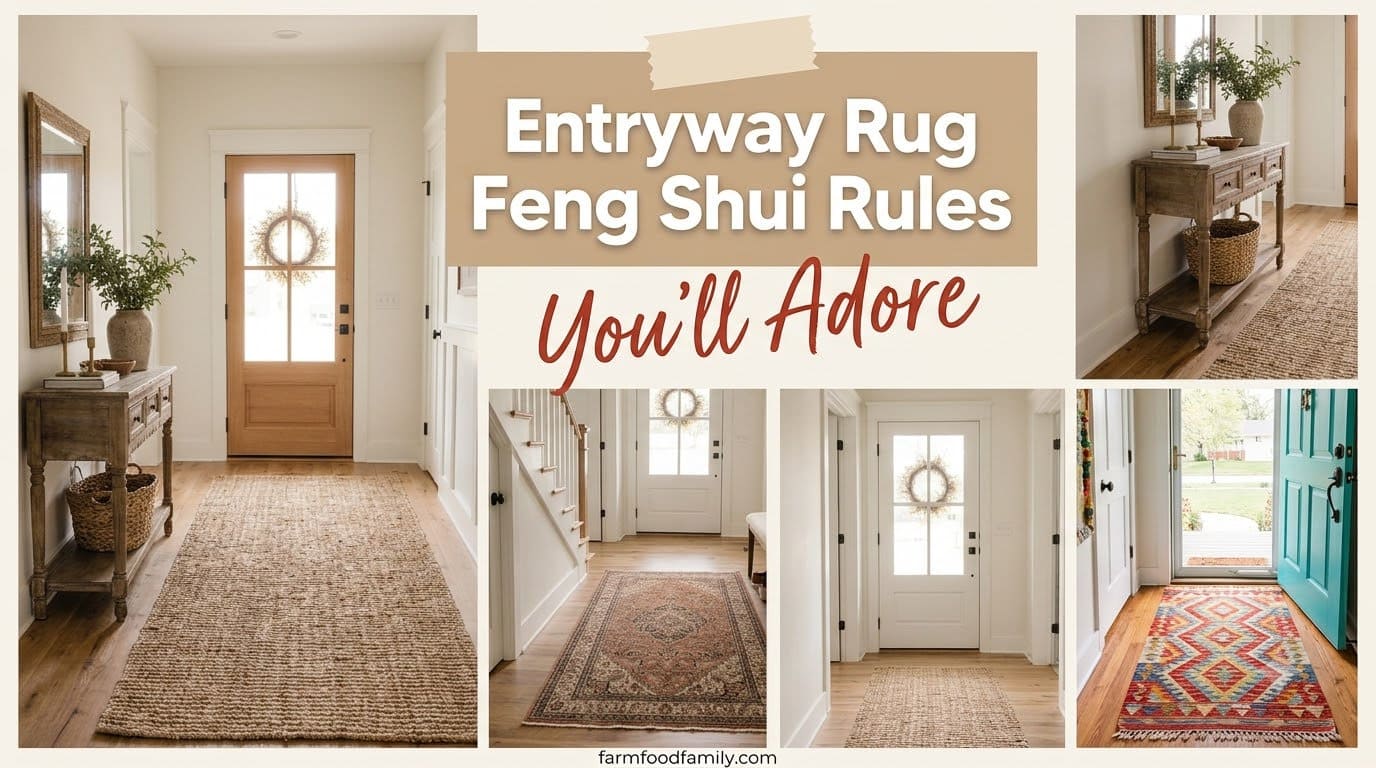
Entryway Rug. Warm, round rugs are favored at the threshold. Real injury-prevention research found loose rugs in nearly 78% of homes studied. Curled edges showed up in over 35%. That’s a documented home-fall hazard, worth fixing with a non-slip pad regardless of feng shui.
Hallways. Bright, wide, clutter-free hallways are the rule. NFPA 101’s real egress requirement makes “keep it clear” a genuine life-safety issue, not just an energy one. IRC sets a real 36-inch minimum width for new construction.
Mirrors. Never facing the front door or the bed are the two hardest rules. Real daylighting science backs up the placement rule too. A mirror positioned opposite a window genuinely amplifies light. That’s measurably true, not just symbolic.
Living & Dining Spaces
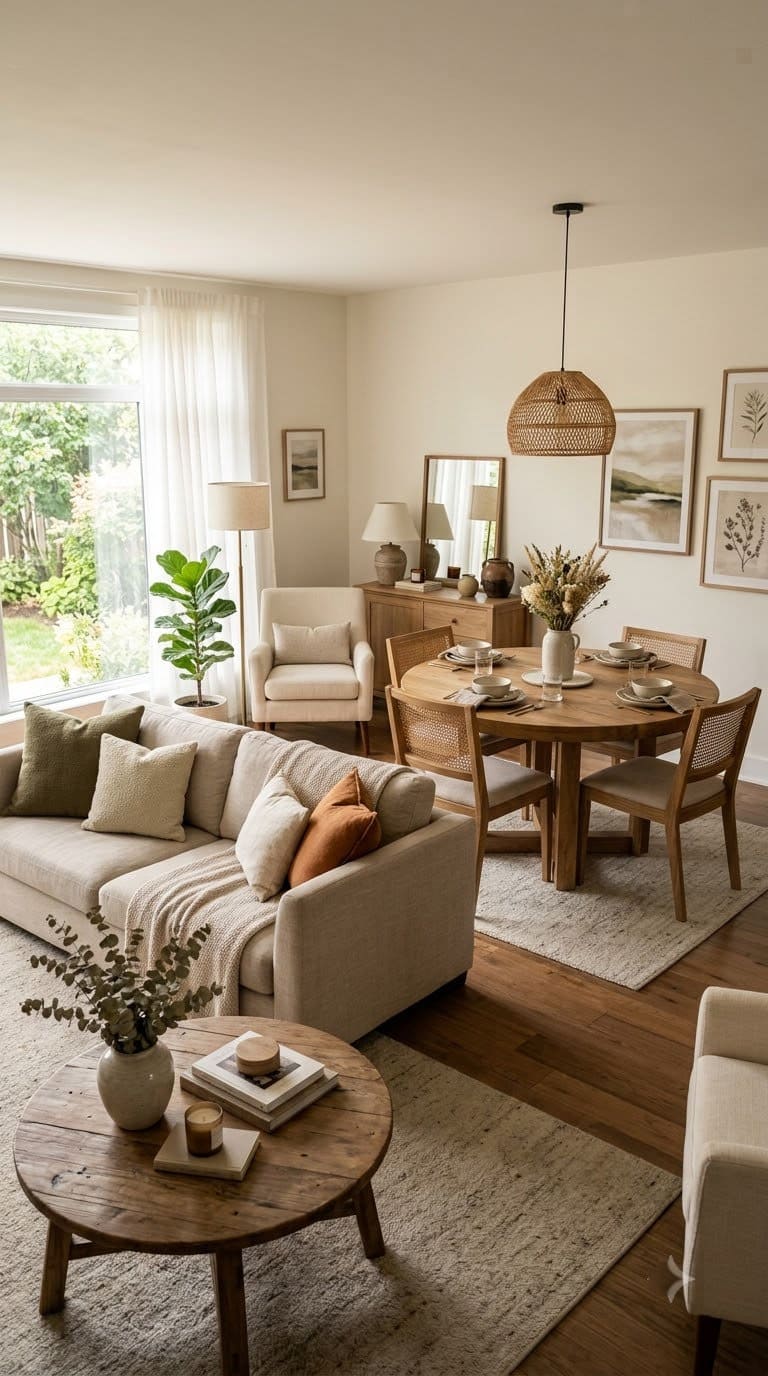
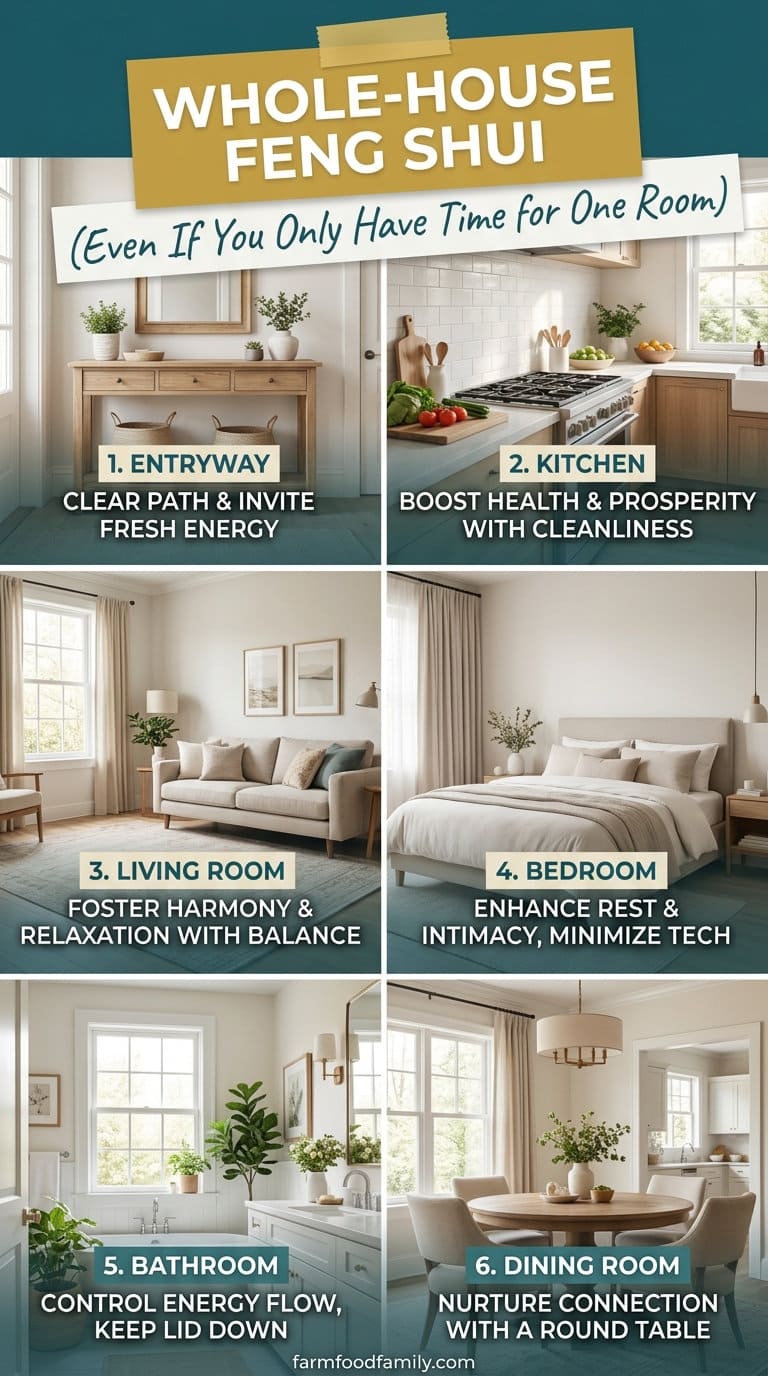
Living Room. The sofa’s commanding position matters most. Two other rules have real backing too. TV-viewing ergonomics say the screen center should sit at seated eye level, 42-48 inches from the floor. Window glass blocks only about 37% of UVA rays, the real reason fabric fades near a sunny window.
Dining Room. Round tables and even chair counts are favored. CPSC’s tempered-glass tabletop standard explains why “avoid glass” is more than superstition. It’s real, and surprisingly non-mandatory. Glass table breakage sends over 20,700 people to the ER every year.
Kitchen
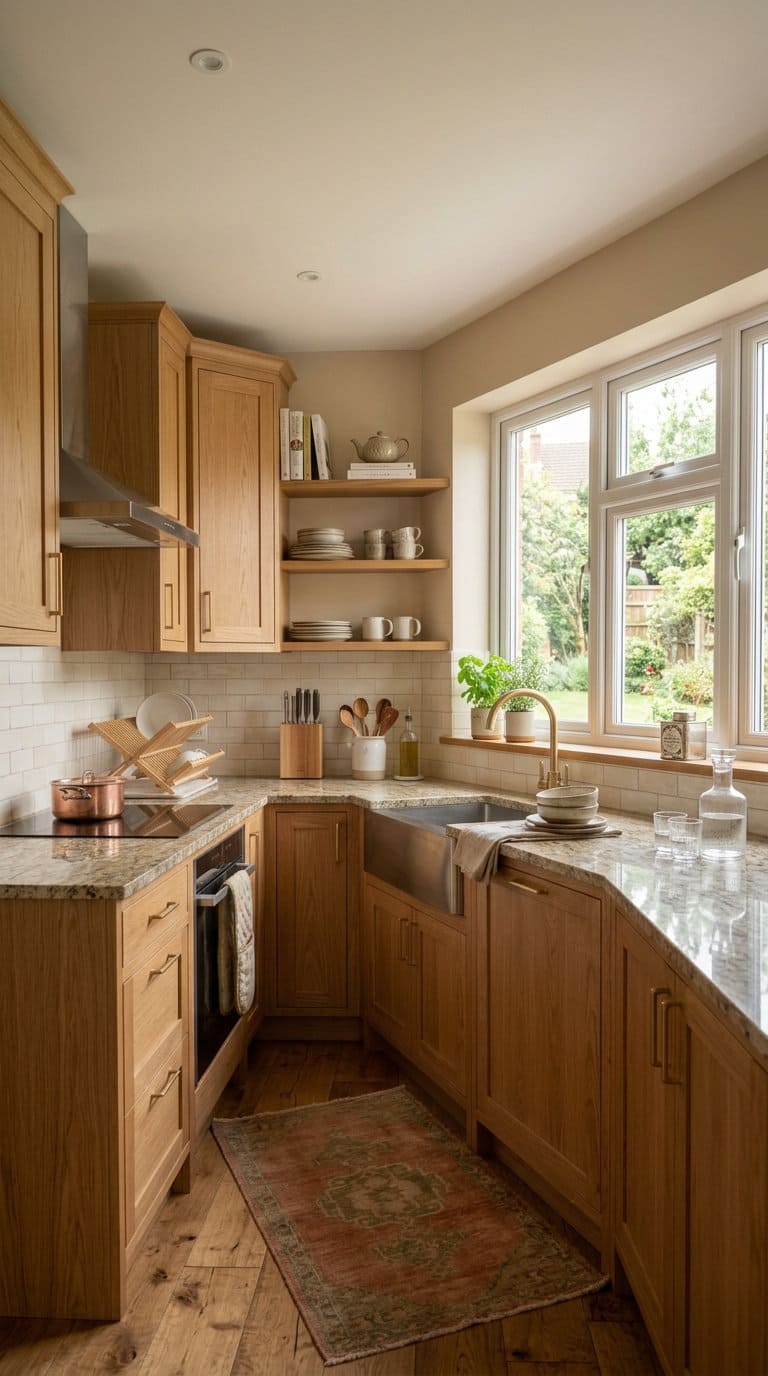
Kitchen Rules. Stove placement is the classic focus. NFPA’s real cooking-fire statistics make this the single highest-stakes room in the whole house. Cooking is the #1 cause of home fires, responsible for 44-51% of residential fires. That’s ahead of even the staircase.
Kitchen Colors. Fire, earth, wood, metal, and water each map to real colors. Real color-appetite psychology explains why sources disagree about how much red is too much. A warm accent genuinely increases appetite. An entire room dominated by it tips into agitating.
Bedroom
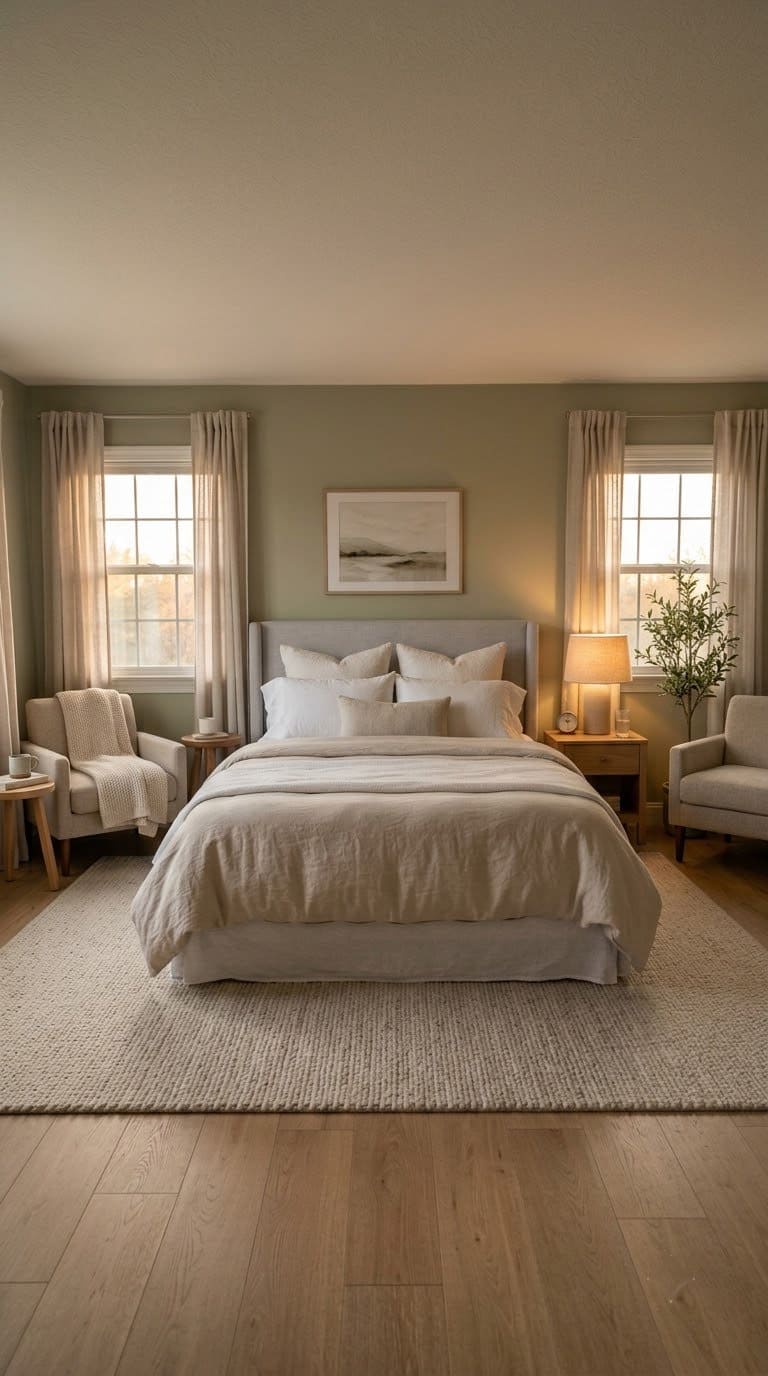
Bed Placement. The commanding position is the single most important bedroom rule. It maps almost exactly onto prospect-refuge theory. That’s a real 1975 environmental psychology theory, from Jay Appleton, about why humans want to see out while feeling sheltered.
Bedroom Mistakes. Electronics and clutter are the classic warnings. The Sleep Foundation’s real 2024 findings correct the oversimplified “blue light” claim. It’s the engagement, not the light color, that keeps you alert. The fix still holds either way.
6 Easy Things to Do Today. No furniture-moving required. Genuinely recent sleep research, from 2023-2025, gives “just open a window” real, measurable backing. Sleep efficiency drops above roughly 1,000 ppm of bedroom CO2.
Bathroom
Bathroom Mistakes. Toilet placement gets the most attention. Real peer-reviewed research on toilet aerosol plumes offers a more accurate correction than “just close the lid.” Flush aerosols travel 5+ feet. Closing the lid alone doesn’t fully stop it.
Home Office
Home Office Rules. The commanding desk position is the foundation. Real OSHA monitor-height guidance fills in the practical setup feng shui never specifies. So does the AOA’s 20-20-20 rule for digital eye strain, real and relevant since 58% of adults report symptoms.
Whole-House Structural Features
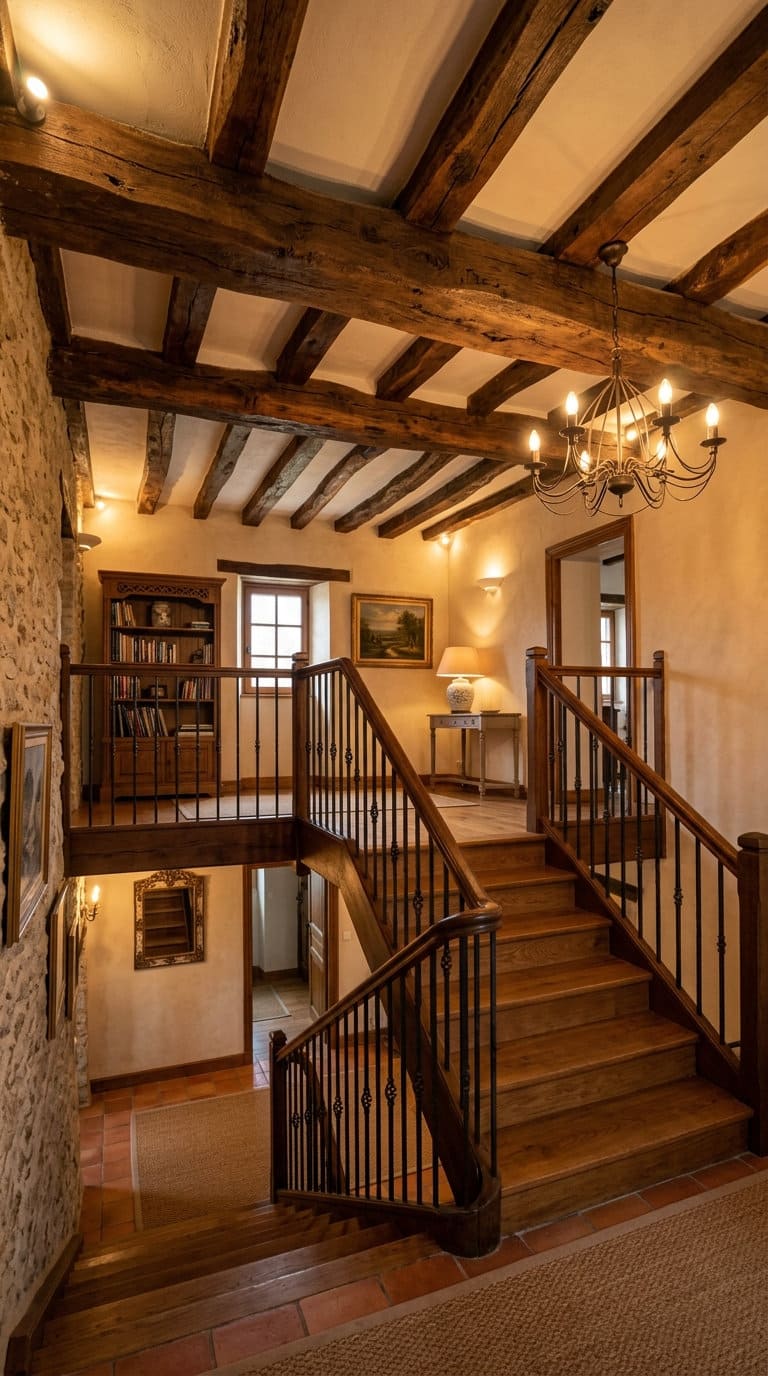
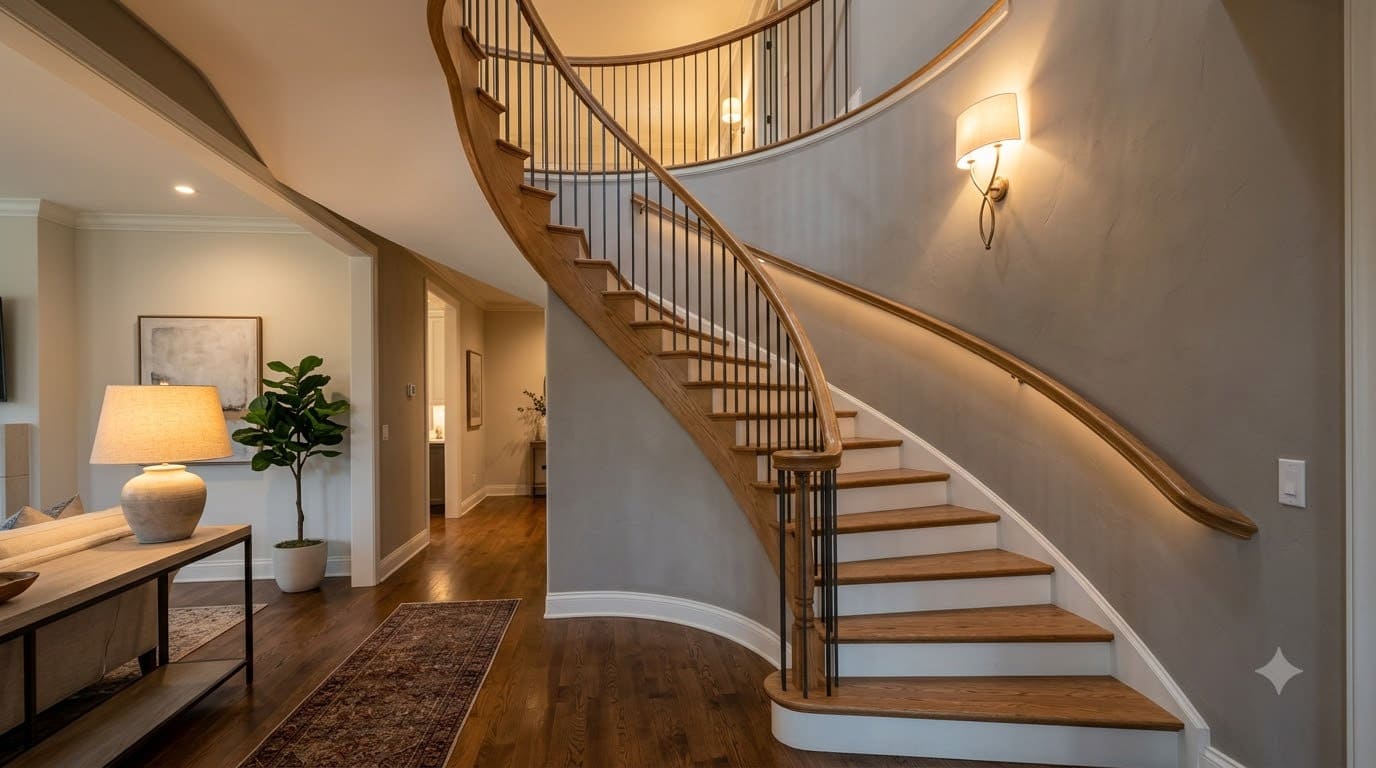
Staircases. Curved beats spiral. CPSC’s real stairway-fall statistics make “keep it in good repair” the cheapest, highest-stakes fix in this entire cluster. Stairway falls cause over 1 million injuries a year.
Exposed Beams. Never sleep under a beam is the classic rule. A real 2007 “cathedral effect” study, from Joan Meyers-Levy, explains why a lowered ceiling genuinely primes more constrained thinking. Any real structural alteration needs a licensed engineer first.
Closets. Declutter and add cedar are the standard advice. Real EPA mold guidance backs up the declutter side. Real entomology research backs up the cedar side, roughly 87% moth repellency, but only when the cedar is fresh.
Plants Throughout the Home
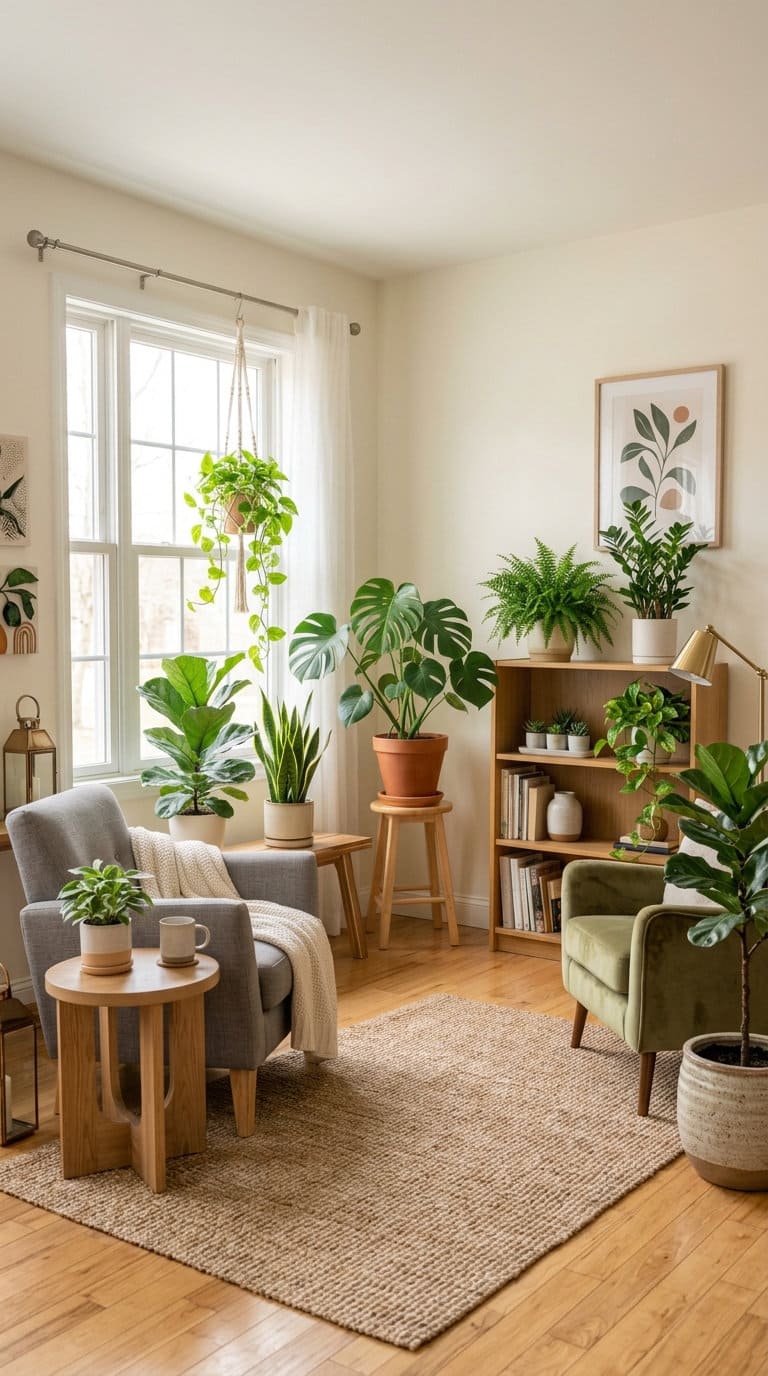
House Plant Rules. Zone placement and healthy, dust-free plants are the foundation. Real research corrects the overstated NASA “air purifying” claim, you’d need hundreds of plants to approach the lab-measured effect. It also flags genuine ASPCA pet-toxicity risks in the most popular choices.
7 Lucky Indoor Plants. Each of the seven has its own Bagua placement. This guide individually fact-checks pet safety for all seven. Jade, snake plant, and lucky bamboo are toxic. Money tree and orchids are not.
Patio & Furniture
5 Patio Furniture Mistakes. Blocked walkways, oversized furniture, sharp corners, faded fabric, and unsecured umbrellas. This is the newest addition to the cluster. The umbrella rule is the highest-stakes one.
CPSC has issued a specific safety alert on airborne patio umbrellas, roughly 3,000 ER visits a year. A 2024 ASTM standard now requires 75 pounds of resistance or secure anchoring to 30 mph winds.
Special Situations
Small Apartments & Renters. Every fix here is filtered through one real question: will it cost you your security deposit? Real landlord-tenant law on wear-and-tear vs. damage matters as much as the feng shui itself.
Resale Value Mistakes. Decluttering and a welcoming entrance top the list. Real NAR 2025 staging data confirms these exact fixes genuinely correlate with faster sales and higher offers. Decluttering alone is cited by 91% of surveyed agents.
What we learned building this whole cluster
One pattern repeats across all 38 rooms and topics. Feng shui’s oldest, most-repeated rules tend to have the strongest real backing. Curve instead of straight. Keep it clean. Let energy move. Avoid direct sightlines.
Each one maps onto a real building code, a safety statistic, or a peer-reviewed study. The more decorative or purely symbolic a piece of advice gets, specific colors for specific outcomes, crystal placements, five-element assignments, the less likely it is to have any real, checkable mechanism behind it.
Neither observation makes feng shui “true” or “false” as a system. But the practical, structural rules are worth taking more seriously than the decor-level ones. That’s true whether or not you believe in qi at all.
There’s a second pattern worth naming. The highest-stakes rooms in this cluster aren’t the ones feng shui itself treats as most important. The kitchen has real NFPA fire data behind it.
The staircase has real CPSC fall data. The bathroom has real NEC electrical code. The patio umbrella now has its own CPSC safety alert. All four carry more real, documented risk than the bedroom’s commanding position or the entryway’s color choice. Worth prioritizing accordingly if you’re only fixing a few things this year.
FAQs
Do I need to apply every rule in every room to get any benefit? No. Each linked guide is designed to stand alone. Prioritize the rooms and rules with the clearest real-world stakes first: kitchen fire safety, staircase repair, bathroom electrical code, patio umbrella anchoring. Purely decorative choices can wait.
Which room’s feng shui rules have the strongest real-world backing? The kitchen and bathroom guides have the highest-stakes real backing, NFPA fire statistics and NEC electrical code. The staircase, backyard pool, and bed placement guides follow close behind, with real CPSC fall and drowning data plus a real 1975 psychology theory.
I’m renting and can’t make structural changes. Where should I start? Start with the small apartments and renters guide [EDITOR NOTE: link once published]. Every fix there is explicitly filtered for lease-safety and reversibility.
Is any of this backed by real science, or is it all just tradition? Both, depending on the specific rule. This cluster cross-checks each room’s feng shui advice against real codes, real peer-reviewed research, and real market data. The goal is separating the rules with genuine backing from the ones that are purely symbolic.
How many rooms and topics does this guide actually cover? 38 in total. Every major interior room. The exterior and garden, pathway, driveway, fence, lighting, water features, plants. The front door and entryway. Whole-house structural features like staircases and exposed beams. Special situations like renting and resale value.
Related Posts
Never miss an update — choose FarmFoodFamily as your preferred source on Google.
How it works: Tap the button below to open Google's settings page, then check the box next to FarmFoodFamily.
Tap the checkbox to turn it blue — that's how you know it's set.