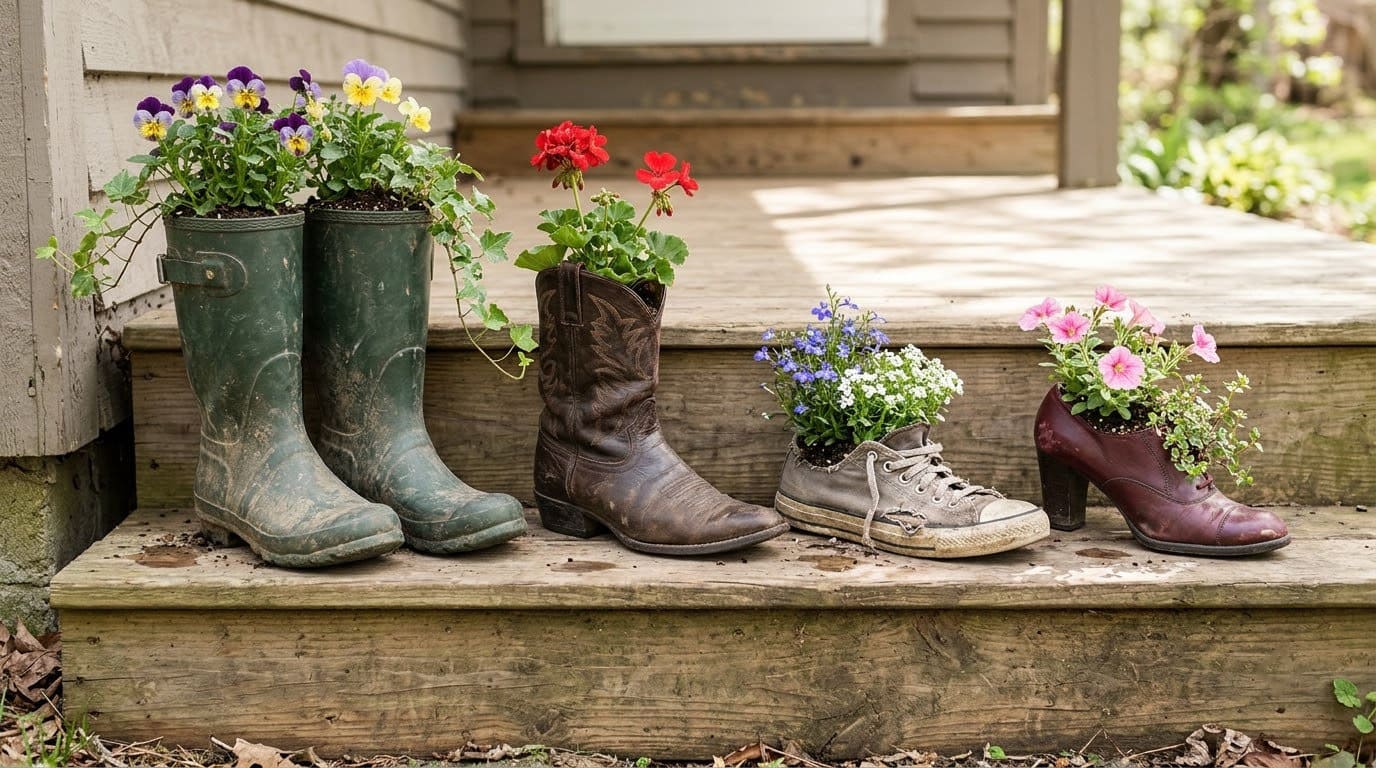
20 Quirky Planter Ideas From Old Shoes and Boots (That Actually Drain)
Old boots, heels, and sneakers make charming planters, as long as you drill drainage holes and keep standing water out.

Never miss an update — choose FarmFoodFamily as your preferred source on Google.
How it works: Tap the button below to open Google's settings page, then check the box next to FarmFoodFamily.
Tap the checkbox to turn it blue — that's how you know it's set.
Old boots, heels, and sneakers make charming planters, as long as you drill drainage holes and keep standing water out.
Products We Recommend
This post contains affiliate links. We may earn a commission on qualifying purchases at no extra cost to you.

5-Piece HSS Step Drill Bit Set, 50 Sizes, TiAlN Coated
One bit that cuts clean drainage holes in several sizes, listed for metal and plastic (test on a scrap sole)
Shop Now
Secopad Window Screen and Screen Door Mesh Repair Kit, Black
Fiberglass screening to cover drainage holes so the mix stays in
Shop Now
BIRDROCK HOME Rubber Stepping Stones, Set of 3, 12 x 12
Flat bases that keep boots upright and let drips run away
Shop NowEvery closet has a pair of shoes nobody wears anymore. Planted with flowers, they become the most talked-about corner of the yard.
The catch is that a shoe is not made to hold soil. This guide gives you 20 ideas plus the drainage, weight, mosquito, and plant-safety steps that most lists skip.
In this article
Answer 4 quick questions and get matched to the exact fix for your yard — drainage, budget, layout, or something else entirely.
Take the Free QuizWhat’s the Quick Answer for Shoe and Boot Planters?
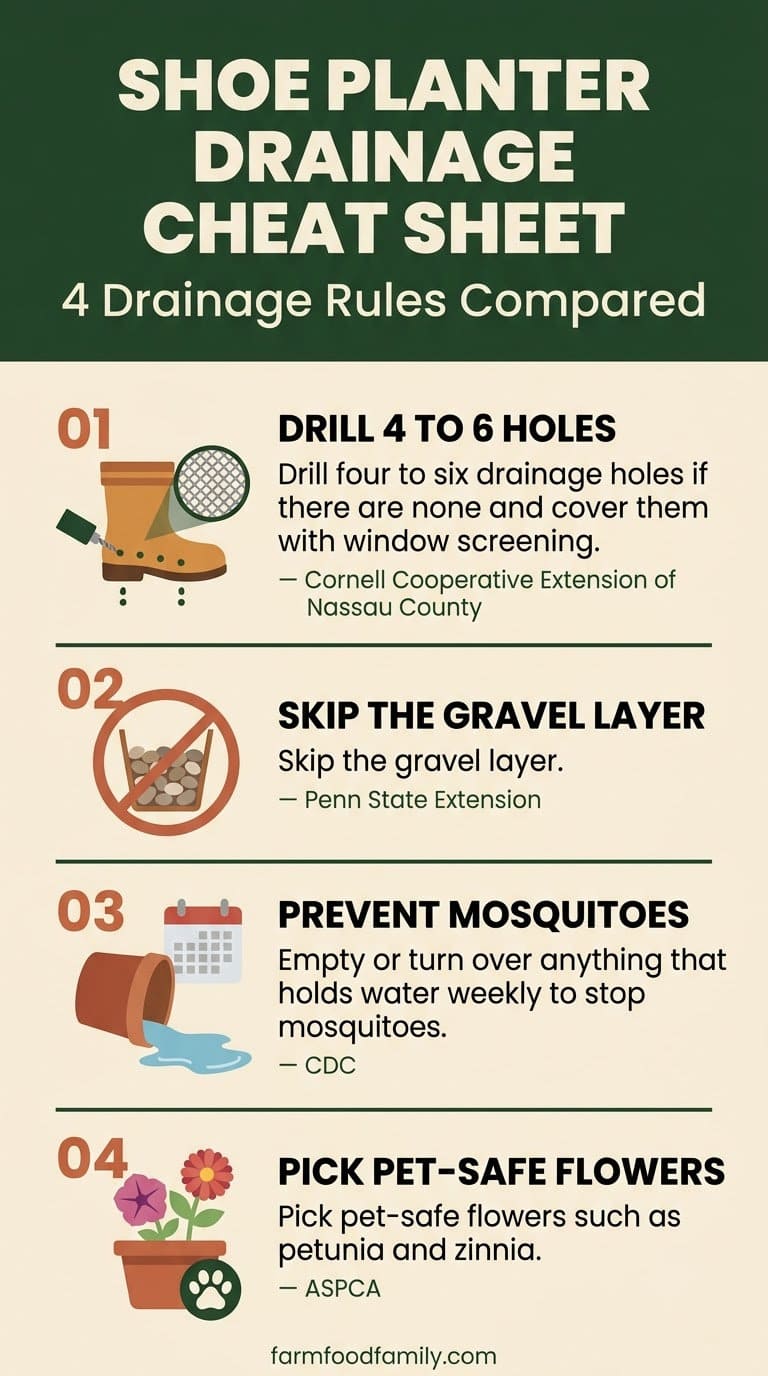
Drill drainage holes in the sole first. Cornell Cooperative Extension of Nassau County says every container needs drainage holes, and it advises drilling four to six if there are none. Cover them with window screening so the mix stays in.
Skip the gravel layer. Penn State Extension says a coarse layer at the bottom slows water movement and wastes space in small containers. Fill the whole boot with a lightweight potting mix instead.
Keep water from pooling. The CDC says to empty or turn over anything that holds water at least weekly, because mosquitoes lay eggs in it. A boot with open drainage holes is far safer than a sealed one.
Choose flowers the ASPCA lists as non-toxic to pets, such as petunias and zinnias. Set each boot on a flat paver so it stands straight and drains freely.
Most yard problems trace back to one specific, fixable cause. Find yours in 4 quick questions.
Take the Free Quiz


Which Footwear Makes the Best Planter?
This table is our own planning guide. The footwear notes are general practice, not from a tested source.
| Footwear | Holds soil | Drainage work | Outdoor life | Best plants |
|---|---|---|---|---|
| Rain boots | Lots | Easy to drill | Long | Petunias, zinnias |
| Leather boots | Lots | Needs a sharp bit | Medium | Trailing flowers |
| Crocs and clogs | Medium | Often has holes | Long | Small flowers |
| Sneakers | Medium | Easy through the sole | Short to medium | Compact blooms |
| High heels | Little | Small hole in the toe | Short | A few seedlings |
| Slippers and sandals | Little | Already open | Short | Shallow-rooted flowers |
Before You Start: Drainage, Weight, Mosquitoes, and Mix
A shoe has no drainage, and drainage matters more than anything else on this list. Nassau County says to drill four to six holes if a container has none. Use a drill bit sized for the sole, and go slowly through rubber or leather.
Cover the holes with window screening or a coffee filter, per Nassau County. Do not add a gravel layer. For hole-making tips, see our guide on how to drill through plastic.
Fill with a lightweight potting mix, not garden soil. Nassau County says garden soil is unsuitable for containers. Leave an inch or two below the opening so water has room to soak in.
Weight is a second problem. Tall boots tip over when the plant grows. Set the boot on a flat paver or a wood base, or lean it on a fence. This is better than stuffing stones in the toe, since Penn State says a coarse layer slows drainage.
Are Shoe Planters Safe for Pets and Mosquitoes?
Standing water is the main hazard. The CDC says mosquitoes lay eggs in water that sits in containers, and it asks you to empty, scrub, turn over, or cover them weekly. A boot with clear drainage holes and screen over them does not hold water.
Plant choice matters if you have pets. The ASPCA lists these as non-toxic to dogs and cats: petunia, zinnia, sunflower, nasturtium, thyme, rosemary, basil, and Boston fern. It lists geranium, lavender, English ivy, lobelia, hosta, mint, chives, and tomato plants as toxic.
One bit that cuts clean drainage holes in several sizes, listed for metal and plastic (test on a scrap sole)
Shop NowThis post contains affiliate links. We may earn a commission on qualifying purchases at no extra cost to you.
| Safer for pets (per ASPCA) | Toxic to pets (per ASPCA) |
|---|---|
| Petunia | Geranium |
| Zinnia | Lavender |
| Sunflower | English ivy |
| Nasturtium | Lobelia |
| Boston fern | Hosta |
We do not suggest growing food in old footwear. No source we read tests what rubber, leather, glue, or foam might release into soil, so stick to flowers.
The average homeowner spends $616/year on yard fixes that don't address the real problem. Find out what yours actually is — before you spend another dollar.
Take the Free QuizHow Do You Make a Shoe Planter Step by Step?
Start with an empty, clean shoe. Wipe out dirt and let it dry fully. Remove laces if you want a cleaner look.
Drill four to six holes through the sole, following Nassau County. Press screening over the holes from the inside. A coffee filter works if you have no screen.
Add potting mix up to an inch or two below the opening. Plant a small, young plant and firm the mix around it. Water until it runs out of the holes.
Set the shoe where it drains freely. Keep it off a flat surface that pools water under it. A brick or paver lets the drips run away.
20 Quirky Planter Ideas From Old Shoes and Boots
1. Classic Rain Boot Planter
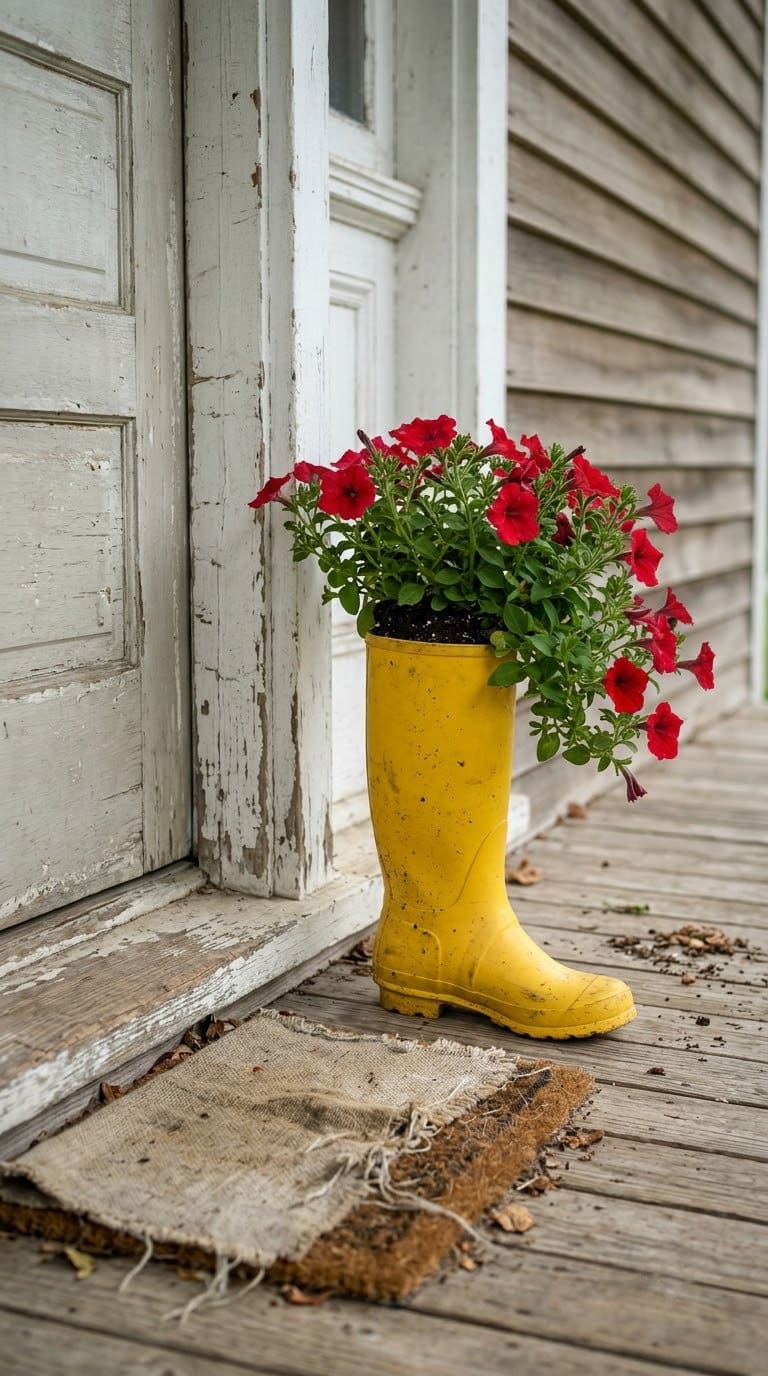
A rain boot is the easiest shoe to plant. It holds plenty of soil and the rubber is easy to drill. Make four to six holes in the sole and screen them.
Plant petunias or zinnias, which the ASPCA lists as non-toxic to pets. Set the boot on a paver so it stands straight.
Cost tier: very low.

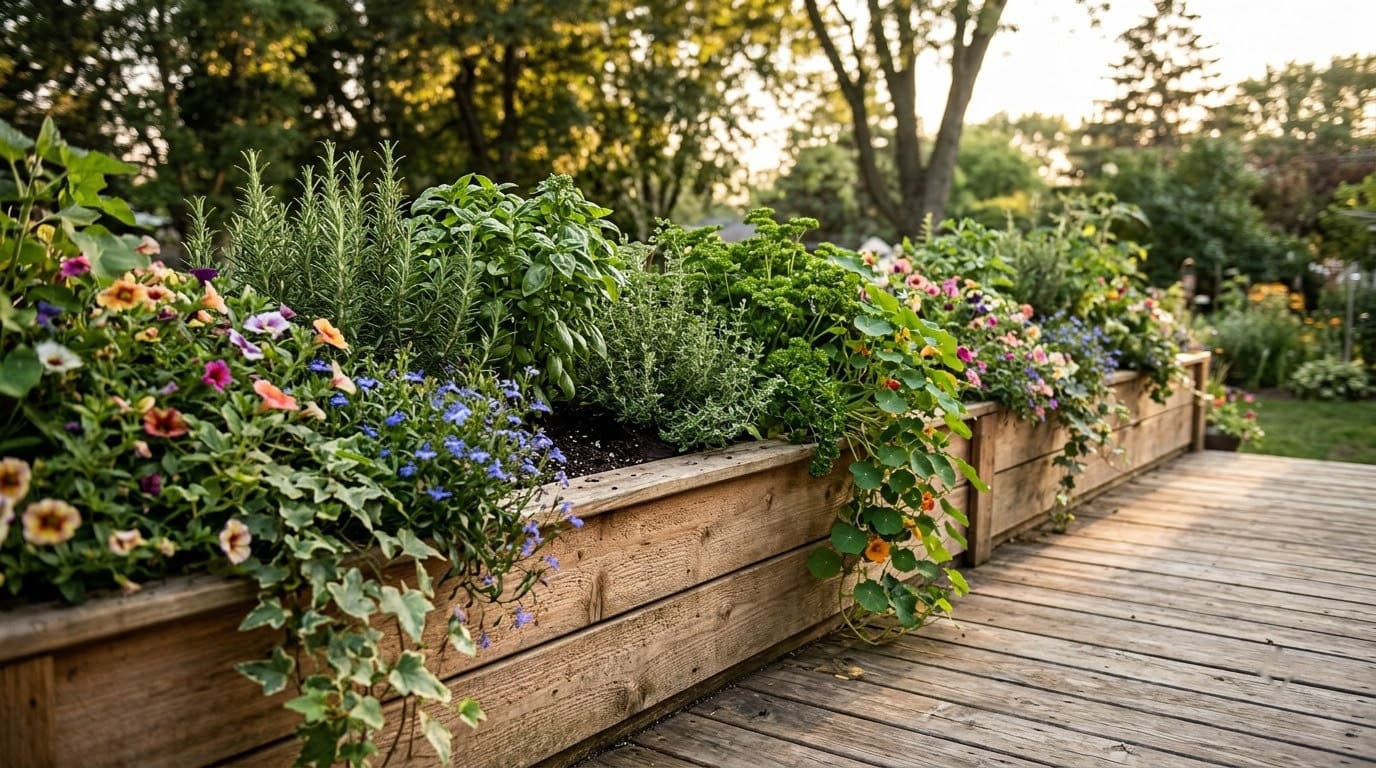
2. Kids’ Rain Boot Pair
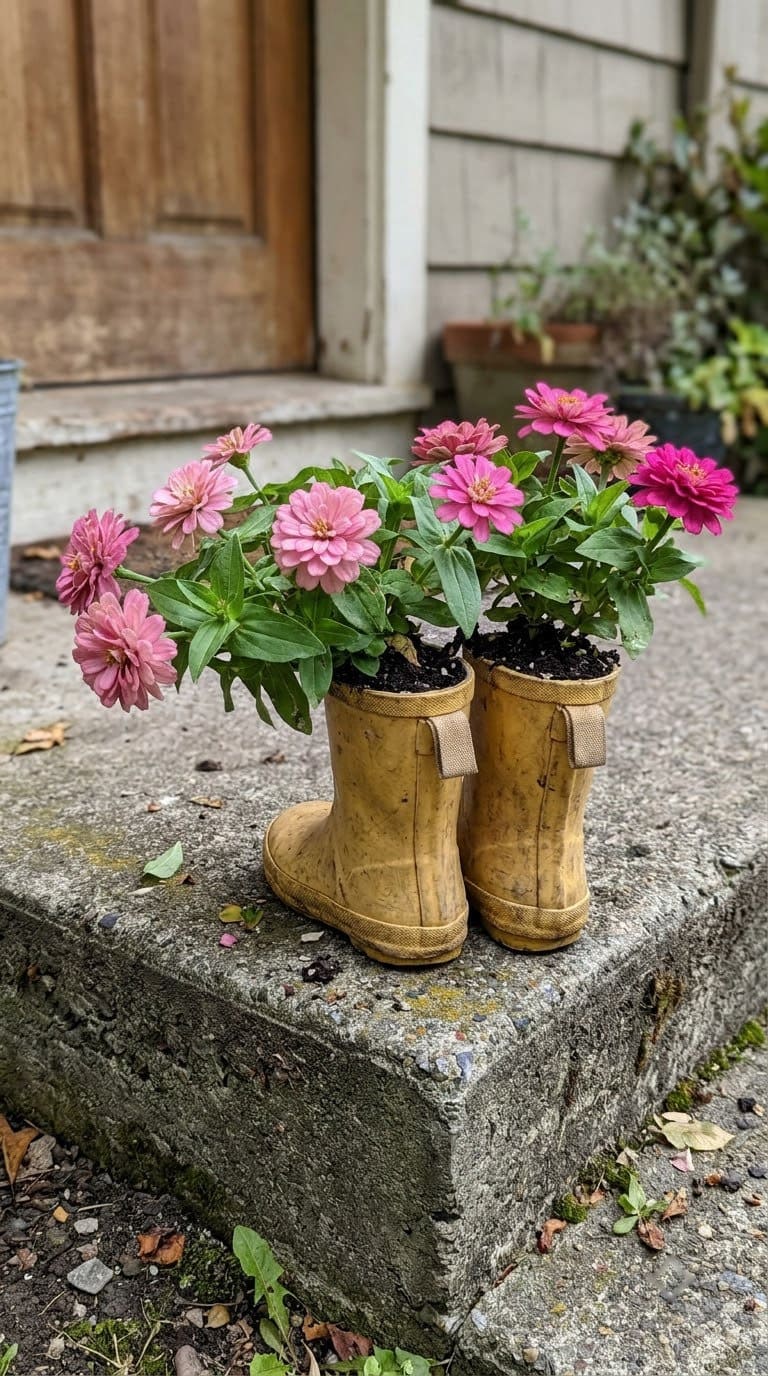
Small boots come in pairs, and pairs look planned. Plant both with the same flower so the set reads as one piece. Short zinnias fit the narrow opening well.
Put the pair on each side of a door or a step. The small size dries out fast, so check them often.
Cost tier: very low.
3. Cowboy Boot Centerpiece
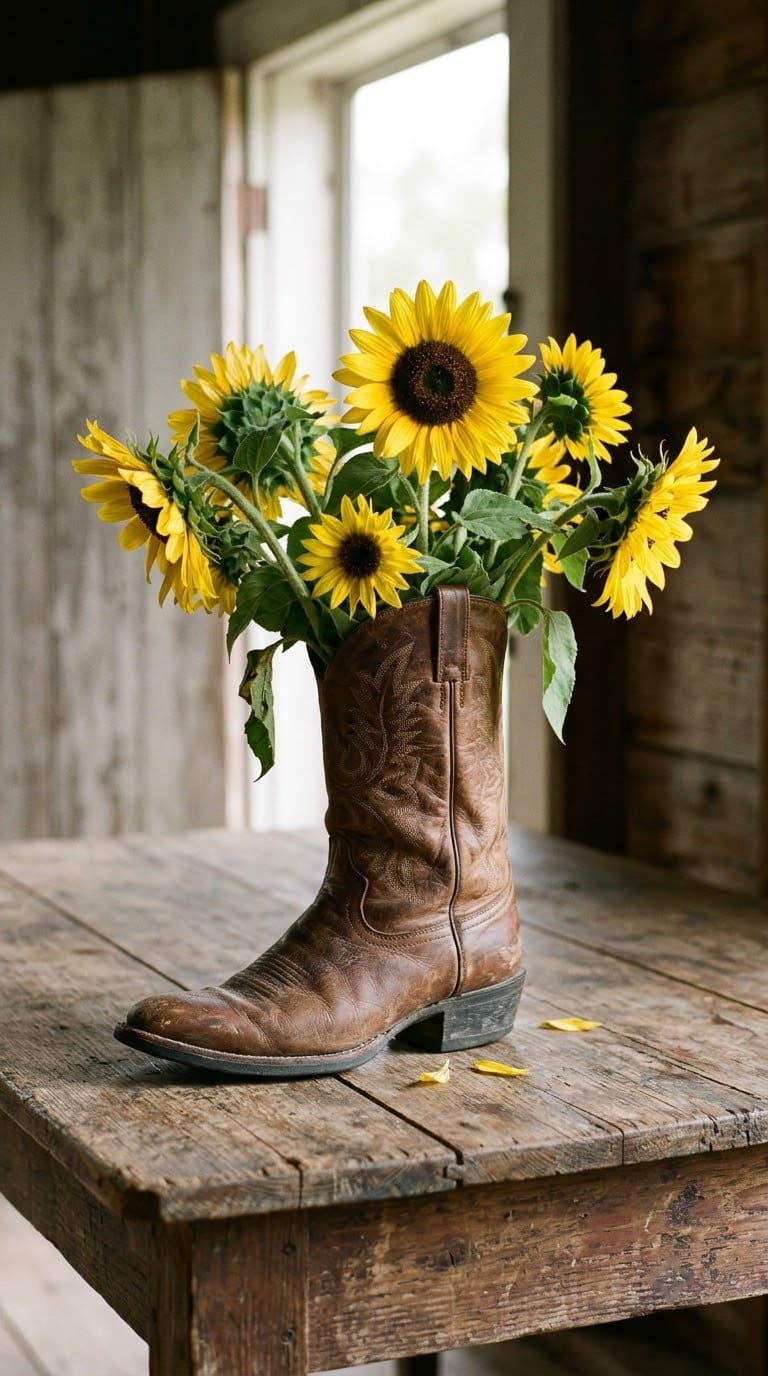
A cowboy boot adds Western charm to a patio table. The shaft is tall, so it holds a lot of mix. Drill the sole with a sharp bit and go slowly through the leather.
Choose compact sunflowers or nasturtiums. Lean the boot against a wall, since a tall boot tips easily.
Cost tier: low.
4. Victorian Lace-Up Boot
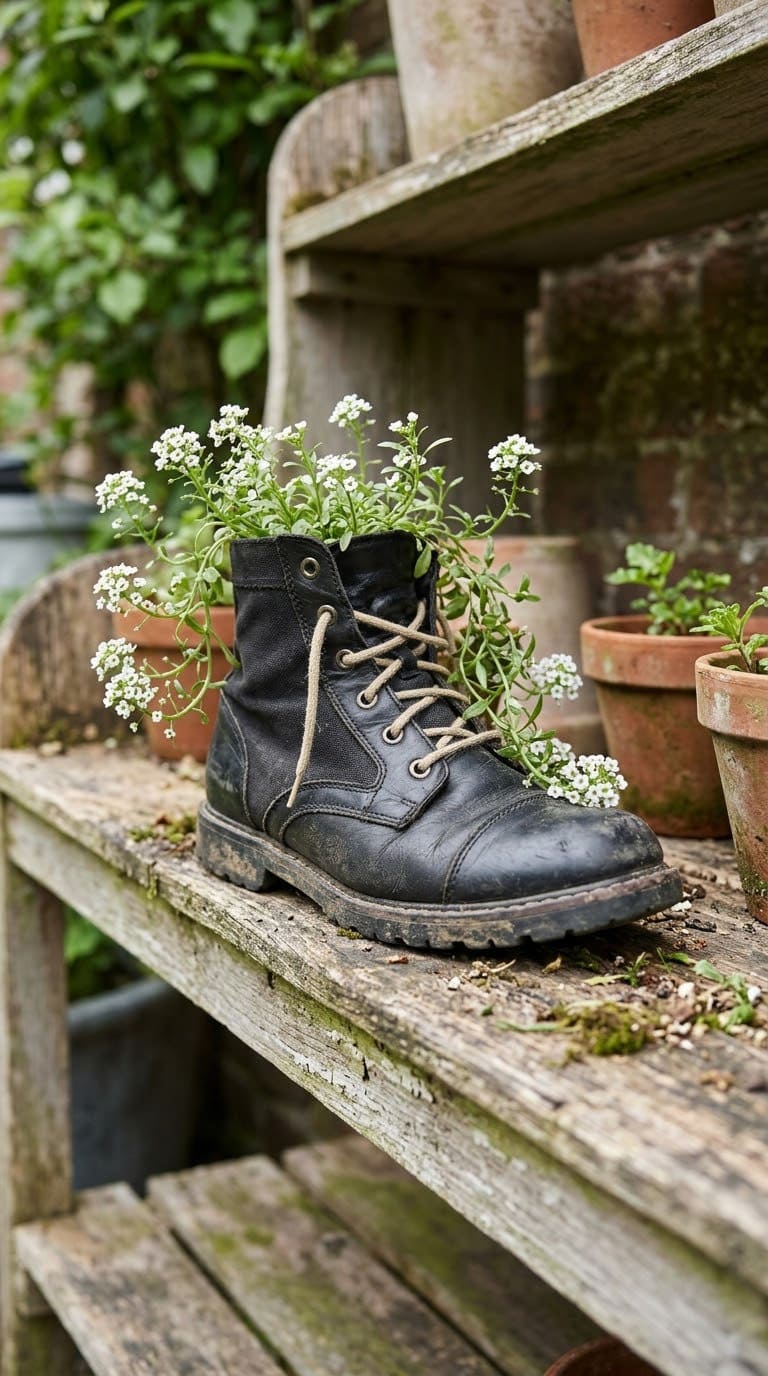
A high-top lace-up has an old-fashioned look. Leave the laces in place for style. Plant small white flowers that spill over the top.
Skip English ivy here. The ASPCA lists it as toxic to pets, so use a safer trailing flower instead.
Cost tier: low.
5. High Heel Planter
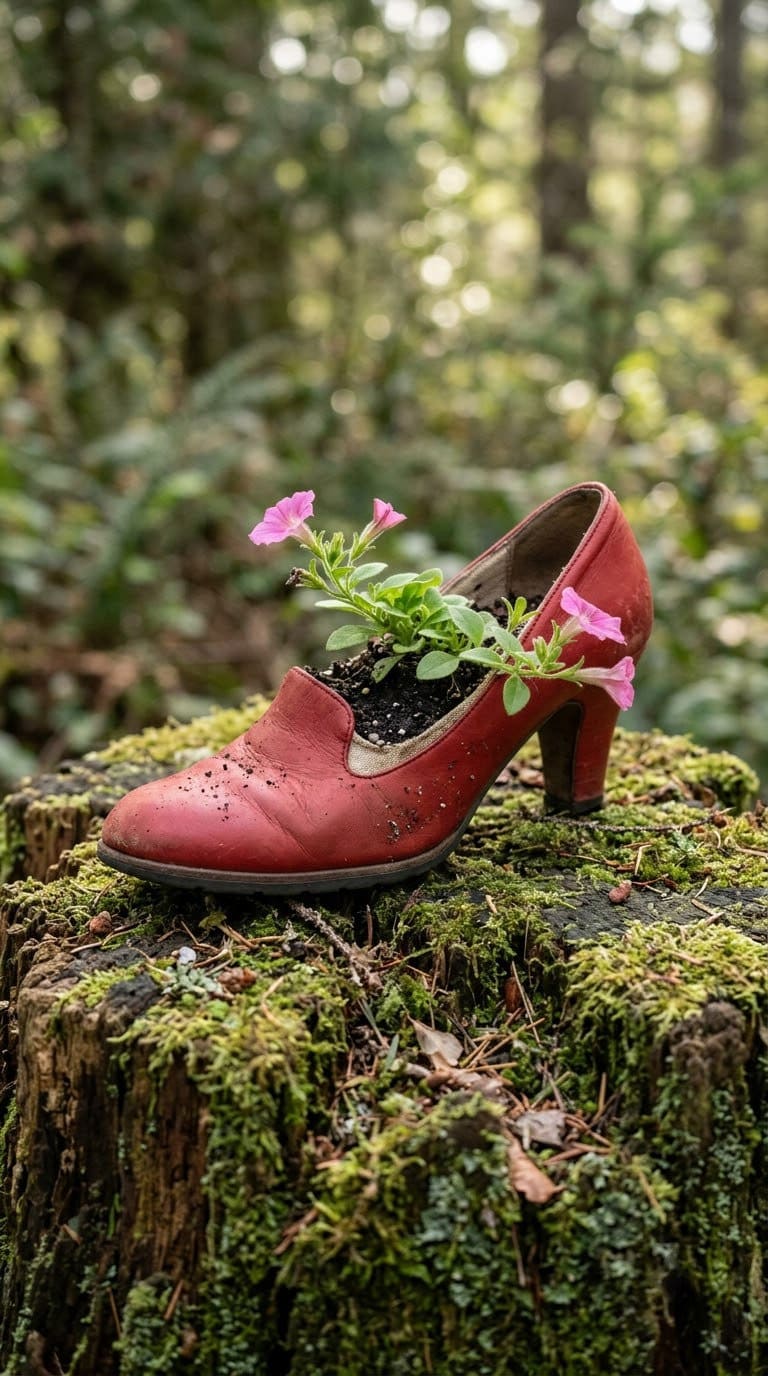
A heel holds very little soil, so think of it as a tiny accent. Make one small hole in the toe, if the shoe allows it. Screen the hole.
Plant one small seedling. Water with a small can, since the heel dries out fast. Display it under cover so rain does not overfill it.
Cost tier: very low.
6. Crocs Planter
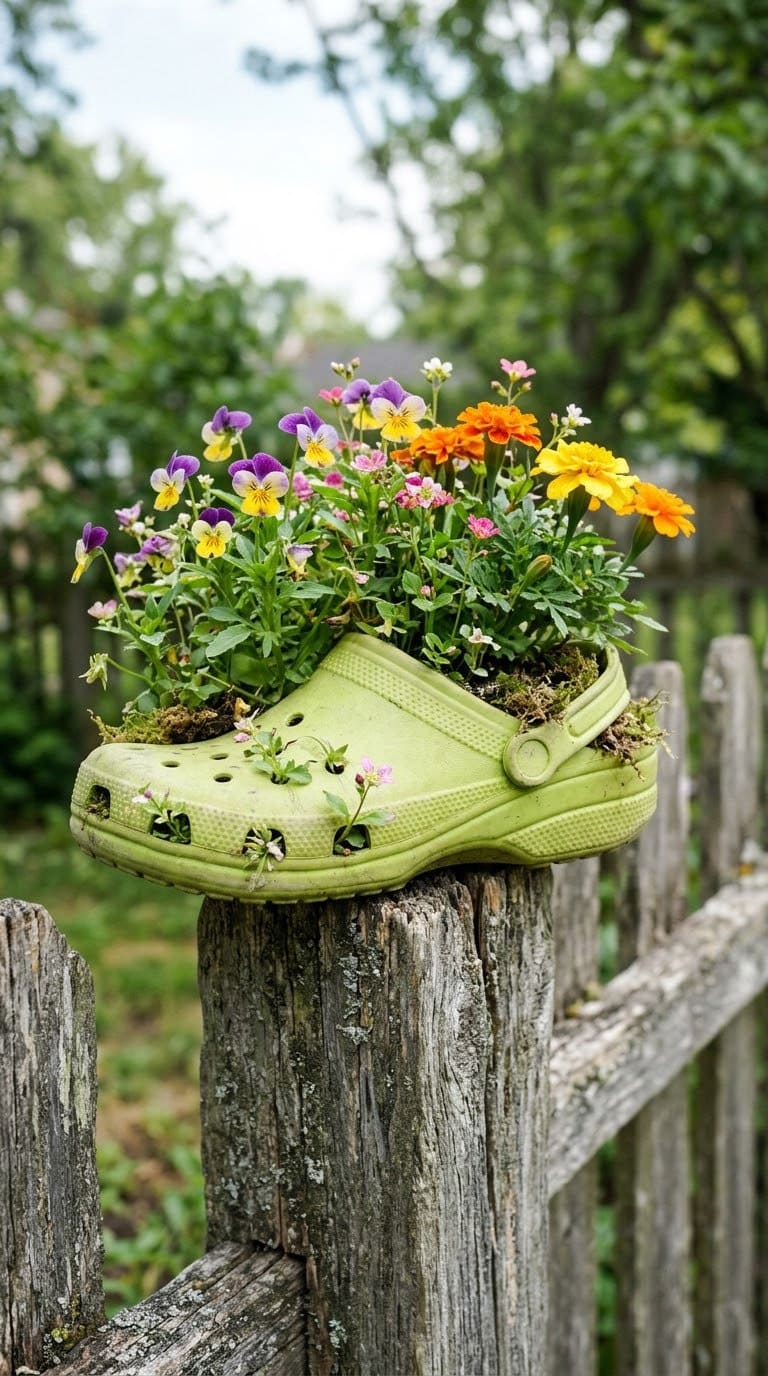
Crocs and similar clogs often have holes built in. This takes care of drainage right away. The holes in the sides can let mix fall out, so line the inside with screen.
Plant small flowers and hang the clog from a fence with a hook. This keeps it dry and off the ground.
Cost tier: very low.
7. Sneaker Planter
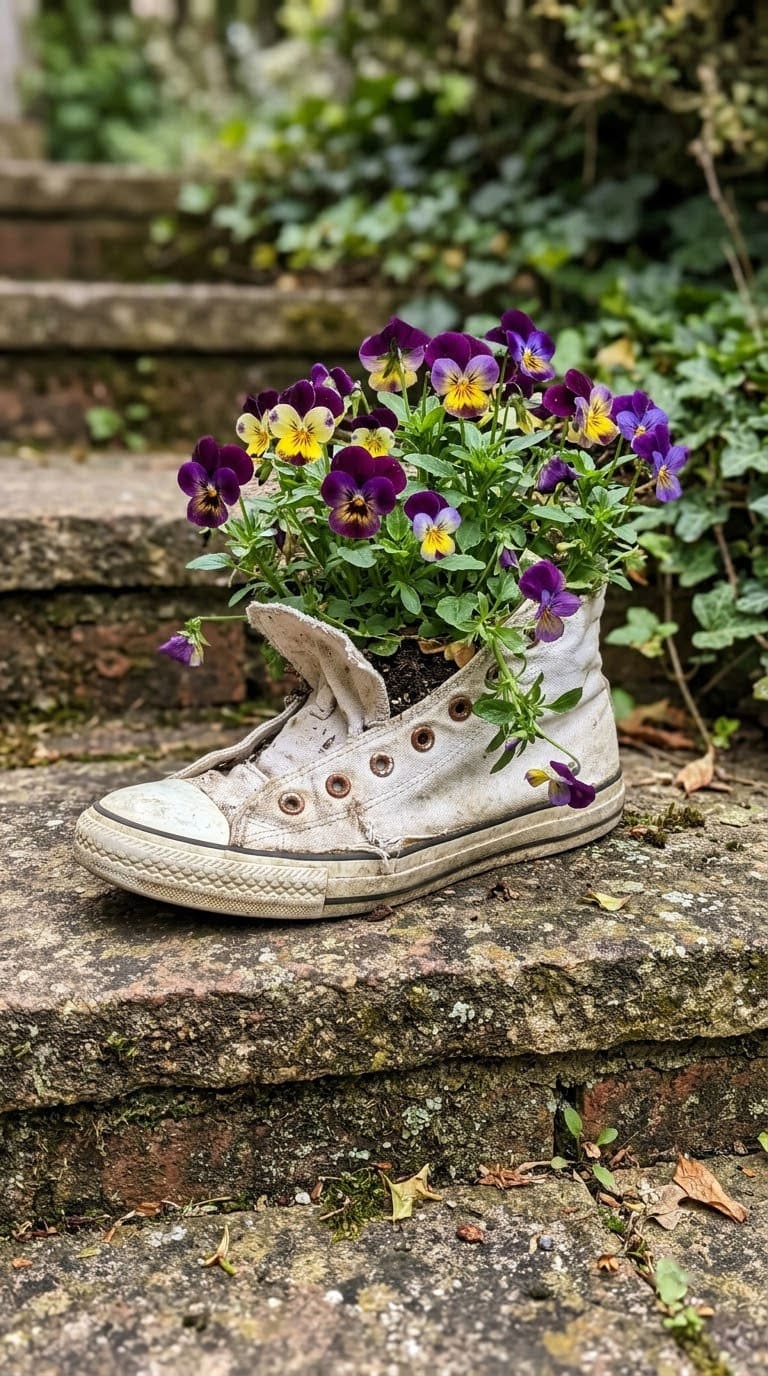
A sneaker is soft and floppy, so the planter needs support. Stuff the toe lightly with potting mix, then plant. Drill through the sole first.
Pick compact blooms. Place the sneaker on a step where it will stay level.
Cost tier: very low.
8. Work Boot Planter
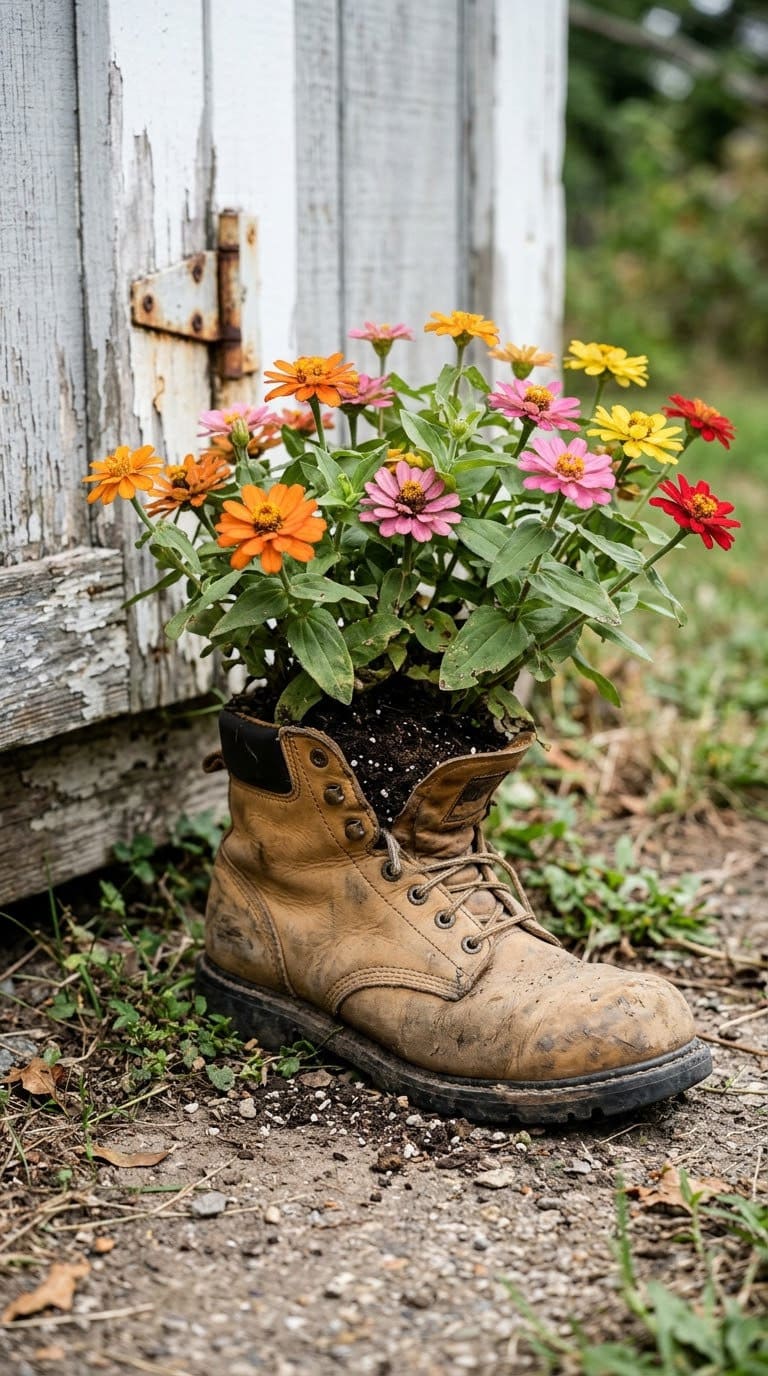
A heavy work boot stands up well and holds a lot. The thick sole is hard to drill, so use a sharp bit and drill slowly. Wear eye protection.
Plant zinnias. The tough look pairs well with bright flowers. Set the boot by a shed or garage door.
Cost tier: low.
9. Hiking Boot Pollinator Planter
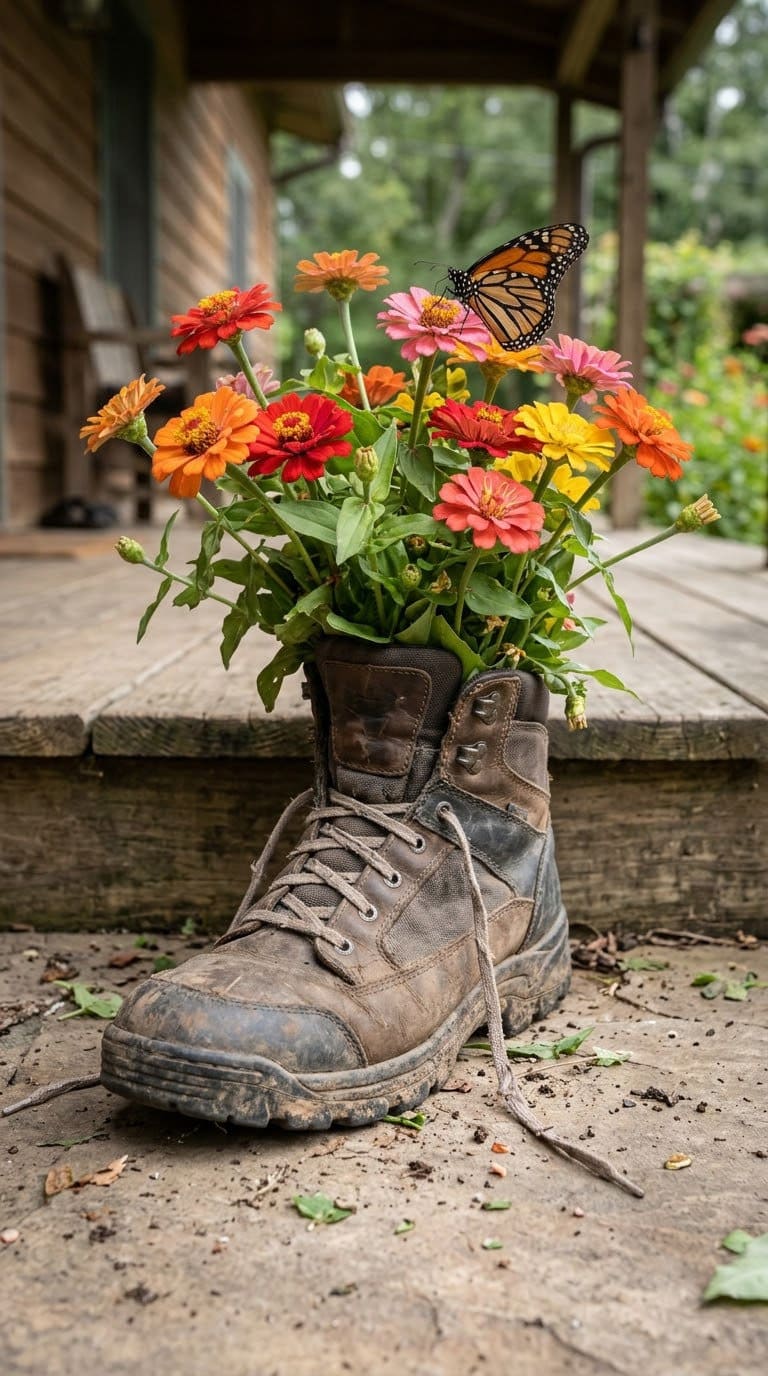
Hiking boots have deep tread and thick soles. Drill the sole, then fill with potting mix. Zinnias and sunflowers draw butterflies and bees.
Place the boot on a stone near a sunny spot. Keep the soil moist during hot weather.
Cost tier: low.
10. Ballet Flat Trailing Planter
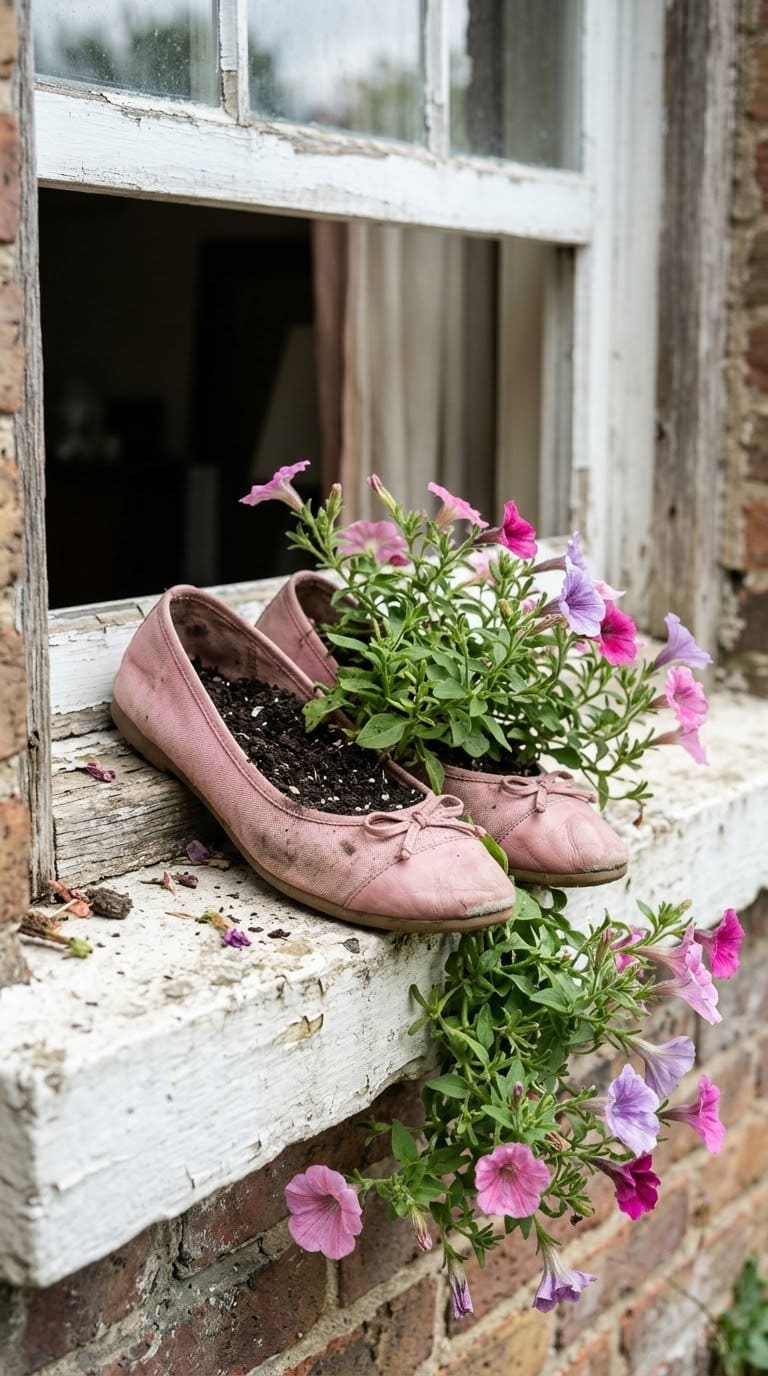
A flat holds little soil, so choose a shallow-rooted flower. Wave petunias trail nicely over the edge. Make one or two small holes in the sole.
Set the pair on a sunny ledge. Water often, because shallow shoes dry out fast.
Cost tier: very low.
11. Slipper Planter
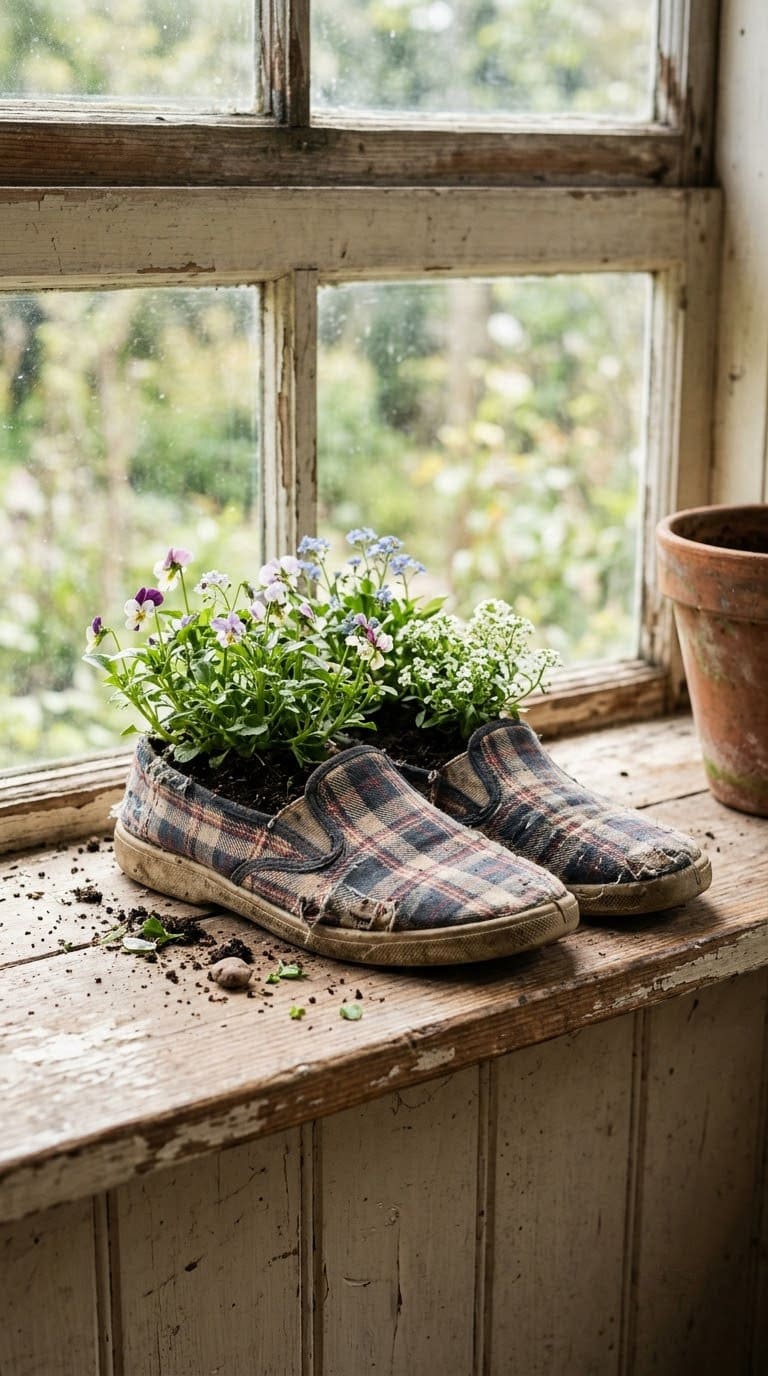
A slipper is a cozy idea for a cottage garden. Fabric slippers wear out fast outdoors. Place them under a porch roof.
Line the inside with screen and add a small amount of mix. Plant one or two small flowers.
Cost tier: very low.
12. Fence-Hung Boot Planter
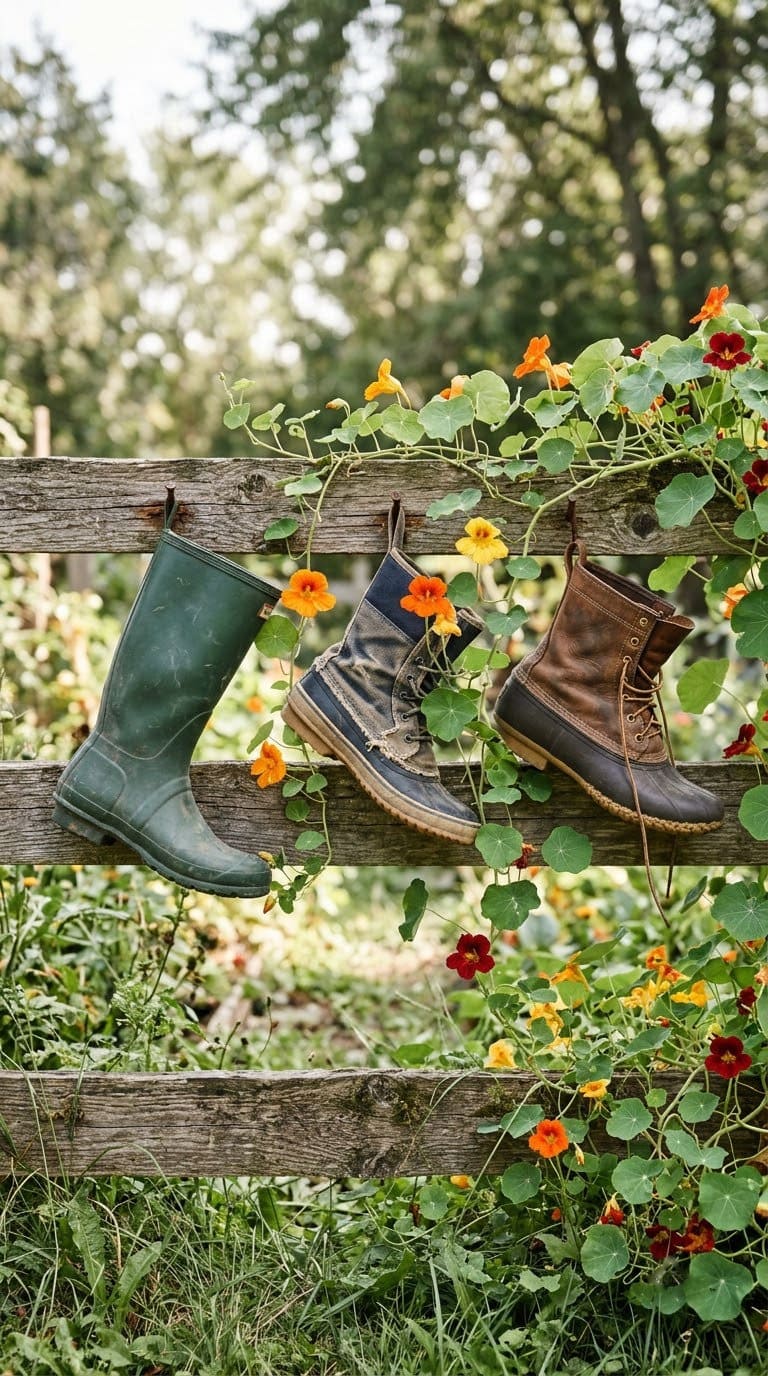
Hang boots on a fence so they sit off the ground. Screw a sturdy hook or bracket into the post, and hang each boot by its pull loop or a strap. Drill the sole before you plant.
Use nasturtiums, which the ASPCA lists as non-toxic to pets. They trail down and fill the fence.
For more hanging ideas, see our outdoor hanging planter ideas.
Cost tier: low.
13. Boot Tower on a Post
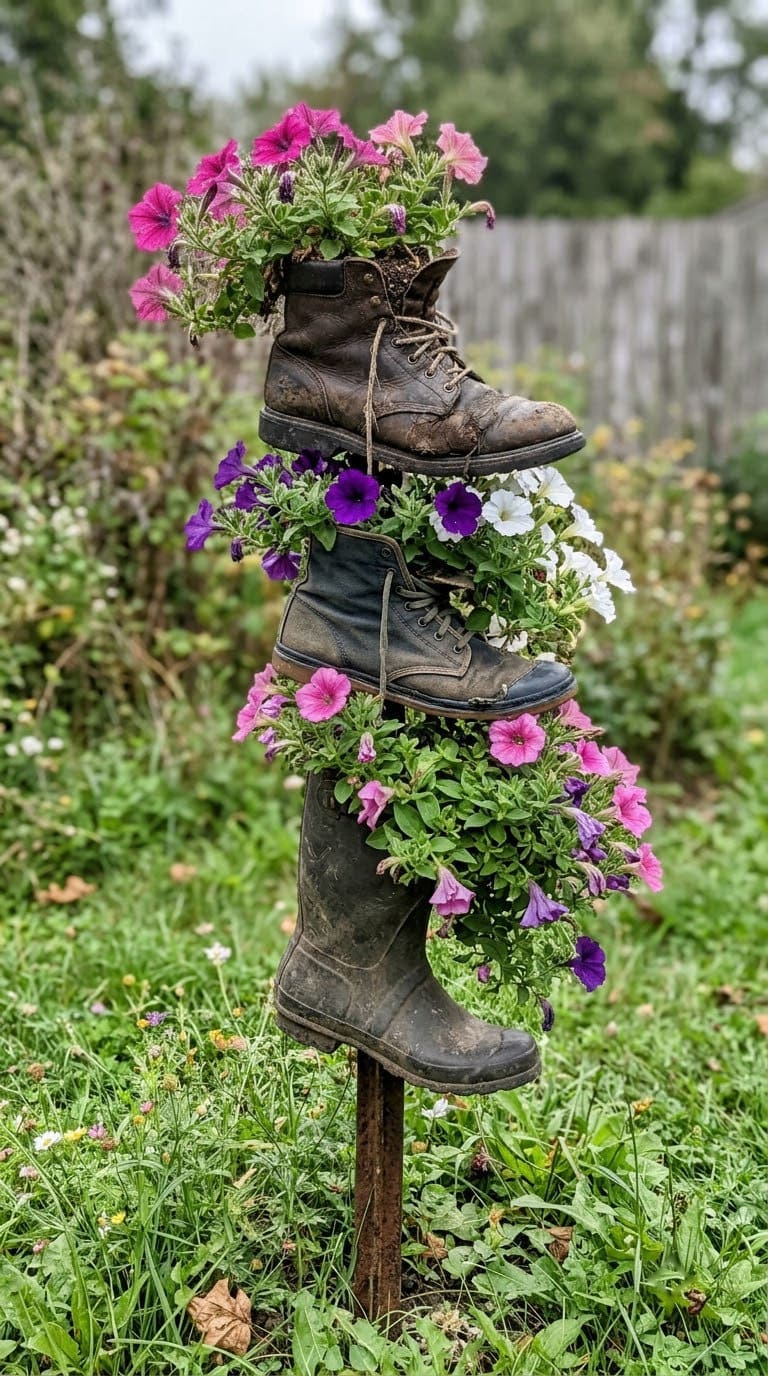
Slide boots onto a sturdy post one above the other. Drill each sole, and make the center hole big enough for the post. Plant each boot with a different flower.
Pick a post that is firmly set in the ground. Water the top boot first, since it drains into the lower ones.
Cost tier: medium.
14. Boot Cluster by a Bench
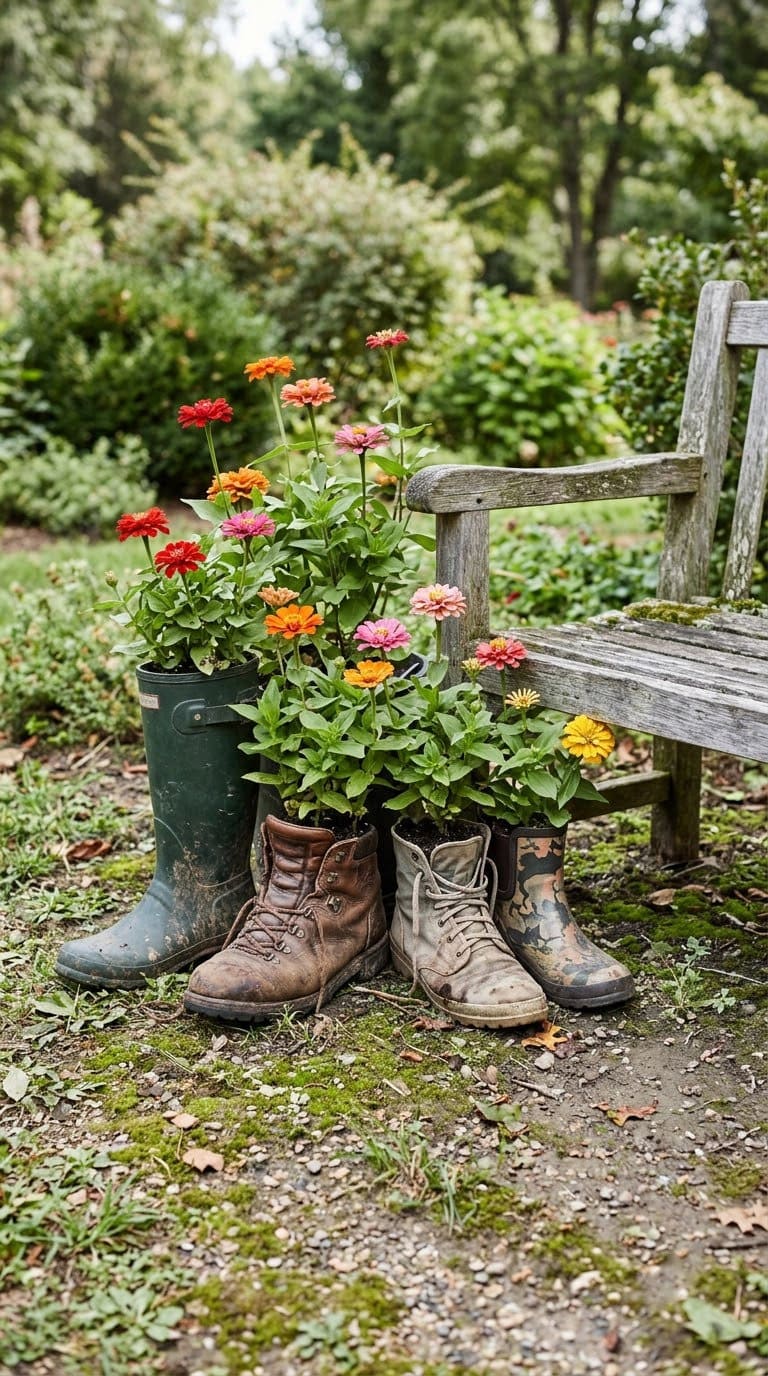
Group three or five boots of different heights. Odd numbers look more natural. Plant each with a variation of the same flower color.
Put the tallest at the back and the shortest in front. This is a good way to use odd single boots.
Cost tier: low.
15. Shoe-Lined Path Edge
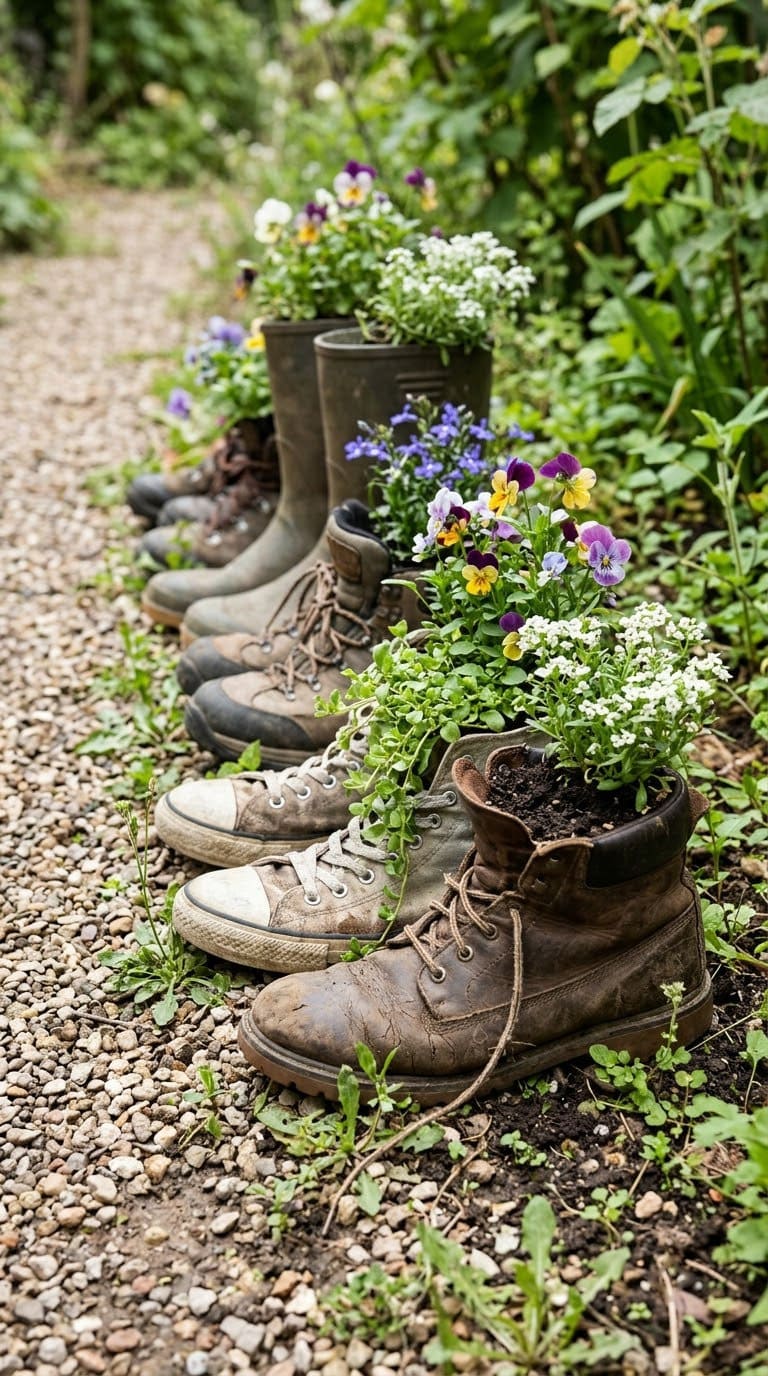
Line a path with old shoes as a whimsical border. Plant each with the same small flower. Space them evenly for a tidy look.
Check each for drainage holes. See our repurposed garden container ideas for more border looks.
Cost tier: low.
16. Painted Boot Planter
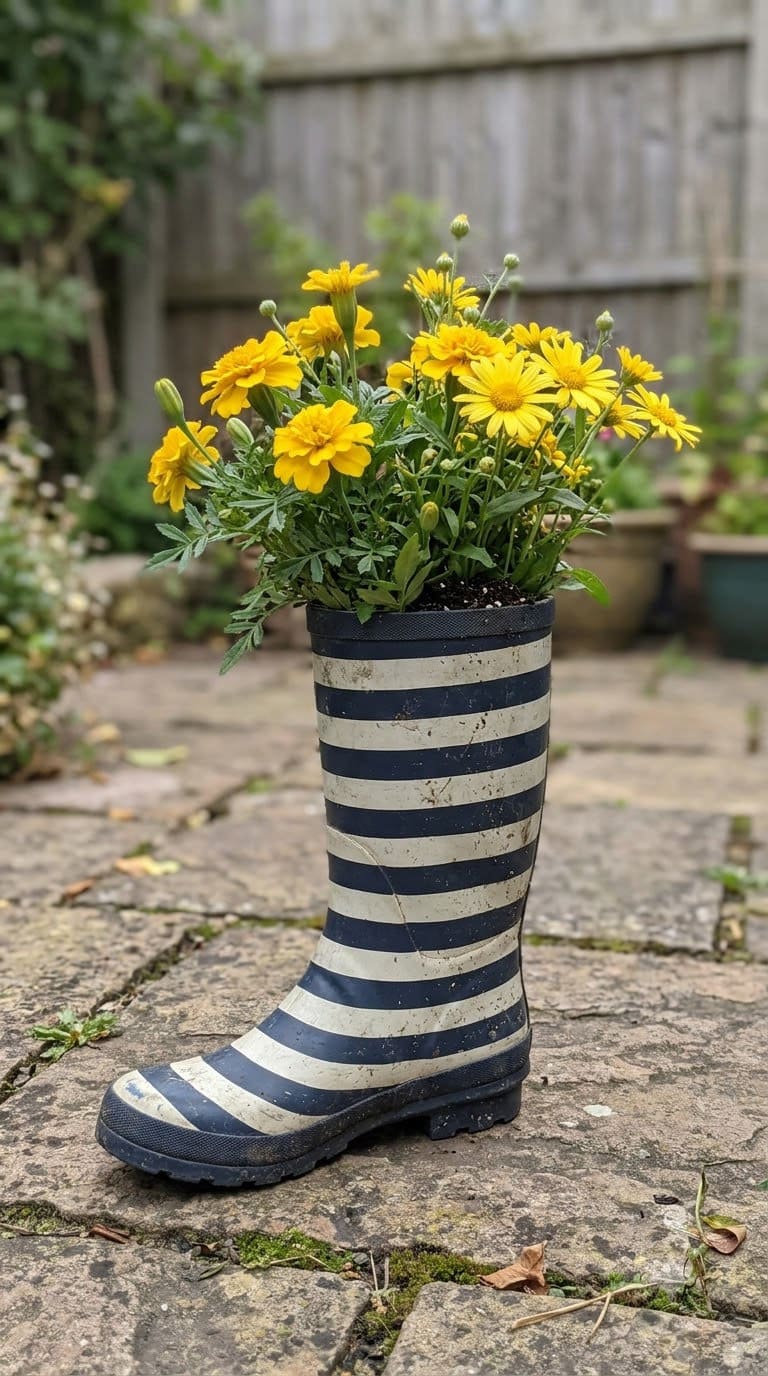
Paint an old rain boot in bold stripes. Clean and dry it first, then use paint made for rubber. Let the paint cure before planting.
Seal it with a clear coat if it stays outdoors. For more paint ideas, see our painted garden decorations.
Cost tier: low.
17. Over-the-Door Shoe Organizer Garden
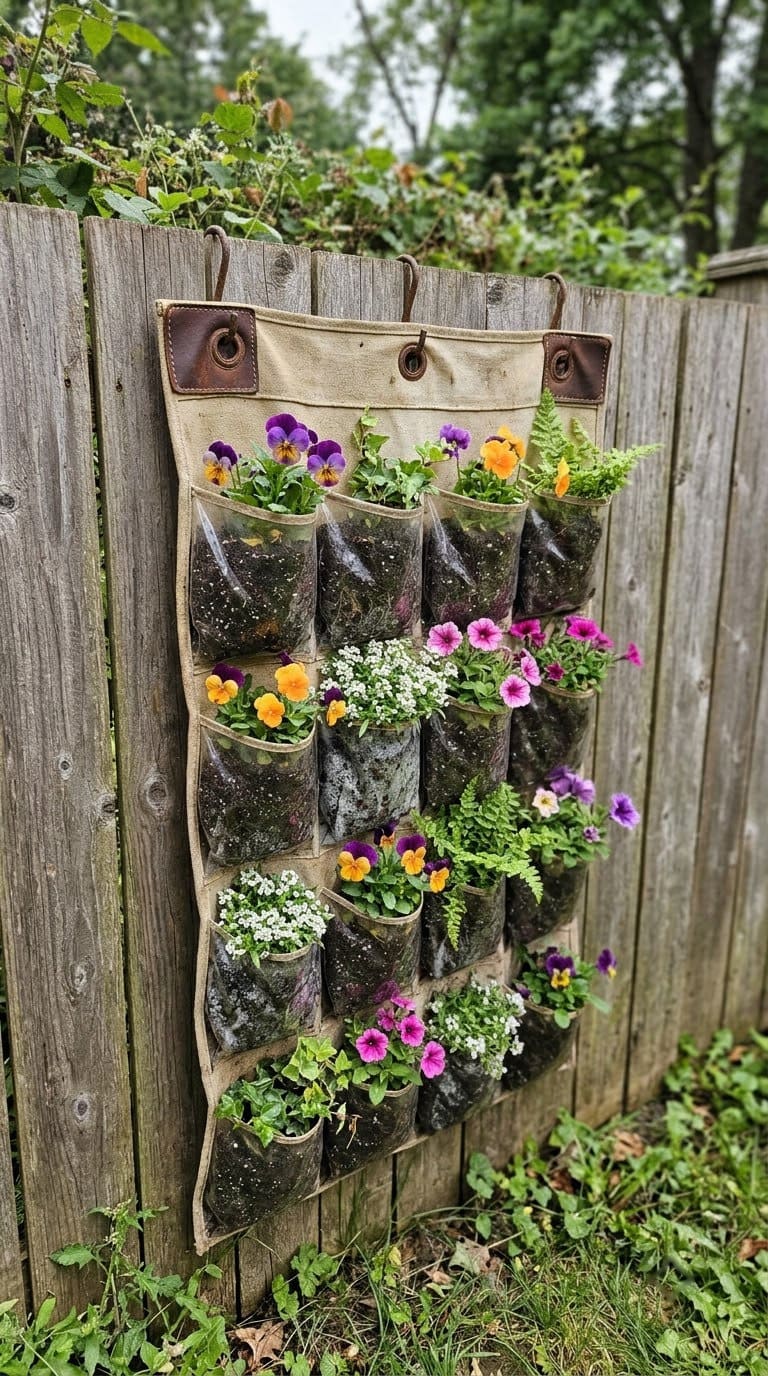
A hanging shoe organizer holds a pocket for each plant. Hang it on a sunny fence. Cut a small slit in the bottom of each pocket for drainage.
Fill with potting mix and plant small flowers. Water slowly, since pockets dry out fast.
Cost tier: low.
18. Boot Mailbox-Post Topper
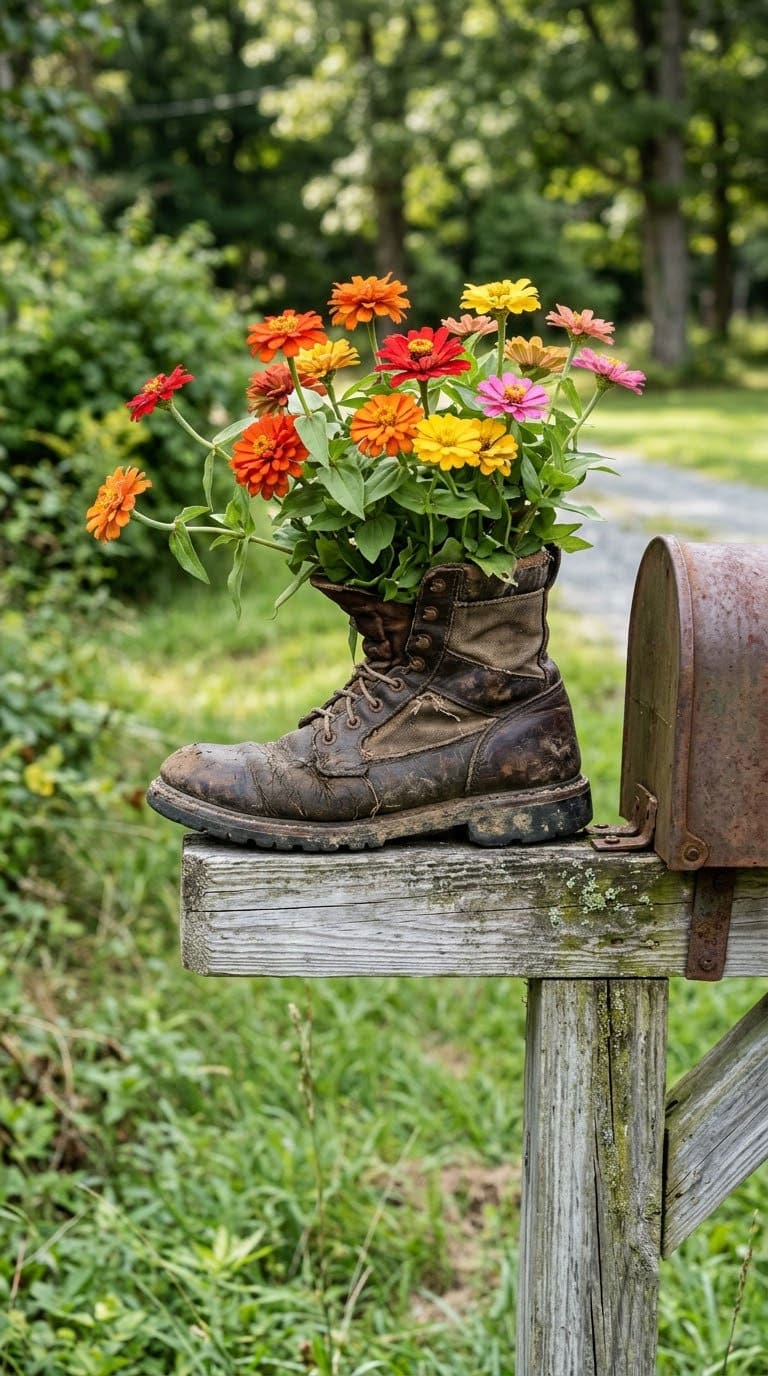
Set an old boot on top of a post. Fix it with a screw through the sole, which also gives a drainage hole. Fill with mix and plant.
Choose a low flower that will not block the view. Keep it away from the mailbox door.
Cost tier: low.
19. Tiny Fairy Shoe House
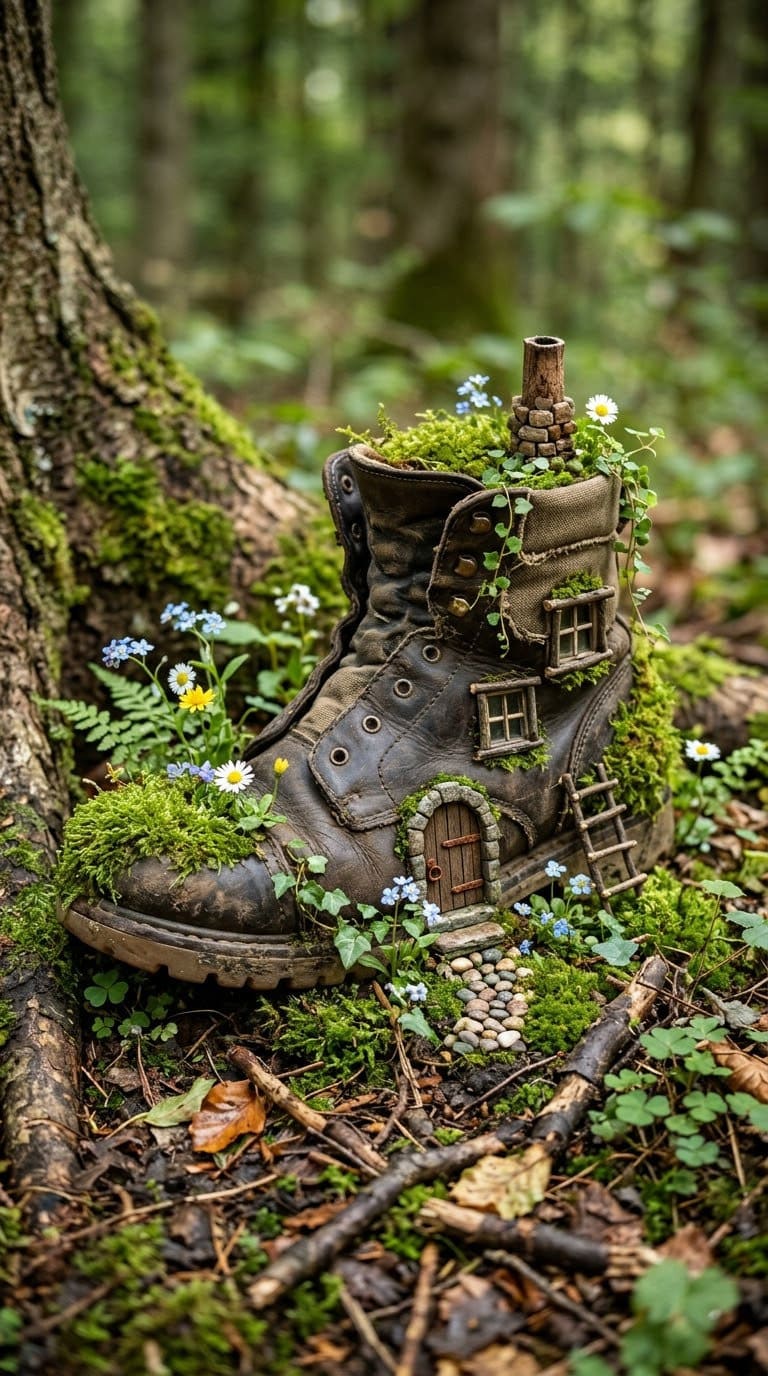
Turn a small boot into a fairy home. Add a miniature door and a bit of moss. Drill the sole and plant a tiny flower inside.
Keep it in a shaded nook. Children love to find it on a garden walk.
Cost tier: low.
20. Shoes and Purse Planter Set
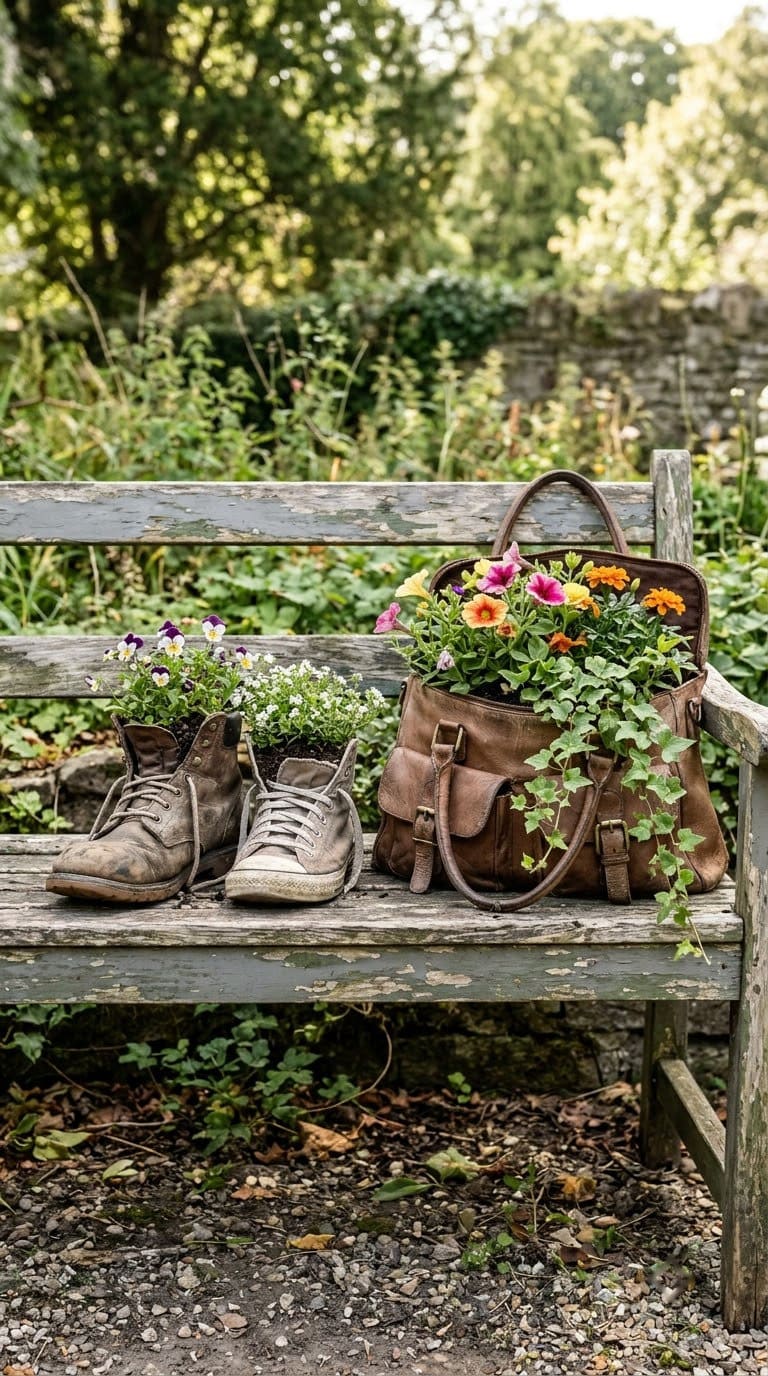
Plant a pair of shoes and an old handbag together. Line the bag with plastic and poke holes in the bottom. Match the flowers across all three.
Set the group on a bench. For other found-object ideas, see our upcycled trash ideas.
Cost tier: low.
How Do You Water Shoe Planters?
Shoe planters are small, so they dry out quickly. The University of Illinois Extension says to feel the soil and water when the top inch is dry. Water until it drains from the bottom.
In hot weather, you may need to water every day. If the mix pulls away from the shoe, soak it from below. Set the shoe in a tray of water until the mix is damp again.
Larger containers need less watering, per Nassau County. Boots hold more than flats, so they are easier to keep alive.
What Other Containers Work Like Shoes?
If you enjoy this look, try other found objects. Our tire planter ideas and bicycle planter ideas use the same drainage rules. A chair planter or a birdcage planter works for a bigger statement.
For tools that have lost their use, see our repurposed garden tools ideas. If you want a clean base, see our DIY flower pot ideas and plastic flower pot ideas.
Common Mistakes to Avoid
Skipping drainage holes is the first mistake. Nassau County says every container needs them. A sealed boot holds water and rots roots.
Adding gravel is the second. Penn State says a coarse layer slows drainage. Use screen over the holes instead.
Leaving water in a boot is the third. The CDC says mosquitoes lay eggs in standing water, so keep holes clear.
Choosing toxic plants is the fourth. The ASPCA lists geranium and lavender as toxic to pets.
FAQ
Do I need to drill holes in a shoe planter?
Yes. Nassau County Extension says containers need drainage holes, and it advises four to six if there are none. Cover them with screen.
Should I put rocks in the bottom of a boot?
No. Penn State Extension says a coarse layer slows drainage and wastes space. Use mesh over the holes.
Will a boot planter breed mosquitoes?
Only if water sits. The CDC says to empty or turn over containers that hold water weekly. Open holes prevent pooling.
Which plants are safe if I have pets?
The ASPCA lists petunia, zinnia, sunflower, and nasturtium as non-toxic to dogs and cats. It lists geranium and lavender as toxic.
How often should I water a shoe planter?
Water when the top inch of mix feels dry, per Illinois Extension. In hot weather, that may be daily.
Never miss an update — choose FarmFoodFamily as your preferred source on Google.
How it works: Tap the button below to open Google's settings page, then check the box next to FarmFoodFamily.
Tap the checkbox to turn it blue — that's how you know it's set.